Chapter IX · (continued 5)
Reading edition
Diospyros sp. Benin Ebony. Isanhianme or Ehrenyegbo (Benin).
A common tree of the Benin province of Nigeria. It is supposed to yield a good ebony. It does not reach a very large size. It is a soil protecting and improving tree. Locally it is used for house-building.
In 1906 samples of this timber were sold in the Liverpool market as mahogany at 1s. 6d. per cubic foot. Since that time it has not been exported.
Diospyros atropurpurea (Gurke). Brown Ebony. Igedudu (Yoruba); Igedudu (Benin).
It is a small tree, attaining a girth of about 4 feet. The heartwood is usually brown with black streaks, giving it a curious and diverse streakiness, not unlike black marble or Indian Blackwood. The flower is reddish-purple coloured and quite conspicuous, growing out of the upper surface of the twig without a stalk of any kind. The bark is almost black and peels off in very thin, oblong-shaped flakes; the cortex underneath is green. In old age it is hollow at the first branch joint.
It is found in the Benin and Abeokuta provinces of Nigeria. About one-third of the diameter of a mature tree is heartwood. Apparently a slow-growing tree, though none have been planted. It is a shade-bearer in the evergreen and mixed forest; natural regeneration is not good. A large cerambix or other borer makes finger-thick holes in the sap and heartwood of old trees.
It should be an export timber of value, but it was only valued at £5 to £10 a ton in 1906. It has been used for mirror frames.
Native Use.—For firewood in the Benin country, where it is considered very good.
Diospyros suaveolens. Benin Ebony. Oohoo (Benin).
It is a small-sized tree, with very small heartwood and a small, oblong, almost lanceolate leaf. The bark, which is quite black, has slight fissures and is much harder than that of D. atropurpurea.
It is prevalent in the Benin country, Nigeria.
It likes to grow near water, but not in a swampy place. It is a slow-grower and shade-bearer, being found as an undergrowth in the high forest. It is not attacked by white ants. The wood is hard and durable.
Native Use.—It is used for house-building as rafters, as well as for axe-handles of any kind. Small trees are used for making bows (long) for shooting birds.
Diospyros verrucosa.
This tree, although named from the Cameroons, is found in the Abeokuta and Benin provinces of Nigeria. The twigs are very rough compared to the other species.
Diospyros dendo?. Cross River Ebony. Ebubri etu, Obiliteto (Efik); Itiuyang (Oban, Ekoi).
It is a medium-sized tree with dark-green, smooth bark, with large lanceolate leaves and strong upward-spreading branches, which makes the bole shorter than it would otherwise be. The fruit is almost pear-shaped, containing four long, thin, wedge-shaped seeds, brown outside and white inside.
It is found in the Calabar and Ogoja provinces of Nigeria, in the evergreen forest zone of the hill forests.
The crown is rather irregular in shape, being supported with two or three main limbs from the bole. It reaches a girth of about 6 feet and a bole length of 12 feet.
The sapwood is wide and white and the heartwood black. The tree is occasionally attacked by a large borer, which makes large holes nearly ¾ inch in diameter. The timber is very hard, but if the tree is killed by fire it becomes a little more brittle than is usually the case. In old trees which may be left lying in the forest, the middle of the heartwood often decays away with ground-rot. It planes well and saws well. Nails often split it. It splits moderately well, especially when free of knots.
It is a very slow-growing, shade-bearing, soil-protecting and soil-improving tree. On the whole, it is more exacting as to soil than most other trees, being usually found on a good loam rich in humus, which is moist and with fair drainage. Natural regeneration is none too good. Stump shoots are very weak, and often do not occur. It has not yet been planted. It is very susceptible to fire—in fact, more so than perhaps any other tree. The timber has been exported for many years from Calabar, but of late in decreasing quantities, owing to the exhaustion of the nearer sources of supply, and to the fact that only small billets under 3 feet in length, not square, and only 3 or 4 inches in cross-section were cut. The usual native method of procedure is very curious. On making a clearing for a farm, any ebony standing there gets killed with the fire, and having comparatively few roots and being very heavy, the tree falls down. Before abandoning the farm the native may put a mark on this tree, or at any rate make a mental note of its existence. After a year or two, if he is in need of money to buy clothes, or wishes to purchase anything, he goes back to this old farm, finds this tree, perhaps externally somewhat charred, and perhaps the centre of the heartwood rotted away; he proceeds to cut it into lengths of about 10 or 12 feet. These he then splits lengthways into segments with a rounded side of about 5 inches, the two split sides about 4 inches, and the inner surface about 3 inches. In order to get these long pieces of suitable dimension to carry to the nearest factory or trading station, he cuts them into three or four billets; two or three of these, according to weight, are tied together and carried to the factory. It is sold by weight, and sometimes 200 billets go to the ton, though a smaller quantity of a larger size would be better and secure a better price. This method should be compared with the superior one adopted by the natives of the Cameroons. Compared to the usual price of £6 or £7 per ton for Calabar ebony, Cameroon wood usually fetches £10 to £12.
Diospyros xanthochlamys. Okahimi (Benin).
This is one of the Benin ebonies and is not very prevalent. It is said to yield a good ebony.
Maba Mannii. Benin Maba.
It is a common tree in the Benin and Ondo provinces of Nigeria. It only reaches a girth of 4 feet and a short bole of about 10 feet. It is much branched, even low down, the branches being persistent and crooked. The leaves are small, rather less than ebony itself. The leaf is really a long, pinnate one, with thirty pairs of pinnæ. The fruit is white, soft and oblong, with small seeds.
The tree has a white sapwood with a black heartwood, rather small in proportion to the size of the stem. It does not split well. Termites do not attack it, but occasionally the gigas borers make holes in it. It grows slowly and stands a good deal of shade. It sprouts well from the stool and the seed also grows fairly well. It grows in the damp, deep soil and does not stand fire at all. It belongs to the evergreen forest zone.
This tree has not been cut for local use or exported to Europe. It is used as firewood, and is considered better than most other woods, even Ohia, Celtis sp.
Oleaceæ.
Schrebera Golungensis. Hard Yellow Wood. Opele (Yoruba); Udegwoga (?) (Benin).
It is found in the Abeokuta province of Nigeria, Olokemeji and Ilaro Reserves.
It is a large tree, reaching a girth of about 10 feet. The smooth, light-green bark with yellow patches differs from the Celtis species, which is rougher, and the Afrormosia species, which is orange-red and peels off. The leaves are small for the size of the tree. The crown is narrow and long and the branches forming it slender. The curious small pear-shaped dehiscent fruit, showing four oblong niches for seeds, is most typical of the tree. In other respects the habit and build of the tree is similar to the Celtis species, especially with the root spurns slightly corrugating the base of the bole. It is not a common tree, but usually a fair number of specimens are seen in any locality where it has been found. The bole is very straight and free from branches for quite a height of the tree.
The timber is a dull-yellow colour, fine grain, of smooth texture and moderately hard. It planes to a smooth, almost shining surface. It scarcely shrinks or warps when drying.
It sprouts slightly from the stump, though the shoots do not seem to have much strength.
The timber has not yet been exported, though its valuable quality should assure it of a market. Sample planks used at Olokemeji proved most durable.
Native Use.—The fruit is used by the Yorubas for divining the future.
Loganiaceæ.
Strychnos densiflora (Baill.). African Strychnos Tree. Attako (Yoruba); Egbeda (Benin).
It is found in the dry-zone forest of the Ibadan and Benin provinces of Nigeria, where it seems to be very prevalent.
Chief Characteristics.—It is a small tree or shrub, up to 12 feet high, with small leaves and very hard wood.
It is of slow growth, but on the whole is a shade-bearer and soil-protecting and soil-improving tree. Natural regeneration appears to be poor.
It has not been planted.
Apparently the seeds have not yet been examined as to their value. The timber is too small for export or local use, except for hut-building.
Use.—The Benin natives use the stem for making snares for Duika and the branches for making brooms, as they are very tough.
Anthocleista nobilis. Ogugu, Sapho, Apa Oro (Yoruba); Orrimogungun, Oriweni (Benin).
It is found in the Ibadan, Abeokuta, Benin and Ogoja provinces of Nigeria.
It has huge soft leaves, and is one of the first plants to appear on a clearing in the dry-zone or mixed forests. In old age the leaf is much smaller, and the mass of white flowers along the uppermost branches is most typical of the tree. It is often almost gregarious, and in most places more than one tree is found in the immediate neighbourhood. Reaching a girth of about 3 feet, its stem does not exceed 20 feet in height. There are usually two or three main branches into which it divides. The wood is soft and white.
It is a light-loving, rapid-growing tree, which is soil-protecting and soil-improving in youth, but is too open in crown after a few years. It should, however, prove a useful nurse for superior species in the dry zone.
Native Use.—Firewood in places where wood is scarce.
Apocynaceæ.
Alstonia Congensis (Eng.). Pattern Wood, Stool Wood. Ahun, Awun, Ogudugbu (Yoruba); Ukhu (Benin); Ekuri Ebu (Ibo Owerri); Abo, Idu (Efik); Ofemm (Bembi); Etiap, Oguk (Oban, Ekoi).
It is a large tree, growing up to a height of 100 feet and 10 feet girth. The white lenticels on the bark are very typical of the tree, and give it the appearance of having a rust disease. The crown is formed of two or three whorls of branches and is very flat in old age. The tree grows always in whorls, though it may have more than one stem. In the distance the leaves appear to be digitate, but in reality three to seven are found to be growing out of the end of one stalk, all being much the same size. The crown is flatly umbrella-shaped. It has comparatively few branches. The root flanges are slight, soon merging into the trunk. At the base of the bole, however, they are not absolutely round in shape, but have two or three large ridges, sometimes almost subdividing it. The slash is white, with yellow spots. A chalky white latex exudes when it is cut, rapidly running down the stem like a streak of whitewash.
It is found in the Abeokuta, Ibadan, Ondo, Benin, Owerri, Calabar and Ogoja provinces of Nigeria in the evergreen and mixed deciduous forest zone. It is a very common tree throughout this region and is usually found growing singly.
The timber is white, there being little or no difference between sapwood and heartwood. When dry, it is very light and soft. It splits and planes easily, saws well, and takes nails easily. The grain is close and fine and very even in texture. Although dull, it works up to a smooth finish. It is attacked by termites. It is not durable in the open, but under cover it lasts quite well. In drying it is liable to shrink and warp a little, but with care this can be avoided. It seasons comparatively quickly. It cuts easily with a knife or chisel and might take the place of lime as a carving-wood. From its texture it should take stains very well.
It is a very fast-growing, at first slightly shade-bearing and latterly a light-loving tree, which thoroughly protects the soil and enriches it with its leaf fall. Natural regeneration appears to be good, as it sprouts well from the stump. It seems to like a good soil with plenty of moisture, and will even withstand floods. It is not fire-resisting. The crown and branches are liable to be broken with a high wind.
In 1906 samples of this timber were sold in the Liverpool market as a whitewood, but it was considered to be of no value. It deserves a further trial as a pattern-wood, comparatively large quantities being available. Locally it has not been sawn up for planks.
In Calabar the timber is used for stools, which are carved out of large solid blocks of this wood in one piece, without a joint.
Native Use.—In the Benin country the timber is used for doors and the roots for medicine.
The box of the musical instrument Asologun, a kind of zither, is made of this wood in the Yoruba country. The latex is used for mixing with real rubber latex of the Anyo or Funtumia elastica tree.
Voacanga Africana (Stapf.). Cloth Shrub. Dodo, Giwini (Yoruba); Igbo (Benin).
It is a common shrub-like tree in the Ogoja, Onitsha, Benin, Warri, Ondo, Ibadan and Abeokuta provinces of Nigeria. The tree is usually noticeable from its white wax-like, trumpet-shaped flowers, which have a very fragrant scent, and which very rapidly wither when cut. The bark is thin and extremely fibrous and hard to break, so much so that the natives of the Asaba district make grass-like fibre out of it and mix it with a silk fibre to make a very durable kind of cloth, which the natives wear. It grows in waste places and requires light. It sprouts well from the stump.
Conopharyngia durissima.
This tree is found in the Western Provinces. It is of a similar size to C. pachysiphon, and the timber is just as durable.
Conopharyngia pachysiphon. False Boxwood. Dodo? (Yoruba); Ibbu (Benin).
It is a common tree in the Calabar, Warri, Benin and Ondo provinces of Nigeria. A small tree, attaining a girth of only 4 feet, with a large leaf, bearing large spherical-shaped fruits in pairs. The large creamy-white, strongly scented flowers are conspicuous to both sight and scent. The bark, even in its younger stages, is covered with small yellow lenticels. The wood is hard and yellow in colour, and there is no difference between sapwood and heartwood. The latex has sometimes been used as an adulterant for rubber. It is a shade-bearer, and is found at the border of the evergreen and mixed deciduous forests.
The natives of the Benin country use the roots for medicinal purposes.
Farquharia elliptica. Onanisankianmon (Benin).
This is a member of the new genus of Farquharia found by Mr. Farquhar in the Benin province of Nigeria, near Ugumu. It is not stated whether the natives use this as a source of rubber or not.
Landolphia florida (Benth.). Rubber Vine. Ibugidi, Ibo-akitipa (Yoruba).
A vine found throughout Southern Nigeria, though most abundant in the dry-zone fringing forests and in the intermediate forests, and at Ottoa, Benin province. It bears white flowers having yellow centres.
Uses.—Milky juice is obtained from this vine, but it is not good rubber, and has no market value.
Landolphia scandens. Ibo (Yoruba); Ubamiogon (Benin); Otopoi, Otanta (Ibo Asaba).
Ilaro.
Landolphia Owariensis, var. rubiginosa.
Found Anwai River, Asaba district.
Landolphia Owariensis. White Vine Rubber. Ibo tabong (Yoruba); Ubamiogon, Ubgo (Benin); Otta farfridi (Ibo Asaba).
Found Benin City and Mamu.
Landolphia Senegalense. Ibo akitipa (Yoruba).
It is found in the Oyo province of Nigeria, and it is supposed to be one of the sources of vine rubber.
Landolphia Thompsonii (Chev.). Corrugated-fruited Rubber. Ibogidi (Yoruba); Ugbamiogun (Benin).
Abeokuta, Benin and Calabar provinces of Nigeria.
A vine growing abundantly throughout the rain and fringing forests. It has white flowers with yellow centres and a bright-yellow edible fruit. No rubber is obtained from it, but only a pasty mass from the latex.
Landolphia Petersiana. Large-fruited Landolphia.
Found in the Oban Reserve and Benin province.
Landolphia bracteata. Autopoi (Ibo Asaba).
Found at Idanre, Anwai, Asaba district.
Carpodinus hirsuta (Stapf.), var. djenge. Flake or Paste Rubber, Root Rubber, Brown Cluster, or Brown Medium. Ibo Ilecki (Yoruba); Uboto, Obo, Ubanakwi, Ake, Abache (Benin).
It is found in the Onitsha, Benin and Warri provinces of Nigeria. It has a mauve-coloured flower with a musk-like scent.
The rubber was bought near the Niger until the vines from which it was taken were destroyed.
Carpodinus Barteri, syn. Clitandra Barteri. Mauve-flowered Vine Rubber. Ibo (Yoruba); Akhe (Benin); Akwarri, Offonkwari (Ibo Asaba).
Anwai River.
Carpodinus fulva. Pear-shape-fruited Rubber. Ikwian (Benin).
Found in the Asaba district, Benin province.
Clitandra elastica. Brown Medium Rubber. Ubabikpan (Benin); Beckindanko (Hausa).
Benin province.
A vine of the dry zone, found in the Okwoga district and at Adani in Awka district. It also yields root rubber.
It yields a good rubber, sold on the Niger for 1s. 3d. to 1s. 6d. per pound (1911). Extracted by tapping and coagulated by boiling, also with salt.
Clitandra visciflua (Hall. Fil.). Ubake (Benin).
Found in the Benin province.
Clitandra Togolana (Hall). Ibo, Agba (Benin).
It is a large tree, up to 60 feet high (?). Olokemeji.
Clitandra cirrhosa. Oban Rubber.
This is one of the commoner vines of the Oban Forest Reserve. In recent years, owing to the low price of rubber, it has not been tapped to any extent. The cost of collection to the natives is rather high, with the extended preparations and amount of food they must take with them in this forest. Added to this there is the cost of the licence and the cost of taking it over the long distance to the market, so that they do not think it pays to collect this rubber.
Rauwolfia vomitoria (Afzel). Swizzle-stick. Iraigbo, Asofeyeje (Yoruba); Akata (Benin).
It is found in the Abeokuta, Ibadan, Ondo, Benin, Warri, Owerri and Calabar provinces of Nigeria, in the evergreen and mixed deciduous zone, where it is very prevalent.
It is a small tree of 12 feet in height and 18 inches in girth, with almost always four branchlets to each branch, forming regular whorls in this manner. It has a soft, thin leaf and a round, small green fruit. The stem is usually forked near the ground, and each side branch is forked again and the uppermost branches divided into four separate twigs, making thus a most convenient shape for a swizzle-stick. The stem is more or less dotted with a few white lenticels. The bark peels off very readily and cleanly with a knife, leaving the bare white stem, especially in the smaller branches.
The wood of the smaller branches is soft, showing a small pith in the centre, but that of the stem in the larger specimens is comparatively hard, and more like an inferior type of boxwood. The sapwood is usually a little softer than the heartwood.
It is a moderately fast-growing, shade-bearing, soil-protecting and soil-improving tree. Natural regeneration is good. It sprouts well from the stump, and a certain number of root suckers appear. It stands pruning well.
The tree does not really reach a large enough size to yield export timber, or to be of much value for local use. It is, however, commonly used as a swizzle-stick.
In places where building timber is scarce, it is occasionally used in house-building. It could be, and sometimes is, used as a live fence.
Polyadoa umbellata (Stapf.). Oak or Boxwood. Aini (Egba); Erm (Yoruba); Osu (Benin).
It is a medium-sized tree which grows to a girth of 4 feet. The young stem is easily recognized by the longitudinal strips of lenticels, joined together with the dark-green cortex, showing between each strip. When older, lenticels appear on the stem and it may be quite grey or white.
The wood is a dirty yellow colour and very hard, resembling box in the fineness and the hardness of its grain. It is used by the natives for making combs for the hair; these combs have six prongs about 6 inches long and are sold at 6d. to 1s. apiece. It is used for house-building, and is considered the most durable timber for this purpose; it is forked about 15 to 20 feet from the ground. The bark is used medicinally by the natives (Yorubas).
The leaves are a yellowish-green, gradually turning a rich dark-green. The small greengage-sized fruits appear in pairs at the ends of the shoots, and occasionally in threes, but this is rare.
It likes moist ground, though it will stand a long dry season, so long as it has the shade of other trees. It is a distinct shade-bearer, though it grows a fair height when it has a chance. The flowers are white and have a very pleasant smell.
Only a very small quantity of latex exudes when the tree is cut, and so does not give the impression of belonging to the rubber family of Apocynaceæ.
The sapwood is a similar colour to the heartwood. It is not always straight, but this is owing to its slow growth causing it to be amongst the dominated trees. In older trees the stem is usually quite white, except where the bark has been removed.
A sample was sent to England in 1914 and was said to be valueless as a substitute for boxwood. In 1906 samples were shipped to Liverpool, where it was sold as a species of oak at 1s. 9d. per cubic foot, but it was not considered as good as that obtained from Awaw, Eba, Lophira procera or Ostryoderris impressa.
Native Use.—The chief tree for all tool-handles and house-posts. The most durable kinds are in Egba, and they are not attacked by white ants.
Alafia Landolphioides. Ubamiagon (Benin); Ata frifridi (Ibo Asaba).
Found at Illushi, Asaba district, Oke Igbo, Ilesha district.
Carissa edulis.
It is found in the Olokemeji Reserve of the Abeokuta province of Nigeria. The fruit is edible.
Motandra Guineensis (A. D.C.). Bodekadun (Yoruba).
It is found in the Olokemeji Reserve of the Abeokuta province of Nigeria.
It has not been used for making rubber.
Strophanthus Preussii. Elephant Poison. Isha gere, Isha kekere (Yoruba).
Found in the Shagamu, Lagos and Calabar districts.
A climbing shrub, attaining the height of 12 feet. The flowers are creamy in colour, deepening to orange, with purple spots and streaks.
Strophanthus hispidus (A. D.C.). Isha fere (Yoruba).
Found in the Ilesha district, Oyo province.
Holarrhena Wulfsbergii (Stapf.). The Male Rubber Tree or False Rubber Tree, according to the Yorubas, or sometimes known as the False Ireh Tree. Ireh-ibeji, Ireh-ako, Ako-ireh (Yoruba).
This tree being found in the Abeokuta and Oyo provinces of Nigeria, it is not very prevalent, nor does it grow in large numbers in any one place. With its smooth, dark-green bark, speckled irregularly all over with white spots and lenticels, it is easily distinguishable from the almost silver-white or grey beech-like stem of the true West African Rubber Tree.
At a height varying from 10 to 15 feet the bole sometimes divides and forms two very straight stems, one much smaller than the other. In the African Rubber Tree (Funtumia elastica) usually only one stem is formed.
Again, in its sparse and rather drooping foliage it is very different from the real rubber-tree. The leaves are much longer, more sharply pointed, and in fact more lanceolate than those of F. elastica. The foliage often gives the appearance of being withered or that the tree is drying up.
Large raceme-like masses of small flowers appear in February or March, which are much more prominent than those of F. elastica, these being more hidden among the leaves, although individually having larger blossoms. Later on, a thin round pod, nearly 2 feet in length, forms in pairs, which hang down and make the tree look most grotesque. On the other hand, F. elastica pods are stout and short and almost hidden by the foliage.
The tree reaches a girth of 36 inches and a total height of about 50 feet.
The slash is greenish-white, and a very little white, rather watery latex exudes from the cut. The wood is white, soft, planes easily, and splits comparatively easily. It saws fairly well and takes nails with comparative ease. It is not termite-proof.
It is a moderately fast-growing tree of a light-loving nature. Natural reproduction by seed appears to be fair. It sprouts slightly from the stump.
Being found in odd and poor places in the mixed deciduous forests at the edge of dry-zone vegetation, it should prove useful for temporary house-building purposes and for cutting up as cratewood for bananas, etc.
Pleiocerus Barteri (Baill.). Irena, kekere (Yoruba).
The fruit is very much like a Cola and fairly common in the forest. It is very sticky to the taste.
It is a medium-sized tree, in habit similar to the Cola-tree, and most people would classify it from its external appearance as a species of Cola.
It is found in the Benin and Abeokuta provinces of Nigeria.
Picralima Klaineana?. Agege (Yoruba).
Found at Agege, Yoruba country.
Oncinotis gracilis. Ornamental Rubber Vine. Allerle (Benin).
Found in Ogodo Dry-zone Forest.
Name unknown. Ikwian (Benin).
An uncommon tree of the Benin province of Nigeria. It attains a medium-size and bears large fruits. The wood is used as firewood.
Borraginaceæ.
Ehretia cymosa (S. and H.). Ija oke (Yoruba).
Found in the Olokemeji.
Cordia sp., ? Platythyrsa. Drum-wood Cordia. Ako Ledo (Yoruba).
It is found in the Olokemeji Reserve of the Abeokuta province of Nigeria.
Cordia Irvingii. Acorn-like-fruited Cordia.
It is a medium-sized tree, similar to Cordia Millenii. It is found in the Abeokuta province of Nigeria.
Cordia Millenii. Omon or Omo (Yoruba); Omah (Benin).
This tree is found in the Abeokuta, Ibadan, Ondo, Benin, Owerri, Calabar and Ogoja provinces of Nigeria.
It is an irregularly shaped tree, often with more than one stem. The light-coloured bark, especially when it is scaly, often gives the impression that the tree is luminous at night. The leaf is large. It is a common tree in the Benin district, of medium-size.
It yields a softwood, which has a certain amount of resonance. The sapwood is white and the heartwood a mid-brown colour. It is not very durable, except under cover.
It stands a good deal of shade. It sprouts well from the stump. It bears fruit irregularly, and seedlings are scarce in the forest. The wood has not been exported, and none of its qualities so far assure it of finding a good market in Europe.
Native Use.—The natives use the wood for making drums.
Fig. 87.—Koko Town, with raft of mahogany logs moored near the bank.
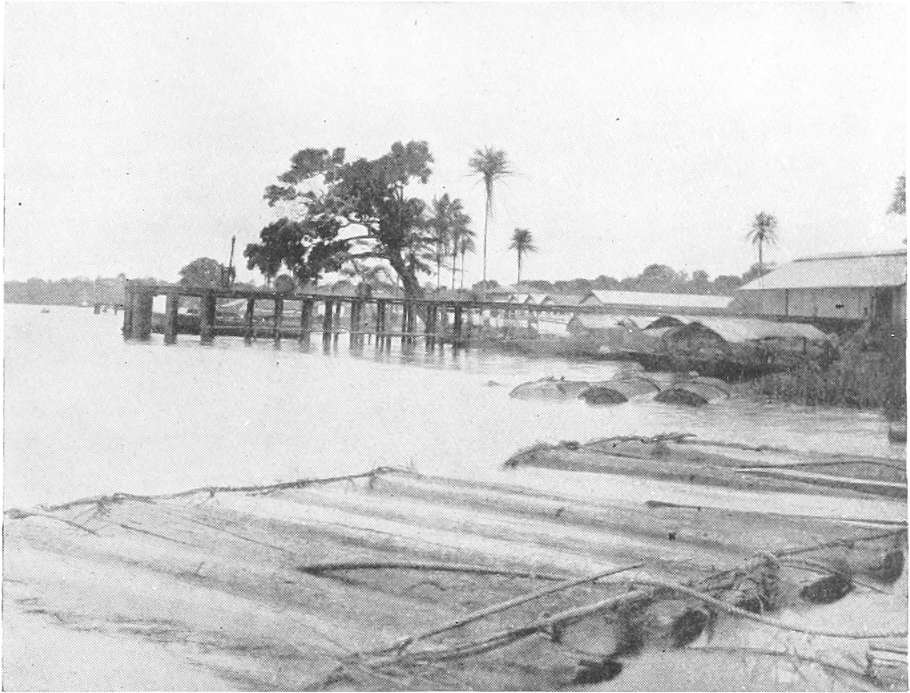
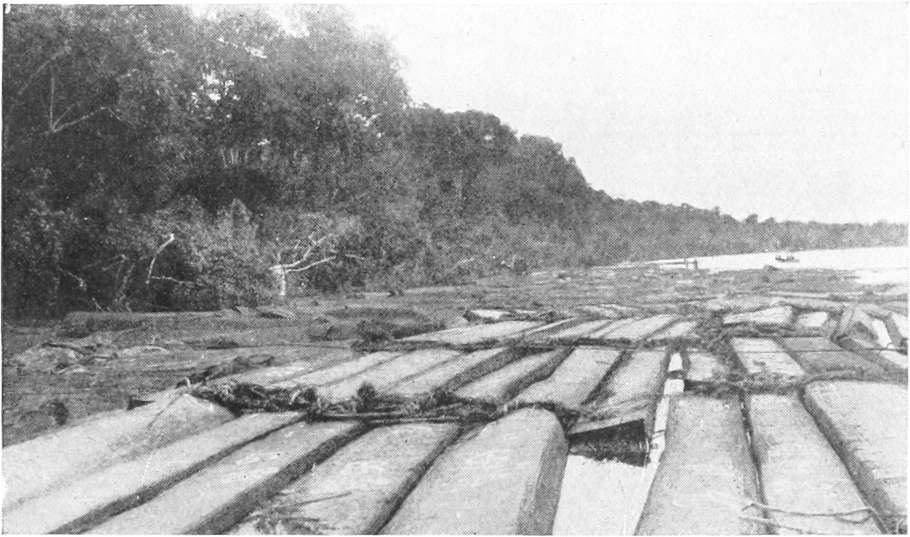
Fig. 88.—Mahogany logs floating in the river above Koko Town.
To face p. 396.
Verbenaceæ.
Avicennia Africana. White Mangrove. Ogbun (Lagos); Ede, Eyhrodo (Benin); Odonumon (Efik).
It is found in the Colony, Ondo, Warri, Owerri and Calabar provinces of Nigeria. It is seen partly in pure groups, and also mixed more or less in groups with the other areas of Red Mangrove and Laguncularia sp.
It is a small tree, growing up to 2 feet girth and about 40 feet high.
The bole appears silvery grey and the branches very slender. The leaves are of a lighter green than those of the Red Mangrove. The aerial roots are smaller and not so extended as in the case of Racemosa. On the whole, it occurs in the quieter and less exposed localities, away from the sea, and it seems to appear only secondary to R. racemosa, which is the first tree to appear in the mangrove formation. The slash is white; the cortex is thin.
The sapwood is white and the heartwood a light brown when freshly cut. Is moderately hard, and durable when dry and used away from water. It is termite-proof. In structure it is similar to teak, being a member of the same family, but the grain is more open and the pores are considerably larger and longer, giving the wood a more open texture. It planes up with a smooth surface, splits well, takes nails moderately well and saws easily.
It is a somewhat slow-growing, at first shade-bearing, and later on a light-demanding tree. Natural regeneration is good, but it does not appear to be extending as fast as R. racemosa. It sprouts from the stump; root suckers and aerial root shoots grow in considerable numbers. On the whole, it tends to die out sooner when the ground becomes dryer than R. racemosa, and its area of distribution from the coast inland is much less wide.
The timber has not been exported, nor has it been sawn up for local use. For the natives this tree forms what is considered the best “salt bush” in the Jekri country. It is still used for the manufacture of salt, which is considered much stronger than and superior to imported salt. It is also used for poles, house-building, boat and canoe houses and wharves.
Vitex grandifolia. Ori (Yoruba); Owenkundignon, Oriri Ogikiomi (?) (Benin).
It is found in the Benin, Onitsha, Owerri and Ogoja provinces, in the open deciduous forest zone.
The digitate leaf is much larger than that of V. Cienkowski, and on the whole the tree is larger too, reaching a girth of 10 feet and a bole length of 30 feet. The fruit is rather larger, but similar in shape and taste to the former. The branches are very persistent, and coming out more or less in whorls from the bole, give the tree a most distinct appearance.
The sapwood is white and the heartwood at first light-brown, and then darker brown. It is rather more open-grained than the teak. It does not split very well, but can take nails; neither does it plane easily, but can be worked up to a smooth finish. It is very durable and termite-proof.
At first fast growing and later rather slower, it is on the whole a little faster growing than V. Cienkowski. It withstands the fires in an extraordinary manner, and only occasionally does the bole get so deeply burnt that the tree becomes hollow. It bears a large crop of fruit almost every year.
The timber has not been exported, nor has it been sawn up for local use. It deserves further attention than it has received up to the present, more especially as it is of the same family as the teak.
Native Use.—The fruit is eaten, and occasionally the smaller trees are used for house-building.
Vitex Cienkowskii. Ori, nla (Yoruba).
It is a medium-sized tree, attaining a girth of about 8 feet and a bole length of about 25 feet. The bark is rough, divided up with long, narrow vertical fissures, which are more or less regular in their distribution. The crown is spherical, somewhat widespreading, and usually occupies about half the height of the tree. The large, shiny, dark-green digitate leaf is most characteristic of the tree. The fruit, not unlike a large acorn without the cup, is edible and has a slight honey taste. It attracts the bees from far and near.
This tree is found in the Oyo and Abeokuta provinces of Nigeria.
Timber.—Hard, brown wood, very similar to teak. It is often rather knotty and sometimes cross-grained.
At first fairly fast-growing, later on it is rather slow. It is very fire-resisting, but does not thoroughly protect the soil. It has not been felled for export, nor has it been sawn up for local use. It serves a useful purpose amongst the dry-zone vegetation, and is one of the larger trees of that zone.
Vitex Fosteri. Ori-eta (Yoruba); Obuban, Ibang (Benin); Ogi (Calabar).
Chief Characteristics.—It is a medium-sized tree with thin, white bark and voluted stem, which is not overstraight beyond 15 or 20 feet, soft and fibrous; one of the common trees in the mixed forest, though also found in the evergreen forest. It has a thin, digitate leaf. It usually stands as one of the dominated trees in either forest. The leaves often look silvery, but this is an optical illusion, owing to their being so thin and white on the underside.
Distribution.—It is found in the Abeokuta, Ibadan, Jebu, Ode, Benin and Calabar provinces of Nigeria.
Timber.—It is a hard, white wood of even texture and smooth grain, which is apparently durable for interior work. It is somewhat like hornbeam, though not quite so hard. It works up with a smooth surface.
Silvicultural Qualities.—It is a shade-bearer, though, if planted pure, it is doubtful whether its foliage would thoroughly protect the ground, owing to its being so thin. Natural regeneration by seed is apparently good.
Use.—It would probably make good verandah-posts, door-frames and window-frames, but so far has not been tried. As there is plenty of it, proper supplies could be obtained in the provinces named.
Value.—At present doubtful, as it is an untried wood; however, belonging to the same family as teak, it should find a place amongst the valuable small timbers for local use.
Vitex diversifolia.
It has been noted from the Oban Reserve.
Clerodendron Thonningii. Egwa, Oriakuku (Benin).
It is an ornamental shrub of the Benin province of Nigeria, found near the Osse River.
Clerodendron Thompsonii. Egwa oviakuku (Benin).
A medium-sized shrub with woody stem found in the Benin province.
Clerodendron scandens (Beauv.).
It is a large shrub with hard wood of the Benin province of Nigeria.
Clerodendron volubile. Ebenote (Benin).
Found in the Benin province.
Clerodendron splendens (Kew). Adabi (Yoruba).
A medium-sized shrub found in the Abeokuta province. The stem yields small wood for farm implements.
Labiatæ.
Ocimum viride (Willd.). Efinrin (Yoruba); Aramoho (Benin).
Found in the Yoruba and Benin country.
Scrophulariaceæ.
Cycinium camporum (Engl.). Arojoku (Yoruba).
Flowers white. Found at Obba on the Hill, Ondo province.
Bignoniaceæ.
Spathoidea campanulata. Red Tulip Tree. Oruru (Yoruba); Okokwi Okwekwe (Benin); Essenim (Efik); Osukaregigi (Bembi).
This tree grows in the fringing and intermediate forests. It is of medium size and has large trumpet-shaped flowers, not unlike those of the tulip.
Uses.—This tree is often used for ornamental purposes. Timber, edible seeds and medicaments are obtained from it.
Stereospermum acuminatissimum. Osualong (seed), Okwekwe, Aguana (Benin).
This is a somewhat common tree of the Benin province of Nigeria, and certainly with its red flowers it is one of the most handsome. It is not unlike the so-called African Tulip Tree, Spathoidea campanulata. On the whole, it is a smaller tree, with a round, almost spherical crown; the wood is soft and white and not durable. It bears a large number of seeds, but few appear to germinate. It sprouts feebly from the stump, is a light-loving tree, and also a soil-protecting and soil-improving species. It deserves greater attention for planting in gardens and at the edges of recreation grounds of all sorts.
Stereospermum Kunthianum (Cham.). Ayagdo (Yoruba).
This tree is found in the Abeokuta province and Erin, Ilesha. It is very similar to the tulip-tree, but has a more orange-coloured flower.
Kigelia Africana. Sausage Tree. Orora, Pandoro (Yoruba); Ogiahimi, Esiskwi (Benin).
It is a common tree of the Ogoja, Owerri, Onitsha, Benin, Ondu, Ibadan and Abeokuta provinces of Nigeria. The most typical feature of this tree is the long sausage-shaped fruit, which hangs by a stalk about 10 inches long; the flowers are red, the leaves large and open. It is a small tree, often very much branched. It is usually found in old clearings at the edge of the mixed deciduous forest. The wood is not durable. The natives use it for fences, and the roots are mashed and used by Benis for cuts in the fingers. The bark and fruit are also used medicinally by the Yorubas.
Markhamia tomentosa. Iru, Aya, Iwe (Yoruba).
It is found in the Abeokuta province of Nigeria, in the mixed deciduous forest zone.
It is a tree 4 to 6 feet in girth, with a large leaf having five pairs of pinnæ, the lowest being very small, like stipules. A deciduous tree bearing small fruit. A very common tree.
The timber is a soft, white wood, which is not used. It is attacked by white ants, and is not durable except under cover.
The tree is a light-lover, quick-growing, and non-soil-improving. Natural regeneration is moderate, so that it does not spread too much. The tree has not been felled for export timber, nor has it been cut for local use.
Newbouldia lævis. Benin Ju-ju Tree. Akkoko (Yoruba); Ikhimi (Benin).
It is found in the Calabar, Ogoja, Owerri, Warri, Onitsha, Ondo, Benin, Ibadan and Abeokuta provinces of Nigeria.
It is a small tree, scarcely exceeding 4 feet in girth. It has a large, oblong, dark leaf. It is most commonly seen in the middle of a compound with a pot at the base of it. The flowers are trumpet-shaped, white-coloured at the base and rose-red at the mouth. The fruit is a long, thin black pod, which opens releasing many flat, winged seeds. The seed is yellow and in the middle of the wing.
The timber is white and soft.
It has not been exported or cut for local use.
Native Use.—The tree is used to mark boundaries. It is a “Ju-ju” tree, both in and outside the compound. It is sometimes used for fences. It is used by the Yorubas for rafters.
Acanthaceæ.
Thunbergia Vogeliana (Benth.). Blue Benin Thunbergia. Ohwohiro (Benin).
This is a shrub with handsome blue flowers; it is moderately common in the Central Circle.
Rubiaceæ.
Sarcocephalus eu-esculentus. Sierra Leone Peach. Egbesi (Yoruba); Aragbaihi (Benin); Amellaky or Egbessye of Sierra Leone.
It is found in the Abeokuta, Ibadan, Benin, Onitsha, Owerri and Ogoja provinces of Nigeria, where it is common in the open deciduous forest.
In habit it usually takes more of the shape and form of a shrub rather than a tree, though where it is protected a longish main leader grows up, but even this droops. It rarely attains a height of more than 15 feet and a girth at the base of about 18 inches. The leaf is large and oval, opposite, and rather leathery to the touch. The fruit is not unlike a peach, except that its surface is not smooth, but is pitted in small depressions, giving it a more special peach colour. The flesh is very woody and tough, interspersed with small seeds not unlike those of the strawberry. When ripe the birds eat them. The roots are of a yellowish-brown, especially when the cortex is rubbed. The slash is yellow. The leaf is very shiny.
It does not really reach timber size, but the sapwood is a light yellow and the heartwood a darker yellow.
It is a moderately quick growing, light-demanding, soil-protecting and soil-improving tree. Natural regeneration is poor, but reproduction by root suckers and stool shoots is very strong. It is very fire-resisting, and recovers easily from any effects of fire.
Native Use.—In cases of scarcity of building-timber, occasionally short sections are obtained from it for hut-building. It is, however, usually too short. The roots are used medicinally in the following way: roots about a ¼ inch in diameter and upwards to ¾ inch are thoroughly washed in water and cut up into sections of about 4 inches long and boiled in water. The solution thus made is strained off, and is drunk either hot or cold in fairly large doses for the relief of venereal disease (G.) in its earlier stages. Most of the natives affirm that it gives great relief, though they acknowledge that it does not prove a cure for it.
Sarcocephalus esculentus. Weatherboard Wood. Opepe (Yoruba); Obiache (Benin); Awessu (Jekri).
It is found in the Abeokuta, Ondo, Benin and Calabar provinces of Nigeria, where in certain localities it is very prevalent.
It is a large tree of the evergreen forest zone, which attains a girth of 12 feet and a corresponding bole length. The bark is slightly rough and scaly, but in an even manner. It bears a large edible fruit 2 inches in diameter. The fruit is not unlike a peach in shape and colour, but with a rougher and softer skin. It is very closely and finely pitted with tiny holes in its surface. Inside, the flesh is pinkish-white. It is commonly seen at the edge of freshwater swamps in the Benin, Ifon and Ondo districts. It likes soil with good drainage, but it may be very moist.
The bole is very straight, and not unlike that of real African Oak in appearance. The leaves are rounded and moderately large, and inclined to be leathery in texture, with two stipules at the base. In the young seedlings the stem is more quadrangular in shape than round, and there are a few almost straighter furrows running vertically up it.
It tends to spread with the opening up of the evergreen forest. The root spurns are very slight and round, merging into the stem a foot or so above the ground. The slash is yellowish-white, and a rather dirty colour. Mucilage-like latex gradually exudes from the cut.
Timber.—The wood is very durable indeed, both for exposed places and for interior work. It is moderately hard, a little open and fibrous in grain, of a yellow to orange colour, with slight variations in its distribution through the wood. It planes well and saws easily; splits fairly well, takes nails, and does not warp or shrink very much. There is only a slight difference in colour between the sapwood and heartwood, but the sapwood is not quite so durable. It is termite-proof. It is usually very straight-grained, free of knots and other internal defects—in fact, it is one of the cleanest of all the African timbers.
It is a very fast-growing, at first slightly shade-bearing and later light-loving tree, which thoroughly protects and enriches the soil with its leaf fall. In fact, after the first two years it is very impatient of shade, and grows very slowly, if it is at all under large trees. In suitable places natural regeneration is very good. Fair crops of seeds are borne almost every year. In some places, notably north of the Ikoha in the Benin province, it is almost gregarious in habit. It sprouts well from the stump. Here again, unless there is sufficient light, it does not grow rapidly, and even tends to die down. In the nursery, seeds generate readily, but often fall a prey to the Duika, which eat the young seedlings. The tree does not stand transplanting very well, as it throws back its development very considerably. Small plantations have been made in one or two places. Close planting appears to be the correct method, as the branches are rather persistent and liable to form knots or places of decay in the stem, if they do not drop off when they are quite small.
In 1906 samples of this timber were sold as a hardwood in Liverpool market, where it was considered to show little or no merit. However, since that date there have been increased demands for all good timbers, so that it seems worthy of a further trial. Locally it has been used for making canoes, or has been cut up for planks. It has also been used for bridge-building and other constructional work, and being one of the most durable, ever wider use is being found for it, quite apart from any likely demands for export.
Native Use.—It is felled for sawing up into planks and making canoes, and is considered one of the best of all local timbers, except Iroko.
Sarcocephalus sambucinus (?). Yellow Wood. Opepe (Yoruba); Ebengiku, Obiache (Benin); Eben (Jekri).
It is found in the Ondo, Benin and Warri provinces of Nigeria.
It is a medium-sized tree of the swamps, both near rivers and near the sea coast—in fact, it will grow in waterlogged places—whereas the Sarcocephalus esculentus, to attain large dimensions, likes drained soil.
The fruit is only an inch in diameter, but of the same colour as the former. The pitting of the surface is more widely distributed and the pits are shallower. The bark is less scaly, with a very slight roughness or fissured surface. The wood is not so durable as the former, especially in exposed places. On the whole, the leaves are larger than S. esculentus and a little thinner.
The sapwood is whitish-yellow and the heartwood of a deep yellow colour. It is more fibrous and rather more open-grained than that of S. esculentus. The pores, too, are longer. On the whole, it is easier to work, a little softer, planes well, takes nails, splits well and saws easily. It is doubtful if it is termite-proof.
Although really a light-loving tree, it can stand more lateral shade than S. esculentus. It is a thoroughly soil-protecting and soil-improving tree, the foliage making a very rich humus. It is much more slow-growing than S. esculentus, though on the whole it will stand closer together, and yet grow well. It sprouts well from the stump. Natural regeneration appears to be good. It is sometimes almost gregarious in habit, and in some places one of the few valuable trees in the swamp region. It is also often one of the few of merchantable size. No plantations have been made with this tree.
In 1906 samples of this timber were sold in the Liverpool market as cedar, but it was only considered of poor quality. It deserves, however, further trial now. Locally it is occasionally sawn up for planks.
Native Use.—It is sometimes used for making canoes, but it is not liked by the natives, because they say it is not so durable as S. esculentus.
Sarcocephalus sp. Swamp Opepe. Oppepera (Yoruba); Eben Obiache (Benin). Perhaps the same as the foregoing species.
Morinda sp. Brimstone Wood.
Ekiti district, Ondo province.
Morinda lucida. Brimstone Wood. Oruwo (Yoruba); Obiache (Benin).
Found in the Yoruba and Benin country.
Morinda longiflora. Ekiti Morinda.
Found in the Ekiti district, Mamu Reserve.
Pausinystalia sp.
It is found in the Eastern Calabar province of Nigeria. It is a medium-sized tree found growing in old farms. It has globular-shaped flowers with yellowish-red anthers, making it very pretty and conspicuous. It has a hard, yellowish-white wood.
Saccoglottis Gabunensis. Mahogany, Tala. Ugu (Benin); Attalla (Jekri); Edat (Efik); Tala (Brass); Tala (New Calabar); Edat (Oban, Ekoi).
It is a large tree, attaining a girth of 15 feet and a height of 150 feet. Nearly always found on swampy ground, or anyhow where the rainfall is high, as, for instance, in the Oban district. One of the first trees to be seen in the forest immediately behind the mangrove swamps. The bark is roughly fissured like elm, but more regularly, and the slash is red. The fruit is an indehiscent nut with small nodules on it, about the size of a walnut, which exudes a liquid not unlike honey. Bees often frequent the tree for that reason. A reddish sap exudes when the tree is cut.
It is found in the Benin, Warri, Owerri and Calabar provinces of Nigeria.
The wood is hard and dark-red, with a fairly close grain, though easy to work. The sapwood is usually very narrow and yellowish-red.
It is evidently a shade-bearer, and stands a good deal of shade in its youth. Natural regeneration is fairly good where the rainfall is high. It seems a moderately fast grower, though no actual measurements have yet been taken. It is almost gregarious, especially in Oban. In 1906 it was valued in the Liverpool market at 3d. to 6d. a superficial foot as a mahogany of mild texture and fairly good colour. It has, however, not been used by the Public Works Department.
Native Use.—In the Benin, Warri and Calabar provinces the bark is stripped off in rolls about 3 feet long and sold for making gin bitter, by placing it in the liquid. A bundle of bark is sold for 5s. at Calabar. In the Degema and Brass districts it is one of the common canoe trees.
Mitragyne macrophyllum. False Opepe. Burokossa, Bulokossa, Ugbodokossa (Benin); Ebar (Brass); Ebar (New Calabar); Ubuen (Efik).
It is found in the Abeokuta, Ondo, Benin, Warri, Owerri and Calabar provinces of Nigeria.
It is a large tree, attaining a girth of over 12 feet and a height of over 100 feet. It has a very large leaf. The tree is often more or less gregarious, more especially in the moister or almost swampy parts of the evergreen forest zone. The bark is of a dull-green colour, comparatively thin, and only slightly fissured in a large tree.
The sapwood is yellowish-white and the heartwood of a pale yellow colour. It is almost a hardwood, does not split well, planes up smoothly and saws comparatively easily. It hardens considerably on seasoning and is very durable under cover, but not so much on exposure to the air. The dense foliage makes a thick layer of humus under the trees, as a few of the leaves fall off each year. It is thus a soil-improving and soil-protecting tree. It would probably be found to make a good mixture, in groups of about half an acre in extent, with mahogany in the evergreen forest zone. In the Brass district it is one of the commonest trees which is used for making canoes; it has also occasionally been sawn up for planks. It has not yet been exported to England, but at any rate locally it should command a wider use in house-building of all kinds.
Mitragyne Africanum. Akpakossa (Benin).
It is found in the Benin, Ondo, Warri and Calabar provinces of Nigeria.
It is a somewhat common tree on the borderland of the mixed deciduous forest and the dry-zone vegetation. The tree is of small size, attaining a girth of about 6 feet and a bole length of 25 feet; the leaf is very large, but does not reach the size of M. macrophyllum. It is most frequently found in the swampy places at the edge of the deciduous forest; like the sister tree, it is more or less gregarious, though the groups are usually not very large.
The timber is of a dull yellowish-white colour, and planes well; it does not split very easily and is very durable.
This species is a shade-bearing tree of soil-protecting and soil-improving qualities, owing to the dense bed of leaves, which in turn makes a bed of humus at the base of the tree, and thus grass-fires are very much hindered in spreading. The timber has not been exported to Europe and the natives scarcely ever use this wood.
Randia malleifera. Buje nla (Yoruba).
Found in the Olokemeji Reserve.
Randia octomera (Hook.). Buje (Yoruba); Assun (Benin).
It is found in the Benin province. It is a shrub with spherical-shaped fruit like an apple, with the sepals projecting from the top. The fruits yield a black dye which is used by the natives.
Randia cladantha (K. Sch.).
It is found in the Benin province of Nigeria. It is a woody shrub having a hard wood, and rather pretty red flowers in the autumn, which brighten the evergreen forest very much.
Randia maculata (Kew). Buje, Buji dudu (Yoruba).
A shrub having large, trumpet-shaped flowers. It is very ornamental.
Randia caudata. Blue Dye. Buje (Yoruba).
It is a small tree, 15 to 20 feet high. Found in the Olokemeji Reserve.
Randia macrantha. Kan Kan (Yoruba).
Found in the Ondo province.
Nr. Randia. Ukape (Benin).
Found in the Benin province.
Mussænda erythrophylla (Sch. and Thonn.). Kamatete (Ibo, Owerri).
Found in Obudu, Ogoja province.
Mussænda tenuiflora (Benth.). Mamu (Yoruba).
Found in the Mamu Reserve.
Mussænda Isertiana. Igi Ira (Lagos) (Benin).
Lagos.
Pavetta Baconia (Hiern). Idofun, Igbo (Yoruba); Akapano Iyokheze (Benin).
It is a common tree in the Calabar, Warri, Benin, Ondo and Abeokuta provinces of Nigeria. A small, shrub-like tree, reaching about 3 inches in diameter, most common as an undergrowth plant in the evergreen forest zone. Many specimens are found in the Obagie Forest Reserve. It stands the shade well, is moderately hard, and sprouts well from the stump. The natives of the Benin country cut young specimens very largely for use as yam-sticks.
Hymenodictyon bracteatum. Obadon (Benin).
Found in the Benin province of Nigeria.
Corynanthe paniculata (Welw.). Olikiba Anikiba (Benin).
So far it has been found in the Benin province of Nigeria, but either this species or Johimbe should be found in the Calabar and Ogoja provinces.
It is a medium-sized tree of the mixed forest zone, which is moderately prevalent in certain localities.
The timber is brown, hard and durable. It planes well and splits moderately well. It takes nails and saws moderately easily for hard wood. It is considered termite-proof by the natives.
It is a somewhat slow-growing tree, a shade-bearer, a soil-protecting and soil-improving tree. Natural regeneration only appears to be slight. It does not sprout very prolifically from the stump. No experimental plantations have yet been made.
This is a sister species to C. Johimbe, which yields the bark containing the very useful alkaloid Johimbin, but as yet the bark of this tree has not been tested for a similar substance.
In the timber report of 1906 it is valued at 2½d. to 3½d. a foot as a species of gummy mahogany, and in another case as fancy wood at 1d. per superficial foot or 1s. 6d. to 1s. 9d. a cubic foot.
Amongst the Benin natives it is used for wall-plates, for which purpose it is highly esteemed.
Crossopteryx Kotschyana. Ayeye (Yoruba).
A small tree found in the dry-zone forests, of no special value. The fruit is leathery; the flowers grow in panicles.
Native Use.—Parts of the tree are used in medicine by the natives.
Sabicea calycina (Benth.). Agan Aparo (Yoruba).
Found in Iro.
Canthium glabriflorum (Hiern). Attan (Benin).
It is a common tree in the Calabar, Ogoja, Warri, Benin and Ondo provinces of Nigeria, also in the Cameroons.
It is a medium-sized tree, reaching a girth of 9 feet, but with a bole length of about 60 feet, rather longer in proportion to the girth. The flat, wide crown is typical of this tree, as are also the large tripinnate leaves and the brown, stringy bark with slight fissures. The branches spread out almost in two or three whorls near the top of the tree. The light can be seen through the crown. The flower is white, in large, umbel-like masses of small flowers, borne on the upper side of the branches. It flowers in November.
The sapwood is white and fairly broad and the heartwood is brown, like cedar. Termites attack in the open.
It is a light-lover and grows quickly, in old farms especially. It sprouts well from the stump, but there are no root shoots. Seed production is good, and seedlings appear in near open spaces.
It has not been cut for local use or exported to Europe.
The branch is used. It has to be placed on a boy’s head and is said to make him grow. The boys do it themselves in the Benin country. The wood is also a firewood in Benin.
Fig. 89.—Funtumia Rubber Plantation on both sides of the road, Igwoshudi, Benin.
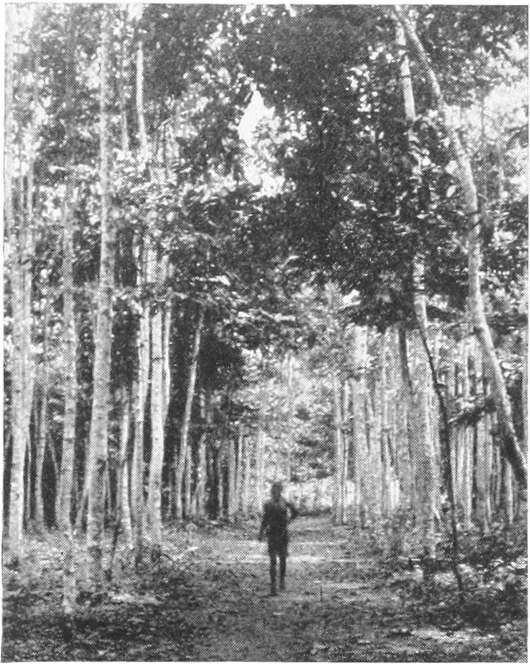
Fig. 90.—Mahogany Plantation (Khaya Punchii), twelve years old, near Noami, on the banks of the Osse River, Benin Province.
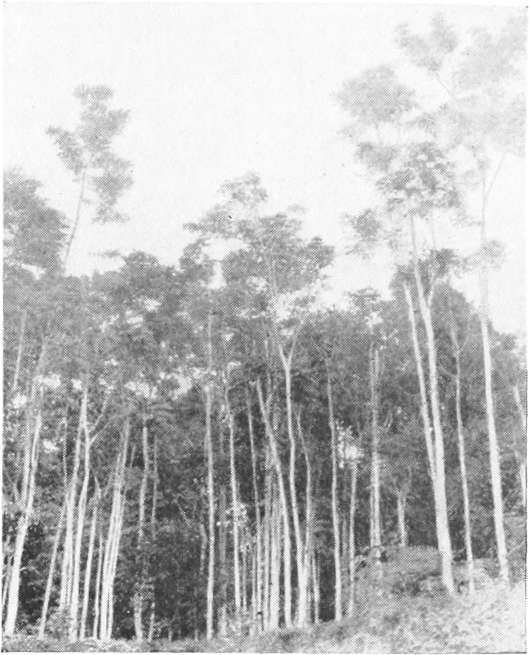
Fig. 91.—Entandrophragma log with three sides already squared and fourth partially cut ready for squaring.
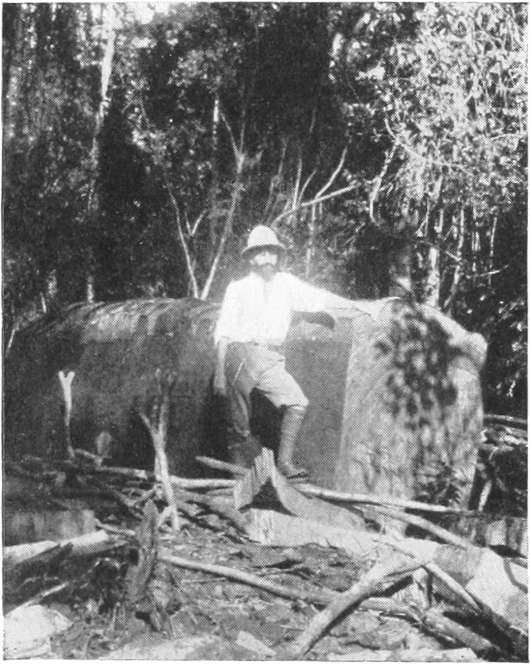
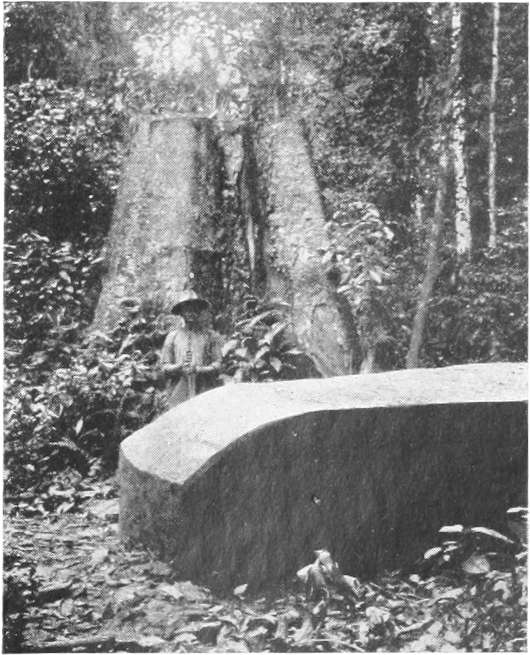
Fig. 92.—Stump of Khaya Punchii with log at base, left in the Benin Forest.
To face p. 408.
Compositæ.
Vernonia conferta. Big-leaf African Cabbage Tree. Onimagugun, Shapo (Yoruba); Orimagugu, Oriweni, Onamagungun (Benin).
It is found in the Abeokuta, Ibadan, Benin, Onitsha and Ogoja provinces of Nigeria, in clearings at the edge of the mixed deciduous and dry-zone forests. It is a very common small tree or large shrub, springing up in all old farms. The very large bright-green leaves, set opposite to each other on a small, comparatively, stout, green, succulent stem, are most typical of this plant. The fresh leaf, especially on the smaller plants, is not unlike a very open cabbage leaf, but of a lighter green hue. As the plant gets older the leaves do not attain such a size. The flowers are small, but grow on large, open and much-branched spikes. The stem is comparatively soft and pithy, scarcely forming a real woody tissue. When dried they can be used for firewood and kindle easily. Occasionally it is used for making live fences.
Vernonia Nigritana (O. and H.). Bitter Leaf. Ewuru or Oko (Yoruba); Ihagobo (Benin).
This is found in the upper part of the Benin province of Nigeria, near Sabongida, in the deciduous zone. A small shrub-like tree, the leaves of which are used for soup. The dried stem is used for kindling wood. The roots are sometimes used as chew-sticks.
Vernonia amygdalina. (Del.). The Bitter Leaf. Ewuru (Yoruba), Oriwu (Benin).
Yoruba Chew-stick, also known as the Chew-stick of Ewuro, thereby clearly showing the Yoruba origin of some of the inhabitants of Sierra Leone, as Ewuro is also the name of it in the Sierra Leone country.
It is found in the Abeokuta, Ibadan and Benin provinces, where it grows in openings in the mixed forests.
It is a small shrub, reaching a height of about 5 feet, having soft leaves, with rather a greyish tint, which are covered with very fine silvery hairs. It is commonly found in old farms and by the side of the roads, usually in small bushes or clumps.
It sprouts up when cut down, and thoroughly shades the ground. However, it is sometimes so thick that it rather hinders plantation operations, though once the other plants are established it acts as a useful little “nurse.” The leaves are picked off by the natives and cooked in water for making soup. They have a distinctly bitter flavour, but make a very healthy vegetable soup. The leaves are often sold in the local markets. This shrub is occasionally left more or less in line as a small living fence.
Vernonia cinerea (Les.). Ash-coloured Fleabane. Elegbe Oju (Yoruba).
It is found in the Olokemeji Reserve of the Abeokuta province of Nigeria. A large, woody shrub, one of the chewstick family, the leaves of which are sometimes used for making soup.
Lycopodaceæ.
Lycopodium phlegmaria (Linn.).
This is a small Lycopodium found in the Benin province of Nigeria. It was obtained from the uppermost branches of a very tall tree, growing at the edge of a deep valley about 8 miles north of Benin City.
NON-INDIGENOUS TREES OF NIGERIA
Myrtaceæ.
Eucalyptus amygdalina.
A specimen of this tree stands on the old beach at Akassa, Warri province.
Eucalyptus tereticornis.
Lagos Island.
Eucalyptus rudis.
Lagos Island.
Eucalyptus tesselaris.
Lagos Island.
Eucalyptus citriodora.
A specimen of this tree stands in the Botanical Gardens at Calabar.
NOTES ON NIGERIAN TREES OF WHICH THE BOTANICAL NAMES ARE NOT KNOWN
Itufiak or Etufiak (Efik). Essunwoi (Yoruba); Ilako (Benin).
It is a medium-sized tree of the freshwater swamps, with heavy dark-green foliage; it grows quite gregariously in stands of one to ten acres in extent. The trunk reaches a girth of about 7 feet and a bole length of about 30 feet. The roots spurns are comparatively slight, and do not extend much over a foot up the bole. The foliage is very heavy and it casts a most dense shade, making patches of this forest the darkest of almost any in Africa.
It is common on the banks of the Itunkpe Creek, a tributary of the Kwa River, near Calabar, in the same named province, and also in the Owerri province of Nigeria. It belongs to the evergreen forest zone.
The timber is a reddish-brown hardwood of close grain, which would saw into sizeable planks. It is a somewhat slow-growing, shade-bearing, soil-protecting and soil-improving tree. The leaves yield a thick bed of humus. It appears to be one of the most valuable trees in this respect. It is moderately hard, with even, close-textured grain. It planes well, saws fairly easily, takes nails, but does not split well. Natural regeneration appears to be good. It also sprouts from the stump.
The timber has not been exported, nor has it been cut for planks for local use. It appears to deserve a trial as a local timber for floor-boards or for the making of boxes. Considering that so often many trees are found in the same place, it should not be difficult to obtain adequate supplies.
Native Use.—Building, but it is attacked by the insect called Efiak.
Musk Tree. Owi (Benin).
It is found in the Benin province of Nigeria, in the evergreen forests. It is a medium-sized tree, reaching a girth of about 8 feet with a short bole of about 10 feet. The crown is large but rather elongated, and reaches down two-thirds of the height of the tree. The fruit is large and more like an avocado pear in shape and colour. The leaf is very large and wide, more like a teak leaf, but of stronger texture, the midrib especially being very thick.
The timber is hard, with white sapwood and green heartwood. It splits well and takes nails fairly well. It is a little fibrous in texture, but can be planed; it saws fairly easily.
It is a somewhat slow-growing, shade-bearing, soil-protecting and soil-improving tree. The leaves make a rich humus. Natural regeneration is none too good. Stump sprouts do not appear to be very strong.
It has not been exported or cut for local use, but would be worth trying for house-building.
Native Use.—The fruit is kept for four days and then the inside large kernel is eaten. The young leaves are used for curing boils, as an external plaster to draw the poison.
Ekkiowa (Benin).
It is a small shrub which is found in the Benin district of the same named province. It is not very common.
Native Use.—The seed is used medicinally for the hands in case of sores which are red or raw.
Satinwood. Okwaba (Benin).
This tree is found in the mixed forests of the Benin province of Nigeria.
In 1906 sample logs of this timber were sold in the Liverpool market as satinwood, but were not considered worth shipping. Since then, however, none has been cut for export or for local use. Perhaps owing to the increased demands for all kinds of timber a further trial should be made with this one for satinwood. Natural regeneration is poor. It is a somewhat slow-growing, shade-bearing, soil-protecting and soil-improving tree. It reaches a large size.
Ubellu, genus? Annamamilla (Benin).
It is found in the Benin province, Nigeria.
It is a small tree, the name often confused with the mahogany-walnut, Lovoa Klaineana, which is also sometimes known as Annamamilla in the Benin country. The leaves are imparipinnate. It is a softwood with light-brown heartwood and little black, spherically-shaped fruit, unarmed.
Native Use.—Firewood of good quality. Not used otherwise.
Big Hardwood. Arugbo (Yoruba); Eto (Benin).
It is a very large tree with a wide crown. The timber is of a brown colour, but the sapwood is white. It is extremely hard and durable; even when felled in the farms it will be six years before it has rotted away. The bark is a dark-green with white lenticels scattered over it.
It is rather a rare tree in the Benin province of Nigeria. Standing a good deal of shade, it is a soil improver and protector. Natural regeneration does not appear to be very plentiful.
It does not sprout up when coppiced.
Native Use.—None.
Ifon (Yoruba). Owehe (Benin).
Is a small tree which has scented wood. It reaches a girth of 20 inches only. Before going to market, according to the natives, the feet, hands and body should be washed with a solution prepared from the bark of this tree mixed with soap. The object of this operation is to effect quick sales at the market.
Ewayron (Yoruba).
A leaf for wrapping up food, found in the Yoruba country, also used in Benin for roofing houses.
Mahogany. Alode (Benin).
This tree is found in the mixed deciduous forests of the Benin province of Nigeria.
In 1906 samples of this timber were sold in the Liverpool market as a species of mahogany of a soft nature. Since that date none has been felled. Perhaps with the changed conditions with regard to the demand for all timbers similar to mahogany a further trial with the timber of this tree should be made. Natural regeneration is not very good. It is a rather slow-growing, soil-protecting and soil-improving tree.
Spiny Tree. Oaha (Benin).
It is a small tree found in the Benin, Ondo and Abeokuta provinces of Nigeria. The small, rather thin and longish spines on the stem are the most typical feature of this tree. It usually grows with aerial roots. It reaches about 3 feet in girth, and on the whole is more common in the secondary forest than in the primeval. The wood is moderately durable, especially when used for inside work, such as verandah-posts.
Native Use.—It is sometimes used for small poles for hut-building.
House Post. Ewai (Benin).
A common tree in the Benin and Abeokuta provinces of Nigeria. It is a slow-growing tree which has a very hard brown wood; it is a shade-bearer. The seed is a small nut. The wood is used by the natives of Benin for building-posts, rafters and small planks.
It is found in the moist evergreen forest zone and is somewhat common in the Obagie Reserve of the Benin district.
Ussehin Chew-stick. Okuta (Yoruba); Okuta, Opahan (Benin).
It is rather a rare tree of the Benin, Ondo and Abeokuta provinces of Nigeria. The name means “a stone,” and has apparently been given because of the hardness of the wood. It is a medium-sized tree, reaching a girth of about 5 feet. The wood is almost white, and there is little difference between sapwood and heartwood. In the Ussehin country of Benin it is used as a chew-stick. The Yoruba states that it is the hardest of all native woods.
Akpo (Benin). Hardwood.
It is rather an uncommon tree of the Benin province of Nigeria, also a very hard wood, a medium-sized tree. The brown heartwood is used by the natives for planks. It is thought rather highly of by the Benin natives, especially for wall-plates and joists. In the past it has been only hewn by them, but not sawn.
Ukpaigwi, Okpaigwi (Benin).
Rather an uncommon tree of the Benin province of Nigeria. It grows to 10 feet in girth and yields a soft wood which is attacked by white ants. It is a shade-bearer and soil-protecting tree. The roots are used by the natives for medicinal purposes.
Oruru (Benin).
It is a tree found in the Benin province of Nigeria.
It is a small tree, reaching a girth of 2 feet. After three years it comes up in an old farm. The slash is red and a little red sap exudes slowly. It is usual to find thirty small ones in one place, from root suckers, but also from stool shoots if a tree has been cut down before. It is similar to Eranpata in this respect. The fruit is round and small and like peas, only a little larger. The flower, which is white and quite small, grows in small clusters.
The wood is not hard and white all through. It is attacked by termites, except when placed in the house, where it is more or less protected.
Reproduction by stool shoot is the best method.
It is a shade-bearer and grows slowly. It grows in good soil of some depth and also in the evergreen forests. When it appears in old farms, it stands the fires well.
It is a soil-improving and soil-protecting tree, and tends to spread with the extension of cultivation, especially in the evergreen and mixed deciduous forest zone.
As it does not reach timber size, it is not worth trying as a building timber.
The fruit is edible; after eating it the tongue becomes almost of a blue colour. The root is used medicinally. The branches are used as pegs in the top of the walls of the houses in Benin, partly for fixing the roof.
Fig. 93.—Mimusops Djave, about twelve years old, standing near Prison, Degema Station, Eastern Circle.
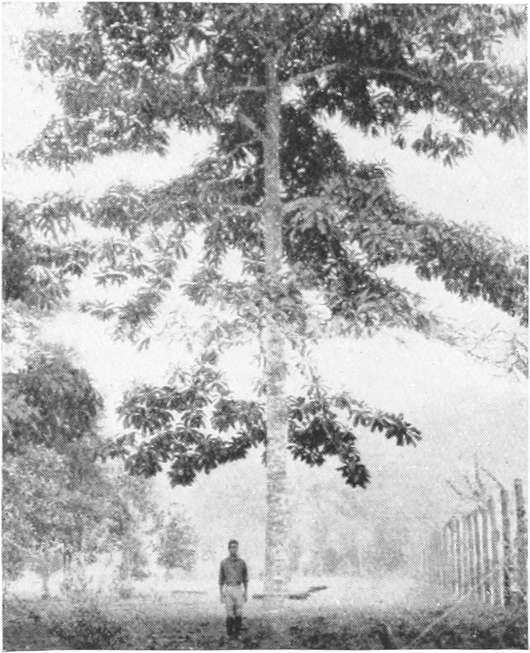
Fig. 94.—Mature Light African Greenheart (Piptadenia Africana) standing in the middle of Degema Station.
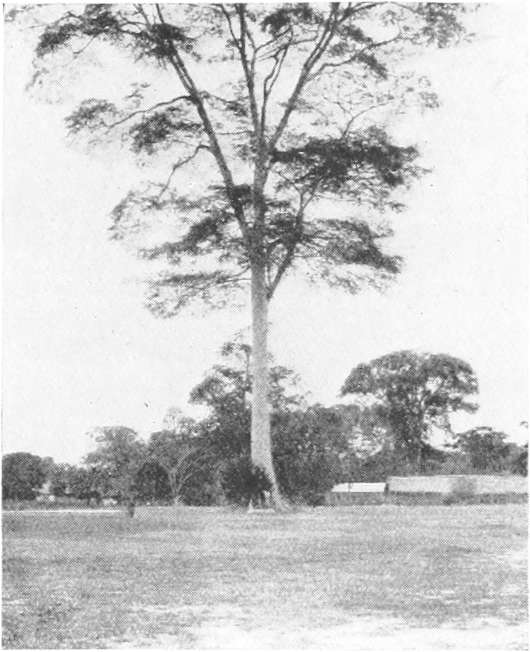
Fig. 95.—Young Oil Bean Tree in bearing (Pentaclethra macrophylla), Degema Station.
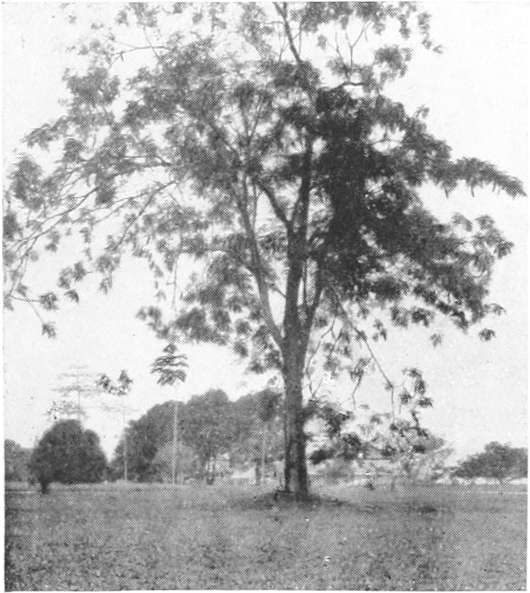
Fig. 96.—Red Oak (Berlinia acuminata), 20 feet in Girth, standing near the Sombreiro River, Degema Station.
To face p. 414.