Chapter IX · (continued 3)
Reading edition
Zanthoxylum macrophyllum (Oliver). True Benin Satinwood. Atagbo (Yoruba); Ughahan, Okor (Benin).
It is found in the Abeokuta, Ondo, Benin and Calabar provinces of Nigeria, in the mixed deciduous forest zone, where it is very prevalent, especially in old farms.
Chief Characteristics.—It has a very large leaf, up to 6 feet long, with forty pairs of leaflets, each rather smaller than those of Z. Senegalense. There are no thorns on the branches, but many on the stem, which is thoroughly armed until old age, when most of the woody spikes drop off. It bears a large bunch of small, black, spherical-shaped seeds. It is a common tree in abandoned farms of the mixed deciduous forest zone. The thorns are more sharply pointed than Z. Senegalense and not so woody at first, but later form a thorn at the top of each wooden protrusion. One specimen found in the Olokemeji Reserve had very few wooden protrusions, each armed with a thorn, but there were larger leaves than Z. macrophyllum, though in all not quite so long. In old age the stem is almost smooth, and may reach a girth of nearly 6 feet and a length of over 30 feet. The crown is slender and broken up with three or four main branches. The base of the bole in old age is spotted with yellow lenticels.
It is a light-loving, quick-growing tree, which does not protect the ground, and only to a certain extent acts with its leaves as a soil-improving tree. Natural regeneration is very good, and on the whole, at the edge of the evergreen and mixed deciduous forest zone, with the increase of farms it is tending to spread in greater numbers than before, and in some places groups of them are found, whereas in the original forest only isolated specimens are obtained. No plantations have been made with this tree.
The sapwood is light-yellow and the heartwood of a darker yellow shade. In quickly grown trees it is not very large, but in the older trees comprises more than two-thirds of the diameter of the tree. The timber is hard, fine-grained, planing up smooth in texture. It does not take nails well, nor split well, saws, however, cleanly, and occasionally shows a little figure.
In 1906 samples of this timber were sold in the Liverpool market as Sabicu at 2s. to 2s. 6d. per foot, and reported of a very hard nature. Since then, however, none has been cut or exported. Locally it has not been used in any form. It should be noted, however, that this is a sister tree of the West Indian Satinwood, and considering that it grows to a larger size than that one, the timber should demand a still higher price.
Use.—In the Benin country the timber is used for making door-plates before putting dried clay on the top, and also used for doors.
Zanthoxylum sp. n. Dwarf Satinwood. Boji.
Chief Characteristics.—The fruit is a mass of red berries very similar to the Mountain Ash of Europe, but a small tree armed with a few scattered spines of short length, but not very woody, more in the nature of thorns. It attains a girth of 10 inches and a height of 15 to 20 feet.
Distribution.—It was only found on the summit of the Boji Hills from an elevation of 4,500 to 5,000 feet, where other vegetation gave out and only grass grew otherwise.
It has a very hard, yellow wood of the usual satiny nature. It made very good firewood on the mountain top.
Zanthoxylum sp. (Kew). Pterocarpus sp. African Satinwood. Urueben (Benin).
It is found in the Benin and Ondo provinces of Nigeria.
It is a common tree near the banks of rivers in the evergreen forest. It is of medium-size, reaching a girth of about 7 feet; the bole is long (40 feet); the root buttresses reach up the bole about 3 feet. The stalk has a few prickles, especially when it is small, but they disappear in old age. The leaf is smaller than P. osun, but much the same as Akume, Pterocarpus sp. The habit is typical of a Pterocarpus and not of Zanthoxylum. The bark is quite smooth and always unarmed. The fruit is ovoid and flat, with the seed at one end, rather different in this respect to Pterocarpus, and without the prickles on it. The slash is white, and soon red drops of latex-like fluid exude from the tree. The branches are upspreading and the crown is large, though narrow, the bole being about two-thirds of the total height.
The sapwood is white and the heartwood is yellow when young and dark-red, like P. osun, when old. It is hard, but splits well. Termites attack it. It is cross-grained and stands a little bending; otherwise it is brittle, when bent far.
It is slow-growing and a light-lover. It likes a good soil which is moist and has depth. It does not sprout from the stool. Seed reproduction is good, and the seedlings are found in the neighbourhood of old trees. It is a deciduous tree for three months in the year (dry season).
It has not been cut for local use or exported to Europe. It is used for making shovels for mud-puddling in the building of Benin houses; also for pegs in the walls of a chief’s house.
Toddalia sp. Oie (Yoruba).
A climbing shrub common in Tropical West Africa. The fertile stamens are equal in number to the petals. Leaves digitate.
Uses.—Condiments and medicine.
Ægle Barteri. Calabash Orange. Shange, Bale (Yoruba).
This is a small tree growing near the villages, cultivated for its shade and for medicinal purposes. The fruit looks like an orange, but the shell is hard and it is not edible.
Clausena Anisata (Oliv.). Alapari, Obuko (Yoruba).
It is found in the Olokemeji Reserve of the Abeokuta province of Nigeria.
Simarubaceæ.
Irvingia Barteri. Dika Nut, Wild Mango. Oro, Auro (Yoruba); Ogwi (tree), Okherli (seed) (Benin).
It is found in the Abeokuta, Ondo, Benin, Warri, Onitsha, Owerri, Calabar and Ogoja provinces of Nigeria.
With its smooth, shining, small dark-green leaves it is quite distinguishable from other forest trees. The very spherical shape of the crown and the short bole are also most typical of the tree. It is often found near river banks or in damp localities. Wherever found, it is usually preserved by the natives, though not actually cultivated or tended.
The flower is inconspicuous, but the fruit is like a small mango, becoming quite yellow when ripe, though much harder and of a much sharper flavour.
The wood is hard and durable; the sapwood is yellowish-white and the heartwood yellow. It is impervious to white ants.
The tree is a shade-bearer, especially in youth, but grows very slowly. Those planted near Leopardstown, Calabar, were only 6 to 8 feet high after ten years’ growth. It is true they received little or no attention and occasionally the grass was burnt near them.
No regular plantations have been made, though one plot was planted in the Mamu Reserve in 1910. Further experiments in cultivation, and especially pruning and tending to see how early the tree will bear fruit, are worth undertaking. A method to increase the size of the fruit, and with it the size of the kernel, might be discovered and thus make it a profitable tree to grow in plantations.
Reported on by the Imperial Institute in 1904, and kernels worth £14 a ton then in London.
Native Use.—House-building. The fruit is eaten, and then the nut is cracked and the kernel beaten up and served as soup. Fruit or nuts or both are sold in the markets of Benin and Yorubaland.
Irvingia Smithii. Benin Dika Nut (?). Akwekwe (Benin).
It is found occasionally in the Benin province of Nigeria. It is a tree with similar growth to Irvingia Barteri, but reaches a larger size, up to 12 feet. The bole length is also greater, 40 feet. The fruit is larger than Irvingia Barteri, but of the same shape. It is rather uncommon in the evergreen forest. The crown is smaller and occupies only the upper third of the stem. The branches are larger, too, and of lesser number in proportion than Irvingia Barteri.
The wood is yellow in the sapwood and brown in the heartwood, and hard. It is hard to split. The heartwood is very small, being only about 1 foot out of a diameter of 4 feet. Termites do not attack the wood.
It is a shade-bearer and grows slowly. It does not sprout from the stool, but reproduction by seed is good. The duikas eat the fruit.
It has not been cut for local use nor exported to Europe.
It is used, by tying four seeds together like Ogwega, for a game. The fruit is not eaten because it is not sweet.
Irvingia sp. Pwekupweku (Benin).
It is a common tree in the Benin province of Nigeria. It is a large tree, reaching a girth of 15 feet and very tall. The fruit is yellow, and large as an African mango, but with a very much sweeter smell and sweet taste. The branches are flattish, and so the crown is wide, with a long bole and shallow crown. It has a long, lanceolate leaf with insignificant veins. The wood is hard, with white sapwood and brown heartwood. It grows on good soil, which is moist and deep in the evergreen forests. It is a shade-bearer and grows moderately fast.
Native Use.—The fruit is used for killing rats after it has been cooked and mixed with palm oil chop. It is then given to them, and they at once fall down dead.
Simarubaceæ (Planch).
Hannoa undulata. Whitewood. Igigun (Egba); Igbo (Lagos); Orisi (Igbado, Yoruba).
It is found in the Calabar, Owerri, Benin, Warri, Ondo, Ibadan and Abeokuta provinces of Nigeria.
It is a very large tree, reaching a girth of 12 feet and a bole length of about 50 feet, which grows up very readily in old farms or clearings in the evergreen forest and lower parts of the mixed forests. It has a large, broad leaf, which is deciduous for about a month in the year. The flower, which is white in colour, is in the form of racemes (?). The bark is green, with grey streaks up and down, and the slash is white with yellow markings; it smells sweet, too. The fruit is oblong and black, more like a plum. The spurns are very slight.
The wood is very soft and white all through. It dries without warping, but if not cut properly is liable to be attacked by small borers of the furniture kind. It planes with a smooth surface. It is very light, more so even than Musanga wood. The grain is fine, though such pores as there are, are long. It splits well and adzes well too. It shrinks considerably in drying, but this might be obviated by girdling and drying very gradually in shade when cut green.
It is a very quick-growing tree, almost as fast as Ricinodendron. It is a light-lover, and is rather intolerant of shade, except in its youth. It grows best from seed reproduction, as the power from the stool is very slight and soon dies back.
It was sampled in 1912 at Degema, but has not been exported to Europe. A trial as a wood for making pulpwood seems indicated. It is split up into flat pieces for doors and mantelpieces, also for making the walls of temporary houses, each piece being set upright to the other, with any round edge on the outside.
Burseraceæ.
Pachylobus edulis. Native Pear (Ohan), Incense Tree, Elemi Gum. Ibagho (Yoruba); Onumu (Benin); Eben (Efik).
It is found in all the Southern Provinces of Nigeria, chiefly as a planted tree in the neighbourhood of villages, and on the sides of the roads leading to them, being more prevalent in the Benin and Oban than the other districts. It is a medium-sized tree, reaching a girth of about 7 feet and a height of about 70 feet.
The gum, which exudes when the tree is cut with a matchet, smells very much like incense when burnt, and is of a white colour. It is always planted in the villages, partly for shade, chiefly for food, especially in the Oban country.
The fruit is first of all a grey, and then a purple colour, and a very cylindrical plum shape, in all about 2½ inches long and rather more than 1 inch in diameter. It is very much like turpentine to taste, especially when not quite ripe, and in the centre of the fruit there is an oblong nut rather more than 1 inch in length, more or less round, with four ribbed edges, all culminating at the apex. The leaves are large, consisting of four to six pairs of pinnæ, which are shiny and dark-green on the upper surface, and almost silver-grey underneath. The trunk is often very much cut about and chipped, and little pieces of the white gum are often seen in the old scars. It usually bears fruit heavily every year.
The sapwood is white and the heartwood is of a faint pink colour. It is not very hard, but more like mahogany in texture and character. Owing to its irregular growth and branching habit, it is often rather knotty and cross-grained.
It is a shade-bearing, somewhat slow-growing tree, which only partially protects the soil, but on the whole improves it with its fall of leaves. Natural regeneration appears to be rare, chiefly perhaps owing to the fact that the natives pick the fruit even before it is quite ripe, and take it away to eat in their houses. It is usually planted by the natives as a transplanted seedling, about 3 feet high. Considering the poor flavour of the fruit, it is rather surprising that it is so widely planted and comparatively speaking so much tended by the natives in certain districts. It is moderately fire-resisting and dew-collecting, especially in the dry seasons, the ground in the vicinity of the trees often being quite damp with the condensed dew falling off the leaves.
It has not been felled for export or for local use. The tree, however, provides grateful shade in the more open parts of the country, in the neighbourhood of villages.
The gum has not been collected for export, but is considered of value. However, no tapping experiments have been tried.
Native Use.—The fruit is called a pear, and is liked by most natives, who eat it raw. It is sometimes sold in the markets at five for one penny.
Canarium Schweinfurthii. Pink Mahogany, Bastard Mahogany. (Sometimes sold as Gaboon Mahogany or African Elemi. Anikantuhu, Ako, Ibagbo (Yoruba); Onumukyukyu (Benin); also known as Ikwapbo. (The Benin name means Kyukyu or bird, Onumu or Incense-tree.)
Chief Characteristics.—Evenly striated bark of orange to light-yellow colour, turning grey on exposure to full rays of the sun. The seed is small and similar to that of Pachylobus edulis, but much smaller.
Distribution.—A few in the Western, more in the Central west and south of Benin, and most common in the Eastern Circle, especially north of Calabar, in the mixed deciduous forest zone, and to lesser extent in the evergreen forest zone.
It is a large forest tree, with a girth of over 12 feet and a bole length of about 90 feet. Being more or less preserved by the natives when found in the forests, in clearing for their farms, it is often now seen on the roadsides. The slash is white, and as the roots beside the road are often cut by the natives, the yellowish-white gum exudes, forming a small white layer on the surface of the root. This has a most pleasant smell, and is not unpleasant to taste. It is closely allied to, if not much the same character as, the “Balsam of Tolu.” The leaf is comparatively small, with three or four pairs of pinnæ, and growing more or less in tufts, this being reminiscent of the Mahogany family. The root spurns are very slight, and in this respect it is more like the European Ash, and usually there are one or two main roots which spread out, down the slightly enlarged bole at the base. Otherwise the tree is one of the most cylindrical in shape, falling away with the increasing height less than almost any other. It is a deciduous tree. The pores are very fine and rather longer than in the ordinary mahogany, and the wood is not so sheeny.
The sapwood is white, and in fast-grown trees often 6 inches through. The heartwood is of a delicately pink mahogany colour, darkening to a light-brown mahogany on exposure to the air and sunlight. It is not very hard, and splits fairly well. It planes up with a smooth surface. It saws well and also takes nails fairly well. It has very considerable elasticity. It is lighter than most kinds of mahogany. The logs will float as soon as at all dry.
In youth it stands a good deal of shade, but later on it is on the whole a light-demanding tree. It is a fairly quick-growing tree, but tends to become very slow when left alone in the open. It needs a rich soil, but is also found on poorer land. It needs more moisture than many others. Although not a soil-protecting tree, the leaves yield a fair amount of humus in their annual fall. Natural regeneration is fair, but it is rather susceptible to fire, and much of it is thus killed. No plantations have been made of this tree.
In 1906 a sample was sold in the Liverpool market as Gaboon Mahogany at 1s. 6d. per cubic foot full measure, and in 1907 sample logs of this tree were exported to the Liverpool market, where they were sold as light Benin Mahogany at 2d. per superficial foot. Since then none has been felled.
The natives occasionally cut the tree for planks, and use the wood for making canoes, chiefly owing to its lightness and elasticity.
Canarium sp. Rough-barked Canarium. Ekugbi, Ekugbo (Yoruba); Onumukyukyu (Benin).
Chief Characteristics.—A large tree, with larger fissures than C. Schweinfurthii, about 6 inches apart; the bark is inclined to scale off in between. The leaves are a little larger, but the gum is very similar and used for similar purposes.
Distribution.—It was found in the Olokemeji Forest Reserve.
It is deciduous for about three weeks in the year, chiefly November, but otherwise it is a soil-protecting and soil-improving tree.
The tree has not been felled for export or for local use. Nor do the natives appear to have used it for any purpose.
Canarium Mansfeldii. Gaboon Mahogany.
This species is found on the banks of the Upper Cross River.
Canarium sp. Oyife (Yoruba).
Found in the Yoruba country.
Canarium sp., syn. Schweinfurthii. Incense Tree. Anikantuku (Yoruba); Onumukyukyu (Benin).
Found in the Ilaro district and Benin.
Meliaceæ.
Carapa procera. Scented Mahogany Cedar, Crab Wood, Touloucouna Oil. Efu Iya, Abo-oganwo (Yoruba); Ibbegogo (Benin).
It is a common tree, found in the Calabar, Ogoja, Owerri, Warri, Benin, Ondo and Abeokuta provinces of Nigeria.
It is a small tree, growing to a girth of about 6 feet. The pinnæ and the whole leaf are both much larger than the mahogany leaf, even including that of grandifolia. It often grows with a divided bole, two small stems shooting upwards from about 3 feet from the ground. The leaves grow in very distinct tufts on the edge of the branches. The bark is smooth and a light-green colour, with a few vertical uprights when the tree is old. The fruit is a large, roughly round, woody drupe. The covering shell dehisces into eight parts, releasing about twenty hard, brown, round-cornered, almost square nuts. The seeds are eaten by porcupines. It is found in the freshwater swamps in the evergreen forest and in damp places of the mixed deciduous forest. The timber is pink when freshly cut, and the heartwood has the red-brown typical of the Mahogany family. The small size of the timber rather militates against its reaching the high value of mahogany.
The tree is a shade-bearer in its younger stages of growth, and even when older it still stands a considerable amount of shade. Self-sown seedlings are not often seen. Perhaps this is due to so many of the seeds being eaten by animals. The stump scarcely sprouts after it has been freshly cut. Considering the size of the tree, a very fair number of nuts ripen each year.
No use has been made of the seeds, though they yield a similar oil to that of the Crab Oil Tree of South America.
In 1906 a sample of the timber was sold in the Liverpool market as Mahogany Cedar, scented, at 2½d. and 3½d. per superficial foot.
Native Use.—The bark is used by pregnant Yoruba women and for sores and as a cough mixture. It is used underneath palm leaves as a roofing material in the Benin country.
Khaya grandifolia, later grandis (Stapf.). Big-leaf Mahogany, Benin Mahogany. Akor, Oganwo (Yoruba); Gadeau, Ogwangu (Benin); Odala (Ibo Asaba); Digiten (Brass); Dirinshi, Diki (Ibo Owerri); Asamogo (Ibibio); Upono (Efik); Obon (?) (Oban, Ekoi).
It is found in the Ondo, Benin and Ogoja provinces of Nigeria, at the edge of the mixed deciduous forest zone, where it is very prevalent in some places, such as at the edge of the Ifon Owo-Akure Road.
Chief Characteristics.—It is a large tree of the mixed forests. It attains a girth of 14 feet and a corresponding height. It is, however, taller in proportion than K. Punchii. It has long, upward-tending root flanges, though not so large as those of K. Ivoriensis or the Coast Mahogany. The crown is open compared to the other Khayas, except K. Senegalensis. It has conspicuously large pinnate leaves, with three or four pairs of leaflets quite 10 inches in length, each leaflet being 4 inches long. The stem is smoother than K. Punchii, and in that respect more like K. anthoteka. The leaves of this species are the most shiny of all; in fact, the others appear dull beside them. The bole, on the whole, is cleaner than K. Punchii and longer, though it forks or divides into a head in the characteristic Mahogany way. The shininess of the leaves is one of the greatest characteristics of this tree. The capsule is somewhat larger than K. Punchii. It is also a little thicker, and the tip is not so long or sharp. It opens out into five segments, as a rule, but sometimes there may be only four. The seeds themselves are a little oblong in shape and not quite so square as in K. Punchii, although they are just as thin and flat.
The timber is the typical Benin Mahogany, with somewhat long pores, first of all rather pink, then a rich mahogany-brown colour. Occasionally the sapwood is very wide in proportion to the size of the tree, but this is more in the case of very quickly grown trees. It sometimes shows very rich figure of a “roey” nature as well as “fiddleback,” more especially in the root buttresses. Here, owing to the storms to which the tree is exposed, the fibres of these buttresses become fractured and compressed, thus giving a broken and mottled appearance to the grain after it has been cut up lengthways. In this species the wood of the “curls” often shows a rather bolder roe than in the case of those obtained from K. Punchii or Ivoriensis.
On the whole this is the most quickly growing of all the Khayas. In its youth it stands a certain amount of shade, and, in fact, always, but it would appear to demand a good deal of light for its full and quick development. It is a thoroughly soil-protecting and soil-improving tree. The leaves make a rich humus. Natural regeneration is good, and, in fact, appears to be much better than in the case of the other Khayas. It sprouts from the stump a little. It appears to be somewhat exacting as to soil, preferring somewhat deep, rich and moist sites. In plantations it has already found a place. It has also been planted, mixed with other species of Khaya, in the small nurseries, plantations and lines of trees made by the timber-lease holders. It does not seem to be attacked so severely by the leading-shoot borer as in the case of K. Punchii. Owing to the fact that the seeds usually fall on more open ground, it is not eaten so quickly by the little boring insects.
The timber is being constantly exported and mixed up with the other species of Khaya. Being lighter, it floats higher on the water than the other species, more especially Entandrophragma. It has occasionally been used by the natives for making canoes, as also for sawing up into planks.
Khaya Punchii. Uhi Mahogany, Benin Mahogany. Oganwo (Yoruba); Ogwangu (Benin); Eggi (Ibo Asaba).
This tree does not attain such a large size as either K. grandis or K. Ivoriensis, but it often exceeds a girth of 12 feet and a bole length of 70 feet. The bottom log of a tree is often found to show figured wood. This is perhaps owing to the bark being constantly removed, and to the succeeding occlusion of the wounds following at different times, according to when the bark is removed.
Chief Characteristics.—It has a comparatively small leaf, with five or six pairs of leaflets. It has slight root spurns, or protuberances, or even in some cases none at all. It is generally particularly rough at the base, owing to the bark having been continually removed by the local people. Higher up, the stem is covered with brown-coloured bark, which is slightly pitted. The leaves are in tufts, though to a lesser extent than either K. grandis or Ivoriensis. The large masses of small white flowers remind one of lilac. It is of the same white colour. It flowers in February, when it is also in new leaf. Compared with K. grandis it usually has a shorter and somewhat more curved bole.
Distribution.—It is found in the Abeokuta, Ibadan and Benin provinces of Nigeria.
The capsule is of medium size, splitting open into five segments which remain attached at the base. On the whole it is rather thinner than K. grandis or Ivoriensis, but does not come to such a sharp point as either of those two.
The timber is very similar in grain and texture to the other Khayas, but if anything it is a little heavier and a little closer texture then either grandis or Ivoriensis, especially in those districts where it grows in the mixed deciduous forests, and where the base of the trunk is burnt with an occasional grass-fire.
Although not quite so fast-growing as the other Khayas, it is a fast-growing tree with soil-protecting and soil-improving qualities. Natural regeneration is fair, though the little thin, flat seeds are very soon attacked by a little boring insect when they fall to the ground. However, when rapidly gathered after having fallen, they retain their germinative capacity for a greater length of time than in the case of the Entandrophragmas. On the whole, if the locality is not too dry or fires too prevalent, this tree tends to widen its area of distribution with the spread of farms. The leading-shoot borer attacks this tree in its younger stages perhaps even more than the other Khayas, more especially when it is planted pure. In this connection it should be noted that this Khaya, as well as the others, is not gregarious in habit, being always found singly, though varying much in number per square mile. This factor rather indicates that pure plantations should not be made, or at any rate that it should only be planted in small groups mixed with other species, also in small groups, from a quarter to one acre in extent. In leased timber areas it has been planted mixed with other species. On the whole, it has not been exported so much as the other Khayas. It has been sold as Niger Mahogany.
Value.—3d. to 6d. per superficial foot from Sapoba, in the Benin province. The natives occasionally cut it for sawing into planks.
Fig. 69.—Mature Iroko (Chlorophora excelsa) and Teak, one year old, Mamu Forest Reserve, Ibadan Forest, in 1915.
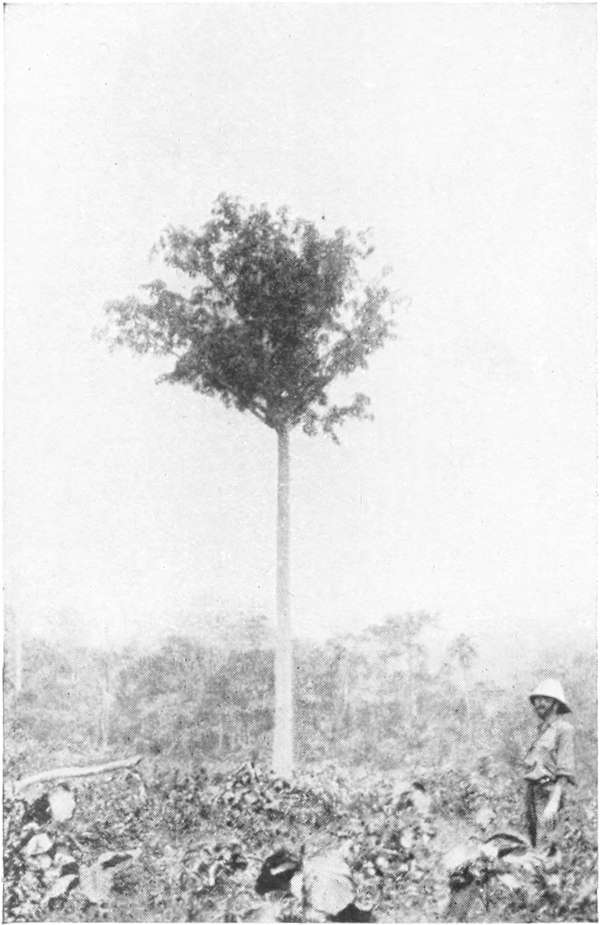
Fig. 70.—Large full-grown Iroko Tree (Chlorophora excelsa) standing near Ibadan, Jebu Ode Road, Mamu Forest Reserve, in May 1910. Same tree as Fig. 69.
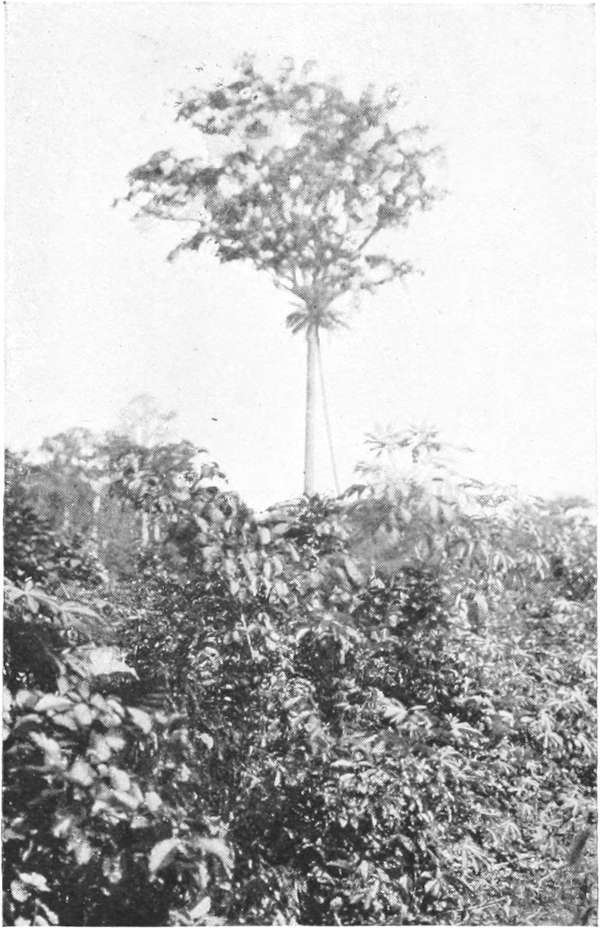
Fig. 71.—Untouched Forest on Summit of Ado Rock, Oyo Province, 1910.
To face p. 320.
Khaya anthotheca?. White-barked Mahogany or White Mahogany, King of the Timber. Funfun (Yoruba); Ogwangu Nufwa, Ogigedu (Benin).
Many specimens of this tree are found in the mixed forests on the banks of the Ovia River in the Ifon district of the Benin province, and also isolated trees near the banks of the Owena River in the Ondo province.
The chief characteristic of this tree is the speckled white bark, which gives the stem generally a light, almost white or grey colour. The white patches in the bark occur irregularly scattered all round the bole, being chiefly confined to the lower half of it. In young trees the four very strong lateral roots show up prominently above the ground, leading away from the tree more or less at right angles and remaining above the surface of the ground for two or three feet. This feature to some extent persists even in old age, but then it is not so pronounced, as these roots tend to form more or less stout buttresses similar to the others, but coming out more abruptly and forming a more shelf-like protuberance from the stem.
The timber is supposed to be lighter, and of a lighter colour than that of the other Khayas. However, it appears to be only rather more of a pinkish-brown when freshly cut, taking on the typical mahogany-brown once it is exposed to the air. So far, it has always been sold mixed up with the other species cut in the same area, and realizes similar prices. It may perhaps have even helped towards the scoring of the higher average price of 6d. per superficial foot which was obtained from one area where this species is found.
Khaya n. sp. Mahogany. Ogwangu (Benin).
This was found in the Benin province of Nigeria. In the wood, it shows a considerable difference to the other Khayas, being a much lighter red-brown colour and of more open texture.
Khaya Ivoriensis. Coast Mahogany. Obi, Oganwo, Akpakor (Yoruba).
This species is supposed to be that from which most of the coastal mahogany is obtained, more especially in the more low-lying regions. The wood is of a richer and darker colour and somewhat heavier than that of the other species. The most typical feature, though, is the very sheeny nature of the wood and the very considerable size of the medullary rays, which, however, are not conspicuous, as in the wood from Nigeria.
Khaya Senegalensis. Dry-zone Mahogany. Oganwo (Yoruba); Ogwangu (Benin).
Chief Characteristics.—The tree has an open crown with a few upspreading branches, and apparently much less foliage than its “confrères.” The leaves are small, very grey, specially on the under-surface, giving them almost the character of Eucalyptus leaves. The bole is shorter than the other Khayas, with a slightly scaly bark and only a small thickening of the base and no root buttresses at all. The bark is darker than Khaya Punchii, though the scales are often grey. The capsule is almost frequently four-sectioned, though this is not an absolute rule, as other Khayas have been found bearing capsules dividing into three, four and five sections. It does not exude gum so readily as Khaya Punchii, and the gum is of a redder colour. Illustration No. 67 shows the lower part of the bole of a tree 10 feet in girth.
Distribution.—It grows on the banks of the Ogun River above the Iseyin-Oyo Road, Ibadan province, Akure, Benin and Ogoja provinces of Nigeria. It is found as one of the most prevalent trees near Obudu and in the Onitsha province north of Ogrugu.
Timber.—It is of redder brown colour than either Khaya Punchii or grandis, and has a greater sheen. The texture of wood is a little closer, and, owing to the annual grass-fires burning the stem, is slightly figured. Logs could not be cut much more than 20 feet in length, owing to the bole not always being straight, though the large branches would make small ones and curls.
Silvicultural Qualities.—It stands a great deal of drought, though in its drier area of distribution it is usually to be found near river banks. The seed keeps a high percentage of germination for some months after being picked. It demands more light than either of the other Khayas, and grows freely from the beginning. It has also a greater tendency to branch than the other Khayas, but this may be due to its being attacked more by the leading-shoot borer than the other species, as more of these insects are found in the open than in the mixed forests. It is almost gregarious, as groups of trees are usually found together.
Khaya sp. Orro (Yoruba); Geduloha (Benin).
This tree is found in the Ilaro district of the Abeokuta province. There appears to be some doubt as to whether this is really a distinct species, but the fact remains that the wood is very much darker and of rather a duller colour than most of the other Khayas. It shows also a very rich, wide roe, and in this respect the wood is more valuable than that of many other species. It is somewhat similar to the best counter-top wood obtained from the Entandrophragmas. It does not appear to be a very common tree, but it attains a girth of over 12 feet, and the bole is straighter and considerably taller than most of the Khayas.
Pseudocedrela Kotschyii. Dry-zone Cedar. Hard Cedar Mahogany. Emi gbegeri (Yoruba, Ibadan).
It is found in groups and isolated specimens in the Ibadan province of Nigeria, in the dry-zone forest and at the edge of the mixed deciduous areas, more especially in the Olokemeji Forest. With its somewhat regularly fissured bark, showing a criss-cross pattern, it is distinguishable from the other dry-zone trees. The silvery pinnate leaves in tufts and the charred base of the stem, combined with the grey trunk, all help to identify it. The little mahogany-like capsule, covered with silvery hairs when unripe, is another feature. When these burst open, leaving the empty capsule on the tree for a time, there is no doubt about its being of the Mahogany family. In the distance the grey, almost silvery-coloured bark makes it stand out as compared to others such as Dwarf Ironwood or the Shea Butter Tree. Reaching a girth of about 6 feet and a bole length of 25 feet, it is one of the largest dry-zone trees.
The sapwood is pinkish-red, when fresh, and the heartwood a rich red-brown, darkening slightly on exposure to the light. It is harder than mahogany and heavier. The grain is closer and on the whole finer, but with a similar sheen. It often shows a little figure. It saws well, planes smoothly, takes nails, and has a good appearance in the plank. It is said to be termite-proof. It is considerably stronger than mahogany.
Somewhat slow-growing, even from naturally growing root suckers, it is a light-loving tree, giving scarcely enough shade to protect the soil. In its youth it is a soil-improving tree. Natural regeneration is poor, root suckers being the strongest form of reproduction. It sprouts slightly from the stump, but not sufficiently for reproduction of a crop. A fair crop of seeds is found each year, but usually, owing to grass-fires, much of this is destroyed. Plantations are being made, but natural growth has been encouraged in places, and gives further promise of better growth.
It has not been exported, but it is occasionally felled for local use. It is one of the most valuable trees of the dry zone.
Entandrophragma utilis. Short-capsuled Mahogany, Sapeli or Heavy Mahogany. Ijebbo, Jebu, Ashuwole, Papala (Yoruba); Ogipogo, Ubilesan Onamakyuku, Plekkogo (Benin); Eplekgo (Jekri); Edem (Efik); Atori (Oban, Ekoi).
This tree is found in the evergreen and mixed forests of the Ondo, Benin, Calabar and Ogoja provinces of Nigeria. It is one of the most common mahoganies of the forest, and reaches the largest girth of any of the African trees. The biggest of all showed a girth of 56 feet, measured above the top of the buttresses, and one which showed 437 rings of growth had a girth of 52 feet, measured at 20 feet above the ground. This one, too, yielded 15 logs of various sizes.
The leaves are rather smaller and show the ribs rather more prominently than in E. cylindrica, but the growth, which is in tufts, is similar. It is deciduous for about three weeks in the year, in November, when inconspicuous flowers first appear and then the leaves. The capsule is about 3 inches long and nearly 1 inch in diameter. It is of the usual pentagonal shape, and there are five seeds, placed one over the other on each side of the central pentagonal core. The seeds are nearly square in shape, with a rounded back about an eighth of an inch thick. The wings are four times the length of the seed, making each about 2½ inches long. The seeds lose their germinative power in about three weeks, and are always attacked by a small boring insect.
The bole has comparatively slight root spurns, which terminate at about a maximum height of 20 feet from the ground. It is very straight, and may attain a height of 90 feet. The stem is, however, much more pitted than that of E. cylindrica. The bark is of a green to grey colour, very reminiscent at times of a beech-tree, especially at a distance. The crown is flatly spherical, being composed of a few very large limbs. The slash is white and brown; the sapwood is white and the heartwood of a red-brown colour, with a very strong cedar-wood scent when freshly cut. Even when the wood is seasoned and freshly planed, this scent is very noticeable. It saws and splits easily, planes up moderately, and takes nails fairly easily. It is not termite-proof, but the most common attack is by a lymexylon, if the logs are left lying unsquared in the forests. Many figured logs have been obtained from this species of tree. In the younger stages, the sapwood is comparatively wide. Natural regeneration is very good in some places. The tree grows very rapidly indeed. In its youth it stands a certain amount of shade, but later on it is a light-loving tree. It is a soil-protecting and soil-improving tree. Isolated trees have been planted and small plantations made in various parts of the country. Planted under proper conditions and with favourable seasons, an average growth of 6 feet in height may be expected. The young trees are occasionally attacked by the leading-shoot borer, but this is not very serious, particularly if a suitable mixture with other trees has been formed.
This timber has been one of the main export products of the Sapeli and South Benin forests. The chief market for this wood was, previous to the war, in Hamburg. However, from Hamburg, the markets of Copenhagen, Sweden, Finland, Russia and Austria were also supplied. Being almost half as heavy again as Khaya Mahogany, it costs more in proportion to bring over to Europe. Owing to the better and larger size of the logs which can be obtained from these huge trees, there was in these markets a greater demand for this timber for counter-tops than for Khaya timber. This to some extent counterbalanced the disadvantage of the extra weight. This timber was also considered of a duller colour and more liable to split than the Khaya wood. However, as many of the trees from which the largest logs have been obtained are mature, and over-mature, it is natural that the wood cannot be in a prime condition.
The timber is very popular amongst the local people for the making of canoes and for house-building.
Entandrophragma cylindrica. Heavy Mahogany or Cedar Mahogany. Jebu, Oro, Issisi, Alepo, Alopa (Yoruba); Ikwabobo, Agiekpogo (Benin); Atore (Efik).
It is found in the Abeokuta, Oyo, Ondo, Benin, Calabar and Ogoja provinces of Nigeria. It is one of the common mahogany-trees of the evergreen and mixed deciduous forest zone. It is the tallest of all African trees, the bole alone often attaining a height exceeding 100 feet. It is also one of the straightest and most cylindrical trees in Africa. The root spurns are very slight compared to the size of the tree, and do not extend usually more than 10 feet up the stem. The bark is smooth and not unlike the beech; in old age, however, it becomes slightly pitted and the bark scales off in places. The crown is deeper and more spherical than in the case of Entandrophragma utilis. The ends of the branches are most conspicuous, with their most pronounced tufts of leaves. The leaf is often about 4 inches long, but in young shoots may attain a length of nearly 3 feet, with over thirty pairs of pinnæ. The slash is white, with small, yellow, stone-like granules in it. The bark is thick.
The capsule is nearly 6 inches long and an inch in diameter. It is similar in shape to that of Entandrophragma utilis, and opens in a similar way. The seeds are rather larger and the wings considerably longer. It is deciduous for about a week in November, when the flowers, which are of a light-greenish colour, appear, and then the leaves.
The sapwood is white and comparatively wide, except in very old trees. The wood, when freshly cut, smells slightly like a red herring, and in colour is not unlike the flesh of kippered herring.
The heartwood is of a red-brown colour, rather dulling on exposure to the air and becoming a dark-brown colour. The pores are very long, much more so than either in the E. utilis or the Khaya genus. The timber splits well, saws easily, and takes nails moderately well. It is not always easy to plane it down to a smooth surface. It has a distinct tendency to warp unless properly seasoned. It is not termite-proof, but the attacks of the white ants are slow. The sapwood is more commonly attacked by a lymexylon. For interior work it is very durable; sometimes it has a very pretty, dull-brown wavy sheen.
Natural regeneration is good in many places. Isolated trees have been planted and small plantations made in different parts of the country. The growth on the whole is even more rapid than in the case of E. utilis. In favourable localities it will exceed an annual height growth of 7 feet. Although it will stand a considerable amount of shade in its youth, it is more of a light-loving tree in old age. It is a soil-protecting and soil-improving tree.
This is one of the chief mahoganies exported from the Benin and Sapeli forests, but it does not attain such an average high price as that of the Khaya genus. However, from all accounts it appears that the majority of figured logs have been obtained from this species; this compensates to some extent the disadvantage of this being the heaviest wood of all the mahoganies. It often floats just level with the water, and has sometimes been known to sink. In pre-war days it used to fetch 4d. per superficial foot, and the best market for it was in Hamburg; but, as also in the case of E. utilis, the wood was supplied to the markets in Austria, Russia, etc. It is common to make three logs each 30 feet long from the bole. Both this tree and E. utilis yield some of the best curls which are obtained from the mahogany.
The local people used to be very fond of using this tree for making canoes, and I have seen a canoe over 80 feet long and having a draught of over 6 feet. It has also been largely used in house-building.
Lovoa Klaineana. African Walnut. Abuwe (Yoruba); Ikwahobo, or usually known amongst the timber men and forest officers as Anamomilla in Benin, Apobo (Jekri, Ijor).
It is one of the most prevalent trees on the banks of the Ogba stream in the Benin province, and it is also found in the Ondo, Abeokuta, Owerri and Calabar provinces of Nigeria.
This tree grows to a large size, reaching a girth of over 12 feet and a bole length of over 60 feet. The root spurns are slight compared to Mahogany, extending only from 4 to 6 feet up the stem.
Chief Characteristics.—The small, almost quadrangular-shaped capsule, which splits open with four sides and centre square in section with only eight seeds, two placed on each face, is about the size of a little finger. At its base the bole is not entirely circular in shape, but tends to form four distinct narrow small buttresses, giving it almost a quadrangular shape. The bark is a dark brown colour, which gets rougher with old age and scales off to a small extent. Compared to the size of the tree it is not very thick. In the younger trees it is quite smooth and more of a yellow-brown colour. The leaves are pinnate, with three or four pairs of pinnæ. The four-sided capsule is a most typical feature of this tree, and distinguishes it from Entandrophragma. The leaves are of a dark colour.
The sapwood is white and the heartwood is a good walnut-brown, sometimes with very striking dark-brown or black streaks in it. The sapwood is comparatively narrow and the heartwood forms comparatively early in the life of the tree. The wood is only moderately hard; it planes well, and takes nails; it saws easily, and splits moderately well. It is, however, attacked by termites, but not when used for interior work. It shrinks but little and does not warp very much. The grain is rather finer than that of the ordinary mahogany, but the pores are often much longer. It has a pleasant lustre, but tends to darken a little with age, especially when not exposed to the brightest light. The tree is a moderately fast-growing, shade-bearing species, with soil-protecting and soil-improving qualities. Natural regeneration appears to be moderate. It sprouts slightly from the stump. Seed years are none too frequent. The seeds themselves are soon eaten by boring insects when they lie on the ground; even when picked up they soon lose their germinative capacity, and should be planted within a month of being gathered, as they are so liable to get dry. The tree is a little exacting in regard to soil, apparently demanding plenty of moisture, depth and a good deal of humus. No plantations have been made with this tree, but a great number of isolated trees have been planted by timber-lease holders in their areas.
In 1906 samples of this timber were sold in the Liverpool market as African Walnut at 1d. per superficial foot. Since then, however, the qualities of this timber have become better known, and it now finds a ready sale at rates varying from 2d. to 5d. per superficial foot. Although it is a mahogany by family, it is usual to sell it as African Walnut, as the colour and texture of the wood are very similar to walnut.
Native Use.—In the Benin province it has been used for canoe-making.
Guarea Thompsonii. Cedar Mahogany, Cedar or Close-grained Mahogany. Sidu (Yoruba); Obobonikwi (Benin); Akpaku (Ibo Asaba).
It is a large forest tree of the evergreen forest zone, attaining a girth of 12 feet, which is most commonly found in the Benin district of Nigeria.
Chief Characteristics.—The trunk is dark-brown with smoothish bark, which has a tendency to scale off a little. The pinnate leaves are shiny and form very distinctive tufts at the ends of the branches, though not quite so much as in Entandrophragma.
The fruit, which is quite soft, is a dehiscent capsule, of a dark brown colour; when ripe, three black seeds covered with red pulp are released. The seeds are ellipsoid in shape and smaller than those of G. sp., Obobonufwa. The seed is nearly half an inch long and covered with white streaks following round its narrowest circumference. The crown is very thick and dense compared with G. sp., Obobonufwa. The bole length is shorter, and the shape of it is not so regular nor so round as that of G. sp., Obobonufwa. The crown is flatly spherical in shape, reaching fully a third of the total height of the tree. The flowers are yellow and borne in long spikes about 1 foot in length.
The sapwood is white and the heart of a mahogany-brown colour, with a slightish red tinge when freshly cut, which rapidly goes a light brown colour, though not such a light brown as in the case of G. sp., Obobonufwa. It has a strong cedar scent when freshly cut, and even the old wood retains this scent when planed up afresh. The grain is fine, though a little fibrous. The pores are long and open. It has, however, a nice sheen, giving a better appearance than that of G. sp., Obobonufwa. It planes easily, but does not split very well. It takes nails fairly easily and saws without difficulty. It is not termite-proof. It has considerable tensile strength and elasticity. In proportion the heartwood is very large and forms comparatively early in the life of the tree. It has a closer grain than any of the mahogany of the Benin district.
The tree is a fast-growing one, at first shade-bearing, and later a more light-demanding species, with soil-improving and soil-protecting qualities. Natural regeneration appears to be fair, though the seeds are eaten by insects, and they do not appear to keep their generative capacity for a great length of time. It appears to be rather exacting as to soil, liking one with a fair degree of moisture, mineral content and of considerable depth. No plantations have yet been made of this tree, but isolated specimens have been planted by the timber-lease holders. It bears good crops of seed every few years.
Owing to the comparative shortage of mahogany trees on some areas, this tree is now felled as a timber for export, and is sold as Scented Mahogany at 3d. to 6d. per superficial foot. Locally it has been cut for planks.
Guarea sp. Cedar Mahogany, Scented Mahogany. Sida, Sendar, Odogbo, Akokogbo (Yoruba); Obobonufwa (Benin); Akpaku (Ibo Asaba).
It is a large forest tree of the evergreen zone, attaining a girth of over 12 feet, which is most commonly met with in the Benin district of Nigeria.
Chief Characteristics.—The bole is covered with smooth grey bark, which peels off very gradually in large pieces more like a plane; it is sometimes relieved by patches of yellow or red lichens. It has tufts of pinnate leaves at the end of the branches.
The fruit is a greyish-brown coloured, dehiscent capsule, which contains three large seeds covered with orange-coloured flesh. The seed is black, and wider and thicker than the G. Thompsonii, though the length is about the same; this makes it flatly ovate. The seed is covered with white streaks in the same way as Guarea Thompsonii. The root spurns are narrow and extend further up the stem than in the case of G. Thompsonii, though in the younger trees the stem is very cylindrical. The silvery-coloured bark is most typical of this tree, thus distinguishing it most clearly from G. Thompsonii. It is very similar in appearance to Sideroxylon Aylmeri of Sierra Leone, so that indeed it may be a species of Sideroxylon, or even the same.
It is found in the Ondo, Abeokuta and Benin provinces of Nigeria.
The sapwood is white and narrow and the heartwood light-brown, rapidly darkening to a more mahogany brown. When freshly cut it has a strong cedar scent, which goes off to a certain extent when it is dry, but on planing the wood up again there is always a slight cedar scent. It is closer grained than G. Thompsonii, but it has not so much sheen. On the whole the colour is poorer. It is not considered quite so durable as G. Thompsonii, nor is it termite-proof. It planes well and saws easily, splits moderately well, and takes nails without difficulty. It is of a very light colour for mahogany. It has a good, mellow texture.
It is at first slightly shade-bearing, but later a light-demanding tree. It grows comparatively rapidly. It thoroughly protects the soil and enriches it with its leaf fall. Natural regeneration appears to be only moderate, perhaps owing to the fact that the seeds soon lose their germinative capacity or are eaten by animals. It appears to be somewhat exacting as to soil, liking one with considerable depth, mineral content and a fair degree of moisture.
In 1906 sample logs of this timber were considered of a lower value than mahogany, and were sold as Scented Mahogany at 3½d. to 3¾d. per superficial foot. Since that date the timber has been regularly shipped from the Benin district and sold as Scented Mahogany, and it is usually worth from 2½d. to 6d. per superficial foot. Owing to the comparative scarcity of large girth mahoganies (Khaya sp.) in some localities, it is being felled in increasingly large quantities.
Trichilia Heudelottii. Rere, Ako Irere, Asana (Yoruba); Ovallo (Benin).
It is found in the Abeokuta and Benin provinces of Nigeria.
It has a smaller leaf than Trichilia sp., and is rather a smaller tree than T. Prieuriana. The heartwood is brown-red and very hard; the sapwood is white.
It is a slow-growing, shade-bearing, soil-protecting and soil-improving tree of the mixed forest zone.
Occasionally it is used as a house-building timber, when there is nothing else available.
Trichilia sp. Iseko (Yoruba); Ogiovalo (Benin).
It has a larger leaf than T. Heudelotii. It is found in the Abeokuta, Ondo and Benin provinces of Nigeria. The heartwood is brownish-red and the sapwood is white. It reaches rather a larger size than T. Heudelotii, attaining a bole length of about 15 feet and a girth of 5 feet. The seeds are very similar to those of P. Prieuriana. It is termite-proof.
It is a somewhat slow-growing, shade-bearing, soil-protecting and soil-improving tree. Natural regeneration appears to be slight. It apparently demands a good soil, and is found in the mixed deciduous forest.
It has not yet been tried as an export timber, but it might be useful as a hard mahogany, both for export and for local use.
Amongst the natives it is occasionally used as a house-building timber, the tree having a fork at a convenient distance from the ground.
Trichilia Prieuriana. Awe, Eriagbo (Yoruba); Igogo (Benin); Somabari (Oban, Ekoi).
Chief Characteristics.—It is a dark-foliaged tree, usually found dominated in the mixed forest, with thin, scaly bark and thin, long leaves, with four or five pairs of pinnæ. The seeds are reminiscent of Guarea.
Distribution.—It is found in the mixed deciduous forests of the Abeokuta, Ibadan and Benin provinces of Nigeria.
Timber.—It has a hard, red heartwood of close grain and white sapwood; it does not shrink nor warp to any extent.
It is a slow-growing, shade-bearing, soil-protecting and soil-improving tree. Natural regeneration appears to be poor, perhaps owing to the fact that the seeds decay very rapidly when lying in the ground.
In the dry season the dew condenses very readily on this tree, and thus makes the ground very moist underneath.
It does not reach really export timber size. It has not been used either for export or locally. However, for smaller constructional work it deserves a trial.
Turræa Vogelii. Asha omode (Yoruba); Ovioza (Benin).
It is rather an uncommon tree of the Benin province of Nigeria. It is quite small, only attaining a girth of about 2 feet. It usually stands in the shade as part of the undergrowth of the evergreen forest.
The natives have no particular use for it.
Turræa heterophylla.
This tree is found in the Abeokuta province of Nigeria. It is a small tree which has been specially noticed in the Ilaro Forest Reserve. The Yorubas do not have any special use for this species of Meliaceæ. It is considerably harder than either mahogany or cedar mahogany.
Ekebergia Senegalensis (Juss.).
It is a medium-sized tree found in the Abeokuta province of Nigeria. It is distinguished by its white flowers, and is found growing in the Olokemeji Arboretum. The leaves are large for Meliaceæ, but the position of the flower-stalk and the bark are typical of this family. The natives have not used the wood thus far. It would make rather an ornamental shrub-like tree in a garden.
Melia Azedarach. Bead Tree or Persian Lilac. Eke Oyinbo (Yoruba).
A tree found growing plentifully. It is of medium size, bearing a very ornamental flower. It yields timber, gum, oil and medicaments, and is also used in the preparation of liquors. The fruit is poisonous.
? Mahogany. Onyemo (Benin).
This tree is somewhat uncommon in the Benin province of Nigeria. It is closely allied to the African Walnut. It is apparently a mahogany, so far as the texture of the timber is concerned, and the grain is very similar too. It is a medium-sized tree with a bark less pitted than that of the Entandrophragmas and with a more greenish tinge. The slash is white, the sapwood whitish-yellow and the heartwood light-brown, becoming darker on exposure to the air. It has occasionally been cut in Benin and used as mahogany.
Polygalaceæ.
Carpolobia lutea (Don). Oshunshun (Yoruba).
It is found in the Abeokuta and Benin provinces of Nigeria. A shrub-like tree.
Polygala arenaria. Okuturupu (Yoruba).
It is found in the Olokemeji Reserve of the Abeokuta province of Nigeria.
Dichapetalaceæ.
Chailletia floribunda (Planch). Kukumarugbo (Yoruba).
This is a small tree of the mixed deciduous forest zone. It is a shade-bearing and soil-protecting tree.
The timber is hard and durable. Locally it has not been used to any extent, though it might find a place in temporary buildings as verandah-posts or window-frames. The timber is said to be termite-proof. The flowers are very conspicuous and quite enliven the forest with their bright colours.
Euphorbiaceæ.
Ricinodendron Africanus. African Wood Oil Nut. Erimado, Ekku (Ib.); Funfun Puttuputtu (Yoruba); Okkwen, Okwen-seva (Benin).
It is a large or more often medium-sized tree with smooth grey bark, rather thin branches in more or less whorls, and open crown. The fruit has two lobes, with one seed in each lobe. The leaf is digitate, with a varying number of digits, from three to five. The leaves are rather smaller and much thinner and finer in texture than those of R. Rautenii. The root spurns are smaller, and do not appear much more than 1 foot to 2 feet above the ground, nor do the roots themselves usually extend above the ground. It reaches a girth of about 8 feet.
Fig. 72.—Forest on banks of Oshun River, looking downstream, Oshun Forest Reserve.
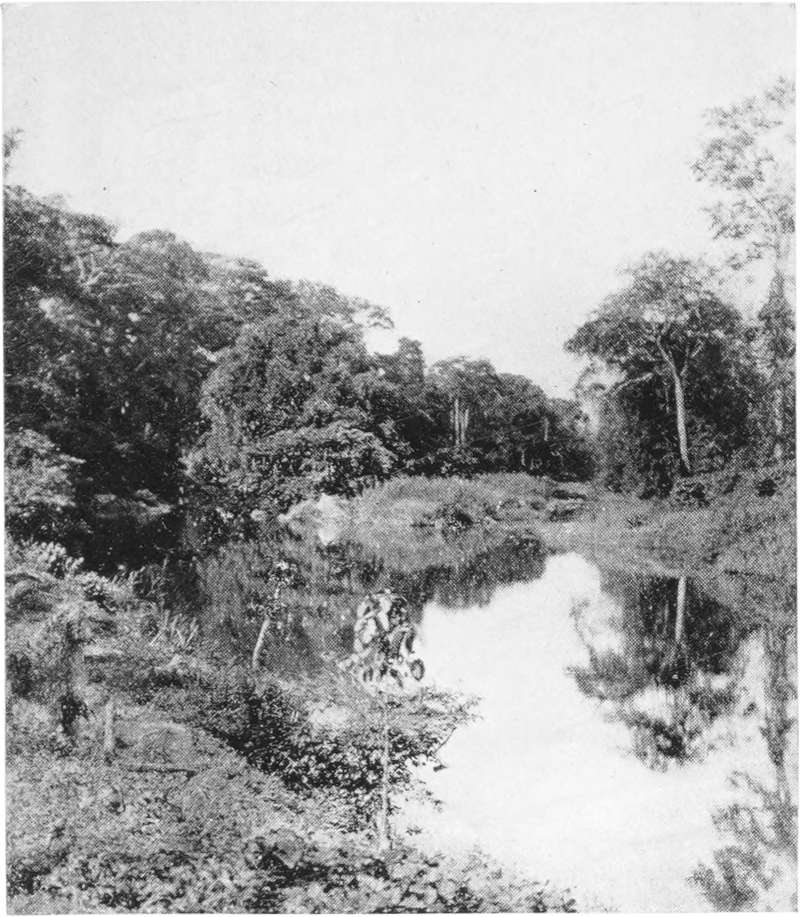
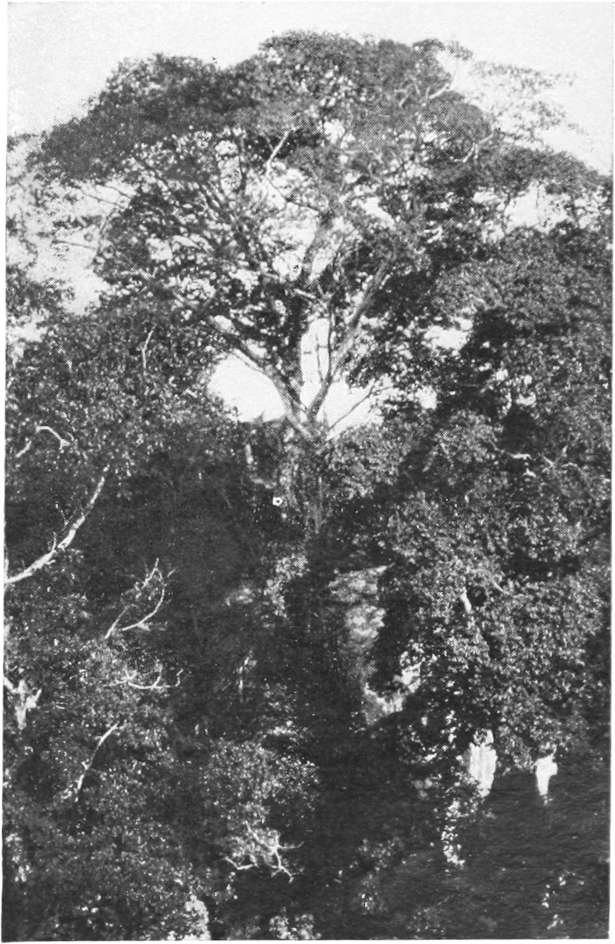
Fig. 73.—Large Arere Tree (Triplochiton Nigericum), already girdled and dead.
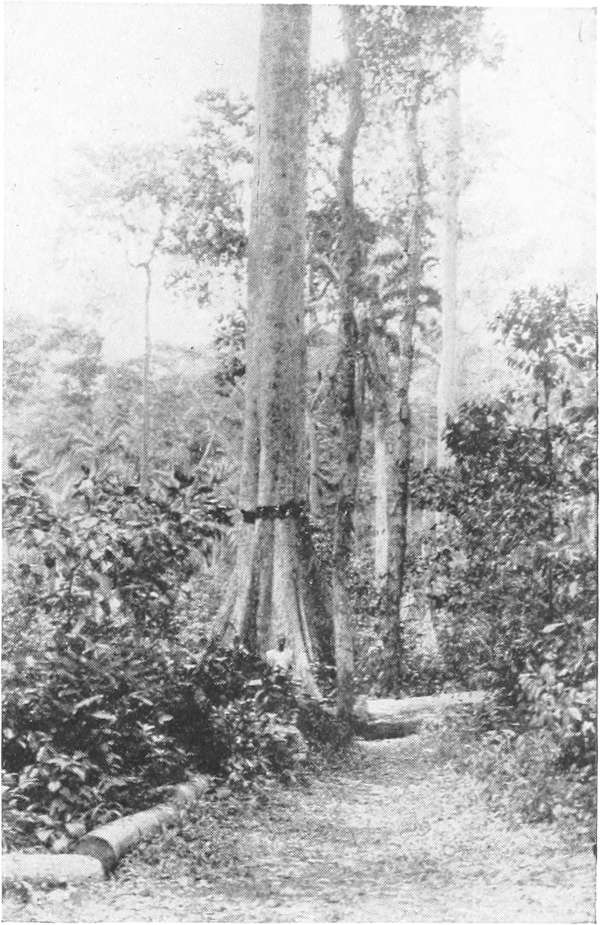
Fig. 74.—Forest on banks of Oshun River, looking upstream, Oshun Forest Reserve, Jebu Ode District.
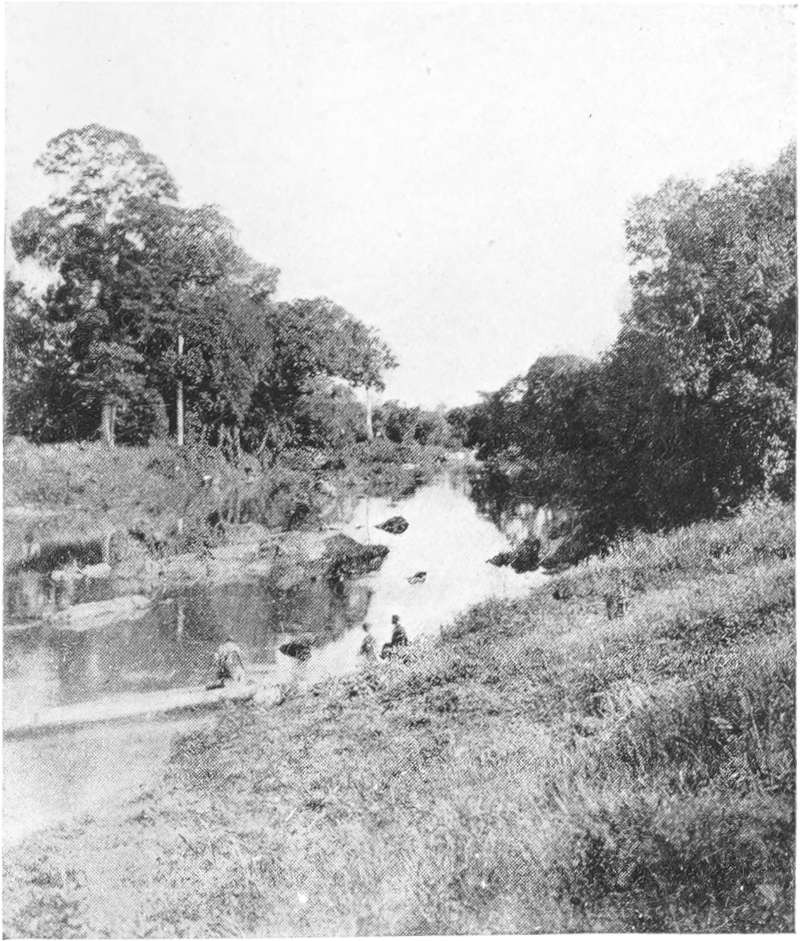
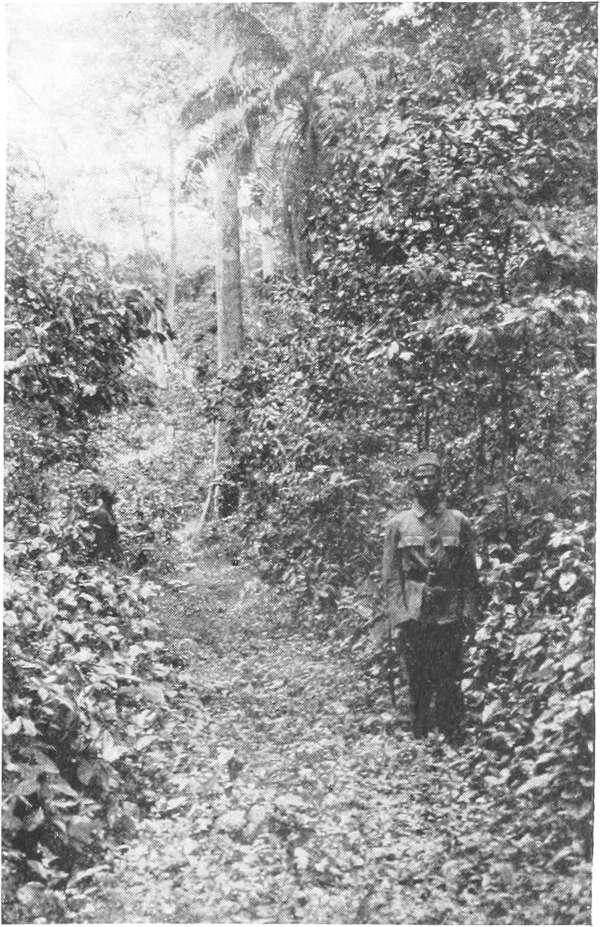
Fig. 75.—Ride between Compartments C and D, Mamu Forest Reserve, Funtumia seedlings on either side, six to eight years old.
To face p. 332.
The timber is a little more closely grained than that of R. Rautenii, but otherwise very similar. On the whole the bole has a less good shape, tapering rather more in proportion to its height. The timber length of the tree does not usually exceed 25 feet. Natural regeneration is very good, though this tree does not bear seed so heavily as the sister species. It sprouts well from the stump, but the stump does not last. In its youth it will stand a little shade, but is really a light-loving tree, with soil-protecting, soil-improving qualities. It is not quite so rapid a growing tree as R. Rautenii, even though it is one of the quickest growing trees. It appears to like a moist, comparatively rich soil.
In 1906 samples of this timber were sold in the Liverpool market as a species of mahogany. It is, however, probable that these were logs from a different kind of tree, as the wood is too dull a brown colour to be really like mahogany. Locally it has not been sawn up for planks, but deserves a trial as a box-making and pattern-making wood.
Native Use.—It is felled indiscriminately with R. Rautenii and used for a similar purpose.
Ricinodendron Rautenii. Yoruba Coffin Wood. Ekku, Puttuputtu (Yoruba); Okwen-seva, Okkwen nebo (Benin).
A large tree, up to 12 feet in girth, with stout branches and roughly fissured bark reminding one of oak. The fruit is slightly three-lobed, containing three seeds. The leaf is digitate, with the number of digits varying from five to seven. The leaves are larger and thicker and with a rougher surface than those of R. Africanus. The crown is thicker, more widespread, and roughly spherical in shape. The roots usually come out of the ground near the base of the tree and form rough root spurns, extending 3 or 4 feet up the bole of the tree. The bole reaches a length of 30 feet.
It is one of the commonest trees in the moist secondary forests and at the edge of the mixed deciduous forests in Benin, Abeokuta, Calabar.
The timber of this tree was described as a “species of mahogany” and suitable for the Liverpool market in 1906.
Native Use.—By the Yorubas it is cut down and sawn up into planks for making coffins. Mostly medium-sized trees are used for this purpose. None of the natives apparently know how to use the nuts.
Ricinodendron sp. Species of Mahogany. Okwen seni (Benin).
The African oil-nut, with four nuts in each fruit, appears to be the same, but this larger number of nuts is the specially distinguishing feature, and has been given a distinct name by the Benin people. It is, however, rather doubtful if it is really a different species from R. Rautenii.
Native Use.—It is used in much the same way as the other two species.
Uapaca Heudelotii. Mahogany. Yeye (Yoruba); Oyen (Benin); Ile (Bonny and New Calabar).
It is found in the Owerri and Yoruba provinces of Nigeria. With its slightly curved trunk and large mass of widespreading aerial roots, extending almost to a quarter up the height of the tree, it is distinguishable from other trees of this zone. Usually found growing near water, or in regions that are flooded periodically. It sends out fresh red-coloured aerial roots. The leaves are somewhat shiny and give a greyish appearance in the distance. The bark is finely fissured and dark brown. Often covered with moss at the base. It attains a girth of about 10 feet and a bole length of about 25 feet.
It is a somewhat slow-growing, shade-bearing tree. It protects the soil and enriches it with the fall of its leaves. Its mass of aerial roots tends to moderate the speed of the flooded river and holds the banks up, preventing corrosion, and in many cases tends to help the formation of higher and more solid banks, owing to the deposit of sand between and near the network of aerial roots.
The timber is very similar to mahogany in grain, though a little harder. It has considerable elasticity. It is finely fibrous, and does not plane up with such a smooth finish, nor does it split well. It is termite-resisting and moderately tough. It saws with difficulty. The sapwood is stained with reddish colouring matter, and the heartwood is a dull red-brown. The pores in the timber are longer, and resemble mahogany in this respect; though, being fibrous to the touch, the difference is shown.
The timber has not been exported, nor has it been sawn up for local use. Occasionally it is used by the natives for house-building, and some of the crooked roots and branches are used as ribs for boats and building up canoes.
Uapaca Guineensis (Muell. Arg.). False Mahogany. Abo Emido, also known as Yeye and Yere (Yoruba); Onye (Benin).
Chief Characteristics.—Large aerial roots supporting the bole at a height of 8 to 10 feet from the ground. When cut, the slash is red; the sapwood is whitish, tinged with the red colouring matter of the heartwood, which is a dull red.
Distribution.—Banks of the Ogun, Olokemeji Forest Reserve.
In most respects the timber is similar to that of Heudelottii. On the whole, however, this species is a little harder than the other.
This tree is somewhat slow-growing and stands less shade than the Heudelotii. It is of the greatest value, with its aerial roots, in protecting and increasing the height and stability of the river banks at the edge of the dry forest zone. It is one of the few trees that are not washed out of the banks in the flood season, and even when they do fall over into the river they remain attached to the bank and lessen the force of the current. Natural regeneration is none too good.
The timber has not been exported, nor has it been felled locally for conversion into planks. Occasionally the natives use the smaller trees for house-building. They also consider the places in the rivers immediately near or overhung by one of these trees as the best localities for fishing.
Bridelia micrantha. Yoruba Ironwood. Ira Odan, Asa Gidi (Yoruba).
It is found in the Ibadan and Abeokuta provinces of Nigeria.
It is a small tree or shrub up to 8 feet high, with a large alternate leaf. The bark tends to be fibrous and can be stripped off in a similar way to the other Bridelias.
The timber is very hard, moderately durable, and said to be termite-proof. Its small size and somewhat crooked nature hinders its more extensive use.
It is occasionally of use for house-poles in temporary buildings, and makes good firewood, giving intense heat. The leaves yield a rich humus and improve the soil.
Native Use.—The bark is mixed with Hausa salts and then drunk with lime and water as an aperient.
Bridelia Zenkeri, syn. atroviridis. Yoruba Ironwood. Asha, Asha ragha (Yoruba); Oviaruza, Assivi, Ogangan (Benin).
It is a comparatively common tree of the Abeokuta, Oyo, Benin and Owerri provinces of Nigeria. The roughly fissured bark, scaling off in criss-cross fashion, in papery or fibrous layers, is most typical of the tree. The bole is short, seldom reaching a greater length than 15 feet. It is usually forked about this height and then spreads out, rather reminiscently of the elm. It yields the hardest wood of all the African trees, except perhaps Okuta (the stone).
It is occasionally used for house-building by the natives.
Bridelia stenocarpa. Benin Ironwood. Arasha, Asha, Aroro Ashasha (Ondo), Aiveygbo (Eg.) (Yoruba); Assivi (Benin).
This tree is found in the Benin and Calabar provinces of Nigeria, where it is somewhat prevalent, but found always singly in the forest. In habit it is not at all unlike the wych elm. The leaf is of similar size and shape, the bark peels off in fibrous layers, but is otherwise fissured in lattice-work fashion. For the size of the tree the bark is comparatively thin; the slash is light-brown, sometimes a whitish-grey. The sapwood is white and the heartwood is dark-brown and very hard. It saws well, but is almost impossible to split, and it will not take nails. It has a short bole of about 20 feet, is deciduous for a few days in the year, but is otherwise a soil-protecting and soil-improving tree. Samples were at one time on the way to be exported, but were sunk by accident, the wood, of course, being much heavier than water.
The natives occasionally use it for house-building.
Excœcaria sp. Orupa (Yoruba).
It is a small tree, up to 18 inches in girth, with smooth, yellowish-red bark, and has maple-like seeds in pairs joined at the base. The stem gives a greyer impression than that of Ormosia laxiflora, and it is also much smoother.
Distribution.—It is found in the dry-zone forest of the Ibadan, Abeokuta and Onitsha provinces of Nigeria.
Timber.—Not very hard and of a yellowish colour.
Native Use.—The bark and roots are used medicinally. It is sold in the Lagos medicine market.
Antidesma venosum. Aroro (Yoruba).
It is a small tree, about 9 feet high. Found in the Olokemeji Reserve.
Antidesma sp. Ogbamaton (Benin).
Found in the Benin province.
Tragia Manniana. Esisi (Yoruba); Ogangan (Benin).
Found in the Ondo and Benin provinces.
Microdesmis puberula (Hook.). The Benin Apata Wood. Apata (Yoruba); Ehranpata, Esanpata, Omomeran (Benin).
It is found in the Abeokuta, Ibadan and Benin provinces of Nigeria.
It is a small tree with hard wood of a brown colour. It reaches about 15 feet high with a girth of about 12 inches.
On the whole this is a slow-growing, soil-protecting and soil-improving shrub. It serves a useful purpose in the undergrowth and is of local value as well.
Native Use.—The wood is used for making the musical instrument known to the Benin as Apata, a kind of harp-shaped frame made of wire, but much smaller.
Microdesmis sp. Essunsun, Ubelluname, Ubellunowe (Benin); Njorgora (Oban, Ekoi); Akiti (Ibo Owerri).
It is a common tree of the Benin, Ondo, Ogoja and Calabar provinces of Nigeria. A medium-sized tree of about 6 feet in girth, attaining a bole length of about 40 feet. Its small, pretty five-petalled flowers fall off the tree and cover the path or neighbouring bushes; their scent is very pleasant and is reminiscent of honey and flowers.
The sapwood is white and the heartwood light red brown, rather hard, of close grain and close texture; it planes moderately well, but it is rather hard to saw and does not split. It is durable under cover, but does not last when exposed to the weather. It hardens very considerably when exposed to the air. The timber was used for verandah-posts in the Calabar district, but did not prove very suitable, as a large borer often attacked it. The timber is not absolutely termite-proof. The natives occasionally use the wood for house-posts.
Phyllanthus reticulatus. Iranje (Yoruba).
Found in the Olokemeji Reserve.
Phyllanthus sp. Awe, Erigaba (Yoruba); Eghogho (Benin).
Found in the Olokemeji Reserve.
Cyclostemon. Oyen (Benin). This may be the same as Uapaca Heudelotii.
It is a medium-sized tree of the Abeokuta and Benin provinces of Nigeria. It has aerial roots and likes a damp, moist soil. It has red flowers which come out in February. It yields a hard, reddish wood, which is rather fibrous.
Manniophyton Africanum. Ebumen (Benin).
This is a small creeper similar to that known as Okwe by the Benis.
Manniophyton sp. Okwe (Benin).
This is a long creeper found in the Benin and Ogoja provinces of Nigeria.
The nut of this creeper is most commonly seen in the cooked state in the markets, when it appears like a dark-coloured marble. The soft shell can be cracked between the fingers, and the hardish white nut is seen inside, being about 1 inch in diameter and very meaty. A few of these almost take the place of a meal. Thus far the plant has not been cultivated, the natives only picking the fruit as they find it in the forest. The fruit is four-cornered and contains one nut.
Palissya cordata. Ipa (Yoruba); Unwonwen (Benin); Abo Asha (Ibadan).
It is found in the Benin forest. A medium-sized tree, which might be examined with a view to being a source of dyeing material.
Macaranga Barteri. Arasa (Yoruba).
A small tree or shrub found in Tropical West Africa.
Claoxylon Barteri (Hook.). Itakun, Okare (Yoruba).
It has small flowers. Found near Ipetu.
Anacardiaceæ.
Spondias lutea. Non-indigenous Hog Plum or Yellow Plum. Iyeye, Akika Aka (Yoruba); Ogikan or Ogege (Benin); Nsukakara (Efik).
Although indigenous to India, it has become very widespread in its area of distribution in Africa, where it is found, partly planted or as a “garden escape,” in all the Southern Provinces of Nigeria. It is a medium-sized tree, reaching a girth of about 5 feet and a height of about 50 feet. The very evenly and comparatively deeply fissured bark, in comparison to the size of the tree, is the most typical feature of it. A very open crown, and few straight upward- and outward-tending branches, with very slight side branches and twigs also distinguish this tree from many of the forest trees. The little yellow fruit, about 1 inch long and ¾ inch in diameter, is very much like an elongated Mirabel plum. It is between an eighth and a quarter of an inch of yellow flesh when the nut or stone is reached inside. The leaves are thin and pinnate, with ten to twelve pairs of pinnæ on each leaf. Sometimes the bark is rough and almost prickly. The branches and cortex in smaller trees are more or less covered with little nodules which sometimes develop into small thorns. The fruit is sweet, but rather sharp to the taste, almost tart. It is, however, refreshing in the hot weather whilst on the march.
The timber is whitish-yellow, not very hard, although it is scarcely attacked by white ants, chiefly perhaps owing to the fact that any green piece of wood with some bark on it will grow when lying on the ground. It planes well, splits easily, and takes nails.
It is a rapid-growing, light-loving tree which does not thoroughly protect the soil nor enrich it very much with its foliage. Natural regeneration is poor. It is most readily propagated by means of cuttings, which may even be about 6 inches in diameter and quite as long as posts. With the spread of farms and other buildings it tends to become more widely distributed over the country. It demands a moist soil with a fair amount of depth.
The timber does not show such qualities as to justify its export, but occasionally the larger trees might be sawn up for planks for local use. It is very useful for making live fences, which grow fast and do not cast much shade. In fruit the tree also looks very pretty.
Native Use.—The tree is used for live fences for gardens and farms. The fruit is eaten, but not to an enormous extent, as it is said to form tartar on the teeth. Amongst the Yorubas, parts of the roots and branches are used for axe and hoe handles.
Spondias sp. Ekika Aja (Yoruba).
This tree may be the same as Pseudospondias microcarpa, but it has only been determined from a specimen obtained from the Oshun Reserve. This is somewhat further south and in a moister region than the Pseudospondias microcarpa.
Pseudospondias microcarpa. Okika (Yoruba).
It is a somewhat rare tree in the Abeokuta and Ibadan provinces of Nigeria. Apparently there is a small-fruited tree of this species in the Olokemeji Reserve. The tree itself attains a larger size than S. lutea, reaching a girth of 8 feet and a bole of 20 feet. The growth is less free and the bark is much darker and more fissured than S. lutea. It has not been felled for export; the natives have no particular use either for the wood or the fruit.
Anacardium Occidentale. Non-indigenous Cashew Nut. Kaju (Yoruba).
This tree has become a garden escape on the Ekoi plains near Lagos, where it forms dense thickets. It is not indigenous to West Africa. The tree bears well, and the Brazilians resident in Lagos make a jam out of the fruit. The nuts are roasted and regularly sold in the market, to Europeans chiefly. The branches of the tree are sometimes lopped off and cut into short pieces for firewood. It is usually of very sprawling habit, with a short bole only 3 or 4 feet long. It is not found in the forest proper.
Botanical name unknown. Blacksmith’s Charcoal Wood. Akkun (Yoruba); Azimommon, Onyenu (Benin).
It is found in the Benin and Abeokuta provinces of Nigeria, Obagie Reserve and Oyon River.
It is a large tree, with large leaves and compact crown. It has a very small, berry-like fruit; found growing on moist soil in the evergreen forest, sometimes found in the fringing forest of river banks of a dry zone.
Timber.—The timber is very hard, grey in colour and perhaps flexible. The bark is rough and finely fissured. It is inclined to peel off. The slash is pink. The wood is very fibrous, and in the cross-cut section the pieces between the fibres look like very small pinholes. The wood when freshly cut has a sweet, rather pleasant smell.
European Use.—It has not, so far, been sold for export or local use.
Native Use.—The stems of the small trees are used for axe-handles, and this tree is esteemed by the blacksmith for making charcoal. It is also cut into planks.
Anacardia sp. Rat Poison Mango. Akkum (Yoruba); Pweku Pweku, Azemome (Benin).
The Benin native name means literally “Rat-kill, rat-kill,” but I have never been able to discover exactly how the poison is used. It is rather a rare tree of the Benin forest of the Benin province. It reaches a height of about 80 feet and a girth of 9 feet. It bears a large fruit about the size and shape of a good mango. This is certainly one of the best fruits of the native trees. It has a much sweeter scent than that of the mango, and the taste is also much sweeter. From experiments made it is not poisonous to chickens, goats nor sheep, but none of them, except the chickens, took it at all willingly. The fruit is said to be very poisonous to man, but its delicious flavour tempts the tasting of it. Certainly, in very small quantities it is not poisonous, and it would be interesting to know in what quantities it is so. The slash is yellowish-white. The sapwood is white and the heartwood of a dull brown colour. It is a hard and heavy wood. It saws with difficulty. It is a shade-bearing and soil-protecting tree. The natural reproduction appears to be poor.
The timber has not been used locally, nor has it been sampled for export.
Celastraceæ.
Gymnosporia Senegalensis. Shepolo-hun (Yoruba).
It is found in the Olokemeji Reserve of the Abeokuta province of Nigeria.
Icacinaceæ.
Pyrenacantha sp. nov. Abara (Yoruba).
It is found in the Epe Colony of Lagos, Nigeria.
Sapindaceæ.
Lecaniodiscus cupanoides. Akika. Aka-Ishin (Yoruba); Utan-tan (Benin).
It is found in the Abeokuta, Ibadan, Ondo, Warri, Ogoja and Calabar provinces of Nigeria. It is a small, shrub-like tree, reaching a girth of about 1 foot and a height of 15 feet. The leaves are very small, the timber extremely hard and cross-grained. The wood is used by the natives for rafters, hoe-handles and sometimes mortar-pestles; the root is said to have medicinal properties.
Blighia sapida. Akee or Akee Apple. Ishin Ishin-oka (Yoruba); Ukpi nufwa (Benin).
It is found in the Southern Provinces of Nigeria. It has an edible aril, which is yellow in colour. It is cooked before being consumed. It is a very ornamental tree, and bears fruit when quite young, which, being orange-coloured, looks very pretty amongst the green foliage.
The fruit is more or less triangular in shape, and when ripe splits open up to the base, releasing three black nuts with a yellow aril. The fruit is orange-coloured with a pink flush. It is a medium-sized tree, reaching a girth of about 6 feet and a height of about 60 feet. The bark is smooth and grey in colour and comparatively thin. The crown is oval in shape and much more open than is the case with Phialodiscus sp. It has a moderately large pinnate leaf with two pairs of pinnæ. The flowers are small and comparatively inconspicuous. It is found chiefly in the mixed deciduous forest zone. It is most frequently seen in the neighbourhood of villages, where it has probably been planted.
The sapwood is white and the heartwood brown, moderately hard, durable and termite-proof. It planes well, though occasionally it is cross-grained. The wood is of fine texture and has a certain amount of sheen. It saws well, but does not split easily. It takes nails only moderately well. It tends to darken a little on exposure to the air.
This tree is moderately fast-growing, at first shade-bearing and subsequently light-demanding. It is also a soil-protecting and soil-improving tree. It appears to like comparatively rich soil, though it may also be seen on poor ground, where it does not thrive. Natural regeneration is not good, chiefly owing to the fact that many animals eat the seeds, besides human beings. It will bear fruit in the fifth year, more especially from stump shoots. It sprouts well from the stump and stands a great deal of pruning.
The timber has not been cut for export, and only occasionally has it been sawn up for local use. It is, however, worthy of further attention as a local building timber. As an ornamental tree it is worthy of a place in a large garden. With its open crown it is a comparatively clean tree, and does not harbour flies and insects.
Native Use.—In places of timber scarcity it is occasionally used for house-poles. The aril of the fruit is eaten after being cooked, but apparently this custom is much more prevalent in the West Indies amongst the descendants of the African slaves. In many parts of Nigeria it is quite unknown as an edible fruit.
Phialodiscus sp.?. Bush Akee. Awewe, Ishin Oko, Isinko (Yoruba); Ukpi nikwi (Benin).
Identified from a specimen in the Forestry Arboretum, Calabar.
Chief Characteristics.—The capsule splits into three and allows three black seeds to escape, with small yellow aril round the base. The whole fruit and the individual seeds are much smaller than Blighia sapida, though, as the Benin name indicates, this is so similar that it is called the black variety of Ukpi. The fruit is triangular in shape, otherwise very much the same size as African Oak, Oldfieldia Africana.
Found in the Calabar, Owerri, Benin, Ondo and Abeokuta provinces of Nigeria.
Blighia sp. Ishin Oko, Oko Ishin (Yoruba); Ukpi nikwi (Benin).
Distribution.—Ibadan, Abeokuta, Jebu Ode, Benin, Owerri and Calabar provinces of Nigeria. Probably same as Phialodiscus sp.
Chief Characteristics.—The very insignificant white flower-spikes, hidden away amongst the leaves, but attracting numerous bees in February and March, characterize this variety. It is a medium-sized tree, with light-green foliage, thin, lanceolate leaves, a thin grey bark, smooth and close and oval-shaped crown, through which one cannot see. The capsule is dehiscent, with three black seeds with yellow arils, smaller than Blighia sapida, but otherwise quite similar in shape, except that the capsule is more triangular than that of B. sapida, and shorter also and of a dark brown colour. It is not unlike the fruit of the real African Oak, Oldfieldia Africana, except that this is quite spherical in shape.
Timber.—White sapwood and light-brown heartwood, which is moderately hard. It does not plane well, and is sometimes cross-grained; the texture of the wood is fine, but is a little fibrous. It saws easily, but does not split well. The bole being very cylindrical in shape, comparatively long, even-widthed planks can be cut out of it.
It is a somewhat slow-growing, shade-bearing, soil-protecting and soil-improving tree. Natural regeneration does not appear to be good. It is somewhat exacting as to soil, and does not thrive in a moist sand. It is somewhat fire-resisting. In the dry season a good deal of dew is condensed on the leaves, but not so much as in other genera, such as Anona.
The timber has not been cut for export, nor has it been sawn up for local use. It deserves, however, further trial as a local building timber. A specimen, from which the tree was determined, stands in the forest region of Calabar.
Use.—Native implements of various kinds.
Fig. 76.—Path in Iwoye Forest, Western Circle, showing parts of four Mahogany Trees in the picture.
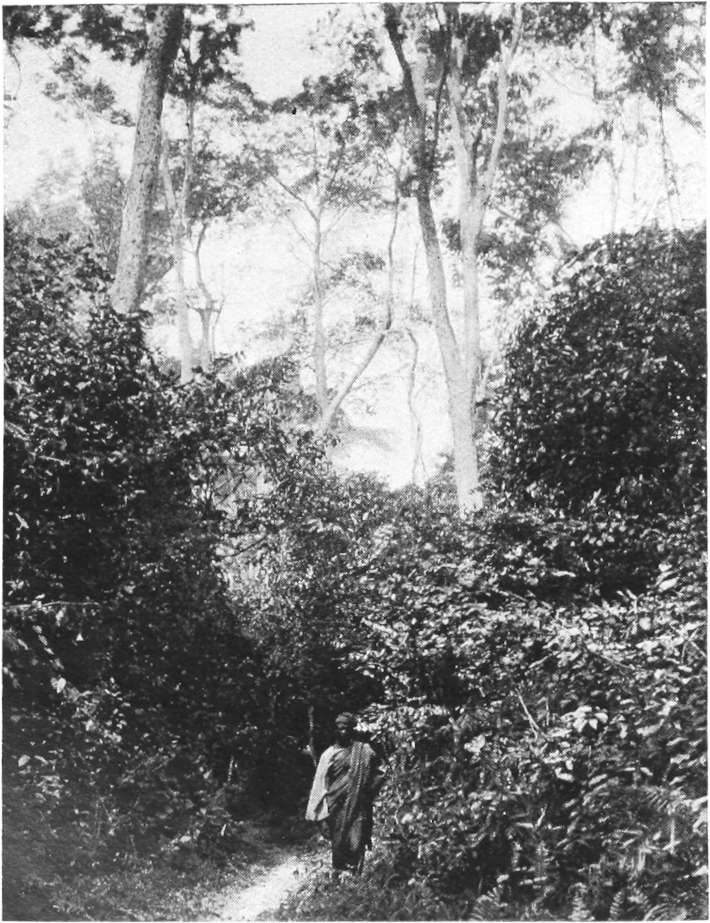
Fig. 77.—Mature Cocoanut Grove near stream in the middle of Idanre Town, 1910.
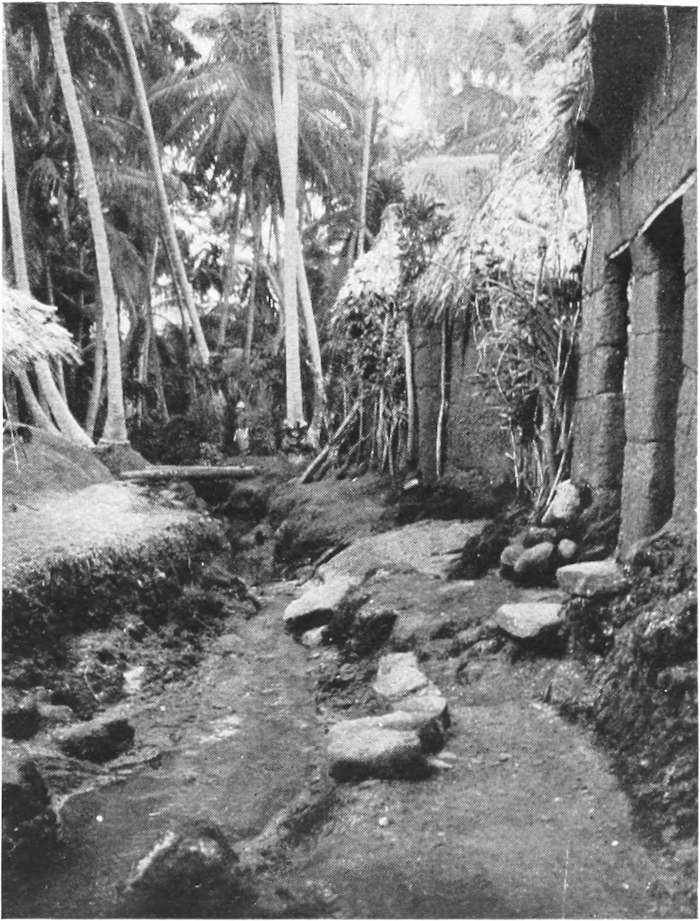
To face p. 342.
Deinbollia pinnata. Oju Agbigbo (Yoruba); Ebegogogbo (Benin).
It is a small, shrub-like tree found in the Abeokuta and Benin provinces. The small orange-brown-coloured seeds are of similar shape to, though smaller than, Blighia sapida; they are, however, more elliptical. The stem of the tree, if found with the proper crook in it, is used for making hoe-handles. The leaf is pinnate. This tree only attains a small size, and is found as undergrowth in the mixed deciduous forest zone.
Cupania akeesia. Small Ukpi nufwa. Ishin-jeje, Ishin-gege (Yoruba); Ukpi nufwa (Benin).
This is a small, shrub-like tree, common in the Abeokuta and Benin provinces of Nigeria.
Rhamnaceæ.
Zizyphus mucronata (Willd.). Walking-stick Wood. Ekanesie adie (Yoruba).
This is a shrub-like tree of the dry-zone forest, but does not bear such a nice fruit as that of Z. jujuba.
Tiliaceæ.
Glyphea Grewioides (Hook.). Atori (Yoruba); Uwenyriotan, Uwemriotan (Benin).
It is a small tree, not much more than a large shrub, with small leaves, and very common in the undergrowth of the evergreen forest. It is not a hard wood.
It is found in the Benin, Calabar, Abeokuta, Ondo and Ibadan provinces of Nigeria. It is usually found as one of the smaller trees forming the undergrowth in the evergreen forest. It yields a strong, hard wood near the junction of the roots with the stem, though otherwise it is soft.
It is a shade-bearer, and usually grows in a moist place. Reproduction by seed, judging by the amount of self-grown seedlings found, must be good. It thoroughly protects the soil and enriches it. It thus serves a useful purpose in the undergrowth of evergreen forests.
Native Use.—It is used as a “Ju-ju” whip in Benin and for walking-sticks. Small stump shoots can also be used for yam supports and for making hoe-handles.
Cistanthera sp. False Hill Mahogany. Oro, Apata (?) (Yoruba); Abolo (?) (Benin).
It is found in the Abeokuta and Benin (?) provinces of Nigeria. It is a very common tree on the hill-sides of the Olokemeji Reserve, and to a lesser extent in the Ilaro Reserve. It is a medium-sized tree, reaching a growth of 8 feet and the bole length of about 40 feet. The bark is very curious, with occasional very small, long and narrow fissures and tiny pits scattered more or less a foot apart up and down the stem. It is almost gregarious in habit.
The timber is a red-brown colour with a white sapwood. It is very similar to mahogany and could probably be sold as such. It is moderately durable. A tree which fell down in the Olokemeji Reserve during 1910 was not absolutely unsound in 1915.
It is apparently a slight shade-bearer and rather slow grower. Reproduction by seed is evidently rather doubtful, as few or no self-sown seedlings are found in the neighbouring forest. It has not been cut for local use, nor for export, though sample logs should be tried on the Liverpool market to test its value.
The natives use the roots for medicinal purposes, but they do not use the timber.
Grewia carpinifolia. Itakum Okere (Yoruba).
Olokemeji.
Grewia tetragastris. Ora-Igho (Yoruba).
It is a shrub, reaching a height of about 5 feet, of the mixed deciduous forest in the Abeokuta province of Nigeria (Olokemeji Reserve).
Triumfetta rhomboidea. Boko pupa, Akobolobolo, Ilasa omodo (Yoruba); Nesuwa (Benin).
Triumfetta cordifolia. Esura (Yoruba).
Triumfetta sp. Apiko (Yoruba).
Corchorus acutangulus. Abo-jaga (Yoruba).
Corchorus olitorius. Eyo, Ganbe (Yoruba).
These are common plants in the Ogoja and Abeokuta provinces of Nigeria.
They yield long-stapled fibre worth about £27 a ton. Owing to the fact that they grow wild and are not cultivated by the natives, the difficulty is to be able to collect sufficient quantities in one locality to pay for the cost of retting, baling, etc., to make the fibre production a paying proposition.
Malvaceæ.
Hibiscus esculentus (F.). Okra or Achro (fruit).
In most provinces of Nigeria.
Hibiscus Grewioides.
Yoruba country (?).
Hibiscus quinquilobus (G. Don). Onegozi (Benin).
Benin.
Sida carpinifolia (Linn.). Oshopotu Dudu (Yoruba).
It is found in Abeokuta province of Nigeria, and is used by the local people for making fibre.
Urena lobata. Bolobolo Fibre. Bolobolo (Yoruba).
It is found in the Olokemeji Reserve of the Abeokuta province of Nigeria.
It is a comparatively well-known fibre-plant, but has not, however, been cultivated, the natives having many other profitable crops to grow.
Bombacaceæ.
Eriodendron Orientale. White Silk-Cotton Tree, Blind Wood or Kapok, Cotton Tree. Araba, Eggun (Yoruba); Okha (Benin); Ukum (Efik); Akbo (Ibo, Asaba); Shakka (Brass).
It is a common tree in all the Southern Provinces of Nigeria, though it is not found in the most northerly part of the drier ones. With the exception of a few scented mahoganies, this is the largest African forest tree. Its huge root buttresses reach up over 20 feet from the ground. Its giant limbs, as thick as an ordinary tree-trunk, stretch out almost 100 feet from, and are supported on, the great column of the bole, often itself over 100 feet high. Large muscular-like protrusions join up the limbs with the trunk and the latter with the root buttresses, giving the tree a peculiar look. The flowers are white, with yellow stamens. The fruit is a soft, oblong, dehiscent capsule, opening when ripe and releasing black seeds about twice the size of B.B. shot. Attached to this seed is a ball of white fluff. This last is known commercially as Kapok. At the time of the bursting of the capsule of this tree the whole air near by appears filled with white flakes, and the ground later is white as if after a fall of snow. It is almost the quickest growing of all the African forest trees. It grows in the evergreen forest as well as in the mixed deciduous forest.
The timber is white and soft and inclined to have little yellow streaks. When dry it is brittle, though very fibrous to cut when fresh by either axe or saw. It soon rots when exposed to the weather. Natural regeneration by seed is good, especially on the banks of rivers. It tends to extend its area of distribution with the clearing of the heavy forest area in making farms. It is a light-demanding tree.
In Germany, before the war, African Kapok found a ready sale at about 9d. per pound. Samples of Kapok were sent to England and were valued at less than those of the East Indian variety.
The timber has been used as a “blind” wood for furniture, and had a regular market at Hamburg before the war. It has been tested in England for pulp-making, but the fibre is stated to be too short, and so it is of no use for this purpose.
Native Use.—The Kapok is used for stuffing pillows, for which 1s. apiece is charged. Large oblong pieces of the root buttresses are used as native doors and as drying slabs for fresh dyed clothes. Whenever timber fails it is used for fishing canoes (the cheapest kind).
Eriodendron anfractuosum. Cotton Tree, similar to Orientale. Araba Eggun (Yoruba); Okha (Benin); Shakka (Brass).
Was determined from Western Province material, but it is doubtful whether it is a different species from that found in other parts of Nigeria.
Bombax reflexum. Red-flowering Cotton Tree. Ponpola, Lauro (Ibadan, Yoruba); Obokha (Benin); Onihokha, Benin (when in flower); Titiro (Egbado).
It is found in the Abeokuta, Ondo, Benin, Owerri and Ogoja provinces of Nigeria, where it is often seen in the mixed forests and in clearings in the evergreen forest zone.
Chief Characteristics.—It has a larger leaf and thorns than the other Buonopozense (?) (Onikokha of Benin). The most typical feature is the very thick, tulip-like red flower of this tree. This falls to the ground, and is seen on roadways and pathways, indicating the presence of this tree. In February or March, when the flowers appear, the tree is bare, so that the bright-red flowers make it all the more striking. The tree is smaller than the Eriodendron Orientale, attaining a girth of about 12 feet and a bole length of 50 feet. The root spurns are much slighter, in most cases scarcely amounting to small buttresses. The cortex is more soft and spongy than E. Orientale.
The timber is white, very soft, not quite so tough nor fibrous as E. Orientale, but rather more porous. It planes more easily, dries rather better, splits with less difficulty than E. Orientale, and saws with less trouble.
It is a very fast-growing, light-loving tree, which does not protect or enrich the soil very much with its leaf fall. Natural regeneration appears to be fair, though, considering the enormous number of flowers almost each year, it is surprising that the tree does not spread more rapidly in new clearings in the forest.
The timber has not been tried for export nor for local use.
The bark, roots and leaves are used amongst the Yorubas for medicinal purposes. The bush deer eat the flowers, when they fall: the Benin native says if he does not call the tree Onihokha, the deer will not come and eat it.
Bombax sp.?, Bombax buonopozense?. Ponponla (Ibadan, Yoruba); Obokha, Onihokha (Benin).
It is found in the Abeokuta, Ibadan, Ogoja and Benin provinces of Nigeria, in the mixed forests, where it is not very common.
Chief Characteristics.—Compared to Bombax reflexum it has a smaller leaf, smaller thorns, but not so many on the stem. It has a similar red flower, opening, however, much more widely. It reaches about the same size as the Bombax.
The timber appears to be very similar in most ways to B. reflexum. It has not been felled for export, nor has it been used for planks for local use. Occasionally the leaves are used for medicinal purposes.
There appears to be some doubt as to whether this is really a separate species from that of B. reflexum. It is, however, sufficiently different to be considered quite a distinct variety, though perhaps not actually a different species.
Adansonia digitata. Monkey Bread, Baobab. Ose (Yoruba); Usi (Benin).
It is a moderately common tree in the Onitsha and Abeokuta provinces of Nigeria. Isolated specimens are also found elsewhere. The most typical feature of this tree is the huge thick trunk, tapering up into the branches, out of all proportion to the length of these and the twigs. These are much thicker than the branches and twigs of other trees. The green, elongated spherical-shaped fruits hang by a stalk, giving the tree the appearance of one decorated for a Christmas festival. The leaves are truly digitate and not unlike those of the cotton-tree, though they are thicker and darker in colour. The bark is very thick, spongy and fibrous, and of a light-grey colour. The bark, seeds and roots are used medicinally. The fruit is eaten in time of scarcity.
The fibre is used in England for paper-making.
Sterculiaceæ.
Sterculia Rhinopetala. False Chestnut. Ekko Okpon, Orodu or Orodo (Yoruba); Enwiwan (Benin); Otutu (Jebu); Awraw (Egbado).
It has a smooth, light-green bark, which remains soft, but is whitish with age. The wood is white and soft, and apparently there is no difference in the heartwood. It has a small seed with a wing on each side of it. For external work it is not durable, but when seasoned for internal fittings, such as doors or ceilings, it is more useful.