Chapter IX · (continued 4)
Reading edition
It is common in the Oyo, Benin, Calabar and Abeokuta provinces. It is found in the mixed deciduous forests, especially in the Mamu and Ilaro Forest Reserves. Also, wherever it is found there is a comparatively large number, though it is not gregarious in habit.
It was stated to be of no commercial value in the Liverpool market in 1906, but in a subsequent report it was said to be worth 1s. to 1s. 6d. a cubic foot, as walnut, though there must have been some mistake in the name.
Native Use.—The mushrooms which grow on its stem after it is cut down are used for soup. These are known as Epweperu.
Sterculia tomentosa. Okagbo (Yoruba); Ukpiwenwan (Benin).
This tree is found in the Abeokuta and Benin provinces. It reaches a height of from 40 to 50 feet. The fruit is ripe in December and January; it is kidney-shaped and covered with a dense collection of very fine reddish hairs. It grows in clusters.
Sterculia sp. Iwu (Yoruba).
It is found in the Abeokuta province of Nigeria and is a medium-sized tree which yields a white wood which is none too hard nor soft.
Sterculia tragacantha. African Tragacanth. Owun, Omunu, Omar, Ogidu (?) (Yoruba); Oporipor, Iporipor, Okoko (Benin).
Chief Characteristics.—It shows a brown slash when cut. The bark is very fibrous and the white sapwood is full of large open pits, which gives the wood the appearance of being entirely fibrous. It yields a pink-coloured gum, which hardens after a few days. It bears large oval-shaped leaves, which tend to be bunched at the end of the twigs. The pods are less than half the size of Sterculia cordifolia and are covered with light-brown velvety hairs on the outside. These pods open, making each appear coracle-shaped, with eight to ten small brown seeds attached to the bottom rib of the pod. The foliage looks almost grey-white from underneath. The bole of the younger trees is greyish-white and usually for 30 to 40 feet free of branches. It reaches a girth of about 8 feet. The wood is white and softish, planes easily and works up to a neat finish. Silviculturally, the tree stands between the light-lovers on one hand and the shade-bearers on the other, although it is usually seen growing comparatively free from other than natural shade. It does, in fact, stand a considerable amount of shade in the younger stages of growth as well as later, when it may be overgrown by larger growing trees. It is usually found in groups at the edge of the forest.
It sprouts again from the stump, but almost each year large crops of seeds are borne on the tree, and this would seem to be the chief method of reproduction.
The tree has not been cut for local use, nor has it been exported. The Yorubas and Benis use the smaller trees as poles for house-building, but it is not considered a good wood.
Sterculia cordifolia. Heart-shaped-leaved Sterculia. Okporoporo, (Akure); Ogugu, Ogungun or Ogrugru, Oburuburu (Yoruba); Idogoho, Okoko, Okokwo (Benin); Dikir (Efik); Ibitoto (Bembi).
Distribution.—It is found in the Jebu Ode, Abeokuta, Ibadan, Benin, Onitsha, Owerri, and Calabar provinces of Nigeria. It is one of the most common trees in the mixed deciduous forests.
Chief Characteristics.—The large heart-shaped leaves and the curious twist to the lower part of the stem, which makes the root protuberances quite angular. It is never quite straight and forms a heavy oval crown.
The very large, oval, soft, almost fleshy, dehiscent pod, with its large winged seeds, is most typical of this tree. The crown is supported by three or four large limbs with comparatively few side branches. The foliage is very dense, though even in a tall tree the individual heart-shaped leaves show up quite distinctly. It is almost gregarious in habit, usually groups of four or five being found in one place. It is nearly always found on the banks of small streams which may dry up in the dry season. It is a shade-bearer, though moderately quick in growth. The wood is cross-grained, and emits rather an unpleasant smell when cut. The sapwood and the heartwood are both white, with a reddish tinge through it. It is soft, but becomes much harder when dry. It sprouts from the stump when cut down. Reproduction by seed is moderate. It has not been used locally, nor has it been exported. The natives in the Benin and Yoruba countries use the butt of medium-sized trees, especially those with a fork, for house-building. It is not attacked by white ants.
Sterculia nr. oblonga. Opepe (?) (Yoruba); Orodo (Benin).
It is a common tree of the Benin province of Nigeria, found in the evergreen forest.
It is a question whether this species is the one with a very hard, leathery, half-dehiscent pod, showing about ten orange-coloured oblong seeds inside it. These seeds have sometimes been termed Okoko by the Benis, but they are, no doubt, not obtained from the fruit of Sterculia cordifolia. These seeds also are not winged, and are comparatively fleshy and soft compared to the dry, rather hard, large winged seeds of Sterculia cordifolia.
Sterculia cinerea. Tartar Tree. Lakole (Yoruba); Ururata (Benin).
It is rather an uncommon tree of the Benin province of Nigeria. It is found at the edge of the mixed deciduous forest with the dry-zone area of vegetation.
Firmania Barteri. Rope Tree. Eso or Esho (Yoruba); Akoko, Nihau (?) (Benin).
It is a large tree with duck-egg-green bark and an uneven buttressed base, with a bole length of 30 or 40 feet and a girth up to 12 feet.
Distribution.—It is one of the most prevalent trees in the Olokemeji Reserve in the Abeokuta province of Nigeria, and found all through the mixed forests of the Western Circle and also in the Obubra division of the Calabar province, but it has so far not been found in the Benin province.
Use.—A fibre, worth £14 to £20 a ton, is made from the bark of young trees attaining 3 inches in diameter.
A most conspicuous tree in October and November, as it is covered with small red flowers and is leafless at the time. It has a papery fruit with a small round seed attached to the base. These fruits are also most conspicuous in February and March, making the tree look as it were covered with red flowers for a second time. The large, poplar-shaped leaves with comparatively long stalks often tremble in the slightest breeze in a similar way to the aspen. The wood is soft, white and fibrous, with no distinguishing colour between sapwood and heartwood. It splits comparatively easily, though, once it is dry, with difficulty. It is easy to plane, though difficult to obtain a smooth surface owing to the grain often being twisted. The light seeds almost float in the air, the result being that they are spread everywhere, and thus come up chiefly in the open spaces and at the edges of rides and roads, almost to the detriment of any other species. It is one of the fastest growing of all the African trees, and being a light-lover as well, rapidly covers all the available ground. In fact, in the mixed deciduous forests it tends to gain in its area of distribution year by year. In an enumeration in the Olokemeji Reserve, instead of finding a few thousand trees, as in the case of most species, hundreds of thousands of this one were found.
The branches of the young tree grow more or less in whorls at right angles to the trunk, and, combined with the comparatively large leaves, thoroughly cover the ground near by. Stump sprouts grow after a tree has been felled, though natural reproduction by seed is by far the most prevalent method. It has not been felled for local use nor has it been exported. The Hausas living in Nigeria cut down the small trees (saplings 1 to 2 inches in diameter), peel off the bark, dry it, and spin it into rope, which is used for tying loads of Cola or other produce. When freshly made it is soft and pliable, but when it is dry the fibre becomes very harsh and rather difficult to tie.
The wood is used for floats for fishing on the Niger.
Heritiera sp?. Oviegikwe (Benin).
It is found in the Benin and Ondo (?) provinces of Nigeria.
The tree is large, reaching a girth of about 12 feet. The seed is papery and full of air, so that when trodden upon it collapses. The leaf is of medium size, more or less pinnate. The timber is white and soft; termites attack it. It has not been exported or used for local buildings.
Native Use.—The leaf is used medicinally, and the timber is used for making drums (the frame) by hollowing out the trunk of a tree. It is also used as walls for a temporary house (when dried or not); for this purpose it is split in pieces.
Heritiera sp.?. Igoso (Benin).
It is an uncommon tree of the Benin province of Nigeria. It is found in the evergreen and mixed deciduous forests. The fruit is considerably smaller than Oviegikwe.
The natives apparently have no use for this tree. However, timber obtained from trees of this genus has proved so useful and durable that a trial of the wood of this species seems advisable.
Triplochiton Johnsonii (Ch. Wright). African Maple, Bush Maple. Arere (Yoruba); Obechi (Benin).
This is one of the common trees of the Abeokuta, Ondo and Benin provinces of Nigeria; it is found in the mixed deciduous forest zone, more especially in the moister regions of these forests. Like T. Nigericum, it is one of the largest of all the forest trees, reaching a height of over 120 feet and a girth of 25 feet. The leaf has five lobes, and is thus distinguishable from T. Nigericum, which has seven. The bole is long and clean and most cylindrical in shape; the buttresses, as a rule, do not reach such a great height as in the case of T. Nigericum. On the whole the bark is smoother and, especially in the younger specimens, almost shiny. The flowers and fruit are very similar to T. Nigericum.
The timber is white, both heartwood and sapwood, and shows a considerable amount of elasticity; rather liable to warp when seasoned. It works up well and takes a satiny sheen. The grain is comparatively fine—in fact, a little finer than that of T. Nigericum; the pores are long and very narrow; it works up well with a plane, takes nails easily, does not split well; it saws with great ease; it is not termite-proof. If freshly cut and placed under cover, it suffers most severely from the attacks of a very small weevil which reduces the wood to a fine powder; it is noticeable that when the timber is entirely dry the surface hardens very considerably and it is less liable and almost immune from attack. When thoroughly dry the wood weighs 35 pounds per cubic foot.
It is a very rapid-growing, at first slightly shade-bearing and of recent years an eminently light-loving tree. It has soil-protecting and soil-improving qualities. Natural regeneration appears to be very good. Self-sown seedlings show a height-growth of over 6 feet per year. It likes a moist soil, which need not be very rich, but it must have considerable depth. It is rather liable to be blown by the wind or sometimes broken, if in an exposed locality.
Locally it has been used for boxes and other articles, which have proved quite durable; it has been used as inside planking and other interior work, and so long as it is carefully seasoned it does not warp very badly; it is probable that it is one of those timbers that would yield better results by kiln drying. In the Central Circle it has been sawn up as planks for a considerable time, but they have been attacked to a great extent by a small weevil. The local people use the bark for making roofs and the wood for doors for their houses.
In 1906 sample logs of this timber were sold in the Liverpool market as Satinwood, but were not considered equal to Anyeran (Afrormosia elata). Since that date no more trial shipments have been made, so it remains to be seen whether under the altered conditions and the pressing demands for timber in Europe a market cannot now be found for the vast quantities of this timber from Nigeria and other West African countries.
Triplochiton Nigericum. Soft Satinwood. Arere (Yoruba); Kpa (Efik).
It is found in the Abeokuta, Ondo, Owerri and Calabar provinces of Nigeria; it is a common tree of the mixed deciduous forests. One of the distinguishing features of this tree are the maple-like leaves. This species has seven lobes to the leaf; the leaf itself is softer and almost velvety compared to the true maple leaf. The lobes themselves are not quite so sharply pointed and the leaf stalk is considerably thicker. The fruit also is very much like that of the maple, but is a quadruple samara instead of being only a double one. The tree is one of the largest of the whole forest, reaching a height under favourable conditions of nearly 150 feet; the bole alone may reach a height of 90 feet with a girth of over 20 feet. The trunk is very cylindrical in shape, showing a well formed figure, but not so good as either that of Agba or Gum Copal. It is only broken up by the root buttresses, which often reach 10 to 12 feet from the ground before they merge into the stem; the bark is grey, sometimes almost white and almost smooth; in old age, shallow fissures sometimes form. The slash is greenish-white, and a little watery sap moistens the cut after a short interval. The crown is ovally spherical and occupies over one-third of the height of the tree. The flowers are mottled pink and white.
The sapwood is white and the heartwood is the same colour, with no great distinction between them except the greater dryness of the heartwood. The timber is soft and not durable, and is not termite-proof; it does not split very well, saws easily, and planes fairly well and takes nails comparatively well; does not plane up to a very smooth surface.
It is a very rapid-growing, at first shade-bearing, and during the last few years a light-loving tree; it has soil-protecting and soil-improving qualities. It is deciduous for a short time each year; flowers in February or March, and the seeds are borne towards the end of the rainy season. Natural regeneration is very good; it sprouts very strongly from the stump. It is really somewhat exacting as to soil, liking a moist soil of good depth and with plenty of drainage; it will not stand in waterlogged ground, though an occasional flood does not hurt it. Plantations have been made with this tree, and the growth thus far has been very rapid; self-sown seedlings, however, show greater development in the same period of time.
Locally, the root flanges are used for making doors and occasionally the tree has been cut for planks; it is said that the timber is not supposed to be quite so durable as that of T. Johnsonii, but in reality there is very little difference between them.
Triplochiton n. sp. Bush Maple. Obechi (Benin).
This tree was found in 1906 in the forest near the Anwai, not far from Onitsha Olona, in the Asaba district of the Benin province, and is very similar in habit and growth to the other two species.
Buettneria. Obechi (Benin).
Benin.
Pterygota. Poroporo (Yoruba).
It is found in the Abeokuta province of Nigeria. It is not very prevalent in the mixed forests of the Olokemeji Reserve, and is a large tree, 8 to 10 feet in girth. The wood is said by the natives to be durable.
Cola cauliflora (F.). Cola Mahogany. Isienwe (Benin).
It is common in the Benin province of Nigeria, in the mixed deciduous forest zone, where it is not very prevalent. It is a medium-sized tree, reaching a girth of 6 feet.
The seed is a small nut. The leaves are very dark and are comparatively large. The bole reaches a length of about 20 feet.
The sapwood is whitish and the heartwood of a red-brown, similar to mahogany. The texture is, however, not quite so fine and a little more fibrous. It planes fairly well and takes nails fairly easily, but it does not split well. It is durable and is said to be termite-proof. It is a somewhat slow-growing, shade-bearing, soil-protecting and soil-improving tree. Natural regeneration is only moderate, and it sprouts slightly from the stump. It is somewhat exacting as to soil, and is usually found in a loamy sand, with plenty of moisture and depth.
It was valued at 2d. to 2½d. a superficial foot as mahogany of fair character in the Liverpool market in 1906. But since then no more has been felled or exported.
The natives use it as firewood in the Benin country. It has not been felled for local use.
Cola laurifolia. Laurel-leaved Cola. Foma (Yoruba).
It is an uncommon tree, found in the Olokemeji Reserve of the Abeokuta province of Nigeria. A small tree with small flowers.
Cola acuminata (Beauv.). Common Cola. Obi Abata (Yoruba); Eve (Benin).
It is a common tree of the Calabar, Ogoge, Owerri, Warri, Benin, Ondo, Ibadan and Abeokuta provinces of Nigeria.
It is the ordinary Cola of the Benin villages, but it is also found in the forest. In other parts of the country it has been planted along the sides of the roads leading into Egbado, Jebu, Ode, Ondo, Ikale and Ilesha villages.
Always standing in the shade and with a heavy evergreen foliage, the cream-coloured flowers with a pink streak on each petal show up very clearly when the tree comes into bloom in February or March. According to the native ideas, the tree must never be pruned, nor, in fact, should it be cut either partially or wholly under any circumstances. However, in passing to and from their farms, boys and young men often chip the trunk of the tree with a matchet. This, they say, has the effect of making it produce more fruit; otherwise the tree always looks very dirty, and often the trunk and the branches are covered with epiphytic ferns or orchids. Occasionally, once a year or once in two or three years, the branches of the trees standing nearest to a Cola are cut away and the ground immediately surrounding a Cola tree is cleared of undergrowth. The crop of fruit borne varies very much from year to year. One year a native may make a pound or so from his Cola tree, whereas in another he perhaps makes very little.
Fig. 78.—Osse River, looking downstream, edge of the Pool, Ifon District.
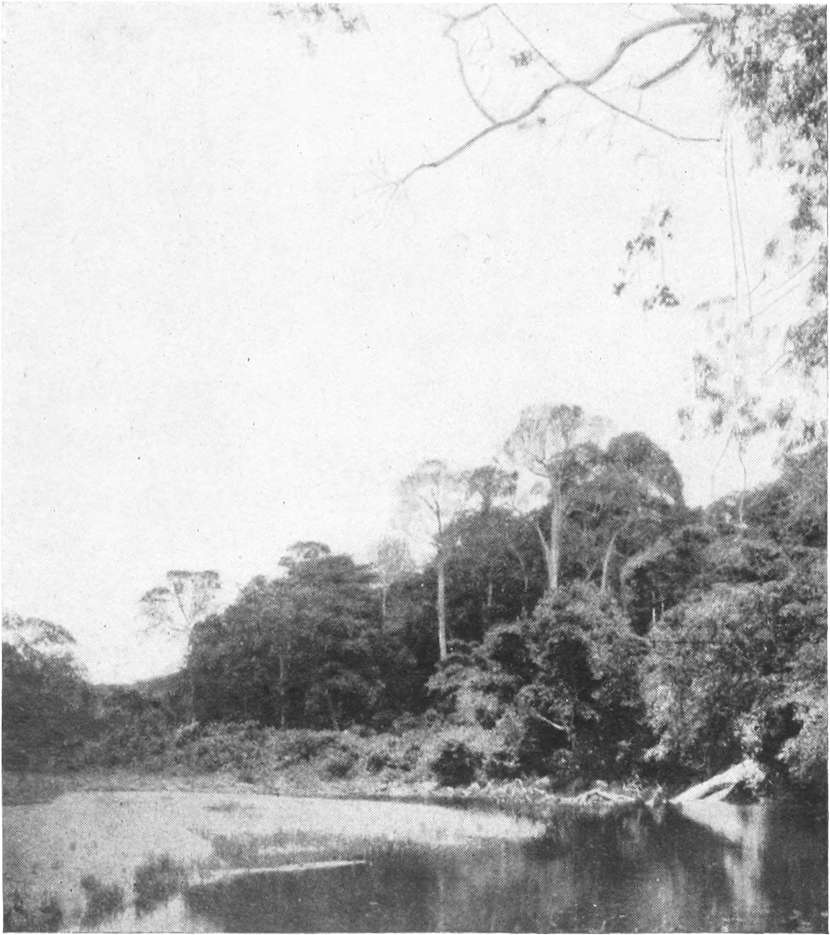
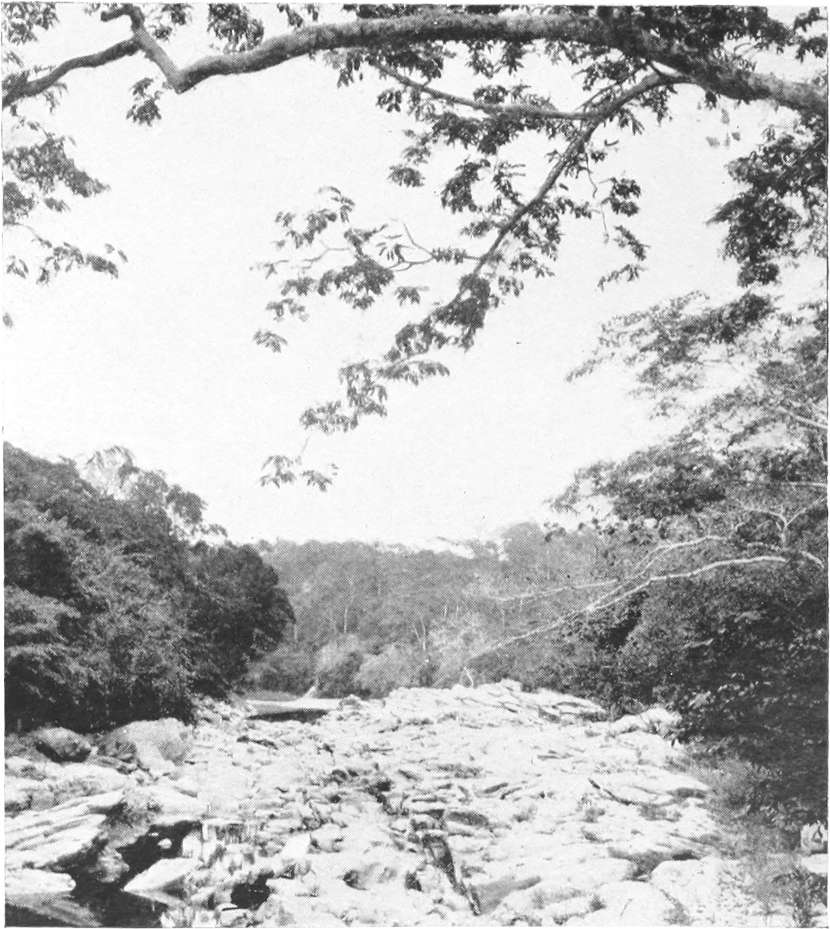
Fig. 79.—Mixed Forest near Osse, looking upstream, Ifon District.
To face p. 354.
The sapwood is white and the heartwood a dull whitish-yellow. It is moderately hard, very close grained and of fine texture, with a dull lustre; is moderately durable, but is liable to be attacked by a very small furniture borer. It is termite-proof. It planes well, does not split easily, takes nails and saws well. It is apparently an excellent wood for carving. It does not shrink nor warp very much. It is more durable for interior work than for outside, where it is liable to get soft and to crumble away. It is sometimes brittle; it does not burn well.
Native Use.—The fruit is eaten and is used as an article of export both to the Northern Provinces and also to the Continent. The wood is used for making “Ju-jus” (Esu—the Devil) (Images of the King); otherwise it is not cut in the Benin country.
Cola Afzelii. Monkey Cola Tree. Obidu, Obiedun, Ebidun (Yoruba); Awohebitan (Benin).
The brilliant red fruits, about twelve joined together in a spherical bunch, are usually quite a feature of the small tree. The leaves are digitate, but joined at the base, so in reality only a single leaf. It is a much-branched tree with yellowish-grey bark. The crown is much divided, and sometimes the branches almost appear as if in large whorls.
It is found in the Oyo, Abeokuta, Ondo, Benin, Owerri, Calabar and Ogoja provinces of Nigeria.
The wood is white and softish and not durable. It is most common at the edge of the evergreen forest. It attains a girth of about 6 feet and a bole length of about 15 feet. It is a light-lover, though it stands a considerable amount of shade in its youth.
Native Use.—The wood is used for the stock of a cross-bow in the Benin country, and the seeds are eaten at any time.
Cola sp. Obiedum (Yoruba); Ewoha (Benin).
This is a comparatively common tree of the Benin, Abeokuta and Ondo provinces of Nigeria. It is the original Cola of the forest; a medium-sized tree with the typical Cola foliage, found growing singly. It does not appear to bear very heavily, and apparently in some places the local people utilize the fruit, while in others they say it is of no value. It appears to be a whiter and softer Cola than that of the other species, and it does not seem to have such a strong flavour.
The timber is hard and white; it is a shade-bearing and soil-protecting tree. Natural regeneration appears to be poor.
The wood is occasionally used by the local fetish-maker for certain types of fetish in the Benin country. It is considered the most suitable and, in fact, the only wood for this purpose. Although the ordinary Cola which is planted may not be cut, this species is not immune, but it is certainly considered most proper if only the image-maker cuts it.
Dombeya Buettneri. Ewe ofo (Yoruba).
It is found in the Abeokuta province of Nigeria, especially in the Olokemeji Forest Reserve. It is a small, shrub-like tree, varying from 7 to 15 feet in height. The bark is fibrous. In 1908 samples of the fibre were submitted to the Imperial Institute for valuation. Owing to its being rather harsh, woody and weak, it was stated to be worth from £7 to £8 a ton.
Ochnaceæ.
Ochna multiflora. Canoe Tree. Uruk (Efik); Tei tei (Ijor); Tei tei (Brass); Elili (Ibo Owerri).
It is found in the Owerri, Warri and Ondo (?) provinces of Nigeria. It is one of the prevalent trees in the evergreen and brackish swamp forest zone. The tree reaches a girth of 15 feet and a bole length of about 60 feet. It has a large digitate leaf, making the foliage of the tree very heavy and dense. The bark is thick and fissured longitudinally. The crown is long and egg-shaped. The fruit is large, roughly spherical in shape, but ribbed in five places on the surface. It is a shade-bearer, and reproduction is chiefly by seed. The wood is reddish-brown and moderately hard. This is one of the most favourite trees for canoe-making amongst the Brass people. Having a straight grain, the log opens out well into a canoe once it has been hollowed out in the centre.
Ochna sp. Sama (?), Duma name.
It is found near Obudu, in the Ogoja province of Nigeria. It is a small tree of the open deciduous forest, growing at an altitude of about 1,500 feet. The flowers are umbellate and of a pretty red colour. It is a light-lover and grows at the edge of the forest.
The natives apparently have no use for either the wood or other parts of the tree.
Lophira procera. Red Ironwood, African Oak, Red Oak. Ela, Ekki (Yoruba); Eba, Ebba (Benin); Eleba (Jekri); Kuru (Brass); Okikopom (Ibibio); Enwan, Umpenek (Efik); Okut Okot (Oban, Ekoi); Kuru (Ibo Owerri); Okut (Kwa).
Chief Characteristics.—It is a very large tree, up to 6 feet in diameter, with orange-coloured bark, when in the shade of the evergreen forest where it is found, but this soon becomes quite grey when exposed to the sun. The flowers are white, with five petals, and are very fragrant, smelling like musk, covering the ground and scenting the forest in November and December. In October and November the tree is very conspicuous with its brilliant new red foliage, which almost appears like flowers in the distance. On the banks of the Calabar River, above the town of the same name, this is seen to advantage. The fruit is winged, but with one wing twice as long as the other and also broader; the seed is sharply pointed and almost conical in section, and not so meaty as that of L. alata. The crown is spherical, but open; the branches are very twisted and reminiscent of oak. The trunk reaches a length of 90 feet and is almost perfectly cylindrical in shape, with only the slightest indication of spurns at the base.
Distribution.—It is found in the Abeokuta, Jebu, Ode, Benin, Owerri, Ogoja (?) and Calabar provinces of Nigeria. It is one of the commonest trees in the very moist parts of the evergreen forest zone.
Timber.—The sapwood is whitish red, but the heartwood is of a dull red colour with large, long, open pores, partially filled with siliceous salts. This often gives the wood an almost speckled appearance. In a tree of 12 feet girth, the sapwood is usually only 3 or 4 inches thick, making it a very full-wooded tree and thus reducing the amount of wood wasted in squaring the logs. It planes well, with a smooth, shiny surface. Strong shoots often come up from the stump, though owing to the natural seed distribution being good, this latter is the chief means of reproduction. It is a light-lover, with a natural tendency to grow straight up. It is a slow-growing tree, and the leaves, nearly a foot long and almost tongue-shaped, are very large for such a hard-wooded tree. Even when planted 16 feet apart it grows up straight, with only three or four perpendicular branches or even only a fork in the stem. It resists white ants, and the teredo worm does not bore into logs when lying in the water. It is almost gregarious in habit, usually groups being found in one locality, or, as in the moister regions, it is next to mahogany the commonest tree found in the forest. It will withstand floods—in fact, there is an island several square miles in extent in the Oshun River covered with only this species of tree. It is also found again on the upper edge of the mangrove forest where the first solid land begins.
The seeds have not been tested as to the proportion of oil contained in them, but no doubt they contain a similar quantity, in proportion to the size, as those of L. alata.
In 1906 samples of this timber in the round were sent to the Liverpool market, where it was valued as red oak at 2s. to 3s. per cubic foot. It was also stated to be worth shipping in good lengths. Owing to its weight and the hardness of the wood, and thus the extra cost of squaring logs, little or none has been shipped to Liverpool since this report was made. Locally it has been used for piles for wharves and bridges, decking for bridges, wall-plates for bungalows, and occasionally as verandah-posts. It can be floated with Musanga logs or those of Hannoa undulata. Canoes made of this wood are of the most durable kind, so that perhaps it might be tried for boat-building.
The people of Benin use the wood for making pestles for their Fufu mortars, and occasionally it is used as wall-plates. Amongst the Brass people it is sometimes used for making canoes, and amongst many tribes for making food-mortars. Near Lagos it is used for house-building.
Lophira alata. Niam Fat, Small Red Ironwood, Meni Oil, African Oak. Ipawhaw, Ponhon, Ipahan (Yoruba); Awigbi, Ugbeberi, Ishan (Benin).
Small or dry-zone Red Ironwood.
It is found in the Ogoja, Owerri, Onitsha, Benin, Ibadan and Abeokuta provinces of Nigeria.
It is a very common tree in the open deciduous forest of the dry-zone form of vegetation. Often found in groups, but it anyhow is the most prevalent tree wherever found. It does not usually grow straight, but the stem is gnarled and crooked, reaching a girth of about 5 feet. The tree itself only grows to a height of about 30 feet. In appearance it looks like a small oak, but the Shea Butter Tree, Butyrospermum Parkii, is still more like it. However, with its reddish-green tongue-like leaves with wavy edges, it is in reality quite different. The branches spring out of the stem in a more upward direction than B. Parkii, and are more irregular in growth. The bark is orange-coloured and almost scaly on the younger trees, though it goes a grey or black colour when exposed to the light or the annual grass-fires. The flowers are white, sweet-smelling and much more conspicuous than on L. procera. The seed is placed between two wings, one nearly three times the width of the other. The smaller wing is more pointed than the larger; the seed, while being pointed, is stoutly cone-shaped and rather more than a quarter of an inch in diameter at the base, and of a light brown colour.
Timber.—The sapwood is narrow and white in colour and the heartwood is a dull red. It is very hard and tough, but not so heavy as L. procera. It planes only with a rough surface.
Silvicultural Characteristics.—This is one of the few trees which successfully resist the annual grass-fires. Its otherwise prolific seed-bearing capacity is, however, often very much diminished, if not completely spoilt, by the flowers being burnt in January and February, the usual time of the grass-fires. It is a light-lover, but for the reasons already given is a very slow-growing tree. On the whole, although the seeds germinate well, stool and root shoots are probably the chief means of reproduction. The soil under these trees is only partially protected during the growing, and quite exposed to sun and wind during the dry season.
Commercial Value.—Samples of these seeds were sent in 1909 to the Imperial Institute for valuation, when they were found to be worth about £10 a ton; 43 per cent. of oil can be obtained from the kernels, and this is said to be suitable for soap-making and to be worth £25 per ton. Commercial quantities, however, have not yet been exported.
Meni oil was formerly obtained from the seed.
Native Use.—Amongst the Yorubas the tree is used for house-posts, especially when the stem is forked about 10 feet above the ground. The leaves, bark and roots are all sold in the native markets for medicinal purposes. An infusion of the bark of the roots is supposed to be a cure for jaundice (yellow fever, according to the natives). Strangely enough, the seeds are not used as a source of oil.
Gomphia insculpta.
Found at Olokemeji.
Gomphia glaberrima.
It is a shrub found at Olokemeji.
Gomphia nr. affinis.
Found at Ilugbro.
Guttiferæ.
Garcinia conrauana. False Cola, Bitter Cola. Orugbo (Yoruba); Edun (Benin); Odji (?) (Brass); Efiori Efrie (Efik); Efrie (Kwa).
It is found in the Calabar, Benin, Ogoja and Abeokuta provinces of Nigeria.
It is a medium-sized tree with close, spherical-shaped crown. The branches and leaves are comparatively small. The bole is short and the branches very persistent. The most typical feature of the tree is the large apricot-like fruit, of an orange-yellow colour. The bark is smooth and brown in colour. It is found in the evergreen forest. The nut is oblong, of a very dark brown colour with small white streaks all over it. It grows in moist soil.
The timber is very hard and close-grained, with yellow-sapwood and light-brown heartwood. It is said to be durable and planes with a smooth surface. It is often found at a considerable elevation—up to 3,000 feet towards the northern part of Calabar province.
It is a shade-bearer, though it is often found growing alone, having been left isolated when the original forest was cleared to make a farm. The tree grows very slowly but bears comparatively early, and trees are often seen quite laden with the yellow fruit.
The timber has not been exported, but has been cut for local use. It was used by the Public Works Department, Calabar, and proved useful for wall-plates. The nuts have occasionally been exported, but they are comparatively valueless compared to the real Cola.
Native Use.—The nuts are sold in the Yoruba and Calabar markets and 100 to 200 for 3d. in the Benin market. The fruit is also eaten. The roots are used for chewing-sticks (the best in Benin), and taste like quinine. The nuts are ground and used medicinally for headache.
Garcinia Kola.
A little known species, found in the Eastern Provinces, Uwet. It was subsequently determined as Garcinia conrauana.
Garcinia Mannii.
This tree is found in the Western Provinces.
Uses.—Chew-stick is made from the root.
Garcinia, var. nov. brevipedicellata.
This tree grows in the Eastern Circle.
Pentadesma sp.?. Hardwood, Duika’s Chop Fruit. Ogbia (Yoruba); Ekuso or Ikujo, Efiari (Benin).
This tree is found in the mixed forests of the Benin province of Nigeria. One of its chief characteristics is that it has little or no bark, but the cortex is comparatively thin, and remains of a duck-egg-green colour even in trees of comparatively large size. It reaches a girth of about 6 feet and a bole length of about 20 feet. However, it is usually very much forked comparatively low down, and often the stem is by no means straight. The root spurns are not very large, but spoil the shape of the bole at the base.
It is a slow-growing, shade-bearing, soil-protecting and soil-improving tree. Natural regeneration is poor, chiefly perhaps because the Duika eat the fruit; in fact, the Benin name means the chop or food of Uso or Duika.
In 1906 samples of this timber were sold in the Liverpool market as a hardwood, which was considered hard and heavy. Since then none has been shipped, nor has it been felled for local use. Perhaps with the changed conditions in the demand for timber, both hard and soft, a further trial would now show whether it was of any value as an export timber.
Pentadesma grandifolia.
Distribution.—It is found in the Oban Reserve of the Calabar province of Nigeria.
Characteristics.—It is a medium-sized tree, with large oblong leaves having numerous glands and lateral nerves which are about a tenth of an inch apart. The leaves are larger and the exterior sepal shorter than in P. butyraceæ.
Silvicultural Qualities.—It grows in the evergreen forest, is a shade-bearer, and comparatively slow-growing tree.
Utility.—Although the fruit has not yet been collected, it is probable that the nuts would contain a similar oil to those of P. butyraceæ.
Pentadesma butyraceæ. Butter or Tallow Tree. Okarora, Ossa (Ondo); Ekuso (Yoruba) (Ikale); Ijeni Udegbu, Agba (west side), Udegbi (Benin); Orugbo erin (Ondo); Amu Ne (New Calabar); Ikakama Udia Ebian (Efik); Ikakama Udia Ebian, Igbofia (Ibibio); Ntini Nyok (Kwa).
Distribution.—It is found in the evergreen forests of the Jebu, Ode, Benin, Warri, Owerri and Calabar provinces of Nigeria. It is quite prevalent in its typical locality and very damp, almost swampy, regions of the forest near small waterways, even comparatively near the sea.
Chief Characteristics.—It is a thin, tall tree, with dark bark and flatly compressed crown consisting of four or five tiers of branches, very close together in almost true whorls. The foliage is very thick and the leaves thick and leathery. It exudes a mass of gamboge-like latex as soon as slashed, and the slash is orange-red. The latex solidifies on exposure to the air. The large pear-shaped fruit has a soft rind, which usually is pierced by the fall to the ground, and the Cola-shaped seeds are embedded in a soft, yellowish-white pulp. The large sepals at the base of the flower are quite typical, in their persistency often being found at the base of unripe fruit.
Timber.—It has yellowish-white sapwood and light-red heartwood of firm texture, with a certain amount of waviness in it, especially if the tree has been barked in its earlier years. It is not hard, and is easy to work; it does not appear to warp or shrink.
Silvicultural Qualities.—It is a shade-bearer with very persistent evergreen leaves. It will stand in waterlogged land and grow almost to perfection. The branches are also very persistent, and it is only when growing in close proximity to other heavy foliaged trees that the bole clears itself of branches for two-thirds of its length. The stump shoots sprout up when the tree is cut down. The more prevalent form of reproduction is by seed. The mature tree bears quite prolifically almost every year. The timber has not been felled for export, but the seeds are worth £8 a ton on account of the oil that they contain, which is considered suitable for soap-making.
Pentadesma Nigritana. Odgebu (west side) (Benin).
Distribution.—It is found in the Oban Reserve of the Calabar province of Nigeria.
Characteristics.—It is a medium-sized tree with black bark on the branches. The leaves are glabrous coriaceous, 3½ to 4½ inches long and 1 to 1½ inches broad.
Silvicultural Qualities.—It grows in the evergreen forests, is a shade-bearer and comparatively slow-growing tree.
Utility.—The fruit has not yet been collected, but, judging by the locality in which this tree is found, the seeds would contain similar quantities of oil to those of P. butyraceæ.
Haronga Madagascariensis (Kew). Benin Roof-pole. Itue (Benin).
It is a non-indigenous tree (exotic) which is now found in the Abeokuta, Ibadan, Ondo, Benin, Warri, Owerri, Ogoja and Calabar provinces of Nigeria.
It is commonly seen growing up in old farms in the heavier soils of the evergreen and mixed deciduous forest zones. The slash, which is brick-red and exudes a yellowish-red latex, is most typical of this tree. The tree is almost gregarious, forming groups nearly half an acre in extent; the bark peels very easily, leaving a clean white stem which hardens very much on exposure to the air. It is a small tree, attaining a girth of about 2 feet and a height of about 40 feet. The wood is quite white, with a small pink pith about a quarter of an inch in diameter; it is a very light wood and most durable when under cover.
The leaves are of a medium size and rough to the touch. When 2 to 4 inches in diameter the natives cut the trees, clean and strip off the bark, and use them for rafters in house-building, especially in the Benin and Yoruba countries.
Symphonia globulifera (Kew). Hog Gum.
It was reported from the Calabar province.
Allanblackia floribunda. Orogbo erin (Yoruba); Izeni or Iyockan (Benin); Atta (Efik); Egba (Ibo, Owerri).
Distribution.—It is found in the evergreen forests of the Jebu Ode, Benin, Owerri (?) and Calabar (?) provinces of Nigeria. This tree usually grows on less moist soil and further away from water than P. butyraceæ, though it likes a moist and deep soil.
Chief Characteristics.—The long, hard, brown, enlarged sausage-shaped fruit hanging on a stalk shows, when cut, large seeds scattered in white pulp, and is thus different in this respect to Pentadesma, which has dark-brown seeds embedded in a soft, yellowish pulp. The slash is yellow, but only exudes a little yellow latex at first. The branches are not so verticillate in form as Pentadesma, but are more pendulous, especially when the tree is in fruit. They also are further apart and give the crown a more open appearance. The fruit is three times the length and the diameter rather more than that of P. butyraceæ.
Timber.—The sapwood is whitish-yellow and the heartwood yellowish-red and moderately hard. It is not attacked by white ants; it does not split easily, but planes with a smooth surface. It is a medium-sized tree, reaching a height of about 80 feet, with a bole length of 20 feet and a girth of 8 feet.
Silvicultural Qualities.—It is a shade-bearer and grows comparatively slowly. Natural reproduction is chiefly by seed, though fine and succulent stump shoots appear when a tree is cut down.
The timber has not been exported nor has it been used locally; the natives occasionally cut the bark for medicinal purposes, but otherwise apparently have no use for the tree.
Ochrocarpus Africanus? sp. of Allanblackia. African Mammee Apple, Mahogany (Calabar). Igoda (Benin); Ereruku, Edeng Edem (Calabar); Baulan Bolo (Degema, New Calabar); Okut and Otun (Oban, Ekoi).
Distribution.—It is found in the Calabar, Owerri and Ogoja provinces of Nigeria, occurring sparsely in the evergreen forests in several localities, where it takes the place of Khaya, which is not prevalent in such places.
Chief Characteristics.—It is a large tree, with orange-coloured bark, especially in young specimens, and a little scaly. In habit otherwise rather like Mahogany, after which the timber has been named. It is much harder and has little resin canals typical of the order. It is not attacked by white ants. It reaches a height of 100 feet, with a bole length of about 40 feet and a girth of 12 feet. The root spurns are only slight. The large, elongated, spherical-shaped fruit, with rough, pale orange-coloured rind, speckled brown in several places, is most typical of this tree. Generally speaking, it could easily be mistaken for Mahogany Entandrophragma by anyone not very familiar with both species.
Timber.—The sapwood is white, with a pinkish tint, and the heartwood a dark red, with small medullary rays as well as very prominent resin-like canals which, when dry, are filled with a yellow substance.
Silvicultural Qualities.—It is a shade-bearer, but likes a certain amount of overhead light in middle age. On the whole it is slow-growing, except for a short period when the chief height-growth is put on. A few stump shoots sprout when the tree is cut down, but the more common form of reproduction is by seed.
Utility.—It has not been felled for export, but the Public Works Department felled and converted a good deal at the Etehetem sawmill, and it was favourably reported on as a hard mahogany. It has occasionally been used by the natives for making canoes.
No botanical name. Oshusi (Ibo, Owerri).
Distribution.—It is found in the Owerri province of Nigeria. It is a comparatively common tree in the evergreen swamp forest.
Characteristics.—The timber is not over hard, but it reaches a height of 100 feet and a girth of 8 feet. The bark is smooth.
Silvicultural Qualities.—It is a shade-bearer and a comparatively slow-growing tree. The most prevalent form of reproduction is by seed.
Utility.—It has not been felled for export, but was used in the construction of the Imo railway bridge as piles.
Buronona (New Calabar).
This is a medium-sized tree of the Owerri province, and is found near the Imo, not far from the railway bridge. Several piles of the temporary bridge were made from the timber of this tree.
Ochrocarpus sp.?. Ebattan, Ehranezi (Benin); Buronona (New Calabar).
Distribution.—It is found in the Owerri, Benin (?) and Ondo (?) provinces of Nigeria.
Chief Characteristics.—It is a very straight, thin-stemmed tree, with several whorls of branches near the top of the tree, very much compressed together. The flowers are red sprays, which look very pretty at the beginning of the dry season. It occurs near the freshwater swamps, comparatively close to the sea. In many places it is almost gregarious in habit, more especially near Degema. It reaches a height of 100 feet, and a girth of 6 feet, often with a bole length of 50 feet.
Timber.—The sapwood is white and the heartwood is light brown; both appear to be equally durable. It is termite-resisting. It planes with a smooth surface; the grain is very fine. A red latex exudes when it is cut.
Utility.—It is chiefly used for door and window frames, and does not warp nor crack, even when put in green. It attains a large enough size to be used as piles, some of which were used in the construction of the temporary railway bridge at Imo. The natives do not use the wood, and it has not been felled for export.
Silvicultural Qualities.—It is a shade-bearer and a comparatively slow-growing tree, though on less wet soils it seems to grow faster. The more prevalent form of reproduction is by seed. Weak stool shoots also come up after the tree is cut down. The foliage is dense and persists for several years.
Fig. 80.—Heavy Sapeli Mahogany (Entandrophragma utilis) standing near the road between Uyeri and Benin City, Benin Province.
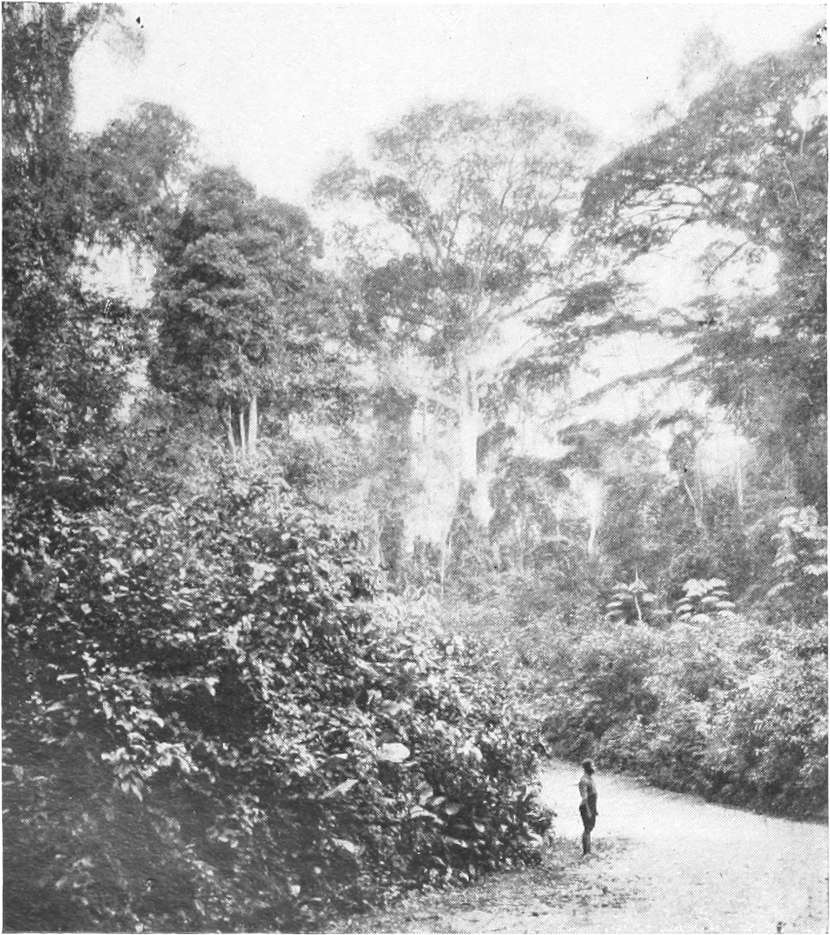
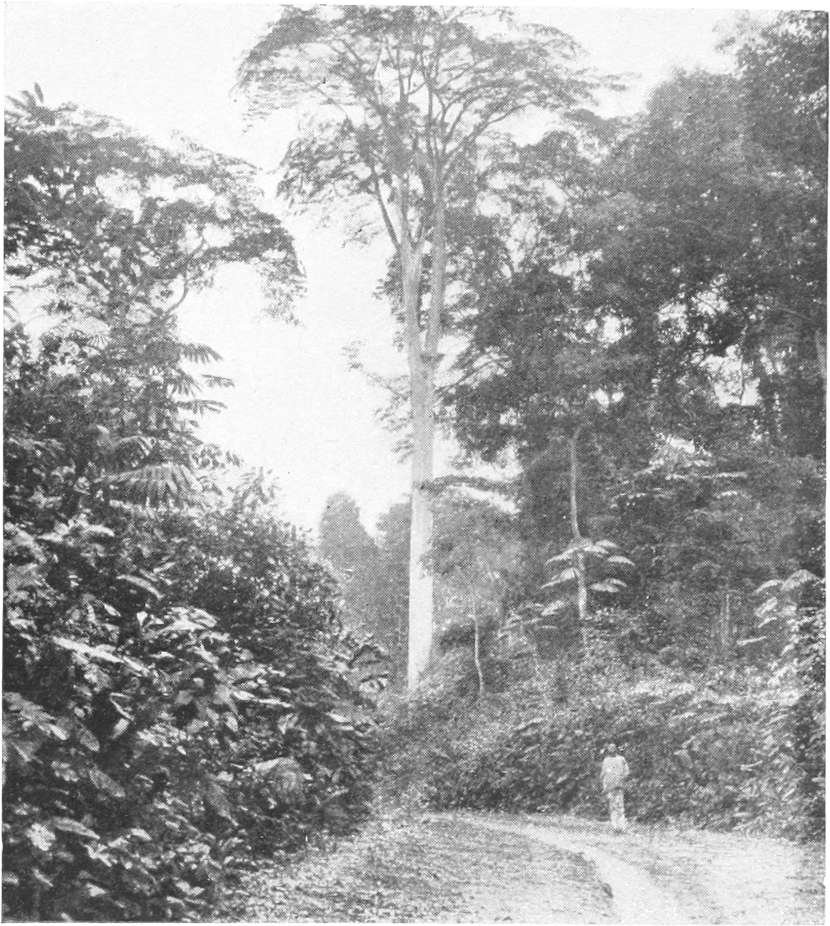
Fig. 81.—Agba (Benin), (Pterogopodium), standing near Ifon Road, South of Uyeri, Benin Province.
To face p. 364.
Bixaceæ.
Bixa orellana.
This tree grows well in the Olokemeji Arboretum. It is found up to a height of 10 feet, and is cultivated for the sake of its seeds, which yield the orange dye called “annatto.” The tree bears pods very freely. Samples were sent to the Imperial Institute in 1906 and were valued at about 5d. a pound.
Flacourtiaceæ.
Smeathmannia pubescens. Moyida (Yoruba).
It is a medium-sized shrub found in the Western Provinces.
Soyauxia sp. Ogohomeh, Oyohomeh (Benin).
This tree was found on the mountain slope above Ogabi in the Obudu district. The fruit is edible.
Soyauxia sp. Aye (Yoruba); Owowe, Owawe (Benin).
It is found in the Ondo, Benin and Ogoja provinces of Nigeria, growing at the edge of the evergreen forest. It is a medium-sized tree, with a bole length of about 30 feet and a girth of 6 feet; on the whole, it is of more slender build and habit than the Terminalia, to which it is apparently closely allied. The flower is very small, white and spherical, being only a quarter of an inch in size; it is most frequently seen lying scattered about in patches on the path or roadway, giving out a very sweet scent. The seeds are double winged, like Bougainvillea. The leaf is smaller than that of the Terminalia and the foliage generally less dense; the sapwood is white and somewhat wide, the heartwood of a light-brown colour, and on the border-line of being a hardwood. The wood is not very durable unless under cover; it is not very common, though where it is found there are a fair number of trees which would form a good supply of timber for local purposes. The natives do not use this wood, as they say it is liable to attacks by white ants.
Oncoba dentata (Oliv.). Parisha (Yoruba).
It is found in the Abeokuta province of Nigeria. It is a small, shrub-like tree, armed with moderately long thorns. It belongs to the evergreen forest zone. The flowers are large, white and conspicuous.
Oncoba glauca (Foster). Kakandika (Yoruba).
Found in the Olokemeji and Abeokuta provinces.
Oncoba spinosa (Rich). Kakandika (Yoruba).
This is a small, shrub-like tree found in the Abeokuta province of Nigeria. It is moderately common, and several hedges have been made with it in the Olokemeji Arboretum. The most distinguishing feature of this plant is the large, spherical-shaped white flowers. The petals are large and conspicuous, with a mass of yellow stamens in the centre. In habit it is not unlike the thorn; the ends of the twigs are armed with a short spike.
It stands trimming pretty well. Each year it flowers fairly regularly, so that it makes quite an ornamental plant. It bears green fruits with a conspicuous bunch of the old sepals at the top. This fruit is rather smaller than a tangerine orange, but quite spherical in shape, with a hard, woody rind.
Flacourtia Ramontchii. Abeokuta Plum. Oshere (Yoruba).
It is found in the Olokemeji Reserve of the Abeokuta province of Nigeria.
Flacourtia flavescens (Kew). Niger Plum.
Found in the Western Provinces.
Uses.—Edible plums, medicine and hedge plants.
Homalium, cf. H. Africanum (Benth.). Atu or Abo Ako (Yoruba).
This is a hard-wooded tree of the Yoruba country, which is used to some extent locally. It is also found in Benin.
Being a shade-bearing and soil-protecting tree, it is of value in the forest, apart from the production of timber. It is a slow-growing tree apparently.
Lecythidaceæ.
Napoleona Whitfieldii. Ito (? Yoruba); Uruhe (Benin).
It is doubtful if these are the correct native names for this species.
Napoleona imperialis. Speckle-fruited Napoleona. Boi Boi (Yoruba).
It is found near Ode district, Oban and Igbeshe, in the Ibadan and Abeokuta provinces of Nigeria.
It is a deciduous shrub with pretty white flowers, very shiny leaves, which are alternate, and bears a spherical, orange-coloured fruit (with a russet-like surface having white lenticels scattered nearly all over it), which ripens in March at the Olokemeji Reserve.
This shrub protects and enriches the soil with its fall of leaves. Considering the attractiveness of the flower and the fruit, it is surprising that it has not more frequently been planted in gardens, where it should be placed in a shady corner. It is slow-growing, and does not need much light. It likes a moist, fairly deep good soil, especially near a river bank.
Native Use.—The stem is occasionally used for making hoe or axe handles, for which it is suitable, as the wood is comparatively tough, close-grained and hard. The knottiness of it is an advantage either for the handle or for fixing the hoe or axe head.
Napoleona Vogelii (Hook). Orokwa, Ogemme (Benin).
It is a common tree in the Calabar, Benin, Ibadan and Abeokuta provinces of Nigeria.
Chief Characteristics.—It is a medium-sized shrub-like tree, with orange-shaped fruit, though not quite spherical, having small white lenticels on the surface and roughness like a russet apple. It does not attain a girth of more than 3 or 4 feet. It is usually found in the mixed deciduous forests, though more often in clearings in the forests; however, it stands a good deal of shade. The wood is comparatively hard, but it does not reach much size. The tree protects and enriches the soil with its fall of leaves, and serves a very useful purpose as a shrub amongst the undergrowth of the forest. It might be planted in gardens, where both the flower, which is large and white, and the fruit would be admired. It usually bears a large number of both. It is rather a slow-growing tree. The natives use the wood for making matchet handles.
Napoleona Owariensis. Adere, Isiurem (Lagos).
Found in the Olokemeji Reserve.
Rhizophoraceæ.
Weihea sp. (Spreng). Odu (Yoruba).
This tree is found in tropical West Africa.
The flowers have an involucre of two bracteoles. The fruit is fleshy; seeds with an aril.
Weihea sp., cf. Africana. Odu (Yoruba); Itobo (Ibibio); Munon (Efik).
This tree grows near Lagos.
Rhizophora racemosa. Red Mangrove or Salt Mangrove. Egba Ibadudu (Jeb. Yoruba); Ehrodo, Ibadudu (Benin); Odo (Jekri).
Poga oleosa. Inoi Nut, African Brazil Nut. Iku (Yoruba); Inoi (Benin); Inoye (Efik); Ikoi (Oban); Inoi (Ekoi); Ekom (Ibo Owerri); Imonon (New Calabar).
It is found in the Benin (?), Owerri, Calabar and Ogoja (?) provinces of Nigeria, in the evergreen zone, both of the level and hill country. On the whole, it is more prevalent as the eastward side of the country is approached. In the forest its presence is usually indicated by the heaps of broken shells left lying near the roots of neighbouring trees, on the path or roadside. The reddish-brown interior and cross-section of the inner covering of the shell is a most typical feature. The nut itself is roughly spherical in shape, with a surface almost evenly covered with little nodules, giving the nut very considerable resiliency against cracking. It is nearly half an inch thick, and inside there are two or three kernels. Each of these is a chocolate-brown colour with thick (almost three thirty-seconds to one-eighth of an inch) red-brown shell. Each is about ½ inch long and rather more than ¼ inch thick. This thick shell quite spoils the flavour of the nut, which is sweeter and contains more oil than the Brazil nut. It can, however, be removed with a pen-knife. The trunk of the tree is light-grey, with comparatively thin cortex. It reaches a girth of about 12 feet and a bole length of about 60 feet. It usually forks at about 50 or 60 feet from the ground, and this is one of the typical features of the tree. The crown is rather open, with several main limbs and comparatively few branches. Another place where it is commonly seen, both in the Degema and Calabar districts, is in the old farms, standing as isolated specimens, or standards overshadowing all the secondary growth. It is one of the few trees that are preserved when a fresh clearing is made for a farm. The fruit is the shape of a large greengage, the fleshy part of which soon breaks away, leaving the hard nut inside. The fleshy pericarp is about a quarter of an inch in thickness.
The sapwood is white, tinged with pinkish stripes, and the heartwood pinkish-red, with very wide and numerous medullary rays, which are most numerous, and in fact more so than in any other tree, and are very typical of this timber. The wood is soft, splits well, is of somewhat open texture and rather fibrous grain. It planes up well with a smooth surface, takes nails well, and saws well. It is liable to be attacked by white ants. The sapwood is fairly narrow.
It is a moderately fast-growing, shade-bearing, soil-protecting and soil-improving tree. Natural regeneration only appears to be slight, chiefly owing to the fact, perhaps, that most of the nuts are gathered and eaten by the natives. It is somewhat exacting with regard to soil. It appears to like one that is somewhat rich, deep, moist and with good drainage. In waterlogged areas it becomes stag-headed. No plantations have been made of this tree.
The timber has not been exported, not has it been cut for local use. It appears, however, to be worthy of a trial as a substitute for light cedar or mahogany, especially from wind falls, which are not infrequent owing to the way it is left standing in the forests.
Native Use.—The nuts are used by the natives, and are considered very valuable, in the most out-of-the-way parts of the forest, as a source of food. They used to be sold in the Calabar market 250 for 3d. Further notes as to the oil-bearing properties of this nut will be found in the section dealing with the oil seeds and nuts.
Combretaceæ.
Terminalia sp. Yellow Terminalia, Black-bark Terminalia. Idigbo, Opepe, Epepe (Yoruba); Egoyn nebbi, Egoyn nikwi, Egoyn lukan (Benin).
According to the Yorubas this is the Idi of the forest.
Distribution.—It is found in the Ondo and Benin provinces of Nigeria.
Chief Characteristics.—It has a slightly fissured bark, increasing in age, light-brown in colour in youth, but darkening with age, almost appearing black in the distance, rather forming a criss-cross pattern. It flowers in May with small spikes or thin, stiff racemes, each with little yellow balls of staminate flowers. It has a compressed crown of two or three whorls of branches, but not so typical as that of T. scutifera. It is, however, much more widespreading, chiefly due to the fact that the tree on the whole is shorter and stouter than T. scutifera. The trunk is much more cylindrical, and the root spurns are very slight, and not buttress-shaped as in T. scutifera. The contrast between the light-green foliage and the dark-coloured bole is so great that the tree is quite unmistakable in this respect. The only one at all similar in this is False Shea Butter, Mimusops Djave, but even the trunk of this one appears lighter than the former. The slash is dark-brown, almost black, on the outer edge and yellow on the inside. The fruit is not unlike a large hazelnut, but the shuck is of looser build, and the interior seed can be more easily seen than in the case of the nut.
The sapwood is a faint yellow colour and the heartwood a good yellow. It is of the hardness of an ordinary softwood, with a straight, even grain and somewhat open pores. It planes well, takes nails, splits very easily and saws well. For outside work it is not durable unless very thoroughly dried. For interior fittings it is very durable. It is liable to attacks by termites outside. It seasons well, with only a small amount of shrinkage and slight liability to warping.
It is a fast-growing, slightly shade-bearing tree, with strong soil-protecting and soil-improving qualities. Natural regeneration appears to be fair. It sprouts from the stump, but is not very strong. It likes a good soil, with fair drainage but a good deal of moisture. It will stand a certain amount of flooding. It is occasionally almost gregarious. No plantations have been made with this tree. It reaches a girth of over 14 feet and a bole length of about 70 feet.
The timber has not been cut for export, but occasionally it has been sawn up for planks for local use. It deserves, however, a further trial for export as a floor-board and for local use for a similar purpose. There are comparatively large supplies, and the dimensions of the tree are such that large planks and boards could be cut out of it.
Native Use.—The tree is occasionally felled for making canoes, but it is not taken unless there is a shortage of other harder kinds.
Terminalia sp. Orange-barked Terminalia. Ayo, Aiyo (Yoruba); Ayo, Ulazo (Benin).
Distribution.—Ibadan and Abeokuta provinces of Nigeria. It is one of the typical trees of the mixed deciduous forest zone, though it appears to be confined to certain localities, such as the Olokemeji Forest Reserve and other places.
Chief Characteristics.—Moderately thick bark, rather reminding one of Triplochiton, but with a certain amount of roughness and slight fissures. The crown is very pointedly oval and long, the leaves appearing only slightly terminal and not typically so. The branches tend to flatten out in old age, though they are slightly pendulous at the tips. The bole reaches a girth of about 10 feet and a height of 50 feet. The light patchy, orange-coloured bark is a most typical feature of this tree. Satinwood is the only one at all similar in this respect, but it is much smoother.
Timber.—White, with a faint yellow tint; the pores are much shorter than those of the other Terminalias, such as T. scutifera and Togoensis. The grain on the whole is finer and of closer texture. The timber is somewhat harder than either T. scutifera or T. sp., but not so hard as that of T. Togoensis. It planes well, takes nails, saws easily, but does not split so well. It is attacked by termites, but is durable for interior work. It is somewhat more brittle than T. sp.
It is a moderately rapid growing, light-demanding tree, with soil-protecting and soil-improving qualities. Natural regeneration does not appear to be good. It sprouts, but poorly from the stump, and if at all shaded dies away. It likes a moderately good soil, with a fair amount of moisture and depth.
The timber has not been cut for export, and only occasionally has it been felled for cutting into planks for local use. It deserves, however, a trial as a local flooring board. The available quantities so far discovered are not large enough to justify its trial as an export wood.
Utility.—The wood is used for planks and for canoes. It is likely to furnish timber for the home markets.
Local Use.—It has been used for making canoes, and also for sawing up into planks for house-building.
Terminalia scutifera. Shingle Wood. Afara (Yoruba); Oaha Egoyn, Egoyn nufwa (Benin).
It is a common tree in the Calabar, Ogoja, Owerri, Warri, Benin, Ondo and Abeokuta provinces of Nigeria.
The chief characteristics of this tree are the thin and far up-reaching root flanges and its thin, grey-coloured bark. It attains a height of about 200 feet and a girth of about 16 feet. The bole length often exceeds 100 feet. The crown is compressed and flat, with few main branches. It is usually found near water.
The timber is light-brown to almost yellowish-white, with darker streaks. The sapwood is almost white, but when dry is barely distinguishable from the heartwood, though when freshly cut the heartwood appears drier, and thus shows up against the damper sapwood. The wood is soft and planes easily, though not always giving a smooth surface. It is also easy to saw or cut with a chisel and splits well. It is attacked by termites.
On the whole the tree is a light-lover, and even the young self-sown seedlings only grow in comparatively open places near rivers, where there is no shade directly over them, though there may be trees to one side or the other. It is one of the typical trees of the evergreen and mixed deciduous zone, growing always on damp and deep soil. Natural reproduction by seed is good. Stool shoots grow, but do not persist for a great length of time. It often forms small pure groups in the secondary forest, and in suitable localities tends to be more prevalent in the secondary than in the primeval forest.
In Nigeria it has been used as planks, but is not considered very good. On the Gold Coast it has been used for shingles.
The natives occasionally use the tree for making canoes, also for bowls, plates, and native doors in the Benin country, but owing to its softness it is not considered of much account.
In figure No. 108 there is a picture of a very large specimen found in the Ikrigon Forest Reserve.
Terminalia Togoensis. Dry-zone Terminalia. Idi, Idi Odan (Yoruba).
Found in the Oyo, Benin and Ogoja provinces of Nigeria. It is a very common tree, with slight foliage and small stem, which is usually forked about 10 feet from the ground. The slash is yellow and almost dry, which is most typical of the tree.
The wood is soft, though harder than most of the other Terminalias. It works easily, but does not split well. The sapwood is white and the heartwood of a pale yellow colour. The bark is rough and widely fissured. Natural regeneration by seed does not appear to be good, though stump shoots appear when the tree is cut down. It stands a considerable amount of fire, but it is a light-loving tree.
The local people find the stem useful for house-building posts, as it is comparatively durable and forked in shape.
Terminalia avicennioides.
It was stated it was found in the Calabar province.
Terminalia Brownii. Inya joko (Yoruba).
Found in the Abeokuta province.
Combretum racemosum. Ogan pupa (Yoruba); Akoso, Orsorsor (Benin).
Found in Olokemeji and Benin. Climbing shrub with red flowers and white bracts.
Combretum Lawsonianum. Ome (Benin).
It has red flowers and is found at Agege.
Combretum mucronatum. Okan pupa (Yoruba).
It is found in the Mamu Forest.
Combretum Zenkeri. Ogan (Yoruba).
It is found in the Yoruba country.
Combretum micranthum. Okan (Yoruba).
It is found in the Yoruba country.
Combretum glutinosum.
Combretum paucinervium.
Combretum Hartmannium.
These are climbing Combretums found in the Yoruba country.
Anogeissus leiocarpus (G. and P.). Yoruba Chew-stick. Ayin (Yoruba).
Distribution.—It is found in the Oyo and Abeokuta provinces of Nigeria.
Chief Characteristics.—This tree reaches a height of about 70 feet in favourable localities and a girth of 9 feet. With its birch-like foliage and the drooping and sweeping of the pendulous branches in old age, it is certainly the “Lady” of the African “open woods.” The little spherical fruits cover the ground in the early part of the dry season. The comparatively smooth bole, giving way to small scales of light-brown bark as the tree gets older, is a typical feature. It is often forked, especially low down. The bole is thin and slender in build, with upward tending branches, also very slender in build, but dark in colour. A blackish gum exudes when it is cut. The slash is yellow before the gum runs out.
Timber.—The sapwood is yellowish-white and the heartwood dark-brown to almost black in some specimens. It is hard, durable and termite-proof. It does not plane nor split well, takes nails with difficulty, but saws fairly easily.
Silvicultural Qualities.—It is a light-loving species, though in its youth it will stand a little shade. It is one of the first trees to appear on disused land, so long as the soil is good. Its foliage is a little acid, as it kills all grass, even Ekon, and for this purpose is invaluable as a tree for admixture with more valuable species. It is somewhat exacting as to soil.
Once it gets started after being planted, or as a self-sown seedling on good soil, it is a rapid-growing tree, which is only hindered in its growth by the annually recurring grass-fires. Wherever it is protected it develops into a straight-boled, large tree. The branches are very persistent, so that close planting is most necessary. Several plantations have been made with this tree.
Utility.—The tree is burnt for its ashes for fixing native dyes; the roots are used for chewing-sticks, and the bark is used medicinally by the natives.
It yields a good firewood which gives great heat. The smaller poles make very useful hut-building timber, as it is so often forked.
It should find a place as an avenue tree, owing to the delicate green, the drooping nature of its foliage, and the moderate amount of shade cast on the road.
The timber has not been tried for export, but with its dark black and sometimes streaky coloration it is worthy of a trial. Locally it has occasionally been cut for planks and for house-building. It is not liked because it is so hard. The sapwood is rather wide. The timber is sometimes rather knotty, especially containing dry knots. It is sometimes attacked by a large borer, making large holes in it.
Laguncularia racemosa. White Mangrove or White Button.
This species is found growing in the swamp regions, also on the coast. It yields timber, tanning, dyeing materials and medicaments.
Myrtaceæ.
Eugenia Owariensis (Beauv.). West African Allspice. Adere (Yoruba).
It is a common tree of the Olokemeji Reserve and the Abeokuta and Oyo provinces.
With its comparatively short bole (about 8 feet) and wide, almost spherically-shaped crown, it is one of the largest and most conspicuous of the dry-zone trees. The tree attracts the pigeons, but not so much as the wild fig. The flowers are very minute and insignificant. The fruit is very small and poor.
Reaching only a girth of about 4 feet, it does not yield very large timber. Although moderately hard and durable, it has not yet found a place in the local market. It is doubtful if it is termite-proof. It might be used for making boxes or for small articles of furniture in localities where wood is scarce.
It is a comparatively slow-growing tree, almost soil-improving, and of a light-loving nature.
Owing to its comparatively dense foliage partially shading the ground and thus killing the grass, it is a distinctly helpful species in the protection from fire of a dry-zone forest.
Natural reproduction by seed is only moderate, but stump shoots are strong, and it appears that root suckers also come up in certain places.
Eugenia Owariensis. Isinren (Yoruba).
This tree is found in the dry-zone forests—a spreading tree which flowers in February.
It yields timber, edible fruits and medicaments.
Melastomaceæ.
Memecylon sp., nr. Barterii.
It is found in the Olokemeji Reserve in the Abeokuta province of Nigeria.
Araliaceæ.
Cussonia Nigerica (Hutch.). Elephant Sugar-cane. Sigo (Yoruba).
This is an evenly and rather deeply fissured small tree of the dry-zone forest, which has in the main only a great tuft of large digitate leaves at the top of the stem. It is occasionally branched, when it gives an appearance of bearing all the leaves at the end of the stem. It is fairly common in the Olokemeji Forest Reserve of the Abeokuta province. This tree is one of the few digitate-leaved trees of the dry zone, and is certainly one with the largest; it is a fire-resisting tree. The natives occasionally use the stem for house and verandah posts.
Umbelliferæ.
Heptapleura Mannii. Found in the Oban Reserve.
Sapotaceæ.
Mimusops multinervis. Emido or Sleeper Wood. Ako Emido (Yoruba); Aganokwi (Benin).
This species is found in the Abeokuta and Oyo provinces of Nigeria; it is most common, and, in fact, forms almost half the crop in the belt of forest just on the south side of the railway four to six miles east and west of Olokemeji Station. The most distinguishing feature of this tree is the grey, thick, deeply-fissured bark. With its comparatively short bole and stout, crooked branches, it is not unlike an oak. It reaches a height of about 80 feet and a girth of about 15 feet. The root spurns are practically non-existent. The trunk tapers off quite abruptly after each series of branches. The crown is rather long and sometimes almost pear-shaped. The foliage is dense, and, for the size of the tree, the leaves are small. The flowers are small and white and conspicuous. The fruit is a small round nut, about half an inch in diameter. The leaves are a very dark green colour, but on the upper surface are often shiny.
The sapwood is white and, for the size of the tree, comparatively narrow. The heartwood is a deep red colour, which it retains even after the wood is dry. In sections from older trees it exhibits isolated white streaks, scattered here and there through the heartwood. This is made of a small mineral deposit which is closely allied to apatite. It is one of the hardest of the African woods and also the most durable; it splits most satisfactorily; it saws very cleanly, planes well, but owing to its extreme hardness takes nails with difficulty. It is termite-proof. It is just as durable in, as out of the ground. It burns with a fierce heat and, in fact, makes the hottest fire of any of the West African woods. The grain is very close, though sometimes it shows some figure. The knots in the wood produce some pretty “curl” effects.
The tree is a shade-bearing, soil-improving species of the mixed deciduous forest. It is very slow-growing, often not showing a greater height-growth than 6 inches per year. In its youth the branches grow more or less in whorls of three or four branches; these branches are very persistent. Natural generation good; it demands a good soil, but will stand a great deal of moisture, not to say flooding of the area for several months of the year. It flowers in February; the roots are comparatively deep-growing and there is a distinct tap-root. Some plantations have been made with this tree. It has been tried as a species to mix with ebony, and for this it seems suitable. In similar localities this species and ebony are often found.
Locally it is used as a house-building wood and occasionally for firewood. The timber has been cut up into sleepers and found to be most durable. When it was used in an unseasoned state, and in very dry territory, it was found to split—but this was scarcely a fair test of the wood. It has also been used as joists and for the framework of buildings, for which purposes it has proved very useful. Local carpenters have complained about its hardness, but usually the tools used have not been of such high quality necessary to give the best results when working on this wood.
The timber has not been used for export, but it deserves a trial, especially for railway sleepers.
Fig. 82.—Benin Satinwood (Afrormosia laxiflora) standing in the Ogba Plantation, Benin District.
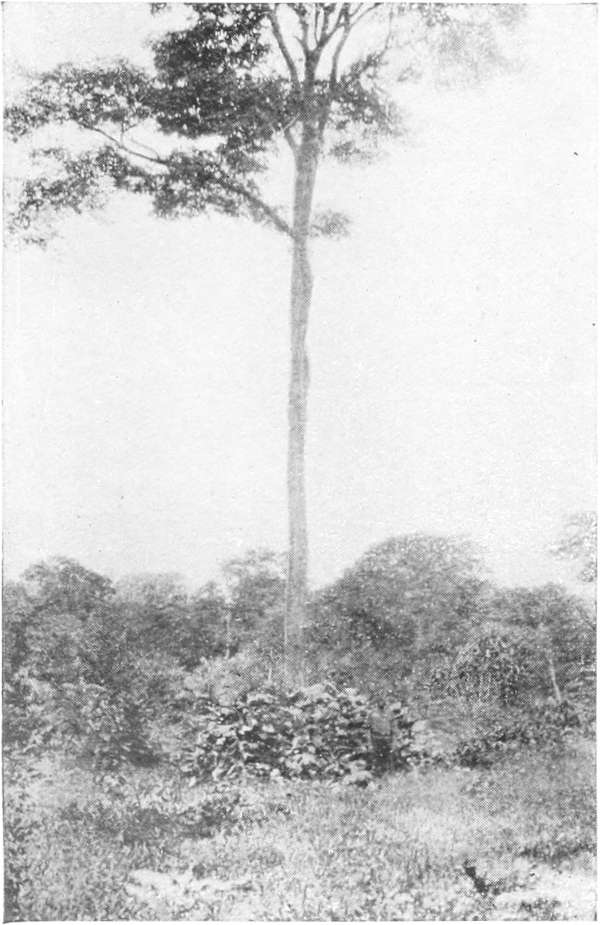
Fig. 83.—Mixed Mahogany Plantation, Khaya grandis on left, Khaya Punchii in centre and Entandrophragma in the right foreground, six years old, near Ogba, Benin Province.
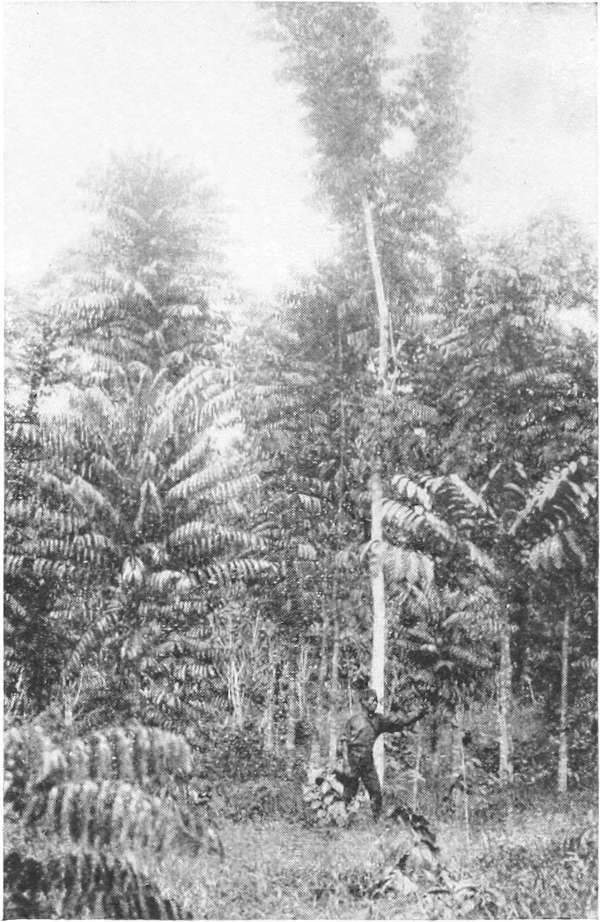
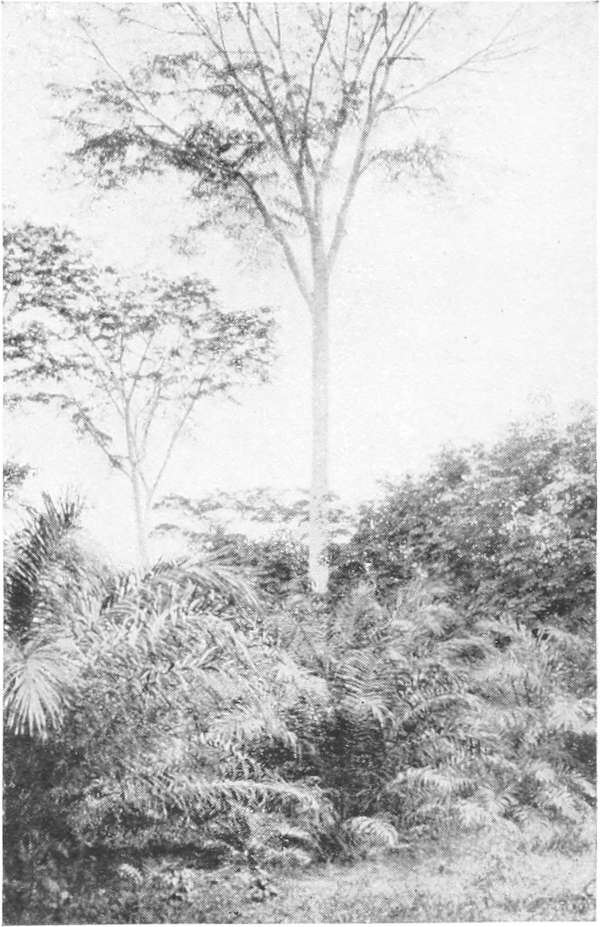
Fig. 84.—Ogea, Gum Copal (Daniellia caudata), standing in the Ogba Plantation, Benin Province.
To face p. 376.
Mimusops Djave. African Pearwood, False Shea Butter Nut, Cross River Nut. Aganokwi No. I. (Benin), Nyam (Efik).
It is found in the Benin, Owerri, Calabar and Ogoja provinces of Nigeria. It is also known as Cherry Mahogany. It is a moderately common tree in the evergreen forest zone, up to the end of the mixed deciduous forest zone. It is one of the giant forest trees, attaining a girth of over 30 feet and a height of over 200 feet; its bole is one of the straightest of African trees, the trunk often reaching over 100 feet without a branch. The crown is flattish and almost symmetrical in its roundness; it is formed with three or four main limbs spreading out at almost right angles to the trunk. The foliage is heavy and the sword-shaped leaves almost appear as though they were digitate, looking at them from the base of the tree. From a short distance the trunk looks almost black, but on closer inspection the bark is seen to be deeply fissured in a comparatively even lattice-work fashion. The slash is white and a thick white latex exudes. The root spurns are only slight, except in old age; otherwise the bole is one of the most cylindrical of African trees. (In illustration No. 100 a tree of about 8 feet in girth shows the very straight and even thickness of the bole.) The fruit falls to the ground about the beginning of November, and crushes on contact with the ground, showing the yellow floury pulp inside. The pulp has an extremely dry, sweet, almost nauseating taste and is inclined to stick in the throat. This huge fruit, the size of a man’s fist, is almost like a huge plum, with rough opaque surface and almost spherical in shape; inside, embedded in the pulp, are two, three or four lobed nuts, smooth and shiny on the more rounded face and rough on the other; in some respects they are roughly kidney-shaped when looked at sideways. The flowers are white and small; the tree loses its leaves for three or four days, when fresh ones come out again.
The sapwood is white and the heartwood of a rich red colour, often showing figured rosy grain; it is very hard, heavy and very durable, and is sometimes cross-grained, though usually the texture is fine and planes up with a smooth surface; it saws well, but is too hard to take nails, except in very thin wood. The sapwood is usually only two or three inches wide; the heartwood forms comparatively early in the life of the tree. On the whole, this tree has a more open grain than the other Mimusops.
Although the tree can stand a little shade in its youth, it is really a light-loving species: after the first year the height-growth rapidly increases when trees standing in a plantation have plenty of light. In illustration No. 93 some trees only twelve years old show how rapidly they develop under suitable conditions. None of these trees have yet come into the nut-bearing stage, but it appears that in favourable localities the trees will bear fruit between the fifteenth and twentieth year.
It is a soil protecting and improving tree—in fact, the thick leaves form some of the finest soil found in the forest. Natural regeneration is not usually very good, because the seedlings have little or no light, growing as they do from seeds which have fallen under the parent tree. Duika and various other animals spread the seeds in old farms where the trees have a chance of growing up. The timber has occasionally been shipped to Europe and has been sold at Hamburg as pearwood at 6d. per superficial foot, but the more rosy and figured wood has also found a sale in Liverpool, as it sometimes looks almost like a pinkish mahogany; it is, however, by no means well known, and further trials with the wood should certainly be made. Small consignments of the nuts have been exported from the Cross River and sold in Liverpool as a substitute for Shea nuts; they are found to be of a similar nature and of similar value for making an edible oil. The original cost was rather high, so that the nuts did not yield a profit on the transaction; however, with greater quantities being brought the cost should not be so high, and also, since this first experiment was made, the price of all oil nuts has risen enormously, so that at the present time there is an ample margin between the cost of production and the selling price. In the Cameroons the Balong natives dry the nuts, which they split open in two pieces, pick off the thin shell and boil out the thick buttery-like substance, which is used for cooking.
On our tour through their country we also tried it in place of lard, and found it quite suitable and quite pleasant to the taste and only about half the cost. In Nigeria, only the Oban people apparently know anything about making this butter from the nuts; in other parts it is quite unknown. The tree is not felled, but, on account of its size and all-inspiring form, is considered “Ju-ju”; pieces of the bark are chipped off and used as medicine to increase a person’s strength.
By the way, the constant cutting away of the bark at the base of the tree and the continual struggle of the tree to overgrow these wounds causes the grain to grow quite unevenly and wavering, thus forming figured wood.
Mimusops lacera. Benin Pearwood. Aganokwi (Benin).
In 1906 samples of this timber were sold in the Liverpool market as mahogany of a good, rich colour. It is found in the swamps near the Osse and Cross Rivers.
Dumoria Heckeli (A. Chev.). Oban Mahogany.
It is found in Tropical West Africa. It yields a fair timber. An immense tree of the Oban Reserve, similar to Mimusops Djave.
Omphalocarpum procerum. Ikassa (Benin), Apassa, Ukpassa (Efik).
It is found in the Calabar, Benin and Ondo provinces of Nigeria.
It is a common tree of the evergreen forest. It reaches a height of 60 feet with a girth of 28 feet. The bole is short and the crown long, but narrow. The huge, flatly spherically-shaped fruits, quite 9 inches in diameter and 6 inches thick, are most characteristic of the tree. These protrude just from the trunk or heavy branches with little or no stalk. The depression in them, top and bottom, is quite an inch deep. There are about sixty seeds inside, more like nuts. The leaf is large.
The sapwood is white and heartwood is brown-red. It is very hard.
It grows slowly and stands the shade. The seeds germinate well. It does not sprout from the stump nor do root shoots appear. Elephants and other animals, porcupines especially, eat the fruit.
The seeds are used in playing Ikbo, a Benin game. The seeds also are used, tied in front of Apata sticks, for making a musical instrument, or tied to the ankles of small boys to make a noise like a rattle when they start to walk.
Butyrospermum Parkii. Shea Butter Tree, Dry-zone Oak. Emi-emi or Emi-gidi (Yoruba).
This is one of the most prevalent trees of the Oyo province of the Southern Provinces of Nigeria and of the Borgu, Niger and Nassarawa provinces of the Northern Provinces of Nigeria. In places it is almost gregarious, but it is most commonly found in mixture with the Dwarf Red Ironwood, Lophira alata. In appearance it is most like a gnarled old oak, except that the base is often burnt and partially hollow. It is a large tree, reaching a height of about 40 feet and a girth of over 10 feet. The root spurns are comparatively short and rounded; the bole is short, attaining a length of up to 25 feet; the crown is almost spherical, but rather inclined to be broken up by three or four main branches; these are very thick in comparison to the size of the tree, but not so much in proportion as in the case of the Baobab. The bark is grey and very deeply fissured, more or less in criss-cross fashion, and even with deeper and wider fissures than that of the oak. The slash is white, and a small amount of thick white latex exudes very slowly from the cut. In the case of the Dwarf Ironwood scarcely any ordinary sap exudes and no latex. The leaves are about 10 inches long, a very dark green and shiny, and not unlike the hart’s-tongue fern, but somewhat broader at the end; the greenness of the leaves, their shininess, and the greater thickness distinguish them from those of the Dwarf Red Ironwood. The under surface of the leaf is whitish, sometimes almost grey; the flowers are white and come out in December; the fruit is like a small green plum and ripens in May. The leaves persist over one season. The green pericarp covering the nut can be eaten and is not unpleasant to the taste. The nut itself is not unlike a chestnut in its being brown and shiny; the shape, however, is more oval, with one comparatively sharp ridge.
The sapwood is white and comparatively wide; the heartwood is a rich dark-red colour; it is very hard and durable; it is termite-proof; it splits very badly, does not take nails well; it is hard to plane and is sawn none too easily. It does not warp or crack to any extent while it is seasoning under proper conditions; it burns with great heat, but rather less than in the case of Emido.
It is a rather slow-growing tree, with soil-protecting and soil-improving qualities; as a light-loving species takes up a good deal of space. Natural regeneration appears to be poor, and may be due to the fact that the flowers appear, or before the young fruit has only just set, as the annual grass-fires run through the open deciduous forests where this tree is found. On the other hand, root suckers grow in great profusion. It also sprouts well from the stump. It is one of the most fire-resisting trees, and the thick bark no doubt protects it from its worst ravages. It may be considered one of the most typical trees of the drier parts of the open deciduous forests. A few sample plots have been tried with this tree, but it does not stand transplanting at all well. Rodents such as the cut-grass (ground pig) are very fond of the nuts, and no doubt destroy a great number whilst they are germinating. Fire-protecting root suckers and other young trees have thus far proved the most effective method of increasing the number of mature trees. It does not appear to be very exacting as to soil, but no doubt the growth is best on moist alluvial flats so long as they are well drained.
Locally the most valuable part of the tree is the nut, from which the Shea butter is boiled out after three days; it is a general article of diet instead of palm oil, in those districts where the latter is hard to obtain. Locally, also, the largest trees are cut down and made into mortars for beating food; these fetch a price of 2s. 6d. to 3s. 6d. apiece; they are considered not only the most suitable, but also the most durable, except those made of the wood of the Oil Bean (Pentaclethra macrophylla). In other places it is used as a house-building timber.
As far as Europeans are concerned, the chief value of the tree lies in its nuts, which are either exported quite unprepared or in the form of the butter as the natives make it, in large elliptical-shaped sausages about 2 feet long and 9 inches in diameter. For these purposes it has become a regular article of commerce, and only lack of suitable means of transport prevents much greater quantities being collected and exported to the European markets. In Europe its most suitable use is said to be as a medium or inside substance of chocolate creams. The butter itself has a most peculiar and rather nauseating flavour, which is removed on its being refined and purified. The timber has not been tried for export.
Chrysophyllum sp.?. Round Star Apple. A species of Star Apple. Agoma (Benin).
The fruit is quite spherical and supposed to be larger than C. Africanum. It is somewhat similar to C. Kainato. The natives squeeze the fruit in order to eat it.
Chrysophyllum Africanum. African Star Apple or Edible Star Apple. Osangbalumo (Yoruba); Otien (Benin).
It is found in the Abeokuta, Ondo, Benin, Warri, Owerri, and Calabar provinces of Nigeria. It is a medium-sized tree, often found growing at the roadside at the edge of the villages or as an avenue leading up to them.
The most characteristic feature of this tree is the silvery underside of the leaf, which is formed by minute white hairs. In the fruiting season, another characteristic is the golden-coloured, pointedly pear-shaped fruit, which bursts on falling to the ground. A white latex exudes from the fruit; this latex is sucked out and is tartly sweet to the taste. Inside the fruit are five thin, elliptic-shaped seeds; these are brown and very shiny. Their position inside the fruit probably gave rise to the English name.
The wood is white and soft; it cuts easily and planes well, but does not split well. The grain of the timber is fine and the texture smooth. It is a moderately fast growing tree and the wood is not durable. The slash is white, and the tree exudes a white latex when cut; the foliage is very dense, and the dark upper surface of the leaves is a great contrast to the underside. It is a soil-protecting and soil-improving tree. The timber has not been exported to Europe. It is occasionally used by the natives for making “Ju-jus” such as the devil.
Chrysophyllum sp. Monkey Star Apple or Monkey Otien. Osang Palambi, Osang Edan (Yoruba); Ekuso (?), Ekpuro, Otiemmie (Benin).
This is a moderately prevalent tree in the Calabar, Ogoja, Benin, Ondo and Abeokuta provinces of Nigeria.
It is a medium-sized tree with a small leaf. It attains a girth of about 8 feet. The golden-brown of the underside of the leaves is most typical of this tree and makes it easily distinguished from Chrysophyllum Africanum; in fact, in passing through the forest this is one of the few trees having brown tomentose hairs on the underside of the leaf. The crown is broad and flat and heavy. The bole is not too long and is covered with a smooth light-brown-coloured bark.
The Benin native name means that it is the Monkey Otien, that is to say, not the one that men may eat. It is usually found in the evergreen forest.
The timber is white, light and soft, and is attacked by termites. It has not so far been cut for export or local use.
Native Use.—The fruit is sometimes eaten by the Benins.
Chrysophyllum albidum (Don.). White Star Apple. Osum Agbalumo (Yoruba).
This is one of the Star Apples of the Yoruba Forest, where it is found chiefly in the Abeokuta province. It is not very prevalent. The fruit is not so esteemed by the natives as that of Osangbalumo. The bole is somewhat straighter and less branched than that of C. Africanum. The wood is white and soft; the stem is not absolutely round, being somewhat fluted at the base, with narrow and thin spurs which extend 4 to 6 feet up the stem. The natives occasionally use the wood for household utensils. It has not been cut for export.
Chrysophyllum Welwitchii.
This so-called Forcados Star Apple was found in the forest just behind the station of Forcados. It is not a very common tree.
Malacantha sp. nov. Akala (Yoruba).
It is found in the Olokemeji Reserve and neighbouring parts of the Abeokuta and Ibadan provinces. In many places it is very prevalent, though it does not grow actually gregariously. It reaches up to a medium size. The bole does not exceed a length of much over 15 feet and a girth of 5 feet. With its four narrow, somewhat long (up to 4 feet) buttress root spurns, the base of the stem forms a rather irregular shape. The bark is roughish and scales off to a slight extent as the tree becomes older.
The leaves are inclined to be placed at the terminals of the shoots and twigs, and the main veins are very prominent, giving the impression that the leaf has only comparatively recently opened. The leaf is a little rough to the touch, and rather dry and thickish. It is a distinctly yellowish-green colour. The foliage is very sparse.
With its none too straight stem and comparatively slight amount of foliage it presents a poor appearance.
The wood is of a pleasant light-yellow colour and comparatively hard. It planes up with a smooth surface and saws easily. It does not take nails well, nor does it split easily. It is termite-proof.
Natural regeneration appears to be slight, but stool and root shoot reproduction seem to be strong. The seeds are very small and appear like little round, spherical nuts. Although it will bear a slight amount of shade in its youth, it is a light-loving species later on.
Occurring as it does in the mixed deciduous forests, near the lower edge of the dry-zone vegetation it should prove a useful tree, especially as it is comparatively fire-resisting.
Although comparatively slow-growing it attains sufficient size to be cut up into verandah-posts and banister rails and uprights.
On the whole, quite a respectable quantity of timber could be obtained in the aggregate from the large number of trees found growing in the forests.
Pachystela cinereum (Pierre). Osan odo, Orban igba (Yoruba).
Found in the Abeokuta province.
Ebenaceæ.
Diospyros Mombuttensis, syn. Sinensis. Walking-stick Ebony or Yoruba Ebony. Ogan pupa, Aggan Egbo (Egba) (Yoruba); Ungungmekkan (Benin).
It is a small tree with reddish-coloured stem and very thin, scaly bark, often branching near the base and usually forming several stems up to 18 inches in girth instead of one main stem. It has a large, alternate leaf, with large leaf scars, amounting to projections from the twigs. The fruit is like an acorn, but of reddish colour, with a very small, low-rimmed cup. The twigs are reddish colour too, which is most typical of the tree.
It is common in the Benin, Abeokuta, Ibadan, Oyo and Ondo provinces of Nigeria.
Timber.—Very hard, whitish-brown wood.
E. Use.—Walking-sticks, as it often grows forming a natural handle.
Native Use.—Walking-sticks.
Diospyros sp. Benin Ebony. Owegbo (Benin).
A medium-sized tree, yielding a black ebony, which is prevalent in the Benin forests. The bark scales off like D. atropurpurea. It is a larger tree, though, than the last named. It likes the dense forest with a deep, damp soil.
In proportion the sapwood is white and very wide.
The tree is slow-growing, shade-bearing, with soil-protecting and soil-improving qualities. Natural regeneration is weak.
The timber has not been exported, nor has it been sawn up for local use.
Native Use.—Firewood.
Diospyros mespiliformis. Monkey Guava or Yoruba Ebony, Kanran, Etini (Yoruba); Igedudu (Benin).
From the similarity of its fruit to a medlar it obtains its botanical name.
It is found in the Abeokuta and Ibadan provinces of Nigeria, in the mixed deciduous forest zone. In places such as the Olokemeji Forest Reserve and neighbourhood it is very prevalent and almost gregarious in habit. As regards height, and almost always as regards girth, it is the largest of almost all the ebony-trees, with the exception of one species found near the Niger, reaching a girth of over 14 feet and a bole length of 70 feet. At the pole stage, and as it gets older, the bark is evenly fissured, vertically and horizontally, breaking up into small black-edged sections of about 2 inches long and ½ inch wide. Until it is much over 2 feet in girth the cortex is smooth, dark-green or black. After this it becomes rather rough, with small fissures. Although often very cylindrical in shape, the bole sometimes has very considerable taper—in fact, more so than many other trees. The branches come out almost at right angles to the stem and are very persistent, still remaining as short snags for many years after they have been broken off by storms or other agencies. The leaves are smallish and lanceolate in shape, and almost appear to be silvery on the under surface and very dark green on the upper surface. The thinner branches appear silvery-grey, though they are very similar, but thinner in comparison to M. multinervis, which are found in the same locality growing side by side. The leaf has a few fine veins. The fruit is flatly spherical, and is like a little medlar with its russet-brown rough surface and the dried-up sepals of the flower on it. It is, however, larger than than of Multinervis.
The sapwood is white and narrow and the heartwood dark-brown to black, sometimes even green-black. It is very hard—in fact, almost the hardest of all African woods, with perhaps the exception of Yoruba Ironwood, Red Ironwood, and African Greenheart. It splits fairly well. It is inclined to be brittle, especially in timber from larger specimens, planes well and saws well, but is difficult to nail. It is termite-proof. Occasionally a large boring beetle burrows into the wood when it is lying on the ground. However, the grubs which do this damage are considered a delicacy by the natives, so that wherever found they are soon collected and eaten. The younger tree grows with branches more or less in whorls, but not so regular as those of M. multinervis. When fresh it is liable to warp. It keeps its colour better than most of the ebonies. It occasionally shows a little figure. In proportion it has the largest heartwood of any of them, and for this reason is a most valuable tree.
Fig. 85.—Khaya anthoteca, 16 feet in girth, Obagie Forest Reserve, Benin Province.
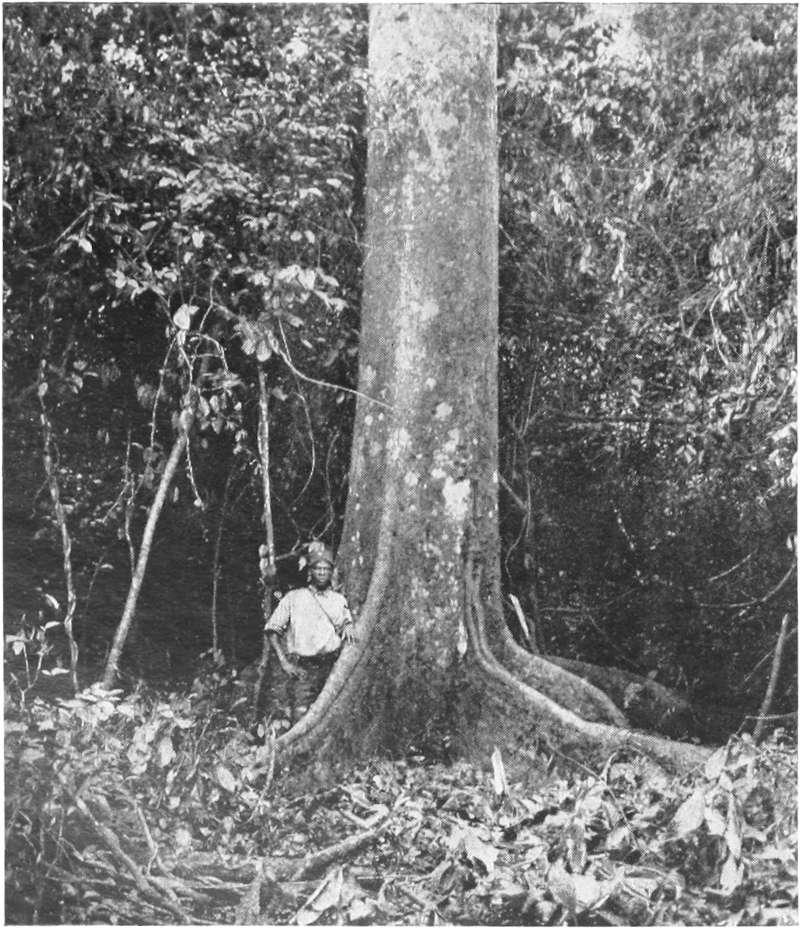
Fig. 86.—Okan (Cylicodiscus Gabunensis), African Greenheart, 24 feet in girth, standing in Obagie Forest Reserve, Benin Province.
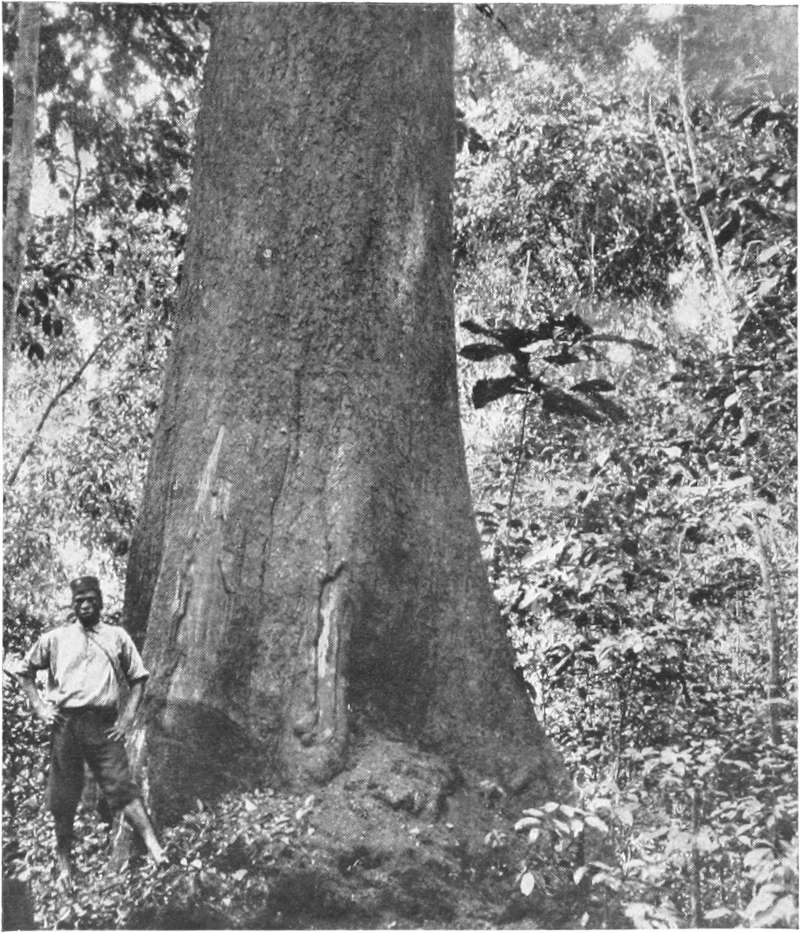
To face p. 384.
Diospyros Kamerunensis. Cameroon Ebony.
This tree has been found in the Boji Hills Forest as well as in the Cameroons. Although not of great size, it yields a comparatively large and black-hearted ebony. The fruit is much larger than that of most other species. It is comparatively prevalent at an elevation of about 1,000 feet in the Boji Hills. Up to the present it is doubtful if it has been worked at all. The natives have no use for the tree.
Diospyros Barteri. Ebony Nut or Yam Stick. Ivioha (Benin).
Small ebony-shrub of the Benin province of Nigeria, found near Okomo in rather moist ground. The natives have no use for the wood.
Diospyros bipendensis. South Cameroon Ebony.
It is supposed to be found in the Oban Reserve.
Diospyros crassiflora. Benin Ebony. Aborkpor (Benin).
It yields the black ebony of the Benin country and is somewhat prevalent. Found in the Benin, Abeokuta and Onitsha provinces of Nigeria. A tree with a small leaf.
It forms almost pure groups or even small stands, of half a mile and less in extent, near the banks of the Niger. It can stand swampy ground. It used to be cut in the Onitsha district.