Chapter VIII
Reading edition
NIGERIA
I. The Rivers, Ports and Forests of Nigeria.
Starting from Lagos, the first port of call, the coast is flat, sandy, and low-lying as compared with the typical seaboard of Europe with its cliffs. Long sandy beaches with scattered coconut palms in the background are more prevalent in this part of Nigeria than the water-covered mangrove swamps, showing rather a stunted growth. Westwards from Lagos there are the scattered mangrove formations in the estuary of the Yewa River, near which is the trading station of Badagri. Following the line of the coast, somewhat better mangrove areas are found towards the mouth of the Benin, Escravos and Forcados Rivers. The estuary of the Niger, extending from the last-named river as far as the Sombreiro, shows varied development of the mangrove type of vegetation, as well as the first admixture of other hardwood trees at the edge of the mangrove zone. On the way one passes the Ramos, the Brass, Nun, St. Bartholomew and St. Barbara, each forming outlets for the forests further north. Beyond the Sombreiro the estuaries of the New Calabar, Cawthorne and Bonny Rivers contain further mangrove areas, usually in the form of large islands. Eastwards of the Bonny River the mangrove to some extent gives way to comparatively large areas known as rain forests, owing to the comparatively heavy rainfall in those localities. The Andoni, Opobo, Kwaiebo form the outlets for these forests.
The Cross, Calabar, Kwa and Akwayefe are the most easterly rivers in Nigeria. In the estuary of each, more especially of the Cross River, the finest mangrove forests are to be seen. Next to these in point of height and straightness of bole are the forests on the banks of the St. Barbara and Forcados Rivers.
The Lagos River, with its present bar-draught of 19 feet, is followed eastwards by the port of Forcados, showing 19 feet. As subsidiaries, and northwards from Forcados, are the inland ports of Warri and Koko, both, and especially the latter, being timber-shipping centres. Sapeli, another 40 miles up the Benin River beyond Koko, was and still remains a timber port of some importance, and from it the trade name of one kind of mahogany, namely Sapeli wood, is derived. Brass, considerably further eastward, is practically a seaside port, to which some produce of the Niger Delta is brought. Degema, Bugama, Bakana, Okrika and Port Harcourt are inland ports all reached from Bonny, situated at the mouth of the river of the same name. Opobo, on the Imo, is yet another inland port with a 14-foot bar at the river mouth. Eket is the small port for the Kwaiebo River, whence small steamers run to Calabar. Oron, on the western side of the estuary, is also a port worthy of mention. Though Calabar is some 15 miles above the junction of the Akwayefe, Kwa and Cross Rivers, it is the chief port of Eastern Nigeria. It is situated on the side of a hill some 200 feet high on the bank of the Calabar River, which is half a mile wide at this point.
Turning now to the next type of forest met with after leaving the mangrove zone, the thick, heavy, evergreen rain forest is seen. On the western side in the province of Abeokuta it has very largely been destroyed, only comparatively small isolated areas remaining. In the Ondo province, however, some of the most extensive and heaviest timber areas of this type are found. A good network of rivers, such as the Ogun, Ona, Oshun, Oni, Shasha and Owenna, when flooded, form the outlets for timber worked in these localities. In the northern part of the Warri province and the southern part of the Benin province large representative areas of the evergreen type are found, though there they tend to mingle with the tall, mixed deciduous forests. To a small extent in the Owerri, but to the largest extent in the Calabar province, the rain forests find their finest development, culminating in the Oban Hills on the eastern side of the latter provinces. The rainfall there is 175 inches per annum.
The Sasswood is one of the first trees to appear when the mangrove swamp gives way to the evergreen forest. Other large trees are the mahoganies, found chiefly on the old banks; red ironwood, with its brilliant red fresh leaves in the late autumn. In fact, these leaves are often taken for flowers, owing to their very bright colour. They gradually, however, assume a dark green colour as the season advances. An unidentified species of gum-copal which grows to colossal dimensions is found scattered rather diffusely and curiously in these areas. Different kinds of ebony, with wood varying from brown to green black, are seen throughout the zone, though, as with other trees, a different species is found in the different provinces; on the whole, the blackest wood is found where the rainfall is heaviest.
The mixed deciduous zone, which consists both of deciduous and evergreen trees, mingles and gradually develops at the northern edge of the evergreen rain forest; in many cases the one goes over into the other almost imperceptibly, and it is only perhaps after half a day’s march that one realizes that one has left the evergreen type behind and reached the forests where half the trees lose their leaves every year. A very large development of these forests is found in the Abeokuta, Oyo, Jebu-ode and Ondo provinces. Very heavy inroads have been made in these forests, and it remains to be seen whether sufficient will be preserved to ensure the future fertility of the soil and the requisite rainfall. One of the most prominent species is the cotton-tree, with its great root buttresses and muscle-like protuberances from the stem. The Obechi, or Arere, is another magnificent timber tree, with soft white wood and maple-like leaves, which grows to huge dimensions. The African greenheart, which may grow 12 feet in diameter, is hard enough to break the blade of an axe. The Iroko, taking the place of oak in African economy, is another tree frequently met with, and it extends its area of distribution as the forests are opened up with clearings. East of the Niger this formation is only found to a small extent in the Onitsha province; a little larger in the northern part of the Owerri province, and still largest in the northern part of the Calabar and the southern part of the Ogoja province. In fact, the finest development of the mixed deciduous forests is found in the last-named province, just north of the Cross River, where it is really at the edge of the true deciduous forest. In this zone some three kinds of mahogany are found, in some places very diffusely scattered, in others up to a thousand mature trees in eight square miles, or in a third nearly every tree a mahogany on both sides of the road for over half a mile. The four species in this zone vary less from province to province than they do in the case of the evergreen forest zone, though the total number may be greater.
Beginning again on the western side, the open deciduous forest or dry-zone formation shows itself over a very wide extent in Oyo, Northern Jebu-ode, and in the Northern Benin provinces. East of the Niger it is of wide extent in the Northern Onitsha and Northern Ogoja provinces, but it also occurs in the northern part of the Owerri province as an artificial product of man’s destruction of the original forest. In some places this formation, owing to the trees being close together, more nearly approaches the deciduous forest. In others, owing to the poor and stunted nature of the arboreal growth, it more nearly approaches the open grass savannah formation. Only north of the Oyo province near Shaki, or north of Ogoja in that province, could it be said that this kind of formation is seen.
One of the most prominent kinds of trees found is the Shea Butter, the nut of which is used in the making of chocolate cream and margarine. This tree, varying in size from a large oak to a short, stunted, gnarled and burnt relic of better forest conditions, is found over very wide areas in the Oyo and northern part of the Abeokuta province. Strangely enough, this tree does not appear in the northern part of the Benin or Onitsha province, and only occurs again in the north-eastern corner of the Ogoja province. The locust-trees, with their open crown and feathery leaves and long pods similar to French beans, are conspicuous all through the zone, and near the villages are specially preserved. Mahogany is represented in this zone as another species which does not attain a greater girth than 10 feet and which is often gnarled and crooked owing to the annual grass fires. A medium sized Cedrela, or hard cigar-box wood, is found in isolated patches in the northern part of the Abeokuta and southern part of the Oyo province. The balsam-copaiba-tree is also very common in this zone in the North Benin, Onitsha and Ogoja provinces.
The forests of this zone are perhaps the least valuable from the financial point of view, chiefly owing to their geographical position and defective means of transport, but economically they are of great value to the agricultural community, both for their forest produce as well as their soil-preserving and rainfall-conserving properties. The chief timber areas are situated in the heavy rain forest and mixed deciduous forest areas, though a few have recently been taken up in the mangrove swamps.
As a minor, though important, development to the main forests are the evergreen hill forests, which find wide development in the northern part of the Jebu-ode, Ondo, Benin, Ogoja and Calabar provinces. On the whole, the species do not vary so much as might be expected, and in many cases it simply means a further distribution of certain evergreen trees beyond their zone of natural development, owing to suitable climatic conditions in these hills. For instance, the red ironwood appears next the mangrove swamp on the bank of the St. Barbara River, again in the evergreen forests near Calabar, and reappears in the hill forests of Oban, much further north. Probably the most typical trees of the hill forests are an unidentified species of gum-copal, as well as several species of Guttiferæ.
The fringing forests are found chiefly on the banks of the rivers in an area which is otherwise covered with the open deciduous or dry-zone formation. Two leguminous trees are most typical of this zone. Stray deciduous or evergreen trees from the other zones are also seen. Such forest is thick with a fair amount of undergrowth, and the trees form a close canopy. The fringes vary from a few yards to half a mile in width.
A further subsidiary form is found on the summits of the highest mountains, such as the Boji Hills, with their stunted satinwood trees, shrubs and grass. In some places there is yet another minor formation, that of the freshwater swamps. Some typical examples of these are found on the banks of the Calabar, Osse and Owenna Rivers. In most cases only one, or any how only a few species of trees are found, whereas in the major formations several hundred different species appear. The growth in these swamp formations, both mangrove and freshwater, is on the whole not so large as that of the evergreen forest. Again, the evergreen forest does not show such fine development or such height of tree as the mixed deciduous forests, though occasionally the greatest girth of bole is found in the evergreen forests.
II. The Mahogany and Timber Industries.
According to Nigerian law, timber includes planks sawn for logs and trees hollowed out or shaped for any purpose whatever. The timber-working industry, then, is a wide one, covering really three distinct fields of activity, though one or more may be combined. First, there is the felling of mahogany chiefly, and other furniture-wood trees for export. In the second place, the native, and to a slight extent the European firms, cut timber for local use, mainly in the forest, such as planks, canoes and posts. Thirdly, there is the Government, which under the auspices of the Forestry Department chiefly, and to some extent under the Public Works Department, cuts timber of various kinds, chiefly Iroko, for railway buildings and road bridges.
Turning now first of all to the export industry, which is most important at the present time, though the local demand for timber will soon dwarf that of the former, there is a definite sequence of action necessary in embarking on this form of economic development.
As soon as a firm decides on timber-getting, an application (made out in triplicate) has to be sent in with good maps or plans of the area, which is applied for, to the Conservator of Forests of that circle. It is understood that the area in question has been thoroughly examined by the firm before the application is made. A fee of £3 in stamps as well as a banker’s guarantee of £400 for each area of 100 square miles is also necessary before the application can be considered. The species of tree to be cut should also be stated, as well as the names of the villages and chiefs occupying or living in or adjacent to the area. Owing to the time taken in making the fullest inquiries into the occupancy and other rights, as well as ascertaining the financial standing of the firm in question, it is usually several months before the applicant hears that the area has been granted.
Before this the applicant should also forward a confidential statement, stating exactly what capital there is available to develop the timber areas. An additional banker’s reference to the Crown Agents will save unnecessary delay in the granting of the area.
Before the notification of the grant of the area, the licence is made out in the Conservator’s office, for which a £5 stamp as well as three good maps are necessary. Roughly, an additional £2 10s. is required to satisfy the legal fees upon registration, which follows immediately after the execution of the licence by the licensee of the grantees. It should be especially noted that anyone acting on behalf of a firm should be in the possession of a registered power of attorney, enabling him to act in the fullest possible way for the applicant or company acquiring land rights. This power of attorney should be registered beforehand, otherwise another delay will ensue whilst this is being done.
As soon as the area is granted, the applicant should mark all boundaries with the necessary marks, which also appear in the licence. Within six months after the granting of the area, work has to be begun. The first proceeding is to send in a list of trees, numbered serially from one upwards, stating the species, size (girth at 10 feet above ground), where situated, name of nearest village and chief occupying land in the vicinity, together with the amount of fees and royalties payable on the trees. The trees have been marked and numbered previous to the duplicate lists being sent in. It is usual to pay a cheque or bill for the fees and cash for the royalties, then one of the two lists sent in is returned to the sender marked “Permission granted.” Felling can now begin. On the whole, the general practice is to cut the trees down in the earlier months of the year and have nearly all completed by March or April. Logging, with a cross-cut saw or axe, and squaring with an axe and adze, follows as soon as the trees are felled, and, as it takes longer, continues afterwards right into May or June. Hauling begins as soon as sufficient logs are ready to be drawn and the hauling roads have been cleared. Usually different gangs haul to those employed on the tree-felling and squaring. Eighty or a hundred boys are lined up and haul on two ropes attached to the end of the log. The log, having been shaped at the end to allow easy hauling over the rollers or ground, is “snaked” along to the nearest waterside, river bank or creek. Here two timber-dogs are driven in the end for attaching the cane or rope to hold several together. In the smaller streams or creeks, single logs, or two joined together, float down to another station, where a bigger raft of 40 to 100 logs is made up. In a good many rivers the rise of the water takes place in July, and it is then that the largest number of logs float out. Another lesser rise for the most part, except in the largest, such as the Cross or Niger Rivers, occurs in October, when all logs possible are got out for that season.
Logs left by this last flood usually have to stay until the following year, when the river will rise again. Sometimes as many as three seasons elapse before it is possible to get out some logs. The higher reaches of the Owenna have an unenviable reputation in this respect. Several short rainy seasons following each other successively cause the same result. The Ijors are the chief “waterboys,” who contract to take logs down the creeks at 5s., 10s. or 15s. a log, according to distance and nature of the creek. The Ossiomo has also a bad name, owing to its swift current and the liability of losing the logs.
Most labour is engaged direct, though handed over to a contractor who is paid 1½d. to 1¾d. per foot of timber squared or logged brought to the nearest waterside. The labour, however, is paid by the European firm, which is entirely responsible for the payment.
The shipment of the logs is made at Koko, Warri or Forcados from Lagos and at Lagos itself, the first-named port taking the majority. Many firms have a branch store and office at this port, or another firm ships logs for others not represented at a fixed charge per log. Export entries showing numbers of logs, size and value are presented to the Customs Department before shipment. Koko, which used to be quite free from the Teredo borer, is now unsafe for logs after a fortnight’s floating in the water there.
The shipping companies do not particularly desire logs as freight, owing to their weight and unwieldiness in handling. Space is left between them to some extent in the hold. The hatches have to be especially long to take the biggest logs. From Lagos, Forcados, Calabar, etc., a freight rate varying from 35s., 40s., to 45s.[2] per ton for 2¾, 3 and over 5-ton logs. Koko, on the other hand, is only 25s., with 10s. extra for primage. This is the same with the other freight rates.
During the voyage the logs gradually dry, and often by the time they are put into the timber yard of the brokers they are split or cracked. Only the best logs, 30 feet long and quite sound at the start, stand all the rough handling they get. Auction sales take place about once a fortnight in the busy season, though sales by private treaty take place occasionally. Logs can sometimes be sold ex quay too, though by far the most of the wood is sold by public auction. The inclusive charge of landing, stacking and selling at the dock is roughly 10 per cent. of the value of the log. In fact, it is quite a considerable item of expense, and often makes the difference between profit and loss on the smaller and lower-grade logs. All logs are sold by the superficial foot, i.e. one foot square, one inch thick “sale measure.” Sale measure obtains only in the mahogany trade for square logs, and is roughly 20 per cent. less than the actual cubical contents of the log. Round logs are measured and sold by extreme (full) measure. A wane of six inches or less is left on the squared logs, because it makes them less liable to crack and split at the corners, and also it saves a good deal of timber which would otherwise be wasted.
Liverpool is the best mahogany market, though fair prices are obtainable for good logs in London. Hamburg used to be the market for Gaboon wood, and on the whole new woods were better received than in the English market. As a rule, figured mahogany always commands a good price, whereas plain wood, with the exception of roey or counter-top timber, only fetches a moderate or low price, unless the market is understocked at the time. The best wood is obtained from the Ivory Coast, and the next best is Benin or Lagos wood. Sapeli wood is very heavy, and found a market chiefly in Germany. Cross River wood has yet to be shipped and proved, though samples there looked very good and even showed some figure. So far, only the leased areas have been spoken of. Now we return to the Reserves, where, however, permits to cut trees can only be obtained. Here leases are usually not granted. The rules with regard to replanting do not apply in the same way, as all planting is in the hands of the Department. On the whole, stricter supervision may be exercised in the Reserves than on leased areas. Although a firm has no lease, the security of tenure for cutting the trees would be at least as good as under a lease. No other firm would be in the same position to fell and extract timber as the first one to whom permission was granted. The Government would not allow any other amounts of trees to be felled that would injure the working of the forest by the first applicant.
Local felling is conducted by one or two firms in their areas, which were in the first instance obtained for export timber. For the most part, however, the natives or native foreigners fell various kinds of trees such as Iroko, Chlorophora excelsa, Owussu, Sarcocephalus esculentus, Ume, Pterocarpus soyauxii and Pterocarpus Osun, Edat, Saccoglottis Gabunensis. Nearly half the permits issued are for Iroko, the main building timber of the Yoruba and Benin and Ibo countries. The Camwoods or Barwoods are felled next to obtain the brilliant red heartwood, chiefly from the roots, but also from the stem. A dyewood which produces a fast colour is obtained by rubbing a small pointed section on a flattish piece of the same wood. A yellow dyewood is obtained from Anyeran Afrormosia laxiflora.
The canoe-making industry absorbs a large number of trees. The native, chiefly Ijor, chooses the tree with great care as to straightness of stem and length of bole. It is felled near a river bank or otherwise reasonably accessible place. First of all two sides are flattened parallel to each other; at the same time the length of the canoe is chosen and the tree bole cut off at the required length. A narrow groove about half the depth of the diameter of the log is now made with small axes and an adzelike instrument. The log is then shaped externally like a canoe, especially both bow and stern. Next, more wood is cut away on the inside and some pieces of wood stuck across to keep the canoe open. A shelter is put over it during a hot day. As soon as the requisite amount has been cut out, dry palm branches are placed all round the canoe outside on the ground; longer cross pieces are fixed over the canoe of the required length for thwarts when the canoe is finished. Long stakes are driven into the ground opposite each of these on each side of the canoe, so that the natives can obtain a strong leverage over the canoe. Fire is now put to the palms, beginning with the bow of the canoe. The heat makes the wood expand and thus opens the canoe; at the same time the natives pull down the stakes at the side of the canoe and press the cross pieces into their places. This extends gradually the whole length of the canoe in the course of the day, which is the most strenuous of all, as upon the energy and care exercised on this day in making the canoe open out evenly in its entire length and the same amount each side depends its future success in the water. It may turn out lopsided, or, as is often the case, a hole may appear in the middle of the stern end, owing to the centre of the tree having been rather old and rotten. This can be covered over, and is often above the waterline.
Canoes vary in size from the Oguta canoe, in which the paddler has to keep one foot in the water to balance the canoe, to the twelve-puncheon canoe of the big traders. This last will have a great hollow dug out fully 6 feet deep at the stern end and over 60 feet long.
The sawyers cut the tree all round, fell it, and then cut it into 12-feet length logs, as far as the bole allows. The huge branches are left untouched. A large pit is dug quite close to the logs, and one by one they are placed over and sawn, first two sides and then into three large planks; finally these are cut into 12-inch planks one inch thick. Most of the work is done within four miles of the railway line or within twenty miles of a large town, such as Jebu-ode, Ife, Ibadan, Abeokuta. Truck loads of this timber may be seen at Ilugun or Ogunshileh, on the Nigerian Railway.
Permits are also issued for the making of smaller articles, such as verandah posts, culled out of a guttiferous tree; sleepers, sawn from Iroko (Chlorophora excelsa); sword-sheaths, made from Ogohen (Musanga Smithii); mortars, cut from Apa (Afzelia Africana); pestles, fashioned out of Eba (Lophira procera).
The dyewood industry in itself is chiefly developed on the banks of the Cross River. The trees are felled in the Oban forests, allowed to lie a year or two, then cut up into long 3- to 4-inch irregular-shaped scantling or poles. These are sold chiefly in the Oban market, after which they are cut into small sections. Women take these up and make lozenge-shaped bricks about a foot long in the greatest length. These are sold at 6d. each.
Under Government auspices, one of the first enterprises was the sawmill at Etehetem. A very hard redwood, termed Apassa by the Efiks (Mimusops lacera), and also mahogany (Ochrocarpus Africanus) were cut. Owing to the difficulty of expansion and the increasing cost of the logs, the plant is to be moved elsewhere. The railway had a small plant at Han, where timber and sleepers were cut for the Baro Kano line. At Ebuttemetta the railway also have a small mill for cutting chiefly Iroko, Apa, and a little redwood.
Of the various firms, Messrs. McIver had a small mill in Lagos, chiefly for sawing up mahogany logs not worth shipping to England. Later, in 1909, Messrs. Miller Brothers built a mill at Koko town; Agba (Copaifera sp.?) as well as mahogany logs have been cut; Ebbe and Obiache, and Obechi (Triplochiton Nigericum), the last-named being a good whitewood.
The Anglo-French Company have started a plant near Oron Eastern Circle to cut sleepers out of mangrove wood, Lagenaria and Rhizophora.
Lastly, the Government have started a new mill at Apapa, near Lagos, for cutting logs obtained near Akilla, on the Oni River, in the Abeokuta province, and the planing, grooving and recutting is done in connection with the Public Works yards and furniture-making establishment in Lagos.
The Akilla work is run entirely by the Forestry Department. Trees are felled, cut into logs and brought to the waterside; then, rafted with others, floated in kerosine tins on lighter wood to Apapa. A regular rate is charged per cubic foot. Work was started in August 1914, and already several thousand logs have been delivered at Apapa.
III. The Permanent Forests or Forest Reserves.
In the main, all Forest Reserves become the permanent forests of a country. So far as Nigeria, for instance, is concerned, certain definite and well-defined portions of the original forests have been set aside, by agreement with the natives, as Forest Reserves. If these areas had not been set aside, they would have been liable to destruction under the form of shifting cultivation which the local people practise. For instance, at Olokemeji there are several thousand acres in the middle of the Reserve which were cleared some years ago and have not yet grown up. This would have been the fate of the rest of the forest if it had not definitely been placed under the care and protection of the Forest Department. The same applies to other areas scattered over the country.
It is somewhat hard to define the meaning of a Reserve. Essentially it is an area permanently set aside for the production of timber or other forest produce. In many cases, however, the trees or the forests have to be preserved in the interests of the climatic conditions of the locality. If it is found that by cutting down a forest the rainfall decreases every year, the springs dry up, and the land becomes covered with grass, where actual grass fires kill all young vegetation and even hinder farming operations, then the forest must be reserved. To take some examples: In the colony of Sierra Leone there is a Peninsular Mountain Forest, a large and valuable Reserve, 80 per cent. of which is covered with red ironwood, Lophira procera. Then in the Protectorate there are the Kambui Hills, Kennema, then Nimmini, and the Loma Mountain Reserve. In the colony and Protectorate of the Gold Coast there is the Dunkwah Reserve. Some of the most improved reserves in the southern province of Nigeria are in the Western Circle. There are Olokemeji, Mamu, Ilaro, Oshun, Owenna and Ondo Reserves. Again, in the Central Circle there are the Okumu, Obagie, Gilli-gilli, the Uhi, and the Ogba Forests.
In the Eastern Circle there are the Oban, Ikrigon and Ajasso Reserves, in all aggregating about 2,000 square miles.
Contrary to the usual idea, we have seen that a Forest Reserve is in reality only a permanent forest, which is primarily maintained for the definite production of some forest or other product. It cannot be too much emphasized that it is definitely set aside to be used wisely; and for all the trees taken, suitable replanting operations are undertaken by the Forest Department. The name “Reserve” is in fact rather a misnomer. In the early stages of a forest administration it is convenient to talk about Forest Reserves as distinct from the rest of the country, which is usually covered with forest and termed “unreserved” forest. It may, later on, become agricultural land; it may also be reserved, in which case it becomes a Forest Reserve or one of the permanent forests of the country. The main point to be observed with a Reserve is that it is primarily for use, and not that the timber is to be reserved and not to be utilized by the general public. Even in those cases where the local demands of the people are great and have to be satisfied first, before any outside timber exporter is allowed to work the forest, it is utilized to the greatest extent compatible with its maintaining a yearly permanent output of timber or other forest product. Permanency of output is the watchword, and strict utilization of the increment-bearing capacity of the forest each year. The increment is of course the amount which each tree grows each year. This amount, added together over the whole area, makes up the quantity which may be felled, on the proportional area during the rotation, in any one year. Thus, to give a concrete example: If an area is 100 square miles in extent, and the rotation is 100 years, then one-hundredth of that area, or one square mile, may be cut over in one year; also, if the sum of the growth amounts to 40 cubic feet per acre per year, this means to say that an annual cut of 25,600 cubic feet can be made each year over one square mile of the area, in the case of a clear felling of all the trees, or spread over an area of 10 square miles in the form of a slight thinning of the trees. In the Temperate Zone, on moderate soil, 40 cubic feet of timber per annum is a good yield, so that in the Tropics we may expect a yield of quite double this amount; therefore it will be seen how readily the forest can grow and how much timber can be obtained permanently from the Permanent Forests or Reserves.
Another great advantage of the Permanent Forest or Forest Reserve, compared with the ordinary leased areas, is the fact that the planting is done by the Forest Department and not by the leaseholder. In an ordinary leased area this planting is a considerable source of expenditure and worry to the leaseholder, and even then satisfactory results are hard to be obtained. He is continually being reminded of his planting duties by the Forest Department, and he is continually striving to keep up the proportionate amount of planting, i.e. 24 trees for every tree felled, and this is by no means easy to attain. Although the annual leaseholder working in a Forest Reserve may be under greater supervision and more stringent forest regulations than in the ordinary leased areas, on the whole his prospects of getting out greater quantities of timber more expeditiously and cheaply are much greater than in the ordinary areas.
Particularizing some of the great concrete objects for which reserve is made:
Firstly, the permanent supplies of timber of all kinds, with a view to turning out approximately the same quantity year after year in perpetuity—in fact, if anything, gradually increasing the output year after year. This means to say that, although the forest is cut down, it is replaced at the same rate at which it is cut down. Putting it in another way, there must be as many blocks, or portions or actual “stands” in the forest as represent the number of years which elapse between the time a tree is planted and the time it is cut down. This period is known to foresters as “the rotation,” and in northern temperate countries, for Coniferous trees the time is usually reckoned at about 80 years. In the tropics, with mahogany, Iroko and other timbers, it may be only necessary to allow 60 years, or perhaps on very poor ground 100 years. In the case of teak in Burma, a rotation between 80 and 100 years is perhaps about sufficient to enable merchantable timber to be produced. Putting it in another way, in the forest, in order to have the permanent yield, there must be sufficient trees of each girth class, so that when the largest, say those over 12 feet in girth, are cut down, there must be sufficient of those between 10 and 12 feet, which will grow during a 10-year period (in which they are cut) from 10 feet to 12 feet in girth. At the present time it has been found convenient to classify each class as “under 2 feet, 2 to 4 feet, 4 to 6 feet, 6 to 8 feet, 8 to 10 feet, 10 to 12 feet, and over 12 feet.” The object of this is to clear away, or have cut, all those trees over 12 feet in girth. This makes room for younger, quicker-growing timber. Although, under the Nigerian Forest Law, the girth of mahogany has been reduced to 11 feet, and in some districts to 10 feet, eventually, as the older and more unremunerative slower-growing trees are cut down, it will be possible to reduce the girth still further. To put this question of the permanent yield in yet another way: All the trees from one year old, or from the smallest size to those over 12 feet in girth, represent what we may call the forest capital. Now, the object of the rotation is only to take the interest on this capital; that is to say, the amount which grows on all the trees over the whole area for one year. It would, however, not do to clip off little pieces from each tree over the whole area, as they would be quite useless as timber. Therefore this amount is calculated out as so many cubic feet per annum, or so many trees above a girth of 12 feet or 11 feet, or whatever the girth limit may be, and this amount, either in cubic feet or in the number of trees, is allowed to be cut down each year. Then we know that year after year this amount can be cut down again, and as the soil and other conditions improve and the rate of reproduction is hastened by proper cultural methods in improving the soil, by draining and other methods of amelioration, still larger results may be obtained.
Fig. 29.—The Chief Conservator of Forests’ House, with five-year-old Albizzia Lebbek standing beside it.
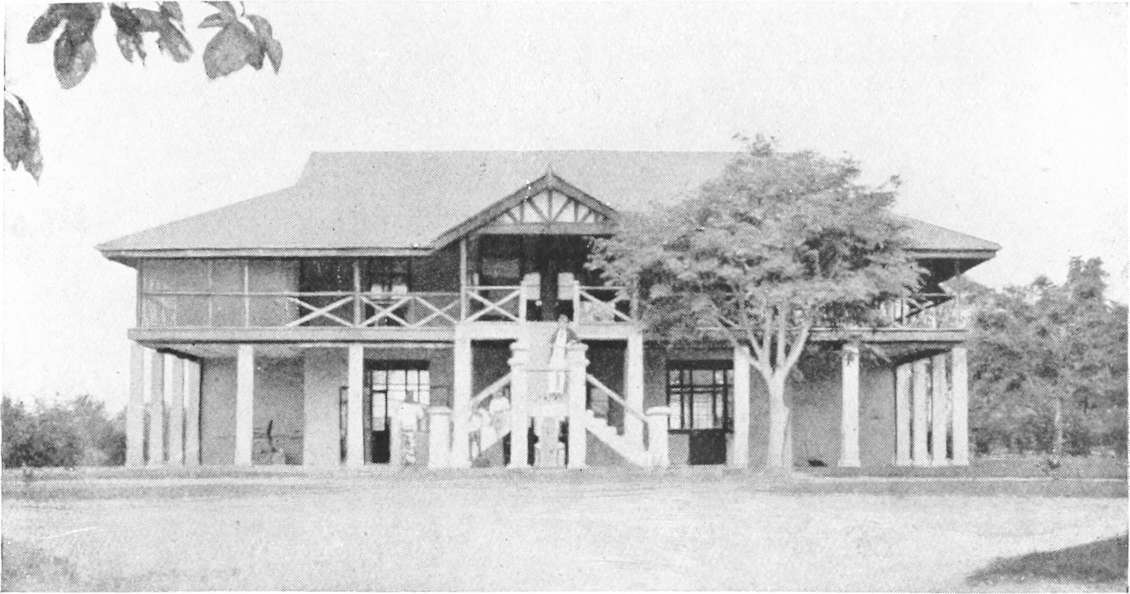
Fig. 30.—Three Capsules of Mahogany (Khaya grandis Ivoriensis and Punchii), from banks of Owena River.
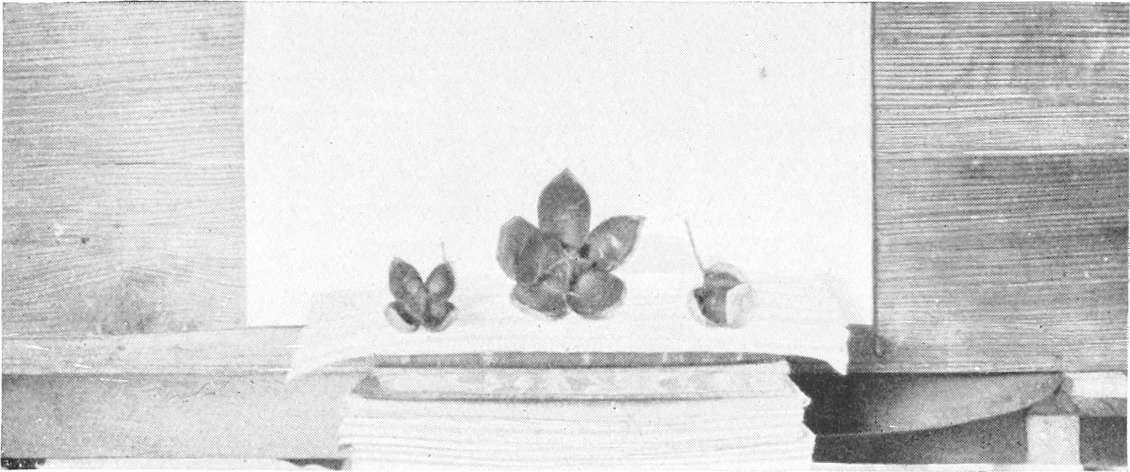
Fig. 31.—Capsules of three Species of Entandrophragma: E. Macrophyllum, the largest; E. utilis, the next in size; and E. cylindricum, the smallest.
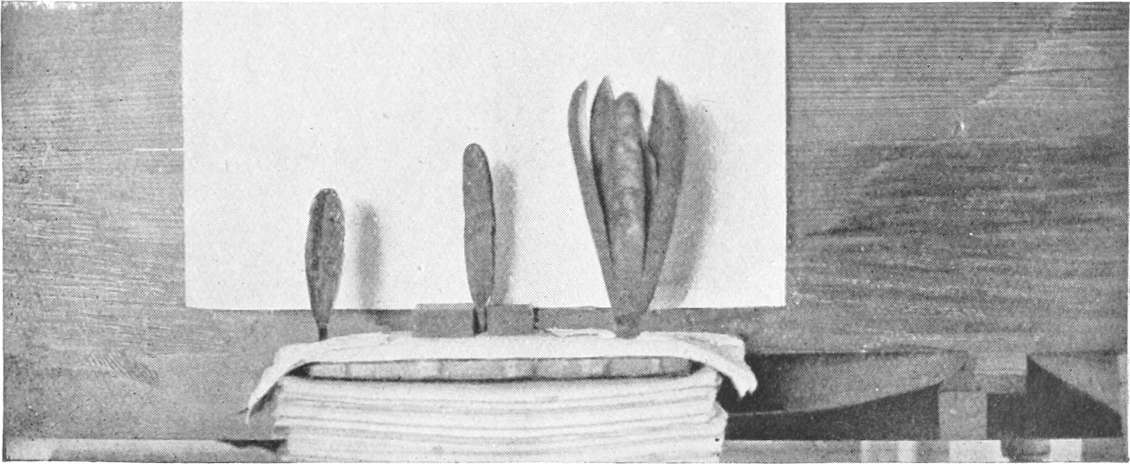
To face p. 162.
Secondly, the object of these Reserves is to produce firewood, more especially in the neighbourhood of large towns; in fact, already in several cases, firewood plantations or Reserves have been made, such as those at Ibadan and on the sandy flats near Lagos. In these cases, trees five, seven or ten years old are large enough for that purpose, more especially of the following species, Cassia Siamia, or Albizzia Brownii.
Thirdly, to provide grazing land, more especially in the more northern part of Nigeria, where the object is to divide up the area, so that so many cattle may graze on each area in different years, or for different periods of the year, so as to give the pasture and small trees which may be growing a chance to revive and grow again. By this means the pasture is improved and made of permanent value. It is also possible under this system to undertake permanent improvements in these large pastures by a certain amount of drainage in the lower parts, and fire protection in the upper and higher parts. In this way the cattle obtain a better pasturage and reach maturity all the quicker. In times of bad season, too, some of the closed areas may be opened for pasturage, thus ensuring that the head of cattle may not be allowed to go down owing to death due to drought or lack of pasture. In this way the grazing reserve acts as a kind of insurance against loss of stock in bad seasons of no rainfall.
Fourthly, the production of oil seeds and nuts, such as the Oil Bean, Pentaclethra macrophylla, or the African Wood Oil-nut, Ricinodendron Africanus. It may also be the production of Cola nuts, which thrive in the forests in the shade, or in the partial shade, of other forest trees, and the Cacao Bean, which also, in certain localities, should stand in the partial shade of forest trees, more especially in the dry season.
Fifthly, the production of fibres, such as that from the tree known as Eso, Firmiana Barteri, the bark of which is used for making rope. Then there are the various creepers, such as Kakoba, Entada scandens, which is also used for making rope by the Hausa and Yoruba, more especially fly-switches by the Benin natives. Then there are the canes, such as Egbe, used for roofing amongst the Yorubas and Okakan, Eremospatha sp. (large Benin rattan), and Ikan, Eremospatha macrocarpa (small Benin rattan), also used for making rope, and a kind of string which both the Benin and Jekii natives use for tying lath pieces together in house-building and in making coverings for their canoes.
Sixthly, the production of domestic articles, such as sponges, Luffa Soudanica, or wrapping-leaves for food, termed Ewayon by the Yorubas, or thatching laths, Ebe by the Benin natives, and the roofing canes termed Itebe by the Yorubas.
Seventhly, the production of medicinal plants, such as those for native Ju-ju; and some, such as Cassia occidentalis, Cassia fistula, also useful to Europeans.
The main difference between the beautiful, untouched existing forests and a Forest Reserve is chiefly in the matter of management. In the unreserved forests a lease may be granted for five or seven years, and the leaseholder may fell a great number of trees, such as mahogany, Iroko, etc. At the same time there is nothing to hinder the natives or original occupier or user of the land from clearing the greater part of the forest, except the protected trees, and making farms throughout the area; thus, in fact, gradually hindering, or at least reducing, the possible output of timber from that area. No new seedlings come up in these areas which are farmed, and, in fact, the fires which are made in the course of clearing the land for farming operations kill the young growth of all kinds. In reality, in a Forest Reserve there is more permanency with regard to the output of timber than in the original forest; there is, in fact, absolute permanency. Although no actual lease may be granted for a period of several years in a Forest Reserve, yet, as a matter of fact and usual experience, after a year’s working it would be quite unlikely for a Forest Department to stop the timber merchant from working the forest again, or rather from allowing him much the same number of trees as he had in the former year, because not only would the revenue from the forest suffer, but timber experience would have to be gained with another firm, which means a loss of time as well as revenue. Thus, in the ordinary way it is more satisfactory to have the same firm working in that locality year after year, provided they pay an adequate price for all the timber trees which they have. They can then invest the proper amount of capital in plant and hauling appliances, and thus make a greater profit and exploit the forest to better advantage than if a fresh firm came in year after year.
To give a more concrete idea of what these areas mean, we will take it that on the average there are only 50 trees per acre which are of some value or another, either for timber for local use or for export, and taking the average rate of fee at only 4s. per tree (it should be noted that mahogany and so on are rated at £2 16s. per tree), it will be seen that the value of these forests is in all £12,800,000. This sounds a great deal, but when it is considered what a very large number of trees can now be utilized, either locally, in the form of planks and scantlings, and joists for posts, not to speak of all the various kinds of mahogany, Iroko, walnut, ebony and other substitutes which can be used for export, it will be seen that this value is none too great; in fact, to the timber leaseholder they would be worth at least ten times as much. Of course, in this calculation all sizes of trees above a girth of 4 feet are considered, for the sake of making the valuation as complete as possible. Naturally, the smaller girth trees would not immediately be utilized, but when we are totalling up the amount of forest or wood capital involved in the valuation, it is necessary to include them and put a value on them. If the necessity arose, even they could also be utilized and would at least bring in the amount of the lowest valuation per tree.
The Forest Reserves stand also in a special position to the local people, for, after all, these Reserves formed originally part of the forest from which were supplied all the major wants of the native, such as timber, firewood, oil nuts and seeds, fibres, domestic articles and medicinal plants; therefore, whatever the main lines of protection of a good forest, the needs of the people of that locality must have the first consideration. After these wants have been fully supplied, then any surplus in the way of timber or other commercial products can be sold or exported elsewhere. This leads us to consider the fact that a Permanent Forest or Forest Reserve leads to a permanent source of revenue from that particular forest. Owing to the fact that there is the permanent yield of timber established in that area, it means that permanent money is being obtained from those trees and being brought into the Treasury as part of the permanent revenue of the country. If there is any increase, owing to the increased value of the timber trees thus gained—and the more stability there is, the better for the country—better arrangements can be made with regard to the reproduction of the forests. If there is a greater revenue being obtained from the forests, even more money can be justly expended by the Forest Department for the buying of better implements for planting and the Forest Station generally, for the making of permanent improvements in the forests, such as draining, road-making and fire protection. If these forests are not protected and unreserved, then in the course of time they must completely disappear, owing to the fact that man is so constituted that if he sees land, which may or may not be suitable for agriculture, covered with trees, he naturally thinks it would be better to cut these down and see what agricultural crop will grow there, regardless of the fact that there may already exist, or he may have cleared, fifteen times as much land as he requires for farming operations each year.
In addition to all the above, there are the indirect effects of forests, which have been considered in the section dealing with the relation between Agriculture and Forestry. On the whole, it is better for the Central Government or Federal Government to manage the Forest Reserves, as by that means there is greater impartiality in their management and more stability and continuity in the Forest policy adopted towards them. In each case, however, it is essential to have either co-opted or elected representatives of the locality, either by the chiefs or by representatives of the people, so that the wishes and needs of the locality may be thoroughly considered.
Lastly, and by no means the least important feature of the Forest Reserve, is the æsthetic view. In the regions of Permanent Forests, healthier localities are afforded for the people, and they are also prettier and more pleasant. This applies not only to temperate-zone forests, but also to tropical forests. It is a well-known fact also that where there are permanent forests the value of the other land in that locality is always rated higher, and is worth more for leasing if adequately covered with a sufficient proportion of forest.
IV. Afforestation in Nigeria.
The Forest Department, not being content with obtaining a revenue out of the forests from the trees cut down for export or for local use, have spent and are spending several thousands of pounds each year in planting valuable forest trees. Going back historically before the time when the Forest Department had a sub-head in the estimates for “Labour for Plantations” or “Teak Plantations” or “Upkeep and Improvement of Forest Reserves,” we had the annual planting of many tens of thousands of mahogany-trees by the timber leaseholder. The whole of this was chiefly done in the Benin district of the Benin province. Although this transplanting of self-sown mahogany-trees into better situations near timber camps, or at the side of falling roads and into the spaces left by the fallen mahogany-trees, was by no means carried out very systematically or under very expert planters, the results are all the more creditable to those who so early started to reproduce the forests. It is most interesting to see in different parts on the banks of the Osse River young thrifty plantations now nearly twenty years old and nearly 30 feet high. In a similar way in the forest there are to be seen large numbers of somewhat smaller sized mahoganies growing singly or in groups, only needing a certain amount of clearing and tending to prevent their being overgrown by other forest trees. Scattered though they are throughout the forest, it is not too much to say that the prospective younger aged forest will be more valuable than that which originally stood in its place.
Easier to find, though in some way less attractive to look at, are the regularly made mahogany plantations of the Forest Department. In addition to isolated specimen trees which are found in the forest Arboretums at Calabar, Degema, Benin City and Olokemeji, several thriving plantations are found near Benin City in the Ogba and Obagie Reserves, in the Ilaro, Mamu and Olokemeji Reserves. In the last-named are the most extensive areas of all, and also, despite many failures owing to experiments on bad soil and seasons of extreme drought, the growth of the trees gives the greatest promise of mature trees, or at any rate merchantable trees, being grown in a comparatively short period. Plantations have also been made at Awka, Udi, Okwoga and Ida.
Already on the old town site of Ijaiye, mahoganies have been seen over 6 feet in girth which have grown up from self-sown seedlings within a period of about sixty years. The soil in this locality is none too good, and the rainfall on the average certainly does not exceed 50 inches per annum. Near 47 Benin villages small communal plantations of mahogany have been made.
All the mahoganies apparently, especially when grown in “pure” plantations, are attacked by a leading-shoot borer, which so weakens the leading shoot as to make it fall off, and the tree subsequently grows with two leaders. Later on this forms a large fork in the tree, which, when the time comes for felling, is by no means to be despised, forming as it does usually a very good “curl.” In other respects it is disadvantageous in reducing the length of the single straight bole. In this manner it has the effect of reducing the number of logs of long length and even shape and large size that can be obtained in one tree. In many cases, a log can be cut above from each limb forming the fork; but of course these are both much smaller than those from the bole, and are usually not nearly so straight, and one or other of the limbs is liable to be broken when the tree is felled. In the original forest only isolated trees are attacked by this leading-shoot borer, whereas in a plantation nearly all the trees suffer by its depredations.
Various species are being tried for admixture with the mahogany in order to hinder the spread of the attacks. At Olokemeji there is a mahogany plantation largely interplanted with two species of Mimusops multinervis and Mimusops Elengi. So far this appears most suitable, as the soil is kept thoroughly covered by the dense shade cast by the Mimusops, and there is a very considerable space between each mahogany-tree. However, the mahogany grows faster than the Mimusops, so that after the first few years it does not have so much effect. Even so, it tends to keep the bole of the mahogany clean and the state of the soil in mechanical and physical condition such as to be most conducive to the growth of mahogany.
A mixture occasionally seen in nature has yet to be copied—that of mahogany and Chewstick (Anogeissus leiocarpus). To some extent it is seen at Olokemeji, where the self-sown seedlings have come up in a mahogany plantation, but of course they were rather too late to effect the result, i.e. protecting the mahogany from the leading-shoot borer. At Ilaro a most typical Mahogany Reserve, an isolated plantation made amongst secondary growth, has more than held its own with little or no tending after the first two years, and yet the trees overtop all the surrounding growth. In some cases, both at Olokemeji and Mamu, either self-sown or planted Iroko (Chlorophora excelsa) is found growing amongst the mahogany. Owing to the attacks of the coccus on the Iroko hindering its height growth, it has not had as beneficial an effect as might have been expected. Transplanting self-sown trees from an overshaded locality in the forest, where they usually first appear in a more open locality, has proved on the whole most successful. Again, transplanting self-sown seedlings scarcely one year old from an overshaded locality into one with more light has accelerated the growth of the seedlings, preventing them being killed by the excessive shade, and at much less cost has thus established a small plantation in the Benin forests.
With the collection and planting of the seeds from the teak-trees originally planted about 1889 in the Ebuttemetta garden, a new area opened in the afforestation of Nigeria. Seedlings developed rapidly, and were found to grow at least 10 if not 18 feet in the first year. Although not always keeping up this promise of exceedingly rapid growth, more especially in height, the teak bids fair to become, as in Burma so in Nigeria, the most valuable of all trees. On the whole it has been by far the most extensively planted tree of any in Nigeria, excepting that in the case of mahogany many more have been planted in the Central Circle. Teak plantations are now found as widely apart as on the banks of the Cross River near Ikom, Inkum, Ndeh and Ikrigon amongst the historic stones, and in the Arboretum at Calabar. Near Ndeh, for over a quarter of a mile the river bank is quite enlivened by the large and showy leaves as well as the tall, thin stem of the teak. To a lesser extent, though appearing more picturesque, is the riverside plantation on the opposite bank just below Abragba. In a district with a rainfall of about 60 inches and a deep sand alluvial soil, the teak so far has proved quite at home in the Cross River districts of the Eastern Circle. Even amongst the thickly growing grass at Ikrigon they have survived after coming up from seeds sown at stake, and bid fair to become an established tree of that locality.
Teak has also found a place in the plantation near Mpot and the Oban Reserve. Going over now to the Central Circle, we have Oria, situated near the right bank of the Niger in the Benin province, with its rapidly growing teak plantations. Again choosing a local climate similar to that where teak is found has so far proved it to be a most suitable tree for this locality. Many other trees do not thrive or attain much size near here, so that the teak is all the more valuable for that reason. Near Benin itself, with its heavier rainfall and comparatively approximate to the sea (about 45 miles), it is doubtful if teak will do so well. Even so, growing more slowly, it would prove an additional most valuable tree to those already found growing in the district from which timber has already been obtained.
Again, in the Western Circle the very largest teak plantations are found: even from the railway carriage window you get an impression of the extent of these just before reaching the Eruwa Road station, and again just after leaving Olokemeji station, between 85 and 90 miles from Lagos respectively. Despite one or two fires, trees at Eruwa Road show quite average growth for the Southern Provinces of Nigeria. In seven years the trees had reached a girth of over 12 inches and a height of over 25 feet. Happily, they were not fruiting so profusely as at Olokemeji. This plantation is all the more interesting in that it was made primarily for the use of the Railway Administration to supply teak timber for sleepers and constructional work.
On closer inspection it will be seen that the Olokemeji plantations nearest the railway comprise six “falls,” “stands,” or “compartments” of 25 acres each, adjoining each other. Although the trees everywhere have not grown as well as on the better soil, these are far and away the largest plantations of any in Nigeria. Each “stand” is separated from the next by a broad ride and top and bottom by a broad road. Near by these are another two compartments of 25 acres each, though neither of these is entirely filled with teak, as also the first one in the other series. Nearer the bungalows there are the first made plantations of 1908, thriving, yet growing on the poor laterite soil. These stretch away nearly half a mile into the open deciduous forests at the back. What a strange contrast is presented in the dense, close growth of the teak plantation, with its soil covering of decaying and large brown leaves of the teak, compared to the stunted growth of Red Ironwood, small Bauhinia, some Paradaniellas and a few gnarled oak-like Shea Butter Trees! Such teak plantations open up a long vista of future developments in the conversion of the poor dry-zone vegetation into forests of valuable trees, both with and without extensive permanent improvements of the soil and subsoil. Even the large raceme-like clusters of the flowers, almost covering the whole of the teak trees in April and May, are not to be despised for improving the looks of a grassy lawn near a bungalow. A glimpse through the tall Terminalias on both sides of the Ogun, just before the curve is reached at Olokemeji village, reveals yet another teak plantation on the lower slopes of the easternmost of the two hills. Olokemeji means the “man of, or owner of, two hills” (oke means a hill, and meji means two, in Yoruba). Again, still further along in the valley of the stream, near the station, are some other older teak plantations from the years 1910, 1911. Here there is yet a different contrast. The broad, wide masses of the teak plantation are still on one side rather overshadowed towards the hillside by the giants of the mixed deciduous forests, such as the cotton-tree (Eriodendron Orientale) and Sterculia cordifolia and ebony (Diospyros mespiliformis). However, later on the teak, growing on better soil than is found in many parts of the Olokemeji Reserve, will no doubt equal it, if not surpass it.
Further to the south, in the Ilaro Reserve, teak has not proved to be so much at home; although growing well the first year or so, the rate of growth since then has been distinctly disappointing. The soil may have been too damp, and the rainfall of the locality may be a little high, and perhaps later on it may be proved that it can be grown on the higher land at a profit.
Further eastward and further northward, in the Mamu Reserve, the teak has grown as well, if not better than up the Cross River. Trees five years old have reached a girth of 24 inches and a height of 35 feet; with its good soil and comparatively high rainfall, probably rather more than 60 inches, Mamu bids fair to be one of the homes of teak in Africa. The older plantations on the river bank, some three miles away from those on the side of the Ibadan-Jebu-ode Road, have done nearly as well as those standing on inferior soil. So far the only damage done to any of the trees anywhere is that caused by a mistletoe-like parasite termed Afoma by the Yorubas, and known botanically as Polystachys odorata. However, only isolated trees having been attacked both at Olokemeji and Mamu, it is not difficult to combat its presence by cutting the trees down and burning the parasite. Still further north, on the bank of the Ogun just above the bridge on the Oyo-Iseyin Road, is yet another teak plantation. This was mainly formed by many of the seedlings in the nursery not being transplanted in time and being allowed to grow up altogether unthinned. Teak, however, forms such very persistent side branches, and has such a tendency to flower and fruit early in its existence, that only helps it to form a clean straight bole and retards the period of flowering by being planted close together. Also, nearly 5 per cent. of all the stems have a tendency to bend over and form stronger side branches than a leader, and have, in fact, rather a more shrub-like habit than that of a tree. Again, quite 1 per cent. grow very slowly right from the beginning and thus sooner or later get suppressed. For these reasons, then, more are required right from the beginning in order to form a full crop of clean-boled timber.
In the Ondo Circle there are some teak at Awshun, where, owing to rather a high rainfall and somewhat low-lying ground, the trees have not grown so very fast after the first year.
In addition to isolated specimens over twelve years old in the Olokemeji Arboretum region, the oldest trees of all are found in the Ebuttemetta gardens near Lagos. These trees are nearly thirty years of age, and show a girth of about 6 feet. By no means growing on good soil, or in a suitable locality either with regard to elevation or the close proximity to the lagoon and the sea, useful for the best growth of teak, they do not at all show the possible limits of growth of this tree. Already sample sections have been cut from one or two of these trees and reported on most favourably by the Railway Administration. Similar samples have been sent to the Imperial Institute for exhibition purposes. In a short time the first thinnings of the plantations will take place, and it will be possible to see for what purpose they are most suitable. At any rate, it is a termite-proof wood, and despite the fact that the white ants often attack the growing tree, they usually eat only the outer bark, leaving the tree quite intact and alive.
In all, about 300 acres have been planted with teak, and even at the low valuation of the cost of making them they are worth at least £45,000. In this case a nominal value of only 3s. per cubic foot is assumed. As has proved the case in Burma, probably on the best soils only a period of eighty years will have to elapse before the final filling of the trees is made on the better classes of soil, and one of a hundred on the poorer soils. At approximately regular intervals of every ten years after the first ten or fifteen have elapsed from the date of the making of the plantation, thinnings are made. With each succeeding period the trees cut out are of larger size, and thus of increasing value with each decade. These returns soon more than cover the cost of planting, and assume greater and greater proportion towards the end of the rotation.
Another tree with which a considerable amount of work has been done is the Iroko (Chlorophora excelsa). Here, despite many disappointing results, care and attention show that this tree is capable of reproducing itself in a comparatively short period. Beyond many specimens in the Arboretum at Olokemeji, a whole plantation was made by the Railway between that place and Eruwa Road. Seedlings come up in large numbers from fresh seed sown in a nursery. In fact, sometimes, as at Olokemeji, they have appeared thicker than grass. Subsequently, when transplanted, many thousands died, the roots being apparently unable to quickly adjust themselves to new surroundings and grow again before the leaves have transpired nearly all the moisture from the plant, and thus quite withered and dried it up. However, those which have survived show fair growth, even on poor laterite soil. This soil, of course, is quite unsuited, and certainly one of the poorest mediums in which to plant Iroko.
Natural regeneration or the sowing of seeds at stake seems to be the best method, as we have in nearly all the Reserves large numbers of young Iroko seedlings of all ages and sizes coming up. In that connection one of the most instructive Forest Reserves is that of Ikrigon, where the Iroko (Chlorophora excelsa) is the most prevalent tree. Here, where most of the land has been farmed at one time or another and where the rainfall on the whole is sufficient to induce a good forest growth, the Iroko has tended to increase in numbers all through this part of the country. It may also be said, of course, that the natives have directly helped in this process, by leaving some of the less straight and more branched Iroko-trees standing. They have used the best for canoe-making. In this manner seed-bearing trees have been available, and with part of the ground having been cleared for farms, the conditions have been most suitable for the reproduction of the tree. Subsequently the farms have been abandoned and the young trees have grown up amongst the weeds, creepers, and other inferior tree species, such as Albizzia, just according sufficient shade and protection for the young Irokos, and yet not too dense or thick to prevent them from sooner or later emerging and overgrowing the rest of the trees. Although, of course, many trees growing up under these conditions branch somewhat low down, they do not suffer nearly to the same extent, and sometimes not at all, from the attacks of the leaf coccus. This has two effects: not only does it not hinder and retard the sapling’s growth, but also all the sooner it reaches the higher zone or greater distance from the ground (as far as its upper foliage is concerned), so that these attacks do not occur. Again, the competition of the various weeds, Albizzias, creepers, etc., has the effect of so stimulating the growth of the young Iroko that in such positions it reaches a much greater height in a quicker time than when planted in pure plantations. From numerous observations it appears that after the first year the height growth may exceed 6 feet in one season. Even later this is kept up, and if the rest of the forest growth remains comparatively thick, no side branches can be formed on the bole of the Iroko, so that clean-stemmed trees are the result. As it gets older the Iroko stands less shade, and thus any small branches which do form are soon killed by the surrounding trees. Thus it is seen how we find these very straight, long-boled Irokos in the forests. Again, too, it is not very expensive, and at least much cheaper, to undertake partial cleaning and pruning amongst the self-sown Iroko-trees, especially to eliminate forks low down in the stem. Various experiments undertaken in the Ikrigon, Olokemeji and Mamu Reserves showed how quickly the sapling Irokos respond to this treatment. In some cases, trees only 2 inches in diameter and forked have reached nearly 4 inches in diameter and nearly doubled in height in one year. Another advantageous feature of the Iroko is the rapid, satisfactory, and smooth way in which the occlusion of the wounds made by pruning takes place. Even in the case of a very crooked tree covered with several branches, in fact almost forming a crown, these may be marked but not all cut until the following year. Surfaces of less than 2 inches will be nearly occluded over, and a tendency of the tree towards a crown will be almost obliterated at that point and be forming much higher up the tree.
Apparently, the more northward the tree is found the less liable it is to attack by the leaf coccus. Whilst it is found in the Olokemeji, Ilaro and Mamu Reserve, it is less frequent in the Ikrigon Reserve. In the Sokode it was quite unknown. This last-named place is in Togo, and the plantation is situated in a latitude of over 9° North.
In the Ilaro and to a lesser extent in the Mamu Reserve it has been remarkable how rapidly the Iroko increases in girth when given plenty of space after being freed from the surrounding forest trees. In these trees, when showing a girth of from 4 to 8 feet, the diameter increment is most rapid. In most cases it averages over 6 inches in girth, and in one case at Ilaro it was as much as 11 inches in one year. This rapid growth in girth is all the more valuable as the trees of this size growing in the high forest have usually nearly completed their height growth. Thus the bole is comparatively long and clean, and the extra growth is put on evenly all the way up, tending to make it more cylindrical than before.
With the protection of the forests alone as Forest Reserve both in the evergreen and mixed deciduous forest zone, not only are many Iroko-trees preserved and allowed to grow to their full size, but also large numbers of self-sown seedlings come up in the abandoned ground and augment the value of the forests. This is an additional reason why the farming in a Reserve cannot be continued for any length of time. The old farms become more and more filled up with valuable young Iroko-trees, which would be at any rate damaged, if not killed, by the farming operations.
Even without taking into consideration the number of planted trees, the Forest Department has practically guaranteed certain future quantities of Iroko timber in the number of small trees which have been preserved and the potential value of the little ones grown up since the Reserves were made. Only in one part of the country is this anything like the case, and that is in the Ahoada district, where the natives use the Iroko-tree as a boundary mark between the different village lands and also between many farms. To a minor extent this can be seen in the Onitsha district, where the Iroko-trees have been preserved inside the villages, thus giving them the appearance of being the woods of the country while the rest of the land is bare. It is, however, just the reverse. They form the towns and villages amongst the trees, which are thus preserved from the axe and fire of the local farmer. Despite the fact that a fair number of large oversized Irokos have been cut each year in the Olokemeji Reserve, there are many more of the smaller size now coming on than were in existence when the first fellings took place.
Another tree which has received a considerable amount of attention is the Cigar-box Cedar (Cedrela odorata), and to a lesser extent the Toon (Cedrela Toona). Although both are exotic trees, the former especially shows very quick growth. Despite the unevenness with which it is liable to come up from seed, the rapid growth of the tree soon compensates for this disadvantage. In three or four years it may be from 18 to 24 feet high and 8 to 16 inches in girth. Both the largest individual specimens as well as plantations are found in the Olokemeji forest as well.
More in place in the firewood plantations near Lagos and Ibadan is the Casuarina (Casuarina equisetifolia). At Olokemeji this tree has only done comparatively well. Also an exotic, it is most useful for planting near the sea-side on sandy soil, and in places with a smaller rainfall. It will also stand a comparatively dry atmosphere. The wood of this tree is very hard, almost like Ironwood. It is sometimes known as the Australian Beef Tree. Its numerous small branches on the stem make the wood rather knotty and of less value for general construction work. However, its heating power as a firewood is very great. Amongst all the forest trees it is one which yields the greatest amount of acetic acid, which forms the basis of an explosive.
Another Australian tree which has been used to a lesser extent for Afforestation purposes is the Blue Gum of various kinds. Eucalyptus citriodora and E. amygdalina have proved to grow the quickest of any planted in Nigeria. Many others have been tried, but most have not survived. Specimen trees and small groups are seen as far apart as Onitsha, on the banks of the Niger, Ikassa, near the mouth of the Nun branch of the Niger, the Botanical Gardens, Calabar, the Olokemeji Arboretum and Forest Plantations, not to forget the streets of Lagos. In a similar way Casuarinas are seen near Government House at Calabar and in Lagos, besides the forest Arboretums and plantations.
Another exotic from India, Lagerstrœmia (Lagerstrœmia flos Reginæ), has grown well both on the banks of the Ogun and on poor laterite soil of the Olokemeji Forest Reserve. For the sake of the flowers alone it is worth planting to ornament a garden or the edge of a plantation. The masses of mauve flowers last a considerable time and blend most beautifully with the foliage and any green grass near by. Although of branching habit when planted 10 feet apart, if planted closer it will grow straighter and with cleaner bole. The timber is hard and very durable. So far this tree has proved a valuable introduction, especially for planting poor soils and river banks liable to inundation.
A later, though an exceedingly good introduction is that of the Satinwood (Swietenia chloroxylon), which gives promise in the Olokemeji Forest Reserve of making a valuable addition to the number of timber trees of indigenous and exotic origin. This tree yields the Ceylon satinwood, which is usually worth at least £12 per ton. The almost silvery-white tufted formation of the leaves is reminiscent almost of the Eucalyptus, though the leaf is rather smoother and not quite so narrow in proportion to its length as most of the Eucalyptus family.
Fig. 32.—Cedrela odorata, seven years old, with Forest Office in background, Olokomeji.
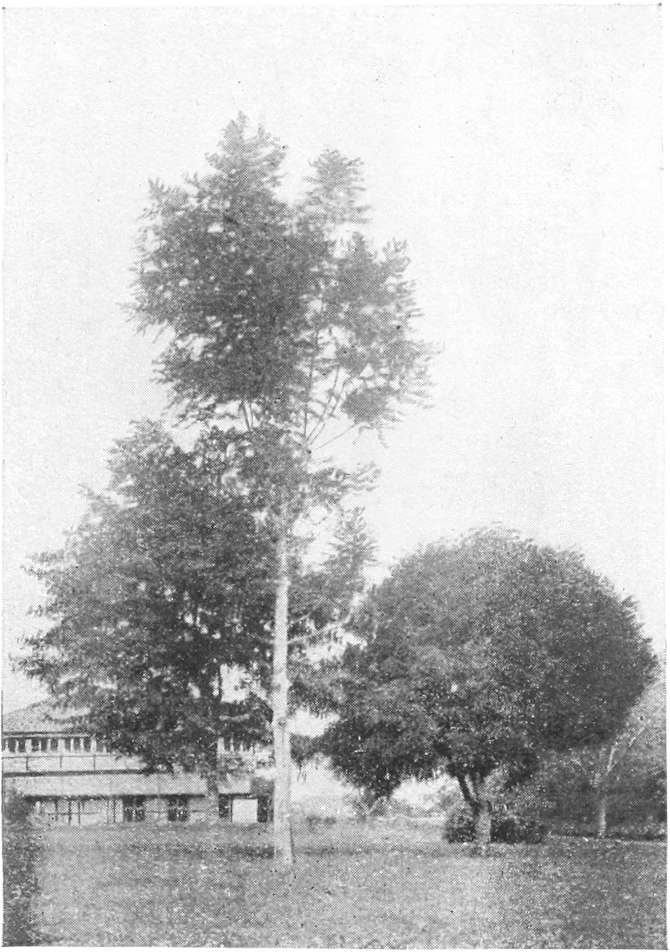
Fig. 33.—Cedrela odorata, Cigar-box Cedar, girth 5 feet, twelve years old, Olokomeji Arboretum.
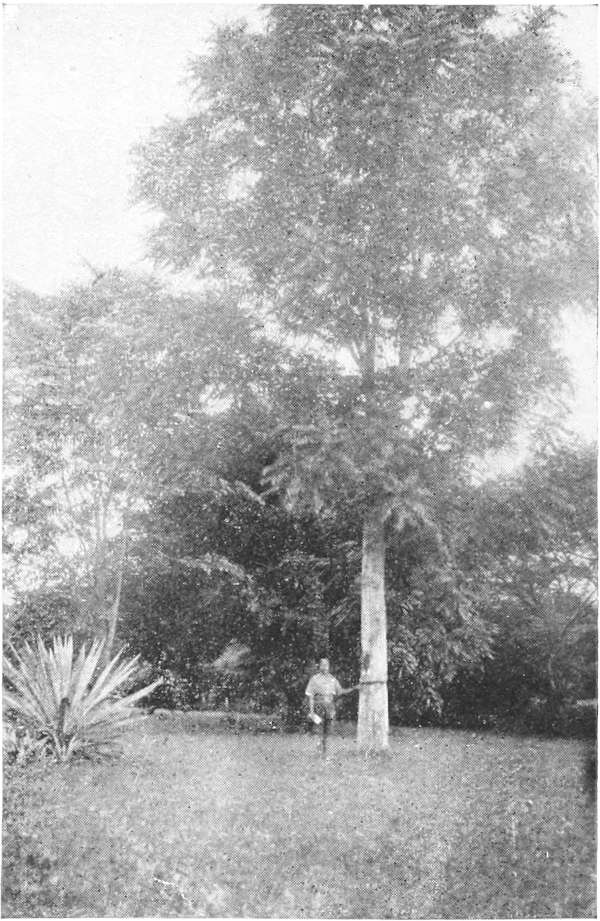
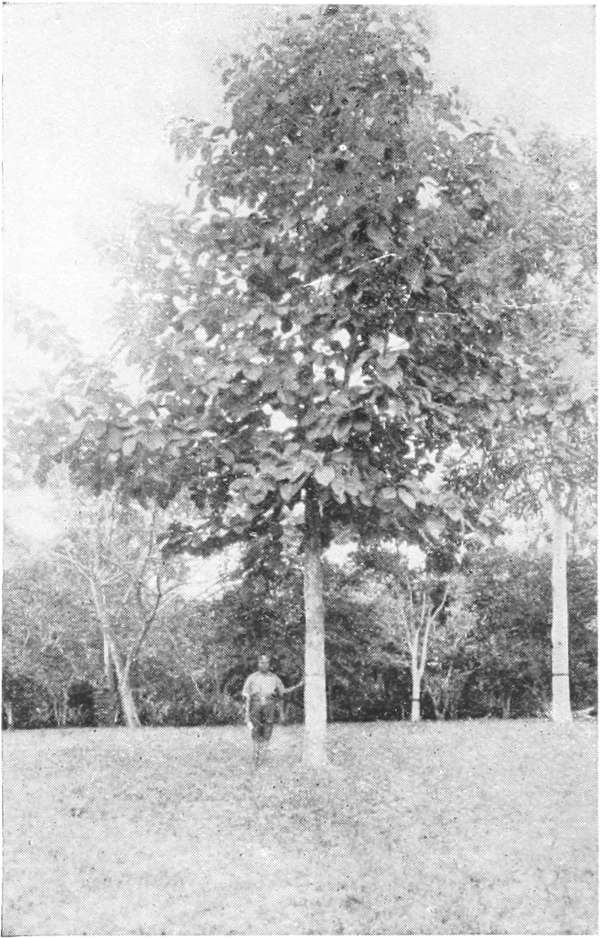
Fig. 34.—Teak (Tectona grandis), ten years old, Olokomeji Arboretum.
To face p. 174.
Some years ago the seeds of Pinus Mercusii were planted in several places, including those of higher elevation. Although it many cases the seed germinated, the seedlings subsequently died.
Another exotic, the Swamp Cypress or Bald Cypress, or, as it is known in England, the Deciduous Cypress (Taxodium distichum), was tried near Benin City some years ago for swamp planting. Here, as in the other case, the seeds germinated and the small trees reached the height of about a foot and then subsequently died. The swampy ground where they were planted may, however, have been rather too acid or sour for them. The climate, of course, was no doubt considerably hotter than that of the Southern States of the United States, in which country this tree is indigenous.
The original Spanish Mahogany, or Swietenia mahagoni, was intended for Afforestation purposes with a view to its yielding on the average a more highly valued wood than that of the African Mahogany. However, in Africa generally, and in the Olokemeji Arboretum, it has proved a very slow growth and more liable to attack by the leading-shoot borer than even the indigenous mahogany-tree.
For the comparatively dry laterite soil of the Olokemeji Forest Reserve, Indian Rosewood or Blackwood (Dalbergia latifolia) has proved a valuable introduction. Growing comparatively fast and of somewhat branching habit, it soon covers the ground. It is, of course, better in mixture with others in order to produce clean stems. Latterly the larger trees have been attacked by a borer and considerable damage has been done. Still, in spite of it the trees have gone on growing, and apparently are capable of outgrowing the damage without an enormous loss of increment. In all, several acres have been planted with this tree.
Indian Walnut (Albizzia Lebbek) has found a foremost place in the firewood plantation at Ibadan and Ede, as well as in the forest plantations at Olokemeji. Its rapid growth and comparative indifference to soil make it a comparatively valuable tree for Afforestation purposes. Although it is usually only considered suitable for firewood, there is no doubt that its wood can be used as a substitute for walnut, as it is in India. Already, in fact, it is largely a forest escape in Africa, and is found in many of the old farms and cultivated places. Its greyer, almost silvery-grey, foliage easily distinguishes it from that of Albizzia Brownii, which has larger leaves.
A South American exotic, the Lignum Vitæ (Guaiacum officinale), is found in isolated specimens in the Olokemeji Arboretum and forest plantations. With such a very slow-growing tree, which may show half an inch growth in a year, it is difficult to be patient and wait for the many years before it will attain even a size large enough from which to cut the smallest bowl for a game of skittles or bowls. Its very yellow small foliage is most distinctive and not unlike box (Buxus sempervirens), but the leaf is flatter and does not curl like box.
One of the most valuable introductions in the forest plantations at Olokemeji and in the firewood plantations at Ibadan is the Siamese Cassia or Bombay Blackwood (Cassia Siamea). Almost indifferent as to soil and not requiring a heavy rainfall, and casting a heavy shade, it soon grows on the laterite, covers the ground, killing weeds, and rapidly attaining the size of a tree. In the plantations at Olokemeji, the trees reached a height of over 20 feet and a girth of about a foot in five years. It is one of the few trees that will thoroughly kill the Econ grass. The masses of yellow flowers which appear in the crown of the tree and also in the leader rather interrupt the height growth, but make a magnificent show at the end of the dry season. It continues to flower and fruit for the larger part of the year. Either as a firewood tree or as a timber tree, it should always be worthy of a place in all Afforestation areas where the rainfall is none too heavy. The hard, almost black wood is of value in India, so that it should prove of value in Nigeria when the trees are large enough for cutting into planks or boards. Amongst the exotic trees which have not yet found a place is the Trinkomali Wood (Berrya Ammomilla) and Indian Rose Chestnut or Ironwood (Mesua ferrua), seedlings which were obtained from seeds of the large trees in the Botanical Gardens at Victoria. If they grow well in Nigeria, the somewhat heavy and flexible Trinkomali Wood or Petwun and the Ironwood should both prove of value for local industrial work.
Although found as specimen trees in the Olokemeji Arboretum, Copaifera officinalis has not been formed in plantations, though small groups of the West African Gum Copal (Copaifera salikounda) are seen in the Ogba plantation of the Central Circle. Both these trees are doing very well, more especially the latter, which have reached a height of over 12 feet in six years. The former had produced some tears of gum three-quarters of an inch in diameter in the tenth year of its growth. In addition to these two, there is the Cameroon Gum Copal (Copaifera Demeusii), seedlings of which were obtained from the Botanical Gardens at Victoria. Considering that the last-named tree is indigenous in a territory so much closer to Nigeria than either of the first-named Gum Copals, it is highly probable that this one will grow better than either of the others. Up to the present it is not known, however, how the yield of the Gum Copal compares with either of the former. As far as West Africa is concerned, the Sierra Leone Gum Copal has proved to be the most prolific in this respect.
The Indian Almond (Terminalia catappa) is seen more as an avenue tree, mostly in towns such as Lagos, but also in the Mamu Forest Reserve. It is certainly one of the best shade trees for planting at the side of roads. Its rather formal habit, with the almost even whorls of branches, fits in with the straightness and even width of a road. By many it is not realized that the nuts can be comparatively easily cracked and the kernel inside is good to eat.
Michelia champaca is another most suitable tree for avenues. The chestnut-like leaf and the large, almost magnolia-like flowers are of a white colour, giving it a “distinguished” appearance such as is necessary for a roadside tree. The flowers, too, are used for making scent.
Both as a shade tree and for its gum the Balsam of Peru (Toluifera Pereiræ) is also worthy of a place both in avenues and in plantations. Some seedlings were obtained from the Botanical Gardens at Pretoria, where the tree has grown comparatively well. Not so suitable for plantations apparently at Olokemeji is the Sugar Palm (Arenga saccharifera). However, in isolated places small plantations have been made with the Sago Palm (Corypha elata), such as in the swamp opposite Calabar and the small grove of the Betel Nut Palm (Areca catechu) near Lagos. Both these give promise of being useful acquisitions to the palms of economic use in Africa.
Before leaving the exotic trees, mention must be made of the Thuya (Thuya occidentalis), which were obtained from the Canary Islands by Major Cockburn and planted on the hill at Obubra. Although somewhat slow growing, they have thrived in that climate and do not suffer from disease. This is the only example of a Conifer which has been successfully introduced into Nigeria.
Amongst the other indigenous trees of which plantations have been made there is the Cedar Mahogany (Pseudocedrela Kotschyi), Emi gbegiri, Yoruba, which apparently grows but slowly in Olokemeji. It is much the same with the self-sown seedlings and with root suckers, both of which have proved disappointingly slow in that locality.
Then also at Olokemeji we have the dry-zone Mahogany, Khaya Senegalensis, Oganwo of the Yorubas and Ogwangu of the Benis, growing in a small plantation and raised from seed brought by H. N. Thompson, Esq., from the Shaki district in 1910. So far the growth has been comparatively rapid, though the tree is occasionally attacked by the leading-shoot borer, which makes it fork comparatively low down.
Of the African Walnut and the Long-capsuled Mahogany, Lovoa Klaineana and Entandrophragma Candollei, most isolated specimens and groups appear to have been planted in the leased areas of Benin. In addition to these, some other specimens and small plantations are found in the Calabar, Degama, Benin and Olokemeji Arboretums, as well as in the plantations of the Ogba and Olokemeji. Thus far only the Long-capsuled Mahogany has been planted in these; the difficulty of obtaining seed of the African Walnut has precluded its wider distribution in the various plantations. Long-capsuled Mahogany grows very fast, usually with an undivided stem and a big tuft of long pinnate leaves near the top of the tree. Stump shoots form very readily and soon attain a large size, as is noticeable in the specimen in the Benin Arboretum.
The plantations of Ebony (Diospyros mespiliformis), Kanran of the Yorubas, have been made in the Olokemeji Forest Reserve. Although, of course, very slow growing, it demands further attention, as it yields a good black ebony.
Amongst the soft woods there are plantations of Triplochiton Nigericum, Arere of the Yorubas and Obechi of the Benis, in the Olokemeji Forest Reserve. At first growing rather slowly, they bid fair to prove one of the most rapid growing trees. A mixture where teak was introduced to fill up the blanks will be interesting to watch in its future development, as to whether the teak will eventually outgrow the forest maple.
Although the firewood plantations at Ibadan and certain parts of the plantations of Olokemeji have been filled up with West African Walnut (Albizzia Brownii), Ayinre Bonabona of the Yorubas, they will prove probably of greater value for the production of timber than for firewood. However, as a firewood tree it has yielded several cords of wood from one tree after only seven years of growth. So far it has certainly proved to be the tree which produces the greatest amount of firewood in the shortest period of time. It sprouts well from the stump, so that for a time its reproduction is very easy and assured.
The Oil Bean (Pentaclethra macrophylla), Apara of the Yorubas and Opaga of the Benis, is found chiefly reproduced artificially, either by being sown at stake or planted along the sides of the roads in the Owerri and Benin provinces. Considering the hardness of the wood, the tree grows not excessively slowly, though, of course, compared to a softwood it is slow.
Camwood (Pterocarpus Osun), Osun by the Yorubas, Ume by the Benis, has found a place in the Mamu Forest Reserve, its congener Pterocarpus Indicus having been planted in the Olokemeji Forest Reserve. However, as far as the size and habit of growth is concerned, the African Redwood or Barwood appears to be much superior to the Indian Paduak. The latter usually soon develops a triple stem with many small side-branches, whereas the African species always shows an undivided stem. In rate of growth “Osun” seems to be rather slow compared to many other trees. Self-sown seedlings come up readily in suitable localities, such as the Ikrigon Reserve, and on the whole develop more quickly. Anyhow, the continual demand in increasing amounts of this red dye-wood necessitates the careful preservation of the tree in the forest, as well as its continual reproduction by natural regeneration or plantations in the Forest Reserve.
Amongst the Mamu Forest Plantations there is that of African Oak (Afzelia Africana), Apa (Yoruba), Aligna (Benin), one of the few survivals of the efforts made to reproduce this tree artificially. The many insect and rodent enemies give isolated plantation seedlings very little chance to develop.
Although Shea Butter (Butyrospermum Parkii), Emi Ori or Emigidi (Yoruba), has been tried as a plantation tree, the germination of the nuts is very poor, and the rodents attack them unmercifully. Apparently root-suckers form the chief means of reproduction for this tree. They are very prevalent and very persistent once they have sprouted. The forest fires destroy a great deal of the flower in the early part of the year, preventing formation of the fruit, and thus the means of reproduction by seed is very much reduced. The improvement in trees protected from fire at Olokemeji is most marked.
At Degema there is a plantation of Mimusops Djave (?), or Aganokwi of the Benis, which shows comparatively fast growth; in eleven years the trees had reached a height of about 25 feet and a girth of 2 feet 6 inches. Although it sprouts well from the stump, it is easier to raise from seed, but the seedlings require great care in transplanting.
At Olokemeji, Shinglewood (Terminalia Superba), Afara, by the Yorubas and Egoyn Nufwa by the Benis, is being tried in a mixed plantation. The growth has been rapid, and would probably surpass that of teak after the first five years.
Over considerable areas of the Olokemeji and the Ibadan plantations the Yoruba Chewstick, or Ayin of the Yorubas (Anogeissus leiocarpus), has been planted. Its growth has been moderately rapid, reaching a height of about 8 feet in four years. In addition to the value of its wood both as a chewstick and from the fact that a mordant for dyes can be made from its ashes, the young plant kills all the Econ grass growing round it with its leaf fall. This makes the tree one of the most advantageous for Afforestation purposes. Its light-green foliage and delicate, graceful build, and slender bole and branches, make it also valuable as an avenue tree in the dryer parts of the country. In its similarity to the European birch it might almost be called the birch of Africa.
With the Dika Nut (Irvingia Barteri), Oro by the Yorubas and Okherli by the Benis, small sample plots have been made in the Mamu Reserve and isolated specimens planted near the Calabar Arboretum.
Although not for Afforestation purposes but for the production of Palm Wine, Raffia vinifera, Ako by the Yoruba, Augor by the Benis, has been planted and seeds distributed amongst the villagers of the upper parts of the Cross River districts. When these are grown there will not be such a demand for cutting down the oil-palm-tree for making palm wine as there is at the present time.
Allowing only a value of 3d. per tree on all the trees planted during the last fifteen years, all the mahoganies and plantations are worth £240,000.
In two circles and parts of a third a great deal of work of an Afforestation nature was undertaken years before any actual forest plantation could be made. These are the communal rubber plantations of the Ireh Rubber (Funtumia elastica). In the Central Circle, near over 700 villages and towns, plantations varying from a hundred plants to ones covering several acres and containing many thousands, were made, aggregating in all the setting out of over a million trees in a period of about five years. In the Eastern Circle, in over a hundred villages, and in the Ondo and Western Circles over two hundred village plantations were made. Subsequently Para Rubber (Hevea Braziliensis) was added and substituted for the Funtumia wherever the climate was suitable for it. Now the communities concerned have a very valuable asset, which they can tap from year to year and augment at their leisure. Whatever happens to the forest or the immediate neighbourhood of the village, there will at any rate remain the rubber plantation, giving grateful shade to the roadsides and the ground near the villages. In one case a village planted over 1,200 Para rubber-trees, which even as a commercial asset are by no means to be despised.
In addition to these efforts on the part of the natives, acting under the advice and guidance of the Forest Department, there are the numerous rubber plantations in all the Forest Reserves. In the earlier days these were planted with Funtumia, where, for instance, in the Mamu Forest Reserve nearly one square mile of land is planted with this tree.
Then, again, there are the district plantations, more especially in the Eastern Circle, where in many cases Para Rubber was planted instead of Funtumia. These areas are for the most part smaller than those of the Forest Reserve or Communal Plantations. They served more as demonstration areas to show how rubber would grow in that locality.
Furthermore, near almost each native court in the Eastern Circle rubber plantations, in many cases of Para and in others of Funtumia, were made.
The general cost of the Communal District and Native Court Plantation was practically limited to the amount involved in payment of the native Forest staff. These men, however, had other duties to perform, and on the average certainly not more than one-third of their time was occupied in the making of these plantations. For the making of the other plantations of the Forest Reserve about £2,500, or sometimes £3,000, has been spent annually in making them and in the cost of their upkeep once they have been made. Owing to the long dry season in Nigeria the number of plants failing to survive it is somewhat high, and this very considerably increases the cost of the final establishment of the plantation. For some years the cost in many cases amounted to £10 per acre for the first year and £1 or £2 for subsequent years, for the cost of “beating up” and keeping the plantations clean. With the greater experience gained both in regard to the habits of the different trees and in the methods of reproduction most suitable to various parts of Nigeria, the cost has been somewhat lessened. However, even so, the cost compared to European or English plantations is not abnormally high. In Africa there is no land to buy, and no wire-netting is needed for the plantations, and the land usually planted has not a “letting” or “sporting” value, as it has in England. The buying out or compensating of the native rights of the usufruct of the soil is not so very expensive, especially when it is spread over comparatively large areas, as it usually is in West Africa. Then, again, even with the cost of £10 per acre, the total value of a crop after fifty or sixty years would certainly not be less than 3s. per cubic foot of the timber, which thus allows ample margin for 5 per cent. compound interest on the original outlay, and a profit besides. In many cases the timber would be worth a great deal more, and also the value of the intermediate thinnings is not inconsiderable. Both these factors have been left out of the account, in order not to in any way exaggerate or make too optimistic estimates of the value of a forest plantation. But beyond the financial side of the value of forest plantations, more especially in a tropical country like Nigeria, is the very valuable indirect effect they have on the whole welfare of the country.
First of all, plantations in forest groves improve and beautify a locality, whether on the level or amongst hills.
In the second place, the forest induces a greater rainfall in itself and its immediate vicinity.
Then the rainfall which actually falls in the forest is partly re-evaporated to fall again, thus making extra rainfall, and also the rain which actually reaches the ground in the forest is only gradually absorbed, thus making the flow of springs and rivers regular.
Both on the level and especially on slopes, a covering of trees, such as a forest, hinders the washing away of the surface soil or tilth of the land.
Forest trees only require one-twelth of the mineral matter out of the soil that an agricultural crop does, covering the same area.
In a forest plantation there is always greater humidity in the air, and thus many plants of economic value, such as cocoa, can grow in its vicinity, which would otherwise not be possible to be grown in that locality.
A forest acts as a moderating influence on the temperature of the air, being lower inside the forest than outside, when the sun is very hot. Conversely, when it is cold outside in the “harmattan” season it is warmer in the forest.
Nearer the interior of the forest certain better grasses and pasture are found, which are of incalculable value, in a drought, to the cattle in that locality.
During the long period of the rotation, usually at least 60 or 80 years, in most forests there are large accumulations of leaf mould or litter, which on occasion can be used in reasonable quantities for manuring neighbouring agricultural lands. This is of incalculable benefit where the ground outside the forest is comparatively poor and dry.
It has been proved also that in these long forest rotations the mineral rock and subsoil have time to weather, and add further mineral matter to the enrichment of the soil.