NOVEMBER.
Reading edition
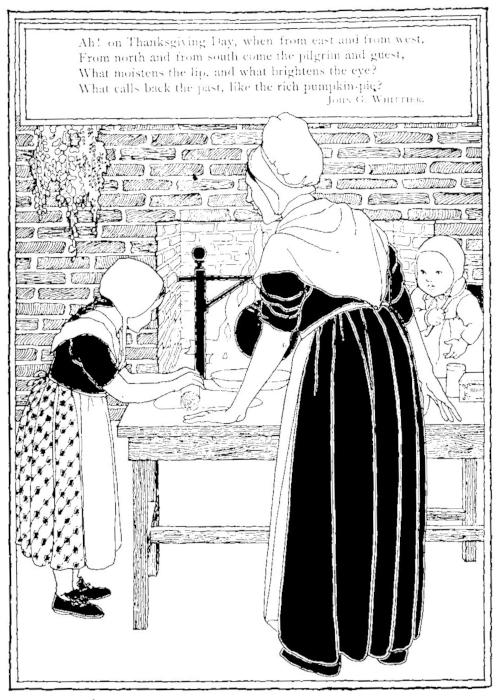
Ah! on Thanksgiving Day, when from east and from west, From north and from south come the pilgrim and guest, What moistens the lip, and what brightens the eye? What calls back the past, like the rich pumpkin-pie? John G. Whittier.
THE FIRST THANKSGIVING DAY.
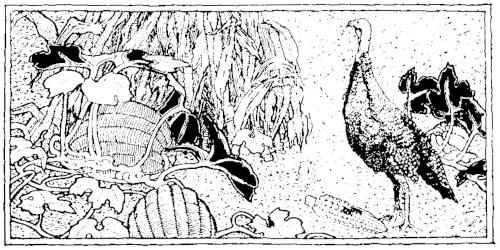
One spring the Pilgrims planted corn as the Indians had taught them.
Summer brought the sunshine and the rain to ripen the corn.
Such a harvest as there was when autumn came!
“Let us have a day of thanksgiving for this great blessing,” said the Governor.
“A Thanksgiving Day! A Thanksgiving Day!” cried the Pilgrims.
“The Indians have been kind to us. We will ask them to our feast,” said the Governor.
So they began to get ready for the first Thanksgiving Day.
II
The Pilgrim fathers went hunting and fishing. They carried home duck, turkey, and fish.
The Pilgrim mothers made bread and cake from the corn. They baked plenty of pumpkin-pies.
What a good time the children had getting ready for the feast! They gathered the wild plums and grapes. They put pop-corn in the ashes of the wide fireplace. Then they watched until the “Snap! Crack! Snap!” was heard.
The Indians came, gaily dressed in skins, and paint, and feathers. They brought five large deer to the feast.
The Indians came in time for breakfast and stayed three whole days. So they must have had a good time. They played games, and danced, and sang.
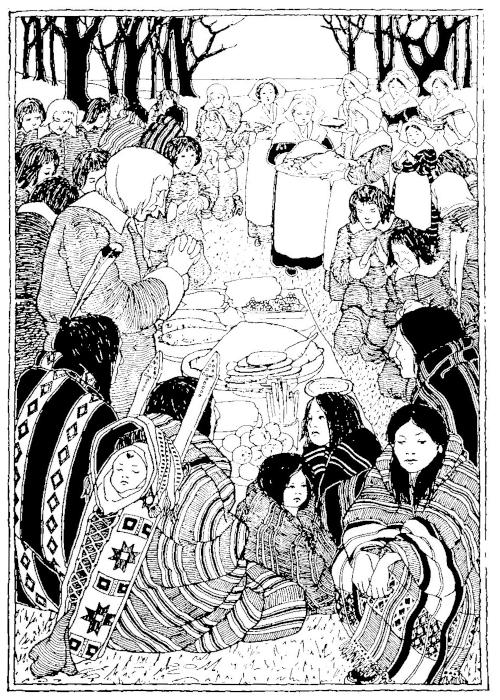
Before the feast the Indians and the Pilgrims thanked God for His goodness to them.
Ever since then the people have kept Thanksgiving Day.
THANKSGIVING DAY LONG AGO.
The large kitchen was a busy place on Thanksgiving morning.
A log fire was burning in the fireplace. On the walls hung strings of dried apples. Long, yellow squashes hung up above.
A little girl sat beside the spinning-wheel dressing corncob dolls. She was taking care of the baby that lay in the queer old cradle.
Mother put the pudding in the kettle that hung before the fire. Then she said, “Come, Patty! It is time to set the table.”
Patty looked at the turkey that was roasting before the fire.
“I wish Thanksgiving came every day,” she said.
“What hard work that would make for Mother!” said Grandma, looking at the rows of pies.
After a while a loud shout made them all run to the door.
“Here they come! Here they come!” said Patty, dancing around the room.
Uncle John stopped the sleigh and out jumped Aunt Mary and the children.
What a good dinner it was! They all said that the turkey was the best they ever ate. And, oh, the pudding and the pies!
After dinner the fun began. There were games and songs, and at last a dance.
Grandma and Grandpa stood at one end. Father and little Patty stood at the other end. Then up and down the long kitchen they went, laughing all the time.
In the evening they sat around the log fire. They told stories, roasted apples, and ate the nuts the children had gathered.
At last they said good night. Then Uncle John put Aunt Mary and the children in the sleigh, and drove home through the softly falling snow.
Soon every one in the old farm-house was in bed and asleep.
Pussy sat in the warm firelight, alone, in the large kitchen.
THANKSGIVING DAY.
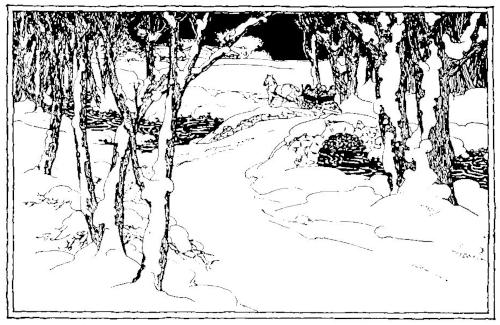
Over the river and through the wood, To Grandfather’s house we go; The horse knows the way To carry the sleigh Through the white and drifted snow. Over the river and through the wood; Oh, how the wind does blow! It stings the toes And bites the nose, As over the ground we go. Over the river and through the wood, To have a first-rate play. Hear the bells ring, “Ting-a-ling-ding!” Hurrah for Thanksgiving Day! Over the river and through the wood, Trot fast, my dapple-gray! Spring over the ground, Like a hunting-hound! For this is Thanksgiving Day! Over the river and through the wood, And straight through the barn-yard gate. We seem to go Extremely slow, It is so hard to wait! Over the river and through the wood; Now Grandmother’s cap I spy! Hurrah for the fun! Is the pudding done? Hurrah for the pumpkin-pie! Lydia Maria Child.
WHITTIER.
When Whittier was a little boy, he lived on a farm.
In the summer he ran about with bare feet. He went swimming and fishing.
His merry whistle could be heard as he hunted for strawberries.
He knew the songs of the birds. He liked to watch them make their nests and feed their young.
When he went into the woods, the squirrels played about him. They let him see where they hid their nuts.
He watched the bee gather honey from the flowers. He knew how it made its house.
Often, at night, he sat on the door-step to eat bread and milk.
Then he could see the clouds and hear the frogs. Sometimes the fireflies flew about looking like little lanterns.
He tells of all those happy times in a poem called “The Barefoot Boy.”
II
In another poem called “Snow-Bound,” Whittier tells what he did in the winter.
One morning they looked out to find everything covered with snow.
“See the well!” said one of the boys. “It looks like a castle.”
“That pole looks like an old man,” said another.
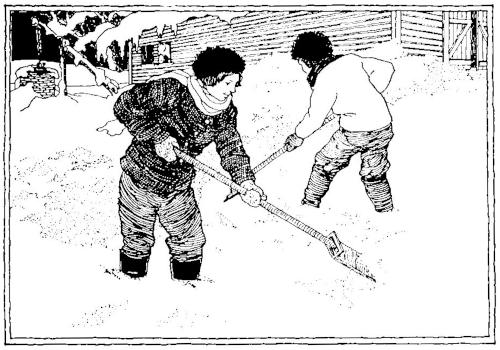
Just then their father called out, “Boys! Make a path.”
With merry shouts they made a path to the barn. In one place the snow was so deep that they played it was a cave.
The old horse heard them and put his head out of the barn window to see the fun.
The rooster heard them coming and crowed a good morning.
They fed the farm-yard animals and gave them straw for their beds.
In the evening they all gathered around the fireplace.
The dog lay asleep in the warm firelight. The cat opened and closed her yellow eyes as she sat beside him.
The boys roasted apples and ate the nuts which they had gathered.
Then their father told them a story about the Indians. Mother talked of the days when she was a little girl.
When bedtime came, they said good night.
The wind roared around the house. The snow fell through the roof upon their beds. But the children did not know it, for they were soon fast asleep.
PATTIE’S NEW DRESS.
When Pattie was a little girl, long ago, she needed a warm new dress.
Grandmother said, “I’ll spin the wool for it.”
“And I’ll weave the cloth,” said Sister Rachel.
“And I’ll make the dress,” said the little girl’s mother.
The sheep had given the wool from their backs for Pattie’s new dress.
“It is as soft as down, and as white as milk, and as beautiful as snow,” said Pattie.
Grandmother carded the wool fine and smooth. Then she fastened it on her spindle and sent the spinning-wheel whirling round.
“Zu-m-m-m-m-m-m-m-m-m!” sang the wheel, as it turned. “Zu-m-m-m-m-m-m-m-m-m!”
Pattie’s brother said it sounded as if there were bees in the room. “Zu-m-m-m-m-m-m-m-m!”
As Grandmother drew the thread out from the fleecy wool she said,
“A hum and a whirl, A twist and a twirl, This is the way good yarn is spun.”
II
Pattie stood by to watch her spin. She asked more questions than Grandmother had time to answer.
“Will there be a pocket in my new dress,” she asked, “and buttons down the back?”
“And, oh, Grandmother! What color is it going to be?”
“I know,” said Brother Joe. He had just come in from the woods with some walnut bark.
“It will be the color of a—chestnut.”
“Brown, brown, brown!” cried Pattie.
Mother made a dye with the walnut bark. Sure enough, when she dipped the yarn into the dye it came out a beautiful brown just as Pattie had guessed.
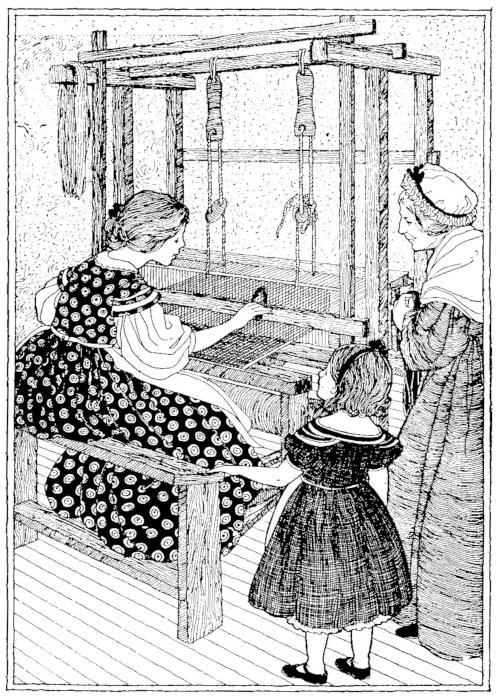
Then Sister Rachel fastened the yarn in the loom and began to weave.
The treadle went up and the treadle went down with a click and a clack. Such a merry sound!
Away the shuttle went to carry the thread under and over, and in and out.
When the cloth was woven Sister Rachel took it out of the loom. Mother was all ready to begin the dress.
“Snip, snip, snip!” went her sharp scissors.
“Stitch, stitch, stitch!” flew her shining needle.
Long after Pattie was in bed and fast asleep that night, Mother was busy sewing.
Grandmother and Rachel helped, too, and the dress was ready the very next day.
It had pockets, two of them, bound with red.
It had buttons down the back like a row of red berries.
Jack Frost had come in the night and the cold winds had begun to blow. But Pattie did not care.
“I’m warm as toast in my new woolen dress,” said little Pattie.
Maud Lindsay (Adapted).