Part 1 / Book 4 — BOOK IV. (continued 5)
T. (Tobias) Smollett translation
‘We went directly to church, to make our acknowledgments to God for his mercies; and as soon as Zorayda entered, she said she perceived some faces that resembled Lela Marien: we told her these were the images of the blessed Virgin; and the renegado, as well as he could, informed her of their signification, that she might adore them, as if each was actually the person of Lela Marien, who had spoke to her; so that, having naturally a good understanding, with a docile and discerning disposition; she easily comprehended what he said upon the subject. From thence they conducted us to our lodgings in different families of the town; the renegado, Zorayda, and I, being invited by the Christian who escaped with us, to the house of his father, who was moderately provided with the good things of this life, and treated us with the same affection he expressed for his own son. Six days we tarried at Velez, during which the renegado having informed himself of what was necessary for him to do, went to the city of Grenada, there, by means of the holy inquisition, to be re-admitted into the bosom of our most sacred church: the rest of our company departed, each for his own home; leaving Zorayda and me by ourselves, destitute of every thing but the few crowns which she received from the courtesy or the French corsair. With part of these I bought the animal on which she arrived at this inn, and hitherto have cherished her with the affection of a parent, and the service of a squire, without using the prerogative of a husband; we are now upon the road to the place of my nativity, to see if my father be still alive, and if either of my brothers has been more fortunate than myself; though, as heaven hath made Zorayda my companion for life, fortune could not have possibly bestowed upon me any other favour which I should have valued at so high a rate. The patience with which she bears the inconveniences attending poverty, and the zeal she manifests to become a Christian, is so great and extraordinary, as to raise my admiration, and engage me to serve her all the days of my life; but the pleasure I take in this office, and in the prospect of seeing her mine, is disturbed and perverted, by reflecting that possibly in my own country I shall not find a corner in which I can shelter the dear object of my love; and that time or death may have made such alterations in the fortune and lives of my father and his other children, that I shall scarce meet with a soul that knows me.
‘This, gentlemen, is the substance of my story; whether or not it be agreeable and uncommon, I leave to the decision of your better judgment; assuring you, that I wish I could have related it more succinctly, though the fear of tiring you hath made me suppress a good number of circumstances.’
CHAP. XV. OF WHAT FARTHER HAPPENED AT THE INN, WITH MANY OTHER PARTICULARS WORTHY TO BE KNOWN.
Here the captive left off speaking; and Don Fernando said to him, ‘Really, Signior Captain, the novelty 243of your strange adventures is equalled by your agreeable manner of relating them. Your whole story is uncommon, surprizing, and full of incidents that keep the hearers in admiration and suspence; and such is the pleasure we have received from it, that though the narration should have continued till to-morrow morning, we should rejoice at your beginning it anew.’
When this compliment was passed, Cardenio, and all the rest of the company, offered to serve him to the utmost of their power, with such affectionate and sincere expressions of friendship, that the captain was extremely well satisfied of their good-will. Don Fernando, in particular, promised, that if he would go home with him, his brother the marquis should stand godfather to Zorayda; and that he, for his part, would accommodate him in such a manner, that he should return to the place of his nativity with that authority and ease to which he was intitled by his birth and merit. The captive thanked him in the most courteous manner, but declined accepting any of his generous offers.
It was now night, when a coach arrived at the inn, attended by some men on horseback, who demanded lodging; and the landlady made answer, that there was not in the whole house an handful of room unengaged. ‘Be that as it will,’ said one of the horsemen, who had entered the gate, ‘there must be some found for my lord judge.’ At mention of that name the hostess was disturbed, saying, ‘Signior, the greatest difficulty is my want of beds; but if his lordship hath brought one along with him, as I suppose he hath, he is very welcome to come in: I and my husband will quit our own apartment to accommodate his worship.’—‘Be it so,’ said the attendant. By this time a person had alighted from the coach, who, by his garb, immediately shewed the nature of his rank and office; for his long robe, with high sleeves tucked up, plainly distinguished him to be a judge, as the servant had affirmed. He led by the hand a young lady seemingly sixteen years of age, dressed in a riding suit, and so sprightly, beautiful, and genteel, as to raise the admiration of all who beheld her: so that those who had not seen Dorothea, Lucinda, and Zorayda then present, would have thought it a very difficult talk to find another woman of equal beauty. Don Quixote seeing the judge and young lady as they entered, pronounced with great solemnity, ‘Your worship may securely enter and recreate yourself in this castle, which, though narrow and inconvenient, there is no narrowness and inconvenience in this world, but what will make room for arms and letters, especially if they have for their guide and conductor such beauty as that which accompanies the letters of your worship, in the person of that amiable young lady, to whom not only castles ought to open and unfold their gates, but also rocks divide, and mountains bow their heads at her approach. Enter, I say, this paradise, where you will find stars and suns to accompany that heaven which you have brought hither. Here you will find arms in perfection, and beauty in excess!’
The judge marvelled greatly at this address of the knight, whom he earnestly considered, no less surprized at his figure than his words, without knowing what reply to make, so much was he confounded at both; when he was relieved by the appearance of Lucinda, Dorothea, and Zorayda; who, upon hearing the news of their arrival, and the landlady’s description of the young beauty, had come out to welcome and receive her: the beauteous ladies of the inn welcomed this beauteous damsel; while Don Fernando, Cardenio, and the curate, paid their compliments to the judge, in the most civil and polite terms. He was more and more astonished at what he saw and heard, though he could easily perceive that his fellow-lodgers were persons of rank and consequence: but the mien, visage, and figure of Don Quixote, baffled all his conjectures. Compliments having thus passed on all sides, and the conveniences of the inn being duly considered, it was agreed, as before, that all the ladies should sleep together in the fore-mentioned apartment, and the men sit in another room to guard them. The judge was very well satisfied, that his daughter (for such the young maiden was) should lodge with the other ladies, she herself willingly consenting to the proposal; 244and what with part of the inn-keeper’s narrow bed, and the half of that which the judge brought along with him, they made shift to pass the night more agreeably than they expected.
The captive, who, from the first moment he beheld the judge, felt his heart throb with a sort of intimation that this was his own brother, asked of one of the servants that attended him, his master’s name, with the place of his nativity. The footman replied, that his name was the licentiate Juan Perez de Viedma; and born, as he had been informed, in the mountains of Leon. This information, together with what he himself had before observed, confirmed him in the opinion, that he was his brother, who by his father’s advice had followed his studies. Transported with this discovery, he called aside Don Fernando, the curate, and Cardenio, to whom he imparted the affair, and assured them that the judge was his own brother by the servant’s report, so far on his way to the West Indies, in quality of supreme judge of Mexico. He understood also by the same canal, that the young lady was his daughter, whose birth had cost the mother her life; and that he was very much enriched by his wife’s fortune, which had been settled on the children of the marriage. The captive therefore consulted them about the method he should take to make himself known, or rather to be assured before-hand whether upon the discovery his brother would be ashamed of his poverty, or receive him with the bowels of affection. ‘Leave that talk to my conduct, Signior Captain,’ said the curate; ‘though there is all the reason in the world to believe that you will meet with a brotherly reception: for the virtue and prudence that appear in his courteous demeanor give no indications of his being proud and unnatural, but rather declare that he knows how to consider the accidents of fortune in the right point of view.’—‘Nevertheless,’ replied the captain, ‘I would not willingly disclose myself of a sudden, but prepare him by some round-about insinuation.’—‘I have already told you,’ answered the curate, ‘that I will manage the affair to your mutual satisfaction.’ By this time, the cloth being laid[106], and every body sat down to table, except the captive and the ladies, who supped in their own apartment, the curate addressed himself to the judge, saying—‘I had once a comrade of your lordship’s name at Constantinople, where I was a slave for many years. He was one of the bravest soldiers and best officers in the Spanish infantry, but his misfortunes were equal to his valour and ability.’——‘Dear Sir,’ cried the judge, ‘what was that officer’s name?’—‘He was called Ruy Perez de Viedma,’ replied the priest, ‘and a native of some town in the mountains of Leon. He told me a circumstance that happened between his father, two brothers, and himself, which, had it not been affirmed by a person of his veracity, I should have looked upon as one of those tales which old women tell by the fire-side in winter; for he said his father divided his estate equally among his three sons, whom he at the same time enriched with advice more salutary than any that ever Cato gave. This I know, the choice he made of going into the army succeeded so well, that in a few years, by his gallant behaviour, and without any other assistance than that of his extraordinary virtue, he rose to be captain of foot, and saw himself in the straight road of becoming a field officer very soon: but there, where he had reason to expect the smiles of fortune, she proved most unkind; he having lost her, with his liberty, on that glorious day of the battle at Lepanto, in which it was found by so many Christians. I was taken in the goleta; and, after various vicissitudes, we happened to be fellow-slaves at Constantinople, from whence he was transported to Algiers, where he met with one of the strangest adventures that ever was known.’
Then the curate briefly recapitulated the story of Zorayda, to which the judge listened with more attention than ever he had yielded on the 245bench[107]. But the priest brought it no farther than the period when the French corsairs plundered the Christians who were in the bark, describing the poverty and distress to which they had reduced his comrade and the beautiful Moor; and observing that he did not know what farther befel them, nor whether they had arrived in Spain, or been carried into France.
The captain stood at some distance behind, listening to what the curate said, and observing the emotions of his brother; who, seeing that the curate had made an end of his story, uttered a profound sigh, saying, while the tears gushed from his eyes, ‘O Signior! if you knew how nearly I am concerned in what you have related, you would not wonder at these tears, which, in spite of all my fortitude and discretion, trickle from mine eyes. That valiant captain whom you have mentioned is my father’s eldest son, who being more brave and noble-minded than my youngest[108] brother and me, chose the honourable exercise of arms, which was one of the three paths proposed by our father in his advice, as you seem to have been informed by your companion in adversity. I followed that of letters, in which God hath been pleased to reward my diligence with that station which you see I now maintain: my younger brother is at present in Peru, so rich, that his remittances to my father and me have made large amends for the small sum he carried with him at first; and even enabled the old gentleman fully to indulge his liberal disposition, impowering me also to prosecute my studies with more honour and decency, until I acquired the post I now enjoy. My father is still alive, though daily pining with the desire of hearing from his eldest son, and putting up petitions to Heaven incessantly, that his own eyes may not be closed for ever until he shall have seen those of his first-born in life. What gives me a great deal of surprize is, that a person of his discretion should, in the midst of such trouble and affliction, or even in his prosperity, omit writing to his father; for if he, or either of us, had known his situation, he should have had no occasion to wait for the miracle of the cane in obtaining his liberty; but at present the uncertainty of his fate gives me the greatest concern, as it is doubtful whether those French have set him at liberty, or taken away his life to conceal their robbery. This apprehension will convert the joy and satisfaction with which I undertook my journey into melancholy and despondence.—O my dear brother! would to Heaven I knew where thou art, that I might go and free thee from all trouble and affliction, though at the expence of my own! Who shall carry the news of thy being alive to our aged father, that although thou art shut up in the deepest dungeon of Barbary, thou mayest be delivered by my brother’s riches and my own!—O generous and lovely Zorayda! who shall requite thy benevolence to my brother, be present at the regeneration of thy soul, and assist at the nuptials which would afford such pleasure to us all!’
These and many other exclamations the judge pronounced with such symptoms of sorrow at the news he had received of his brother, that all the hearers sympathized with him in the expressions of his grief. The curate, seeing every thing succeed to his own expectation, and the captain’s desire, was unwilling to protract the judge’s anguish, and the impatience of the whole company; so rising from the table, and going into the other apartment, he led out Zorayda, who was followed by Lucinda, Dorothea, and the young lady lately arrived; then, taking in his other hand the captain, who stood waiting to see what he intended, he went into the room, where the judge and the rest of the gentlemen sat, and presenting them both, said, ‘Dry your tears, my lord judge, and enjoy the completion of your wish; behold your worthy brother, and virtuous sister-in-law: this is Captain Viedma, and that the beautiful Moor who behaved so generously to him in his distress: the French 246corsairs have reduced them to this extremity, that you may have an opportunity of displaying the liberality of your noble breast.’
The captain ran to embrace his brother, who kept him off with both hands fixed on his shoulders, that he might consider him the more attentively; but no sooner did he recollect his features, than he flew into his arms, and shed a flood of tears of joy, while the greatest part of those who were present wept in concert at the affecting scene. The expressions of both the brothers, and their mutual demonstrations of affection, are, I believe, scarce to be conceived, much less described. They briefly recounted their adventures to each other, and manifested the genuine flame of fraternal affection. There the judge embraced Zorayda, making her a tender of all his wealth; there he commanded his daughter to receive her with open arms; there the mutual caresses of the beautiful Christian and lovely Moor renewed the tears of the whole company; there Don Quixote silently observed these surprising accidents, which he wholly attributed to the chimeras of knight-errantry; there it was concerted that the captain and Zorayda should return to Seville with his brother, from whence they could advertise their father of the liberty and arrival of his son; that the old gentleman being still able to undertake such a journey, might come and be present at the baptism and nuptials of his daughter-in-law; as it would be impossible for the judge to go far out of his way, because he was informed, that in a month the flota would set sail from Seville for New Spain; and it would be extremely inconvenient for him to lose his passage. In short, the whole company were exceedingly rejoiced at the captive’s good fortune; and two-thirds of the night being already exhausted, they agreed to retire and repose themselves during the remaining part of it; while Don Quixote undertook to guard the castle from the assaults of any giant or wicked adventurer that might possibly covet the vast treasure of beauty which it contained. Those of his acquaintance thanked him for his courteous offer, and afterwards gave an account of his strange disorder to the judge, who was not a little diverted with the detail of his extravagance. Sancho Panza alone was distracted at their sitting up so late: though, in point of lodging, he was better accommodated than all the rest; for he made his bed of the furniture of his ass, which cost him so dear, as will hereafter be seen.
The ladies having retired to their apartment, and every other person disposed of himself as tolerably as he could, Don Quixote went out to keep guard at the castle gate, according to his promise; and a little before morning, the ladies were serenaded by a voice so clear and well tuned, as to attract the attention of them all, especially of Dorothea, who was awake, and lay in the same bed with Donna Clara de Viedma, the judge’s daughter. Nobody could imagine who the singer was, the voice being single, and unaccompanied by any instrument, and seeming to come sometimes from the stable, and sometimes from the court-yard. While they listened with equal surprize and attention, Cardenio came to the door, saying, ‘You that are not asleep, take notice, and you will hear the voice of a mule-driver, who chaunts most enchantingly.’ When Dorothea told him that they had heard it already, he went away; while she, employing her whole attention, when he began to sing again, could plainly distinguish the following words.
CHAP. XVI. THE AGREEABLE STORY OF THE YOUNG MULETEER, WITH MANY OTHER STRANGE INCIDENTS THAT HAPPENED IN THE INN.
I.
‘Toss’d in a sea of doubts and fears,
Love’s hapless mariner I sail,
Where no inviting port appears,
To screen me from the stormy gale.
II.
‘At distance view’d, a chearing star
Conducts me thro’ the swelling tide;
A brighter luminary, far,
Than Palinurus e’er descry’d.
III.
‘My soul, attracted by its blaze,
Still follows where it points the way,
And while attentively I gaze,
Considers not how far I stray.
247IV.
‘But female pride, reserv’d and shy,
Like clouds that deepen on the day,
Oft shroud it from my longing eye,
When most I need the genial ray.
V.
‘O lovely star, so pure and bright!
Whole splendour feeds my vital fire;
The moment thou deny’st thy light,
Thy lost adorer will expire!’
Here the musician pausing, Dorothea thought it was pity Clara should not hear such an excellent voice; therefore, by gently jogging, she waked her, saying, ‘I ask pardon, my dear Clara, for disturbing you; but my intention in so doing, was to regale you with one of the best voices that ever you heard.’ Clara, being still half asleep, did not at first understand what she said, which, at her desire, Dorothea repeated; and the young lady listened accordingly; but scarce had she heard two lines of the song, which was now resumed, when she began to tremble as violently as if she had been seized with a severe fit of the ague, saying, while she hugged Dorothea, ‘Ah! dear lady of my life and soul, why did you wake me? The greatest favour that fortune could at present bestow, would be to keep both my eyes and ears fast shut, that I might neither see nor hear that unfortunate musician.’—‘What do you mean, my dear child?’ answered Dorothea; ‘consider what you say; he that sings is a young muleteer!’—‘Ah, no!’ replied Clara, ‘he is a young gentleman of great fortune, and so much master of my heart, that unless he quits it of his own accord, it shall remain eternally in his possession.’ Dorothea was surprized at this passionate declaration of such a young creature, who seemed to have so much more sensibility than could be expected from her tender years; and said to her, ‘Truly, Donna Clara, you talk in such a manner that I do not understand you. Pray explain yourself, and tell me the meaning of those expressions, about fortune and heart, and that musician whose voice hath thrown you into such disorder: but say no more at present; for I would not, by attending to your transports, lose the pleasure of hearing the singer, who now seems to be tuning his voice, and preparing to give us another song.’—‘With all my heart,’ said Clara, stopping her ears with her fingers, to the farther admiration of Dorothea, who listening attentively, heard the musician proceed in these words:
I.
‘Aspiring Hope, thou, unconfin’d,
Pursu’st th’ imaginary path,
Thro’ woods, and rocks, and waves combin’d,
Defying danger, toil, and death.
II.
‘No laurel shall adorn his brow,
No happiness the sluggard crown;
Who tamely can to fortune bow,
And slumber on th’ inglorious down.
III.
‘The joys unmatch’d bestow’d by love,
Can never be too dearly priz’d;
For undeny’d examples prove,
What’s cheaply bought, is soon despis’d.
IV.
‘Success, by the consenting fair,
Is oft to perseverance given;
Then wherefore should my soul despair
Of mounting from this earth to Heaven!’
Here the voice ended, and Clara’s sighs beginning afresh, kindled Dorothea’s curiosity to know the cause of such agreeable musick and grievous lamentation; she therefore now desired to hear what her bed-fellow had before proffered to impart. Then Clara, fearful of being overheard by Lucinda, crept close to Dorothea, and applying her mouth to her ear, so that she could securely speak without being perceived, ‘Dear Madam,’ said she, ‘that singer is the son of an Arragonian gentleman, who is lord of two towns, and when at court lives opposite to my father’s house; and although our windows are covered with canvas in winter, and lattices in summer, I know not how this young gentleman, while he prosecuted his studies, got sight of me, either at church or somewhere else; and, in short, being smitten, disclosed his passion from the windows of his own apartment, by so many tears and significant expressions, that I believed him sincere, and even loved him in my turn, without knowing the nature of my own desires. Among other signs, he made that of 248joining his hands, giving me to understand that he would take me to wife; and though I should have been extremely glad to comply with that proposal, as I was alone and motherless, I had nobody to consult, and therefore let it rest, without granting him any other favour, except (when his father and mine were abroad) that of lifting up the canvas or lattice, that he might have a more perfect view of my person; and this condescension always transported him so much, that I was afraid he would have run stark mad with joy. In the midst of this commerce, the time of my father’s departure drew near, of which being informed, though not by me, for I never had an opportunity of telling him, he fell sick, as I understand, of grief, so that when we set out I could not see him, as I wished, to indulge one parting look; but, having travelled two days, just as I entered the place at which we lodged last night, I perceived him standing at the gate, disguised so naturally in the habit of a muleteer, that it would have been impossible for me to know him, had not his image been so deeply imprinted on my soul. The sight of him filled me with joy and surprize; and he gazed upon me by stealth, unperceived by my father, from whom he always conceals his face when he crosses the road before me, or is obliged to appear at the inns where we lodge. Knowing, therefore, who he is, and that he travels on foot, undergoing so much hardship and fatigue for love of me, I am half dead with grief and anxiety, and wheresoever he sets his feet, there I fix my pitying eyes. I know not what he intends by thus following me, nor how he could manage to escape from his father, who loves him tenderly, because he has no heir but him; and the young gentleman deserves all his affection, as you will perceive when you see him. I can moreover assure you, what he sings is the product of his own head; for I have been told that he is a great scholar, and an excellent poet; every time I behold him or hear him sing, I start and tremble from head to foot, being afraid that he will be known by my father, and thus our mutual love be discovered; for, though I never spoke to him in my life, my passion is so violent, that without him I shall not be able to live. This, dear Madam, is all I can say concerning that musician, whose voice hath given you such pleasure, and is alone sufficient to convince you that he is not a muleteer, but the lord of towns and hearts, as I have described him.’
‘Enough, Donna Clara,’ said Dorothea, kissing her with great affection; ‘say no more, but wait with patience till the approach of a new day, when I hope in God to manage matters so well as to bring such a virtuous beginning to an happy end.’—‘Ah, Madam!’ replied the young lady, ‘what happy end can be expected, seeing his father is a man of such rank and fortune, that he would think me unworthy to be the servant, much less the wife of his son! and as to marrying him without my own father’s consent, I would not do it for the whole universe. All I desire is, that the young gentleman would return; perhaps his absence, and the length of the journey we have undertaken, will alleviate the uneasiness I at present felt, though I must own I believe that remedy will have small effect. I cannot conceive what the deuce is the matter with me; nor how this same love got entrance into my heart, considering how young we both are; for I really believe we are of the same age, and my father says, that till Michaelmas next, I shall not be sixteen.’ Dorothea could not help laughing at these innocent observations of Donna Clara; to whom she said, ‘Let us sleep, my dear, during the little that I believe remains of the night; God will grant us a new day, and if my skill fails me not, every thing will succeed to our wish.’
They accordingly went to rest, and a general silence prevailed over the whole house, in which there was not a soul awake, except the innkeeper’s daughter and her maid Maritornes, who by this time being acquainted with the extravagant humour of Don Quixote, and knowing that he was then without the gate, keeping guard in arms and on horseback, determined to play some trick upon him, or at least divert themselves in listening to his folly.
249The inn chancing to have no window nor opening towards the field, but a hole through which they took in their straw; this pair of demi-ladies[109] there took their station, and observed Don Quixote, who sat on horseback, leaning upon his lance, and breathing from time to time such profound and doleful sighs, as seemed to tear his very soul; they likewise heard him pronounce, in a soft, complacent, and amorous tone, ‘O my dear mistress, Dulcinea del Toboso! thou perfection of beauty, scope and sum total of discretion, cabinet of good humour, depository of virtue, and lastly, the idea of all that is useful, chaste, and delectable in this life! in what art thou at present employed? Art thou reflecting upon thy captive knight, who voluntarily subjects himself to such dangers, with the sole view of serving thee? Give me some information of my love, thou three-faced luminary! who now, perhaps, with envious eyes, beholdest her walking through some gallery of her sumptuous palace, or leaning over some balcony, revolving in her mind, how, without impairing the delicacy of her honour, she may asswage the torments that this heart endures on her account; how she may crown my sufferings with glory; my care with comfort; in fine, my death with new life, and my service with reward; and thou, sun, who by this time must be busy in harnessing thy steeds to light the world, and enjoy the sight of her who is the sovereign of my soul, I entreat thee to salute her in my behalf; but, in thy salutation, beware of touching her amiable countenance, else I shall be more jealous of thee than ever thou wast of that nimble ingrate, who made thee sweat so much along the plains of Thessaly, or banks of Peneus, for I do not remember through which thou ran’st, so jealous and enamoured.’
So far had the knight proceeded in this piteous exclamation, when the innkeepers daughter whispered softly, ‘Sir knight, will your worship be pleased to come this way?’ Hearing this invitation, he lifted up his eyes, and by the light of the moon, which was then in full splendour, perceived them beckon to him from the straw-hole, which he mistook for a window adorned with gilded bars, suitable to the grandeur of such a magnificent castle as the inn appeared; then his crazy imagination instantly suggested, as before, that the beauteous damsel, daughter of the constable, being captivated by his person, intended again to solicit his love. On this supposition, that he might not seem discourteous or ungrateful, he turned Rozinante, and riding up to the hole, no sooner perceived the two lasses, than he said, ‘I am extremely concerned, most beautiful lady, that you have fixed your amorous inclinations where it is impossible they should meet with that return which is due to your rank and qualifications; but you ought not to impute your disappointment to any fault in me, whom love hath rendered incapable of yielding my heart to any other but to her, who at first sight took absolute possession of my soul. Pardon my refusal, honoured Madam, and retire to your apartment, without seeking to explain your sentiments more fully, that I may not appear insensible or ungrateful; and if your love can find in me the power of giving you any other sort of satisfaction, you may freely command my service; for I swear by that absent and amiable enemy of mine, to gratify your wish immediately; even if you should desire to have a lock of Medusa’s hair, which was altogether composed of snakes, or the rays of the sun confined in a phial.’
‘Sir knight,’ answered Maritornes, ‘my lady has no occasion for either of these things.’—‘What then is your lady’s pleasure, discreet duenna?’ resumed the knight. ‘Only the favour of one of your beautiful hands,’ replied Maritornes, ‘with which she may, in some measure, indulge the longing desire that brought her to the straw-hole, so much to the danger of her reputation, that if she should be detected by her father, the first slice of his indignation would cost her an ear at least.’—‘I would fain see him take that liberty,’ said Don Quixote; ‘but he will take care to refrain from any such acts of barbarity, unless he has a mind I should bring him to the most calamitous exit that ever happened to a father, for having laid violent 250hands upon the delicate members of his enamoured daughter.’
Maritornes concluding that he would certainly grant the request, and having already determined on what she was to do, ran down to the stable, and laid hold of the halter belonging to Sancho’s ass, with which she instantly returned, just when Don Quixote had made shift to set his feet on the saddle that he might reach the gilded window, at which he imagined the wounded damsel was standing: presenting therefore his hand, ‘Receive, Madam,’ said he, ‘that hand, or rather that chastiser of all evil-doers; receive, I say, that hand, which was never touched by any other woman, not even by her who is in possession of my whole body. I do not present it to be kissed; but that you may contemplate the contexture of its nerves, the knittings of the muscles, the large and swelling veins, from whence you may conjecture what strength must reside in the arm to which it belongs.’—‘That we shall see presently,’ said Maritornes; who having made a running knot on the halter, fixed it upon his wrist, and descending from the hole, made fast the other end to the bolt of the hay-loft door. The knight feeling the roughness of this bracelet, said, ‘Your ladyship seems to rasp rather than to clasp thy hand; do not treat it so cruelly; for it is not to blame for what you suffer, from my inclination; nor is it just that such a small part should bear the whole brunt of your indignation; consider, that one who is such a friend to love, ought not to be so attached to revenge.’
All these expostulations of Don Quixote were uttered in vain; for as soon as Maritornes had tied him up, she and her companion, ready to expire with laughing, left him fastened in such a manner, that it was impossible for him to get loose: thus, while he stood on Rozinante’s back, with his whole arm thrust up into the straw-hole, and fast tied to the bolt of the door, he was in the utmost apprehension and dread, that if his horse should make the least motion to either side, he must lose his support, and the weight of his whole body hang by one arm, so that he durst not venture to stir; though he might have expected, from the patience and peaceful disposition of Rozinante, that he would stand motionless for a whole century. In short, finding himself thus tucked up, and the ladies vanished, he imagined that the whole had been effected by the power of inchantment, which he had experienced once before, in that same castle, when he was belaboured by the inchanted Moor of a carrier; and cursed, within himself, his want of conduct and discretion, in entering a second time that fortress in which he had fared so ill at first; it being a maxim among knights-errant, that when they prove an adventure, without success, they conclude it is reserved for another, and therefore think it unnecessary to make a second trial. Nevertheless, he pulled with intention to disengage his arm, but he was so well secured, that all his efforts were ineffectual; true it is, he pulled with caution, that Rozinante might not be disturbed; and though he had a longing desire of sitting down upon the saddle again, he found that he must either continue in his present upright posture, or part with his hand; then he began to wish for the sword of Amadis, against which no inchantment could prevail; then cursed his fortune; then exaggerated the loss which the world would sustain, while he remained inchanted, as he firmly believed himself to be; then he reflected anew upon his beloved Dulcinea del Toboso; then he called to his trusty squire Sancho Panza, who, stretched upon the pannel of his ass, and buried in sleep, at that instant, retained no remembrance of the mother that bore him; then he implored the assistance of the two sages, Lirgando and Alquife; then he invoked his good friend Urganda, for succour in his distress; and, in fine, the morning found him in that situation, so distracted and perplexed, that he roared aloud like a bull, without expecting that the day would put an end to this disaster, which he thought would be eternal, believing himself actually inchanted: and this opinion was confirmed, by his seeing that Rozinante scarce offered to stir; for he was persuaded, that in this manner, without eating, drinking, or sleeping, he and his horse would continue until the evil influence of the stars should pass over, or some other sage of superior skill disengage them from their inchantment.
But for once he was mistaken in his calculation; for day had scarce began 251to dawn, when four men on horseback arrived at the inn, well mounted, and accoutred with carbines hanging at their saddle-bows; the knight perceiving from the place, where in spite of his misfortune, he still kept guard, that they thundered for entrance at the gate, which was still shut, called in an arrogant and haughty tone, ‘Knights or squires, or whosoever you are, you have no business to make such a noise at the gate of this castle; for it is very plain, that either the people within are asleep, or unaccustomed, at these hours, to open the fortress, which you cannot enter before the sun rise. Retire, therefore, and wait until the day be farther advanced, and then we shall see whether or not you have any title to be admitted.’
‘What the devil of a fortress or castle is this, that we must observe such ceremony!’ said one of the company: ‘if you are the innkeeper, order somebody to open the door; we are all travellers, and only want to bait, that we may forthwith proceed on our journey, for we are in haste.’—‘Gentlemen,’ replied Don Quixote, ‘do you think I resemble an innkeeper?’—‘I don’t know what you resemble,’ answered the other, ‘but this I know, that you talk nonsense in calling this inn a castle.’—‘A castle it is,’ cried the knight, ‘and one of the best in this province; nay, at this very instant, it contains those who have wore crowns on their heads, and wielded sceptres in their hands.’—‘Or rather the reverse,’ said the traveller; ‘that is, the sceptre on the head, and crown in the hand[110]: but perhaps there may be within some company of strollers, who frequently wear these crowns and sceptres you mention; for otherwise, in such a sorry inn, without any sort of noise or stir, I cannot believe that any persons of such note would lodge.’—‘You know little of the world,’ replied Don Quixote, ‘since you are so ignorant of the events that happen in knight-errantry.’
The other horsemen being tired with this dialogue that passed between the knight and their companion, began again to knock and bawl with such vociferation, that the landlord and all the persons in the inn waking, rose to see who called so furiously: about this time one of the horses belonging to the travellers drew near and smelled at Rozinante, who, sad and melancholy, with his ears hanging down, stood supporting his outstretched master without stirring; but at length, being made of flesh, though he seemed to have been carved out of a block, he was sensible of the civility, and turned about to repay the compliment to the courteous stranger; and scarce had he moved one step, when both his master’s feet slipping from the saddle, he would have tumbled to the ground had he not hung by his arm, which endured such torture in the shock, that he verily believed it was cut off by the wrist, or torn away by the shoulder. He was suspended so low, that the tops of his toes almost touched the ground; a circumstance that increased his calamity: for feeling how little he wanted of being firmly sustained, he stretched and fatigued himself with endeavouring to set his feet upon the ground; like those wretches, who, in undergoing the strappado, being hoisted up a very little space, increase their own torment by their eager efforts to lengthen their bodies, misled by the vain hope of reaching the ground.
CHAP. XVII. A CONTINUATION OF THE SURPRIZING EVENTS THAT HAPPENED IN THE INN.
Don Quixote actually made such a hideous outcry, that the innkeeper opened the door, and ran out to see what was the matter; while the strangers that remained without were no less astonished at his bellowing. Maritornes being also waked by the same noise, conjectured what might be the case, and going straight to the hay-loft without being perceived, untied the halter that sustained him, so that the knight came to the ground in sight of the landlord and strangers, who running up, asked what was the matter with him, and wherefore he cried so violently? Without answering one word, he loosed 252the tether from his wrist, and rising up, mounted Rozinante, braced his target, couched his lance, and making a pretty large circuit in the field, returned at a half gallop, pronouncing with great emphasis, ‘If any person whatever sayeth that I have justly suffered inchantment, I here with the permission of my Lady Princess Micomicona give him the lye, challenge, and defy him to single combat.’
The travellers were amazed at his words; but their astonishment abated when the innkeeper told them who Don Quixote was, observing that they ought not to mind what he did, because he was disordered in his brain: they then asked if he had seen a youth about fifteen years of age, dressed like a young muleteer, with such and such marks, giving an exact description of Donna Clara’s lover. The landlord answered, there were so many people in his house, that he could not possibly distinguish the person for whom they enquired; but one of them perceiving the judge’s coach, ‘He must certainly be here,’ said he; ‘for this is the coach which they say he followed: let one of us stay at the door, and the rest go in to search for him; it will also be proper that one go round the whole house, to prevent his escaping over the yard wall.’ This plan being agreed upon, two of them entered the inn, another remained at the door, and the fourth rode round the house to reconnoitre; while the landlord observing every thing that passed, could not conceive the meaning of all this care and diligence, although he believed they were in search of the youth whom they had described. By this time it was clear day-light, and upon that account, as well as in consequence of Don Quixote’s roaring, all the company were awake, and got up, especially Donna Clara and Dorothea, who had slept very little that night; the first being disturbed and alarmed by reflecting that her lover was so near, and the other kept awake by the desire of seeing this pretended muleteer.
Don Quixote seeing that none of the travellers took the least notice of him, or made any answer to his defiance, was transported with rage and vexation; and if he could have recollected any law of chivalry, authorizing a knight-errant to undertake another enterprize while he was under promise and oath to abstain from any adventure until that in which he was engaged was already atchieved, he would have assaulted them all together, and forced them to reply, contrary to their inclination: but thinking it was neither expedient nor just to begin a new enterprize until he had re-established the Princess Micomicona on her throne, he chose to be silent, waiting to see the effects of that diligence practised by the new comers, one of whom found the youth they came in quest of sleeping by the side of a muleteer, and little dreaming that any body was in search of him, much less that he was in any danger of being discovered. The man, however, shook him by the arm, saying, ‘Truly, Signior Don Lewis, this is a very suitable dress for one of your quality, and the bed in which you now lie extremely well-adapted to the tenderness and delicacy in which your mother brought you up.’
The youth rubbed his sleepy eyes, and looking stedfastly at the person who held him by the arm, no sooner perceived that he was one of his father’s servants, than he was so much surprized and confounded, that for a good while he could not speak one word; while the domestick proceeded, saying, ‘At present, Don Lewis, there is nothing else to be done but to exert your patience and return home, if you are not resolved that your father and my lady shall visit the other world; for nothing else can be expected from their anxiety at your absence.’—‘How did my father get notice that I travelled this road, and in this habit?’ said Don Lewis. ‘A student,’ replied the servant, ‘to whom you imparted your intention, was so much moved by the sorrow that took possession of your parents the moment you were missed, that he disclosed your scheme to your father, who instantly dispatched four of his domesticks in search of you; and we are all here, at your service, infinitely rejoiced that we have now an opportunity of returning speedily, and carrying you back to the longing eyes of those by whom you are so much beloved.’—‘That may depend upon my own will, and the appointment of Heaven,’ said the young nobleman. ‘What should you will, or Heaven ordain, but your immediate return, which indeed you cannot possibly avoid?’
253All this conversation was overheard by the muleteer with whom Don Lewis lay, who got up immediately, and going to Don Fernando, Cardenio, and the ladies, who were already dressed, told them how the man called his fellow-servant, Don, and communicated every thing that passed between them concerning the domestick’s proposal of conducting him home again, and the youth’s refusal to comply with his desire. This information, together with the knowledge of that sweet voice with which Heaven had endowed him, excited in all the company a desire of knowing more particularly who he was, and even of assisting him, should they offer any violence to his inclination: for this purpose, therefore, they repaired to the place where he still stood talking and disputing with his father’s servant. At the same time Dorothea coming out of her apartment, followed by Donna Clara, in the utmost confusion called Cardenio aside, and briefly related to him the story of the musician and the judge’s daughter; and he in his turn informed her of what passed on the arrival of his father’s servants. This he spoke not so softly but that he was overheard by Clara, who was so much affected at the news, that if Dorothea had not supported her, she would have fallen to the ground; but Cardenio desired them to retire into their apartment, saying, he would endeavour to set every thing to rights, and they accordingly followed his advice. Meanwhile, the four who had come in quest of Don Lewis stood round him in the inn, persuading him to return without loss of time, and console his melancholy father; but he assured them he could by no means comply with their request until he had finished an affair upon which his honour, life, and soul, depended. Then the domesticks began to be more urgent, protesting they would in no shape return without him; and declaring that if he would not go willingly, they would be obliged to carry him off by force. ‘That you shall never do,’ replied Don Lewis, ‘unless you carry me off dead: and indeed you may as well kill me, as force me away in any shape.’
Most of the people in the house were now gathered together to hear the dispute, particularly Cardenio, Don Fernando, his companions, the judge, curate, barber, and Don Quixote, who thought it was no longer necessary to guard the castle. Cardenio being already acquainted with the young man’s story, asked what reason the domesticks had to carry off the youth contrary to his own inclination. ‘Our motive,’ replied one of the four, ‘is to retrieve his father’s life, which is in danger of being lost on account of this young gentleman’s absence.’ To this declaration Don Lewis answered, ‘There is no reason why I should here give an account of my affairs; I am free, and will return if I please, otherwise none of you shall compel me into your measures.’—‘Your honour will, I hope, hear reason,’ said the servant; ‘or if you should not, it will be enough for us to execute our errand, as we are in duty bound.’
Here the judge desiring to know the whole affair from the bottom, the man having lived in the same neighbourhood, knew him, and replied, ‘My Lord Judge, don’t you know that young gentleman is your neighbour’s son, who hath absented himself from his father’s house, in a dress altogether unbecoming his quality, as your lordship may perceive?’ Then the judge looking at him more attentively, recollected his features, and embracing him said, ‘What a frolick is this, Don Lewis? or what powerful cause hath induced you to come hither in a garb so ill-suited to your rank and fortune?’ The tears gushing into the young man’s eyes, he could not answer one word to the judge, who desired the four domesticks to make themselves easy, for all would be well; then taking Don Lewis by the hand, he led him aside, and asked again the cause of his coming in that manner.
While he was employed in this and other questions, they heard a great noise at the inn door, occasioned by two men who had lodged all night in the house, and who seeing every body intent upon knowing the business of the four last comers, resolved to march off without paying their reckoning; but the innkeeper, who minded his own affairs more than those of any other person, stopped them on the threshold, demanded his money, and upbraided them for their evil intention, with such abusive language, as provoked them to answer by dint of fists, which they began to employ so dextrously, that the poor 254landlord found himself under the necessity of calling aloud for assistance. His wife and daughter seeing nobody so idle, consequently so proper for the purpose as Don Quixote, the damsel addressed him in these words: ‘Sir knight, I beseech your worship, by the valour which God hath given you, to go to the assistance of my poor father, whom two wicked men are now beating to a jelly.’ To this request the knight replied, with great leisure, and infinite phlegm, ‘Beautiful young lady, I cannot at present grant your petition, being restricted from intermeddling in any other adventure, until I shall have accomplished one in which my honour is already engaged; all that I can do for your service is this, run and desire your father to maintain the combat as well as he can, and by no means allow himself to be overcome, until I go and ask permission of the Princess Micomicona, to succour him in his distress; and if I obtain it, be assured that I will rescue him from all danger.’—‘Sinner that I am!’ cried Maritornes, who was then present, ‘before your worship can obtain that permission, my master will be in the other world.’—‘Allow me, Madam,’ answered Don Quixote, ‘to go and solicit the licence I mention, which if I obtain, I shall not make much account of his being in the other world, from whence I will retrieve him, though all its inhabitants should combine to oppose me; at least I shall take such vengeance on those who have sent him thither, as will give you full and ample satisfaction.’
So saying, he went and kneeled before Dorothea, begging in the stile and manner of knight-errantry, that her highness would be pleased to give him permission to run and assist the constable of the castle, who was at that time involved in a very grievous disaster. The princess having very graciously granted his request, he braced on his target, unsheathed his sword, and ran to the gate, where the two guests still continued pummelling the landlord; but as soon as he beheld them, he stopped short, as if suddenly surprized, and when Maritornes and her mistress asked what hindered him from giving assistance to their master and husband, ‘I am hindered,’ answered the knight, ‘by a law, which will not permit me to use my sword against plebeians; but call hither my squire Sancho, for to him it belongs, and is peculiar, to engage in such vengeance and defence.’
This transaction happened on the very field of battle, while kicks and cuffs were dealt with infinite dexterity, to the no small prejudice of the innkeeper’s carcase, and the rage of his wife, daughter, and Maritornes, who were half-distracted at seeing the cowardice of Don Quixote, and the distress of their lord and master. But let us here leave him awhile, for he shall not want one to assist him; or else, let him suffer with patience, and hold his tongue as becomes those who rashly undertake adventures which they have not strength to atchieve; and let us retreat backwards, about fifty yards, to see what answer Don Lewis made to the judge, whom we left enquiring the cause of his travelling on foot in such a mean habit. The youth, squeezing both his hands with great eagerness, in token of the excessive grief that wrung his heart, and shedding a flood of tears, replied to this question, ‘Dear Sir, I can give you no other reason, but that from the first moment that fortune made us neighbours, and Heaven ordained that I should see Donna Clara, your daughter and my delight, I, that instant, made her mistress of my heart; and if your inclination, my real lord and father, does not oppose my happiness, this very day she shall be my lawful wife; for her I forsook my father’s house, and disguised myself in this manner, with a resolution to follow whithersoever she should go, directing my views towards her, like the arrow to its mark, and the needle to the pole; though she knows no more of my passion than what she may have understood from the tears which, at a distance, she hath often seen me shed. You yourself, my lord, know the rank and fortune of my father, whose sole heir I am. If you think that a motive sufficient for venturing to make me perfectly happy, receive me immediately as your son; and though my father, prompted perhaps by other views, should be disobliged at the blessing which I have chosen for myself, it is in the power of time to work greater changes and alterations than human prudence can foresee.’
Here the enamoured youth left off 255speaking, and the judge remained in the utmost suspense; not only admiring the discretion with which Don Lewis had disclosed his passion, but also finding himself perplexed about the resolution he was to take, in such a sudden and unexpected affair. He therefore made no other reply for the present, but to desire he would make himself easy, and detain his servants a day longer, that he might have time to consider what steps it would be most proper to take, for the satisfaction of all concerned. Don Lewis kissed his hands by force, and even bathed them with his tears; a circumstance sufficient to melt a heart of marble, much more that of the judge, who, being a man of prudence, had already conceived all the advantages of such a match for his daughter; though he wished it could be effected, if possible, with the consent of the young man’s father, who, he knew, had some pretensions to a title for his son.
By this time peace was re-established between the innkeeper and his two lodgers, who being persuaded by the arguments and exhortations of Don Quixote, more than by his threats, had paid their reckoning to the last farthing; and the servants of Don Lewis waited the result of the judge’s advice, together with their master’s resolution; when the devil, who is ever watchful, so ordered matters, that the barber should just then enter the inn; that very barber from whom Don Quixote had retrieved Mambrino’s helmet, and Sancho Panza taken the furniture of his ass, which he had exchanged for his own. This individual shaver, as he led his beast to the stable, perceived Sancho employed in mending something that belonged to the pannel, and knowing him at first sight, assaulted the squire in a trice, crying, ‘Ha! Don thief, I have caught you at last. Restore my bason and pannel, with all the furniture you stole from me.’
Sancho seeing himself so suddenly attacked, and hearing the reproachful language of his antagonist, with one hand laid fast hold on the pannel, and with the other bestowed upon the barber such a slap in the face, as bathed his whole jaws in blood. But for all that, he would not quit the pannel which he had also seized; on the contrary, he raised his voice so high as to alarm the whole company, and bring them to the scene of contention, crying, ‘Justice! help in the king’s name! this robber wants to murder me, because I endeavour to recover my own property.’—‘You lye,’ answered the squire; ‘I am no robber; my Lord Don Quixote won these spoils fairly in battle.’ The knight coming up among the rest, beheld with infinite satisfaction, his squire so alert in offending and defending, and looking upon him from thenceforward as a man of valour, resolved in his heart, to have him dubbed with the first opportunity, confident that on him the order of knighthood would be very well bestowed. Among other things alledged by the barber in the course of the fray, ‘Gentlemen,’ said he, ‘that pannel belongs as much to me as my soul belongs to God; for I know it as well as if it had been produced by my own body, and though I had all the mind in the world, my ass, which is now in the stable, would not suffer me to tell a falshood; since you will not take my word, pray go and try it upon his back, and if it does not fit him to a hair, I shall give you leave to call me the greatest lyar upon earth. Besides, the very same day on which they took my pannel, they also robbed me of a new brass bason, never hanselled, that cost me a good crown[111].’
Don Quixote hearing this, could contain himself no longer, but interposed between the combatants, whom he parted, and depositing the pannel on the ground, to be publickly viewed until the truth should appear, addressed himself thus to the spectators: ‘Gentlemen, you may now clearly and manifestly perceive how this honest squire errs in his judgment, by calling that a bason, which was, is, and shall be, Mambrino’s helmet; a piece of armour I won in fair and open battle, and now possess by the just laws of conquest. With regard to the pannel, I will not intermeddle; all that I can say of the matter is, that my squire Sancho having asked permission to take the trappings of that coward’s horse, and adorn his own with them, I gave him leave, and he took them accordingly; though I can give no 256other reason for their being now converted into a pannel, but that such transformations frequently happen in the events of chivalry: yet, as a confirmation of what I say, run, friend Sancho, and bring hither the helmet, which this honest man calls a bason.’
‘’Fore God!’ answered Sancho, ‘if your worship has no better proof of our honourable doings than what you mention, Mambrino’s helmet will turn out a bason, as certainly as this honest man’s trappings are transmographied into a pannel.’—‘Do what I order,’ replied the knight; ‘sure I am every thing in this castle cannot be conducted by inchantment.’ Sancho went accordingly, and fetched this bason or helmet of Mambrino, as his master called it, which Don Quixote taking in his hand, said, ‘Behold, gentlemen, with what face this plebeian can affirm that this is a bason, and not the helmet I have mentioned: now, I swear by the order of knighthood I profess, that this is the individual helmet which I took from him, without the least addition or diminution.’—‘Without all manner of doubt,’ said Sancho; ‘for since my master won it, to this good hour, he hath used it but in one battle, when he delivered those mischievous galley-slaves; and if it had not been for that same bason-helmet, he could not have come off so well: for there was a deadly shower of stones rained upon his pate in that storm.’
CHAP. XVIII. THE DECISION OF THE DOUBTS CONCERNING MAMBRINO’S HELMET AND THE PANNEL—WITH A FULL AND TRUE ACCOUNT OF MANY OTHER ADVENTURES.
‘Gentlemen,’ said the barber, ‘pray favour me with your opinion concerning what is affirmed by these gentlefolks, who so obstinately maintain that this is not a bason, but a helmet!’—‘And if any one affirms to the contrary,’ replied Don Quixote, ‘I will make him sensible that he lyes, if he be a knight; and if a plebeian, that he lyes a thousand times.’ His own townsman, who was present all the while, being well acquainted with the knight’s humour, resolved to encourage him in his extravagance, and carry on the joke for the diversion of the company; with this view he addressed himself to the other shaver, saying, ‘Mr. Barber, or whosoever you are, you must know that I am of the same profession; I have had a certificate of my examination these twenty years; and know very well all the instruments of the art, without excepting one. I was, moreover, a soldier in my youth, consequently can distinguish an helmet, a morrion, and a casque with its beaver, together with every thing relating to military affairs; I mean the different kinds of armour wore by soldiers in the field: I say, under correction, and still with submission to better judgment, that the object now in dispute, which that worthy gentleman holds in his hand, is not only no barbers bason, but also, as far from being one as black is from white, or falshood from truth. I likewise aver, that though it is an helmet, it is not entire.’—‘You are certainly in the right,’ said Don Quixote, ‘for it wants one half, which is the beaver.’
The curate, who by this time understood the intention of his friend, seconded his asseveration, which was also confirmed by Cardenio, Don Fernando, and his companions; and the judge himself would have bore a part in the jest, had he not been engrossed by the affair of Don Lewis; but that earnest business kept him in such perplexity of thought, that he could give little or no attention to the joke that was going forward.
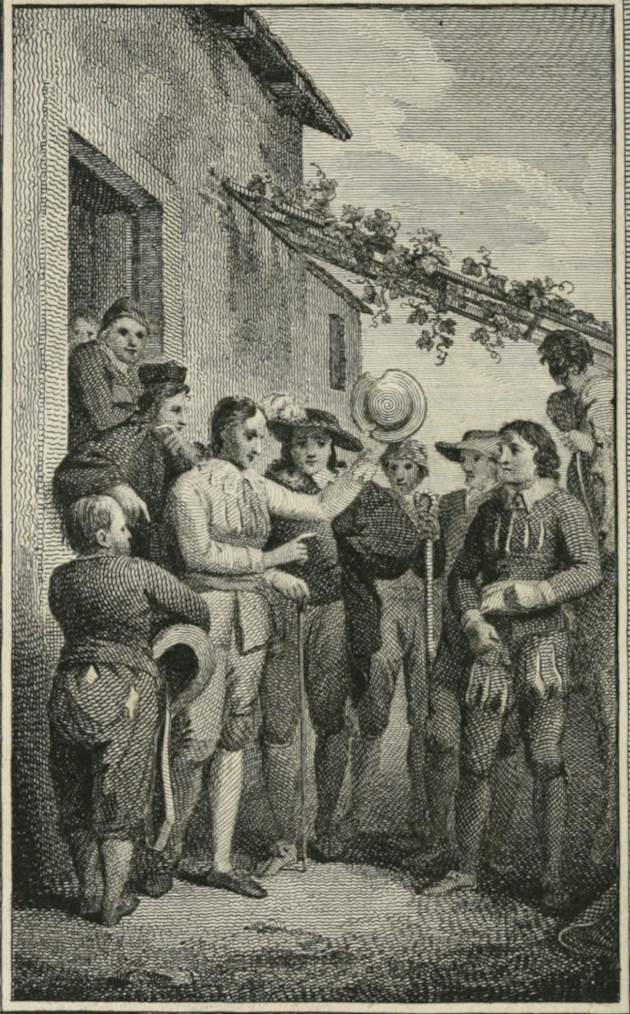
Plate IX: Don Quixote Displays the Bason.
‘Good God!’ cried the barber, with amazement, ‘is it possible that so many honourable persons should pronounce this bason to be a helmet! an assertion sufficient to astonish a whole university, let it be never so learned. Well, if that bason be an helmet, I suppose the pannel must be a horses trappings too, as this gentleman says.’—‘To me it seems a pannel,’ replied the knight; ‘but, as I have already observed, I will not pretend to decide whether it be the pannel of an ass, or the furniture of a steed.’—‘Don Quixote has no more to do but speak his opinion,’ said the curate; ‘for in affairs of chivalry, all these gentlemen, myself, and even the ladies, yield to his superior understanding.’—‘By 257Heaven! gentlemen,’ cried the knight, ‘so many strange accidents have happened to me, twice that I have lodged in this castle, that I will not venture positively to affirm the truth of any thing that may be asked relating to it; for I imagine that every thing in this place is conducted by the power of inchantment. The first time I passed the night in this place, I was harrassed extremely by an inchanted Moor that resides in the castle, while Sancho was almost as roughly handled by some of his attendants; and this very night I was suspended by one arm for the space of two hours, without knowing how or wherefore I incurred that misfortune. For me, therefore, to give my opinion in a case of such perplexity, would be a rash decision: with regard to the helmet, which they say is a bason, I have already expressed my sentiments; but dare not give a definitive sentence by declaring whether that be a pannel or a horse’s furniture. That I leave to the judgment of the good company, who not being knights, as I am, perhaps are not subjected to the inchantments of this place; but, enjoying their faculties clear and undisturbed, can judge of these things as they really and truly are, not as they appear to my imagination.’—‘Doubtless,’ replied Don Fernando, ‘Signior Don Quixote manifests his own prudence, in observing that to us belongs the determination of this affair, which, that it may be the better founded, I will in private take the opinions of this good company one by one, and then openly declare the full result of my enquiry.’
To those who are acquainted with the knight’s humour, this proposal afforded matter of infinite diversion; but the rest being ignorant of the joke, looked upon it as a piece of downright madness: this was particularly the opinion of the domesticks belonging to Don Lewis, which was even espoused by himself and three travellers just arrived, who seemed to be troopers of the holy brotherhood, as indeed they were; but he that almost ran distracted was the barber, whose bason was, even in his own sight, transformed into Mambrino’s helmet, while he expected every moment that his pannel would be certainly declared the rich trappings and furniture of a horse. Every body laughed to see Don Fernando going about with great gravity collecting opinions in whispers, that each might privately declare whether that jewel, about which there had been such obstinate disputes, was the pannel of an ass, or the furniture of a steed. Having received the answers of all those who knew Don Quixote, he pronounced aloud, ‘Truly, honest friend, I am quite tired with asking so many opinions: for every one to whom I put the question, affirms it is downright distraction to call this a pannel, which is certainly the furniture of a horse, and that too of an excellent breed. Therefore, you must e’en have patience: for in spite of you, and the testimony of your ass to boot, an horse’s furniture it must remain, as you have failed so egregiously in the proof of what you alledge.’—‘May I never taste the joys of heaven!’ cried the transported barber, ‘if you are not all deceived; and so may my soul appear before God, as this appears to me, a mere pannel, and not the furniture of an horse! but thus might overcomes[112]——I say no more, neither am I drunk, being fresh and fasting from every thing but sin.’
The company laughed as heartily at the simplicity of the barber as the extravagance of the knight, who upon this decision, said, ‘Nothing now remains, but that every one should take his own again; and may St. Peter bless what God bestows[113].’ One of the four servants belonging to Don Lewis now interposed, saying, ‘If this be not a premeditated joke, I cannot persuade myself that people of sound understanding, such as all this company are or seem to be, should venture to say and affirm that this is no bason, nor that a pannel; yet seeing this is both said and affirmed, I conceive there must be some mystery in thus insisting upon a thing so contrary to truth and experience; for, by God!’ (an oath he swore with great emphasis) ‘all 258the people on earth shall never make me believe that this is not a barber’s bason, or that not the pannel of an he-ass.’—‘Why not of a she-ass?’ said the curate. ‘That distinction makes no difference,’ said the servant; ‘nor has it any concern with the dispute, which is occasioned by your saying that it is not a pannel at all.’
At the same time, one of the troopers who had entered and been witness to the quarrel and question, could no longer contain his choler and displeasure at what he heard; and therefore said, in a furious tone, ‘If that is not a pannel, my father never begat me; and he that says, or shall say the contrary, must be drunk.’—‘You lye, like an infamous scoundrel!’ replied Don Quixote; who lifting up his lance, which he still kept in his hand, aimed such a stroke at the troopers skull, that if he had not been very expeditious in shifting it, he would have been stretched at full length upon the ground, on which the weapon was shivered to pieces: the rest of the troop, seeing their companion so roughly handled, raised their voices, crying for help to the holy brotherhood; the innkeeper being of that fraternity, ran in for his tipstaff and sword, and espoused the cause of his brethren; the domesticks surrounded Don Lewis, that he might not escape in the scuffle; the barber seeing the house turned topsy-turvey, laid hold again of the pannel, which was at the same time seized by Sancho; Don Quixote attacked the troopers sword-in-hand; Don Lewis called to his servants to leave him, and go to the assistance of Cardenio and Don Fernando, who had ranged themselves on the side of Don Quixote; the curate exhorted, the landlady screamed, the daughter wept, Maritornes blubbered, Dorothea was confounded, Lucinda perplexed, and Donna Clara fainted away. The barber pummelled Sancho, who returned the compliment; one of the servants presuming to seize Don Lewis by the arm, that he might not run away, the young gentleman gave him such a slap in the face as bathed all his teeth in blood; the judge exerted himself in his defence. Don Fernando having brought one of the troopers to the ground, kicked his whole carcase to his heart’s content; the landlord raised his voice again, roaring for help to the holy brotherhood; so that the whole inn was a scene of lamentation, cries, shrieks, confusion, dread, dismay, disaster, back-strokes, cudgelling, kicks, cuffs, and effusion of blood. In the midst of this labyrinth, chaos, and composition of mischief, Don Quixote’s imagination suggested that he was all of a sudden involved in the confusion of Agramonte’s camp, and therefore pronounced with a voice that made the whole inn resound, ‘Let every man forbear, put up his sword, be quiet and listen, unless he be weary of his life.’
On hearing this exclamation, all the combatants paused, while he proceeded thus: ‘Did not I tell you, gentlemen, that this castle was inchanted, and doubtless inhabited by a whole legion of devils? as a proof of which, you may now perceive with your own eyes how the discord and mutiny in Agramonte’s camp is translated hither: behold, in one place, we fight for a sword; in another, for a horse; in a third, for an eagle; and in a fourth, for a helmet; in short, we are all by the ears together, for we know not what.—Advance, therefore, my lord judge, and Mr. Curate, and in the persons of Agramonte and King Sobrino, re-establish peace among us; for, by Almighty God! it were wicked and absurd, that persons of our importance should be slain in such a frivolous cause.’
The troopers, who did not understand the knight’s stile, and found themselves very severely treated by Don Fernando, Cardenio, and their companions, would not be pacified; but it was otherwise with the barber, who, in the scuffle, had lost both his pannel and beard: Sancho, who, like a faithful servant, minded the least hint of his master, willingly obeyed, and the servants of Don Lewis were fain to be quiet, seeing how little they had got by concerning themselves in the fray; the innkeeper alone insisted upon their chastising the insolence of that madman, who was every moment throwing the whole house into confusion; at length the disturbance was appeased, the pannel remained as an horse’s furniture till the day of judgment, the bason as an helmet, and the inn as a castle, in Don Quixote’s imagination.
Every thing being thus amicably composed by the persuasion of the judge 259and priest, the servants of Don Lewis began again to press him with great obstinacy to set out with them for his father’s house immediately; and while he expostulated with them, the judge consulted with Don Fernando, Cardenio, and the curate, about what he should do on this occasion; imparting to them the declaration Don Lewis had made; at last it was agreed that Don Fernando should tell the servants who he was, and express a desire that Don Lewis should accompany him to Andalousia, where his brother the marquis should entertain him according to his rank and merit; for he well knew the young gentleman was fixed in the determination of being cut to pieces rather than return to his father at that time. The domesticks being informed of Don Fernando’s quality, and understanding the resolution of Don Lewis, determined amongst themselves that three of them should return and give the father an account of what had happened, while the fourth should attend the young gentleman, until they should either come back for him, or know his father’s pleasure.
In this manner was that accumulation of quarrels appeased by the authority of Agramonte and prudence of King Sobrino; but the enemy of concord and rival of peace being thus foiled and disappointed, and seeing how little fruit he had reaped from the labyrinth of confusion in which he had involved them, determined to try his hand once more, and revive discord and disturbance anew; and these were the means he practised for this purpose: the troopers, apprized of the quality of those with whom they had been engaged, were fain to be quiet and retreat from the fray, concluding that whatever might happen they would have the worst of the battle; but one of them who had been pummelled and kicked by Don Fernando, recollected that among other warrants for apprehending delinquents, he had one against Don Quixote, issued by the holy brotherhood, on account of his having set the galley-slaves at liberty, as Sancho had very justly feared: this coming into his head, he was resolved to assure himself whether or not the knight’s person agreed with the description, and pulling out of his bosom a bundle of parchment, he soon found what he sought, and beginning to spell with great deliberation (for he was by no means an expert reader) between every word he fixed his eyes upon the knight, whose physiognomy he compared with the marks specified in the warrant, and discovered beyond all doubt that he was the very person described; no sooner was he thus convinced, than putting up the parchment, and holding the warrant in his left-hand, he with his right seized Don Quixote so fast by the collar that he could scarce fetch his breath, roaring aloud, ‘Help, in the name of the holy brotherhood; and that you may see my demand is just, read that warrant for apprehending this highwayman.’
The curate, upon perusing the warrant, found what the trooper said was true, and that the description exactly agreed with the person of Don Quixote, who seeing himself so unworthily treated by such a ragamuffin, was incensed to the highest degree, so that every bone in his body trembled with rage; and he made shift to fasten on the trooper’s throat with both hands so violently, that if his companions had not come to his assistance, he would have quitted his life before the knight had quitted his hold. The innkeeper being obliged to succour his brethren, ran immediately to their assistance; his wife seeing her husband re-engaged in the quarrel, exalted her voice anew; Maritornes and the daughter squalled in concert, imploring heaven and the bye-standers for help: Sancho perceiving what passed, ‘By the Lord!’ cried he, ‘what my master says about the inchantments of this castle is certainly true; for it is impossible to live an hour in quiet within its walls.’
Don Fernando parted the knight and trooper, to their mutual satisfaction; unlocking their hands, which were fast clinched in the doublet-collar of the one, and the wind-pipe of the other, but for all that they did not cease demanding their prisoner, and the assistance of the company, in binding and delivering him to their charge, agreeable to the service of the king, and the order of the holy brotherhood, in whose behalf they repeated their demand of favour and assistance, to secure that felon, robber, and thief. Don Quixote smiled at hearing these epithets, and with much composure replied, ‘Come hither, ye vile 260and base-born race! do you call it the province of an highwayman to loose the chains of the captive, and set the prisoner free! to succour the miserable, raise the fallen, and relieve the distressed? Ah! infamous crew! whose low and grovelling understanding renders you unworthy that Heaven should reveal to you the worth that is contained in knight-errantry, or make you sensible of your sin and ignorance, in neglecting to revere the very shadow, much more the substance of any knight. Come hither, ye rogues in a troop, and not troopers; ye robbers licensed by the holy brotherhood; and tell me what ignorant wretch he was, who signed a warrant of caption against such a knight as me? Who did not know that we are exempted from all judicial authority, and that a knight’s own sword is his law, he being privileged by his valour, and restricted only by his will and pleasure? Who was the blockhead, I say, who does not know, that no gentleman’s charter contains so many rights and indulgences as adhere to a knight-errant, the very day on which he is dubbed, and devotes himself to the painful exercise of arms? What knight-errant ever paid tax, toll, custom, duty, or excise? What taylor ever brought in a bill for making his cloaths? What governor ever made him pay for lodging in his castle? What king did ever neglect to seat him at his own table? What damsel ever resisted his charms, or refused to submit herself entirely to his pleasure and will? And, in fine, what knight-errant ever was, is, or will be, whose single valour is not sufficient to annihilate four hundred troopers, should they presume to oppose him?’
CHAP. XIX. IN WHICH IS CONCLUDED THE NOTABLE ADVENTURE OF THE TROOPERS—WITH AN ACCOUNT OF THE SURPRIZING FEROCITY OF OUR WORTHY KNIGHT DON QUIXOTE.
While Don Quixote harangued in this manner, the curate was employed in persuading the troopers, that he was a man disordered in his judgment, as they might perceive both by his words and actions, and therefore they ought not to proceed any farther in the affair; for even if they should apprehend him, he would soon be dismissed as a person non compos. To this observation the man who had the warrant replied, that it was not his business to judge of Don Quixote’s madness, but to obey the orders of his superiors; and that if he was apprehended once, they might discharge him three hundred times over, if they would. ‘For all that,’ said the priest, ‘you must not carry him off at present, nor do I believe he will suffer himself to be so treated.’
In short, the curate talked so effectually, and the knight himself acted such extravagancies, that the troopers must have been more mad than he, if they had not plainly perceived his defect; therefore they thought proper to be satisfied, and even performed the office of mediators betwixt the barber and Sancho Panza, who still maintained the fray with great animosity; for the troopers, as limbs of justice, brought the cause to an arbitration, and decided it in such a manner as left both parties if not fully satisfied, at least in some sort content with the determination, which was, that the pannels should be exchanged, but the girths and halters remain as they were. With regard to Mambrino’s helmet, the curate, unperceived by Don Quixote, took the barber aside, and paid him eight rials for the bason, taking a receipt in full, that cleared the knight from any suspicion of fraud from thence forward, for ever, Amen.
These two quarrels, which were of the greatest importance of any that happened, being luckily composed, it remained that three of the servants belonging to Don Lewis should return, and the fourth accompany his master to the place whither Don Fernando intended to conduct him; and as good luck and favourable fortune had already began to quell the spirit of discord, and smooth all difficulties, in behalf of the lovers and heroes of the inn, they were resolved to proceed in such a laudable work, and bring every thing to a happy conclusion; for the domesticks were satisfied with what Don Lewis proposed; a circumstance that gave such pleasure to Donna Clara, that every body who 261beheld her face might have discerned the joy of her soul. Zorayda, though she did not well understand the incidents she had seen, was sorrowful and gay, by turns, according as she perceived the company affected, particularly her Spaniard, upon whom her eyes and heart were always fixed. The innkeeper, who took particular notice of the full satisfaction which the barber had received from the curate, demanded payment of Don Quixote, of the reckoning, as well as for the damage he had done to the bags, and the loss of his wine; swearing that neither Rozinante nor Sancho’s ass should stir from the stable, until he should be satisfied to the last farthing[114]. The curate pacified the landlord, and Don Fernando paid the bill, although the judge very frankly offered to take that upon himself. In this manner universal concord was restored; so that the inn no longer represented the disorder in Agramonte’s camp, but rather the peace and quiet that reigned in the time of Octavius Cæsar; and this blessing was generally ascribed to the laudable intention and great eloquence of the priest, together with the incomparable generosity of Don Fernando.
Don Quixote now finding himself freed and disentangled from so many broils in which both he and his squire had been involved, thought it high time to proceed on his journey, in order to finish that great adventure to which he had been summoned and chosen: he therefore, with determined purpose, went and fell upon his knees before Dorothea, who refusing to hear him in that posture, he rose in obedience to her will, and expressed himself in this manner: ‘It is a common proverb, beauteous princess, that diligence is the mother of success; and in many important causes, experience hath shewn that the assiduity of the solicitor hath brought a very doubtful suit to a very fortunate issue. But the truth of this maxim is no where more evinced than in war, where activity and dispatch anticipate the designs of the enemy, and obtain the victory before he has time to put himself in a posture of defence. This I observe, most high and excellent princess, because, in my opinion, our stay in this castle is unprofitable and prejudicial, as we may one day perceive, when it is too late; for who knows but by means of secret and artful spies, your enemy, the giant, may get notice that I am coming to destroy him; and taking the opportunity of our delay, fortify himself in some impregnable castle, against which all my diligence, and the strength of my indefatigable arm, will not avail. Wherefore, most noble princess, let us, as I have already observed, prevent his designs by our activity, and set out immediately, in the name of good fortune, which your highness shall not long sigh for, after I shall have come within sight of your adversary.’
Here the knight left off speaking, and with great composure expected the answer of the beautiful infanta; who, with a most princely air, and in a stile perfectly well-suited to his address, replied in this manner: ‘I thank you, Sir Knight, for the desire you express to assist me in my necessity, like a true knight, whose duty and province it is, to succour the fatherless and distressed; and Heaven grant that your desire and my expectation may be fulfilled, that you may see there are grateful women upon earth. With regard to my departure, let it be as speedy as you please: my will is altogether included in yours; dispose of me, therefore, according to your own pleasure; for she who hath once invested you with the charge and defence of her person, and solely depends upon your valour, for being re-established on her throne, would act preposterously, in seeking to contradict what your prudence shall ordain.’—‘In the name of God, then,’ cried Don Quixote, ‘since a princess humbles herself thus before me, I will not let slip the opportunity of raising her up, and placing her upon the throne of her ancestors. Let us depart immediately; for the desire of seeing you restored, the length of the journey, and the common reflection, that “delays are dangerous,” act as spurs upon my resolution; and since 262Heaven hath not created, nor hell ever seen an object that could strike me with terror and consternation—go, Sancho, saddle Rozinante, prepare the queen’s palfrey, and get ready your own ass, while we take leave of the constable and these noble personages, and set forward on our journey, without loss of time.’
Here Sancho, who was present all the time, shook his head, saying, ‘Ah, master, master! there are more tricks in town than you dream of; with submission to the honourable lappets be it spoken.’—‘What tricks can there be either in town or city, that can redound to my discredit, rascal?’ cried the knight. ‘Nay, if your worship be in a passion,’ replied the squire, ‘I will keep my tongue within my teeth, and not mention a syllable of what, as a trusty squire and faithful servant, I am bound to reveal to my master.’—‘Say what thou wouldst,’ answered Don Quixote, ‘so thy words have no tendency to make me afraid; for in being susceptible of fear, thou shewest the baseness of thy own character, as I, in being proof against all sorts of terror, preserve the dignity of mine.’—‘As I am a sinner to God,’ cried Sancho, ‘that is not the case; but this I know for truth and positive certainty, that this lady, who calls herself queen of the great kingdom of Micomicon, is no more a queen than my mother; for if she were what she pretends to be, she would not be nuzzling into a corner with one of this company, at every snatch of an opportunity.’
Dorothea’s face was overspread with a blush, at these words of Sancho; for, sooth to say, her husband Don Fernando had several times, as he thought unperceived, made free with her lips, as earnest of that reward his affection deserved; and in so doing, she was observed by Sancho, who thought that such condescension in her looked more like the behaviour of a courtezan than that of such a mighty princess; so that she neither could nor would answer one word to this charge, but suffered him to proceed in these words: ‘This, dear master, I make bold to mention; because, if after we have travelled the Lord knows how far, and passed many weary days and bitter nights, he that is taking his recreation in this inn should gather the fruit of all our labour; we need not be in such a perilous hurry to saddle Rozinante, prepare the palfrey, and get ready the ass; but had better remain in peace where we are; and, as the saying is, “While we enjoy our meal, let every harlot mind her spinning-wheel.”’
Gracious Heaven! what a torrent of indignation entered the breast of Don Quixote, when he heard these indecent expressions of his squire: such, I say, was the rage that took possession of his faculties, that with a faltering voice and stammering tongue, while his eyes flashed lightning, he exclaimed, ‘O villainous, inconsiderate, indecent and ignorant peasant! thou foul-mouthed, unmannerly, insolent, and malicious slanderer! darest thou utter such language against these honourable ladies in my presence? darest thou entertain such disgraceful and audacious ideas in thy confused imagination? Get out of my sight, monster of nature, depository of lyes, cupboard of deceit, granary of knavery, inventor of mischief, publisher of folly, and foe to that respect which is due to royalty; go, nor presume to see my face again, on pain of my highest displeasure!’ so saying, he pulled up his eye-brows, distended his cheeks, looked round him, and with his right-foot stamped violently upon the floor, in consequence of the wrath that preyed upon his intrails.
Sancho was so shrunk and terrified at these words and furious gestures, that he would have been glad, if the earth had opened that instant under his feet and swallowed him up; and not knowing what else to do, he sneaked off from the presence of his incensed master: but the discreet Dorothea, who was so well acquainted with Don Quixote’s humour, in order to appease his indignation, accosted him thus; ‘Sir Knight of the Rueful Countenance, let not your wrath be kindled by the nonsense which your good squire hath uttered, for, perhaps, he might have had some sort of reason for what he said; and as from his good understanding and Christian conscience, he cannot be suspected of a design to bear false witness against any person whatever, it is to be supposed, and indeed I firmly believe, that every thing in this castle, as you, Sir Knight, have observed, being conducted by means of 263inchantment, Sancho, through that diabolical medium, must have seen what he affirms, so much to the prejudice of my honour and reputation.’—‘I swear by Almighty God!’ cried Don Quixote, ‘that your highness hath hit upon the true cause! and the eyes of that poor sinner, Sancho, have been fascinated by some delusive vision, of what could not possibly be real; for, unless he had been misled by inchantment, such is the innocence and simplicity of that miserable wretch, that I know he neither could nor would invent a slander against any living soul.’—‘That certainly is, and shall be the case,’ said Don Fernando; ‘for which reason, Signior Don Quixote ought to pardon and restore him to the bosom of his favour, Sicut erat in principio, before those illusions impaired his understanding.’
The knight promised to forgive him accordingly; upon which the curate went in quest of Sancho, who came in with great humility, and falling on his knees, begged leave to kiss his master’s hand; this favour was granted by Don Quixote, who also gave him his benediction, saying, ‘Thou wilt now, son Sancho, be convinced of the truth of what I have so often told thee, that all things in this castle are performed by the power of inchantment.’—‘I believe so too,’ replied the squire, ‘except in the affair of the blanketting, which really happened in the ordinary course of things.’—‘Thou must not imagine any such thing,’ answered the knight; ‘for had that been the case, I should have revenged thy cause at the time, and even now would do thee justice; but neither at that time nor now, could I, or can I find any persons to chastise as the cause of thy disaster.’
The company being desirous of knowing the affair of the blanket, the landlord gave a very minute detail of Sancho’s capering, to the no small diversion of all present, except the squire himself, who would have been very much out of countenance, had not the knight assured him anew, that the whole was effected by inchantment; though the folly of Sancho never rose to such a pitch, but that he firmly believed, without the least mixture of doubt or delusion, that his blanketting had been performed by persons of flesh and blood, and not by phantoms or imaginary beings, according to the opinion and affirmation of his master.
Two days had this illustrious company already passed at the inn, from whence thinking it now high time to depart, they concerted matters in such a manner, as that, without putting Dorothea and Don Fernando to the trouble of returning with Don Quixote to the place of his habitation, in order to carry on the scheme concerning the restoration of Queen Micomicona, the curate and barber were enabled to execute their design of carrying him to his own house, where endeavours might be used for the cure of his disorder. In consequence of this plan, they agreed with the master of an ox waggon, who chanced to pass that way, for transporting the knight in the following manner; having made a sort of wooden cage, capacious enough to hold Don Quixote at his ease, Don Fernando, with his companions, the servants of Don Lewis, together with the troopers and innkeeper, by order and direction of the curate, covered their faces and disguised themselves, some in one shape, some in another, so as to appear, in Don Quixote’s eyes, quite different from the people he had seen in the castle. Thus equipped, they entered, with all imaginable silence, into the chamber where he lay asleep and fatigued with the toil he had undergone in the skirmishes already described; and laying fast hold on him, while he securely enjoyed his ease, without dreaming of such an accident, tied both his hands and feet so effectually, that when he waked, in surprize, he could neither move, nor do any other thing but testify his wonder and perplexity at the sight of such strange faces. He then had recourse to what his distempered imagination continually suggested, and concluded that all these figures were phantoms of that inchanted castle; and that he himself was, without all question, under the power of incantation, seeing he could not even stir in his own defence; and this conceit was exactly foreseen by the curate, who was author of the whole contrivance. The only person of the whole company who remained unaltered, both in figure and intellect, was Sancho; who, though his lack of understanding fell very little short of his master’s infirmity, was not so mad but that he knew every one of 264the apparitions, though he durst not open his mouth, until he should see the meaning of this assault and capture of the knight, who likewise expected, in silence, the issue of his own misfortune.