Part 2 / Book 3 — BOOK III. (continued 2)
T. (Tobias) Smollett translation
The knight made fresh acknowledgments of her grace’s politeness, and after supper retired to his apartment, without suffering any person to accompany or minister unto his occasions; so much was he afraid of meeting with trials, which might provoke or compel him to forego the chastity and decorum which he had hitherto preserved for his mistress Dulcinea, ever schooling his imagination with the exemplary virtue of Amadis, the flower and mirrour of knight-errantry.
Having locked the door behind him, he undressed himself by the light of two wax tapers; and in the course of this occupation (O misfortune, ill decreed to such a personage!) forth broke—not a volley of sighs, or any thing else to discredit the purity of his politeness, but about two dozen of stitches in one stocking; which, being thus torn, resembled a lattice: a mishap which was the source of extreme affliction to our worthy Signior; who, on this occasion, would have given an ounce of silver for a drachm of green silk, for his stockings were of that colour.
Here Benengeli exclaims, ‘O poverty, poverty! I know not what should induce the great Cordovan poet to call thee an holy unfrequented gift. I, though a Moor, am very sensible, from my correspondence with Christians, that holiness consists in charity, humility, faith, poverty, and obedience; yet, nevertheless, I will affirm, that he must be holy indeed, who can sit down content with poverty, unless we mean that kind of poverty to which one of the greatest saints alludes, when he says, “Possess all things as not possessing them,” and this is called spiritual poverty. But thou second poverty, which is the cause I spoke of, why wouldst thou assault gentlemen of birth rather than any other class of people? Why dost thou compel them to cobble their shoes, and wear upon their coats one 470button of silk, another of hair, and a third of glass? Why must their ruffs be generally yellow and ill starched?’ (By the bye, from this circumstance we learn the antiquity of ruffs and starch[186].) But, thus he proceeds: ‘O wretched man of noble pedigree! who is obliged to administer cordials to his honour, in the midst of hunger and solitude, by playing the hypocrite with a toothpick, which he affects to use in the street, though he has eat nothing to require that act of cleanliness; wretched he! I say, whose honour is ever apt to be startled, and thinks that every body, at a league’s distance, observes the patch upon his shoe, his greasy hat, and thread-bare cloak, and even the hunger that predominates in his belly!’
All these reflections occurred to Don Quixote when he tore his stockings; but he consoled himself for the misfortune, when he perceived that Sancho had left behind him a pair of travelling-boots, which he resolved to wear next day: finally, he crept into bed, where he lay pensive and melancholy, as well for the absence of Sancho, as for the irreparable misfortune of his stocking, which he would have gladly mended, even with silk of a different colour; one of the greatest marks of misery which a gentleman can exhibit in the course of his tedious poverty. After having extinguished the lights, he found the weather so hot that he could not sleep: he therefore arose again, and opened the casement of a great window that looked into a fine garden; then it was, that perceiving and hearing people walking and talking together, he began to listen attentively, while those below spoke so loud that he heard the following dialogue.
‘Do not, O Emerencia, press me to sing; for well thou knowest, that from the moment this stranger entered the castle, and mine eyes beheld his merit, instead of singing, I can do nothing but weep; besides, my lady’s sleep is rather slight than profound; and I would not for all the wealth in the world, that her grace should find us here. Moreover, suppose she should still sleep on, without waking, vain would be my song, unless it should awake, and attract the attention of this new Æneas, who is arrived in my territories, in order to leave me forlorn.’—‘Let not these suppositions have any weight with you, my dear Altisidora,’ replied another voice; ‘the duchess is doubtless asleep, and every body in the house, except the lord of your heart, and watchman of your soul, who must certainly be awake, for I just now heard him open the casement in his apartment; sing, therefore, my disastrous friend, in a low, sweet, and plaintive tone, to the sound of thy harp; and should the duchess overhear us, we will lay the blame upon the heat of the weather.’—‘That is not the cause of my hesitation, O Emerencia,’ replied Altisidora; ‘but, I am afraid that my song will disclose the situation of my heart, and I myself be censured by those who never felt the almighty power of Love, as a light and liquorish damsel; but, come what will, better have an hot face than an heavy heart.’ At that instant an harp was ravishingly touched, and Don Quixote hearing the sound, was struck with amazement; for his imagination was instantly filled with an infinity of similar adventures of rails and gardens, serenades, courtships and swoonings, which he had read in his vain books of chivalry; and he concluded that some damsel of the duchess was enamoured of him, but that modesty compelled her to keep her inclinations secret. Possessed of this notion, he began to be afraid of his virtue: but he resolved, in his own mind, to hold out to the last; and, recommending himself, with all his soul and spirit, to his mistress Dulcinea del Toboso, determined to listen to the song. With a view, therefore, to let them know he was there, he pretended to sneeze, a circumstance which not a little pleased the damsels, who desired nothing so much as that Don Quixote should hear them. Then the harp being tuned, Altisidora, after a flourish, began the following ditty.
471SONG.
‘O Thou! who now a-bed,
In Holland sheets are laid,
And sleep’st from night till morn,
Untouch’d by care and scorn;
The knight of greatest worth
La Mancha e’er brought forth;
More chaste an hundred fold,
Than pure Arabian gold;
O hear an hapless maid
By cruel love betray’d!
The flame of thy two suns
Hath scorch’d her to the bones!
Thou seeking thy own foe,
Hast found another’s woe:
Thou gav’st the wound, and sure
Wilt not refuse the cure.
O tell me, valiant youth,
(So God shall prosper truth)
Wast thou in desarts bred,
Or among mountains fed?
Did serpents give thee suck,
On some bleak barren rock,
Deep in the wild recess
Of forest or morass?
Dulcinea fat and fair,
May boast her shape and air,
That in subjection hold
A tyger fierce and bold:
Her fame shall live in stanza,
From Ebro to Arlanza,
From Tagus to Henarez,
From Seine to Manganarez,
Would I her place could fill,
I’d give her for good will,
My gayest petticoat
With golden fringes wrought,
How happy then should I
In thine embraces lie!
Or on some cushion loll,
And scratch thy valiant poll.
Such joys are far above
The merits of my love;
Let me, then, bending low,
With rapture kiss thy toe.
What presents would be made,
Of sattin and brocade!
I’d give thee shoes and socks,
Silk hose with silver clocks;
Of cash uncounted sums,
And pearls as big as plums;
So precious, each would sell
As perfect nonpareil.
Manchegan Nero, say,
Dost thou, aloof, survey
The flames that rage and smart
Within my love-sick heart?
A maid I vow and swear,
Young, tender, and sincere;
As yet I have not seen
The borders of fifteen.
My sides are not awry,
Nor lame, nor blind, am I:
My locks with ribbands bound,
Like lilies, sweep the ground:
My nose is flat, ’tis true,
And eke my mouth askew;
But teeth as topaz fine,
Compleat my charms divine;
My voice, as you may hear,
Is tuneful, sweet, and clear;
My temper soft and good,
If rightly understood.
These beauties all so clever,
Are yielded to thy quiver,
And I who tell my story,
Am call’d Altisidory.’
Here ended the song of the hapless Altisidora; and here began the horror of the courted Don Quixote; who, fetching a heavy sigh, said within himself—‘What an unfortunate errant am I, whom no damsel can behold without being enamoured of my person! and how hapless is the peerless Dulcinea del Toboso, who cannot enjoy my incomparable constancy, without a rival! Queens, what would you have? Empresses, why do you persecute her beauty? Damsels of fifteen, why do you molest such virtue? Leave, leave, I say, that wretched lady, to taste, enjoy, and triumph, in the lot which love hath decreed her, by subduing my heart, and captivating my soul. Take notice, enamoured tribe, that to Dulcinea alone I am sugar paste, but flint to all the rest of her sex: to her I am honey; but gall and bitterness to such as you. In my eye, Dulcinea alone is beauteous, wise, gay, chaste, and well-born; but all others are homely, foolish, idle, and of humble birth. To be her slave, and her’s alone, nature has thrown me into the world; Altisidora may weep or sing; and that lady may despair, on whose account I was pummelled in the castle of the inchanted Moor; Dulcinea’s I am resolved to be, boiled or roasted, neat, chaste, and well-bred, in spite of all the witchcraft upon earth.’ So saying, he shut the casement with a flap, and retired to bed, in as much anxiety and concern as if some great misfortune had befallen him. There, then, we will leave him for the present, as we are summoned by the mighty Panza, who is impatient to begin his famous administration.
472
CHAP. XIII. GIVING AN ACCOUNT OF THE MANNER IN WHICH SANCHO PANZA TOOK POSSESSION OF HIS ISLAND, AND BEGAN HIS ADMINISTRATION.
O Thou! perpetual explorer of the antipodes, torch of nature, eye of Heaven, and agreeable motive for wine-cooling jars, Thymbrius here, Phœbus there, archer in one place, physician in another, father of poetry, and inventor of musick; thou who always risest, but never settest, although thou seemest to set. Thee I invoke, O sun! by whose assistance man is by man engendered; thee I implore, that thou would’st favour and enlighten the obscurity of my genius, and enable me to write with precision an account of the great Sancho Panza’s administration: for, without thy aid, I find myself lukewarm, feeble, and confused.
To begin, then: Sancho, with his whole retinue, arrived at a town containing about a thousand inhabitants, one of the best in the duke’s possession; which they told Sancho was called the Island Barataria, either because the name of the place was really Barataria, or because he had very cheaply purchased the government[187]. When he reached the gates of the town, which was walled, the magistrates came forth to receive him, the bells were set a ringing, and the inhabitants, with expressions of universal joy, conducted him with vast pomp to the great church, in order to return thanks to Heaven for his safe arrival; then, with some ridiculous ceremonies, they delivered to him the keys of the town, and admitted him as perpetual governor of the Island Barataria.
The equipage, matted beard, corpulency, and diminutive stature of the new governor, furnished food for admiration to every body who did not know the juggle of the contrivance; aye, and even to those acquainted with the mystery, who were not a few. In fine, they carried him from the church to the town-hall, and placing him upon the bench, the duke’s steward addressed himself to the governor in these words: ‘It is an ancient custom in this famous island, my lord governor, that he who comes to take possession of it is obliged to answer some difficult and intricate question that shall be put to him, and by his response the inhabitants feel the pulse of their new governor’s genius, according to which they rejoice or repine at his arrival.’ While the steward pronounced this address, Sancho was contemplating a number of large letters written upon the wall that fronted his tribunal, and as he could not read, he desired to know the meaning of that painting on the wall. ‘In that place, my lord,’ replied the steward, ‘is written and recorded, the day on which your excellency has taken possession of this island, for the inscription runs, On such a day and such a month, Signior Don Sancho Panza took possession of this island, and long may he enjoy the government thereof.’—‘And whom do they call Don Sancho Panza?’ said the governor. ‘Who, but your excellency,’ answered the steward; ‘for this island never saw any other Panza than him who sits on that tribunal.’—‘Take notice, then, brother,’ replied Sancho, ‘that Don belongs not to me, nor did it ever belong to any of my generation. Simple Sancho is my name; so was my father called, and so my grandfather; and they were all Panzas, without addition of Don or Donna; and I begin to imagine there are as many Dons as stones in this island; but no more of that: God knows my meaning; and peradventure, if my government lasts above three days, I shall weed out these Dons, which, from their swarms, must be as troublesome as vermin. But pray, Mr. Steward, proceed with your question, which I shall answer to the best of my understanding, whether the townsmen should repine or not repine.’
At that instant two men entered the hall, one in the habit of a labouring man, and the other a taylor with shears in his hand, who, approaching the bench, ‘My lord governor,’ said he, ‘this countryman and I are come before your lordship about an affair which I am going to explain. This 473honest man comes yesterday to my shop—for, saving your presence, I am an examined taylor, God be praised! and putting a remnant of cloth in my hand, “Gaffer,” said he, “is there stuff enough here to make me a cap?” I having handled the piece, replied, “Yes.” Now he supposing, as I suppose, and to be sure it was a right supposition, that I wanted to cabbage part of the stuff, grounding his suspicion on his own deceit, and the bad character of us taylors, desired I would see if there was enough for two caps; and I, guessing his thoughts, answered, “Yes.” And so my gentleman, persisting in his first and evil intention, went on adding cap to cap; and I proceeded to answer Yes upon Yes, until the number increased to five caps. This very moment he called for them; and when I produced them, he not only refused to pay me for my work, but even demanded that I should either restore the cloth, or pay him the price of it.’—‘Is this really the case, brother?’ said Sancho. ‘Yes, my lord,’ replied the countryman; ‘but I beg your lordship would order him to shew what sort of caps he has made.’—‘With all my heart,’ cried the taylor; who immediately pulling out his hand from under his cloak, produced five small caps fixed upon the tops of his four fingers and thumb; saying, ‘Here are the five caps which this honest man desired me to make; as I shall answer to God and my own conscience, there is not a scrap of the stuff remaining; and I am willing to submit the work to the inspection of the masters of the company.’ All the people in court laughed at the number of caps, and the novelty of the dispute, which Sancho having considered for a few moments, ‘Methinks,’ said he, ‘this suit requires no great discussion, but may be equitably determined out of hand: and therefore my determination is, that the taylor shall lose his work, and the countryman forfeit his cloth; and that the caps shall be distributed among the poor prisoners, without farther hesitation.’
If the sentence he afterwards passed upon the herdsman’s purse excited the admiration of the spectators, this decision provoked their laughter: nevertheless, they executed the orders of their governor, before whom two old men now presented themselves, one of them having a cane, which he used as a walking-staff. The other making up to the governor, ‘My lord,’ said he, ‘some time ago, I lent this man ten crowns of gold, to oblige and assist him in an emergency, on condition that he should pay them upon demand; and for a good while I never asked my money, that I might not put him to greater inconvenience in repaying than that which he felt when he borrowed the sum; but as he seemed to neglect the payment entirely, I have demanded the money again and again, and he not only refuses to refund, but also denies that I ever lent him the ten crowns; or, if I did, he says he is sure they were repaid: now, I having no witnesses to prove the loan, nor he evidence of the re-payment, for indeed they never were repaid, I entreat your lordship to take his oath; and if he swears the money was returned, I here forgive him the debt, in the presence of God.’—‘What have you to say to this charge, honest gaffer with the staff?’ said Sancho. ‘My lord,’ replied the senior, ‘I confess he lent me the money; and since he leaves the matter to my oath, if your lordship will lower your rod of justice, I will make affidavit, that I have really and truly returned, and repaid the sum I borrowed.’ The governor accordingly lowering his wand, the defendant desired the plaintiff to hold his cane until he should make oath, because it incumbered him; then laying his hand upon the cross of the rod, he declared that the other had indeed lent him those ten crowns which he now demanded; but that he, the borrower, had returned them into the lender’s own hand, and he supposed he dunned him in this manner, because he had forgot that circumstance. This oath being administered, the great governor asked what farther the creditor had to say to the allegation of the other party. And he answered, that doubtless the defendant had spoke the truth; for he looked upon him as an honest man, and a good Christian; and that as he himself must have forgot the particulars of the payment, he would never demand it from thenceforward. Then the defendant, taking back his 474cane, and making his obeisance, quitted the court; while Sancho seeing him retire in this manner, and perceiving the resignation of the plaintiff, hung down his head a little, and laying the fore-finger of his right-hand on one side of his nose, continued in this musing posture for a very small space of time: then, raising his head, he ordered them to call back the old man with the staff, who had retired: he was accordingly brought before Sancho; who said to him, ‘Honest friend, lend me that staff, I have occasion for it.’—‘With all my heart, my lord,’ replied the elder, reaching it to the judge: then Sancho took and delivered it to the plaintiff, saying: ‘Now, go your ways, a God’s name! you are fully paid.’—‘How, my lord!’ said the old man, ‘is this cane then worth ten crowns of Gold?’—‘Yes,’ replied the governor, ‘otherwise I am the greatest dunce in nature: and now it shall appear, whether or not I have a noddle sufficient to govern a whole kingdom.’ So saying, he ordered the cane to be broke in publick; and when, in consequence of his command, it was split asunder, ten crowns of gold were found in the heart of it, to the astonishment of all the spectators, who looked upon their new governor as another Solomon. When he was asked how he could conceive that the money was in the cane, he answered, that seeing the deponent give his staff to the other party before he made oath, then hearing him declare that he had really and truly returned the money; and lastly, perceiving that after his deposition he took back the staff, it came into his head that the money was concealed within the cane. And in this instance, we see that governors, though otherwise fools, are sometimes directed in their decisions by the hand of God: besides, Sancho had heard such a story told by the curate of his village, and his memory was so tenacious, in retaining every thing he wanted to remember, that there was not such another in the whole island. Finally, the two old men went away: the one overwhelmed with shame, and the other miraculously repaid; the by-standers were astonished; and he whose province it was to record the sayings, actions, and conduct of Sancho, could not determine in his own mind, whether he should regard and report him as a simpleton, or a sage.
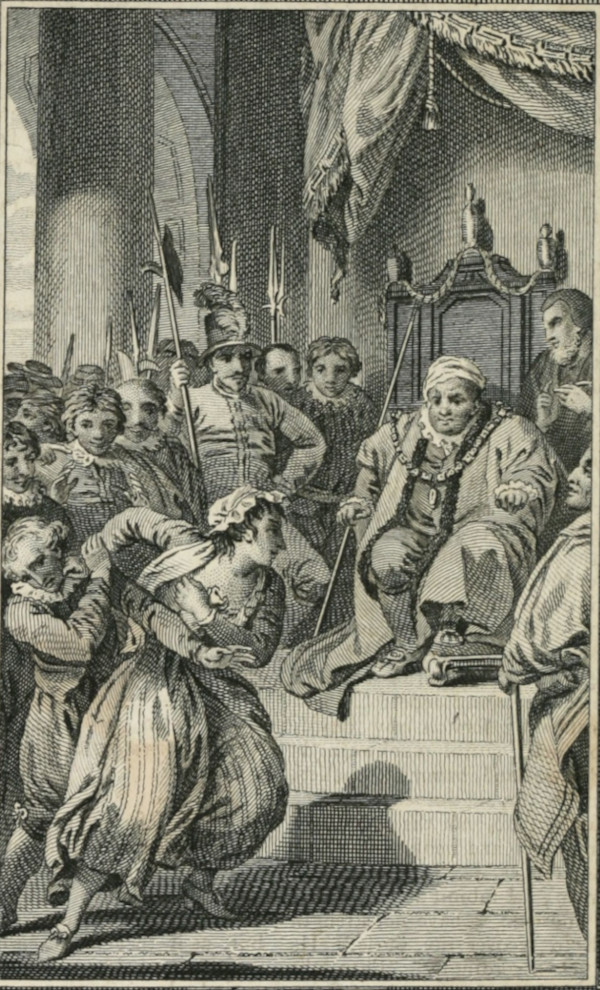
Plate VI: Governor Sancho Panza and the Woman.
This suit being determined, a woman came into court, holding fast by a man habited like a rich herdsman, and exclaiming with great vociferation, ‘Justice, my lord governor, justice! which, if I find not on earth, I will go in quest of to heaven! My lord governor of my soul, this wicked man has forced me in the middle of a field, and made use of my body as if it had been a dirty dishclout: alack, and a-well-a-day! he has robbed me of that which I had preserved for three and twenty years, in spite of Moors and Christians, natives and foreigners: and have I, who was always as hard as a cork-tree, maintained my virtue entire, like a salamander in the midst of flames, or wool among brambles, to be handled by the clean hands of this Robin Goodfellow?’—‘That must be enquired into,’ said Sancho, ‘whether the gallant’s hands be clean or no.’ Then turning to the man, he asked what he had to say to the complaint of that woman? To this question the culprit replied, with great perturbation, ‘My lord, I am a poor herdsman who deal in swine, and this morning went to market, saving your presence, with some hogs, and the duties and extortions, and one thing and another, ran away with almost all they were worth; and so, in my return, I lighted on this honest damsel on the road; and the devil, who will always meddle and make, and have a finger in every pye, yoked us together. I paid her handsomely; but she, not satisfied, laid fast hold on me, nor would she quit her hold until she had brought me hither: she alledges I forced her; but, by the oath I have taken, or am to take, she lyes; and this is the whole truth, without the least crumb of prevarication.’ Then the governor asked if he had any money about him; and when he owned he had a leathern purse with twenty ducats in his bosom, Sancho ordered him to pull it out, and deliver the whole to the complainant. The man obeyed this command with fear and trembling; the woman received this money, and making a thousand curtsies to all the by-standers, prayed God would preserve the life and health of my lord governor, 475who took such care of damsels and orphans in necessity. So saying, she went away, holding the purse with both hands, though not before she had examined the contents. Scarce had she quitted the court, when Sancho said to the herdsman, who stood with tears in his eyes, sending his heart, and many a long look after his purse, ‘Harkye, friend! go after that woman, and take the purse from her, either by fair means or force, and bring it hither to me.’ This command was not imposed upon one that was either deaf or doating; for he darted like lightning, in order to put it in execution: while all the spectators waited in suspence to see the issue of the suit. In a little time the parties returned, but more closely engaged, and clinging faster together than before; she, with her petticoat tucked up, and the purse in her lap; and he struggling, to no purpose, to take it from her; so vigorously did she defend her acquisition, crying aloud, ‘Justice, in the name of God and his creatures! Take notice, my lord governor, of the impudence and presumption of this miscreant, who, in the very face of the people, and the middle of the street, wanted to rob me of the purse which I received by your lordship’s decree.’—‘Has he taken it from you, then?’ said the governor. ‘Taken it from me!’ replied the wench; ‘I’ll sooner part with my life than with my purse. I should be a precious ninny indeed! otherguise cats must scratch my beard, and not such a pitiful muckworm as he. Pincers and hammers, mallets and chissels, should not tear it out of my clutches; no, not the claws of a lion; my soul and body shall rather be tore asunder.’—‘It is even so,’ said the man; ‘I submit as the weaker vessel, and own I have not strength enough to recover my purse.’ He quitted her accordingly. Then the governor said to the woman, ‘Come hither, my virtuous and spirited dame; let me see thy purse.’ Which, when she delivered it, he restored to the man; and turning to the wench, who was too forceful to be forced, ‘Sister of mine,’ quoth he, ‘if you had exerted the same vigour and perseverance, or even half so much, in preserving your chastity, as you have shewn in defending the purse, the force of Hercules would not have forced you. Be gone, a-God’s name! be gone, I say, with a vengeance, and never more appear in this island, or within six leagues of it, on pain of receiving two hundred stripes. Be gone immediately, you chattering, shameless impostor!’ The woman, terrified at his menaces, sneaked off, hanging her head, and discontented; and the governor spoke to the man in these words: ‘Honest friend, get you home with your money, in the name of God; and unless you are inclined to lose it again, from henceforward avoid all temptations to yoke with any woman whatsoever.’
The herdsman thanked him as sheepishly as he could, and went away, and the audience were struck with admiration afresh, at the judgment and decisions of their new governor; every circumstance of which being recorded by his historiographer, was immediately communicated to the duke, who waited for the account with the utmost impatience.
But here let honest Sancho rest a little; for we are summoned in all haste by his master, who is greatly disturbed by the musick of Altisidora.
CHAP. XIV. OF THE DREADFUL CONSTERNATION, AND CATTISH CONCERT, TO WHICH DON QUIXOTE WAS EXPOSED, IN THE COURSE OF THE ENAMOURED ALTISIDORA’S AMOUR.
We left the great Don Quixote wrapped up in those cogitations that were suggested by the musick of the enamoured damsel Altisidora. With these companions he crept into bed; but, as if they had been fleas and vermin, they would not suffer him to sleep, or indeed enjoy a moment’s repose, especially when reinforced with the reflection of his wounded stocking. But as time is so light and nimble, that no rub can retard his career, he galloped along upon the hours, and soon ushered in the morning, which was no sooner beheld by the knight, than he forsook the gentle down, and being the reverse of lazy, dressed himself in his chamoy suit. He put on his travelling boots to 476conceal the misfortune of his hose; threw his scarlet cloak over his shoulder, cased his head in a green velvet cap trimmed with silver, slung his trusty hanging sword in his buff-belt, took up his large rosary, which always depended from his wrist, and with great port and solemnity went forth into the hall, where the duke and duchess, already dressed, stayed for him. As he passed through a gallery, he perceived Altisidora, and the other maiden her friend, who stood waiting for his appearance; and he was no sooner beheld by the love-sick damsel, than she pretended to faint away; while her companion received her in her arms, and with all possible dispatch began to unclasp her bosom. The knight seeing her fall, approached the place where they were, saying, ‘I know whence these accidents proceed.’ And the companion replied, ‘I do not know whence; for Altisidora is the healthiest damsel of the whole family, and I never knew her so much as fetch a sigh from the first minute of our acquaintance. Ill betide all the knights-errant in the world, if they are all so shy and scornful. Signior Don Quixote, I wish your worship would leave the place; for this poor girl will not come to herself while you stand here.’ To this entreaty the knight replied, ‘Be so good, Madam, as to order a lute to be left in my apartment; and, at night, I will, to the best of my power, console this unfortunate damsel: for a speedy explanation in the beginning, is often an effectual cure for those who are indiscreetly in love.’ So saying, he went away, that he might not be observed in conference with the damsels; and scarce was he gone, when the swooning Altisidora coming to herself, said to her companion, ‘It will be requisite to leave the lute; for, doubtless, Don Quixote intends to entertain us with musick, which cannot be bad if he is the performer.’ Then they went and gave an account of what had passed, and in particular of the lute, to the duchess, who was rejoiced beyond measure, and concerted with her lord and her women, how to execute another joke which should be more merry than mischievous. This being accordingly contrived, they with great glee waited for night; and it came posting along in the same pace that brought in the day, which their graces spent in savoury discourse with Don Quixote. On this day the duchess really and truly dispatched one of her pages, who acted the part of the enchanted Dulcinea in the wood, to Tereza Panza, with her husband’s letter, and a bundle, which he had left on purpose to be sent home; and the messenger had particular orders to bring back a circumstantial detail of every thing that should pass between him and the governor’s lady.
This step being taken, and the hour of eleven at night arrived, Don Quixote found a lute in his apartment; this he tuned, and having opened the window, perceived people walking below in the garden: he immediately ran over the strings of his instrument, making as good a prelude as he could, then hemming and clearing his pipes, he with an hoarse, though not untuneful voice, sung the following sonnet, which he had that very day composed.
SONG.
‘Love, with idleness combin’d,
Will unhinge the tender mind:
But to sew, to work, and move,
Will exclude the force of love.
Blooming maids that would be married,
Must in virtue be unwearied:
Modesty a dow’r will raise,
And be trumpet of their praise.
A cavalier will sport and play
With a damsel frank and gay;
But, when wedlock is his aim,
Chuse a maid of sober fame.
Passion kindled in the breast,
By a stranger or a guest,
Enters with the rising sun,
And fleets before his race be run.
Love that come so suddenly,
Ever on the wing to fly,
Neither can or will impart
Strong impressions to the heart.
Pictures drawn on pictures, shew
Strange confusion to the view:
Second beauty find no base,
Where a first has taken place.
Then Dulcinea still shall reign
Without a rival or a stain;
Nor shall fate itself controul
Her sway, or blot her from my soul:
Constancy, the lover’s boast,
I’ll maintain, whate’er it cost.
This my virtue will refine;
This will stamp my joy divine.’
So far had Don Quixote proceeded with his song, which was overheard by 477the duke and duchess, Altisidora, and almost all the people in the castle, when all of a sudden, from the top of a corridore immediately above Don Quixote’s window, came down a cord to which above a hundred horse-bells were tied; and after these was discharged a whole sackful of cats with smaller bells fastened to their tails. Such was the noise occasioned by the tinkling of these bells, and the mewling of the cats, that even the duke and duchess, who invented the joke, were terrified and confounded, and Don Quixote astonished and dismayed; especially when two or three cats chanced to enter his window, and coursed up and down through his apartment, which seemed to be haunted by a whole legion of devils; for they extinguished the lights, and ran to and fro, endeavouring to escape, while the rope with the large bells was lowering down, and pulling up incessantly; so that the greatest part of the people in the family, who were ignorant of the scheme, listened with fear and admiration. Then Don Quixote starting up, and unsheathing his sword, began to fence with the window, exclaiming aloud, ‘Avaunt, malignant enchanters! avaunt, ye wizzard crew! for I am Don Quixote de La Mancha, against whom your whole power and malice shall not avail.’ So saying, he laid about him among the cats, which had entered his apartments; and they sprung towards the casement, from whence two of them made their escape; but the third, finding itself hard pressed by the valour and back-strokes of the knight, flew at his face, and laid fast hold on his nose with its teeth and claws. The pain of this assault affected Don Quixote in such a manner, that he began to roar with vast vociferation, which being heard by the duke and duchess, who guessed the cause of his cries, they ran instantly to his chamber, which they opened with a master-key; and lights being brought, they found the poor knight endeavouring with all his strength to disengage the cat from his visage. Seeing the unequal fray, they made haste to part the combatants; when Don Quixote called aloud, ‘Let no man part us; but leave me hand to hand with this dæmon, this wizard, this enchanter; and I will make him sensible of the difference between him and me, who am Don Quixote de La Mancha.’ The cat, however, without minding his threats, stuck fast to his nose; but, at length, the duke tore it away, and threw it out at the window; so that the knight remained with his face like a sieve, and his nose in no very sound condition; though he was very much dissatisfied, that they would not suffer him to finish the engagement he had so obstinately maintained with that felonious enchanter.
Oil of Aparicio was immediately fetched, and Altisidora herself, with her snowy hands, applied the balsam, saying in a low voice, as she bound up his wounds, ‘All these misadventures befal thee, hard-hearted knight, as a punishment for thy cruelty and disdain; and God grant thy squire Sancho may forget to scourge himself, that they so much beloved Dulcinea may never be disenchanted, nor thou enjoy her as a wedded wife; at least, during the life of me, by whom thou art adored.’ To all this apostrophe Don Quixote answered not a word; but, heaving a profound sigh, laid himself along in his bed, and thanked their graces for this instance of their concern; not that he was afraid of such a cattish-enchanting and bell-ringing crew, but on account of the kind intention they had manifested in coming to his relief. As for the duke and duchess, they left him to his repose, and went away extremely sorry for the unfortunate issue of his joke; for they did not think Don Quixote would have suffered so terribly by the adventure, which cost him five days confinement in his bed, where he was engaged in another still more diverting, which, however, the historian will not at present recount, that he may return to Sancho Panza, who proceeded in his administration with equal pleasantry and solicitude.
CHAP. XV. CONTAINING A FARTHER ACCOUNT OF SANCHO’S BEHAVIOUR IN HIS GOVERNMENT.
The history relates, that from the town-hall Sancho Panza was conducted to a sumptuous palace, in the great hall of which was a royal table, most elegantly furnished. When the governor entered, the waits struck up, 478and four pages came forth and presented him with water for his hands, which he received with great solemnity; then the musick ceasing, he took his place at the upper end of the table, which was accommodated with one seat only, and a cover for himself alone: while close by him stood a personage, who afterwards proved to be a physician, with a rod of whalebone in his hand. They removed a very fine white cloth that covered the fruit and a great variety of dishes. One who looked like a student, said grace; a page tucked a laced bib under Sancho’s chin, and another person, who acted the part of sewer, set a plate of fruit before the governor; but scarce had he swallowed a mouthful, when the doctor touching the said plate with his wand, it was snatched from him in a twinkling: the sewer presented him with another dish, which the governor resolved to prove; but, before he could finger or taste it, the plate being also touched by the wand, one of the pages conveyed it away with incredible dispatch, to the amazement of Sancho, who, looking round him, asked if he must be obliged to eat like a juggler, by slight of hand!
To this interrogation he of the wand replied: ‘My lord governor must, in eating, conform to the use and customs of other islands where governors reside. I, my lord, enjoy a salary as physician to the governors of this island, and take more care of their health than of my own; studying night and day, and considering the governor’s constitution, that I may be able to cure him, in case he should be taken ill; but the principal part of my office is to be present at his meals, where I allow him to eat what I think will agree with his complexion, and restrain him from that which I conceive will be hurtful and prejudicial to his stomach. I therefore ordered the fruit to be removed, because it is dangerously moist; and likewise commanded the other dish to be conveyed away, because it is extremely hot, as containing a number of spices which create thirst, and copious drinking drowns and destroys the radical moisture, which is the essence of life.’—‘By that way of reasoning,’ said Sancho, ‘that there dish of roasted partridges, which seems to be very well seasoned; will do me no harm.’ To this hint the physician replied: ‘Of these my lord governor shall not eat while there is breath in my body.’—‘And pray for what reason?’ said the governor. ‘Because our master Hippocrates, the north star and luminary of physic, expressly says, in one of his aphorisms, “Omnis saturatio mala, perdix autem pessima;” that is, All repletion is bad, but that with partridge worst of all.’—‘If that be the case,’ said Sancho, ‘good Mr. Doctor, pray examine all the messes on the table, so as to point out that which will do me least harm and most good, that I may eat without fear of conjuration; for, by the life of the governor, and as God shall prolong it! I am ready to die of hunger; and to deny me victuals, even though Signior Doctor should prescribe fasting, and say a thousand things in its praise, will, instead of preserving my health, deprive me of life entirely.’—‘Your lordship is very much in the right,’ replied the physician: ‘and to begin, I would not have you touch these ragoo’d rabbits, because they are a sharp haired food: of that veal, indeed, you might pick, a little, if it was not roasted a la daube; but as it is, touch it not.’—‘The dish that smokes yonder,’ said Sancho, ‘seems to be an olla podrida, and considering the variety of ingredients of which these ollas are composed, surely I cannot fail to light on something that will be both savoury and wholesome.’—‘Absit!’ cried the physician, ‘far from us be such a thought. There is not a more pernicious nutriment upon the face of the earth: leave your ollas to canons, rectors of colleges, and country weddings; but let them never appear upon the tables of governors, where elegance and neatness ought to reign. The reason is clear; at all times, in all places, and by all the learned, simple medicines are more esteemed than those that are compound: for in the first, no mistakes can be committed; whereas, in the other, numberless errors may take place, in the quantity and proportion of the ingredients; but what I would advise my lord governor to eat at present, in order to preserve and corroborate his health, is about a hundred confected wafers, and a few thin slices of quinces, which 479will sit easy on his stomach, and assist digestion.’
Sancho, hearing this prescription, threw himself backwards in his chair, and surveying the physician from head to foot, asked in a grave and solemn tone, ‘What was his name, and where he had studied?’ To this question, the other replied, ‘I, my lord governor, am called Doctor Pedro Positive de Bodewell[188], native of a place called Snatchaway, on the right hand between Caraquel and Almodobar del Campo; and I took my doctor’s degree at the university of Ossuna.’ To this declaration Sancho replied, in a rage, ‘Hark ye, then, Mr. Doctor Pedro Positive de Bode-ill, native of Snatchaway, which is on the right hand as we go from Caraquel to Almodobar del Campo, graduate of Ossuna, get out of my presence this instant, or by the body of the sun! I will snatch up a cudgel, and beginning with you, employ it in such a manner as not to leave a physician on the whole island; of those, I mean, who are ignorant fellows. As for the learned, virtuous, and discreet members of the faculty, I will place them on my head, in token of respect, and honour them as things divine. But, I say again, be gone, Doctor Pedro Positive, or positively I will take up this chair on which I sit, and make immediate application to your skull; and, should I be called to account for it, when I resign my government, I will exculpate myself by proving that I have done service to God, in slaying a wicked physician, who was a scandal to the commonwealth. Let me have something to eat, therefore, or take back your government; for a post that will not afford victuals, is not worth a pease-cod.’
The doctor was frightened at seeing the governor in such a passion, and was going to snatch himself away from his presence; when, at the very instant, their ears were saluted with the noise of a post-boy’s horn in the street; and the gentleman sewer going to the window, informed the governor that there was a courier arrived from my lord duke, with some dispatches of importance. Accordingly the messenger entered the hall, sweating, with marks of consternation in his countenance; and taking a packet out of his bosom, delivered it into the hands of the governor, who gave it to the steward, with orders to read the superscription, which ran thus: ‘To Don Sancho Panza, governor of the island Barataria, to be delivered into his own hand, or that of his secretary.’ Sancho hearing the direction, ‘Who is my secretary?’ said he. One of the people who were present, answered, ‘I am secretary, my lord; for I can read and write, and am a Biscayan.’—‘Nay, with that addition,’ said Sancho, ‘you might be secretary to the emperor himself: open this packet, and see what it contains.’ The new-born secretary obeyed the command; and having perused the contents, told his excellency, it was business for his private ear. Then Sancho ordered every body to quit the place, except the steward and gentleman sewer: accordingly the rest retired, with the doctor at their head: and the secretary recited the letter to this effect—
‘I have received information, Signior Don Sancho Panza, that certain enemies of mine and of the island, intend one of these nights, to give you a furious assault; you will therefore be vigilant and alert, that they may not find you unprepared. I am likewise informed, by trusty spies, that four persons in disguise have entered the town, with intention to take away your life, as they dread the extent of your abilities: be upon your guard, therefore, examine every person who comes to speak with you, and taste nothing that comes in a present. I will take care to reinforce you, should you stand in need of assistance; meanwhile, you will act in every thing according to the good opinion I have of your understanding. Your friend,
‘The Duke.
‘From my castle, August 16th,
at 4 in the morning.’
This epistle overwhelmed Sancho with astonishment, which the rest pretended 480to share; and turning to the steward, ‘What is to be done,’ said he, ‘and that immediately, is to confine Doctor Positive in a dungeon; for if any body has a design to take away my life, he is the man; aye, and by the most pitiful, and worst of all deaths; namely, hunger.’—‘True’ replied the gentleman sewer; ‘and, in my opinion, your lordship ought not to eat any of the victuals now on the table, for they were a present from certain nuns; and, as the saying is, The devil skulks behind the cross.’—‘That is a truth not to be denied,’ said Sancho; ‘but, in the mean time, let me have a luncheon of bread, and about for pounds of raisins, which cannot be poisoned: for really and truly, I cannot live without eating; and if we must be prepared for those battles with which we are threatened, at least let us be well fed; for the stomach supports the heart, and not the heart the stomach. You, secretary must write an answer to my Lord Duke; and tell him his commands shall be obeyed to a tittle. You shall likewise make my compliments to my Lady Duchess, beseeching her, in my name, to remember to send an express, with my letter and bundle, to my wife Teresa Panza; in so doing she will lay me under great obligation, and I shall take care to be her humble servant to the utmost of my power. By the bye, you may thrust in a How d’ye to my master Don Quixote de La Mancha, that he may see I am not of an ungrateful leaven; you may, as a faithful secretary, and honest Biscayan, add what you shall think proper, and most likely to turn out to advantage. At present, take away these things, and let me have something to eat; and I shall manage any spies, murderers, or inchanters, that may presume to attack me or my island.’
Here he was interrupted by a page, who, coming into the hall, told him there was a countryman without, who wanted to speak with his lordship upon some business of the utmost importance. ‘Those people of business are strange fellows,’ said Sancho; ‘is it possible they are so ignorant, as not to see that this is not a proper hour for the transaction of business? Mayhap they think, we governors and judges are not made of flesh and blood, and therefore require no time for refreshment, any more than if we were created of marble. As I shall answer to God! if my government holds, (though I begin to perceive it will not be of long duration) I will sit upon the skirts of more than one of these men of business[189]. At present, tell that honest man to come; but, first of all, take care that he is not one of the spies or murderers.’—‘There is no occasion, my lord,’ answered the page; ‘for he seems to be a simple soul, and either I am very much mistaken, or he is as honest as a well-weighed loaf.’—‘While we are present,’ said the steward, ‘there is nothing to fear.’—‘Mr. Sewer,’ said Sancho, ‘now that Doctor Pedro Positive is not here, might not I eat something substantial, even though it should be nothing better than a luncheon of bread and an onion?’—‘This night your supper shall make amends for the defect of dinner, so as that your lordship shall be perfectly well pleased, and satisfied,’ replied the sewer. ‘God grant I may be so!’ quoth the governor.
At that instant the countryman entered the hall, of a goodly presence, and indeed one might have seen that he was an honest soul, even at the distance of a thousand leagues. The first thing he said, was, ‘Which of all this company is my lord governor?’—‘Who should be governor,’ replied the secretary, ‘but he who sits in the chair?’—‘Then, I humble myself before him,’ said the peasant; who, falling on his knees, begged leave to kiss his lordship’s hand. This request, however, Sancho would not grant; but ordered him to rise and explain his business. Accordingly, the countryman getting up, ‘My lord,’ said he, ‘I am a husbandman belonging to Miguel Turra, a place about two leagues from Cividad Real.’—‘What! have we got another Snatchaway?’ cried Sancho: ‘proceed, brother; for I can tell you, that I am very well acquainted with Miguel Turra, which is not far from our own village.’—‘This here, then, is the case, my lord,’ said the countryman; 481‘by the mercy of God, I was married in peace, and in the face of the holy Roman Catholick church; and I have two sons now at college, the youngest of whom is to be a batchelor, and the elder is intended for a licentiate. I am a widower; for my wife died, or rather she was killed by a wicked physician, who gave her a purge when she was big with child; and, had it pleased God that the fruit of her womb had come to light, and had been a boy, I would have bred him up a doctor, that he might not have envied his brothers, the batchelor and licentiate.’—‘So then,’ said Sancho, ‘if your wife had not died, or been killed, in all likelihood you should not now be a widower.’—‘No, my lord, by no manner of means,’ answered the countryman. ‘Agad!’ cried Sancho, ‘we are in a thriving way! Pray, go on, brother; for this is an hour more proper for sleep than for business.’—‘Well, then,’ replied the countryman, ‘this son of mine, who is to be bred a batchelor, became enamoured of a young lady of the same town, called Clara Paralina[190], daughter of Andrew Paralino, a very wealthy yeoman; and this name of Paralino does not come from their pedigree, or any family descent; but they have acquired it, because the whole race of them is paralitick; and so, in order to improve the sound, they are called Paralino; though to say the truth, the young lady is a perfect oriental pearl, and when you look at her, on her right side, seems to be a very flower of the field; on the left, indeed, she is not quite so amiable, being blind of an eye, which she lost in the small-pox; and although the pits in her face are very large and numerous, her admirers say, that these are not pits, but graves, in which the hearts of her lovers are buried. Then she is so cleanly, that to prevent her face from being defiled, she carries her nose cocked up, as the saying is, so that it seems to be running away from her mouth; yet, for all that, she is extremely beautiful, for she has a very wide mouth, and if she did not want some ten or a dozen teeth, might pass for a very phœnix of beauty. Of her lips I shall say nothing; but they are so thin and delicate, that if it was the custom to reel lips, they might be made up into a skein; but as they are of a different colour from common lips, they appear quite miraculous; for they contain a mixture of blue, green, and orange tawny. My lord governor will pardon me for painting so exactly the parts of her who is to be my daughter, for I love her exceedingly, and like to dwell upon the subject.’—‘Paint what you will,’ said Sancho; ‘for my own part I am hugely delighted with your description, and if I had dined, should not desire a better desert than the picture you have drawn.’—‘That shall be always at your service,’ replied the countryman; ‘and though we are not at present known to each other, the time will come when we shall be better acquainted. And now, my lord, if I could describe her genteel deportment, and tall stature, you would be struck with admiration; but that is an impossible task, because she is so doubled and bent, that her knees touch her mouth; and yet, for all that, one may see with half an eye, that if she could stand upright, her head would touch the cieling; and she would have given her hand in marriage to my batchelor before this time, if she could have stretched it out, but it happens to be shrunk and withered; though, by the long channelled nails, one may easily perceive the beauty of its form and texture.’
‘Very well,’ said Sancho. ‘Now, brother, let us suppose you have painted her from head to foot; tell me what is your request, and come to the point, without going about the bush, through lanes and alleys with a parcel of scraps and circumlocutions.’—‘Well then, my lord,’ replied the countryman, ‘my request is, that you would give me a letter of recommendation to the young lady’s father, entreating him to give his consent to the match, as the parties are pretty equal in the gifts of fortune, and of nature; for, to say the truth, my Lord Governor, my son is possessed, and scarce a day passes, but he is three 482or four times tormented by the foul fiend; and, in consequence of having once fallen into the fire, his face is shrivelled up like a skin of parchment, and his eyes are bleared, and run woundily; but yet he has the temper of an angel, and if he did not beat and buffet himself, he would be a perfect saint.’—‘Do you want any thing else, honest friend?’ replied Sancho. ‘I did want something else,’ said the countryman, ‘but I dare not be so bold as to mention it: but, out it shall go; for, take or not take, it shall never rot in my belly. Why then, my lord, I wish your lordship would bestow three or six hundred ducats, to help to set up my batchelor; I mean, to furnish his house; for, the truth is, the young couple are to live by themselves, without being subject to the peevishness of us old folks.’—‘Consider if you want any thing else,’ said Sancho, ‘and speak without bashfulness or restraint.’—‘Truly, I want nothing else,’ replied the countryman. Scarce had he pronounced these words, when, the governor starting up, and laying hold on the chair that was under him, exclaimed, ‘I vow to God, you Don lubberly, rascally rustick, if you don’t get you gone, and abscond from my presence this instant, I will with this chair demolish your scull, you knavish son of a whore, and painter for the devil himself; is this a time to come and demand six hundred ducats? Where the devil should I find them, you stinkard? or, if I had found them, why the devil should I give them to you, you idiotical scoundrel? What a pox have I to do with Miguel Turra, or any of the generation of the Paralino’s? Be gone, I say, or, by the life of my Lord Duke, I’ll be as good as my word; thou art no native of Miguel Turra, but some fiend sent from hell to torment me. Hark ye, miscreant, I have been governor but a day and a half, and you would have me already in possession of six hundred ducats!’
The gentleman sewer made signs to the countryman to leave the place; and he accordingly quitted the hall, hanging his head, and seemingly afraid that the governor would execute his threats; for the rogue acted his part to admiration. But let us leave Sancho’s indignation to cool, and peace attend him in his career, while we return to Don Quixote, whom we left with his face bandaged up for the cure of his cattish wounds, which were not healed in the space of eight days; and in that time an adventure happened to him, which Cid Hamet promises to recount, with that truth and punctuality he has hitherto maintained, in recording even the most trivial and minute incidents of this authentick history.
CHAP. XVI. OF DON QUIXOTE’S ADVENTURE WITH DONNA RODRIGUEZ, THE DUCHESS’S DUENNA—AND OTHER INCIDENTS WORTHY OF ETERNAL FAME.
Exceedingly peevish and melancholy was the sore wounded Don Quixote, with his face bandaged and marked; not by the hand of his Maker, but by the claws of a cat; and, indeed, such misfortunes are annexed to chivalry. Six days did he remain in his chamber, without appearing in publick; and during this time it was, that one night, while he lay watchful and awake, musing upon his disaster, and the persecution of Altisidora, he heard a key turning in the door of his apartment, and straight imagined the enamoured damsel was come to surprize his chastity, and tempt him to forego the fidelity he owned to his mistress Dulcinea del Toboso. On this supposition, he pronounced with an audible voice, ‘No! the greatest beauty upon earth shall never have such an effect as to interfere with my adoration of her, who is impressed and engraved in the midst of my heart, and in the depth of my bowels! No, my dear mistress! whether thou art transformed into a garlick-eating wench, or as a nymph of the golden Tagus, art weaving webs of gold and silver twist: whether thou art in the power of Merlin or Montesinos; wheresoever thou mayest be, mine thou art, and wheresoever I am, I must be thine.’ This ejaculation being uttered, just as the door opened, he stood upright in his bed, wrapped up in a quilt of yellow silk, with a woollen night-cap on his head, his face and whiskers being bound up; the first, on account of the scratches 483he had received, and the last, in order to preserve the buckle; and in this equipage, he appeared the most extraordinary phantom that the imagination can conceive. His eyes were fixed upon the door, and when he expected to see the yielding and afflicted Altisidora enter, he beheld a most reverend duenna, with a white hemmed veil, so long as to cover her from head to foot. Between the fingers of her left hand she held a lighted candle’s end, and with her right she formed a shade to keep the glare from her eyes, which were furnished with large spectacles; and, in this trim, she came treading very softly, and moving her feet with great tranquillity as she advanced. Don Quixote surveyed her from his post, and marking her silence and appearance, concluded she was some hag or sorceress, come in that equipage to annoy him; and, in this opinion, he began to cross himself with great eagerness and devotion. The apparition advancing to the middle of the chamber, and lifting up its eyes, perceived the knight busily employed in these devout precautions: if he was afraid at sight of her, she was no less terrified at his figure; for seeing him so tall and yellow, wrapped up in the quilt, and disfigured by the bandages, she cried aloud, ‘O Jesus! what do I see?’ and in the surprize dropped the candle. Finding herself now in the dark, she attempted to make her retreat, and treading upon her own skirts in the confusion of her fear, she stumbled and fell to the ground: while Don Quixote, sweating with terror, began to ejaculate, ‘I conjure thee, O phantom! or whatever thou mayest be, to tell me who thou art, and what thou would’st have. If thou art a perturbed spirit, let me know, and I will do all that lies in my power to give thee relief; for I am a catholick Christian, well-disposed to befriend all mankind; and, in consequence of this disposition, I received the order of knight-errantry, which I now profess, and the exercise of that profession extends even so far as to give assistance to souls in purgatory.’
The duenna, bruised as she was with her fall; hearing herself exercised in this manner, guessed from her own fear the terrors of Don Quixote, and in a low and plaintive tone replied, ‘Signior Don Quixote, I am no phantom, apparition, or soul in purgatory, as your worship seems to suppose, but Donna Rodriguez, chief duenna to my Lady Duchess, and I come with one of those necessitous cases which your worship is wont to remedy.’—‘Pray, tell me, Signora Donna Rodriguez,’ said Don Quixote, ‘are you come in the office of a go-between? because, I would have you to know, that I am altogether unfit for any such commerce, thanks to the peerless beauty of my own mistress Dulcinea del Toboso. Finally, I say unto you, Signora Donna Rodriguez, if you will suppress, and lay aside all amorous messages, you may go and light your candle, and return; and we will discourse upon any subject you shall think proper to introduce, saving, as I have already observed, all your dainty incitements.’—‘Signior,’ answered the duenna, ‘I carry messages for no person. Your worship is but little acquainted with my character. Nor am I so stricken in years as to take to those fooleries; for, God be praised! there is still some soul in my body, and my teeth, grinders and all, are still in my head, except a very few I have lost by the rheums that are so rife in this country of Arragon; but, if your worship will wait a minute, I will go and light my candle, and return in an instant, and then I shall recount my disaster to you, as the physician of all disasters upon earth.’
So saying, she, without waiting for an answer, quitted the apartment, where the knight waited for her, in the utmost suspence and concern; then being assaulted by a thousand reflections upon this new adventure, he began to think it would be very indiscreet, even so much as to dream of exposing himself to the danger of breaking his fidelity to his own mistress. ‘Who knows,’ said he to himself, ‘but the devil, who is equally crafty and dextrous, intends at present to seduce me by means of a duenna, after having in vain attempted me with empresses, queens, duchesses, marquisses, and countesses? for I have often heard it observed by a number of people of good understanding, that he will never give you an high nose, if a flat nose will serve your turn, and who knows but this 484solitude, opportunity, and silence, may waken those desires in me, which are now asleep, and compel me at these years to fall, where hitherto I never so much as stumbled? In such emergencies, it is surely better to avoid than await the battle. And yet, I must certainly be deprived of my senses, to talk and think at this rate; for it is absolutely impossible, that a long, meagre, white veiled, and spectacled duenna, should move or excite a lascivious thought in the lewdest bosom upon earth. Is there, for example, a duenna in nature who has a tolerable person? Is there a duenna upon this our globe who is not wrinkled, loathsome, and impertinent? Avaunt, then, ye duennian tribe, unfit for any human entertainment! Praise be to that lady who is said to have had at one end of her sopha two marble duennas, with their spectacles and bobbin cushions in the attitude of working; and these statues fulfilled the dignity of the apartment, as well as if they had been duennas of flesh and blood.’
So saying, he started from his bed, with intention to lock the door, and deny admittance to Signora Rodriguez; but, before he could execute his resolution, that lady had returned with a lighted wax taper, and seeing Don Quixote so near her, with his quilt, bandages, night cap, or hood, she was again affrighted, and retired backwards a couple of paces, saying, ‘Am I safe, Sir knight? for your worship’s getting out of bed is no great sign of virtue, methinks.’—‘Madam,’ replied Don Quixote, ‘I ought to ask you the same question; and I do accordingly ask, whether or not I am safe from assault and ravishment?’—‘Of whom, or from whom, do you demand that security, Sir Knight?’ said the duenna.
‘Of you, and from you, and you alone,’ answered Don Quixote: ‘for I am not made of marble, nor you of brass; nor is it now ten o’clock in the forenoon, but midnight, and something more, if I am not mistaken; and we are here in a more close and secret apartment than in the cave in which the treacherous and daring Æneas enjoyed the beautiful and tender-hearted Dido: yet give me your hand, Madam; for I require no other security than my own reserve and continence, together with the appearance of that most reverend veil.’
So saying, he kissed his right-hand; and took hold of hers, which she presented with the like ceremony.
Here Cid Hamet, in a parenthesis, swears by Mahomet, that to have seen these two originals thus linked, and walking from the door to the bed, he would have given the best of his two jackets.
At length Don Quixote slipped into bed, and Donna Rodriguez seated herself in a chair at some distance from it, without quitting her spectacles or candle; then the knight shrunk under the clothes, with which he covered himself in such a manner that nothing but his face appeared; and both parties having composed themselves, the first who broke silence was Don Quixote, who accosted her in these words: ‘Now, Madam Duenna Rodriguez, you may unrip and unload all that lies upon your sorrowful heart and afflicted bowels; and I shall listen to your grievances with chaste ears, and redress them with generous works.’—‘I believe as much,’ said the duenna: ‘for, from the genteel and agreeable presence of your worship, I could expect no other than such a christian reply.’
‘This, then, is the case, Signior Don Quixote; although your worship now sees me seated in this chair, in the midst of Arragon, and in the dress of a contemptible and injured duenna, I was born in the Asturias of Oviedo, of a family which intermarried with many of the best in that province; but my niggardly fate, and the extravagance of my parents, who came to untimely want, without knowing how or wherefore, drove me to the court of Madrid, where, for the sake of peace, and in order to prevent greater misfortunes, my parents provided me with the place of needle-woman, in the service of a lady of quality; and, I would have your worship to know, that in making knitting-sheaths and plain-work, no person had ever the advantage of me in the whole course of my life. As for my parents, after they had seen me settled in this place, they returned to the country, and in a few years went to heaven; for they were exceeding good catholick Christians. Meanwhile, I was left an orphan, 485stinted to the wretched salary, and pitiful wages, commonly given to such servants in great families: and so, about that time, a squire of the house fell in love with me, though I am sure I gave him no occasion. He was a man already well stricken in years, with a venerable beard, and of a comely appearance, and besides, as good a gentleman as the king, for he was a mountaineer. We did not correspond so secretly but our intrigue came to the knowledge of my lady; who, waving all questions and commands, caused us to be married in peace and in the face of our holy mother the Roman catholick church. The fruit of this marriage was a daughter, who was the death of my good fortune, if any such I had: not that I died in child-bed; on the contrary, I was safely and seasonably delivered; but because, soon after that event, my poor husband died of a fright; and if I had now time to recount the manner, I know your worship would be struck with admiration.’
Here she began to weep most bitterly, and thus proceeded: ‘Your worship, Signior Don Quixote, will pardon me for not being able to contain myself, for as often as I remember my unfortunate husband, mine eyes run over. God be my comfort! with what dignity did he ride before my lady, on a mighty mule as black as jet; for, at that time, they did not use coaches or chairs, which, they say, are now in fashion; and the ladies always rode behind their squires. This one circumstance, however, I cannot help recounting, because it demonstrates the good breeding and punctilio of my worthy spouse. One day, as he entered the street of St. Jago, in Madrid, which is but narrow, he happened to meet a judge, preceded by two of his officers; and my good squire no sooner beheld him, than he turned his mule in order to attend his worship. My lady, who sat behind him, said in a whisper, “Blockhead, what are you going to do? Don’t you know that I am here?” while the judge, out of politeness, stopped his horse, saying, “Pray proceed, Signior; for, it is rather my duty to attend my Lady Donna Casilda,” that was the name of my mistress. Nevertheless, my husband still persisted, with his cap in hand, in his resolution to attend the judge; and my lady, enraged at his obstinacy, pulled out a large pin, or rather, I believe, a bodkin, from her tweezer-case, and thrust it into his loins; so that my poor man roared aloud, and writhed his body in such a manner, that both he and my lady came to the ground. Her two lacquies ran immediately to lift her up, and were assisted by the judge and his officers. The whole gate of Guadalajara, (I mean, the idle people about it) were in an uproar: my lady came home a-foot; and my husband hastened to a surgeon, declaring he was thrust through the bowels. His great courtesy soon became publick, insomuch that the very children mocked him in the street; for which reason, and because he was a little short-sighted, my lady dismissed him from her service; and he took his dismission so much to heart, that I am positively certain it was the cause of his death. Thus was I left a forlorn widow, with a daughter upon my hands, who, as she grew up, increased in beauty, like the foam of the sea. In a word, as I had the character of being an excellent needle-woman, my Lady Duchess, who was just then married to my Lord Duke, carried me and my daughter, without more ado, along with her to this kingdom of Arragon; where, in process of time, my child improved in all manner of accomplishments; she sings like any sky lark, dances light as thought, cuts a caper as if she was mad, reads and writes like a school-master, and casts accounts like a miser. I say nothing of her cleanliness, for the running water is not more pure; and if my memory does not fail me, she is now sixteen years, five months, and three days, perhaps one over or under. In a word, this maiden of mine captivated the son of a rich farmer, who lives in a village not far from hence, belonging to my Lord Duke; and so, the young couple meeting, I know not where nor how, he, under promise of marriage, played the rogue with my daughter, and refuses to perform his promise; and although my Lord Duke is well acquainted with the affair; 486for you must know, I complained to him—not once, but divers and sundry times, desiring he would order the young farmer to take my daughter to wife; he lends a deaf ear to my complaint, and indeed will scarce give me a hearing, because, forsooth, the young rogue’s father is extremely rich, and lends him money; nay, becomes surety for him when he happens to be in trouble; so that he will by no manner of means give him the least umbrage or disgust. Now, dear Sir, my request is, that your worship would undertake to redress this grievance, either by entreaty or force of arms; for, as all the world says, your worship was born for such purposes, to rectify wrongs, and protect the wretched. And I beg your worship will consider the orphan state of my daughter, her gentility, her youth, and all those good qualities which I have told you she possesses: for in the light of Heaven, and in my own conscience, I dare aver, that of all the damsels belonging to my Lady Duchess, there is not one that comes up to the sole of her shoe: and though she whom they call Altisidora, is reckoned the most sprightly and good-humoured, when compared to my daughter, she does not come within two leagues of her; for, your worship must know, Signior, all is not gold that glitters. This same creature, Altisidora, has more forwardness than beauty, and more airiness than modesty; besides, she is not over and above wholesome; her breath has such a flavour that nobody can be near her; no, not for a moment; and even my Lady Duchess—but, mum for that! Walls have ears, as the saying is.’
‘What of my Lady Duchess?’ cried Don Quixote. ‘Signora Donna Rodriguez, I conjure you tell me, by the life of my soul.’—‘Nay, if you conjure me in that manner,’ answered the duenna, ‘I cannot help telling the truth. Signior Don Quixote your worship has, no doubt, perceived the beauty of my Lady Duchess; that freshness of complexion that shines like polished steel, those cheeks of milk and crimson, with the sun on one side, and the moon on the other, and that gaiety with which she treads, or rather disdains the ground, seeming to diffuse health and joy wheresoever she walks. Well, then, your worship must know, that she may thank God, in the first place; and, secondly, two issues in her legs, that discharge the bad humours with which the doctors say she abounds.’—‘Blessed Virgin!’ cried the knight, ‘is it possible that my Lady Duchess should have occasion for such sluices? I would hardly believe the bare-footed friars, should they make the assertion; yet, since Donna Rodriguez avers it, there is no reason to doubt, but from those issues, surely nothing but liquid amber can flow; and, in good sooth, I am now fully convinced that the use of issues must be a matter of great importance to the preservation of health.’
Scarce had Don Quixote pronounced these words, when the chamber door flew open, with a sudden slap, which surprized and disordered the duenna to such a degree, that she dropped the candle, and in a moment the apartment was dark as a dog’s mouth, as the saying is. Immediately, the poor duenna felt her throat assaulted by two hands, which pressed it so close that she could not speak: while another person, with incredible dispatch, and in great silence, turned up her petticoats, and with something like a flipper, began to make such application to her posterior parts, that she was in a most piteous taking. Although Don Quixote compassionated her case, he stirred not from his bed, as he did not know the nature of the assault, but lay snug and silent, in great fear that the same discipline would come round and sound to his own carcase. Nor was his apprehension altogether groundless; for the silent executioners having severely flogged the duenna, who durst not complain, advanced to Don Quixote; and stripping off the sheets and the quilt, pinched him so fast and so smartly, that he could not forbear defending himself by dint of fist; and the whole affair was transacted in wonderful silence. The battle having lasted about half an hour, the phantoms vanished, Donna Rodriguez adjusted her petticoats, and groaning over her misfortune, sneaked away, without speaking a syllable to the knight, who remained alone, full of pains and pinches, sorrow and confusion. And here we will leave him, 487burning with desire to knew who the perverse inchanter was, who had used him in such a cruel manner; but that secret shall be revealed in due season. Meanwhile we are summoned by Sancho Panza; and the excellent plan of our history obliges us to obey his call.
CHAP. XVII. OF WHAT HAPPENED TO SANCHO PANZA, IN GOING THE ROUND OF HIS ISLAND.
We left the great governor out of humour, and enraged at the same painting country wag, who had received his cue from the duke’s steward and gentleman-sewer, sent thither on purpose to make merry at his expence: nevertheless, he held out toughly against the whole combination, Rude, and brood, and simple as he stood; and addressing himself to all present, and among the rest to Doctor Pedro Positive, who, after the duke’s letter was read, had returned to the hall, ‘Now,’ said he, ‘I am fully convinced that judges and governors are, or ought to be, made of brass, so as that they may not feel the importunity of people of business, who expect to be heard, and dispatched, at all hours and at all seasons, come what will, attending only to their own affairs; and if the poor devil of a judge does not hear and dispatch them, either because it is not in his power, or it happens to be an unseasonable time for giving audience, then they grumble and backbite, gnaw him to the very bones, and even bespatter his whole generation. Ignorant man of business! foolish man of business! be not in such a violent hurry; wait for the proper season and conjuncture, and come not at meals and sleeping time; for judges are made of flesh and blood, and must give to nature that which nature requires, excepting myself, unhappy wretch that I am! who cannot indulge my appetite, thanks to Doctor Pedro Positive Snatchaway here present, who intends that I shall die of hunger, and affirms that such a death is good living, which I pray God may fall to the share of him and all of his kidney! I mean, bad physicians; as for the good, they deserve palms and laurel.’
Every body who knew Sancho was struck with admiration at hearing him talk so elegantly, and could not account for his improvement any other way, than by supposing that posts and places of importance enlarge the faculties of some, while they stupefy the understanding of others. Finally, Doctor Pedro Positive Bodewell de Snatchaway promised to indulge his excellency with a plentiful supper at night, even though he should transgress all the aphorisms of Hippocrates. The governor rested satisfied with this declaration, waiting for the approach of night and supper with great impatience; and although time seemed to stand stock-still, the wished for hour at length arrived, when they treated him with an hachis of beef well onioned, and some calves feet not very fresh: nevertheless, he attacked these dishes with more relish than if he had been served with Milan godwits, Roman pheasants, Sorrento veal, partridges of Moron, or geese of Lavajos: and, in the midst of supper, turning towards his physician, ‘Take notice, doctor,’ said he, ‘that from henceforth you need not take the trouble to provide dainties and delicate dishes for me; they will only serve to unhinge my stomach, which is used to goats flesh, cow beef, and bacon, with turnips and onions; and, if by accident it chances to receive any of your titbits, it contains them with loathing, and sometimes throws them up: but, Master Sewer may bring me those dishes called olla podridas[191]; and the staler they are, so much the better. In one of these he may croud and cram all the eatables he can think of, and I will thank him for his pains; nay, one day or other, I shall make him amends; and let no man play the rogue with me: either we are or we are not; let us live and eat in harmony and peace; for, when God sends the morning, the light shines upon all. I will govern this island 488without favour or corruption: and let every body keep a good look-out, and mind his own affairs; for, I would have you to know, the devil’s in the dice[192]; and if you give me cause, you shall see wonders—yes, yes; make yourself honey, and the flies will bite.’
‘Assuredly, my lord governor,’ said the steward, ‘your lordship hath said nothing but the truth; and I promise, in the name of all the islanders of this island, to serve your lordship with perfect love, benevolence, and punctuality: for, the agreeable sample of government which your lordship hath given in the beginning, leaves us no room to do, or even to conceive, any thing that shall redound to the disgust and detriment of your honour.’—‘I believe what you say,’ replied Sancho; ‘and indeed they must be fools to think or act any otherwise. And I say again, let the maintenance of me and my Dapple be taken care of; for that is the main point in this business: and when the time comes, let us go and make the round; my intention is to clear the island from all sort of filth, such as vagabonds, idlers, and immoral people; for I would have you to know, my friends, that your idle and lazy fellows are the same in a commonwealth as drones in a bee-hive, that consume the honey which the industrious labourers have made. My resolution is to protect the farmers and handicrafts-men, maintain the prerogative of gentlemen, reward virtue; and, above all things, respect religion and the honour of the clergy. Tell me, my friends, what is your opinion of my plan? Does it smack of something? or do I thresh my skull to no purpose?’—‘My lord governor,’ said the steward, ‘your lordship speaks so much to the purpose, that I am struck with admiration, to hear a man so illiterate as your lordship (for I believe you do not know your letters) make so many observations full of sagacity, and give counsel so much above every thing that was expected from your lordship’s capacity, by those who sent us, as well as by ourselves who are come hither. Every day produces something new: jokes are turned into earnest, and the biters are bit.’
Night being come, and the governor having supped with the good leave of Doctor Pedro, they prepared for going the round. Accordingly his excellency went forth, accompanied by the steward, notary, gentleman-sewer, and historiographer, whose office it was to record his actions; and attended by such a number of alguazils and scriveners, as would have formed a moderate squadron. Sancho walked in the middle with his rod, and a goodly sight he was to see. Having traversed a few streets, they heard the clashing of swords, upon which hastening to the place of action, they found two men fighting, who, seeing the officers of justice, desisted; and one of them exclaimed, ‘Help, in God’s name, and the king’s! What, are people suffered to be robbed in this town, and assaulted in the very middle of the street?’—‘Compose yourself, honest friend,’ said Sancho, ‘and let me know the cause of this quarrel, for I am governor.’ Then his adversary interposing, ‘My lord governor,’ said he, ‘I will tell you the whole story in a few words: Your worship must know, that this gentleman has been at play at that gaming-house over the way, where he has won above a thousand rials, and God knows how fairly; now, I being present, decided more than once in his favour, when the bett was doubtful, against the dictates of my own conscience. He took up his winning, and when I expected he would gratify me with a crown at least, for good will, as players generally make such presents to men of honour like me, who attend in those places, ready at all adventures to support unreasonable demands, and prevent disturbance, he pocketed the cash, and went away; I followed him out of humour, yet in the most courteous manner begged he would indulge me with eight rials, as he knew me to be a gentleman without either business or fortune; for my parents neither bred me up to the one, nor left me the other; and the rascal, who, by the bye, is as great a thief as Cacus, and as arrant a sharper as 489Andradilla, would not give me a farthing more than four rials; so that, my lord governor, your excellency may perceive what a shameless and unconscionable rogue it is: but in good faith, if your lordship had not come up, I would have made him disgorge his winning, and taught him how to trim the balance.’ When Sancho asked what the other had to say in his own defence, he owned that, as his adversary alledged, he had refused to give him more than four rials, because the plaintiff had often tasted of his bounty; and those who expect such gratifications, ought to be thankful, and take chearfully what their benefactors bestow, without pretending to make peremptory demands upon those who win, unless they know them to be cheats, and that their winning is unfairly acquired. He likewise observed, that there could be no surer mark of his honour and fair play, than his having refused to comply with the demands of such a rascal; for sharpers are always tributary to those lookers-on who know their knavery. ‘The remark is certainly just,’ said the steward: ‘how will your excellency please to dispose of these men?’—‘What must be done, is this,’ replied the governor: ‘You, Mr. Winner, whether you be good, bad, or indifferent, must immediately pay to this here slash-buckler, one hundred rials; and, besides, disburse thirty more for the use and behoof of the poor prisoners—and you, Sir, who have neither business, fortune, or employment in this island, take these hundred rials, and some time to-morrow banish yourself from this island for the space of ten years, on penalty (if you disobey the sentence) of compleating the term of your exile in the other world; for, in that case, I will hang you on a gibbet; at least, the executioner shall do it by my order; and let no man presume to reply, or I will chastise him severely.’ The one disbursed, the other received the rials; this quitted the island, that retired to his own lodgings; and the governor, who remained on the spot, said to his followers, ‘If my power is not very small, I will suppress those gaming-houses, which I begin to perceive are very prejudicial to the publick.’—‘This, at least,’ said the notary, ‘your excellency cannot suppress; for it is kept by a person of quality, who, in the course of the year, loses a great deal more than he gets by the cards. Against petty gaming-houses of small account, which are productive of most mischief, and cover more crimes, your lordship may exert your authority; but, in the houses of noblemen and gentlemen of rank, the noted sharpers dare not put their tricks in practice; and since the vice of gaming is become a common exercise, better play in houses of fashion than in any publick gaming-house, into which an unfortunate wretch is often seduced in the middle of the night, and as it were skinned alive.’—‘Mr. Notary,’ replied the governor, ‘much may be said on that subject.’
Here he was interrupted by the arrival of a serjeant who had fast hold of a youth, and thus addressed himself to the governor: ‘This spark, my lord, was coming towards us; but no sooner had a glimpse of the officers of justice, than he turned his back, and began to scamper off as nimbly as a fallow-deer; a sure sign of his being some sort of a delinquent: I pursued him immediately, but should never have overtaken him, had not he stumbled and fallen.’—‘Young man,’ said Sancho, ‘what did you run for?’ To this question the youth replied, ‘I ran, my lord, in order to avoid the tedious interrogations of justice.’—‘What business do you follow?’—‘I am a weaver.’—‘And what sort of stuff do you weave?’—‘Iron heads for lances, with your honour’s leave.’—‘What! you are a small wit, methinks, and set up for a joker! Very well, Sir, and where was you going now?’—‘To take the air, my lord.’—‘And whereabouts do you take the air in this island?’—‘Just where it happens to blow.’—‘Good again! your answers are pat; and, to be sure, you are a pretty smart young fellow: but, hark ye, youngster, I am the air that will blow in your poop, until you are safely lodged in prison.—Here, take and order him to gaol, I will take order that he shall sleep for one night without air.’—‘’Fore God!’ cried the youth, ‘your honour can no more make me sleep in gaol, than you can make me king.’—‘And wherefore cannot I make thee sleep in gaol?’ 490replied Sancho; ‘is it not in my power to confine and release thee, when and where I please!’—‘How great soever your honour’s power may be,’ said the young man, ‘it is not sufficient to make me sleep in prison.’—‘How! not sufficient?’ cried Sancho: ‘away with him, and let his own eyes convince him of his mistake; and lest the gaoler should practise his interested generosity upon him, I will fine him in two thousand ducats, if he suffers thee to move one step from the prison.’—‘All this is matter of mirth,’ answered the youth; ‘for the truth is, all the people upon earth shall not make me sleep in prison.’—‘Tell me, devil,’ said Sancho, ‘hast thou got a familiar to release thee, and loose the chains with which I intend thou shalt be fettered?’—‘Now, my lord governor,’ replied the youth with a graceful air, ‘let us argue the matter, and come to the point. Suppose your excellency should order me to be carried to gaol, to be loaded with chains and shackles, and thrust into a dungeon, and lay an heavy penalty upon the gaoler, in case he should allow me to escape; and lastly, suppose he should perform his duty with all imaginable care and success; notwithstanding all these precautions, if I have no inclination to sleep, and can keep myself awake all night, without closing an eye, pray tell me, is all your lordship’s power sufficient to make me sleep against my will?’—‘No, surely,’ said the secretary; ‘and the young man has made good his assertion.’—‘Provided always,’ said Sancho, ‘that your defying sleep would be merely for your own pleasure, without any intention to contradict mine.’—‘No, my lord,’ replied the youth; ‘I never dreamt of any such intention.’—‘Then, peace be with you,’ resumed the governor, ‘you may go and sleep at home, and God send you a sound sleep, for I have no design to disturb your repose: but let me advise you, never henceforth to crack a joke upon justice; otherwise you may chance to light upon some of her ministers that will crack your scull.’
The youth went away, the governor continued his circuit; and he had not gone far, when two serjeants brought in a person they had taken, saying, ‘My lord governor, this here person that seems to be a man, is no other than a woman, and that not ugly neither, in man’s cloaths.’ Here they held up two or three lanthorns, by the light of which they discovered the face of a woman, seemingly about sixteen years of age, beautiful as a thousand pearls, with her hair tied up in a net of green silk and gold. Having surveyed her from head to foot, they perceived her stockings were of flesh coloured silk, tied with garters of white taffeta, and fringes of gold embroidery; her breeches were of green cloth of gold; she had a loose coat of the same stuff, under which she wore a jacket of the finest brocade; and her shoes were white, and made like those used by men. She had no sword about her, but a very rich dagger, and upon her fingers were a great number of valuable rings: in a word, all who beheld the girl were struck with her appearance, though not one of them knew her face; and the inhabitants of the town said they could not conceive who she was. But those who concerted the jokes that were practised upon Sancho were most struck with admiration; for this incident and salvage was not of their contriving; and therefore they stood in suspence, waiting to see the issue of the adventure; while Sancho, confounded at the girl’s beauty, asked who she was, whither she was going, and what had induced her to appear in the habit of a man. She, fixing her eyes upon the ground, with the most engaging bashfulness, replied, ‘My lord, I cannot disclose, in such a publick company, what it concerns me so much to conceal. One circumstance I beg leave to communicate: I am no thief or criminal person; but an unfortunate young lady, compelled by jealousy to trespass upon that decorum which is due to my honour and reputation.’
The steward hearing these words, said to Sancho, ‘My lord governor, be so good as to bid the people retire, that this lady may disburden her mind with more freedom.’ The governor accordingly laid his commands upon his attendants, all of whom retired, except the steward, the gentleman sewer, and the secretary; and the young lady, finding they were gone, proceeded to this effect: ‘Gentlemen, I am the daughter of Pedro Perez Mazorca, farmer of the wool in this town, who 491comes frequently to my father’s house.’—‘Madam,’ said the steward, ‘this will not go down. I am very well acquainted with Pedro Perez, and know he has neither chick nor child, male or female; besides, you first say he is your father, and then add, he frequently comes to your father’s house.’—‘That circumstance I likewise took notice of,’ said Sancho. ‘Well, gentlemen,’ replied the damsel, ‘I am in such confusion, that I know not what to say, but the truth is, I am the daughter of Diego de Llana, whom you must all know.’—‘Aye, this goes better,’ answered the steward; ‘Diego de Llana is my acquaintance, and a gentleman of rank and fortune; I know, too, he has a son and daughter; though, since he was a widower, no person in this town can pretend to say he ever saw the face of his daughter, whom her father keeps so closely shut up, that the sun himself has no opportunity to behold her; and yet, report says she is extremely beautiful.’—‘True,’ said the damsel; ‘I am that very daughter, and whether or not fame has belyed me in point of beauty, you yourselves, gentlemen, may judge from your own observation.’ So saying, she began to weep most tenderly.