Part 1 / Book 3 — BOOK III. (continued 3)
T. (Tobias) Smollett translation
Don Quixote accordingly mounted, without the least reply; and Sancho leading the way upon his ass, they took refuge in that part of the brown mountain which was nearest, the squire intending to go quite across to Viso or Almodavar del Campo, after they should have lurked for some days amongst the rocks, that they might not be found, 120in case the holy brotherhood should come in search of them: he was encouraged to this resolution, by seeing, that in the scuffle with the galley slaves, the provisions his ass carried had escaped untouched[72]; a circumstance that, in his opinion, amounted to a miracle, considering what the thieves had taken, and how narrowly they had searched.
That evening they arrived in the very heart of the Sierra Morena[73], where Sancho proposed to spend the night, and even to pass a few days, at least to stay as long as their store should last: accordingly they took up their lodging between two rocks in the midst of a great number of cork-trees; but fate, which, according to the opinion of those who do not enjoy the light of the true faith, guides, conducts, and disposes all things after its own way, ordained that Gines de Passamonte, that famous robber and cheat, who had been delivered from the chain by the valour and madness of Don Quixote; I say, fate ordained that he, impelled by the fear of the holy brotherhood, which he did not dread without good reason happened likewise to take refuge in those mountains; and even to be carried by this fear to the same place whither the same principle had directed Don Quixote and Sancho Panza, just time enough to know who they were, notwithstanding their being gone to sleep. As the wicked are always ungrateful, and necessity puts them to their shifts, and the present convenience overcomes the prospect of future quiet; Gines, who was neither grateful nor good-natured, resolved to steal Sancho’s ass, undervaluing Rozinante, as a subject that he could neither pawn nor sell: accordingly, while the squire was asleep, he stole Dapple; and, before morning, was gone far enough to elude all pursuit.
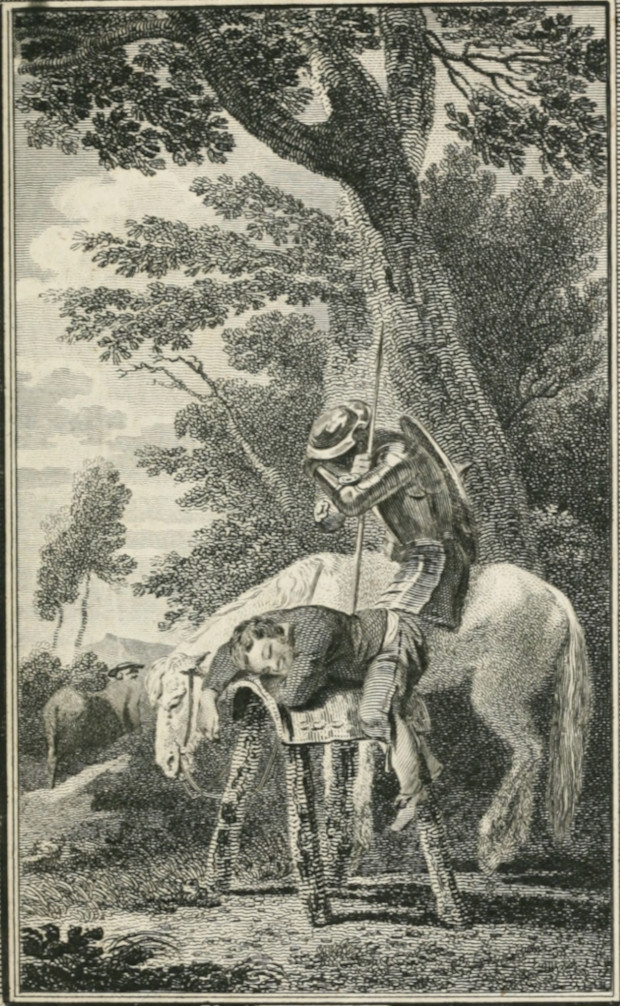
Plate XI: Sancho’s Ass Stolen As They Sleep.
The appearance of Aurora that rejoices the earth, had a quite contrary effect upon Sancho Panza; who, missing his Dapple, and searching for him in vain, began to utter the most woeful lamentation that ever was heard; and Don Quixote, waked by the noise, heard him exclaiming in this manner: ‘O son of my bowels! born in my house, the play fellow of my children, the delight of my spouse, the envy of my neighbours, and comforter of my cares! in short, the half of my sustenance: for with six and twenty maravedis, which thou hast daily earned, did I defray one half of my family-expence!’ Don Quixote hearing this complaint, and being informed of the cause, consoled Sancho with all the arguments in his power; and, begging him to have patience, promised to give him a bill of exchange, on sight of which he should receive three asses out of five, which the knight had left at home. Sancho being comforted with this declaration, dried up his tears, moderated his sighs, and returned a thousand thanks to Don Quixote for his generosity. As they sauntered among the rocks, the knight’s heart was rejoiced to see places so well adapted to those adventures he was in quest of; for they recalled to his remembrance those wonderful events which had happened to knights-errant among such rocks and solitudes: he went on, musing on these subjects, and indeed so wrapped up and engrossed by them, that he minded nothing else; while Sancho’s only care, now that he thought he travelled in safety, was to satisfy his appetite with what remained of the spoils of the clergy; he therefore jogged on leisurely after his master, sitting side-ways on his ass[74], and replenishing his own bags out of that which contained the provision; and while he was thus employed, would not have given a farthing for the best adventure that could happen.
Chancing, however, to lift up his eyes, he perceived his master had stopped, and was endeavouring, with the point of his lance to raise some bundle that lay upon the ground; he therefore hastened up to him, in order to lend his assistance, should it be found necessary; and arrived just as the knight had turned up with his lance, a pillion with a 121portmanteau fixed to it, all rotted and consumed by the weather; but so heavy, that Sancho was obliged to alight, in order to take them up. His master having ordered him to examine the contents of the portmanteau, he obeyed with great alacrity, and though it was shut with a chain and padlock, there were so many holes in it, that he soon reached the inside, where he found four shirts of fine holland, with other provision of linen, equally fashionable and clean, together with a pretty large heap of crowns of gold, wrapped up in a rag; which he no sooner perceived, than he cried in a rapture, ‘Blessed be Heaven for granting us one advantageous adventure!’ then continuing his search, he found a pocket-book richly garnished, which Don Quixote desired to have, bidding him keep the money for his own use. Sancho kissed his hand for the favour, and taking the linen out of the portmanteau, crammed it into the bag that held their provision.
The knight having considered the whole affair, ‘Sancho,’ said he, ‘I am of opinion, and I cannot possibly be mistaken, that some bewildered traveller, in his passage over these mountains, has been set upon by robbers, who having slain him, must have dragged his body to be buried in this unfrequented place.’—‘That cannot be the case,’ answered the squire; ‘for if they had been robbers, they would not have left the money behind them.’—‘Thou art in the right,’ said Don Quixote; ‘and I cannot guess nor conceive what the matter can have been. Let us see if there be any thing written in this pocket-book, by which we may trace out and come to the certainty of what we want to know.’ He opened it accordingly, and the first thing he found was the rough draught, though very legible, of a sonnet, which he read aloud for the benefit of Sancho, in these words.
I.
Love either cruel is or blind;
Or still unequal to the cause,
Is this distemper of the mind,
That with infernal torture gnaws.
II.
But Love’s a god, and cruelty
In heavenly breasts can never dwell:
Then say by what authority,
I’m doom’d to feel the pains of hell?
III.
Of all my sufferings and my woe,
Is Chloe then the fatal source?
Sure ill from good can never flow,
Nor so much beauty gild a curse.
IV.
With hopeless misery weigh’d down,
I’ll seek for quiet in the grave;
For when the malady’s unknown,
A miracle alone can save.
‘From such rhyme,’ said Sancho, ‘there is no information to be got, unless by that Clue we could come to the bottom of the affair[75].’—‘What clue dost thou mean?’ said the knight. ‘The Clue your worship mentioned just now in the sonnet,’ answered the squire. ‘I mentioned no clue,’ replied Don Quixote, ‘but Chloe, which is without doubt the name of the lady of whom the author of these verses complains; and really he must have been a very ingenious poet, or else I know very little of the art.’—‘Then your worship understands crambo?’ said the squire. ‘Better than you imagine,’ answered the knight, ‘as you will see when you carry from me a letter to my mistress Dulcinea del Toboso, written in verse from top to bottom; for thou must know, Sancho, that all, or the greatest part of the knights-errant who lived in former ages, were very much addicted to poetry and musick; these two qualities, or rather gifts of nature, being annexed to all errants in love; though the truth is, their couplets were rather sprightly than elegant.’—‘I wish your worship would read on,’ said Sancho; ‘perhaps you may find something more to our satisfaction.’ Accordingly the knight having turned over the leaf, ‘Here is prose,’ said he; ‘and seems to be a letter.’ Sancho asking if it was upon business, his master replied, ‘In the beginning there was nothing 122but love.’—‘Pray, Sir,’ cried Sancho, ‘read it aloud; for I am highly delighted with matters of love.’—‘With all my heart,’ answered Don Quixote; who raising his voice, in compliance with the squire’s request, read what follows.
‘Thy false promises, together with the certainty of my misfortune, have exiled me to a corner of the world, from whence thou wilt hear an account of my death, before this my complaint shall reach thine ears. Thou hast cast me off, ungrateful as thou art, in favour of one who, though he is richer, is not a more deserving lover than me: for if virtue were the wealth that is most esteemed, I should have no cause to envy the happiness of others, or to bewail my own mishap. What thy beauty had raised, thy behaviour has overthrown: by the first I mistook thee for an angel; by the last I discovered thee to be a woman. Mayest thou live in peace, fair authoress of my misfortunes; and Heaven grant that the deceit of thy husband may never be disclosed, that thou mayest never repent of what thou hast done, nor I enjoy the revenge I do not desire!’
Don Quixote having read this letter, observed that nothing else could be inferred either from it, or the verses, but that the author was some despairing lover. Then perusing the rest of the book, he found more verses and letters, some legible, and others not intelligible; but the substance of them all was composed of complaints, lamentations, suspicions, desires, disgusts, favours, and disdain, some of which were extolled, and others deplored. While Don Quixote examined the book, Sancho rummaged the portmanteau, without leaving a corner in that of the pillion which he did not search, pry into, and overhaul; no seam was left unripped, no lock of wool unpicked, that nothing might be lost through negligence and want of care; so much was his cupidity awakened, by finding the money, which amounted to more than a hundred crowns; and though he reaped no other fruit from his industry, he thought himself abundantly requited for his capers in the blanket, his vomit of the balsam, the benediction of the pack-staves, the fisty-cuffs of the carrier, the loss of his bags, the robbery of his great coat, with all the hunger, thirst, and fatigue he had undergone in the service of his worthy master, who had made him more than amends by his generous present of this windfall.
The knight of the rueful countenance was impatient to know the owner of the portmanteau; conjecturing by the sonnet, the letter, the gold, and the fine linen, that he must be some lover of quality, whom the disdain and barbarity of his mistress had driven to some desperate end: but, as in that uninhabited and rocky place, there was nobody who could give him the information he wanted, he resolved to penetrate still farther into the mountain, without taking any other road than what Rozinante should chuse for his own conveniency, still confident of meeting with some strange adventure among these briars and brambles.
As he went on, entertaining himself with these reflections, he perceived upon the top of a hill right before him, a man skipping from bush to bush, and rock to rock, with wonderful agility; his body seemed naked, his beard black and bushy, his hair long and matted, his feet unshod, his legs bare, and his thighs covered with breeches, which to all appearance were of crimson, but so ragged, that his skin appeared through many different holes, while his head was without any sort of covering. Notwithstanding the nimbleness with which he passed, all these minute circumstances were seen and remarked by the knight of the rueful countenance, who in vain attempted to follow him; those rough roads being quite unpassable by the feeble Rozinante, who was naturally phlegmatick and tender-footed. However, Don Quixote concluded that this must be the owner of the pillion and portmanteau, and determined within himself to find him out, although he should travel a whole year through the mountains for that very purpose. With this view he ordered Sancho to alight, and take a short cut over one part of the mountain, while he should go round the other; and by this expedient they might come up with the man who had so suddenly vanished from their sight. ‘That proposal I can by no means comply with,’ answered the squire; ‘for if I stir but an inch from your worship, fear instantly lays hold on 123me, and assaults me in a thousand horrid shapes and visions; and let this serve to apprize you, that henceforward, I will not budge a finger’s breadth from your presence.’—‘Be it so,’ said he of the rueful countenance; ‘and I am very glad that thou canst avail thyself of my courage, which shall never fail thee, even if thy soul should fail thy body; follow me, therefore, step by step, or at thy own leisure; and use thine eyes like two spy glasses; we will take a compass round this little mountain, and perhaps we may meet again with that man, who is certainly no other than the owner of what we found.’ To this observation Sancho replied, ‘Methinks we may save ourselves that trouble; for if, upon finding him, he should prove to be the owner of the money, I must of course make restitution; therefore we had better spare all this fruitless search; and keep it bona fide, until the true owner appear of himself, without all this intricate enquiry: and before that happens, perhaps I shall have spent the whole, and then I shall be discharged by law.’—‘In that notion thou art mistaken, Sancho,’ resumed the knight; ‘for as we have already good grounds to believe he is the owner, it is our duty to find him out, and restore what we have taken; and though we should not find him, the strong reason we have to believe that it belongs to him will make us equally guilty in detaining it, as we should be if it really did. Wherefore, friend Sancho, do not give thyself any uneasiness about the enquiry; because if we find him, I shall be freed from a great deal of anxiety.’ So saying, he put spurs to Rozinante, and Sancho followed him in his usual manner. Having surrounded part of the mountain, they found in a brook that watered the foot of it, a dead mule saddled and bridled, and half consumed by the dogs and crows; another circumstance which confirmed them in the opinion, that he who fled from them was master both of the mule and portmanteau.
While they were looking at this object, they heard a shepherd’s whistle, and presently on the left appeared a good number of goats, and behind them, on the top of the mountain, they descried the goatherd, who seemed to be a man in years. Don Quixote calling aloud, entreated him to come down; and he, in the same tone, asked what had brought them to that place, which was seldom trodden, except by the feet of goats, wolves, and other wild beasts that harboured thereabouts? Sancho bade him come down, and they would tell him what had brought them thither; upon which the goatherd descended, and coming up to Don Quixote, ‘I will wager,’ said he, ‘that you are looking at the hireling mule, which lies dead in that bottom, where in good sooth it hath lain full six months. Pray, have you met with its master?’—‘We have met with nothing,’ answered the knight, ‘but a pillion and portmanteau, which we found not far from hence.’—‘I have often seen the same things,’ replied the goatherd, ‘but would never touch nor go near them, being afraid of some misfortune, or of being questioned for theft; for the devil is very cunning, and raises blocks under our feet, over which we stumble, and very often fall, without knowing how or wherefore.’—‘That is the very thing I say,’ answered Sancho, ‘though I saw them also, I would not go within a stone’s throw of them; there I left them, and there they remain as they were; for I don’t chuse to steal a dog with a collar about his neck[76].’—‘Pr’ythee, honest friend,’ said Quixote, ‘dost thou know who the owner of these things is?’—‘All that I can say of the matter,’ answered the goatherd, ‘is, that it may be about six months, more or less, since there came to our hut, which is about three leagues from hence, a very genteel young man of a comely appearance, riding upon that very mule that now lies dead, with the same pillion and portmanteau which you say you found. He asked what part of the mountain was the most woody and concealed, and we told him, that it was this very spot where we now are; and it is so, for if you go half a league farther 124into the mountain, you will perhaps find it a very difficult matter to return: and I marvel much how you have got so far, for there is neither high-road nor by-path that leads to this place. But as I was saying, the young man hearing our reply, turned his mule, and rode towards the place to which we had directed him, leaving us all very much pleased with his appearance, though not a little surprized at his question, and the speed with which we saw him ride back, into the heart of the mountain: from that time we saw no more of him, till a few days after; when he sprung upon one of our shepherds on the road; and, without saying why or wherefore, beat and bruised him unmercifully; after which he went to the sumpter ass, and carrying off all the bread and cheese that was on his back, with surprizing nimbleness, ran back again to the thicket. As soon as we understood this particular, several of us goatherds went in search of him, through the most wild and unfrequented part of the mountain, for the space of two days, at the end of which we found him lying in the hollow of a large cork-tree. He came out to us in a very civil manner, with his cloaths all torn, and his face so tanned and disfigured by the sun, that we should scarce have known him, had not his cloaths, tattered as they were, which we had before taken particular notice of, assured us that he was the person we went in search of. He saluted us very courteously, and in a few words, though very well chosen, bade us not wonder at seeing him in that condition; for he was obliged in that manner to do penance, which had been enjoined him, on account of his manifold sins and transgressions. We earnestly begged to know who he was; but that he never could be prevailed upon to tell: we desired him also, whenever he should have occasion for food, without which he could not live, to tell us where we should find him, and we would bring it to him with great care and affection; or if that was not to his liking, we desired him to ask it civilly, without taking it by force. He thanked us kindly for our tenders of service, begged pardon for the assaults he had committed, and promised for the future, to ask it for God’s sake, without giving offence to any person whatsoever. With regard to the place of his habitation, he said, he had no other than that which chance presented every night when it grew dark; and concluded his discourse with such piteous lamentation, that our hearts must have been made of flint, if we could have heard it without shedding tears, considering the woeful change he had undergone since we saw him at first: for as I have already observed, he was a genteel, comely youth, and by his courteous and polite discourse, shewed himself to be a person of good birth and excellent breeding; and though we who heard him were only home-bred country people, the gentility of his carriage was easily perceived by our clownish ignorance. In the midst of this conversation that passed between him and us, he grew silent all of a sudden, and nailed, as it were, his eyes to the ground, for a considerable space of time, during which we remained in suspense and no small concern, to see the effect of this stupefaction; for by his staring at the ground for a good while, without moving his eye-lids, then shutting them close and biting his lips, and then drawing up the skin of his forehead, we could easily perceive that he was seized with some fit of madness; and he soon confirmed the truth of our opinion, for he sprung up with surprizing force from the ground on which he had thrown himself, and attacked the person who was next to him with such rage and resolution, that if we had not taken him off, he would have beaten and bit him to death; crying aloud all the time, “Ha, treacherous Fernando! now shalt thou pay for the injury thou hast done me. These hands shall tear out thy heart, in which all kinds of wickedness, particularly fraud and deceit, are harboured and dwell!” To these he added other expressions, tending to reproach that Fernando with treachery and baseness. When we had got our friend out of his clutches, with no small trouble, he went off without speaking another word, and ran at full speed among these shrubs and brambles, so as that it was impossible for us to follow him. From these things we conjectured that his madness came upon him by fits, and that 125some person of the name of Fernando must have done him some deadly wrong, which hath driven him to distraction. Indeed, this conjecture has been since confirmed by his different behaviour on divers occasions, when he hath met with our shepherds, from whom he hath sometimes begged part of their provision, and at other times hath taken it by force; for when the fit of lunacy is upon him, though they offer it of their own free will, he will not accept of it peaceably, without coming to blows; but when he is in his right senses, he begs it for God’s sake, in a very courteous and civil manner, and returns many thanks for the favour, accompanied with abundance of tears. And truly, gentlemen,’ added the goatherd, ‘I and four more country lads, two of them my own servants, and the other two friends of mine, yesterday resolved to go in search of him, and after having found him, to carry him, either by force or fair means, to the city of Almodavar, which is about eight leagues from hence, and there have him cured, if he be curable; or learn of him, when he is in his senses, who he is, or whether or not he has any relations to whom we may give an account of his misfortune. This, gentlemen, is all I can say, in answer to the questions you asked; and you may take it for granted, that the owner of the goods you found, is the very same person whom you saw skip about half-naked, with such agility:’ for Don Quixote had said that they had seen a man in that condition, leaping from rock to rock.
The knight was very much surprized at this information of the goatherd, which making him still more impatient to know who this unfortunate lunatick was, he determined with himself to put his former design in execution, and go in quest of him, through the whole mountain, without leaving a cave or corner unsearched until he should find him. But accident was more his friend on this occasion than he could either imagine or expect; for at that instant, the young man of himself appeared in the cleft of a rock hard by the place where they stood; and came towards them, muttering something to himself, which they could not have understood had he been near, much less as he was at some distance from them. His equipage was just as it has been described; but, as he approached, Don Quixote perceived that his buff doublet, though torn to rags, still retained the perfume: from whence he concluded, that the person who wore such dress, could not be a man of the lowest rank. When he came up, he saluted them very politely, though with a hoarse, mistuned voice; and the salutation was returned with no less courtesy by Don Quixote, who alighting from Rozinante, with genteel and graceful deportment, went and embraced the stranger, whom he strained within his arms a good while, as if he had been a very old acquaintance. The other, who might have been called the tatterdemalion of the distracted, as Don Quixote was stiled the knight of the rueful countenance, after having submitted to this embrace, stepped back, and laying his hands on the shoulders of the knight, stood looking attentively in his face, in order to recollect him; no less astonished, perhaps, at the figure, mien, and armour of Don Quixote, than this last was surprized at his forlorn appearance. At length, the first who broke silence after the embrace, was the ragged youth, who spoke what you may read in the following chapter.
CHAP. X. THE CONTINUATION OF THE ADVENTURE IN THE SIERRA MORENA.
The history relates, that Don Quixote listened with vast attention to the shabby knight of the mountain, who began the conversation thus: ‘Assuredly, Signior, though I have not the honour to know who you are, I thank you heartily for those expressions of kindness with which you treat me; and wish I were in such a situation as would enable me to repay this courteous reception with something more than mere good-will: but my hapless fortune affords me nothing to offer in return for the civilities that are shewn me, except a hearty inclination to make a more adequate satisfaction.’—‘My will and desire,’ answered Don Quixote, ‘to serve you is so strong, that I was determined not 126to quit these mountains until I had found you, and learned of yourself whether or not the grief you manifest in this strange course of life, could be alleviated by any kind of remedy, for which, had need required, I would have searched with all possible diligence; and had your misfortune been such as shut up all the avenues to advice and redress, I was resolved to join your lamentations, and bemoan your misery to the utmost of my power: for, in all misfortunes, the greatest consolation is a sympathizing friend; and if this my friendly intention deserves the least return of civility, I entreat you, Signior, by that courtesy which I see you so eminently possess, and moreover conjure you by that object, which of all others in this life you have most loved, or are most in love with, to tell me who you are, and inform me of the cause that brings you to live and die in this solitude, like the brute beasts among which you dwell, so different from that rank and situation to which your appearance and person declare you are entitled. And I swear by the order of chivalry which I have received, unworthy sinner that I am! and by the profession of a knight-errant, that if you comply with this my request, I will serve you with that earnestness which my duty obliges me to express; either in remedying your mishap, if it admits of remedy, or in condoling with you, as I have already promised.’ The knight of the wood, hearing him of the rueful countenance talk in this manner, could do nothing for some time but gaze, and stare, and survey him from head to foot; at length, having examined him thoroughly, he said, ‘If you have got any food, for God’s sake spare me a little; and after I shall have eaten it, I will do as you desire, in return for the civility you now shew me.’
Sancho immediately pulled from his bag, and the goatherd from his scrip, some victuals to appease the hunger of the tatterdemalion, who swallowed what they gave him like a frantick person, with such hurry, that he left not the interval of an instant between one mouthful and another, but seemed to devour rather than eat, without either speaking or being spoke to by the spectators. His repast being ended, he beckoned them to follow, and conducted them to a verdant spot of grass, at the turning of a rock, a little way from the place where they were; and sitting down on the green turf, they followed his example; not a word being spoke all the time, until the ragged knight, after having adjusted himself in his seat, began in this manner. ‘If you desire, gentlemen, that I should, in a few words, inform you of the immensity of my misfortunes, you must give me your promise that you will not by any question, or otherwise, interrupt the thread of my doleful story; for if you should, that instant I will break off the narration.’ This warning recalled to the knight’s memory the story recounted by his squire, which still remained unfinished, because he had not kept an exact account of the goats, as they passed the river. But, to return to the tattered knight: ‘I give you this precaution,’ added he, ‘because I would briefly pass over the detail of my misfortunes, the remembrance of which brings fresh addition to my woe; and the fewer questions you ask, the sooner shall I have finished the relation; although, in order to satisfy your curiosity to the full, I will not fail to mention every material circumstance.’ Don Quixote promised, in behalf of himself and the company, to avoid all manner of interruption; and the stranger, thus assured, began in these words:
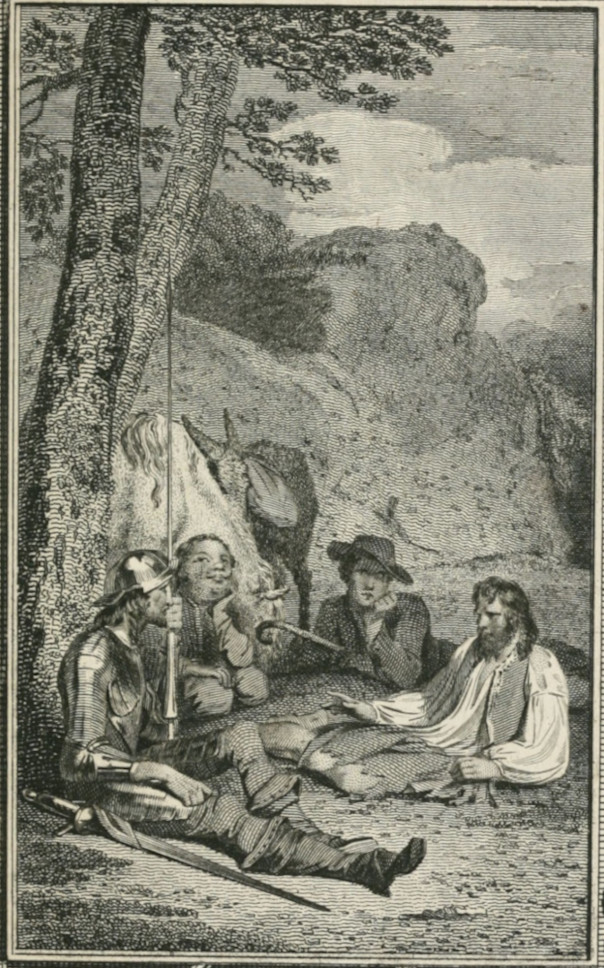
Plate XIV: The Tattered Gentleman Tells His Tale.
‘My name is Cardenio, the place of my nativity one of the best cities in this province of Andalusia, my family noble, my parents rich, and my misfortunes so great, that no doubt they have been lamented by them, and even felt through my whole kindred, though all their wealth would not alleviate my woe; for the goods of fortune are but of little service against those ills inflicted by the hand of Heaven. In the same country lived, shall I call her, a paradise, which love had adorned with all the charms I could desire to possess; such was the beauty of Lucinda, a young lady as well-born and rich as I, though more fortunate and endowed with less constancy than what was due to my honourable intentions. This Lucinda did I admire, love, and adore, even from my most tender years; and she made me all the returns of love and inclination that I could expect from her infant age. 127Our parents were not ignorant of our mutual affection, which gave them no offence, because they foresaw that if it should increase with our years, it could have no other issue than marriage; an union which the equality of our age and fortune seemed to point out. Meanwhile, our passion growing up with our age, Lucinda’s father thought himself obliged to forbid me his house, imitating in that particular, the parents of Thisbe, whom the poets have celebrated so much. This prohibition added flame to flame, and wish to wish, for though our tongues were restrained, they could not silence our pens, which commonly express the sentiments of the heart with more liberty, because the presence of the beloved object often confounds the most determined intention, and puts to silence the most undaunted tongue.
‘Good Heaven! what letters did I write! what chaste endearing answers did I receive! what songs did I compose, inspired by love that displayed the soul unmasked, inflamed each soft desire, regaled the fancy, and indulged the wish! in fine, my patience being exhausted, and my heart almost consumed with the desire of seeing her, I resolved to execute the scheme which seemed most favourable for my love and pretensions; and this I put in practice, by demanding her in marriage of her father, who thanked me for the honour I intended him, by this proposal of marrying into his family; but said, as my own father was alive, it was properly his business to make the demand; for, unless his consent and inclination were obtained, Lucinda was not a person either to be given or taken in marriage by stealth. I thanked him in my turn, for his politeness; and thinking there was a great deal of reason in what he said, assured myself that my father would readily agree to the proposal whenever I should make it. I therefore flew instantly to disclose my sentiments to him on that subject; and entering the closet where he was, found him reading a letter, which, before I could speak a syllable, he put into my hands saying, “By this letter, Cardenio, you will see how much Duke Ricardo is inclined to do you service.” This Duke Ricardo, as you must know, gentlemen, is a grandee of Spain, whose estate lies in the best part of this province. I took and read this letter, which was so extremely kind, that I myself should have blamed my father, had he refused to comply with what he requested in it: this was to send me immediately to this house, he being desirous that I should live as the companion, not the servant, of the eldest son; and he would take care of my fortune in such a manner as should manifest the esteem he had for me. Having read the letter, I was struck dumb at knowing the contents; especially when I heard my father pronounce, “Two days hence, Cardenio, you shall set out, according to the pleasure of the duke; and you ought to thank God for having opened an avenue, through which you may arrive at that fortune I know you deserve.” To this declaration he added other services, as became a prudent father; and I, the night before I departed, finding means to speak with Lucinda, told her what had happened; nay, I even imparted it to her father, entreating him to wait a few days, without disposing of her to any other, until I should know in what manner Ricardo wanted to employ me. He gave me his promise accordingly, and she confirmed it by a thousand vows and anxious sighs.
‘I at length arrived at the seat of Duke Ricardo, by whom I was so well received and kindly entertained, that Envy presently began to do her office, possessing the old servants with the opinion, that every expression of favour I received from the duke was prejudicial to their interest. But he who was most rejoiced at my residing there, was the duke’s second son, Fernando, a gay, genteel, liberal, and amorous youth, who in a short time was pleased to honour me with such intimacy of friendship as became the subject of every body’s discourse; and though the eldest brother loved and favoured me also, he did not carry his favour and affection to such a pitch. Now, as all secrets are communicated between friends, and the confidence in which I lived with Fernando was soon changed into friendship, he imparted to me his most secret thoughts, and among other things, a love affair that gave him a good deal of disquiet. In short, he had an inclination for a country-maid, who was his father’s 128vassal; her parents were very rich, and she herself so beautiful, reserved, modest and discreet, that nobody who knew her could determine in which of these qualifications she most excelled. These accomplishments of this fair maiden inflamed the desires of Don Fernando to such a pitch, that he resolved, as the easiest conquest over her virtue, to promise he would marry her; for he found it impossible to gratify his wish in any other way. I, prompted and bound by my friendship, endeavoured to dissuade and divert him from his purpose, by the strongest arguments and most lively examples I could produce; but finding them all ineffectual, I resolved to communicate the whole affair to his father Duke Ricardo.
‘Don Fernando, having abundance of cunning and discernment, suspected my intention; and was afraid, that the obligation he saw I was under, as a faithful servant, would not allow me to conceal an affair so prejudicial to the honour of the duke my master; he therefore, in order to divert and deceive me, observed that he could find no better remedy to remove the beauty that enslaved him from his remembrance, than that of absence for a few months; and therefore desired that we should go to my father’s house, upon pretence, as he would tell the duke, of seeing and purchasing some fine horses in our town, which produces the best in the world. Scarce had he uttered this proposal, when prompted by my love, exclusive of his prudent intention, I approved of it, as one of the best concerted schemes that could be imagined; and was rejoiced at meeting with such a fair conjuncture and occasion of returning to my dear Lucinda. Induced by this motive and desire, I applauded his pretence, and enforced his proposal, advising him to execute his plan with all speed; for absence would certainly do its office, in spite of the most established inclination. At that very time, as I afterwards understood, he had enjoyed the country-maid, under the title of her husband, and waited for an opportunity of owning it with safety to himself, being afraid of the duke’s resentment, in case he should discover his folly. It happened afterwards, that as love in young people is, for the most part, nothing but appetite, whose only aim is pleasure, and this being enjoyed, what seemed love vanishes, because it cannot exceed the bounds of nature; whereas real love is bounded by no such limits: I say, as soon as Don Fernando enjoyed the country girl, his desires were appeased, and his raptures abated; and if at first he pretended to seek a cure for them in absence, he now earnestly desired to be absent, that he might avoid any farther gratification.
‘The duke having given him leave, and ordered me to attend him, we arrived at our habitation, where he was received by my father in a manner suitable to his rank and family. I went instantly to visit Lucinda, whose presence in a moment rekindled all my desires, which indeed were neither dead nor decayed within me: and, to my infinite misfortune, I made Don Fernando acquainted with my love, because I thought, by the laws of that intimate friendship with which he honoured me, I ought to conceal nothing from him. I therefore praised the beauty, grace, and discretion of Lucinda, in such a manner, as excited his curiosity to see such an accomplished young lady. Prompted by my evil genius, I gratified his desire, shewing her to him one night by the light of a taper at the window from which I used to converse with her. At sight of her he absolutely forgot all the beauties he had formerly seen; he was struck dumb with wonder; he seemed to lose all sense, became absent and pensive; and in short, enamoured of her to that degree, which you will perceive in the course of my unhappy story: and the more to inflame his desire, which he concealed from me, and disclosed to Heaven alone, he happened one day to find a letter which she had written, desiring me to ask her in marriage of her father, so prudent, modest, and tender, that upon perusing it, he said, “In Lucinda alone are concentered all the charms of beauty and understanding, which are divided among the rest of her sex.” True it is, and I will now confess it, and although I knew how justly Fernando applauded Lucinda, I was vexed at hearing these praises proceed from his mouth, and began to dread and suspect his inclination; 129for he was eternally talking of her, and always turned the discourse upon her, even when he was obliged to bring her in by the head and shoulders; a circumstance that waked a sort of jealousy within me; not that I imagined ought could alter the faith and affection of Lucinda; yet, notwithstanding, my destiny made me dread the very thing that confidence insured. Don Fernando always contrived means to read the letters I sent to Lucinda, together with her answers, on pretence of being highly pleased with the good sense they contained; and it once happened, that she having desired me to send her a book of knight-errantry, in which she took great delight, called Amadis de Gaul——’
Don Quixote no sooner heard him mention this book, than he said, ‘Had you told me in the beginning of your story, that your mistress Lucinda was an admirer of books of chivalry, you would have had no occasion to use any other argument to convince me of her sublime understanding; which I should not have deemed quite so extraordinary as you have represented it, had she wanted relish for that sort of reading: wherefore you need not spend any more words with me, in extolling her beauty, virtue, and good sense; for, upon the knowledge of her taste only, I pronounce her to be the most beautiful and discreet lady in the universe. I wish, however, that you had sent along with Amadis de Gaul, the worthy Don Rugel of Greece; for I know your mistress Lucinda would have been greatly pleased with Darayra and Garaya, together with the judicious sayings of the shepherd Darinel, and those admirable verses of his eclogues, sung and represented by him with such grace, spirit, and discretion; but the time will come when that omission may be rectified; indeed, the fault may be repaired as soon as you shall please to accompany me to the place of my habitation, where I can supply you with more than three hundred books, which are the feast of my soul, and entertainment of my life; though now I recollect, not one of them remains in my possession; thanks to the malice of wicked and envious inchanters. But I hope you will be so good as to forgive me for having contradicted my promise of not interrupting your story; for when the subject turns upon chivalry or knights-errant, I can no more forbear interposing, than the rays of the sun can cease to warm, or those of the moon to wet: but I ask pardon; pray proceed with your story; for that is most to the purpose at present.’
While Don Quixote was talking in this manner, Cardenio hung his head, and fell into a profound reverie; and though the knight repeated his request, would neither lift up his head, nor answer one word. At length, after a long pause, looking up, ‘You cannot,’ said he, ‘beat it out of my thoughts; nor is there any person upon earth, who can persuade me to the contrary; and he must be a blockhead, who imagines or believes otherwise, than that the villain Master Elisabat carried on a criminal correspondence with Queen Madasima.’—‘By Heaven, ’tis false,’ cried Don Quixote, with great indignation and impetuosity, as usual; ‘that report is the effect of malice, or rather mere wantonness. Queen Madasima was a most royal dame, and it is not to be presumed, that a princess of her rank would confer favours upon a mere quack doctor. Whosoever thinks otherwise, lyes like a very great scoundrel; and I will prove him such either on horseback or a foot, armed or disarmed, by night or by day, as will most suit his inclination.’ Cardenio stood all the while looking attentively at him, and being by this time seized with the paroxism of his madness, could not proceed with his story; neither, if he had proceeded, would Don Quixote have listened to it, for he was offended at what he had heard to the prejudice of Queen Madasima[77], whose reputation interested him as much as if she had been actually his own mistress: such wonderful impression had those profane books made on his imagination!
I say, then, Cardenio being by this time under the influence of his distraction, and hearing himself called lyar and scoundrel, with other terms of reproach, could not relish the joke; but, 130snatching up a large pebble that lay near him, aimed it so successfully at Don Quixote’s breast, that he fell fairly on his back with the blow. Sancho Panza, seeing his master treated in this manner, attacked the madman with his clenched fist; but the lunatick received him with such a blow, as knocked him down to the ground at once, and then getting upon him, mauled his carcase to his heart’s content; while the goatherd, who attempted to defend him, met with the same fate. Having thus mastered and pummelled them all round, he left off, and with great composure retreated to the thickets from whence he came. Sancho then arose; and, enraged to find himself handled in this manner for nothing, ran to take vengeance on the goatherd, saying that he was to blame for the whole, because he had not informed him, that the man had intervals of madness; which had they known, they might have guarded against them. The goatherd affirmed, that he had apprized them of what might happen; and if they had not heard him, it was no fault of his. The squire replied; the goatherd retorted; and, in conclusion, they went by the ears together, and pulled each other’s beards with such fury, that there would not have been a single hair left on either chin, had not Don Quixote interposed. Sancho, grappling stoutly with his adversary, cried, ‘Give me leave, Sir Knight of the Rueful Countenance; this is no armed knight, but a plebeian like myself, of whom I can securely take satisfaction for the injury he has done me, by fighting with him hand to hand, like a man of honour.’—‘True,’ said Don Quixote; ‘but the cause of what hath happened, cannot be justly imputed to him.’ Peace accordingly ensued, and the knight asked the goatherd again, if there was a possibility of finding Cardenio; for he was extremely desirous of hearing the conclusion of his story. The goatherd repeated what he had said before, that he did not certainly know whereabouts he resided; but, if they should stay long in these parts, they could not fail of finding him either mad or sober.
CHAP. XI. OF THE STRANGE ADVENTURES THAT HAPPENED TO THE VALIANT KNIGHT OF LA MANCHA IN THE SIERRA MORENA, WHERE HE DID PENANCE, IN IMITATION OF BELTENEBROS.
Don Quixote, having taken leave of the goatherd, and mounted Rozinante again, commanded Sancho to follow him; and the squire, bestriding his ass, obeyed with great reluctance. As they advanced at leisure, into the most rocky part of the mountain, Sancho longed to death for an opportunity of talking, and waited impatiently till his master should begin, that he might not transgress his orders; but, being utterly unable to keep silence any longer, ‘Sir Don Quixote,’ said he, ‘be pleased to give me your blessing, and grant me leave to return immediately to my wife and children, with whom, at least, I can talk and prattle my fill; for in commanding me to travel with you, through these desarts, night and day, without opening my lips when I am disposed to speak, your worship buries me alive; if it were the will of Heaven, that beasts spoke as they did in the days of Hyssop, I should be the less uneasy, because I would converse with my ass at pleasure; and that would be some comfort to me in my misfortunes; but it is a very hard case, and what I cannot bear with patience, to travel in search of adventures all my life, and find nought but rib-roastings, blankettings, robberies, and fisty-cuffs; and, after all, be obliged to sew up our mouths, without daring to bring up what lies upon our stomachs, more than if we were dumb.’
‘I understand thee, Sancho,’ replied the knight; ‘thou art impatient until I take off the interdiction I have laid upon thy tongue. I take it off, then; say what you please, on condition that this repeal shall last no longer than our stay in this mountain.’—‘Be it so,’ said Sancho; ‘to-day I will speak, to-morrow God’s will be done; and the first use I make of this safe conduct, is to ask why your worship was in such a passion about that Queen Magimasa, or how d’ye call her; or of what signification was it to you, whether that same Abat was her sweetheart or not? Had your worship overlooked that circumstance, that you had no concern in, I firmly believe the madman would, have gone 131on with his story, and you would have saved yourself the pebble-shot, with more than half a dozen kicks and cuffs.’
‘In faith, Sancho,’ answered Don Quixote, ‘If thou knewest, as I do, what an honourable and princely lady that Queen Madasima was, thou wouldst say, I had great patience in forbearing to demolish the mouth from whence such blasphemy proceeded; for sure, ’tis no less to say, or even think, that a queen should take a surgeon to her bed. The truth of the story is, that Master Elisabat, whom the lunatick mentioned, was a man of prudence and discernment, and served the queen in quality of tutor and physician; but to suppose that there was any indecent familiarity between them, is a piece of folly that deserves to be severely chastised: and to convince thee that Cardenio knew not what he said, thou mayest remember he was deprived of his senses, when he took notice of that circumstance.’—‘This I’ll venture to say,’ replied the squire, ‘that the words of a madman are not to be minded; for, if fortune had not stood your worship’s friend, and directed to your breast the pebble that was aimed at your head, we should have been in a fine condition, for your having quarrelled about that lady, whom Heaven confound! you may depend upon it, Cardenio would have been acquitted on account of his madness.’
‘Every knight-errant,’ said Don Quixote, ‘is obliged to quarrel with those who are out of their senses, as well as those who are in them, if they asperse the honour of women, whatsoever they might be. How much more, then, in behalf of princesses of such high quality and accomplishments as adorned Queen Madasima, for whom I have a particular affection, on account of her admirable qualifications; for, over and above her beauty, she had a great share of prudence and resignation in her calamities, which were manifold: and the advice and company of Master Elisabat were of great service in encouraging her to bear her afflictions with patience and equanimity. From hence, the ignorant and malicious vulgar took occasion to say and suppose, that she admitted of his caresses; but they lye. I say again, all those who either say or think so, lye in their throats, and I will tell them so two hundred times over.’—‘As for my own part,’ said Sancho, ‘I neither say nor think any such thing; those that do may dine upon it: if they were too familiar, by this time they have answered for it to God. I prune my own vine, and know nothing about thine. I never meddle with other people’s concerns. He that buys and denies, his own purse belyes, as the saying is. Bare I was born, and bare I remain; and if I lose nothing, as little I gain. If he did lie with her, that is no matter of mine. Many people hunt the hare without ever finding the scut; for, Till you hedge in the sky, the starlings will fly. And evil tongues will not refrain from God himself.’
‘Good Heaven,’ cried Don Quixote, ‘what fooleries art thou stringing together, Sancho? Pray, what relation have these old saws to the subject of our conversation? I charge thee to hold thy peace, and henceforth entertain thyself with spurring up thy ass, and leave off talking of things which do not concern thee: or let thy whole five senses be convinced, that every thing I have done, am doing, or will do, is highly reasonable, and in exact conformity with the laws of chivalry, which I understand better than any knight that ever professed the order.’—‘Yes Sir,’ replied Sancho, ‘to be sure it is an excellent law of chivalry, to stroll about bewildered in these mountains, where there is neither high road nor bye path, in search of a madman, who, after we have found him, will perhaps take it in his head to finish what he left undone; not of his story, but of your worship’s pate and my ribs, which he may chance to break in a thousand shivers.’
‘I say again, Sancho,’ resumed the knight, ‘hold thy peace; for I would have thee know, that I am not detained in this place, so much by the desire of finding the lunatick, as of performing in it an exploit by which I shall acquire everlasting renown throughout the whole known world; and put the stamp of perfection upon the wonderful efforts of knight-errantry?’—‘And will this exploit be attended with much danger?’ said Sancho. 132‘No,’ answered he of the rueful countenance, ‘though the dice may run so as to produce bad instead of good fortune; but the whole will depend upon thy diligence.’—‘Upon my diligence!’ cried the squire. ‘Without doubt,’ answered his master; ‘for, if thou wilt return speedily, from the place to which thou must be sent, my affliction will soon be at an end, and my glory will speedily begin: and, that I may no longer keep thee in suspence about the meaning of my words, know, Sancho, that the celebrated Amadis de Gaul was one of the most perfect knights-errant; one of them, said I? he alone was the only, single, chief, and superior of all his cotemporaries. Contempt and shame upon Bellianis, and all those who say he equalled him in any one particular; for, by this light, they are all egregiously deceived! I say, moreover, when a painter desires to become famous in his art, he endeavours to imitate the originals painted by the most noted artists; and the same maxim holds in every other science and exercise that adorns a commonwealth: therefore, he who wants to attain the virtues of prudence and equanimity, must endeavour to imitate the character of Ulysses, in whose person and sufferings Homer has drawn an excellent picture of wisdom and patience, as Virgil, in the person of Æneas, represents the piety of an affectionate son, and the sagacity of a wise and valiant general; not that they are described and set forth exactly as they were, but as they ought to have been, as examples of virtue to posterity. In the same manner, Amadis shone like the north-star, the Lucifer and sun of all valiant and amorous knights; and therefore must be imitated as a pattern, by all those who serve under the banners of love and chivalry. Now, this being the case, friend Sancho, I find that the knight-errant who approaches the nearest to this great original, will bid fairest for attaining the perfection of chivalry: and one of the circumstances in which that knight gave the highest proofs of his worth, prudence, valour, patience, constancy, and love, was his retiring to the poor rock, when he was in disgrace with his mistress Oriana, there to do penance under the feigned name Beltenebros[78]; an appellation certainly very significant and proper to the way of life he had voluntarily chosen. As it is therefore more easy for me to imitate him in this than in cleaving giants, beheading serpents, slaying dragons, overthrowing armies, scattering navies, and dissolving inchantments; and as this solitude is so well adapted to such designs, I am resolved to seize occasion by the forelock, which she now so complaisantly presents.’
‘In reality,’ said Sancho, ‘what is your worship resolved to do in this remote place?’—‘Have I not already told thee,’ replied the knight, ‘that I am determined to imitate Amadis, in acting the desperado, the lunatick, the madman: to copy also after the valiant Don Roldan, when he discovered, in a fountain, certain marks by which he was convinced that Angelica the fair had committed uncleanness with Medoro. A piece of information attended with such grief and anxiety, that he ran mad, tore up the trees by the root, sullied the waters of the transparent springs, slew shepherds, destroyed flocks, set fire to cottages, demolished houses, dragged mares along the ground, and performed a thousand other insolent feats worthy to be inserted in Fame’s eternal record; and because I do not propose to imitate Roldan, or Orlando, or Rotolando, for he went by all these names, literally in all the extravagancies he thought, said, and did, I will copy his outlines as well as I can, in the most essential parts of his character; nay, perhaps, I may content myself with the sole imitation of Amadis, who, by his tears and sighs alone, acquired as much fame as the other with all the mischief he did.’—‘If I apprehend the matter aright,’ said Sancho, ‘the knights who played such mad pranks were provoked, and had some reason to act these fooleries and penance: but what cause hath your worship to turn madman? With what lady are you in disgrace? or by what 133signs are you given to understand that the Lady Dulcinea del Toboso has been playing the rogue either with Moor or Christian!’—‘This is the point,’ answered Don Quixote, ‘and refinement of my design; a knight who turns madman, because he cannot help it, can claim no merit from his misfortune; but the great matter is to run distracted without cause, and give my lady reason to conceive what I could do were I moistened, when I can do so much being dry. More especially, as I have sufficient cause in the long absence to which I am doomed by my ever-darling mistress Dulcinea del Toboso; for, according to the words of the shepherd Matias Ambrosio, which thou mayest have heard,
“In absence of my charming fair,
“I suffer all those ills I fear.”
‘Wherefore, friend Sancho, you need not throw away your time unprofitably, in advising me to refrain from an imitation at once so admirable, rare, and happy: mad I am, and mad I shall be until thou returnest with the answer of a letter which I propose to send by thee to my Lady Dulcinea; and if it be such as I am entitled to by my love and fidelity, my distraction and penance will end; but, should it be otherwise, I shall run mad in earnest, and consequently be insensible of my misfortune: wherefore, let her answer be as it may, it will extricate me from the doubts and affliction in which thou leaved me; because, if it be favourable, I shall enjoy it in my right senses; and if it be unfavourable, my frenzy will not feel it.
‘But tell me, Sancho, hast thou taken care of Mambrino’s helmet, which I saw thee take up, after that ungrateful vagabond endeavoured in vain to break it in pieces; a circumstance that proves the excellency of its temper?’ To this exclamation, Sancho replied, ‘’Fore God! Sir Knight of the Rueful Countenance, I cannot suffer, nor bear with patience, some things which your worship says; for they make me imagine, that all you have mentioned about chivalry, and acquiring kingdoms and empires, and giving away islands, with other favours and presents, according to the practice of knights-errant, is nothing but puffs of falshood, and the mere effect of piction or fiction, or what do you call it: for who that hears your worship call a barber’s bason the helmet of Mambrino, and sees you continue in that error so many days, but will believe, that he who affirms such nonsense must be very much crazed in his understanding? The bason, which is all bruised and battered, I have put up in my bag, in order to be mended at home, and used for the service of my own beard, if ever, by the grace of God, I come to see my wife and family.’—‘Hark ye, Sancho,’ said Don Quixote, ‘by the same oath you swore, I swear again, that thou hast the most slender understanding that any squire in this world does or ever did possess! Is it possible, that after all thy travelling in my company, thou art not convinced that every thing belonging to knights-errant, appears chimera, folly, and distraction, being metamorphosed into the reverse of what it is, by the power of a tribe of inchanters who attend us, changing, converting, and restoring each particular, according to their pleasure, and the inclination they have to favour or annoy us: for which reason, what seems a barber’s bason to thee, I can easily discern to be the helmet of Mambrino, and perhaps to a third, it will assume a quite different appearance; and I cannot but admire the providence of the sage who is my friend, in making that which is really and truly Mambrino’s helmet, appear a bason to the rest of mankind, because it is of such inestimable value, that if it was known, the whole world would combine to ravish it from me; but as it appears to them no more than a barber’s bason, they never attempt to obtain it. This was plainly the case with the villain, who, having endeavoured to break it in pieces, left it on the ground, when he went off; whereas, had he known what it was, in good faith he would not have quitted it so easily. Keep it therefore with care, my friend, for at present there is no occasion for it; on the contrary, I shall strip off all my armour, and remain naked as I was 134born, in case I be inclined to imitate the penance of Roldan, rather than that of Amadis.’
Conversing in this manner, they arrived at the foot of a high mountain that stood alone, as if it had been cut out from the rest that surrounded it. A gentle rill murmured by the skirts of it, winding along a meadow, so green and fertile, that it ravished the spectator’s eye; while a number of forest trees that grew around, together with some delicious herbs and flowers, conspired to make the place inchanting. This was the scene in which the knight of the rueful countenance chose to do penance; and therefore he no sooner perceived it, than he began to exclaim aloud, as if he had actually lost his senses, ‘This is the spot, ye heavens! which I chuse and appoint my residence, while I bewail that misfortune to which you yourselves have reduced me. This is the place where the tears from these eyes will increase the waters of that little brook; and where my profound and uninterrupted sighs will incessantly move the leaves of these mountain-oaks, in witness and testimony of the pangs which my tormented heart endures. O ye rural deities, whosoever ye are, who take up your mansion in this uninhabited place, give ear to the complaints of an unhappy lover, whom a tedious absence and imaginary doubts have brought to lament among these craggy hills, and bemoan the cruel disposition of that ungrateful fair, who is the end and perfection of all human beauty? O ye nymphs and dryads, who were wont to inhabit the hills and groves, (so may no nimble and lascivious satyrs, by whom you are beloved, though loved in vain, disturb your sweet repose) help me to bewail my mishap: or at least disdain not to hear my moan!—O Dulcinea del Toboso! light of my darkness! glory of my affliction! north-star of my inclinations! and planet of my fortune! as Heaven shall pour upon you the blessings which you ask; consider the place and condition to which your absence hath exiled me, and put such a period to my woe, as my fidelity shall seem to deserve! O ye solitary trees, who henceforth are to bear me company in this retreat, convince me, by the gentle waving of your boughs, that my presence gives you no disgust.—And thou, my squire, the agreeable companion of my good and evil fortune, faithfully retain in thy remembrance what thou shalt see me do, that thou mayest recount and rehearse every circumstance to the lovely cause of all my distraction!’ So saying, he alighted; and, taking off the bridle and saddle from Rozinante, gave him a slap on the buttocks, pronouncing these words: ‘He who is a slave himself, bestows freedom upon thee, O steed, as excellent in thy qualities as unlucky in thy fate! go wheresoever thou wilt; thou bearest engraven on thy forehead, that thou wast never equalled in swiftness, either by Astolpho’s Hypogriff, or the renowned Frontino that cost Bradamante so dear.’
Sancho, hearing this apostrophe, ‘My blessing,’ cried he, ‘be upon him whose industry now saves us the trouble of taking the halter from the head of Dapple[79], who, in good faith, should not want slaps on the buttocks, nor abundance of fine things said in his praise; but, if he was here, I would not consent to his being turned loose, there being no reason for so doing; for he was never acquainted with love and despair, no more than I, who was his master, while it pleased God I should be so: and truly, Sir Knight of the Rueful Countenance, if this departure of mine, and distraction of your worship, are really to take place, you had better saddle Rozinante again, to supply the want of Dapple; by which means a great deal of time will be saved in my going and coming; whereas, if I make the journey on foot, I know not when it will be performed; for, in short, I am a very sorry walker.’—‘I say, be it so, then, Sancho,’ answered Don Quixote: ‘I approve of thy proposal; and assure thee, that thou shalt set out in three days, during which I would have thee take notice of what I shall do for her sake, that thou mayest be able to give her a full account of my behaviour.’—‘What more can I see,’ said Sancho, ‘than I have seen already?’—‘You are pretty 135perfect in your story,’ answered the knight; ‘but, as yet, I have not torn my cloaths, scattered my armour, and dashed my head against the rocks, nor performed many other things of this sort, which thou wilt behold with admiration.’—‘For the love of God, Sir!’ cried Sancho, ‘take care how you dash your head against the rocks; for you may chance to meet with such a one as will, at the first push, put the finishing stroke to this whole scheme of penance; and I should think, that as knocks of the head are absolutely necessary to compleat the work, your worship might content yourself, seeing the whole affair is a sham, a counterfeit, and a joke; I say, your worship might content yourself with ramming your skull against water, or some soft thing, like a cotton bag; and leave it to my care to tell my lady, that your worship went to loggerheads with the point of a rock a thousand times harder than adamant.’—‘Friend Sancho,’ replied the knight, ‘I am obliged to thee, for thy kind intention; but, thou must know, that what I do is not a sham, but a very serious matter; for, to behave otherwise, were to transgress the orders of chivalry, which forbid us to lye, under pain of being degraded; and you know, that to substitute one thing instead of another, is downright telling a lye: wherefore, my knocks on the head must be real, hard, and effectual, and not sophisticated or imaginary; and it will be necessary to leave me some lint for my wounds, since it was the will of fate that we should lose the balsam.’
‘It was a much greater misfortune,’ said the squire, ‘to lose the ass, and with him the lint and all; but I beseech your worship, not to talk of that accursed drench, the sole mention of which not only turns my stomach, but even my very soul; and I beseech you, moreover, to suppose we have passed those three days, which you have appointed for shewing me your mad pranks; for I take them all for granted, and will tell wonders of them to my lady. Write the letter, therefore, and dispatch me forthwith: because I am impatient till I return and deliver your worship from that purgatory in which I leave you.’—‘Purgatory! call you it, Sancho?’ replied Don Quixote: ‘it rather deserves the name of hell, or something worse, if worse can be.’—‘I have heard,’ said the squire, ‘that from hell there is no retention.’—‘I know not,’ replied the knight, ‘what you mean by retention.’—‘Retention,’ answered Sancho, ‘signifies, that whosoever goeth to hell, neither will nor can come back again. The contrary of which shall happen to your worship, or my feet will misgive me, provided I carry spurs to quicken Rozinante: and set me once face to face before my Lady Dulcinea, at Toboso, I will tell her such stories of the folly and madness, for they are both the same thing, which your worship has committed, and will then be committing, that though I should find her harder than a cork-tree, I will make her as pliant as a glove; and, with her sweet and honied answer, return through the air, like a witch, and deliver your worship from this purgatory, that appears like hell, though it be not really so, because there are some hopes of getting out of it; whereas those who are actually in hell can have no such expectation; and I dare say, your worship will not advance any thing to the contrary.’
‘That is all very true,’ said he of the rueful countenance; ‘but how shall we make shift to write this letter?’—‘Aye, and the bill for the colts?’ added Sancho. ‘That shall be inserted in the letter,’ answered his master; ‘and I think, as there is no paper to be had in this place, the best thing we can do, will be to write in the manner of the ancients, on the leaf of a tree, or on waxen tables; though, I believe, those will be as difficult to be found as the paper. But, now I remember what will do well, and excellently well, for our purpose: I will write it in the pocket-book which belonged to Cardenio, and thou shalt take care to have it fairly transcribed in the first place where thou canst find a school-master or a parish-clerk to copy it. But, by no means employ a scrivener, who way write it in such an unintelligible court-hand, that Satan himself could not understand it.’—‘But what is to be done about the signing of it?’ said Sancho. ‘Love-letters are never signed,’ replied Don 136Quixote. ‘True,’ resumed the squire; ‘but all bills must be subscribed: and if this of yours were to be copied, they would say the subscription was counterfeit, and I might go whistle for my colts.’—‘The bill shall be subscribed with my own hand in the pocket-book; which my niece shall no sooner see, than she will comply with the order, without any farther objection: and with regard to the letter, instead of my subscription, thou shalt cause to be inserted, “Yours, till death; the Knight of the Rueful Countenance.” And though it be written by another hand, it is of small importance, because, now I remember, Dulcinea can neither read nor write, nor ever set eyes on any writing or letter of mine: for our mutual love has been altogether platonick, without extending farther than a modest glance; and even that so seldom, that I can safely swear, in twelve years, during which I have loved her more than the light of these eyes, which will one day be closed in dust, I have not seen her more than four times, and even in these four times, perhaps, she hath not perceived me looking at her more than once. Such is the restraint and reserve in which her father Lorenzo Corchuelo, and her mother Aldonza Nogales, have brought her up!’
‘Ah, ha!’ cried Sancho, ‘is the daughter of Lorenzo Corchuelo, whose other name is Aldonza Lorenza, the same with the Lady Dulcinea?’—‘Yes,’ answered the knight; ‘and she deserves to be lady of the whole universe.’—‘I know her perfectly well,’ said Sancho; ‘and this will venture to say in her behalf, that she will pitch the bar as well as e’er a lusty young fellow in the village. Bless the sender! she is a strapper, tall, and hale wind and limb; and can lift out of the mire any squire or knight errant, who shall chuse her for his sweetheart. Ah! the whore’s chick! what a pair of lungs and voice has she got! I heard her one day halloo from the belfray to some young fellows of her acquaintance, who were at work in a corn-field of her father’s; and, though it was at the distance of half a league, they heard her as plain as if they had been right under the steeple; and what is better still, she is not at all coy, but behaves herself civilly; and jokes and romps, and plays the rogue with any body. Now, Sir Knight of the Rueful Countenance, I say that your worship not only has cause to run mad for her, but even to despair and hang yourself, and I am sure nobody that heard it, but would say you had done extremely well; even though the devil should run away with you; and truly, I wish I were now upon my way, merely to see her; for I have not beheld her these many days: and, surely, she must be greatly altered; for the sun and weather does very much damage to the face of a woman who is always at work in the field. To tell you the truth, Sir Don Quixote, I have hitherto lived in great ignorance with respect to my Lady Dulcinea, whom I verily believed to be some princess, that your worship was in love with; or a person of such rank as to deserve the rich presents you sent to her; namely, the Biscayan and galley-slaves, with many others whom you conquered in the course of your numberless victories, both before and since I have been your squire, But, when one considers the affair, what benefits can my Lady Aldonza Lorenzo—I mean, my Lady Dulcinea del Toboso, reap from your worship’s sending, or having sent those whom you overcome in battle, to fall upon their knees before her? especially as they might chance to come at a time when she is busy, carding flax and threshing corn; in which case, they would be ashamed to see her, and she laugh and be out of humour at their arrival.’—‘I have frequently observed before now, Sancho,’ said Don Quixote, ‘that thou art an everlasting babbler; and, though of a shallow understanding, thy bluntness borders often on severity; but, to convince thee of thy own ignorance and my discretion, thou shalt give ear to a short story which I will relate.
‘Know, then, that once upon a time a certain handsome widow, young, free, wealthy, and, above all, good-humoured, fell in love with a thick, squat, brawny, lay-brother, belonging to a neighbouring convent; the superior of which being informed of the affair, said to the widow, one day, by way of brotherly reproof, “I am amazed, Madam, and not without 137cause, that a lady of your rank, beauty, and fortune, should bestow your affection upon such a low, simple, clownish fellow; when there are so many masters, graduates, and divines, in the convent, among whom your ladyship may chuse, as one picks pears, saying, ‘This I like, that I loath.’” The lady answered, with great freedom and vivacity, “Signior, you are very much deceived, and very old-fashioned in your opinion, if you think I have made a bad choice in that fellow who seems so simple: for, in that particular which I admire, he is as much of a philosopher, nay, more than Aristotle himself.” In like manner, Sancho, Dulcinea del Toboso is as proper for my occasions as the highest princess upon earth. All the poets, who have celebrated ladies, under names which they invented at pleasure, had not really such mistresses as they describe. Dost thou imagine, that all the Amaryllis’s, Silvia’s, Phillis’s, Diana’s, Galatea’s, Alida’s, and other names so often met with in romances, poems, barbers shops, and on the stage, actually belonging to ladies of flesh and blood, who were adored by those who sing, and have sung their praises? No, surely; but, on the contrary, are, for the most part, feigned and adopted as the subjects of verse, that the poets may be thought men of amorous and gallant dispositions. Wherefore, let it suffice, that I imagine and believe the worthy Aldonza Lorenzo to be beautiful and modest: and, as to her pedigree, it is a matter of small importance; there is no necessity for taking information on that head, as if she were to be invested with some order of knighthood; and I take it for granted, that she is the noblest princess in the universe; for, thou must know, Sancho, if it be a thing of which thou art ignorant, that the two qualities, which, above all others, inspire love, are beauty and reputation: and these two is Dulcinea in consummate possession of; for in beauty she excels all women, and is equalled by very few in point of reputation. And, to conclude, I imagine that all I have said is true, without exaggeration or diminution. I paint her in my fancy according to my wish, as well in beauty as in rank; unexcelled by Helen, unrivalled by Lucretia, or any other heroine of ages past, whether Grecian, Roman, or Barbarian; and let people say what they will, if I am blamed by the ignorant, I shall be acquitted by the most rigid of those who are proper judges of the case.’—‘I say,’ answered Sancho, ‘that your worship is very much in the right, and I am no better than an ass: but I know not why I should mention the word ass; for one ought not to talk of halters in the house of a man who was hanged. But give me the letter, and farewel till I return.’
Don Quixote pulled out the memorandum-book, and, stepping aside, with great composure, began to write the letter; which, when he had finished, he called to Sancho, saying he wanted to read it to him, that he might retain it in his memory, in case he should lose it by the way; for every thing was to be feared from his evil fortune. ‘Your worship,’ answered Sancho, ‘may write it down two or three times in the book, and I will take special care to convey it safely; but it is folly to suppose that I can retain it in my memory, which is so bad, that I have many a time forgot my own name; but, notwithstanding, pray, Sir, read it to me; I shall be hugely rejoiced to hear it; for it must certainly be curiously penned.’—‘Listen then, and I will read it,’ said Don Quixote; who began as follows.
Don Quixote’s Letter to Dulcinea del Toboso.
‘SOVEREIGN AND SUBLIME PRINCESS,
‘He who is wounded by the edge of absence, and whose heart is stuck full of the darts of affliction, most divine Dulcinea del Toboso! wishes thee that health which he is not doomed to enjoy. If I am scorned by thy beauty, if thy virtue affords me no relief, if thy disdain compleats my misfortune; albeit, I am inured to suffering, I can ill support the misery I bear; which hath not only been excessive, but also of long duration. My trusty squire Sancho will give thee an ample relation, O ungrateful beauty and lovely foe! of the situation in which I remain on thy account: 138if it be thy will to succour me, I am thy slave: if not, use thy pleasure; for the end of my life will satisfy thy cruelty and my desire. Thine till death,
‘THE KNIGHT OF THE RUEFUL COUNTENANCE.’
‘By my father’s soul!’ cried Sancho, ‘this is the highest thing I ever heard. Odds-niggers! how your worship writes whatsoever you please, and how curiously you conclude, “The Knight of the Rueful Countenance.” I verily believe your worship is the devil himself, and knows every thing.’—‘All that knowledge,’ replied the knight, ‘is necessary for the employment I profess.’—‘Why, then,’ said the squire, ‘be so good as to write on the other leaf the order for the three colts, and be sure to subscribe distinctly, that when it is presented, your hand-writing may be known.’—‘With all my heart!’ said Don Quixote, who having written the order, read it aloud in these terms.
‘DEAR NIECE,
‘Please deliver to Sancho Panza, my squire, or order, at sight of this my first bill of colts, three of the five which I left at home in your custody; which three colts I order you to pay, in return for the like number received of him: and this bill, together with his receipt, shall be a sufficient acquittance to you.
‘Given in the heart of the brown mountain, the twentieth and second of August, this present year.’
Sancho liked the form, and desired his master to sign it. ‘There is no occasion for my signing it,’ said Don Quixote, ‘with any thing but my cypher, which is sufficient not only for three, but three hundred asses.’—‘As to that, I will take your worship’s word; and now give me leave to go and saddle Rozinante, which when I have done, and received your blessing, I intend forthwith to depart, without staying to see you play any foolish tricks, though I will affirm, I have beheld you perform so many, that she will desire to hear no more of the matter.’—‘At least, Sancho,’ said the knight, ‘I would have thee, because there is a necessity for it, stay and see me strip, and perform a dozen or two of mad pranks, which I can easily finish in half an hour; for, when thine eyes shall have been witnesses of some things I will act, thou mayest safely swear to what additions thou shalt make in thy report; and I assure thee, thou wilt not relate the half of what I intend to atchieve.’—‘For the love of God, dear Sir!’ cried Sancho, ‘let me not see your worship naked; for it will give me so much uneasiness, that I shall not be able to refrain from weeping; and my head aches already with the sorrow I felt last night about Dapple; so that I cannot bear to be set a mourning again; wherefore, if it be your worship’s pleasure that I should see some of your mad actions, pray dispatch them in your cloaths; and let them be such as will stand you in most stead: for my own part, I think there is no occasion for any such thing; and if you dispense with them, it will save time, and send me back the sooner with such news as your worship desires and deserves. For, if my Lady Dulcinea is not prepared to send a reasonable answer, I solemnly protest, I will extract a favourable reply out of her maw, by kicking and cussing. What! is it to be borne, that such a renowned knight-errant as your worship, should run mad without why or wherefore, on account of a —— I would not have her ladyship compel me to speak; or, egad, I shall blab things by the dozen, even though they should spoil the market. I am a rare fellow at that sport. I find she knows a little of my temper, otherwise i’faith! she would take care to give me no offence.’—‘In good faith, Sancho,’ said Don Quixote, ‘thou seemest to be as mad as myself.’—‘Not quite so mad,’ replied the squire, ‘but a little more cholerick; but enough of that. What eatables has your worship got to live upon till my return? will you go to the high-road, and rob the shepherds, like Cardenio?’—‘Let not that give thee any concern,’ answered the knight; ‘though I had store of provisions by me, I should eat nothing but the herbs and fruits which this meadow and these trees afford; the perfection of my design consisting in abstaining from food, 139and in encountering other hardships.’—‘Your worship must know,’ said Sancho, ‘that I am afraid I shall not find my way back again to this concealed and unfrequented place, in which I leave your worship.’—‘Take good notice of the marks,’ answered the knight, ‘and I shall endeavour to remain always near this very spot: nay, I will take care to ascend the highest rocks hereabouts, that I may have a chance of descrying thee afar off, in thy return. But, the best scheme for preventing thy being bewildered, will be, to cut down some of the furze that grows here in great plenty, and drop bunches of it, at small distances on the way, until thou shalt reach the flat country: and they will serve as land-marks to guide thee hither on thy return, like the clue of Theseus, in the labyrinth of Crete.’
‘I will take your advice,’ said Sancho; who accordingly cutting a large bundle, begged his master’s blessing, and took his leave, not without many tears on both sides. Then mounting Rozinante, whom Don Quixote strongly recommended to his care, commanding him to pay as much regard to the steed as he would shew for his own person; he set out for the plain, scattering, by the way, the furze he had cut, according to the direction of his master. In this manner then, did he begin his journey, notwithstanding the incessant importunities of Don Quixote, who solicited him to stay and see some of his extravagancies: but, he had not travelled above an hundred yards, when he returned, saying, ‘I confess your worship was in the right, when you observed, that, in order to my swearing with a safe conscience that I have seen you perform mad pranks, it would be necessary for you to play some in my presence; although, in my opinion, I have seen a pretty good sample already in your staying here by yourself.’—‘Did not I tell thee so, Sancho?’ said Don Quixote: ‘wait a little, and I will finish them in a twinkling.’ So saying, he stripped off his breeches in a great hurry, leaving his posteriors covered by the tail of his shirt alone, and without farther ceremony, cut a couple of capers, and a like number of tumbles, with his head down and his heels up, disclosing particulars, which shocked the modesty of Sancho so much, that in order to avoid the sight of them a second time, he turned Rozinante, fully satisfied and pleased, that he might now honestly swear he had left his master distracted. We will therefore let him pursue his journey, till his return, which was more speedy than could be expected.
CHAP. XII. A CONTINUATION OF THE REFINEMENTS IN LOVE, PRACTISED BY DON QUIXOTE IN THE BROWN MOUNTAIN.
But, to return to the account of what the Knight of the Rueful Countenance executed when he found himself alone. The history relates, that, having performed the capers and the tumbles, naked, from the waist downward, and perceived that Sancho was gone, without waiting to see more of his extravagancies, he climbed to the top of a high rock, and there revolved what he had often reflected upon without coming to any conclusion; namely, whether it was better and more fit for his purpose, to imitate Orlando in his outrageous, or Amadis in his melancholy madness. ‘It is not to be wondered at,’ said he within himself, ‘if Orlando was such a stout and valiant knight as he is represented; for he was actually inchanted, and invulnerable by every weapon but the point of a pin, thrust into his foot, upon which he always wore a shoe with seven soles of iron: though that precaution did not avail him against Bernardo del Carpeio, who being informed of the contrivance, strangled him in his arms at the battle of Roncevalles: but the circumstance of his valour apart, let us consider that of his losing his senses, which actually happened, when he found the tokens in the fountain, and received the information of the shepherd, by which he learned that Angelica had slept more than two afternoons with Modero, the little Moor with curled locks, who was Agramante’s page; and, truly, if he was convinced in his own mind, that his mistress had misbehaved in that manner, it was no great feat to run mad upon the discovery. But why should I imitate 140him in his madness, when the occasion is not similar; for, my Dulcinea del Toboso, I dare swear, never in all the days of her life, beheld one Moor in his own likeness; and is this day as much a virgin as the mother that bore her; I should therefore do her a manifest injury, in imagining otherwise, and adopting that kind of madness which possessed Orlando Furioso. On the other hand, I am sensible that Amadis de Gaul, without losing his senses, or acting the madman, acquired as much, or more fame than he, in the character of a lover; for, according to the history, all that he did, when he found himself in disgrace with his mistress Oriana, who banished him from her presence during pleasure, was to retire, in company of a hermit, to the poor rock, where he contented himself with bemoaning his misfortune, until Heaven sent him succour, in the midst of his great necessity and affliction. If this circumstance, therefore, be true, as I know it is, why should I now take the trouble of stripping myself naked, or give umbrage to these trees, which have done me no harm! or what reason have I to defile the pure stream of these rivulets, which, when I want it, will yield me pleasant drink! Flourish, then, the memory of Amadis! and let him be imitated as much as possible, by Don Quixote de La Mancha, of whom may be said, that which is recorded of another[80], “If he did not atchieve great things, at least he died in attempting.” And, though I am not banished nor disdained by my Dulcinea, let it suffice, as I have already said, that I am absent from her. Come, then, let us begin: recur to my remembrance, ye feats of Amadis, and initiate me in the imitation of your fame. I know his chief exercise was prayer, and in that too will I follow his example.’ So saying, he composed a rosary of the large galls of a cork tree, which he strung together instead of beads; but, he found an unsurmountable difficulty in the want of an hermit to confess and console him: wherefore, he entertained himself in strolling about the meadow, writing and engraving verses on the barks of trees, and the smooth sand; all of them on the subject of his own melancholy, or in praise of his mistress Dulcinea; but, after he was found in this place, none, except the following, remained intelligible and entire.
I.
Ye trees and herbs, so green and tall,
That shade this meadow, and adorn,
If you rejoice not at my thrall,
Give ear unto a wretch forlorn;
Nor let my grief, though loud, invade
Your peace; but, by Don Quixote, be a
Self-offer’d tax of sorrow, paid
In absence of his Dulcinea
del Toboso.
II.
These are the rocks to which he’s driven
By her who seems not much to care for
The truest lover under heaven:
And yet he knows not why nor wherefore.
By love toss’d like a tennis-ball,
A cask of tears will not defray a
Whole day’s expence of grief and gall,
In absence of his Dulcinea
del Toboso.
III.
Among these craggy rocks and brambles,
He hangs, alas! on sorrow’s tenters;
Or curses, as alone he rambles,
The cruel cause of his misventures.
Unpitying love about his ears,
With scourge severe began to play a
Most dreadful game, that made his tears
Flow for his absent Dulcinea
del Toboso.
These verses, with the addition of del Toboso, to the name of Dulcinea, afforded infinite diversion to those who found them: for, they concluded Don Quixote had imagined, that, if he named her without this title, the stanza could not possibly be understood; and this was really the case, as he afterwards owned. Many other ditties did he compose; but, as we have already observed, none but these three stanzas could be decyphered and read. In this amusement, in sighing, invoking the fauns and sylvans of those woods, the nymphs of the brooks, with 141the damp and doleful echo to hear, console, and resound his complaints; and, in culling plants to sustain nature, he employed himself till the return of Sancho, who, had he stayed three weeks, instead of three days, the knight of the rueful countenance would have been so emaciated and disfigured, that he could not have been known by the mother who bore him.
However, it will not be amiss to leave him, engrossed by his sighs and poetry; in order to recount what happened to Sancho Panza, in the execution of his embassy. Having reached the highway, this trusty messenger took the road to Toboso, and next day arrived at the very inn where he had met with the disgraceful adventure of the blanketting. He no sooner perceived the unlucky house, than he fancied himself cutting capers in the air again; and was very lothe to enter, although it was then dinner time, and he was very much instigated by the desire of tasting something hot, as he had lived for a great many days past on cold victuals only. This inclination compelled him to ride close up to the inn, where, while he was sitting in suspence, and hesitating whether or not he should enter, two persons happened to come to the door, and knowing him immediately, the one said to the other, ‘Pray, Mr. Licentiate, is not that man on horseback our neighbour Sancho Panza; who, as the housekeeper told us, went out with our adventurer in quality of squire?’—‘The very same,’ answered the licentiate, ‘and that is the individual horse of our friend Don Quixote.’ And no wonder they should know him so easily; for they were no other than the curate and barber of the knight’s town, by whom the scrutiny and trial of his books were held. Having therefore recognized Sancho Panza and Rozinante, and being impatient to hear news of Don Quixote, they ran up to the squire, and the curate called him by name, saying, ‘Friend Sancho, where is your master?’ Sancho, who recollected them also, resolved to conceal the place and condition in which he had left his master; and therefore answered, that the knight was in a certain place, employed about a certain affair of the utmost importance, which he durst not disclose for the eyes that stood in his head. ‘That pretence will not do, Sancho,’ said the barber; ‘if you refuse to tell where he is, we shall imagine, as indeed we do, that you have robbed and murdered him, and taken possession of his horse; so that in good sooth, you must either produce him, or in this very spot, we will——’ ‘You have no occasion,’ cried Sancho, interrupting him, ‘to threaten people in this manner; I am not the man to rob and murder any person; every man must fall by his own fortune, or by the will of God that created him: my master is sound and safe, doing penance in the midst of that mountain, to his heart’s content.’ He then, without pausing, in a breath informed them of the condition in which he left him, recounted all the adventures which had happened to him, and told them of the letter he was carrying to my Lady Dulcinea del Toboso, who was no other than Lorenzo Corchuelo’s daughter, with whom his master was up to his ears in love.