Part 1 / Book 1 — BOOK I.
T. (Tobias) Smollett translation
CHAP. I. OF THE QUALITY AND AMUSEMENTS OF THE RENOWNED DON QUIXOTE DE LA MANCHA.
In a certain corner of La Mancha, the name of which I do not chuse to remember, there lately lived one of those country gentlemen, who adorn their halls with a rusty lance and worm-eaten target, and ride forth on the skeleton of a horse, to course with a sort of a starved greyhound.
Three-fourths of his income were scarce sufficient to afford a dish of hodgepodge, in which the mutton bore no proportion to the beef[15], for dinner; a plate of salmagundy, commonly at supper[16]; gripes and grumblings on Saturdays[17], lentils on Fridays, and the addition of a pigeon or some such thing on the Lord’s day. The remaining part of his revenue was consumed in the purchase 26of a fine black suit, with velvet breeches, and slippers of the same, for holidays; and a coat of home-spun, which he wore in honour of his country during the rest of the week.
He maintained a female housekeeper turned of forty, a niece of about half that age, and a trusty young fellow, fit for field and market, who could turn his hand to any thing, either to saddle the horse or handle the hough[18].
Our squire, who bordered upon fifty, was of a tough constitution, extremely meagre, and hard featured, an early riser, and in point of exercise, another Nimrod[19]. He is said to have gone by the name of Quixada, or Quesada, (for in this particular the authors who mention that circumstance disagree) though, from the most probable conjectures, we may conclude that he was called by the significant name of Quixada[20]; but this is of small importance to the history, in the course of which it will be sufficient if we swerve not a tittle from the truth.
Be it known, therefore, that this said honest gentleman, at his leisure hours, which engrossed the greatest part of the year, addicted himself to the reading of books of chivalry, which he perused with such rapture and application, that he not only forgot the pleasures of the chace, but also utterly neglected the management of his estate: nay, to such a pass did his curiosity and madness in this particular drive him, that he sold many good acres of Terra Firma, to purchase books of knight-errantry, with which he furnished his library to the utmost of his power; but none of them pleased him so much as those that were written by the famous Feliciano De Silva, whom he admired as the pearl of all authors, for the brilliancy of his prose, and the beautiful perplexity of his expression. How was he transported, when he read those amorous complaints, and doughty challenges, that so often occur in his works!
‘The reason of the unreasonable usage my reason has met with, so unreasons my reason, that I have reason to complain of your beauty!’ And how did he enjoy the following flower of composition! ‘The high heaven of your divinity, which with stars divinely fortifies your beauty, and renders you meritorious of that merit, which by your highness is merited.’
The poor gentleman lost his senses in poring over, and attempting to discover the meaning of these and other such rhapsodies, which Aristotle himself would not be able to unravel, were he to rise from the dead for that purpose only. He could not comprehend the probability of those direful wounds, given and received by Don Bellianis, whose face and whose carcase must have remained quite covered with marks and scars, even allowing him to have been cured by the most expert surgeons of the age in which he lived.
He, notwithstanding, bestowed great commendations on the author, who concludes his book, with the promise of finishing that interminable adventure; and was more than once inclined to seize the quill, with a view of performing what was left undone; nay, he would have actually accomplished the affair, and published it accordingly, had not reflections of greater moment employed his imagination, and diverted him from the execution of that design.
Divers and obstinate were the disputes he maintained against the parson of the parish, (a man of some learning, who had taken his degrees at Siguenza[21],) on that puzzling question, whether Palmerin of England, or Amadis De Gaul, was the most illustrious knight-errant: 27but master Nicholas, who acted as barber to the village, affirmed, that none of them equalled the knight of the sun, or indeed could be compared to him in any degree, except Don Galaor, brother of Amadis De Gaul; for his disposition was adapted to all emergencies; he was neither such a precise, nor such a puling coxcomb, as his brother; and in point of valour, his equal at least.
So eager and entangled was our hidalgo[22], in this kind of history, that he would often read from morning to night, and from night to morning again, without interruption; till at last the moisture of his brain being quite exhausted with indefatigable watching and study, he fairly lost his wits; all that he had read of quarrels, inchantments, battles, challenges, wounds, tortures, amorous complaints, and other improbable conceits, took full possession of his fancy; and he believed all those romantick exploits so implicitly, that, in his opinion, the Holy Scripture was not more true. He observed that Cid Ruydias was an excellent knight; but not equal to the lord of the flaming-sword, who with one back-stroke had cut two fierce and monstrous giants through the middle. He had still a better opinion of Bernardo Del Carpio; who, at the battle of Roncevalles, put the inchanted Orlando to death[23], by the same means that Hercules used when he strangled the earth born Anteus. Neither was he silent in the praise of Morgante; who, though of that gigantick race which is noted for insolence and incivility, was perfectly affable and well-bred. But his chief favourite was Reynaldo of Montalban, whom he hugely admired for his prowess, in sallying from his castle to rob travellers; and, above all things, for his dexterity in stealing that idol of the impostor Mahomet, which, according to the history, was of solid gold. For an opportunity of pummelling the traitor Galalon[24], he would willingly have given his house-keeper, body and soul; nay, and his niece into the bargain. In short, his understanding being quite perverted, he was seized with the strangest whim that ever entered the brain of a madman: this was no other than a full persuasion, that it was highly expedient and necessary, not only for his own honour, but also for the good of the publick, that he should profess knight-errantry, and ride through the world in arms, to seek adventures, and conform in all points to the practice of those itinerant heroes whose exploits he had read; redressing all manner of grievances, and courting all occasions of exposing himself to such dangers, as in the event would entitle him to everlasting renown. This poor lunatick looked upon himself already as good as seated, by his own single valour, on the throne of Trebisond; and, intoxicated with these agreeable vapours of his unaccountable folly, resolved to put his design in practice forthwith.
In the first place he cleaned an old suit of armour, which had belonged to some of his ancestors, and which he found in his garret, where it had lain for several ages, quite covered over with mouldiness and rust; but having scoured and put it to rights, as well as he could, he perceived, that instead of a compleat helmet, there was only a simple head-piece without a beaver. This unlucky defect, however, his industry supplied by a vizor, which he made of paste-board, and fixed so artificially to the morrion, that it looked like an entire helmet. True it is, that in order to try if it was strong enough to risk his jaws in, he unsheathed his sword, and bestowed upon it two hearty strokes, the first of which in a twinkling undid his whole week’s labour. He did not at all approve of the facility with which he hewed it in pieces; and therefore, to secure himself from any such danger for the future, went to work anew. He faced it with a plate of iron, in such a manner as that he remained satisfied of its strength without putting 28it to a second trial, and looked upon it as a most finished piece of armour.
He next visited his horse, which (though he had more corners than a rial[25], being as lean as Gonela’s, that tantum pellis et ossa fuit) nevertheless, in his eye, appeared infinitely preferable to Alexander’s Bucephalus, or the Cid’s Babieca. Four days he consumed in inventing a name for this remarkable steed; suggesting to himself what an impropriety it would be if an horse of his qualities, belonging to such a renowned knight, should go without some sounding and significant appellation: he therefore resolved to accommodate him with one that should not only declare his past, but also his present capacity; for he thought it but reasonable, that since his master had altered his condition, he should also change his horse’s name, and invest him with some sublime and sonorous epithet, suitable to the new order and employment he professed. Accordingly, after having chosen, rejected, amended, tortured, and revolved, a world of names in his imagination, he fixed upon Rozinante[26], an appellation, in his opinion, lofty, sonorous, and expressive, not only of his former, but likewise of his present situation, which entitled him to the preference over all other horses under the sun. Having thus denominated his horse, so much to his own satisfaction, he was desirous of doing himself the like justice; and after eight days study, actually assumed the title of Don Quixote: from whence, as hath been observed, the authors of this authentick history concluded, that his former name must have been Quixada, and not Quesada, as others are pleased to affirm. But recollecting that the valiant Amadis, not satisfied with that simple appellation, added to it that of his country; and in order to dignify the place of his nativity, called himself Amadis De Gaul. He resolved, like a worthy knight, to follow such an illustrious example, and assume the name of Don Quixote de La Mancha, which, in his opinion, fully expressed his generation, and at the same time reflected infinite honour on his fortunate country.
Accordingly, his armour being scowered, his beaver fitted to his head-piece, his steed accommodated with a name, and his own dignified with these additions, he reflected, that nothing else was wanting but a lady to inspire him with love; for a knight-errant without a mistress, would be like a tree destitute of leaves and fruit, or a body without a soul. ‘If,’ said he, ‘for my sins, or rather for my honour, I should engage with some giant, an adventure common in knight-errantry, and overthrow him in the field, by cleaving him in twain, or, in short, disarm and subdue him; will it not be highly proper that I should have a mistress, to whom I may send my conquered foe; who, coming into the presence of the charming fair, will fall upon his knees, and say, in an humble and submissive tone; “Incomparable princess, I am the giant Carculiambro, lord of the island Malindrania, who being vanquished in single combat by the invincible knight Don Quixote de La Mancha, am commanded by him to present myself before your beauty, that I may be disposed of, according to the pleasure of your highness?”’ How did the heart of our worthy knight dance with joy when he uttered this address; and still more, when he found a lady worthy of his affection! This, they say, was an hale, buxom, country wench, called Aldonza Lorenço, who lived in the neighbourhood, and with whom he had formerly been in love; though, by all accounts, she never knew, nor gave herself the least concern about the matter. Her he looked upon as one qualified, in all respects, to be the queen of his inclinations; and putting his invention again to the rack for a name that should bear some affinity with her own, and at the same time become a princess or lady of quality, he determined to call her Dulcinea del Toboso, she being a native of that place; a name, in his opinion, musical, romantick, and 29expressive, like the rest which he had appropriated to himself and his concerns.
CHAP. II. OF THE SAGE DON QUIXOTE’S FIRST SALLY FROM HIS OWN HABITATION.
These preparations being made, he could no longer resist the desire of executing his design; reflecting with impatience on the injury his delay occasioned in the world, where there was abundance of grievances to be redressed, wrongs to be rectified, errors to be amended, abuses to be reformed, and doubts to be removed; he therefore, without communicating his intention to any body, or being seen by a living soul, one morning before day, in the scorching month of July, put on his armour, mounted Rozinante, buckled his ill-contrived helmet, braced his target, seized his lance, and through the back door of his yard sallied into the fields in a rapture of joy, occasioned by this easy and successful beginning of his admirable undertaking: but scarce was he clear of the village, when he was assaulted by such a terrible objection, as had well-nigh induced our hero to abandon his enterprize directly; for he recollected that he had never been knighted; and therefore, according to the laws of chivalry, he neither could nor ought to enter the lists with any antagonist of that degree; nay, even granting he had received that mark of distinction, it was his duty to wear white armour, like a new knight, without any device on his shield, until such time as his valour should entitle him to that honour[27].
These cogitations made him waver a little in his plan; but his madness prevailing over every other consideration, suggested that he might be dubbed by the first person he should meet, after the example of many others who had fallen upon the same expedient; as he had read in those mischievous books which had disordered his imagination[28]. With respect to the white armour, he proposed, with the first opportunity, to scower his own, until it should be fairer than ermine: and having satisfied his conscience in this manner, he pursued his design, without following any other road than that which his horse was pleased to chuse; being persuaded that, in so doing, he manifested the true spirit of adventure. Thus proceeded our flaming adventurer, while he uttered the following soliloquy.
‘Doubtless, in future ages, when the true history of my famed exploits shall come to light, the sage author, when he recounts my first and early sally, will express himself in this manner: “Scarce had ruddy Phœbus, o’er this wide and spacious earth, displayed the golden threads of his refulgent hair; and scarce the little painted warblers with their forky tongues, in soft, mellifluous harmony, had hailed the approach of rosy-winged Aurora, who stealing from her jealous husband’s couch, through the balconies and aërial gates of Mancha’s bright horizon, stood confessed to wondering mortals; when lo! the illustrious knight Don Quixote de La Mancha, up-springing from the lazy down, bestrode famed Rozinante his unrivalled steed! and through Monteil’s ancient, well-known field,” which was really the case, “pursued his way.”’ Then he added, ‘O fortunate age! O happy times! in which shall be made publick my incomparable atchievements, worthy to be engraved in brass, on marble sculptured, and in painting shewn, as great examples to futurity! And O! thou sage enchanter, whosoever thou may’st be, doomed to record the wondrous story, forget not, I beseech thee, my trusty Rozinante, the firm companion of my various fate!’ Then making a sudden transition, he exclaimed, as if he had been actually in love, ‘O Dulcinea! sovereign princess of this captive heart, 30what dire affliction hast thou made me suffer, thus banished from thy presence with reproach, and fettered by thy rigorous command, not to appear again before thy beauteous face! Deign, princess, to remember this thy faithful slave, who now endures such misery for love of thee!’ These, and other such rhapsodies, he strung together; imitating, as much as in him lay, the stile of those ridiculous books which he had read; and jogging along, in spite of the sun, which beamed upon him so intensely hot, that surely his brains, if any had remained, would have been fried in his skull: that whole day did he travel without encountering any thing worth mentioning; a circumstance that grieved him sorely, for he had expected to find some object on which he could try the prowess of his valiant arm[29].
Some authors say, his first adventure was that of the pass of Lapice; but others affirm, that the windmills had the maidenhead of his valour: all that I can aver of the matter, in consequence of what I found recorded in the annals of La Mancha, is, that having travelled the whole day, his horse and he, about twilight, found themselves excessively wearied, and half dead with hunger; and that looking around for some castle or sheep-cote, in which he might allay the cravings of nature, by repose and refreshment; he descried, not far from the road, an inn, which he looked upon as the star that would guide him to the porch, if not the palace, of his redemption: in this hope, he put spurs to his horse, and just in the twilight reached the gate, where at that time there happened to be two ladies of the game; who, being on their journey to Seville, with the carriers, had chanced to take up their night’s lodging in this place.
As our hero’s imagination converted whatsoever he saw, heard, or considered, into something of which he had read in books of chivalry; he no sooner perceived the inn, than his fancy represented it as a stately castle, with its four towers and pinnacles of shining silver, accommodated with a draw-bridge, deep moat, and all other conveniences that are described as belonging to buildings of that kind.
When he was within a small distance of this inn, which to him seemed a castle, he drew bridle, and stopped Rozinante, in hope that some dwarf would appear upon the battlements, and signify his arrival by sound of trumpet: but as this ceremony was not performed so soon as he expected, and his steed expressed great eagerness to be in the stable, he rode up to the gate, and observing the battered wenches before-mentioned, mistook them for two beautiful maidens, or agreeable ladies, enjoying the cool breeze at the castle gate. At that instant, a swine-herd, who, in a field hard by, was tending a drove of hogs, (with leave be it spoken) chanced to blow his horn, in order to collect his scattered subjects: immediately the knight’s expectation was fulfilled, and concluding that now the dwarf had given the signal of his approach, he rode towards the inn with infinite satisfaction. The ladies no sooner perceived such a strange figure, armed with lance and target, than they were seized with consternation, and ran affrighted to the gate; but Don Quixote, guessing their terror by their flight, lifted up his paste-board vizor, and discovering his meagre lanthorn-jaws besmeared with dust, addressed them thus, with gentle voice and courteous demeanor: ‘Fly me not, ladies; nor dread the least affront; for it belongs not to the order of knighthood, which I profess, to injure any mortal, much less such high-born damsels as your appearance declares you to be.’
The wenches, who stared at him with all their curiosity, in order to discover his face, which the sorry beaver concealed, hearing themselves stiled HIGH-BORN DAMSELS, an epithet so foreign to their profession, could contain themselves no longer, but burst out into such a fit of laughter, that Don Quixote, being offended, rebuked them in these words: ‘Nothing is more commendable in beautiful women than modesty; and nothing more ridiculous than laughter proceeding from a slight 31cause: but this I mention not as a reproach, by which I may incur your indignation; on the contrary, my intention is only to do you service.’
This address, which was wholly unintelligible to the ladies, together with the ludicrous appearance of him who pronounced it, increased their mirth; which kindled the knight’s anger, and he began to wax wroth; when luckily the landlord interposed. This inn-keeper, who, by reason of his unwieldy belly, was of a pacifick disposition, no sooner beheld the preposterous figure of our hero, equipped with such ill-suited accoutrements as his bridle, lance, target, and corslet composed, than he was seized with an inclination to join the nymphs in their unseasonable merriment; but being justly afraid of incensing the owner of such unaccountable furniture, he resolved to behave civilly, and accordingly accosted him in these words: ‘Sir knight, if your worship wants lodging, you may be accommodated in this inn with every thing in great abundance, except a bed; for at present we have not one unengaged.’ Don Quixote perceiving the humility of the governor of the castle, for such he supposed the landlord to be, answered, ‘For me, Signior Castellano, any thing will suffice; my dress is armour, battles my repose, &c.’ Mine host imagining that he called him Castellano[30], because he looked like a hypocritical rogue; though indeed, he was an Andalusian, born on the coast of St. Lucar, as great a thief as Cacus, and more mischievous than a collegian or a page, replied with a sneer, ‘If that be the case, I suppose your worship’s couch is no other than the flinty rock, and your sleep perpetual waking; so that you may alight with the comfortable assurance, that you will find, in this mansion, continual opportunities of defying sleep, not only for one night, but for a whole year, if you please to try the experiment.’ With these words, he laid hold of the stirrup of Don Quixote; who, dismounting with infinite pain and difficulty, occasioned by his having travelled all day long without any refreshment, bade the landlord take special care of his steed; for, he observed, a better piece of horse-flesh had never broke bread.
The innkeeper, though with all his penetration he could not discern any qualities in Rozinante sufficient to justify one half of what was said in his praise, led him civilly into the stable; and having done the honours of the place, returned to receive the commands of his other guest, whom he found in the hands of the high born damsels; who having by this time reconciled themselves to him, were busied in taking off his armour: they had already disincumbered him of his back and breast-plates, but could fall upon no method of disengaging his head and neck from his ill-contrived helmet and gorget, which were fast tied with green ribbands, the Gordian knots of which no human hands could loose; and he would by no means allow them to be cut; so that he remained all night armed from the throat upwards, and afforded as odd and comical a spectacle as ever was seen[31]. While these kind harridans, whom he supposed to be the constable’s lady and daughter, were employed in this hospitable office, he said to them with a smile of inconceivable pleasure, ‘Never was knight so honoured by the service of ladies as Don Quixote, when he first ushered himself into the world; ladies ministered unto him, and princesses took charge of his Rozinante. O Rozinante! (for that, fair ladies, is the name of my steed, and Don Quixote de La Mancha the appellation of his master) not that I intended to have disclosed myself until the deeds atchieved in your service should have made me known; but, in order to accommodate my present situation to that venerable romance of Sir Lancelot, I am obliged to discover my name a little prematurely; yet the time 32will come, when your highness shall command, and I will obey, and the valour of this arm testify the desire I feel of being your slave.’
The charmers, whom nature never desired to expose to such extraordinary compliments, answered not a syllable, but asked if he chose to have any thing for supper. To which kind question Don Quixote replied, that from the information of his bowels, he believed nothing eatable could come amiss. As it was unluckily a meagre day, the inn afforded no other fare than some bundles of that fish which is called abadexo in Castile, baccalao in Andalusia, curadillo in some parts of Spain, and truchuela in others: so that they inquired if his worship could eat truchuela; for there was no other fish to be had. ‘A number of troutlings,’ answered the knight, ‘will please me as much as one trout; for, in my opinion, eight single rials are equivalent to one piece of eight; besides, those troutlings may be as much preferable to trouts, as veal is to beef, or lamb to mutton[32]: be that as it will, let the fish be immediately produced; for the toil and burden of arms are not to be borne without satisfying the cravings of the stomach.’ A table being therefore covered at the inn-door, for the benefit of the cool air, mine host brought out a cut of baccalao, wretchedly watered, and villainously cooked, with a loaf as black and greasy as his guest’s own armour: but his manner of eating afforded infinite subject for mirth; for, his head being inclosed in his helmet, and the beaver lifted up, his own hands could be of no service in reaching the food to his mouth; and therefore one of the ladies undertook to perform that office: but they found it impossible to convey drink in the same manner; and our hero must have made an uncomfortable meal, if the landlord had not bored a cane, and putting one end of it in his mouth, poured some wine into the other; an operation he endured with patience, rather than suffer the ribbands of his helmet to be destroyed.
While they were thus employed, a sow-gelder happened to arrive at the inn, and winding three or four blasts with his horn, confirmed Don Quixote in his opinion, that he sat in some stately castle, entertained with musick during his repast, which, consisting of delicate troutling and bread of the finest flour, was served up, not by a brace of harlots and a thievish innkeeper, but by the fair hands of two beautiful ladies, and the courteous governor of the place. This conceit justified his undertaking and rendered him very happy in the success of his first sally: but he was mortified when he recollected that he was not as yet knighted; because he thought he could not lawfully atchieve any adventure without having been first invested with that honourable order.
CHAP. III. THE DIVERTING EXPEDIENT DON QUIXOTE FALLS UPON IN ORDER TO BE KNIGHTED.
Harassed by this reflection, he abridged his sorry meal, and called for the landlord; with whom having shut himself up in the stable, he fell upon his knees, and addressed the supposed constable in these words: ‘Never will I rise from this suppliant posture, thrice valiant knight, until your courtesy shall grant the boon I mean to beg; a boon, that will not only redound to your particular praise, but also to the inestimable benefit of mankind in general[33].’ The innkeeper hearing such discourse proceed from the mouth of his guest, who kneeled before him, was astonished; and gazed at our hero, without knowing what to say or do: at length, however, he intreated him to rise; but this request was absolutely refused, until he assured him that his boon should be granted. ‘Signior,’ said Don Quixote, ‘I could expect no less from the courtesy of your magnificence; I will now therefore tell you, that the boon which I have begged, and obtained from your generosity, is, that you will, to-morrow morning, vouchsafe to confer upon me the honour of 33knighthood. This night will I watch my arms in the chapel of your castle; that the morning, as I said, may fulfil my eager desire, and enable me, as I ought, to traverse the four corners of the world, in search of adventures for the relief of the distressed, according to the duty and office of chivalry, and of those knight-errants, in imitation of whom my genius is strongly addicted to such atchievements.’
The landlord, who, as we have already observed, was a sort of a wag, and had, from the beginning, suspected that his lodger’s brain was none of the soundest, having heard him to an end, no longer entertained any doubts about the matter; and, in order to regale himself and the rest of his guests with a dish of mirth, resolved to humour him in his extravagance. With this view, he told him, that nothing could be more just and reasonable than his request, his conceptions being extremely well-suited, and natural to such a peerless knight as his commanding presence and gallant demeanour demonstrated him to be; that he himself had, in his youth, exercised the honourable profession of errantry, strolling from place to place in quest of adventures, in the course of which he did not fail to visit the suburbs of Malaga, the isles of Riaran, the booths of Seville, the market-place of Segovia, the olive-gardens of Valencia, the little tower of Grenada, the bay of St. Lucar, the spout of Cordova[34], the publick houses of Toledo, and many other places, in which he had exercised the dexterity of his hands as well as the lightness of his heels, doing infinite mischief; courting widows without number, debauching damsels, ruining heirs, and, in short, making himself known at the bar of every tribunal in Spain: that, at length, he had retired to the castle, where he lived on his own means, together with those of other people; accommodating knights-errant of every quality and degree, solely on account of the affection he bore to them, and to the coin which they parted with in return for his hospitality. He, moreover, informed him, that there was no chapel in the castle at present, where he could watch his armour, it having been demolished in order to be rebuilt; but that, in case of necessity, as he very well knew, he might chuse any other place; that the court-yard of the castle would very well serve the purpose; where, when the knight should have watched all night, he, the host, would in the morning, with God’s permission, perform all the other ceremonies required, and create him not only a knight, but such an one as should not have his fellow in the whole universe.
He then asked, if he carried any money about with him: and the knight replied, that he had not a sous; for he had never read in the history of knights-errant, that they had ever troubled themselves with any such incumbrance. The innkeeper assured him, that his was very much mistaken, for that though no such circumstance was to be found in those histories, the authors having thought it superfluous to mention things that were so plainly necessary as money and clean shirts, it was not to be supposed that their heroes travelled without supplies of both; he might therefore take it for granted and uncontrovertible, that all those knights, whose actions are so voluminously recorded, never rode without their purses well lined in cases of emergency[35]; not forgetting to carry a stock of linen, with a small box of ointment to cure the wounds they might receive in the course of their adventures; for it was not to be imagined, that any other relief was to be had every time they should have occasion to fight, and be wounded in fields and desarts; unless they were befriended by some sage inchanter, who would assist them, by transporting through the air, in a cloud, some damsel, or dwarf, with a cordial of such virtue, that one drop of it would instantly cure them of their bruises and wounds, and make them as sound as if no such mischance had happened: but the knights 34of former ages, who had no such assistance to depend upon, laid it down as a constant maxim, to order their squires to provide themselves with money and other necessaries, such as ointment and lint for immediate application: and, when the knight happened to be without a squire, which was very seldom the case, he himself kept them in very small bags, that hung, scarce perceptible, at his horse’s rump, as if it were a treasure of much greater importance. Though, indeed, except upon such an occasion, that of carrying bags was not much for the honour of knight-errantry; for which reason, he advised Don Quixote, and now that he was on the brink of being his godson, he might command him, never thenceforward to travel without money, and those other indispensible necessaries, with which he should provide himself as soon as possible; and then he would, when he least thought of it, find his account in having made such provision.
The knight promised to follow his advice with all deference and punctuality; and thereupon received orders to watch his armour in a large court on one side of the inn; where, having gathered the several pieces on a heap, he placed them in a cistern that belonged to the well; then bracing on his target, and grasping his lance, he walked with courteous demeanour backward and forward before the cistern; beginning this knightly exercise as soon as it was dark[36]. The roguish landlord having informed every lodger in his house of our hero’s frenzy, the watching of his armour, and his expectation of being dubbed a knight; they were astonished at such a peculiar strain of madness, and going out to observe him at a distance, beheld him with silent gesture sometimes stalking along, sometimes leaning on his spear, with his eyes fixed upon his armour, for a considerable space of time. Though it was now night, the moon shone with such splendour, as might even vie with the source from which she derived her brightness; so that every motion of our noviciate was distinctly perceived by all present. At this instant, a carrier, who lodged in the inn, took it in his head to water his mules; and it being necessary for this purpose to clear the cistern, he went to lift off Don Quixote’s armour; when a loud voice accosted him in these words: ‘O thou! whosoever thou art, bold and insolent knight! who presumest to touch the armour of the most valiant errant that ever girded himself with cold iron, consider what thou art about to attempt, and touch it not, unless thou art desirous of yielding thy life as the price of thy temerity.’
The carrier, far from regarding these threats, which, had he regarded his own carcase, he would not have despised, laid hold on the sacred deposit, and threw it piece-meal into the yard with all his might. Don Quixote no sooner beheld this profanation, than lifting up his eyes to Heaven, and addressing himself, in all likelihood, to his Mistress Dulcinea, he said, ‘Grant me thy assistance, dear lady of my heart! in this insult offered to thy lowly vassal, and let me not be deprived of thy favourable protection in this my first perilous atchievement.’ Having uttered this and some other ejaculation, he quitted his target, and raising his lance with both hands, bestowed it with such good-will upon the carrier’s head, that he fell prostrate on the ground, so effectually mauled, that had the blow been repeated, there would have been no occasion to call a surgeon. This exploit being performed, he replaced his armour, and returned to his walk, which he continued with his former composure.
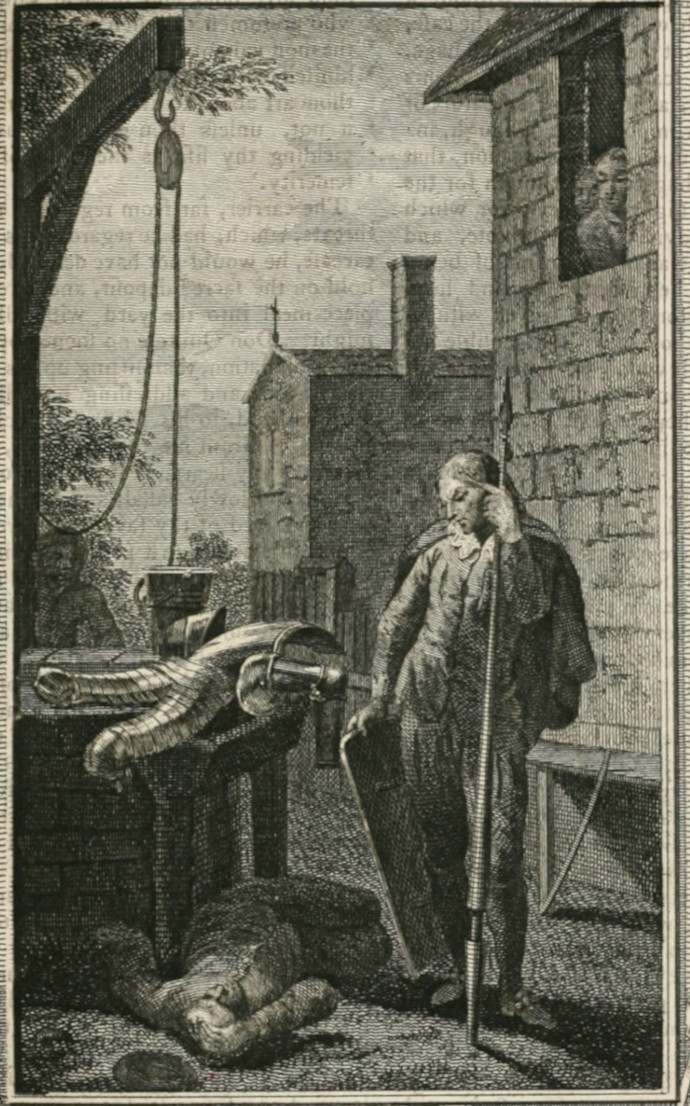
Plate XII: Don Quixote Defends His Armour.
It was not long before another carrier, not knowing what had happened to his companion, who still lay without sense or motion, arrived, with the same intention of watering his mules, and went straight up to the cistern, in order to remove the armour; when Don Quixote, without speaking a syllable, or asking leave of any living soul, once more quitted his target, and lifting up his lance, made another experiment of its hardness upon the pate of the second carrier, which failed in the application, giving way in four different places. At the 35noise of this encounter, every body in the house, innkeeper, and all, came running to the field; at sight of whom Don Quixote, snatching up his target, and drawing his sword, pronounced aloud, ‘O lady, of transcendent beauty! the force and vigour of my enfeebled heart; now, if ever, is the time for thee to turn thy princely eyes on this thy caitif knight, who is on the eve of so mighty an adventure.’ So saying, he seemed to have acquired such courage, that had he been assaulted by all the carriers in the universe, he would not have retreated one step.
The companions of the wounded, seeing how their friends had been handled, began at a distance to discharge a shower of stones upon the knight; who, as well as he could, sheltered himself under his shield, not daring to leave the cistern, lest some mischance should happen to his armour. The innkeeper called aloud, entreating them to leave off; for, as he had told them before, the man being mad, would be acquitted on account of his lunacy, even though he should put every soul of them to death. At the same time, Don Quixote, in a voice louder still, upbraided them as cowardly traitors, and called the constable of the castle a worthless and base-born knight, for allowing his guest to be treated in such an inhospitable manner; swearing, that if he had received the honour of knighthood, he would make him repent his discourteous behaviour. ‘But as for you,’ said he, ‘ye vile, ill-mannered scum, ye are beneath my notice. Discharge, approach, come forward, and annoy me as much as you can, you shall soon see what reward you will receive for your insolent extravagance.’ These words, delivered in a bold and resolute tone, struck terror into the hearts of the assailants; who, partly for this menace, and partly on account of the landlord’s persuasion, gave over their attack; while he, on his side, allowed the wounded to retire, and returned to his watch, with his former ease and tranquillity.
These pranks of the knight were not at all to the liking of the landlord, who resolved to abridge the ceremony, and bestow this unlucky order of knighthood immediately, before any other mischief should happen. Approaching him, therefore, he disclaimed the insolence with which his guest had been treated by those saucy plebeians, without his knowledge or consent; and observed that they had been justly chastised for their impudence: that, as he had told him before, there was no chapel in the castle, nor indeed, for what was to be done, was it at all necessary; nothing of the ceremony now remaining unperformed, except the cuff on the neck, and the thwack on the shoulders, as they are prescribed in the ceremonial of the order; and that this part might be executed in the middle of a field: he assured him also, that he had punctually complied with every thing that regarded the watching of his armour, which might have been finished in two hours, though he had already remained double the time on that duty. Don Quixote believing every syllable that he spoke, said, he was ready to obey him in all things, and besought him to conclude the matter as soon as possible: for, in case he should be attacked again, after having been knighted, he would not leave a soul alive in the castle, except those whom he should spare at his request.
The constable, alarmed at this declaration, immediately brought out his day-book, in which he kept an account of the barley and straw that was expended for the use of the carriers, and attended by a boy with a candle’s end in his hand, together with the two ladies before mentioned, came to the place where Don Quixote stood; then ordering him to kneel before him, mumbled in his manual, as if he had been putting up some very devout petition; in the midst of which he lifted up his hand, and gave him a hearty thump on the neck; then, with the flat of his own sword, bestowed an handsome application across his shoulders, muttering all the time between his teeth, as if he had been employed in some fervent ejaculation[37]. This article being fulfilled, he commanded one of the ladies to gird on his sword, an office she performed with great dexterity and discretion, of which there was no small need to restrain her laughter at each particular of this strange ceremony: but 36the effects they had already seen of the knight’s disposition, kept their mirth effectually under the rein.
When this good lady had girded on his sword, ‘Heaven preserve your worship! adventurous knight,’ said she, ‘and make you fortunate in all your encounters.’ Don Quixote then begged to know her name, that he might thenceforward understand to whom he was obliged for the favour he had received at her hands, and to whom he might ascribe some part of the honour he should acquire by the valour of his invincible arm. She answered with great humility, that her name was Tobosa, daughter of an honest butcher in Toledo, who lived in one of the stalls of Sancho Minaya: that she should always be at his service, and acknowledge him for her lord and master. The knight professed himself extremely obliged to her for her love; and begged she would, for the future, dignify her name by calling herself Donna Tobosa. This request she promised faithfully to comply with; and a dialogue of the same kind passed between him and the other lady who buckled on his spur: when he asked her name, she told him it was Mollinera; and that her father was an honourable miller of Antequera. Don Quixote entreated her also to ennoble her name with the same title of Donna, loaded her with thanks, and made a tender of his service. These hitherto unseen ceremonies being dispatched, as it were with post-haste, Don Quixote, impatient to see himself on horseback, in quest of adventures, saddled and mounted Rozinante forthwith, and embracing his host, uttered such a strange rhapsody of thanks for his having dubbed him knight, that it is impossible to rehearse the compliment. The landlord, in order to get rid of him the sooner, answered in terms no less eloquent, though something more laconick, and let him march off in a happy hour, without demanding one farthing for his lodging.
CHAP. IV. OF WHAT BEFEL OUR KNIGHT, WHEN HE SALLIED FROM THE INN.
It was early in the morning when Don Quixote sallied from the inn, so well satisfied, so sprightly, and so glad to see himself invested with the order of knighthood, that the very girths of his horse vibrated with joy: but, remembering his landlord’s advice, with regard to the necessaries he ought to carry along with him, in particular the money and clean shirts, he resolved to return to his own house, and furnish himself not only with these, but also with a squire. For this office he fixed, in his own mind, upon a poor ploughman who lived in his neighbourhood, maintaining a family of children by his labour; a person in all respects qualified for the lower services of chivalry. With this view he steered his course homeward: and Rozinante, as if he had guessed the knight’s intention, began to move with such alacrity and nimbleness, that his hoofs scarce seemed to touch the ground.
He had not travelled far, when from the thickest part of a wood that grew on his right-hand, his ear was saluted with shrill repeated cries, which seemed to issue from the mouth of some creature in grievous distress. No sooner did our hero hear this lamentation, than he exclaimed, ‘Heaven be praised for the favour with which it now indulges me, in giving me an opportunity so soon of fulfilling the duties of my profession, and reaping the fruit of my laudable intention! These cries doubtless proceed from some miserable male or female, who stands in need of my immediate aid and protection.’ Then turning Rozinante, he rode towards the place whence the complaint seemed to come; and having entered the wood a few paces, he found a mare tied to one oak, and a lad about fifteen, naked from the waist upwards, made fast to another. This was he who screamed so piteously, and indeed not without reason; for a sturdy peasant was employed in making applications to his carcase with a leathern strap, accompanying each stripe with a word of reproof and advice. Above all things, laying upon him strong injunctions, to use his tongue less, and his eyes more: the young fellow replied, with great fervency, ‘I will never do so again, master, so help me God! I won’t do so any more; but for the future take more care, and use more dispatch.’
Don Quixote observing what passed, pronounced aloud with great indignation: ‘Discourteous knight, it ill becomes thee to attack one who cannot 37defend himself: mount thy steed, couch thy lance,’ (for there was actually a lance leaning against the tree to which the mare was tied) ‘and I will make thee sensible of the cowardice of the action in which thou art now engaged.’ The peasant seeing this strange figure, buckled in armour, and brandishing a lance over his head, was mortally afraid, and with great humility replied, ‘Sir knight, this lad whom I am chastising, is my own servant hired to keep a flock of sheep, which feed in these fields; but he is so negligent, that every day I lose one of the number, and because I punish him for his carelessness, or knavery, he says that I scourge him out of avarice, rather than pay him his wages; though, upon my conscience, and as I shall answer to God, he tells a lye.’—‘How! a lye, before me, base caitif!’ cried Don Quixote; ‘by the sun that enlightens this globe, I have a good mind to thrust this lance through thy body! Pay the young man his wages straight, without reply; or, by the Power that rules us, I will finish and annihilate thee in an instant! unbind him therefore without hesitation.’
The countryman hung his head, and without speaking a syllable, untied his man; who, being asked by the knight how much money was due to him, said his master owed him for three quarters, at the rate of six rials a month. His deliverer having cast it up, found that the whole amounted to sixty-three rials, and ordered the peasant to disburse them instantly, unless he had a mind to perish under his hands. The affrighted farmer affirmed, by the grievous situation in which he was, and the oath he had already taken, though, by the bye, he had taken no oath at all, that the sum did not amount to so much; for that he was to discount and allow for three pair of shoes he had received, and a rial for two bleedings while he was sick. ‘Granting that to be true,’ replied Don Quixote, ‘the shoes and the bleeding shall stand for the stripes you have given him without cause; for, if he has wore out the leather of the shoes that you paid for, you have made as free with the leather of his carcase; and if the barber let out his blood when he was sick, you have blooded him when he was well; he therefore stands acquitted of these debts.’—‘The misfortune, Sir knight,’ said the peasant, ‘is this; I have not coin about me: but if Andrew will go home to my house, I will pay him honestly in ready-money.’—‘Go with you!’ cried the lad; ‘the devil fetch me if I do! No, no, master, I must not think of that; were I to go home with him alone, he would flay me like another Saint Bartholomew.’—‘He won’t do so,’ replied the knight, ‘but shew more regard to my commands; and if he will swear to me by the laws of that order of knighthood which he has received, that he will pay you your wages, I will set him free, and warrant the payment.’—‘Lord, how your worship talks!’ said the boy; ‘this master of mine is no gentleman, nor has he received any order of knighthood, but is known by the name of rich John Haldudo, and lives in the neighbourhood of Quintanar.’—‘No matter,’ replied Don Quixote, ‘there may be knights among the Haldudos, especially as every one is the son of his own works.’—‘True,’ said Andrew; ‘but what works is my master the son of, since he refuses to pay me for my labour, and the sweat of my brows?’—‘I don’t refuse; honest Andrew,’ answered the peasant; ‘thou wilt do me a pleasure in going home with me; and I swear by all the honours of knighthood in the universe, that I will pay thee thy wages, as I said before, in ready-money; nay, you shall have it perfumed into the bargain.’—‘Thank you for your perfumes!’ said the knight; ‘pay him in lawful coin, and I shall be satisfied: and be sure you fulfil the oath you have taken; for, by the same obligation, I swear, that in case you fail, I will return to chastise you, and ferret you out, even though you should be more concealed than a lizard. If you would understand who it is that lays such commands upon you, that you may find yourself under a necessity of performing them with reverence and awe, know that I am the valiant Don Quixote de La Mancha, the redresser of wrongs, and scourge of injustice: so farewel. Remember, not to belye your promise and oath, on pain of the penalty prescribed.’ With these words, he clapped spurs to Rozinante, and was out of sight in a moment.
The countryman followed him with his eyes, till he saw him quite clear of 38the wood; then turning to Andrew, said, ‘Come hither, child, I must pay what I owe you, according to the order of that redresser of wrongs.’—‘And adad,’ said Andrew, ‘you had best not neglect the orders of that worthy knight, who (blessings on his heart!) is equally valiant and upright; for odds bobs, if you do not pay me, he will return and be as good as his word.’—‘In faith, I am of the same opinion,’ replied the peasant; ‘but, out of my infinite regard for you, I am desirous of encreasing the debt, that the payment may be doubled.’ So saying, he laid hold of his arm, and tying him again to the tree, flogged him so severely, that he had like to have died on the spot. ‘Now is the time, Mr. Andrew,’ said the executioner, ‘to call upon the redresser of grievances, who will find it difficult to redress this, which by the bye I am loth to finish, being very much inclined to justify your fear of being flayed alive.’ At length, however, he unbound and left him at liberty to find out his judge, who was to execute the sentence he had pronounced. Andrew sneaked off, not extremely well satisfied: on the contrary, vowing to go in quest of the valiant Don Quixote de La Mancha, and inform him punctually of every thing that had happened, an account which would certainly induce him to pay the countryman sevenfold.
In spite of this consolation, however, he departed blubbering with pain, while his master remained weeping with laughter. And thus was the grievance redressed by the valiant Don Quixote, who, transported with the success, and the happy and sublime beginning which he imagined his chivalry had been favoured with, jogged on towards his own village, with infinite self satisfaction, pronouncing with a low voice, ‘O Dulcinea del Toboso, fairest among the fair! well may’st thou be counted the most fortunate beauty upon earth, seeing it is thy fate to keep in subjection and wholly resigned to thy will and pleasure, such a daring and renowned knight as Don Quixote de La Mancha now is, and always will remain. He who, as all the world knows, but yesterday received the honour of knighthood, and has this day redressed the greatest wrong and grievance that ever injustice hatched, and cruelty committed! To-day he wrested the lash from the hand of the merciless enemy, who so unjustly scourged the body of that tender infant!’ Having uttered this exclamation, he found himself in a road that divided into four paths, and straight his imagination suggested those cross-ways that were wont to perplex knights-errant in their choice; in imitation of whom, he paused a little, and after mature deliberation, threw the reins on Rozinante’s neck, leaving the decision to him, who following his first intention, took the path that led directly to his own stable.
Having travelled about two miles farther, Don Quixote descried a number of people, who, as was afterwards known, were six merchants of Toledo, going to buy silks at Mercia, and who travelled with umbrellas, attended by four servants on horseback, and three mule-drivers on foot. Don Quixote no sooner perceived them at a distance, than he imagined them to be some new adventure; and, in order to imitate, as much as in him lay, those scenes he had read in his books of chivalry, he thought this was an occasion expressly ordained for him to execute his purposed atchievement.
He therefore, with gallant and resolute deportment, seated himself firmly in his stirrups, grasped his lance, braced on his target, and posting himself in the middle of the road, waited the arrival of those knights-errant, for such he judged them to be. When they were near enough to hear him, he pronounced in a loud and arrogant tone: ‘Let the whole universe cease to move, if the whole universe refuses to confess, that there is not in the whole universe a more beautiful damsel than the peerless Dulcinea del Toboso, the high and mighty Empress of La Mancha.’
The merchants hearing this declaration, and seeing the strange figure from which it proceeded, were alarmed at both, and halting immediately, at a distance reconnoitred the madness of the author. Curious, however, to know the meaning of that confession which he exacted, one of them, who was a sort of a wag, though at the same time a man of prudence and discretion, accosted him thus: ‘Sir Knight, as we have not the honour to know who this worthy lady is, be so good as to produce her; 39and if we find her so beautiful as you proclaim her to be, we will gladly, and without any sort of reward, confess the truth, according to your desire.’—‘If I produce her,’ replied Don Quixote, ‘what is the mighty merit of your confessing such a notorious truth? The importance of my demand consists in your believing, acknowledging, affirming upon oath, and defending her beauty, before you have seen it. And this ye shall do, ye insolent and uncivil race, or engage with me in battle forthwith. Come on then, one by one, according to the laws of chivalry, or all together, as the treacherous custom is among such wretches as you; here I expect you with full hope and confidence in the justice of my cause.’—‘Sir knight,’ replied the merchant, ‘I humbly beg, in the name of all these princes here present, that your worship will not oblige us to burden our consciences, by giving testimony to a thing that we have neither seen nor heard, especially as it tends to the prejudice of the queens and princesses of Alcarria and Estremadura; but, if your worship will be pleased to shew us any sort of a picture of this lady, though it be no bigger than a grain of wheat, so as we can judge the clue by the thread, we will be satisfied with this sample, and you shall be obeyed to your heart’s content; for I believe we are already so prepossessed in her favour, that though the portrait should represent her squinting with one eye, and distilling vermilion and brimstone with the other, we will, notwithstanding, in compliance to your worship, say what you desire in her favour.’—‘Her eyes, infamous wretch!’ replied Don Quixote, in a rage, ‘distil not such productions, but teem with amber and rich perfume; neither is there any defect in her sight, or in her body, which is more straight than a Guadarrama spindle; but you shall suffer for the licentious blasphemy you have uttered against the unparalleled beauty of my sovereign mistress.’ So saying, he couched his lance, and attacked the spokesman with such rage and fury, that had not Rozinante luckily stumbled and fallen in the midst of his career, the merchant would have had no cause to rejoice in his rashness; but when the unhappy steed fell to the ground, the rider was thrown over his head, and pitched at a good distance upon the field, where he found all his endeavours to get up again ineffectual, so much was he encumbered with his lance, target, helmet, and spurs, together with the weight of his ancient armour.
While he thus struggled, but in vain, to rise, he bellowed forth, ‘Fly not, ye cowardly crew; tarry a little, ye base caitiffs: not through any fault of my own, but of my horse, am I thus discomfited.’ One of the mule-drivers, who seems not to have been of a very milky disposition, could not bear this arrogant language of the poor overthrown knight, without making a reply upon his ribs. Going up to him, therefore, he laid hold on his lance, and breaking it, began to thresh him so severely, that, in spite of the resistance of his armour, he was almost beaten into mummy; and though the fellow’s master called to him to forbear, he was so incensed, that he could not leave off the game, until he had exhausted the whole of his choler. Gathering the other pieces of the lance, he reduced them all to shivers, one after another, on the miserable carcase of the Don, who, notwithstanding this storm of blows which descended on him, never closed his mouth, but continued threatening heaven and earth, and those banditti, for such he took the merchants to be.
The driver was tired at length of his exercise, and his masters pursued their journey, carrying with them sufficient food for conversation about this poor battered knight; who no sooner found himself alone, than he made another effort to rise; but if he found this design impracticable when he was safe and sound, much less could he accomplish it now that he was disabled, and as it were wrought into a paste. He did not, however, look upon himself as unhappy, because this misfortune was in his opinion peculiar to knights-errant; and, that he was not able to rise on account of the innumerable bruises he had received, he ascribed entirely to the fault of his horse.
40
CHAP. V. IN WHICH THE STORY OF OUR KNIGHT’S MISFORTUNE IS CONTINUED.
Finding it therefore impossible to move, he was fain to have recourse to his usual remedy, which was to amuse his imagination with some passages of the books he had read; and his madness immediately recalled to his memory that of Valdovinos and the Marquis of Mantua, when Carloto left him wounded on the mountain; a piece of history that every body knows, that every young man is acquainted with, and which is celebrated, nay more, believed, by old age itself, though it be as apocryphal as the miracles of Mahomet: nevertheless, it occurred to him as an occasion expressly adapted to his present situation. Therefore, with marks of extreme affliction, he began to roll about upon the ground, and with a languid voice, exclaim, in the words of the wounded knight of the wood—
‘Where art thou, lady of my heart,
‘Regardless of my misery?
‘Thou little know’st thy lover’s smart,
‘Or faithless art and false pardie!’
In this manner he went on repeating the romance until he came to these lines:
‘O noble prince of Mantuan plains.
‘My carnal kinsman, and my lord!’
Before he could repeat the whole couplet, a peasant who was a neighbour of his own, and lived in the same village, chanced to pass, in his way from the mill where he had been with a load of wheat. This honest countryman seeing a man lying stretched upon the ground, came up, and asked him who he was, and the reason of his lamenting so piteously. Don Quixote doubtless believed that this was his uncle the Marquis of Mantua, and made no other reply but the continuation of his romance, in which he gave an account of his own misfortune, occasioned by the amour betwixt his wife and the emperor’s son, exactly as it is related in the book. The peasant, astonished at such a rhapsody, took off his beaver, which had been beaten to pieces by the mule-driver, and wiping his face, which was covered with dust, immediately knew the unfortunate knight. ‘Signior Quixada,’ said he, (for so he was called before he had lost his senses, and was transformed from a sober country gentleman into a knight-errant) ‘who has left your worship in such a woeful condition?’ But he, without minding the question that was put to him, proceeded, as before, with his romance; which the honest man perceiving, went to work, and took off his back and breast-plates, to see if he had received any wound, but he could perceive neither blood nor scar upon his body. He then raised him upon his legs, and with infinite difficulty mounted him upon his own beast, which appeared to him a safer carriage than the knight’s steed.
Having gathered up his armour, even to the splinters of the lance, he tied them upon Rozinante, and taking hold of the reins, together with the halter of his own ass, jogged on towards the village, not a little concerned to hear the mad exclamations of Don Quixote, who did not find himself extremely easy; for he was so battered and bruised, that he could not sit upright upon the beast, but from time to time vented such dismal groans, as obliged the peasant to ask again what was the matter with him. Indeed, one would have thought, that the devil had assisted his memory in supplying him with tales accommodated to the circumstances of his own situation; for at that instant, forgetting Valdovinos, he recollected the story of Abindar-raez the Moor, whom Rodrigo de Narvaez, governor of Antequera, took prisoner, and carried into captivity to the place of his residence; so that when the countryman repeated his desire of knowing where he had been, and what was the matter with him, he answered to the purpose, nay, indeed, in the very words, used by the captive Abencerraje to the said Rodrigo de Narvaez, as may be seen in the Diana of George Monte-major, which he had read, and so well-adapted for his purpose, that the countryman hearing such a composition of folly, wished them both at the devil.
It was then he discovered that his neighbour was mad; and therefore made all the haste he could to the village, that he might be the sooner rid of his uneasiness at the unaccountable harangue of Don Quixote; who had no sooner finished this exclamation, than he accosted 41his conductor in these words—‘Know, then, valiant Don Rodrigo de Narvaez, that this same beautiful Xarifa, whom I have mentioned, is no other than the fair Dulcinea del Toboso, for whom I have performed, undertake, and will atchieve, the most renowned exploits, that ever were, are, or will be seen on earth.’ To this address the countryman replied with great simplicity—‘How your worship talks! As I am a sinner, I am neither Don Rodrigo de Narvaez, nor the Marquis of Mantua, but Pedro Alonzo, your neighbour; nor is your worship either Valdovinos, or Abindar-raez, but the worthy gentleman Signior Quixada.’—‘I know very well who I am,’ replied Don Quixote; ‘and that it is possible for me to be not only those whom I have mentioned, but also the whole Twelve Peers of France, and even the Nine Worthies, seeing that my atchievements will excel not only those of each of them singly, but even the exploits of them all joined together.’
Discoursing in this manner, they arrived at the village about twilight; but the peasant staid till it was quite dark, that the poor rib-roasted knight might not be seen in such a woeful condition. Then he conducted Don Quixote to his own house, which was all in confusion. When he arrived, the curate and the barber of the village, two of his best friends and companions, were present, and his housekeeper was just saying with a woeful countenance, ‘Mr. Licentiate Pero Perez,’ that was the curate’s name, ‘some misfortune must certainly have happened to my master; for six days, both he and his horse, together with the target, lance, and armour, have been missing[38]: as I am a sinner, it is just come into my head, and it is certainly as true as that every one is born to die, those hellish books of knight-errantry, which he used to read with so much pleasure, have turned his brain; for now I remember to have heard him say to himself more than once, that he longed to be a knight-errant, and stroll about in quest of adventures. May the devil and Barrabas lay hold of such legends, which have perverted one of the soundest understandings in all La Mancha!’
To this remark the niece assented, saying—‘Moreover, you must know, Mr. Nicolas,’ this was the name of the barber, ‘my uncle would frequently, after having been reading in these profane books of misadventures, for two whole days and nights together, start up, throw the book upon the ground, and drawing his sword, fence with the walls till he was quite fatigued, then affirm that he had killed four giants as big as steeples, and swear that the sweat of his brows, occasioned by this violent exercise, was the blood of the wounds he had received in battle; then he would drink of a large pitcher of cold water, and remain quiet and refreshed, saying, that the water was a most precious beverage, with which he was supplied by the sage Isquife, a mighty inchanter and friend of his; but I take the whole blame to myself, for not having informed your worship of my dear uncle’s extravagancies, that some remedy might have been applied before they had proceeded to such excess; and that you might have burnt all those excommunicated books, which deserve the fire as much as if they were crammed with heresy.’
‘I am of the same opinion,’ said the curate; ‘and assure you, before another day shall pass, they shall undergo a severe trial, and be condemned to the flames, that they may not induce other readers to follow the same path which I am afraid my good friend has taken.’ Every syllable of this conversation was overheard by Don Quixote and his guide, which last had now no longer any doubt about his neighbour’s infirmity, and therefore pronounced with a loud voice—‘Open your gates to the valiant Valdovinos, and the great Marquis of Mantua, who comes home wounded from the field together with the Moor Abindar-raez, who drags in captivity the valiant Rodrigo de Narvaez, governor of Antequera.’
Alarmed at these words, they came all to the door, and perceiving who it was, the barber and curate went to receive their friend, and the women ran 42to embrace their master and kinsman; who, though he had not as yet alighted, for indeed it was not in his power, proclaimed aloud—‘Let the whole world take notice, that the wounds I have received were owing to the fault of my horse alone; carry me therefore to bed, and send if possible for the sage Urganda[39], to search and cure them.’—‘See now, in an evil hour,’ cried the housekeeper, hearing these words, ‘if I did not truly foretel of what leg my master was lame!—Your worship shall understand, in good time, that without the assistance of that same Urganda, we know how to cure the hurts you have received; and cursed, I say, nay a hundred and a hundred times cursed, be those books of chivalry, which have so disordered your honour’s brain!’ Having carried him to his bed, they began to search for his wounds, but could find none; and he told them that his whole body was one continued bruise, occasioned by the fall of his horse Rozinante, during his engagement with ten of the most insolent and outrageous giants that ever appeared upon the face of the earth. ‘Ah, ha!’ cried the curate, ‘have we got giants too in the dance! Now, by the faith of my function, I will reduce them all to ashes before to-morrow night!’
A thousand questions did they ask of the knight, who made no other answer, but desired them to bring him some food, and leave him to his repose, which indeed was what he had most occasion for. They complied with his request, and the curate informed himself at large of the manner in which he had been found by the countryman, who gave him full satisfaction in that particular, and repeated all the nonsense he had uttered when he first found him, as well as what he afterwards spoke in their way home. This information confirmed the licentiate in his resolution, which was executed next day, when he brought his friend master Nicolas the barber along with him to Don Quixote’s house.
CHAP. VI. OF THE DIVERTING AND MINUTE SCRUTINY PERFORMED BY THE CURATE AND THE BARBER, IN THE LIBRARY OF OUR SAGACIOUS HERO.
While the knight was asleep, his friends came and demanded of his niece the key of the closet in which those books, the authors of his misfortune, were kept; and she delivering it with great chearfulness, they went into it in a body, housekeeper and all, and found upwards of a hundred volumes, great and small, extremely well bound; which were no sooner perceived by the governante, than she ran out with great eagerness, and immediately returned with a porringer of holy water, and a sprig of hyssop, saying—‘Here, Master Licentiate, pray take and sprinkle the closet, lest some one of the many inchanters contained in these books should exercise his art upon us, as a punishment for our burning and banishing them from the face of the earth.’
The licentiate, smiling at the old housekeeper’s simplicity, desired the barber to hand him the books one by one, that he might see of what subjects they treated, because they might possibly find some that did not deserve to be purged by fire. ‘There is not one of them,’ replied the niece, ‘which deserves the least mercy, for they are all full of mischief and deceit. You had better, therefore, throw them out of the window into the court-yard, and there set fire to them in a heap: or let them be carried into the back-yard, where the bonfire may be made, and the smoke will offend nobody.’ The housekeeper assented to this proposal, so eager were they both to destroy those innocents; but the curate would by no means encourage such barbarity, without reading first, if possible, the title-pages.
The first that Master Nicolas delivered into his hand, were the four volumes of Amadis de Gaul. ‘There is,’ said 43the good man, ‘something mysterious in this circumstance; for, as I have heard, that was the first book of chivalry printed in Spain, from which all the rest have derived their origin and plan; and therefore, in my opinion, we ought to condemn him to the fire, without hesitation, as the law-giver of such a pernicious sect.’—‘By no means,’ cried the barber; ‘for I have also heard, that this is the best book of the kind that was ever composed; and therefore ought to be pardoned, as an original and model in its way.’—‘Right,’ said the curate; ‘and for that reason he shall be spared for the present. Let us see that author who stands next to him.’—‘This,’ says the barber, ‘contains the atchievements of Esplandian, the lawful son of Amadis de Gaul.’—‘Truly, then,’ said the curate, ‘the virtues of the father shall not avail the son. Here, Mrs Housekeeper, open that window, and toss him into the yard, where he shall serve as a foundation for the bonfire we intend to make.’
This talk the housekeeper performed with infinite satisfaction; and the worthy Esplandian took his flight into the yard, to wait in patience for the fire with which he was threatened. ‘Proceed,’ cried the curate. ‘This that comes next,’ said the barber, ‘is Amadis of Greece; and I believe all the authors on this shelf are of the same family.’—‘To the yard, then, with all of them,’ replied the curate; ‘for rather than not burn Queen Pintiquiniestra, and the shepherd Darinel with his eclogues, together with the unintelligible and bedevilled discourses of his author; I would even consume the father who begat me, should he appear in the figure of a knight-errant.’—‘I am of your opinion,’ said the barber. ‘And I,’ cried the niece. ‘Since that is the case,’ said the housekeeper, ‘to the yard with them immediately.’ Accordingly, they delivered a number into her hands; and she, out of tenderness for the stair-case, sent them all out of the window.
‘Who may that tun-like author be?’ said the curate. ‘This here,’ answered the barber, ‘is Don Olivante de Laura.’—‘The very same,’ replied the curate, ‘who composed the Garden of Flowers; and truly it is hard to determine, which of his two books is the most true, or rather which of them is least false: all that I know is, that he shall go to the pile for his arrogance and folly.’—‘He that follows,’ says the barber, ‘is Florismarte of Hircania.’—‘What, Signior Florismarte?’ replied the curate: ‘in faith, then he must prepare for his fate; notwithstanding his surprizing birth, and mighty adventures, and the unparalleled stiffness and sterility of his stile.—Down with him, Mistress Housekeeper! and take this other along with you also.’—‘With all my heart, dear Sir!’ replied the governante; who executed his commands with vast alacrity.
‘He that comes next,’ said the barber, ‘is the knight Platir.’—‘That is an old book,’ said the clergyman; ‘but as I can find nothing in him that deserves the least regard, he must e’en keep the rest company.’ He was accordingly doomed to the flames, without farther question. The next book they opened was intituled, The Knight of the Cross; which the curate having read, ‘The ignorance of this author,’ said he, ‘might be pardoned, on account of his holy title; but according to the proverb, “The devil skulks behind the cross;” and therefore let him descend into the fire.’ Master Nicolas taking up another book, found it was the Mirror of Chivalry. ‘Oh, ho!’ cried the curate, ‘I have the honour to know his worship. Away with Signior Rinaldo de Mont-alban, with his friends and companions, who were greater thieves than Cacus; not forgetting the Twelve Peers, together with Turpin, their candid historian. Though, truly, in my opinion, their punishment ought not to exceed perpetual banishment, because they contain some part of the invention of the renowned Matteo Boyardo, on which was weaved the ingenious web of the Christian poet Ludovico Ariosto; to whom, should I find him here speaking in any other language than his own, I would pay no regard; but, if he talks in his own idiom, I will place him on my head, in token of respect.’—‘I have got him at home,’ said the barber, ‘in Italian, but I don’t understand that language.’—‘Nor is it necessary you should,’ replied the curate: ‘and here let us pray Heaven to forgive the captain, who has impoverished 44him so much, by translating him into Spanish, and making him a Castilian. And, indeed, the same thing will happen to all those who pretend to translate books of poetry into a foreign language; for, in spite of all their care and ability, they will find it impossible to give the translation the same energy which is found in the original. In short, I sentence this book, and all those which we shall find treating of French matters, to be thrown and deposited in a dry well, until we can determine at more leisure what fate they must undergo, except Bernardo del Carpio, and another called Roncesvalles, which if they fall into my hands, shall pass into those of the housekeeper, and thence into the fire, without any mitigation.’
This was approved of as an equitable decision, and accordingly confirmed by the barber, who knew the curate to be such a good Christian, and so much a friend to truth, that he would not be guilty of an equivocation for the whole universe. The next volume he opened was Palmerin D’Oliva; and hard by him stood another, called Palmerin of England; which was no sooner perceived by the licentiate, than he cried, ‘Let that Oliva be hewn in pieces, and burned; so as not so much as a cinder of him shall remain; but let the English Palmerin be defended, and preferred as an inestimable jewel, and such another casket be made for him as that which Alexander found among the spoils of Darius, and destined as a case for the works of Homer. That book, neighbour, is venerable for two reasons, first, because it is in itself excellent; and, secondly, because it is said to have been composed by an ingenious king of Portugal. All the adventures of the castle of Miraguarda are incomparable, and contrived with infinite art; the language perspicuous and elegant, and the characters supported with great propriety of sentiment and decorum. I propose, Mr. Nicolas, saving your better judgment, to exempt this book and Amadis de Gaul from the flames, and let all the rest perish without farther enquiry.’
‘Pardon me, neighbour,’ replied the barber, ‘I have here got in my hand the renowned Don Bellianis.’—‘Even he,’ answered the priest, ‘with the second, third, and fourth parts, stands very much in need of a little rhubarb to purge his excessive choler, and ought to be pruned of that whole Castle of Fame, and other more important impertinences. For which reason, let the sentence be changed into transportation; and, according as he reforms he shall be treated with lenity and justice. In the mean time, friend Nicolas, keep him safe in your house, out of the reach of every reader.’—‘With all my soul!’ answered the barber; and without giving themselves the trouble of reading any more titles, they ordered the housekeeper to dismiss all the large books into the yard.
This direction was not given to a person who was either doating or deaf, but to one who was much more inclined to perform that office than to compose the largest and finest web that ever was seen. Taking up, therefore, seven or eight at a time, she heaved them out of the window, with incredible dispatch. While she was thus endeavouring to lift a good many together, one of them chanced to fall at the feet of the barber, who being seized with an inclination of knowing the contents, found upon examination, that it was called the History of the famous Knight Tirante the White. ‘Heaven be praised!’ cried the curate, aloud, ‘that we have discovered Tirante the White in this place: pray give it me, neighbour; for in this book I reckon I have found a treasure of satisfaction, and a rich mine of amusement. Here is the famous Godamercy[40], of Mont-alban, and his brother Thomas of Mont-alban, and the knight Fonseca, as also an account of the battle fought between Alano and the valiant Detriante, together with the Witticisms of the Young Lady, Joy of my Life, with the amorous stratagems of the Widow Quiet, and her highness the Empress who was enamoured of her Squire Hippolito. I do assure you, upon my word, Mr. Nicolas, that, in point of stile, this is the best book that ever was written. Here the knights eat, sleep, and die, 45in their beds, after having made their wills, with many circumstances that are wanting in other books of the same kind. Notwithstanding, the author who composed it certainly deserved to be sent to the gallies for life, for having spent his time in writing so much nonsense. Take and read him at home, and you shall find what I say to be true.’—‘Very like,’ replied the barber: ‘what shall we do with these small books that remain?’
‘These,’ said the curate, ‘cannot be books of chivalry, but must be poems.’ Accordingly, opening one, he found it was the Diana of George de Monte-major, and taking it for granted that all the rest were of the same kind, said, ‘These books do not deserve to be burnt with the rest; for they neither are nor ever will be guilty of so much mischief, as those of chivalry have done; being books of entertainment, and no ways prejudicial to religion.’—‘Pray, Sir,’ said the niece, ‘be so good as to order these to be burnt with the rest; for my uncle will no sooner be cured of his knight-errantry, than by reading these, he will turn shepherd, and wander about the groves and meadows, piping and singing. Nay, what is worse, perhaps turn poet, which they say is an infectious and incurable distemper.’—‘The young woman is in the right,’ said the curate; ‘and therefore it won’t be amiss to remove this temptation and stumbling block out of our friend’s way. Since we have therefore begun with the Diana of Monte-major, I am of opinion that we should not burn him, but only expunge what relates to the sage Felicia, and the inchanted water, together with all the larger poems, and leave to him, a God’s name, all the prose, and the honour of being the ring-leader of the writers of that class.’
‘This that follows,’ said the barber, ‘is called Diana the Second of Salmantino, and this other that bears the same name, is written by Gil Polo.’—‘Let Salmantino,’ replied the curate, ‘increase the number of those that are already condemned to the yard; but let Gil Polo be preserved as carefully as if it was the production of Apollo himself. Proceed, friend Nicolas, and let us dispatch, for it grows late.’—‘This here book,’ said the barber, opening the next, ‘is called the ten books of the Fortune of Love, the production of Antonio Lofrasco, a Sardinian poet.’—‘By my holy orders,’ cried the curate, ‘since Phœbus was Apollo, the Muses the daughters of Jove, and bards delighted in poetry, there never was such a pleasant and comical performance composed as this, which is the best and most original of the kind which ever saw the light; and he who has not read it may assure himself, that he has never read any thing of taste: reach it me, neighbour; it gives me more pleasure to have found this, than if I had received a cassock of Florence silk.’
Accordingly, he laid it carefully by with infinite pleasure, and the barber proceeded in his talk, saying; ‘Those that come next are the Shepherd of Iberia, the Nymphs of Henares, and the Undeceptions of Jealousy.’—‘Then there is no more to do,’ said the priest, ‘but to deliver them over to the secular arm of the housekeeper; and do not ask me why, else we shall never have done.’—‘Here comes the Shepherd of Filida.’—‘He is no shepherd,’ cried the curate, ‘but a very elegant courtier, and therefore preserve him as a precious jewel.’ Then the barber laid hold of a very large volume, which was entitled, The Treasure of Poetry. ‘If there was not so much of him, he would be more esteemed,’ said the licentiate, ‘that book ought to be weeded and cleared of certain meannesses, which have crept into the midst of its excellencies: take care of it, for the author is my friend, and deserves regard for some other more heroick and elevated works, which he has composed.’—‘And this,’ continued the barber, ‘is a Collection of Songs, by Lopez Maldonado.’—‘That author is my very good friend also,’ replied the curate; ‘and his own verses out of his own mouth are the admiration of every body; for he chants them with so sweet a voice, that the hearers are inchanted. His eclogues are indeed a little diffuse, but there cannot be too much of a good thing. Let them be preserved among the elect: but, pray what book is that next to it?’ When the barber told him it was the Galatea of Miguel de Cervantes; ‘That same Cervantes,’ said he, ‘has been an intimate friend of mine these many years, and is to my certain knowledge more conversant with misfortunes than poetry. 46There is a good vein of invention in his book, which proposes something, though it concludes nothing. We must wait for the second part, which he promises, and then perhaps his amendment may deserve a full pardon, which is now denied: until that happens, let him be close confined in your closet.’
‘With all my heart,’ replied the barber; ‘but here come three more together, the Araucana of Don Alonzo de Ercilla, the Austriada of Juan Ruso Jurado de Cordova, and the Monserrato of Christoval de Virues, a Valentian poet.’—‘These three books,’ said the curate, ‘are the best epic poems in the Castilian language, and may be compared with the most renowned performances of Italy. Let them be kept as the inestimable pledges of Spanish poetry.’ The curate grew tired of examining more books, and would have condemned all the rest, contents unknown, if the barber had not already opened another, which was called the Tears of Angelica. ‘I should have shed tears for my rashness,’ said the curate, hearing the name, ‘if I had ordered that book to be burned: for its author was one of the most celebrated poets, not only of Spain, but of the whole world; and, in particular, extremely successful in translating some of the Metamorphoses of Ovid.’
CHAP. VII. THE SECOND SALLY OF OUR WORTHY KNIGHT DON QUIXOTE DE LA MANCHA.
While they were busied in this manner, Don Quixote began to cry aloud, ‘This way, this way, ye valiant knights! now is the time to shew the strength of your invincible arms, that the courtiers may not carry off the honour of the tournament.’ The scrutiny of the books that remained was deserted by the curate and barber, who hastened to the author of this noisy exclamation, and it is believed that all were committed to the flames, unseen, unheard, not even excepting the Carolea, and Lyon of Spain, together with the exploits of the emperor, composed by Don Louis D’Avila; which were, doubtless, among those committed to the fire; though, perhaps, had the curate seen them, they would not have undergone so severe a sentence.
When they arrived in Don Quixote’s chamber, they found him on the floor, proceeding with his rhapsody, and fencing with the walls, as broad awake as if he had never felt the influence of sleep. Laying hold on him, by force they re-conveyed him to his bed; where, after having rested a little, he returned to his ravings, and addressed himself to the curate in these words: ‘Certainly, my Lord Archbishop Turpin, we, who are called the Twelve Peers of France, will be greatly disgraced, if we allow the court-knights to win the victory in this tournament, after we, the adventurers, have gained the prize in the three preceding days.’—‘Give yourself no trouble about that consideration, my worthy friend,’ said the curate; ‘for Providence may turn the scale, and what is lost to-day may be retrieved to-morrow. In the mean time, have a reverend care of your health, for you seem to be excessively fatigued, if not wounded grievously.’—‘I am not wounded,’ replied the knight: ‘but that I am battered and bruised, there is no manner of doubt; for the bastard Don Orlando has mauled me to mummy with the trunk of an oak, and all out of mere envy, because he saw that I alone withstood his valour. But may I no longer deserve the name of Reynaldos de Montalban, if, when I rise from this bed, I do not repay him in his own coin, in spite of all his inchantments! Meanwhile, bring me some food, which is what I chiefly want at present, and let me alone to take vengeance for the injury I have received.’
In compliance with his desire they brought him something to eat, and left him again to his repose, not without admiration of his madness and extravagance. That very night the housekeeper set fire to, and consumed, not only all the books that were in the yard, but also every one she could find in the house; and no doubt many were burned, which deserved to have been kept as perpetual archives. But this their destiny, and the laziness of the inquisitors, would not allow; so that in them was fulfilled the old proverb, a saint may sometimes suffer for a sinner. Another remedy which the curate and barber 47prescribed for the distemper of their friend, was to alter and block up the closet where his books had been kept; that upon his getting up, he should not find them, and the cause being taken away, the effect might cease; and that, upon his inquiry, they should tell him an inchanter had carried them off, closet and all; this resolution was executed with all imaginable dispatch, during the two days that Don Quixote kept his bed.
The first thing he did when he got up, was to go and visit his books, and not finding the apartment where he had left it, he went from one corner of the house to the other in quest of his study. Coming to the place where the door stood, he endeavoured but in vain to get in, and cast his eyes all around without uttering one syllable; but after he had spent some time in this sort of examination, he inquired of his housekeeper whereabouts he might find his book-closet. She being well instructed, readily answered, ‘What closet, or what nothing is your worship in search of? There are neither books nor closet in this house; for the devil himself has run away with both.’—‘It was not the devil,’ cried the niece, ‘but an inchanter that conveyed himself hither in a cloud, one night after your worship’s departure, and alighting from a dragon on which he was mounted, entered the closet, where I know not what he did, but having staid a very little while, he came flying through the roof, leaving the whole house full of smoke. And when we went to see what he had done, we could neither find books nor closet; only the housekeeper and I can very well remember, that when the old wicked conjuror went away, he cried in a loud voice, that for the hatred he bore to the master of those books and closet, he had done that mischief, which would afterwards appear: he said also, that his name was the sage Munaton.’—‘You mean Freston,’ said Don Quixote. ‘I do not know,’ answered the housekeeper, ‘whether it was Freston or Friton; but this I am certain of, that his name ended in ton.’—‘The case then is plain,’ said the knight; ‘that same sage inchanter is one of my greatest enemies; who bears me a grudge, because he knows, by the mystery of his art, that the time will come when I shall fight and vanquish in single battle a certain knight, whom he favours, in spite of all he can do to prevent my success; and for this reason, he endeavours to give me every mortification in his power; but let me tell him he won’t find it an easy matter to contradict or evade what Heaven has decreed.’—‘Who ever doubted that?’ said the niece; ‘but what business have you, dear uncle, with these quarrels? Would it not be better to live in peace at home, than to stray up and down the world in search of superfine bread, without considering that many a one goes out for wool, and comes home quite shorn.’—‘My dear niece,’ replied Don Quixote, ‘you are altogether out of your reckoning. Before I be shorn, I will pull and pluck off the beards of all those who pretend to touch a single hair of my mustacho.’
The two women did not chuse to make any farther answer, because they perceived that his choler was very much inflamed. After this transaction, however, he staid at home fifteen days in great tranquillity, without giving the least sign or inclination to repeat his folly; during which time, many infinitely diverting conversations passed between him and his friends, the curate and the barber; wherein he observed, that the world was in want of nothing so much as of knights-errant, and that in him this honourable order was revived. The clergyman sometimes contradicted him, and sometimes assented to what he said, because, without this artful conduct, he would have had no chance of bringing him to reason.
About this time, too, the knight tampered with a peasant in the neighbourhood, a very honest fellow, if a poor man may deserve that title, but one who had a very small quantity of brains in his skull. In short, he said so much, used so many arguments to persuade, and promised him such mountains of wealth, that this poor simpleton determined to follow and serve him in quality of squire. Among other things, that he might be disposed to engage chearfully, the knight told him that an adventure might one day happen, in which he should win some island in the twinkling of an eye, and appoint him governor of his conquest. Intoxicated with these and other such promises, Sancho Panza (so was the countryman called) 48deserted his wife and children, and listed himself as his neighbour’s squire.
Thus far successful, Don Quixote took measures for supplying himself with money; and what by selling one thing, mortgaging another, and making a great many very bad bargains, he raised a tolerable sum. At the same time accommodating himself with a target, which he borrowed of a friend, and patching up the remains of his vizor as well as he could, he advertised his squire Sancho of the day and hour in which he resolved to set out, that he might provide himself with those things which he thought most necessary for the occasion; above all things, charging him to purchase a wallet. Sancho promised to obey his orders; and moreover said he was resolved to carry along with him an excellent ass which he had, as he was not designed by nature to travel far on foot.