Part 2 / Book 1 — BOOK I. (continued 2)
T. (Tobias) Smollett translation
While Don Quixote and Sancho were closeted together, there passed between them a conversation which the history recounts with great punctuality and truth. ‘Signior,’ said the squire, ‘I have at length traduced my wife to consent that I shall attend your worship wheresoever you please to carry me.’-‘Say reduced, and not traduced, Sancho,’ replied the knight. ‘I have once or twice, if my memory serves me,’ said Sancho, ‘intreated your worship not to correct my words, if you understand my meaning; and when you can’t make it out, I desire you would say, “Sancho,” or “devil, I don’t understand thee:” then if I fail in explaining myself, you may correct me as much as you please; for I am so fossile.’—‘I do not understand thee now,’ cried Don Quixote, ‘nor can I comprehend what thou wouldst be at, in saying I am so fossile.’—‘So fossile!’ said the squire; ‘that is, whereby as how I am just so.’—‘Nay, now thou art more and more unintelligible,’ replied the knight. ‘If your worship does not understand me now,’ answered Sancho, ‘I know not how to express it; for I am already at my wit’s end, and Lord have mercy upon me.’—‘O! now I conceive thy meaning,’ said the knight; ‘thou wouldst say thou art so docile, gentle, and tractable, as to comprehend every thing I say, and retain whatsoever I shall teach thee.’—‘I’ll lay a wager,’ said the squire, ‘that from the beginning, you knew my meaning by my mumping, but wanted to confound me by leading me into a thousand more blunders.’—‘It may be so,’ said the knight; ‘but in reality, what says Teresa?’—‘Teresa,’ answered Sancho, ‘says I must be sharp with your worship. 323Fast bind, fast find; He that shuffles does not always cut; and that, A bird in the hand is worth two in the bush: now I know that A wife’s counsel is bad, but he that will not take it is mad.’—‘So say I,’ replied Don Quixote; ‘proceed, friend Sancho, you speak like an oracle to-day.’—‘Why then the case is this,’ resumed Sancho; ‘your worship very well knows we are all mortal, here to-day, and gone to-morrow; for the lamb goes as fast as the dam; and no man in this world can promise himself more hours of life than God is pleased to grant him; because death is deaf, and when he knocks at the door of life is always in a hurry, and will not be detained either by fair means or force, by sceptres or mitres, as the report goes, and as we have often heard it declared from the pulpit.’—‘All this is very true,’ said the knight; ‘but I cannot guess what you drive at.’—‘What I drive at,’ answered Sancho, ‘is, that your worship would appoint me a certain monthly salary for the time I shall serve you, to be paid out of your estate; for I do not chuse to depend upon recompences that come late, or low, or never. God will protect me with my own. In short, I would know what I have to trust to, whether little or much; for, The hen clucks though but on one egg; Many littles make a mickle; and, He that is getting aught, is losing nought. True it is, if it should happen, which I neither believe nor expect, that your worship can give me that island you have promised me so long; I am not so greedy or ungrateful, but that I will suffer my rent to be appraised, and my salary deducted in due portion[148]’.—‘To be sure, friend Sancho,’ said the knight, ‘all portions ought to be proportioned.’—‘I understand you,’ replied the squire, ‘I should have said proportion instead of portion; but that is of no signification, since my meaning is comprehended by your worship.’—‘Aye, and so thoroughly comprehended,’ said Don Quixote, ‘that I have penetrated into the inmost recesses of thy thoughts, and perceive the mark at which those innumerable shafts of thy proverbs are aimed. Look you, Sancho, I would appoint thee a salary, if I could find in any history of knights-errant, one precedent, by which I might discover, or have the least glimpse of what they used to give monthly or yearly; but I have carefully perused all, or the greatest part or those histories, and cannot remember to have read, that any knight-errant ever paid a certain salary to his squire. I only know that all of them trusted to favour, and when it was least in their thoughts, provided their masters chanced to be fortunate, they found themselves rewarded with an island or something equivalent, and at least were honoured with rank and title. If with these hopes and expectations, you are willing to return to my service, do it a-God’s name; but if you think I will unhinge and deviate from the ancient customs of chivalry, you are grievously mistaken: wherefore, friend Sancho, you may go home again, and declare my intention to your wife Teresa; and if she is pleased, and you are willing to depend upon my favour, bene quidem; if not, let us shake hands and part: while there are peas in the dove-house, I shall never want pigeons; and remember, my child, that it is better to be rich in hope than poor in possession; and that a good claim is preferable to bad pay. I talk in this manner, Sancho, to show that I can pour forth a volley of proverbs as well as you; and finally, I must and will give you to understand, that if you do not chuse to serve me on those terms, and share my fortune, whatsoever it may be, I pray God may prosper and make a saint of you; for my part, I shall not want squires more obedient and careful, though less troublesome and talkative than your worship.’
When Sancho heard this firm resolution of his master, the sky began to lour, and down flagged the wings of his heart in a moment: for he had believed that the knight would not set out without him for all the wealth in the world. While he thus remained pensive and dejected, in came Sampson Carrasco, followed by the niece, who was very desirous 324to hear with what arguments he would dissuade her uncle from going again in quest of adventures. Sampson, who was a notable wag, no sooner entered, than embracing the knight, as at first, he pronounced with an audible voice, ‘O flower of knight-errantry, resplendent sun of arms, thou glory and mirrour of the Spanish nation! may it please the Almighty, of his infinite power, that if any person or persons shall raise any impediment to obstruct thy third sally, they may never extricate themselves from the labyrinth of their desires, or accomplish what they so unjustly wish!’ Then turning to the duenna, ‘Mrs. Housekeeper,’ said he, ‘you need not now repeat St. Apollonia’s prayer; for I know it is the precise determination of the stars, that Signior Don Quixote shall again execute his new and lofty plan: and I should greatly burden my confidence if I forbore to intimate, and desire, that this knight will no longer withold and detain the force of his valiant arm, and the virtue of his heroick soul; because, by his delay he retards the righting of wrongs, the protection of orphans, the honour of maidens, the favour of widows, the support of wives, with many other things of that nature, which regard, concern, depend upon, and appertain, to the order of knight-errantry. Courage! Signior Don Quixote, beautiful and brave; may your worship and grandeur set out before to morrow morning; and if any thing be wanting to forward your expedition, here am I, ready to make it good with my person and fortune; and, if need be, to serve your magnificence in quality of squire; an office in the execution of which I should think myself extremely happy.’
Don Quixote hearing this proffer, turned to Sancho, saying, ‘Did not I tell thee, Sancho, that I should not want for squires? Take notice who it is that offers to attend me; who, but the unheard of batchelor Sampson Carrasco; the perpetual darling and delight of the court-yards belonging to the Salamancan schools; sound of body, strong of limb, a silent sufferer of heat and cold, hunger and thirst, and endued with all those qualifications which are requisite in the squire of a knight-errant: but Heaven will not permit me, for my own satisfaction, to break and demolish this pillar of learning, this urn of sciences, and to hew down such an eminent branch of the liberal arts. No, let this new Sampson stay at home, and honour the place of his nativity, together with the grey hairs of his ancient parents; while I make shift with any sort of squire, since Sancho will not vouchsafe to go along with me.’
‘Y—yes, I do vouchsafe!’ cried Sancho, blubbering; ‘it shall never be said of me, dear master, that when the victuals were eaten up, the company sneaked off; I am not come of such an ungrateful stock; for all the world, and especially my own townsmen, know what sort of people the Panzas were, of whom I am descended; besides, I have perceived, and am sensible, by many good works, and more good words, that your worship is actually inclined to do for me; and if I have haggled more than enough about my wages, it was to please my wife, who, if she once takes in hand to persuade me to any thing, no cooper’s adze drives the hoops of a barrel as she drives at her purpose, until she hath gained it; but, after all, a man must be a man, and a woman a woman: now I being a man every inch of me, when or wheresoever I please to shew myself, (that I cannot deny) I am resolved to be master in my own house, in spite of the devil, the world, and the flesh; and therefore your worship has no more to do but prepare your will, with the codicil, so as that it cannot be rebuked; and then let us take our departure, that we may not endanger the soul of Mr. Sampson, whose conscience, he says, prompts him to persuade your worship to make a third sally through the world; and here I promise again to serve your worship faithfully and lawfully, as well as, and better than, all the squires that ever attended the knights-errant, either in past or present time.’
The batchelor was astonished at hearing the manner and conclusion of Sancho’s speech; for although he had read the first part of his master’s history, he never believed him so diverting as he is there represented; but now, hearing him talk of the will and codicil that could not be rebuked, instead of revoked, he was convinced of the truth of what he had read, and confirmed in the opinion 325of his being one of the most solemn simpletons of the present age; saying, within himself, two such madmen as the master and his squire are not to be paralleled upon earth. In fine, Don Quixote and Sancho were reconciled, and embraced each other; and, in consequence of the opinion and assent of the great Carrasco, whom they looked upon as an oracle, it was determined that they should depart in three days, during which they would have time to provide themselves with necessaries for the journey, and find a compleat helmet for the knight, who insisted upon carrying one along with him into the field. Sampson, accordingly, undertook to accommodate him, saying he could command an helmet that was in possession of a friend of his; though the brightness of the metal was not a little obscured by the rust and mould which it had contracted.
Innumerable were the curses which were vented against the batchelor by the housekeeper and niece, who tore their hair, and scratched their faces; and like the hired mourners, formerly in use, lamented the departure, as if it had been the death of their master. But Sampson’s view in persuading him to another sally, was to execute a design which he had concerted with the curate and barber, as will appear in the sequel. In short, during those three days, Don Quixote and Sancho furnished themselves with every thing they thought they should have occasion for; the squire pacified his wife, the knight appeased his niece and housekeeper; and on the evening of the fourth day, without being perceived by any living soul but the batchelor, who insisted upon accompanying them half a league out of town, they set out, and took the road to Toboso; Don Quixote mounted on his trusty Rozinante, and Sancho throned upon his old friend Dapple, with a pair of bags well lined with belly-timber, and a purse of money, which his master deposited in his hands, in case of accidents in their expedition.
Sampson, embracing the knight, intreated him to write an account of his good or evil fortune, that he might congratulate or sympathize with him, as the laws of friendship require. Don Quixote assured him, he would comply with his request; the batchelor returned to the village, and the other two pursued their way towards the great city of Toboso.
CHAP. VIII. AN ACCOUNT OF WHAT HAPPENED TO DON QUIXOTE, IN HIS JOURNEY TO VISIT HIS MISTRESS DULCINEA DEL TOBOSO.
‘Blessed be the Almighty Ala,’ saith Cid Hamet Benengeli, in the beginning of this chapter; and this benediction he repeats three times, in consequence of finding Don Quixote and Sancho in the field again; observing, that the readers of this agreeable history may assure themselves that, from this period, the exploits of the knight and his squire begin. He therefore persuades them to forget the former adventures of our sage hero, and fix their attention upon those which are to come; and which now begin in the road to Toboso, as the others took their origin in the field of Montiel; and truly his demand is but reasonable, considering the fair promise he makes. Thus, therefore, he proceeds.
Scarce had Sampson left Don Quixote and Sancho by themselves, when Rozinante began to neigh, and Dapple to bray most melodiously; a circumstance which was looked upon by both our adventurers as a fortunate signal and most happy omen; though, to deal candidly with the reader, the brayings of the ass exceeded in number the neighings of the horse; from whence Sancho concluded, his fortune would surmount and overtop that of his master. But whether or not he founded his belief on his knowledge in judicial astrology, I cannot determine, the history being silent on that subject; yet certain it is he had been heard to say when he stumbled or fell, that he wished he had not stirred over his own threshold; for nothing was to be got by a stumble or fall but a torn shoe, or broken bone; and truly, simple as he was, he had some reason for making that observation.
‘Friend Sancho,’ said Don Quixote, ‘the night is so far advanced, that we shall not be able to reach Toboso by day-light; yet thither I am determined to go, before I engage in any 326other adventure, that I may receive the benediction and good leave of the peerless Dulcinea, by the help of which I shall certainly atchieve, and happily perform, the most perilous exploits; for nothing in this life exalts the valour of knights-errant so much as the favour of their mistresses.’—‘I am of the same way of thinking,’ replied the squire; ‘but I believe your worship will find some difficulty in seeing her in a proper place for courtship, or indeed for receiving her blessing, unless she throws it over the pales of the yard through which I saw her for the first time, when I carried the letter that gave an account of the folly and mad pranks I left your worship committing in the heart of the brown mountain.’—‘Didst thou then actually imagine,’ said Don Quixote, ‘that those were the pales of a yard, over or through which thou sawest that paragon of gentleness and beauty? Certainly they could be no other than galleries, arcades, or corridores, such as belong to rich and royal palaces.’—‘It may be so,’ answered Sancho, ‘but either my memory fails me very much, or to me they seemed no better than the pales of a farmer’s yard.’—‘Be that as it will,’ resumed Don Quixote, ‘thither we will go, and at any rate get sight of her; for be it through pales, windows, crannies, or the rails of a garden, so the least ray of that sun of beauty reach mine eyes, it will enlighten my understanding, and fortify my heart in such a manner, that I shall remain the unequalled phœnix of valour and discretion.’—‘Truly, Sir,’ said the squire, ‘when I saw that same sun of my Lady Dulcinea del Toboso, it was not so bright as to send forth any rays at all; but the case was, the wheat that her ladyship was winnowing, as I told you before, raised such a cloud of dust about her, as quite darkened her countenance.’—‘Wilt thou still persist, Sancho,’ replied the errant, ‘in saying, thinking, believing, and affirming, that my mistress Dulcinea was employed in such a mean office, so wide of all that is or ought to be practised by persons of rank, who are created and reserved for other exercises and amusements, that denote their quality at the distance of a bow-shot. Thou seemest to forget, O Sancho! those verses of our poet, in which he paints the labours that in their chrystal bowers engrossed the four nymphs, who, raising their heads above the waves of their beloved Tagus, sat down to work in the verdant meadow those rich and silken webs, which, as the ingenious poet describes, were with gold and pearls adorned and interweaved. In this manner my mistress must have been employed when thou sawest her; but some wicked inchanter, envious of my happiness and fame, converts and perverts every thing that yields me pleasure, into shapes and figures different from its real appearance; and in that history of my atchievements which they say is printed, if the author be some sage who is an enemy to my success, I am afraid he hath confounded one thing with another, and clogged every fact with a thousand falsehoods; straying from his subject, to recount actions quite foreign to the skilful detail of a true history! O envy! thou root of infinite mischief, and canker-worm of virtue! The commission of all other vices, Sancho, is attended with some sort of delight; but envy produces nothing in the heart that harbours it but rage, rancour, and disgust.’—‘So say I, master,’ answered Sancho: ‘and I suppose, in this legend or history of us, which Batchelor Carrasco says he has seen, my reputation goes like a jolting hackney-coach, and is tossed about, as the saying is, like a tennis-ball; though in good faith, I never spoke an ill word of any inchanter whatsoever; nor am I rich enough to stir up envy in any living soul: true it is I am a little waggish, and have a small spice of knavery at bottom; but all this is crowned and covered with the broad cloak of my simplicity, which is always natural and never affected; and if there was nothing else but my believing, as I always do firmly and sincerely, in God, as well as in all that is owned and believed by the holy Roman catholick church; and my being a mortal enemy, as I certainly am, to the Jews, the historians ought to have mercy upon me, and use me tenderly in their writings: but let them say what they will, I naked was born, and naked remain; and if I lose nothing, as little I gain: though, provided 327I see myself mentioned in a book, and circulate through the world from hand to hand, I don’t value what they can say of me a fig’s end.’
‘That observation,’ said Don Quixote, ‘puts me in mind of what happened to a famous poet of this age, who having composed a severe satire against the court ladies, omitted to insert one in particular, by name, so that it was doubtful whether or not she was implied in any part of the performance. The lady, thus neglected, complained to the poet, asking what he had seen in her character unworthy of being described among the rest, and desiring him to enlarge the satire, that she might be included in the supplement, or look to himself. The author complied with her request, lashing her in terms not fit to be named; and she was perfectly well satisfied with the fame of being infamous. Of a piece with this ambition was that reported of the shepherd, who set fire to the celebrated temple of Diana, reckoned one of the wonders of the world, with no other view than to render his name immortal; and although there was a severe edict, prohibiting all persons whatever from making mention of his name, either by word or writing, that he might not accomplish his aim, it is very well known at this day, that his name was Erostratus. This likewise bears an affinity to that occurrence which passed at Rome, between that great emperor Charles the Fifth, and a certain knight. The emperor went to visit the famous temple of the Rotunda, which was of old called the Pantheon, but is now more happily named the Church of All-Saints, the most entire edifice that remains of heathen Rome, and which most of all evinces the grandeur and magnificence of its founders. It is built in the shape of half an orange, of a vast extent, and very well lighted, though it has but one window, or rather a round lanthorn at its top, from whence the emperor considered the inside of the structure, being attended by a Roman knight, who described the excellence and ingenious contrivance of that vast and memorable work; and, after they had descended, said to him, “Sacred Sir, a thousand times was I seized with an inclination to clasp your majesty in my arms, and throw myself down from the lanthorn, in order to eternize my name.”—“I thank you,” replied the emperor, “for having resisted such a wicked suggestion, and henceforward will never give you an opportunity of repeating such a proof of your loyalty; avoid my presence, and never presume to speak to me again.” But, notwithstanding this severe command, he conferred upon him some extraordinary favour. My meaning, Sancho, is, that the desire of fame is a most active principle in the human breast. What dost thou imagine was the motive that prevailed on Horatius to throw himself from the bridge, armed at all points, into the depth of the river Tyber? what induced Mutius to burn his hand and arm? what impelled Curtius to dart himself into the flaming gulph which opened in the midst of Rome? what prompted Cæsar to pass the Rubicon, in spite of all the unfavourable omens that appeared? and, to give you a more modern instance, what consideration bore the ships, and left on shore, encompassed with enemies, those valiant Spaniards in the new world, under the conduct of the most courteous Cortez? All these, and many other great and various exploits, are, were, and shall be performed, in consequence of that desire of fame, which flatters mortals with a share of that immortality which they deem the merited reward of their renowned atchievements: although we catholick Christian knights-errant ought to pay greater attention to that glory which is to come, and eternally survives within the etherial and celestial mansions, than to the vanity of that same, which is obtained in this present perishable state, and which, considered in its longest duration, must end at length with the world itself, which hath its appointed period. Wherefore, Sancho, our works must not exceed the limits prescribed by the Christian religion which we profess. We must, in slaying giants, extirpate pride; get the better of envy by benevolence and virtue; resist anger with patience and forbearance; conquer gluttony and sloth by temperance and watchfulness; luxury and lewdness by our fidelity to those whom we constitute mistresses of our inclination; and idleness by travelling through all parts of 328the world in quest of opportunities to evince ourselves not only Christians, but, moreover, renowned knights. Thus, Sancho, thou seest the means of acquiring that superlative praise which produces fame and reputation.’
‘All that your worship hath hitherto said,’ replied the squire, ‘I understand perfectly well; but, for all that, I wish you would dissolve me one doubt, which hath this moment struck me in the noddle.’—‘Thy meaning is resolve, Sancho,’ said the knight: ‘in good time, out with it, and I will give thee satisfaction, as far as my own knowledge extends.’—‘Tell me, then, Signior,’ proceeded Sancho, ‘where now are all those Julys and Augusts, and adventuresome knights who died so long ago?’—‘The Heathens,’ answered Don Quixote, ‘are doubtless in hell; and the Christians, if they were good catholicks, either in purgatory or in heaven.’—‘Right,’ said the squire; ‘let us next enquire, if the tombs that contain the bodies of that sort of gentry are lighted with silver lamps; or the walls of their chapels adorned with crutches, winding sheets, periwigs, legs, and eyes, made of wax; if not, pray in what manner are they adorned?’ To this question Don Quixote answered, that the sepulchres of the heathen heroes were, for the most part, sumptuous temples; the ashes of Julius Cæsar were placed upon the top of a stone pyramid, of vast dimensions, still to be seen at Rome, under the name of St. Peter’s obelisk; the emperor Adrian’s tomb was a building as large as a good village, formerly called Moles Adriani, but at present the Castle of St. Angelo; and Queen Artemisia buried her husband Mausolus in a monument, that was accounted one of the seven wonders of the world; but none of these sepulchres, nor any other belonging to the heathens, were adorned with shrouds, offerings, or marks, to denote the sanctity of the persons there buried. ‘So I perceive,’ said Sancho; ‘and now tell me, whether it be more meritorious to slay a giant, or raise up the dead to life again?’—‘The answer is plain,’ replied the knight; ‘it is more meritorious to re-animate the dead.’—‘Then I have caught you fairly,’ cried the squire; ‘he who revives the dead, restores sight to the blind, straightens the crooked, heals the sick; before whose tomb the lamps continually burn, whose chapels are filled with devout people who adore his relicks upon their knees; I say, he shall have more fame in this world, and that which is to come, than all the heathen emperors and knights-errant that ever lived have left or will leave behind them.’—‘I am very sensible of the truth of what you alledge,’ answered the knight. ‘Now this same, this grace, this prerogative, or what you call it,’ resumed the squire, ‘is veiled in the bodies and relicks of the saints; and with the approbation and licence of our holy mother church, they have their lamps, tapers, shrouds, crutches, pictures, periwigs, eyes, and legs, whereby the devotion of the people is increased, and their own Christian fame promulgated; the bodies and relicks of saints are carried upon the shoulders of kings, who kiss the very fragments of their bones, with which they enrich and adorn their most precious altars and oratories.’—‘What wouldst thou have me infer from all this?’ said Don Quixote. ‘My meaning,’ replied Sancho, ‘is, that we should turn saints immediately, and so with the greater dispatch acquire that fame which we are in search of; and pray take notice, Signior, it was but yesterday, or t’other day, as one may say in comparison, that they canonized and beatified two bare-footed friars; and people now think it a great happiness to be allowed to touch and kiss the iron chains with which they girded and tormented their poor bodies; and which are in greater esteem than the sword of Orlando, which, as the report goes, is kept in the armoury of our lord the king, whom God in Heaven bless: wherefore, dear master, it is better to be an humble friar of any order whatever, than the most valiant knight that ever breathed; for, with God, two dozen of disciplines will more avail than as many thousand back-strokes, whether they be bestowed on giants, dragons, or hobgoblins.’—‘All this is very true,’ answered Don Quixote; ‘but we cannot all be friars; and various are the paths by which God conducts the good to Heaven. Chivalry itself is a religious order, and some that were knights are now 329saints in glory.’—‘True,’ resumed the squire, ‘but I have often heard it observed, that there are more friars than knights in Heaven.’—‘The reason,’ said the knight, ‘is, because there is a greater number of monks than of the other order.’—‘And yet there are many knights-errant,’ replied the squire. ‘There is, indeed, a good number,’ answered Don Quixote; ‘but very few that deserve the name.’
In this, and other such discourse, they passed that night and the following day, without encountering any thing worthy of being mentioned; a circumstance that chagrined our knight not a little. Next day, however, in the twilight, they descried the great city of Toboso; at sight of which Don Quixote’s spirits were exhilarated, and Sancho’s depressed, because he did not know where to find the house of Dulcinea, whom he had never seen, neither had his master ever beheld this peerless princess; so that the one suffered perturbation from the desire of seeing her, and the other because he had not seen her; and, indeed, Sancho could not contrive how to manage the affair, when his master should send him to Toboso. In fine, Don Quixote resolved to enter the city in the dark; and with this view they tarried in a grove of oaks, not far from the gate, till the night was advanced; then entered the town, where they met with things which amount to things indeed.
CHAP. IX. WHICH CONTAINS WHAT YOU WILL SEE IN THE PERUSAL OF IT.
It was midnight, or thereabout, when Don Quixote and Sancho, leaving their covert, entered the city of Toboso, which was then in profound silence, all its inhabitants being asleep, and lying with outstretched legs, as the saying is. The night was clear, though Sancho wished it otherwise, that in the darkness he might find an excuse for his imposition; and nothing was heard in the whole town but the barking of dogs, which thundered in Don Quixote’s ears, and very much disturbed the heart of Sancho; yet, from time to time, they were saluted by the braying of asses, the grunting of hogs, and the mewing of cats; which different notes being augmented by the stillness of the night, were considered as ill omens by the enamoured knight, who nevertheless said to his squire, ‘Son Sancho, lead on to the palace of Dulcinea, whom, perhaps, we shall find awake.’—‘Body of the sun!’ cried Sancho, ‘what palace should I lead to? when I saw her highness she was in a very small cottage.’—‘Then she must have been retired,’ answered the knight, ‘to some small apartment of her castle, to divert herself with her damsels, according to the use and custom of princesses and ladies of rank.’—‘Signior,’ said the squire, ‘since your worship, in spite of all that I can say, will have my Lady Dulcinea’s house to be a castle, is this an hour to find the gate open? and will it be decent for us to throw the whole family into confusion and uproar, by making a racket, and demanding entrance, at this time of night? Do you think we are going to a bawdy-house, like your fornicators, who rap and knock, and enter at any hour of the four and twenty?’—‘First of all, let us fairly find the castle,’ replied the knight, ‘and then I will tell thee what is to be done; and take notice, Sancho, for either mine eye-sight fails me, or that great shadowy building before us is the palace of Dulcinea.’—‘Advance, then,’ answered Sancho, ‘perhaps it may be so; and yet, though I should see it with mine eyes, and touch it with my hands, I will believe it as much as I believe it is now twelve o’clock at noon.’
Don Quixote, however, proceeded; and having gone about two hundred paces, came up with the building that produced the shadow, and perceiving it an high steeple, found it was no castle, but in reality the principal church in town. ‘We are arrived at the cathedral, Sancho,’ said he. ‘So I perceive,’ replied the squire, ‘and God grant we be not arrived at our graves! for it is no good sign to be strolling about church-yards at these hours: besides, I have already told your worship, (if my memory serves me right) that my lady’s house stands in a blind alley.’—‘The curse of God light on thee, for a blockhead as thou art!’ cried Don Quixote; ‘where didst thou ever hear of castles and royal palaces, 330built in blind alleys?’—‘Signior,’ answered Sancho, ‘every country has its own customs; and perhaps it is the custom here, in Toboso, to raise palaces and grand edifices in blind alleys; I therefore humbly beseech your worship to let me search all the streets and alleys I shall meet with; and who knows but in some corner I may light on this same castle, which I wish the dogs had devoured, before it had brought us to such perplexity and confusion?’—‘Talk respectfully, Sancho, of those things that appertain to my mistress,’ said the knight; ‘let us spend our holiday in peace, and not throw the helve after the hatchet.’—‘Well, I will be pacified,’ answered the squire; ‘though how can I endure your worship should expect that I who have seen my lady’s house but once, should know it always, and even find it out in the middle of the night, when you yourself are at a loss, though you must have seen it a thousand times?’—‘You distract me, Sancho,’ cried Don Quixote; ‘heark ye, heretick, have not I told you a thousand times, that in all the days of my life, I never saw the peerless Dulcinea, nor ever crossed the threshold of her palace, being only enamoured by hearsay, and the great reputation of her beauty and discretion?’—‘I hear your worship say so now,’ replied Sancho; ‘and tell you in my turn, that if you have not seen her, no more have I.’—‘That is impossible,’ resumed the knight; ‘at least, you told me you had seen her winnowing wheat, when you brought back an answer to the letter with which I sent you to her habitation.’—‘Truly, Signior, you must not depend upon that,’ answered Sancho; ‘for you must know, my seeing her, and bringing back the answer, was also upon hearsay; and I am as incapable of giving any account of the Lady Dulcinea, as I am of pulling the moon by the nose.’ ‘Sancho! Sancho!’ said Don Quixote, ‘there is a time for jesting, and a time when jokes are very unseasonable; though I say I have never seen or spoke with the mistress of my soul, there is no reason for thy making the same declaration, which thou knowest is so contrary to the truth.’
While they thus conversed together, they perceived a person passing that way with a couple of mules; and by the noise of a plough-share, which they dragged along, justly concluded that he was a peasant who had risen before day to go to labour: they were not mistaken; it was actually a labourer, who went along singing the ballad of Ronscevalles[149]; which the knight no sooner heard, than he exclaimed, ‘Let me die, Sancho! if any thing lucky will befal us to-night; don’t you hear what that peasant is singing?’—‘Yes,’ said Sancho; ‘but what has the defeat at Ronscevalles to do with our affair? If he had sung the ballad of Calaynos, it would have been the same thing with regard to our good or evil fortune.’
Don Quixote said to the peasant, who was by this time come-up, ‘Can you tell me, honest friend, and the blessing of God attend you, in what part of this city stands the palace of the peerless princess Donna Dulcinea del Toboso?’—‘Signor,’ answered the young man, ‘I am a stranger, and have been but a few days in town, in the service of a rich farmer, whose lands I till; but in that house that fronts you live the curate and sexton of the parish, and either or both can give your worship an account of that same princess, for they keep a register of all the inhabitants of Toboso, though I believe, there is no such thing as a princess in the whole place: there are, indeed, many ladies of fashion, and every one may be a princess in her own house.’—‘She whom I ask for must be one of these,’ said the knight. ‘It may be so,’ answered the peasant; ‘but I shall be overtaken by the morning.’ So saying, he drove on his mules, without waiting for any more questions.
Sancho, seeing his matter in suspence, and over and above dissatisfied, ‘Signior,’ said he, ‘day begins to break, and it will not be altogether convenient to let the sun find us here in the street: we had better quit the city, and look out for some wood in the neighbourhood, where your worship may 331enjoy the cool shade; and I will return by day, and search every hole and cranny in Toboso for this house, castle, or palace of my lady, and it will be very unfortunate, indeed, if I cannot find it; and if I have the good luck, to meet with her ladyship, I will tell her where and how I have left your worship, in expectation of her contriving some means whereby you may visit her, without any prejudice to her honour and reputation.’—‘Sancho,’ cried Don Quixote, ‘thou hast uttered a thousand sentences within the compass of a few words: the counsel thou hast given me I relish, and most willingly receive. Come, my son, let us go in quest of some thicket, where I may embower myself, while thou shalt return to seek, see, and talk with my mistress, from whose courtesy and discretion I hope to receive more than miraculous favours.’
Sancho burned with impatience to see his master fairly out of town, that he might not detect the falshood of the answer which he pretended to bring from Dulcinea, while he remained in the Brown Mountain: he therefore pressed him to depart, and about two miles from the city they found a thicket or wood, where Don Quixote took up his residence, while Sancho went back to commune with Dulcinea; and, in the course of his embassy, met with adventures that demand new credit and fresh attention.
CHAP. X. GIVES AN ACCOUNT OF THE STRATAGEM WHICH SANCHO PRACTISED, IN ORDER TO INCHANT THE LADY DULCINEA —WITH OTHER CIRCUMSTANCES EQUALLY LUDICROUS AND TRUE.
The author of this stupendous history, when he comes to relate what is contained in this chapter, says, he would have willingly passed it over in silence, because he was afraid that it would not be believed; for here the madness of Don Quixote soars to the highest pitch of extravagance that can be imagined, and even by two bow shots, at least, exceeds all credit and conception: yet, notwithstanding this jealousy and apprehension, he has recounted it in the same manner as it happened, without adding to the history, or detracting one tittle from the truth, undervaluing the risk he runs of being deemed apocryphal: and surely he was in the right; for truth may bend, but will never break, and always surmounts falshood, as oil floats above water. Wherefore he proceeds in the narrative, saying—
Don Quixote having taken his station in the forest, grove, or wood, near to the great city of Toboso, ordered Sancho to go back to town, and not return to his presence before he should have spoken to his mistress, and begged, in his name, that she would be pleased to grant an interview to her captive knight, and deign to bestow upon him her blessing, through which he might expect the most happy issue to all his attempts and enterprizes.
The squire, having undertaken to execute this command, and to bring back as favourable an answer as he had brought the first time; ‘Go, my son,’ said the knight, ‘and be not confounded when you find yourself beamed upon by that resplendent sun of beauty, which is the object of your enquiry: happy thou, above all the squires that ever lived! Be sure to retain in thy memory every circumstance of thy reception; observe if she changes colour, while thou art delivering my message; if she is discomposed, and under confusion at the mention of my name; whether she sinks upon her cushion, or happens at the time to be seated under the rich canopy of her authority; if she be standing, take notice whether or not she sometimes supports herself on one foot, sometimes on the other; and if she repeats her answer more than once, changing it from kind to harsh, from sour to amorous; and if she lifts up her hand to adjust her hair, although it be not disorderd; finally, son, mark all her gestures and emotions; and if thou bringest me an exact detail of them, I shall be able to divine her most abstruse sentiments, touching the concerns of my passion: for know, Sancho, if thou art still to learn, among lovers, the least gesticulation in their external behaviour, while the conversation turns upon their amours, is, as it were, a messenger 332that brings a most certain account of what passes within the soul. Go, friend, and enjoy thy fate, so much more favourable than thy master’s; and return with much more success than that which I dread and expect in this cruel solitude, where I now remain.’—‘I go,’ replied Sancho, ‘and will return in a twinkling; therefore, good your worship, do encourage that little heart of yours, which, at present, must be no bigger than a hazle-nut; and consider, as the saying is, A stout heart flings misfortune; Where you meet with no hooks, you need expect no bacon; and again, The hare often starts, where the hunter leasts expects her. This I observe, because, though we did not find the palace and castle of my lady in the night; now that it is day, I hope to stumble upon it, when I least expect to see it; and if so be I once catch it, let me alone with her.’—‘Sancho,’ said the knight, ‘God grant me better fortune in my desires than you have in the application of the proverbs you utter.’
This was no sooner said, than Sancho switching Dapple, quitted the knight, who remained on horseback, resting his legs upon his stirrups, and leaning upon his lance, his imagination being engrossed by the most melancholy suggestions. Here let us leave him, and proceed with Sancho Panza; who, parting from his master, in equal perplexity and confusion, no sooner found himself clear of the wood, than looking back, and perceiving that Don Quixote was not in sight, he alighted from his ass, and sitting down at the root of a tree, began to catechise himself in these words: ‘Brother Sancho, be so good as to let us know, where your worship is going? Are you in search of some stray beast?—No, truly!—What then is your errand?—Why, really, I am going in search of a thing of nought, a princess, God wot! and in her, the sun and the whole heaven of beauty. And, pray, where may you expect to meet with this that you mention, Sancho?—Where, but in the great city of Toboso.—Well, and by whose order are you going upon this enquiry?—By order of the renowned knight Don Quixote de La Mancha, the righter of wrongs, who gives thirst to the hungry, and food to those that are dry.—All this is mighty well; but do you know the house, Sancho?—My master says, it must be some royal palace, or stately castle.—But have you never once seen this same princess?—Neither I nor he ever set eyes on her.—And do you think it will be well bestowed, if the inhabitants of Toboso, getting notice that you are come with an intention to wheedle away their princesses, and disturb their dames, should break every bone of your skin, and grind your ribs to a paste, with pure cudgelling?—Verily they would not be much to blame, unless they considered, that I do nothing but execute my master’s command, and being only a messenger, am not in fault.—Never trust to that, Sancho; for the Manchegans are as cholerick as honourable, and will not suffer themselves to be tickled by any person whatever. Ecod! if you are once smoked, you will come but scurvily off.—Bodikins! since that be the case, why should I plague myself, seeking a cat with three legs, for another man’s pleasure?—Besides, you may as well seek for a magpye in Rabena, or a batchelor in Salamanca, as for Dulcinea in Toboso.—The devil, and none but the devil, has sent me on this fool’s errand!’
The result of this soliloquy was another, that broke out in these words: ‘There is a remedy for every thing but death, under whose yoke we must all pass, will we nill we, when this life is at an end. This master of mine, as I have perceived by a thousand instances, is mad enough to be shackled among straw; and truly I am not much behind him in folly; nay, indeed, I am more mad than he, seeing I serve and follow him, if there be any truth in the proverb that says, Tell me your company, and I will tell you your manners: and the other, Not he with whom you was bred, but he by whom you are fed. Now he being, as he certainly is, a madman; aye, and so mad as for the most part to mistake one thing for another, affirming white to be black, and black to be white; as plainly appeared when he took the windmills for giants, the mules of the friars for dromedaries, the flocks of sheep for opposite armies; and a great many other things in the same stile: I 333say, it will be no difficult matter to make him believe the first country-wench I shall meet with to be his mistress Dulcinea; and if he boggles at swallowing the cheat, I will swear lustily to the truth of what I affirm; and if he swears also, I will swear again; and if he is positive, I will be more positive; so that come what will, my obstinacy shall always exceed his. Perhaps, by this stubborn behaviour, I shall get rid of all such troublesome messages for the future; when he finds what disagreeable answers I bring; or perhaps, which I rather believe, he will think that one of those inchanters, who, he says, bear him a grudge, hath transmographied her shape, in order to vex and disquiet him.’
Sancho having found out this expedient, was quite calm and satisfied in his mind, and thinking he had brought the business to a good bearing, remained where he was till the evening, that Don Quixote might think he had sufficient time to execute his orders, and return. Everything succeeded so well to his wish, that when he got up to mount Dapple, he descried three country wenches riding from Toboso, towards the place where he stood, upon three young he or she asses, for the author does not declare their sex; though in all likelihood they were of the female gender, as your village maidens commonly ride upon she-asses; but this being a circumstance of small importance, we shall not give ourselves any trouble to ascertain it.
In short, Sancho no sooner perceived the wenches, than he rode back at a round trot to his master, whom he found sighing bitterly, and pouring forth a thousand amorous complaints; the knight seeing him arrive, ‘Well, friend Sancho,’ said he, ‘is this day to be marked with a white or black stone?’—‘Your worship,’ answered the squire, ‘had better mark it with red ochre, like the titles on a professor’s chair, that it may be seen the better by those who look at it.’—‘At that rate,’ replied Don Quixote, ‘thou bringest me good news.’—‘So good,’ answered Sancho, ‘that your worship has nothing to do but to mount Rozinante, and gallop into the plain, where you will see my Lady Dulcinea del Toboso and two of her damsels coming this way to pay you a visit.’—‘Gracious God!’ cried the knight, ‘what is that you say, friend Sancho? Take care how you deceive me! endeavouring, by feigned joy, to enliven my real sadness.’—‘What should I get by deceiving your worship?’ said the squire. ‘Besides, you can easily be satisfied of the truth of what I say. Make haste, Signior, come and see our mistress the princess, arrayed and adorned; in short, as she ought to be; her damsels and she are all one flame of gold; all covered with pearls, diamonds, rubies, and brocade, more than ten hands deep; their hair flowing loose about their shoulders, like so many sun-beams waving with the wind; and moreover they are mounted on three pied belfreys, that it would do one’s heart good to see them.’—‘Palfreys, you mean, Sancho,’ said the knight. ‘There is no great difference,’ answered the squire, ‘between palfreys and belfreys; but, be that as it will, they are the finest creatures one would desire to see, especially my Lady Dulcinea, who is enough to stupify the five senses.’—‘Come, then, my son,’ replied Don Quixote; ‘and as a gratuity for bringing this piece of news, equally welcome and unexpected, I bestow upon thee the spoils of the first adventure I shall atchieve; and if thou art not satisfied with that recompence, I will give unto thee the foals that shall this year be brought forth by my three mares, which thou knowest we left with young upon our town common.’—‘I stick to the foals,’ cried the squire, ‘for as to the spoils of our first adventure, I question whether or not they will be worth accepting.’
By this time, they were clear of the wood, and in sight of the three country-maidens; when the knight lifting up his eyes, and surveying the whole road to Toboso, without seeing any thing but them, began to be troubled in mind, and asked Sancho if the ladies had got out of town when he left them. ‘Out of town?’ said Sancho. ‘What! are your worship’s eyes in the nape of your neck, that you don’t see them coming towards us, glittering and shining like the sun at noon?’—‘I see nobody,’ replied the knight, ‘but three country-wenches riding upon asses.’—‘God deliver me from the devil!’ cried the squire, ‘is it possible 334that three belfreys, or how-d’ye-call-ums, white as the driven snow, should appear no better than asses in your worship’s eyes? By the Lord! I’ll give you leave to pluck off every hair of my beard if that be the case.’—‘Then I tell thee, Sancho,’ said his master, ‘they are as certainly he or she-asses as I am Don Quixote, and thou Sancho Panza; at least, so they seem to me.’—‘Hold your tongue, Signior,’ replied Sancho, ‘and never talk in that manner, but snuff your eyes, and go and make your reverence to the mistress of your heart, who is just at hand.’
So saying, he advanced towards the damsels, and alighting from Dapple, seized one of their beasts by the halter; then fell upon his knees before the rider, to whom he addressed himself in this manner: ‘Queen, princess, and duchess of beauty, will your highness and greatness be pleased to receive into grace and favour your captive knight, who sits there stupified to stone, utterly confounded and deprived of pulse, at seeing himself in presence of your magnificence; I am Sancho Panza his squire, and he is the perplexed and down trodden knight Don Quixote de La Mancha, alias the Knight of the Rueful Countenance.’
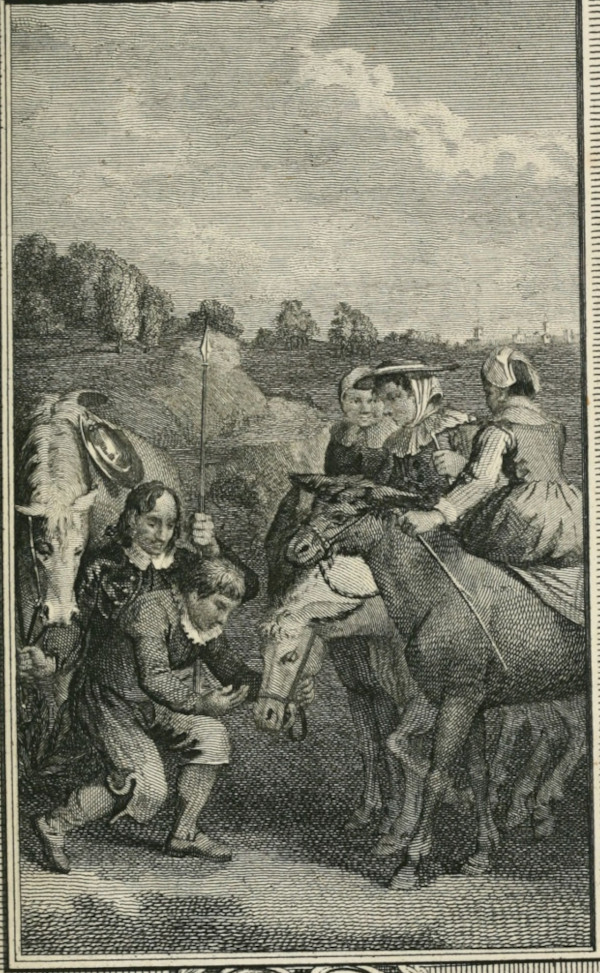
Plate II: Don Quixote Worships His Lady.
By this time Don Quixote having placed himself on his knees, by Sancho, gazed with staring eyes and troubled vision, upon the object which the squire called queen and princess; and perceiving nothing but a country-wench’s visage, and that none of the most agreeable, for it was round and flat-nosed, he remained in the utmost confusion and surprize, without daring to open his lips. The other two damsels were equally astonished at seeing a couple of such different figures kneeling before their companion, whom they had detained; but she, breaking silence, pronounced in a most ungracious and resentful manner, ‘Get out of the way, and let us pass, for we are in a hurry.’ To this apostrophe Sancho replied, ‘O princess and universal Lady of Toboso! do not your magnificent bowels yearn, to see upon his marrow-bones before your sublimated presence, the very pillar and prop of knight-errantry?’ One of the other two hearing this pathetick remonstrance, bauled aloud, ‘Would I had the currying that ass’s hide of thine: mind, forsooth, how your small gentry come and pass their gibes upon us country-folks; as if we could not give them as good as they bring. Go about your business, friend, and leave us to mind our’n, and so God b’w’ye.’
Here the knight interposing, said, ‘Rise, Sancho, I can plainly perceive that fortune, not yet tired of persecuting me, hath barred every avenue by which any comfort could arrive at the miserable soul that this carcase contains: and thou! the essence of every thing that is desirable in nature, thou sum of human perfection, and sole remedy of this afflicted heart, by which thou art adored! although that malicious inchanter, my inveterate enemy, hath spread clouds and cataracts before mine eyes, to them and them only changing and transforming thy unequalled beauty into the appearance of a poor country-wench; if he hath not also altered my figure into that of some frightful spectre horrid to thy view, deign to look upon me with complacency and love; because thou mayest perceive by this submissive posture I have assumed, even before thy person thus disguised, the humility with which my soul adores thy charms.’—‘You may go kiss my grannam,’ cried the damsel; ‘I’m a fine Madam, truly, to hear such gibberish; we should be more obliged to you if you would get out of our way, and let us go about our own affairs.’
Sancho accordingly quitted his hold, leaving her free to go whither she would, and highly pleased with the issue of his stratagem. The supposititious Dulcinea no sooner found herself at liberty, than pricking her palfrey with a goad which was in the end of a stick she had in her hand, the creature galloped, across the field with great speed, and feeling the application more severe than usual, began to plunge and kick in such a manner, that my lady fell to the ground. Don Quixote perceiving this accident, ran with great eagerness to raise her up, and Sancho made haste to adjust and gird on the pannel, which had got under the ass’s belly. This affair being set to rights, the knight went to lift his inchanted mistress in his arms, and placed her on her seat again; 335but she, starting up from the ground, saved him that trouble; for, retreating a few paces backwards, she made a small run, and clapping both hands upon the crupper, leaped upon the pannel as nimble as a falcon, seating herself astride like a man.
‘By St. Roque!’ cried Sancho, ‘my lady mistress is as light as a hawk, and can teach the most dextrous horseman to ride; at one jump she has sprung into the saddle, and, without spurs, made her palfrey fly like any zebra: and truly, her damsels are not a whit behind; for they go scouring along as swift as the wind.’ This was actually true; for Dulcinea was no sooner remounted than the other two trotted after her, and at last disappeared, after having gone more than half a league, at full speed, without once looking behind them.
Don Quixote followed them with his eyes, until they vanished; then turning to his squire, ‘Sancho,’ said he, ‘thou seest how I am persecuted by inchanters, and mayest perceive how far the malice and grudge they bear me extends; seeing they have deprived me of the pleasure I should have enjoyed at the sight of my mistress in her own beauteous form. Surely, I was born to be an example of misery; the very mark and butt for all the arrows of misfortune; nay, thou art also to observe, Sancho, that those traitors were not contented with a simple metamorphosis of my Dulcinea, but have transformed and changed her into the base and homely figure of that country-wench; robbing her, at the same time, of that which is so peculiar to ladies of fashion, I mean, that sweet scent which is the result of their living among flowers and perfume; for know, my friend, when I went to lift Dulcinea upon her palfrey, as thou sayest it was, though to me it seemed neither more nor less than a she-ass, I was almost suffocated and poisoned with a whiff of undigested garlick!’
‘O ye miscreants!’ cried Sancho, ‘O ye malicious and mischievous inchanters! would to God, I could see you all strung by the gills, like so many haddocks! much you know, much you can, and much more will you still be doing. Was it not enough, ye knaves, to change the pearls of my lady’s eyes into a couple of cork-tree galls, and her hair of shining gold into the bristles of a red cow’s tail; and, in short, so transmography every feature of her countenance; without your meddling with the sweetness of her breath, by which they might have discovered what was concealed beneath that bark of homeliness: though, to tell the truth, I saw not her homeliness but beauty, which was exceedingly increased by a mole upon her upper lip, something like a whisker, consisting of seven or eight red hairs, like threads of gold, as long as my hand.’—‘According to the correspondence which the moles of the face have with those of the body,’ said Don Quixote, ‘Dulcinea must have just such another on the brawny part of her thigh, of the same side; but hairs of such a length are, methinks, rather too long for moles.’—‘I do assure your worship,’ answered Sancho, ‘they seemed as if they had come into the world with her.’—‘I very well believe what you say, my friend,’ replied the knight; ‘for nature hath bestowed nothing on Dulcinea but what is perfectly finished; wherefore, if thou hadst seen an hundred such moles, in her would they be so many moons and resplendent stars: but tell me, Sancho, that which you adjusted, and which to me seemed a pannel, was it a plain pad or a side-saddle?’—‘It was a great side-saddle,’ answered the squire, ‘so rich that half the kingdom would not buy it.’—‘And why could not I see all this!’ said the knight. ‘I say again, Sancho, and will repeat it a thousand times, that I am the most unfortunate of men.’
The rogue Sancho, finding his master so dextrously gulled, and hearing him talk in this mad strain, could scarce refrain from laughing in his face: in fine, a good deal more of this sort of conversation having passed between them, they remounted their beasts, and took the road to Saragosa, where they expected to arrive time enough to be present at the solemn festival yearly celebrated in that famous city; but before they accomplished their journey, they met with adventures, which, for their variety, novelty, and greatness, deserve to be read and recorded, as in the sequel.
336
CHAP. XI. OF THE STRANGE ADVENTURE WHICH BEFEL THE VALIANT DON QUIXOTE, WITH THE CART OR WAGGON CONTAINING THE PARLIAMENT OF DEATH.
Don Quixote jogged along exceedingly pensive, his thoughts being engrossed by the scurvy trick which the inchanters had played him, in transforming his mistress Dulcinea into the disagreeable figure of a country-wench; and he could not conceive what remedy he should find for restoring her to her former shape. So much was he absorbed in this reflection, that he insensibly dropped the reins upon the neck of Rozinante, who being sensible of the liberty he enjoyed, at every two steps turned aside to take a pluck at the inviting pasture with which those fields abounded. At length Sancho Panza rouzed him from this fit of musing, saying, ‘Signior, melancholy was not made for beasts, but for men; and yet if men encourage melancholy too much, they become no better than beasts; good your worship, be contented, mind what you’re about, take hold of Rozinante’s reins, rouze up, awake, and shew that gaiety which all knights-errant ought to have. What the devil is the meaning of all this faint-heartedness? Sure you don’t know whether we are here or in France! let Satan rather run away with all the Dulcineas upon earth; for the health of one single knight is of more value than all the inchanted persons or transformations that ever were known.’—‘Peace, Sancho,’ cried Don Quixote, with a voice that was none of the faintest, ‘Peace, I say; and utter not such blasphemies against that inchanted lady, of whose disgrace and misfortune I am the sole cause: for, from the envy of my wicked foes, her mischance hath sprung.’—‘So I say,’ answered Sancho; ‘for, He that hath seen her before, let him look at her now, and her fortune deplore.’—‘Well mayest thou make that observation, Sancho,’ said the knight, ‘seeing thou sawest her in the full perfection of her beauty; as the inchantment did not extend so far as to disturb thy vision, or conceal her charms from thy view. No! against me alone, and my longing eyes, was the force of its poison directed! Yet, nevertheless, Sancho, I cannot help observing, that you made but an indifferent picture of her beauty; for if I rightly remember, you likened her eyes to pearls; now, eyes resembling pearls, are more peculiar to dead whitings than to living beauties; and, in my conjecture, Dulcinea’s must be rather like green emeralds, arched over with two celestial rainbows: those pearls, therefore, must be compared to her teeth, which, without doubt, you have mistaken for her eyes.’—‘Nothing more likely,’ answered the squire, ‘for I was as much confounded by her beauty as your worship by her ugliness; but let us recommend this whole business to God, who fore-ordains every thing that is to happen in this vale of tears; in this evil world of ours, where scarce any thing is to be had, without a mixture of falshood, knavery, and sin. One thing, dear Sir, of all others, gives me the greatest pain; and that is, to think what method is to be fallen upon, when your worship, after having vanquished some giant or knight, shall command him to go and present himself before the beauty of the Lady Dulcinea, where will this poor giant, or this poor miserable object of a vanquished knight, find out the person to whom he is sent? Methinks I see them strolling up and down, and gaping about thro’ the streets of Toboso, in quest of my Lady Dulcinea; and if they should stumble upon her in their way, they would no more know her than they would know my father.’—‘Sancho,’ resumed Don Quixote, ‘perhaps the inchantment will not extend so far as to disguise Dulcinea to the eyes of those vanquished giants and knights who shall present themselves before her; and in one or two of the first whom I shall conquer and send thither, we will make the experiment, commanding them to return and give me an account of what shall happen to them, with regard to that affair.’—‘Truly, Signior,’ said Sancho, ‘I heartily approve of your worship’s scheme; because, by this artifice, we will soon learn what we want to know; and if so be that she is only concealed from your worship, you are the most unfortunate person 337of the two; for as my Lady Dulcinea enjoys good health and satisfaction, we will comfort ourselves, and make the best of a bad bargain, going about in quest of adventures, and leaving the rest to time, who is the best physician for these and other greater calamities.’
Don Quixote would have replied, but was prevented by the appearance of a sort of waggon that crossed the road, full of the strangest figures that can be imagined, and conducted by a frightful dæmon that drove the mules. The cart being altogether open, without tilt or cover, the first figure that struck the eyes of Don Quixote, was Death itself in human shape; next to which appeared an angel with broad painted wings; on one side, stood an emperor with a crown (seemingly) of gold, upon his head; and hard by Death, was the god Cupid, with his bow, quiver, and arrows, but without the bandage on his eyes; there was likewise a knight armed cap-a-pee, except that he wore neither helmet nor head-piece, but a hat adorned with a plume of variegated feathers. Besides these, there were other personages of different countenance and dress; so that the whole groupe appearing of a sudden, discomposed our hero a little, and filled the heart of Sancho with fear; but Don Quixote soon recollected himself, and rejoiced, because he looked upon it as some new and perilous adventure. On this supposition, and with an effort of courage capable of encountering the greatest danger, he placed himself before the wain, and with a loud and threatening voice, pronounced, ‘Driver, coachman, devil, or whatsoever thou art, tell me straight, whither thou art going, and who those people are whom thou drivest in that carriage, which looks more like Charon’s bark than any modern vehicle.’ The devil stopping his waggon very courteously, replied, ‘Signior, we are players belonging to the company of Angulo el Malo, and have, this morning, which is the octave of Corpus Christi, been representing, in a village on the other side of yon hill, the piece called the Parliament of Death, which we are going to act over again, this very evening, in that other village now in sight; we therefore travel in our habits, to save ourselves the trouble of undressing and dressing anew; this young man plays the part of Death, that other represents an angel; the woman, who is the author’s wife, acts the queen; he with the plume of feathers is our hero; the emperor you may distinguish by his gilded crown; and I am the devil, which is one of the best characters in the performance, for I myself am the chief actor of this company. If your worship is desirous of knowing any thing else concerning our affairs, question me freely, and I will answer with the utmost punctuality, for being a devil I understand every thing.’
‘By the faith of a knight-errant!’ said Don Quixote, ‘when I first descried the waggon, I thought myself on the eve of some great adventure; and now I affirm, that a man ought to examine things with more senses than one, before he can be assured of the truth; proceed, my honest friends, a God’s name, in order to exhibit your entertainment, and if I can serve you in any respect, you may command my endeavours, which shall be heartily and freely exerted for your advantage; for, from my childhood, I have been a great lover of masques and theatrical representations.’
While this conversation passed between them, they chanced to be overtaken by one of the company, dressed in motley, hung round with a number of morrice-bells, with a pole in his hand, to the end of which were tied three blown ox-bladders. This merry-andrew advancing to Don Quixote, began to fence with his pole, beating the ground with his bladders, and skipping about, so that his bells rung continually: till at length Rozinante, being disturbed at the uncommon apparition, took the bridle between his teeth; and the knight being unable to restrain him, began to gallop across the plain with more nimbleness than could have been expected from the bones of his anatomy. Sancho seeing his master in danger of falling, leaped from Dapple, and ran with all dispatch to give him all possible assistance; but before he came up, the knight was overthrown close by Rozinante, who had come to the ground with his lord; and this was the usual end and consequence of all his frolicksome adventures. Scarce had Sancho quitted his beast, to run to the 338assistance of his master, when the bladder shaking devil jumped upon Dapple, and began to belabour him with his rattle; so that being frightened at the noise, rather than with the smart of the application, he took to his heels, and flew towards the village where they intended to perform. Sancho seeing, at the same time, the career of Dapple, and his master’s fall, scarce knew which of these misfortunes he ought first to remedy; but at length, as became a loyal servant and trusty squire, his love for his master prevailed over his tenderness for the beast; though every time he saw the bladders railed aloft, and discharged upon Dapple’s buttocks, he felt the pangs and tortures of death, and would rather have received every thwack upon the apple of his own eye than have seen it fall upon the least hair of his ass’s tail.
In this state of perplexity and tribulation, he arrived at the place where Don Quixote lay in a very indifferent plight, and helping him to mount Rozinante, ‘Signior,’ said he, ‘the devil has run away with Dapple.’—‘Which devil?’ cried the knight. ‘He with the bladders,’ answered the squire. ‘I will retrieve him,’ replied Don Quixote, ‘even if he should conceal him in the darkest and deepest dungeon in hell; follow me, Sancho, the waggon moves slowly, and the mules shall atone for the loss of Dapple.’
‘There is no occasion for putting ourselves to that trouble,’ said the squire: ‘good your worship, be pacified! for I see the devil has quitted my ass, and returned to the rest of his crew.’
This observation was actually true; Dapple and his new rider had come to the ground, in imitation of the knight and Rozinante: upon which the devil trudged on foot to the village, and the ass returned to his right owner. ‘For all that,’ said Don Quixote, ‘it will not be amiss to punish the troop for that devil’s incivility, though it should be in the person of the emperor himself.’—‘I hope your worship’s imagination will harbour no such thoughts,’ answered Sancho; ‘take my advice, and never meddle with players, who are a set of people in such high favour with the publick, that I have known an actor taken up for two murders, and yet ’scape scot-free: your worship must know, that being the ministers of mirth and pleasure, they are favoured, protected, assisted, and esteemed by every body; especially if they belong to the king’s company, or to some grandee; in which case all, or most of them, look like princes in their manners and dress.’—‘Nevertheless,’ replied the knight, ‘that farcical devil shall not escape unpunished, or applaud himself for what he has done, though all mankind should appear in his favour.’
So saying, he rode towards the waggon, which was by this time pretty near the village, and called aloud, ‘Stay, my merry men; halt a little, and I will teach you how to treat the asses and cattle belonging to the squires of knights-errant.’ Don Quixote hallooed so loud as to be heard and understood by the people in the waggon, who judging, by his words, the intention of the speaker, Death instantly jumped out of the cart, and was followed by the Emperor, the Devil-driver, and the Angel, with the Queen and Cupid in their train; in short, the whole company armed themselves with stones, and, drawing up in order of battle, stood without flinching, to receive the assailant at point of pebble.
The knight perceiving them arranged in such a formidable squadron, their arms lifted up in a posture that threatened a powerful discharge of stones, checked Rozinante, and began to consider in what manner he should attack them, with least hazard to his person. During this pause, Sancho came up, and seeing him bent upon a assaulting such a well-compacted brigade, ‘It will be the height of madness,’ said he, ‘to attempt any such adventure; consider, dear Sir, that there is no kicking against the pricks; and that there is no armour upon earth sufficient to defend your body from such a shower, unless your worship could creep into a bell of brass; you ought also to remember, that it favours more of rashness than of true valour, for one man to attack a whole army, in which Death and emperors fight in person, being aided and assisted both by good and evil angels; and if that consideration will not prevail upon you to be quiet, you ought to be diverted from your purpose, by knowing certainly, that among all those enemies in the appearances 339of kings, princes, and emperors, there is not so much as one single knight-errant.’—‘Now, indeed,’ cried Don Quixote, ‘thou hast hit upon the sole reason that can and ought to dissuade me from my determined design; I neither can nor ought to draw my sword (as I have told thee, on many other occasions) against any person who hath not received the honour of knighthood; to thee, Sancho, it belongs, if so thou art inclined, to take vengeance for the injury done to Dapple, while I from hence will assist and encourage thee with salutary advice.’—‘Signior,’ answered the squire, ‘there is no occasion to take vengeance of any person whatever; for it is not the part of a good Christian to revenge the wrongs he hath suffered: besides, I will prevail upon my ass to leave the affair to my inclination, which is to live peaceably all the days that Heaven shall grant me in this life.’—‘Since that is thy determination,’ replied the knight, ‘honest Sancho, discreet Sancho, christian and sincere Sancho, let us leave these phantoms, and go in quest of adventures more dignified and substantial; for this country seems to promise a great many, and those very extraordinary too.’
He accordingly turned his horse, Sancho went to catch Dapple, while Death, with his whole flying squadron, returned to their waggon, and proceeded on their journey. Thus was the dismal adventure of the waggon of Death happily terminated by the wholesome advice which Sancho Panza gave to his master; who next day met with another equally surprizing, in the person of an enamoured knight-errant.
CHAP. XII. OF THE STRANGE ADVENTURE THAT HAPPENED TO THE VALIANT DON QUIXOTE, IN HIS ENCOUNTER WITH THE KNIGHT OF THE MIRROURS.
The night that followed the rencounter with Death, Don Quixote and his squire passed among some tall and shady trees; the knight, by Sancho’s persuasion, having eaten of what was found in the store that Dapple carried. During this meal, Sancho said to his master, ‘What a fool should I have been, Signior, if I had chosen, by way of gratification, the spoils of your worship’s first adventure, instead of the three foals? Verily, verily, a bird in hand is worth two in the bush.’—‘But, for all that,’ answered Don Quixote, ‘hadst thou suffered me to attack them, as I intended, thou wouldst have enjoyed among the spoils the emperor’s golden crown, with Cupid’s painted wings, which I would have stripped off against the grain, and put into thy possession.’—‘The sceptres and crowns of your stage emperors are never made of pure gold, but of tin or tinsel,’ replied the squire. ‘True,’ said the knight, ‘the ornaments of comedy ought not to be rich and real, but feigned and artificial, like the drama itself, which I would have thee respect, Sancho, and receive into favour, together with those who represent and compose it; for they are all instruments of great benefit to the commonwealth, holding, as it were, a looking-glass always before us, in which we see naturally delineated all the actions of life; and no other companion whatever represents to us more lively what we are, and what we ought to be, than comedy and her attendants; for example, hast thou never seen a play acted, in which kings, emperors, popes, knights, ladies, and many other characters, were introduced? One acts the ruffian, another the sharper, a third the merchant, a fourth the soldier, a fifth the designing fool, and a sixth the simple lover; but the play being ended, and the dresses laid aside, all the actors remain upon an equal footing.’—‘Yes, I have seen all this,’ answered Sancho. ‘Then the very same thing,’ said the knight, ‘happens in the comedy and commerce of this world, where one meets with some people playing the parts of emperors, others in the characters of popes; and, finally, all the different personages that can be introduced in a comedy; but when the play is done, that is, when life is at an end, Death strips them of the robes that distinguished their stations, and they become all equal in the grave.’—‘A brave comparison!’ cried Sancho, ‘though not so new but I have heard 340it made on divers and sundry occasions as well as that of the game of chess, during which every piece maintains a particular station and character; and when the game is over, they are all mixed, jumbled, and shaken together in a bag, like mortals in the grave.’—‘Sancho,’ resumed the knight, ‘every day you become less simple and more discreet.’—‘Yes,’ said the squire, ‘some small portion of your worship’s discretion must needs stick to me; as lands which are, in their own nature, sapless and barren, being well dunged and cultivated, come to yield excellent fruit. My meaning is, that your worship’s conversation hath fallen like dung upon the barren desart of my understanding, which being cultivated by the time of my service and communication, will, I hope, produce blessed fruit, such as shall not disgrace, nor stray from the path of that good breeding which your worship hath bestowed on my narrow capacity.’
Don Quixote could not help smiling at the affected terms in which Sancho delivered himself, though what he said of his own improvement was actually true; for at certain times he talked to admiration; and yet when he attempted to argue, or speak in a polite stile, his efforts always, or for the most part, ended in precipitating himself from the pinnacle of simplicity to the depth of ignorance; his chief talent laying in his memory, which never failed to furnish him with proverbs that he lugged into his discourse, whether they were pat to the purpose or not, as may be seen and observed through the whole course of this history.
In this, and other such conversation, the greatest part of the night elapsed, when Sancho began to be inclined to let fall the portcullices of his eyes, as he termed it, when he wanted to go to sleep: he therefore unpannelled Dapple, to let him graze among the rich pasture with which the place abounded; but Rozinante’s saddle he would not remove, in consequence of his master’s express order, which was never to unsaddle his steed while they were in the field, or did not sleep under cover; it being an ancient established custom, observed by all knights errant, in these cases, to take the bridle out of the horse’s mouth, and hang it upon the pummel of the saddle, but to leave the saddle itself untouched. This expedient was accordingly performed by Sancho, who turned Rozinante loose with Dapple; and between these two animals such a strict reciprocal friendship subsisted, that, according to tradition from father to son, the author of this true history wrote particular chapters on this very subject; but, in order to preserve the decency and decorum which belongs to such an heroick composition, omitted them; though sometimes he seems to neglect this precaution, and writes, that these two friends used to approach and scrub each other most lovingly; and after they had rested and refreshed themselves, Rozinante would stretch his head more than half a yard over Dapple’s neck, while the two were wont to stand in this posture, with their eyes fixed upon the ground, three whole days together; at least, till they were parted, or compelled by hunger to go in quest of sustenance; nay, it is confidently reported, that the author had compared their mutual attachment to the friendship of Nisus or Euryalus, or that which subsisted between Pylades and Orestes. If this be the case, we may with admiration conceive how firm the fellowship of those two pacifick animals must have been; to the utter confusion of mankind, who so little regard the laws of friendship and society, according to the common saying, ‘there is no trust in profession; the staff will turn into a spear[150],’ and, as the song goes, ‘the modes of the court so common are grown, that a true friend can hardly be met.’ Let no man imagine the author went out of his road, in comparing the friendship of brutes with that of the human species; for men have received valuable hints, and learned many things of importance from beasts, such as the clyster from storks, gratitude and the use of vomits from dogs, vigilance from the crane, foresight and frugality from the ant, honesty from the elephant, and loyalty from the horse.
In fine, Sancho went to sleep at the 341root of a cork-tree, and Don Quixote began to slumber under an oak; but being in a very little time awaked by a noise behind him, he started up, and employing both eyes and ears to distinguish whence it proceeded, he perceived two men on horseback, one of whom, letting himself drop, as it were, from the saddle, said to the other, ‘Alight, my friend, and unbit the horses; for this place seems to abound with pasture for them, and with silence and solitude, which are the necessary food of my amorous thoughts.’ He had no sooner pronounced these words, than he threw himself upon the ground, and his armour rattled as he fell, furnishing Don Quixote with a manifest proof of his being a knight-errant: he therefore approached Sancho, who was asleep, and shaking him by the arm, with no small difficulty, brought him to himself; saying, in a low voice, ‘Brother Sancho, here is an adventure.’—‘God grant it may be a good one,’ answered the squire; ‘and pray, Signior, whereabouts may her ladyship be?’—‘Where?’ said Don Quixote, ‘turn thine eyes this way, and behold lying upon the grass a knight-errant, who, by what I have already observed, cannot be over and above easy in his mind? for I saw him throw himself upon the ground, with evident marks of vexation, and heard his armour clatter in his fall.’—‘But how has your worship found that this is an adventure?’ replied the squire. ‘I will not positively say that it is altogether an adventure,’ answered the knight, ‘but rather the beginning of one: for thus they usually commence: but hark! he seems to tune a lute or rebeck, and by his hawking and hemming, I suppose he is going to sing.’—‘In good faith, it is even so,’ said Sancho, ‘and he must be some knight-errant in love.’—‘All knights-errant are so,’ resumed Don Quixote; ‘but let us listen, and by the thread of his song, discover the clue of his thoughts; for, From the abundance of the heart the tongue speaketh.’
Sancho would have made some reply, but was prevented by the voice of the Knight of the Wood, which was neither very sweet nor disagreeable; and, listening with surprize, they heard him sing the following song:
I.
‘Subjected to thy sov’reign will,
Ah, cruel maid! my fate decree:
The sentence, tho’ inhuman, still
Shall never be declin’d by me.
II.
‘Say, that my death thy joy would move,
My breath with freedom I’ll resign—
Or wouldst thou listen to my love,
The God himself shall whisper mine.
III.
‘This heart, thy vassal whilst I live,
Like ductile wax, and diamond hard,
Thy stamp will yieldingly receive,
And keep th’ impression unimpair’d.’
The Knight of the Wood finished this complaint with an ‘Ah!’ that seemed to be heaved from the bottom of his soul, and soon after exclaimed, in a sorrowful tone, ‘O thou most beautiful and ungrateful woman upon earth! is it possible, that the most serene Casildea de Vandalia has doomed this her captive knight to consume and exhaust himself in continual peregrinations, in harsh and rugged toils? Is it not enough that I have established the fame of thy beauty above all comparison, by the extorted confession of all the knights of Navarre, Leon, Tartesia, Castile, and finally of La Mancha?’
‘Not so, neither,’ cried Don Quixote, interposing; ‘for I, who am of La Mancha, never made any such acknowledgment; neither could I, or ought I, to make a confession so prejudicial to the beauty of my own mistress: therefore, Sancho, this knight must certainly be disordered in his judgment; but let us listen, perhaps he will explain himself.’—‘Very like,’ answered the squire, ‘he seems to be in the humour of complaining for a whole month.’
But this was not the case; for the Knight of the Wood, hearing people talk so near him, proceeded no farther in his lamentation, but starting up, called with a courteous and sonorous voice, ‘Who is there? are you of the number of the happy or afflicted?’—‘Of the afflicted,’ replied Don Quixote.—‘Come hither, then,’ resumed the stranger, ‘and depend upon it you will 342find the very essence of sorrow and affliction.’
Don Quixote hearing him speak in such civil and pathetick terms, went towards him, with Sancho at his back, when the complaining knight took him by the hand, saying, ‘Sit down, Sir knight, for that you are one of those who profess knight-errantry, I am convinced by finding you in this place, accompanied by solitude and the dews of night, which are the peculiar companions of those who belong to our order.’
To this address Don Quixote replied, ‘I am a knight of that order you mention; and though melancholy, mischance, and misfortune, have taken up their habitation in my soul, they have not been able to banish from it that compassion which I feel for the unhappy. From the soliloquy you just now uttered, I gather that your misfortunes are of the amorous kind; I mean, that they proceed from the passion you entertain for that beautiful ingrate whom you named in your complaint.’ While this conversation passed, they sat down together upon the grass, with all the marks of amity and good fellowship, as if at break of day they had not been doomed to break each other’s head. ‘Perchance, Sir Knight,’ said the stranger, ‘you are in love?’—‘By mischance I am so,’ answered Don Quixote, ‘though the vexation that proceeds from well placed affection ought rather to be deemed a benefit than misfortune.’—‘True,’ said the Knight of the Wood, ‘if our judgment and reason are not disturbed by disdain, which, if exerted severely, seems a-kin to revenge.’—‘I never was disdained by my mistress,’ replied Don Quixote. ‘No, indeed,’ (cried Sancho, who stood hard by) ‘my lady is as meek as a lamb, and as soft as butter.’
The stranger knight asked if that was his squire; and the other answering in the affirmative, ‘I never saw a squire,’ said he, ‘that, like him, durst intrude upon his master’s conversation; at least, I can say so much for mine, who, though as tall as his father, was never known to open his lips, when I was engaged in discourse.’—‘In good faith!’ cried Sancho, ‘I have spoke, and will speak again, before as good a man as—but let that rest—the more you stir it, the more it will——.’
Here the other squire took hold on Sancho by the arm, saying, ‘Let you and I go somewhere, and talk our bellies-full, in our own way, and leave our masters at liberty to recount their amours; for sure I am, the night will be spent before they are done.’—‘With all my heart,’ replied Sancho, ‘and I will tell your worship who I am, that you may see whether or not I am qualified to be ranked among your talking squires.’ They accordingly retired together, and between them passed a conversation every bit as merry as that of their masters was grave.
CHAP. XIII. IN WHICH IS CONTINUED THE ADVENTURE OF THE KNIGHT OF THE WOOD—WITH A SAGE, UNCOMMON, AND AGREEABLE DIALOGUE, THAT PASSED BETWEEN THE TWO SQUIRES.
The knights and their squires being thus parted, the first entertained each other with the story of their loves, while the last indulged themselves with a reciprocal account of their own lives: but the history first of all records the conversation of the domesticks, and then proceeds to relate what passed between the masters. The squires, therefore, having chosen a situation at a convenient distance from the knights, he of the wood accosted Sancho in these words: ‘Signior, this is a troublesome life that we squires to knights-errant lead; in good soothe, we earn our bread with the sweat of our brows, which is one of the curses that God denounced against our first parents.’—‘It may also be said,’ replied Sancho, ‘that we earn it with the frost of our bodies; for no creatures on earth suffer more heat and cold than the miserable squires of knight-errantry; and even that would be more tolerable, if we had any thing good to eat; for, Hearty fare lightens care, as the saying is; but we often pass a whole day, nay sometimes two, without ever breaking our fast, except upon the winds of heaven.’—‘All this,’ said the other, ‘may be endured, with the hope of reward; for if the knight-errant 343is not extremely unfortunate, his squire must, in a very little time, see himself recompensed with the handsome government of some island, or with the possession of a profitable earldom.’—‘For my own part,’ answered Sancho, ‘I have already told my master, that I shall be satisfied with the government of an island, which he has been so noble and generous as to promise me, divers and sundry times.’—‘And I,’ said the stranger, ‘am contented with a canonship, which my master has already bespoke for me, on account of my faithful services.’—‘It seems, then, your master must be an ecclesiastical knight,’ replied Sancho, ‘seeing he can provide for his squire in the church: but as for mine, he is a mere layman; though I remember, that certain very wise persons (and yet, I believe, not very honest at bottom) advised him to procure for himself an archbishoprick; but he would be nothing but an emperor: and I was then in a grievous quandary, for fear he should take it in his head to be of the church; in which case, I should not have been qualified to hold a benefice; for your worship must know, though I look like a man, I am no better than a beast at church-matters.’—‘Verily,’ said he of the wood, ‘your worship mistakes the matter quite; your governments of islands are not at all desirable; some are vexatious, some are beggarly, others attended with much melancholy and fatigue; in short, the most creditable and orderly brings along with it a load of care and inconvenience, that lies heavy on the shoulders of the unhappy person whose lot it is to bear it: it would be abundantly better for us to undergo this accursed slavery, to return to our own homes, and there amuse ourselves with more agreeable pastime; such, for example, as hunting or fishing; for what squire is there on earth, so poor as to want a horse, a couple of hounds, and a fishing-rod, wherewith to entertain himself at his own habitation?’
‘For my own part,’ answered Sancho, ‘I want none of these conveniencies: true it is I have not a horse, but then I am in possession of an ass, which is worth my master’s steed twice over. God let me never see a joyful Easter, if I would truck with him for four bushels of barley to boot; you may laugh, if you will, at the price I set upon Dapple, (for that is the colour of my beast;) then, I should never be in want of hounds; for there are plenty, and to spare, in our town, and you know nothing is so relishing as to hunt at another’s expence.’—‘Really and truly, Signior Squire,’ resumed the stranger, ‘I am fully resolved and determined to quit these knights-errant, with all their crazy pranks, and betake myself to my own town, where I will bring up my children; for, thank God, I have three, like as many oriental pearls.’—‘And I have a couple,’ said Sancho, ‘that may be presented to the pope in person; especially my daughter, whom I breed up to be a countess, by the blessing of God, though it be contrary to her mother’s inclination.’—‘And of what age may this young lady be, whom you are breeding for a countess?’ said the squire of the wood. ‘Fifteen years, or thereabouts,’ answered Sancho; ‘but she is as tall as a spear, fresh as an April morn, and strong as a porter.’—‘These are qualifications not only for a countess, but even for the nymph of the greenwood-tree,’ said the other: ‘ah, the whoreson baggage! what a buxom jade she must be.’ Sancho, nettled at this epithet, replied, ‘She is no whore, neither was her mother before her; nor shall either of them be so, an please God, whilst I live: so I think you might talk more civilly; for, considering your worship has been bred among knights-errant, who are, as it were, courtesy itself, methinks your words might be better chosen.’—‘How little are you acquainted with the nature of commendation, Signior Squire?’ answered he of the wood. ‘Don’t you know, that when any cavalier, at a bull-feast, wounds the bull dextrously, or when any person behaves remarkably well, the people exclaim, “How cleverly the son of a whore has done it?” and that which looks like reproach, is on such occasions a notable commendation. Take my word, Signior, you ought to renounce all children, if their behaviour does not entitle the parents to such praise.’—‘I do renounce them,’ answered Sancho; ‘at that rate, and for that reason, your worship may call my wife and 344daughter as many whores as you please; for both in word and deed, they richly deserve the name; and that I may see them again, I beseech God to deliver me from this mortal sin, which will be the case, if he delivers me from this dangerous employment of squire, which I have incurred a second time, being seduced and enticed by a purse of one hundred ducats, which I found one day in the midst of the Brown Mountain; and the devil continually sets before mine eyes, here and there and every where, a bag full of doubloons, which, at every step, methinks I have fast in my clutches, hugging it in my arms, and carrying it home to my own house, where I purchase mortgages and estates, and live like any prince; and while I please myself with these notions, I bear, without murmuring, all the toils and fatigues I undergo, in the service of the wiseacre my master, who, I know, is more of a madman than a knight.’