Plate 191.
Reading edition
CEROPEGIA Haygarthii. Natal, Cape Province. Asclepiadaceae. Tribe Ceropegieae. Ceropegia, Linn.; Benth. et Hook. f. Gen. Plant. vol. ii. p. 779.
Ceropegia Haygarthii, Schltr. in Engl. Bot. Jahrb. vol. xxxviii. 46, fig. 7 A; Fl. Cap. vol. v. sect. i. p. 813.
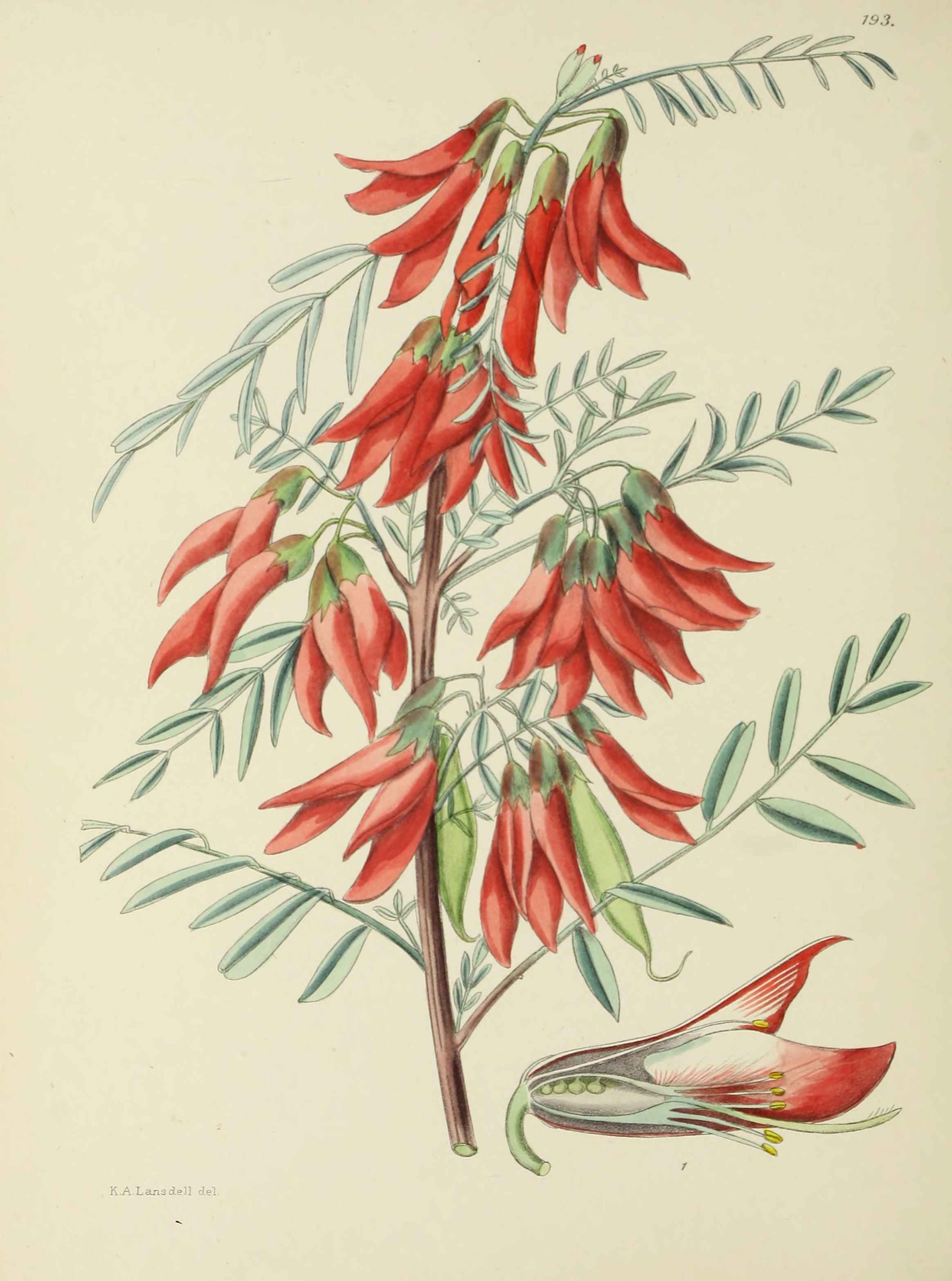
This beautiful species of Ceropegia is almost unique in the genus on account of the peculiar formation of the corolla-lobes. The illustration should be compared with those given on Plates 39, 44 and 143, and the striking differences will then be seen. It is closely related to C. tristis, Hutch. described on Plate 44, but the corolla-lobes are produced into a much longer cylindric portion and the calyx-lobes are longer.
The specimen from which our illustration was made flowered in the greenhouse at the Division of Botany in July 1925, and like the other species of the genus always attracts attention owing to the peculiar shape of the flowers.
Description:—Stem climbing, fleshy, 3 to 4 mm. thick, glabrous. Leaves small, fleshy, flat, 0·6 to 3·5 cm. long, 0·3 to 2·5 cm. broad, ovate or ovate-lanceolate, acuminate. Cymes 1-2-flowered, lateral at the nodes. Peduncles 2 to 4 cm. long, glabrous. Bracts 2 to 4 mm. long, subulate. Pedicels 1 to 1·4 cm. long, glabrous. Sepals 1 cm. (0·5 cm., Schlechter) long, subulate, glabrous. Corolla abruptly bent at a right angle near the base. Tube (following the bend) about 3·5 cm. long, according to a drawing, or about 2·5 cm. long in dried flowers, globosely inflated at the base, cylindric above, enlarging (according to a drawing) to about 2 cm. in diam. at the mouth, pinkish-white or greenish tinted, spotted with violet, glabrous outside, pilose with very fine long hairs within. Lobes free at the base, abruptly inflexed over the mouth of the tube and produced beneath into broad triangular partition-like green plates or keels, meeting at the centre and connate into a slender erect column 1 to 1·4 cm. long, then again becoming free and expanding into elliptic-lanceolate replicate segments connate at the tips, forming a small apical ellipsoid cage-like body 5 to 6 mm. long, ciliate on the margins, dull purple or purple-brown. Corona in the flowers seen much eaten by insects, but apparently the outer corona is cupular, with 5 acutely bifid lobes rising to the level of the top of the staminal column, ciliate and hairy within with long fine hairs. Inner corona-lobes 2 mm. long, linear or linear-spathulate, connivent-erect over the staminal column, with very revolute tips. (Fl. Cap.—National Herb., Pretoria, No. 2932.)
Plate 191.—Fig. 1, calyx; Fig. 2, ground plan of corolla from above; Fig. 3, terminal portion of corolla lobes; Fig. 4, corona.
F.P.S.A., 1925.