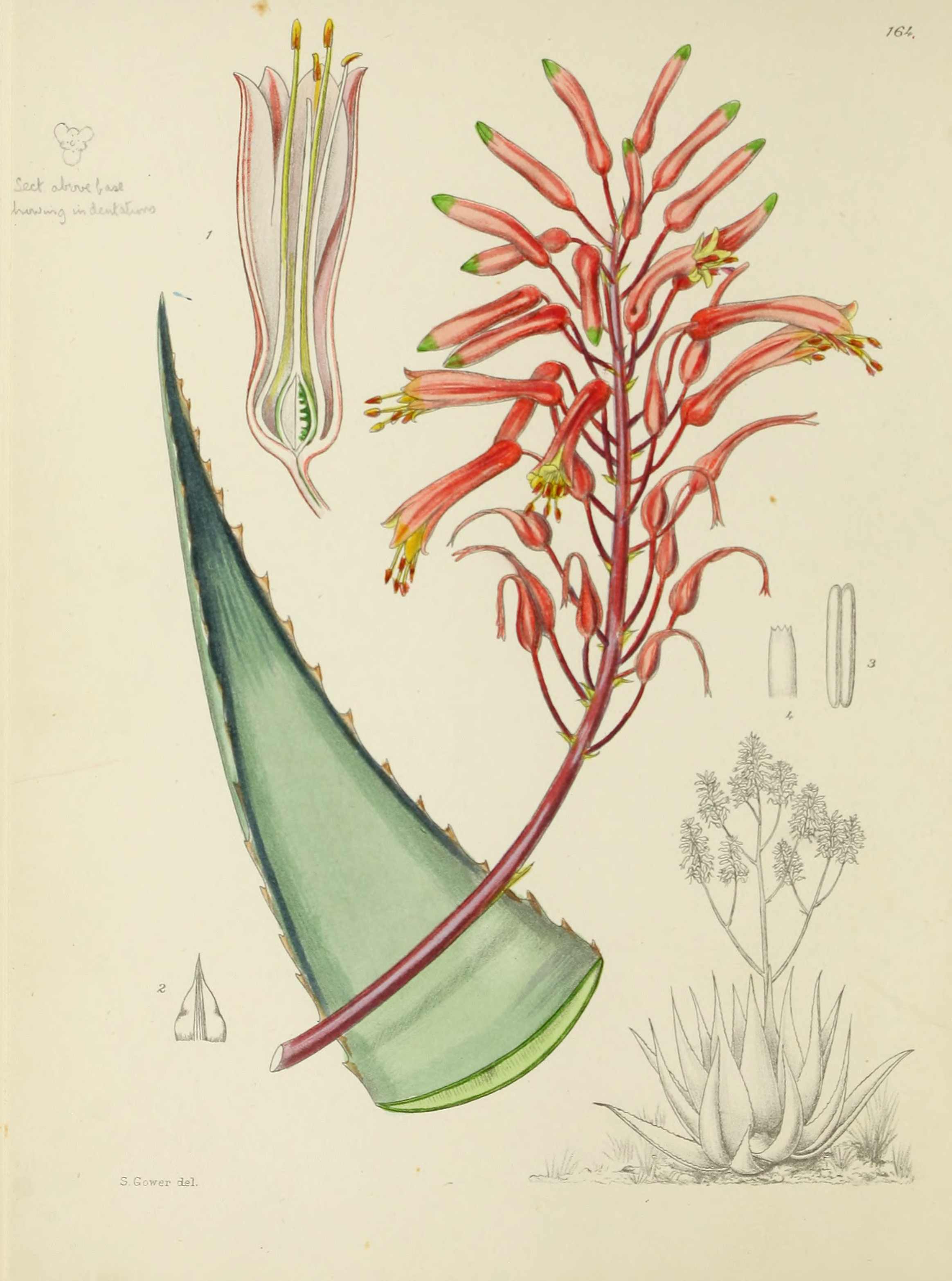
Plate 163.
Reading edition
GLADIOLUS trichostachys. Transvaal. Iridaceae. Tribe Ixieae. Gladiolus, Linn.; Benth. et Hook. f. Gen. Plant. vol. iii. p. 709.
Gladiolus trichostachys, Baker in Bull. Herb. Boiss. ser. II. vol. iv. p. 1006.
This charming little Gladiolus was first found by Conrath at Irene, near Pretoria, and was again collected by Dr. I. B. Pole Evans, C.M.G., in the same locality. It was described by Baker, with several other Transvaal species, in 1904, but is here figured for the first time.
The plant produces a single erect flowering stem with clasping leaves scarcely produced above. The species belongs to the Section Hebea, which we have illustrated on Plates 63 and 165 (G. alatus, G. orchidiflorus), and is closely related to G. permeabilis, a species common in the Cape Province, but which also extends into Bechuanaland. It is, however, easily distinguished from this species by the non-produced leaves and hairy stems.
Our illustration was made from the specimens collected by Dr. I. B. Pole Evans, C.M.G., at Irene.
Description:—Bulb 2 cm. in diameter, globose, covered with brown fibres. Stem pilose on the lower half. Leaves clasping the stem, sheath pilose, hardly produced. Inflorescence 13 cm. long, 7-to 10-flowered. Outer spathe-valves 1·5 cm. long, somewhat membranous above, entire, bifid or trifid; inner spathe-valves similar to the outer, bifid. Stamens shorter than the style; anthers somewhat sagittate at the base. Style-branches cuneate, fimbriate on the edges.
Plate 163.—Fig. 1, plant much reduced; Fig. 2, median longitudinal section of flower; Fig. 3, outer spathe-valve; Fig. 4, inner spathe-valve; Fig. 5, anther; Fig. 6, portion of style with style branches.
F.P.S.A., 1925.