Plate 166.
Reading edition
LACHENALIA tricolor. var. LUTEOLA. Cape Province. Liliaceae. Tribe Scilleae. Lachenalia, Jacq.; Benth. et Hook. f. Gen. Plant. vol. iii. p. 807.
Lachenalia tricolor, Thunb. var. luteola, Baker.; Jacq. Collect. vol. iv. p. 148; Ic. vol. ii. p. 16, t. 395; Fl. Cap. vol. vi. p. 424.
The Lachenalia figured on the accompanying plate is among the most graceful species in the genus. It is closely allied to L. pendula, illustrated on Plate 158, but is distinguished by having the inner perianth-segments much longer than the outer. The plant was known to horticulturists in Europe almost 150 years ago, and was figured in colour between 1786 and 1793 by Jacquin, and again in the Botanical Magazine in 1807.
L. tricolor grows in the sandy parts of the Cape Province, but lends itself to cultivation in pots. It has been successfully grown at Irene, near Pretoria, by Dr. I. B. Pole Evans, C.M.G., from bulbs supplied by Lady Smartt of “Glen Ban,” Stellenbosch, C.P., and from these specimens our illustration was made.
In the young flowering stage the buds are quite green, but become yellow in the lower half as they grow older, while in the adult flower the colour is a deep chrome (R. C. S.).
Description:—Bulb globose, 1·3 cm. in diameter, with long white roots from the base. Leaves 2, up to 17 cm. long, 2·5 cm. broad at the base, 2 cm. broad above, strap-shaped, obtuse, glabrous. Peduncle up to 16 cm. long, terete, green, spotted with brown. Flowers racemose, pendulous, each flower arising from a small pocket formed by the bract. Bract 3 mm. long, ovate-lanceolate, obtuse, with a conical blunt spur. Outer perianth-segments 1·6 cm. long, oblong, obtuse, one slightly beaked below the apex; inner segments 2·6 cm. long, widened upwards, obtuse. Stamens hardly exerted. Style as long as the stamens, penicillate at the apex. (National Herb. Pretoria, No. 2857.)
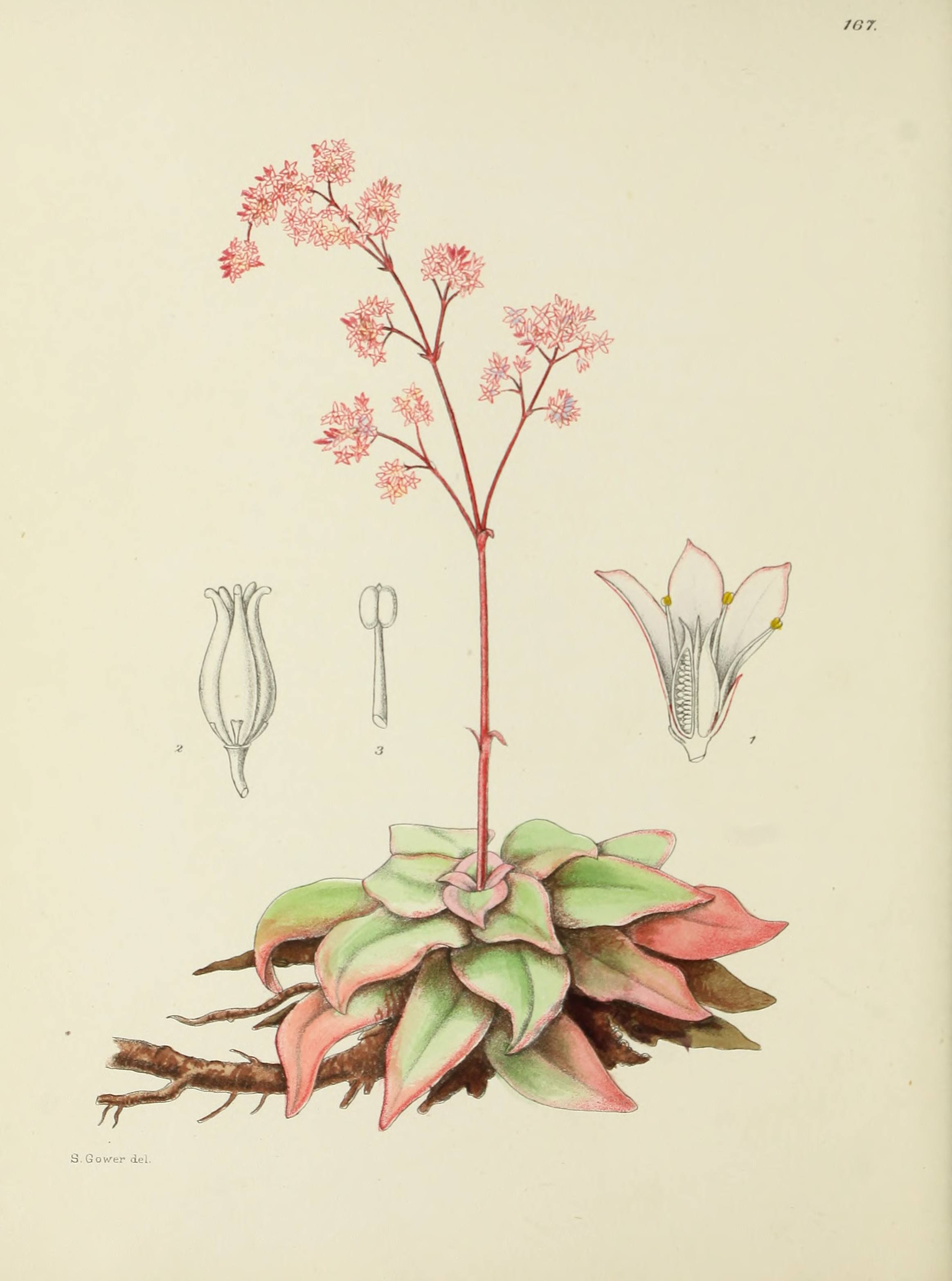
Plate 166.—Fig. 1, whole plant much reduced; Fig. 2, median longitudinal section of the flower; Fig. 3, bulb; Fig. 4, part of peduncle showing pocket-like bracts; Fig. 5, stamen; Fig. 6, upper portion of style showing stigma.
F.P.S.A., 1925.