Volume 5 — THE LOVES OF AL-HAYFA AND YUSUF.[177]
Richard Francis Burton translation · Edition 2
THE LOVES OF AL-HAYFA AND YUSUF.[177]
123I had a familiar in the Northern region who was called ’Abd al-Jawád and he was one of the greatest of merchants there and made of money; also he loved voyage and travel, and at whatever time I visited him and we forgathered, I and he, we exchanged citations of poetry. Now one day my heart yearned to visit him, so I repaired to his place and found him there; and as we came together we both sat down in friendly converse, I and he; and he said to me:—“O my brother, do thou hear what happened and was accomplished for me in these times. I travelled to the land of Al-Yaman and therein met a familiar who, when we sat down to talk, I and he, said:—O my brother, verily there befel me and betided me in the land of Al-Hind a case that was strange and an adventure that was admirable and it ran as follows. There was erewhile a King of the kings of India and one of her greatest, who was abundant in money and troops and guards and he was called Al-Mihrján.”[178] This same was a lord of high degree and a majestic and he had lived for a long while of his age without having issue male or female. Wherefor he was full of cark and care wanting one who after him would preserve his memory, so he 124said in his mind one night of the nights, “Whenas I die cut off shall be my name, and effaced shall be my fame nor shall anyone remember me.” So saying he raised both hands to Heaven and humbled himself before Allah (be He extolled and exalted!) to vouchsafe him a child who should outlive him with the view that man might not lose the memory of him. Now one night as he was sleeping a-bed dreaming and drowned in slumber behold, he heard a Voice (without seeing any form) which said to him, “O Mihrjan the Sage, and O King of the Age, arouse thee this moment and go to thy wife and lie with her and know her carnally, for she shall indeed conceive of thee at this very hour and bear thee a child which, an it be a boy shall become thine aider in all thine affairs but will, an it prove a girl, cause thy ruin and thy destruction and the uprooting of thy traces.” When Al-Mihrjan heard from the Speaker these words and such sayings, he left his couch without stay or delay in great joy and gladness and he went to his wife and slept with her and swived her and as soon as he arose from off her she said, “O King of the Age, verily I feel that I have become pregnant; and (Inshallah—if Almighty Allah please!) this shall prove the case.”[179] When Al-Mihrjan heard the words of his wife he was glad and rejoiced at good news and he caused that night be documented in the archives of his kingdom. Then, when it was morning he took seat upon the throne of his kingship and summoned the Astrologers and the Scribes of characts and Students of the skies and told them what had been accomplished to him in his night and what words he had heard from the Voice; whereupon the Sages one and all struck tables of sand and considered the ascendant. But each and every of them concealed his thought and hid all he had seen nor would any return a reply or aught of address would supply; and said they, “O King of the Age, verily appearances in dreams hit the 125mark at times and at times fly wide; for when a man is of a melancholic humour he seeth in his sleep things which be terrible and horrible and he waxeth startled thereat: haply this vision thou hast beheld may be of the imbroglios of dreams so do thou commit the reins to Him who all overreigns and the best Worker is He of all that wisheth and willeth He.” Now when Al-Mihrjan heard these words of the Sages and the Star-gazers he gifted and largessed them and he freed the captives in prison mewed and he clothed the widows and the poor and nude. But his heart remained in sore doubt concerning what he had heard from the Voice and he was thoughtful over that matter and bewildered and he knew not what to do; and on such wise sped those days. Now, however, returneth the tale to the Queen his Consort who, when her months had gone by, proved truly to be pregnant and her condition showed itself, so she sent to inform her husband thereof. He was gladdened and rejoiced in the good news and when the months of gestation were completed the labour-pains set in and she was delivered of a girl-child (praise be to Him who had created and had perfected what He had produced in this creation!), which was winsome of face and lovesome of form and fair fashioned of limbs, with cheeks rosaceous and eyne gracious and eyebrows continuous and perfect in symmetrical proportion. Now after the midwives delivered her from the womb and cut her navel-string and kohl’d her eyes, they sent for King Al-Mihrjan and informed him that his Queen had borne a maid-babe, but when the Eunuchs gave this message, his breast was narrowed and he was bewildered in his wits, and rising without stay or delay he went to his wife. Here they brought to him the new-born when he uncovered her face and, noting her piquancy and elegancy and beauty and brilliancy and size and symmetry, his vitals fluttered and he was seized with yearning sorrow for her fate; and he named her Al-Hayfá[180] for her 126seemlihead. Then he gifted the midwife——And Shahrazad was surprised by the dawn of day and ceased to say her permitted say. Then quoth her sister Dunyazad, “How sweet is thy story, O sister mine and how enjoyable and delectable!” Quoth she, “And where is this compared with that I would relate to you on the coming night an the King suffer me to survive?” Now when it was the next night and that was
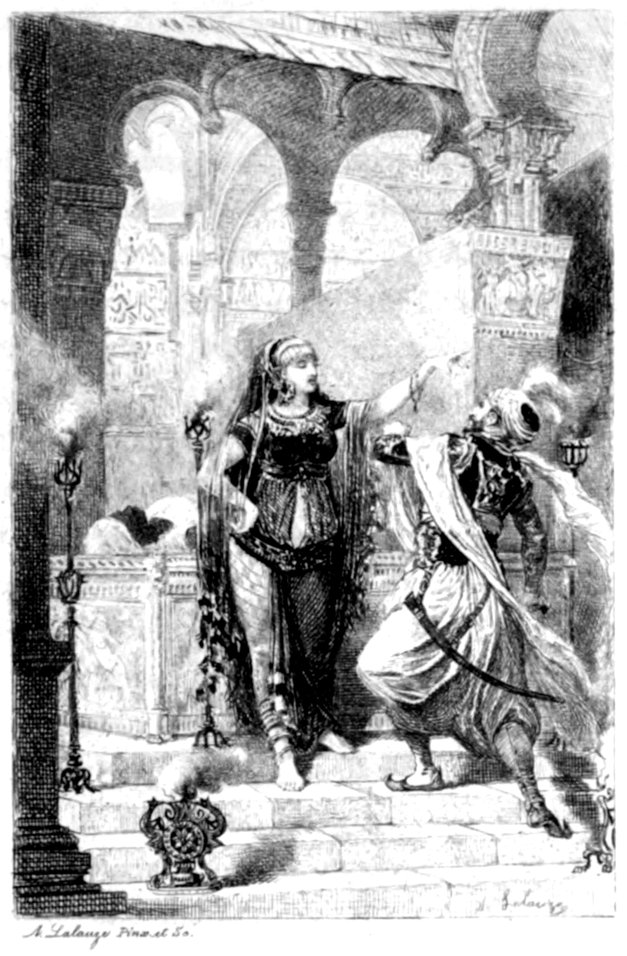
The Six Hundred and Sixty-third Night,
Dunyazad said to her, “Allah upon thee, O my sister, an thou be other than sleepy, finish for us thy tale that we may cut short the watching of this our latter night!” She replied:——With love and good will! It hath reached me, O auspicious King, the director, the right-guiding, lord of the rede which is benefiting and of deeds fair-seeming and worthy celebrating, that King Al-Mihrjan largessed a robe of honour to the midwife and gifted her with a thousand gold pieces and went forth from beside his daughter. Then they committed her to wetnurses and drynurses and governesses who reared her with the fairest rearing, and after she had reached the age of four they brought to her divines who lessoned her in the art of writing and of making selections[181] and presently she approved herself sharp of wits, clever, loquent of tongue, eloquent of speech, sweet spoken of phrase; and every day she increased in beauty and loveliness and stature and perfect grace. And when she reached the age of fourteen she was well read in science and she had perused the annals of the past and she had mastered astrology and geomancy and she wrote with caligraphic pen all the seven handwritings and she was mistress of metres and modes of poetry and still she grew in grace of speech. Now as her age reached her fourteenth year her sire the Sultan chose for her a 127palace and settled her therein and placed about her slave-girls, high-bosomed virgins numbering an hundred, and each and every famous for beauty and loveliness; and presently she selected of them a score who were all maidenhoods, illustrious for comeliness and seemliness. These she taught in verse and poetry and in the strangenesses of history and in striking instruments of mirth and merriment until they surpassed all the folk of their day; and she assiduously enjoined upon them the drinking of wine pure and new and boon-companionship with choice histories and strange tales and the rare events of the time. Such was the case with Al-Hayfa; but as regards her father, King Al-Mihrjan, as one night he was lying abed pondering what he had heard from the Voice, suddenly there addressed him a sound without a form and said, “O King of the Age,” whereat he was fully aroused by sore terror and his vitals fluttered and his wits were bewildered and he was perplexed as to his affair. So he took refuge with Allah from Satan the Stoned and repeated somewhat of the Koran and fenced himself about with certain of the holy names of Allah the Munificent; then he would have returned to his couch but was unable, even to place cheek on pillow. Presently sounded the Voice a second time, saying, “O King of the Age, O Mihrjan, verily shalt thou die by reason of her;” and forthwith improvised the following couplets:—
“Ho thou! Hear, O Mihrjan, what to thee shall be said ✿ Learn the drift of my words in these lines convey’d:
Thy daughter, Al-Hayfa (the girded round ✿ With good, and with highest of grade array’d)
Shall bring with right hand to thee ruin-bowl ✿ And reave thee of realm with the sharp-biting blade.”[182]
Now when Al-Mihrjan had heard what the Voice had spoken of verse and had produced for him of prose, he was wholly aroused 128from his sleep and became like one drunken with wine who knew not what he did and his vitals fluttered and increased his cark and care and anxious thought. So he removed from that site into another stead and was stirred up and went awandering about. Then he set his head upon the pillow but was unable to close his eyelids and the Voice drew nearer and cried upon him in frightful accents and said, “O Mihrjan, dost thou not hearken to my words and understand my verse; to wit, that thy daughter Al-Hayfa shall bequeath to thee shame and thou shalt perish by cause of her?” Then the Unseen One recited these couplets[183]:—
“I see thee, O Mihrjan, careless-vain ✿ Who from hearing the words of the wise dost abstain:
I see Al-Hayfa, by potent lord ✿ Upraised in her charms and speech sweet of strain,
Who shall home thee in grave sans a doubt and she ✿ Shall seize thy kingship and reave thy reign.”
But when Al-Mihrjan had heard the words of the Voice and what it had urged upon him of poetry and of prose-addresses, he arose from his rest in haste and anxiety until Allah caused the morn to morrow and break in its sheen and it shone, whereupon the King summoned the Mathematicians and the Interpreters of dreams and the Commentators on the Koran; and, when they came between his hands, he related to them his vision, fully and formally, and they practised their several arts, making all apparent to them; but they concealed the truth and would not reveal it, saying to him, “Indeed the consequence of thy vision is auspicious.”——And Shahrazad was surprised by the dawn of day and fell silent and ceased saying her permitted say. Then quoth her sister Dunyazad, “How sweet and tasteful is thy tale, O sister mine, and how enjoyable and delectable!” Quoth she, “And where is this compared with that I would relate to you on the coming night an the 129Sovran suffer me to survive?” Now when it was the next night, and that was
The Six Hundred and Sixty-fifth Night,
Dunyazad said to her, “Allah upon thee, O my sister, an thou be other than sleepy, finish for us thy tale that we may cut short the watching of this our latter night!” She replied:——With love and good will! It hath reached me, O auspicious King, the director, the right-guiding, lord of the rede which is benefiting and of deeds fair-seeming and worthy celebrating, that the Astrologers said to King Al-Mihrjan, “Verily the consequence of thy vision is auspicious;” and on the second night Iblis the Accursed appeared to him under the bodily form of a handsome man and said, “Ho thou the King, I am he who terrified thee yesternight in thy dream, for the reason that thou hast ruined the Monastery of the Archers[184] wherein I lay homed. However an thou wilt edify it again I will favour thee with my counsel, ho thou the King!” Al-Mihrjan replied, “Upon me be its rebuilding an thou wilt honour me with thy advice, ho thou the Voice!” Hereupon Iblis fell to lying with him and saying, “Verily I am thine aider in building thee a palace by the river Al-Kawá’ib,[185] O thou will of me and desire of me!” (Now the folk heard these words spoken aloud.) Then Al-Mihrjan arose from his sleep joyful and cheerful and when morning came he summoned the Mathematicians and Architects and Masons and bade them rebuild the Monastery of the Archers; so they obeyed his bidding until they had completed it in the handsomest fashion and with the best of workmanship. After that the King ordered they construct for his daughter Al-Hayfa a palace unsurpassed by any edifice and perfectly builded and 130decorated, hard by the river Al-Kawa’ib; moreover that it should be situate in a wady, a hill-girt plain through which meandered the stream. So they obeyed his bidding and laid its foundations and marked with large stones the lines thereof which measured a parasang of length by a parasang of breadth. Then they showed their design to the King, who gathering together his army returned with them to the city. Presently the Architects and Master-masons fell to building it square of corners and towering in air over the height of an hundred ells and an ell; and amiddlemost thereof stood a quadrangular hall with four-fold saloons, one fronting other, whilst in each was set apart a cabinet for private converse. At the head of every saloon a latticed window projected over the garden whereof the description shall follow in its place; and they paved the ground with vari-coloured marbles and alabastrine slabs which were dubbed with bezel stones and onyx[186] of Al-Yaman. The ceilings were inlaid with choice gems and lapis lazuli and precious metals: the walls were coated with white stucco painted over with ceruse[187] and the frieze was covered with silver and gold and ultramarine and costly minerals. Then they set up for the latticed windows colonnettes of gold and silver and noble ores, and the doors of the sitting chamber were made of 131chaunders-wood alternating with ebony which they studded with jewels and arabesque’d with gold and silver. Also they placed in each sitting-room a pillar of Comorin lign-aloes and the best of sandal-wood encrusted with gems; and over the speak-room they threw cupolas supported upon arches and connecting columns and lighted in the upper part by skylights of chrystal and carnelian and onyx. And at the head of each saloon was a couch of juniper-wood whose four legs were of elephants’ ivories studded with rubies and over each was let down a hanging[188] of golden weft and a network of gems, whilst higher than the whole was a latticed casement adorned with pearls which were threaded upon golden wire and curtains bearing scented satchels of ambergris. The furniture of the divans was of raw silk stuffed with ostrich-down and the cushions were purfled with gold. The floors of all the saloons were spread with carpets and rugs embroidered with sendal, and in the heart of the Great Hall amiddlemost the four saloons rose a marble jet-d’eau, square of shape, whose corners were cunningly wrought and whose floor and marge were set with gems of every hue. They also placed upon the edges of that fountain figures fashioned of gold and silver representing all manner birds and beasts, each modelled according to his several tint and peculiar form; their bellies too were hollow and from the fountain was conducted a conduit which led the water into their insides and caused it gush from their mouths so that they jetted one at other like two hosts about to do battle. After this the same water returned to the middle of the fountain and thence flowed into the gardens, of which a description will follow in its place.[189] Also the walls of the Great Hall were variegated with wondrous pictures in gold and lapis lazuli and precious materials 132of every kind, and over the doors of the sitting-places they hung candelabra of chrystal with chains of gold wherein were set jewels and jacinths and the costliest stones; after which they inscribed upon the entrance of the speak-rooms couplets to the following purport:—
“Clear and clean is our séance from slanderous foe; ✿ And from envious rival whose aim is blame:
None hither may come save the cup-boy, and eke ✿ Cup-comrades who never our fame defame.”
Upon the chandeliers themselves were inscribed these lines:—
“I am raised in reverence high o’er head ✿ For they see that my gift is the boon of light:
I’m a pleasure to eyesight, so up with you all, ✿ O Seers, and joy ye the joys of my sight.”
And upon the Palace-door was inscribed the following quatrain:—
“This Mansion’s adorned ✿ As delight to man’s eye;
O’er its door writ is ’Welcome,’ ✿ So safely draw nigh.”
And when they had finished this inscription over the doorway, they went forth from the entrance which stood at the head of the Great Hall and proceeded to a square of large space abounding in trees and enjoyable for rills; and they surrounded it with a fencing-wall built of rough stone which they stuccoed over and figured with various paintings. Then they planted this garden with all manner fruit-bearing trees and fragrant herbs and flowers and firstlings of every kind and hue and they trained the branches after a wonderful fashion, leading under their shade leats and runnels of cool water; and the boughs were cunningly dispread so as to veil the ground which was planted with grains of divers sorts and greens and all of vegetation that serveth for the food of man. Also they provided it with a watering wheel whose well was revetted with alabaster[190]——And Shahrazad was surprised by the 133dawn of day and fell silent and ceased to say her permitted say. Then quoth her sister Dunyazad, “How sweet is thy story, O sister mine, and how enjoyable and delectable!” Quoth she, “And where is this compared with that I would relate to you on the coming night an the King suffer me to survive?” Now when it was the next night and that was
The Six Hundred and Sixty-seventh Night,
Dunyazad said to her “Allah upon thee, O my sister, an thou be other than sleepy, finish for us thy tale that we may cut short the watching of this our latter night!” She replied:——With love and good will! It hath reached me, O auspicious King, the director, the right-guiding, lord of the rede which is benefiting and of deeds fair-seeming and worthy celebrating, that the Architects set up in that palace-garden a water-wheel whose well was revetted with alabaster and whose wood-work and wheel were of chaunders-wood, whilst its pitchers were of fine porcelain and its cordage[191] was of raw silk. And when they were free of this work they edified amongst the scented shrubs and blossoms a towering dome based upon four-square walls of variegated marbles and alabasters studded with carbuncles[192] and its ceiling was supported upon columns of the finest stone with joinery of lign-aloes and sandal, and they dubbed its cupola with jewels and precious stones and arabesque’d[193] it with gold and silver. Then they made therein four saloons more, each fronting other, and at the head of one and all was a latticed window impending over the bloomy shrubs and fragrant herbs; the colonnettes of 134those casements were silvern whilst the shutters were of sandal-wood plated and studded with precious metals; and over the lintels thereof was an ornamental frieze of gold inscribed with lines of verse which shall be described in its due place. And they inlaid that frieze with rubies and jacinths until it made the cupola resemble the domes of Paradise. Moreover they trained the flowering shrubs and the perfumed herbs to overrun with their tendrils the casements in the drum of the dome, and when they had completed the work and had embellished it with all adornments they pierced for it an entrance and ranged around it three ramparts which, built up with large stones, were in breadth seven cubits. Then they edified for the Palace an impregnable gateway of Chinese steel whereunto led flights of alabastrine steps which were continued to the highmost parts, and lastly they derived the river Al-Kawa’ib till it surrounded the edifice on every side and encircled it as signet-ring girdeth finger or wristlet wrist. Now when the Architects and Master-masons had made an end of building the Palace and its domes and had finished laying out and planting the parterres, they went in to King Al-Mihrjan and kissing ground between his hands informed him thereof; and he, receiving this report, at once took his daughter, Al-Hayfa, and mounting horse, he and the Lords of his land rode forth till they reached the river Al-Kawa’ib which ran at three days’ distance from his capital. When he arrived there and looked upon the Palace and its elevation in fortalice-form he was pleased therewith and so were all of his suite and retinue; whereupon he went up to it and beholding the ordinance and the ornamentation and the cupolas and the gardens and the edification and embellishment of the whole, he sent for the Architects and Master-masons and the artificers whom he thanked for their work, and he bestowed upon them robes of honour and gifted and largessed them and assigned to them rations and pay and allowances. So they kissed ground before him and 135went their ways. Then King Al-Mihrjan and his host withdrew within the Palace, and he bade serve up the trays of viands and sumptuous food for a banquet, after which he and his abode three days in eating and drinking and diversion and disport; and he gave robes of honour to his Wazirs and Emirs and the Grandees of his kingdom, and in fine issued orders for their departure. When they went forth from him, he commanded to summon Al-Hayfa and her women with all their belongings; and she, having made act of presence and having ascended to the Palace and considered it with its beauty and artifice and ornamentation, was pleased and rejoiced therein. The father abode with her three days, and then farewelling her returned to his capital; and she on his departure bade her slave-girls distribute the couches about the saloons placing in each one a seat of ebony plated with glittering gold, whose legs were of elephant’s ivory, and over one and all they reared canopies of silk and brocade adorned with jewels and precious metals and bespread them with mattresses and cushions and pillows, and over the floor of the palaces they laid down carpets whereupon was orfrayed this couplet:—
“O Friend hereon seated be blythe and gay ✿ Unless hereto bound and debarred of way.”[194]
Then they set upon them settees for seats whereupon were inscribed these couplets:—
“O Seat, be thy beauty increased evermore; ✿ Fair fall thee with happiness choice and meet;
An I fail in life through my slip and sin, ✿ To-morrow in Heav’n I’ll give thee seat.”
Then[195] the attendants decorated the whole Palace until it became 136like unto one of the Mansions of Heaven, and when the women had done her bidding Al-Hayfa was much pleased, so she took one of the slave-girls by the hand and walked with the rest of them around the Palace considering its artifice and its embellishment, especially the paintings which covered the walls; and they rejoiced thereat, marvelling at the cunning decorations and they were grateful to the Architects who had builded and presented all these representations. And when Al-Hayfa reached the terrace-roof of the Palace she descended by its long flight of steps which led to the river-side, and bidding the door be thrown open she gazed upon the water which encircled it like ring around finger or armlet round arm, and admired its breadth and its swiftness of streaming; and she magnified the work and admired the gateway of steel for its strength and power of defence and sued for pardon of Almighty Allah.[196]——And Shahrazad was surprised by the dawn of day and fell silent and ceased saying her permitted say. Then quoth her sister Dunyazad, “How sweet and tasteful is thy tale, O sister mine, and how enjoyable and delectable!” Quoth she, “And where is this compared with that I would relate to you on the coming night an the Sovran suffer me to survive?” Now when it was the next night and that was
The Six Hundred and Seventieth Night,
Dunyazad said to her, “Allah upon thee, O my sister, an thou be other than sleepy, finish for us thy tale that we may cut short the watching of this our latter night! She replied:——With love and good will! It hath reached me, O auspicious King, the director, the right-guiding, lord of the rede which is benefiting 137and of deeds fair-seeming and worthy celebrating, that Al-Hayfa sued pardon of Allah the Great and took refuge with the Almighty from Satan the Stoned, after which said she, “There is no diverter to whatso is doomed by the Lord nor availeth aught of solicitude against that commanded by the Omnipotent, the All-puissant; and His power is upon me with His destiny and needs must it come to pass.” Then she called for a pencase of gold and she wrote for placing over the gateway of the Palace the following couplets:[197]—
Behold here’s a mansion like “Home of Delight” ✿ Whose sight heals the sick and abates all blight:
Here are roe-like maidens with breasts high raised ✿ And with charms of the straightest stature bedight:
Their eyes prey on the lion, the Desert’s lord, ✿ And sicken the prostrate love-felled plight:
Whomso their glances shall thrust and pierce ✿ Naught e’er availeth mediciner’s might:
Here Al-Hayfá scion of noble sire ✿ E’en craven and sinner doth fain invite;
And here for the drunken wight there abide ✿ Five pardons[198] and bittocks of bread to bite.
My desire is the maiden who joys in verse, ✿ All such I welcome with me to alight,
And drain red wine in the garth a-morn ✿ Where beasts and birds all in pairs unite;
Where rose and lily and eglantine ✿ And myrtle with scent morning-breeze delight,
Orange bloom, gillyflower and chamomile ✿ With Jasmine and palm-bud, a joyful site.
Whoso drinketh not may no luck be his ✿ Nor may folk declare him of reason right!
Wine and song are ever the will of me ✿ But my morning wine lacks a comrade-wight.
O who brightenest the Five[199] do thou rise and fetch ✿ By night for my use olden wine and bright:
138O thou reading this writ, prithee comprehend: ✿ Cross the stream I swear thee by God’s All-might!
This is House of Honour may none gainsay: ✿ Cup-comrade shall be who shall self invite;
For within these gates only women wone, ✿ So of men-folk here thou hast naught to affright.”
When Al-Hayfa had finished her writing and what she had improvised of verse and couplets, she bade close the entrance of the Palace and went up, she and her women, to the higher apartments; and the while she was drowned in thought and fell to saying, “Would Heaven I knew an this mighty guard and ward will defend Al-Mihrjan and would I wot if this fortalice will fend off Fate and what fain must be.” Then she enjoined her women to high diet and the drinking of wine and listening to intimate converse and the hearing of songs and musical instruments and gladness and gaiety for a while of time; and she felt herself safe from the shifts of chance and change. Such was her case but now we will recount (Inshallah!) what further befel her.[200] In the land of Sind was a King hight Sahl[201] and he was of the Monarchs of might, endowed with puissance and prepotency and exalted degree, abounding in troops and guards and overruling all that fair region. Now Allah (be He extolled and exalted!) had vouchsafed him a son than whom was none in his age fairer of semblance: beautiful exceedingly was he, with a face brighter far than the full moon; and he was of tongue eloquent and of pluck puissant, valorous, formidable. Also he was mighty fond of wine mere and rare and of drinks in the morning air and of converse with the fair and he delighted in mirth and merriment and he was assiduous in his carousing which he would never forego during the watches of the night or the 139wards of the day. Now for the abundance of his comeliness and the brilliancy of his countenance, whenever he walked abroad in the capital he would swathe his face with the Lithám,[202] lest wax madly enamoured of him the woman-kind and all creation, wherefore he was named the Veiled Yúsuf of Beauty. It chanced one night as he sat carousing with his boon companions that the wine prevailed over him and he became sprightly and frolicsome; so he went forth from the door of his cabinet in a state of drink, understanding naught and knowing nothing of that he did. He wandered about the rooms belonging to his father and there he saw a damsel of the paternal concubines standing at the door of her bower and his wine so mastered him that he went up to her and clasped her to his bosom and threw her backwards upon the floor. She cried aloud to the royal Eunuchs who stood there looking on at him, not one of them, however, dared arrest him or even draw near him to free the girl, so he had his will of her and abated her maidenhead after which he rose up from off her and left her all bleeding[203] from his assault. Now this slave-girl had been gifted to his sire and Yusuf left her to recover her condition when he would have visited her again, but as soon as he had returned to his apartment (and he not knowing what he had done) the Eunuchs took the damsel (she bleeding as before) and carried her to King Sahl who seeing her in such case exclaimed, “What man hath done this to her?” Said they, “’Tis thy son Yusuf;” and he, when he heard the words of his slaves, felt that this matter was hard upon him and sent to fetch the Prince. They hastened to bring him, but amongst the Mamelukes was one lovingly inclined to the youth 140who told him the whole tale and how his father had bade the body-guards summon him to the presence. And when Yusuf had heard the words of the Mameluke he arose in haste and baldrick’d his blade and hending his spear in hand he went down to the stables and saddled him a steed of the noblest blood and likeliest strain; then he mounted and, taking with him a score of Mamelukes his pages, he sallied forth with them through the city gate and rode on unknowing what was concealed from him in the Secret Purpose.——And Shahrazad was surprised by the dawn of day and fell silent and ceased to say her permitted say. Then quoth her sister Dunyazad, “How sweet is thy story, O sister mine, and how enjoyable and delectable!” Quoth she, “And where is this compared with that I would relate to you on the coming night an the King suffer me to survive.” Now when it was the next night and that was
The Six Hundred and Seventy-second Night,
Dunyazad said to her, “Allah upon thee, O my sister, an thou be other than sleepy, finish for us thy tale that we may cut short the watching of this our latter night!” She replied:——With love and good will! It hath reached me, O auspicious King, the director, the right-guiding, lord of the rede which is benefiting and of deeds fair-seeming and worthy celebrating, that Prince Yusuf, son of King Sahl, went forth the city all unknowing whither he should wend and to what part he should turn, and he ceased not faring with his merry men for ten full-told days, cutting across the wold and wild and the valley and the stone-clad hill, and he was perplext as to his affair. But whilst he was still journeying he came upon the river Al-Kawa’ib and he drew in sight of the castle of Al-Hayfa, which stood amiddlemost that mighty stream with its height and bulk and defensive strength. Hereupon quoth Yusuf to himself, “By Allah, none founded this 141puissant fortalice in such power and prepotency and forcefulness save for a mighty matter and a cause of much consequence. Would Heaven I wot to whom this belongeth and who dwelleth therein!” Then he applied his mind and had recourse to the knowledge of his companions the Mamelukes and he commanded all his white slaves alight upon the marge of the river for the purpose of rest, and when they had reposed he asked them, “Who amongst you will go down to this stream and will over-swim it and will visit the lord of the Castle and bring us news of it and tidings of its ownership and discover for us the man to whom it belongeth?” But as no one would return him a reply he repeated his words without any answer and he, when he saw that, arose forthright and doffed what he had upon him of dress, all save his shirt only. Then he took his bow and quiver and placing his clothes with his weapon and arrow-case upon his head he went down to the river and swam it until he came forth it on the further side. Here he walked up to the gateway and found an impregnable entrance all of steel which none might avail to open, but when he saw the verses thereon inscribed and understood their significance he gave himself joy and was certified of entering. Then he took from his quiver a pen case and paper whereupon he inscribed these couplets:—
“At your door, O Fountains of weal, I stand ✿ A stranger from home and a-morning bann’d.
Your grace shall haply forfend my foe ✿ And the hateful band of unfriends disband:
I have none resort save your gates, the which ✿ With verse like carcanet see I spann’d:
Ibn Sahl hath ’spied with you safe repair, ✿ So for lonesome stranger approach command!”
And when Yusuf had ended his writing, he folded the paper and made it fast to a shaft; then he took his bow and arming it drew the string and aimed the arrow at the upper terrace, where it dropped within the parapet. Now, by the decree of The Decreer 142Al-Hayfa was walking there with her women when the shaft fell between her feet and the paper became manifest, so she caught sight of it and took it up and opened it, and having read it understood its significance. Hereat she rejoiced and congratulated herself and her cheeks flushed rosy-red, and presently she went hastily in the direction of the entrance, whilst her women still looked down from the terrace upon the doorway and saw Yusuf a-foot before it. They cried out to their lady, “Verily there standeth below a youth lovely in his youthfulness, with his face gladdening as the crescent moon of Sha’abán.”[204] But when Al-Hayfa heard the words of the women she was glad and gave herself joy and sensed an oppression of pleasure, whilst her vitals palpitated and she perspired in her petticoat trowsers.[205] Then she went down to the gateway which she bade be thrown open, and seeing Prince Yusuf she smiled in his face and welcomed him and greeted him. He returned her salam with sweetness of phrase and softness of words, when said she to him, “Well come and welcome and good cheer to thee, O thou who dost visit us and takest refuge in our demesne[206] and in our presence, for that here thou hast immunity and impunity and civility;” presently adding, “Enter into this guarded stead and feel thou no fear from any foe, for thou has wrought thy wish and hast attained thine aim and hast won thy will, O fair of face and O perfect of form, O thou whose countenance excelleth the new moon: here thou hast preserved thy life and art saved from foeman’s strife.” Thereupon she mounted the staircase and he behind her, while the slave-girls surrounded the twain, and she conversed with him and cheered him with fair words and welcomed him once more till they had entered the Castle saloon, when she took his hand 143and seated him at the head of the hall. But as Yusuf looked upon the portalice and the beauty of its building and the excellence of its ordinance and the high degree of its decorations which made it like unto the Palaces of Paradise, and as he beheld that furniture and those couches, with what was over them of hangings, and the gems and jewels and precious metals which abounded there, he magnified the matter in his mind and said to himself, “This place belongeth to none save to a mighty monarch!” Then Al-Hayfa bade her women bring a bundle of clothing, and when they had set it between her hands, she opened it and drew forth a suit of Daylakian[207] garments and a caftan of Coptick stuff (fine linen of Misraim purfled with gold), and bestowed them upon him, and she bound around his head an or-fringed Shásh[208] with either end gem-adorned. And when he donned the dress his countenance became brilliant and its light shone afar, and his cheeks waxed red as rose, and she seeing this felt her wits bewildered and was like to faint. However, she soon recovered herself and said, “This is no mortal: verily he is naught but of the Húrs of Heaven.” Then she bade her women bring food——And Shahrazad was surprised by the dawn of day, and fell silent and ceased saying her permitted say. Then quoth her sister Dunyazad, “How sweet and tasteful is thy tale, O sister mine, and how enjoyable and delectable!” Quoth she, “And where is this compared with that I would relate to you on the coming night an the Sovran suffer me to survive?” Now when it was the next night and that was
The Six Hundred and Seventy-fourth Night,
Dunyazad said to her, “Allah upon thee, O my sister, an thou be other than sleepy, finish for us thy tale that we may cut short 144the watching of this our latter night!” She replied:——With love and good will! It hath reached me, O auspicious King, the director, the right-guiding, lord of the rede which is benefiting and of deeds fair-seeming and worthy celebrating, that Al-Hayfa bade her women bring the food trays, and when they obeyed her bidding and placed them between the hands of Yusuf, he considered them and saw that one was made of Yamání onyx and another of red carnelian and a third of rock chrystal, and they bore platters of gold and silver and porcelain and jasper. Upon them were ranged dishes furnished with the daintiest food which perplexed the wits, and sweetmeats and sumptuous meats, such as gazelle’s haunch and venison and fatted mutton and flesh of birds, all the big and the small, such as pigeon and rock-pigeon, and greens marinated and viands roasted and fried of every kind and colour and cheeses and sugared dishes. Then she seated Yusuf beside her and served him with all manner cates and confections and conjured him to fall-to and morselled him until he had eaten his sufficiency; after which they twain sat together in laughter and enjoyment each conjoined to other and both cast in the mould of beauty and loveliness and brilliancy and stature and symmetric grace as though in the likeness of a rattan-palm. All this and Al-Hayfa rejoiced in Yusuf, but ever and anon she took thought anent her sire King Al-Mihrjan and his works and she kept saying in her mind, “Would Heaven I wot will he wed me to this youth so charming of inner grace; and, if my father be not satisfied therewith, I will marry my lover in despite of him.” And the while Yusuf quoth to himself, “Would Heaven I wot how my sire will act in the business of the concubine whose pucelage I did away, and would Heaven I knew if he have ridden forth in search of me, or he have lost sight of me and never asked of me.” On this wise either of the twain spoke to themselves, and neither of them believed in safety, all unknowing what was predestined to them by Him who saith to a thing, “Be” and it becometh. So Al-Hayfa and 145Yusuf sat drowned in the depths of thought, withal their joyance and enjoyment made them clean forget that writ for them by Fate; and the Prince gazing upon the greater tray saw graven upon its edge these couplets:—
“For the gathering of friends and familiars design’d ✿ Between hands of Kings and Wazirs I’m shrin’d:
Upon me is whatever taste loves and joys ✿ Of flesh and viands all kinds combin’d:
From me fill thee full of these cates and praise ✿ Thy Lord, the Maker of all mankind.”
Then the attendants placed bread upon the trays, and the Prince found writ in moulded letters upon the loaves the couplets that follow:—
“And a loaf new-born from the flour of wheat, ✿ White and piping hot from the oven-heat:
Quoth to me my chider, Be wise and say ✿ Soothe my heart and blame not, O friend I greet.”
Presently the handmaidens piled upon the trays platters of silver and porcelain (whereof mention hath been made) containing all that lip and tongue gratify of the meat of muttons in fry and Katá-grouse and pigeon-poults and quails and things that fly of every kind and dye which hungry men can long to espy, and Yusuf saw inscribed upon the china dishes the following couplets:—
“Platters of china fair ✿ That all men’s eyne ensnare,
None seeth in this our town ✿ China of mould so rare.”
Then he looked upon the silver plate and found it graven with these lines:—
“Plate worked in silver of the brightest white ✿ In height of beauty, O thou joy to sight,
When fully finisht and when perfect made ✿ Becometh chargers peerless in delight.”
And portrayed upon the porcelain were all that grow and fly of geese and poultry. Anon a handmaid brought in hand a knife 146wherewith to carve the meats, and Yusuf looking at the blade saw upon it letters gold-inlaid and forming these verses:—
“I am blade of finest grain ✿ Wherefrom comes naught of bane:
Fro’ my friends all harm I ward ✿ And thy foes by me be slain!”
Hereupon the handmaids ended the ordinance of the table and set everything in its own stead; after which the Princess took seat beside the Prince and said to him, “O my lord, hearten our heart and deign grace to us and honour us by eating with us: this indeed be a day of joy for my union with thee and for thy lighting this my lodging with the splendour of thy semblance so bright and thy beauty so rare and for thine alighting at my home and thine opportune kindness and thine inner graciousness,[209] O thou unique one of the Age and the Time, and O thou who hast no peer in our day and our tide.” Now when Yusuf heard the words of Al-Hayfa he said to her, “Walláhi, O thou who the moons adornest and who the sun and the daylight shamest, O lady of brow flower-bright and of stature elegant-slight, O thou who passest in beauty and comeliness all mortal beings, O thou with smile like water sweet and mouth-dews like purest spring and of speech the softest, I wot thou art the lady of goodness and excellence and generosity and liberality.” Then she again fell to morselling the Prince until they both had a sufficiency of food, whereupon she bade them fetch water for washing their hands after meat. And they brought to Yusuf a basin of glittering gold, when he rejoiced with exceeding exultation the while he was sunk in meditation, and at times he gazed upon Al-Hayfa and his wits were bewildered and his senses seduced him to something he would do with her for the abundance that was in her of beauty and loveliness. But his reason forbade to him his passion, and quoth he in his mind, “To everything its own time,”——And Shahrazad 147was surprised by the dawn of day and fell silent and ceased to say her permitted say. Then quoth her sister Dunyazad, “How sweet is thy story, O sister mine, and how enjoyable and delectable!” Quoth she, “And where is this compared with that I would relate to you on the coming night an the King suffer me to survive?” Now when it was the next night and that was
The Six Hundred and Seventy-sixth Night,
Dunyazad said to her, “Allah upon thee, O my sister, an thou be other than sleepy, finish for us thy tale that we may cut short the watching of this our latter night!” She replied:——With love and good will! It hath reached me, O auspicious King, the director, the right-guiding, lord of the rede which is benefiting and of deeds fair-seeming and worthy celebrating, that Yusuf said, “To everything its own time, and soothly sayeth the old saw, Whoso hurrieth upon a matter ere opportunity consent shall at last repent.” Now when they brought the basin before him and therein stood an ewer of chrystal garnished with gold, he looked at it and saw graven thereupon the following couplets:—
“I’m a Basin gold beautifies ✿ For the hands of the great and the wise:
Abased[210] for the cleansing of palms, ✿ Washing hands with the water of eyes.”
Thereat he considered the ewer and saw inscribed upon it these lines:—
“O rare the Ewer’s form whereon must dote ✿ Our hearts and pupils of our eyes fain gloat:
Seems ferly fair to all admiring orbs ✿ You seemly body wi’ the slender throat.”
And when he had finished washing his hands and had dried them with the napkins he pointed at them and spoke these couplets:—
148“Groweth my love a-heart and how to hide ✿ When o’er the plains of cheek tear-torrents glide?
I veil what love these sobs and moans betray ✿ With narrowed heart I spread my patience wide.
O Farer to the fountain,[211] flow these eyes ✿ Nor seek from other source to be supplied:
Who loveth, veil of Love his force shall reave, ✿ For tears shall tell his secrets unespied:
I for the love of you ain bye-word grown, ✿ My lords, and driven to the Desert-side;
While you in heart of me are homed, your home; ✿ And the heart-dweller kens what there may bide.”
When Prince Yusuf had finished his improvisation and the poetry which he produced, Princess Al-Hayfa bussed him upon the brow, and he seeing this waxed dazed of his wits and right judgment fled him and he fell fainting to the floor for a while of time. And when he came to himself he pondered how she had entreated him and his Passion would have persuaded him to do with her somewhat but Reason forbad and with her force he overcame himself. After his improvising Al-Hayfa again saluted him on the front and cried, “Indeed thou hast done well in thy words, O thou with Crescent’s brow!” Presently she came for the table of wine and filling a cup drank it off; then she crowned another goblet and passed it to Yusuf who took it and kissed it while she improvised some couplets as follows:—
“Thy seduction of lips ne’er can I forbear ✿ Nor deny love-confession for charms so rare:
O thou aim of my eyes, how my longing stay? ✿ O thou tall of form and long wavy hair?
Thy rose-hued cheek showeth writ new-writ[212] ✿ Dimming wine my cups in thei rondure bear.”
And presently she added:[213]—
149“I hid his phantom, by the Lord, but showed ✿ My looks the blush his scented cheek had sent:
How veil the joy his love bestows, when I ✿ To blood-red[214] tears on cheek give open vent,
When his uplighted cheek my heart enfires ✿ As though a-morn in flame my heart were pent?
By Allah, ne’er my love for you I’ll change ✿ Though change my body and to change consent.”
And when Al-Hayfa had finished her improvisation and her poetry, Yusuf drained the goblet and after kissing it returned it to her; but he was as one a-swoon. Then she took it from him and he recovered and presently declaimed for her the following couplets:—
“A maiden in your tribe avails my heart with love to fire[215] ✿ And how can I a hidden bear the love my eyes declare?
The branches of the sand-hill tree remember and recall ✿ What time she softly bent and showed a grace beyond compare;
And taught me how those eyne o’erguard the roses of her cheek ✿ and knew to ward them from the hand to cull her charms would dare.”
150As soon as Yusuf had finished his improvisation and what of poetry he had produced, Al-Hayfa took seat by his side and fell to conversing with him in sweetest words with softest smiles, the while saying, “Fair welcome to thee, O wonder of beauty and lovesome in eloquence and Oh charming in riant semblance and lord of high degree and clear nobility: thou hast indeed illumined our place with the light of thy flower-like forehead and to our hearts joyance hast thou given and our cares afar hast thou driven and eke our breasts hast made broad; and this is a day of festival to laud, so do thou solace our souls and drain of our wine with us for thou art the bourne and end and aim of our intent.” Then Al-Hayfa took a cup of chrystal, and crowning it with clear-strained wine which had been sealed with musk and saffron, she passed it to Prince Yusuf. He accepted it from her albeit his hand trembled from what befel him of her beauty and the sweetness of her poetry and her perfection; after which he began to improvise these couplets:—
“O thou who drainest thy morning wine ✿ With friends in a bower sweet blooms enshrine—
Place unlike all seen by sight of man ✿ In the lands and gardens of best design——,
Take gladly the liquor that quivers in cup ✿ And elevates man, this clean Maid of the Vine:
This goblet bright that goes round the room ✿ Nor Chosroës held neither Nu’uman’s line.
Drink amid sweet flowers and myrtle’s scent ✿ Orange-bloom and Lily and Eglantine,
And Rose and Apple whose cheek is dight ✿ In days that glow with a fiery shine;
’Mid the music of strings and musician’s gear ✿ Where harp and pipe with the lute combine;—
An I fail to find her right soon shall I ✿ Of parting perish foredeemed to die!”
Then Al-Hayfa responded to him in the same rhyme and measure and spake to him as follows:—
“O thou who dealest in written line ✿ Whose nature hiding shall e’er decline;
151And subdued by wine in its mainest might ✿ Like lover drunken by strains divine,[216]
Do thou gaze on our garden of goodly gifts ✿ And all manner blooms that in wreaths entwine;
See the birdies warble on every bough ✿ Make melodious music the finest fine.
And each Pippet pipes[217] and each Curlew cries ✿ And Blackbird and Turtle with voice of pine;
Ring-dove and Culver, and eke Hazár, ✿ And Katá calling on Quail vicine;
So fill with the mere and the cups make bright ✿ With bestest liquor, that boon benign;—
This site and sources and scents I espy ✿ With Rizwán’s garden compare defy.”
And when Al-Hayfa had ended her improvisation and what she had spoken to him of poetry, and Yusuf had given ear to the last couplet, he was dazed and amazed and he shrieked aloud and waxed distraught for her and for the women that were beside and about her, and after the cry he fell fainting to the ground. But in an hour[218] he came to, when the evening evened and the wax candles and the chandeliers were lighted, his desire grew and his patience flew and he would have risen to his feet and wandered in his craze but he found no force in his knees. So he feared for himself and he remained sitting as before.——And Shahrazad was surprised by the dawn of day and fell silent and ceased saying her permitted say. Then quoth her sister Dunyazad, “How sweet and tasteful is thy tale, O sister mine, and how enjoyable and delectable!” Quoth she, “And where is this 152compared with that I would relate to you on the coming night an the Sovran suffer me to survive?” Now when it was the next night and that was
The Six Hundred and Seventy-eighth Night,
Dunyazad said to her, “Allah upon thee, O my sister, an thou be other than sleepy, finish for us thy tale that we may cut short the watching of this our latter night!” She replied:——With love and good will! It hath reached me, O auspicious King, the director, the right-guiding, lord of the rede which is benefiting and of deeds fair-seeming and worthy celebrating, that when Yusuf remained sitting as before, Al-Hayfa asked him saying, “How art thou hight, O dearling of my heart and fruit of my vitals?” Hereupon he told her his name and the name of his sire, and related to her the whole of what had befallen him, first and last, with the affair of the concubine and his faring forth from his own city and how he had sighted her Palace and had swum the stream and shot the shaft that carried the paper, after which he recited to her these couplets:—
“I left my home for a fair young maid ✿ Whose love my night with its light array’d;
Yet wot I not what her name may be ✿ Thus ignorance mating with union forbade.
But when of her gifts I was certified ✿ Her gracious form the feat easy made;
The King of Awe sent my steps to her ✿ And to union with beauty vouchsafed me aid:
Indeed disgrace ever works me shame ✿ Tho’ long my longing to meet I’m afraid.”
When Al-Hayfa heard his name her great love to him waxed greater. Then she took the lute upon her lap and caressed it with her finger-tips when it sighed and sobbed and groaned and moaned[219] and she fell to singing these verses:—
153“A thousand welcomes hail thy coming fain, ✿ O Yúsuf, dearling son of Sahl’s strain:
We read thy letter and we understood ✿ Thy kingly birth from sand that told it plain:[220]
I’m thine, by Allah, I the loveliest maid ✿ Of folk and thou to be my husband deign:
Bruit of his fair soft cheek my love hath won ✿ And branch and root his beauty grows amain:
He from the Northern Realms to us draws nigh ✿ For King Mihrján bequeathing ban and bane;
And I behold him first my Castle seek ✿ As mate impelled by inspiration fain.
The land upstirs he and the reign he rules ✿ From East to West, the King my father slain;
But first he flies us for no fault of ours ✿ Upon us wasting senseless words and vain:
E’en so Creation’s Lord hath deigned decree, ✿ Unique in Heaven—glorified be He!”[221]
Now when Yusuf heard the words of Al-Hayfa he rejoiced with exceeding joy and she was gladdened in like manner, after which he gifted her with all that was upon him of gear and in similar guise she doffed what dress was upon her and presented it to him.[222] Then she bade the slave girls bring her an especial suit and they fetched her a second bundle and she clothed Yusuf with what was therein of sumptuous clothes. After this the Prince abode with Al-Hayfa as an inmate of her palace for a term of ten days in all the happiness of life, eating and drinking and enjoying conjugal intercourse.[223] Presently Almighty Allah (be He extolled and exalted!) decreed that, when all tidings of Yusuf son of Sahl were lost, his sire sent in search of him Yahyà,[224] his cousin and the son of his maternal aunt, amongst a troop of twenty knights to 154track his trail and be taught his tidings until Allah (be He glorified and magnified!) guided him to the pages who had been left upon the river-bank. Here they had tarried for ten days whilst the sunshine burnt them and hunger was exterminating them; and when they were asked concerning their lord, they gave notice that he had swum the stream and had gone up to yonder Castle and had entered therein. “And we know not (they ended) whether he be alive or dead.” So the lord Yahya said to them, “Is there amongst you any will cross the current and bring us news of him?” but not one of them would consent and they remained in silence and confusion. So he asked them a second time and a third time yet none would rise up before him and hearten him to attempt the dangers of the stream, whereupon he drew forth his ink case of brass and a sheet of paper and he fell to writing the following verses:—
“This day I have witnessed a singular case ✿ Of Yúsuf scion to Sahl’s dear race:
Since he fared at undurn his sire was grieved ✿ And the Palace remained but an empty place:
I liken the youth to full moon ’mid stars ✿ Disappearing and darkening Earth’s bright face.
’Tis my only fear that his heart is harmed, ✿ Brent by Love-fires lacking of mercy and grace:
By Allah, albeit man’s soul thou rule ✿ Among stranger folk thou art but an ace!”
Presently he took a reed and grasping it thrust thereinto the twisted and folded paper, after which he stopped the hole with wax; then, lashing it to the surface of the shaft, he set it upon the bow-handle and drew the string and shot the bolt in the direction of the Castle, whither it flew and fell at the foot of the staircase beside the main entrance. It so fortuned at that time a slave-girl came forth to fill her pitcher with water and she found the arrow and picked it up and carried it to her lady who was sitting in the speak-room at converse with Yusuf. Hereupon the Prince 155hent the reed in hand and broke it and drew forth the paper which he opened and read and comprehended. Hereupon he wept with exceeding great weeping until he fell to the floor a-faint and the Princess took the note from his grasp and perused it, and it was hard upon her, so she bade them beat the slave-girl who brought the writ with an hundred blows and they bastinadoed her till she lost her senses. But when Yusuf recovered, he thought of his pages and his people and his homestead and his family and he cried to Al-Hayfa, “Wallahi, I have sinned with a great sin when I left my suite in the desert; and Satan garred me forget them and the wine made me mindless of them and banished from my thought my folk and my home. And now ’tis my desire to fare and look upon my pages and to forgather with Yahya my cousin, the son of the King’s sister and greet them and dismiss them to their homesteads, after which I will return to thee forthright.” Quoth she, “By Allah, I may not patient myself away from thee a single hour otherwise shall my spirit depart my body, and I conjure thee by the Almighty that thou bid me return to them a reply!” Quoth Prince Yusuf, “What news wilt thou give them? An thou say that I never came to thee none will believe; for indeed my pages saw me passing into thy Palace”——And Shahrazad was surprised by the dawn of day and fell silent and ceased to say her permitted say. Then quoth her sister Dunyazad, “How sweet is thy story, O sister mine, and how enjoyable and delectable!” Quoth she, “And where is this compared with that I would relate to you on the coming night an the King suffer me to survive?” Now when it was the next night and that was
The Six Hundred and Eightieth Night,
Dunyazad said to her, “Allah upon thee, O my sister, an thou be other than sleepy, finish for us thy tale that we may cut short the watching of this our latter night!” She replied:——With 156love and good will! It hath reached me, O auspicious King, the director, the right-guiding, lord of the rede which is benefiting and of deeds fair-seeming and worthy celebrating, that Prince Yusuf said to the Princess Al-Hayfa, “Indeed my pages saw me passing into the Palace and have given him[225] tidings to that effect.” And she responded to him with fairest response and tenderness of terms and gem-like verse. Then she took her ink-case and paper and a brazen pen and would have written but he forbade her, saying by way of deprecation, “This be not the right rede! An thou return a reply my slaves will take it and will bear it to my native country and will inform the folk of all our adventure: ’tis better far that I fare to them myself and greet them and going with them to my own country satisfy my sire, after which I will return to thee in hottest haste. And do not thou on this wise, for we fear lest our affair be made public and this our case be reported to thy royal father, and it prove hard to him by reason that all such talk in the case of the Kings is to them mighty grievous. Moreover, when he shall be acquainted with the truth he will either transport thee to his presence or he shall place over this Palace guards who may forbid thee from me and forbid me from thee, and this shall be a cause of our separation each from other.” But Al-Hayfa shrieked aloud when she heard these words and wept and wailing said, “O my lord, prithee take me with thee, me and my handmaids and all that be in this my Palace.” Said he, “I will not delay from thee save for the space of my wayfare an I live and Allah Almighty preserve me.” Hereat she wept with loud weeping and groaned, and love-longing surged up in her and she fell to repeating the following couplets:—
“Rain, O mine eyeballs, gouts of blood beshed ✿ From clouds of eyelids e’en as grass turns red.
O mighty bane that beatest on my bones ✿ And oh heart-core, that melts with fire long-fed!
157My soul’s own dearling speedeth on his march ✿ Who can be patient when his true love sped?
Deal kindly with my heart, have ruth, return ✿ Soon to my Castle nor be long misled.”
And when Al-Hayfa had ended her verse, Yusuf wept with sore weeping and cried, “By Allah, I had intended to return to thee after I had fared to them and had settled the matter in hand. But suffer me dismiss those who have come for me and seek reunion with thee, Inshallah—an it be the will of Allah Almighty.” Then he farewelled her and doffed what he had of dress, and when Al-Hayfa asked him, “Wherefore take off these clothes?” he answered[226] “I will not inform anyone of our news, and indeed this dress mostly befitteth womenkind.” Then he went forth from her with a grief-bound heart and she wept and cried, “Help! Help!”[227] and all her women shrieked and shed tears over parting with him. But as soon as Yusuf passed out of the palace-door he took off the gown which was upon him and turband’d it around his head together with his bow and quiver, and he stinted not to stem the stream until he had reached the further bank where he found and greeted the lord Yahya and his Mamelukes. They all kissed his hand, and his cousin enquired of him, “What is the cause of thy disappearing from these thy men for a space of ten days?” He replied, “By Allah, O son of my aunt, when I went up to yonder Palace, I found there a Youth of the sons of the kings, who welcomed and greeted me as a guest and honoured me with the highmost honour and favoured me with the fullest favour. But when I would have taken leave of him, the air smote me[228] and fell upon my loins and laid me up so that I feared to swim the stream 158and the unease that was upon me increased, and such is the reason of my delaying away from you.” Then he took horse together with Yahya and the pages, and they all sought their homes and cut across the wilds and the wastes and the vales and the stony hills until they drew near to their destination and their city rose clear before eyes of them. As soon as they reached it the tidings were told to King Sahl[229] who made ready for faring forth, he and the lords of his land, to meet and greet his son and heir Yusuf; and meanwhile he bade decorate the capital with the choicest decorations and ornaments and adornments. The lieges gave one another joy of their Prince’s safe return, and clothed their city in gala-guise, and the father having met the son alighted from his steed and embraced him and kissed him between the eyes, and personally conducting him up to the Palace did him due honour and largessed him; and so great and lasting was their joy that the day of arrival became high holiday. As soon as night fell, Prince Yusuf repaired to his own Palace where he was met by his mother and his women who were as full moons a-rising; and the spouses numbered three, besides forty concubines. However he turned away from them and he lay alone that night moaning even as moaneth the dove for the loss of her mate; and he regarded not one of those wives and lemans, and he passed the dark hours in brooding over the loss of his beloved, and in weeping and in the reciting of poetry,——And Shahrazad was surprised by the dawn of day and fell silent and ceased saying her permitted say. Then quoth her sister Dunyazad, “How sweet and tasteful is thy tale, O sister mine, and how enjoyable and delectable!” Quoth she, “And where is this compared with that I would relate to you on the coming night an the Sovran suffer me to survive?” Now when it was the next night and that was
159
The Six Hundred and Eighty-second Night,
Dunyazad said to her, “Allah upon thee, O my sister, an thou be other than sleepy, finish for us thy tale that we may cut short the watching of this our latter night!” She replied:——With love and good will! It hath reached me, O auspicious King, the director, the right-guiding, lord of the rede which is benefiting and of deeds fair-seeming and worthy celebrating, that Yusuf passed the night weeping and improvising verse, but he let not fall a word of explanation fearing lest he divulge his secret; and his spouses supposed that he was wroth with his sire and knew not what there was in his vitals of exceeding desire to Al-Hayfa. But when brake the day he was roused and gazing upon the rise of awaking Dawn he pondered the happy mornings which had passed; so he wept and complained and moaned like the culver and he fell to reciting these couplets:——
“No joy but you in house and home I know ✿ Save bitter heart and tears that ever flow;
Nor with mine eyes I view aught save yourselves ✿ Whenas in lowe of love-desire I glow:
My heart enjoys but gust and greed for you, ✿ Mine eyelids own no joy save wake and woe:
O blaming me for them, avaunt, by God ✿ Nor leave me fancy-free, worst gift of foe!”
And when Yusuf has finished his poetry he fell into a fainting fit and he quivered as quivereth the fowl with cut throat,[230] and he came not to himself save when the sun had arisen arraying the lowlands with its rays. Then he waxed wood and sat with eyes at the ground, a-gazing and not accosting anyone nor answering aught, and lastly he took to his pillow. These tidings presently reached the King his father, who accompanied by the Lords of his land came to him 160and after greeting him said, “O my son, whom I would ransom with my life, what contagion hath come upon thee of disease, and whereof dost thou complain?” Quoth he, “O my father, the air hath struck me and hath cut my joints,”[231] and quoth his father, “O my son, Almighty Allah vouchsafe ease thee of this thy disease.” Then the King mounted and went forth from him, and sent a leach which was a Jew[232] of wits penetrating and sagacious. The man went in to him, and sitting beside him felt his joints and asked him of his case; but he held his peace nor would return aught of reply. So the Israelite knew that he was a lover and in the depths of love bedrowned; accordingly he left him and told the King that the Prince had no complaint save that he was a hot amourist and distraught of vitals. Hereupon his mother came to Yusuf and said, “O my son, fear Almighty Allah for thy soul, and have some regard for thy wives and concubines and yield not to thy passions which will mislead thee from the path of Allah.” But he deigned not answer her. In this condition he remained until three days sped, taking no taste of meat or drink, nor finding pleasure in any stead, nor aught of rest a-bed. Presently he bade summon a Mameluke of the Mamelukes Hilál hight, and asked him, “O Hilal, say me wilt thou be my companion in travel?” whereto the other answered, “Yea, verily, O my lord, to hear is to obey thee in all thou devisest and desirest.” Hereupon the Prince bade him saddle a steed of the purest blood, whose name was “The-Bull-aye-ready-and-for-Battle-day-steady,”[233] a beast which 161was a bye-word amongst the folk. The Prince waited until the first third of the night had gone by when he mounted the courser and placed Hilal his Mameluke upon the crupper, and they cut once more the wilds and the wastes until they sighted hard-by the river Al-Kawa’ib and the Castle of Al-Hayfa rising from its waters. Hereupon Yusuf fell to the ground in a swoon, and he when he recovered said to Hilal, “Do thou ungirth the horse’s saddle and hide it within the cave amid the rocks;” and the Mameluke did as he was bidden and returned to him. Herewith Prince Yusuf turband’d himself with his clothes and those of his man, and backing the horse bade Hilal hang on by its tail, then the beast breasted the stream and ceased not swimming with them until it reached the farther side. There Yusuf dismounted and knocked at the door when a confidential handmaid established in the good graces of her mistress,[234] came down and threw it open, after which she embraced him and kissed his hands and his breast and his brow between the eyes. Then she ran up and informed thereof her lady who with wits bedazed for excess of joy hurried down to him and threw her arms round his neck, and he threw his arms round hers, and she clasped him to her bosom, and he clasped her to his, and he kissed her and she kissed him, and they exchanged accolades, after which they both of them fell fainting to the floor until the women who stood by thought that they had been reaped by Death, and that their latest hour had been doomed. But when they recovered from their swoon they complained and wept, each lamenting to other the pains of parting, and lastly she asked him concerning Hilal, and he answered, “This is a Mameluke of the number of my Mamelukes.” So she marvelled how two men had come upon one 162horse,[235] and quoth she to him, “O Yusuf, thou hast indeed tortured me with thine absence;” and quoth he to her, “By Allah (and beside Him God there is none!) my hand never touched or woman or aught of feminine kind or of she-Jinn or Jinn kind, but in me desire for thee ever surged up, and wake and in vitals a fiery ache.” Then the Princess bade her handmaids wend with Hilal in a body to the garden, and when they obeyed her bidding she arose and walked forth with Yusuf.——And Shahrazad was surprised by dawn of day and fell silent and ceased to say her permitted say. Then quoth her sister Dunyazad, “How sweet and tasteful is thy story, O sister mine, and how enjoyable and delectable!” Quoth she, “And where is this compared with that I would relate to you on the coming night an the King suffer me to survive?” Now when it was the next night and that was
The Six Hundred and Eighty-fourth Night,
Dunyazad said to her, “Allah upon thee, O my sister, an thou be other than sleepy, finish for us thy tale that we may cut short the watching of this our latter night!” She replied:——With love and good will! It hath reached me, O auspicious King, the director, the right-guiding, lord of the rede which is benefiting, and of deeds fair-seeming and worthy celebrating, that Al-Hayfa walked forth with Yusuf and led him to the saloon of session where they passed their day in privacy, he and she, and right joyous was the joy of them twain. After this the Prince abode with her thirty full-told days in merriment prime and pleasure and wine. But when that time had elapsed, she said to him, “O light of my eyes, do thou arise and go up with me to the highmost post of the Palace that we may look upon this flow of stream and command a view of these mounts and mountains and these wilds and valleys 163wherein wander the gazelles.” Thereupon the twain fared together and solaced themselves with the spectacle of the antelopes browsing on the desert growth, when quoth Al-Hayfa, “Ah, O my lord, would I had for captive one of these herding roes to keep beside me in the Palace,” and quoth he, “By the rights of thine eyes, and the night of their pupils, I indeed will fill the place with them.” Hereupon he went forth from her in haste, albeit she hung on to him and forbade him from that, and she invoked upon herself a mighty strong invocation, yet would he not be stayed, but taking his horse and saddling it he left his Mameluke Hilal in the Castle and swam the stream upon his steed, and rode through the wold in quest of the gazelles. He ceased not chasing them till he had taken three,[236] which he tied fast and slung upon his courser and rode back until he had reached the river-bank, and Al-Hayfa sat looking at him as he pounced upon and snatched up the roes from his courser’s back like a lion and she wondered with extreme wonderment. But when he had made sure of his place on the water-side and purposed returning to the palace, lo and behold! he saw a batel[237] manned by sundry men coming towards him down-stream from the direction of his capital. Now Al-Hayfa, who was in her bower, expected the craft to be sent, bearing rarities and presents, by her sire King Al-Mihrjan; and Yusuf, when he looked upon its approach, was certified that it came from her father. So he delayed going down to the river till he had seen what action might be taken by the batel, but when the Princess sighted it she made sure of its coming from her sire, so she bade bring paper for note and a pen of brass wrought wherewith she wrote in verse and lastly indited to Yusuf these couplets:
“O my need, thou hast left me a-field to fare ✿ When come is a craft which our men doth bear:
164I deem she be sent by Al-Mihrján ✿ And it bringeth of provaunt a goodly share:
So loiter a little, then back to us ✿ And obey my bidding, O Beauty rare.”[238]
Then she made fast the paper to a shaft and setting it upon a bow-handle drew the string aiming high in air, and the arrow fell between the feet of the Prince, who seeing it took it up and read the writ and comprehended its meaning and full significance. So he hung back and he turned to wandering amongst the mountains, but anon he said in himself, “There is no help but that I discover this matter.” Then he dismounted from his steed and stabled it in a cave hard-by, and having loosed the antelopes he propped himself against a rock and fell to gazing upon the batel, which ceased not floating down until it made fast at the Palace gate. Hereupon there issued from it a youth, singular of comeliness, whom Al-Hayfa greeted and embraced, and forthright led within her Palace. Presently came forth from the batel the four pages that were therein, and amongst them was a man hight Mohammed ibn Ibráhím, one of the King’s cup-companions, whereas the youth she had embraced was her cousin, named Sahlúb, the son of her maternal aunt. But when Yusuf looked upon this lover-like reception, his wits were wildered and the sparks started from his eyes, and he deprecated and waxed care-full and indeed he was like one Jinn-mad, and he cried, “Walláhi, I will stay away from them this night and see whatso they do.” Now Al-Hayfa had left her trusty handmaid at the Palace gate, saying to her, “Tarry here alone: haply Yusuf shall return during the dark hours, when do thou open to him the door.” Then she returned to her guests and bade serve the table of wine and seated Sahlub and Ibn Ibrahim, and took seat between them after she had hidden the Mameluke Hilal in a closet and she had disposed of the pages about the Palace-sides. Then they fell to drinking wine. Such was the case with these; 165but as regards Yusuf, he took patience until the dark hours drew near, when he swam the stream and he came forth it to the Palace-door, at which he knocked a light knock. Hereupon the porter-handmaiden opened to him and he accosted her and questioned her concerning her lady, and was told that she was sitting with her cousin and the prime favourite and cup-companion of her sire. So quoth he to the girl, “Say me, canst thou place me in some commanding place that I may look upon them?” and she did accordingly, choosing a site whence he might spy them without being espied. He gazed at them as one distraught, while Al-Hayfa engaged them in converse and improvised verse to them; and this was so distressful to him that at last he asked the slave-girl, “Say me, hast thou by thee ink-case and paper?”——And Shahrazad was surprised by the dawn of day and fell silent and ceased saying her permitted say. Then quoth her sister Dunyazad, “How sweet and tasteful is thy tale, O sister mine, and how enjoyable and delectable!” Quoth she, “And where is this compared with that I would relate to you on the coming night an the Sovran suffer me to survive?” Now when it was the next night and that was
The Six Hundred and Eighty-sixth Night,
Dunyazad said to her, “Allah upon thee, O my sister, an thou be other than sleepy, finish for us thy tale, that we may cut short the watching of this our latter night!” She replied:——With love and good will! It hath reached me, O auspicious King, the director, the right-guiding, lord of the rede which is benefiting and of deeds fair-seeming and worthy celebrating, that Prince Yusuf took from the handmaid the pen case and paper, and waxing void of sense through jealousy, fell to writing the following couplets:—
“Indeed I deemed you of memory true ✿ And our hearts as one that had once been two;
166But I found to my sorrow you kept no pact: ✿ This much and you fain of unfaith I view.
Ill eye ne’er looketh on aught but love ✿ Save when the lover is hater too.
You now to another than us incline ✿ And leave us and homeward path pursue;
And if such doings you dare gainsay, ✿ I can summon witness convicting you;
To the Lion, wild dogs from the fount shall drive ✿ And shall drink themselves, is none honour due.
That I’m not of those who a portion take ✿ In love, O Moslems, I know ye knew.”
This done, he folded the paper and gave it to the slave-girl crying, “Say me, dost thou know where be Hilal?” and as she replied “Yes,” he told her to fetch him. So she went and brought him, and when he came his lord dismissed the girl on some pretext; then he opened the Castle-door and turband’d himself with his gear and that of his Mameluke, and the twain went down to the river and swam the stream until they reached the other side. When they stood on terra firma, the Prince found his horse and saddled and mounted him, taking Hilal upon the crupper, and rode forth to his own country. Such was the case with Yusuf; but as regards Al-Hayfa, when she awoke a-morn, she asked of her lover and her handmaid handed to her the letter; so she took it and read it and mastered its meaning and significance, after which she wept with excessive weeping until she fainted and the blood issued from her eyes. Presently she came to herself and dismissed Sahlub and his companions; then she said to Ibn Ibrahim, “Rise thou and depart our presence; haply some wight may come to us and swim the stream and pass into the Palace.” But Ibn Ibrahim remained behind while Sahlub departed with those about him; and when they had left the company, Al-Hayfa asked, “O Ibn Ibrahim, say me, canst thou keep my secret and my being fascinate[239] by love?” and he answered, “Yea, verily, O my lady, how should I not conceal 167it for thee, when thou art my mistress and princess and the daughter of my master, even though I keep it inside mine eyes?” So she continued, “O Ibn Ibrahim, there came to me a youth named the Veiled Yusuf of Beauty, son of King Sahl, Sovran of Sind; and I waxed enamoured of him and he waxed enamoured of me, and he abode with me two score of days. One day of the days, quoth I to him:—Come up with me to the Palace-roof that we may gaze upon the view, when we saw from its height a herd of gazelles, and I cried:—Ah that I had one of these! Hereat said he, By Allah, and by the life of thine eyes and by the blackness of their pupils, I will in very deed fill thy Palace therewith; and with such words he went forth and saddled his steed and swam the river to the further side, where he rode down three roes within sight of me. Then I looked city-ward up stream and saw a batel cleaving the waters, whereby I knew that my father had sent me somewhat therein; so I wrote to the Prince and shot the paper bound to a shaft and bade him hide away from your faces until ye should have departed. So he concealed himself within a cave where he tethered his horse, then he sought tidings of me, and seeing my cousin Sahlub, he was seized by jealousy. So he lingered till yesternight, when he again swam the stream and came to the Palace where I had posted Rádih, the handmaid, bidding her take seat beside the door lest haply he should enter; and presently she opened to him and he sought a place commanding a sight of us, and he saw me sitting with you twain, and both of you were carousing over your wine. Now this was sore to him; so he wrote to me yonder note, and taking his Mameluke with him, fared forth to his own folk; and my desire is that you hie to him.”[240]——And Shahrazad was surprised 168by the dawn of day, and fell silent and ceased to say her permitted say. Then quoth her sister Dunyazad, “How sweet is thy story, O sister mine, and how enjoyable and delectable!” Quoth she, “And where is this compared with that I would relate to you on the coming night, an the King suffer me to survive?” Now when it was the next night and that was
The Six Hundred and Eighty-seventh Night,
Dunyazad said to her “Allah upon thee, O my sister, an thou be other than sleepy, finish for us thy tale that we may cut short the watching of this our latter night!” She replied:——With love and good will! It hath reached me, O auspicious King, the director, the right-guiding, lord of the rede which is benefiting and of deeds fair-seeming and worthy celebrating, that quoth Al-Hayfa to Ibn Ibrahim, “I devise that thou hie to Yusuf with this letter;” whereto quoth he, “Hearkening is obedience: I will, however, take this thy writ and wend with it first to my own folk, after which I will mount my horse and fare to find him.” So she largessed him with an hundred gold pieces and entrusted to him the paper which contained the following purport in these couplets:—
“What state of heart be this no ruth can hoard? ✿ And harm a wretch to whom none aid accord,
But sobs and singulfs, clouds that rain with tears ✿ And seas aye flowing and with gore outpour’d;
And flames that rage in vitals sickness-burnt ✿ The while in heart-core I enfold them stor’d.
Yet will I hearten heart with thee, O aim! ✿ O Ravisher, O Moslems’ bane ador’d:
Ne’er did I look for parting but ’twas doomed ✿ By God Almighty of all the lords the Lord.”
Then Mohammed Ibn Ibrahim took the paper and Al-Hayfa said to him, “Ho thou! Inform none that thou wast sitting beside me on that night.” Then he went forth until he drew near his folk 169and there he mounted a she-dromedary and pushed her pace until he arrived at the capital of Sind. He asked for the son of the King; and when they had directed him thereto he entered and found the Prince in privacy; so he kissed hands and gave him the writ which he took and opened and read. But when he had comprehended its object and purport, he turned and returned it with stern regards until he had well nigh torn it to tatters. Then he threw it to Ibn Ibrahim who said to him, “O lord of the Time and the Tide, ’tis not on this wise that the sons of the Kings cast away an address without returning aught of reply.” Quoth he, “There is no response from me,” and quoth Ibn Ibrahim, “O King of the Age, pity that thou mayest be pitied!”[241] Hereupon the Prince called for pen-case and paper of note and pen of brass wrought[242] and wrote in reply to her poetry the following couplets:—
“Al-Hayfá with verses a-tip of tongue ✿ Comes suing mercy for love so strong:
She hath no mercy fro’ me, but still ✿ She pleadeth a plea that our love was long:
She falsed, turned face, doubted, recked her naught ✿ And her hard false heart wrought me traitor’s wrong:
Were my heart now changèd her love to woo ✿ She with quick despisal my heart had stung:
Were my eyne to eye her, she’d pluck them out ✿ With tip of fingers before the throng:
Soft and tranquil life for her term she seeks ✿ While with hardness and harshness our souls are wrung.”
Then Yusuf folded the paper and handed it to Ibn Ibrahim and ordered him a robe of honour and an hundred dinars. So he took them and rode forth until he drew near the Palace of Al-Hayfa, when he tethered his dromedary and hid her in a cave whose mouth he walled with stones. Then he went down to the 170river and swam it till he reached the other side; and entering into the presence of Al-Hayfa he drew forth the paper and committed it to her. But she, after perusing it, wept with sore weeping and groaned until she swooned away for excess of tears and for the stress of what had befallen her. Such was the effect of what she had read in the letter, and she knew not what might be the issue of all this affair and she was perplext as one drunken without wine. But when she recovered she called for pen-case and paper, and she wrote these improvised couplets:—
“O Lord of folk, in our age alone ✿ And O Raper of hearts from the bonny and boon:
I have sent to thee ’plaining of Love’s hard works ✿ And my plaint had softened the hardest stone:
Thou art silent all of my need in love ✿ And with shafts of contempt left me prone and strown.”
And after she had ended writing she folded her note and gave it to Ibn Ibrahim who took it, and cried to his slaves, “Saddle my she-dromedary,” after which he mounted and fared until he had made the city of Sind. Then he repaired to Yusuf and after greetings handed the letter to him, but the Prince after perusing it[243] threw it in his face, and presently rose and would have left him. But Ibn Ibrahim followed him and heard him say to his pages, “Send him back without beating him,” and they did accordingly, after forbidding him the place. So he again bestrode his she-camel and ceased not pushing on till he arrived at the Palace of Al-Hayfa where he presented himself in her presence.[244] 171But when he handed to her the writ she found it was that very same she had sent to the Prince, so she wept and sorrow was sore upon her and presently she cried, “O Ibn Ibrahim! what’s to do?” He replied, “When I delivered thy writ to him, he brake its seal and read it and threw it in my face: then he rose in wrath from beside me, and as I followed he bade his slaves and pages drive me away, adding:—I have for her nor answer nor address; and this was all he did.” When the Princess heard his words, she felt the matter to be grievous, and she wept unknowing how she should act, and fainted for awhile, and when she recovered she said, “O Ibn Ibrahim, what is this affair and on what wise shall I behave? Do thou advise me in my case; and haply joy shall come to me from thy hand, for that thou be a Counsellor of the Kings and their boon-companion.” “O my lady,” he replied, “do thou not cut off thy tidings from him and haply shall Almighty Allah change his heart from case to case and peradventure insistance overcometh hindrance.”[245] Quoth she, “Had he sent me a reply I had been rightly directed as to what I should write, but now I wot not what to indite, and if this condition long endure I shall die.” “Address him again,” answered he, “and I will fare back once more and fain would I ransom thee with my life, nor will I return without a reply.”——And Shahrazad was surprised by the dawn of day and fell silent and ceased saying her permitted say. Then quoth her sister Dunyazad, “How sweet and tasteful is thy tale, O sister mine, and how enjoyable and delectable!” Quoth she, “And where is this compared with that I would relate to you on the coming night an the Sovran suffer me to survive?” Now when it was the next night and that was
172
The Six Hundred and Eighty-ninth Night,
Dunyazad said to her, “Allah upon thee, O my sister, an thou be other than sleepy, finish for us thy tale that we may cut short the watching of this our latter night!” She replied:——With love and good will! It hath reached me, O auspicious King, the director, the right-guiding, lord of the rede which is benefiting and of deeds fair-seeming and worthy celebrating, that Ibn Ibrahim said to Al-Hayfa, “Do thou write to him and there is no help but that I return to thee with a reply, albe life depart from me.” Then she asked for pen-case and paper and thereon indited the following couplets:—
“Ah would thou knew what I of parting dree ✿ When all my hiddens show for man to see;
Passion and longing, pine and lowe o’ love ✿ Descend surchargèd on the head of me:
God help the days that sped as branches lopt ✿ I spent in Garden of Eternity.[246]
And I of you make much and of your love ✿ By rights of you, while dearest dear be ye:[247]
May Allah save you, parted though we be, ✿ While bide I parted all unwillingly:
Then, O my lord, an come thou not right soon ✿ The tomb shall home me for the love of thee.”
And when she had written her reply, she largessed Ibn Ibrahim with an hundred dinars, after which he returned[248] to the capital of Sind, where he found Yusuf issuing forth to hunt; so he handed to him the letter, and the Prince returning citywards set apart for 173him a fair apartment and spent the livelong night asking anent Al-Hayfa. And when it was morning he called for pen-case and paper whereupon he wrote these improvised couplets:—