WILLIAM A. GRAHAM. BY MONTFORD McGEHEE. (continued 2)
Reading edition
In his social relations Mr. Graham was one of the most attractive of men. Few had so wide a circle of friends, or friends so attached. His manner to all men was urbane; to his friends cordial and sincere. There was, except to a very few, and at times even to them, a shade of reserve in his manners; but there was nothing of pride; nothing expressive of conscious superiority. There was great dignity, tempered by unfailing courtesy. Perhaps this tinge of reserve made his subsequent unbending the more agreeable. In his social hours, in the long winter evenings at court, with the circle gathered around the blazing hearth—it is as he was then seen that his friends love best to recall him. For many years there met together at one of his courts a number of gentlemen of high intellectual gifts and attainments. These were Hon. Robert Gilliam, Hon. Abram W. Venable, the present Judge of the Seventh Circuit, and others less known. With such men there was no need that any limitations should be imposed on the conversation. Except in the field of exact science they were very much at home in all. The conversation ranged wide, law, cases in court, history, biography, politics—largely interspersed with anecdotes—formed the topics.
The moral dignity of man never received a higher illustration than in the life before us. We admire the pure patriot in whose thoughts the State—her weal and her glory—was ever uppermost; the learned jurist who, from his ample stores informed, moulded the laws of his own commonwealth; the eloquent advocate who stood always ready to redress the wrong, whether of the individual or the community at large; the wise statesman who swayed the destinies of his State more than any of his generation. But we render the unfeigned homage of the heart to him, who by the majesty of his moral nature, passed pure and unsullied through the wide circle of trials and conflicts embraced in his life; and who, in his death, has left a fame that will be an incentive and a standard to the generous youth of North Carolina through all the ages that are to come.
The foregoing sketch is the main body of a memorial address on the "Life and Character of Governor Graham," delivered in Raleigh before the bench and bar of the Supreme Court, June 8, 1876.
Much of it has been omitted; for, while it was a labor of love (and there is much labor in it), it is too long for the scope of this work. If Mr. McGehee's power of condensation had been equal to his zeal and to his admiration and knowledge of Governor Graham's life and work this memorial would have been monumental.
As it stands now in its original form, or even as abridged in this book, in spite of some just criticisms which could be made against its style and method, it is an example of industry to those who seek to collect and preserve the facts which illustrate the lives of distinguished North Carolinians.
Who now, after the lapse of twenty years, could and would write this life? Who has done a similar service in respect to the lives of Mangum, Pearson, and others perhaps equally worthy?
Mr. McGehee's sketch is, however, rather a panegyric. No great man needs to be bolstered up with compliments, and praise cannot preserve mediocrity from oblivion.
Nothing better illustrates the defects of Southern education than the glittering generalities with which we would whitewash our distinguished dead—as if they needed it—or as if flattery could "soothe the dull, cold ear of death." We must show, rather than say, our great men are great, and for this purpose works are more effectual than words. By their fruits ye shall know them.
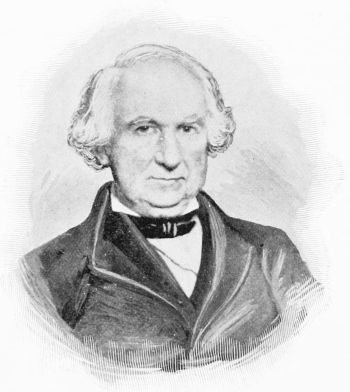
BARTHOLOMEW F. MOORE.