BARTHOLOMEW FIGURES MOORE. BY ED. GRAHAM HAYWOOD.
Reading edition
A great lawyer, a cherished and distinguished citizen having fallen in our midst, in obedience to an honored custom, we turn aside from the ordinary pursuits and ambitions to pay this sad tribute to our illustrious brother.
Bartholomew Figures Moore having passed the age allotted to man by the Psalmist, in the midst of his friends and kindred, departed this life in the city of Raleigh, November 27, A. D. 1878. He was the son of a Revolutionary soldier, and born at the family residence near Fishing Creek in Halifax county, January 29, 1801.
Having prepared himself for college, he entered the University of the State in 1818, and in 1820 graduated with honor in a class of recognized ability.
Leaving the University, Mr. Moore read law with Hon. Thomas N. Mann, an able and distinguished lawyer of Nash county. After obtaining his license he entered upon the practice of his profession at the then flourishing village of Nashville, the county seat. His success for some years was not by any means flattering, yet the first five hundred dollars he received from his professional services he expended in traveling and familiarizing himself with his country.
In December, 1828, he married Louisa, a daughter of George Boddie, Esq., of Nash county, who lived only until the 4th of November, 1829. In April, 1835, he married Lucy W., likewise a daughter of George Boddie, who, having witnessed and shared his toils and triumphs, survives him, blessed with a large and estimable family.
He returned, in 1835, to Halifax, his native county, and while pursuing his profession, was elected successively to the House of Commons from 1836 to 1844, with the exception of 1838, when he was defeated in consequence of having voted to give State aid to the Wilmington and Weldon Railroad Company, of which he was a warm friend and an able advocate.
He was appointed Attorney-General of the State in 1848, and, upon the convening of the General Assembly in December, elected to the same position. This office he continued to hold and fill with great acceptability until he resigned it in consequence of being appointed a commissioner to revise the statute law of the State. To him was assigned the principal labor of arranging the matter and superintending the publication of the Revised Code.
While ample success crowned his professional career in Halifax county, yet in 1848 he removed to Raleigh, where he resided till the time of his death. Bringing with him his well-established reputation for research and ability, he continued to command an extended and lucrative practice in this and other parts of the State.
Mr. Moore early secured a high reputation as an able and profound lawyer by an elaborate brief in the celebrated case of the State vs. Will, a slave (1 Devereux and Battle's Law). It was a case that awakened a general and profound interest throughout the country and settled the true relations between master and slave in our State. It recognized the right of the slave to defend himself against the assaults of his master in the preservation of his own life. It is reserved to but few of the profession to so impress their views upon the courts, in advance of public opinion, and to prepare so admirable a collocation of the law and to establish so durable a reputation upon any one case.
Mr. Moore was a close and painstaking student; reluctant to appear in any case without careful preparation; yet when he entered the combat, the rich and fertile resources of his well-stored mind clearly manifested that nothing rusted in his intellectual armory.
His mind was logical, his manner forcible, his ideas, without undue ornamentation, were clothed in strong and graphic language. He seized at once the strong points of his case, and pressed them with skill and sagacity. Possessed of a strong mind and robust constitution, he was a fine exemplification of the mens sana in corpore sano.
In politics he was a Whig, and admired a strong and stable government; an ardent lover of civil liberty, he watched with jealousy all legislation tending to encroach upon the guaranteed rights of the citizen.
A bold and avowed Union man, while the States were engaged in an unremitting and unrelenting civil war, his high character and recognized integrity secured him, even amidst the clash of arms, a respectful hearing, for it was known that he sympathized with his own people in their unequal conflict, and that often his hasty expressions were the result of deep convictions. Recognized as a pronounced and outspoken Unionist, it was but natural that he should be sought for and consulted by the President of the United States at the termination of the war.
His respect, however, for the constitutional limitations of the General Government compelled him to oppose the whole reconstruction policy, for he was incapable of yielding to the intrigues of the politician or the subservient traffic of a mere placeman.
He was a leading member of the State convention called by the President, and ably advocated the adoption of all such measures as were proclaimed as indispensably necessary to a rehabilitation of the State, believing that wise statesmanship required an early submission to the demands of the General Government.
Reared in a conservative school of politics, and devotedly attached to his State and the high character of her judiciary, he ever looked with distrust upon the election of judges for short terms and by popular ballot as an alarming inroad.
As a citizen, to the poor he was liberal and unostentatious, to his equals, frank and manly, to all, kind and just.
That he had his faults, none will deny; he was impatient of contradiction, at times impetuous and irascible, yet these were but the natural emotions of an ardent and sanguine temperament, and while they tended to obscure, did not infect those true and excellent qualities which lay beneath the surface.
He lived literally within the Augustan age of the profession in our State. With a Gaston, Daniel, and Ruffin on the bench, the logical and versatile Badger, the strong and rugged Saunders, the able, astute Haywood and their illustrious compeers as rivals at the bar, it is praise enough to say that he was ever equal to the emergency of any occasion.
He was the wisest man I ever knew. At his decease and almost for his whole life, though filling only a private station, he had come to be recognized as a distinct and efficient moral power in regulating the social and political welfare of the State. He lived almost to the utmost limit of the span allotted by the Psalmist to man. Satisfied with only some very brief honorable rest in extreme old age, he spent all these years of his life in active, unremitting, assiduous labor, and finished his career without a taint upon his honor or a stain upon his reputation. His life covers many epochs in our State and national history, and among them, the most solemn and imperative political crisis through which State and nation have yet passed. For forty years he was a leader in the legal profession, and for perhaps a quarter of a century he was the very head of the bar—facile princeps. Of all the gentlemen who composed the Raleigh bar, when I was first admitted to practice, he was the last relict—Badger, the two Busbees, Husted, Jones, Manly, Mariott, Miller, Rogers, Saunders, Sheppard, are all gone, sunk down—down with the tumult they made!
His thorough and life-long devotion to the enforcement of the laws preserving civil liberty, distinguished him among his fellows. No circumstances of danger—no allurements of ambition—no fear of consequences—no regard for himself, his family, his fortune, his future—no specious arguments of expediency ever tempted him upon any occasion to refrain from boldly and perseveringly, in public and in private, urging and enforcing his objections, whenever, wherever and in whatsoever form the liberty of the humblest citizen was threatened or invaded.
For solid wisdom, penetrating foresight, invariable sagacity, he had no peer, and he has left behind none like him. He had nothing but observation, reason and a sense of duty to guide him, and these he obeyed under trials and temptations which it is to be hoped, for the sake of public virtue, are not to become common. In the presence of such manly, unselfish, heroic virtue, I uncover my head and put the shoes from off my feet and lift up my heart to God in thankfulness for the example of this His faithful soldier and servant. According to his lights he did his duty—a hard and painful duty it was, and the event has proved that his lights were as true as the sun in heaven. Every man is to be judged, so far as human judgment is to be passed upon him at all, by the tenor of the motives which actuated him, and to which the main current of his life responded. Judged by this standard his course with reference to the late social war must command admiration even of those who most earnestly condemned his action.
I do not think Mr. Moore had genius, but his talents were great, his will imperative, his industry unbounded, and his habit of methodical and exhaustive analysis unequaled. He had no great oratorical gifts, except to those cultivated minds to which lucidity of arrangement and logical presentation of a subject are most pleasing and convincing. Even his voice when addressing an audience was harsh and unmusical. But he was the most successful lawyer we had, and I remember watching his mode of managing a cause with admiration and wonder, and studying it, as the most perfect model within my reach. In this respect his professional skill and acumen were, and to the very end continued to be, unapproachable.
On a more favorable occasion it is to be hoped that some person well qualified for the task will lay before the profession a full, critical and careful history and examination of some of the numerous great causes in which he appeared and his arguments therein; in one or the other of which, as I verily believe, is exhibited every variety of intellectual excellence demanded for the elucidation and application of law in the courts of justice. His briefs in the State vs. Will, Moye vs. May, and Walton vs. Gatling are all models; each one has its distinct method and discloses a special excellence.
During the period I knew him, which extended through a quarter of a century, I never knew him to make a mistake of judgment. I do not mean that he never, upon some passing matter, erred in act or opinion, but in great crises when the waters of revolution were out and the files of political experience furnished no precedent for guidance—when all was on the hazard and he was called upon to use his wisdom in suggesting the best means applicable to the production of the best results, in predicting what results must follow from one course of action or another—he was almost infallible—his predictions were prophecies. His bare opinions had come to have in this community the weight of actual knowledge. "He was a man, take him for all in all, I shall not look upon his like again."
And in this connection let me say one word of a single episode in Mr. Moore's career, with which I have heard some thoughtless persons find fault. I speak of his well known hostility to secession and the Confederate cause. Surely those who impute blame to him have not considered his motives, his opinions, his conduct. Mr. Moore was by conviction a Federalist, both in politics and in the construction which, as a lawyer, he gave to the Constitution of the United States; he denied always, from first to last, the right of secession; he thought the only safety for his people, for the State, for the nation, for civil liberty even, was in the perpetuation of the Union; with his far-seeing intellect he knew and foretold the fierce struggle to come, the bloodshed, the evil passions, the crime, the suffering which would accompany it, its failure, the dreadful consequences, the perils to all civil liberty and all rights of person and property which would result, many of which are not yet past. He made no secret of his opinions and his feelings at any time—he was constant, in season and out of season, in proclaiming them from the housetops, and in endeavoring to convert others to his views; to him the result—the failure—was always present in all its shocking and useless reality; and when the good opinion of his neighbors and friends (which he cherished as much as any man) was at stake, and his liberty, his future, his reputation, his very life, was on the hazard of a die—he yet stood steadfast as the Northern Star—"Of whose true, fixed and resting quality there is no fellow in the firmament."
Which of his faultfinders would have done as much under like circumstances? Which one of us, I pray you, oh! hot-blooded secessionists, Hebrew of the Hebrews, if we had had his prevision, would have obeyed the dictates of our convictions and have exhibited such courageous virtue?
But, in my opinion, the Revised Code is the greatest monument he has left of the excellent and rare endowments of his mind; especially does it illustrate his profound knowledge of the written law of North Carolina at the date of its preparation. Lord Coke said of Littleton's treatise on tenures, "I affirm, and take upon me to maintain, against all opposites whatsoever, that it is a work of as absolute perfection in its kind, and as free from error, as any book that I have ever known to be written of any human learning"; and I venture to adopt his language as applicable to the Revised Code. Its great and surpassing excellence can only be fully perceived and appreciated by those who have studied it, and have long had occasion to apply it practically. They will have seen that it is far more than a bare compilation of statutes—far more than a codification of existing acts of Assembly, but that it has amended and perfected every such act in those particulars in which it has been proved by experience to be imperfect. It indicates a profound and exact knowledge of every principle which had been established, and every decision which had then been made by our courts, and an exhaustive, methodical analysis of the fundamental principles of the common law.
Having carefully arranged his affairs, and provided for the wife and children whom he loved, and disposed of his great estate, he retired to his chamber and folded his mantle about him to die as he had lived, with decency. Weary and worn, perhaps disappointed, certainly disenchanted, disillusioned of all the bright dreams of his green manhood—let us follow him there: be ye sure that sacred chamber was not haunted by memories of evil deeds, of sins that had sorrowfully come home at nightfall—with hopes that had borne no fruit, with resolves abandoned almost as soon as formed. His strength failed him more and more; painlessly he sinks into the lethargy of approaching death, while his children gather around his couch. What are the last feeble syllables which they hear from the dying lips of this gray-haired veteran—"I am tired now. I am going to my mother in Heaven."
Perhaps he knew that there were some heavy items underscored against him, but he also knew that the mercy of God can even outdo the hope He gives us for token and keepsake. A greater and a grander end, after a life of mark and power, might, to his early aspirations and self-conscious strength, have seemed the bourne intended. If it had befallen him—as but for himself it would have done—to appear more actively in official life, where men are moved by ambition and bold decision, his name would have been more famous in history—but perhaps also better known to the devil. As it was, he lay there dying, and was well content. The turbulence of his life was past, the torrent and the eddy, the attempt at fore-reaching upon his age, and the sense of impossibility, the strain of his mental muscles to stir the "great dead trunks of orthodoxy"—and then, the self-doubt, the chill, the depression which follow such attempts, as surely as ague tracks the pioneer—thank God, all this was over now—the violence gone—and the dark despair. Of all the good and evil things which he had known and felt, but two yet dwelt in the feeble heart—only two still showed their presence in his dying eyes and words. Each of these two were good—if two indeed they were—faith in the Heavenly Father, and love of the earthly children.
"When the young are stricken down, and their roses nipped in an hour by the destroying blight, even the stranger can sympathize, who counts the scant years on the gravestone, or reads the notice in the newspaper corner. The contrast forces itself upon you. A fair young creature, bright and blooming yesterday, distributing smiles, levying homage, inspiring desire, conscious of her power to charm, and gay with the natural enjoyment of her conquests—who, in his walk through the world has not looked on many such a one; and, at the notion of her sudden call away from beauty, triumph, pleasure, her helpless outcries during her short pain, her vain pleas for a little respite, her sentence and its execution, has not felt a shock of pity? When the days of a long life come to their close, and a white head sinks to rise no more, we bow our own with respect as the mourning train passes, and salute the heraldry and devices of yonder pomp, as symbols of age, wisdom, deserved respect, merited honor—long experience of suffering and action. The wealth he has achieved is the harvest he has sowed; the title on his hearse, fruits of the field he bravely and laboriously wrought in. Around his grave are unseen troops of mourners waiting; many and many a poor pensioner trooping to the place; many weeping charities; many kind actions; many dear friends beloved and deplored, rising up at the toll of that bell to follow the honored hearse; dead parents waiting above, and calling 'come son,' lost children, heaven's foundlings, hovering around like cherubim, and whispering 'welcome, father.'"
"Here lies one who reposes after a long feast, where much love has been; here slumbers, in patience and peace, a veteran, with all his wounds in front, and not a blot on his scutcheon after fourscore years of duty well done in the fierce and ceaseless campaign of life."
"Oh, yet we trust that somehow good Will be the final goal of ill, To pangs of nature, sins of will, Defects of doubt, and taints of blood; "That nothing walks with aimless feet; That no one life shall be destroy'd, Or cast as rubbish to the void, When God hath made the pile complete; "That not a worm is cloven in vain; That not a moth with vain desire Is shrivel'd in a fruitless fire, Or but subserves another's gain. "Behold, we know not anything; I can but trust that good shall fall At last—far off—at last, to all, And every winter change to spring. "So runs my dream; but what am I? An infant crying in the night; An infant crying for the light; And with no language but a cry."
This sketch is the best part of Mr. Haywood's address to the bench and bar of Wake county, delivered shortly after Mr. Moore's death. If he presents the character of his subject correctly, as far as he goes, he does not make a complete sketch.
Mr. Haywood had the reputation of having more learning than judgment, and his reading in law was very wide; he was not the man to go into details and marshal the facts requisite for a perfect sketch.
Mr. Moore feared lest his fellow-countrymen should misjudge the motives which made him a Union man during the war. He therefore inserted in his will an item which explains his views. No great man is ever careless of what his people and their posterity may think of his conduct. The records of his adopted county will safely keep his eloquent words, and the originality of his method of preserving them will cause them to be republished from time to time.
Item 39 of Mr. Moore's will reads as follows:
"Prior to the late civil war I had been for more than thirty years much devoted to investigating the nature and principles of our Federal and State governments, and during that period, having been several times profoundly exercised as to the true and lawful powers of each—not as a politician, but as a citizen truly devoted to my country—I was unable, under my conviction of the solomn duties of patriotism, to give any excuse for or countenance to the Civil War of 1861 without sacrificing all self-respect. My judgment was the instructor of my conscience, and no man suffered greater misery than did I as the scenes of battle unfolded the bloody carnage of war in the midst of our homes. I had been taught under the deep conviction of my judgment that there could be no reliable liberty of my State without the union of the States, and being devoted to my State, I felt that I should desert her whenever I should aid to destroy the Union. I could not imagine a more terrible spectacle than that of beholding the sun shining upon the broken and dishonored fragments of States dissolved, discordant and belligerent, and on a land rent with civil feuds and drenched in fraternal blood. With this horrible picture of anarchy and blood looming up before my eyes, I could not, as a patriot, consent to welcome its approach to my own native land, and truly was I happy when I saw the sun of peace rising with the glorious promise to shine once more on States equal and free, honored and united. And although the promise has been long delayed by an unwise policy, and I myself may never see the full-orbed sun of liberty shine on my country and every part of it as once it did, yet I have strong hopes that my countrymen will yet be blessed with that glorious light."
The argument of Mr. Moore, or brief, as it is called, in the State vs. Will, is the best thing of the kind in the law books of this State. I cannot prophesy much of a future in any field of public service for that young man who shall fail to be impressed and interested by this powerful production. I therefore give it entire.
ARGUMENT IN THE STATE vs. WILL.
BY B. F. MOORE.
The defendant was indicted for the murder of one Richard Baxter, and on the trial before Judge Donnell, at Edgecombe, on the last Circuit, the jury returned the following special verdict, viz.:
"That the prisoner, Will, was the property of James S. Battle, and the deceased, Richard Baxter, was the overseer of said Battle, and entrusted with the management of the prisoner at the time of the commission of the homicide; that early in the morning of the 22d day of January last, on which day the killing took place, the prisoner had a dispute with slave Allen, who was likewise the property of said Battle, and a foreman on the same plantation of which the deceased was overseer; that the dispute between the prisoner and the said Allen arose about a hoe which the former claimed to use exclusively on the farm on account of his having helved it in his own time; but which the latter directed another slave to use on that day. That some angry words passed between the prisoner and the foreman, upon which the prisoner broke out the helve, and went off about one-fourth of a mile to his work, which was packing cotton with a screw; that very soon after the dispute between the prisoner and the foreman, the latter informed the deceased what had occurred, who immediately went into his house; that while the deceased was in his house, his wife was heard to say, 'I would not, my dear,' to which he replied in a positive tone of voice, 'I will'; that in a very short time after this the deceased came out of his house to the place where the foreman was, and told him that he, the deceased, was going after the prisoner, and directed the foreman to take his cowhide and follow him at a distance; that the deceased then returned into the house and took his gun, mounted his horse and rode to the screw, a distance of about six hundred yards, where the prisoner was at work; that the deceased came up within twenty or twenty-five feet of the screw without being observed by the prisoner; dismounted and hastily got over the fence into the screw-yard; that the deceased, with his gun in his hand, walked directly to the box on which the prisoner was standing, engaged in throwing cotton, and ordered the prisoner to come down; that the prisoner took off his hat in an humble manner and came down; that the deceased spoke some words to the prisoner which were not heard by any of the three negroes present; that the prisoner thereupon made off, and getting between ten and fifteen steps from the deceased, the deceased fired upon him; that the report of the gun was very loud, and the whole load lodged in the prisoner's back, covering a space of twelve inches square; that the wound caused thereby might have produced death; that the prisoner continued to make off through a field, and after retreating in a run about one hundred and fifty yards in sight of the deceased, the deceased directed two of the slaves present to pursue him through the field, saying that 'he could not go far'; that the deceased himself, laying down his gun, mounted his horse, and having directed his foreman, who had just come up to pursue the prisoner likewise, rode round the field and headed the prisoner; that as soon as the deceased had done this, he dismounted, got over the fence and pursued the prisoner on foot; that as soon as the prisoner discovered he was headed, he changed his course to avoid the deceased, and ran in another direction towards the wood; that after pursuing the prisoner on foot two or three hundred yards, the deceased came up with him and collared him with his right hand; that at this moment the negroes ordered to pursue the prisoner were running towards the prisoner and the deceased; that the prisoner had run before he was overtaken by the deceased five or six hundred yards from the place where he was shot; that it was not more than six or eight minutes from the time of the shooting till the slaves in pursuit came to where the prisoner and deceased were engaged; that in a short time the said slaves came up, and being ordered by the deceased, one of them attempted to lay hold of the prisoner, who had his knife drawn, and the left thumb of the deceased in his mouth; that the prisoner struck at said slave with his knife, missed him and cut the deceased in the thigh. That in the scuffle between the prisoner and the deceased, after the deceased overtook the prisoner, the deceased received from the prisoner a wound in his arm which occasioned his death; and that the deceased had no weapons during the scuffle. That soon after, the deceased let go his hold on the prisoner, who ran towards the nearest woods and escaped; that the deceased did not pursue him, but directed the slaves to do so; that the deceased soon recalled the slaves, and when they returned the deceased was sitting on the ground bleeding, and as they came up the deceased said, 'Will has killed me; if I had minded what my poor wife said, I should not have been in this fix.' That besides the wound on his thigh the deceased had a slight puncture on his breast, about skin-deep, and a wound about four inches long and two inches deep on his right arm, above his elbow, which was inflicted by the prisoner, and which from loss of blood occasioned his death, and that he died on the same day in the evening; that the prisoner went the same day to his master and surrendered himself; that the next day, upon being arrested and informed of the death of the deceased, the prisoner exclaimed, 'Is it possible?' and appeared so much affected that he came near falling, and was obliged to be supported. That the homicide and all the circumstances connected therewith took place in Edgecombe county.
"But whether upon the whole matter aforesaid the said Will be guilty of the felony and murder in the said indictment specified and charged upon him, the said jurors are altogether ignorant, and pray the advice of the Court thereupon. And if upon the whole matter aforesaid it shall appear to the Court that he is guilty of the felony and murder wherewith he stands charged, then, they find him guilty. If upon the whole matter aforesaid, it shall appear to the Court that he is not guilty of the murder aforesaid charged upon him by said indictment, then the said jurors upon their oaths aforesaid, do say, that the said Will is not guilty of the murder aforesaid, as the said Will has for himself above in pleading alleged, but that the said Will is only guilty of feloniously killing and slaying the said Richard Baxter." Upon this special verdict, his Honor gave judgment that the prisoner was guilty of murder, and pronounced sentence of death; whereupon the prisoner appealed to the Supreme Court.
B. F. Moore for the prisoner.—It is conceded that Baxter occupied the place of master, and, in his capacity of overseer, was invested with all the authority of owner, in the means of rendering the prisoner subservient to his lawful commands. With this concession, freely made, it is believed, that if the shot of the deceased had proved fatal, he had been guilty of murder, and not of manslaughter only. The instrument used, and the short distance between the parties, were calculated to produce death; and nothing but the want of malice could have deprived the act of any of the features of murder. The disobedience of running from his master on account of threatened chastisement, however provoking, does not justify the death of a slave. It is truly calculated to surprise the master into a sudden gust of passion, and, on this account, death inflicted during such a moment may well be mitigated to the offense of manslaughter. But it is only the surprise of the passions that will extenuate their transport. Divest the act of all idea of surprise, it then becomes deliberate, and in law, there will be no difference between shooting for the disobedience at the moment of running away, and many days thereafter. It is clear then, that if Baxter's shot had been fatal, he had been guilty of murder and not of manslaughter. For, that he loaded his gun and proceeded to the cotton-screw with the intent to shoot the prisoner, if the latter should make off, is manifest from his whole conduct, and particularly so, from the fact of his directing the foreman to walk behind at a distance. If he had armed himself for defense, expecting a conflict with the prisoner, he would have summoned his aid and kept it at his heels ready for the encounter. The bloody purpose of shooting had certainly been formed, and the time given him for reflection and the calm concoction of his plans evince a settled design and perfect deliberation. He was not surprised into the act of shooting; it was deliberate; it was expected and intended beforehand, and, therefore, murderous.
It is further believed by the prisoner's counsel, that if on firing the shot, Baxter had rushed towards him in a threatening manner, and the prisoner had turned, being unable to escape, and slain the deceased, the act had been homicide se defendendo, and this upon the clearest principles of criminal law.
The prisoner's counsel contends:
First, That if Baxter's shot had killed the prisoner, Baxter would have been guilty of manslaughter at the least.
Second, This position being established, the killing of Baxter under the circumstances stated is but manslaughter in the prisoner.
The first position would seem too plain to be argued; but as an opinion appears to be rapidly pervading the public mind that any means may be resorted to to coerce the perfect submission of the slave to his master's will, and that any resistance to that will, reasonable or unreasonable, lawfully places the life of the slave at his master's feet, it may be useful to attempt to draw the line, if there be any, between the lawful and unlawful exercise of the master's power. That there is such a line, though it may be difficult in all cases to find it and fix it with precision, is nevertheless true; and although the courts may resolve that in all cases short of homicide they will not look for it, yet, disagreeable and perplexing as the task may be, they cannot avoid the search so long as a master may be tried for the homicide of the slave, or so long as the slave may set up any defense for the homicide of his master.
It is not intended to combat the correctness of the decision in the State vs. Mann, 2 Dev., 263, though that case leaves the slave, when his life is spared, under the slender guardianship of the "frowns and execrations" of a moral community against cruelty. That decision is not understood by me as some have expounded it. In declaring that a master cannot be indicted for a battery on his slave, the Court is not to be understood to affirm that he cannot be indicted for any offense which necessarily includes a battery. I apprehend the substance of their decision to be that they will take no cognizance of any violence done to the slave by the master which does not produce death. It is true, there is a portion of the opinion of the Court which puts the slave entirely out of the pale of the law, and secures the master in a despotic immunity. On page 266 the Court says: "Such obedience is the consequence of only uncontrolled authority over the body; there is nothing else which can operate to produce the effect; the power of the master must be absolute to render the submission of the slave perfect. In the actual condition of things it must be so, there is no remedy; this discipline belongs to the state of slavery; they cannot be disunited without abrogating at once the right of the master and absolving the slave from his obligation." These expressions, it must be admitted, are clear beyond cavil in their meaning, and that they were selected to convey, with great accuracy, the opinions of the learned judge who used them, may be well argued from the frank confession which he avows of their abhorrence. In truth, they do outlaw the slave and legalize his destruction at the will of his master. It is believed, however, that they were never intended to cover the entire relation between master and slave. If they were, it is humbly submitted that they are not only startling and abhorrent to humanity, but at variance with statute law and decided cases. Uncontrolled authority over the body is uncontrolled authority over the life; and authority, to be uncontrolled, can be subject to no question. Absolute power is irresponsible power, circumscribed by no limits save its own imbecility, and selecting its own means with an unfettered discretion. Absolute power is exempt from legal inquiry, and is absolved from all accountability for the extent or mode of its exercise.
During its operations it acknowledges no equal which may check its will, and knows no superior afterwards which may rightfully punish its deeds. The language of the Court does not strictly and precisely describe the relation of master and slave which subsisted in ancient Rome, and does now subsist in modern Turkey; a relation which this Court in the case of State vs. Read did most emphatically denounce as inhuman, unsuited to the genius of our laws, and unnecessary to protect the master in his legal rights. In that case Judge Henderson fixes the true boundary of the master's power. It extends, says he, to securing the services and labors of the slave, and no farther. And he expressly declares that a power over the life of the slave is not surrendered by the law, because the possession of such a power is noways necessary to the purposes of slavery, and that his life is in the care of the law.
The idea of the perfect submission of the slave is in true accordance with the policy which should regulate that condition of life, wherever it may exist. But whether it will more certainly result from the absolute power of the owner than from a large but limited authority, is questionable indeed. More especially, if it be true, as argued in the opinion already referred to, that the absolute power of the master, although left unrestrained by law, is checked and fettered by what is stronger than law, the irresistible force of public sentiment. If that force is now setting in a counter-current against the license of absolute power, either it is to be deprecated and stopped, or absolute power is most clearly proved to be unnecessary to the ends of slavery. The courts of the country should foster the enlightened benevolence of the age, and interpret the powers which one class of the people claim over another, in conformity, not with the spirit which tolerates the barbarian who is guilty of savage cruelty, but with that which heaps upon him the frowns and deep execrations of the community. All domestic police power must be regulated by the feelings and views of those who dispense it. If it be true, then, that public sentiment will no longer tolerate the excessive cruelties from the master, as is said by Taylor, Chief Justice, in the State vs. Hale; by Henderson, Chief Justice, in the State vs. Read; and by Ruffin, Chief Justice, in the State vs. Mann; and if it be true, likewise, that the relation between master and slave is to be discovered from the opinions and feelings of the masters, we cannot hear without surprise that it is necessary, in the actual condition of things, to clothe the master with an uncontrolled and absolute authority over the body of the slave. If such necessity now exists, the rhetorician hath spoken, and not the judge. If such necessity does not exist, the power is given for abuse, and not to accomplish the objects of slavery. It would seem really, that whilst the courts are lauding the Christian benevolence of the times manifested by the humane treatment of the slaves, they are engaged in investigating to what possible extent the master may push his authority without incurring responsibility. They feel shocked at the discovery they make themselves, but rise from their labor with the consolation that few are so abandoned to a sense of public indignation as to enjoy the revealed prerogative. If the expression could be divested of the appearance of sarcasm, some truth might, perhaps, be found in the assertion that the great result of their disclosure has been to teach the kind master how merciful and moderate he is in the midst of such plenitude of power, and the cruel one, how despised and desecrated he will be if he use its legal license. Good men will feel no pleasure in the revealment, bad men will be freed from the check of ignorance.
It is further said in the State vs. Mann, "That the slave, to remain a slave, must be made sensible that there is no appeal from his master; that his power in no one instance is usurped." The language here is equally explicit, and altogether as strong, as that before quoted. It denies to the slave the smallest attribute of a rational or feeling creature. It not only represses thought, and extinguishes all power to deliberate on any command of his master, however repugnant to natural justice it may be, and whether its execution is to affect himself or others; but it professes to control into perfect tameness the instinct of self-preservation. It would be difficult, and if it were easy, it would be lamentable, to accomplish the former; but it would be impossible to effect the latter. Such insensibility to life would defeat the very object of its inculcation—the value of the slave. For we can never hope to regulate this powerful instinct of nature with an adjustment which will quietly yield all its love of life into the hands of a ferocious master and yet preserve it against the world beside. But if it were desirable so far to annihilate it, the task is beyond the reach of human ingenuity and not to be accomplished by the possession of absolute power, however fearfully enforced or terribly exercised. The relation of master and slave may repress all the noble energies and manly sentiments of the soul, and may degrade the moral being into a brute condition. And when this is done we shall not be astonished to see the moral brute exhibiting the instinct natural to the brute condition. How vain must it always be, when we shall have reduced humanity to its ultimate capability of degradation, to expect any embellishment of mind to adorn the wretched existence. If the relation require that the slave be disrobed of the essential features which distinguish him from the brute, the relation must adapt itself to the consequences and leave its subject the instinctive privileges of a brute.
I am arguing no question of abstract right, but am endeavoring to prove that the natural incidents of slavery must be borne with, because they are inherent to the condition itself; and that any attempt to restrain or punish a slave for the exercise of a right, which even absolute power cannot destroy, is inhuman, and without the slightest benefit to the security of the master, or to that of society at large. The doctrine may be advanced from the bench, enacted by the Legislature, and enforced with all the varied agony of torture, and still the slave cannot believe, and will not believe, "That there is no one instance" in which the master's power is usurped. Nature, stronger than all, will discover many instances and vindicate her rights at any and at every price. When such a stimulant as this urges the forbidden deed punishment will be powerless to reclaim or to warn by example. It can serve no purpose but to gratify the revengeful feelings of one class of people and to inflame the hidden animosities of the other.
With great deference to the opinion already commented on, it would appear to me that a conclusion directly the reverse as to the necessity of the absolute power in the master should have been drawn from the premises. The slave can only expect to learn the law of the land as respects the power of the owner over him, from the manner in which it is generally, and almost universally, administered by the owner. If their treatment is now so mild or becoming so, as rarely to require the interposition of any tribunal for their protection, they will soon be taught by the conduct of their masters, if not already taught, that absolute power is not the master's right; and the consequence which may be expected will be that the slave will be prepared to resist its exercise when bad men attempt to commit the cruelties allowed by it. So important is it that the Court should, as far as possible, conform their exposition of the rights of men with those sentiments of the public which, by the Court themselves, are admitted to be wholesome and just. And especially should they do so when those rights are constituted by public opinion and almost exclusively by that alone.
Whatever be the power, however, which the master may possess, it is given with the sole view to enable him to coerce the services of the slave, and all experience teaches us that a power over life is not necessary to effectuate that end.
The usual modes of correction are found to be altogether sufficient. Punishment short of death serves the end of the master both as a corrective and as an example. Power over the life of the slave, being therefore unnecessary, ought not to be conceded. The use of highly dangerous weapons in cases of simple disobedience is not tolerated by the law, because they are calculated to produce death.
If the deceased had been resisted a great degree of force might have been used, and the law would not have been scrupulous in determining the excess. If he had been chastising the prisoner in the ordinary mode and death had ensued, it would have been nothing more than an unfortunate accident. But the prisoner was neither resisting his master nor did the calamity grow out of any attempt to chastise. It is confidently contended that a master has not by the law of the land the right to kill his slave for a simple act of disobedience, however provoking may be the circumstances under which it is committed; that if a slave be required to stand, and he run off, he has not forfeited his life. This is conclusive, if the law will never justify a homicide except it be committed upon unavoidable necessity, and will never excuse one, except it be done by misadventure or se defendendo. There is no principle of criminal law which will justify or excuse the death that has been caused through the provocation of the passions alone.
This court has repudiated all idea of similarity between the relation of master and apprentice, as understood in the English law, and that of master and slave as understood in ours. I cannot perceive the propriety of such total repudiation. The foundation of both relations is the same, to wit, service; and although the slave may stand in a lower grade than the mere apprentice, and be more dependent on his master, yet it is submitted that the difference is in the degree and not in the nature of the authority which the master of the one or the other may exercise. This seems to have been the idea of Justice Blackstone, who, in speaking of homicide by parents and masters caused by immoderate correction, proceeds: "Thus by an edict of the Emperor Constantine, when the rigor of the Roman law began to relax and soften, a master was allowed to chastise his slave with rods and imprisonment; and if death accidentally ensued he was guilty of no crime; but otherwise, if he struck him with a club or a stone, and thereby occasioned his death, or if in any yet grosser manner (as by shooting), immoderate suo jure utatur, tunc reus homicidii sit. 4 Bl. Com., 183."
It is not my purpose, however, to place the slave and apprentice on the same footing. It is freely conceded that there is a great difference between the two conditions, and that many cases of homicide committed precisely under the same circumstances would be murder of an apprentice, and only manslaughter of a slave. Thus the master has the right to beat his apprentice as well as his slave, but the principle is universal (with a solitary exception), that a man having the right, under a given provocation, to lay hand upon another, but using a weapon calculated to produce death, and death ensuing, is guilty of murder. The exception alluded to is the slaying of an adulterer caught in the act. Now, if an apprentice disobeys and runs from his master in order to escape chastisement, and the master shoots and kills him, it is murder.
Surely the slaying of the slave under the same circumstances, after full allowance for the difference in their grade of life, can be nothing less than manslaughter. If the law, for the purposes of policy, will not permit the master to be called to account for batteries, however cruel or unjust, done on the body of his slave, as it does in the case of an apprentice, yet when it is obliged to examine the extent of the master's powers by reason of death, then it will apply the same reasonable rules in investigating the master's guilt and the slave's conduct and rights, which it applies in the case of slaying an apprentice, suiting the rule to the difference of condition. 1 Hawks, 217. If, indeed, the master may not be called to account till the death of his slave, if he have this wide scope of authority, to be exercised upon his own discretion, it is highly reasonable that, when he is called to account, the examination should be rigorous, for it is the only protection which the slave can claim at the hands of the law, and, therefore, ought to be strict, in order that it may be the more efficient. It is here alone that the slave, in the eye of the law, ascends from the level of mere property, and takes an humble stand amid his species.
Here he is regarded as a rational creature. Scott's case, 1 Hawks, 24; State vs. Read, 2 Hawks, 454. The necessity of averring that he is property, and whose property, as is requisite in indictments for the batteries of slaves, is here dispensed with; and from this distinction alone it would appear that the courts, in the very form of the indictment for murder, have not recognized the exemption of the master from the accountability, common to the world beside, for the death of a slave. 2 Dev., 264.
The prisoner was shot in the act of making off from his overseer who was prepared to chastise him. A master's authority to apprehend his slave cannot be greater than that of a constable or sheriff to arrest for a misdemeanor; and a constable may not kill in order to prevent the escape of one guilty of that grade of offense. The law has so high a regard for human life that it directs the officer to permit an escape rather than kill. If the officer act illegally, by abusing his authority, or exceeding it, resistance unto death is not murder. But if the master have greater authority to apprehend his slave than a law-officer hath to arrest, under a precept, for a misdemeanor, he certainly has not a greater than a sheriff, acting under a precept, hath to arrest a felon. Here the law again shows its tender and noble regard for human life and its detestation of the shedding of human blood. The officer is not allowed to kill a felon, a murderer, or a traitor, unless his escape be inevitable. "And in every instance in which one man can be justified in killing another, the abuse of his power makes him guilty of manslaughter." Bevil, 78. An officer, therefore, having the right to kill a felon in order to prevent his escape, and then doing so when the escape may be prevented by more lenient means, is guilty of manslaughter. This necessity must always be proven. It is never to be presumed. No such necessity appears in the finding of the jury. In legal contemplation, therefore, it does not exist.
The law enjoins it as a duty on the officer to kill a felon, rather than permit his escape, upon the presumption, I suppose, that if he do escape, he will forever elude the penalty of his crime. Such is not the case with a runaway slave, who, in general, may be certainly recaptured. No one will be found to maintain that it is the duty of the master to kill his slave rather than suffer his temporary escape. The prisoner was in the act of disobedience and not of resistance, between which there is a substantial difference. Act of 1791, Bevil, 114. The deceased then greatly exceeded his authority; whether the prisoner is to be considered in the light of an apprentice, of one who had committed an aggravated misdemeanor, or even in that of a felon; and if death had ensued, I conclude that he would have been guilty of manslaughter at the least.
This brings us to the important question in this case. Was the prisoner justly so provoked by the shooting as, under the influence of ordinary human frailty, to cause his reason to be dethroned, and to be deprived of deliberation? Or, in the language of Judge Haywood, in Norris's case, "was not the prisoner thereby deprived of the free and proper exercise of his rational faculties, owing to the fury of resentment, not unreasonably conceived?" If he was, that ends the question. Was it such a provocation as, allowing for the disparity of the free and slave condition of men in this country, was well calculated, even in minds tolerably well regulated, to throw a man off his guard and excite a furious anger? If so, the State vs. Merrill, 2 Dev., 279 (Ruffin's opinion), determines the fate of the prisoner. An appeal to human nature in its most degraded state will answer, unhesitatingly, it was. No man can reason and respond otherwise. And it appears to me that an appeal to the principles of law, as founded in the nature of man and recognized for centuries, will leave not a particle of doubt. Can the prisoner be guilty of murder? Who can review the circumstances of the case, and in candor pronounce that they carry in them "the plain indication of a heart regardless of social duty, and fatally bent on mischief?" If this case can be made to reach this standard definition of murder, what bosom is there which does not luxuriate in the poison of murderous thought? And in vain may nature plead her wrongs and the tempest of the passions to excuse the indiscretion of her fitful moments. It may be murder, but if so, it must find its guilt, not in the human disposition, but in a policy that knows no frailty and shows no mercy. That policy is yet to be declared; I will not suppose its intended application to this case, and I shall, therefore, for the present, take the liberty of discussing the defense upon the received principles which define murder and distinguish it from manslaughter.
Murder is the felonious killing of a human creature with deliberation. The act must have three intents. 1. An intent to kill or hurt. 2. An intent to kill or hurt unjustly. 3. The intent must be deliberate. It is only necessary in this case to consider the deliberation of the intent; for it is admitted that the intent of the prisoner was to kill or hurt, and that it was unjust; but it is denied that it was deliberate.
The intent is not deliberate if there be provoking cause.
The mischievous, vindictive disposition essential to constitute the crime of murder is implied from the want of legal cause of provocation. The greatest care should be taken not to confound a vindictive act with such an act as shows a vindictive disposition. Every case of manslaughter, perpetrated in anger, is a vindictive act, whilst every case of murder exhibits the vindictive disposition. A vindictive act simply is the result of ordinary frailty; a vindictive disposition is the attendant of extraordinary depravity. The former comes of a surprise of the passions; the latter marshals, stimulates, and leads the passions.
Manslaughter wants one of the above intents which define murder. It implies an intent to kill or hurt, and that the intent is unjust, but supposes the absence of deliberation, or the presence of a justly provoking cause. But what is justly provoking cause? In our search for the meaning of the expression we cannot consult the vague notions of men as to insults. There would not only be no certainty in them as a guide, but they would strip men of all security for their lives. We must appeal to the common law as it has recognized excusable frailties. Its principles, being bottomed on human nature civilized by legal restraints and legal privileges, adapt themselves with a happy facility to all the changes and modifications of society, and to all the mutations in the relations of its parts. These principles, having discarded the idea of legal provocation from words, have resolved the foundation of their existence into the protection of the person.
Self-preservation, being a prime law of nature, and indispensable to the first and permanent interests of society, the instinct is fostered instead of being checked. The policy of the law to cherish it is what dispenses indulgence to an excess of force requisite to preserve it and palliates an unnecessary homicide. If human institutions could so blunt this sense as to effectuate a law which should forbid blow for blow not threatening death, the introduction of slavery, to a great degree, would be already prepared. If, however, the degradation should stop at this point, still there would be a very ample scope for this powerful sense to act in, and a dangerous attack, or a blow menacing death, being out of the customary sufferance, would call up, in vigor, the unsubdued though mutilated sense, and surprise it into action. It is not the object of the law, in its regulation of the relation of master and slave, to destroy any portion of the instinct of self-preservation. On the contrary, it would be rejoiced to preserve it entire, but this is inconsistent with the subjection of the slave, without which he is valueless. If this instinct were permitted to be displayed by the slave as by a freeman, the authority of the master would be at an end. Hence it is that when it is not so essential to be curbed it is allowed to enjoy a wider range; as, in respect of strangers who have no right to assume any authority, it is permitted to turn many degrees toward the condition of freemen. Hence it is, too, that whenever the law, for the purpose of sustaining the relation of the several parts of society deemed essential to the peace and safety of the whole, tolerates its partial suppression, it provides the best possible security against any abuse likely to occur because of its required extinction. Thus it gives to the wife the protection of love and identity of welfare; to the child the shield of affection; to the apprentice the guaranty of a penal bond; and to the slave the guard of interest. In general, in proportion as these securities are weaker, that of the law itself ought to be stronger; and, in proportion as the subjection in the one or the other of these relations is required to be greater or less, so must the suppression of this instinct be greater or less. The subjection in the relation of slavery ought to be greater, and so ought the extinction of the instinct to be greater than in any of the other relations. It is the legal duty of all who are subjects in any one of them to adapt and conform this instinct to the extent necessary to maintain the relation; and if any one do not, he shall not plead its want of subjection in excuse of a deed occasioned by his neglect of duty. If an apprentice, being under lawful correction, shall resist and slay his master, it is murder, and not manslaughter, because the law cannot admit that he was provoked. If a slave be under any correction, with or without cause from his master, provided it do not threaten death or great bodily harm, and he resist and kill his master, this is murder likewise, and for the same reason, as the law requires this degree of submission from him. But if the apprentice be unlawfully beaten and he resist and kill his master, it is not murder, because the law hath not required him to extinguish his instinct of preservation to such an extent, and therefore it admits that he was provoked; so, if a slave be beset by his master in a manner to threaten death and he slay his master, this cannot be murder, because the law hath not required him to extinguish his instinct to so great a degree, and, therefore, it admits that he was provoked. In a word, in those bounds within which the law has enjoined it as a duty to curb the instinct of self-preservation, we are not allowed to display it, and if we do, the law cannot hear the defense of provocation; but all display of it, out of these bounds, is admissible and is the effect of legal provocation. The law demands it as a duty that we should tame our passions to suit the conditions which it has assigned us. It supposes that this duty will become habitual and consequently easy of performance, and that we will conform ourselves to its requirements. This, and this alone, is the true foundation of all the distinction between the master and the apprentice, between the freeman and the slave.
But having conformed ourselves to a given and required degradation, to an enjoined submission, we are ready by our very nature and habits to resist any degradation or submission greatly beyond that which we have learned to acquiesce in as a duty. When a slave is required to bare his back to the rod, he does it because it is usual; but when he is required to stand as a target for his master's gun, he is startled—no idea of duty sustains the requirement and the unquelled portion of his instinct rouses his passions to resistance.
Human institutions are inadequate to the task of settling a condition in society which shall impart to its members the highest perfection of philosophic fortitude and the lowest degradation of animal existence—which shall blend into harmony the reasonable man and the passionless brute.
When it is declared that a slave is a reasonable or human creature, and that he is the subject of felony at common law; that murder and manslaughter both may be perpetrated on his person, that himself may commit both, it would seem to result that he was acknowledged to possess the infirmities common to his species. That they must be palliated in some cases, even when the master is the victim, I hope I have satisfactorily shown. And now I come to the deliberate conclusion that the only difference caused by the relation consists in the fact that there are some acts of the slave which constitute provocation that would not if done by a freeman; some which would constitute provocation to the master which would not to a stranger; and on the contrary, that a slave is not permitted to be provoked at many acts done by a stranger freeman which would constitute a lawful provocation if done by a fellow-slave; and that a great variety of acts done by the master shall not be sufficient cause of provocation which, if done by a stranger, would be so deemed, but that in not a single relation in which the slave is placed by law is he debarred in every case of violence to his person from feeling and pleading a legal provocation.
If I have been successful in showing that the deceased greatly abused his authority by shooting at the prisoner, and that the act was calculated to produce a resentment not unreasonably conceived, the inference in law is irresistible that if the prisoner, immediately on being shot, had turned and slain the deceased, it could not have been more than manslaughter; and the only important point now remaining to be discussed is whether the interval of time between the reception of the injury and the commission of the homicide enhances the guilt of the deed. The law would be vain and nugatory as a rule of action if it should allow that the passions may be justly provoked and yet refuse to allow a reasonable time for their subsidence. When it says that reason may be dethroned it is never guilty of the solecism of holding the judgment accountable till reason can be reseated. Whether there may have been sufficient time for that important operation of the faculties, is a question often dependent on the circumstances of the case. The continuance of the original exciting causes and the addition of subsequent stimulants being necessarily calculated to prevent the restoration of reason, may prolong the time till they cease to exist; nor even then, at the very moment of their cessation, does the law demand that the bosom shall return to its calm and tranquillity. Such an instantaneous repose is no more to be looked for, in the tempest of the passions, than it is in the storms of the ocean, whose angry waves are often seen to run mountain high long after the dark cloud hath passed away, and the raving wind hath fled from the conflict, leaving its enraged victim heaving with agitation beneath a tranquil and sunny heaven.
The time in this case was but six or eight minutes, and the wound calculated to produce death. If the exciting cause of provocation had here ceased, it would be a rigid and unnatural rule, to require, at the expiration of this short period, the presence of a responsible judgment; for it is perfectly apparent, that in proportion to the severity of the injury received, will be the length of time which nature demands to adjust the shaken balance of the mind. The prisoner had much cause to suspect that his wound would prove fatal; and no man, either bond or free, laboring under the excitement incident to such a situation, could, so soon, have quelled his fury and recalled his scattered senses. But these few moments were not allowed to be moments of rest and thought to the wounded man. They were moments of flight and active pursuit; flight, by a man, dangerously shot, his wounds bleeding in profusion, and chafed into agony by the friction of his clothes and the motions of his body; pursuit by a man who had meditated and attempted a deadly injury; who called to his aid three more men, ready to execute his purposes, whatever they might be, and who was well aware of the mangled condition of his victim, and who, under the full conviction of his shot proving fatal, cheered his comrades of the chase, by the unfeeling exclamation, "He can't run far." Let it be remembered, too, that the prisoner, during this space of time, had run a distance of five or six hundred yards; that he was overtaken by a man who, in moments perfectly cool, when compared with those in which he captured the prisoner, had not hesitated to shoot him at a distance of a few rods, and by what logic can we arrive at the conclusion, either that the prisoner had enjoyed opportunity to regain his judgment, or that he had not every reason to apprehend from the deceased the finishing stroke to his life? How could he be trusted, with every passion inflamed to madness, who in cooler times had violated every duty as a man, had deliberately prepared himself to take the life of his fellow-man, and, as a superintendent, had, for trifling cause, attempted to destroy valuable property entrusted to his care? In no part of the slave's conduct does he evince a disposition to seek a conflict. He takes every occasion to avoid it. When he is headed, he does not hesitate to turn his course, and flee from an encounter.
Upon the whole, I cannot bring my mind to the conclusion, that this case is of higher grade than manslaughter, if of that; and whatever may be the prisoner's fate, I am free to declare, and with the most sincere candor, that I do not recognize in his conduct the moral depravity of a murderer, nor any high degree of inaptitude to the condition of slavery. He was disobedient, it is true, and ran to avoid chastisement. Three-fourths of our slaves occasionally do this. He slew his overseer, it is true, after having been dangerously shot, pursued and overtaken. The tamest and most domestic brute will do likewise. And I feel that if he must expiate the deed under the gallows, he will be a victim, not of his own abandoned depravity, but a sacrifice offered to the policy which regulates the relation of slavery among us. But before he is sacrificed, it may be useful to inquire into that policy. The interests of society demand that it should be fixed, and permanently fixed, that the master may know the extent of his authority, and the slave prepare himself to its accommodation.
No question can be more delicate, or attended with so many bad consequences if settled in error. It would be next to impossible for the judiciary to adjust this relation adversely to any strong and deliberate opinion entertained by the public mind. The momentum of this feeling, acting through the juries of the country and the spirit of the Legislature, would be too powerful, successfully to be encountered by the courts. And in whatsoever decided current it might run, it would, finally, bear into its channel all interpretations of the law.
By a timely and judicious administration of the law, however, in relation to this subject, the courts may effect much in the formation of public opinion, and at this time they may exert the opportunities afforded by their situation, in a most happy manner to impart fixedness and stability to those principles which form the true basis of the policy. They have of late frequently announced from the bench the progression of humanity in this relation, and their clear conviction that the condition of the slave was rapidly advancing in amelioration, under the benign influence of Christian precept and the benevolent auspices of improving civilization. It is believed that these convictions were founded in truth, and the various laws on the statute books bring ample testimony to the fact. As far as slavery has been the subject of legislation for the last ninety years, it has been undergoing a gradual revolution in favor of the slave, and it is confidently asserted, not adverse to the best interests of the master, or of the security of the public. In a popular government we can nowhere look for more correct information of the state of the public mind, upon a subject deeply interesting to the people at large, than in their laws. The history of the legislation of the State for the last century on this subject, during which more than a dozen principal acts have been passed at intervals, is a history of a gradual progression in the improvement of the condition of the slave, in the protection of his person, his comforts, and those rights not necessary to be surrendered to his master. The length of time in which this evidence of a common sentiment has been continuing in one course, is irrefutable testimony of its being the true and deliberate sense of the community. Very lately the whole subject came before the Legislature; and though it was at a time when the public mind was inflamed and alarmed at a recent and yet reeking massacre, they did not relax the laws made for their protection, nor render their lives or persons less secure. From the Act of 1741, which put the life of the slave, on trial, in the hands of three justices and four freeholders, down to that of 1831, which secures, beyond doubt, the right of the slave to a jury of slave owners, there will be found, without a solitary retrograde, one continued, persevering, and unbroken series of laws, raising the slave higher and higher in the scale of moral being. To the period of 1794, the character of the acts, though they are not numerous, nor strongly marked with exclusive benefit to the slave, is evincive of an intent to afford protection, where before it was weak.
It is not possible that there can be found, anywhere, a plainer manifestation of a decided intent to raise the consideration and standing of the slave than is expressed in these acts of the Legislature. Will the Court disappoint this unequivocal intention? Will they rebuke the spirit of the age and strike back this unfortunate race of men, advancing from the depths of misery and wretchedness to a higher ground under the shield of so much legislation enacted in their behalf?
Our laws furnish incontestable evidence of what is the enlightened sentiment of the State. The history of other nations affords a body of luminous information to instruct us what that sentiment should be; and I feel no small pleasure in believing that the legislative policy of our past and present day most fully accords with that course which the long tried experience of bygone ages has distinctly marked out as the wiser and better one.
Upon this subject the Baron Montesquieu has gathered the choicest materials of every age, clime, and nation. With a mind, formed in the mould of patience itself; strong by nature and enriched with a philosophic cultivation, he hath executed the task of analysis with the most profound and discriminating sagacity. With no object in view but the advancement of political knowledge, he hath unmasked all the forms of government, traced to the fountain the principles of their action, and exposed to the meanest capacity the deep-hidden reasons of all the diversified relations of man, and the true genius of the laws necessary to support them.
In his Spirit of Laws, Vol. I, p. 291 et seq., to 298, he treats of the subject of slavery, and informs us as the result of his inquiries that in governments whose policy is warlike, and the citizens ever ready with arms in their hands to quell attempts to regain liberty, slaves may be treated with great rigor and severity without the hazard of servile wars; but that in republics, where the policy is essentially pacific, and the citizens devoted to the arts of peace and industry, the treatment of slaves should be mild and humane; that the power of the master should not be absolute, and that the slave should be put within the keeping of the law. If that candid and ingenious writer be not deceived in his conclusions, he has given us a hint for the regulation of our domestic servitude, the neglect of which may lead to the most fatal sequel. Our government is perhaps the most pacific on earth, and the citizens most addicted to the pursuits of civilized life. How inconsistent, then, will it be in us to adopt a policy in relation to our slaves which must be either yielded up or must change the habits and character of our people, and ultimately our form of government, with the blessing of liberty itself.
We may not expect that the danger of servile wars will only operate to arm the citizens generally in their own defense. The recent insurrection may show, indeed, the formation of numerous companies of yeomanry for the purpose of being always ready to meet and vanquish the earliest movements of insurrectionary slaves; but a little observation at this time, so soon, too, after the panic that gave rise to these preparations, will serve to show that at the present moment there remains scarcely a single one of the many associations which were then formed. They grew up with the panic, and they have vanished with it. It must be apparent, then, if ever ready arms are necessary to our safety, they must be lodged in hands not filled with other occupations, but responsible to the public for efficiency and dispatch. In other words, if a display of force be requisite to chain down the spirit of insurrection or stop the bloody career of its actual march, a standing army, which will leave the great body of citizens to pursue their favorite occupations of peace in perfect security, will be the loud demand of the community. How certainly such a permanent association of armed men, first formed to preserve the relations of our slavery, will ultimately introduce a civil slavery over the whole land, the experience of other nations, and the warning of our own Constitution, will most fearfully answer. I know it has been frequently said, and with some it is a favorite idea, that the more cruel the master, the more subservient will be the slave. This precept is abhorrent to humanity, and is a heresy unsupported by the great mass of historic experience. The despair of individuals cannot last forever; neither will that of a numerous people afflicted with common wrongs, and exchanging a common sympathy. Rome had no servile wars till her masters had outraged every feeling of justice and benevolence and made their slaves drink the cup of unmitigated cruelty to its last drop; nor had she any, that I remember, after the first Christian prince of the empire had relaxed the intolerable degradations of that unfortunate class of her people.
I feel and acknowledge, as strongly as any man can, the inexorable necessity of keeping our slaves in a state of dependence and subservience to their masters. But when shooting becomes necessary to prevent insolence and disobedience, it only serves to show the want of proper domestic rules, but it will never supply it; and never can a punishment like this effect any other purpose than to produce open conflicts or secret assassinations.
In adjusting the balance of this delicate subject, let it not be believed that the great and imminent danger is in overloading the scale of humanity. The courts must pass through Scylla and Charybdis; and they may be assured that the peril of shipwreck is not avoided, by shunning with distant steerage, the whirlpool of Northern fanaticism. That of the South is equally fatal. It may not be so visibly seen, but it is as deep, as wide, and as dangerous.
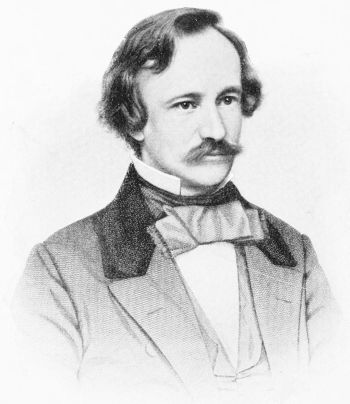
J. JOHNSTON PETTIGREW.