JAMES JOHNSTON PETTIGREW. BY MRS. C. P. SPENCER.
Reading edition
James Johnston Pettigrew, late a Brigadier-General in the army of the Confederate States, was born at Lake Scuppernong, in Tyrrell county, North Carolina, upon the 4th day of July, 1828. His family is of French extraction. At an early period, however, one branch of it emigrated to Scotland, where it may be traced holding lands near Glasgow about the year 1492. Afterwards a portion of it removed to the northern part of Ireland. From this place James Pettigrew, the great-grandfather of the subject of this sketch, about the year 1732, came into Pennsylvania, and, some twenty years afterwards, into North Carolina. About 1770 this gentleman removed to South Carolina, leaving here, however, his son Charles, who was a resident successively of the counties of Granville, Chowan, and Tyrrell. Charles Pettigrew was subsequently the first Bishop-elect of the Protestant Episcopal Church in this Diocese. He died in 1807, and his memory survives fragrant with piety, charity, and an extended usefulness. His son, Ebenezer, succeeded to his estates and reputation, devoting his life to the successful drainage and cultivation of the fertile lands which he owned and to the government of the large family of which he was the head. Mr. Pettigrew resisted every solicitation presented by his neighbors for the employment of his talents in public service. Upon one occasion alone was his reluctance overcome. In 1835 he was chosen by a very flattering vote to represent his district in the Congress of the United States. At that election he received the rare compliment of an almost unanimous vote from his fellow-citizens of Tyrrell, failing to obtain but three votes out of more than seven hundred. He could not be prevailed upon to be a candidate at a second election. Mr. Pettigrew married Miss Shepard, a daughter of the distinguished family of that name seated at New Bern. She died in July, 1830, when her son James Johnston was but two years of age. Ebenezer Pettigrew lived until July, 1848, having witnessed with great sensibility the very brilliant opening of his son's career among the contemporary youth of the land.
After his mother's death the child was taken to the home of his grandmother at New Bern, and there remained until he was carried into Orange county to pursue his education. Owing to an unfortunate exposure whilst an infant, young Pettigrew became a delicate boy, but by diligent and systematic exercise he gradually inured his constitution to endure without harm extraordinary fatigue and the extremes of weather. He was a member of various schools at Hillsborough from the year 1836, enjoying the advantages of instruction by Mr. Bingham for about four years previous to becoming a student at the University. During this period the state of his health required him to be often at home for several months together. He was a member of the University of North Carolina during a full term of four years, graduating there at the head of his class in June, 1847. From early childhood young Pettigrew had been noted as a boy of extraordinary intellect. At all the schools he was easily first in every class and in every department of study. He seemed to master his text-books by intuition. They formed the smallest portion of his studies, for his eager appetite for learning ranged widely over subjects collateral to his immediate tasks. Nor did they always stop here. His father was amused and gratified upon one occasion to observe the extent to which he had profited by his excursions among the medical books of an eminent physician at Hillsborough, of whose family he was an inmate at the age of fourteen. In the class-room at the University he appeared in reciting rather to have descended to the level of the lesson than to have risen up to it. Student as he was, and somewhat reserved in demeanor, he was nevertheless very popular with his fellows, and the object of their enthusiastic admiration.
Anecdotes were abundant as to the marvelous range of his acquirements, and the generosity and patience with which he contributed from his stores even to the dullest applicant for aid. Nor was it only in letters that he was chief. A fencing-master, who happened to have a class among the collegians, bore quite as decided testimony to his merits in fencing as he had obtained from the various chairs of the faculty respecting his proficiency in their several branches.
The commencement at which he graduated was distinguished by the attendance of President Polk, Secretary Mason and Lieutenant Maury of the National Observatory. Impressed by the homage universally paid to his talents and acquirements, as well as by the high character of his graduating oration, these gentlemen proposed to him to become an assistant in the Observatory. After spending some weeks in recreation, Mr. Pettigrew reported to Lieutenant Maury, and remained with him for six or eight months. In the occupations of this office he fully maintained his earlier promise, but soon relinquished the position, inasmuch as the exposure and labor incident to it were injuriously affecting his health.
After an interval of travel in the Northern States, Mr. Pettigrew, in the fall of 1848, became a student of law in the office of James Mason Campbell, Esq., of Baltimore, where he remained for several months. At the close of this period, by the solicitation of his kinsman, the late James L. Petigru of Charleston, S. C., he entered his office with the design of being subsequently associated with him in the practice of his profession. Upon obtaining license, Mr. Pettigrew, by the advice of the kinsman just mentioned, proceeded to Berlin and to other universities in Germany, in order to perfect himself in the civil law. He remained in Europe for nearly three years. Two years of this time he devoted to study, the remainder he spent in traveling upon the Continent, and in Great Britain and Ireland. He availed himself of this opportunity of becoming acquainted with modern European languages so far as to be able to speak with ease German, French, Italian, and Spanish. During this tour he contracted a great partiality for Spanish character and history, having had considerable opportunity for studying the former, not only as a private gentleman, but also as Secretary of Legation, for a short while, to Colonel Barringer, then Minister of the United States near the Court of Spain. It may be proper to add here, that among the unaccomplished designs of Mr. Pettigrew, to which he had given some labor, was that of following Prescott in further narratives of the connection of Spain with America, and as a preliminary to this, he had made a collection of works in Arabic, and had made himself acquainted with that language.
Mr. Pettigrew returned to Charleston in November, 1852, and entered upon the practice of law in connection with his honored and accomplished relative. He profited so well by his studies in Europe and by his subsequent investigations, that in the opinion of his partner, who was well qualified to judge, he became a master of the civil law not inferior in acquisition and in grasp of principle to any in the United States. His success at the bar was brilliant. In 1856 he was chosen one of the representatives of the city in the Legislature, holding his seat under that election for the two sessions of December, 1856, and December, 1857. He rose to great distinction in that body. His report against the reopening of the slave-trade, and his speech upon the organization of the Supreme Court, gave him reputation beyond the bounds of the State. He failed to be reelected in 1858.
Mr. Pettigrew persistently refused to receive any portion of the income of the partnership of which he was a member. Independent in property, and simple in his habits of personal expenditure, he displayed no desire to accumulate money. Noble in every trait of character, he held the contents of his purse subject to every draft that merit might present.
For some years previous to the rupture between the North and the South, Mr. Pettigrew had anticipated its occurrence, and believing it to be his duty to be prepared to give his best assistance to the South, in such event, had turned his attention to military studies. Like many other rare geniuses, he had always a partiality for mathematics, and so very naturally devoted much time to that branch of this science which deals with war. Even as far back as 1850 he had been desirous of becoming an officer in the Prussian army; and negotiations for that end, set upon foot by military friends whom he had made at Berlin, failed only because he was a republican. Afterwards he became aid to Governor Allston of South Carolina, and more recently to Governor Pickens. Upon the breaking out of the war between Sardinia and Austria, Colonel Pettigrew at once arranged his private business and hastened to obtain position in the army under General Marmora.
His application to Count Cavour was favorably received, but after consideration his offer was declined on the ground that the event of the battle of Solferino had rendered further fighting improbable. He was greatly disappointed, as his reception had inspired him with hopes of seeing active service in the Sardinian army with rank, at least as high as that of a colonel. Availing himself, however, of his unexpected leisure, he revisited Spain, and after a stay of a few months returned to South Carolina. The fruits of this second visit were collected by him into a volume entitled Spain and Spaniards, which he printed, for the inspection of his friends, in 1860. It will be found to be a thoughtful, spirited, and agreeable record of his impressions of that romantic land. At the opening of the present war, Colonel Pettigrew, as aid to Governor Pickens, took a prominent part in the operations at Charleston. He was at that time also colonel of a rifle regiment, in which he was much interested, and which became conspicuous amongst the military organizations around Charleston in the winter of 1860-'61. As commander of this body he received the surrender of Castle Pinckney, and subsequently held himself in readiness to storm Fort Sumter, in case it had not been surrendered after bombardment. Later in the spring, having failed to procure the incorporation of his regiment into the army of the Confederate States, and believing there was little chance of seeing active service in South Carolina, he transferred himself to Hampton's legion as a private, and early in the summer accompanied that corps into Virginia. A few days afterwards he was recalled to the service of his native State by an unsolicited election as Colonel of the Twelfth Regiment of North Carolina volunteers, afterwards the Twenty-second Regiment of North Carolina troops. It had been Colonel Pettigrew's earnest wish to become connected with the North Carolina army, so he at once accepted the honorable position, and repaired to Raleigh, where his regiment was stationed in its camp of instruction. He devoted his attention to its discipline with great assiduity, and in the early days of August was ordered into Virginia. The fall and winter of 1861 were spent by him near Evansport, upon the Potomac. He gave his whole time and attention to perfecting his regiment in the duties of soldiers. He fully shared in every hardship that was incident to their situation. In this new position Colonel Pettigrew became conspicuous for another characteristic necessary to eminent success in every department, but especially in that of military life. He was an adept in the art of personally attaching to him the men under his charge. Their enthusiasm knew no bounds. Their confidence in his administration of the police of the camp was perfect, and their assurance of his gallantry and skill unqualified. He soon felt that he might rely upon his brave men for all that was possible to soldiers. Being offered promotion to the rank of brigadier, he declined it on the ground that it would separate him from his regiment. Sometime later, in the spring of 1862, an arrangement was made by which the Twelfth Regiment was included in the brigade that was tendered to him, and he no longer felt any difficulty in accepting the promotion.
General Pettigrew shared in the march under General Johnston into the Peninsula, and afterwards, in the retreat upon Richmond. On the first day of June, 1862, in the battle of Seven Pines, he was severely wounded by a ball which passed transversely along the front of his throat and so into the shoulder, cutting the nerves and muscles which strengthen the right arm. This occurred in a charge which he led with great gallantry. He was left upon the field for dead, and recovered his consciousness only to find himself in the hands of the enemy. Some weeks later his exchange was effected, and being still an invalid, he was placed in command at Petersburg. The exigencies of the service having required his regiment to be transferred to another brigade, he found, upon his return, that it had been placed under the gallant, and now, alas! lamented, General Pender. By degrees a new brigade assembled around General Pettigrew, and such was his pains in its instruction, and such the desire among the North Carolina soldiers to make part of his command, that by the close of the year he was at the head of a brigade which, in point of quality, numbers, and soldierly bearing, was equal to any in the army. He commanded this brigade in repelling the Federal raid into Martin county, late in the fall of 1862, and again in General Foster's expedition against Goldsboro, in December, 1862, and although the quick dexterity of the enemy in falling back did not upon either occasion afford him and his associates an opportunity of trying conclusions with them, yet, upon both occasions the magnificent appearance of Pettigrew's Brigade tended greatly to revive the spirit of a community recently overrun by the enemy. He was also with General D. H. Hill during the spring of this year, in his attempt upon Washington in this State; and in the very brilliant affair at Blount's Creek gave the public a taste of what might be expected from his abilities when untrammeled by the orders of a superior.
At the time of General Stoneman's raid on the north of Richmond, General Pettigrew was ordered to the protection of that city, and shortly afterwards took position at Hanover Junction. His brigade subsequently made part of the Army of Northern Virginia, and accompanied General Lee into Pennsylvania. At the battle of Gettysburg he was in command of Heth's Division, and won many laurels. His division was greatly cut up. The loss of his brigade in killed and wounded was so heavy as almost to destroy its organization. He himself was wounded by a ball which broke one of the bones of his hand. He regarded it so little as not to leave the field. Moving afterwards with General Lee to Hagerstown and the Potomac, it devolved upon General Pettigrew, on the night of the 13th and the morning of the 14th of July, to assist in guarding the passage of that part of the army which recrossed at Falling Waters. About nine o'clock in the morning of the latter day, having been in the saddle all night, General Pettigrew and other officers had thrown themselves upon the ground for a few moment's rest, when a party of Federal cavalry rode into their midst. In the mêlée which ensued, General Pettigrew was shot, the ball taking effect in the abdomen and passing through his body. When the enemy had been repulsed, he was taken up by his sorrowing soldiers and carried across the river some seven miles into Virginia, along the track of the army. Upon the next day he was carried some fifteen miles further, to the house of Mr. Boyd at Bunker Hill, where he received every attention of which his situation allowed. Upon General Lee's expressing great sorrow for the calamity, he said that his fate was no other than one might reasonably anticipate upon entering the army, and that he was perfectly willing to die for his country. To the Rev. Mr. Wilmer he avowed a firm persuasion of the truths of the Christian religion, and said that in accordance with his belief he had, some years before, made preparations for death, adding, that otherwise he would not have entered the army. He lingered until the 17th, and then at twenty-five minutes after six in the morning, died, quietly and without pain. The expression of sympathy for his sad fate was universal. Private soldiers from other commands, and distant States, vied with his own in repeated inquiries after his condition. Upon its way to Raleigh, his body was received by the authorities and by the citizens everywhere with all possible respect and attention. On the morning of Friday, the 24th of July, the coffin, wrapped in the flag of the country, and, adorned with wreaths of flowers and other tributes of feminine taste and tenderness, lay in the rotunda of the Capitol, where, within the year, had preceded him his compatriots, Branch and Anderson. Later in the day the State received his loved and honored remains into her bosom.
It was a matter of great gratification to North Carolina when this son, after an absence of a few years, gladly returned to her service. She views his career in arms with a just pride. She will ever reckon him among the most precious of her jewels; and will hold him forth as the fittest of all exemplars to the coming generations of her young heroes. Chief among his triumphs will it be reckoned that in the midst of his elevation and of the high hopes which possessed his soul, he so demeaned himself as to secure a place, hallowed by grief, in many an humble heart throughout North Carolina. His name is to be pronounced reverently and with tears by the winter fireside of many a hut; and curious childhood will beg to have often repeated the rude stories in which soldiers shall celebrate his generosity, his impartiality, his courtesy, and his daring. It is true that many eyes which flashed with enthusiasm as their favorite urged his gray horse into the thick of the battle, are forever dull upon the fatal hills of Pennsylvania; but this will render his memory only the more dear to the survivors; what of his fame was not theirs originally, they will claim to have inherited from the dead around Gettysburg.
If this story has been properly told, little remains to be said by way of comment. A young man of very rare accomplishments and energy, fitted equally for the cloister of the scholar and for the field of battle, has been snatched from our midst. Admirably qualified to be of assistance to the country as a soldier or as a statesman, General Pettigrew has been suddenly removed at the very commencement, as it were, of his career.
Ostendent terris hunc tantum fata, neque ultra Esse sinent.
Although what he has achieved is sufficient for fame, that which impresses the observer most forcibly is that such vast preparation should, in the course of Providence, be defeated of an opportunity for display at all commensurate with what seemed its reasonable requirements. Under the circumstances, his death looks like a prodigious waste of material. It adds a striking illustration to that class of subjects which has always been popular in poetry and in morals, whether heathen or Christian. It appears very clearly that the Ruler of all things is under no necessity to employ rare talents and acquirements in the course of His awful administration, but, in the crisis of great affairs, can lay aside a Pettigrew with as little concern as any other instrument, even the meanest.
Upon some fitting occasion, no doubt, his friends will see that the public is furnished with a more suitable and detailed account of the preparation he had made to do high service to his generation. It will then be better known that no vulgar career of ambition, and no ordinary benefit to his country, had presented itself to him as worthy of the aims and endowments of James Johnston Pettigrew.
Mrs. Spencer's sketch was written in 1863 and published in the Fayetteville Observer. It will also be found in her Last Ninety Days of the War, as an appendix. Other sketches since written may have added opinions, but very few facts.
The stranger may ask, What has this young man done that he should be placed by the side of Davie, Macon, Murphy, Badger, and Ruffin? In intellectual grasp he was the equal of any of them—probably the superior of all. As an original thinker, as a practical investigator in new and untried fields, it does not appear what he might have been.
He was on the crest of the highest wave of Southern valor and patriotism as it swept over the mountains of Pennsylvania.
In Longstreet's assault, in the third day's fight at Gettysburg (which some Virginia historians, with amusing vanity, call "Pickett's charge"), Pettigrew's command, Heth's Division, bore the brunt of the enemy's resistance. Five of the North Carolina regiments following Pettigrew had more men killed than Pickett's fifteen. His own brigade (four regiments at Gettysburg) carried into Longstreet's assault about fourteen hundred and eighty men; its loss in killed and wounded was four hundred and forty-five.
This same brigade, Pettigrew in command, held the pivot of the first day's fight, but at a fearful cost. Out of the twenty-two hundred engaged it lost six hundred and sixty killed and wounded.
In this brigade was the famous Twenty-sixth North Carolina Regiment, under Harry K. Burgwyn, which lost in the first day's fight five hundred and eighty-eight men killed and wounded out of a total of eight hundred and in Longstreet's assault one hundred and twenty of the remnant, the greatest loss and the greatest percentage of loss of any regiment in either army in any battle during the Civil War. Its gallant colonel (Burgwyn) was among the last of fifteen color-bearers who fell with the flag in their hands.
In the first day's fight Pettigrew was engaged with the famous "Iron Brigade," in which was the Twenty-fourth Michigan, facing the Twenty-sixth North Carolina in the open field at close range, gradually getting closer as the Federals slowly retired through field and woods for an hour and a half, until finally, and before the Twenty-fourth broke, they were within one hundred feet of each other, at which range they continued for twenty or thirty minutes. Captain J. J. Davis (afterwards Associate Justice of our Supreme Court) was an eye-witness and participant. He says: "The advantage was everywhere with the Confederate side, and I aver that this was greatly, if not chiefly, due to Pettigrew's Brigade and its brave commander. The bravery of that knightly soldier and elegant scholar, as he galloped along the line in the hottest of the fight, cheering on his men, cannot be effaced from my memory."
After this frightful day's work he was chosen to lead Heth's Division in Longstreet's assault. And though wounded in this assault by a grape-shot through his hand, he it was who, on the retreat of Lee's army, was chosen to command the rear guard, which consisted of his own shattered brigade and another. This was the duty that Napoleon assigned to Marshal Ney, "the bravest of the brave." And it was in the discharge of this duty that Pettigrew lost his life.
Dr. W. H. Lilly, of Concord, N. C., an eye-witness and the physician who was with General Pettigrew when he got his death-wound, at my request gives me a short account taken from his diary kept at the time:
"General Pettigrew was carrying his wounded hand in a sling.... On the night of July 13th we started on our march to the river. It was raining, and very dark, so that we proceeded very slowly. On the morning of the 14th, General Pettigrew, with his and General Archer's Brigades, was left as rear guard while the wagons and artillery were crossing the river on the pontoon bridge. While our men were lying down a large body of cavalry appeared in our rear. A squadron from the main body came riding up to our line. They were at first thought to be our men retiring before the main body of the advancing enemy. When near us a small United States flag was recognized, and they were in our midst before we fired on them. General Pettigrew's horse threw him, as he had only the use of one hand. He then began to snap his pistol at one of them, who turned and shot him in the abdomen. The General's pistol did not fire, as the powder was wet from the heavy rain. Nearly the entire squadron was killed or captured. We put General Pettigrew on a stretcher and carried him over the river at once. I advised him to remain in a house, and assured him that his only chance for life was in his being entirely quiet. He refused, saying he would rather die than fall into the hands of the enemy. We brought him in an ambulance to Bunker Hill and put him into Mr. Boyd's house, where he died at 6:30 A. M. on the morning of July 17th."
Why was it that this young man (who rarely went into a fight that he did not get hit) was preferred for responsible and dangerous commands before the officers trained at West Point? He had the genius for war and the spirit of a hero-martyr.
In the blood of his crucified cause was written the mightiest protest ever filed for the judgment of posterity against the class legislation, the centralization and the aggrandizement of the General Government in copartnership with the preferred and protected States—a copartnership out of which has been spawned a still more unholy alliance with the corporations and moneyed institutions which have their roots in those States and in foreign countries.
Not in blood, we hope, but nevertheless bravely and patriotically, let the young men of this day and generation strive to free our Union from the domination of domestic traitors and entangling alliances with foreign foes.
I have selected two short extracts from his book, Spain and the Spaniards, as giving a hint of his style and habits of thought. The book was intended for private circulation among his friends, and was written, doubtless, with the usual speed of young authors. It indicates considerable learning and research, but its arrangement is somewhat crude and its style not always sufficiently careful and clear. One might well wish that he had devoted his life to literature, but his talents were so varied and versatile it is hard to say where he would have most excelled.
THE CHARACTER OF THE BRITISH.
"All this talk (that our western civilization and government is nothing but a development of English ideas) is beginning to make the Europeans believe that we consider ourselves under some obligations to sympathize with and sustain Anglo-Saxonism, the real truth being that there is a far greater sympathy between the French and us than between their neighbors and us. We are essentially democratic; they abhor and detest the idea. The most miserable creature in England would spurn liberty if accompanied by equality; for he thinks there must be some poor devil, more miserable than himself, over whom he can tyrannize. We acknowledge and are in favor of securing to every one his just rights in the political system; whereas, exactly the contrary holds in the Anglo-Saxon, who follows the old parable of giving to him that hath and taking from him that hath not even that which he hath. The universal tendency is to yield power to those above and to keep the lower class pressed to the earth. I, therefore, see little to justify the attempt of Mr. Bright to transplant our institutions into England. He forgets that the Americans—it is useless to investigate the causes why—are a race of higher and more delicate organization, and can be entrusted with liberty because they can appreciate it. The common Englishman would only covet the privilege of suffrage in order that he might sell his vote at its market value. He needs a sort of master, and delights in having one. Universal suffrage in England, with due submission, seems to me the craziest idea that ever entered into the brain of a statesman. But Mr. Bright has a meagre following, for the English people know themselves too well to indulge in such a Utopian experiment. Not content with this, they kindly volunteer to lecture us upon the errors of our system of society—for it is a difference of society as well as of government—and pronounce republicanism a failure because we prefer to confine government within the strictest limits necessary for the objects of its institution, and perhaps find King Log more suitable for the purpose than King Stork. Even Mr. Macaulay has favored us with a "preachment," founded upon such a strange confusion as to seem to belie the aphorism that history is wisdom teaching by experience, and that its votaries should consequently be the wisest of statesmen. England is a conglomeration of monopolies. The land is a monopoly of a few thousands; the government of a few hundreds. The whole number of capitalists does not exceed a few millions. All below is a toiling, ignorant, vicious, discontented multitude, who know not one week where they will find bread for the next. Such is their system, and were America like England, Mr. Macaulay would be justifiable in supposing the cause of republicanism hopeless. But what class in America enjoys a monopoly of the pleasures of life? Is not every avenue open to the most unfriended capacity? Do not all receive the benefits of education? Can not, and have not, the poorest boys occupied the Presidential chair? Have our great statesmen, our millionaires, been, for the most part, the children of even competency? Owing to the equality which reigns throughout our ideas and institutions, is it not in the power of every honest laborer to make provision against the contingencies of old age, and do not most of them make such provision? Whence, then, is to come this army of grim, despairing, famished workmen, who, having nothing, hoping nothing, without past or future, are to wage an eternal warfare against the order of society? Is there, then, no middle ground between a savorless communism and the despotism of capital? Are there no checks and balances in nature? Do freedom, equality, education, an honorable inculcation of industry effect nothing? It is provoking to hear such solemn inconsequences from a really great man.
The disposition, too, to place a money value upon everything, the real cause of their difficulties, is peculiar to the Anglo-Saxons, and an anomaly in the present age of the world. In the military profession, where, of all others, individual merit should be the sole passport to distinction, commissions are still bought and sold. Throughout the country money is imperatively required for every position of eminence. The records of the House of Lords contain the strange case of a duke who was expelled for no other crime than his poverty. Men of the first abilities are deterred from accepting the peerage because they have not amassed money enough to save them from the humiliating and disgraceful position of a poor gentleman. We Americans like money, not because it is money, or because it brings position or respect, but because it gratifies bodily desires. It would be thought an astonishing thing with us if the Presidential Electors were to inspect the pockets of the candidate rather than his head and his heart; or if, in 1848, Mr. Cass had been recommended on account of his wealth, or General Taylor had sold out his commission—things perfectly consonant with Anglo-Saxon ideas. Yet the greatness of England is due in considerable part to this very state of affairs, and any attempt to alter it may involve the downfall of her power. The natural rulers are the aristocracy—and the Anglo-Saxon gentleman is certainly one of the best qualified persons in Europe to govern Anglo-Saxons—but all below bear the impress of an inferior class, a strange combination of servility with tyranny. That there should be any real sympathy between the great body of the two nations is as little to be desired as expected.
Having thus spoken of the want of sympathy between us in the weaker points of character, justice requires me to confess that there is an equal absence of resemblance in the virtues. The Englishman certainly does possess bulldog courage. His officers may be ignorant of the science of war, but he, nevertheless, fights to the last, nor is he subject either to the exhilaration of success or the depression of defeat. He is conservative by nature and abhors humbugs and humbuggery. The middle classes, and particularly the country gentleman, are worthy of their position. The men of this rank are true and the women virtuous. Reserved in intercourse and unamiable toward their own countrymen, they seem to be courteous to foreigners and even to each other when the social barrier is broken through; but these do not compose the nation. In discussing national relations it is not the merits and demerits of one class alone that are to be considered, but the bearing of the whole.
The increase of steam and the facility of communication and the little leaven of Anglo-Saxonism unfortunately left among us, has of late years caused many Americans to look up to England as the mother country, as the phrase goes. Though, perhaps, not one in ten of those who use the expression so frequently has any great amount of the much prized fluid in his veins. The manner in which the homage is received beyond the water depends very much upon the state of relations with France. As the one goes up, the other goes down. The difference between the conduct of the English toward America now, and its conduct in 1850, is astonishing. Then France was torn internally, scarcely able to maintain domestic tranquillity, and powerless for any offensive action. Europe was just beginning to stagger weakly along, as if from a bed of sickness. England and Russia, alone, of the great powers, had stood the storm unbent. Under this state of things America was a presumptuous youngster, to be snubbed upon every opportune occasion. The Yankees (as they persist in calling the whole nation) were described in Europe as lank, nasal-twanging barbarians, very good for accumulating money and manufacturing wooden nutmegs, but worthy only of a place in the kitchen of the civilized world. The Brussels-carpeted parlor, Christendom, was not to be defiled with their presence. The newspapers never wearied of ringing the changes upon American shortcomings. Our self-government and liberty were held up as empty bubbles on the point of bursting. The plain and unflattering truth being that the English have a profound contempt for us, and it is impossible to blame them for it, when we remember the servility and utter abnegation of manhood that characterize so many of us in the presence of a live lord. They have eagerly embraced every opportunity of kicking and cuffing us, yet we whine at their feet; how could they do otherwise than despise us? Since that time, however, certain changes have taken place in the world. The distracted French Republic has given way to a powerfully organized empire, with a chief capable of planning, and an army and navy capable of executing any enterprise, however gigantic. The first warning given of this change was in 1851, on the Greek question, when the President of the French Republic checked Lord Palmerston, and gave England to understand that her course of proceeding in foreign domineering must be altered or a war with France would follow in a fortnight. We all remember the salutary effect of that warning, and Palmerston's capital "bottle-holding" speech. The doctrine of a balance of power upon the ocean as well as the land has been again spoken of in high places. The ghost of Waterloo, from being a source of unmingled pride and gratification and boasting, has come to cause as many terrors as that of Banquo. An unexpected consequence has been that the manner of speaking of America has altered apace. It is "our cousins beyond the water" now, and "Brother Jonathan." An American is appealed to and asked whether he will allow the "mother country" to be crushed, the "Protestant religion to be destroyed," etc. All this happened before, and if the government of Louis Napoleon were supplanted by a weak monarchy, the present good feeling of "our dear cousins" would disappear as rapidly as their fears.
In truth, opposition to the advancement of the United States, whether material or intellectual, is the normal condition of England. We have suffered from it ever since the foundation of our government, and will continue to do so, except when the fear of invasion causes a temporary change in her policy; for selfishness, an utter, unholy and inconceivable desire to sacrifice the happiness and prosperity of every other country to her own even most trifling advantage, is her invariable rule of action. The English quarrel among themselves about the length of a bishop's gown, or the cut of a guardsman's hat, or great constitutional questions, but there is never a difference of action on this point; and any statesman who dared raise a voice in behalf of justice and honor in foreign relations could not be returned from a single constituency in England. Witness poor Bright and Cobden in the Chinese war. Woe to any nation that trusts her friendship.
AN EVENING AT SEVILLE.
About nine o'clock in summer, the whole of Seville issues forth to enjoy the evening air on the Plaza Isabel, which is the favorite promenade at that hour. So, following the current, I found myself in a large parallelogram, surrounded by stately buildings in the modern style, and half-filled with an innumerable throng of all classes, some seated, some walking. Most of the men were smoking and most of the women fanning themselves, with occasional intermixtures of conversation; but the great occupation of every one is to look and be looked at....
A public promenade is indispensable to every Spanish city, however small, and every Spaniard is sure to pass there some portion of the week. Particularly is this the case in Andalusia and Valencia. The unbroken clear weather, continuing during a large part of the year, converts the occasional constitutional stroll into a daily habit, and an afternoon or evening walk is as much a matter of course as attendance at mass. Fortunately for strangers, they have thus, during spring and summer, an opportunity for seeing a considerable portion of the population without the necessity of resorting to letters of introduction, which involve the sacrifice of more time than a passing traveler can spare. Seville is the city where this, as all other national customs, is seen in its greatest perfection....
The night was Spanish, and who can describe the glories of a Spanish summer night on the banks of the Guadalquivir? The mellow lustre of the moon seemed to have overflowed the earth, and the blue vault of heaven had given even to the stone buildings around an appearance of liquid silver. It was as though the air itself had a visible tangible substance, and we were floating upon the bosom of an enchanted ocean. The lamps served but for ornament, and stood like little points of burnished gold. Not a cloud obscured the sky. Odoriferous breezes from the south wafted gently over, as if fearing to embrace too roughly the fair cheeks that sought their wooing. A quadruple row of chairs offered repose to the indolent or weary, and from time to time some young lady would take compassion upon a score of admirers, by remaining where all might approach within sound of her voice; but the more interesting part of the assemblage was generally to be found on the promenade.
The beauty of Spanish women has ever been a subject of admiration to all who are endowed with a perception of the lovely. Yet, while acknowledging its irresistible power, there is nothing so difficult as to explain the fascination which it exercises; for, unlike the rest of their sex, the daughters of Andalusia owe nothing to those artificial processes which may be said to form a part of the female education elsewhere. Their taste in dress is excellent, when combined with simplicity, as is generally the case; for they have by nature very little disposition to the variety of colors, which appears to be the ruling passion of Parisian circles. The universal costume in winter, and the usual one out of doors in all seasons, is a dark colored skirt called a basquiña, fitting close around the waist and extending to the feet, which are thus concealed. It is sometimes kept in place by leaden pellets affixed to the border. The same innate sense of delicacy, or, perhaps, an intuitive knowledge of the weakness of men in believing no charms equal to hidden charms, preserves them from those fearful exposures of neck and shoulders, which so shocked the Japanese. A delicate satin slipper encases a foot that would not crush a daisy. From the top of the comb, if one be worn, gracefully fall the mantilla's folds across a gently budding breast, where it is confined by the fingers of the wearer's left-hand, or at times the veil is thrown forward over the face.
From the hair, massed above the temples, stealthily peeps a rose, as if hesitating to venture its humble beauties beside such loveliness. Two curls—guedejas, caracoles de armor—bear it company. A fan completes her costume. Thus armed, the maids of the Guadalquivir go forth to conquer the world.
The use of the black veil seems traditional in Spain, since it is mentioned by the Roman geographers as a part of the ancient costume existing in those provinces which had not fully adopted the dress of the conqueror; and they describe it as frequently thrown forward over the face in the same style.... The mantilla is peculiarly becoming to the Spanish style of features, while the French hat presents the most odious and hideous contrast conceivable; the former lends additional attractions; the latter destroys those which already exist. One may be insensible to everything else, but the mantilla is irresistible. A basquiña, a Cinderella slipper, a mantilla or a veil, a rose and a fan, are all that any Andaluza needs to bring the world to her feet.
But the fan! the magic fan! who shall describe its wonderful powers? Who can sound the depths of its mysteries? Every movement of this potent wand is fraught with happiness or misery. In their hands it positively speaks, and its gentle recognitions are far more winning than any assertions of the tongue. It is said to have a language, a sort of alphabet of its own, but that is doubtful. Its utterances are of the magnetic character, which need no interpretation, and are felt rather than learnt. The art of managing it was always to me an unfathomable science, and though I embraced every opportunity of becoming a proficient, and actually took two formal lessons, I failed utterly of success. It must be said, however, that my instructor had learnt by intuition, but unfortunately was not able to teach by the same method. I was always told there was only one way of opening it, yet there are certainly five, for the theory is almost as difficult as the practice. But having, by dint of hard study, acquired, as you fondly imagine, the requisite theoretical knowledge, you desire to see it embodied in action. Your instructor shows how the fingers are placed. You are then told to do "so"; whirr! goes the fan, and it is all over before your eyes have caught the first movement. A gentleman present at my discomfiture, consoled me by saying that he would not respect a man who could acquire the art; that in men's hands it was a practical instrument for putting the air in motion. The ladies certainly do not so regard it.
I had been apprehensive lest this costume, rendered so poetical by the descriptions of travelers and the dreams of romancers, were not the true secret of the admiration which I had formerly carried away across the Pyrenees, and that it was a reflected, semi-poetic, semi-romantic, at all events, unsubstantial conception. Such is not the case. On the present occasion the prevailing color, in accordance with the season was white, and the mantilla was replaced by a simple lace veil, so that there is certainly some external attraction independent of dress. I attribute it to the combination of personal beauty, such as the world cannot surpass, with a grace of movement, an innate, inalienable elegance of manner, which no education can give and no words describe. An Andaluza is born, not made. Not too tall and never dumpy (horrible word), her person is so exquisitely proportioned that, without some measure of comparison, you would form no opinion as to her real size. An elegant fullness preserves her alike from the scrawny penury of the English or the corpulency of the Italians. Her lofty brow justifies her sparkling wit, and the delicate organization of her feelings and intellect is in harmony with the finely chiseled features. Luxuriant masses of dark glossy hair, parted slightly on one side, and nobly arched eyebrows, are a fit setting to a rich southern complexion, not of sickly yellow, but of a clear olive tinge, through which the timid blood, with every emotion, mantles to the surface. The pride of her beauty is the large, lustrous, almond-shaped, velvety eye, half covered with silken lashes, as if to screen her admirers from the danger of being consumed; but when aroused into activity, flashing forth pride, interest, inexhaustible love, with a fire more irresistible than that of a thousand suns. Then it is that, with an imperious wave of the fan, she bids you plunge into a maelstrom of vipers, and you obey.
There is a widely diffused, but very erroneous belief among us that every Spaniard has perforce black eyes and a dark complexion. Such is far from being true, even in Andalusia. Ladies of the better class, who are not exposed to the sun or wind, have beautifully clear complexions, though brunette. In Ronda, blue eyes form the majority, and they are by no means uncommon in other provinces. But the Spanish blonde is still a Spaniard, and her type of beauty very different from the insipid combination which often passes under that name in the north. There is the same smothered fire, the same deep expression in the eye, the same richness of complexion, which, in union with raven tresses, form an exquisite picture. Light-haired persons, rubias, are rarer, and of course much admired to look at, though every one falls in love with their dark-haired rivals. Of the luxuriance and elegance of their hair the ladies are justly proud, and no pains are spared to render it as beautiful as possible. The time devoted to this object is sacred in all classes, and if, in response to an inquiry or request, the ominous reply is heard, "hombre! estamos ocupadas con el pelo," it is useless to remain. Nothing short of another invasion of the Moors could arouse them. During the civil war, Zumalacarregui, or Merino, for it is narrated of both, placed death for the men and loss of their hair for the women, upon the same footing, and found them equally efficacious punishments.
Spanish girls are taught to walk gracefully, too, as all girls should be, and since the narrowness of the streets prevents the general use of carriages, and the arms of gentlemen are seldom offered, and never accepted, they avoid falling into the tottering shuffle, which is produced by the opposite customs. The walk of the Seville ladies is something peculiar to Andalusia. That they take steps is firmly believed because required by the anatomical construction of mankind, but in their case the belief is the result of induction, not of ocular perception. They glide over the earth as though supported by unseen hands, and disappear from your sight ere you can believe that they are actually moving.
The Andalusian foot is a marvel, both for size and beauty. A lady will wear with ease the slipper of an ordinary girl of fourteen. If any artificial means are used, the pressure must be very slight, as the appearance is perfectly natural, notwithstanding the fact that they seldom adopt any other means of locomotion. The development of the English understanding is a subject of perpetual wonderment on the Guadalquivir, where they are accustomed to compare its covering to a twelve-oared boat.
The graceful walk of the Sevillians is not more peculiar to them than the noble carriage of the head, due, doubtless, in some degree, to the absence of those fragile yet cumbrous ornaments which force others to assume a stiff and constrained position. It gives them an air of haughtiness by no means disagreeable, however, as you are quite ready to admit their unapproachable superiority before they assert it. Every Andaluza has two points of beauty—fine eyes and hair. Then she may have a good complexion, and she is almost certain to be graceful. If to these she unite wit and cultivation, who are so daring as to deny her preeminence? Progress, perhaps mere change, is desirable in many things in Spain, but that Heaven may preserve her fair daughters from the hand of innovation is the prayer of native and foreigner alike. It is scarcely possible, that the best laid schemes of any power on earth could effect an improvement.
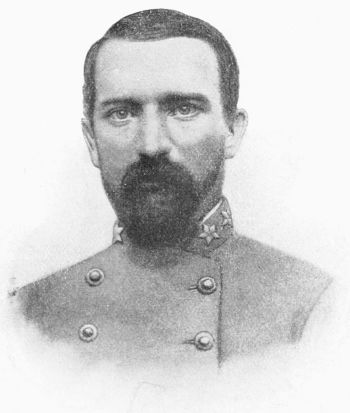
WILLIAM D. PENDER.