NATHANIEL MACON. BY THOMAS H. BENTON.
Reading edition
Philosophic in his temperament and wise in his conduct, governed in all his actions by reason and judgment, and deeply imbued with Bible images, this virtuous and patriotic man (whom Mr. Jefferson called "the last of the Romans") had long fixed the term of his political existence at the age which the Psalmist assigns for the limit of manly life: "The days of our years are threescore years and ten; and if by reason of strength they be fourscore years, yet is their strength labor and sorrow; for it is soon cut off, and we fly away." He touched that age in 1828; and, true to all his purposes, he was true to his resolve in this, and executed it with the quietude and indifference of an ordinary transaction. He was in the middle of a third senatorial term, and in the full possession of all his faculties of mind and body; but his time for retirement had come—the time fixed by himself; but fixed upon conviction and for well considered reasons, and as inexorable to him as if fixed by fate. To the friends who urged him to remain to the end of his term, and who insisted that his mind was as good as ever, he would answer that it was good enough yet to let him know that he ought to quit office before his mind quit him, and that he did not mean to risk the fate of the Archbishop of Grenada. He resigned his senatorial honors as he had worn them—meekly, unostentatiously, in a letter of thanks and gratitude to the General Assembly of his State, and gave to repose at home that interval of thought and quietude which every wise man would wish to place between the turmoil of strife and the stillness of eternity. He had nine years of this tranquil enjoyment, and died without pain or suffering, June 29, 1837—characteristic in death as in life. It was eight o'clock in the morning when he felt that the supreme hour had come, had himself full-dressed with his habitual neatness, walked in the room and lay upon the bed, by turns conversing kindly with those who were about him, and showing by his conduct that he was ready and waiting, but hurrying nothing. It was the death of Socrates, all but the hemlock, and in that full faith of which the Grecian sage had only a glimmering. He directed his own grave on a point of sterile ridge (where nobody would wish to plough), and covered with a pile of rough flint-stone (which nobody would wish to build with), deeming this sterility and the uselessness of this rock the best security for that undisturbed repose of the bones which is still desirable to those who are indifferent to monuments.
In almost all strongly marked characters there is usually some incident or sign, in early life, which shows that character and reveals to the close observer the type of the future man. So it was with Mr. Macon. His firmness, his patriotism, his self-denial, his devotion to duty, and disregard of office and emolument; his modesty, integrity, self-control, and subjection of conduct to the convictions of reason and the dictates of virtue, all so steadily exemplified in a long life, were all shown from the early age of eighteen, in the miniature representation of individual action, and only confirmed in the subsequent public exhibitions of a long, beautiful, and exalted career.
He was of that age, and a student at Princeton College, at the time of the Declaration of American Independence. A small volunteer corps was then on the Delaware. He quit his books, joined it, served a term, returned to Princeton, and resumed his studies. In the year 1778 the Southern States had become a battle-field, big with their own fate, and possibly involving the issue of the war. British fleets and armies appeared there, strongly supported by the friends of the British cause; and the conquest of the South was fully counted upon. Help was needed in these States; and Mr. Macon, quitting college, returned to his native county in North Carolina, joined a militia company as a private, and marched to South Carolina—then the theatre of the enemy's operations. He had his share in all the hardships and disasters of that trying time; was at the fall of Fort Moultrie, surrender of Charleston, defeat at Camden, and in the rapid winter retreat across the upper part of North Carolina. He was in the camp on the left bank of the Yadkin when the sudden flooding of that river, in the brief interval between the crossing of the Americans and the coming up of the British, arrested the pursuit of Cornwallis and enabled Greene to allow some rest to his wearied and exhausted men. In this camp, destitute of everything and with gloomy prospects ahead, a summons came to Mr. Macon from the Governor of North Carolina, requiring him to attend a meeting of the General Assembly, of which he had been elected a member, without his knowledge, by the people of his county. He refused to go, and the incident being talked of through the camp, came to the knowledge of the general. Greene was a man himself and able to know a man. He felt at once that, if this report was true, this young soldier was no common character, and determined to verify the fact. He sent for the young man, inquired of him, heard the truth, and then asked for the reason of this unexpected conduct—this preference for a suffering camp over a comfortable seat in the General Assembly. Mr. Macon answered him, in his quaint and sententious way, that he had seen the faces of the British many times, but had never seen their backs, and meant to stay in the army till he did. Greene instantly saw the material the young man was made of and the handle by which he was to be worked. That material was patriotism, that handle a sense of duty; and laying hold of this handle, he quickly worked the young soldier into a different conclusion from the one that he had arrived at. He told him he could do more good as a member of the General Assembly than as a soldier; that in the army he was but one man, and in the General Assembly he might obtain many, with the supplies they needed, by showing the destitution and suffering which he had seen in the camp; and that it was his duty to go. This view of duty and usefulness was decisive. Mr. Macon obeyed the Governor's summons, and by his representations contributed to obtain the supplier which enabled Greene to turn back and face Cornwallis—fight him, cripple him, drive him further back than he had advanced (for Wilmington is south of Camden), disable him from remaining in the South (of which, up to the battle of Guilford, he believed himself to be master), and sending him to Yorktown, where he was captured and the war ended.
The philosophy of history has not yet laid hold of the battle of Guilford, its consequences and effects. That battle made the capture of Yorktown. The events are told in every history: their connection and dependence in none. It broke up the plan of Cornwallis in the South, and changed the plan of Washington in the North. Cornwallis was to subdue the Southern States, and was doing it until Greene turned upon him at Guilford. Washington was occupied with Sir Henry Clinton, then in New York with twelve thousand British troops. He had formed the heroic design to capture Clinton and his army (the French fleet cooperating) in that city, and thereby putting an end to the war. All his preparations were going on for that grand consummation when he got news of the battle of Guilford, the retreat of Cornwallis to Wilmington, his inability to keep the field in the South, and his return northward through the lower part of Virginia. He saw his advantage—an easier prey—and the same result, if successful. Cornwallis or Clinton, either of them captured, would put an end to the war. Washington changed his plan, deceived Clinton, moved rapidly upon the weaker general, captured him and his seven thousand men, and ended the Revolutionary war. The battle of Guilford put that capture into Washington's hands; and thus Guilford and Yorktown became connected; and the philosophy of history shows their dependence, and that the lesser event was father to the greater. The State of North Carolina gave General Greene twenty-five thousand acres of western land for that day's work, now worth a million of dollars; but the day itself has not yet obtained its proper place in American history.
The military life of Mr. Macon finished with his departure from the camp on the Yadkin, and his civil public life commenced on his arrival at the General Assembly, to which he had been summoned—that civil public life in which he was continued above forty years by free elections—Representative in Congress under Washington, Adams, Jefferson, and Madison, and long the Speaker of the House; Senator in Congress under Madison, Monroe, and John Quincy Adams; and often elected President of the Senate, and until voluntarily declining; twice refusing to be Postmaster-General under Jefferson; never taking any office but that to which he was elected; and resigning his last senatorial term when it was only half run. But a characteristic trait remains to be told of his military life—one that has neither precedent nor imitation (the example of Washington being out of the line of comparison): he refused to receive pay or to accept promotion, and served three years as a private through mere devotion to his country. And all the long length of his life was conformable to this patriotic and disinterested beginning: and thus the patriotic principles of the future Senator were all revealed in early life and in the obscurity of an unknown situation. Conformably to this beginning, he refused to take anything under the modern acts of Congress for the benefit of the surviving officers and soldiers of the Revolution, and voted against them all, saying they had suffered alike (citizens and military), and all been rewarded together in the establishment of independence; that the debt to the army had been settled by pay, by pensions to the wounded, by half-pay and land to the officers: that no military claim could be founded on depreciated continental paper money, from which the civil functionaries who performed service, and farmers who furnished supplies, suffered as much as any. On this principle he voted against the bill for Lafayette, against all the modern Revolutionary pensions and land bounty acts, and refused to take anything under them (for many were applicable to himself).
His political principles were deep-rooted, innate, subject to no change and to no machinery of party. He was democratic in the broad sense of the word, as signifying a capacity in the people for self-government; and in its party sense, as in favor of a plain and economical administration of the Federal Government, and against latitudinarian constructions of the Constitution. He was a party man, not in the hackneyed sense of the word, but only where principle was concerned; and was independent of party in all his social relations, and in all the proceedings which he disapproved. Of this he gave a strong instance in the case of General Hamilton, whom he deemed honorable and patriotic; and utterly refused to be concerned in a movement proposed to affect him personally, though politically opposed to him. He venerated Washington, admired the varied abilities and high qualities of Hamilton, and esteemed and respected the eminent Federal gentlemen of his time. He had affectionate regard for Madison and Monroe; but Mr. Jefferson was to him the full and perfect exemplification of the republican statesman. His almost fifty years of personal and political friendship and association with Mr. Randolph is historical, and indissolubly connects their names and memories in the recollection of their friends, and in history, if it does them justice. He was the early friend of General Jackson, and intimate with him when he was a Senator in Congress under the administration of the elder Mr. Adams; and was able to tell Congress and the world who he was when he began to astonish Europe and America by his victories. He was the kind observer of the conduct of young men, encouraging them by judicious commendation when he saw them making efforts to become useful and respectable, and never noting their faults. He was just in all things, and in that most difficult of all things, judging political opponents, to whom he would do no wrong, not merely in word or act, but in thought. He spoke frequently in Congress, always to the point, and briefly and wisely; and was one of those speakers whom Mr. Jefferson described Dr. Franklin to have been—a speaker of no pretension and great performance, who spoke more good sense while he was getting up out of his chair, and getting back into it, than many others did in long discourses; and he suffered no reporter to dress up a speech for him.
He was above the pursuit of wealth, but also above dependence and idleness; and, like an old Roman of the elder Cato's time, worked in the fields at the head of his slaves in the intervals of public duty, and did not cease this labor until advancing age rendered him unable to stand the hot sun of summer—the only season of the year when senatorial duties left him at liberty to follow the plough or handle the hoe. I think it was the summer of 1817—that was the last time (he told me) he tried it, and found the sun too hot for him—then sixty years of age, a Senator, and the refuser of all office. How often I think of him when I see at Washington robustious men going through a scene of supplication, tribulation, and degradation, to obtain office, which the salvation of the soul does not impose upon the vilest sinner. His fields, his flocks and his herds yielded an ample supply of domestic productions. A small crop of tobacco—three hogsheads when the season was good, two when bad—purchased the exotics which comfort and necessity required and which the farm did not produce. He was not rich, but rich enough to dispense hospitality and charity, to receive all guests in his house, from the President to the day-laborer—no other title being necessary to enter his house but that of an honest man; rich enough to bring up his family (two daughters) as accomplished ladies, and marry them to accomplished gentlemen—one to William Martin, Esq., and the other to William Eaton, Esq., of Roanoke, my early schoolfellow and friend for more than half a century; and, above all, he was rich enough to pay as he went and never to owe a dollar to any man.
He was steadfast in his friendships and would stake himself for a friend, but would violate no point of public duty to please or oblige him. Of this his relations with Mr. Randolph gave a signal instance. He drew a knife to defend him in the theatre at Philadelphia, when menaced by some naval and military officers for words spoken in debate and deemed offensive to their professions; yet, when Speaker of the House of Representatives, he displaced Mr. Randolph from the head of the Committee of Ways and Means because the chairman of that committee should be on terms of political friendship with the administration—which Mr. Randolph had then ceased to be with Mr. Jefferson's. He was above executive office, even the highest the President could give; but not above the lowest the people could give, taking that of justice of the peace in his county, and refusing that of Postmaster-General at Washington. He was opposed to nepotism, and to all quartering of his connections on the government; and in the course of his forty-years' service, with the absolute friendship of many administrations and the perfect respect of all, he never had office or contract for any of his blood. He refused to be a candidate for the Vice-Presidency, but took the place of Elector on the Van Buren ticket in 1836. He was against paper money and the paper system, and was accustomed to present the strong argument against both, in the simple phrase that this was a hard-money government, made by hard-money men, who had seen the evil of paper money and meant to save their posterity from it. He was opposed to security-ships, and held that no man ought to be entangled in the affairs of another, and that the interested parties alone—those who expected to find their profit in the transaction—should bear the bad consequences, as well as enjoy the good ones, of their own dealings. He never called any one "friend" without being so, and never expressed faith in the honor and integrity of a man without acting up to the declaration when the occasion required it. Thus, in constituting his friend, Weldon N. Edwards, Esq., his testamentary and sole executor, with large discretionary powers, he left all to his honor, and forbade him to account to any court or power for the manner in which he should execute that trust. This prohibition was so characteristic, and so honorable to both parties, and has been so well justified by the event, that I give it in his own words, as copied from his will, to-wit:
"I subjoin the following, in my own handwriting, as a codicil to this my last will and testament, and direct that it be a part thereof—that is to say, having full faith in the honor and integrity of my executor above named, he shall not be held to account to any court or power whatever for the discharge of the trust confided by me to him in and by the foregoing will."
And the event has proved that his judgment, as always, committed no mistake when it bestowed that confidence. He had his peculiarities—idiosyncrasies, if any one pleases—but they were born with him, suited to him, constituting a part of his character, and necessary to its completeness. He never subscribed to charities, but gave, and freely, according to his means—the left hand not knowing what the right hand did. He never subscribed for new books, giving as a reason to the soliciting agent that nobody purchased his tobacco until it was inspected, and he could buy no book until he had examined it. He would not attend the Congress Presidential Caucus of 1824, although it was sure to nominate his own choice (Mr. Crawford); and, when a reason was wanted, he gave it in the brief answer that he attended one once and they cheated him, and he had said that he would never attend another. He always wore the same dress—that is to say, a suit of the same material, cut, and color superfine navy blue—the whole suit from the same piece, and in the fashion of the time of the Revolution; and always replaced by a new one before it showed age. He was neat in his person, always wore fine linen, a fine cambric stock, a fine fur hat with a brim to it, fair top-boots—the boot outside the pantaloons, on the principle that leather was stronger than cloth. He would wear no man's honors, and when complimented on the report on the Panama mission, which, as Chairman of the Committee on Foreign Relations, he had presented to the Senate, he would answer, "Yes, it is a good report; Tazewell wrote it." Left to himself, he was ready to take the last place and the lowest seat anywhere; but, in his representative capacity he would suffer no derogation of a constitutional or of a popular right. Thus, when Speaker of the House, and a place behind the President's Secretaries had been assigned him in some ceremony, he disregarded the programme, and, as the elect of the elect of all the people, took his place next after those whom the national vote had elected. And in 1803, on the question to change the form of voting for President and Vice-President, and the vote wanting one of the constitutional number of two-thirds, he resisted the rule of the House which restricted the Speaker's vote to a tie, or to a vote which would make a tie—claimed his constitutional right to vote as a member, obtained it, gave the vote, made the two-thirds, and carried the amendment.
And, what may well be deemed idiosyncratic in these days, he was punctual in the performance of all his minor duties to the Senate, attending its sittings to the moment, attending all the committees to which he was appointed, attending all the funerals of the members and officers of the Houses, always in time at every place where duty required him; and refusing double mileage for one traveling when elected from the House of Representatives to the Senate or summoned to an extra session. He was an habitual reader and student of the Bible, a pious and religious man, and of the "Baptist persuasion," as he was accustomed to express it.
I have a pleasure in recalling the recollections of this wise, just and good man, and in writing them down, not without profit, I hope, to rising generations, and at least as extending the knowledge of the kind of men to whom we are indebted for our independence and for the form of government which they established for us. Mr. Macon was the real Cincinnatus of America, the pride and ornament of my native State, my hereditary friend through four generations, my mentor in the first seven years of my senatorial, and the last seven of his senatorial life; and a feeling of gratitude and of filial affection mingles itself with this discharge of historical duty to his memory.
Mr. Benton called his sketch, which appears in his Thirty-years' View, "Retiring of Mr. Macon." It is well done, and interesting also because it is what one great man said of another. Yet I confess with some mortification that I have never seen it in print in North Carolina except in Benton's book.
To the foregoing admirable sketch by Benton I subjoin the following copious extracts from the Memoir of Nathaniel Macon by Weldon N. Edwards, published in July, 1862:
Nathaniel Macon was born on the 17th of December, 1758, in the county of Bute, of the then province of North Carolina, in the part of it now Warren, within a few miles of the present village of Warrenton, of poor and respectable parents. His great-grandfather was a Huguenot and came over from France to escape the persecutions consequent upon the revocation of the Edict of Nantes, in 1685. His father, Gideon H. Macon, was born in Virginia, whence he came to North Carolina. His mother was a native of North Carolina and a daughter of Edward Jones, of Shocco. He lost his father in early boyhood, and was left, with many brothers and sisters, in the care of his widowed mother, with such moderate means of support as to require the utmost care and industry to get on even tolerably in the world. He assisted in all the domestic offices and labors common with boys at that day. He acquired the rudiments of education in the neighborhood, at what was called an "old-field school." The application, progress, and good habits of the boy gave such promise of the future man that it was resolved to make every effort to give him a thorough education, and he was accordingly sent to Princeton College, New Jersey. His own inclinations eagerly seconded the hopeful purpose of his friends. While there, he prosecuted his studies with fond diligence, and sought all the avenues to useful knowledge with unflagging zeal. Nor did he relax his efforts in this respect after his return home, devoting to such books as were within his reach all the time he could spare from the ordinary duties of life; but he met with great difficulties, owing to the scarcity of books and his own poverty. In the latter part of his life he was often heard to say that his eyesight failed him sooner than it otherwise would have done, in consequence of his reading so much by firelight in his youth and early manhood, being then too poor to buy candles, his small patrimony having been exhausted during his minority in his support and education.
His love for North Carolina was sincere and thorough. In all that concerned her character, her institutions, her welfare, he felt an ever-wakeful solicitude. Although he received his collegiate education in a distant State, he ever after gave a decided preference to the seminaries of his own loved North Carolina. When his son-in-law, William Eaton, Sr., in the year 1823 was about to send two of his sons to Cambridge, he dissuaded him from it and advised him to send them to the University of North Carolina, because, among other reasons, they would there make acquaintances of many of the future men of the State, and contract friendships that would be of service to them in the part they were destined to act in the great drama of life.
He studied law, but never applied for a license to practice. There is now in possession of his grandson, William Eaton, Jr. (who shared his confidences and affections, and is a worthy representative of his principles and virtues), an old London-bound edition of Blackstone's Commentaries, which was used by him, and which is highly valued as a family relic. Like all persons of taste, he admired the classic elegance of this celebrated work, but regarded its author as too subservient to power, and wanting in manliness and independence. He considered Sir Edward Coke a much better friend to English liberty. * * * * * * * * *
Stability and consistency were strong points in Mr. Macon's character, formed upon his uncompromising adherence to principle and unswerving fidelity to duty. In his conversation he was easy and unaffected, in his manners and dress a decided model of republican simplicity, pretentious in nothing; all who approached him felt conscious of receiving the civility and respect demanded by the nicest sense of propriety. To these characteristics did he owe much of that firm hold upon the confidence and esteem of his countrymen which sustained him in the severe trials always to be met in the great battle of life. His was an enduring popularity; it never waned; it existed in as much vigor and freshness at the close of his life as at any former period; it lived after him, and it is the source of the highest gratification to his numerous friends and admirers that he is still often quoted as the bright exemplar of "the honest man and the wise and virtuous statesman." * * * * * * * * *
Though so long honored, and so many years the depositary of public honors and public trusts, Mr. Macon's was the rare merit of never having solicited any one to vote for him, or even intimated a wish that he should; and though no one shared more fully the confidence of a large circle of influential friends, his is the praise of never having solicited the slightest interest for his own preferment. Public honors sought him; he prized them only as the reward of faithful and virtuous performance, and regarded place as the means merely of bringing him in nearer contact with public duty. He made no popular harangues, seeking to avoid temptation of being betrayed into promises which he could not or would not fulfill, or into protestations which his heart would not sanction. He was never found rambling through his Congressional District, seeking to engineer himself into popular favor by means which self-respect and a just sense of the rights of others forbade. His rule was to attend punctually, once a year, if health permitted, the first court held in each county in his district after his return from Congress. There he met his constituents, there he received their greetings and heard their complaints; there, without simulation, gave a full account of his stewardship. In his intercourse with them he was easy, frank, and communicative, never withholding his opinion upon matters of public concernment, and always inviting them to the exercise of the utmost freedom of thought and of speech as the highest privilege of freemen and the surest guard of liberty. He never attended what, in his own characteristic language, he called "a man-dinner," regarding all such political pageants as having too much deceptious exterior, and as being too little calculated to better the popular heart or enlighten the popular mind. And when, upon his retirement from Congress, a large portion of his old constituents tendered him the compliment of a public dinner, he declined it in a brief note, saying that "he had never been at such a show, and that he had already received the most gratifying proofs of their good-will and esteem."
To shun all ostentatious display and the emptiness of pride was, with him, a principle; and to do good to his fellow-men, and to society, a rule of action which he scrupulously observed, always abstaining, in the employment of his faculties, and in the use of the abundant goods with which frugal industry had blessed him, from the gratification of any passion, the indulgence of which prudence forbade to others less favored by fortune—thus teaching, by both precept and example, the necessity of temperance, frugality and industry, as the surest and best foundation for contentment and plenty.
Of generous and unsuspicious nature, he never looked with uncharitableness on the actions of his fellow-men, but, with the strength and armor of a well-balanced mind, gave to them the calmest consideration and assigned to each its appropriate place in the scale of good and evil. Of philosophic mind, subdued temper, and great self-command, he met the incidents and accidents of life, not with stoic indifference, but with quiet submission—yielding nothing to passion, less to despondency, and looking to passing events as to a school for instruction, and deducing from them useful lessons to guide him in the pathway of life.
Of him it may be emphatically said, that he thought for himself, but reposing, with confidence, on his discriminating sense of justice and integrity of purpose, he gave to all subjects the fullest deliberation, and never jumped to conclusions in advance of his judgment. But when he had formed an opinion he adhered to it with a fearless and virtuous inflexibility which yielded to no importunity or persuasion. This, with some, subjected him to the charge of obstinacy.
"Virtue itself 'scapes not calumnious strokes."
* * * * * * * * * * *
He was chary of promises, but always punctual and exact in performance; would give his bond or note to no man, contract no debts, would buy nothing without paying for it. "Pay as you go" was a law to him which he inflexibly observed. He mastered all his wants and kept them in strict subjection to reason. He would lend money to a friend, but never take interest. He classed labor among the virtues, never called for help in anything he could do himself, labored often in his fields at the head of his slaves, during the intervals allowed from public duties, and topped all his own tobacco, when at home at the proper season, till the infirmities of age rendered him unable to stand the heat of the sun. He was fond of the chase and indulged in his favorite amusement, the pursuit of the fox and the deer, as long as he lived.
He spoke often in Congress—seldom long. His speeches were always to the point, strong, practical, sententious, often furnishing materials for the rhetorical displays of others. A most distinguished member once characterized his speeches as "dishes of the best material served up in the best manner." Unless prevented by bad health, he was always in his seat, voted on every question, was punctual in attendance upon committees, and ever ready at the call of duty.
He was fond of reading, but his favorite study was man. "He made choice of human nature for the object of his thoughts." To this predilection did he owe that consummate knowledge of the human character, and those practical lessons of wisdom (of so much consequence in the conduct of life) which gave him rank among the "wisest and best."
There is no surer test of merit than is found in the favorable opinions of the wise and the good, formed in the unrestricted freedom of social intercourse, when the seal of reserve is unloosed, and neither the pride of ostentation nor the dread of criticism or censure invites to concealment. Impressed with this truth, with a view to impart deeper interest to this sketch, by stamping the seal of verity upon the high and noble traits it portrays, recourse is had to the correspondence of eminent and distinguished statesmen, to whom all the avenues of knowledge were opened by close intimacy and long association in public life. Thomas Jefferson, whose monument is to be found in the Declaration of Independence, and in the enduring popular veneration which he so largely shared, but a few weeks after his first inauguration as President of the United States, in 1801, thus writes to Mr. Macon: "And in all cases when an office becomes vacant in your State, as the distance would occasion a great delay, were you to wait to be regularly consulted, I shall be much obliged to you to recommend the best characters. There is nothing I am so anxious about as making the best possible appointments, and no case in which the best men are more liable to mislead us by yielding to the solicitations of applicants. For this reason your own spontaneous recommendation would be desirable." Thus did Mr. Jefferson stake an important portion of his administrative duties upon his high estimate of Mr. Macon's integrity and wisdom. Again, in another letter to Mr. Macon, the 24th of March, 1826, Mr. Jefferson says: "My grandson, Thomas Jefferson Randolph, the bearer of this letter, on a journey to the North, will pass two or three days, perhaps, in Washington. I cannot permit him to do this without presenting him to a friend of so long standing, whom I consider as the strictest of our models of genuine republicanism. Let him be able to say, when you are gone, but not forgotten, that he had seen Nathaniel Macon, upon whose tomb will be written, 'Ultimus Romanorum!' I only ask you to give him a hearty shake of the hand, on my account, as well as his own, assuring you he merits it as a citizen, to which I will add my unceasing affection to yourself." * * * * * * *
Of Mr. Macon's claims to distinction, and to take rank on the roll of fame among the first of those who embellish the pages of American history, that sagacious statesman, John Randolph of Roanoke, whose perception of character was rarely at fault, in a letter to Mr. Macon, 14th December, 1828, thus speaks: "Your kind letter of the 10th is just now received. Many, many thanks for it. I am truly concerned at the causes which justly occasion you uneasiness; yet, when I reflect, I know of no man in the United States whom I would so soon be as yourself. There is no one who stands so fair in the public estimation; and, with the single exception of General Washington, there is not one of your times who will stand so fair with posterity as yourself. There are various sorts of reputations in the world. Some are obtained by cringing and puffing, some are actually begged for and given as an alms to importunity, some are carried by sheer impudence. No one has had a better opportunity of observing this than yourself; and there is no keener observer."
Upon such testimonials as these, from such high and pure sources, the reputation of this just and virtuous man may safely repose. They bespeak a name and a fame which dignify humanity, and invest his memory with a usefulness scarcely less to be prized than his services while living.
This sketch would be imperfect did it not notice the suggestive fact that in his latter years Mr. Macon had painful misgivings for the future of his country. 'Tis true he did not parade his opinions before the public gaze, preferring rather to encourage, not to alarm, the popular mind; but often when his thoughts were turned on what he deemed the political distempers and proclivities of the times, did he say to a friend in his own pregnant language: "I am afraid of all my labors have been for nothing"—obviously referring to his hardships in the tented field and his arduous and well-directed labors in the councils of his country, having devoted to these patriotic offices the greater part of a long life, commencing before manhood and ending with its close. At one period he reposed with entire confidence on the conviction that popular rights and public liberty were effectually secured by the Constitution of the United States, but this hopeful reliance failed him as early as 1824. In a debate, at that period, in the Senate of the United States, on the bill for a subscription to the Delaware and Chesapeake Canal, Mr. Macon said: "I rise with a full heart to take my last farewell of an old friend that I have always admired and loved—the Constitution of the United States. * * * In times of old, whenever any question touching the Constitution was brought forward, it was discussed day after day; that time is now passed. * * * Do a little now and a little then, and by and by you will render the government as powerful and unlimited as the British government was. We go on deciding these things without looking at the Constitution; and I suppose we will, in a few years, do as was done in England. We shall appoint a committee to hunt for precedents. My heart is full when I think of all this; and what is to become of us I cannot say. * * * My fears may be groundless; they may be nothing but the suggestions of a worn-out old man; but they are sincere, and I am alarmed for the safety of this government."
In vain did he then, as often before, raise his warning voice against the dangers of inroads upon the Constitution. And now that the direst calamities are upon us, resulting from its utter overthrow and its base prostitution by wicked men to the worst and most wicked purposes—how loudly do they proclaim the unerring sagacity of his gifted and far-reaching mind!
In person Macon was above the middle size, of florid but fair complexion, keen blue eyes, animated but kindly countenance, not very good-looking, but possessed of a symmetrical form and strength of body. His manners were simple and unostentatious, but not without sufficient dignity and firmness.
He was married early in life to Miss Hannah Plummer, of Warren, his own county.
A good story is told of the way he won her. He proposed in her presence to his rival that they should settle their claim to her hand by a game of cards. This was agreed to and Macon lost. He then raised up his hands, and with eyes fixed on the object of his affection, exclaimed: "Hannah, notwithstanding I have lost you fairly, love is superior to honesty: I cannot give you up." He won, and was married to her October 9th, 1783.
He was elected to the House of Representatives in 1791, and served continuously until 1815, when he was elected to the Senate. He was also a trustee of the University and a justice of the peace, both of which offices he gave up in 1828, at the time he resigned his seat in the Senate.
He was not a party man, but believed in true democracy. He complained often that some of the most vital parts of the Constitution had been construed or enacted away before he left Congress. He was a strict constructionist.
He presided over the Constitutional Convention of 1835, and took part in its deliberations upon the more important questions. With Gaston, he favored religious toleration, and made a speech against the clause in the old Constitution prohibiting all but those of the Protestant religion from holding any office of trust or profit in North Carolina.
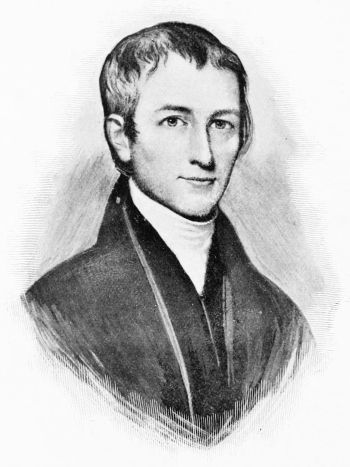
He was averse to having his picture taken. This peculiarity grew on him, until in very old age he is said to have threatened a persistent picture-maker with libel if, as he had suggested, he should take his (Macon's) picture without his knowledge. Hardly a growth so strong and rugged without some gnarls and knots. The picture of him given in this book is from a portrait by Randall, and is pronounced a good likeness by Mr. J. A. Egerton (an old neighbor) and others who knew him intimately.
He paid his physician attending him in his last illness before he died, and directed the details of his burial.
The Life of Macon was written in 1840 by Edward R. Cotten; but in his book of two hundred and seventy-two pages, Cotten says comparatively little of Macon, and devotes most of his space to his own views on many subjects, Macon's opinions and acts sometimes furnishing the text. If the book was not entitled Life of Macon it would be more interesting. As indicating what a Warren county gentleman of much leisure and considerable reading, of good associates and ordinary capacity, was thinking about in 1840, the book ought to be preserved.
In order to give an idea of Macon's directness and simplicity, I offer an abbreviated report of one of his speeches made in the Senate, taken almost at random from the Abridgment of the Debates of Congress. The time was January 20, 1820. The question was the admission of Missouri, as well as Maine, into the Union. The protected States urged an amendment restricting slavery in Missouri before it should be admitted as a State, which amendment Mr. Macon opposed with his usual sound sense. The speech is imperfectly reported, but contains the germ of almost all that could have been said on the subject from his standpoint.
SPEECH ON THE MISSOURI COMPROMISE.
By Nathaniel Macon.
Mr. Macon, of North Carolina, said that he agreed in opinion with the gentleman who had declared this to be the greatest question ever debated in the Senate, and that it ought to be discussed in the calmest manner, without attempting to excite passion or prejudice. It was, however, to be regretted that while some of those who supported the motion were quite calm and cool they used a good many hard words, which had no tendency to continue the good humor which they recommended. He would endeavor to follow their advice, but must be pardoned for not following their example in the use of hard words. If, however, one should escape him, it would be contrary to his intention, and an act of indiscretion, not of design or premeditation. He hoped to examine the subject with great meekness and humility.
The debate had brought forcibly to his recollection the anxiety of the best patriots of the nation, when the present Constitution was examined by the State conventions which adopted it. The public mind was then greatly excited, and men in whom the people properly placed the utmost confidence were divided. There was then no whisper about disunion, for every one considered the Union as absolutely necessary for the good of all. But to-day we have been told by the honorable gentleman from Pennsylvania (Mr. Lowrie) that he would prefer disunion rather than that slaves should be carried west of the Mississippi. Age, Mr. Macon said, may have rendered him timid, or education may have prevailed on him to attach greater blessings to the Union and the Constitution than they deserve. If this be the case, and it be an error, it was one he had no desire to be free from even after what he had heard in this debate. Get clear of this Union and it will be found vastly more difficult to unite again and form another. There were no parties in the country at the time it was formed, not even upon this question. The men who carried the nation through the Revolution were alive, and members of the Convention. Washington was at their head. Have we a Washington now? No. Is there one in the nation to fill his place? No. His like, if ever, has been rarely seen; nor can we, rationally, expect another in our day. Let us not speak of disunion as an easy thing. If ever it shall come, it will bring evils enough for the best men to encounter, and all good men, in every nation, lovers of freedom, will lament it. This Constitution is now as much an experiment as it was in the year 1789. It went into operation about the time the French Revolution commenced. The wars which grew out of that, and the difficulties and perplexities which we had to encounter, in consequence of the improper acts of belligerents, kept the people constantly attached to the government. It has stood well the trial of trouble and of war, and answered, in those times, the purposes for which it was formed and adopted; but now it is to be tried, in time of universal peace, whether a government within a government can sustain itself and preserve the liberty of the citizen. When we hear the exclamation "Disunion, rather than slaves be carried over the Mississippi," it ought not to be forgotten that the union of the people and the Confederation carried us through the Revolutionary war (a war of which no man can wish to see the like again in this country); but, as soon as peace came, the Confederation was found to be entirely unfit for it; so unfit that it was given up for the present Constitution. Destroy this Union, and what may be the condition of the country, no man, not the most sagacious, can even imagine. It will surely be much worse than it was before the Constitution was adopted; and that must be well remembered.
The proposed amendment is calculated to produce geographical parties, or why admonish us to discuss it with moderation and good temper? No man who has witnessed the effect of parties nearly geographical can wish to see them revived. Their acts formerly produced uneasiness, to say the least of them, to good men of every party. General Washington has warned us against them; but he is now dead, and his advice may soon be forgotten; form geographical parties and it will be discarded. Instead of forming sectional parties it would be more patriotic to do them away. But party and patriotism are not always the same. Town meetings and resolutions to inflame one part of the nation against another can never benefit the people, though they may gratify an individual. Leave the people to form their own opinions, without the aid of inflammatory speeches at town meetings, and they will always form them correctly. No town meeting was necessary to inform or inflame the public mind against the law giving members of Congress a salary instead of a daily allowance. The people formed their own opinions, disapproved it, and it was repealed. So they will always act if left to themselves. Let not parties formed at home for State purposes be brought into Congress to disturb and distract the Union. The general government hitherto has been productive enough of parties to satisfy those who most delight in them; so that they are not likely to be long wanted in it. Enough, and more than enough, has been produced by the difficulty of deciding what is and what is not within the limits of the Constitution. And, at this moment, we have difficulties enough to scuffle with without adding the present question. The dispute between the Bank of the United States and the State banks, the want of money by the government, the increase of taxes in the midst of increasing debts, and the dispute with Spain might serve for this session.
All the States now have equal rights and all are content. Deprive one of the least right which it now enjoys in common with the others, and it will no longer be content. So, if the Government had an unlimited power to put whatever conditions it pleased on the admission of a new State into the Union, a State admitted with a condition unknown to the others would not be content, no matter what might be the character of the condition, even though it was not to steal or commit murder. The difference in the terms of admission would not be acceptable. All the new States have the same rights that the old have, and why make Missouri an exception? She has not done a single act to deserve it, and why depart, in her case, from the great American principle that the people of each State can govern themselves? No reason has been assigned for the attempt at the departure, nor can one be assigned which would not apply as strongly to Louisiana. In every free country that ever existed the first violations of the principles of government were indirect and not well understood, or supported with great zeal by only a part of the people.
All the country west of the Mississippi was acquired by the same treaty, and on the same terms, and the people in every part have the same rights; but, if the amendment be adopted, Missouri will not have the same rights which Louisiana now enjoys. She has been admitted into the Union as a full sister, but her twin-sister, Missouri, under the proposed amendment, is to be admitted as a sister of the half-blood, or rather as a stepdaughter, under an unjust stepmother—for what? Because she, as well as Louisiana, performed well her part during the late war, and because she has never given the general government any trouble. The operation of the amendment is unjust as it relates to the people who have moved there from other States. They carried with them the property which was common in the States they left, secured to them by the Constitution and laws of the United States as well as by the treaty. There they purchased public lands and settled with their slaves, without a single objection to their owning and carrying them; but now, unfortunately for them, after they have been to the trouble and expense of building houses and clearing plantations in the new country it has been discovered that they had no right to carry their slaves with them and that they must now move and make room for those who are considered a better people. The country was bought with the money of all, slaveholders as well as those who are not; and every one knew when he bought land and moved with his property he had a perfect right to do so. And no one till last session ever said to the contrary or moved the restriction about slaves. The object now avowed is to pen up the slaves and their owners, and not permit them to cross the Mississippi to better their condition, where there is room enough for all and good range for man and beast. (And man is as much improved by moving and range as the beast of the field.) But what is still more unaccountable, a part of the land granted to the soldiers for their services in the late war was laid off in Missouri expressly for the soldiers who had enlisted in the Southern States, and would prefer living where they might have slaves. These too are now to leave the country of their choice and the land obtained by fighting the battles of the nation. Is this just in a government of law, supported only by opinion? for it is not pretended that it is a government of force. In the most alarming state of our affairs at home—and some of them have an ugly appearance—public opinion alone has corrected and changed that which seemed to threaten disorder and ill-will into order and good-will, except once, when the military was called out in 1791. Let this be compared to the case of individuals and it will not be found to be more favorable to the amendment than the real case just stated. A and B buy a tract of land large enough for both and for their children, and settle it, build houses and open plantations. When they have got it in good way to live comfortably, after ten or fifteen years, A thinks there is not too much for him and his children, and that they can, a long time hence, settle and cultivate the whole land. He then for the first time tells B that he has some property he does not like, and that he must get clear of it or move. B states the bargain. A answers that it is true he understood it so until of late, but that move he must or get clear of his property; for that property should not be in his way. The kind or quality of property cannot affect the question.
A wise legislature will always consider the character, condition and feelings of those to be legislated for. In a government and people like ours this is indispensable. The question now under debate demands this consideration. To a part of the United States, and that part which supports the amendment, it cannot be important except as it is made so by the circumstances of the time. In all questions like the present, in the United States, the strong may yield without disgrace even in their own opinion; the weak cannot. Hence the propriety of not attempting to impose this new condition on the people of Missouri. Their numbers are few compared to those of the whole United States. Let the United States then abandon this new scheme, let their magnanimity and not their power be felt by the people of Missouri. The attempt to govern too much has produced every civil war that ever has been, and probably every one that ever may be. All governments, no matter what their form, want more power and more authority, and all the governed want less government. Great Britain lost the United States by attempting to govern too much and to introduce new principles of governing. The United States would not submit to the attempt, and earnestly endeavored to persuade Great Britain to abandon it, but in vain. The United States would not yield, and the result is known to the world. The battle is not always to the strong nor the race to the swift. What reason have we to expect that we can persuade Missouri to yield to our opinion that did not apply as strongly to Great Britain? They are as near akin to us as we were to Great Britain. They are "flesh of our flesh and bone of our bone." But as to kin, when they fall out they do not make up sooner than other people. Great Britain attempted to govern us on a new principle, and we are attempting to establish a new principle for the people of Missouri on becoming a State. Great Britain attempted to collect a threepenny tax on the tea consumed in the then colonies, which were not represented in Parliament; and we to regulate what shall be property when Missouri becomes a State, when she has no vote in Congress. The great English principle of no tax without representation was violated in one case, and the great American principle, that people are able to govern themselves, will be violated if the amendment be adopted. Every free nation has had some principle in its government to which more importance was attached than to any other. The English principle was not to be taxed without the consent of the people given in Parliament; the American principle is the right of the people to form their State governments in their own way, provided they be not inconsistent with the Constitution of the United States. If the power in Congress to pass the restriction was expressly delegated, and so clear that no one could doubt it, in the present circumstances of the country, it would still not be wise or prudent to do so; especially against the consent of those who live in the territory. Their consent would be more important to the nation than a restriction which would not make one slave less, unless indeed they might be starved in the old States.
Let me not be understood as wishing or intending to create any alarm as to the intentions of the people of Missouri. I know nothing of them. But in examining the question, we ought not to forget our own history nor the character of those who settle on our frontiers. Your easy chimney-corner people, the timid and fearful, never move to them. They stay where there is no danger from an Indian or any wild beast. They have no desire to engage the panther or the bear. It is the bravest of the brave and the boldest of the bold who venture there. They go not to return.
The settling of Kentucky and Tennessee during the war of the Revolution proves in the most satisfactory manner what they can do and will undergo, and that they will not return. The few people who first settled there had to contend, without aid from the States, against all the Indians bordering on the United States except the Chickasaw and Choctaw nations, and maintained their stations. The northern tribes, unaided by the southern, attacked the United States since the adoption of the Constitution and defeated two armies, and it required a third to conquer them. The frontier people in the Revolutionary war, as well as in the late, astonished everybody by their great exploits. Vermont, though claimed in the Revolutionary war by New Hampshire and New York, was not inferior to any of the States in her exertions to support independence.
The gentleman from Pennsylvania will pardon me for stating that that State had had some experience of its government managing a few people who would not yield obedience to its authority, though settled within its limits. They were obliged to compromise. I mean the Wyoming settlers. Again, since this government was in operation, a few people settled on the Indian lands: they were ordered to move from them, but did not obey: the military was sent to burn their cabins. The commanding officer told them his business, and very humanely advised them to move what property they had out of them. This they did, and their cabins were burnt. They waited till the troops marched, and very soon after built new cabins on the same places and to the same chimneys.
These facts are stated to show that a contest with a people who believe themselves right and one with a government are very different things. It would have been very gratifying to me to have been informed by some one of the gentlemen who support the amendment what is intended to be done if it be adopted, and the people of Missouri will not yield, but go on and form a State government (having the requisite number of inhabitants agreeably to the ordinance), as Tennessee did, and then apply for admission into the Union. Will she be admitted, as Tennessee was, on an equal footing with the original States, or will the application be rejected as the British government did the petitions of the old Congress?
If you do not admit her, and she will not return to the territorial government, will you declare the people rebels, as Great Britain did us, and then order them to be conquered for contending for the same rights that every State in the Union now enjoys? Will you for this, order the father to march against son and brother against brother? God forbid! It would be a terrible sight to behold these near relations plunging the bayonet into each other for no other reason than because the people of Missouri wish to be on equal footing with the people of Louisiana. When Territories they were equal. Those who remember the Revolution will not desire to see another civil war in our land. They know too well the wretched scenes it will produce. If you should declare them rebels and conquer them, will that attach them to the Union? No one can expect this. Then do not attempt to do that for them which was never done for others, and that which no State would consent for Congress to do for it. If the United States are to make conquests, do not let the first be at home. Nothing is to be got by American conquering American. Nor ought we to forget that we are not legislating for ourselves, and that the American character is not yielding when rights are concerned. But why depart from the old way, which has kept us in quiet, peace and harmony, every one living under his own vine and fig-tree and none to make him afraid? Why leave the road of experience, which has satisfied all and made all happy, to take this new way, of which we have no experience? This way leads to universal emancipation, of which we have no experience. The Eastern and Middle States furnish none. For years before these States emancipated their slaves they had but few, and of them a part were sold to the South. We have no more experience or book-learning on this subject than the French Convention had which turned the slaves of Santo Domingo loose. Nor can we foresee the consequences which may result from this new motion clearer than the Convention did in their decree.
A clause in the Declaration of Independence has been read declaring that "all men are created equal." Follow that sentiment, and does it not lead to universal emancipation? If it will justify putting an end to slavery in Missouri, will it not justify it in the old States? Suppose the plan followed and all the slaves turned loose, and the Union to continue, is it certain that the present Constitution would last long? The rich would in such circumstances want titles and hereditary distinctions, the negro food and raiment, and they would be as much or more degraded than in their present condition. The rich might hire these wretched people, and with them attempt to change the government by trampling on the rights of those who have only property enough to live comfortably. Opinions have greatly changed in some of the States in a few years. The time has been when those now called slaveholding States were thought to be the firm and steadfast friends of the people and of liberty. Then they were opposing an administration and a majority in Congress supported by a sedition law; then there was not a word heard, at least from one side, about those who actually did most toward changing the administration and the majority in Congress, and they were from slaveholding States. And now it would be curious to know how many members of Congress actually hold seats in consequence of their exertions at the time alluded to. Past services are always forgotten when new principles are to be introduced.
It is a fact that the people who move from the non-slaveholding to slaveholding States, when they became slaveholders, by purchase or marriage, expect more labor from them than those do who are brought up among them.
To the gentleman from Rhode Island (Mr. Burrill) I tender my hearty thanks for his liberal and true statement of the treatment of slaves in the Southern States. His observations leave but little for me to add, which is this, that the slaves gained as much by independence as the free. The old ones are better taken care of than any poor in the world, and treated with decent respect by their white acquaintances. I sincerely wish that he and the gentleman from Pennsylvania (Mr. Roberts) would go home with me, or some other Southern member, and witness the meeting between slaves and owner and see the glad faces and hearty shaking of hands. This is well described in General Moultrie's Memoirs of the American Revolution, in which he gives the account of his reception by his slaves the first time he went home after he was exchanged. He was made prisoner at the surrender of Charleston. Could he (Mr. Macon) have procured the book in the city he intended to have read it to show the attachment of the slave to his owner. A fact shall be stated. An excellent friend of mine—he too, like the other characters which have been mentioned in the debate, was a Virginian—had business in England which made it necessary that he should go to that country himself or send a trusty agent. He could not go conveniently, so he sent one of his slaves, who remained there near a year. Upon his return he was asked by his owner how he liked the country, and if he would have liked to stay there? He replied that to oblige him he would have stayed; the country was the finest he ever saw; the land was worked as nice as a square in a garden; they had the finest horses and carriages, and houses, and everything; but that the white servants abused his country. What did they say? They said we owed them (the English) a heap of money, and would not pay; to which he added, their chief food was mutton; he saw very little bacon there. The owner can make more free in conversation with his slave and be more easy in his company than the rich man, where there is no slave, with the white hireling who drives his carriage. He has no expectation that the slave will, for the free and easy conversation, expect to call him fellow-citizen or act improperly.
Massachusetts, Pennsylvania, and Virginia have been mentioned by Senators in this debate, and it has frequently been said that the two first had emancipated their slaves; from which an inference seems to be drawn that the other might have done so: emancipation to these gentlemen seems to be quite an easy task. It is so when there are but very few slaves; and would be more easy did not the color everywhere place the blacks in a degraded state. Where they enjoy the most freedom they are there degraded. The respectable whites do not permit them to associate with them or to be of their company when they have parties. But if it be so easy a task, how happens it that Virginia, which before the Revolution endeavored to put an end to the African slave-trade, has not attempted to emancipate? It will not be pretended that the great men of other States were superior or greater lovers of liberty than her Randolph, the first President of the first Congress, her Washington, her Henry, her Jefferson, or her Nelson. None of these ever made the attempt, and their voices ought to convince every one that it is not an easy task in that State. And is it not wonderful, that if the Declaration of Independence gave authority to emancipate, the patriots who made it never proposed any plan to carry it into execution? This motion, whatever is pretended by its friends, must lead to it. And is it not equally wonderful that if the Constitution gives the authority, this is the first attempt ever made, under either, by the Federal Government to exercise it? For if under either the power is given, it will apply as well to States as to Territories. If either intended to give it, is it not still more wonderful that it is not given in direct terms? The gentleman would not then be put to the trouble of searching the Articles of Confederation, the Constitution and the laws for a sentence or a word to form a few doubts. If the words of the Declaration of Independence be taken as part of the Constitution (and that they are no part of it is as true as that they are no part of any other book), what will be the condition of the Southern country when this shall be carried into execution? Take the most favorable view which can be supposed, that no convulsion ensue, that nothing like massacre or war of extermination take place as in Santo Domingo, but that whites and blacks do not marry and produce mulatto States, will not the whites be compelled to move and leave their lands and houses and abandon the country to the blacks? And are you willing to have black members of Congress? But if the scenes of Santo Domingo should be re-acted, would not the tomahawk and the scalping-knife be mercy?
ARCHIBALD D. MURPHY.