Volume 6 — JAMES BRYCE
Reading edition
(1838-)
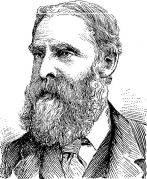
ames Bryce was born at Belfast, Ireland, of Scotch and Irish parents. He studied at the University of Glasgow and later at Oxford, where he graduated with high honors in 1862, and where after some years of legal practice he was appointed Regius Professor of Civil Law in 1870. He had already established a high reputation as an original and accurate historical scholar by his prize essay on the 'Holy Roman Empire' (1864), which passed through many editions, was translated into German, French, and Italian, and remains to-day a standard work and the best known work on the subject, Edward A. Freeman said on the appearance of the work that it had raised the author at once to the rank of a great historian. It has done more than any other treatise to clarify the vague notions of historians as to the significance of the imperial idea in the Middle Ages, and its importance as a factor in German and Italian politics; and it is safe to say that there is scarcely a recent history of the period that does not show traces of its influence. The scope of this work being juristic and philosophical, it does not admit of much historical narrative, and the style is lucid but not brilliant. It is not in fact as a historian that Mr. Bryce is best known, but rather as a jurist, a politician, and a student of institutions.
James Bryce
The most striking characteristic of the man is his versatility; a quality which in his case has not been accompanied by its usual defects, for his achievements in one field seem to have made him no less conscientious in others, while they have given him that breadth of view which is more essential than any special training to the critic of men and affairs. For the ten years that followed his Oxford appointment he contributed frequently to the magazines on geographical, social, and political topics. His vacations he spent in travel and in mountain climbing, of which he gave an interesting narrative in 'Transcaucasia and Ararat' (1877). In 1880 he entered active politics, and was elected to Parliament in the Liberal interest. He has continued steadfast in his support of the Liberal party and of Mr. Gladstone, whose Home Rule policy he has heartily seconded. In 1886 he became Gladstone's Under-Secretary of Foreign Affairs, and in 1894 was appointed President of the Board of Trade.
The work by which he is best known in this country, the 'American Commonwealth' (1888), is the fruit of his observations during three visits to the United States, and of many years of study. It is generally conceded to be the best critical analysis of American institutions ever made by a foreign author. Inferior in point of style to De Tocqueville's 'Democracy in America,' it far surpasses that book in amplitude, breadth of view, acuteness of observation, and minuteness of information; besides being half a century later in date, and therefore able to set down accomplished facts where the earlier observer could only make forecasts. His extensive knowledge of foreign countries, by divesting him of insular prejudice, fitted him to handle his theme with impartiality, and his experience in the practical workings of British institutions gave him an insight into the practical defects and benefits of ours. That he has a keen eye for defects is obvious, but his tone is invariably sympathetic; so much so, in fact, that Goldwin Smith has accused him of being somewhat "hard on England" in some of his comparisons. The faults of the book pertain rather to the manner than to the matter. He does not mislead, but sometimes wearies, and in some portions of the work the frequent repetitions, the massing of details, and the absence of compact statement tend to obscure the general drift of his argument and to add unduly to the bulkiness of his volumes.
THE POSITION OF WOMEN IN THE UNITED STATES
From 'The American Commonwealth'
Social intercourse between youths and maidens is everywhere more easy and unrestrained than in England or Germany, not to speak of France. Yet there are considerable differences between the Eastern cities, whose usages have begun to approximate to those of Europe, and other parts of the country. In the rural districts, and generally all over the West, young men and girls are permitted to walk together, drive together, go out to parties and even to public entertainments together, without the presence of any third person who can be supposed to be looking after or taking charge of the girl. So a girl may, if she pleases, keep up a correspondence with a young man, nor will her parents think of interfering. She will have her own friends, who when they call at her house ask for her, and are received by her, it may be alone; because they are not deemed to be necessarily the friends of her parents also, nor even of her sisters.
In the cities of the Atlantic States it is now thought scarcely correct for a young man to take a young lady out for a solitary drive; and in few sets would he be permitted to escort her alone to the theatre. But girls still go without chaperons to dances, the hostess being deemed to act as chaperon for all her guests; and as regards both correspondence and the right to have one's own circle of acquaintances, the usage even of New York or Boston allows more liberty than does that of London or Edinburgh. It was at one time, and it may possibly still be, not uncommon for a group of young people who know one another well to make up an autumn "party in the woods." They choose some mountain and forest region, such as the Adirondack Wilderness west of Lake Champlain, engage three or four guides, embark with guns and fishing-rods, tents, blankets, and a stock of groceries, and pass in boats up the rivers and across the lakes of this wild country through sixty or seventy miles of trackless forest, to their chosen camping-ground at the foot of some tall rock that rises from the still crystal of the lake. Here they build their bark hut, and spread their beds of the elastic and fragrant hemlock boughs; the youths roam about during the day, tracking the deer, the girls read and work and bake the corn-cakes; at night there is a merry gathering round the fire, or a row in the soft moonlight. On these expeditions brothers will take their sisters and cousins, who bring perhaps some lady friends with them; the brothers' friends will come too; and all will live together in a fraternal way for weeks or months, though no elderly relative or married lady be of the party.
There can be no doubt that the pleasure of life is sensibly increased by the greater freedom which transatlantic custom permits; and as the Americans insist that no bad results have followed, one notes with regret that freedom declines in the places which deem themselves most civilized. American girls have been, so far as a stranger can ascertain, less disposed to what are called "fast ways" than girls of the corresponding classes in England, and exercise in this respect a pretty rigorous censorship over one another. But when two young people find pleasure in one another's company, they can see as much of each other as they please, can talk and walk together frequently, can show that they are mutually interested, and yet need have little fear of being misunderstood either by one another or by the rest of the world. It is all a matter of custom. In the West, custom sanctions this easy friendship; in the Atlantic cities, so soon as people have come to find something exceptional in it, constraint is felt, and a conventional etiquette like that of the Old World begins to replace the innocent simplicity of the older time, the test of whose merit may be gathered from the universal persuasion in America that happy marriages are in the middle and upper ranks more common than in Europe, and that this is due to the ampler opportunities which young men and women have of learning one another's characters and habits before becoming betrothed. Most girls have a larger range of intimate acquaintances than girls have in Europe, intercourse is franker, there is less difference between the manners of home and the manners of general society. The conclusions of a stranger are in such matters of no value; so I can only repeat that I have never met any judicious American lady who, however well she knew the Old World, did not think that the New World customs conduced more both to the pleasantness of life before marriage, and to constancy and concord after it.
In no country are women, and especially young women, so much made of. The world is at their feet. Society seems organized for the purpose of providing enjoyment for them. Parents, uncles, aunts, elderly friends, even brothers, are ready to make their comfort and convenience bend to the girls' wishes. The wife has fewer opportunities for reigning over the world of amusements, because except among the richest people she has more to do in household management than in England, owing to the scarcity of servants; but she holds in her own house a more prominent if not a more substantially powerful position than in England or even in France. With the German haus-frau, who is too often content to be a mere housewife, there is of course no comparison. The best proof of the superior place American ladies occupy is to be found in the notions they profess to entertain of the relations of an English married pair. They talk of the English wife as little better than a slave; declaring that when they stay with English friends, or receive an English couple in America, they see the wife always deferring to the husband and the husband always assuming that his pleasure and convenience are to prevail. The European wife, they admit, often gets her own way, but she gets it by tactful arts, by flattery or wheedling or playing on the man's weaknesses; whereas in America the husband's duty and desire is to gratify the wife, and render to her those services which the English tyrant exacts from his consort. One may often hear an American matron commiserate a friend who has married in Europe, while the daughters declare in chorus that they will never follow the example. Laughable as all this may seem to English women, it is perfectly true that the theory as well as the practice of conjugal life is not the same in America as in England. There are overbearing husbands in America, but they are more condemned by the opinion of the neighborhood than in England. There are exacting wives in England, but their husbands are more pitied than would be the case in America. In neither country can one say that the principle of perfect equality reigns; for in America the balance inclines nearly, though not quite, as much in favor of the wife as it does in England in favor of the husband. No one man can have a sufficiently large acquaintance in both countries to entitle his individual opinion on the results to much weight. So far as I have been able to collect views from those observers who have lived in both countries, they are in favor of the American practice, perhaps because the theory it is based on departs less from pure equality than does that of England. These observers do not mean that the recognition of women as equals or superiors makes them any better or sweeter or wiser than Englishwomen; but rather that the principle of equality, by correcting the characteristic faults of men, and especially their selfishness and vanity, is more conducive to the concord and happiness of a home. They conceive that to make the wife feel her independence and responsibility more strongly than she does in Europe tends to brace and expand her character; while conjugal affection, usually stronger in her than in the husband, inasmuch as there are fewer competing interests, saves her from abusing the precedence yielded to her. This seems to be true; but I have heard others maintain that the American system, since it does not require the wife habitually to forego her own wishes, tends, if not to make her self-indulgent and capricious, yet slightly to impair the more delicate charms of character; as it is written, "It is more blessed to give than to receive."
A European cannot spend an evening in an American drawing-room without perceiving that the attitude of men to women is not that with which he is familiar at home. The average European man has usually a slight sense of condescension when he talks to a woman on serious subjects. Even if she is his superior in intellect, in character, in social rank, he thinks that as a man he is her superior, and consciously or unconsciously talks down to her. She is too much accustomed to this to resent it, unless it becomes tastelessly palpable. Such a notion does not cross an American's mind. He talks to a woman just as he would to a man; of course with more deference of manner, and with a proper regard to the topics likely to interest her, but giving her his intellectual best, addressing her as a person whose opinion is understood by both to be worth as much as his own. Similarly an American lady does not expect to have conversation made to her: it is just as much her duty or pleasure to lead it as the man's is; and more often than not she takes the burden from him, darting along with a gay vivacity which puts to shame his slower wits.
It need hardly be said that in all cases where the two sexes come into competition for comfort, the provision is made first for women. In railroads the end car of the train, being that farthest removed from the smoke of the locomotive, is often reserved for them (though men accompanying a lady are allowed to enter it); and at hotels their sitting-room is the best and sometimes the only available public room, ladyless guests being driven to the bar or the hall. In omnibuses and horse-cars (tram-cars), it was formerly the custom for a gentleman to rise and offer his seat to a lady if there were no vacant place. This is now less universally done. In New York and Boston (and I think also in San Francisco), I have seen the men keep their seats when ladies entered; and I recollect one occasion when the offer of a seat to a lady was declined by her, on the ground that as she had chosen to enter a full car she ought to take the consequences. It was (I was told in Boston) a feeling of this kind that had led to the discontinuance of the old courtesy: when ladies constantly pressed into the already crowded vehicles, the men, who could not secure the enforcement of the regulations against over-crowding, tried to protect themselves by refusing to rise. It is sometimes said that the privileges yielded to American women have disposed them to claim as a right what was only a courtesy, and have told unfavorably upon their manners. I know of several instances, besides this one of the horse-cars, which might seem to support the criticism, but cannot on the whole think it well founded. The better-bred women do not presume on their sex, and the area of good breeding is always widening. It need hardly be said that the community at large gains by the softening and restraining influence which the reverence for womanhood diffuses. Nothing so quickly incenses the people as any insult offered to a woman. Wife-beating, and indeed any kind of rough violence offered to women, is far less common among the rudest class than it is in England. Field work or work at the pit-mouth of mines is seldom or never done by women in America; and the American traveler who in some parts of Europe finds women performing severe manual labor, is revolted by the sight in a way which Europeans find surprising.
In the farther West, that is to say, beyond the Mississippi, in the Rocky Mountain and Pacific States, one is much struck by what seems the absence of the humblest class of women. The trains are full of poorly dressed and sometimes (though less frequently) rough-mannered men. One discovers no women whose dress or air marks them out as the wives, daughters, or sisters of these men, and wonders whether the male population is celibate, and if so, why there are so many women. Closer observation shows that the wives, daughters, and sisters are there, only their attire and manner are those of what Europeans would call middle-class and not working-class people. This is partly due to the fact that Western men affect a rough dress. Still one may say that the remark so often made, that the masses of the American people correspond to the middle class of Europe, is more true of the women than of the men; and is more true of them, in the rural districts and in the West than it is of the inhabitants of Atlantic cities. I remember to have been dawdling in a book-store in a small town in Oregon when a lady entered to inquire if a monthly magazine, whose name was unknown to me, had yet arrived. When she was gone I asked the salesman who she was, and what was the periodical she wanted. He answered that she was the wife of a railway workman, that the magazine was a journal of fashions, and that the demand for such journals was large and constant among women of the wage-earning class in the town. This set me to observing female dress more closely; and it turned out to be perfectly true that the women in these little towns were following the Parisian fashions very closely, and were in fact ahead of the majority of English ladies belonging to the professional and mercantile classes. Of course in such a town as I refer to, there are no domestic servants except in the hotels (indeed, almost the only domestic service to be had in the Pacific States was till very recently that of Chinese), so these votaries of fashion did all their own housework and looked after their own babies.
Three causes combine to create among American women an average of literary taste and influence higher than that of women in any European country. These are the educational facilities they enjoy, the recognition of the equality of the sexes in the whole social and intellectual sphere, and the leisure which they possess as compared with men. In a country where men are incessantly occupied at their business or profession, the function of keeping up the level of culture devolves upon women. It is safe in their hands. They are quick and keen-witted, less fond of open-air life and physical exertion than English women are, and obliged by the climate to pass a greater part of their time under shelter from the cold of winter and the sun of summer. For music and for the pictorial arts they do not yet seem to have formed so strong a taste as for literature; partly perhaps owing to the fact that in America the opportunities of seeing and hearing masterpieces, except indeed operas, are rarer than in Europe. But they are eager and assiduous readers of all such books and periodicals as do not presuppose special knowledge in some branch of science or learning, while the number who have devoted themselves to some special study and attained proficiency in it is large. The fondness for sentiment, especially moral and domestic sentiment, which is often observed as characterizing American taste in literature, seems to be mainly due to the influence of women, for they form not only the larger part of the reading public, but an independent-minded part, not disposed to adopt the canons laid down by men, and their preferences count for more in the opinions and predilections of the whole nation than is the case in England. Similarly the number of women who write is infinitely larger in America than in Europe. Fiction, essays, and poetry are naturally their favorite provinces. In poetry more particularly, many whose names are quite unknown in Europe have attained wide-spread fame.
Some one may ask how far the differences between the position of women in America and their position in Europe are due to democracy? or if not to this, then to what other cause?
They are due to democratic feeling, in so far as they spring from the notion that all men are free and equal, possessed of certain inalienable rights and owing certain corresponding duties. This root idea of democracy cannot stop at defining men as male human beings, any more than it could ultimately stop at defining them as white human beings. For many years the Americans believed in equality with the pride of discoverers as well as with the fervor of apostles. Accustomed to apply it to all sorts and conditions of men, they were naturally the first to apply it to women also; not indeed as respects politics, but in all the social as well as legal relations of life. Democracy is in America more respectful of the individual, less disposed to infringe his freedom or subject him to any sort of legal or family control, than it has shown itself in Continental Europe; and this regard for the individual inured to the benefit of women. Of the other causes that have worked in the same direction, two may be mentioned. One is the usage of the Congregationalist, Presbyterian, and Baptist churches, under which a woman who is a member of the congregation has the same rights in choosing a deacon, elder, or pastor, as a man has. Another is the fact that among the westward-moving settlers women were at first few in number, and were therefore treated with special respect. The habit then formed was retained as the communities grew, and propagated itself all over the country.
What have been the results on the character and usefulness of women themselves?
Favorable. They have opened to them a wider life and more variety of career. While the special graces of the feminine character do not appear to have suffered, there has been produced a sort of independence and a capacity for self-help which are increasingly valuable as the number of unmarried women increases. More resources are open to an American woman who has to lead a solitary life, not merely in the way of employment, but for the occupation of her mind and tastes, than to a European spinster or widow; while her education has not rendered the American wife less competent for the discharge of household duties.
How has the nation at large been affected by the development of this new type of womanhood, or rather perhaps of this variation on the English type?
If women have on the whole gained, it is clear that the nation gains through them. As mothers they mold the character of their children; while the function of forming the habits of society and determining its moral tone rests greatly in their hands. But there is reason to think that the influence of the American system tells directly for good upon men as well as upon the whole community. Men gain in being brought to treat women as equals, rather than as graceful playthings or useful drudges. The respect for women which every American man either feels, or is obliged by public sentiment to profess, has a wholesome effect on his conduct and character, and serves to check the cynicism which some other peculiarities of the country foster. The nation as a whole owes to the active benevolence of its women, and their zeal in promoting social reforms, benefits which the customs of Continental Europe would scarcely have permitted women to confer. Europeans have of late years begun to render a well-deserved admiration to the brightness and vivacity of American ladies. Those who know the work they have done and are doing in many a noble cause will admire still more their energy, their courage, their self-devotion. No country seems to owe more to its women than America does, nor to owe to them so much of what is best in social institutions and in the beliefs that govern conduct.
By permission of James Bryce and the Macmillan Company.
THE ASCENT OF ARARAT
From 'Trans-Caucasia and Ararat'
About 1 A.M. we got off, thirteen in all, and made straight across the grassy hollows for the ridges which trend up towards the great cone, running parallel in a west-north-westerly direction, and inclosing between them several long narrow depressions, hardly deep enough to be called valleys. The Kurds led the way, and at first we made pretty good progress. The Cossacks seemed fair walkers, though less stalwart than the Kurds; the pace generally was better than that with which Swiss guides start. However, we were soon cruelly undeceived. In twenty-five minutes there came a steep bit, and at the top of it they flung themselves down on the grass to rest. So did we all. Less than half a mile farther, down they dropped again, and this time we were obliged to give the signal for resuming the march. In another quarter of an hour they were down once more, and so it continued for the rest of the way. Every ten minutes' walking--it was seldom steep enough to be called actual climbing--was followed by seven or eight minutes of sitting still, smoking and chattering. How they did chatter! It was to no purpose that we continued to move on when they sat down, or that we rose to go before they had sufficiently rested. They looked at one another, so far as I could make out by the faint light, and occasionally they laughed; but they would not and did not stir till such time as pleased themselves. We were helpless. Impossible to go on alone; impossible also to explain to them why every moment was precious, for the acquaintance who had acted as interpreter had been obliged to stay behind at Sardarbulakh, and we were absolutely without means of communication with our companions. One could not even be angry, had there been any use in that, for they were perfectly good-humored. It was all very well to beckon them, or pull them by the elbow, or clap them on the back; they thought this was only our fun, and sat still and chattered all the same. When it grew light enough to see the hands of a watch, and mark how the hours advanced while the party did not, we began for a second time to despair of success.
About 3 A.M. there suddenly sprang up from behind the Median mountains the morning star, shedding a light such as no star ever gave in these northern climes of ours,--a light that almost outshone the moon. An hour later it began to pale in the first faint flush of yellowish light that spread over the eastern heaven; and first the rocky masses above us, then Little Ararat, throwing behind him a gigantic shadow, then the long lines of mountains beyond the Araxes, became revealed, while the wide Araxes plain still lay dim and shadowy below. One by one the stars died out as the yellow turned to a deeper glow that shot forth in long streamers, the rosy fingers of the dawn, from the horizon to the zenith. Cold and ghostly lay the snows on the mighty cone; till at last there came upon their topmost slope, six thousand feet above us, a sudden blush of pink. Swiftly it floated down the eastern face, and touched and kindled the rocks just above us. Then the sun flamed out, and in a moment the Araxes valley and all the hollows of the savage ridges we were crossing were flooded with overpowering light.
It was nearly six o'clock, and progress became easier now that we could see our way distinctly. The Cossacks seemed to grow lazier, halting as often as before and walking less briskly; in fact, they did not relish the exceeding roughness of the jagged lava ridges along whose tops or sides we toiled. I could willingly have lingered here myself; for in the hollows, wherever a little soil appeared, some interesting plants were growing, whose similarity to and difference from the Alpine species of Western Europe alike excited one's curiosity. Time allowed me to secure only a few; I trusted to get more on the way back, but this turned out to be impossible. As we scrambled along a ridge above a long narrow winding glen filled with loose blocks, one of the Kurds suddenly swooped down like a vulture from the height on a spot at the bottom, and began peering and grubbing among the stones. In a minute or two he cried out, and the rest followed; he had found a spring, and by scraping in the gravel had made a tiny basin out of which we could manage to drink a little. Here was a fresh cause of delay: everybody was thirsty, and everybody must drink; not only the water which, as we afterwards saw, trickled down hither under the stones from a snow-bed seven hundred feet higher, but the water mixed with some whisky from a flask my friend carried, which even in this highly diluted state the Cossacks took to heartily. When at last we got them up and away again, they began to waddle and strangle; after a while two or three sat down, and plainly gave us to see they would go no farther. By the time we had reached a little snow-bed whence the now strong sun was drawing a stream of water, and halted on the rocks beside it for breakfast, there were only two Cossacks and the four Kurds left with us, the rest having scattered themselves about somewhere lower down. We had no idea what instructions they had received, nor whether indeed they had been told anything except to bring us as far as they could, to see that the Kurds brought the baggage, and to fetch us back again, which last was essential for Jaafar's peace of mind. We concluded therefore that if left to themselves they would probably wait our return; and the day was running on so fast that it was clear there was no more time to be lost in trying to drag them along with us.
Accordingly I resolved to take what I wanted in the way of food, and start at my own pace. My friend, who carried more weight, and had felt the want of training on our way up, decided to come no farther, but wait about here, and look out for me towards nightfall. We noted the landmarks carefully,--the little snow-bed, the head of the glen covered with reddish masses of stone and gravel; and high above it, standing out of the face of the great cone of Ararat, a bold peak or rather projecting tooth of black rock, which our Cossacks called the Monastery, and which, I suppose from the same fancied resemblance to a building, is said to be called in Tatar Tach Kilissa, "the church rock." It is doubtless an old cone of eruption, about thirteen thousand feet in height, and is really the upper end of the long ridge we had been following, which may perhaps represent a lava flow from it, or the edge of a fissure which at this point found a vent.
It was an odd position to be in: guides of two different races, unable to communicate either with us or with one another: guides who could not lead and would not follow; guides one-half of whom were supposed to be there to save us from being robbed and murdered by the other half, but all of whom, I am bound to say, looked for the moment equally simple and friendly, the swarthy Iranian as well as the blue-eyed Slav.
At eight o'clock I buckled on my canvas gaiters, thrust some crusts of bread, a lemon, a small flask of cold tea, four hard-boiled eggs, and a few meat lozenges into my pocket, bade good-by to my friend, and set off. Rather to our surprise, the two Cossacks and one of the Kurds came with me, whether persuaded by a pantomime of encouraging signs, or simply curious to see what would happen. The ice-axe had hugely amused the Cossacks all through. Climbing the ridge to the left, and keeping along its top for a little way, I then struck across the semi-circular head of a wide glen, in the middle of which, a little lower, lay a snow-bed over a long steep slope of loose broken stones and sand. This slope, a sort of talus or "screen" as they say in the Lake country, was excessively fatiguing from the want of firm foothold; and when I reached the other side, I was already so tired and breathless, having been on foot since midnight, that it seemed almost useless to persevere farther. However, on the other side I got upon solid rock, where the walking was better, and was soon environed by a multitude of rills bubbling down over the stones from the stone-slopes above. The summit of Little Ararat, which had for the last two hours provokingly kept at the same apparent height above me, began to sink, and before ten o'clock I could look down upon its small flat top, studded with lumps of rock, but bearing no trace of a crater. Mounting steadily along the same ridge, I saw at a height of over thirteen thousand feet, lying on the loose blocks, a piece of wood about four feet long and five inches thick, evidently cut by some tool, and so far above the limit of trees that it could by no possibility be a natural fragment of one. Darting on it with a glee that astonished the Cossack and the Kurd, I held it up to them, and repeated several times the word "Noah." The Cossack grinned; but he was such a cheery, genial fellow that I think he would have grinned whatever I had said, and I cannot be sure that he took my meaning, and recognized the wood as a fragment of the true Ark. Whether it was really gopher wood, of which material the Ark was built, I will not undertake to say, but am willing to submit to the inspection of the curious the bit which I cut off with my ice-axe and brought away. Anyhow, it will be hard to prove that it is not gopher wood. And if there be any remains of the Ark on Ararat at all,--a point as to which the natives are perfectly clear,--here rather than the top is the place where one might expect to find them, since in the course of ages they would get carried down by the onward movement of the snow-beds along the declivities. This wood, therefore, suits all the requirements of the case. In fact, the argument is for the case of a relic exceptionally strong: the Crusaders who found the Holy Lance at Antioch, the archbishop who recognized the Holy Coat at Treves, not to speak of many others, proceeded upon slighter evidence. I am, however, bound to admit that another explanation of the presence of this piece of timber on the rocks of this vast height did occur to me. But as no man is bound to discredit his own relic, and such is certainly not the practice of the Armenian Church, I will not disturb my readers' minds or yield to the rationalizing tendencies of the age by suggesting it.
Fearing that the ridge by which we were mounting would become too precipitous higher up, I turned off to the left, and crossed a long, narrow snow-slope that descended between this ridge and another line of rocks more to the west. It was firm, and just steep enough to make steps cut in the snow comfortable, though not necessary; so the ice-axe was brought into use. The Cossack who accompanied me--there was but one now, for the other Cossack had gone away to the right some time before, and was quite lost to view--had brought my friend's alpenstock, and was developing a considerable capacity for wielding it. He followed nimbly across; but the Kurd stopped on the edge of the snow, and stood peering and hesitating, like one who shivers on the plank at a bathing-place, nor could the jeering cries of the Cossack induce him to venture on the treacherous surface. Meanwhile, we who had crossed were examining the broken cliff which rose above us. It looked not exactly dangerous, but a little troublesome, as if it might want some care to get over or through. So after a short rest I stood up, touched my Cossack's arm, and pointed upward. He reconnoitred the cliff with his eye, and shook his head. Then, with various gestures of hopefulness, I clapped him on the back, and made as though to pull him along. He looked at the rocks again and pointed, to them, stroked his knees, turned up and pointed to the soles of his boots, which certainly were suffering from the lava, and once more solemnly shook his head. This was conclusive: so I conveyed to him my pantomime that he had better go back to the bivouac where my friend was, rather than remain here alone, and that I hoped to meet him there in the evening; took an affectionate farewell, and turned towards the rocks. There was evidently nothing for it but to go on alone. It was half-past ten o'clock, and the height about thirteen thousand six hundred feet, Little Ararat now lying nearly one thousand feet below the eye.
Not knowing how far the ridge I was following might continue passable, I was obliged to stop frequently to survey the rocks above, and erect little piles of stone to mark the way. This not only consumed time, but so completely absorbed the attention that for hours together I scarcely noticed the marvelous landscape spread out beneath, and felt the solemn grandeur of the scenery far less than many times before on less striking mountains. Solitude at great heights, or among majestic rocks or forests, commonly stirs in us all deep veins of feeling, joyous or saddening, or more often of joy and sadness mingled. Here the strain on the observing senses seemed too great for fancy or emotion to have any scope. When the mind is preocupied by the task of the moment, imagination is checked. This was a race against time, in which I could only scan the cliffs for a route, refer constantly to the watch, husband my strength by morsels of food taken at frequent intervals, and endeavor to conceive how a particular block or bit of slope which it would be necessary to recognize would look when seen the other way in descending....
All the way up this rock-slope, which proved so fatiguing that for the fourth time I had almost given up hope, I kept my eye fixed on its upper end to see what signs there were of crags or snow-fields above. But the mist lay steadily at the point where the snow seemed to begin, and it was impossible to say what might be hidden behind that soft white curtain. As little could I conjecture the height I had reached by looking around, as one so often does on mountain ascents, upon other summits; for by this time I was thousands of feet above Little Ararat, the next highest peak visible, and could scarcely guess how many thousands. From this tremendous height it looked more like a broken obelisk than an independent summit twelve thousand eight hundred feet in height. Clouds covered the farther side of the great snow basin, and were seething like waves about the savage pinnacles, the towers of the Jinn palace, which guard its lower margin, and past which my upward path had lain. With mists to the left and above, and a range of black precipices cutting off all view to the right, there came a vehement sense of isolation and solitude, and I began to understand better the awe with which the mountain silence inspires the Kurdish shepherds. Overhead the sky had turned from dark blue to an intense bright green, a color whose strangeness seemed to add to the weird terror of the scene. It wanted barely an hour to the time when I had resolved to turn back; and as I struggled up the crumbling rocks, trying now to right and now to left, where the foothold looked a little firmer, I began to doubt whether there was strength enough left to carry me an hour higher. At length the rock-slope came suddenly to an end, and I stepped out upon the almost level snow at the top of it, coming at the same time into the clouds, which naturally clung to the colder surfaces. A violent west wind was blowing, and the temperature must have been pretty low, for a big icicle at once enveloped the lower half of my face, and did not melt till I got to the bottom of the cone four hours afterwards. Unluckily I was very thinly clad, the stout tweed coat reserved for such occasions having been stolen on a Russian railway. The only expedient to be tried against the piercing cold was to tighten in my loose light coat by winding around the waist a Spanish faja, or scarf, which I had brought up to use in case of need as a neck wrapper. Its bright purple looked odd enough in such surroundings, but as there was nobody there to notice, appearances did not much matter. In the mist, which was now thick, the eye could pierce only some thirty yards ahead; so I walked on over the snow five or six minutes, following the rise of its surface, which was gentle, and fancying there might still be a good long way to go. To mark the backward track I trailed the point of the ice-axe along behind me in the soft snow, for there was no longer any landmark; all was cloud on every side. Suddenly to my astonishment the ground began to fall away to the north; I stopped; a puff of wind drove off the mists on one side, the opposite side to that by which I had come, and showed the Araxes plain at an abysmal depth below. It was the top of Ararat.
THE WORK OF THE ROMAN EMPIRE
From 'The Holy Roman Empire'
No one who reads the history of the last three hundred years--no one, above all, who studies attentively the career of Napoleon--can believe it possible for any State, however great her energy and material resources, to repeat in modern Europe the part of ancient Rome; to gather into one vast political body races whose national individuality has grown more and more marked in each successive age. Nevertheless, it is in great measure due to Rome and to the Roman Empire of the Middle Ages that the bonds of national union are on the whole both stronger and nobler than they were ever before. The latest historian of Rome [Mommsen], after summing up the results to the world of his hero's career, closes his treatise with these words:
"There was in the world as Cæsar found it the rich and noble heritage of past centuries, and an endless abundance of splendor and glory; but little soul, still less taste, and least of all, joy in and through life. Truly it was an old world, and even Cæsar's genial patriotism could not make it young again. The blush of dawn returns not until the night has fully descended. Yet with him there came to the much-tormented races of the Mediterranean a tranquil evening after a sultry day; and when after long historical night the new day broke once more upon the peoples, and fresh nations in free self-guided movement began their course toward new and higher aims, many were found among them in whom the seed of Cæsar had sprung up,--many who owed him, and who owe him still, their national individuality."
If this be the glory of Julius, the first great founder of the Empire, so is it also the glory of Charles, the second founder, and of more than one among his Teutonic successors. The work of the mediæval Empire was self-destructive; and it fostered, while seeming to oppose, the nationalities that were destined to replace it. It tamed the barbarous races of the North and forced them within the pale of civilization. It preserved the arts and literature of antiquity. In times of violence and oppression, it set before its subjects the duty of rational obedience to an authority whose watchwords were peace and religion. It kept alive, when national hatreds were most bitter, the notion of a great European Commonwealth. And by doing all this, it was in effect abolishing the need for a centralizing and despotic power like itself; it was making men capable of using national independence aright; it was teaching them to rise to that conception of spontaneous activity, and a freedom which is above law but not against it, to which national independence itself, if it is to be a blessing at all, must be only a means. Those who mark what has been the tendency of events since A.D. 1789, and who remember how many of the crimes and calamities of the past are still but half redressed, need not be surprised to see the so-called principle of nationalities advocated with honest devotion as the final and perfect form of political development. But such undistinguishing advocacy is after all only the old error in a new shape. If all other history did not bid us beware the habit of taking the problems and the conditions of our own age for those of all time, the warning which the Empire gives might alone be warning enough. From the days of Augustus down to those of Charles V., the whole civilized world believed in its existence as a part of the eternal fitness of things, and Christian theologians were not behind heathen poets in declaring that when it perished the world would perish with it. Yet the Empire is gone, and the world remains, and hardly notes the change.