Volume 6 — CHARLES BROCKDEN BROWN
Reading edition
(1771-1810)

ot only was Brockden Brown the first American man-of-letters proper,--one writing for a living before we had any real literature of our own,--but his work possessed a genuine power and originality which gives it some claim to remembrance for its own sake. And it is fair always to remember that a given product from a pioneer indicates a far greater endowment than the same from one of a group in a more developed age. The forerunner lacks not one thing only, but many things, which help his successors. He lacks the mental friction from, the emulation of, the competition with, other writers; he lacks the stimulus and comfort of sympathetic companionship; he lacks an audience to spur him on, and a market to work for; lacks labor-saving conventions, training, and an environment that heartens him instead of merely tolerating him. Like Robinson Crusoe, he must make his tools before he can use them. A meagre result may therefore be a proof of great abilities.
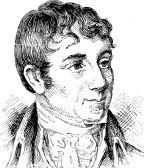
Charles B. Brown
The United States in 1800 was mentally and morally a colony of Great Britain still. A few hundred thousand white families scattered over about as many square miles of territory, much of it refractory wilderness with more refractory inhabitants; with no cities of any size, and no communication save by wretched roads or by sailing vessels; no rich old universities for centres of culture, and no rich leisured society to enjoy it; the energies of the people perforce absorbed in subduing material obstacles, or solidifying a political experiment disbelieved in by the very men who organized it;--neither time nor materials existed then for an independent literary life, which is the growth of security and comfort and leisure if it embraces a whole society, or of endowed college foundations and an aristocracy if it is only of the few. Hence American society took its literary meals at the common table of the English-speaking race, with little or no effort at a separate establishment. There was much writing, but mostly polemic or journalistic. When real literature was attempted, it consisted in general of imitations of British essays, or fiction, or poetry; and in the last two cases not even imitations of the best models in either. The essays were modeled on Addison; the poetry on the heavy imitators of Pope's heroics; the fiction either on the effusive sentimentalists who followed Richardson, or on the pseudo-Orientalists like Walpole and Lewis, or on the pseudo-mediævalists like Mrs. Roche and Mrs. Radcliffe. This sort of work filled the few literary periodicals of the day, but was not read enough to make such publications profitable even then, and is pretty much all unreadable now.
Charles Brockden Brown stands in marked contrast to these second-hand weaklings, not only by his work but still more by his method and temper. In actual achievement he did not quite fulfill the promise of his early books, and cannot be set high among his craft. He was an inferior artist; and though he achieved naturalism of matter, he clung to the theatrical artificiality of style which was in vogue. But if he had broken away from all traditions, he could have gained no hearing whatever; he died young--twenty years more might have left him a much greater figure; and he wrought in disheartening loneliness of spirit. His accomplishment was that of a pioneer. He was the first American author to see that the true field for his fellows was America and not Europe. He realized, as the genius of Châteaubriand realized at almost the same moment, the artistic richness of the material which lay to hand in the silent forest vastnesses, with their unfamiliar life of man and beast, and their possibilities of mystery enough to satisfy the most craving. He was not the equal of the author of 'The Natchez' and 'Atala'; but he had a fresh and daring mind. He turned away from both the emotional orgasms and the stage claptrap of his time, to break ground for all future American novelists. He antedated Cooper in the field of Indian life and character; and he entered the regions of mystic supernaturalism and the disordered human brain in advance of Hawthorne and Poe.
That his choice of material was neither chance nor blind instinct, but deliberate judgment and insight, is shown by the preface to 'Edgar Huntly,' in which he sets forth his views:--
"America has opened new views to the naturalist and politician, but has seldom furnished themes to the moral-pointer. That new springs of action and new motives of curiosity should operate, that the field of investigation opened to us by our own country should differ essentially from those which exist in Europe, may be readily conceived. The sources of amusement to the fancy and instruction to the heart that are peculiar to ourselves are equally numerous and inexhaustible. It is the purpose of this work to profit by some of these sources, to exhibit a series of adventures growing out of the conditions of our country, and connected with one of the most common and wonderful diseases of the human frame. Puerile superstition and exploded manners, Gothic castles and chimeras, are the materials usually employed for this end. The incidents of Indian hostility and the perils of the Western wilderness are far more suitable, and for a native of America to overlook these would admit of no apology. These therefore are in part the ingredients of this tale."
Brown's was an uneventful career. He was much given to solitary rambles and musings, varied by social intercourse with a few congenial friends and the companionship of his affectionate family, and later, many hours spent at his writing-desk or in an editorial chair.
He was born January 17th, 1771, in Philadelphia, of good Quaker stock. A delicate boyhood, keeping him away from the more active life of youths of his own age, fostered, a love for solitude and a taste for reading. He received a good classical education; but poor health prevented him from pursuing his studies at college. At his family's wish he entered a law office instead; but the literary instinct was strong within him. Literature at this time was scarcely considered a profession. Magazine circulations were too limited for publishers to pay for contributions, and all an author usually got or expected to get was some copies to distribute among his friends. To please his prudent home circle, Brown dallied for a while with the law; but a visit to New York, where he was cordially received by the members of the "Friendly Club," opened up avenues of literary work to him, and he removed to New York in 1796 to devote himself to it.
The first important work he produced was 'Wieland: or the Transformation' (1798). It shows at the outset Brown's characteristic traits--independence of British materials and methods. It is in substance a powerful tale of ventriloquism operating on an unbalanced and superstitious mind. Its psychology is acute and searching; the characterization realistic and effective. His second book, 'Ormond: or the Secret Witness' (1799), does not reach the level of 'Wieland.' It is more conventional, and not entirely independent of foreign models, especially Godwin, whom Brown greatly admired. A rapid writer, he soon had the MS. of his next novel in the hands of the publisher. The first part of 'Arthur Mervyn: or Memoirs of the Year 1793' came out in 1799, and the second part in 1800. It is the best known of his six novels. Though the scene is laid in Philadelphia, Brown embodied in it his experience of the yellow fever which raged in New York in 1799. The passage describing this epidemic can stand beside Defoe's or Poe's or Manzoni's similar descriptions, for power in setting forth the horrors of the plague.
In the same year with the first volume of 'Arthur Mervyn' appeared 'Edgar Huntly: or Memoirs of a Sleep-Walker.' Here he deals with the wild life of nature, the rugged solitudes, and the redskins, the field in which he was followed by Cooper. A thrilling scene in which a panther is chief actor was long familiar to American children in their school reading-books.
In 1801 came out his last two novels, 'Clara Howard: In a Series of Letters,' and 'Jane Talbot.' They are a departure from his previous work: instead of dealing with uncanny subjects they treat of quiet domestic and social life. They show also a great advance on his previous books in constructive art. In 1799 Brown became editor of the Monthly Magazine and American Review, and contributed largely to it.
In the autumn of 1801 he returned to Philadelphia, to assume the editorship of Conrad's Literary Magazine and American Review. The duties of this office suspended his own creative work, and he did not live to take up again the novelist's stylus. In 1806 he became editor of the Annual Register. His genuine literary force is best proved by the fact that whatever periodical he took in charge, he raised its standard of quality and made it a success for the time.
He died in February, 1810. The work to which he had given the greater part of his time and strength, especially toward the end of his life, was in its nature not only transitory, but not of a sort to keep his name alive. The magazines were children of a day, and the editor's repute as such could hardly survive them long. The fame which belongs to Charles Brockden Brown, grudgingly accorded by a country that can ill afford to neglect one of its earliest, most devoted, and most original workers, rests on his novels. Judged by standards of the present day, these are far from faultless. The facts are not very coherent, the diction is artificial in the fashion of the day. But when all is said, Brown was a rare story-teller; he interested his readers by the novelty of his material, and he was quite objective in its treatment, never obtruding his own personality. 'Wieland,' 'Edgar Huntly,' and 'Arthur Mervyn,' the trilogy of his best novels, are not to be contemned; and he has the distinction of being in very truth the pioneer of American letters.
WIELAND'S STATEMENT
Theodore Wieland, the prisoner at the bar, was now called upon for his defense. He looked around him for some time in silence, and with a mild countenance. At length he spoke:--
It is strange: I am known to my judges and my auditors. Who is there present a stranger to the character of Wieland? Who knows him not as a husband, as a father, as a friend? Yet here am I arraigned as a criminal. I am charged with diabolical malice; I am accused of the murder of my wife and my children!
It is true, they were slain by me; they all perished by my hand. The task of vindication is ignoble. What is it that I am called to vindicate? and before whom?
You know that they are dead, and that they were killed by me. What more would you have? Would you extort from me a statement of my motives? Have you failed to discover them already? You charge me with malice: but your eyes are not shut; your reason is still vigorous; your memory has not forsaken you. You know whom it is that you thus charge. The habits of his life are known to you; his treatment of his wife and his offspring is known to you; the soundness of his integrity and the unchangeableness of his principles are familiar to your apprehension: yet you persist in this charge! You lead me hither manacled as a felon; you deem me worthy of a vile and tormenting death!
Who are they whom I have devoted to death? My wife--the little ones that drew their being from me--that creature who, as she surpassed them in excellence, claimed a larger affection than those whom natural affinities bound to my heart. Think ye that malice could have urged me to this deed? Hide your audacious fronts from the scrutiny of heaven. Take refuge in some cavern unvisited by human eyes. Ye may deplore your wickedness or folly, but ye cannot expiate it.
Think not that I speak for your sakes. Hug to your hearts this detestable infatuation. Deem me still a murderer, and drag me to untimely death. I make not an effort to dispel your illusion; I utter not a word to cure you of your sanguinary folly: but there are probably some in this assembly who have come from far; for their sakes, whose distance has disabled them from knowing me, I will tell what I have done, and why.
It is needless to say that God is the object of my supreme passion. I have cherished in his presence a single and upright heart. I have thirsted for the knowledge of his will. I have burnt with ardor to approve my faith and my obedience. My days have been spent in searching for the revelation of that will; but my days have been mournful, because my search failed. I solicited direction; I turned on every side where glimmerings of light could be discovered. I have not been wholly uninformed; but my knowledge has always stopped short of certainty. Dissatisfaction has insinuated itself into all my thoughts. My purposes have been pure, my wishes indefatigable; but not till lately were these purposes thoroughly accomplished and these wishes fully gratified.
I thank Thee, my Father, for Thy bounty; that Thou didst not ask a less sacrifice than this; that Thou placedst me in a condition to testify my submission to Thy will! What have I withheld which it was Thy pleasure to exact? Now may I, with dauntless and erect eye, claim my reward, since I have given Thee the treasure of my soul.
I was at my own house; it was late in the evening; my sister had gone to the city, but proposed to return. It was in expectation of her return that my wife and I delayed going to bed beyond the usual hour; the rest of the family, however, were retired. My mind was contemplative and calm--not wholly devoid of apprehension on account of my sister's safety. Recent events, not easily explained, had suggested the existence of some danger; but this danger was without a distinct form in our imagination, and scarcely ruffled our tranquillity.
Time passed, and my sister did not arrive. Her house is at some distance from mine, and though her arrangements had been made with a view of residing with us, it was possible that through forgetfulness, or the occurrence of unforeseen emergencies, she had returned to her own dwelling.
Hence it was conceived proper that I should ascertain the truth by going thither. I went. On my way my mind was full of those ideas which related to my intellectual condition. In the torrent of fervid conceptions I lost sight of my purpose. Sometimes I stood still; sometimes I wandered from my path, and experienced some difficulty, on recovering from my fit of musing, to regain it.
The series of my thoughts is easily traced. At first every vein beat with raptures known only to the man whose parental and conjugal love is without limits, and the cup of whose desires, immense as it is, overflows with gratification. I know not why emotions that were perpetual visitants should now have recurred with unusual energy. The transition was not new from sensations of joy to a consciousness of gratitude. The Author of my being was likewise the dispenser of every gift with which that being was embellished. The service to which a benefactor like this was entitled could not be circumscribed. My social sentiments were indebted to their alliance with devotion for all their value. All passions are base, all joys feeble, all energies malignant, which are not drawn from this source.
For a time my contemplations soared above earth and its inhabitants. I stretched forth my hands; I lifted my eyes, and exclaimed, "Oh, that I might be admitted to thy presence! that mine were the supreme delight of knowing Thy will and of performing it!--the blissful privilege of direct communication with Thee, and of listening to the audible enunciation of Thy pleasure!
"What task would I not undertake, what privation would I not cheerfully endure, to testify my love of Thee? Alas! Thou hidest Thyself from my view; glimpses only of Thy excellence and beauty are afforded me. Would that a momentary emanation from Thy glory would visit me! that some unambiguous token of Thy presence would salute my senses!"
In this mood I entered the house of my sister. It was vacant. Scarcely had I regained recollection of the purpose that brought me hither. Thoughts of a different tendency had such an absolute possession of my mind, that the relations of time and space were almost obliterated from my understanding. These wanderings, however, were restrained, and I ascended to her chamber. I had no light, and might have known by external observation that the house was without any inhabitant. With this, however, I was not satisfied. I entered the room, and the object of my search not appearing, I prepared to return. The darkness required some caution in descending the stair. I stretched out my hand to seize the balustrade, by which I might regulate my steps. How shall I describe the lustre which at that moment burst upon my vision?
I was dazzled. My organs were bereaved of their activity. My eyelids were half closed, and my hands withdrawn from the balustrade. A nameless fear chilled my veins, and I stood motionless. This irradiation did not retire or lessen. It seemed as if some powerful effulgence covered me like a mantle. I opened my eyes and found all about me luminous and glowing. It was the element of heaven that flowed around. Nothing but a fiery stream was at first visible; but anon a shrill voice from behind called upon me to attend.
I turned. It is forbidden to describe what I saw: words, indeed, would be wanting to the task. The lineaments of that Being whose veil was now lifted and whose visage beamed upon my sight, no hues of pencil or of language can portray. As it spoke, the accents thrilled to my heart:--"Thy prayers are heard. In proof of thy faith, render me thy wife. This is the victim I choose. Call her hither, and here let her fall." The sound and visage and light vanished at once.
What demand was this? The blood of Catharine was to be shed! My wife was to perish by my hand! I sought opportunity to attest my virtue. Little did I expect that a proof like this would have been demanded.
"My wife!" I exclaimed: "O God! substitute some other victim. Make me not the butcher of my wife. My own blood is cheap. This will I pour out before Thee with a willing heart; but spare, I beseech Thee, this precious life, or commission some other than her husband to perform the bloody deed."
In vain. The conditions were prescribed; the decree had gone forth, and nothing remained but to execute it. I rushed out of the house and across the intermediate fields, and stopped not till I entered my own parlor. My wife had remained here during my absence, in anxious expectation of my return with some tidings of her sister. I had none to communicate. For a time I was breathless with my speed. This, and the tremors that shook my frame, and the wildness of my looks, alarmed her. She immediately suspected some disaster to have happened to her friend, and her own speech was as much overpowered by emotion as mine. She was silent, but her looks manifested her impatience to hear what I had to communicate. I spoke, but with so much precipitation as scarcely to be understood; catching her at the same time by the arm, and forcibly pulling her from her seat.
"Come along with me; fly; waste not a moment; time will be lost, and the deed will be omitted. Tarry not, question not, but fly with me."
This deportment added afresh to her alarms. Her eyes pursued mine, and she said, "What is the matter? For God's sake, what is the matter? Where would you have me go?"
My eyes were fixed upon her countenance while she spoke. I thought upon her virtues; I viewed her as the mother of my babes; as my wife. I recalled the purpose for which I thus urged her attendance. My heart faltered, and I saw that I must rouse to this work all my faculties. The danger of the least delay was imminent.
I looked away from her, and, again exerting my force, drew her toward the door. "You must go with me; indeed you must."
In her fright she half resisted my efforts, and again exclaimed, "Good heaven! what is it you mean? Where go? What has happened? Have you found Clara?"
"Follow me and you will see," I answered, still urging her reluctant steps forward.
"What frenzy has seized you? Something must needs have happened. Is she sick? Have you found her?"
"Come and see. Follow me and know for yourself."
Still she expostulated and besought me to explain this mysterious behavior. I could not trust myself to answer her, to look at her; but grasping her arm, I drew her after me. She hesitated, rather through confusion of mind than from unwillingness to accompany me. This confusion gradually abated, and she moved forward, but with irresolute footsteps and continual exclamations of wonder and terror. Her interrogations of "What was the matter?" and "Whither was I going?" were ceaseless and vehement.
It was the scope of my efforts not to think; to keep up a conflict and uproar in my mind in which all order and distinctness should be lost; to escape from the sensations produced by her voice. I was therefore silent. I strove to abridge this interval by haste, and to waste all my attention in furious gesticulations.
In this state of mind we reached my sister's door. She looked at the windows and saw that all was desolate. "Why come we here? There is nobody here. I will not go in."
Still I was dumb; but, opening the door, I drew her into the entry. This was the allotted scene; here she was to fall. I let go her hand, and pressing my palms against my forehead, made one mighty effort to work up my soul to the deed.
In vain; it would not be; my courage was appalled, my arms nerveless. I muttered prayers that my strength might be aided from above. They availed nothing.
Horror diffused itself over me. This conviction of my cowardice, my rebellion, fastened upon me, and I stood rigid and cold as marble. From this state I was somewhat relieved by my wife's voice, who renewed her supplications to be told why we come hither and what was the fate of my sister....
The fellness of a gloomy hurricane but faintly resembled the discord that reigned in my mind. To omit this sacrifice must not be; yet my sinews had refused to perform it. No alternative was offered. To rebel against the mandate was impossible; but obedience would render me the executioner of my wife. My will was strong, but my limbs refused their office.
That accents and looks so winning should disarm me of my resolution was to be expected. My thoughts were thrown anew into anarchy. I spread my hand before my eyes that I might not see her, and answered only by groans. She took my other hand between hers, and pressing it to her heart, spoke with that voice which had ever swayed my will and wafted away sorrow:--
"My friend! my soul's friend! tell me thy cause of grief. Do I not merit to partake with thee in thy cares? Am I not thy wife?"
This was too much. I broke from her embrace and retired to a corner of the room. In this pause, courage was once more infused into me. I resolved to execute my duty. She followed me, and renewed her passionate entreaties to know the cause of my distress. I raised my head and regarded her with steadfast looks. I muttered something about death, and the injunctions of my duty. At these words she shrunk back, and looked at me with a new expression of anguish. After a pause, she clasped her hands, and exclaimed:---
"O Wieland! Wieland! God grant that I am mistaken! but something surely is wrong. I see it; it is too plain; thou art undone--lost to me and to thyself." At the same time she gazed on my features with intensest anxiety, in hope that different symptoms would take place. I replied to her with vehemence:--
"Undone! No; my duty is known, and I thank my God that my cowardice is now vanquished and I have power to fulfill it. Catharine, I pity the weakness of thy nature; I pity thee, but must not spare. Thy life is claimed from my hands; thou must die!"
Fear was now added to her grief. "What mean you? Why talk you of death? Bethink yourself, Wieland; bethink yourself, and this fit will pass. Oh, why came I hither? Why did you drag me hither?"
"I brought thee hither to fulfill a divine command. I am appointed thy destroyer, and destroy thee I must." Saying this, I seized her wrists. She shrieked aloud, and endeavored to free herself from my grasp; but her efforts were vain.
"Surely, surely, Wieland, thou dost not mean it. Am I not thy wife? and wouldst thou kill me? Thou wilt not; and yet--I see--thou art Wieland no longer! A fury resistless and horrible possesses thee. Spare me--spare--help--help--"
Till her breath was stopped she shrieked for help, for mercy. When she could speak no longer, her gestures, her looks appealed to my compassion. My accursed hand was irresolute and tremulous. I meant thy death to be sudden, thy struggles to be brief. Alas! my heart was infirm, my resolves mutable. Thrice I slackened my grasp, and life kept its hold, though in the midst of pangs. Her eyeballs started from their sockets. Grimness and distortion took the place of all that used to bewitch me into transport and subdue me into reverence. I was commissioned to kill thee, but not to torment thee with the foresight of thy death; not to multiply thy fears and prolong thy agonies. Haggard and pale and lifeless, at length thou ceasedst to contend with thy destiny.
This was the moment of triumph. Thus had I successfully subdued the stubbornness of human passions: the victim which had been demanded was given; the deed was done past recall.
I lifted the corpse in my arms and laid it on the bed. I gazed upon it with delight. Such was the elation of my thoughts that I even broke into laughter. I clapped my hands and exclaimed, "It is done! My sacred duty is fulfilled! To that I have sacrificed, O my God, Thy last and best gift, my wife!"
For a while I thus soared above frailty. I imagined I had set myself forever beyond the reach of selfishness; but my imaginations were false. This rapture quickly subsided. I looked again at my wife. My joyous ebullitions vanished, and I asked myself who it was whom I saw. Methought it could not be Catharine. It could not be the woman who had lodged for years in my heart; who had slept nightly in my bosom; who had borne in her womb, who had fostered at her breast, the beings who called me father; whom I have watched with delight, and cherished with a fondness ever new and perpetually growing; it could not be the same. Where was her bloom? These deadly and blood-suffused orbs but ill resemble the azure and ecstatic tenderness of her eyes. The lucid stream that meandered over that bosom, the glow of love that was wont to sit upon that cheek, are much unlike these livid stains and this hideous deformity. Alas! these were the traces of agony; the gripe of the assassin had been here!
I will not dwell upon my lapse into desperate and outrageous sorrow. The breath of heaven that sustained me was withdrawn, and I sunk into mere man. I leaped from the floor; I dashed my head against the wall; I uttered screams of horror; I panted after torment and pain. Eternal fire and the bickerings of hell, compared with what I felt, were music and a bed of roses.
I thank my God that this degeneracy was transient--that He deigned once more to raise me aloft. I thought upon what I had done as a sacrifice to duty, and was calm. My wife was dead; but I reflected that though this source of human consolation was closed, yet others were still open. If the transports of a husband were no more, the feelings of a father had still scope for exercise. When remembrance of their mother should excite too keen a pang, I would look upon them and be comforted.
While I revolved these ideas, new warmth flowed in upon my heart. I was wrong. These feelings were the growth of selfishness. Of this I was not aware; and to dispel the mist that obscured my perceptions, a new effulgence and a new mandate were necessary. From these thoughts I was recalled by a ray that was shot into the room. A voice spake like that which I had before heard:--"Thou hast done well. But all is not done--the sacrifice is incomplete--thy children must be offered--they must perish with their mother!--"
Thou, Omnipotent and Holy! Thou knowest that my actions were conformable to Thy will. I know not what is crime; what actions are evil in their ultimate and comprehensive tendency, or what are good. Thy knowledge, as Thy power, is unlimited. I have taken Thee for my guide, and cannot err. To the arms of Thy protection I intrust my safety. In the awards of Thy justice I confide for my recompense.
Come death when it will, I am safe. Let calumny and abhorrence pursue me among men; I shall not be defrauded of my dues. The peace of virtue and the glory of obedience will be my portion hereafter.