Volume 6 — GEORGE LOUIS LE CLERC BUFFON
Reading edition
(1707-1788)
BY SPENCER TROTTER
science becomes part of the general stock of knowledge only after it has entered into the literature of a people. The bare skeleton of facts must be clothed with the flesh and blood of imagination, through the humanizing influence of literary expression, before it can be assimilated by the average intellectual being. The scientific investigator is rarely endowed with the gift of weaving the facts into a story that will charm, and the man of letters is too often devoid of that patience which is the chief virtue of the scientist. These gifts of the gods are bestowed upon mankind under the guiding genius of the division of labor. The name of Buffon will always be associated with natural history, though in the man himself the spirit of science was conspicuously absent. In this respect he was in marked contrast with his contemporary Linnæus, whose intellect and labor laid the foundations of much of the scientific knowledge of to-day.
Buffon
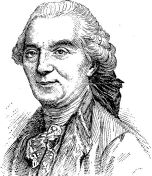
George Louis le Clerc Buffon was born on the 7th of September, 1707, at Montbar, in Burgundy. His father, Benjamin le Clerc, who was possessed of a fortune, appears to have bestowed great care and liberality on the education of his son. While a youth Buffon made the acquaintance of a young English nobleman, the Duke of Kingston, whose tutor, a man well versed in the knowledge of physical science, exerted a profound influence on the future career of the young Frenchman. At twenty-one Buffon came into his mother's estate, a fortune yielding an annual income of £12,000. But this wealth did not change his purpose to gain knowledge. He traveled through Italy, and after living for a short period in England returned to France and devoted his time to literary work. His first efforts were translations of two English works of science--Hale's 'Vegetable Statics' and Newton's 'Fluxions'; and he followed these with various studies in the different branches of physical science.
The determining event in his life, which led him to devote the rest of his years to the study of natural history, was the death of his friend Du Fay, the Intendant of the Jardin du Roi (now the Jardin des Plantes), who on his death-bed recommended Buffon as his successor. A man of letters, Buffon saw before him the opportunity to write a natural history of the earth and its inhabitants; and he set to work with a zeal that lasted until his death in 1788, at the age of eighty-one. His great work, 'L'Histoire Naturelle,' was the outcome of these years of labor, the first edition being complete in thirty-six quarto volumes.
The first fifteen volumes of this great work, published between the years 1749 and 1767, treated of the theory of the earth, the nature of animals, and the history of man and viviparous quadrupeds; and was the joint work of Buffon and Daubenton, a physician of Buffon's native village. The scientific portion of the work was done by Daubenton, who possessed considerable anatomical knowledge, and who wrote accurate descriptions of the various animals mentioned. Buffon, however, affected to ignore the work of his co-laborer and reaped the entire glory, so that Daubenton withdrew his services. Later appeared the nine volumes on birds, in which Buffon was aided by the Abbé Sexon. Then followed the 'History of Minerals' in five volumes, and seven volumes of 'Supplements,' the last one of which was published the year after Buffon's death.
One can hardly admire the personal character of Buffon. He was vain and superficial, and given to extravagant speculations. He is reported to have said, "I know but five great geniuses--Newton, Bacon, Leibnitz, Montesquieu, and myself." His natural vanity was undoubtedly fostered by the adulation which he received from those in authority. He saw his own statue placed in the cabinet of Louis XVI., with the inscription "Majestati Naturæ par ingenium." Louis XV. bestowed upon him a title of nobility, and crowned heads "addressed him in language of the most exaggerated compliment." Buffon's conduct and conversation were marked throughout by a certain coarseness and vulgarity that constantly appear in his writings. He was foppish and trifling, and affected religion though at heart a disbeliever.
The chief value of Buffon's work lies in the fact that it first brought the subject of natural history into popular literature. Probably no writer of the time, with the exception of Voltaire and Rousseau, was so widely read and quoted as Buffon. But the gross inaccuracy which pervaded his writings, and the visionary theories in which he constantly indulged, gave the work a less permanent value than it might otherwise have attained. Buffon detested the scientific method, preferring literary finish to accuracy of statement. Although the work was widely translated, and was the only popular natural history of the time, there is little of it that is worthy of a place in the world's best literature. It is chiefly as a relic of a past literary epoch, and as the pioneer work in a new literary field, that Buffon's writings appeal to us. They awakened for the first time a wide interest in natural history, though their author was distinctly not a naturalist.
Arabella Buckley has said of Buffon and his writings that though "he often made great mistakes and arrived at false conclusions, still he had so much genius and knowledge that a great part of his work will always remain true." Cuvier has left us a good memoir of Buffon in the 'Biographic Universelle.'

NATURE
From the 'Natural History'
So with what magnificence Nature shines upon the earth! A pure light extending from east to west gilds successively the hemispheres of the globe. An airy transparent element surrounds it; a warm and fruitful heat animates and develops all its germs of life; living and salutary waters tend to their support and increase; high points scattered over the lands, by arresting the airy vapors, render these sources inexhaustible and always fresh; gathered into immense hollows, they divide the continents. The extent of the sea is as great as that of the land. It is not a cold and sterile element, but another empire as rich and populated as the first. The finger of God has marked the boundaries. When the waters encroach upon the beaches of the west, they leave bare those of the east. This enormous mass of water, itself inert, follows the guidance of heavenly movements. Balanced by the regular oscillations of ebb and flow, it rises and falls with the planet of night; rising still higher when concurrent with the planet of day, the two uniting their forces during the equinoxes cause the great tides. Our connection with the heavens is nowhere more clearly indicated. From these constant and general movements result others variable and particular: removals of earth, deposits at the bottom of water forming elevations like those upon the earth's surface, currents which, following the direction of these mountain ranges, shape them to corresponding angles; and rolling in the midst of the waves, as waters upon the earth, are in truth the rivers of the sea.
The air, too, lighter and more fluid than water, obeys many forces: the distant action of sun and moon, the immediate action of the sea, that of rarefying heat and of condensing cold, produce in it continual agitations. The winds are its currents, driving before them and collecting the clouds. They produce meteors; transport the humid vapors of maritime beaches to the land surfaces of the continents; determine the storms; distribute the fruitful rains and kindly dews; stir the sea; agitate the mobile waters, arrest or hasten the currents; raise floods; excite tempests. The angry sea rises toward heaven and breaks roaring against immovable dikes, which it can neither destroy nor surmount.
The land elevated above sea-level is safe from these irruptions. Its surface, enameled with flowers, adorned with ever fresh verdure, peopled with thousands and thousands of differing species of animals, is a place of repose; an abode of delights, where man, placed to aid nature, dominates all other things, the only one who can know and admire. God has made him spectator of the universe and witness of his marvels. He is animated by a divine spark which renders him a participant in the divine mysteries; and by whose light he thinks and reflects, sees and reads in the book of the world as in a copy of divinity.
Nature is the exterior throne of God's glory. The man who studies and contemplates it rises gradually towards the interior throne of omniscience. Made to adore the Creator, he commands all the creatures. Vassal of heaven, king of earth, which he ennobles and enriches, he establishes order, harmony, and subordination among living beings. He embellishes Nature itself; cultivates, extends, and refines it; suppresses its thistles and brambles, and multiplies its grapes and roses.
Look upon the solitary beaches and sad lands where man has never dwelt: covered--or rather bristling--with thick black woods on all their rising ground, stunted barkless trees, bent, twisted, falling from age; near by, others even more numerous, rotting upon heaps already rotten,--stifling, burying the germs ready to burst forth. Nature, young everywhere else, is here decrepit. The land surmounted by the ruins of these productions offers, instead of flourishing verdure, only an incumbered space pierced by aged trees, loaded with parasitic plants, lichens, agarics--impure fruits of corruption. In the low parts is water, dead and stagnant because undirected; or swampy soil neither solid nor liquid, hence unapproachable and useless to the habitants both of land and of water. Here are swamps covered with rank aquatic plants nourishing only venomous insects and haunted by unclean animals. Between these low infectious marshes and these higher ancient forests extend plains having nothing in common with our meadows, upon which weeds smother useful plants. There is none of that fine turf which seems like down upon the earth, or of that enameled lawn which announces a brilliant fertility; but instead an interlacement of hard and thorny herbs which seem to cling to each other rather than to the soil, and which, successively withering and impeding each other, form a coarse mat several feet thick. There are no roads, no communications, no vestiges of intelligence in these wild places. Man, obliged to follow the paths of savage beasts and to watch constantly lest he become their prey, terrified by their roars, thrilled by the very silence of these profound solitudes, turns back and says:--
Primitive nature is hideous and dying; I, I alone, can make it living and agreeable. Let us dry these swamps; converting into streams and canals, animate these dead waters by setting them in motion. Let us use the active and devouring element once hidden from us, and which we ourselves have discovered; and set fire to this superfluous mat, to these aged forests already half consumed, and finish with iron what fire cannot destroy! Soon, instead of rush and water-lily from which the toad compounds his venom, we shall see buttercups and clover, sweet and salutary herbs. Herds of bounding animals will tread this once impracticable soil and find abundant, constantly renewed pasture. They will multiply, to multiply again. Let us employ the new aid to complete our work; and let the ox, submissive to the yoke, exercise his strength in furrowing the land. Then it will grow young again with cultivation, and a new nature shall spring up under our hands.
How beautiful is cultivated Nature when by the cares of man she is brilliantly and pompously adorned! He himself is the chief ornament, the most noble production; in multiplying himself he multiplies her most precious gem. She seems to multiply herself with him, for his art brings to light all that her bosom conceals. What treasures hitherto ignored! What new riches! Flowers, fruits, perfected grains infinitely multiplied; useful species of animals transported, propagated, endlessly increased; harmful species destroyed, confined, banished; gold, and iron more necessary than gold, drawn from the bowels of the earth; torrents confined; rivers directed and restrained; the sea, submissive and comprehended, crossed from one hemisphere to the other; the earth everywhere accessible, everywhere living and fertile; in the valleys, laughing prairies; in the plains, rich pastures or richer harvests; the hills loaded with vines and fruits, their summits crowned by useful trees and young forests; deserts changed to cities inhabited by a great people, who, ceaselessly circulating, scatter themselves from centres to extremities; frequent open roads and communications established everywhere like so many witnesses of the force and union of society; a thousand other monuments of power and glory: proving that man, master of the world, has transformed it, renewed its whole surface, and that he shares his empire with Nature.
However, he rules only by right of conquest, and enjoys rather than possesses. He can only retain by ever-renewed efforts. If these cease, everything languishes, changes, grows disordered, enters again into the hands of Nature. She retakes her rights; effaces man's work; covers his most sumptuous monuments with dust and moss; destroys them in time, leaving him only the regret that he has lost by his own fault the conquests of his ancestors. These periods during which man loses his domain, ages of barbarism when everything perishes, are always prepared by wars and arrive with famine and depopulation. Man, who can do nothing except in numbers, and is only strong in union, only happy in peace, has the madness to arm himself for his unhappiness and to fight for his own ruin. Incited by insatiable greed, blinded by still more insatiable ambition, he renounces the sentiments of humanity, turns all his forces against himself, and seeking to destroy his fellow, does indeed destroy himself. And after these days of blood and carnage, when the smoke of glory has passed away, he sees with sadness that the earth is devastated, the arts buried, the nations dispersed, the races enfeebled, his own happiness ruined, and his power annihilated.
THE HUMMING-BIRD
From the 'Natural History'
Of all animated beings this is the most elegant in form and the most brilliant in colors. The stones and metals polished by our arts are not comparable to this jewel of Nature. She has placed it least in size of the order of birds, maxime miranda in minimis. Her masterpiece is the little humming-bird, and upon it she has heaped all the gifts which the other birds may only share. Lightness, rapidity, nimbleness, grace, and rich apparel all belong to this little favorite. The emerald, the ruby, and the topaz gleam upon its dress. It never soils them with the dust of earth, and in its aërial life scarcely touches the turf an instant. Always in the air, flying from flower to flower, it has their freshness as well as their brightness. It lives upon their nectar, and dwells only in the climates where they perennially bloom.
All kinds of humming-birds are found in the hottest countries of the New World. They are quite numerous and seem to be confined between the two tropics, for those which penetrate the temperate zones in summer only stay there a short time. They seem to follow the sun in its advance and retreat; and to fly on the wing of zephyrs after an eternal spring.
The smaller species of the humming-birds are less in size than the great fly wasp, and more slender than the drone. Their beak is a fine needle and their tongue a slender thread. Their little black eyes are like two shining points, and the feathers of their wings so delicate that they seem transparent. Their short feet, which they use very little, are so tiny one can scarcely see them. They alight only at night, resting in the air during the day. They have a swift continual humming flight. The movement of their wings is so rapid that when pausing in the air, the bird seems quite motionless. One sees him stop before a blossom, then dart like a flash to another, visiting all, plunging his tongue into their hearts, flattening them with his wings, never settling anywhere, but neglecting none. He hastens his inconstancies only to pursue his loves more eagerly and to multiply his innocent joys. For this light lover of flowers lives at their expense without ever blighting them. He only pumps their honey, and to this alone his tongue seems destined.
The vivacity of these small birds is only equaled by their courage, or rather their audacity. Sometimes they may be seen chasing furiously birds twenty times their size, fastening upon their bodies, letting themselves be carried along in their flight, while they peck them fiercely until their tiny rage is satisfied. Sometimes they fight each other vigorously. Impatience seems their very essence. If they approach a blossom and find it faded, they mark their spite by hasty rending of the petals. Their only voice is a weak cry, "screp, screp," frequent and repeated, which they utter in the woods from dawn, until at the first rays of the sun they all take flight and scatter over the country.