Front matter (continued 7)
Reading edition
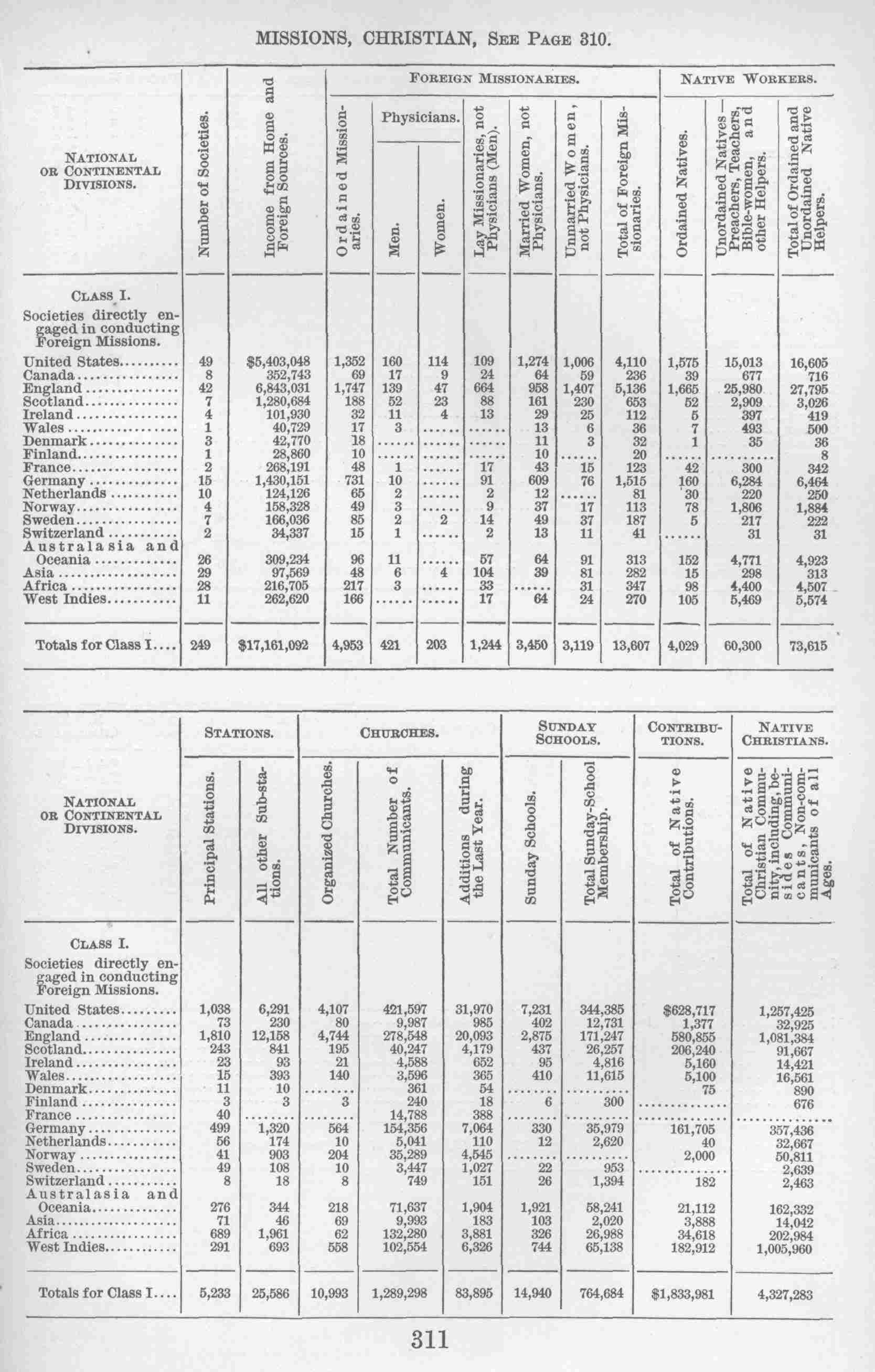
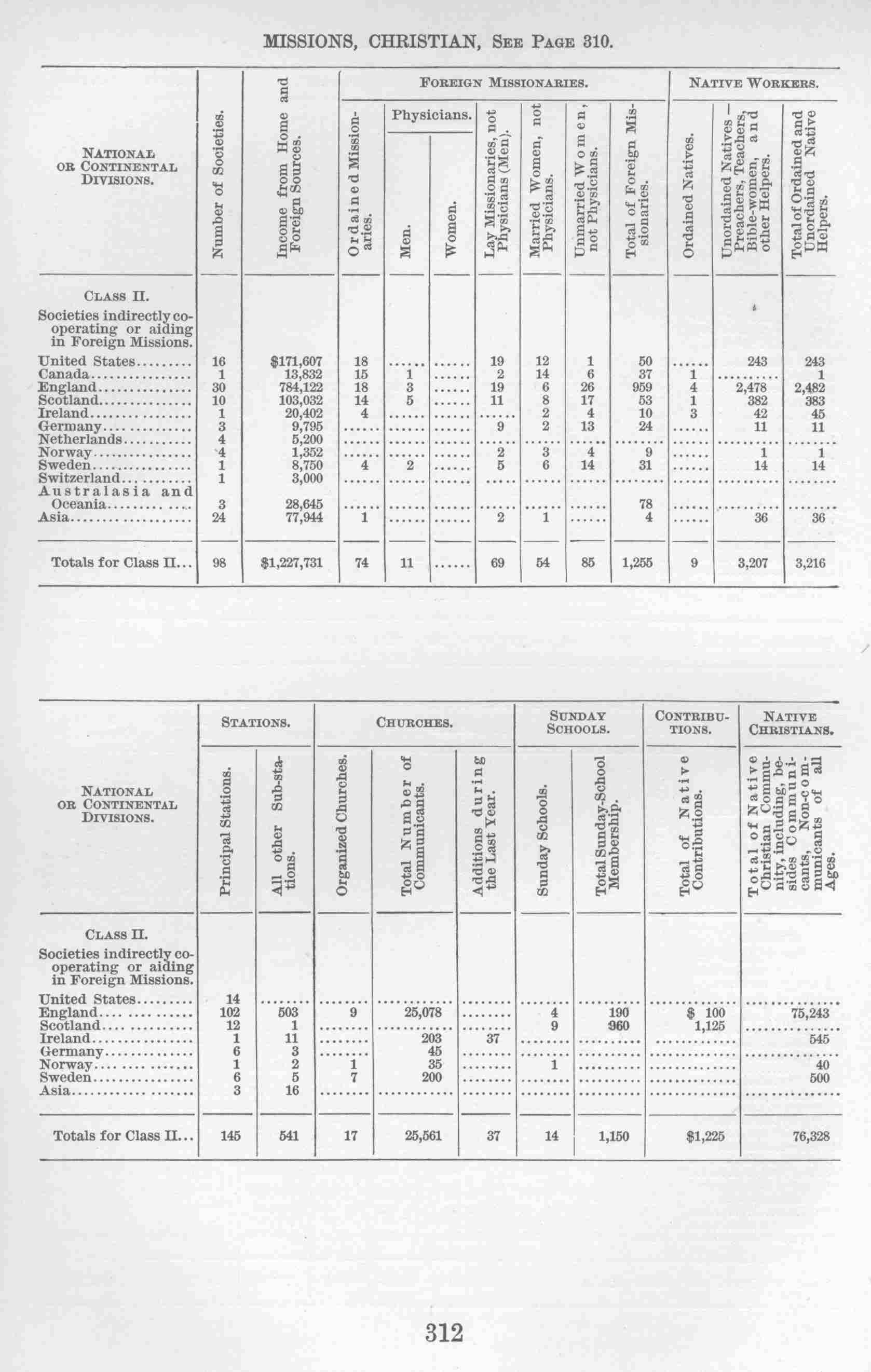
{312}
{313}
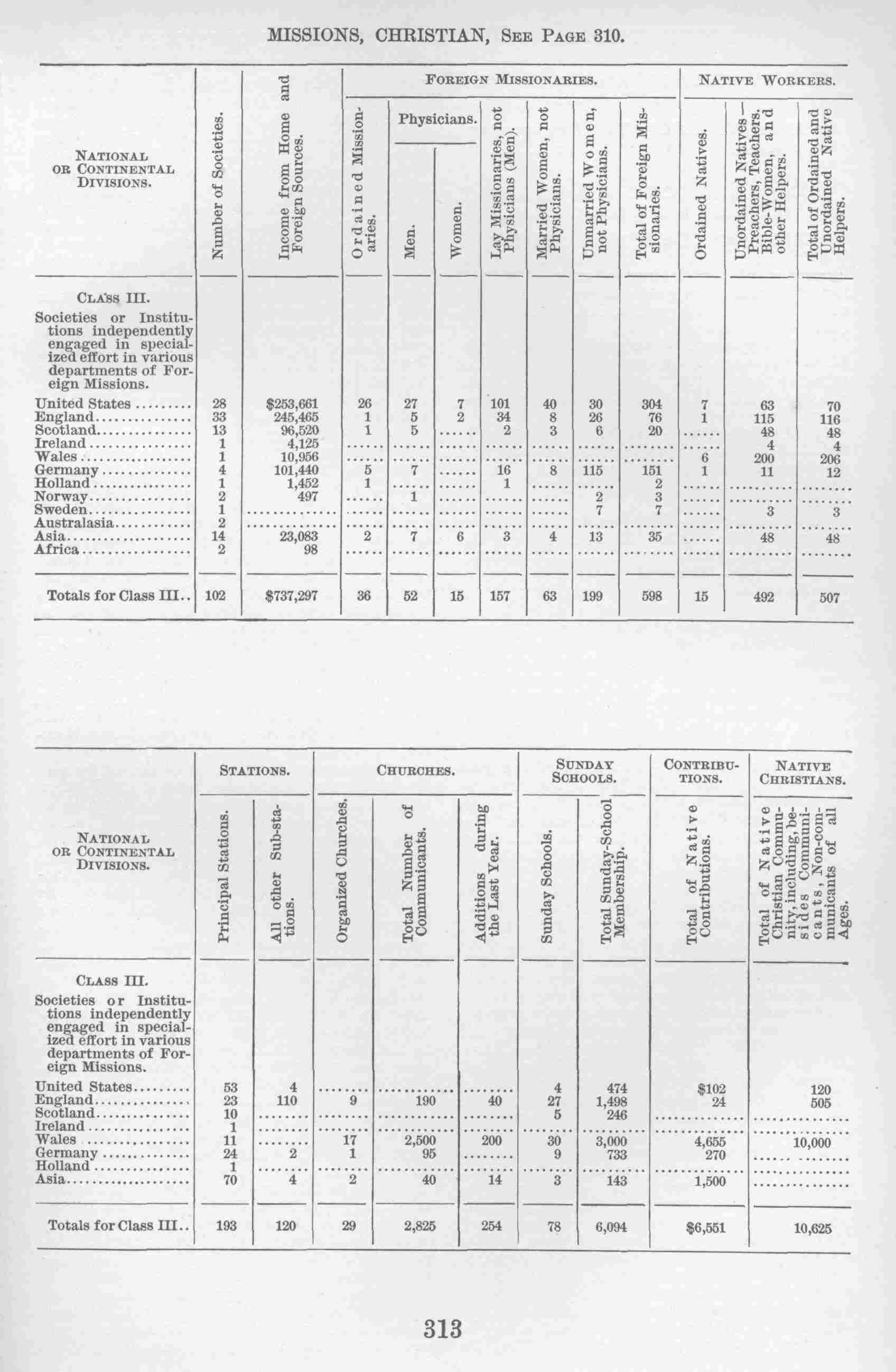
{314} MODUS VIVENDI, Alaskan Boundary. See (in this volume) ALASKA BOUNDARY QUESTION. MODUS VIVENDI, The Newfoundland. See (in this volume) NEWFOUNDLAND: A. D. 1899-1901. MOMBASA-VICTORIA RAILWAY, The. See (in this volume) UGANDA RAILWAY. ----------MONETARY QUESTIONS AND MEASURES: Start-------- MONETARY QUESTIONS AND MEASURES: A. D. 1895. The situation of the Treasury of the United States. Contract for replenishing its gold reserve. See (in this volume) UNITED STATES OF AMERICA: A. D. 1895 (JANUARY-FEBRUARY). MONETARY QUESTIONS AND MEASURES: A. D. 1895-1896. The gold reserve in the U. S. Treasury again imperilled. Refusal of relief by the Senate. See (in this volume) MONETARY QUESTIONS AND MEASURES: UNITED STATES OF AMERICA: A. D. 1895-1896 (DECEMBER-FEBRUARY). MONETARY QUESTIONS AND MEASURES: A. D. 1896-1900. The Silver Question in the United States Presidential elections. See (in this volume) UNITED STATES OF AMERICA: A. D. 1896 (JUNE-NOVEMBER); and 1900 (MAY-NOVEMBER). MONETARY QUESTIONS AND MEASURES: A. D. 1896-1898. Movements for monetary reforms in the United States. See (in this volume) UNITED STATES OF AMERICA: A. D. 1896-1898. MONETARY QUESTIONS AND MEASURES: A. D. 1897. Renewal of the privileges of the Bank of France. The privileges of the Bank of France, as the fiscal agent of the French Government, expired with the close of the year 1897, and renewal of them was opposed by the Radicals and Socialists, who demanded the creation of a State Bank. The government succeeded, however (June, 1897), in carrying the measure necessary for continuing the existing system, on terms somewhat more favorable to the state than before. MONETARY QUESTIONS AND MEASURES: A. D. 1897 (March). Adoption of the gold standard in Japan. By a law of the Japanese Parliament, passed in March, 1897, to come into force October 1, a gold monetary standard was adopted, at the ratio of 32½ to 1, the silver dollar to be legal tender until six months after notice given of its withdrawal. MONETARY QUESTIONS AND MEASURES: A. D. 1897 (April-October). Negotiation by American Commissioners in Europe for an international bi-metallic agreement. In fulfilment of the pledge given by the Republican party, at its national convention, in 1896, that it would use efforts to bring about an international agreement for free coinage of gold and silver at some common ratio, the following Act was passed by the two Houses of Congress in January and February, 1897: "That whenever after March 4, 1897, the president of the United States shall determine that the United States should be represented at any international conference called by the United States or any other country with a view to securing by international agreement a fixity of relative value between gold and silver as money by means of a common ratio between these metals, with free mintage at such ratio, he is hereby authorized to appoint five or more commissioners to such international conference; and for compensation of said commissioners, and for all reasonable expenses connected therewith, to be approved by the secretary of state, including the proportion to be paid by the United States of the joint expenses of any such conference, the sum of $100,000, or so much thereof as may be necessary, is hereby appropriated. That the president of the United States is hereby authorized, in the name of the government of the United States, to call, in his discretion, such international conference, to assemble at such point as may be agreed upon. And he is further authorized, if in his judgment the purpose specified in the first section hereof can thus be better attained, to appoint one or more special commissioners or envoys to such of the nations of Europe as he may designate, to seek by diplomatic negotiations an international agreement for the purpose specified in the first section hereof. And in case of such appointment so much of the appropriation herein made as shall be necessary shall be available for the proper expenses and compensation of such commissioners or envoys." Pursuant to this Act, President McKinley, on the 12th of April, appointed Senator Edward O. Wolcott; of Colorado, ex-Vice-President Adlai E. Stevenson, of Illinois, and General Charles J. Paine, of Massachusetts, to be commissioners for the purpose which the bill describes. The commissioners first visited Paris, and there obtained assurances from the French government of cordial cooperation and support. They then proceeded to London, for negotiation with the British authorities, on whose attitude towards the movement for international action in the matter its success was well known to depend. Some members of the British government, conspicuously Mr. Balfour, were outspoken advocates of bi-metallism, and much was hoped from the discussion to be opened with them. The American commissioners were cordially received, and they were invited to a formal meeting, on the 12th of July, with Lord Salisbury, the Prime Minister, Mr. Balfour, First Lord of the Treasury, Sir Michael Hicks-Beach, Chancellor of the Exchequer, and Lord George Hamilton, Secretary of State for India. The American Ambassador, Mr. Hay, accompanied them to the conference, which was held at the Foreign Office. A memorandum of the conversation at this meeting, and at a second one held on the 15th, together with a correspondence which followed, were published later in a parliamentary "blue book," from which the following account is drawn. Mr. Wolcott explained the wish of the American envoys to obtain the views of several governments, preliminary to the inviting of an international bi-metallic conference. He added that they expected to have, in England, the full cooperation of the Ambassador of the French Republic, who happened, for the moment, to be absent from the country, but who had requested them to proceed with the meeting in his absence. "Mr. Wolcott then presented some reasons which, in the opinion of the Special Envoys, rendered it desirable that some international agreement for the restoration of bimetallism should be reached, and explained why, in their opinion, the success of this effort depended upon the attitude which England would take regarding the question. He then stated that the Special Envoys requested that England should agree to open English mints as its contribution to an attempt to restore bimetallism by international agreement, and dwelt upon the importance of the fact that France and the United States were together engaged in an attempt to bring about such an agreement, and were cooperating together to that end. Lord Salisbury desired to know if the French Government would co-operate upon the basis of opening their mints to the free and unlimited coinage of silver. {315} Mr. Wolcott answered in the affirmative. Lord Salisbury then asked at what ratio, and was informed by Mr. Wolcott that the French Government preferred the ratio of 15½ to 1, and that the United States were inclined to yield this point and accept this as a proper ratio. Considerable discussion on the question of the ratio and the method by which it should be settled then took place. … It was then suggested that further proceedings should be deferred until the French Ambassador might be also present. The Chancellor of the Exchequer, in further conversation, said that if the suggestion of opening the English mints was to be made, he thought an answer in the negative would undoubtedly be given. The First Lord of the Treasury asked whether, assuming this request for opening English mints to be refused, it was desired that the subject be discussed upon the basis of something different and less than the opening of English mints. Upon a mutual understanding that in the absence of the French Ambassador, anything said should be considered as said informally, a discussion then took place as to the concessions that England might make towards an international solution of the question, if it should refuse to open English mints. Mr. Wolcott, for the Special Envoys, presented the following as a list of contributions which, among others, England might make towards bimetallism if an international agreement could be effected: 1. Opening of the Indian mints. Repeal of the order making the sovereign legal tender in India. 2. Placing one-fifth of the bullion in the Issue Department of the Bank of England in silver. 3. (a.) Raising the legal tender limit of silver to, say, £10. (b.) Issuing the 20s. notes based on silver, which shall be legal tender. (c.) Retirement, gradual or otherwise, of the 10s. gold pieces, and substitution of paper based on silver. 4. Agreement to coin annually £ … of silver [present silver coinage average for five years about £1,000,000, less annual withdrawal of worn and defaced coin for recoinage, £350,000]. 5. Opening of English mints to coinage of rupees, and for coinage of British dollar, which shall be full tender in Straits Settlements and other silver standard Colonies, and tender in the United Kingdom to the limit of silver legal tender. 6. Colonial action, and coinage of silver in Egypt. 7. Something having the general scope of the Huskisson plan. Some general conversation followed in regard to the preceding suggestions, and the interview terminated, to be resumed on the 15th July, 1897, when it was understood that the French Ambassador would also be present." At the second meeting, July 15, Baron de Courcol, Ambassador of the French Republic, and M. L. Geoffray, French Minister Plenipotentiary, were present, and the former spoke at length, stating the position of the French government on the question of the free coinage of silver. He said: "'Our population, notably the agricultural population, finds that it has not at its disposition sufficient resources in currency, in metallic money. On the other hand, if the Government in the actual state of affairs reopens the mints to the free coinage of silver, we would be flooded by the abundance of this metal coming from all other countries of the world, and we could not resist the even greater evil of the inevitable depreciation of one of our precious metals, that is to say, of the effective destruction of the legal ratio upon which our monetary system is based. … In other words, we think that the production of silver, more active in certain quarters of the globe in the last quarter of a century, is not of itself considerable enough to change in an enduring manner the normal ratio between gold and silver after these two metals will have been scattered over the entire surface of the world among all nations who are called upon to absorb them. There is, then, in our eyes, a need which is perhaps transitory, but which is actually common to all the commercial nations, of taking measures adequate for assuring, by a common understanding, the re-establishment of the normal ratio of 15½ between silver and gold. If measures of this kind should be adopted by all the commercial nations, we would be able to reopen our mints to the free coinage of silver without fear of being submerged by an excessive influx of this metal. The reopening of the mints of all the commercial countries to the free coinage of silver in the ratio of 15½ with gold would be the most natural and the most efficacious means of arriving at the result sought for. This is the desideratum which I am instructed to bring forward here, and which I am particularly to urge upon the English Government as a primordial condition of the success of the common understanding. If the Government of the Queen, even in consenting to reopen the mints in India, should refuse to adopt the same measure for England, at least would they not be able to take certain measures which would be, up to a certain point, equivalent, in order to maintain the full value of silver, and to prevent India from being the victim of a depreciation of this metal in consequence of an unlimited coinage? … By way of suggestion, I would indicate, as one of the measures which the English Government might usefully adopt, the annual purchase of a certain quantity of silver metal, which might afterwards be disposed of as seemed best-either it might be preserved in ingots, or it might be used for regular consumption, or it might be sent to India. This quantity might be fixed approximately, at least, for a number of years, at a sum of £10,000,000 in nominal value. This is, perhaps, only a palliative; it is, in any event, only one of the expedients which would be deemed necessary. But I am to urge strongly that the English Government determine to take measures of this kind, or other equivalent measures, if, as I believe, it recognizes with us the necessity of improving the monetary situation in a great part of its Empire—I may say, in a great part of the entire world.' Lord Salisbury then asked whether the French Government would decline to open its mints unless England would also open her mints. The French Ambassador replied that he preferred to discuss the subject upon the basis that France would go to open mints if England would consent to open her mints, but that he would not exclude from his view the question of contributions by England towards maintaining the value of silver, short of open mints. The Chancellor of the Exchequer, in response to this, stated definitely that the English Government would not agree to open English mints to the unlimited coinage of silver, and that, whatever views he and his colleagues might separately hold on the question of bimetallism, he thought he could say they were united upon this point. … {316} The suggestions made by the Special Envoys at the interview on the 12th July were again read, and the Special Envoys accepted also as important and desirable the proposal that the English Government should purchase annually, say, £10,000,000 of silver, with proper safeguards and provisions as to the place and manner of its use. The French Ambassador expressed his approval generally of the suggestions of the Special Envoys, as being serviceable in the consideration of the question. It was then understood that the proposals submitted by the French Ambassador and by the Special Envoys of the United States should be considered, and due notice given when a reply could be made." The proposal for the reopening of the Indian mints to silver was submitted at once by the home authorities of the India Office, at London, to the government of India, and the reply of the latter was not received until the following October. When the reply came, it extinguished hopes of the arrangement which the American and French governments desired. In a long despatch, the Indian government explained with clearness the monetary situation in that country, and discussed the effect which a return to the unrestricted mintage of silver would have upon it, under the circumstances and prospects of the time. "The currency system of India," said the despatch, "is in a transition state; the Government of India in 1893 decided to establish a gold standard, and the first step towards that object was the closing of the mints to silver by Act VIII of 1893. The silver rupee is still the sole legal tender coin, though the Government has by Executive orders undertaken to receive gold and sovereigns under certain restrictions, … the rate of exchange adopted being 16d. the rupee or 15 rupees=£1. The measures to be taken when the transition period has passed have not been laid down, but it is probable that the Indian mints will be opened to gold, and gold coins will be made legal tender to an unlimited amount; silver rupees would also continue to be legal tender to an unlimited amount, and the ratio between the rupee and the gold coins as legal tender would at the same time be finally settled. The system towards which India is moving is thus a gold standard of the same kind as that which now exists in France and the United States, but with a different ratio for legal tender; but for the present the mints are closed both to gold and silver. The transition period has lasted for more than four years, but there is ground for hope that it is now drawing to a close. The changes which are involved in the arrangements proposed to Her Majesty's Government are the following. France and the United States are to open their mints to the free coinage of silver, continuing the free coinage of gold and the unlimited legal tender of coins of both metals, the ratio remaining unchanged in France and being altered to the French ratio of 15½ to 1 in the United States. India is to open her mints to silver, to keep them closed to gold, and to undertake not to make gold legal tender. France and the United States would thus be bimetallic: India would be monometallic (silver); while most of the other important countries of the world would be monometallic (gold). The object which the proposers have in view is the establishment of a stable relation between the values of gold and of silver. This would include the establishment of a stable exchange between the rupee and sterling currency, which was the object of the Government of India in the proposals made in our financial despatch of the 21st June, 1892, which proposals ultimately resulted in the adoption, in view to the attainment of that object, of the policy of a gold standard, and in the closing of the mints to the free coinage of silver. If, then, it were certain that the suggested measures would result in the establishment of a stable ratio, the Government of India might well consider whether their adoption would not be preferable to the policy to which they committed themselves in 1893 in the hope of attaining the same result by isolated action on the part of India alone. The principal questions therefore for us to consider are whether the measures are more likely to succeed than the policy of 1893, and what consequences to India may be apprehended if the measures should fail of success after being brought into operation. … The first result of the suggested measures, if they even temporarily succeed in their object, would be an intense disturbance of Indian trade and industry by the sudden rise in the rate of exchange, which, if the ratio adopted were 15½ to 1, would be a rise from about 16d. to about 23d. the rupee. Such a rise is enough to kill our export trade, for the time at least. If the public were not convinced that the arrangement would have the effect intended, or believed that it would not be permanent, the paralysis of trade and industry would be prolonged and accompanied by acute individual suffering, none of the advantages expected would be attained, and the country would pass through a critical period which would retard its progress for years. How long the crisis would last before normal or stable conditions were restored it is not possible to conjecture. It would be long even if the mercantile and banking community saw that silver was being steadily maintained at the prescribed ratio, while any indication of unsteadiness would greatly prolong the period by giving foundation for doubt. If the doubt should happen to be justified by the results, the position would be disastrous alike to the State, to individuals, and to trade generally. … We cannot help seeing that if the policy of 1893 is now abandoned, and if the triple union now proposed as a substitute should fail in its operation or should terminate, and in its failure subject Indian trade to the violent shocks we have described, the Government of India could not, as a responsible Government, call upon the commercial public to face another prolonged period of doubt, suspense, agitation, and difficulties. For it must be clearly and fully recognized that if India joins in the proposed measures, we shall be left dependent, as the sole means of attaining stability in exchange, on the success of those measures, and that if they should fail, India must be content to remain permanently under the silver standard with all its admitted disadvantages. … We have given very careful consideration to the question whether France and the United States are likely, with the help of India, to be able to maintain the relative value of gold and silver permanently at the ratio they intend to adopt, and have come to the conclusion that while we admit a possibility of the arrangements proposed resulting in the permanent maintenance of the value of gold and silver at the ratio of 15½ to 1, the probability is that they will fail to secure that result, and that it is quite impossible to hold that there is anything approaching a practical certainty of their doing so. {317} One reason for this conclusion is, that the arrangement would rest on too narrow a basis. A union consisting of two countries, with a third lending assistance, is a very different thing from the general international union of all or most of the important countries of the world, which was advocated by the Government of India in the despatches of March and June 1892 and of February and September 1886. To afford a hope that a monetary union will succeed in establishing stability in the relative value of gold and silver, it is essential that the nations adhering to it should be of such number and importance that the metallic currency of the whole body shall be of sufficient extent to allow of the exercise of adequate influence on the value of the two metals. We doubt whether any two, or even three, nations in the world, unless, indeed, one of them was Great Britain, could comply with this condition, and we have no hesitation in saying that France and the United States and India certainly could not. … We have no hesitation in recommending your Lordship to refuse to give the undertaking desired by the Governments of France and the United States. We are quite clearly of opinion that the interests of India demand that her mints shall not be opened as part of an arrangement to which two or three countries only are parties, and which does not include Great Britain." Immediately on receiving this reply, Lord Salisbury informed Ambassador Hay that "Her Majesty's Government feel it their duty to state that the first proposal of the United States Representatives is one which they are unable to accept," and expressing a wish to know "how far the views of the American and French Governments are modified by the decision now arrived at, and whether they desire to proceed further with the negotiations at the present moment." Great Britain, Parliamentary Publications (Papers by Command: Commercial, Number 8, 1897). In the view of the American envoys, it seemed useless to proceed, with no hope of cooperation from Great Britain, and they returned to America with a discouraging report. MONETARY QUESTIONS AND MEASURES: A. D. 1897 (December). Adoption of the gold standard in Russia. An imperial ukase declared the adoption of the gold standard in Russia, authorizing the issue of a new five-rouble gold piece. MONETARY QUESTIONS AND MEASURES: A. D. 1900. Settlement of the monetary system in the United States. See (in this volume) UNITED STATES OF AMERICA: A. D. 1900 (MARCH-DECEMBER). MONETARY QUESTIONS AND MEASURES: A. D. 1900 (November). Withdrawal of legal tender silver coins in Germany. See (in this volume) GERMANY: A. D. 1900 (NOVEMBER). ----------MONETARY QUESTIONS AND MEASURES: End-------- MONGOLIA. See (in this volume) MANCHURIA AND MONGOLIA. MONOPOLIES. See (in this volume) TRUSTS: UNITED STATES. MONROE DOCTRINE, The: As emphasized in the Treaty of International Arbitration. See (in this volume) PEACE CONFERENCE. MONROE DOCTRINE, The: Its discussion as involved in the Venezuela Boundary Question. See (in this volume) VENEZUELA; A. D. 1895 (JULY) and (NOVEMBER). MONTAUK POINT, Removal of troops from Santiago de Cuba to. See (in this volume) UNITED STATES OF AMERICA: A. D. 1898 (JULY-AUGUST: CUBA). MONTENEGRO. See (in this volume) BALKAN AND DANUBIAN STATES. MOROS, The. See (in this volume) PHILIPPINE ISLANDS; THE NATIVE INHABITANTS; and A. D. 1899 (MAY-AuGUST). MORTMAIN, Proposed restrictions on, in France. See (in this volume) FRANCE: A. D. 1901 (JANUARY). MOSLEMS AND CHRISTIANS: Conflicts in Armenia. See (in this volume) TURKEY: A. D. 1895. MOSLEMS AND CHRISTIANS: Conflicts in Crete. See (in this volume) TURKEY: A. D. 1897 (FEBRUARY-MARCH). MOSQUITO, The, as a carrier of disease. See (in this volume) SCIENCE, RECENT: MEDICAL, AND SURGICAL. MUKDEN. See (in this volume) MANCHURIA AND MONGOLIA; also, RUSSIA IN ASIA: A. D. 1891-1900. MUNICIPAL EVENTS, Notable. See (in this volume) BOSTON, CHICAGO, NEW YORK, TOLEDO, LONDON. MUNICIPAL GOVERNMENTS: Institution in Cuba. See (in this volume) CUBA: A. D. 1900 (JUNE-NOVEMBER). MUNICIPAL GOVERNMENTS: Institution in the Philippines. See (in this volume) PHILIPPINE ISLANDS: A. D. 1900 (MARCH). MUSIC: In the Nineteenth Century. See (in this volume) NINETEENTH CENTURY: THE MUSICAL CENTURY. N. NABONIDOS, Discovery of an inscription of. See (in this volume) ARCHÆOLOGICAL RESEARCH: BABYLONIA: DISCOVERY OF AN INSCRIPTION. NANSEN'S EXPEDITION, Return of. See (in this volume) POLAR EXPLORATION, 1896. NASHVILLE EXPOSITION. See (in this volume) TENNESSEE: A. D. 1897. NATAL. See (in this volume) SOUTH AFRICA. NATIONAL DEMOCRATIC PARTY OF 1896. See (in this volume) UNITED STATES OF AMERICA: A. D. 1896 (JUNE-NOVEMBER.) NATIONAL PARTY, The. See (in this volume) UNITED STATES OF AMERICA: A. D. 1896 (JUNE-NOVEMBER); and 1900 (MAY-NOVEMBER). NATIONAL SILVER PARTY. See (in this volume) UNITED STATES OF AMERICA: A. D. 1896 (JUNE-NOVEMBER). {318} NATIONAL STEEL COMPANY, The. See (in this volume) TRUSTS: UNITED STATES. NATIONALISTS, FRENCH, Revolutionary conspiracy of. See (in this volume) FRANCE: A. D. 1899-1900 (AUGUST-JANUARY). NAVAL POLICY, German. See (in this volume) GERMANY: A. D. 1900 (FEBRUARY-JUNE). NAVIES OF THE SEA POWERS: A. D. 1900. The following tables are compiled from a return issued by the British Admiralty in the spring of 1900, showing the state of the fleets of Great Britain, France, Russia, Germany, Italy, the United States, and Japan, including vessels then built and in progress of construction. Of battle-ships, there were built and building in the several navies: Count with a displacement of Great Britain. 70 821,605 France. 35 339,599 Russia. 24 262,912 Germany. 25 191,259 Italy. 19 193,001 United States. 16 184,144 Japan. 7 92,420 Of armored and protected cruisers, there were built and building: Count with a displacement of Great Britain. 147 827,430 France. 60 297,486 Russia. 23 144,673 Germany. 22 107,844 Italy. 25 93,673 United States. 26 140,274 Japan. 23 114,479 Of unprotected cruisers, armored coast-defence vessels, and special vessels there were built and building: Count with a displacement of Great Britain. 31 104,250 France. 29 93,385 Russia. 26 66,886 Germany. 35 59,617 Italy. 3 13,821 United States. 30 77,150 Japan. 13 24,065 Of torpedo vessels and torpedo-boat destroyers the number built and building was: Count with a displacement of Great Britain. 238 70,311 France. 305 34,002 Russia. 233 37,735 Germany. 130 20,094 Italy. 180 24,863 United States. 50 12,121 Japan. 71 9,537 A consolidation of the above figures shows a total of ships in the principal navies as follows: Great Britain, 486; France, 429; Russia, 306; Germany, 212; Italy, 227; United States, 122; Japan, 114. A writer in the "Fortnightly Review," discussing the above returns, points out the imperfectness of the representation which such gross figures give of the actual naval strength of the several Powers, and he has undertaken to correct them by a calculation of what he calls the "fighting weight" of the ships, based on the age of each and its displacement in tons. He says: "The scale of depreciation for age that I have used is as follows: Ships, built and now building, that were launched, or which will be launched, during 1895-1899 (and later), are reckoned at their full value of fighting weight; i. e., at 100 per cent. Ships launched during 1890 1894 are reckoned as now worth only 80 per cent. of their fighting weight. The other depreciations being: Ships launched 1885-1889 are valued at 60 per cent. of their nominal fighting weight; 1880-1884, at 40 per cent.; before 1880, at 20 per cent." By this mode of reckoning, the table of battleships is converted to the following exhibit of estimated "naval strength": Count adjusted fighting weight Great Britain. 70 604,141 France. 35 220,635 Russia. 24 221,988 Germany. 25 152,929 Italy. 19 112,899 United States. 16 176,708 Japan. 7 88,088 This method of depreciating the tonnage on the basis of the age of a ship causes the respective proportions of Great Britain, France and Italy, in battle-ships, to become smaller, while the respective proportions of Russia, Germany, United States and Japan become larger. The United States lose but 4 per cent. of the nominal value of their battle-ships; Japan, 5 per cent.; Russia, 16; Germany, 20; Great Britain, 26; France, 35; Italy, 42. Applying the same arithmetic to the returns of armored and protected cruisers, the writer shows that Japan suffers a loss of 10 per cent. of their nominal fighting weight, France 14, United States 14, Italy 18, Great Britain 21, Russia 23, Germany 24. Reducing in like manner all the remaining returns, he arrives at the following summary of "the seven navies arranged in the order of their strength"—taking the navy of Japan as the unit: Degree of strength. Great Britain, 6.38 France, 2.57 Russia, 1.88 United States, 1.65 Germany, 1.34 Italy, 1.03 Japan, 1.00. Stated in "tons of fighting weight," his comparison stands: Great Britain, 1,347,000 France, 543,000 Russia, 397,000 United States, 349,000 Germany, 282,000 Italy, 218,000 Japan, 211,000. Turning next to the consideration of armaments, the writer has compiled the following table, which shows "for each class of gun separately, and for all classes of guns combined, the number of these guns that are possessed by the seven naval powers": POWER Breech Quick Muzzle Torpedo All Classes Loading Firing Loading Tubes of Guns Guns Guns Guns Great Britain. 912 7,454 340 1,534 10,240 France. 471 3,653 - 928 5,052 Russia. 393 2,589 - 625 3,607 Germany. 258 1,995 - 611 2,864 Italy. 140 1,791 4 573 2,508 United States. 303 1,791 - 230 2,324 Japan. 110 1,168 - 314 1,592 ---------- All the Powers combined. 2,587 20,441 344 4,815 28,187 In this comparison the United States drops from the fourth rank to the sixth. For a comparison of the naval expenditure of the Powers, See (in this volume) WAR BUDGETS. NEBUCHADREZZAR, Exploration of the ruins of the palace of. See (in this volume) ARCHÆOLOGICAL RESEARCH: BABYLONIA; GERMAN EXPLORATION. NEELY EXTRADITION CASE, The. See (in this volume) CUBA: A. D. 1900-1901. {319} NEGRITOS. See (in this volume) PHILIPPINE ISLANDS: THE NATIVE INHABITANTS. NEGRO, Disfranchisement of the. See (in this volume) MARYLAND, MISSISSIPPI, NORTH CAROLINA: A. D. 1900; SOUTH CAROLINA: A. D. 1896; LOUISIANA: A. D. 1898; and UNITED STATES OF AMERICA: A. D. 1901 (JANUARY). NEGROS, The island of: American occupation. See (in this volume) PHILIPPINE ISLANDS: A. D. 1899 (JANUARY-NOVEMBER). Acceptance of American sovereignty. Establishment of provisional government. See (in this volume) PHILIPPINE ISLANDS: A. D. 1899 (MARCH-JULY). NEMI, Lake: Sunken Roman vessels found in. See (in this volume) ARCHÆOLOGICAL RESEARCH: ITALY. NETHERLANDS, The Kingdom of the (Holland): A. D. 1894. War in Lombok. See (in this volume) DUTCH EAST INDIES: A. D. 1894. -------NETHERLANDS, The Kingdom of the (Holland): Start------ NETHERLANDS, The Kingdom of the (Holland): A. D. 1896. Electoral Reform Act. A notable extension of the franchise was accomplished by an Act passed this year by the States General, to have effect in the elections of 1897. It made voters of all Dutch citizens not under 25 years of age who present "certain outward and positive signs of capacity and well-being. The chief sign is the fact of payment of one or more direct State taxes (for the land tax an amount of 1 florin is sufficient). Besides these, the Reform Act admits as electors all those who can prove that they are householders, and have paid rent of houses or lodgings during a fixed term, or that they are owners or tenants of boats of not less than 24 tons capacity, or that they have been during a fixed term in employment with an annual wage or salary of at least £22 18s. 4d., or possess a certificate of State interest of at least 100 florins, or a State savings bank deposit of at least 50 florins, or the legal qualifications for any profession or employment." Statesman's Year-Book, 1899, page 807. NETHERLANDS, The Kingdom of the (Holland): A. D. 1897. First election under the new Franchise Law. The first election in Holland under the new franchise law, held June 15-25, 1897, returned to the Chamber 47 Liberals, 22 Catholics, 22 Protestant anti-Revolutionists, 4 Radicals, and one deputy who is styled an Historic Christian. NETHERLANDS, The Kingdom of the (Holland):A. D. 1898. Enthronement of Queen Wilhelmina. Queen Wilhelmina, who succeeded to the crown on the death of her father, William III., in 1890, reached the age of 18 on the 31st of August, 1898, and received the reins of government from her mother, Queen Emma, who had acted as Regent until that time. The young Queen was enthroned September 6 in the New Church at Amsterdam, where she delivered, with a simplicity and fervor which impressed those present, her address to the States-General and took her oath of allegiance to the Constitution. "I am happy and thankful," the Queen said, "to rule over the people of the Netherlands, who, although small in numbers, are great in virtue and strong by nature and character. I esteem it a great privilege that it is my life's task and duty to dedicate all my powers to the prosperity and interests of my dear fatherland; and I adopt the words of my beloved father,—'Yes, Orange can never do enough for the Netherlands.'" After the Queen and the Queen-Mother, the most striking figures at the ceremony were the Princes from the Dutch Indies. NETHERLANDS, The Kingdom of the (Holland): A. D. 1898 (June). The Sugar Conference at Brussels. See (in this volume) SUGAR BOUNTIES. NETHERLANDS, The Kingdom of the (Holland): A. D. 1899 (April). Invitation to the Peace Conference to be held at The Hague. See (in this volume) PEACE CONFERENCE. NETHERLANDS, The Kingdom of the (Holland): A. D. 1899 (May-July). Representation in the Peace Conference at The Hague. See,(in this volume) PEACE CONFERENCE. NETHERLANDS, The Kingdom of the (Holland): A. D. 1899 (May-August). Advice to President Kruger of the South African Republic. See (in this volume) SOUTH AFRICA (THE TRANSVAAL): A. D. 1899 (MAY-AuGUST). NETHERLANDS, The Kingdom of the (Holland):A. D. 1901. Marriage of Queen Wilhelmina. Queen Wilhelmina was married, on the 7th of February, to Duke Henry of Mecklenburg-Schwerin, who received the title of Prince of the Netherlands by proclamation on the same day. Both civil and religious ceremonies of marriage were performed. --------NETHERLANDS, The Kingdom of the (Holland): End------ NEW BRUNSWICK. See (in this volume) CANADA. NEWEL, Stanford: American Commissioner to the Peace Conference at The Hague. See (in this volume) PEACE CONFERENCE. NEWFOUNDLAND: A. D. 1895. Union with Canada refused. Terms proposed for the union of Newfoundland with the Dominion of Canada were rejected, and negotiations abandoned. NEWFOUNDLAND: A. D. 1897. Conference of colonial premiers with the British Colonial Secretary. See (in this volume) ENGLAND: A. D. 1897 (JUNE-JULY). NEWFOUNDLAND: A. D. 1897-1900. The Reid contract. The question in politics. In the fall of 1897 a line of narrow-gauge railway, with branches over six hundred miles in total length, was completed and opened to traffic. The main line of rail extends from the capital, St. Johns, to Port aux Basques, at the southwestern extremity of the island, and is expected to produce an important development of resources from the forests and mines, as well as from agricultural lands. The railway was constructed by a contractor, Mr. Reid, who agreed to operate it for seven years at his own expense, receiving therefor a land grant of 5000 acres per mile. In 1898 a new contract was made with Mr. Reid, which placed most of the resources of the island under his control. For an additional land-grant of 2500 acres per mile of road he undertook to operate the road for fifty years. By a present cash payment of $1,000,000 to the colony treasury, he purchased the reversion of its right to the possession of the road at the end of that period. At the same time he secured the right to purchase from the government its telegraph lines and the dry-dock at St. Johns, for half a million of dollars, and was given a monopoly for 30 years of the coast mail steam service, with an annual subsidy of $150,000, he undertaking to maintain in it eight steamers, well equipped. This remarkable contract was bitterly denounced by a large party in the island, and the Imperial government was strongly petitioned to nullify the whole transaction: but the British Colonial Secretary, Mr. Chamberlain, while he characterized the contract as representing "the most unparalleled abrogation of its functions by a responsible government," decided that he could not properly interfere. {320} The "Reid Deal," as it was known, then became a burning issue in Newfoundland politics, and the Ministry responsible for it, led by Sir James Winter, was ousted from the government in February, 1900. Mr. Reid was then arranging to transfer his Newfoundland contract and franchises to a company, which required the sanction of the colonial government. The new (Liberal) Ministry, of which Mr. Robert Bond was Premier, refused consent to the transfer unless Mr. Reid would amend his bargain with the colony in several very important particulars. He offered some concessions, but not to the extent demanded; and so the question between him and the Bond Ministry went into the canvass of 1900, for the election of a new Assembly, and the Conservatives, heavily backed by Mr. Reid, were defeated overwhelmingly, winning but 4 seats out of 36 in the Lower House of the Legislature. On this result of the elections the "London Times" of November 26, 1900, comments as follows: "The course which the victorious Bond Ministry will now take must be awaited with interest. … A policy of compromise would certainly appear to be the wisest and the safest for all parties. Mr. Reid, it seems to be acknowledged, has carried out his part of the bargain of 1898 fully and even generously, and the colony, it is stated, has profited largely in consequence. In the absence of actual fraud or corruption it would be difficult in these circumstances to justify the rescission or even the material modification of the agreement, on the faith of which he has spent his money, without his assent. A repeal of the Act of 1898 against his will would savour of repudiation. It would assuredly damage the credit of the colony very seriously." NEWFOUNDLAND: A. D. 1899-1901. The French Shore Question. The Modus Vivendi. "At the period of the negotiation of the Treaty of Utrecht, in 1713, by which the rights of the French fishermen were regulated [see, in volume 4, NEWFOUNDLAND: A. D. 1713], thousands of French fishing vessels availed themselves of the inshore fisheries about the island; and that they might be not altogether without facilities for the drying and curing of their fish, they were granted under the Treaty the 'right to use a strip of the coast seven hundred miles long and half a mile wide.' Accompanying the Treaty, but, be it noted, not a part of it, was a declaration of King George, that British subjects on the island were not to interfere with these French coast rights by erecting permanent structures upon it, calculated to obstruct the operations of the French fishermen. This Royal declaration was harmless and unimportant when the population of the island was very small, and the French fishermen resorted to the inshore fisheries of Newfoundland. But to-day, a different condition exists. The French fishermen no longer use the inshore fisheries of the island, but prosecute, instead, their fishing operations on the Grand Banks, several hundred miles distant, drying their product either at the French islands of St. Pierre and Miquelon, which are more adjacent to the Banks, or transporting the fish direct to France. … The need for which the French shore right was granted has practically ceased to exist; and inasmuch as the prohibition to the people of the island from erecting permanent structures on the island was merely a mandate emanating from the King, and not an integral part of the Treaty itself; and because the reason for the observance of the mandate has thus ceased to exist, it is imperative that, in the interests of the prosperity of the island, this Royal concession should be revoked. … But what, it may be asked, on a perusal of the whole case, has caused the Newfoundland question to suddenly become paramount? Why is its urgency greater in 1899 than it was in 1889? Is there not some concentrated force, some propelling power, at work behind the scenes? There is—and that power is a millionaire. The name of this millionaire is Robert Gillespie Reid, who, having voluntarily assumed, by means of the measure known as the Reid contract, the responsibility of developing the island's resources, finds himself, at the outset, confronted by a situation which precludes all present enterprise. This gentleman has acquired, in fee simple, some three or four million acres of land in Newfoundland; and where the islanders were content to wait patiently for justice, he, as a business-man, eager to exploit his mines and timber, can hardly be expected to pin his faith to assurances so frail, and of fulfilment so remote." B. Wilson, Newfoundland's Opportunity (Fortnightly Review, February, 1899). A royal commission which lately investigated the situation of affairs on the Treaty Coast of Newfoundland found that the coast "is 800 miles in extent, with a permanent population of 13,300, all but 76 of whom are native-born, while the total of French frequenting the territory during the fishing season does not exceed 600 men. The French, last year, according to the official reports furnished to the Admiralty, occupied only eight cod and nine lobster stations, with a personnel as above, while their catch of cod was but 18,000 qtls., worth about 36,000 dollars, and their pack of lobsters about 7,000 cases, of about equal value. And is it not monstrous that, in order to satisfy vexatious French claims and perpetuate obsolete treaty claims, the people of the Treaty Coast should he coerced and victimised, and the development of the whole colony retarded, as has been the case? The Commissioners found that, despite the liberal bounties given by France for fishing on the Treaty Coast, the allowance of 50 francs per head by the St. Pierre municipality for the same purpose, and the special appropriation the past two seasons in the French colonial grant 'for extending operations on the Newfoundland coast, 4,000 francs,' the number of men frequenting there and the number of stations operated are steadily declining every year, and in ten years' time it is doubtful if there would be a Frenchman on the coast. Still, so powerful is the French fetish that the shore is tabooed as far as industrial development is concerned, and the hinterland likewise. No grant of land can be given there except with the stipulation that it is subject to French rights. No permanent building can be erected within half a mile of high-water mark, because the French claim the strand for drying their fish. No wharves can be built by which to load minerals, because they will interfere with the French fishery. (Only last year they stopped the erection of one which was twenty-two miles from their nearest station, and Mr. Reid, the railway contractor, when he wanted to build a wharf at Bay St. George to land construction materials, had to seize the opportunity of the French warship in the Bay leaving to coal and renew stores, and put an army of men to work, who built it in seventeen days, so that it was completed when the Frenchmen returned.) {321} No mineral developments are permitted because they may hamper the French. Competition on near-by fishing grounds is prohibited for the same reason. Illicit (?) lobster packers are hunted like malefactors for disregarding a 'modus vivendi' as unjust as it is ridiculous. Bait-selling is only possible by permission of the French and on their terms. The railway was deflected 120 miles out of its proper course because of French objection to a terminus on the shore. In fact, fishing is only pursued with the greatest difficulty, while the land is closed to agricultural settlement and mining enterprise. And that, too, in the face of the fact that the French 'army of occupation' consists of about one vessel, one station, and about sixty fishermen on every 100 miles of coast, whose annual catch is worth about 10,000 dollars." P. T. McGrath, France in Newfoundland (Nineteenth Century, January, 1899). In 1890, a temporary agreement ("modus vivendi") concerning the lobster packing and other questions, was arranged between the British and French governments, which has been extended from time to time, very much to the dissatisfaction of the Province. The last extension expired at the end of the year 1900, and the Newfoundlanders showed a strong disposition to resist any renewal of it. A letter from St. Johns, in December, 1900, stated the feeling of the colony as follows: "Last year the term of the 'modus vivendi' was allowed to run out, and a deadlock, such as now seems inevitable, would doubtless have been created; but when the end of December came the reverses in South Africa appealed to our patriotism as the oldest British colony, and the Legislature unanimously passed at one sitting a Bill renewing the arrangement for another year. The colony was unable to afford any more substantial aid at the time, as her naval reserve had not then been inaugurated, but this course on her part testified to her sympathy with the Imperial mother, and her readiness to relieve her from other difficulties. This year Newfoundland is taking the bit between her teeth, and the result must be a complication which, however unwelcome to the Imperial Cabinet, cannot but have been regarded as inevitable sooner or later. If our case is as strong as we are led to believe that the Royal Commission represents it to be, there is certainly good ground for our insisting upon remedial measures. It must not be forgotten that the French now keep up less than 15 cod and lobster stations altogether on the treaty coast, and that about 550 men is the number they had there last season. As against this the resident population is nearly 14,000, and the objections which they urged against the 'modus vivendi' in its early days apply with equal strength now. These people are shamefully treated, the colony as a whole is humiliated, and the recognition of such conditions by England without making an attempt to get rid of them is a cause of reproach which she should remove without delay." Much newspaper discussion of the subject has been going on in both England and France, with an apparent showing of readiness on the part of the latter country to bargain with the British for cessions in West Africa or elsewhere. How much of a price Great Britain is willing to pay for release from the treaty of Utrecht is a question the answer to which cannot be forever postponed. Despite its reluctance, the Newfoundland Legislature was prevailed upon, in February, 1901, to pass an Act renewing the "modus vivendi" for another year. Several members who supported the measure declared that they did so for the last time, and only because of an unwillingness to embarrass the British government during the continuance of the South African war. NEWFOUNDLAND: A. D. 1901. Change of Government. Early in the year, Sir Henry McCallum was transferred from the governorship of Newfoundland to that of Natal, and Sir Cavendish Boyle was appointed to succeed him. NEW JERSEY: A. D. 1897. Constitutional Amendments. On the 28th of September, several proposals of constitutional amendment were voted on in New Jersey. One prohibitory of gambling was adopted by a small majority. Another, that would give the suffrage in school elections to women, was rejected by about 10,000 majority. NEW SOUTH WALES. See (in this volume) AUSTRALIA; and CONSTITUTION OF AUSTRALIA. NEW YORK CITY: A. D. 1894-1895. The Lexow Investigation of Tammany government. Election of Mayor Strong. "On the second Sunday in February 1892 the minister of a wealthy Presbyterian church, Dr. Charles Parkhurst, startled his congregation by preaching an outspoken political sermon, in which he attacked the Tammany administration in most unmeasured language. 'The mayor and those associated with him are polluted harpies [he declared]. Under the pretence of governing this city they are feeding day and night on its quivering vitals. They are a lying, perjured, rum-soaked, and libidinous lot. … Every effort to make men respectable, honest, temperate, and sexually clean is a direct blow between the eyes of the mayor and his whole gang of lecherous subordinates, in the sense that while we fight iniquity they shield and patronise it; while we try to convert criminals they manufacture them, and they have a hundred dollars invested in the manufacturing business to every one invested in converting machinery. … Police and criminals all stand in with each other. It is simply one solid gang of criminals, one half in office and the other half out.' This sermon was the starting point of the new anti-Tammany movement. Dr. Parkhurst was called before the grand jury to prove his words, but he was obliged to admit that all he knew was the repeated accusations that appeared in almost every local newspaper. Thereupon the grand jury publicly rebuked him, and sent a formal presentment to the Recorder declaring their 'disapproval and condemnation' of the sermon. Everyone at once concluded that no more would be heard of Parkhurst in politics, but they did not know the man. The clergyman called a couple of detectives to his aid, and personally visited the lowest resorts, to obtain the necessary evidences of corruption. A month later he preached a second political sermon, and this time he took into the pulpit with him a bundle of affidavits. He repeated and emphasised his former accusations, and again he was summoned before the grand jury. This time the result was different. 'The police are either incompetent or corrupt,' the jury declared, and citizens generally agreed. … {322} "In 1894, the State Senate … appointed a committee, this time under Senator Lexow, to inquire into New York municipal affairs. Soon after the committee was appointed Mr. Croker found it convenient to hastily resign the leadership of Tammany and go to Europe. The worst accusations of the bitterest enemies of Crokerism were almost all more than substantiated by the evidence given before the committee. It was found that the police were utterly corrupt, that they extorted blackmail from gambling house keepers, women of ill fame, saloon keepers, and others, and in return gave them their protection. Even thieves, in some instances, were found to be regularly paying their police dues in return for immunity from arrest. One police justice had to admit that he received a hundred dollars from a keeper of a disorderly house. Everywhere that the Lexow Committee probed, or that other competent critics examined, the same thing was found. For several years New York had been living under a system of universal blackmail. Saloon keepers had to pay Tammany to be allowed to evade the Sunday closing law, merchants to be granted the simplest conveniences for getting their goods into their premises. But in the case of Mr. Croker no dishonesty could be proved. It was known that he had in a few years risen from a poor man to a millionaire, but in no instance could it be shown that he had acquired this wealth by corruption. His friends said he had made his money by horse-racing and real estate speculation, but unfortunately Mr. Croker did not go before the witness stand to finally clear up the matter. While the committee was sitting he remained in Europe. "The usual storm of indignation followed the 'Lexow' exposure, and most reputable citizens united once more to overthrow Tammany. Colonel Strong, a well-known banker, was chosen reform candidate for mayor, and secured a majority of fifty thousand. In 1895 he began his administration, and initiated a vigorous reform movement. The police force was entirely reorganised; municipal offices were given for merit rather than political reward; the streets, for the first time in the memory of the oldest inhabitant, were really kept clean, and the whole local government was taken out of politics. Mayor Strong's time of office has not been without its faults, but among those faults dishonesty has not been one. Rather the mistake has been to enforce all laws too rigidly, and make too few allowances for the weaknesses of human nature in a cosmopolitan resort. Police President Roosevelt's strict enforcement of the Sunday closing and social purity laws was only his duty, but yet it cost the reformers many votes. Although the report of the 'Lexow' Committee did Tammany much temporary harm, it recovered quickly. After the mayoral defeat of 1894 it pulled its forces together again, and rallied around it all the ambitions men who were disappointed in Mayor Strong's bestowal of his patronage. In the autumn of 1895 it was able to score a minor victory at the polls, and it carefully nursed its strength for the election of November 1897. Mr. Croker, notwithstanding his repeated declarations that he was 'out of politics,' came back to New York, and at once took over command of his party." F. A. McKenzie, Tammany (Nineteenth Century, December, 1897). NEW YORK CITY: A. D. 1895. Consolidation of the Astor, Lenox and Tilden foundations to form the New York Public Library. See (in this volume) LIBRARY, NEW YORK PUBLIC. NEW YORK CITY: A. D. 1896-1897. Consolidation of New York, Brooklyn, and neighboring towns, in the Greater New York. "The project of uniting the cities of New York, Brooklyn, and the cities, towns and villages contiguous to the same, into one great municipality, although long mooted before 1890, first took definite form in that year, by the passage on May 8th, by the Legislature, of Laws 1890, Chapter 11, entitled 'An Act to create a commission to inquire into the expediency of consolidating the various municipalities in the State of New York, occupying the several islands in the harbor of New York.' … Pursuant to the provisions of this act, a commission consisting of the following members was appointed, viz.: Andrew H. Green, Frederick W. Devoe, John L. Hamilton, J. Seaver Page of New York; J. S. T. Stranahan, Edward F. Linton, William D. Veeder of Brooklyn; John H. Brinkerhoff of Queen's county; George G. Greenfield of Richmond county; Charles P. McClelland of Westchester county; and Campbell W. Adams, State Engineer and Surveyor, ex officio, and Albert E. Henschel acting as secretary. In 1893, the commission presented to the Legislature a bill providing for the submission of the question of consolidation to a vote of the residents of the various municipalities proposed to be united into one city. The following year the Legislature provided for the referendum suggested by the commission. … The following vote was cast upon the question of consolidation in the ensuing election on November 6, 1894: for consolidation; against; New York, 96,938; 59,959; Kings, 64,744; 64,467; Queens, 7,712; 4,741; Richmond, 5,531; 1,505; Mount Vernon, 873; 1,603; Eastchester, 374; 260; Westchester, 620; 621; Pelham, 261; 153. At the opening of the Legislature in 1895, the Commission of Municipal Consolidation Inquiry presented a report with a proposed bill declaring the entire district before mentioned (with the exception of the city of Mount Vernon) consolidated with the city of New York. The bill, however, failed of passage because of the addition of an amendment of referendum in the last hours of the session of 1895, too late for further action. The Legislature, as a result no doubt of this vote on consolidation, did annex to New York city the towns of Westchester, Eastchester, Pelham and other parts of Westchester county. "Early in January, 1896, the Legislature appointed a joint sub-committee of the Cities Committees of both Houses to inquire into the subject of the proposed consolidation and report March 1, 1806. The committee made a report and submitted a bill favoring consolidation. The bill as reported was passed by the Legislature and was submitted to the Mayors of the cities of New York and Brooklyn, and to the Mayor and Common Council of Long Island City pursuant to the provisions of the Constitution. {323} The bill was returned to the Legislature without the acceptance of the cities of New York and Brooklyn. The Legislature repassed the bill over the vetoes of the Mayors of New York and Brooklyn, and it became a law May 11, 1896, with the approval of the Governor. This act (L. 1896, ch. 488) is entitled, 'An Act consolidating the local governments of the territory within the city and county of New York, the counties of Kings and Richmond and Long Island City and the towns of Newtown, Flushing and Jamaica and part of the town of Hempstead, in the county of Queens, and providing for the preparation of bills for enactment into laws for the government thereof.' … Pursuant to the act of consolidation, the Governor (Levi P. Morton) appointed on June 9, 1896, the following members of the commission to draft the proposed charter, viz.: Seth Low, Benjamin F. Tracy, John F. Dillon, Ashbel P. Fitch, Stewart L. Woodford, Silas B. Dutcher, William. C. De Witt, George M. Pinney, Jr., Harrison S. Moore. Mr. Fitch having resigned from the commission, the Governor appointed Thomas F. Gilroy in his place. By virtue of the act, the following gentlemen were members of the commission: Andrew H. Green, president of the commission appointed by L. 1890, ch. 311; Campbell W. Adams, State Engineer; Theodore E. Hancock, Attorney-General; William L. Strong, Mayor of New York; Frederick W. Wurster, Mayor of Brooklyn; and Patrick Jerome Gleason, Mayor of Long Island City. The commission organized on June 25, 1896, appointed Benjamin F. Tracy as president and George M. Pinney, Jr., as secretary, and named William C. De Witt, John F. Dillon, Thomas F. Gilroy, Seth Low, Andrew H. Green, Benjamin F. Tracy, and George M. Pinney, Jr., as a committee on draft of proposed charter." M. Ash, The Greater New York Charter, introduction. The committee submitted a draft charter to the commission on the 24th of December, with a report in which a fundamental feature of its plan is thus set forth: "It is clear that the work of administering all of the Departments over so large a space of territory, situated on three islands and partly on the main land, must be subdivided in order to be successfully done. The draft, therefore, proposes to divide the city into the five Boroughs which nature and history have already formed; that is to say: (1.) Manhattan, which consists of the island of Manhattan and the outlying islands naturally related to it. (2.) The Bronx; that is to say, all that part of the present City of New York lying north of the Harlem, a territory which comprises two-thirds of the area of the present City of New York. (3.) Brooklyn. (4.) Queens, consisting of that portion of Queens County to be incorporated into the Greater New York. (5.) Richmond, that is, Staten Island. Power is given to the Municipal Assembly to subdivide these Boroughs still further, in case of need. The Greater New York will start with these five Boroughs for administrative purposes. Your Committee have reconstructed the Borough system, as submitted in the tentative draft, upon lines which we are of one accord in believing to be a better and more appropriate development of the plan for the Greater New York. These lines give to each Borough various boards through which the prosecution of local improvements may be facilitated within the limits of small districts, but reserve to the Municipal Assembly the right to incur indebtedness and to authorize the making of contracts." The draft thus prepared was subjected to criticism in the commission and in public hearings, and, after amendment and revision, was reported to the Legislature in February, 1897, as the charter recommended by the Commission for the consolidated city called "The Greater New York." It received some amendment and was passed. On submission, as required by the State constitution, to the mayors of New York and Brooklyn and the mayor and Common Council of Long Island City, it was approved in Brooklyn and Long Island City, but returned without approval by the mayor of New York. The Legislature then re-enacted the bill, and it was made law, by the governor's signature, on the 4th of May, 1897. NEW YORK CITY: A. D. 1897 (September-November). Election of the first Mayor of Greater New York. The first municipal election in Greater New York excited a passion of interest that was natural in the city itself, but extraordinary in the degree and the extent to which it spread, not only throughout the United States, but widely in the foreign world. The election was looked upon as the test of a vastly important experiment in the democratic government of an enormous city. The charter of the great consolidated municipality had lodged tremendous, unprecedented power and responsibility in the office of its mayor. The people were given an opportunity to determine by a single act of suffrage— by their choice of a single man—the character of their government. Would they choose that man, at the beginning of the new system, in the interest of the corrupting organization in party politics which had misruled the old city of New York for years, or would they rise to the grand opportunity afforded them, and set a strong, free, independently honest man at the head of their local government. Democracy in municipal affairs, at least, had never been put on trial so sharply before. To a great number of the citizens of New York the duty of the hour was plain, and they promptly set their hands to it. Many months before the election they began the organization of a Citizens' Union, in which men of all political parties, sinking every other difference, should join for the defeat of Tammany and "Boss" Croker, and for the election to the mayor's office of the best mayor to be found. With remarkable unanimity, their thought of the man turned to Seth Low, President of Columbia University, but one time mayor of Brooklyn, where his vigor, his firmness and his independence had been conspicuously proved. An extensive canvass of the city showed so widely spread a feeling in favor of Mr. Low that he was named at the beginning of September as the candidate of the non-partisan Citizens' Union. It was hoped that the whole opposition to Tammany Hall could be united in support of Mr. Low, representing as he did no partisan hostility to any organization in national or state politics. It was especially hoped and believed that the Republican party organization would endorse the choice of the Citizens' Union and make Mr. Low (himself a strong Republican) its own candidate. By nothing less than a general combination could the compact forces of Tammany Hall be overcome, and that fact was well understood. {324} It was a fact so plain, indeed, that when the head of the Republican organization in New York persisted in setting a party candidate in the field, to divide the opposing voters of the city, there seemed to be small doubt of the intention with which it was done. The master politicians of the party were evidently more willing that the vast powers of the mayoralty, in the organization of the government of Greater New York, should be wielded by their prototypes of Tammany than that they should be given to independent hands. The party was obedient to them, and General Benjamin F. Tracy was put forward, by a Republican convention held September 28, in opposition to Mr. Low. The night previous, another candidate had appeared, in the person of Mr. Henry George, author of the economic doctrine of the "single tax," supported ardently by a large following, especially in the Democratic party. A section of that party, organized under the name of the United Democracy, had nominated Mr. George, and his nomination was endorsed a week later by a great assembly which claimed to represent the Jeffersonian Democracy of New York. On the 30th of September the nomination of the Tammany Democracy was given to Judge Robert A. Van Wyck. Between these four principal candidates, the result of the election was only put in doubt by some question as to the strength of the Democratic vote which Mr. George would draw away from Judge Van Wyck. It was a question extinguished sadly, three days before the election, by the sudden death of Mr. George. He had not been in good health, and the strain of the exciting canvass broke him down. His followers made a hasty nomination of his son, Henry George, Jr., in his place; but the personal prestige which might have carried a large vote with them was lost. Of the triumph of Tammany there was no longer any doubt, and no surprise was felt (though abundant grief and anger found expression) when the returns of the voting on November 2d were announced. Judge Van Wyck was elected by the ballots of 233,997 citizens, against 151,540 cast for Mr. Low, 102,873 for General Tracy, 21,693 for the younger Mr. George. Tammany would have been beaten if the Republican vote had gone to Mr. Low. Besides the four principal candidates here named, there were four other nominees who received small numbers of votes. Lucien Sanial, put forward by the Social Democrats, received 14,467; William T. Wardwell, named by the Prohibitionists, received 1,359; Patrick J. Gleason and Alfred B. Cruikshank, running with little more than some personal support, received a few hundreds of votes each. NEW YORK CITY: A. D. 1899 (April-December). The Mazet Investigation. An investigation of charges against the city government, by a committee of the Legislature, Mr. Robert Mazet, chairman, was opened in April, 1899, the examination of witnesses being conducted by Mr. Frank Moss. The investigation followed lines much the Same as those pursued by the Lexow committee, in 1894, and revealed much the same foul state of things, especially in the department of police. But there was evidently less earnestness in the committee; the probing of iniquities was fill less thorough, and the whole proceeding was stopped with suspicious suddenness as soon as it drew near to prominent members of the party by which it was controlled. It called fresh attention to the rottenness in municipal politics, and it led to the creation of a new commission for the revision of the Greater New York charter; but otherwise it was most unsatisfactory. NEW YORK CITY: A. D. 1899-1900. The Ramapo Water Contract. In August, 1899, Bird S. Coler, Controller of the City, exposed a gigantic scheme of plunder involved in a contract with the Ramapo Water Company, which Tammany officials, assisted, it was said, by some interested Republicans, were attempting to crowd through the Board of Public Improvements. The contract would have bound the city for forty years to pay to the Ramapo Company $70 per million gallons for 200,000,000 gallons of water daily. In his Message to the State Legislature, January 2, 1901, Governor Odell thus referred to the matter: "Under chapter 985 of the laws of 1895, as amended, the Ramapo Water Company was given the power of condemnation for the purpose of securing to it the water and lands necessary for its purposes. During the year 1899 an attempt was made to enter into a contract with this company by the municipal board empowered to make such contracts. This proposition, when presented to the citizens of New York, was severely criticised by them, and the question of continued municipal ownership of their water supply was thus brought to their attention. The Legislature of 1900 enacted a law which made the consummation of such a contract impossible without the unanimous consent of those empowered to make such contract. The ownership of water rights sufficient to provide the city of New York with an ample supply of pure and wholesome water should be entirely under the control and direction of the municipality." Action on the subject was taken by the Legislature, which, in March, repealed the Act of 1895, thus stripping the Ramapo Company of its extraordinary powers. NEW YORK CITY: A. D. 1900 (January-September). The Rapid Transit Tunnel Contract. Projected Tunnel to Brooklyn. "The great project of underground rapid transit is now an assured thing. A few months ago the prospect seemed very dark. It is true that the rapid transit commissioners, a very able and upright body of men, with the invaluable aid of a distinguished engineer, Mr. Parsons, had a good while ago decided on the route and the plans; but the way seemed blocked by a series of semi-political and semi-legal difficulties. … Suddenly these difficulties began to disappear. … The financial plan adopted was that the city should provide the money which a contractor would expend in building the road, the contractor following the plans furnished by the city, submitting to municipal inspection, and agreeing upon his part to pay the interest on the bonds sold by the city to obtain the money, and also to pay enough into a sinking fund to provide for the ultimate redemption of the bonds. Bids were called for on November 15, to be opened on January 15. … It turned out that two well-known contractors were the only bidders, and the award was given to Mr. John B. McDonald. His bid was $35,000,000. The theory of this contract is that the road is to be the property of the city, leased for fifty years to the contractor, who is to pay a rental that will be large enough so that the taxpayers will not have expended a penny. … {325} The main trunk line will start at the post-office (City Hall Square) on the south and proceed northward along the spine of Manhattan Island, following the general direction of Broadway to Kingsbridge, a distance from the point of beginning of twelve or thirteen miles. Near the upper end of Central Park, at a distance of six or seven miles from the point of beginning, a branch of the tunnel road will take a northeasterly direction, terminating at Bronx Park, which is about the same distance north as Kingsbridge, but several miles further east. The road will have four tracks for six miles of main line, two of which will be used for local trains and two for express trains." American Review of Reviews, February, 1900. Work on the great undertaking was begun promptly, and had made great progress within the first twelve months. In September, 1900, preliminary steps were taken toward the construction of a connecting tunnel, under the East River, to Brooklyn, and through the congested districts of the latter borough. "At least three years will be necessary for the preliminary work and actual construction before trains are running. … Tentative estimates have been made, and these are said to be from $8,000,000 to $10,000,000. … The route as contemplated … starts in connection with the Manhattan proposed tunnel at a point at or near the intersection of Broadway and Park Row; thence under Broadway and Bowling Green to Whitehall Street; under Whitehall Street to South Street; thence under South Street to the East River, and under the river, striking the Brooklyn shore at a point in Joralemon Street between the East River and Furman Street, under Joralemon Street to Fulton Street, to the Borough Hall, out Fulton Street to Flatbush Avenue, and under this thoroughfare to the railroad station. On the New York side the route includes a loop to be built whose debouching point shall lie between Bowling Green and Exchange Place in Broadway, running under Broadway to Bowling Green, and thence under Bowling Green to State Street, to and under Battery Park to Whitehall Street, thence returning under Whitehall Street and Battery Park to State Street and to Broadway. The construction calls for two tracks, and avoids all grade crossings, each track to have a separate tubular tunnel." New York Times, September 28, 1900. On the 25th of January, 1901, announcement was published that the Board of Rapid Transit Commissioners had adopted a resolution definitely providing for the extension of the Rapid Transit Railroad to Brooklyn. The original plan of route in Brooklyn had been chosen. The only change made was in Manhattan. The trains would be run through State St. instead of Whitehall, as formerly planned, with a loop at the Battery for Manhattan trains. NEW YORK CITY: A. D. 1900 (April-May). Ecumenical Conference on Missions. See (in this volume) MISSIONS. NEW YORK CITY: A. D. 1900 (June). Great fire at the Hoboken piers. See (in this volume) HOBOKEN. NEW YORK CITY: A. D. 1900-1901. Revision of the charter. Carefully as the Greater New York charter had been drawn, it proved unsatisfactory in the working, in various respects, and a commission to revise it was appointed in 1900. The report of the commission was submitted to the Governor on the 1st of December, and transmitted, with his approval, to the Legislature in the following month. In the hands of the Legislature, the bill embodying the revised charter underwent considerable amendment, very much, it would seem, to its detriment. It was passed by the Senate on the 3d of April and by the Assembly on the 4th, and went to the Mayor of New York for the submission to his judgment which the State Constitution of New York requires. Some of the more important changes in the charter made by the revision, as passed, are the shortening of the mayor's term of office from four years (which the revision commission had advised retaining) to two years, with eligibility for re-election (which the commission had advised against); an increase of the administrative powers of the presidents of boroughs; abolition of the municipal Council and creation of a Board of Aldermen of 73 members; reorganization of various departments of the municipal administration. NEW YORK CITY: A. D. 1901 (March). Offered gift of $5,200,000 to the Public Library by Andrew Carnegie. See (in this volume) LIBRARY, NEW YORK PUBLIC. NEW YORK STATE: A. D. 1894. The revised Constitution. See (in this volume) CONSTITUTION OF NEW YORK. NEW YORK STATE: A. D. 1896-1897. Passage of the Raines Liquor Law. An Act for the regulation of the liquor traffic, which was and is the subject of much controversy, was passed in March, 1896, by the Legislature of the State of New York. From its author, Senator John Raines, it has borne the name of the Raines Law. It heavily increased the tax on the selling of liquor, raising it to $800 on common "saloons" in the city of New York; to $650 in Brooklyn; to $500 in other cities having more than 50,000 and not more than 500,000 inhabitants; and to rates in lesser cities and towns which ranged from 8100 to $350. It forbade the licensing of any liquor shop within 200 feet of a schoolhouse or a church, and also forbade the opening of any new shop of that character in a residence district without consent of two-thirds of the property owners. It prohibited the sale of liquor on Sundays, except in hotels and clubs; but this provision furnished a means of evasion which was speedily brought into use. "Raines hotels" and "Raines Clubs," as they were called, sprang into existence everywhere, sufficiently answering the requirements of the law to escape its penalties. These and other defects were considerably remedied by amendments of the Act in April, 1897. It survived a powerful attack in the Legislature at that time, the whole strength of the leading cities in the State being brought against the law. The country districts were generally united in supporting it, partly on principle, and partly because of the extent to which it lightened the burdens of taxation. By apportioning two-thirds of the enormous revenue raised under the Act to the towns, counties and cities in which it is collected, and one-third to the state treasury, the Raines Law fortified itself strongly in more than the moral sentiment of the people. Under the Raines Law all local excise boards are abolished, and the whole licensing and regulating of the liquor traffic is placed under the supervision of a State commissioner. NEW YORK STATE: A. D. 1897. The Black Civil Service Law. See (in this volume) CIVIL SERVICE REFORM: A. D. 1897-1899. {326} NEW YORK STATE: A. D. 1898. Primary Election Law. An Act which aims to make the political party caucus for nominating candidates, and for choosing delegates to nominating conventions, a "primary election," conducted under strict regulations of law and guarded by registration, was passed by the New York State Legislature and signed by the Governor March 23, 1898. NEW YORK STATE: A. D. 1899. New Civil Service Enactment. See (in this volume) CIVIL SERVICE REFORM: A. D. 1897-1899. NEW YORK STATE: A. D. 1899 (May). Taxation of public franchises. A measure of great importance, introducing a new and eminently just principle in taxation, was carried through the Legislature of New York in May, by the energetic influence of Governor Roosevelt. Recommended by the Governor in a special message on the 27th of March and passed in an unsatisfactory form, a bill to provide for the taxing of public franchises which did not promise successful working was being left on his hands when the Legislature adjourned. He promptly called a special session and renewed to it his urgent recommendations. "I recommend," he said, "the enactment of a law which shall tax all these franchises as realty, which shall provide for the assessment of the tax by the Board of State Tax Commissioners, and which shall further provide that from the tax thus levied for the benefit of each locality, there shall be deducted the tax as now paid by the corporation in question. Furthermore, as the time for assessing the largest and wealthiest corporations, those of New York and Buffalo, has passed for this year, and as it will be preferable not to have the small country corporations taxed before the larger corporations of the city are taxed, I suggest that the operations of the law be deferred until October 1, of this year." Within a few days, the desired bill was passed by both Houses of the Legislature, signed by the Governor and became a law. The public franchises to which it relates are defined in its first section, as follows: "The terms 'land,' 'real estate,' and 'real property,' as used in this chapter, include the land itself above and under water, all buildings and other articles and structures, substructures, and superstructures, erected upon, under or above, or affixed to the same; all wharves and piers, including the value of the right to collect wharfage, cranage, or dockage thereon; all bridges, all telegraph lines, wires, poles, and appurtenances; all supports and inclosures for electrical conductors and other appurtenances upon, above, and underground; all surface, underground, or elevated railroads, including the value of all franchises, rights, or permission to construct, maintain, or operate the same in, under, above, on, or through streets, highways, or public places; all railroad structures, substructures, and superstructures, tracks, and the iron thereon, branches, switches, and other fixtures permitted or authorized to be made, laid, or placed on, upon, above, or under any public or private road, street, or grounds; all mains, pipes, and tanks laid or placed in, upon, above, or under any public or private street or place for conducting steam, heat, water, oil, electricity, or any property, substance or product capable of transportation or conveyance therein, or that is protected thereby, including the value of all franchises, rights, authority, or permission to construct, maintain, or operate in, under, above, upon, or through any streets, highways, or public places, any mains, pipes, tanks, conduits, or wires, with their appurtenances, for conducting water, steam, heat, light, power, gas, oil, or other substance, or electricity for telegraphic, telephonic, or other purposes; all trees and underwood growing upon land, and all mines, minerals, quarries, and fossils in and under the same, except mines belonging to the state. A franchise, right, authority, or permission, specified in this subdivision, shall, for the purpose of taxation, be known as a special franchise. A special franchise shall be deemed to include the value of the tangible property of a person, co-partnership, association, or corporation, situated in, upon, under, or above any street, highway, public place, or public waters in connection with the special franchise. The tangible property so included shall be taxed as a part of the special franchise." NEW YORK UNIVERSITY: The Hall of Fame for Great Americans. See (in this volume) HALL OF FAME. ----------NEW ZEALAND: Start-------- NEW ZEALAND: A. D. 1891-1900. Democratic experiments. Labor laws and the land system. Compulsory industrial arbitration and its working. "I have been a studious observer of every phase of social life and legislative change that has taken place in this colony during the past seven years," wrote U. S. Consul Connolly, at Auckland, in July, 1896. "I arrived at the very beginning of the experimental era—and it is no misnomer to call much of the legislation of the past few years experimental in the truest sense [see, also (in this volume), AUSTRALIA: RECENT EXTENSIONS OF DEMOCRACY]. But while it is so, there is a most gratifying feature which compensates for the violence done to the feelings of those whose motto has been 'let us permit matters to remain as they are, they suit us well enough.' That the legislative innovations of the immediate past have shocked the sensibilities of a large number of prominent and well-to-do colonists is unquestionably true, but, at the same time, as against any inconvenience they may have experienced on this account, there is the fact of increased prosperity in nearly every branch of trade and industrial life throughout the country, farm products are fetching satisfactory prices, manufacturing industries are running full time and paying good wages and fair interest on the capital invested, labor is remuneratively employed, interest on money has fallen from 6 and 7 per cent to 4 and 5 per cent (this of itself, is sufficient to prove that money is abundant). Millions of English capital are flowing in for the development of the gold fields of the colony, and the credit of the country at no period of its history stood so high on the English market as it does to-day. {327} I may also mention that, through the genuine encouragement given by the Government to the small-farmer class, the waste lands of the country are being rapidly taken up wherever land is found suitable for farming or grazing purposes. Notwithstanding the admitted prosperity of the colony and the fact that the Government have had a substantial surplus over expenditure now for a number of years, the national debt continues to increase. But the increased indebtedness is not of the usual character, for the reason that the country has security for nearly all the money borrowed in recent years. Money had to be borrowed under Government guaranty to save the Bank of New Zealand from closing its doors. This was done to avert financial disaster. … "Money has been borrowed to purchase large estates for the purposes of settlement. Those who take up land under this system, as already stated, pay an annual rental sufficient to cover the interest on the purchase money and the cost of administration. The land is always vested in the Government and this must be regarded as a good asset. One million and a Half sterling was borrowed last year in England at 3 per cent per annum. This £1,500,000 loan is called the ' advances to settlers loan.' This money is lent out to farmers at 4 per cent per annum. … I need scarcely add that the large landholders, the mortgage companies, and the money lenders generally did not favor this kind of legislation, particularly the cheap advances to settlers, but their opposition was utterly futile. With the advent of the one-man-one-vote and the extension of the franchise to women, the power of corporate wealth in this country appears to have been irrevocably destroyed. Whether this be for good or evil, I am not, of course, in a position to say. I can say, however, that no ill effects of the change are apparent up to the present; on the contrary, the country is more prosperous and at least as honestly and as economically administered as it was under the old régime. "To say that this country is, in my opinion, more truly democratic than any country in the world would be merely stating a simple truth; and to say that the present Government is a workingman's Government is equally true. A great deal of the legislation of recent years, however, is in advance of the requirements and ideas of the people, with the result that some of it has proved to be annoying and irksome to many. This is especially true of some of the labor laws. The Government are honestly endeavoring to place the masses in possession of their legitimate rights with as little friction as possible, and at the same time with due regard to vested interests and the propriety of things generally. But while struggling thus with the duties and responsibilities of their official positions, the members of the Ministry are torn asunder by the clamorous and impracticable demands of the unreasonable and irresponsible. The sympathies of the Government are unmistakably with the people, but the honor, the dignity, and the welfare of the country will not permit them to depart from a course too inconsistent with the sense of obligation, fair dealing, integrity, and responsibility which are the admitted characteristics and duty of all civilized governments. The great danger at the present moment is too much legislation in one direction. This is the one thing wherein the Government find it really hard to resist the demands of organized labor. There is, however, a very gratifying disposition manifesting itself among the more reasonable members of the labor societies to let well enough alone for the present—a disposition it is much to be hoped may extend throughout the whole body of the workers. If not, I have no hesitation in predicting a serious revulsion of public sentiment and sympathy within the next few years." United States Consular Reports, January, 1897, page 35. "Australian experience seems in many ways to prove the value of our system of written constitutions, to be construed and enforced by the courts. The effect on the minds of ill-informed legislators of the knowledge that they can do anything for which they can get a majority, is naturally to beget extravagance and an overweening sense of power, and lead to excessive experimentation. … It is in devices for the protection of labor that most of this experimentation occurs. New Zealand affords the best example of it. It provides elaborate legal protection for the eight-hour day. A workman cannot consent to work overtime without extra pay. The state sees that he gets the extra pay. It looks closely after the condition of women and children in the factories. It sees that servant girls are not overcharged by the registry offices for getting them places. It prescribes one half-holiday a week for all persons employed in stores and offices, and sees that they take it. It will not allow even a shopkeeper who has no employees to dispense with his half-holiday; because if he does not take it, his competition will injure those who do. The 'labor department' of the government has an army of inspectors, who keep a close watch on stores and factories, and prosecute violations of the law which they themselves discover. They do not wait for complaints; they ferret out infractions, so that the laborer may not have to prejudice himself by making charges. The department publishes a 'journal' once a month, which gives detailed reports of the condition of the labor market in all parts of the colony, and of the prosecutions which have taken place anywhere of employers who have violated the law. It provides insurance for old age and early death, and guarantees every policy. It gives larger policies for lower premiums than any of the private offices, and depreciates the private offices in its documents. It distributes the profits of its business as bonuses among the policy-holders, and keeps a separate account for teetotalers, so that they may get special advantages from their abstinence. The 'journal' is, in fact, in a certain sense a labor manual, in which everything pertaining to the comfort of labor is freely discussed. The poor accommodation provided for servants in hotels and restaurants is deplored, and so is the difficulty which middle-aged men have in finding employment. More attention to the morals and manners of nursemaids is recommended. All the little dodges of employers are exposed and punished. If they keep the factory door fastened, they are fined. If housekeepers pretend that their servants are lodgers, and therefore not liable to a compulsory half-holiday, they are fined. If manufacturers are caught allowing girls to take their meals in a workshop, they are fined. {328} "As far as I can make out, too, without visiting the country, there is as yet no sign of reaction against this minute paternal care of the laborer. The tendency to use the powers of the government chiefly for the promotion of the comfort of the working classes, whether in the matter of land settlement, education, or employment, seems to undergo no diminution. The only thing which has ceased, or slackened, is the borrowing of money for improvements. The results of this borrowing have been so disastrous that the present generation, at least, will hardly try that experiment again." E. L. Godkin, The Australian Democracy (Atlantic Monthly, March, 1898). NEW ZEALAND: Labor Laws. Compulsory industrial arbitration. "There is not in any other country in the world a more valuable or more enlightened body of Labour laws than those now upon the statute book of this progressive colony. They cover almost every risk to life, limb, health, and interest of the industrial classes. They send the law, as it were, everywhere a worker is employed for daily wages to fling the shield of the state over him or her in the labour of livelihood. The bare enumeration of these laws will indicate the far-reaching ground they cover:—The Coal Mines Act, the Master and Apprentices Act, the Conspiracy Law Amendment Act, the Trade Union Act, the Servant's Registry Offices Act (for the protection of servant girls against the risks of dishonest offices of that kind), Contractors and Workmen's Lien Act, three amended Employer's Liability Acts, three amended Shipping and Seamen's Acts, two Shops and Shop-assistants Acts, the Factories Act, and the Industrial Conciliation and Arbitration Act of 1894. … The Industrial Conciliation and Arbitration Act, passed in 1894 … has attracted much attention outside New Zealand. An Act with a similar purpose, but permissive in its operations, was passed … in the New South Wales Legislature in 1892. It was limited in duration to four years, and was not a success. The New Zealand bill was more skilfully drawn, and, possessing the element of a gentle compulsion, has so far achieved its aim. The Act begins by inviting all parties to join 'in lawful association for the purpose of protecting or furthering the interests of employers or workmen in, or in connection with, any industry in the colony.' Such parties as accept the legal invitation are allowed to register themselves as 'an industrial union,' and this step once taken they are enticed on through a network of solicitations, provisions, and safeguards, until they find themselves, almost without knowing it, agreeing to everything that follows. Trades Unions, or any other labour organization, or any combination of employers, can register as individual bodies without a mixed association of workers and employers. Once registered, they are in the network of arbitration:—'The effect of registration shall be to render the industrial union, and all persons who may be members of any society or trade union, so registered as an industrial union at the time of registration, or who after such registration may become members of any society or trade union so registered, subject to the jurisdiction by this Act given to a Board and the Court respectively, and liable to all the provisions of this Act, and all such persons shall be bound by the rules of the industrial union during the continuance of the membership.' … 'Every industrial agreement duly made and executed shall be binding on the parties thereto, and on every person who at any time during the term of such agreement is a member of any industrial union, trade union, or association party thereto, and on every employer who shall in the prescribed manner signify to the Registrar of the Supreme Court where such agreement is filed concurrence therein, and every such employer shall be entitled to the benefit thereof, and be deemed to be a party thereto.' … 'In and for every district there shall be established a Board of Conciliation, to have jurisdiction for the settlement of industrial disputes occurring in such district, which may be referred to it by one or more of the parties to an industrial dispute, or by industrial agreement.' … 'Every Board shall consist of such equal number of persons as the Governor may determine, being not more than six nor less than four persons, who shall be chosen by the industrial unions of employers and of workmen in the industrial district respectively, such unions voting separately, and electing an equal number of such members.' … Should this body itself be unable to come to a satisfactory decision it may refer the matter in question to a small committee of its members fairly representing each side. If a settlement or reconciliation be unattainable in this way, either party to the dispute can appeal to the Court of Arbitration, which is constituted as follows:—'There shall be one Court of Arbitration for the whole colony for the settlement of industrial disputes pursuant to this Act. … The Court shall consist of three members to be appointed by the Governor, one to be so appointed on the recommendation of the councils or a majority of the councils of the industrial associations of workmen in the colony, and one to be so appointed on the recommendation of the councils or a majority of the councils of the industrial associations of employers of the colony.' … 'No recommendation shall be made as to the third member, who shall be a Judge of the Supreme Court, and shall be appointed from time to time by the Governor, and shall be President of the Court.'" M. Davitt, Life and Progress in Australasia, chapter 68. Honorable W. P. Reeves, lately Agent-General of New Zealand in England, but who was Minister of Education and Labor in New Zealand from 1891 to 1896, and who is looked upon as the principal author of the industrial arbitration laws in that colony, wrote, during the summer of 1900, on the working of those laws, in an article contributed to the "London Express," as follows: "The arbitration law has been in constant use in New Zealand for about four years and a half. During those years there has never been a time when there has not been a dispute pending before one or other of the Conciliation Boards or the Central Arbitration Court. Writing, as I do, at some distance from London, I cannot say from memory what the exact number of disputes finally adjusted has been; but, so far, they cannot be less than sixty or seventy. Most of these have been carried, on appeal from some Conciliation Board, to the Arbitration Court and settled there. In about two cases out of seven the Conciliation Boards have been able successfully to arrange the disputes. Even where they have not done so, it by no means follows that their labors have been useless. Very often the appeal to the Arbitration Court is merely on one or two points out of many involved, and the advice of the Conciliation Board is accepted on the others. Often, too, most of the parties to a dispute have been ready to accept a board's suggestions, but it has needed the firm hand of the Arbitration Court to bring one or two stubborn men to acquiescence. {329} "The process may be tedious, but it is not costly. Lawyers are not employed as counsel before either the boards or the court unless all parties to the action agree thereto, and they very seldom do agree. A firm of employers may appear by a manager or accredited representative, a trade union is usually represented by its Secretary or other official. During the hearing, of course, the factories concerned remain open, and work goes on as usual. Employers are secured not only against a dead stop of business, but against the meaner kinds of competition of undercutting rivals. In the organized trades all the shops of a district have to keep the same hours and pay the same wages. No man may filch trade from a neighbor by sweating his own people. The fair-minded employer now knows where he is, and is freed from many anxieties. "For six years there has virtually been neither strike nor lockout in New Zealand. All these, except the first, have been years of remarkable and increasing prosperity. During the time of depression which came before them, wages had fallen. With improving times employers would have been faced by resolute demands from trade unions for a return to former high rates of pay, and had there been no arbitration system in working order a series of very bitter conflicts must have ensued. This has been avoided. Workmen and workwomen have gained notable advances of pay, and also improved conditions as to hours of labor and otherwise. But this has come about gradually, and only after careful and painstaking inquiry. Many of the demands of labor have been refused; many more have been modified. In no case has an industry been throttled or crippled. Not only can we claim that no factory has been closed for a single day in New Zealand by labor war, but we can claim that the peace thus obtained has not been bought at the dear price of hampered industry and discouraged enterprise. "When the Arbitration act came into operation the number of hands returned as employed in the registered factories was about 26,000. It is now not far short of 50,000. A percentage of this striking increase may be due to more thorough registration. Far the larger part of it represents an actual increase of industry. During these years the imports and exports of the colony have grown apace. The revenue received from the customs, from the income tax, from the stamps, and the railways has risen in each case rapidly. Employment from being scarce has grown plentiful. Building has been brisk in all centres of population. The marriage rate has gone up. In a word, New Zealand shows all the signs which we connect with a highly prosperous country. It would be too much to claim that this is chiefly due to the working of the Arbitration act. It is perfectly fair, however, to claim that the Arbitration act and the improved condition of labor, and of confidence which it has brought about, have had some share in leading up to this happy state of things. "It is frequently asked, How could you possibly enforce an award of the Arbitration Court upon an employer or a union stubbornly determined to go to all lengths rather than obey it? In the first place, for nearly five years the law has been in constant use without a single exhibition of this desperate resistance. That alone should be evidence of some weight that such a duel is not likely in a British community. It is quite true that an employer could go out of business rather than obey an award, and that the court could not prevent him from doing so. But employers are not given to ruining themselves merely because they may not like the decision of an impartial tribunal. It is suggested that the decision itself might be ruinous. There need be no fear of that. Experience has shown that if arbitrators err at all it is almost invariably in the direction of overcaution. They may show too great a desire to 'split the difference'; they are not in the least likely to impose intolerable conditions either upon masters or men. An employer who has the choice between accepting a legal decision arrived at after painstaking inquiry, and being taken into court and fined, will almost always accept the decision. In a very few cases he may run the risk of being fined once, but he will not lay himself open to a second penalty. That is the New Zealand experience. "On the other hand, it has been flatly declared that the court cannot coerce trade unions. Vivid pictures have been painted of the tragic absurdity of endeavoring to collect fines from trade unionists by distraining on the goods of poor workmen whose union is without funds, and who are themselves penniless. The answer to that is that poverty-stricken unions, composed of penniless workers, are only too thankful to accept the decision of a State tribunal. They cannot strike against a powerful employer; much less can they hope to starve out a court of arbitration. Its decision may not altogether please them, but it is all they are likely to get. The Arbitration Court, therefore, is as potent to deal with trade unions as with employers. Wealthy unions it can fine. Penniless unions are helpless to fight it. Finally, at its back is the mighty force of public opinion, which is sick of labor wars and determined that the experiment of judicial adjustment shall have a full and fair trial." The full text of the New Zealand "Industrial Conciliation and Arbitration Act" is published in pamphlet form by the United States Department of Labor, and appeared also in one of the Bulletins of the Department, in 1900. NEW ZEALAND: Land system. "The Crown lands of New Zealand are administered under 'the land act, 1892,' and the regulations made thereunder. The distinguishing features of the present land system are the outcome of ideas which have been gradually coming to maturity for some years past in this colony. These features involve the principle of State ownership of the soil, with a perpetual tenancy in the occupier. This, whatever may be the difference in detail, is the prevailing characteristic of the several systems under which land may now be selected. In New Zealand, this tendency to State ownership has taken a more pronounced form than in any other of the Australasian colonies, and the duration of the leases has become so extended as to warrant the name, frequently given to them, of 'everlasting leases.' In point of fact, most of the Crown lands are now disposed of for terms of 999 years. The rentals are based on the assessed value of the land at the time of disposal, without increase or recurring valuations. {330} Under this system there is a fixity of tenure practically equal to freehold, and which, like freehold, necessarily carries with it the power of sale, sub-lease, mortgage, or disposition by will. Since all lands held under the Crown 'by lease in perpetuity' are subject to the land tax, the necessity for the periodical revaluations under the perpetual-lease system is done away with, the State reaping the advantage of the unearned increment through the before-mentioned tax. At the same time, the improvements made in the soil by cultivation, etc., are secured to the tenant. "The advantages of this system to the selector are manifest. When it is taken into consideration that, with few exceptions, the Crown lands are, in their prairie condition, incapable of producing anything until brought into cultivation, the advantage to the settler of setting free his capital to develop the capabilities of the soil, rather than having to expend it in the purchase of a freehold, is very apparent. One of the most striking benefits of this system is the advantage it gives to the poor man, who, with little more capital than his strong right arm, is enabled to make a home for himself, which, under the freehold system, he is frequently unable to accomplish. The values placed on the Crown lands are, as a rule, low, for the State does not so much seek to raise a revenue directly therefrom as to encourage the occupation of the lands by the people; this secures indirectly an increased revenue, besides other advantages, resulting from a numerous rural population. "Again, underlying the whole of the New Zealand land system is a further application of the principle of 'the land for the people,' viz, the restriction in area which any man may hold. This subject has been forced upon the attention of the legislature by defects in former systems, under which one individual with means at his command could appropriate large areas, to the exclusion of his poorer fellow-settler. Under conditions where the price at which the land is offered is fixed and where choice of selection is by ballot, the poor settler has the same chance as the rich one and may, should he wish it, hold as much land. The limit that a selector may hold is so fixed as to encourage the class of small farmers, and up to that limit the amount he may select is left entirely to himself. The act defines the amount of land anyone may select at 640 acres of first-class or 2,000 acres of second-class land, inclusive of any land he may already hold. These limits apply to lands which are thrown open for 'free selection,' as it is termed, but in some cases, where found desirable, the limit is by regulation made much smaller. "In addition to the many advantages offered by the 'lease-in-perpetuity' system, the land act provides others to meet the wants of different classes. The rule is almost invariable that land thrown open for so-called 'free selection' is offered to the public under three different tenures, and the choice left entirely to the would-be settler. The three tenures are: (1) For cash, in which one-fourth of the purchase-money is paid down at once, and the remainder within thirty days. The title does not issue until certain improvements have been made on the land. (2) Lease with a purchasing clause, at a 5-per-cent rental on the value of the land; the lease being for twenty-five years, with the right to purchase at the original upset price at any time after the first ten years. (3) Lease in perpetuity, at a rental of 4 per cent on the capital value, as already described above. "The present [1895] land laws have been in force since the 1st of November, 1892, and, therefore, the returns of the Department of Lands and Survey for the year ending the 31st of March, 1895, will give a fair idea of the proportions in which lands are selected under the three tenures above described during the past two and a half years. The figures given below include the 'special settlements,' all of which must by law be held on lease in perpetuity: (1) Selected for cash, 1,542; area, 110,570 acres. (2) Occupation with right of purchase, 1,060; area, 236,270 acres. (3) Lease in perpetuity, 3,224; area, 634,086 acres. "'The land act, 1892,' provides for a special class of settlement, which has found favor with the public to a very considerable extent during the last two years. This is known as the 'small-farm association' system. It provides that, where not less than twelve individuals have associated themselves together for mutual help, such an association can, with the approval of the Minister of Lands, select a block of land of not more than 11,000 acres, but there must be a selector to each 200 acres in the block. The extreme limit that one person may hold is fixed at 320 acres. Settlements of this class are held on 'lease in perpetuity' for 999 years, in the same way as lands under the same tenure when thrown open for free selection. The conditions of residence and improvements are the same." S. Percy Smith, in New Zealand Official Year-Book, 1895 (reprinted in United States Consular Reports, January, 1897, page 4). NEW ZEALAND: A. D. 1899. Old-Age Pension Act. In the winter of 1899 an old-age pension act was added to the radical legislation of New Zealand. The Agent-General for New Zealand in England has described the measure in a review article, as follows: "As finally licked into shape, the act is one for giving a small pension to the poorest section of aged colonists without any contribution on their part whatever. Briefly summarized, its effect will be that any New Zealander—man or woman—who has come to the age of sixty-five, after living not less than twenty-five years in New Zealand, shall be entitled to 6s. 11d. a week, or £18 a year. The full pension is to be paid to those whose income from any source is less than £34. When the private income is above £34 a year £1 is deducted from the pension for every £1 of such excess income. When, therefore, the private income is large enough to be £18 a year in excess of £34 no state pension is paid. In other words, no one who has an income of £52 a year is entitled to even a fraction of the pension. A rather more elaborate portion of the act deals with deductions to be made from the pension where the applicant for it is possessed of accumulated property. Under this the applicant's real and personal property are assessed, and his debts, if any, are subtracted from the total value thereof. Then he is allowed to own £325 without suffering any deduction therefor. After that he loses £1 of pension for every £15 worth of accumulated property. The result is that any one possessed of £600 worth of accumulated property ceases to be entitled to any allowance whatever. Men and women are equally entitled to the pension, and where a husband and wife are living together their property or income is divided by two for the purpose of the calculations above mentioned. That is to say, their united income must amount to £104 or their united property to £1,200 before they are altogether disentitled to any part of the pension. They may have, between them, an income of £68, or as much as £650 of property, and yet be entitled to draw their respective pensions in full." {331} The government is only authorized to pay the required amounts during three years from the passage of the Act, after which Parliament will have to decide on its continuance or amendment. Mr. Reeves expects that "the opposition will, more or less in unison, submit a rival old-age pension scheme to the constituencies. One of their prominent members, Mr. George Hutchison, indicated in the debate on the third reading of the measure scheme which some think will be generally adopted by his party. This is to draw a distinction between the older poor of the colony now living and the younger generation of colonists. All now over fifty years of age are to be permitted as they attain sixty-five to take advantage of Mr. Seddon's act without let or hindrance. But for the younger people a contributory scheme is to be drawn up, under which they would have to pay some such sum as sixpence a week, to go in aid of a substantial pension in their old age. Whatever may be thought of the economic merits of such a scheme, it might conceivably be expected at election-time to disarm the hostility of the aged poor to any such interference with their prospects under the present system as would be entailed by a complete repeal of the Seddon act." National Review, February, 1899. NEW ZEALAND: A. D. 1900 (March). Looking towards federation with Australia. New Zealand did not take part in the movements which led to the federation of the Australian colonies in the Commonwealth of Australia, but watched them with evident interest and a final wakening of inclination to be joined in union with them. When the Act of the Imperial Parliament "to constitute the Commonwealth of Australia" was under discussion in England (see, in this volume, AUSTRALIA: A. D. 1900), the Agent-General for New Zealand in London addressed to the Colonial Office (March 30, 1900) the following Memorandum, which explains the attitude of that colony towards the federation movement in Australia: "The Government of New Zealand desires to secure the insertion of certain amendments in the Commonwealth of Australia Constitution Bill shortly to be laid before the Imperial Parliament. These amendments are three in number. The first of them is, in effect, that New Zealand should preserve the right of joining the proposed Commonwealth of Australia on the same terms as the original States now about to be united in such Commonwealth. The second is, that while New Zealand remains outside the Commonwealth, litigants in her higher Courts, though reserving the right they now possess to appeal to the Queen in Council, should, as an alternative, have the right to appeal to the High Court of Australia on paying the fees and complying with the rules of that tribunal. The third amendment is, that the Australian Commonwealth and the Colony of New Zealand should be empowered to make the necessary arrangements to employ their naval and military forces for mutual aid and defence, including operations outside their own boundaries, and for that purpose to co-operate in forming a homogeneous Australasian force. "The importance of the first amendment to New Zealand is great. The Colony is divided from Australia by 1,200 miles of unbroken sea. It still takes from four to five days for persons quitting New Zealand to reach any port in Australia. Though a large and valuable trade is carried on between the two countries, and though New Zealand is linked to Australia, not merely by financial ties, but by bonds of intercourse, cordial friendship, and sympathy, she has also vital and separate interests. Many, also, of the leading matters on which the discussions on Federation in Australia during the last 12 years have turned are topics with which the New Zealand people is almost unacquainted. It is therefore only to be expected that the Colony should watch the Federal movement with caution and reserve. It is also true that, until June of last year, New Zealand was unable to judge as to the intentions of the great Colony of New South Wales with regard to the Commonwealth Bill. It was not until the month of September that Queensland decided to enter the Commonwealth; Western Australia has not even yet done so. And it was directly after the decision of Queensland had become known that, in response to a request from Sir John Forrest, the leading statesmen of Australia intimated that, in their opinion, it was impossible to consider any further amendments of the Commonwealth Bill. From that moment the only course left open to New Zealand has been that now taken. About that time there appeared in New Zealand evidences of the growth of a feeling in the Colony in favour of a closer union with Australia. This was on the eve of the general elections, and Mr. Seddon, the Prime Minister, then defined his position, stating that the future relations of New Zealand with Australia were a matter for education and careful examination: that for himself he kept an open mind, but that prudent deliberation was advisable. At the general elections which took place in December last, Mr. Seddon was returned to power with an unusually large majority. It may therefore very safely be assumed that this cautious but not hostile attitude fairly represents the present view of the people of the Colony. Some stress may be laid on the foregoing facts in view of the possible objection that New Zealand's action now comes too late. The Colony virtually asks that, in view of its position of distance and difficulty, it should have more time given it to make up its mind than has been found necessary by colonies which are contiguous or almost so. If it should be proposed to fix a limit of time to this, that would clearly be a matter for reasonable consideration. "In so far as the second amendment would give certain New Zealand litigants a right of resort to the High Court of Australia, it is scarcely likely to meet with objection in Australia unless on the general ground that no amendment whatever of the Commonwealth Bill is now desirable. In the event of the amendment being admitted, it is obvious that certain precautions might have to be taken to conserve the existing rights of New Zealand litigants, and also to prevent clashing of appeals, but doubtless these could be provided for. The third amendment, that providing for a species of partial federation for purposes of defence and mutual assistance, seems not only desirable but unobjectionable in every way. {332} It does not propose that any kind of compulsion should be applied to either the Commonwealth or New Zealand: it merely empowers them to make such arrangements as may be deemed mutually advantageous. At present it seems more than doubtful whether either the Commonwealth or the Colony has the power to make simple, binding and effective arrangements which would involve operations and expenditure outside their own boundaries, and under which each would have to act so as to affect colonists not subject to their respective jurisdictions. Recent events have clearly shown that the time has passed by for regarding the military forces of a colony as something never to be employed outside of its own boundaries. I need not point out that such a co-operation would be of value not only to Australia and New Zealand, but to the Empire which both are so anxious to serve." The reply of the Colonial Office to this Memorandum set forth that its suggestions had been submitted to the delegates of the federating colonies and did not meet their approval. "They pointed out that during the period of grace proposed to be allowed circumstances might arise which would cause grave embarrassment to the Commonwealth if it were open to New Zealand to claim admission on the same terms as the original States, and that Article 121 of the draft Bill provided sufficiently for the admission of New Zealand at any time upon such conditions as might be found mutually acceptable to the Colony and the Commonwealth." It was added that "the suggested amendments as to the appeal from New Zealand Courts to the High Court of Australia, and the arrangements for mutual defence, would, if undertaken now, lead to great delay, and involve a fresh referendum to the people of the Federating Colonies, while there does not appear to be any probability that the Federation would not favourably entertain any proposals of the kind, if put forward after Federation." In the Constitution Act as passed, however, New Zealand is mentioned specifically among the "States" to which its provisions may apply, though not included in what relates to the "Original States." See (in this volume) CONSTITUTION OF AUSTRALIA. Great Britain, Parliamentary Publications (Papers by Command: Cd. 158, 1900, pages 30-31, and 51). NEW ZEALAND: A. D. 1900 (October). Annexation of the Cook Islands. A correspondent of the "London Times," writing from Rarotonga, the largest of the Cook (or Hervey) Islands, on the 10th of October, 1900, reported the arrival there of the Earl of Ranfurly, Governor of New Zealand, for the purpose of effecting the annexation of the islands to that colony, in accordance with the expressed wish of the natives. "Lord Ranfurly," he writes, "landed this morning, and, as the representative of her Majesty, addressed the Arikis, or high chiefs, on the question of annexation, for which they had asked. This is his second visit to the island, and he congratulated the people on now finding such a satisfactory condition of affairs in Rarotonga. He expressed pleasure at their liberality in subscribing so large a sum of money for the relief of those families who, in the fortunes of the war in South Africa, might lose their main support, and in sending one of their representative residents to represent them on the field of battle. All this and much more about the interest they took in the British Empire the Queen was aware of, and their petition for annexation had been laid at the foot of the Throne and duly considered. He urged them, however, to consider carefully their decision in this matter, and, further, that it should be arrived at of their own free and untrammelled will. He had heard from the British Resident that the high chiefs and all the people wanted annexation, but he wished to hear it from their own lips. It would then remain but for them to perform the act of cession to her Majesty, and for him formally to annex the group, hoisting the British flag, and proclaiming that from henceforth they were part of the British Empire whose prestige and honour they would from that moment share. The high chiefs unanimously agreed to annexation. … There are 2,300 Maoris on this island and 70 Europeans. All are intensely loyal to Queen Victoria. The island was discovered in 1823 by Messrs. Williams and Bourne, two officers of the London Mission Society, which for many years has had its headquarters for the Eastern Pacific located here. The volcanic soil of the island is marvellously fertile, coffee, cocoa, cotton, oranges, limes, cocoanuts and many other tropic fruits and trees growing without almost any cultivation. A British protectorate was declared over the group by Captain Bourke, of H. M. S. Hyacinth, in 1888. Since 1892 the interests of the protectorate have been guarded and directed by a British Resident, paid by the New Zealand Government, so that the islands will now probably be included within the boundaries of that colony. Nearly the whole of the trade is with New Zealand. There are six islands in the group annexed [700 miles southeast of Samoa] the total population of which is about 4,500." The "Times," commenting on the annexation, remarked: "The New Zealand Legislature has passed resolutions expressing its desire that the Suwaroff Island, to the north of the Cook group and about half-way to the Penrhyn group, should also be annexed to the colony. This island, although thinly inhabited, is said to possess one of the best ports in that part of the Pacific. The only quarter from which any protest against the acquisition of the Cook Islands has come so far seems to be New South Wales, which fears the influence of the introduction of the New Zealand tariff on its trade with that place." ----------NEW ZEALAND: End-------- NIAGARA, Electric power at. See (in this volume) SCIENCE, RECENT: ELECTRICAL. NICARAGUA. Nicaragua Canal. See (in this volume) CENTRAL AMERICA; also, CANAL, INTEROCEANIC; and UNITED STATES OF AMERICA: A. D. 1899-1901. NICHOLAS II. OF RUSSIA: Coronation. See (in this volume) RUSSIA: A. D. 1896 (MAY-JUNE). NICHOLSON'S NEK, Battle of. See (in this volume) SOUTH AFRICA (THE FIELD OF WAR): A. D. 1899 (OCTOBER-DECEMBER). NIFFER, NUFFAR, Explorations at. See (in this volume) ARCHÆOLOGICAL RESEARCH: BABYLONIA: AMERICAN EXPLORATION. {333} NIGERIA: A. D. 1882-1899. History of the formation of the Niger Coast Protectorate. Conventions of Great Britain with Germany and France. Settlement of the boundary of the French Sudan and Sahara Sphere. The following "Notes on the Niger Districts and Niger Coast Protectorates, 1882-1893," tracing the several steps by which the existing Protectorate was formed, appear in a paper "presented to both Houses of Parliament by command of Her Majesty, 1899 (C.—9372)": "In 1882 a Company, entitled the 'National African Company, Limited,' was formed to take over the business of the 'United Africa Company, Limited,' in Central Africa and in the Niger Regions. In October, 1884, the Company purchased the business and objects of the 'Compagnie Française de l'Afrique Equatoriale.' In the same year various treaties were concluded between Consul Hewett and native chiefs of the Niger Districts, by which these territories were placed under British protection. On the 26th February, 1885, the General Act of the Berlin Conference was signed, Chapter V. of which contained an 'Act of Navigation for the Niger,' which applied, generally, to the Niger and its affluents the free navigation articles of the Final Act of the Congress of Vienna of 1815. In April-June, 1885, the British and German Governments entered into an Agreement, by an exchange of Notes, defining their respective spheres of action in the Gulf of Guinea. By this Agreement Germany engaged not to make acquisition, accept Protectorates, or interfere with the extension of British influence in that part of the Gulf of Guinea lying between the right river bank of the mouth of the Rio del Rey entering the sea between 8° 42' and 8° 46' longitude east of Greenwich and the British colony of Lagos, nor in the interior, to west of a line following the right river bank of the Rio del Rey from the said mouth to its source, thence striking direct to the left river bank of the Old Calabar or Cross River, and terminating, after crossing that river, at the point about 9° 8' of longitude east of Greenwich, marked 'Rapids' on the English Admiralty chart. "On the 5th June, 1885, a Notification was inserted in the 'London Gazette' to the effect that a British Protectorate had been established over the Niger Districts; the territories comprised within the Protectorate were defined to be—the line of coast between the British Protectorate of Lagos, and the right or western bank of the mouth of the Rio del Rey; and also the territories on both banks of the Niger, from its confluence with the River Benué at Lukoja to the sea, as well as the territories on both banks of the River Benué, from the confluence up to and including Ibi. On the 10th July, 1886, a Royal Charter was granted to the 'National African Company, Limited.' In July-August, 1886, a Supplementary Agreement was entered into between the British and German Governments defining their respective spheres of action in the Gulf of Guinea from the Rio del Rey to a point to the east and near to Yola. On the 18th October, 1887, another Notification was inserted in the 'London Gazette,' in which it was stated that the British Protectorate of the Niger Districts then comprised the following territories:—On the line of coast between the British Protectorate of Lagos and the right or western river bank of the mouth of the Rio del Rey, and all territories in the basin of the Niger and its affluents, which were or might be for the time being subject to the government of the 'National African Company, Limited' (then called the 'Royal Niger Company'), in accordance with the provisions of the Charter of the said Company, dated 10th July, 1886. "On the 5th August, 1890, a Declaration was signed by the British and French Governments, which contained the following clause:—'The Government of Her Britannic Majesty recognises the sphere of influence of France to the south of her Mediterranean Possessions up to a line from Say on the Niger to Barrawa on Lake Tchad, drawn in such manner as to comprise in the sphere of action of the Niger Company all that fairly belongs to the kingdom of Sokoto; the line to be determined by Commissioners to be appointed.' On the 1st July, 1890, another Agreement was entered into between the British and German Governments defining their spheres of influence in the Gulf of Guinea and in other parts of Africa. On the 18th June, 1892, that portion of the Niger Protectorate which lies on, or to the north of, the 7 degree of north latitude was, by notification to the Signatory Powers of the Brussels Act, placed under the terms of Article 91 of that Act, within the zone of prohibition of alcoholic liquors. On the 14th April, 1893, an agreement was signed between the British and German Governments, in which it was declared that the right bank of the Rio del Rey waterway should be the boundary between the Oil Rivers Protectorate and the Colony of the Cameroons. "On the 13th May, 1893, a Notification was inserted in the 'London Gazette,' announcing that the portion of the British Protectorate of the Niger Districts which was under the administration of Her Majesty's Commissioner and Consul would, from the date of that Notification, be administered under the name of the 'Niger Coast Protectorate,' and would cease to be known as the 'Oil Rivers Protectorate.' And on the 15th November, 1893, a further Agreement was signed between the British and German Governments defining the boundary between their respective spheres of influence in the region extending from the Rio del Rey to 'a point to the east of, and close to Yola,' and on Lake Chad. "Between 1884 and 1893 numerous Treaties were concluded by the National Africa Company and by the Royal Niger Company with native Chiefs and others possessing territories in the basin of the Niger districts, by which they engaged to make no cession of territory or to enter into any Treaty negotiations with Foreign States without the previous consent of the British Government, and in return for which they were placed under British protection." Great Britain, Parliamentary Publications (Papers by Command, C.—9372). {334} In October, 1897, after a number of threatening collisions between English and French claims and undertakings had occurred in the Niger region, representatives of the two nations met in Paris to negotiate an agreement concerning boundaries. The result of their work was embodied in a convention signed June 14, 1898, but not ratified by both governments until June 13, 1899. By this agreement, the frontiers separating the British colony of the Gold Coast from the French colonies of the Ivory Coast and Sudan, and the British colony of Lagos from the French colony of Dahomey, were defined with precision, and the British and French possessions east of the Niger were then in the IVth article of the Convention, delimited as follows: Starting from a point on the left bank of the Niger which is fixed by the median line of the Dallul Mauri at its mouth, "the frontier shall follow this median line until it meets the circumference of a circle drawn from the centre of the town of Sokoto with a radius of 100 miles (160,932 metres). From this point it shall follow the northern are of this circle as far as its second intersection with the 14th parallel of north latitude. From this second point of intersection it shall follow this parallel eastward for a distance of 70 miles (112,652 metres); then proceed due south until it reaches the parallel of 13° 20' north latitude, then eastward along this parallel for a distance of 250 miles (402,230 metres); then due north until it regains the 14th parallel of north latitude; then eastwards along this parallel as far as its intersection with the meridian passing 35° east of the centre of the town of Kuka, and thence this meridian southward until its intersection with the southern shore of Lake Chad. The Government of the French Republic recognizes, as falling within the British sphere, the territory to the east of the Niger, comprised within the above-mentioned line, the Anglo-German frontier, and the sea. The Government of Her Britannic Majesty recognizes, as falling within the French sphere, the northern, eastern, and southern shores of Lake Chad, which are comprised between the point of intersection of the 14th degree of north latitude, with the western shore of the lake and the point of incidence on the shore of the lake of the frontier determined by the Franco-German Convention of the 15th March, 1894." On the 21st of March, 1899, the following Declaration was added to the Convention, and ratified with it in the following June: "The IVth Article of the Convention of the 14th June, 1898, shall be completed by the following provisions, which shall be considered as forming an integral part of it: "1. Her Britannic Majesty's Government engages not to acquire either territory or political influence to the west of the line of frontier defined in the following paragraph, and the Government of the French Republic engages not to acquire either territory or political influence to the east of the same line. "2. The line of frontier shall start from the point where the boundary between the Congo Free State and French territory meets the water-parting between the watershed of the Nile and that of the Congo and its affluents. It shall follow in principle that water-parting up to its intersection with the 11th parallel of north latitude. From this point it shall be drawn as far as the 15th parallel in such manner as to separate, in principle, the Kingdom of Wadai from what constituted in 1882 the Province of Darfur; but it shall in no case be so drawn as to pass to the west beyond the 21st degree of longitude east of Greenwich (18° 40' east of Paris), or to the east beyond the 23rd degree of longitude east of Greenwich (20° 40' east of Paris). "3. It is understood, in principle, that to the north of the 15th parallel the French zone shall be limited to the northeast and east by a line which shall start from the point of intersection of the Tropic of Cancer with the 16th degree of longitude east of Greenwich (13° 40' east of Paris), shall run thence to the southeast until it meets the 24th degree of longitude east of Greenwich (21° 40' east of Paris), and shall then follow the 24th degree until it meets, to the north of the 15th parallel of latitude, the frontier of Darfur as it shall eventually be fixed. "4. The two Governments engage to appoint Commissioners who shall be charged to delimit on the spot a frontier-line in accordance with the indications given in paragraph 2 of this Declaration. The result of their work shall be submitted for the approbation of their respective Governments. "It is agreed that the provisions of Article IX of the Convention of the 14th June, 1898, shall apply equally to the territories situated to the south of the 14° 20' parallel of north latitude, and to the north of the 5th parallel of north latitude, between the 14° 20' meridian of longitude east of Greenwich (12th degree east of Paris) and the course of the Upper Nile." Great Britain, Papers by Command: Treaty Series, Number 15, 1899. Of the territorial partition in West Africa which this important treaty as first signed in 1898 determined, and of the magnitude of the empire which it conceded to France, a striking English view was given at the time in the following article: "Though we are perfectly satisfied with the agreement, and though we believe that the country as a whole will be perfectly satisfied, we do not disguise from ourselves the fact that under the Convention France receives the full title-deeds for the most magnificent piece of empire obtained this century by any European Power,—a dominion which, though 'in partibus infidelium,' is yet within easy reach of both the western and the southern shores of France. We do not grudge France the great possession that was finally rounded off and consolidated on Tuesday; nay, rather we are glad to see it in her hands, for we want monopoly neither in trade nor in empire. We see, however, no good in pretending that she has not obtained the most magnificent opportunity for over-sea development which has fallen to any Power within recent times. The best way of understanding the Convention is to realise what it is that France now possesses in West Africa. Let our readers look at a map of Africa, and first fix their eyes on Algiers and Tunis, with their rich soil and splendid harbours and their remains of an ancient and splendid civilisation,—Phœnician, Greek, Roman, Christian, and Arab. Then let them allow their eyes to travel downwards to the right bank of the greatest river of Africa, the Congo. From Constantine, with its great memories and its scenery almost European in charm and splendour, to Brazzaville and Stanley Pool, with their tropical vegetation and savage life, there is a continuous and uninterrupted stretch of French territory. As they say in our country districts, the French President might now ride on his own land from Tunis to Loango. The French dominion of West Africa (as says an official 'communique' to the Paris Press with very natural exultation) now extends over a space as great as that from Paris to Moscow. From Algeria to the Congo, from Senegal to Lake Chad—i. e., almost to the centre of Africa—stretches this vast tract of French territory. 'At the present moment,' to quote the words of the 'communique,' 'all our West African colonies—Algeria, Tunis, Senegal, Futa-Jallon, the Ivory Coast, the Soudan, and the Congo—are in communication by their respective Hinterlands.' {335} "But probably this will not convey much to the ordinary English reader. Perhaps we can best make him realise the immensity of the French West African Empire by pointing out that, with the exception of certain great German and English and other 'enclaves' the whole of the huge piece of Africa which bulges out on the map towards the west now belongs to France. She has all the connecting links, all that does not specifically belong to some one else, and she cuts off short the Hinterlands of all the Powers with possessions on the West African coast. Let us begin at the most western point of the coast-line of Tripoli in the Mediterranean, and travel round the coast, marking off all that is not French. "First, we come to Tunis,—that is in the possession of France just as Egypt is in our possession. Algiers comes next,—that is French. Then Morocco. Morocco is at present independent, but at the back of Morocco all the land, be it desert or cultivable, is French. Next comes a strip of Spanish coast, but it goes only a very little way inland, and all the back country is French. Next come the great French colonies of Senegambia and Futa-Jallon, with two little colonies embedded in them, one belonging to us—the Gambia—and the other belonging to Portugal. Next come our Sierra Leone and independent Liberia, but here again the Hinterlands are all French. Next comes the French Ivory Coast colony, then the British Gold Coast, then German Togoland, and then French Dahomey. Here again all the Hinterlands beyond, say, four hundred miles inland, belong, since the signing of the Convention, to France. After that comes our Colony of Lagos, then the German Cameroons, and finally the French Congo—the last French possession in West Africa. Here, too, the Hinterlands have been cut off by the French, and our Colonies have been made into 'enclaves' in the mighty French dominion. It is true that the Niger or Lagos 'enclave' is a very vast one, and stretches now up to Lake Chad, which becomes henceforth as international a sheet of water as the Lake of Constance. Still, it is an 'enclave,' for, as we read the Convention, he who embarks upon Lake Chad from the British shore and steers eastward will land on French territory. In other words, Nigeria cannot now cross Lake Chad and expand beyond it. We should be glad to hear that this is not the true reading of the Convention, but we fear it is. We have travelled, then, round the map of Africa, from Tunis to the Congo, and found that France is everywhere the chief owner, —that hers is the great estate, and that the other Powers only have odd bits of land here and there. We do not say this in any grumbling spirit, for our odd bit—Nigeria—is very possibly worth as much as the great estate if Algiers and Tunis are not counted. We merely wish to make the public understand clearly that West Africa as a political and geographical expression has finally passed to France, though we no doubt have carved one very valuable piece out of it." The Spectator (London) June 18, 1898. Nine months later, when the agreement embodied in the Declaration of March 21, 1899, had been added to the Original convention, the "Spectator" explained its effect as follows: "It will be remembered that last year we and the French agreed upon a delimitation of 'spheres' in West Africa which extended as far as Lake Chad. As to the country east of Lake Chad nothing was said. It was left as a kind of No-man's Land. What has now been done is to extend the area of the French 'sphere' eastward beyond Lake Chad till it reaches Darfur and the Bahr-el-Ghazel. Darfur and the region of the Bahr-el-Ghazel are declared to be in the English 'sphere.' All the rest of Northern Central Africa is to become French. France, that is, is to have the great Mahommedan State of Wadai as well as Baghirmi and Kanem. In the territory between Lake Chad and the Nile each Power, however, is to allow the other equality of treatment in matters of commerce. This will no doubt allow France to have commercial establishments on the Nile and its affluents, but it will also allow us to have similar privileges for trade on the eastern shore of Lake Chad. But as our system of giving equal trading rights to all foreigners would in any case have secured commercial rights to France, we are not in the least hampered by this provision, while the concession to us of equal rights on the eastern shore of Lake Chad will improve our position in the face of French Colonial Protection. … "The first thing that strikes one in considering the French possessions in Africa, after this latest addition, is their vastness. Practically, France will now have all North-Western, and all Northern, and all North Central Africa, except Morocco, our West African Colonies, Tripoli, Darfur, and the Valley of the Nile,—giving that phrase its widest interpretation, and regarding it as the whole of the country whence water flows into the Nile. … That, if she plays her cards properly, she ought to make a success of her African Empire we cannot doubt, for she starts with immense advantages. To begin with, she is nearer her African possessions than any other Power. You can go in a couple of days from Marseilles to Algiers and Tunis. Next, in Algiers and Tunis she has rich colonies with a temperate climate which may be made the basis for great developments in the way of railway extension. Lastly, her African possessions are conterminous, or, at any rate, connected with each other by land. She owns, that is, Northern Africa, and the rest of the Powers have only, as it were, enclaves—very large enclaves, no doubt, in many cases—in her territory. At present this advantage may not seem very great owing to the vast distances and the desert character of many of the French Hinterlands, but if and when France completes her Soudan railways, the strength of this continuity of territory will become apparent. But though France has many advantages, it would be foolish to deny that she has also many serious problems to solve. We shall perhaps be stating the most dangerous of them when we say that France now becomes the undisputed master of the great sect of El Senoussi. There are reported to be over twenty million followers of El Senoussi in North Africa, and, except in Tripoli, an these may now be said to be within the French 'sphere of influence.' The Sultanate of Wadai—which, be it remembered, is a very formidable State, and one which has never yet come into contact with any European Power—is a Senoussi State. But the followers of the Senoussi, besides being numerous, are extremely fanatical. Though practising a much purer form of Mahommedanism than the Dervishes, they hate Europeans quite as ardently, and if once their religious zeal were to be thoroughly roused they would prove most formidable foes. We do not envy the French their task if they attempt to conquer Wadai." The Spectator, March 25, 1899. {336} NIGERIA: A. D. 1897: Massacre of British officials near Benin. Capture of Benin. An unarmed expedition from the Niger Coast Protectorate, going, in January, on a peaceful mission to the King of Benin, led by Acting Consul-General Phillips, was attacked on the way and the whole party massacred excepting two, who were wounded, but who hid themselves in the bush and contrived to make their way back. The Consul-General had been warned that the king would not allow the mission to enter Benin, but persisted in going on. A "punitive expedition" was sent against Benin the following month, and the town was reached and taken on the 18th, but the king had escaped. "The city presented the most appalling sight, particularly around the King's quarters, from which four large main roads lead to the compounds of the bigger Chiefs, the city being very scattered. Sacrificial trees in the open spaces still held the corpses of the latest victims[of 'Ju Ju' sacrifice]—seven in all were counted—and on every path a freshly-sacrificed corpse was found lying, apparently placed there to prevent pursuit. One large open space, 200 to 300 yards in length, was strewn with human bones and bodies in all stages of decomposition. Within the walls, the sight was, if possible, more terrible. Seven large sacrifice compounds were found inclosed by walls 14 to 16 feet high, each 2 to 3 acres in extent; against the end wall in each, under a roof, was raised a daïs with an earthen (clay) sacrificial altar about 50 feet long close against the wall on which were placed the gods to whom sacrifice is made—mostly being carved ivory tusks, standing upright, mounted at base, in hideously constructed brass heads. In front of each ivory god was a small earthen mound on which the victim's forehead would apparently be placed. The altars were covered with streams of dried human blood and the stench was too frightful. It would seem that the populace sat around in these huge compounds while the Ju Ju priests performed the sacrifices for their edification. In the various sacrifice compounds were found open pits filled with human bodies giving forth most trying odours. The first night several cases of fainting and sickness occurred owing to the stench, which was equally bad everywhere. In one of the pits, partially under other bodies, was found a victim, still living, who, being rescued, turned out to be a servant of Mr. Gordon's, one of the members of Mr. Phillips' ill-fated expedition. At the doors and gates of houses and compounds were stinking goats and fowls, sacrificed apparently to prevent the white man entering therein. The foregoing is but a feeble attempt to describe the horrors of this most terrible city, which after five days' continuous fatigue, working with about 1,000 natives, still presents most appalling and frightful sights. In the outlying parts of the city the same sights are met and the annual expenditure of human life in sacrifice must have been enormous. Most of the wells were also found filled with human bodies." Great Britain, Papers by Command: Africa, Number 6, 1897, page 28. NIGERIA: A. D. 1897: Subjugation of Fulah slave-raiders. See (in this volume) AFRICA: A. D. 1897 (NIGERIA). NIGERIA: A. D. 1899: Transfer to the British Crown. The Royal Niger Company transferred its territories to the crown in July, 1899, receiving the sum of £865,000. It was announced to Parliament that three governments would be formed, named North Nigeria, South Nigeria, and Lagos. NILE, Barrage and reservoir works on the. See (in this volume) EGYPT: A. D. 1898-1901. NILE VALLEY: The question of possession. See (in this volume) EGYPT: A. D. 1898 (SEPTEMBER-NOVEMBER). NINETEEN HUNDRED, The Universal Jubilee of. See (in this volume) PAPACY: A. D. 1900. ----------THE NINETEENTH CENTURY: Start-------- NINETEENTH CENTURY: The date of the ending of the Century. Controversy as to whether the Nineteenth Century came to its end at the ending of the year 1899 or the year 1900 seems nearly incomprehensible to one who takes the trouble to begin a counting of years from the beginning of the Christian Era, and so reaches in his reckoning the fact that the first century did not end until the 100th year was ended. That seems to clear all confusion from the question, since the 200th, 300th, 400th, and so on up to the 1900th, must be the closing years of the successive centuries, just as certainly as the 100th is the last year of the first century. Arithmetically, there is no question left; but some minds refuse to recognize the century as a merely arithmetical fact. They see in it an entity of time with which the counting of years has little to do. Their somewhat mystical view is set forth in the following, which we quote from a communication that appeared in the "New York Times": "The centurial figures are the symbol, and the only symbol, of the centuries. Once every hundred years there is a change in the symbol, and this great secular event is of startling prominence. What more natural than to bring the century into harmony with its only visible mark? What more consonant with order than to make each group of a hundred years correspond with a single centennial emblem? Be it noticed that, apart from the centennial emblems, there is absolutely nothing to give the centuries any form. The initial figures 18 are time's standard which the earth carries while it makes 100 trips around the sun. Then a new standard, 19, is put up. Shall we wait now a whole year for 1901, at the behest of the abacists? No, we will not pass over the significant year 1900, which is stamped with the great secular change, but with cheers we will welcome it and the new century. The 1900 men, who compose the vast majority of the people, say to their opponents: 'We freely admit that the century you have in your mind, the artificial century, begins in 1901, but the natural century (which we prefer) begins in 1900.'" {337} A consistent application of this view to the defining and naming of the centuries would seem to require that the years which carry the initial figures 18 should make up the Eighteenth, not the Nineteenth Century, and that we should turn back our centurial nomenclature a whole round. NINETEENTH CENTURY: The epoch of a transformation of the world. In the last years of the Eighteenth Century a new epoch in history was entered,—an epoch marked by many distinctions, but most strikingly by what may be called the transformation of the world. The earlier great ages had been ages of simple expansion,—of a widening theatre for the leading races,—of a widening knowledge of the earth and the heavens,—of a widening range for human thought; but those expansive movements in civilization led up, at last, to more wonderful processes of transformation, which were just in their beginning when the Nineteenth Century dawned. For all the generations of mankind that had lived before this century, the earth, as a dwelling place, remained nearly unchanged. They had cleared some forests from its face, and smoothed some paths; but, in every substantial feature, the France, for example, of Napoleon was the unaltered Gaul that Julius Cæsar knew. Everywhere the material conditions of life were essentially the same for the man of the Eighteenth Century that they had been for the man of the First. Then began the amazing work of the brain and hand of man, by which he has been refashioning and refitting the planet he inhabits, and making a new world for his dwelling. As a habitable earth, to-day, it bears no likeness to the earth on which the first day of this century dawned. Its distances mean nothing that they formerly did; its dividing seas and mountains have nothing of their old effect; its pestilences have lost half their terror; its very storms are sentinelled and rarely surprise us in our travels or our work. Netted with steam and electric railways, seamed with canals, wire-strung with telegraphic and telephonic lines, its ocean-voyages made holiday excursions, its every-day labors, of the forge, the plough, the sickle, the spindle, the loom, the needle, and even of the pen, done with magical deftness by machines, which its coal mines and its waterfalls lend forces to move, it is nothing less than a new world that men are making for themselves, out of that in which they lived at the beginning of the era of mechanism and electricity and steam. "Yet these are but outward features of the transformation that is being wrought in the world. Socially, politically, and morally, it has been undergoing a deeper change. A growth of fellow-feeling which began in the last century has been an increasing growth. It has not ended war, nor the passions that cause war, but it is rousing an opposition which gathers strength every year. It has made democratic institutions of government so common that the few arbitrary governments now remaining in civilized countries seem disgraceful to the people who endure them so long. It has broken old yokes of conquest, and revived the independence of long subjugated states. It has swept away unnatural boundary lines, which separated peoples of kindred language and race. It is pressing long-neglected questions of right and justice on the attention of an classes of men, everywhere, and requiring that answers shall be found. "And, still, even these are but minor effects of the prodigious change which the Nineteenth Century has brought into the experience of mankind." Beyond them all in importance are the new conceptions of the universe, and of the method of God's working in it, which can, with no exaggeration, be said to have imparted a wholly new spirit and quality to the human mind. By what it learned from Copernicus, it was given a new standpoint in thinking. By what it learned from Newton, it was given a new and larger grasp. By what it has learned from Darwin and Spencer it has been equipped with a new insight, and looks at even the mystery of life as a problem to be solved. "If we live in a world that is different from that which our ancestors knew, it is still more the fact that we think of a different universe, and feel differently in all our relations to it." J. N. Larned, History of England for the Use of Schools, page 561. NINETEENTH CENTURY: Comparison of the Century with all preceding ages, as regards man's power over Nature. "No one, so far as I am aware, has yet pointed out the altogether exceptional character of our advance in science and the arts, during the century which is now so near its close. In order to estimate its full importance and grandeur—more especially as regards man's increased power over nature, and the application of that power to the needs of his life to-day, with unlimited possibilities in the future—we must compare it, not with any preceding century, or even with the last millennium, but with the whole historical period,—perhaps even with the whole period that has elapsed since the stone age." Such a comparison is made in the following lists of "the great inventions and discoveries of the two eras": "Of the Nineteenth Century." 1. Rail ways. 2. Steam-ships. 3. Electric Telegraphs. 4. The Telephone. 5. Lucifer Matches. 6. Gas illumination. 7. Electric lighting. 8. Photography. 9. The Phonograph. 10. Röntgen Rays. 11. Spectrum-analysis. 12. Anæsthetics. 13. Antiseptic Surgery. 14. Conservation of energy. 15. Molecular theory of Gases. 16. Velocity of Light directly measured and Earth's Rotation experimentally shown. 17. The uses of Dust. 18. Chemistry, definite proportions. 19. Meteors and the Meteoritic Theory. 20. The Glacial Epoch. 21. The Antiquity of Man. 22. Organic Evolution established. 23. Cell theory and Embryology. 24. Germ theory of disease and the function of the Leucocytes. "Of all Preceding Ages." 1. The Mariner's Compass. 2. The Steam Engine. 3. The Telescope. 4. The Barometer and Thermometer. 5. Printing. 6. Arabic numerals. 7. Alphabetical writing. 8. Modern Chemistry founded. 9. Electric science founded. 10. Gravitation established. 11. Kepler's Laws. 12. The Differential Calculus. 13. The circulation of the blood. 14. Light proved to have finite velocity. 15. The development of Geometry. {338} "Of course these numbers are not absolute. Either series may be increased or diminished by taking account of other discoveries as of equal importance, or by striking out some which may be considered as below the grade of an important or epoch-making step in science or civilization. But the difference between the two lists is so large, that probably no competent judge would bring them to an equality. Again, it is noteworthy that nothing like a regular gradation is perceptible during the last three or four centuries. The eighteenth century, instead of showing some approximation to the wealth of discovery in our own age, is less remarkable than the seventeenth, having only about half the number of really great advances." A. R. Wallace, The Wonderful Century, chapter 15 (copyright, Dodd, Mead & Company, New York, quoted with permission). NINETEENTH CENTURY: Difference of the Century from preceding ages. "In the last 100 years the world has seen great wars, great national and social upheavals, great religious movements, great economic changes. Literature and art have had their triumphs and have permanently enriched the intellectual inheritance of our race. Yet, large as is the space which subjects like these legitimately fill in our thoughts, much as they will occupy the future historian, it is not among these that I seek for the most important and the most fundamental differences which separate the present from preceding ages. Rather is this to be found in the cumulative products of scientific research, to which no other period offers a precedent or a parallel. No single discovery, it may be, can be compared in its results to that of Copernicus; no single discoverer can be compared in genius to Newton; but, in their total effects, the advances made by the 19th century are not to be matched. Not only is the surprising increase of knowledge new, but the use to which it has been put is new also. The growth of industrial invention is not a fact we are permitted to forget. We do, however, sometimes forget how much of it is due to a close connection between theoretic knowledge and its utilitarian application which, in its degree, is altogether unexampled in the history of mankind. I suppose that, at this moment, if we were allowed a vision of the embryonic forces which are predestined most potently to affect the future of mankind, we should have to look for them not in the Legislature, nor in the Press, nor on the platform, nor in the schemes of practical statesmen, nor the dreams of political theorists, but in the laboratories of scientific students whose names are but little in the mouths of men, who cannot themselves forecast the results of their own labors, and whose theories could scarcely be understood by those whom they will chiefly benefit. … "Marvellous as is the variety and ingenuity of modern industrial methods, they almost all depend in the last resort upon our supply of useful power; and our supply of useful power is principally provided for us by methods which, so far as I can see, have altered not at all in principle, and strangely little in detail, since the days of Watt. Coal, as we all know, is the chief reservoir of energy from which the world at present draws, and from which we in this country must always draw; but our main contrivance for utilizing it is the steam engine, and, by its essential nature, the steam engine is extravagantly wasteful. So that, when we are told, as if it was something to be proud of, that this is the age of steam, we may admit the fact, but can hardly share the satisfaction. … We have, in truth, been little better than brilliant spendthrifts. Every new invention seems to throw a new strain upon the vast but not illimitable, resources of nature. Lord Kelvin is disquieted about our supply of oxygen; Sir William Crookes about our supply of nitrates. The problem of our coal supply is always with us. Sooner or later the stored-up resources of the world will be exhausted. Humanity, having used or squandered its capital, will thenceforth have to depend upon such current income as can be derived from that diurnal heat of the sun and the rotation of the earth till, in the sequence of the ages, these also begin to fail. … "After all, however, it is not necessarily the material and obvious results of scientific discoveries which are of the deepest interest. They have affected changes more subtle and perhaps less obvious which are at least as worthy of our consideration and are at least as unique in the history of the civilized world. No century has seen so great a change in our intellectual apprehension of the world in which we live. Our whole point of view has changed. The mental framework in which we arrange the separate facts in the world of men and things is quite a new framework. The spectacle of the universe presents itself now in a wholly changed perspective. We not only see more, but we see differently. The discoveries in physics and in chemistry, which have borne their share in thus re-creating for us the evolution of the past, are in process of giving us quite new ideas as to the inner nature of that material whole of which the world's traversing space is but an insignificant part. Differences of quality once thought ultimate are constantly being resolved into differences of motion or configuration. What were once regarded as things are now known to be movement. … Plausible attempts have been made to reduce the physical universe, with its infinite variety, its glory of color and of form, its significance and its sublimity, to one homogeneous medium in which there are no distinctions to be discovered but distinction of movement or of stress. And although no such hypothesis can, I suppose, be yet accepted, the gropings of physicists after this, or some other not less audacious unification, must finally, I think, be crowned with success. The change of view which I have endeavored to indicate is purely scientific, but its consequences cannot be confined to science. How will they manifest themselves in other regions of human activity, in literature, in art, in religion?" A. J. Balfour, The Nineteenth Century (Address before the University Extension Students at Cambridge, August 2, 1900). NINETEENTH CENTURY: The intellectual and social trend of the Century. "The two influences which have made the nineteenth century what it is seem to me to be the scientific spirit and the democratic spirit. Thus, the nineteenth century, singularly enough, is the great interpretative century both of nature and of the past, and at the same time the century of incessant and uprooting change in all that relates to the current life of men. It is also the century of national systems of popular education, and at the same time of nation-great armies; the century that has done more than any other to scatter men over the face of the earth, and to concentrate them in cities; the century of a universal suffrage that is based upon a belief in the inherent value of the individual; and the century of the corporation and the labor union, which in the domain of capital and of labor threaten to obliterate the individual. … {339} "The mind has been active in all fields during this fruitful century; but, outside of politics, it is to science that we must look for the thoughts that have shaped all other thinking. When von Helmholtz was in this country, a few years ago, he said that modern science was born when men ceased to summon nature to the support of theories already formed, and instead began to question nature for her facts, in order that they might thus discover the laws which these facts reveal. I do not know that it would be easy to sum up the scientific method, as the phrase runs, in simpler words. It would not be correct to say that this process was unknown before the present century; for there have been individual observers and students of nature in all ages. … But it is true that only in this century has this attitude toward nature become the uniform attitude of men of science. … "One of the chief results of the scientific method as applied to nature and the study of the past is the change that it has wrought in the philosophic conception of nature and of human society. By the middle of the century, Darwin had given what has been held to be substantial proof of the theory of the development of higher forms out of lower in all living things; and since then, the doctrine of evolution, not as a body of exact teaching, but as a working theory, has obtained a mastery over the minds of men which has dominated all their studies and all their thinking. … "Every public educational system of our day, broadly speaking, is the child of the nineteenth century. The educational system of Germany, which in its results has been of hardly less value to mankind than to Germany itself, dates from the reconstitution of the German universities after the battle of Jena. Whatever system France may have had before the Revolution went down in the cataclysm that destroyed the ancient regime, so that the educational system of France also dates from the Napoleonic period. In the United States, while the seeds of the public school system may have been planted in the eighteenth, or perhaps even in the seventeenth century, it has only been in the nineteenth century, with the development of the country, that our public school system has grown into what we now see; while in England, the system of national education, in a democratic sense, must be dated from 1870. … Out of the growth of the democratic principle has come the belief that it is worth while to educate all the children of the state: and out of the scientific method, which has led to the general acceptance of the evolutionary theory, has been developed the advance in educational method which is so marked a feature of the last decades of the century. … "Not only has the scientific method furnished a philosophy of nature and of human life, but, by the great increase in man's knowledge of natural law to which it has led, it has resulted in endless inventions, and these, in turn, have changed the face of the world. … The rapid progress of invention during the century has been coincident with one far-reaching change in the habits of society, the importance of which is seldom recognized. I refer to deposit banking. Of all the agencies that have effected the world in the nineteenth century, I am sometimes inclined to think that this is one of the most influential. If deposit banking may not be said to be the result of democracy, it certainly may be said that it is in those countries in which democracy is most dominant that deposit banking thrives best. … Some one has said that it would have been of no use to invent the railroad, the submarine cable, or the telephone at an earlier period of the world's history, for there would have been no money at command to make anyone of them available before this modern banking system had made its appearance. If this be so, then indeed the part that has been played by deposit banking in the developments of the century cannot be overestimated. "During the century the conditions of the world's commerce have been radically altered. It is not simply that the steamboat and the locomotive have taken the place of the sailing-ship and the horse; that the submarine cable has supplanted the mails; nor even that these agencies have led to such improvements in banking facilities that foreign commerce is done, for the most part, for hardly more than a brokerage upon the transaction. These are merely accidents of the situation. The fundamental factors have been the opening up of virgin soil in vast areas to the cultivation of man, and the discovery of how to create artificial cold, which makes it possible to transport for long distances produce that only a few years ago was distinctly classed as perishable. The net result of these influences has been to produce a world competition at every point of the globe. … "Democracy, as a political theory, emphasizes the equality of men and the equal rights and privileges of all men before the law. The tendency of it has been, in this country, to develop in multitudes of men great individuality and self-reliance. Side by side with this tendency, however, we see the corporation supplanting the individual capitalist, and the trade union obliterating the individual laborer, as direct agents in the work of the world. Strange as this contrast is, both tendencies must be consistent with democracy, for the corporation and the trade union flourish most where democracy is most developed. Indeed, they seem to be successful and powerful just because democracy pours into them both its vital strength. … "The tendency to democracy in politics is unquestionably the dominant political fact of the century. … Outside of Russia, and possibly even there, monarchical government in Europe is obliged to depend for its support upon the great body of the nation, instead of upon the power of the great and the noble. … In the United States, the century, though it began with a limited suffrage, ends with universal manhood suffrage, and even with woman suffrage in some of the Western States. … Undoubtedly, universal suffrage and the large immigration of people without any experience in self-government have given form to many of our problems; but I often think there is far too great a disposition among us to magnify the difficulties which these conditions present. … {340} The fact is, in my judgment, that our problems arise not so much from universal suffrage as from the effect of the multiplication table applied to all the problems of life. … Anyone building a house in the country, when he has dug a well has solved the problem of his water supply; but to supply water for a great city calls for the outlay of millions of dollars, and for the employment of the best engineering talent in the land. Yet nothing has happened except that the problem has been magnified. Thus the difficulties created by the multiplication table are real; so that the very enlargement of opportunity that democracy has brought with it has faced democracy with problems far harder than were formerly presented to any government. … "To sum up, therefore, I should say that the trend of the century has been to a great increase in knowledge, which has been found to be, as of old, the knowledge of good and evil; that this knowledge has become more and more the property of all men rather than of a few; that, as a result, the very increase of opportunity has led to the magnifying of the problems with which humanity is obliged to deal; and that we find ourselves, at the end of the century, face to face with problems of world-wide importance and utmost difficulty, and with no new means of coping with them other than the patient education of the masses of men." Seth Low, The Trend of the Century (Atlantic Monthly, August, 1898). NINETEENTH CENTURY: Dominant lines in the intellectual development of the Century. "The future historian of thought will no doubt regard the promulgation and the rapid triumph of evolutionist doctrines as the most remarkable phenomenon in the intellectual development of the nineteenth century." Leslie Stephen, Evolution and Religious Conceptions (Review of the Nineteenth Century, in New York Evening Post, January 12, 1901). "In the briefest sketch of what the nineteenth century has done in literature, it is absolutely imperative to mention the publication of 'The Origin of Species' [Darwin, 1859] and 'Principles of Psychology' [Spencer, 1855], because, although neither work is written with an attractive elegance, each is the starting point of an intellectual and moral revolution so vast that every branch of life is affected by it, and literature itself—in its lightest forms—can no longer ignore the germinal forces with which evolution has quickened all our emotions." Edmund Gosse, A Century of English Literature (Review of the Nineteenth Century, in New York Evening Post, January 12, 1901). "To an earlier age knowledge was power, merely that and nothing more; to us it is life and the 'summum bonum.' Emancipation from the bonds of self, of one's own prepossessions, importunately sought at the hands of that rational power before which all must ultimately bow—this is the characteristic that distinguishes all the great figures of nineteenth century science from those of former periods." Professor Charles S. Peirce, The Century's Great Men in Science (Review of the Nineteenth Century, in New York Evening Post, January 12, 1901). "The mark of the century has been a continuous attempt at a comprehensive understanding of nature, after the manner of Newton, but not limited or governed solely by his dynamical ideas. … The Newtonian laws of dynamics as applied to matter still hold, and will always hold, but they may no longer be fundamental or ultimate, they may be derivatives from a still deeper scheme; and it is towards this deeper scheme that physicists at present are groping. The realization of a need for some such scheme constitutes the chief philosophic feature of the latter part of the century." Oliver J. Lodge. The Scope and Tendencies of Physics (Review of the Nineteenth Century, in New York Evening Post, January 12, 1901). THE NINETEENTH CENTURY: The failures of the Century. Its sinful mismanagement of the powers which Science has given it. "The Nineteenth Century … has been characterised by a marvellous and altogether unprecedented progress in knowledge of the universe and of its complex forces; and also in the application of that knowledge to an infinite variety of purposes, calculated, if properly utilized, to supply all the wants of every human being, and to add greatly to the comforts, the enjoyments, and the refinements of life. The bounds of human knowledge have been so far extended that new vistas have opened to us in directions where it had been thought that we could never penetrate, and the more we learn the more we seem capable of learning in the ever-widening expanse of the universe. … "But the more we realize the vast possibilities of human welfare which science has given us, the more we must recognise our total failure to make any adequate rational use of them. With ample power to supply to the fullest extent necessaries, comforts, and even luxuries for all, and at the same time allow ample leisure for intellectual pleasures and æsthetic enjoyments, we have yet so sinfully mismanaged our social economy as to give unprecedented and injurious luxury to the few, while millions are compelled to suffer a lifelong deficiency of the barest necessaries for a healthy existence. Instead of devoting the highest powers of our greatest men to remedy these evils, we see the governments of the most advanced nations arming their people to the teeth, and expending much of their wealth and all the resources of their science, in preparation for the destruction of life, of property, and of happiness. "With ample knowledge of the sources of health, we allow, and even compel, the bulk of our population to live and work under conditions which greatly shorten life; while every year we see from 50,000 to 100,000 infants done to death by our criminal neglect. In our mad race for wealth, we have made gold more sacred than human life; we have made life so hard for the many, that suicide and insanity and crime are alike increasing. With all our labour-saving machinery and all our command over the forces of nature, the struggle for existence has become more fierce than ever before; and year by year an ever-increasing proportion of our people sink into paupers' graves. "Even more degrading, and more terrible in its consequences, is the unblushing selfishness of the greatest civilized nations. While boasting of their military power, and loudly proclaiming their Christianity, not one of them has raised a finger to save a Christian people, the remnant of an ancient civilization, from the most barbarous persecution, torture, and wholesale massacre. A hundred thousand Armenians murdered or starved to death while the representatives of the great powers coldly looked on—and prided themselves on their unanimity in all making the same useless protests—will surely be referred to by the historian of the future, as the most detestable combination of hypocrisy and inhumanity that the world has yet produced, and as the crowning proof of the utter rottenness of the boasted civilization of the Nineteenth Century. {341} When the brightness of future ages shall have dimmed the glamour of our material progress, the judgment of history will surely be, that the ethical standard of our rulers was a deplorably low one, and that we were unworthy to possess the great and beneficent powers that science had placed in our hands. "But although this century has given us so many examples of failure, it has also given us hope for the future. True humanity, the determination that the crying social evils of our time shall not continue; the certainty that they can be abolished; an unwavering faith in human nature, have never been so strong, so vigorous, so rapidly growing as they are to-day." A. R. Wallace, The Wonderful Century, chapter 21 (copyright, Dodd, Mead &; Company, New York, quoted with permission). THE NINETEENTH CENTURY: Expansion of the European races during the Century. Changes in the distribution of political power. Dominance of the Anglo-American peoples. Rise of the United States of America to the highest rank. At a dinner given by the Manchester Statistical Society, October 17, 1900, Sir Robert Giffen, the eminent statistician, made a notable speech on the political ideas which the statistics of the Nineteenth Century suggest. "The first of these was the prodigious rate at which the civilized world— the community of European nations and nations of European origin—was growing. The population of Europe and of nations of European origin like the United States might now be put at something over 500,000,000. The United States themselves might be put at nearly 80 millions; Russia in its recent census showed a population which must already have grown to about 135 millions; Germany about 55 millions; the United Kingdom, with the self-governing colonies of Canada and Australasia and the white population of South Africa, 55 millions; Austria-Hungary, 45 millions; France, 40 millions; Italy, 32 millions; Spain and Portugal, 25 millions; Scandinavian countries, ten millions; Holland and Belgium, ten millions; and other European countries, 20 millions. A century ago the corresponding figure to this 500,000,000 would not have been more than about 170,000,000. The economic development of the people had been even more marvellous. The wealth of the people all told, which would probably not have been reckoned at more than £5,000,000,000 at the beginning of the century, must be reckoned now by tens of thousands of millions. "Again the development was for the most part not uniform among the European populations. It was most marked in the Anglo-American section. The increase here was from a population of not more than about 20 millions, which was the population of the United States and the United Kingdom together 100 years ago, to a population of not less than 130 millions at the present time. Russia and Germany also showed remarkable increases, but nothing like this. This astonishing growth of population meant a great change in the relative position of the European nations in the world—their relative weight in international politics. Practically the non-European races of the world had all the time been stationary, except in India, where the 'pax Britannica' had permitted the native population to expand. The result was that the forces of civilization, as against those of the black and yellow races, had become practically irresistible. The numbers were relatively far greater than ever they were before, and the economic force was indefinitely greater. A great change in the distribution of political power among European nations themselves was also indicated. The existence alone of the United States implied an immense change. If we considered that an empire like that of Britain had its strength rather diminished than increased by the possession of territories like India, then the United States having a larger European population than that of the British Empire might be considered the most powerful State in the world as far as population and resources were concerned. No doubt Russia had a much larger population, but the inferiority of the units was so great that the preeminence of the United States was not in question. Germany, Russia, and the United Kingdom had all grown, while France and Austria had by comparison remained stationary, so that now the great world Powers were four only—the United States, Britain, Russia, and Germany, with France a doubtful fifth. The extent of the revolution that had taken place in a century was evident, and obviously accounted for much that was going on in international politics. "If the forces now in existence continue to operate as they had done in the past century for only a few more generations, the close of the coming century must witness a further transformation, whose beginnings would be apparent in the lifetime of some amongst us. It was a reasonable probability that unless some great internal change should take place in the ideas and conduct of the European races themselves, the population of 500 millions would in another century become one of 1,500 to 2,000 millions. The black and yellow races still remaining, as far as one could see, comparatively stationary, this would make a greatly changed world. The yellow peril, for instance, of which we heard so much, would have vanished, because the yellow races themselves would be so much outnumbered. What would be the 400 millions of China compared with 1,500 to 2,000 millions of European race? Further progress must also be made in the redistribution of power among European nations. International politics would be more and more limited to the affairs of what were already the four great Powers—the United States, the United Kingdom, Germany, and Russia. The most serious problem would of course be whether the dilemma stated by Malthus and hitherto put aside by the occupation of new lands, would at length become an urgently practical question. It was impossible not to wonder which of the two forces—the growth of population and the increase of the needs of the growing population on the one side, and the growth of invention and mechanical power in supplying human wants on the other side—would gain as time went on. Referring to the desire to secure new markets abroad, Sir Robert Giffen said that the figures with which he had been dealing pointed to quite another source of new markets. Surely there could be no lack of new customers if the 500 millions of the advanced races themselves were to be doubled in from 30 to 50 years and trebled or quadrupled in a century." London Times, October 18, 1900. {342} THE NINETEENTH CENTURY: The lengthened average of human life. "What has been the chief characteristic of the nineteenth century? No two critics agree, nor can they, because each prefers a different quality. One singles out science, another, invention, as the dominant trait. A third, who looks mainly at the political aspect of life, says democracy. Others, again, say pessimism, philanthropy, doubt, or toleration. So many features, so much diversity, argue at least for many-sidedness. "There is one characteristic, however, which distinguishes the nineteenth century from all previous centuries—a characteristic which has become too common to attract the attention it deserves, although it really measures all the rest: this is longevity. During the past one hundred years the length of life of the average man in the United States and in the more civilized parts of Europe has increased from a little over 30 to about 40 years. A multitude of causes, mostly physical, have contributed to this result. Foremost among these should be placed (1) whatever may be included under the general term sanitation; (2) improved methods in medicine; and (3) the more regular habits of living which are the direct outcome of industrial life on a large scale. "These are some of the evident means by which life has been lengthened. Inventions, which have made production cheap and the transportation of all products both cheap and easy, have had an influence too great to be computed. And no doubt much has been due to a general improvement in methods of government; although, in the main, there has been much less progress in practical government than is commonly supposed. No great railroad company or banking house or manufacturing corporation could prosper if its officers and employees were chosen and kept in office according to the system by which political offices, almost everywhere, are filled. 'None hut experts wanted,' is the sign written over the entrance to every profession, trade, and occupation—except government. "But, whatever governments have done or left undone, the fact to be insisted on here is, that the average man to-day lives almost ten years longer than his grandfather lived." W. R. Thayer, Longevity and Degeneration (Forum, February, 1900). THE NINETEENTH CENTURY: The Musical Century. "Music is the only one of the fine arts of which it can be said that it reached its highest development in the nineteenth century. It is the modern art par excellence; and while everybody has been told that it is the youngest of the arts, few realize how much is implied in that assertion." Henry T. Finck, The Musical Century (New York Evening Post, January 12, 1901). THE NINETEENTH CENTURY: The Woman's Century. "Victor Hugo predicted that the nineteenth century would be known as Woman's Century. The comparison of the woman of 1800 and the woman of 1900 offers abundant proof of the correctness of the prophecy." Mrs. Carrie C. Catt, Women in the Industries and Professions (New York Evening Post, January 12, 1901). "In 1900 a third of all the college students in the United States are women. Sixty per cent. of the pupils in the secondary schools, both public and private, are girls—i. e., more girls are preparing for college than boys. Women having in general more leisure than men, there is reason to expect that there will soon be more women than men in our colleges and graduate schools. The time, too, has passed when girls went to college to prepare themselves solely for teaching or for other bread-winning occupations. In considerable numbers they now seek intellectual resources and the enrichment of their private lives. Thus far between 50 and 60 per cent. of women college graduates have at some time taught. In the country at large more than 70 per cent. of the teaching is done by women, in the North Atlantic portion over 80 per cent. Even in the secondary schools, public and private, more women than men are teaching, though in all other countries the advanced instruction of boys is exclusively in the hands of men. Never before has a nation intrusted all the school training of the vast majority of its future population, men as well as women, to women alone." Mrs. Alice F. Palmer, The Higher Education of Women (New York Evening Post, January 12, 1901). THE NINETEENTH CENTURY: The Age of Steel succeeding the Age of Iron. "The age of iron, which passed away during the last century, was succeeded by the age of Bessemer steel, which enjoyed a reign of only thirty-six years, beginning, as it did, in 1864, and is in turn now passing away to be succeeded by the age of Siemens open-hearth steel. Already the product of open-hearth is far beyond that of Bessemer in Britain, and such the writer ventures to predict will soon be the case in the United States." Andrew Carnegie, The Development of Steel Manufacture (New York Evening Post, January 12, 1901). THE NINETEENTH CENTURY: As the "Age of Steam." See (in volume 4) STEAM ENGINE, STEAM LOCOMOTION, etc.; and (in this volume) SCIENCE, RECENT: MECHANICAL. THE NINETEENTH CENTURY: As the "Electric Age." See (in volume 2) ELECTRICAL, DISCOVERY; and (in this volume) SCIENCE, RECENT: ELECTRICAL. ----------THE NINETEENTH CENTURY: End-------- NIPPUR, Explorations of the ruins of. See (in this volume) ARCHÆOLOGICAL RESEARCH: BABYLONIA: AMERICAN EXPLORATION. NIUCHWANG: "Niuchwang, while a comparatively small city of but 60,000 population, is of especial importance to the United States as a treaty port. It is located at the extreme north of the Gulf of Pechili, considerably farther north than Tientsin, and is of especial importance to the United States because of the demand for goods from this country in that section. … The proposed Russian railway line, which is projected through Manchuria and the province of Shingking to the port of Port Arthur, passes near Niuchwang and is to be connected by a short line. Another line, to be built by British capital, will connect Niuchwang with Shanhaikwan, which is already in railway connection with Peking, the capital of the Empire." United States, Bureau of Statistics, Monthly Summary, March, 1899, page 2196. NIUCHWANG: Russian occupation. See (in this volume) MANCHURIA: A. D. 1900. NORFOLK ISLAND: Change of government. (in this volume) AUSTRALIA (NEW SOUTH WALES): A. D. 1896. {343} NORTH CAROLINA: A. D. 1897-1899. Local Dispensary Laws. An Act applying the South Carolina "dispensary" system of regulation for the liquor traffic (see, in this volume, SOUTH CAROLINA: A. D. 1892-1899) to Fayetteville was passed by the Legislature in 1897, and several smaller towns secured local legislation to the same effect in 1899; but attempts to carry a general dispensary law for the State were defeated. NORTH CAROLINA: A. D. 1898. Race war in Wilmington. Wilmington, North Carolina, was the scene, in November, of what can only be called a fierce revolution, whereby the city government, dominated by the colored population, which outnumbered the white, was violently overturned by the latter. The race conflict was precipitated by an article in a Republican newspaper, edited by a negro, which reflected on the honor of some of the white women, and caused wild excitement among the white men. The offending newspaper office was destroyed and its editor fled. Resistance being offered, furious fighting occurred, in which a considerable number of negroes was killed, many were wounded, and hundreds were driven by terror from the town. White Republican officials were also expelled or took to flight, and their opponents secured control of city affairs. NORTH CAROLINA: A. D. 1900. Constitutional amendment for the qualification of the suffrage. By a constitutional amendment, adopted in August, 1900, the following qualification of the suffrage was established: "SECTION 4. Every person presenting himself for registration shall be able to read and write any section of the constitution in the English language: and, before he shall be entitled to vote, he shall have paid, on or before the 1st day of May of the year in which he proposes to vote, his poll tax for the previous year as prescribed by Article V, section 1, of the constitution. But no male person who was, on January 1, 1867, or at any time prior thereto, entitled to vote under the laws of any State in the United States wherein he then resided, and no lineal descendant of any such person, shall be denied the right to register and vote at any election in this State by reason of his failure to possess the educational qualification herein prescribed, provided he shall have registered in accordance with the terms of this section prior to December, 1908. The general assembly shall provide for the registration of all persons entitled to vote without the educational qualifications herein prescribed, and shall, on or before November 1, 1908, provide for the making of a permanent record of such registration, and all persons so registered shall forever thereafter have the right to vote in all elections by the people in this State, unless disqualified under section 2 of this article: Provided, Such person shall have paid his poll tax as above required." NORTHWEST TERRITORIES, Canadian: Self-government granted. See (in this volume) CANADA: A. D. 1897 (OCTOBER). NORWAY. See (in this volume) SWEDEN AND NORWAY. NOVA SCOTIA. See (in this volume) CANADA. NOVA ZEMBLA, Recent exploration of. See (in this volume) POLAR EXPLORATION, 1895, 1896, 1897, 1900. NUFFAR, NIFFER, Explorations at. See (in this volume) ARCHÆOLOGICAL RESEARCH: BABYLONIA: AMERICAN EXPLORATION. NUPÉ, British subjugation of. See (in this volume) AFRICA: A. D. 1897 (NIGERIA). NUREMBERG: A. D. 1900. Remarkable growth in five years. See (in this volume) GERMANY: A. D. 1900 (DECEMBER). NYASSALAND. See (in this volume) BRITISH CENTRAL AFRICA PROTECTORATE. O. OIL RIVERS PROTECTORATE, The. See (in this volume) NIGERIA: A. D. 1882-1899. OLD-AGE INSURANCE: In Germany. See (in this volume) GERMANY: A. D. 1897-1900. OLD-AGE PENSIONS: In New South Wales. See (in this volume) AUSTRALIA (NEW SOUTH WALES): A. D. 1900. OLD-AGE PENSIONS: In New Zealand. See (in this volume) NEW ZEALAND: A. D. 1899; and AUSTRALIA: RECENT EXTENSIONS OF DEMOCRACY. OLD-AGE PENSIONS: The question in England. See (in this volume) ENGLAND: A. D. 1896; and 1899-1900. OLNEY, Richard: Correspondence with Lord Salisbury on the Venezuela boundary question. See (in this volume) VENEZUELA: A. D. 1895 (JULY), and (NOVEMBER). OLYMPIC GAMES, Revival of. See (in this volume) ATHENS: A. D. 1896. OMAHA: A. D. 1898. The Trans-Mississippi Exposition. A highly successful Trans-Mississippi Exposition was opened on the 1st of June and closed on the last day of October, having been attended by 2,600,000 people. Buildings and grounds were prepared with beautiful effect, at a cost of $2,500,000. OMDURMAN: Capital of the Khalifa. Capture by the Anglo-Egyptian Army. See (in this volume) EGYPT: A. D. 1885-1896; and 1897-1898. ONTARIO. See (in this volume) CANADA. "OPEN DOOR," The commercial policy of the. See (in this volume) CHINA: A. D. 1899-1900 (SEPTEMBER-FEBRUARY). OPIUM COMMISSION, Report of the. See (in this volume) INDIA: A. D. 1895 (APRIL). ORANGE FREE STATE: A. D. 1895. Proposed federal union with the Transvaal. See (in this volume) AFRICA: A. D. 1895 (ORANGE FREE STATE). ORANGE FREE STATE: A. D. 1897. Treaty with the South African Republic. See (in this volume) SOUTH AFRICA (ORANGE FREE STATE AND TRANSVAAL): A. D. 1897 (APRIL). ORANGE FREE STATE: A. D. 1899-1900. Making common cause with the South African Republic. War with Great Britain. See (in this volume) SOUTH AFRICA (ORANGE FREE STATE): A. D. 1899 (SEPTEMBER-OCTOBER), and after. ORANGE FREE STATE: A. D. 1900 (May.) Proclamation of annexation to the British dominions. See (in this volume) SOUTH AFRICA (ORANGE FREE STATE): A. D. 1900 (MAY). {344} OSMAN DIGNA. See (in this volume) EGYPT: A. D. 1885-1896; 1897-1898; and 1899-1900. OTIS, General: Reports as Military Governor of the Philippines. See (in this volume) PHILIPPINE ISLANDS: A. D. 1898 (AUGUST-DECEMBER). OTTAWA: A. D. 1900. Great fire. The city of Ottawa, capital of the Dominion of Canada, and the lumber manufacturing town of Hull, on the opposite side of the Ottawa River, were both devastated, on the 26th of April, by one of the most destructive fires of the century. It originated in the upsetting of a lamp in a dwelling in Hull. This was at half-past ten o'clock in the morning. A big gale blowing from the northeast made quick work of the inflammable houses in Hull, and by twelve o'clock the flames had reached the river-bank and leaped across to the Ottawa side. The fire then retraced its steps in Hull, and destroyed a group of factories. It "blazed a crescent-shaped path five miles long and a mile wide, destroying in its journey the public buildings and the residential part of Hull, the industrial area of the Chaudiere, and the suburbs of the Ottawa laboring classes at Mechanicsburg, Rochesterville, and Hintonburg. Fully 15,000 people were rendered homeless, and $15,000,000 worth of property was annihilated." Canadian Magazine, July, 1900. OTTOMAN BANK: Attack of Armenian revolutionists at Constantinople. See (in this volume) TURKEY: A. D. 1896 (AUGUST). P. PAARDEBERG, Battle of. See (in this volume) SOUTH AFRICA (THE FIELD OF WAR): A. D. 1900 (JANUARY-FEBRUARY). PACT OF HALEPA, The. See (in this volume) TURKEY: A. D. 1896. PAGO PAGO: Acquisition by the United States. See (in this volume) SAMOAN ISLANDS. PALESTINE: A. D. 1897-1901. The Zionist movement for Jewish colonization. See (in this volume) JEWS: A. D. 1897-1901. PALESTINE: A. D. 1898. Visit of the German Emperor. See (in this volume) GERMANY: A. D. 1898 (OCTOBER-NOVEMBER). PALESTINE: A. D. 1901. Turkish restriction on Jewish visits. See (in this volume) JEWS: A. D. 1901. PALMER, General John M.: Candidacy for the American Presidency in 1896. See (in this volume) UNITED STATES OF AMERICA: A. D. 1896 (JUNE-NOVEMBER). PAMIR REGION, The: Anglo-Russian agreement concerning. See (in this volume) AFGHANISTAN: A. D. 1895. PAMPANGAS, The. See (in this volume) PHILIPPINE ISLANDS: THE NATIVE INHABITANTS. PANA, Riotous coal-mining strike at. See (in this volume) INDUSTRIAL DISTURBANCES: A. D. 1898. PANAMA CANAL, The: A. D. 1900. See (in this volume) PANAMA CANAL; and (in this volume) CANAL, INTEROCEANIC: A. D. 1900 (NOVEMBER). PAN-AMERICAN EXPOSITION, The. See (in this volume) BUFFALO: A. D. 1901. PANGASINANS, The. See (in this volume) PHILIPPINE ISLANDS: THE NATIVE INHABITANTS. PAN-GERMANIC UNION. See (in this volume) AUSTRIA-HUNGARY: A. D. 1901. ----------PAPACY: Start-------- PAPACY: A. D. 1894. Conference with Eastern Patriarchs. A conference of Eastern Patriarchs to consider the reunion of the Eastern Churches (Armenian, Maronite, Melchite, etc.) with the Church of Rome was opened at the Vatican, in October, under the presidency of the Pope. The meeting had no result. PAPACY: A. D. 1894-1895. The Hungarian Ecclesiastical Laws. See (in this volume) AUSTRIA-HUNGARY: A. D. 1894-1895. PAPACY: A. D. 1896 (March). Resumption of authority over the Coptic Church. The authority of the Pope over the Coptic Church was resumed on the 30th of March, 1896, after a suspension of four centuries, by the re-establishment of the Catholic Patriarchate of Alexandria. Bishop Macarius was appointed Patriarch and two bishops were appointed for Upper and Lower Egypt. PAPACY: A. D. 1896 (September). Decision on the invalidity of Anglican orders. In September, 1896, the final decision of the Vatican, on a reopened question as to the validity of ordinations under the ritual of the Church of England, was announced by Pope Leo XIII. in a bull which declares: "After long study, I must confirm the decree of my predecessors, that all ordinations made under the Anglican rite are absolutely invalid." Soon after the decision was announced, a writer in the "Contemporary Review" gave the following account of circumstances connected with it: "The question of Anglican Orders was taken up in connection with the appeal for union made by Leo XIII. in the Encyclical' Præclara' of 1894, and more particularly in his letter to the English people. The group of Anglicans of whom Lord Halifax is the spokesman took this appeal seriously, and ever since that time negotiations have been going on more or less continuously between them and the Vatican. … The idea of an incorporate union, so dear to Lord Halifax, and so much favoured in the first instance by the Pope, could only be carried out on the basis of a prior admission that the Anglican Church had an existence as a Church, and was therefore in a position to discuss a union with the Roman Church. {345} Once recognise the validity of her Orders, and it would be possible to go into conference as to the points of difference between the two Churches, and the means of coming to an agreement. It is quite certain that the Pope entered heartily into these views. The Abbé Duchesne was accordingly deputed to inquire into the validity of the Anglican Orders, and was well aware that a favourable conclusion would be very well received. This was before the Abbé was put at the head of the French College at Rome. He made his investigation, arrived at the conclusion that the Orders were valid, sent his report to the Vatican, and received from Cardinal Rampolla a letter of thanks and congratulations, together with a grand silver medal, which the Holy Father sent him as a sign of his satisfaction and particular goodwill. All this happened in the winter of 1894-95. "In the autumn of 1895 the idea of union was in higher favour at the Vatican than ever. Cardinal Rampolla encouraged the foundation of the 'Revue Anglo-Romaine,' a journal devoted to the treatment of problems concerning the union of Churches, and particularly the re-union of the Anglican Church, and edited by the Abbé Portal, a French priest, and a personal friend of Lord Halifax. This movement in favour of union was, however, regarded by the Catholics in England with no little apprehension and mistrust, and their opposition alone would have been sufficient to wreck it for the time being. Cardinal Vaughan viewed the idea of incorporate union as a chimera, but treated the efforts to realise it as a real danger. … Leo, who would fain have maintained an attitude of judicial impartiality, soon found out that he must take a side: he must either definitely encourage the hopes of the Anglicans, or he must do something to calm the excited fears of the Catholics. Even at Rome, if we except the Pope and Cardinal Rampolla, who for a long time fondly hoped that they could make this policy of union a means of accomplishing very large results, theological opinion was adverse to the validity. Were there not, indeed, decisions of the Sacred Congregations which settled the dispute? There were, but in spite of them all the Pope was not disabused of his fancy. Compelled at last to take some action, he named a Commission of theologians, which sat at Rome in the spring of the present year [1896], under the presidency of Cardinal Mazzella. … The theologians set forth the arguments which favoured their respective views; papers were written, and, after a series of deliberations, a report was placed in the hands of the Pope. No conclusion was arrived at: none could be come to in this preliminary assembly. Only the materials for a judgment were worked out, in case his Holiness should think fit to pronounce a decision. … The Pope himself tells us, in the Bull Apostolicæ Curæ, that he left the final examination of the question to the congregation of cardinals called ' Suprema.' … The 'Suprema' met on July 16, under the presidency of the Pope. All the cardinals were of opinion that the matter had been long since decided, and that the debates in the preliminary commission had served to show how wise the decision had been. … The Bull declaring Anglican Orders null and void was published about the middle of September." Catholicus, The Pope and the Anglicans: The Policy of the Bull (Contemporary Review, December, 1896). PAPACY: A. D. 1897. Influence in Austria. See (in this volume) AUSTRIA-HUNGARY: A. D. 1897. PAPACY: A. D. 1898 (January). Encyclical Letter of Pope Leo XIII. on the Manitoba School Question. See (in this volume) CANADA: A. D. 1898 (JANUARY). PAPACY: A. D. 1899. Secession of German Catholics in Austria from the Church. See (in this volume) AUSTRIA-HUNGARY: A. D. 1899-1000. PAPACY: A. D. 1899 (January). Encyclical Letter of Pope Leo XIII. condemning certain opinions "called by some 'Americanism.'" The following passages are from the translation of an encyclical letter addressed, on the 22d of January, 1899, by Pope Leo XIII. to Cardinal Gibbons, for communication to the bishops and clergy of the Catholic Church in America: "To Our Beloved Son, James, Cardinal Gibbons, Cardinal Priest of the Title Sancta Maria, Beyond the Tiber, Archbishop of Baltimore: … We have often considered and admired the noble gifts of your nation which enable the American people to be alive to every good work which promotes the good of humanity and the splendor of civilization. Although this letter is not intended, as preceding ones, to repeat the words of praise so often spoken, but rather to call attention to some things to be avoided and corrected; still because it is conceived in that same spirit of apostolic charity which has inspired all our letters, we shall expect that you will take it as another proof of our love; the more so because it is intended to suppress certain contentions which have arisen lately among you to the detriment of the peace of many souls. "It is known to you, beloved son, that the biography of Isaac Thomas Hecker, especially through the action of those who undertook to translate or interpret it in a foreign language, has excited not a little controversy, on account of certain opinions brought forward concerning the way of leading Christian life. We, therefore, on account of our apostolic office, having to guard the integrity of the faith and the security of the faithful, are desirous of writing to you more at length concerning this whole matter. "The underlying principle of these new opinions is that, in order to more easily attract those who differ from her, the Church should shape her teachings more in accord with the spirit of the age and relax some of her ancient severity and make some concessions to new opinions. Many think that these concessions should be made not only in regard to ways of living, but even in regard to doctrines which belong to the deposit of the faith. They contend that it would be opportune, in order to gain those who differ from us, to omit certain points of her teaching which are of lesser importance, and to tone down the meaning which the Church has always attached to them. It does not need many words, beloved son, to prove the falsity of these ideas if the nature and origin of the doctrine which the Church proposes are recalled to mind. The Vatican Council says concerning this point: 'For the doctrine of faith which God has revealed has not been proposed, like a philosophical invention to be perfected by human ingenuity, but has been delivered as a divine deposit to the Spouse of Christ to be faithfully kept and infallibly declared. Hence that meaning of the sacred dogmas is perpetually to be retained which our Holy Mother, the Church, has once declared, nor is that meaning ever to be departed from under the pretense or pretext of a deeper comprehension of them.' Constitutis de Fide Catholica, Chapter iv. … {346} "Let it be far from anyone's mind to suppress for any reason any doctrine that has been handed down. Such a policy would tend rather to separate Catholics from the Church than to bring in those who differ. There is nothing closer to our heart than to have those who are separated from the fold of Christ return to it, but in no other way than the way pointed out by Christ. "The rule of life laid down for Catholics is not of such a nature that it cannot accommodate itself to the exigencies of various times and places. The Church has, guided by her Divine Master, a kind and merciful spirit, for which reason from the very beginning she has been what St. Paul said of himself: 'I became all things to all men that I might save all.' "History proves clearly that the Apostolic See, to which has been intrusted the mission not only of teaching but of governing the whole Church, has continued 'in one and the same doctrine, one and the same sense, and one and the same judgment.' Constitutis de fide, Chapter iv. "But in regard to ways of living she has been accustomed to so yield that, the divine principle of morals being kept intact, she has never neglected to accommodate herself to the character and genius of the nations which she embraces. Who can doubt that she will act in this same spirit again if the salvation of souls requires it? In this matter the Church must be the judge, not private men who are often deceived by the appearance of right. In this, all who wish to escape the blame of our predecessor, Pius the Sixth, must concur. He condemned as injurious to the Church and the spirit of God who guides her the doctrine contained in proposition lxxviii of the Synod of Pistoia, 'that the discipline made and approved by the Church should be submitted to examination, as if the Church could frame a code of laws useless or heavier than human liberty can bear.' "But, beloved son, in this present matter of which we are speaking, there is even a greater danger and a more manifest opposition to Catholic doctrine and discipline in that opinion of the lovers of novelty, according to which they hold such liberty should be allowed in the Church, that her supervision and watchfulness being in some sense lessened, allowance be granted the faithful, each one to follow out more freely the leading of his own mind and the trend of his own proper activity. They are of opinion that such liberty has its counterpart in the newly given civil freedom which is now the right and the foundation of almost every secular state. "In the apostolic letters concerning the constitution of states, addressed by us to the bishops of the whole Church, we discussed this point at length; and there set forth the difference existing between the Church, which is a divine society, and all other social human organizations which depend simply on free will and choice of men. It is well, then, to particularly direct attention to the opinion which serves as the argument in behalf of this greater liberty sought for and recommended to Catholics. "It is alleged that now the Vatican decree concerning the infallible teaching authority of the Roman Pontiff having been proclaimed that nothing further on that score can give any solicitude, and accordingly, since that has been safe-guarded and put beyond question a wider and freer field both for thought and action lies open to each one. But such reasoning is evidently faulty, since, if we are to come to any conclusion from the infallible teaching authority of the Church, it should rather be that no one should wish to depart from it and moreover that the minds of all being leavened and directed thereby, greater security from private error would be enjoyed by all. And further, those who avail themselves of such a way of reasoning seem to depart seriously from the over-ruling wisdom of the Most High—which wisdom, since it was pleased to set forth by most solemn decision the authority and supreme teaching rights of this Apostolic See—willed that decision precisely in order to safeguard the minds of the Church's children from the dangers of these present times. "These dangers, viz., the confounding of license with liberty, the passion for discussing and pouring contempt upon any possible subject, the assumed right to hold whatever opinions one pleases upon any subject and to set them forth in print to the world, have so wrapped minds in darkness that there is now a greater need of the Church's teaching office than ever before, lest people become unmindful both of conscience and of duty. "We, indeed, have no thought of rejecting everything that modern industry and study has produced; so far from it that we welcome to the patrimony of truth and to an ever-widening scope of public well-being whatsoever helps toward the progress of learning and virtue. Yet all this, to be of any solid benefit, nay, to have a real existence and growth, can only be on the condition of recognizing the wisdom and authority of the Church. … "From the foregoing it is manifest, beloved son, that we are not able to give approval to those views which, in their collective sense, are called by some 'Americanism.' But if by this name are to be understood certain endowments of mind which belong to the American people, just as other characteristics belong to various other nations, and if, moreover, by it is designated your political condition and the laws and customs by which you are governed, there is no reason to take exception to the name. But if this is to be so understood that the doctrines which have been adverted to above are not only indicated, but exalted, there can be no manner of doubt that our venerable brethren, the bishops of America, would be the first to repudiate and condemn it as being most injurious to themselves and to their country. For it would give rise to the suspicion that there are among you some who conceive and would have the Church in America to be different from what it is in the rest of the world. "But the true church is one, as by unity of doctrine, so by unity of government, and she is catholic also. Since God has placed the centre and foundation of unity in the chair of Blessed Peter, she is rightly called the Roman Church, for 'where Peter is, there is the church.' Wherefore, if anybody wishes to be considered a real Catholic, he ought to be able to say from his heart the self-same words which Jerome addressed to Pope Damasus; 'I, acknowledging no other leader than Christ, am bound in fellowship with Your Holiness: that is, with the chair of Peter. I know that the church was built upon him as its rock, and that whosoever gathereth not with you, scattereth.' …" American Catholic Quarterly Review, April, 1899. {347} PAPACY: A. D. 1900 (September-October). Church and State in Austria. See (in this volume) AUSTRIA-HUNGARY: A. D. 1900 (SEPTEMBER-DECEMBER). PAPACY: A. D. 1900 (December). Pope Leo XIII. on the French Associations Bill. See (in this volume)) FRANCE; A. D. 1901 (JANUARY). PAPACY: A. D. 1900-1901. Proclamation of the Universal Jubilee of the Holy Year Nineteen Hundred. Its extension for six months. The following is the text of the Papal proclamation of the Universal Jubilee, in its English translation, as published in the "American Catholic Quarterly Review": "To all the Faithful of Christ who shall read these Letters, Health and Apostolic Benediction. The century, which, by the grace of God, we have ourselves seen almost from its commencement, draws rapidly to its close. Willingly have we followed the institutions of our predecessors in so ordering things that they may redound in the good of all Christian peoples, and which may be perhaps for them the last proof of our care to the government of the Sovereign Pontificate. We speak of the Great Jubilee introduced in ancient times among Christian customs and observed by our predecessors, who bestowed upon the years of general jubilee the title of the Holy Year, because it was usual for such a year to be blessed by a greater number of holy ceremonies, as these furnish the most copious means of help for the correction of morals and the leading of souls to sanctity. "We have ourselves seen with our own eyes the fruitful result of the last solemn celebration of the Holy Year. It was in the Pontificate of Leo XII, and we were as yet in the years of our youth. It was truly a grand sight to see then the manifestations of religious fervor in Rome. We can remember as if the scene were still before our eyes, the immense concourse of pilgrims, the multitudes which flocked processionally to one or other of the great basilicas, the sacred orators who preached in the public streets, and the most frequented quarters of the city resounding with the Divine praises. The Sovereign Pontiff himself, with a numerous suite of Cardinals and in the sight of all the people, gave a noble example of piety and charity. "From such thoughts as these we turn with renewed sorrow to the times in which we now live; for such practices of piety, when without hindrance they were fulfilled under the eyes of all the citizens, augmented admirably the fervor and piety of the whole people; but now, on account of the changed condition of Rome, it is impossible to renew them, for in order to do so in any measure we must depend upon the arbitration of others. But however that may be, God, who ever blesses salutary counsels, will concede—such is our hope—success to this our design, undertaken solely for Him and for His glory. At what do we aim or what do we wish? Nothing else truly than to render more easy the way of eternal salvation to the souls confided to us, and for this end to administer to the infirm of spirit those remedies which it has pleased our Lord Jesus Christ to place in our hands. This administration seems to us not alone a duty of our apostolic office, but a duty which is peculiarly necessary to our times. The present age, however, cannot be said to be sterile, either in regard to good works or to Christian virtues. Thanks be to God, we have examples of both in abundance, nor is there any virtue, however lofty and arduous its attainment and practice, in which many are not found to signalize themselves, because it is a power proper to the Christian religion, Divinely founded, inexhaustible and perpetual, to generate and nourish virtue. Yet, casting our eyes around, we see, on the other hand, with what blindness, with what persistent error, whole peoples are hurrying to eternal ruin. And this thought strikes bitterly to our heart—how many Christians, led away by the license of hearing and of thought, absorbing with avidity the intoxicating errors of false doctrine, go on day by day dissipating and destroying the grand gift of the faith. Hence arise repugnance to Christian living, that insatiable appetite for the things of this world, and hence cares and thoughts alienated from God and rooted in the world. It is almost impossible to express in words the damage which has already accrued from this iniquitous source to the very foundations of society. The minds of men ordinarily rebellious, the blind tendency of popular cupidity, hidden perils, tragical crimes, are nothing more to those who seek their source and cause than the unrestrained strife to possess and enjoy the goods of this world. "It is of supreme importance, therefore, to public no less than private life, to admonish men as to the duties of their state, to arouse souls steeped in forgetfulness of duty, to recall to the thought of their own salvation those who run imminent risk of perishing and of losing through their negligence and pride those celestial and unchangeable rewards for the possession of which we are born. This is the aim of the Holy Year. The Church, mindful only of her intrinsic benignity and mercy as a most tender Mother, studies at this time, with love and by every means within her ample power, to re-conduct souls to better counsels and to promote in each works of expiation by means of penance and emendation of life. To this end, multiplying prayers and augmenting the fervor of the faithful, she seeks to appease the outraged majesty of God and to draw down His copious and celestial gifts. She opens wide the rich treasury of indulgences, of which she is the appointed dispenser, and exhorts the whole of Christianity to the firm hope of pardon. She is purely intent upon vanquishing with unconquerable love and sweetness the most rebellious wills. How, then, may we not hope to obtain, with God's help, rich fruits and profuse, and such as are most adapted to the present needs? "Several extraordinary solemnities, the notices of which we believe to be already sufficiently diffused, and which will serve in some manner to consecrate the end of the nineteenth century and the beginning of the twentieth, greatly increase the advantage of the opportunity now given. We speak of the honors to be rendered at this time in every part of the world to Jesus Christ as our Redeemer. On this account we were profuse in our approbation and praise of a project which had its source in the piety of private individuals, and, in fact, what could be more holy and salutary? All that which man should hope for and desire is contained in the only-begotten Son of God, our Salvation, Life, and Resurrection. {348} To desire to abandon Him is to desire eternal perdition. We could never silence adoration, praise, thanksgiving due to our Lord Jesus Christ, and without intermission they should be repeated everywhere, for in every place no thanksgiving, no honor, can be so great but that it may be increased. Our age produces perhaps many men who are forgetful and ungrateful, who ordinarily respond to the mercy of their Divine Saviour with disdain and to His gifts with offenses and injuries. Certainly the lives of many are so far removed from His laws and His precepts as to argue in themselves ungrateful and malicious souls. And what shall we say to see renewed again in these times and not once alone, the blasphemy of the Arian heresy regarding the Divinity of Jesus Christ. Courage, then, and to work, all you who with this new and most beautiful proposition seek to excite the piety of the people to new fervor. Do what you can in such manner that you impede not the course of the Jubilee and the appointed solemnities. Let it be added that in the forthcoming manifestations of faith and religion this special intention shall be kept in view—hatred of all that which within our memory has been impiously said or done, especially against the Divine Majesty of our Lord Jesus Christ, and to satisfy publicly for the injuries publicly inflicted upon Him. Now if we are really in earnest, we must know that to repent of evil done, and, having implored peace and pardon of God, to exercise ourselves with great diligence, in the duties necessary to virtue, and to assume those we have cast aside, is the means of satisfaction most desirable and assured, and which bears upon it the impress of truth. Since the Holy Year offers to all the opportunities which we have touched on in the beginning, it is a necessary provision that the Christian people enter upon it full of courage and of hope. "For which reason, raising our eyes to heaven and praying from our heart that God, so rich in mercy, would vouchsafe to concede benignly His blessing and favor to our desires and works, and would illuminate with His Divine light the minds of all men, and move their souls to conform with His holy will and inestimable goodness, We, following in this the example of the Roman Pontiffs, our predecessors, with the assent of the Cardinals of the Holy Roman College, our Venerable Brethren, in virtue of these letters, with the authority of Christ, of the blessed Peter and Paul, and with our own authority, order and promulgate from this hour the great and universal jubilee, which will commence in this holy city of Rome at the first Vespers of the Nativity of our Lord Jesus Christ of the year 1899, and which will close at first Vespers of the Nativity of our Lord of the year 1900. May all redound to the glory of God, the salvation of souls, and the good of the Church. During this year of jubilee we concede and impart mercifully in our Lord full indulgence, remission and pardon of sin to all faithful Christians of either sex, who, being truly penitent shall confess and communicate, visiting devoutly the Roman basilicas of SS. Peter and Paul, St. John Lateran, and St. Mary Major, at least once a day for twenty days continuously or at intervals; that is, the obligation is to be fulfilled between the first Vespers of each day and the last Vespers of the day following, whether the Faithful be citizens of Rome or not, if they are residing permanently in Rome. If they come to Rome as pilgrims, then they must visit the said basilicas in the same manner for ten days, praying devoutly to God for the exaltation of Holy Church, for the extirpation of heresies, for peace and concord amongst Christian princes, and for the salvation of the whole Christian people. "And since it may happen to many that with all their good-will they cannot or can only in part carry out the above, being either, while in Rome or on their journey, impeded by illness or other legitimate causes, we, taking into account their good-will, can, when they are truly repentant and have duly confessed and communicated, concede to them the participation in the same indulgences and remission of sins as if they had actually visited the basilicas on the days appointed. Rome, therefore, invites you lovingly to her bosom, beloved children, from all parts of the world, who have means of visiting her. Know also that to a good Catholic in this sacred time it is fitting that he come to Rome guided purely by Christian faith, and that he should renounce especially the satisfaction of sight-seeing merely idle or profane, turning his soul rather to those things which predispose him to religion and piety. And that which tends greatly so to predispose him, if he look within, is the natural character of the city, a certain character divinely impressed upon her, and not to be changed by human means, nor by any act of violence. For Jesus Christ, the Saviour of the world, chose only, amongst all its cities, that of Rome to be the centre of an action more than earthly, consecrating it to Himself. Here He placed, and not without long and careful preparation, the throne of His own empire; here He commanded that the see of His Vicar should be raised to the perpetuity of time; here He willed that the light of revealed truth should be jealously and inviolably guarded, and that from here light should be diffused throughout the whole earth in such a manner that those who are alienated from the faith of Rome are alienated from Christ. The religious monuments raised by our fathers, the singular majesty of her temples, the tomb of the Apostles, the Catacombs of the martyrs, all serve to increase the aspect of holiness and to impress those who visit her in the spirit of faith. Whosoever knows the voice of such monuments feels that he is no pilgrim in a foreign city, but a citizen in his own, and by God's grace he will realize this fact at his going, more forcibly than at his coming. "We wish, in order that these present letters may be brought more easily under the notice of all, that printed copies, signed by a public notary and furnished with the seal of some ecclesiastical dignitary, shall be received with the same faith as would be given to the original by those who have heard or read it. "To no one will it be lawful to alter any word of this our disposition, promulgation, concession, and will, or to rashly oppose it. If any should presume to make any such attempt, let them know that they incur thereby the indignation of God Almighty and of His Apostles Peter and Paul. "Given at St. Peter's, Rome, on the 11th of May, in the year of the Incarnation of our Lord 1899, and the 22d of our Pontificate. C. Card. ALOISI-MASELLA, Pro-Datory. L. Card. MACCHI. {349} "Witnessed on behalf of the Curia: G. DELL' AQUILA VISCONTI. Registered in the Secretariate of Briefs, J. CUGNONI. In the year of the Nativity of our Lord 1899, on the 11th day of May, feast of the Ascension of our Lord Jesus Christ, in the 22d year of the Pontificate of our Holy Father and Lord in Christ, Leo XIII, by Divine Providence Pope, I have read and solemnly promulgated the present apostolical letters in the presence of the people, in the porch of the Holy Patriarchal Vatican Basilica. GIUSEPPE DELL' AQUILA VISCONTI, Official of the Curia." On the termination of the "holy year," by a letter "given at Rome in the year of Our Lord 1901," the Pope announced: "We do, therefore, by the authority of Almighty God, of the Blessed Apostles Peter and Paul, and by our own, extend and prorogue, for a period of six months, the Great Jubilee which has just been celebrated in the Holy City. Wherefore, to all the faithful of both sexes, in all parts of the earth, including even those that have come to Rome during the past year and there or elsewhere gained the Jubilee under any conditions, we grant and accord mercifully in the Lord, for once, the fullest indulgence, remission and pardon of their sins, the annual Paschal confession and communion being, however, not valid as conditions for gaining the Jubilee, provided that within six months from the date of the publication in each diocese of this letter they visit the cathedral in the episcopal city or the principal church in other parts of the different dioceses, together with three other churches in the same place, as appointed by the Ordinary either directly or through his officials, the parish priests or Vicar Foran, at least once a day for fifteen continuous or uninterrupted days, natural or ecclesiastical (the ecclesiastical day being that which commences with the first vespers of one day and ends with the dusk of the day following), and pray devoutly to God for the exaltation of the Church, the extirpation of heresy, the concord of Catholic princes and the salvation of the Christian people. In places where there are not four churches, power is granted in the same way to the Ordinaries to fix a smaller number or churches, or even one church where there is only one, in which the faithful may make the full number of visits, separate and distinct, on the same natural or ecclesiastical day, in such a way that the sixty visits be distributed through fifteen continuous or interrupted days." Provisions relating to the circumstances of persons at sea or traveling, or in religious community, or in prison, are prescribed in the papal letter, and special privileges and powers are granted to "Jubilee confessors," PAPACY: A. D. 1901. Encyclical Letter of Pope Leo XIII. concerning Social and Christian Democracy. In a letter dated January 18, 1901, addressed "to the Patriarchs, Primates, Archbishops, Bishops, and other Local Ordinaries in communion with the Apostolic See," the Pope has discussed the subjects of Democracy and Socialism, with reference to controverted views and opinions "defining what Catholics ought to think," and giving them "some injunctions so as to make their own action larger in scope and more beneficial to the commonwealth." The letter opens with these words: "Venerable Brethren—Grave economical disputes in more than one country have long been raging; peace and concord are affected; the violence of the disputants grows every day, insomuch that the thoughts of the wiser part are laden with doubt, and apprehension. These disputes arise in the first instance from widespread philosophical and moral error. The scientific resources belonging to the age, increased facilities of communication and appliances of all kinds for economizing labor and making it more productive have resulted in a keener struggle for existence. Through the malefic influence of agitators the gulf between rich and poor has been widened, so that frequent disturbances arise and even great calamities seem impending such as would bring ruin on a country." The Pope then refers to his early encyclicals ("Quod Apostolici Muneris," issued in 1878, on the error in socialistic opinions, and "Rerum Novarum," issued in 1891, on "the rights and duties binding together the two classes of capitalists and laborers"), and to the good influence which he finds reason to believe they have had, and says further: "Thus, therefore, under the guidance of the Church, some sort of concerted action and institutional provision has been set up among Catholics for the protection of the lower classes, who are very often as much the victims of dangerous machinations and snares as they are suffering from hardship and poverty. The creed of the benefactor of the people had originally no name of its own; that of Christian Socialism and its derivatives, which some brought in, has not undeservedly grown obsolete. Afterward many wanted, very rightly, to name it Popular Christianity. In some places those who devote themselves to such work are called Christian Socialists; elsewhere it is called Christian Democracy, and its supporters Christian Democrats, as opposed to the Social Democracy, which Socialists uphold. Of these two appellations, certainly that of Christian Socialists, if not also of Christian Democracy, is offensive to many right-minded people, inasmuch as they think there is a perilous ambiguity attaching to it. They are afraid of the name for several reasons—popular government may be covertly promoted or preferred to other forms of political constitution; the influence of Christianity may seem to be confined to the benefit of the common people, all other ranks being as it were left out in the cold; beneath the specious designation may lurk some design or other of subverting all legitimate authority, being civil and religious. "There is now commonly much dispute, and sometimes over-bitter dispute, on this topic, and we deem it our duty to put an end to the controversy by defining what Catholics ought to think; moreover we intend to give them some injunctions so as to make their own action larger in scope and more beneficial to the commonwealth. "What Social Democracy means, and what Christian ought to mean, does not surely admit of doubt. The former, more or less extreme, as the case may be, is by many carried to such extravagance of wickedness as to reckon human satisfaction supreme and acknowledge nothing higher, to pursue bodily goods and those of the natural world, and to make the happiness of man consist in attaining and enjoying them. Hence they would have the supreme power in a state to be in the hands of the common people, in such sort that all distinction or rank being abolished and every citizen made equal to every other, all might have equal access also to the good things of life; the law of lordship is to be abolished, private fortunes confiscated and even socialization of the appliances of labor carried out. {350} But Christian Democracy, as Christian, ought to have as its foundation the principles laid down by divine faith, having regard, indeed, to the temporal advantage of the lower orders, but designing therewith to fit their minds for the enjoyment of things eternal. Accordingly, to Christian Democracy, let there be nothing more sacred than law and right; let it bid the right of having and holding be kept inviolate; let it maintain the diversity of ranks which properly belong to a well-ordered state; in fine, let it prefer for human association that form and character which its divine author has imposed upon it. Clearly, therefore, Social and Christian Democracy can have nothing in common; the difference between them is no less than that between the sectarianism of socialism and the profession of the Christian law. "Far be it from any one to pervert the name of Christian Democracy to political ends. For although democracy by its very name and by philosophical usage denotes popular rule, yet in this application it must be employed altogether without political significance, so as to denote nothing whatever besides this beneficent Christian action upon the people. For natural morality and the precepts of the Gospel, for the very reason that they transcend the chances of human existence, must necessarily be independent of any particular form of civil government and adapt themselves to all, so long as there is nothing to conflict with virtue and right. They are, therefore, and remain in themselves, absolutely external to all conflict of parties and vicissitudes of occurrence, so that, under whatever kind of government, people may and ought to abide by these precepts, which bid them love God above all and their neighbors as themselves. This has ever been the morality of the Church: by it Roman Pontiffs have constantly dealt with states whatever might be their executive government. And this being so, the mind and action of Catholics, when devoted to promoting the good of the lower orders, cannot by any possibility aim at embracing and introducing any one form of government in preference to another. "Just in the same way must Christian Democracy repudiate the other ground of offense, which arises from paying so much regard to the interests of the lower classes as to seem to pass over the higher, who are nevertheless of equal importance to the preservation and development of the State. The Christian law of charity, which we have just mentioned, forbids this. It is large enough to embrace all ranks as the aim and the task of those who would have the common people in a Christian spirit on the one hand suitably relieved, and, on the other, preserved against the contagion of socialism. … "We have recalled these various topics on which we have before this found occasion to dilate according to our ability, and we trust that all dispute over the name of Christian Democracy may now be laid aside, as well as any suspicion of dangerous signification attaching to it. This trust we rightly cherish. For making exception of the ideas of certain persons regarding the force and virtue of this kind of Christian Democracy, ideas which are not free from extravagance or error, surely there will be no single person to find fault with an endeavor, conformably to the law of nature and of God, to do merely this, to make the lives of laborers and artisans more tolerable, and gradually to give them the opportunity of self-culture, so that at home and in the world they may freely fulfil the obligations of virtue and religion, may feel themselves to be men, and not mere animals, Christian men, not pagans, and so strive with more felicity and earnestness to attain that 'one thing needful,' that final good, for which we came into the world. This is belonging to one and the same family, the offspring of the same all-beneficent Father, redeemed by one Saviour and called to the same eternal inheritance. … "God forbid that under the name of Christian democracy should lie the surreptitious aim of throwing off all obedience and turning away from those in lawful authority. The law of nature, no less than that of Christ, enjoins respect for all such as in their several degree hold office in the State, and further enjoins obedience to their lawful commands. This is the only attitude worthy of a man and a Christian, and ought to be taken up heartily and as a matter of duty, 'for conscience's sake,' as the Apostle himself has admonished, when he ordained: 'Let every soul be subject to the highest powers.' … "We spoke just now advisedly of virtue and religion. For it is the opinion of some, which is caught up by the masses, that the social question, as they call it, is 'economical' merely. The precise opposite is the truth—that it is first of all moral and religious, and for that reason its solution is to be expected mainly from the moral law and the pronouncements of religion. … Without the instincts which Christian wisdom implants and keeps alive, without providence, self-control, thrift, endurance and other natural qualities, you may try your hardest, but prosperity you cannot provide. That is the reason why we have never encouraged Catholics to form associations for the assistance of the poor, or introduce other schemes of the kind, without at the same time warning them that such things must not be attempted without the sanction of religion, without its inclusion and aid. … It is a laudable charity not merely to relieve the temporary needs of the poor, but to have an organized system of relief; this will be a more real and reliable assistance. It must be considered still more laudable to desire to instill into the minds of the mechanic and of the laborer notions of thrift and prudence, so that they may at least in part make provision for their declining years. It is an aim which not only relieves the cost of the wealthy, but it is a moral step for the poor themselves; it encourages them to approve their position, while it keeps them away from temptations, checks self-indulgence and leads them on to virtuous behavior. … "Finally, we again enjoin with greater insistence that whatever schemes people take up in the popular cause, whether individually or in association, they should remember that they must be entirely submissive to episcopal authority. Do not let them be beguiled by an excessive ardor for charitable enterprise, which, if it induces any relaxation of due obedience, is itself false, unproductive of solid benefit and displeasing to God. Those who please God are those who are ready to give up their own ideas and listen to the bidding of the rulers of the Church, absolutely as to His own." Catholic Union and Times, February 21, 1901. {351} PARIS: A. D. 1897. Burning of the Charity Bazaar. An awful destruction of life was caused on the 4th of May by fire breaking out in a charity bazaar, held in the Rue Jean Goujon, at Paris. Temporary structures had been erected, of wood and other combustible materials, to represent a street of Old Paris shops, and the flames ran through them like wildfire. The place was thronged with people, mostly of the aristocratic class and more than 200 are said to have perished. PARIS: A. D. 1900 (April-November). Exposition. See (in this volume) FRANCE: A. D. 1900 (APRIL-NOVEMBER). PARIS: A. D. 1900 (September). Gigantic banquet to the Mayors of France. See (in this volume) FRANCE: A. D. 1900 (SEPTEMBER). PARIS, Treaty of (1898), between the United States and Spain. See (in this volume) UNITED STATES OF AMERICA: A. D. 1898 (JULY-DECEMBER). PARKHURST, Reverend Dr. Charles: His attack on the Tammany administration of New York City. See (in this volume) NEW YORK CITY: A. D. 1894-1895. PARLIAMENT, The British: Ceremonious opening by King Edward VII. See (in this volume) ENGLAND: A. D. 1901 (FEBRUARY). PARLIAMENTARY REFORM, Austrian. See (in this volume) AUSTRIA-HUNGARY: A. D. 1895-1896. ----------PARTIES AND FACTIONS, POLITICAL AND POLITICO-RELIGIOUS: Start-------- PARTIES: Afrikander Bund, or Bondsmen. See (in this volume) SOUTH AFRICA (CAPE COLONY): A. D. 1881-1888; 1898; 1898(MARCH-OCTOBER); and 1900 (DECEMBER). PARTIES: Agrarian Protectionists, German. See (in this volume) GERMANY: A. D. 1895-1898. PARTIES: Anti-Imperialists. See (in this volume) UNITED STATES OF AMERICA: A. D. 1900 (MAY-NOVEMBER). PARTIES: Anti-Semites. See (in this volume) AUSTRIA-HUNGARY: A. D. 1895-1896, and after; FRANCE: A. D. 1897-1899, and after; GERMANY: A. D. 1898 (JUNE). PARTIES: Blancos, or Whites. See (in this volume) URUGUAY: A. D. 1896-1899. PARTIES: The Bond. See above, AFRIKANDER BUND. PARTIES: Centre (Catholic, of Germany). See (in this volume) GERMANY: A. D.1898 (JUNE). PARTIES: Christian Social party. See (in this volume) AUSTRIA-HUNGARY: A. D. 1897. PARTIES: Clerical party, Austria. See (in this volume) AUSTRIA-HUNGARY: A. D. 1897. PARTIES: Colorados, or Reds. See (in this volume) URUGUAY: A. D. 1896-1899. PARTIES: Deutsch Fortschrittliche. See (in this volume) AUSTRIA-HUNGARY: A. D. 1897. PARTIES: "Fanatics." See (in this volume) BRAZIL: A. D. 1897. PARTIES: "Free Silver" Democracy. See (in this volume) UNITED STATES OF AMERICA: A. D. 1896 (JUNE-NOVEMBER) and 1900 (MAY-NOVEMBER). PARTIES: Fuyu-to (Liberals). See (in this volume) JAPAN: A. D. 1890-1898. PARTIES: German Democrats. See (in this volume) GERMANY: A. D. 1898 (JUNE). PARTIES: German Liberal party, Austria. See (in this volume) AUSTRIA-HUNGARY: A. D. 1897. PARTIES: German People's party. See (in this volume) AUSTRIA-HUNGARY: A. D. 1897. PARTIES: Gold Democrats. See (in this volume) UNITED STATES OF AMERICA: A. D. 1896 (JUNE-NOVEMBER). PARTIES: Hintchak, The. See (in this volume) TURKEY: A. D. 1895. PARTIES: Historic Christian party. See (in this volume) NETHERLANDS: A. D. 1897. PARTIES: Kai-shin-to (Progressives). See (in this volume) JAPAN: A. D. 1890-1898. PARTIES: Kensei-to (Constitutional party). See (in this volume) JAPAN: A. D. 1898-1899. PARTIES: Labor party, French (Parti Ouvrier). See (in this volume) FRANCE: A. D. 1896 (APRIL-MAY). PARTIES: Liberal Democrats (German). See (in this volume) GERMANY: A. D. 1898 (JUNE). PARTIES: Liberal Unionists (German). See (in this volume) GERMANY: A. D. 1898 (JUNE). PARTIES: Lincoln party. See (in this volume) UNITED STATES OF AMERICA: A. D. 1900 (MAY-NOVEMBER), SILVER REPUBLICAN. PARTIES: Little England party. See (in this volume) LITTLE ENGLAND PARTY. PARTIES: Middle-of-the-Road Populists. See (in this volume) UNITED STATES OF AMERICA: A. D. 1896 (JUNE-NOVEMBER); and 1900 (MAY-NOVEMBER). PARTIES: National Democratic party. See (in this volume) UNITED STATES OF AMERICA: A. D. 1896 (JUNE-NOVEMBER). PARTIES: National Liberals (German). See (in this volume) GERMANY: A. D. 1898 (JUNE). PARTIES: National party, 1896 and 1900. See (in this volume) UNITED STATES OF AMERICA: A. D. 1896 (JUNE-NOVEMBER); and 1900 (MAY-NOVEMBER). PARTIES: National Silver party. See (in this volume) UNITED STATES OF AMERICA: A. D. 1896 (JUNE-NOVEMBER). PARTIES: New Radical party. See (in this volume) ENGLAND: A. D. 1896 (MAY). PARTIES: Old Czechs. See (in this volume) AUSTRIA-HUNGARY: A. D. 1897. PARTIES: Pan-Germanic Union. See (in this volume) AUSTRIA-HUNGARY: A. D. 1901. PARTIES: Patriotic League. See (in this volume) FRANCE: A. D. 1898 (MAY-NOVEMBER). PARTIES: Polish Club. See (in this volume) AUSTRIA-HUNGARY: A. D. 1897. PARTIES: Progressives (Kaishin-to). See (in this volume) JAPAN: A. D. 1890-1898. PARTIES: Progressives (Cape). See (in this volume) SOUTH AFRICA (CAPE COLONY): A. D. 1898; and 1898 (MARCH-OCTOBER). PARTIES: Protestant Anti-Revolutionists. See (in this volume) NETHERLANDS: A. D. 1897. PARTIES: Rikken Seiyu-kai Association of Friends of the Constitution. See (in this volume) JAPAN: A. D. 1900 (AUGUST-OCTOBER). PARTIES: Siah Chai, The. See (in this volume) CHINA: A. D. 1895 (AUGUST). PARTIES: Silver Republicans. See (in this volume) UNITED STATES OF AMERICA: A. D. 1896 (JUNE-NOVEMBER); and 1900 (MAY-NOVEMBER). PARTIES: Socialist parties. See (in this volume) AUSTRIA-HUNGARY: A. D. 1897; FRANCE: A. D. 1896 (APRIL-MAY); GERMANY: A. D. 1894-1895, and 1898 (JUNE); UNITED STATES OF AMERICA: A. D. 1896 (JUNE-NOVEMBER), and 1900 (MAY-NOVEMBER). PARTIES: "Sound Money" Democrats. See (in this volume) UNITED STATES OF AMERICA: A. D. 1896 (JUNE-NOVEMBER). PARTIES: United Christian party. See (in this volume) UNITED STATES OF AMERICA: A. D. 1900 (MAY-NOVEMBER). PARTIES: United Irish League. See (in this volume) IRELAND: A. D. 1900-1901. PARTIES: "Vegetarians." See (in this volume) CHINA: A. D. 1895 (AUGUST). PARTIES: Verfassungstreue Grossgrundbesitz. See (in this volume) AUSTRIA-HUNGARY: A. D. 1897. PARTIES: Volkspartei. See (in this volume) AUSTRIA-HUNGARY: A. D. 1897. PARTIES: Young Czechs. See (in this volume) AUSTRIA-HUNGARY: A. D. 1897. PATRIARCHATE: Re-established at Alexandria. See (in this volume) PAPACY: A. D. 1896 (MARCH). PATRIOTIC LEAGUE. See (in this volume) FRANCE: A. D. 1898 (MAY-NOVEMBER). {352} PAUNCEFOTE, Sir Julian: British commissioner to the Peace Conference at The Hague. See (in this volume) PEACE CONFERENCE. ----------PARTIES: End-------- ----------PEACE CONFERENCE.: Start-------- PEACE CONFERENCE: On the 24th of August, 1898, without previous heralding or intimation, Count Mouravieff, the Russian Minister for Foreign Affairs, placed copies of the following momentous proposal from the Tsar in the hands of all the foreign representatives attending his weekly reception at St. Petersburg: "The maintenance of universal peace and a possible reduction of the excessive armaments which weigh upon all nations represent, in the present condition of affairs all over the world, the ideal towards which the efforts of all Governments should be directed. This view fully corresponds with the humane and magnanimous intentions of His Majesty the Emperor, my august Master. Being convinced that this high aim agrees with the most essential interests and legitimate aspirations of all the Powers, the Imperial Government considers the present moment a very favourable one for seeking, through international discussion, the most effective means of assuring to all peoples the blessings of real and lasting peace, and above all of limiting the progressive development of existing armaments. During the last twenty years aspirations towards general pacification have particularly asserted themselves in the consciences of civilized nations. The preservation of peace has been made the aim of international policy; for the sake of peace the Great Powers have formed powerful alliances, and for the purpose of establishing a better guarantee of peace they have developed their military forces in an unprecedented degree, and continue to develop them without hesitating at any sacrifice. All these efforts, however, have not yet led to the beneficent results of the desired pacification. The ever increasing financial burdens strike at the root of public prosperity. The physical and intellectual forces of the people, labour and capital, are diverted for the greater part from their natural application and wasted unproductively. Hundreds of millions are spent in acquiring terrible engines of destruction which are regarded to-day as the latest inventions of science, but are destined to-morrow to be rendered obsolete by some new discovery. National culture, economical progress, and the production of wealth are either paralysed or developed in a wrong direction. Therefore, the more the armaments of each Power increase, the less they answer to the objects aimed at by the Governments. Economic disturbances are caused in great measure by this system of excessive armaments, and the constant danger involved in this accumulation of war material renders the armed peace of to-day a crushing burden more and more difficult for the nations to bear. It consequently seems evident that if this situation be prolonged, it will inevitably lead to that very disaster which it is desired to avoid, and the horrors of which make every humane mind shudder by anticipation. It is the supreme duty, therefore, at the present moment of all States to put some limit to these unceasing armaments, and to find means of averting the calamities which threaten the whole world. Deeply impressed by this feeling, His Majesty the Emperor has been pleased to command me to propose to all Governments who have Representatives at the Imperial Court the meeting of a Conference to discuss this grave problem. Such a Conference, with God's help, would be a happy augury for the opening century. It would concentrate in one powerful effort the strivings of all States which sincerely wish to bring about the triumph of the grand idea of universal peace over the elements of trouble and discord. It would, at the same time, cement their agreement by a united affirmation of the principles of law and equity on which rest the security of States and the welfare of peoples." Great Britain, Parliamentary Publications (Papers by Command: Russia, Number 1, 1899). Having allowed his supremely noble proposition to stand before the world for consideration during a period of four months, and having received from almost every governing authority a formal expression of willingness to join in the Conference recommended, the sovereign of Russia pursued his grand design, on the 11th of January, 1899, by the following communication to the foreign representatives at his court: "When, in the month of August last, my August master instructed me to propose to the Governments which have Representatives in St. Petersburg the meeting of a Conference with the object of seeking the most efficacious means for assuring to all peoples the blessings of real and lasting peace, and, above all, in order to put a stop to the progressive development of the present armaments, there appeared to be no obstacle in the way of the realization, at no distant date, of this humanitarian scheme. The cordial reception accorded by nearly all the Powers to the step taken by the Imperial Government could not fail to strengthen this expectation. While highly appreciating the sympathetic terms in which the adhesions of most of the Powers were expressed, the Imperial Cabinet has been also able to collect, with lively satisfaction, evidence of the warmest approval which has reached it, and continues to be received, from all classes of society in various parts of the globe. Notwithstanding the strong current of opinion which set in favour of the ideas of general pacification, the political horizon bas recently undergone a sensible change. Several Powers have undertaken fresh armaments, striving to increase further their military forces, and in the presence of this uncertain situation, it might be asked whether the Powers considered the present moment opportune for the international discussion of the ideas set forth in the Circular of the 12th (24th) August. In the hope, however, that the elements of trouble agitating political centres will soon give place to a calmer disposition of a nature to favour the success of the proposed Conference, the Imperial Government is of opinion that it would be possible to proceed forthwith to a preliminary exchange of ideas between the Powers, with the object: (a.) Of seeking without delay means for putting a limit to the progressive increase of military and naval armaments, a question the solution of which becomes evidently more and more urgent in view of the fresh extension given to these armaments; and (b.) Of preparing the way for a discussion of the questions relating to the possibility of preventing armed conflicts by the pacific means at the disposal of international diplomacy. {353} In the event of the Powers considering the present moment favourable for the meeting of a Conference on these bases, it would certainly be useful for the Cabinets to come to an understanding on the subject of the programme of their labours. The subjects to be submitted for international discussion at the Conference could, in general terms, be summarized as follows: "1. An understanding not to increase for a fixed period the present effective of the armed military and naval forces, and at the same time not to increase the Budgets pertaining thereto; and a preliminary examination of the means by which a reduction might even be effected in future in the forces and Budgets above-mentioned. "2. To prohibit the use in the armies and fleets of any new kind of fire-arms whatever and of new explosives, or any powders more powerful than those now in use either for rifles or cannon. "3. To restrict the use in military warfare of the formidable explosives already existing, and to prohibit the throwing of projectiles or explosives of any kind from balloons or by any similar means. "4. To prohibit the use in naval warfare of submarine torpedo-boats or plungers, or other similar engines of destruction; to give an undertaking not to construct vessels with rams in the future. "5. To apply to naval warfare the stipulations of the Geneva Convention of 1864, on the basis of the Additional Articles of 1868. "6. To neutralize ships and boats employed in saving those overboard during or after an engagement. "7. To revise the Declaration concerning the laws and customs of war elaborated in 1874 by the Conference of Brussels, which has remained unratified to the present day. "8. To accept in principle the employment of good offices, of mediation and facultative arbitration in cases lending themselves thereto, with the object of preventing armed conflicts between nations; to come to an understanding with respect to the mode of applying these good offices, and to establish a uniform practice in using them. "It is well understood that all questions concerning the political relations of States and the order of things established by Treaties, as generally all questions which do not directly fall within the programme adopted by the Cabinets, must be absolutely excluded from the deliberations of the Conference. In requesting you, Sir, to be good enough to apply to your Government for instructions on the subject of my present communication, I beg you at the same time to inform it that, in the interest of the great cause which my august master has so much at heart, His Imperial Majesty considers it advisable that the Conference should not sit in the capital of one of the Great Powers, where so many political interests are centred which might, perhaps, impede the progress of a work in which all the countries of the universe are equally interested." General assent being given to the suggestions here offered, the next step toward realization of the grand project was taken, by an arrangement with the government of the Kingdom of the Netherlands, in accordance with which an invitation was addressed from The Hague, in April, to many governments, both the greater and the less of the political world, in the following terms: "For political reasons the Imperial Russian Government considered that it would not be desirable that the meeting of the Conference should take place in the capital of one of the Great Powers, and after securing the assent of the Governments interested, it addressed the Cabinet of The Hague with a view of obtaining its consent to the choice of that capital as the seat of the Conference in question. The Minister for Foreign Affairs at once took the orders of Her Majesty the Queen in regard to this request, and I am happy to be able to inform you that Her Majesty, my august Sovereign, has been pleased to authorize him to reply that it will be particularly agreeable to her to see the proposed Conference meet at The Hague. Consequently, my Government, in accord with the Imperial Russian Government, charges me to invite [the Government named] to be good enough to be represented at the above-mentioned Conference, in order to discuss the questions indicated in the second Russian Circular of the 30th December, 1898 (11th January, 1899), as well as all other questions connected with the ideas set forth in the Circular of the 12th (24th) August, 1898, excluding, however, from the deliberations everything which refers to the political relations of States or the order of things established by Treaties. My Government trusts, that [the Government named] will associate itself with the great humanitarian work to be entered upon under the auspices of His Majesty the Emperor of All the Russias, and that it will be disposed to accept this invitation, and to take the necessary steps for the presence of its Representatives at The Hague on the 18th May next for the opening of the Conference, at which each Power, whatever may be the number of its Delegates, will only have one vote." Great Britain, Parliamentary Publications (Papers by Command: Miscellaneous, Number 1, 1899, pages 3-4 and 8). In response to this definite invitation, the governments of Austria-Hungary, Belgium, Bulgaria, China, Denmark, France, Germany, Great Britain, Greece, Italy, Japan, Luxembourg, Mexico, Montenegro, the Netherlands, Persia, Portugal, Roumania, Russia, Servia, Siam, Spain, Sweden and Norway, Switzerland, Turkey, and the United States of America, appointed representatives who met at The Hague, on the 18th of May, 1899, and organized the Conference by electing M. de Staal, Russian Ambassador, to preside. The United States was represented by the Honorable Andrew D. White, Ambassador to Berlin, the Honorable Seth Low, President of Columbia University, the Honorable Stanford Newel, Envoy Extraordinary, &c., to The Hague, Captain Alfred T. Mahan, U. S. N., Captain. William Crozier, U. S. A., and the Honorable Frederick W. Holls, of New York. The representatives of Great Britain were Sir Julian Pauncefote, Ambassador to the United States, Sir Henry Howard, Envoy Extraordinary, &c., to The Hague, Vice-Admiral Sir John A. Fisher, Major-General Sir J. C. Ardagh, and Lieutenant-Colonel C. à Court. {354} "The Conference at The Hague was a Parliament of Man representing, however imperfectly, the whole human race. The only independent ones not represented at the Huis ten Bosch were the South American republics, the Emperor of Morocco, the King of Abyssinia, and the Grand Lama of Tibet. That the South American republics were not represented is not the fault of the Russian Emperor. Mexico received and accepted an invitation. Brazil received, but rejected, the invitation to be present, and so did one other South American republic. The original Russian idea was to assemble representatives from every independent government in the world; nor did they even confine themselves to the secular governments. They were very anxious that the Pope should also be directly represented in this supreme assembly. Even with the Pope and South America left out, the Congress represented more of the world and its inhabitants than any similar assembly that has ever been gathered together for the work of international legislation. That circumstance in itself is sufficient to give distinction to the Conference at The Hague, which, it is expected, will be the forerunner of a series of conferences, each of which will aim at being more and more universally representative. On the eve of the twentieth century the human race has begun to federate itself. That is the supreme significance of the assembly which has just spent two months in the capital of Holland." W. T. Stead, The Conference at The Hague (Forum, September, 1899). To systematize and facilitate the discussions of the Conference, three Commissions or Committees were appointed, between which the several subjects suggested in the Russian circular of January 11 (as given above), and agreed to by the several governments, were distributed. The 1st, 2d, 3d and 4th propositions of the programme were referred to the First Commission, the 5th, 6th and 7th to the Second, the 8th (concerning mediation and arbitration) to the Third. This was done on the 23d of May, after which the general Conference was held only at intervals, to receive and consider reports from the several Commissions, of agreements reached or disagreements ascertained. This went on until the 29th of July, when the several Conventions, Declarations, and Recommendations agreed upon for submission to the governments represented were summarized in the following "Final Act," signed by all: "In a series of meetings, between the 18th May and the 29th July, 1899, in which the constant desire of the Delegates above mentioned has been to realize, in the fullest manner possible, the generous views of the august Initiator of the Conference and the intentions of their Governments, the Conference has agreed, for submission for signature by the Plenipotentiaries, on the text of the Conventions and Declarations enumerated below and annexed to the present Act: "I. Convention for the pacific settlement of international conflicts. "II. Convention regarding the laws and customs of war by land. "III. Convention for the adaptation to maritime warfare of the principles of the Geneva Convention of the 22nd August, 1864. "IV. Three Declarations: 1. To prohibit the launching of projectiles and explosives from balloons or by other similar new methods, 2. To prohibit the use of projectiles, the only object of which is the diffusion of asphyxiating or deleterious gases. 3. To prohibit the use of bullets which expand or flatten easily in the human body, such as bullets with a hard envelope, of which the envelope does not entirely cover the core, or is pierced with incisions. "These Conventions and Declarations shall form so many separate Acts. These Acts shall be dated this day, and may be signed up to the 31st December, 1899, by the Plenipotentiaries of the Powers represented at the International Peace Conference at The Hague. "Guided by the same sentiments, the Conference has adopted unanimously the following Resolution:—'The Conference is of opinion that the restriction of military budgets, which are at present a heavy burden on the world, is extremely desirable for the increase of the material and moral welfare of mankind.' "It has, besides, formulated the following wishes: "1. The Conference, taking into consideration the preliminary steps taken by the Swiss Federal Government for the revision of the Geneva Convention, expresses the wish that steps may be shortly taken for the assembly of a Special Conference having for its object the revision of that Convention. This wish was voted unanimously. "2. The Conference expresses the wish that the questions of the rights and duties of neutrals may be inserted in the programme of a Conference in the near future. "3. The Conference expresses the wish that the questions with regard to rifles and naval guns, as considered by it, may be studied by the Governments with the object of coming to an agreement respecting the employment of new types and calibres. "4. The Conference expresses the wish that the Governments, taking into consideration the proposals made at the Conference, may examine the possibility of an agreement as to the limitation of armed forces by land and sea, and of war budgets. "5. The Conference expresses the wish that the proposal, which contemplates the declaration of the inviolability of private property in naval warfare, may be referred to a subsequent Conference for consideration. "6. The Conference expresses the wish that the proposal to settle the question of the bombardment of ports, towns, and villages by a naval force may be referred to a subsequent Conference for consideration. "The last five wishes were voted unanimously, saving some abstentions. "In faith of which, the Plenipotentiaries have signed the present Act, and have affixed their seals thereto. Done at The Hague, 29th July, 1899, in one copy only, which shall be deposited in the Ministry for Foreign Affairs, and of which copies, duly certified, shall be delivered to all the Powers represented at the Conference." Great Britain, Parliamentary Publications (Papers by Command: Miscellaneous, Number 1, 1899, pages 3-4, 8 and 288-9). {355} The accompanying Conventions and Declarations were in no case unanimously signed, several delegations, in each case, claiming time for the governments they represented to consider certain questions involved. The most important of the proposed Conventions, namely, that "For the Pacific Settlement of International Disputes," was signed at The Hague by the delegates from Belgium, Denmark, Spain, the United States of America, Mexico, France, Greece, Montenegro, the Netherlands, Persia, Portugal, Roumania, Russia, Siam, Sweden and Norway, and Bulgaria; but not by Austria-Hungary, Germany, Italy, Japan, Great Britain, Luxembourg, Switzerland, Servia, Turkey, or China. Ultimately, however, the great Treaty of Arbitration was signed by everyone of the Powers represented. The signature of the delegates of the United States was given under reserve of a declaration which will be found in the following excerpt from the general report of the American Commission. The full text of each of the Conventions is given below. "The entire plan for the tribunal and its use is voluntary, so far as sovereign States are concerned. The only seeming exceptions to this rule are contained in Article 1, which provides that the Signatory Powers agree to employ their efforts for securing the pacific regulation of international differences; and Article 27, which says that the Signatory Powers consider it to be a duty, in the case where an acute conflict threatens to break out between two or more of them, to remind those latter that the permanent court is open to them. The obligation thus imposed is not legal or diplomatic in its nature. These articles merely express a general moral duty for the performance of which each State is accountable only to itself. In order, however, to make assurance doubly sure and to leave no doubt whatever of the meaning of the Convention, as affecting the United States of America, the Commission made the following declaration in the full session of the Conference, held July 25:— The Delegation of the United States of America, in signing the Convention regulating the peaceful adjustment of international differences, as proposed by the International Peace Conference, make the following declaration:—Nothing contained in this Convention shall be so construed as to require the United States of America to depart from its traditional policy of not intruding upon, interfering with, or entangling itself in the political questions or policy or internal administration of any foreign State; nor shall anything contained in the said Convention be construed to imply a relinquishment by the United States of America of its traditional attitude toward purely American questions.' Under the reserve of this declaration the United States delegates signed the Arbitration Convention itself. Article 8 of the Convention, providing for a special form of Mediation, was proposed individually by Mr. Holls of the United States Commission. … It is hoped that in particular crises, when the other means provided by the Convention for keeping or restoring peace have failed, it may prove to have real and practical value. It is certain that, by the Continental States of Europe, it has been exceedingly well received." General Report of the American Commission. "Objection has been made to [the International Court of Arbitration] on the ground that submission to it is purely voluntary and that no executive authority has been provided to carry out its decrees. The answer to all such objections is simply that the power of enlightened public opinion is relied upon to be amply sufficient for the purpose of insuring obedience to every just mandate of this Court. In the case of the United States of America the judgments of the Court, according to the decisions now in force, will have a peculiarly binding force. An agreement to submit a case to the Court cannot be made by the United States, except by way of a treaty, which, when ratified by the Senate, becomes the supreme law of the land. In the case of La Ninfa, Whitelaw v. The United States (75 Fed. Rep., 513), it was decided by the United States Circuit Court of Appeals in California that by virtue of the treaty the judgment of the Court of Arbitration provided for by the terms of the treaty has all the force of a federal statute, and it is itself the supreme law of the land, binding upon every individual citizen of the United States, including all federal and State authorities. For us, at least, the International Court of Arbitration at The Hague will, if this view prevails, in reality be the highest possible tribunal, with an authority binding even on our own United States Supreme Court. "Article 27 aims, in a measure, to supply the deficiency of the provision for obligatory arbitration, in that it declares it to be the duty of all Signatory Powers to remind anyone or more of themselves, in case of a threatened dispute, that the permanent Court of Arbitration is open to them. What particular effect this particular article will have must be left to the future. Without modification or reservation the article, when ratified by the United States, would have constituted a complete abandonment of the time-honored Monroe Doctrine. Accordingly the representatives of the United States declined to sign the treaty, except under a reservation or declaration, which was solemnly accepted by the Peace Conference, thus materially modifying the jurisdiction of the Court [see above]. … By this declaration the Monroe Doctrine was not only self-guarded, but it was stated and vindicated more emphatically than ever before in our history, and the people of this country are, therefore, in a position to cordially support the International Court of Arbitration, without the fear that the Court itself, or the fact of its establishment, may ever be used against this country, or to the embarrassment of its diplomacy and traditional policy. … "The effect of the establishment of the Court upon European diplomacy is necessarily surrounded by great uncertainty. In a recent review of the work of the Peace Conference I ventured to use this language: 'It is most encouraging and of the highest importance that upon the whole Continent the governments are apparently in advance of public opinion upon the entire subject of the Peace Conference. The reason is not far to seek. No man who is fit for the position can to-day hold a place involving the direction of his country's international policy without feeling an almost intolerable pressure of responsibility. To him every remote chance of a lightening of his burden comes as a promise of blessed relief. It is a historical fact that none of the obstacles to success which the Peace Conference had to overcome originated in the mind of any sovereign or of any high minister of State. In every case they were raised by underlings without responsibility and anxious to show superior wisdom by finding fault. So long as this favorable governmental attitude continues there is every reason for encouragement.' {356} 'Continental public opinion, especially in questions of foreign policy, seems more pliable than ever before, and is as clay in the hands of a potter, so far as alliances and sympathies are concerned, when following a popular monarch or foreign minister.' I have since been assured by the highest officials of at least two great European Powers, that this statement meets with their unqualified approval. The sneers of irresponsible journals and politicians cannot and will not affect the deliberate purposes of a high-minded and serious minister of State." F. W. Holls, The International Court of Arbitration at The Hague; a paper read before the New York State Bar Association, January 15, 1901. PEACE CONFERENCE: Convention for the Pacific Settlement of International Disputes. TITLE I. On the Maintenance of the General Peace. ARTICLE I. With a view to obviating as far as possible, recourse to force in the relations between States, the Signatory Powers agree to use their best efforts to insure the pacific settlement of international differences. TITLE II. On Good Offices and Mediation. ARTICLE II. In case of serious disagreement or conflict, before an appeal to arms, the Signatory Powers agree to have recourse, as far as circumstances allow, to the good offices or mediation of one or more friendly Powers. ARTICLE III. Independently of this recourse, the Signatory Powers recommend that one or more Powers, strangers to the dispute, should, on their own initiative, and as far as circumstances may allow, offer their good offices or mediation to the States at variance. Powers, strangers to the dispute, have the right to offer good offices or mediation, even during the course of hostilities. The exercise of this right can never be regarded by one or the other of the parties in conflict as an unfriendly act. ARTICLE IV. The part of the mediator consists in reconciling the opposing claims and appeasing the feelings of resentment which may have arisen between the States at variance. ARTICLE V. The functions of the mediator are at an end when once it is declared, either by one of the parties to the dispute, or by the mediator himself, that the means of reconciliation proposed by him are not accepted. ARTICLE VI. Good offices and mediation, either at the request of the parties at variance, or on the initiative of Powers strangers to the dispute, have exclusively the character of advice and never have binding force. ARTICLE VII. The acceptance of mediation can not, unless there be an agreement to the contrary, have the effect of interrupting, delaying, or hindering mobilization or other measures of preparation for war. If mediation occurs after the commencement of hostilities it causes no interruption to the military operations in progress, unless there be an agreement to the contrary. ARTICLE VIII. The Signatory Powers are agreed in recommending the application, when circumstances allow, for special mediation in the following form:—In case of a serious difference endangering the peace, the States at variance choose respectively a Power, to whom they intrust the mission of entering into direct communication with the Power chosen on the other side, with the object of preventing the rupture of pacific relations. For the period of this mandate, the term of which, unless otherwise stipulated, cannot exceed thirty days, the States in conflict cease from all direct communication on the subject of the dispute, which is regarded as referred exclusively to the mediating Powers, who must use their best efforts to settle it. In case of a definite rupture of pacific relations, these Powers are charged with the joint task of taking advantage of any opportunity to restore peace. TITLE III. On International Commissions of Inquiry. ARTICLE IX. In differences of an international nature involving neither honour nor vital interests, and arising from a difference of opinion on points of fact, the Signatory Powers recommend that the parties, who have not been able to come to an agreement by means of diplomacy, should as far as circumstances allow, institute an International Commission of Inquiry, to facilitate a solution of these differences by elucidating the facts by means of an impartial and conscientious investigation. ARTICLE X. The International Commissions of Inquiry are constituted by special agreement between the parties in conflict. The Convention for an inquiry defines the facts to be examined and the extent of the Commissioners' powers. It settles the procedure. On the inquiry both sides must be heard. The form and the periods to be observed, if not stated in the inquiry Convention, are decided by the Commission itself. ARTICLE XI. The International Commissions of Inquiry are formed, unless otherwise stipulated, in the manner fixed by Article XXXII of the present Convention. ARTICLE XII. The powers in dispute engage to supply the International Commission of Inquiry, as fully as they may think possible, with all means and facilities necessary to enable it to be completely acquainted with and to accurately understand the facts in question. ARTICLE XIII. The International Commission of Inquiry communicates its Report to the conflicting Powers, signed by all the members of the Commission. ARTICLE XIV. The Report of the International Commission of Inquiry is limited to a statement of facts, and has in no way the character of an Arbitral Award. It leaves the conflicting Powers entire freedom as to the effect to be given to this statement. TITLE IV. On International Arbitration. CHAPTER I. On the System of Arbitration. ARTICLE XV. International arbitration has for its object the settlement of differences between States by judges of their own choice, and on the basis of respect for law. ARTICLE XVI. In questions of a legal nature, and especially in the interpretation or application of International Conventions, arbitration is recognized by the Signatory Powers as the most effective, and at the same time the most equitable, means of settling disputes which diplomacy has failed to settle. ARTICLE XVII. The Arbitration Convention is concluded for questions already existing or for questions which may arise eventually. It may embrace any dispute or only disputes of a certain category. {357} ARTICLE XVIII. The Arbitration Convention implies the engagement to submit loyally to the Award. ARTICLE XIX. Independently of general or private Treaties expressly stipulating recourse to arbitration as obligatory on the Signatory Powers, these Powers reserve to themselves the right of concluding, either before the ratification of the present Act or later, new Agreements, general or private, with a view to extending obligatory arbitration to all cases which they may consider it possible to submit to it. CHAPTER II. On the Permanent Court of Arbitration. ARTICLE XX. With the object of facilitating an immediate recourse to arbitration for international differences, which it has not been possible to settle by diplomacy, the Signatory Powers undertake to organize a permanent Court of Arbitration, accessible at all times and operating, unless otherwise stipulated by the parties, in accordance with the Rules of Procedure inserted in the present Convention. ARTICLE XXI. The Permanent Court shall be competent for all arbitration cases, unless the parties agree to institute a special Tribunal. ARTICLE XXII. An International Bureau, established at The Hague, serves as record office for the Court. This Bureau is the channel for communications relative to the meetings of the Court. It has the custody of the archives and conducts all the administrative business. The Signatory Powers undertake to communicate to the International Bureau at The Hague a duly certified copy of any conditions of arbitration arrived at between them, and of any award concerning them delivered by special Tribunals. They undertake also to communicate to the Bureau the Laws, Regulations, and documents eventually showing the execution of the awards given by the Court. ARTICLE XXIII. Within the three months following its ratification of the present Act, each Signatory Power shall select four persons at the most, of known competency in questions of international law, of the highest moral reputation, and disposed to accept the duties of Arbitrators. The persons thus selected shall be inscribed, as members of the Court, in a list which shall be notified by the Bureau to all the Signatory Powers. Any alteration in the list of Arbitrators is brought by the Bureau to the knowledge of the Signatory Powers. Two or more Powers may agree on the selection in common of one or more Members. The same person can be selected by different Powers. The Members of the Court are appointed for a term of six years. Their appointments can be renewed. In case of the death or retirement of a member of the Court, his place shall be filled in accordance with the method of his appointment. ARTICLE XXIV. When the Signatory Powers desire to have recourse to the Permanent Court for the settlement of a difference that has arisen between them, the Arbitrators called upon to form the competent Tribunal to decide this difference, must be chosen from the general list of members of the Court. Failing the direct agreement of the parties on the composition of the Arbitration Tribunal, the following course shall be pursued:—Each party appoints two Arbitrators, and these together choose an Umpire. If the votes are equal, the choice of the Umpire is intrusted to a third Power, selected by the parties by common accord. If an agreement is not arrived at on this subject, each party selects a different Power, and the choice of the Umpire is made in concert by the Powers thus selected. The Tribunal being thus composed, the parties notify to the Bureau their determination to have recourse to the Court and the names of the Arbitrators. The Tribunal of Arbitration assembles on the date fixed by the parties. The Members of the Court, in the discharge of their duties and out of their own country, enjoy diplomatic privileges and immunities. ARTICLE XXV. The Tribunal of Arbitration has its ordinary seat at The Hague. Except in cases of necessity, the place of session can only be altered by the Tribunal with the assent of the parties. ARTICLE XXVI. The International Bureau at The Hague is authorized to place its premises and its staff at the disposal of the Signatory Powers for the operations of any special Board of Arbitration. The jurisdiction of the Permanent Court, may, within the conditions laid down in the Regulations, be extended to disputes between non-Signatory Powers, or between Signatory Powers and non-Signatory Powers, if the parties are agreed on recourse to this Tribunal. ARTICLE XXVII. The Signatory Powers consider it their duty, if a serious dispute threatens to break out between two or more of them, to remind these latter that the Permanent Court is open to them. Consequently, they declare that the fact of reminding the conflicting parties of the provisions of the present Convention, and the advice given to them, in the highest interests of peace, to have recourse to the Permanent Court, can only be regarded as friendly actions. ARTICLE XXVIII. A Permanent Administrative Council, composed of the Diplomatic Representatives of the Signatory Powers accredited to The Hague and of the Netherland Minister for Foreign Affairs, who will act as President, shall be instituted in this town as soon as possible after the ratification of the present Act by at least nine Powers. This Council will be charged with the establishment and organization of the International Bureau, which will be under its direction and control. It will notify to the Powers the constitution of the Court and will provide for its installation. It will settle its Rules of Procedure and all other necessary Regulations. It will decide all questions of administration which may arise with regard to the operations of the Court. It will have entire control over the appointment, suspension or dismissal of the officials and employés of the Bureau. It will fix the payments and salaries, and control the general expenditure. At meetings duly summoned the presence of five members is sufficient to render valid the discussions of the Council. The decisions are taken by a majority of votes. The Council communicates to the Signatory Powers without delay the Regulations adopted by it. It furnishes them with an annual Report on the labours of the Court, the working of the administration, and the expenses. ARTICLE XXIX. The expenses of the Bureau shall be borne by the Signatory Powers in the proportion fixed for the International Bureau of the Universal Postal Union. {358} CHAPTER III. On Arbitral Procedure. ARTICLE XXX. With a view to encourage the development of arbitration, the Signatory Powers have agreed on the following Rules which shall be applicable to arbitral procedure, unless other Rules have been agreed on by the parties. ARTICLE XXXI. The Powers who have recourse to arbitration sign a special Act ("Compromis"), in which the subject of the difference is clearly defined, as well as the extent of the Arbitrators' powers. This Act implies the undertaking of the parties to submit loyally to the award. ARTICLE XXXII. The duties of Arbitrator may be conferred on one Arbitrator alone or on several Arbitrators selected by the parties as they please, or chosen by them from the members of the Permanent Court of Arbitration established by the present Act. Failing the constitution of the Tribunal by direct agreement between the parties, the following course shall be pursued: Each party appoints two Arbitrators, and these latter together choose an Umpire. In case of equal voting, the choice of the Umpire is intrusted to a third Power, selected by the parties by common accord. If no agreement is arrived at on this subject, each party selects a different Power, and the choice of the Umpire is made in concert by the Powers thus selected. ARTICLE XXXIII. When a Sovereign or the Chief of a State is chosen as Arbitrator, the arbitral procedure is settled by him. ARTICLE XXXIV. The Umpire is by right President of the Tribunal. When the Tribunal does not include an Umpire, it appoints its own President. ARTICLE XXXV. In case of the death, retirement, or disability from any cause of one of the Arbitrators, his place shall be filled in accordance with the method of his appointment. ARTICLE XXXVI. The Tribunal's place of session is selected by the parties. Failing this selection the Tribunal sits at The Hague. The place thus fixed cannot, except in case of necessity, be changed by the Tribunal without the assent of the parties. ARTICLE XXXVII. The parties have the right to appoint delegates or special agents to attend the Tribunal, for the purpose of serving as intermediaries between them and the Tribunal. They are further authorized to retain, for the defense of their rights and interests before the Tribunal, counselor advocates appointed by them for this purpose. ARTICLE XXXVIII. The Tribunal decides on the choice of languages to be used by itself, and to be authorized for use before it. ARTICLE XXXIX. As a general rule the arbitral procedure comprises two distinct phases; preliminary examination and discussion. Preliminary examination consists in the communication by the respective agents to the members of the Tribunal and to the opposite party of all printed or written Acts and of all documents containing the arguments invoked in the case. This communication shall be made in the form and within the periods fixed by the Tribunal in accordance with Article XLIX. Discussion consists in the oral development before the Tribunal of the arguments of the parties. ARTICLE XL. Every document produced by one party must be communicated to the other party. ARTICLE XLI. The discussions are under the direction of the President. They are only public if it be so decided by the Tribunal, with the assent of the parties. They are recorded in the "procès-verbaux" drawn up by the Secretaries appointed by the President. These "procès-verbaux" lone have an authentic character. ARTICLE XLII. When the preliminary examination is concluded, the Tribunal has the light to refuse discussion of all fresh Acts or documents which one party may desire to submit to it without the consent of the other party. ARTICLE XLIII. The Tribunal is free to take into consideration fresh Acts or documents to which its attention may be drawn by the agents or counsel of the parties. In this case, the Tribunal has the right to require the production of these Acts or documents, but is obliged to make them known to the opposite party. ARTICLE XLIV. The Tribunal can, besides, require from the agents of the parties the production of all Acts, and can demand all necessary explanations. In case of refusal, the Tribunal takes note of it. ARTICLE XLV. The agents and counsel of the parties are authorized to present orally to the Tribunal all the arguments they may think expedient in defence of their case. ARTICLE XLVI. They have the right to raise objections and points. The decisions of the Tribunal on those points are final, and cannot form the subject of any subsequent discussion. ARTICLE XLVII. The members of the Tribunal have the right to put questions to the agents and counsel of the parties, and to demand explanations from them on doubtful points. Neither the questions put nor the remarks made by members of the Tribunal during the discussions can be regarded as an expression of opinion by the Tribunal in general, or by its members in particular. ARTICLE XLVIII. The Tribunal is authorized to declare its competence in interpreting the "Compromis" as well as the other Treaties which may be invoked in the case, and in applying the principles of international law. ARTICLE XLIX. The Tribunal has the right to issue Rules of Procedure for the conduct of the case, to decide the forms and periods within which each party must conclude its arguments, and to arrange all the formalities required for dealing with the evidence. ARTICLE L. When the agents and counsel of the parties have submitted all explanations and evidence in support of their case, the President pronounces the discussion closed. ARTICLE LI. The deliberations of the Tribunal take place in private. Every decision is taken by a majority of members of the Tribunal. The refusal of a member to vote must be recorded in the "procès-verbal." ARTICLE LII. The award, given by a majority of votes, is accompanied by a statement of reasons. It is drawn up in writing and signed by each member of the Tribunal. Those members who are in the minority may record their dissent when signing. ARTICLE LIII. The award is read out at a public meeting of the Tribunal, the agents and counsel of the parties being present, or duly summoned to attend. {359} ARTICLE LIV. The award, duly pronounced and notified to the agents of the parties at variance, puts an end to the dispute definitely and without appeal. ARTICLE LV. The parties can reserve in the "Compromis" the right to demand the revision of the award. In this case, and unless there be an agreement to the contrary, the demand must be addressed to the Tribunal which pronounced the award. It can only be made on the ground of the discovery of some new fact calculated to exercise a decisive influence on the award, and which, at the time the discussion was closed, was unknown to the Tribunal and to the party demanding the revision. Proceedings for revision can only be instituted by a decision of the Tribunal expressly recording the existence of the new fact, recognizing in it the character described in the foregoing paragraph, and declaring the demand admissible on this ground. The "Compromis" fixes the period within which the demand for revision must be made. ARTICLE LVI. The award is only binding on the parties who concluded the "Compromis." When there is a question of interpreting a Convention to which Powers other than those concerned in the dispute are parties, the latter notify to the former the "Compromis" they have concluded. Each of these Powers has the right to intervene in the case. If one or more of them avail themselves of this right, the interpretation contained in the award is equally binding on them. ARTICLE LVII. Each party pays its own expenses and an equal share of those of the Tribunal. General Provisions. ARTICLE LVIII. The present Convention shall be ratified as speedily as possible. The ratification shall be deposited at The Hague. A "procès-verbal" shall be drawn up recording the receipt of each ratification, and a copy duly certified shall be sent, through the diplomatic channel, to all the Powers who were represented at the International Peace Conference at The Hague. ARTICLE LIX. The non-Signatory Powers who were represented at the International Peace Conference can adhere to the present Convention. For this purpose they must make known their adhesion to the Contracting Powers by a written notification addressed to the Netherland Government, and communicated by it to all the other Contracting Powers. ARTICLE LX. The conditions on which the Powers who were not represented at the International Peace Conference can adhere to the present Convention shall form the subject of a subsequent Agreement among the Contracting Powers. ARTICLE LXI. In the event of one of the High Contracting Parties denouncing the present Convention, this denunciation would not take effect until a year after its notification made in writing to the Netherland Government, and by it communicated at once to all the other Contracting Powers. This denunciation shall on]y affect the notifying Power. In faith of which the Plenipotentiaries have signed the present Convention and affixed their seals to it. Done at The Hague, the 29th July, 1899, in a single copy, which shall remain in the archives of the Netherland Government, and copies of it, duly certified, be sent through the diplomatic channel to the Contracting Powers. United States, 56th Congress, 1st Session., Senate Document 159. PEACE CONFERENCE: The Permanent Court of Arbitration. The following is the membership of the Permanent Court of Arbitration, as finally organized, in January, 1901, and announced to be prepared for the consideration of any international dispute that may be submitted to it. Fifteen of the greater nations of the world are represented in this most august tribunal that has ever sat for judgment of the disputes of men: Austria-Hungary. His Excellency Count Frederic Schonborn, LL. D., president of the Imperial Royal Court of Administrative Justice, former Austrian Minister of Justice, member of the House of Lords of the Austrian Parliament, etc. His Excellency Mr. D. de Szilagyi, ex-Minister of Justice, member of the House of Deputies of the Hungarian Parliament. Count Albert Apponyi, member of the Chamber of Magnates and of the Chamber of Deputies of the Hungarian Parliament, etc. Mr. Henri Lammasch, LL. D., member of the House of Lords of the Austrian Parliament, etc. Belgium. His Excellency Mr. Beernaert, Minister of State, member of the Chamber of Representatives, etc. His Excellency Baron Lambermont, Minister of State, Envoy Extraordinary and Minister Plenipotentiary, Secretary-General of the Ministry of Foreign Affairs. The Chevalier Descamps, Senator. Mr. Rolin Jacquemyns, ex-Minister of the Interior. Denmark. Professor H. Matzen, LL. D., Professor of the Copenhagen University, Counsellor Extraordinary of the Supreme Court, President of the Landsthing. France. M. Leon Bourgeois, Deputy, ex-President of the Cabinet Council, ex-Minister for Foreign Affairs. M. de Laboulaye, ex-Ambassador. Baron Destournelles de Constant, Minister Plenipotentiary, Deputy. M. Louis Renault, Minister Plenipotentiary, Professor in the Faculty of Law at Paris, Law Office of the Department of Foreign Affairs. Germany. His Excellency Mr. Bingner, LL. D., Privy Councillor, Senate President of the Imperial High Court at Leipsic. Mr. von Frantzius, Privy Councillor, Solicitor of the Department of Foreign Affairs at Berlin. Mr. von Martitz, LL. D., Associate Justice of the Superior Court of Administrative Justice in Prussia, Professor of Law at the Berlin University. Mr. von Bar, LL. D., Judicial Privy Councillor, Professor of Law at the Göttingen University. Great Britain. His Excellency the Right Honorable Lord Pauncefote of Preston, G. C. B., G. C. M. G., Privy Councillor, Ambassador at Washington. The Right Honorable Sir Edward Baldwin Malet, ex-Ambassador. The Right Honorable Sir Edward Fry, member of the Privy Council, Q. C. Professor John Westlake, LL. D., Q. C. Italy. His Excellency Count Constantin Nigra, Senator of the Kingdom, Ambassador at Vienna. His Excellency Commander Jean Baptiste Pagano Guarnaschelli, Senator of the Kingdom, First President of the Court of Cassation at Rome. His Excellency Count Tornielli Brusati di Vergano, Senator of the Kingdom, Ambassador at Paris. Commander Joseph Zanardelli, Attorney at Law, Deputy to the National Parliament. {360} Japan. Mr. Motono, Envoy Extraordinary and Minister Plenipotentiary at Brussels. Mr. H. Willard Denison, Law Officer of the Minister for Foreign Affairs at Tokio. Netherlands. Mr. T. M. C. Asser, LL. D., member of the Council of State, ex-Professor of the University of Amsterdam. Mr. F. B. Coninck Liefsting, LL. D., President of the Court of Cassation. Jonkheer A. F. de Savornin Lohman, LL. D., ex-Minister of the Interior, ex-Professor of the Free University of Amsterdam, member of the Lower House of the States-General. Jonkheer G. L. M. H. Ruis de Beerenbrouck, ex-Minister of Justice, Commissioner of the Queen in the Province of Limbourg. Portugal. Count de Macedo, Peer of the Realm, ex-Minister of Marine and Colonies, Envoy Extraordinary and Minister Plenipotentiary at Madrid. Rumania. Mr. Theodore Rosetti, Senator, ex-President of the High Court of Cassation and Justice. Mr. Jean Kalindero, Administrator of the Crown Domain, ex-Judge of the High Court of Cassation and Justice. Mr. Eugene Statsco, ex-President of the Senate, ex-Minister of Justice and Foreign Affairs. Mr. Jean N. Lahovari, Deputy, ex-Envoy Extraordinary and Minister Plenipotentiary, ex-Minister of Foreign Affairs. Russia. Mr. N. V. Mouravieff, Minister of Justice, Active Privy Councillor, Secretary of State of His Majesty the Emperor. Mr. C. P. Pobedonostzeff, Attorney-General of the Most Holy Synod, Active Privy Councillor, Secretary of State of His Majesty the Emperor. Mr. E. V. Frisch, President of the Department of Legislation of the Imperial Council, Active Privy Councillor, Secretary of State of His Majesty the Emperor. Mr. de Martens, Privy Councillor, permanent member of the Council of the Ministry of Foreign Affairs. Spain. His Excellency the Duke of Tetuan, ex-Minister of Foreign Affairs, Senator of the Kingdom, Grandee of Spain. Mr. Bienvenido Oliver, Director-General of the Ministry of Justice, ex-Delegate of Spain to the Conference on Private International Law at The Hague. Dr. Manuel Torres Campos, Professor of international law at the University of Grenada, associate member of the Institute of International Law. Sweden and Norway. Mr. S. R D. K. D'Olivecrona, member of the International Law Institute, ex-Associate Justice of the Supreme Court of the Kingdom of Sweden, Doctor of Laws and Letters at Stockholm. Mr. G. Gram, ex-Minister of State of Norway, Governor of the Province of Hamar, Norway. United States. Mr. Benjamin Harrison, ex-President of the United States. Mr. Melville W. Fuller, Chief Justice of the United States. Mr. John W. Griggs, Attorney-General of the United States. Mr. George Gray, United States Circuit Judge. First Secretary of the Court J. J. Rochussen. Second Secretary of the Court Jonkheer W. Roell. The Administrative Council consists of the Minister of Foreign Affairs of the Netherlands and the diplomatic representatives at The Hague of the ratifying Powers. Secretary-General Mr. R Melvil, Baron Van Leyden, Judge of the District Court of Utrecht and a member of the First Chamber of the States-General. PEACE CONFERENCE: Convention with respect to the Laws and Customs of War on Land. ARTICLE I. The High Contracting Parties shall issue instructions to their armed land forces, which shall be in conformity with the "Regulations respecting the Laws and Customs of War on Land" annexed to the present Convention. ARTICLE II. The provisions contained in the Regulations mentioned in Article I. are only binding on the Contracting Powers, in case of war between two or more of them. These provisions shall cease to be binding from the time when, in a war between Contracting Powers, a non-Contracting Power joins one of the belligerents. ARTICLE III. The present Convention shall be ratified as speedily as possible. The ratifications shall be deposited at The Hague. A "procès-verbal" shall be drawn up recording the receipt of each ratification, and a copy, duly certified, shall be sent through the diplomatic channel, to all the Contracting Powers. ARTICLE IV. Non-Signatory Powers are allowed to adhere to the present Convention. For this purpose they must make their adhesion known to the Contracting Powers by means of a written notification addressed to the Netherland Government, and by it communicated to all the other Contracting Powers. ARTICLE V. In the event of one of the High Contracting Parties denouncing the present Convention, such denunciation would not take effect until a year after the written notification made to the Nethterland Government, and by it at once communicated to all the other Contracting Powers. This denunciation shall affect only the notifying Power. In faith of which the Plenipotentiaries have signed the present Convention and affixed their seals thereto. [Signed by representatives of Belgium, Denmark, Spain, Mexico, France, Greece, Montenegro, the Netherlands, Persia, Portugal, Roumania, Russia, Siam, Sweden and Norway, and Bulgaria.] REGULATIONS. SECTION I. On Belligerents. CHAPTER I. On the qualifications of Belligerents. ARTICLE I. The laws, rights, and duties of war apply not only to armies, but also to militia and volunteer corps, fulfilling the following conditions: 1. To be commanded by a person responsible for his subordinates; 2. To have a fixed distinctive emblem recognizable at a distance; 3. To carry arms openly; and, 4. To conduct their operations in accordance with the laws and customs of war. In countries where militia or volunteer corps constitute the army, or form part of it, they are included under the denomination "army." ARTICLE II. The population of a territory which has not been occupied who, on the enemy's approach, spontaneously take up arms to resist the invading troops without having time to organize themselves in accordance with Article I, shall be regarded a belligerent, if they respect the laws and customs of war. ARTICLE III. The armed forces of the belligerent parties may consist of combatants and non-combatants. In case of capture by the enemy both have a right to be treated as prisoners of war. {361} CHAPTER II. On Prisoners of War. ARTICLE IV. Prisoners of war are in the power of the hostile Government, but not in that of the individuals or corps who captured them. They must be humanely treated. All their personal belongings, except arms, horses, and military papers remain their property. ARTICLE V. Prisoners of war may be interned in a town, fortress, camp, or any other locality, and bound not to go beyond certain fixed limits; but they can only be confined as an indispensable measure of safety. ARTICLE VI. The State may utilize the labour of prisoners of war according to their rank and aptitude. Their tasks shall not be excessive, and shall have nothing to do with the military operations. Prisoners may be authorized to work for the Public Service, for private persons, or on their own account. Work done for the State shall be paid for according to the tariffs in force for soldiers of the national army employed on similar tasks. When the work is for other branches of the Public Service or for private persons, the conditions shall be settled in agreement with the military authorities. The wages of the prisoners shall go towards improving their position, and the balance shall be paid them at the time of their release, after deducting the cost of their maintenance. ARTICLE VII. The Government into whose hands prisoners of war have fallen is bound to maintain them. Failing a special agreement between the belligerents, prisoners of war shall be treated as regards food, quarters, and clothing, on the same footing as the troops of the Government which has captured them. ARTICLE VIII. Prisoners of war shall be subject to the laws, regulations, and orders in force in the army of the State into whose hands they have fallen. Any act of insubordination warrants the adoption, as regards them, of such measures of severity as may be necessary. Escaped prisoners, recaptured before they have succeeded in rejoining their army, or before quitting the territory occupied by the army that captured them, are liable to disciplinary punishment. Prisoners who, after succeeding in escaping, are again taken prisoners, are not liable to any punishment for the previous flight. ARTICLE IX. Every prisoner of war, if questioned, is bound to declare his true name and rank, and if he disregards this rule, he is liable to a curtailment of the advantages accorded to the prisoners of war of his class. ARTICLE X. Prisoners of war may be set at liberty on parole if the laws of their country authorize it, and, in such a case, they are bound, on their personal honour, scrupulously to fulfil, both as regards their own Government and the Government by whom they were made prisoners, the engagements they have contracted. In such cases, their own Government shall not require of nor accept from them any service incompatible with the parole given. ARTICLE XI. A prisoner of war cannot be forced to accept his liberty on parole; similarly the hostile Government is not obliged to assent to the prisoner's request to be set at liberty on parole. ARTICLE XII. Any prisoner of war, who is liberated on parole and recaptured, bearing arms against the Government to whom he had pledged his honour, or against the allies of that Government, forfeits his right to be treated as a prisoner of war, and can be brought before the Courts. ARTICLE XIII. Individuals who follow an army without directly belonging to it, such as newspaper correspondents and reporters, sutlers, contractors, who fall into the enemy's hands, and whom the latter think fit to detain, have a right to be treated as prisoners of war, provided they can produce a certificate from the military authorities of the army they were accompanying. ARTICLE XIV. A Bureau for information relative to prisoners of war is instituted, on the commencement of hostilities, in each of the belligerent States and, when necessary, in the neutral countries on whose territory belligerents have been received. This Bureau is intended to answer all inquiries about prisoners of war, and is furnished by the various services concerned with all the necessary information to enable it to keep an individual return for each prisoner of war. It is kept informed of internments and changes, as well as of admissions into hospital and deaths. It is also the duty of the Information Bureau to receive and collect all objects of personal use, valuables, letters, &c., found on the battlefields or left by prisoners who have died in hospital or ambulance, and to transmit them to those interested. ARTICLE XV. Relief Societies for prisoners of war, which are regularly constituted in accordance with the law of the country with the object of serving as the intermediary for charity, shall receive from the belligerents for themselves and their duly accredited agents every facility, within the bounds of military requirements and Administrative Regulations, for the effective accomplishment of their humane task. Delegates of these Societies may be admitted to the places of internment for the distribution of relief, as also to the halting places of repatriated prisoners, if furnished with a personal permit by the military authorities, and on giving an engagement in writing to comply with all their Regulations for order and police. ARTICLE XVI. The Information Bureau shall have the privilege of free postage. Letters, money orders, and valuables, as well as postal parcels destined for the prisoners of war or despatched by them, shall be free of all postal duties, both in the countries of origin and destination, as well as in those they pass through. Gifts and relief in kind for prisoners of war shall be admitted free of all duties of entry and others, as well as of payments for carriage by the Government rail ways. ARTICLE XVII. Officers taken prisoners may receive, if necessary, the full pay allowed them in this position by their country's regulations, the amount to be repaid by their Government. ARTICLE XVIII. Prisoners of war shall enjoy every latitude in the exercise of their religion, including attendance at their own church services, provided only they comply with the regulations for order and police issued by the military authorities. ARTICLE XIX. The wills of prisoners of war are received or drawn up on the same conditions as for soldiers of the national army. The same rules shall be observed regarding death certificates, as well as for the burial of prisoners of war, due regard being paid to their grade and rank. {362} ARTICLE XX. After the conclusion of peace, the repatriation of prisoners of war shall take place as speedily as possible. CHAPTER III. On the Sick and Wounded. ARTICLE XXI. The obligations of belligerents with regard to the sick and wounded are governed by the Geneva Convention of the 22d August, 1864, subject to any modifications which may be introduced into it. SECTION II. On Hostilities. CHAPTER I. On means of injuring the Enemy, Sieges: and Bombardments. ARTICLE XXII. The right of belligerents to adopt means of injuring the enemy is not unlimited. ARTICLE XXIII. Besides the prohibitions provided by special Conventions, it is especially prohibited: (a.) To employ poison or poisoned arms; (b.) To kill or wound treacherously individuals belonging to the hostile nation or army; (c.) To kill or wound an enemy who, having laid down arms, or having no longer means of defence, has surrendered at discretion; (d.) To declare that no quarter will be given; (e.) To employ arms, projectiles, or material of a nature to cause superfluous injury; (f.) To make improper use of a flag of truce, the national flag, or military ensigns and the enemy's uniform, as well as the distinctive badges of the Geneva Convention; (g.) To destroy or seize the enemy's property, unless such destruction or seizure be imperatively demanded by the necessities of war. ARTICLE XXIV. Ruses of war and the employment of methods necessary to obtain information about the enemy and the country, are considered allowable. ARTICLE XXV. The attack or bombardment of towns, villages, habitations or buildings which are not defended, is prohibited. ARTICLE XXVI. The Commander of an attacking force, before commencing a bombardment, except in the case of an assault, should do all he can to warn the authorities. ARTICLE XXVII. In sieges and bombardments all necessary steps should be taken to spare as far as possible edifices devoted to religion, art, science, and charity, hospitals, and places where the sick and wounded are collected, provided they are not used at the same time for military purposes. The besieged should indicate these buildings or places by some particular and visible signs, which should previously be notified to the assailants. ARTICLE XXVIII. The pillage of a town or place, even when taken by assault, is prohibited. CHAPTER II. On Spies. ARTICLE XXIX. An individual can only be considered a spy if, acting clandestinely, or on false pretences, he obtains, or seeks to obtain information in the zone of operations of a belligerent, with the intention of communicating it to the hostile party. Thus, soldiers not in disguise who have penetrated into the zone of operations of a hostile army to obtain information are not considered spies. Similarly, the following are not considered spies: soldiers or civilians, carrying out their mission openly, charged with the delivery of despatches destined either for their own army or for that of the enemy. To this class belong likewise individuals sent in balloons to deliver despatches, and generally to maintain communication between the various parts of an army or a territory. ARTICLE XXX. A spy taken in the act cannot be punished without previous trial. ARTICLE XXXI. A spy who, after rejoining the army to which he belongs, is subsequently captured by the enemy, is treated as a prisoner of war, and incurs no responsibility for his previous acts of espionage. CHAPTER III. On Flags of Truce. ARTICLE XXXII. An individual is considered as bearing a flag of truce who is authorized by one of the belligerents to enter into communication with the other, and who carries a white flag. He has a right to inviolability, as well as the trumpeter, bugler, or drummer, the flag-bearer, and the interpreter who may accompany him. ARTICLE XXXIII. The Chief to whom a flag of truce is sent is not obliged to receive it in all circumstances. He can take all steps necessary to prevent the envoy taking advantage of his mission to obtain information. In case of abuse, he has the right to detain the envoy temporarily. ARTICLE XXXIV. The envoy loses his rights of inviolability if it is proved beyond doubt that he has taken advantage of his privileged position to provoke or commit an act of treachery. CHAPTER IV. On Capitulations. ARTICLE XXXV. Capitulations agreed on between the Contracting Parties must be in accordance with the rules of military honour. When once settled, they must be scrupulously observed by both the parties. CHAPTER V. On Armistices. ARTICLE XXXVI. An armistice suspends military operations by mutual agreement between the belligerent parties. If its duration is not fixed, the belligerent parties can resume operations at any time, provided always the enemy is warned within the time agreed upon, in accordance with the terms of the armistice. ARTICLE XXXVII. An armistice may be general or local. The first suspends all military operations of the belligerent States; the second, only those between certain fractions of the belligerent armies and in a fixed radius. ARTICLE XXXVIII. An armistice must be notified officially, and in good time, to the competent authorities and the troops. Hostilities are suspended immediately lifter the notification, or at a fixed date. ARTICLE XXXIX. It is for the Contracting Parties to settle, in the terms of the armistice, what communications may be held, on the theatre of war, with the population and with each other. ARTICLE XL. Any serious violation of the armistice by one of the parties gives the other party the right to denounce it, and even, in case of urgency, to recommence hostilities at once. ARTICLE XLI. A violation of the terms of the armistice by private individuals acting on their own initiative, only confers the right of demanding the punishment of the offenders, and, if necessary, indemnity for the losses sustained. {363} SECTION III. On Military Authority over Hostile Territory. ARTICLE XLII. Territory is considered occupied when it is actually placed under the authority of the hostile army. The occupation applies only to the territory where such authority is established, and in a position to assert itself. ARTICLE XLIII. The authority of the legitimate power having actually passed into the hands of the occupant, the latter shall take all steps in his power to re-establish and insure, as far as possible, public order and safety, while respecting, unless absolutely prevented, the laws in force in the country. ARTICLE XLIV. Any compulsion of the population of occupied territory to take part in military operations against its own country is prohibited. ARTICLE XLV. Any pressure on the population of occupied territory to take the oath to the hostile Power is prohibited. ARTICLE XLVI. Family honours and rights, individual lives and private property, as well as religious convictions and liberty, must be respected. Private property cannot be confiscated. ARTICLE XLVII. Pillage is formally prohibited. ARTICLE XLVIII. If, in the territory occupied, the occupant collects the taxes, dues, and tolls imposed for the benefit of the State, he shall do it, as far as possible, in accordance with the rules in existence and the assessment in force, and will in consequence be bound to defray the expenses of the administration of the occupied territory on the same scale as that by which the legitimate Government was bound. ARTICLE XLIX. If, besides the taxes mentioned in the preceding Article, the occupant levies other money taxes in the occupied territory, this can only be for military necessities or the administration of such territory. ARTICLE L. No general penalty, pecuniary or otherwise, can be inflicted on the population on account of the acts of individuals for which it cannot be regarded as collectively responsible. ARTICLE LI. No tax shall be collected except under a written order and on the responsibility of a Commander-in-chief. This collection shall only take place, as far as possible, in accordance with the rules in existence and the assessment of taxes in force. For every payment a receipt shall be given to the taxpayer. ARTICLE LII. Neither requisitions in kind nor services can be demanded from communes or inhabitants except for the necessities of the army of occupation. They must be in proportion to the resources of the country, and of such a nature as not to involve the population in the obligation of taking part in military operations against their country. These requisitions and services shall only be demanded on the authority of the Commander in the locality occupied. The contributions in kind shall, as far as possible, be paid for in ready money; if not, their receipt shall be acknowledged. ARTICLE LIII. An army of occupation can only take possession of the cash, funds, and property liable to requisition belonging strictly to the State, depots of arms, means of transport, stores and supplies, and, generally, all movable property of the State which may be used for military operations. Railway plant, land telegraphs, telephones, steamers, and other ships, apart from cases governed by maritime law, as well as depots of arms and, generally, all kinds of war material, even though belonging to Companies or to private persons, are likewise material which may serve for military operations, but they must be restored at the conclusion of peace, and indemnities paid for them. ARTICLE LIV. The plant of railways coming from neutral States, whether the property of those States, or of Companies, or of private persons, shall be sent back to them as soon as possible. ARTICLE LV. The occupying State shall only be regarded as administrator and usufructuary of the public buildings, real property, forests, and agricultural works belonging to the hostile State, and situated in the occupied country. It must protect the capital of these properties, and administer it according to the rules of usufruct. ARTICLE LVI. The property of the communes, that of religious, charitable, and educational institutions, and those of arts and science, even when State property, shall be treated as private property. All seizure of, and destruction, or intentional damage done to such institutions, to historical monuments, works of art or science, is prohibited, and should be made the subject of proceedings. SECTION IV. On the Internment of Belligerents and the Care of the Wounded in Neutral Countries. ARTICLE LVII. A neutral State which receives in its territory troops belonging to the belligerent armies shall intern them, as far as possible, at a distance from the theatre of war. It can keep them in camps, and even confine them in fortresses or localities assigned for this purpose. It shall decide whether officers may be left at liberty on giving their parole that they will not leave the neutral territory without authorization. ARTICLE LVIII. Failing a special Convention, the neutral State shall supply the interned with the food, clothing, and relief required by humanity. At the conclusion of peace, the expenses caused by the internment shall be made good. ARTICLE LIX. A neutral State may authorize the passage through its territory of wounded or sick belonging to the belligerent armies, on condition that the trains bringing them shall carry neither combatants nor war material. In such a case, the neutral State is bound to adopt such measures of safety and control as may be necessary for the purpose. Wounded and sick brought under these conditions into neutral territory by one of the belligerents, and belonging to the hostile party, must be guarded by the neutral State, so as to insure their not taking part again in the military operations. The same duty shall devolve on the neutral State with regard to wounded or sick of the other army who may be committed to its care. {364} ARTICLE LX. The Geneva Convention applies to sick and wounded interned in neutral territory. The Convention establishing these regulations was not signed by the delegates from the United States, nor by those of Great Britain. The reasons for abstention on the part of the latter were stated in a communication from the British War Office, as follows: "Lord Lansdowne … considers it essential that the revised Articles, together with the Preamble and final dispositions, should be submitted to the most careful examination by the high military authorities and by the legal advisers of Her Majesty's Government, before he can pronounce a definitive opinion on the three points raised. Subject to such reserves as may result from this examination, Lord Lansdowne is of opinion that the Project of Convention is in general of such a nature that it may, in principle, be accepted as a basis of instructions for the guidance of the British army, but he is unable, until that examination has been completed, to offer an opinion as to whether it is desirable to enter into an international engagement. Lord Lansdowne would therefore suggest, for Lord Salisbury's consideration, that instructions should be given to Sir Julian Pauncefote to reserve full liberty for Her Majesty's Government, to accept only such Articles as, after mature examination by their military and legal advisers, they may approve of." Probably the delegates from the United States were similarly instructed by their government. Added to the Convention relative to Laws and Customs of War were three Declarations, separately signed, as follows: 1. "The contracting powers agree to prohibit, for a term of five years, the launching of projectiles and explosives from balloons, or by other new methods of a similar nature." 2. "The contracting parties agree to abstain from the use of bullets which expand or flatten easily in the human body, such as bullets with a hard envelope which does not entirely cover the core, or is pierced with incisions." 3. "The contracting parties agree to abstain from the use of projectiles the object of which is the diffusion of asphyxiating or deleterious gases." The first of these Declarations was signed by the delegates from the United States, but not by those from Great Britain. The second and third were signed by neither British nor American representatives. In the discussion that preceded the adoption of the second Declaration by a majority of the Conference, Captain Crozier, of the American delegation, presented the objections to it, on which he and his colleagues were in agreement with the British representatives. He said "there was a great difference of opinion as to whether the bullets of small calibre rifles sufficed to put men 'hors de combat,' which was admitted on all sides to be the object which rifle fire was expected to achieve. He considered the proposition before the Conference to be unsatisfactory, since it limited the prohibition to details of construction which only included a single case, and left all others out of consideration. He would not enter into a recapitulation of all the advantages of small calibre rifles, since they were perfectly well known; but he felt sure that certain Powers might adopt calibres even smaller than those at present in use, and, in this case, he maintained that they would be compelled to secure increased shock by some new method of construction of the projectile. He considered that it would be perfectly easy to devise such projectiles while keeping within the terms of the proposed interdiction, and he thought that the result might be the ultimate adoption of a bullet of an even less humane character than those aimed at by the Resolution. He declared that he had nothing to say for or against the Dum-Dum bullet [see, in this volume, DUM-DUM BULLET], of which he knew nothing except what had been stated during the meetings of the First Commission, but that he was not disposed to make any condemnation without proofs, and these proofs had not been forthcoming." As for the third Declaration, it was opposed by Captain Mahan, who spoke for the Americans, because "he considered the use of asphyxiating shell far less inhuman and cruel than the employment of submarine boats, and as the employment of submarine boats had not been interdicted by the Conference (though specially mentioned with that object in the Mouravieff Circular), he felt constrained to maintain his vote in favour of the use of asphyxiating shell on the original ground that the United States' Government was averse to placing any restriction on the inventive genius of its citizens in inventing and providing new weapons of war." PEACE CONFERENCE: Convention for the adaptation to maritime warfare of the principles of the Geneva Convention of August 22, 1864. ARTICLE I. Military hospital-ships, that is to say, ships constructed or assigned by States specially and solely for the purpose of assisting the wounded, sick, or shipwrecked, and the names of which shall have been communicated to the belligerent Powers at the commencement or during the course of hostilities, and in any case before they are employed, shall be respected and cannot be captured while hostilities last. These ships, moreover, are not on the same footing as men-of-war as regards their stay in a neutral port. ARTICLE II. Hospital-ships, equipped wholly or in part at the cost of private individuals or officially recognized relief Societies, shall likewise be respected and exempt from capture, provided the belligerent Power to whom they belong has given them an official commission and has notified their names to the Hostile Power at the commencement of or during hostilities, and in any case before they are employed. These ships should be furnished with a certificate from the competent authorities, declaring that they had been under their control while fitting out and on final departure. ARTICLE III. Hospital-ships, equipped wholly or in part at the cost of private individuals or officially recognized Societies of neutral countries, shall be respected and exempt from capture, if the neutral Power to whom they belong has given them an official commission and notified their names to the belligerent Powers at the commencement of or during hostilities, and in any case before they are employed. ARTICLE IV. The ships mentioned in Articles I, II, and III shall afford relief and assistance to the wounded, sick, and shipwrecked of the belligerents independently of their nationality. The Governments engage not to use these ships for any military purpose. These ships must not in any way hamper the movements of the combatants. During and after an engagement they will act at their own risk and peril. The belligerents will have the right to control and visit them; they can refuse to help them, order them off, make them take a certain course, and put a Commissioner on board; they can even detain them, if important circumstances require it. As far as possible the belligerents shall inscribe in the sailing papers of the hospital-ships the orders they give them. {365} ARTICLE V. The military hospital-ships shall be distinguished by being painted white outside with a horizontal band of green about a metre and a half in breadth. The ships mentioned in Articles II and III shall be distinguished by being painted white outside with a horizontal band of red about a metre and a half in breadth. The boats of the ships above mentioned, as also small craft which may be used for hospital work, shall be distinguished by similar painting. All hospital-ships shall make themselves known by hoisting, together with their national flag, the white flag with a red cross provided by the Geneva Convention. ARTICLE VI. Neutral merchantmen, yachts, or vessels, having, or taking on board, sick, wounded, or shipwrecked of the belligerents, cannot be captured for so doing, but they are liable to capture for any violation of neutrality they may have committed. ARTICLE VII. The religious, medical, or hospital staff of any captured ship is inviolable, and its members cannot be made prisoners of war. On leaving the ship they take with them the objects and surgical instruments which are their own private property. This staff shall continue to discharge its duties while necessary, and can afterwards leave when the Commander-in-chief considers it possible. The belligerents must guarantee to the staff that has fallen into their hands the enjoyment of their salaries intact. ARTICLE VIII. Sailors and soldiers who are taken on board when sick or wounded, to whatever nation they belong, shall be protected and looked after by the captors. ARTICLE IX. The shipwrecked, wounded, or sick of one of the belligerents who fall into the hands of the other, are prisoners of war. The captor must decide, according to circumstances, if it is best to keep them or send them to a port of his own country, to a neutral port, or even to a hostile port. In the last case, prisoners thus repatriated cannot serve as long as the war lasts. ARTICLE X. The shipwrecked, wounded, or sick, who are landed at a neutral port with the consent of the local authorities, must, failing a contrary arrangement between the neutral State and the belligerents, be guarded by the neutral State, so that they cannot again take part in the military operations. The expenses of entertainment and internment shall be borne by the State to which the shipwrecked, wounded, or sick belong. ARTICLE XI. The rules contained in the above Articles are binding only on the Contracting Powers, in case of war between two or more of them. The said rules shall cease to be binding from the time when, in a war between the Contracting Powers, one of the belligerents is joined by a non-Contracting Power. ARTICLE XII. The present Convention shall be ratified as soon as possible. The ratifications shall be deposited at The Hague. On the receipt of each ratification a "procès-verbal" shall be drawn up, a copy of which, duly certified, shall be sent through the diplomatic channel to all the Contracting Powers. ARTICLE XIII. The non-Signatory Powers who accepted the Geneva Convention of the 22d August, 1864, are allowed to adhere to the present Convention. For this purpose they must make their adhesion known to the Contracting Powers by means of a written notification addressed to the Netherland Government, and by it communicated to all the other Contracting Powers. ARTICLE XIV. In the event of one of the High Contracting Parties denouncing the present Convention, such denunciation shall not take effect until a year after the notification made in writing to the Netherland Government, and forthwith communicated by it to all the other Contracting Powers. This denunciation shall only affect the notifying Power. In faith of which the respective Plenipotentiaries have signed the present Convention and affixed their seals thereto. [Signed by the representatives of Belgium, Denmark, Spain, Mexico, France, Greece, Montenegro, the Netherlands, Persia, Portugal, Roumania, Russia, Siam, Sweden and Norway, and Bulgaria] ----------PEACE CONFERENCE: End-------- PEARY'S EXPLORATIONS. See (in this volume) POLAR EXPLORATION, 1895, 1896, 1897, 1898—. PEKING: A. D. 1900. The siege of the Foreign Legations and their rescue. Occupation of the city by the allied forces. Looting and outrage. March through the "Forbidden City." See (in this volume) CHINA: A. D. 1900 (JUNE-AUGUST); and (AUGUST 4-16, and 15-28). PEKING: A. D. 1900-1901. Seizure of grounds for a fortified Legation Quarter. See (in this volume) CHINA: A. D. 1900-1901 (NOVEMBER-FEBRUARY). PEKING SYNDICATE, Chinese concessions to the. See (in this volume) CHINA: A. D. 1898 (FEBRUARY-DECEMBER). PELAGIC SEAL KILLING, The question of. See (in this volume) BERING SEA QUESTIONS. PELEW ISLANDS: Sale by Spain to Germany. See (in this volume) CAROLINE AND MARIANNE ISLANDS. PENNSYLVANIA: A. D. 1897. Great strike of coal miners. Conflict at Lattimer. See (in this volume) INDUSTRIAL DISTURBANCES: A. D. 1897. PENNSYLVANIA: A. D. 1900. Strike of anthracite coal miners. See (in this volume) INDUSTRIAL DISTURBANCES: A. D. 1900. PENNSYLVANIA, University of: Expeditions to explore the ruins of Nippur. See (in this volume) ARCHÆOLOGICAL RESEARCH: BABYLONIA: AMERICAN EXPLORATION. PENNY POSTAGE, British Imperial. See (in this volume) ENGLAND: A. D. 1898 (DECEMBER). PENSIONS, Old-Age. See references (in this volume) under OLD-AGE PENSIONS. PEONES. See (in this volume) PORTO RICO: A. D. 1898-1899 (AUGUST-JULY). PEOPLE'S PARTY, The. See (in this volume) UNITED STATES OF AMERICA: A. D. 1896 (JUNE-NOVEMBER); and 1900 (MAY-NOVEMBER). {366} PERRY'S EXPEDITION TO JAPAN, Proposed monument to commemorate. See (in this volume) JAPAN: A. D. 1901. PERSIA: A.D. 1896. Assassination of the Shah. The Shah of Persia, Nâsr-ed-din, was shot, on the 1st day of May, when entering the mosque of Shah Abdul Azim, by one Mirza Mahomed Reza, said to be of the Babi sect. Nâsr-ed-din had reigned since 1848. He was succeeded by his son, Muzaffar-ed-din, who was forty-three years old at his accession. PERSIA: A. D. 1897-1899. Recent exploration of the ruins of Susa. See (in this volume) ARCHÆOLOGICAL RESEARCH: PERSIA. PERSIA: A. D. 1899 (May-July). Representation in the Peace Conference at The Hague. See (in this volume) PEACE CONFERENCE. PERSIA: A. D. 1900. Russian railway projects. See (in this volume) RUSSIA IN ASIA: A. D. 1900. PERSIAN GULF, Railways to the. See (in this volume) TURKEY: A. D. 1899 (NOVEMBER); and RUSSIA IN ASIA: A. D. 1900. PERU: A. D. 1894-1899. Overthrow of an unconstitutional government. Legitimate authority restored. The death of President Bermudez, in March, 1894, brought about a revolutionary movement in the interest of ex-President Caceres. Constitutionally, the First Vice-President, Dr. del Solar, would have succeeded the deceased President, until a new election was held; but the Second Vice-President, who was a partisan of Caceres, and who had the army with him, seized control of the government. In May, Caceres was proclaimed Provisional President, and in August it was claimed for him that he had been elected by Congress; but the election was not recognized by his opponents. A formidable rebellion was organized, under the lead of ex-President Pierola, who had been in exile and now returned. Civil war raged for nearly a year, Pierola gaining steadily. In February, 1895, his forces reached the capital and laid siege to it. On the 17th of March they entered the city, and there was desperate fighting in the streets of Lima for three days, nearly 2,000 of the combatants being killed and more than 1,500 wounded. Chiefly through the efforts of the Papal delegate, the bloody conflict was finally stopped and terms of peace arranged. A provisional government, made up from both parties, was formed, under which a peaceable election was held in the following July. Pierola was then elected President. Caceres and his partisans attempted a rising the next year (1896), but it had no success. In the northern department of Loreto, on the border of Ecuador, an abortive movement for independence was set on foot by an ambitious official, who gave the government considerable trouble, but accomplished nothing more. In 1899, President Pierola was succeeded by Eduardo L. de Romana, elected in May. A rebellion attempted that year by one General Durand was promptly suppressed. PERU: A. D. 1894.-1900. The dispute with Chile concerning Tacna and Arica. See (in this volume) CHILE: A. D. 1884-1900. PESCADORES ISLANDS: Cession by China to Japan. See (in this volume) CHINA: A. D. 1894-1895. PHILADELPHIA: A. D. 1897. Opening of the Commercial Museum. A Commercial Museum which has acquired great importance was opened in Philadelphia on the 2d of June, 1897. "In both aim and results the institution is unique. Other countries, also, have their commercial museums, which are doing excellent work. Their scope, however, is much more limited; the Museum of Philadelphia differing from them in that it is an active, not merely a passive, aid to the prospective exporter. The foreign museums, situated in London, Bremen, Hamburg, Stuttgart, Vienna, Havre, Brussels, and various other commercial centres, do not extend active aid, but content themselves with more or less complete displays of samples of domestic and foreign competitive goods sold in export markets. The theory of their organization is, that the manufacturer, contemplating a foreign business campaign, will be enabled to pursue it intelligently through the study of these samples. The initiative is left to the exporter himself, who must discover what opportunities exist for him abroad; and it is also left to him to take advantage of his opportunities in the way that may seem best to him. The display of manufactured samples is only a small part of the work of the Philadelphia Museum. This institution shows not only what goods are sold in foreign markets, but also where those markets are, what commercial conditions obtain in connection with them, what particular kinds of goods they demand, how these markets may be best competed for, and where the raw material may be most profitably purchased. It furnishes information, furthermore, as to business connections as well as the credit ratings of the agents or firms recommended. To secure specific information it is not necessary to visit the institution itself; for reports of trade opportunities abroad are distributed by the Museum to its members; and these reports are provided with photographs of many of the articles which, at that particular time, are in demand, in certain parts of the world. Under these circumstances, the exporter is practically provided with a staff of expert, foreign representatives, without any expense to himself beyond the merely nominal fee for membership. While its activities are dependent to a certain extent upon the income derived from subscribers, the Museum is not a money-making institution. Indeed, its income from this source does not cover half the expenditures. It is enabled to carry on its work only by reason of the generous, annual appropriation provided for it by the City Councils of Philadelphia. But a very large income is required to maintain a staff of 150 employees in Philadelphia, as well as 500 regular and several thousand occasional correspondents scattered throughout the world. The only advantage which the city itself derives from the Museum is that resulting indirectly from the presence of foreign buyers attracted to Philadelphia by the Museum's work." W. P. Wilson, The Philadelphia Commercial Museum (Forum, September, 1899). PHILADELPHIA: A. D. 1899. National Export Exposition and International Commercial Congress. See (in this volume) INTERNATIONAL COMMERCIAL CONGRESS. {367} ----------PHILIPPINE ISLANDS: Start-------- PHILIPPINE ISLANDS: Number, area, shore line, and population. "In regard to the number and areas of the islands in the archipelago there must necessarily be a certain inaccuracy, because the group has never been properly surveyed, and the only method of determining the number and areas is by counting and measuring on the charts. The following figures are probably the best ever compiled. They are drawn from enumeration and mensuration on maps recently obtained by the United States commissioners to the Philippines and which are without doubt the most complete and the most thorough ever made. The following is quoted from the introduction to these maps, which are being published by the United States Coast and Geodetic Survey. All the islands or groups having an area of over 20 square miles have been measured, and the areas are here given in square miles and square kilometers. Many different statements have been made in regard to the number of the islands composing the archipelago. The cause for this must be attributed to the scale of the charts on which the count was made and the difficulty of distinguishing between rocks and formations of sufficient area to dignify them by the name of islands. Thus on a small-scale Spanish chart of the entire group 948 islands were counted; on various large-scale charts of the same area there were found 1,725. The principal islands, with the extent of shore line of some of them and their area, are given on the following lists. The areas were carefully measured, but are subject to the inaccuracy of the length of general shore line. Name. Square Miles. Square kilometers. Babuyan 36 93 Bagata, or Quinalasag 27 70 Balabae 38 98 Basilan 350 907 Batan 21 54 Bantayan 26 67 Bohol 1,430 3,727 Bucas 41 106 Burias 153 422 Busuanga 328 850 Calayan 37 96 Calamian 117 303 Camiguin (Babnyanes group) 54 140 Camiguin 71 184 Catandunanes 680 1,761 Cebu 1,742 4,512 Dalupiri 20 53 Dinagat 259 671 Dumaran 95 246 Fuga 21 54 Guimaras 176 456 Leite (Leyte) 2,713 7,027 Linapacan 40 104 Luzon 47,238 122,346 Mactan 20 52 Malhou (Homonkon) 35 91 Marindugna 287 743 Masbate 1.200 3,341 Mindanao 36,237 93,854 Mindoro 3,972 10,987 Negros 4,854 12,571 Olutanga 71 184 Panaon 57 148 Panay 4,708 12,194 Panglao 24 62 Pangutaran 32 85 Polillo 231 598 Samal 105 272 Samar 5,040 13,054 Saranguani 36 93 Semerara 23 60 Siargao 134 347 Sibuyan 131 339 Siquijor 83 215 Sulu, or Jolo 241 624 Tablas 250 648 Ticao 94 243 Ybayat, or Ibayat 22 57 Ylin 24 62 GROUPS. Alabat 76 197 Jomalig Banton 44 114 Simara Romblon Daram 41 106 Buad Camotes group: 74 192 Ponson Poro Pasijan Calaguas group: Tinagua 19 49 Guintinua Cuyos group: 28 73 Cuyos Cugo Agutaya Hamipo Bisukei Laguan 23 60 Batag Limbancauyan 184 477 Mesa, or Talajit Maripipi Balupiri Biliran Lubang 53 163 Ambil Golo San Miguel 82 212 Batan Cacraray Rapurrapu Tawi Tawi group: 183 414 Tawi Tawi Tabulinga Tandubato Others of the Tawi Tawi group. 54 140 Total measured 118,542 307,025 Estimated area of unmeasured islands 1,000 2,500 Total area 119,542 309,615 {368} Length of general shore line. Name. Miles Kilometers Bohol 161 259 Cebu 310 499 Jolo Archipelago 858 1,381 Kalamines 126 203 Leite 363 584 Luzon 2,144 3,450 Masbate 244 393 Mindanao 1,592 2,562 Mindoro 322 518 Negros 386 621 Palawan 644 1,036 Panay 377 607 Samar 412 663 Minor islands 3,505 5,641 Total 11,444 18,417 "The following [as to population] is a quotation from an article by W. F. Wilcox, of the United States Census Bureau. It is well to notice that the last official census was in 1887 and that the figures of that census, though probably underestimating the population of the islands, are the ones which, in default of better, we are obliged to take as final. It is probable that these are an understatement of the true population of the Philippines for several reasons, among which is one not observed by Mr. Wilcox, and which is therefore mentioned. It is, of course, only supposition, but is at least suggestive. For every adult counted in the census the officials were obliged to return a poll tax. Thus, for instance, if 100,000 persons were counted 100,000 pesetas would have to be returned to the treasury. It has therefore been supposed that the officials counted, say, 150,000 and returned only 100,000 pesetas and 100,000 names. Mr. Wilcox says (American Statistical Association Publ., September, 1899): 'The population of the islands in 1872 was stated in a letter to Nature (6:162), from Manila, by Dr. A. B. Meyer, who gives the latest not yet published statistics as his authority. The letter gives the population of nine islands, as follows: Luzon 4,467,111 Panay 1,052,586 Cebu 427,356 Leite 285,495 Bohol 283,515 Negros 255,873 Samar 250,062 Mindanao 191,802 Mindoro 70,926 "It also gives the population of each of the 43 provinces of the islands. The population was not counted, but estimated. The number who paid tribute was stated as 1,232,544. How this was ascertained we are not informed. The total population, 7,451,352, was approximated 'on the supposition that about the sixth part of the whole has to pay tribute.' In reality this population is 6.046 times the assigned tribute-paying population. But Dr. Meyer adds: 'As there exist in all the islands, even in Luzon, independent tribes and a large number in Mindanao, the number of 7,451,352 gives no correct idea of the real population of the Philippines. This is not known at all and will not be known for a long time to come.' "Since 1872 there have been actual enumerations of the Philippines, but authorities differ as to the time when they occurred and the detailed results. These enumerations were usually confined to the subject and Catholic population, and omitted the heathen, Mohammedan, and independent tribes. Four reports of the entire population have been printed: 1. A report made by the religious orders in 1876 or 1877, in which the nationalities and creeds of the population were distinguished. 2. A manuscript report to Professor Blumentritt of the enumeration made by the religious orders in December, 1879. 3. The official report of the civil census of December 31, 1877, contained in Reseña geog. y estad. de España, 1888, p. 1079. 4. The official report upon the census taken by the civil officers December 31, 1887, and printed in the first volume of Censo de la Poblacion de España, at Madrid, in 1891. The first two may be compared, and tend somewhat to corroborate each other, as follows: 1. Tribute-paying natives. 5,501,356 2. Army 14,545 3. Navy 2,924 4. Religious officers (Geistlichkeit) 1,962 5. Civil officers 5,552 6. Other Spaniards 13,265 Total Spaniards 38,248 1876-77. 1879. Total Catholics 5,539,604 5,777,522 Heathen and Mohammedan natives 602,853 632,640 Foreigners (In 1876 there were: British, 176; German, 109; Americans, 42; French, 30) 378 592 Chinese 30,797 39,054 Total 6,173,632 6,449,813 "The third enumeration reported 5,567,685 as the tribute-paying population. To this number should be added the estimated number of the independent tribes, 'Indios no sometidos'; this according to the missionaries' count was about 600,000, making a total of 6,167,685. Most experts agree that this official report is untrustworthy and involves serious omissions, but believe that the facts are so imperfectly known that they are unable to correct it. One author, del Pac, writing in 1882, started from the missionaries' census of 1876-77, viz, 6,173,632, assumed that this omitted as many as 600,000 members of independent tribes and that the increase of 1876-1882 would be 740,000. In this way he got 7,513,632. A second writer, Sanciano, estimated the population in 1881 as 10,260,249. The missionaries made an estimate of their own in 1885 which showed 9,529,841.