THE HISTORY OF THE NOBLE MARQUIS OF SALUS AND Patient GRISSEL
Reading edition
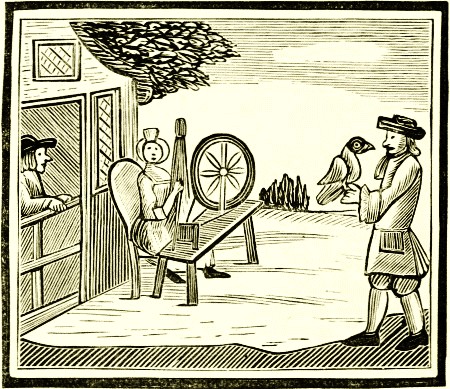
Printed and Sold in Aldermary Church Yard, Bow Lane London.
Chap. 1. The Marquis of Salus is sollicited by his Nobles to Marry; he consents, and falls in Love with a poor Countryman's Daughter.
Between the mountains of Italy and France, towards the South, lies the territory of Salus, a country flourishing with excellent towns, and some castles, and peopled with the best sort of gentry and peasants.—Among them lived not long since a nobleman of great reputation and honour, who was Lord of the country, and by name Gualter, Marquis of Salus; to whom, as the government appertained by his right of inheritance, so their obedience attended by desert of his worthiness. He was young in years and never had thought of marriage until pressed to it by the desires and petitions of his people, who often importuned him thereto.—At last he consented to it, and fame soon spread the report abroad, and each Princess was filled with hopes of being the Marquis's happy partner.
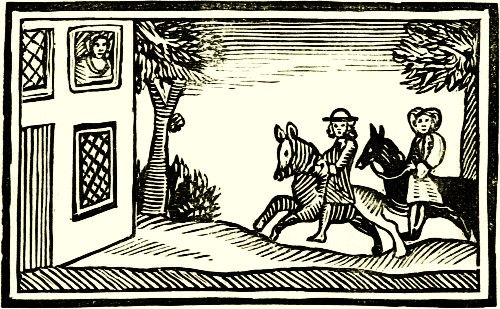
All this time the Marquis continued his hunting, and usually resorted to a little village not far from Selus where lived a poor countryman named Janicola, overworn in years, and overcome with distress, having nothing to make his life comfortable but an only daughter, who was exceedingly beautiful, modest, and virtuous. But as fire will not lay hid where there is matter of combustibles, so virtue cannot be obscured if there is tongues and ears; for the report of her reached the Marquis, who being satisfied of the truth, and finding her a fit woman to be his wife, resolved to forward the business.—In the mean time the Court was furnished, a Crown and rich apparel prepared for the Queen; but who she was the Nobles all wondered, and the damsels marvelled; while the people in general flocked to see who was to be the happy woman.
At last the nuptial day arrived, and each one looked for a bride, but who she was the next Chapter must discover.
Chap. 2. The Marquis demands, and Marries the Old Man's Daughter.
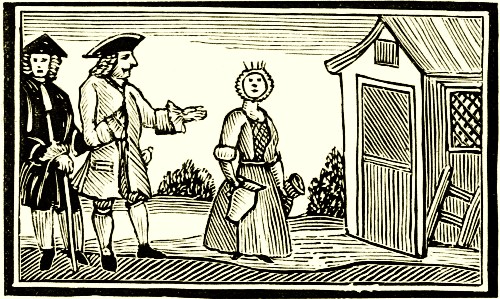
When all things were prepared, the Noble Marquis took with him a great Company of Earls Lords Knights Squires, Gentlemen, Ladies, and Attendants, and went from the palace into the country, towards Janicola's house, where the fair maid Grissel, ignorant of what had happened, or of what was to come, had made herself and house clean, determining with the rest of the neighbouring virgins to see this solemnity; at which instant arrived the Marquis with his Company, meeting Grissel with two pitchers of Water which she was carrying home. He asked where her father was? She answered, in the house—Go then, replied he, and tell him I would speak with him. The poor man came forth to him somewhat abashed, until the Marquis taking him by the hand, said That he had a secret to impart to him; and taking him from the rest of the Company spoke to him in the following manner:
"Janicola,
I know thou always lovedst me, and I am satisfied thou dost not hate me now; you have been pleased when I have been pleased, and you will not now be sorrowful if I am satisfied; nay I am sure if it lies in your power, you will further my delight; for I am come with the intention of begging your daughter to be my wife; and I to be your son in law, will you take me for your friend, as I have chose you for a father."
The poor old man was so astonished, that he could not speak for Joy, but when the extasy was over, he thus faintly replied;
"Most gracious Sovereign,
You are my Lord, and therefore I must agree to your will; but you are generous, and therefore take her in God's name, and make me a glad father; and let that God which raiseth up the humble and meek, make her a befitting wife and a fruitful mother."
Why then, quoth the Marquis, let us enter your house, for I must ask her a question before you. So he went in, the company tarrying without in vast astonishment—The fair maid was busied in making it as handsome as she could, and proud to have such a guest under her roof, amazed why he came so accompanied, little conjecturing so great a blessing; but at last the Marquis took hold of her hand and used these speeches. To tell you this blush becomes you, were but a folly; or that your modesty has graced your comliness, is unbecoming my greatness; but in one word, your father and I have agreed to make you my wife, therefore, delays shall not entangle you with suspicion, nor two days longer protract the kindness, only I must be satisfied in this, if your heart affords willing entertainment to the motion, and your virtue and constancy to the following resolution; that is, not to repine at my pleasure in anything, nor presume on contradiction when I command; for as good soldiers must obey without disputing the business, so must virtuous wives dutifully consent without reproof; therefore be advised how you answer, and I charge thee take heed that thy tongue utters no more than thy heart conceits. All this time was Grissel wondering at these words; but thinking nothing impossible with God, made the Marquis the following answer:
"My gracious Lord,
I am not ignorant of your greatness, and know my own weakness. There is nothing worthy in me to be your servant, therefore can have no desert to be your wife. Notwithstanding, because God is the author of Miracles, I yield to your pleasure, and praise him for the fortune. Only this I will be bold to say. That your will shall be my delight; and death shall be more welcome to me, than a word of displeasure against you."
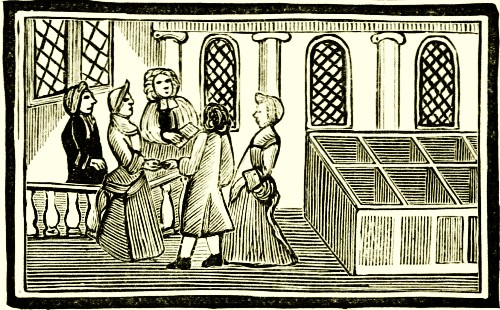
After this the Ladies adorned Grissel with robes befitting her state; the Marquis and all the company returned back to Salus, where in the Cathedral, in the sight of the people according to the fullness of religious ceremonies they were by the priest essentially joined together.
Chap. 3. Lady Grissels Patience tried by the Marquis.
To the other blessinge in process of time, there was added the birth of a daughter, that rejoiced the mother and gladded the father; the country triumphed, and the people clapped their hands with joy—Notwithstanding this, fortune had a trick to check her pride; and prosperity must be seasoned with some crosses or else it would corrupt us too much. Whereupon the Marquis determined to prove his wife, and to make trial of her virtues indeed; and so taking a convenient season, after the child was weaned, he one day repaired secretly to her chamber, and seeming angry, imparted to her some of his mind.
The lady hearing him, sorrowfully apprehended the Marquis's resolution to her grief (though every word was like an arrow in her side) yet admitted of the temptation, and disputing with herself to what end the virtues of patience, modesty, forbearance, fortitude and magnanimity was ordained, if they had not proper subjects to work upon.
When the Marquis saw her constancy, he was pleased with her modest behaviour, and said but little at that time, but between joy and fear departed; resolving to make a farther trial of her.
Chap. 4. The Marquis's Daughter is taken from her Mother and sent to Bologne to be there brought up.
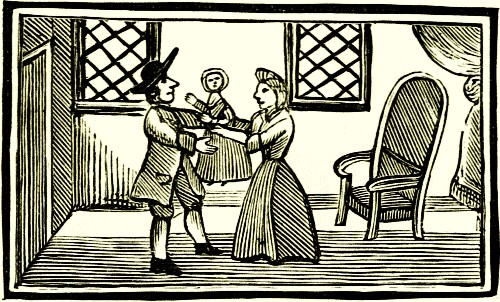
Not long after this Conference between the Marquis and his Lady, he called a faithful servant, to whom he imparted the secret, and what he meant to do with his child; and then sent him to his wife with an unsavoury message—When she had heard him out, remembering the conference the Marquis had with her, and apprehending there was no room for dispute, feared it was ordained to die; so taking it up in her arms with a mothers blessing she kissed it, being not once amazed or troubled, since her lord would have it so, only she said, I must, friend, intreat one thing at your hand, that out of humanity and Christian love, you leave not the body to be devoured by beasts and birds, for she is worthy of a grave.
The man, having got the Child, durst not tarry, but returned to his master, repeating every circumstance of her answer that might aggrandise her constancy.
The Marquis considering the great virtue of his wife, and looking on the beauty of his daughter, began to entertain some compassion, and to retract his wilfulness; but at last resolution won the field of pity, and having, as he thought so well begun, would not soon give over. But with the same secrecy he had taken her from his wife, he sent her away to his sister the Dutchess of Bologne, with presents of worth, and letters of recommendation, containing in them the nature of the business, and the manner of her bringing up, which she accordingly put into practice.
Chap. 5. The Marquis makes a farther Trial of his Wife's Patience.
As this patient and wonderful lady was one day sporting with her infant son, like a tempest did this messenger of death interpose; yet as if he was conscious of disquieting her greatness, he came forward with preamble, craving pardon of the lady, that the message might seem blameless. He was not so sudden in his demand, as she was in her despatch; for she immediately gave him this child also, with the same enforcements as she had done the former.—
In the like manner he returned to the Marquis, who had still more cause for astonishment, and less reason to abuse so obedient a wife; but for a time sent this child likewise to his sister, who understanding her brother's mind brought up the children in such a manner, that tho' no man ever knew whose children they were, yet they supposed them to belong to some great potentate.
The ordering the business in this manner, made the Marquis once again settle himself in Salus, where he kept an open house to all comers, and was proud of nothing but the love of his wife; for although he had more than once tried her patience, yet she never complained, but seemed to love him the more.
By this time his unkindness to her got spread among the people, who all admired and wondered at her for her constancy and patience.
Chap. 6. Grissel disrobed, and sent home to her Father by her Husband; her Son and Daughter brought Home, under pretence of the Marquis's marrying her; Grissel is sent for to make preparations, and her Condescension thereon.
After this the Marquis was resolved to put her to another trial, so sent for her cloaths, and commanded her to go home again to her father's naked, except her shift; when, being in the midst of her nobility she disrobed herself, and returned back to her father's Cottage. They could not but deplore the alteration of fortune; yet she could not but smile that her virtue was predominant over her passion. They all exclaimed against the cruelty of her Lord; but she used no invective. They wondered at her so great virtue and patience; she answered, They were befitting a modest woman.
By this time they approached the house and old Janicola having been acquainted with it; and seeing his daughter only in her smock, amidst such honourable company, he ran into the house and brought the robes she formerly wore, and putting them on said Now, thou art in thy element, and kissing her bid her welcome. The Company was in amaze at his moderation, and wondered how nature could be so restrained from passion, and that any woman could have so much grace and virtue. In which amaze not without some reprehension of fortune and their Lord's cruelty, they left her to the poverty of the Cell, and returned to the glory of the palace, where they recounted to the Marquis how she continued in her moderation and patience; and the father comforting her in her condition.
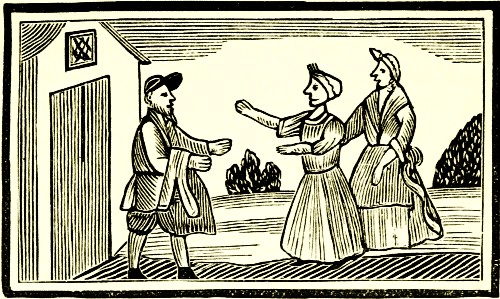
Not long after came the Dutchess of Bologne, with her glorious company, she sending word beforehand she should be at Salus such a day. Whereupon the Marquis sent a troop to welcome her, and prepared a court for her entertainment. The effects of which were not agreeable; some condemned the Marquis whilst others deplored his wife's misfortunes. Some were transported with the gallant youth and comely virgin that came along with the Dutchess, the latter of whom it was reported the Marquis was going to marry; nor did the Duke nor Princess know themselves to be the Children of the Marquis, but appeared as strangers designed to be at this new Marriage.
The next morning after their arrival he sent a messenger for Grissel bidding her come and speak with him just in the dress she then was; upon which she immediately waited upon her Lord. At her appearance he was somewhat abashed, but recovering his spirits he thus addressed her:
Grissel, the Lady with whom I must marry will be here to-morrow by this time, and the feast is prepared according—Now, because there is none so well acquainted with the secrets of my palace and disposition of myself but you, I would have you, for all this base attire, address your wisdom to the ordering of the business, appointing such officers as are befitting, and disposing of the rooms according to the degrees and estates of the persons. Let the Lady have the privilege of the marriage chamber, and the young Lord the pleasure of the gallery. Let the wines be plentiful, and the ceremonies be maintained—In a word, let nothing be wanting which may set forth my honour and delight the people.
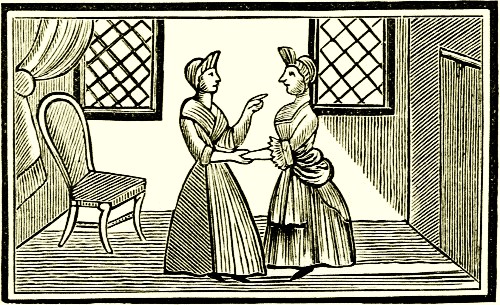
My Lord, said she, I ever told you, That I took pleasure in nothing but your Contentment, and in whatsoever might conform to your delight. Herein consisted my joy and happiness, therefore make no question of my diligence and duty in this or anything you shall please to impose upon me. And so, like a poor servant she presently addressed herself to the business of the house performing all things with such dispatch and quickness that each one wondered at her goodness and fair demeanor; and many murmured to see her put to such a trial. But the day of entertainment being come, and when the fair lady approached, she looked exceeding beautiful, insomuch that some began not to blame the Marquis for his change. At length Grissel, taking the lady by the hand, thus addressed her: Lady, if it were not his pleasure, that may command, to bid you welcome, yet methinks there is a kind of over ruling grace from nature in you, which must extort a respect unto you.—And as for you young Lord, I can say no more, but if I might have my desires, they should be employed to wish you well—To the rest I afford all that is fit for entertainment, hoping they will excuse whatever they see amiss. And so conducted them to their several apartments, where they agreeably reposed themselves till it was dinner time. When all things were thus prepared, the Marquis sent for his Grissel, and standing up, took her by the hand, and thus expressed himself to her:
You see the Lady is here I mean to marry, and the Company assembled to witness it; are you therefore contented I shall thus dispose of myself? and do you submit quietly to the alteration?
My Lord, replied she, before them all, in what as a woman I might be found faulty, I will not now dispute; but because I am your wife, and have devoted myself to obedience, I am resolved to delight myself in your pleasure; so, if this match be designed for your good, I am satisfied and more than much contented. And as for your lady, I wish her the delights of marriage, the honour of her husband, many years happiness, and the fruits of true and chaste wedlock—Only, great Lord, take care of one thing, That you try not your new bride, as you did your old wife; for she is young, and perhaps wants the patience which poor I have endured.
Till this he held out bravely, but now could not forbear bursting into tears, and all the company wondered at it; but the next Chapter will happily conclude the whole Story.
Chap. 7. The Marquis's Speech to his Wife and the Discovery of the Children.
After the Marquis had recovered himself, he thus addressed his patient wife Grissel:—Thou Wonder of Women, and Champion of true Virtue! I am ashamed of my imperfections, and tired with abusing thee; I have tried thee beyond all modesty.—Believe me therefore, I will have no wife but thyself, and therefore seeing I have used you so unkindly heretofore, I protest never to disquiet thee any more; and wherein my cruelty extended against thee in bereaving thee of thy Children, my love shall now make amends in restoring thee thy son and daughter; for this my new bride is she, and this young Lord, her brother. Thank this good Lady my sister for the bringing them up; and this man, you know him well enough, for his secrecy. I have related the truth, and will confirm it with my honour and this kiss; only sit down till the dinner is come, and then bid the company welcome even in this poor array.
The Marquis thus tenderly treating her, and discovering who the young Lord and Lady was, gave the Nobility a fresh opportunity to shew their obedience; the which they immediately did to all three; and the dinner being over, none was so ready to attire Grissel, as her daughter, who was more glad than disappointed by this so sudden a change—Janicola was sent for to Court, and ever afterwards he was the Marquis's counsellor. The servant was also well rewarded for his fidelity; and the Dutchess returned to her palace, leaving her brother and sister to reign in peace.—In length of time the Marquis died, and Grissel lived thirty three years after him, and then died in a good old age; being a pattern for all women after, who might have their virtue or patience tried in the like, or other manner, not to distrust an all wise Providence, who, when he seemeth most to frown, oftentimes is about blessing his creatures with the Sunshine of prosperity.—On the other hand her example should teach us Content, though in meek and abject circumstances; considering it is not the pleasure of the Divine Will to bless all people alike with affluence.
FINIS.