THE HISTORY OF JOSEPH AND HIS BRETHREN.
Reading edition
JACOB'S LOVE TO JOSEPH, WITH JOSEPH'S FIRST DREAM.
In Canaan's fruitful land there liv'd of late, Old Isaac's heir blest with a vast estate; Near Hebron Jacob sourjourned all alone, A stranger in the land that was his own: Dear to his God, for humbly he ador'd him, As Isaac did, and Abraham before him. And as he was of worldly wealth possest, So with twelve sons the good old man was blest, Amongst all whom none his affections won, So much as Joseph, Rachel's first-born son, He in his bosom lay, still next his heart, And with his Joseph would by no means part: He was the lad on whom he most did doat, And gave to him a many colour'd coat. This made his bretheren at young Joseph grudge, And thought their father loved him too much. At Jacob's love their hatred did encrease, That they could hardly speak to him in peace. But Joseph, (in whose heart the filial fear Of his Creator early did appear) Not being conscious to himself at all, He had done ought to move his brethren's gall, }Did unto them a dream of his relate, Which (tho' it did increase his bretheren's hate, Did plainly shew forth Joseph's future state This is the dream, said Joseph, I did see: The Corn was reap'd, and binding sheaves are we, When my sheaf only was on a sudden found, Both to arise and stand upon the ground. }Then yours arose, which round about were laid, And unto mine a low obeisance made, Is this your dream, his brethren said? Can your ambitious thoughts become so vain, To think that you shall o'er your brethren reign? Or that we unto you shall tribute pay, And at your feet our servile necks should lay? Believe us brother, this youll never see, But your aspiring will your ruin be.
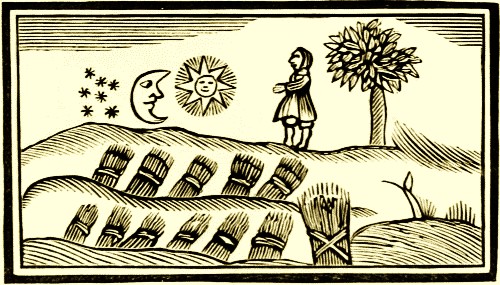
Thus Joseph's bretheren talk'd, and if before They hated him, they did it now much more; The father lov'd him, and the lad they thought, Took more upon him, than indeed he ought. But they who judge a matter e'er the time, Are oftentimes involved in a crime: 'Tis therefore best for us to wait and see What the issue of mysterious things will be; For those that judge by meer imagination, Will find things contrary to their expectation.
JOSEPH'S SECOND DREAM.
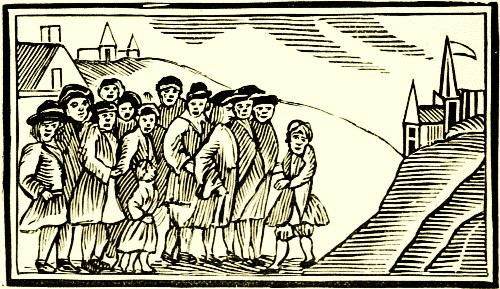
How bold is innocence! how fix'd it grows! It fears no seeming friends nor real foes. 'Tis conscious of no guilt, nor base designs, And therefore forms no plots nor countermines: But in the paths of virtue walks on still, And as it does none, so it fears no ill. Just so it was with Joseph: lately he Had dream'd a dream, and was so very free, He to his bretheren did the dream reveal, At which their hatred scarce they could conceal. But Joseph not intending any ill, Dream'd on again, and told his bretheren still. Methought as on my slumb'ring bed I lay, I saw a glorious light more bright than day: The sun and moon, those glorious lamps of heaven, With glittering stars in number seven, Came all to me, on purpose to adore me, And every one of them bow'd down before me: And each one when they had thus obedience made, Withdrew, nor for each other longer staid. When Joseph thus his last dream had related, Then he was by his bretheren much more hated. This dream young Joseph to his father told, Who when he heard it, thinking him too bold, Rebuk'd him thus: What dream is this I hear? You are infatuated, child I fear, Must I, your mother, and your bretheren too, Become your slaves and bow down to you. Thus Jacob chid him, for at present he, Saw not so far into futurity: Yet he did wonder how things might succeed, And what for Joseph providence decreed, For well he thought those dreams wa'nt sent in vain Yet knew not how he should these dreams explain. For those things oft are hid from human eyes, Which are by him that rules above the skies Firmly decreed; which when they come to know, The beauty of the work will plainly shew, And all those bretheren which now Joseph hate, Shall then bow down to his superior fate: Old Jacob therefore, just to make a shew, As if he was displeased with Joseph too, Thus seem'd to chide young Joseph, but indeed To his strange dreams he gave no little heed; Tho' how to interpret them he could not tell, Yet in the meanwhile he observ'd them well. How great's the difference 'twixt a father's love, And brethren's hatred may be seen above. }They hate their brother for his dreams, but he, Observes his words, and willing is to see What the event in future times may be.
JOSEPH PUT INTO A PIT BY HIS BRETHEREN.
When envy in the heart of man does reign, To stifle its effects proves oft in vain. Like fire conceal'd, which none at first did know, It soon breaks out and breeds a world of woe: Young Joseph this by sad experience knew, And his brethren's envy made him find it true: For they, as in the sequel we shall see, Resolv'd upon poor Joseph's tragedy; That they together at his dream might mock, Which they almost effected, when their flock In Sechem's fruitful field they fed, for there Was Joseph sent to see how they did fare: Joseph his father readily obeys, And on the pleasing message goes his ways.
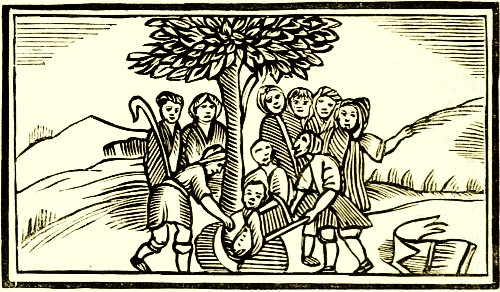
Far off they know, and Joseph's coming note, For he had on his many colour'd coat; Which did their causeless anger set on fire, And they against Joseph presently conspire: Lo yonder doth the dreamer come they cry, Now lets agree and act this tragedy. And when we've slain him in some digged pit Let's throw his carcase, and then cover it, And if our father ask for him, we'll say, We fear he's kill'd by some wild beast of prey. }This Reuben heard, who was to save him bent, And therefore said, (their purpose to prevent,) To shed his blood I'll ne'er give my consent; But into some deep pit him let us throw, And what we've done there's none will know. This Reuben said his life for to defend, Till he could home unto his father send. To Reuben's proposition they agree, And what came of it we shall quickly see. Joseph by this time to his brethren got, And now affliction was to be his lot; They told him all his dreams would prove a lye, For in a pit he now should starve and die. }Joseph for his life did now entreat and pray, But to his tears and prayers they answered Nay, And from him first his coat they took away. }Then into an empty pit they did him throw, And there left Joseph almost drown'd in woe, While they to eating and to drinking go. See here the vile effects of causeless rage, In what black crimes does it oftimes engage. Nearest relations! setting bretheren on To work their brother's dire destruction. But now poor Joseph in the pit doth lie, 'Twill be his bretheren's turn to weep and cry.
JOSEPH SOLD INTO EGYPT.
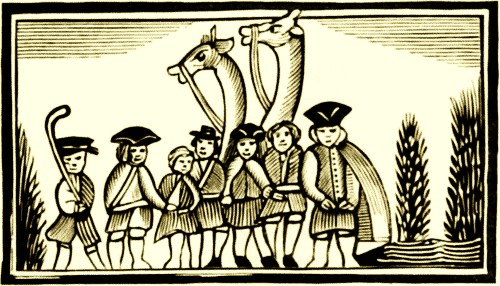
As Joseph in the Pit condemn'd to die, So did his grandfather on the altar lie, The wood was laid, a sacrificing knife, Was lifted up to take poor Isaac's life. But heaven that ne'er design'd the lad should die, Stopt the bold hand, and shew'd a lamb just by, Thus in like manner did the all-wise decree, His brethrens plots should disappointed be: }For while within the Pit poor Joseph lay, And they set down to eat and drink and play, And with rejoicing revel out the day: }Some Ishmaelitish merchants strait drew near, Who to the land of Egypt journeying were, To sell some balm and myrrh, and spices there. This had on Judah no impressions made, And therefore to his bretheren thus he said, Come Sirs, to kill young Joseph is not good, What profit will it be to spill his blood? How are we sure his death we shall conceal? The birds of air this murder will reveal. Come let's to Egypt sell him for a slave, And we for him some money sure may have; So from his blood our hands shall be clear, And we for him have no cause for fear. To this advice they presently agreed, And Joseph from the Pit was drawn with speed: For twenty pieces they their brother sell To the Ishmaelites, and thought their bargain well. And thus they to their brother bid adieu, For he was quickly carried out of view. Reuben this time was absent, and not told That Joseph was took out of the pit and sold, He therefore to the pit return'd, that he Might sit his father's Joy at liberty. }But when, alas! he found he was not there, He was so overcome with black despair, To rend his garments he could not forbear; Then going to his bretheren thus said he, Poor Joseph's out, and whither shall I flee? But they, not so concern'd, still kill'd a goat, And in its blood they dipt poor Joseph's coat, And that they all suspicion might prevent, It by a stranger to their father sent, Saying, We've found, and brought this coat to know Whether 'tis thy son Joseph's coat or no. This brought sad floods of tears from Jacob's eyes, Ah! 'tis my son's, my Joseph's coat he cries: Ah! woe is me, thus wretched and forlorn, For my poor Joseph is in pieces torn: }His sons and daughters comfort him in vain, He can't but mourn while he thinks Joseph slain, And yet those sons won't fetch him back again.
JOSEPH AND HIS MISTRESS.
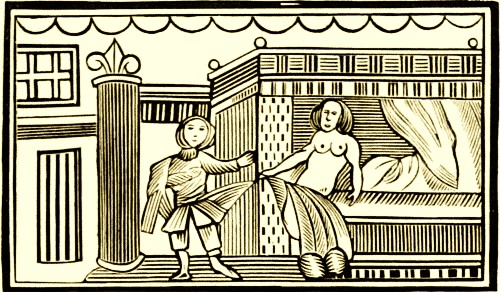
How much for Joseph's loss old Jacob griev'd, It was not now his time to be reliev'd: And therefore let's to Egypt turn our thought, Where we shall find young Joseph sold and bought, By Potiphar a Captain of the Guard; Sudden the change, but yet I can't say hard; For Joseph mercy in this change did spy, And thought it better than i' th' pit to lie; And well might Joseph be therewith content, For God was with him where so 'er he went; And tho' he did him with afflictions try, He gave him favour in his master's eye, For he each work he undertook did bless, And crown'd his blessing with a good success. So that his master then him steward made, And Joseph's orders were by all obey'd: In which such diligence and care he took, His master needed after nothing look. But his estate poor Joseph long can't hold, His Mistress love so hot, made his master's cold, For Joseph was so comely, young and wise, His mistress on him cast her lustful eyes; Joseph perceiv'd it, yet no notice took, Nor scarcely on her did he dare to look. This vex't her so, she could no more forbear, But unto Joseph did the same declare; Joseph with grief the unwelcome tidings heard, But he his course by heavens directions steer'd. And therefore to his mistress thus did say, O mistress I must herein disobey; My master has committed all to me, That is within his house, save only thee: And if I such a wickedness should do, I should offend my God and master too; And justly should I forfeit my own life, To wrong my master's bed, debauch his wife. But tho' he thus had given her denial, She was resolv'd to make a further trial, She saw he minded not whate'er she said, And therefore now another plot she laid. Joseph one day some business had to do, When none was in the house beside them two, When casting off all shame, and growing bold, Of Joseph's upper garment she takes hold; Now Joseph you shall lie with me, said she, For there is none in the house but you and me; But while she held his cloak to make him stay, He left it with her, and made haste away; On this her lust to anger turns, and she, Cries out help! help! Joseph will ravish me, Whose raging lust I hardly could withstand! But fled, and left his garment in my hand.
JOSEPH CAST INTO THE DUNGEON.
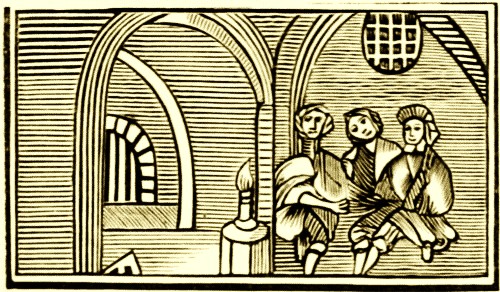
Poor Joseph's innocence was no defence, Against this brazen strumpet's impudence, She first accus'd, and that she might prevail, She to her husband thus then told her tale. Hast thou this servant hither brought that he Might make a mock upon my chastity? What tho' he's one come from the Hebrew Stock, Shall he thus at my virtue make a mock? }For if I once should yield to throw't away On such a wretch.—O think what you would say? And yet he sought to do't this very day. But when he did this steady virtue find, Then fled, and left his garment here behind. No wonder if this story so well told Stirr'd up his wrath, and made his love turn cold; He strait believ'd all that his wife had said, And Joseph was unheard in prison laid. Joseph must now again live underground, And in a dungeon have his virtue crown'd, But tho' in prison cast and bound in chains, His God is with him, and his friend remains; So here he with the gaoler favour finds, That whatsoe'er he does he never minds: The Gaoler knew his God was with him still, And therefore lets him do whate'er he will. King Pharoah's butler and his baker too Under their Princes great displeasure grew And therefore both of them were put in ward, As prisoners to the captain of the guard Where Joseph lay; to whom they did declare, Their case, he serving them whilst they were there. One night, a several dream to each befel, But what it signify'd they could not tell. Joseph perceiving they were very sad, Demanded both the Dreams that they had had, On which they each their dream to Joseph told, Who strait the meaning of it did unfold. }The butler in three days restor'd shall be, The baker should be hang'd upon a tree, But when this comes to pass remember me, Said he to the Butler, for here I am thrown, And charg'd with crimes that are to me unknown, In three days time (such was their different case) The Baker hang'd, the Butler gains his place; And he again held Pharoh's cup in his hand, And stood before him as he us'd to stand. And yet for all that he to Joseph said, Joseph in prison two years longer staid, In all which time he ne'er of Joseph thought, Tho' he his help so earnestly besought. So in affliction promises we make, But when that's o'er forget whate'er we speak.
JOSEPH'S ADVANCEMENT.
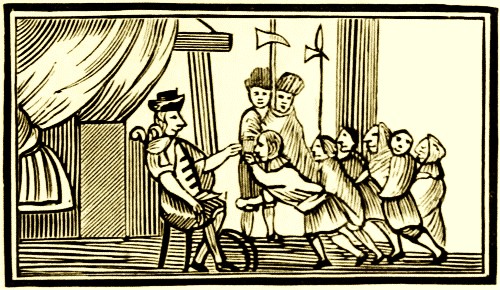
More than two years Joseph in prison lay, Yet had no prospect of the happy day Of his release; nor any means could see, By which he could be set at liberty; But God who sent him thither to be try'd, In his due time his mercy magnify'd. For as King Pharaoh lay upon his bed, He had strange things which troubled his head, He saw seven well fed kine rise out of Neal, And seven lean ones eat them in a meal. Again he saw seven ears of corn that stood Upon one stalk, and were both rank and good: Yet these were eaten up as the kine before, By seven ears very lean and poor. What this imported Pharoah fain would know, But none there were that could the meaning show. This to the Butler's mind poor Joseph brought, Who till this day of him had never thought. Great Prince! I call to mind my faults this day, And well remember when in gaol I lay, I and the Baker each our dreams did tell, Which a young Hebrew slave expounded well: I was advanc'd and executed he, Both which the Hebrew servant said should be. Go, said the King, and bring him hither strait, I for his coming with impatience wait. Joseph was put in hastily no doubt, And now more hastily was he brought out. His prison garment now aside was laid, And being shav'd was with new cloaths array'd; To Pharaoh being brought, canst thou, said he, The dream I've dream'd expound me? 'Tis not me, great Sir, Joseph reply'd, To say that I could do't were too much pride, And so 'twould be for any that doth live, But God to Pharaoh will an answer give. Then Pharaoh did at large his dreams relate, And Joseph shew'd him Egypt's future fate. Seven years of plenty should to Egypt come, In which they scarce could get their harvests in. Which by seven years of dearth eat up should be; As were the fair kine by the lean he see. For Famine Sir, said he, provide therefore, And in the years of Plenty lay up store. What Joseph said, seem'd good in Pharoh's eyes, Who did esteem him of all men most wise: Since God, said Pharoah has shewn this to thee, Thou shalt thro' all the land be next to me. Then made him second in his chariot ride, And bow the knee before him all men cry'd.
JOSEPH'S BRETHEREN COME INTO EGYPT TO BUY CORN.
Now Joseph's Lord of Egypt, all things there Are by the King committed to his care: The plenteous years come on as Joseph told, The earth produces more than barns can hold: New store-houses were in each city made, Where all the corn about it up was laid, Till he had gotten such a numerous store, That it was vain to count it any more.
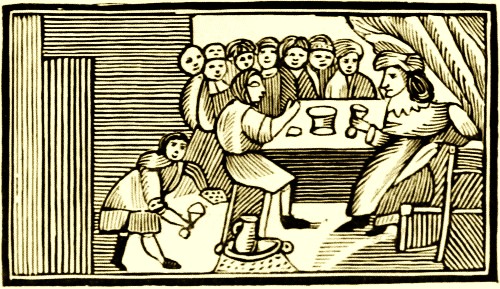
But famine does to plenty next succeed, And in all lands but Egypt there was need; For they neglecting to lay up such store, Had spent their Stock, and soon became so poor, That in the land of Egypt there was bread, By fame's loud trump, thro' every land was spread. Old Jacob heard it, and to his sons thus said. Why look you thus, as if you was afraid? There's Corn in Egypt, therefore go and try, That we may eat and live, not starve and die. Joseph's ten bretheren straitway thither went, Their corn in Canaan being almost spent. This Joseph knew, for him they came before, As being Lord of all the Egyptian store; And as they came to him did each one bow, But little thought he'd been the Dreamer now. From whence came you? said Joseph as they stood, My Lord say they from Canaan to buy food. I don't believe it, said Joseph very high, I rather think you came the land to spy, That you abroad its nakedness may tell, Come, come, I know your purpose very well; Let not, say they, my Lord, his servants blame, For only to buy food thy servants came. Said Joseph sternly, Tell me not those lies, For by the life of Pharaoh ye are spies. We are twelve bretheren, sir, they then reply'd, Sons of one man, of whom one long since dy'd: And with our father we the youngest left, So that he might not be of him bereft. Hereby said Joseph 'twill be prov'd I trow, Whether what I have said be true or now. Your younger brother fetch, make no replies, For if you don't, by Pharoah's life ye are spies. On this they unto prison all were brought, Where how they us'd their brother oft they thought. When they in prison three days time had staid, He sent for them and this proposal made, They to their father should the corn convey, And Simeon should with him a prisoner stay; Until they brought their youngest brother there, Which should to him their innocence declare. This they agreed to, and were sent away, Whilst Simeon did behind in prison stay.
BENJAMIN BROUGHT TO JOSEPH.
Old Jacob's sons came back to him, report, How they were us'd at the Egyptian court: Taken for spies, and Simeon left behind, Till Benjamin shall make the man more kind. This news old Jacob griev'd unto the heart, Who by no means with Benjamin would part; But when the want of corn did pinch them sore, And they were urg'd to go again for more; They told their father they were fully bent, To go no more except their brother went. Then take your brother and arise and go, Said good old Jacob, and the man will show You favour, that you may all safe return, And I no more my children's loss may mourn.
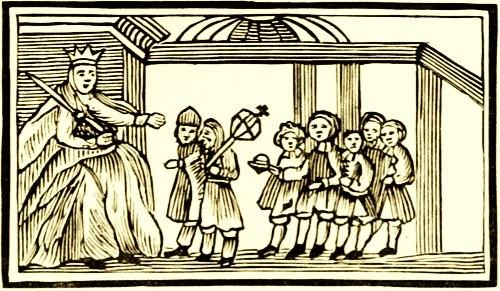
Then taking money and rich presents too, To Joseph they their younger brother shew. Then he his steward straitway did enjoin To bring those men to his house with him to dine. When Joseph came, he kindly to them spake, When they to him did low obeysance make, He ask'd their welfare, and desir'd to tell Whether their father was alive and well. They answer'd Yea, he did in health remain, And to the ground bow'd down their heads again. Then Benjamin he by the hand did take, And said, Is this the youth of whom ye spake, Then God be gracious unto thee my son, To whom he said; which when as soon as done, Into his chamber strait he went to weep, For he his countenance could hardly keep. Then coming out, and sitting down to meet, He made his bretheren all sit down to eat: He sent to each a mess of what was best, But Benjamin's was larger than the rest. Then what he further did design to do, He call'd his servant, and to him did shew; Put in each sack as much corn as they'll hold, And in the mouth of each return his gold, And see that you take my silver cup, And in the sack of the youngest put it up. The steward fill'd the sack as he was bid, And in the mouth of each their money hid. Then on the morrow morning merry hearted With this their good success they all departed; But Joseph's steward quickly spoil'd their laughter, Who by his master's orders strait went after, And to the eleven brethren thus he spake, Is this the return you to my master make? Could you not be contented with the wine, But steal the Cup in which he does divine? This is unkind. And therefore I must say You've acted very foolishly to day.
JOSEPH MAKES HIMSELF KNOWN TO HIS BRETHEREN.
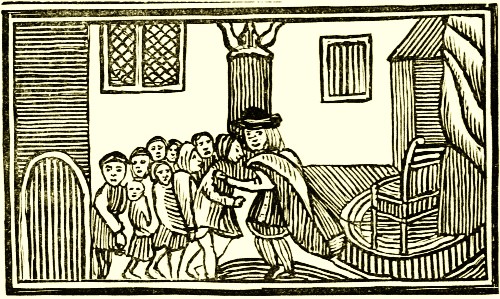
The steward's words put them into a fright,
They wonder'd at his speech, as well they might
Why does my Lord this charge against us bring;
For God forbid we e'er should do this thing:
The money that within our sacks we found,
We brought from Canaan; then what ground
Have you to think, or to suppose that we
Of such a crime as this should guilty be.
With whatsoever man this cup is found,
Both let him die, and we'll be also bound
As slaves unto my Lord. Let it so be,
Reply'd the steward, we shall quickly see
And when the steward he had search'd them round,
Within the sack of Benjamin the cup was found.
To Joseph therefore they straitway repair,
To whom he said as soon as they came there,
How durst you take this silver cup of mine
Did you not think that I could well divine?
To whom Judah said, My Lord we've nought to say
But at your feet as slaves ourselves we lay.
No, no, said Joseph, there's for that no ground,
He is my slave with whom the cup is found.
Then Judah unto Joseph drew more near,
And said, O let my Lord and Master hear:
If we without the lad should back return,
Our father would for ever grieve and mourn,
And his grey hairs with sorrows we should bring
Unto the grave, if we should do this thing;
For when your servants father would at home
Have kept the lad, I begg'd that he might come,
And said, If I return him not to thee,
Then let the blame for ever lay on me.
Now therefore let him back return again,
And in his stead thy servant will remain,
And how shall I that piercing sight endure,
Which will I know my father's death procure.
This speech of Judah touch'd good Joseph so,
That he bid all his servants out to go.
He and his brethren being all alone,
He unto them himself did thus make known.
I am Joseph:—Is my father alive?
But to return an answer none did strive;
For at his presence they were troubled all,
Which made him thus unto his brethren call,
}I am your brother Joseph, him whom ye
To Egypt sold; but do not troubled be;
For what you did heaven did before decree.
Then he his brother Benjamin did kiss,
Wept on his neck, and so did he on his,
Then kist his bretheren, wept on them likewise,
So that among them there were no dry eyes.
JOSEPH SENDS FOR HIS FATHER WHO COMES TO EGYPT.
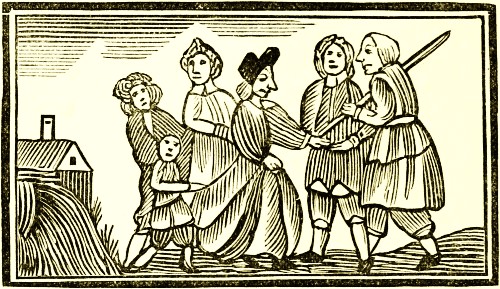
}Then Joseph to his bretheren thus did say, Unto my father pray make haste away, Take food and waggons here, and do not stay, They went, and Jacob's spirits did revive, To hear his dearest Joseph was alive, It is enough, then did old Jacob cry, I'll go and see my Joseph e'er I die; And he had reason for resolving so, For God appear'd to him and bid him go. Then into Egypt Jacob went with speed, Both he, his wives, his sons, and all their seed. And being for the land of Goshen bent, Joseph himself before him did present. Great was their Joy they on that meeting shew'd, And each the others cheeks with tears bedew'd. Then Joseph did his aged father bring Into the royal presence of the King, Whom Jacob blest, and Pharaoh lik'd him well, And bid him in the land of Goshen dwell.
JACOB'S DEATH AND BURIAL.
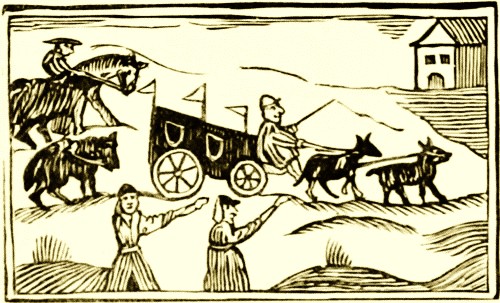
Jacob now having finished his last stage, And come to the end of earthly pilgrimage. Was visited by his son Joseph, who Brought with him Ephraim and Manassah too. When Jacob saw them, who are these said he? The sons said Joseph, God has given me Then Jacob blest them both, and his sons did call, To shew to each what should to them befal. Then giving orders unto Joseph where He would be buried, left to him that care; Then yielded up the ghost upon his bed And to his people he was gathered. Then Joseph for his burial did provide, And with a numerous retinue did ride, Of his own children and Egyptians too, That their respect to Joseph might shew, And with a mighty mourning did inter Old Jacob in his fathers sepulchre.
FINIS.