THE ANNUAL CALENDARS, 1833—1892 (continued 4)
Reading edition
SUMMER 1886
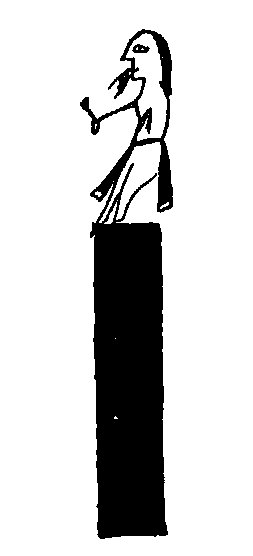
Fig. 181—Winter 1886—87—Peyi commits suicide.
There was no dance this summer, owing to the failure to find a buffalo for the purpose, consequently everybody remained at home—indicated on the Set-t'an calendar by the figure of a leafy tree, for summer, above an inclosure, intended to represent a field.
As there was no dance, the Anko calendar for this summer lacks the medicine pole, while by means of a star and several circles he records the fact that he enlisted in the agency police force, and also that there was another payment of grass money by the cattlemen, this time to the Kiowa, being the first they had received.
WINTER 1886—87
For this winter both calendars note the suicide of Peyi, "Son-of-the-sand," nephew of the great chief Sun-boy. Having taken a horse without the owner's permission, he was reproved for it, which so hurt his feelings that, saying, "I have no father, mother, or brother, and no one cares for me," he went out and shot himself with a revolver. Indians are very sensitive to reproof or ridicule, and suicides among them from this cause are more frequent than is generally supposed.
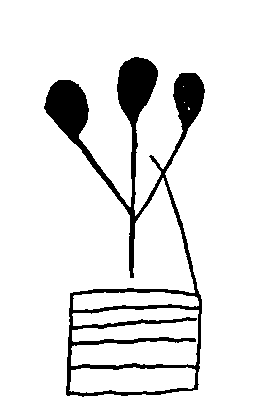
Fig. 182—Summer 1887—No sun dance(?); Grass payment.
The Set-t'an calendar has above the winter mark the figure of a man holding a pistol, and with a wound in his side, the blood gushing from his mouth. The Anko calendar has a pistol below the winter mark. Two circles (dollars) above the winter mark have evidently been placed there inadvertently.
SUMMER 1887
K`adóliä P'a K`ádó, "Oak creek sun dance." According to the Set-t'an calendar, there was no sun dance this summer and everybody remained at home—indicated as before by the figure of a leafy tree above a square inclosure. This, however, is a mistake. The agent states that "the Kiowas held this year a sun dance with my permission, but with a distinct understanding that it should be the last, and (it) was not of a barbarous nature" (Report, 109). The dance was held near the mouth of K adóliä P'a, "Oak creek," a small southern tributary of the Washita above Rainy-mountain creek, and takes its name from the stream on which it was held. As the wild buffalo had now been exterminated, the animal for this occasion was bought from a ranchman named Charles Goodnight, who had a small herd of domesticated buffalo in northern Texas.
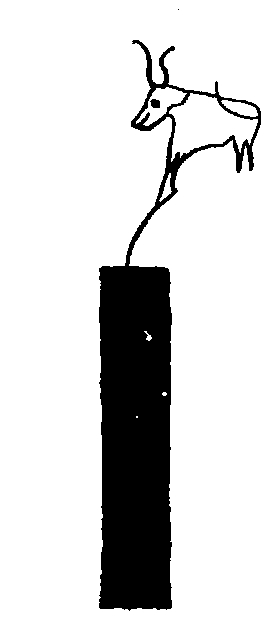
Fig. 183—Winter 1887—88—Cattle payment.
The Anko calendar has several circles, for dollars, below the medicine pole, to indicate another payment of grass money, of which again there is no official record.
The name of the creek on which the dance was held was originally Do`gótä P'a, "Oak creek," but in consequence of the death of a woman named Do`gótä about 1891, the name was tabooed according to tribal custom, and the stream is now known as K adóliä P'a, from an old word which conveys the same idea.
WINTER 1887—88
This winter the Indians received a large number of cattle from the stockmen in part payment for their grass leases; the remainder was paid in money. These were the first cattle received from that source. A number of the Indians refused to accept them and insisted on money, while quite a large number refused to have any part in the leases, believing it to be a plot to deprive them of their lands. The event is indicated on both calendars by the figure of a cow's head in connection with the winter mark.
SUMMER 1888
By a mistake Set-t'an depicts a medicine lodge for this summer instead of for the one preceding. No sun dance was held this year, owing to the opposition of the new agent. In his official report he states that early in May the chiefs and head men of the Kiowa had called to request permission for the holding of the dance at the regular season, but that on investigation he became convinced that it should not be allowed and so informed the Department, which instructed him to prevent it, even by calling on the military if necessary. He says:
On receipt of this information I at once communicated the fact to the Indians, but could not get them to promise to abandon it. I informed them that on the slightest intimation that any preparation was being made for the celebration of the dance I would be compelled to call on the military and cause the arrest of every Indian who expressed a determination to participate in the same. Many of the young men, belonging to the worst element, privately declared their intention of holding the dance, but as yet nothing has been done in that direction. I am firmly of the opinion I will be able to prevent it without the aid of the troops (Report, 110).
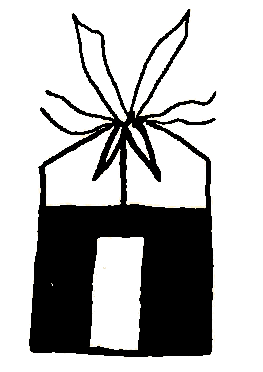
Fig. 184—Summer 1888—Sun dance (?); Pá-iñgya's prophecy.
The Anko calendar records for this summer the preaching of the prophet Pá-iñgya. It is indicated by a figure intended to represent a flying bullet, referring to his claim of invulnerability.
Pá-iñgya, "In-the-middle," had commenced preaching during the previous winter, reviving the doctrine of the return of the buffalo, which had been taught by Pa-tepte several years before (see summer 1882). He continued to preach and make medicine for several months, adding to his predecessor's prophecies another of the invulnerability of his followers and the speedy destruction of the whites, so that for a while the excitement assumed a dangerous form. In the official report for 1887 the agent briefly notes that—
The Kiowas were troublesome in the early spring, owing to the bad advice of their medicine-men and chief Lone-wolf, and refused to plant their seed and took their children from school. Later on they went to work, but would have made a much better showing in their crops had they planted earlier (Report, 111).
According to Pá-iñgya's pretensions, he was the legitimate successor of Pa-tepte, with all of his predecessor's powers and considerably more of his own. He predicted the near approach of a mighty whirlwind, which would blow away the whites and all Indians living among them or following their customs. After the whirlwind would come a great prairie fire, which would burn for four days and consume the agency buildings, schools, and all that the white man had established in the country, together with any whites left by the whirlwind. Having thus cleared the way, he would then restore the buffalo and game, with all the old Indian life. His followers were commanded to resume at once their aboriginal dress and weapons, with all the old habits. He made a sacred new fire with the block and stick, according to the primitive Indian method, and gave the fire thus made to all his disciples to be used instead of that procured from matches or flint and steel; he refused to give any of this sacred fire to those chiefs and others who were regarded as being on the white man's side, including Stumbling-bear and Sun-boy. He established his headquarters on upper Elk creek, near Lone-wolf's camp, in the western part of the reservation, to which he commanded all the faithful to repair in order to escape the destruction which was to come upon the whites and their renegade supporters, and appointed ten assistant priests, to whom he delegated a share of his powers and duties. To quiet any fear of interference by the authorities, he claimed to have a medicine which would render his followers invulnerable, while he himself was not only invulnerable but could kill soldiers or other enemies by his mere glance, as by a lightning stroke, as far as he could see them.
His preaching roused great excitement among the Kiowa, nearly all of whom—excepting those of Stumbling-bear's and Sun-boy's bands—abandoned their homes and repaired to the appointed place on Elk creek, the parents taking their children from the schools in order that they might not be involved in the general conflagration and destruction. In the summer the prophet's son died, and he promised to raise him from the dead in the fall, but when the time came his medicine unaccountably failed.
The unrest among the Indians, for which no apparent cause could be assigned, greatly alarmed the whites, who feared that the Indians meditated an outbreak. As a precaution, the agent, Captain Hall, summoned a detachment of troops, and taking with him a small escort, went to the neighborhood of the prophet's camp and sent Stumbling-bear and Sun-boy to him to bring him and some of the prominent chiefs in order to discuss the matter. The result was that the Kiowa agreed to go home and await developments. As the time fixed for the fulfillment of the prophecy came and passed without event, they became convinced that they had been deceived and the excitement died out. In the meantime Pá-iñgya, who had before been poor and obscure, had become rich by the horses and blankets which he had received from the faithful; there were even those who were so uncharitable as to say that it was for this he had been working. Nothing was done to punish the prophet, who still lives, and when the news of the messiah came a few years later, he claimed it as the fulfillment of his prophecy. He has more recently assisted to revive the ghost dance at his home on the Washita.
WINTER 1888—89
The Set-t'an calendar records that the Kiowa were encamped during this winter on the Washita, near the house of Ä´tä lä´te, "Feather-headdress", indicated by the figure of a tipi near a house above the winter mark.
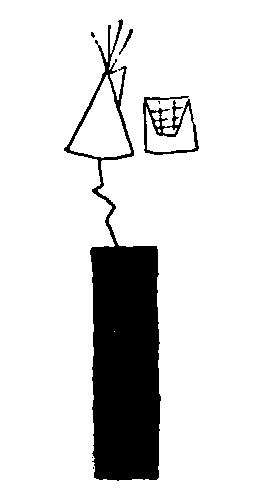
Fig. 185—Winter 1888—89—Winter camp; Sun-boy died; Split rails.
The Anko calendar notes the death of the chief Paí-tälyí, "Sun-boy," shown by the figure of a man in a coffin, with a circle for the sun upon his breast. He died at Eoñte's camp, northwest of Mount Scott. Anko records also the fact that he split rails for himself this winter, shown by the figure of an ax immediately below the winter mark.
SUMMER 1889
This summer there was no sun dance and everybody remained at home on his farm, the fact being indicated as before on the Set-t'an calendar by means of the figure of a leafy tree above a square inclosure intended to represent a field.
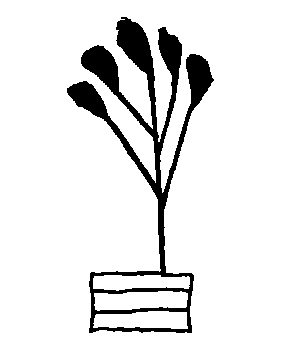
Fig. 186—Summer 1889—No sun dance; Grass payment.
Anko records a receipt of grass money, indicated by several circles intended for dollars where the medicine pole is usually shown; also the death of a son of Stumbling-bear, indicated by the figure of a man wearing an eagle feather in his hair.
WINTER 1889—90
For this winter the Set-t'an calendar has only the figure of a tipi above the winter mark, to show that the Kiowa spent the season in their winter camp on the Washita.
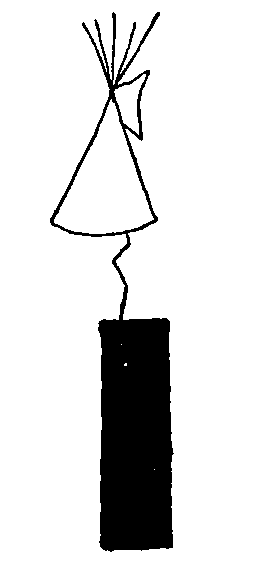
Fig. 187—Winter 1889—90—Winter camp; Grass payment; Íâm dance.
The Anko calendar notes another grass payment, indicated by the circles representing dollars, and also a visit by the Kiowa to the Comanche to perform the Íâm, dance, indicated by the feathered dance-staff below the winter mark.
The name of this dance, Íâm Guan, is derived from i, "child or offspring," and âm, the root of the verb "to make," for the reason that one of its main features is the formal adoption, by the visiting dancers, of a child of the other tribe. The performance and dress somewhat resemble those of the Omaha dance, but only two men dance, while the rest sit around as spectators. There is an exchange of horses by the visited tribe for presents placed on the ground by the visitors, and at the end of the ceremony the boy adopted is formally restored to his people. This dance is found also among the Wichita and Pawnee and perhaps other tribes.
SUMMER 1890
Ä´poto Etódă-de K`ádó, "Sun dance when the forked poles were left standing." This summer the Kiowa were preparing to hold the sun dance, when it was stopped by agent Adams, backed by military force. It has not been held since in the tribe. Both calendars tell the same story in the figure of the medicine pole standing outside the completed medicine lodge and decorations. Set-t'an has also the square inclosure to indicate that he remained at home, while Anko, by means of a row of circles, notes the occurrence of another grass payment.
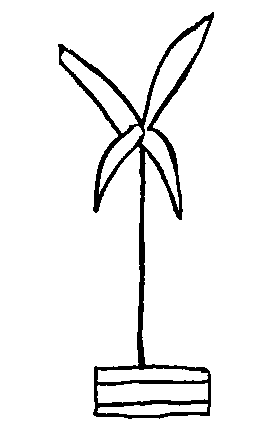
Fig. 188—Summer 1890—Unfinished sun dance.
The Kiowa had decided to celebrate their usual annual sun dance at the Piho or bend in the Washita, where they had already held it twice before, when the agent determined to prevent it. They were not disposed to yield, and had assembled in their great tribal circle of tipis, with the center pole of the medicine lodge already erected, having an old buffalo robe in lieu of a buffalo head and skin at the top, when word came that the troops were on their way to stop the dance, having been sent from Fort Sill for that purpose by request of the agent. The news was brought to Stumbling-bear, who had remained at home on account of the death of his son, by Quanah, chief of the Comanche, who advised him to send word to the Kiowa to stop, as the soldiers would kill them and their horses if they persisted. Stumbling-bear thereupon sent two young men to the sun dance camp to tell the Kiowa to disperse and go home, which, after considerable heated discussion, they finally did, leaving the unfinished medicine lodge standing. In the meantime the troops had arrived at the agency, but the Indians having gone home, they returned to their post.
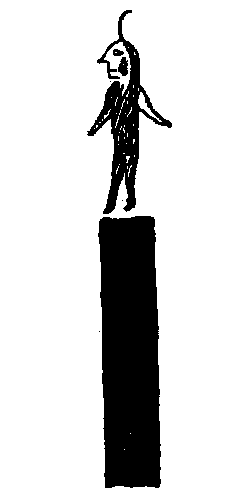
Fig. 189—Winter 1890—91—Sitting-bull comes; Ä´piatañ; Boys frozen.
Concerning this affair the agent says in his annual report:
There has been nothing of special note during the year, with the exception of the excitement raised in connection with the proposed sun dance. That matter having been fully laid before the department, it is hardly necessary to say more (Report, 113).
On the same subject the report of the Secretary of War says:
The commanding officer at Fort Sill reported July 19 that the Indian agent had notified him of the intention of the Indians to hold a medicine dance, and had asked for troops to prevent them from doing this. He was directed to be guided by instructions of last year on the subject, and consequently three troops of cavalry proceeded to Anadarko, Indian Territory, on July 20,... but the Indians having abandoned the plan of holding their dance upon the arrival of the troops, the latter, after remaining at the point for a few days, were withdrawn (War, 7).
WINTER 1890—91
Pá-ä´ngya Tsän-de Sai, "Winter that Sitting-bull came." This refers to the first coming among the Kiowa of Sitting-bull, the Arapaho prophet of the ghost dance, in the fall of 1890. The human figure above the winter mark is intended for Sitting-bull. The first Kiowa ghost dance was held on this occasion on the Washita at the mouth of Rainy-mountain creek, and was attended by nearly the whole tribe. Even the progressive chief Stumbling-bear attended and encouraged the dance, in the hope and faith, as he says, that by so doing his youth would be renewed. About the same time the Kiowa sent Ä´piatañ, "Wooden-lance," to visit the northern tribes and the messiah himself for the purpose of investigating the truth of the reports. The event is recorded on the Anko calendar by means of the figure of a man wearing a head feather and a shell breastplate, as Ä´piatañ did when he started on his journey. He returned in February, 1891.
As the whole subject of the ghost dance has been exhaustively treated by the author in his report on "The ghost-dance religion" in the Fourteenth Annual Report, it is unnecessary to give here more than the reference by the agent in his report for 1891:
Ghost dance.—This has been a disturbing occurrence throughout most of the year. This form of dancing has been indulged in mostly by the tribes north of the river. The Kiowas sent some of their number to the north to investigate the matter. Ah-pe-ah-tone, the leader in this journey, returned in the early spring and brought such a report with him as thoroughly convinced the Kiowas of the falsity of the so-called messiah. They have danced little or none since his return. The Wichitas and Caddos have clung to the superstition and danced until spring. They were led to greater excess by the visit of Sitting-bull, the Arapaho prophet from the north, who is becoming rich in stock through the gifts of his followers. He has been absent in the north, but has now returned to the Cheyenne and Arapaho agency and will probably repeat his performances of last year. Our Wichitas have already commenced to dance again and the Comanches seem to be feeling the craze, and unless decided measures are taken, we will probably have a repetition of last year's scenes (Report, 113).
For the same winter, but above instead of below the winter mark, the Anko calendar records the death of three schoolboys, indicated by the picture of a boy in civilized dress holding a book. Their names were Sétä, "Small-cow-intestines;" Ká-ikonhódal, "Dragonfly," and Mótsä-tsé, from the Spanish muchacho, "boy," his mother being a Mexican captive. They were attending the government Kiowa school, and one of them had been whipped by a teacher, in consequence of which the little fellow, with the two others, ran away from school and attempted to reach their homes, some 30 miles out in the mountains. The same night a terrible blizzard came on, and after they had struggled painfully along nearly the entire distance they sank in the snow, exhausted by fatigue, cold, and hunger, and all were found a few days later lying together, frozen stiff, on the bleak slope of a mountain, by a search party of Indians. This occurrence nearly precipitated an outbreak, and for a time it was thought that troops would be necessary to quell the disturbance, but through the judicious management of Captain H. L. Scott, who was sent from Fort Sill to investigate and report on the situation, the Indians were quieted without resort to force.
In his official report, Captain Scott says:
It was learned that three Kiowa boys had run away from the Kiowa school on the 9th [of January, 1891], on account of a whipping the eldest one had received from one of the teachers, Mr Wherrit. They had been overtaken by a snowstorm, the most severe this country has seen for years, and had been frozen to death. The body of the eldest, "Sailor" [from Setä?], about 14 years old, had been found, and they were still searching for the other two. They had been trying to reach the Kiowa camp on Stinking creek. The talk about the threatening attitude of the Kiowas being inquired into, it was resolved into this, that some of the school children had said that "Mother Goodeye," a one-eyed Kiowa woman, related to one of the dead children, had said that if she caught Mr Wherrit she would stick a knife into him. This, coupled with the fact that the woman afterwards denied having said it, would not seem to demand the presence of two troops of cavalry. It was said that Mr Wherrit had hid himself the day before, and had fled the agency during the night to escape the coming wrath (From report of Captain H. L. Scott to Post Adjutant, January 18, 1891; copy in Indian Office, 5070—1891).
On the same subject the agent says:
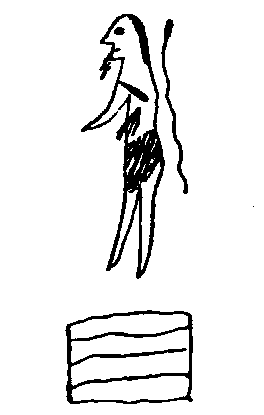
Fig. 190—Summer 1891—P'ódalä´ñte killed; Visit Cheyenne.
The loss of the three boys who ran away from the Kiowa school and were frozen to death in the snow, was an occurrence which might have been productive of most serious results. It speaks well for the Kiowa Indians that it not only was passed without such consequences, but seems to have left no prejudice against the school. It has been most gratifying to me on several occasions during the year to note the growing spirit of self-control among these people, and their desire to stand by lawful authority (Report, 114).
SUMMER, 1891
There was no sun dance, and consequently, instead of the medicine lodge, the Set-t'an calendar has the square inclosure to show that he stayed at home.
The event of the summer was the killing of P'ódalä´ñte (abbreviated P'olä´ñte], "Coming-snake," in Greer county, Oklahoma. He was shot by a young white man in self-defense, as it was claimed, while endeavoring to recover a horse which he said had been stolen from him; he had sent a boy after the animal, but the holders had refused to give it up except to the owner. P'ódalä´ñte himself then went after it and a dispute followed, resulting in his death. It is said he was shot as he was loosening his gun from its scabbard at the saddle. The Kiowa claim not to know the particulars, as no other Indian was with him at the time, but say that he was notoriously quarrelsome and rough in his manner. The shooting occurred opposite the mouth of Elk creek. It is indicated on the Set-t'an calendar by means of a human figure, with blood flowing from a wound in the side, standing above the square inclosure, with a snake behind it to show the name. Anko records it for the following winter, q.v.
The Anko calendar records for this summer a visit made by the Kiowa to the Cheyenne, indicated in the usual place for the medicine lodge by the figure of a tipi (i. e., camp), connected with which is a line with several cross marks, intended as a pictorial presentment of the tribal sign for "Cheyenne," made by drawing the right index finger several times across the left.
WINTER 1891—92
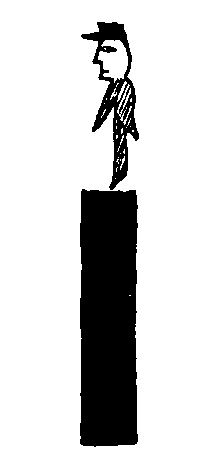
Fig. 191—Winter 1891—92—Soldiers enlisted; P'ódalä´ñte killed.
The Anko calendar records here the killing of P'ódalä´ñte, as just described for the preceding summer, the discrepancy arising perhaps from the fact that it occurred after the middle of summer. It is indicated below the winter mark by means of the figure of a man, with a bullet wound in his side, lying in a coffin or grave, and with a snake above the winter mark to show his name.
The Set-t'an calendar records the enlistment of the Indian troop at Fort Sill in the spring and summer of 1891. It was composed chiefly of Kiowa, and was organized as troop L of the Seventh cavalry, under command of Lieutenant (now Captain) H. L. Scott. It is indicated by the figure of a soldier above the winter mark.
SUMMER 1892
The event of this summer was the measles epidemic. The Set-t'an calendar indicates it by means of a human figure covered with red spots, and beside it the leafy tree and square inclosure to show that it occurred in the summer, when there was no dance and everybody remained at home. The Anko calendar has a similar red-spotted figure.
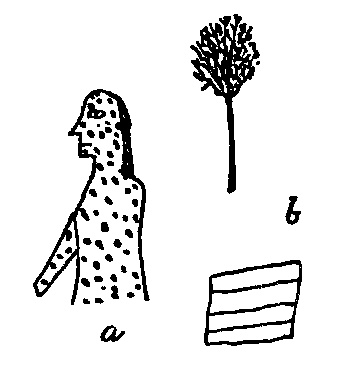
Fig. 192—Summer 1892—Measles; Grass payment.
The epidemic broke out early in spring and continued through the summer; it began in the Kiowa school, and its terribly fatal consequences were due largely to the course pursued by the superintendent, who insisted on sending the sick children back to the camp, where it was impossible for them to receive necessary attention, instead of caring for them in the school. The result was that the infection spread throughout the Kiowa and Apache tribes, and as the Indians, in their ignorance, endeavored to wash out the blotches by drenching the children in cold water, nearly every case was fatal. Watching and anxiety brought fevers and other sickness to the parents, so that there was not a family in the two tribes that did not suffer the loss of a near relative. The feeling already existing among the Kiowa against the superintendent, on account of the death of the schoolboys the year before, was now so intensified that he was obliged to leave the country.
When the author returned to the Kiowa in the early summer of that year, the epidemic had nearly spent its force, although deaths were still occurring every day or two. The condition of the Indians was pitiable in the extreme; nearly every woman in the tribe had her hair cut off close to her head and her face and arms deeply gashed by knives, in token of mourning, while some had even chopped off a finger as a sign of grief at the loss of a favorite child. The men also had their hair cut off at the shoulders and had discarded their usual ornaments and finery. On one occasion, while driving near the camp, the author's attention was attracted by a low wail, and on looking for the cause he saw, sitting in the tall grass near the roadside, a bereaved father stripped to the breech-cloth, with his hair cropped close to the head and the blood dripping from gashes which covered his naked body; he did not look up or turn his head as the wagon passed, but continued the low wail, with his eyes cast to the ground. Wagons, harness, tipis, blankets, and other property were burned, and horses and dogs shot over the graves of their owners, to accompany them to the world of shades, the destruction of property in this way amounting to thousands of dollars. Every night and morning the women went into the hills to wail for their lost ones, and returned to camp with the blood dripping from fresh gashes in their faces and arms; this continued for weeks and months, far into the fall.
The responsibility for this terrible calamity rests upon the school superintendent, who sent the infected children into camp, and upon the agent who permitted it. The superintendent of the Comanche school, so soon as the disease appeared on the reservation, suspended teaching, turned the school into a temporary hospital, with the teachers as nurses, and stationed a guard of police to keep the parent from interfering with or withdrawing the children. The result was that not one died in his school and only one was affected. The census of the Kiowa and Apache tribes for this year shows a decrease from the preceding year of two hundred and twenty-one, or 15 per cent, among the two tribes, due almost entirely to this epidemic. The agent reports, after noting the mortality:
The above deaths occurred chiefly among the infants and young children, and can be attributed to the fact that in most every case they invariably immersed their sick in the water, thereby causing death in every case thus treated (Report, 115).
Dr J. D. Glennan, attending surgeon to the Indian troop at Fort Sill, had already distinguished himself at Wounded Knee two years before by his bravery and coolness in attending to the needs of the wounded and dying while bullets were flying thick around him. Now, when the epidemic broke out among the Kiowa, he gave his services with the same quiet devotion to duty, with such good result that, although for months the hospital camp was crowded with stricken Indians, whose relatives outside were dying all over the reservation, only six of those under his care died, and these not from the prevailing epidemic, but from a complication of diseases. In recognition of his services the Kiowa soldiers afterward raised a sum of money with which to purchase a horse for him, but as the doctor already had a horse, the testimonial took the form of a valuable piece of silver.
The Anko calendar has also a row of circles, representing dollars, to indicate a large payment of grass money by the cattlemen this summer. As by this time the Indians had learned that the leasing of their surplus grass lands was very much to their advantage, they held a council in February, 1892, to select delegates to go to Washington for the purpose of negotiating leases for the whole reservation; also to secure some back payments due from previous leases. Quanah, Lone-wolf, and White-man were chosen on behalf of the Comanche, Kiowa, and Apache, respectively, and proceeded to Washington, where they received the desired permission, under which authority leases were negotiated producing for the three tribes an average income of about $100,000. On their return they received through a special agent nearly $70,000 due under the new and old leases. This large payment gave occasion for general rejoicing and marked an era in their history. A large part of the money was invested in lumber for building permanent houses; so that in this way, and with the additional help of a small appropriation for the hire of carpenters, the agent reports about sixty houses built within the year, and says:
With the assistance of the Indian Office as to the pay of carpenters, together with the revenues from their grass leases, I see no reason why in the near future the tepee should not be banished and comfortable houses he substituted in their stead (Report, 116).
Here end the yearly calendars. The subsequent events, including the unratified treaty negotiations and the present condition of the tribes, will be found noted in the preliminary tribal sketch.