THE ANKO MONTHLY CALENDAR (August, 1889—July, 1893.)
Reading edition
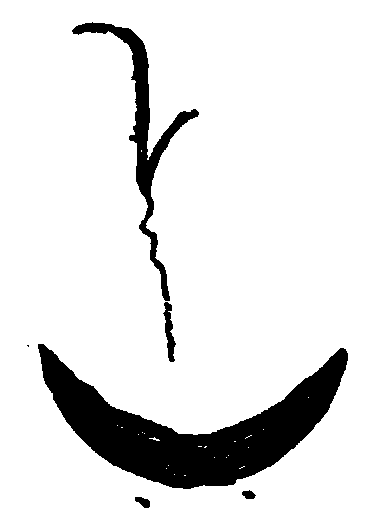
Fig. 193—T'águñótal P'a Sän.
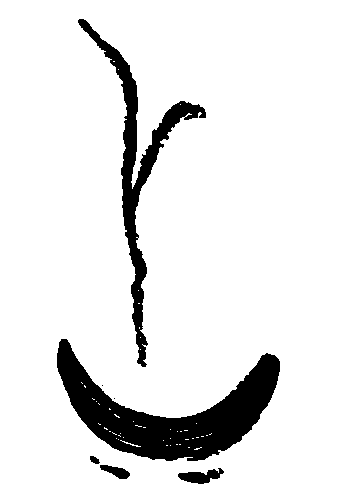
Fig. 194—T'águñótal P'a.
T'águñótal P'a Sän. The calendar begins about the first of August, 1889. The figure above the crescent (moon or month) is intended for the antler of a deer, in allusion to the name of this moon. No event is noted.
T'águñótal P'a. The same symbol is used for the month. No event is recorded, because, as Anko explains, this part of his original calendar was accidentally burned.
Gákiñăt'o P'a. The name means "Ten-colds moon," indicated by the ten strokes below the crescent. When this moon was one day old, a woman falsely accused of being with another man was whipped by her husband; indicated by the figure of a woman with a rod touching her head and one stroke below.
Ä`gâ´nti. The first syllable of the name, ä, signifies a feather. Anko has therefore indicated the moon in its serial order by the figure of a feather above the crescent. No event is recorded. The three strokes show that he drew the picture on the third day of the moon.
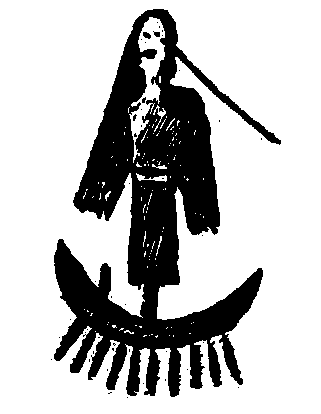
Fig. 195—Gakiñat'o P'a—Woman whipped.
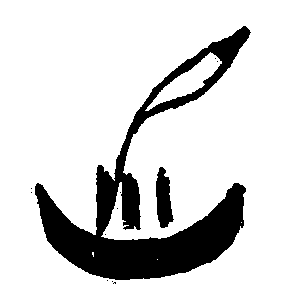
Fig. 196—Ä`gâ´nti.
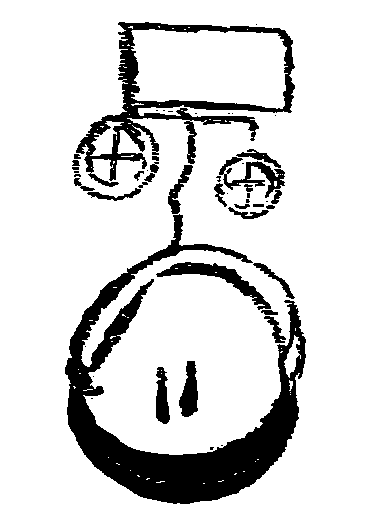
Fig. 197—Tépgañ P'a—Wagon stalled.
Tépgañ P'a. The name means "Geese-going moon," and the crescent lines inverted above the regular moon crescent is intended for a conventional representation of a double line of flying geese (see next figure). The rest of the picture means that his wagon was stalled on the second day of this moon.
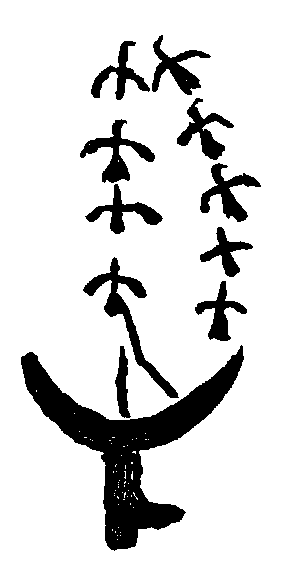
Fig. 198—Gañhíña P'a—Annuity issue.
Gañhíña P'a (January? 1890). "Real-goose moon," the name being indicated by the picture of a double line of flying geese; the single stroke and the boot record the fact that the issue of annuity goods for the year began on the first day of this moon.
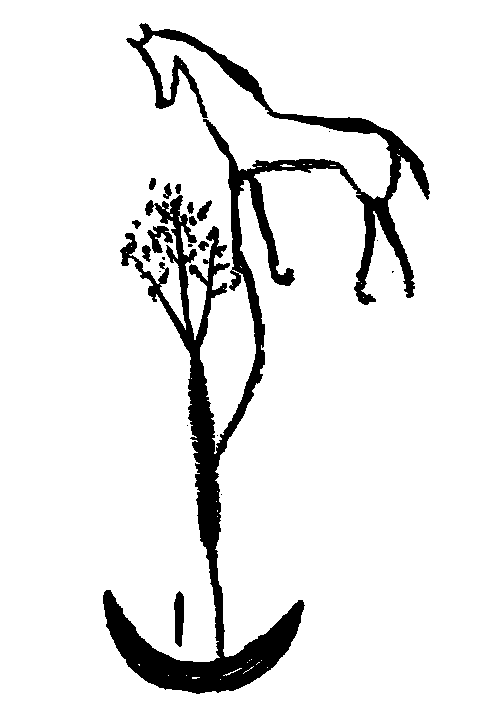
Fig. 199—Ka`gúăt P'a Sän—Mares foal.
Ka`gúăt P'a Sän. The name, "Little-bud moon," is indicated by the figure of a budding tree above the crescent. The mares foal now; shown by the picture of a horse. He says the whites usually begin to plow now. It was drawn on the first day (one stroke) of the moon.
Ka`gúăt P'a, "Bud moon." Indicated by a tree with red buds. The rude figure of an ax sticking in the tree shows that he began to split rails in this moon.
Aideñ P'a, "leaf moon." The name is indicated by the figure of a tree with green leaves. He lost his horses, hunted, found them, and drove them home; shown by the representation of horses and horse tracks.
Pai Ä`gâ´nti. There is nothing to indicate the name of the moon. In this moon (about May, 1890) the Kiowa, having first heard of the ghost-dance messiah, went and camped with the Arapaho and Cheyenne to learn more about it from them. It is indicated by pictures of the three tipis above the crescent.
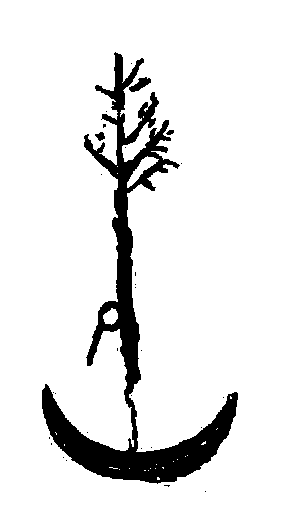
Fig. 200—Ka`gúăt P'a—Split rails.
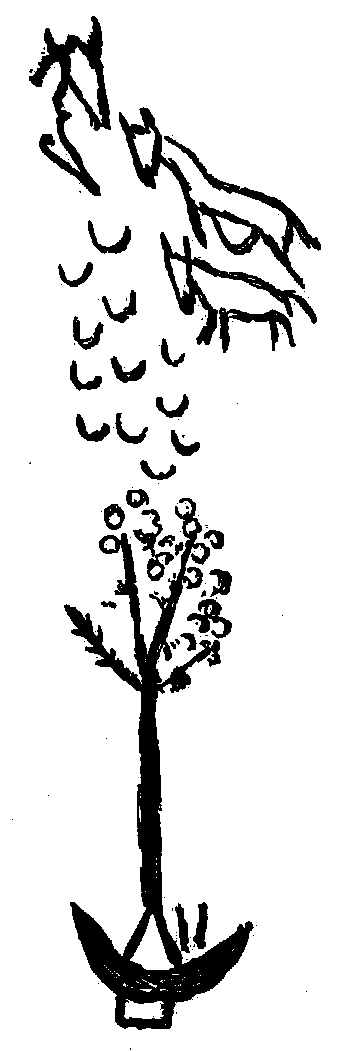
Fig. 201—Aideñ P'a—Horses lost.
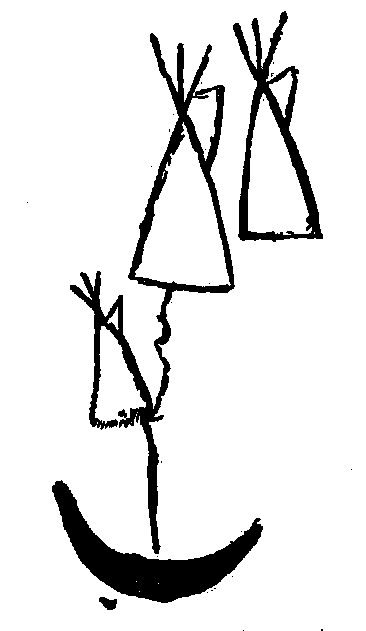
Fig. 202—Pai Ä`gâ´nti—Visit Cheyenne.
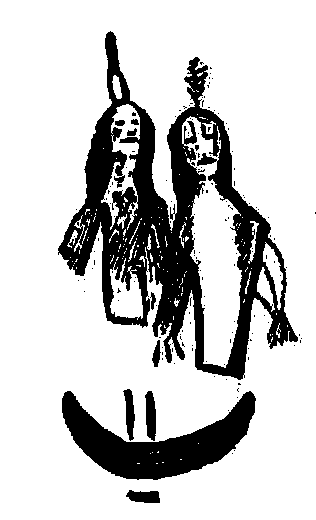
Fig. 203—Pai Tépgañ P'a—Ghost dance.
Pai Tépgañ P'a. There is nothing to indicate the name of the moon. They went again to the Cheyenne when the moon was two days old (two strokes) and danced the ghost dance with them for the first time. The picture shows two persons wearing the head feather and holding hands as in the ghost dance.
BUREAU OF AMERICAN ETHNOLOGY— SEVENTEENTH ANNUAL REPORT PL. LXXXI
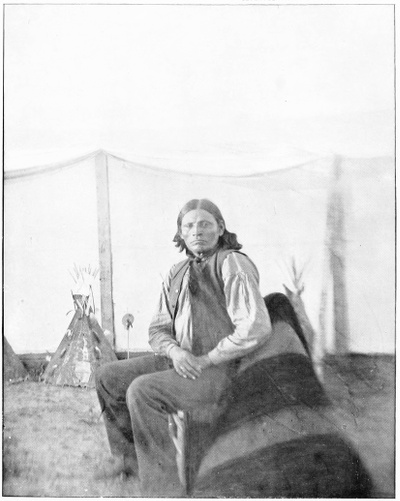
ANKO
Pai Gañhíña P'a (July, 1890). There is nothing to indicate the name of the moon. In this moon, on July 20, 1890, the agent sent troops to prevent the sun dance, as already related (see summer 1890); there was also a payment of grass money by the cattlemen on the third day of the moon. The record is made by means of the picture of the decorated medicine pole, the three circles for dollars, and the three strokes for the time. This ends his first year of moons.
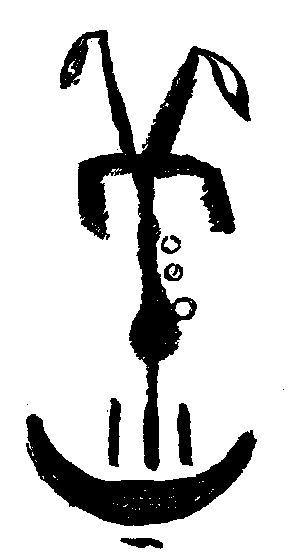
Fig. 204—Pai Gañhíña P'a—Sun dance stopped; Grass payment.
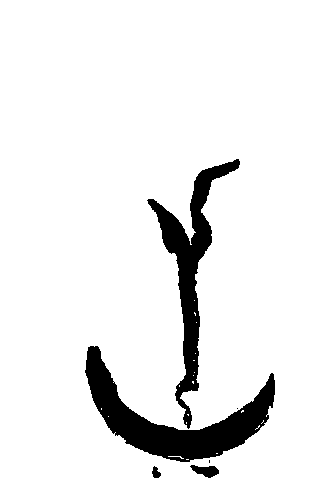
Fig. 205—T'águñótal P'a Sän.
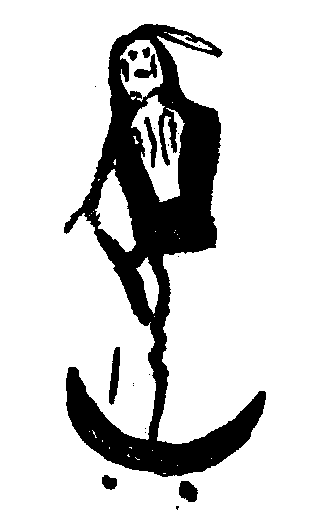
Fig. 206—T'águñótal P'a—Ä´piatañ.
T'águñótal P'a Sän. No event is recorded. The name of the moon is indicated by means of a figure intended to represent the antlers of a deer.
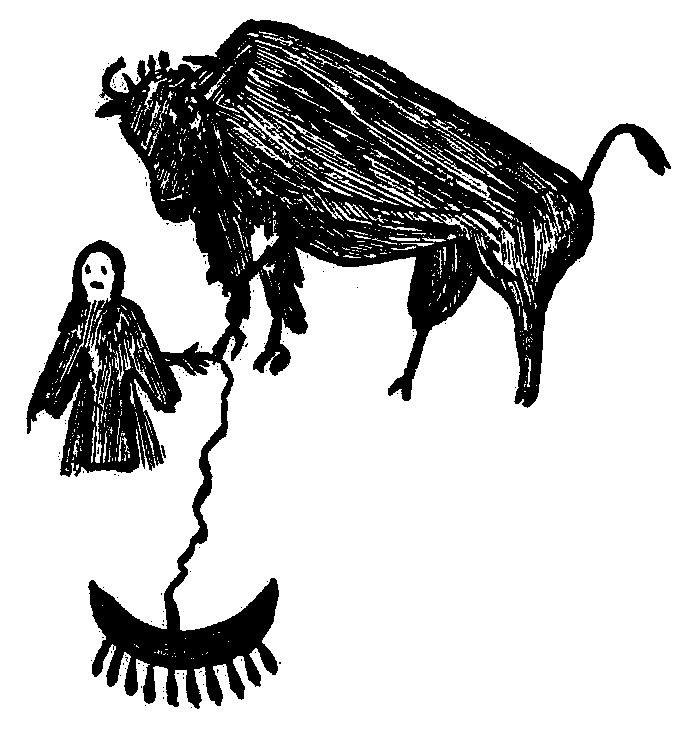
Fig. 207—Gákiñăt'o P'a—Sitting-bull.
T'águñótal P'a. The artist has tried to indicate the name of the moon, as before, by a picture of the branching antlers of a deer, under the human figure, intended for Ä´piatañ, who went during this moon to visit the ghost dance messiah, as already narrated. (See winter 1890—91.)
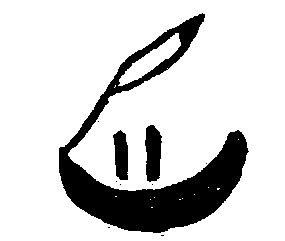
Fig. 208—Ä`gâ´nti.
Gákiñăt'o P'a. The moon name is indicated as before. In this month Sitting-bull, the Arapaho apostle of the ghost dance, came to teach the doctrine to the Kiowa, and a great ghost dance was held on the Washita; this was about October, 1890 (see winter 1890—91). The human figure beside the buffalo indicates the name "Sitting-bull."
Ä`gâ´nti. The moon name is indicated as before. No event is recorded.
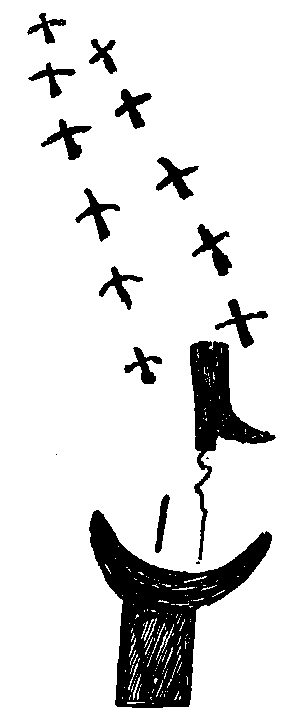
Fig. 210—Gañhíña—Annuity issue.
Tépgañ P'a (January, 1891). It is indicated in the regular way. In this moon the three schoolboys were frozen to death, as already related (winter 1890—91); they ran away from the school on January 9, 1891, and are represented by the figures as wearing hats and holding out a book. Anko drew only two figures, but explains that "everybody knows there were three."
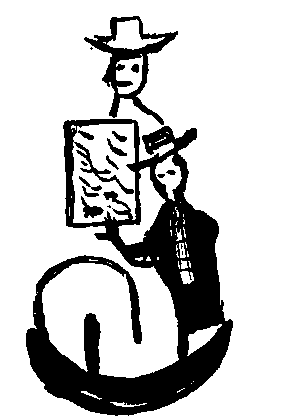
Fig. 209—Tépgañ P'a—Schoolboys frozen.
Gañhíña P'a. The moon is indicated as before. The annuity issue was made in this moon, shown by the pictures of a boot and a blanket. This was about the end of January, 1891.
Ka`gúăt P'a Sän (February, 1891). The moon is indicated in the regular way, and the rude human figure is intended by the artist for Ä´piatañ, who returned this month (February, 1891) from his visit to the Indian messiah (see winter 1890—91). The two strokes show that he returned, or that the picture was drawn, on the second day of the moon.
Ka`gúăt P'a. It is indicated as before by means of a budding tree. The agent issued wire for fencing, shown by a reel of wire upon the tree, with a single stroke for the date.
Aídeñ P'a. It is indicated as before by a tree in foliage. No event is recorded.
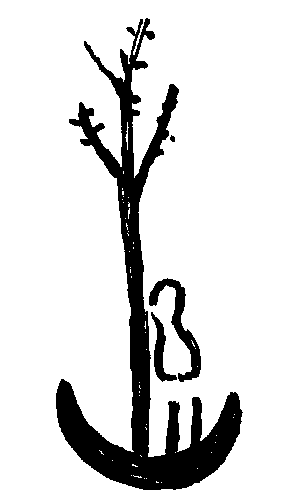
Fig. 211—Ka`gúăt P'a Sän—Ä´piatañ.
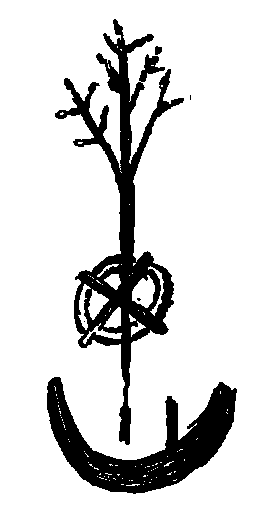
Fig. 212—Ka`gúăt P'a—Wire issue.
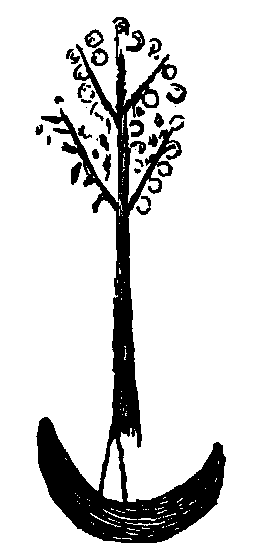
Fig. 213—AídeñP'a.
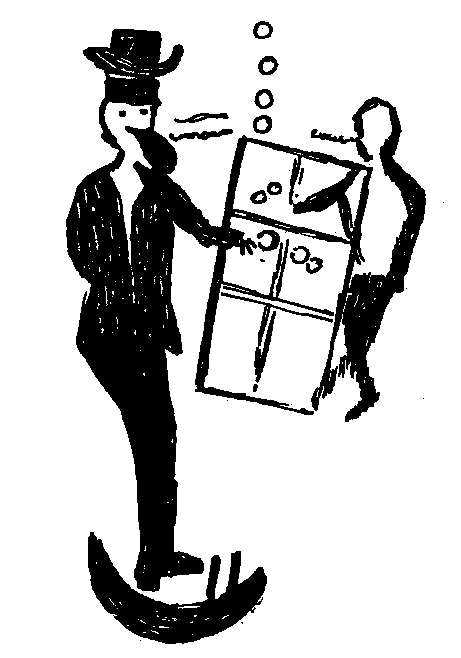
Fig. 214—Pai Ä`gâ´nti—Treaty sale.
Pai Ä`gâ´nti (June, 1891). There is nothing to indicate the name of the moon. About this time a commission came to negotiate with the Caddo and Wichita for a sale of their reservation; an agreement was reached in June, 1891 (Report, 117). The figure shows a white man and an Indian beside a sectional figure to represent the allotments of lands, with circles above for the purchase money.
Pai Tépgañ P'a (July, 1891). There is nothing to distinguish the moon. In this moon occurs the Fourth of July, on which occasion there are always great gatherings of the Indians for races at Fort Sill and Anadarko. Anko ran races with the rest, but lost his bet. The figure shows a quirt and a dollar, for the race and the bet.
Pai Gañhíña P'a. There is nothing to show the name of the moon. A young man "stole" the wife of Paul Sétk`opte, indicated by the picture of a woman beside a man wearing a pair of buffalo horns, Sétk`opte when a boy having been known as "Buffalo-horns." This ends the second year of the calendar.
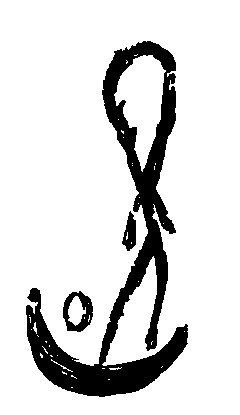
Fig. 215—Pai Tépgañ P'a—Races.
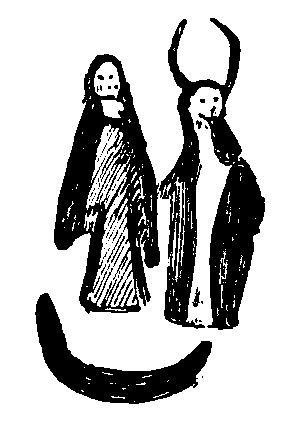
Fig. 216—Pai Gañhíña P'a—Woman stolen.
T'águñótal P'a Sän. The figure at the extreme top is intended for a deer antler, to indicate the name of the moon. The Kiowa visited the Cheyenne to dance the "Pueblo dance," which they obtained originally from the Pueblo Indians, and received in return several war-bonnets as presents; in this dance the men carry rattles in their hands, and the women follow behind. The picture shows a man wearing a war-bonnet and holding out a rattle, while a woman follows him.
T'águñótal P'a. The moon is distinguished as before by a picture of a deer antler above the principal figure, which, although rudely drawn, is intended for a man with a snake near his head; this records the killing of P'odalä´ñte, "Coming-snake," as already related (see summer 1891).
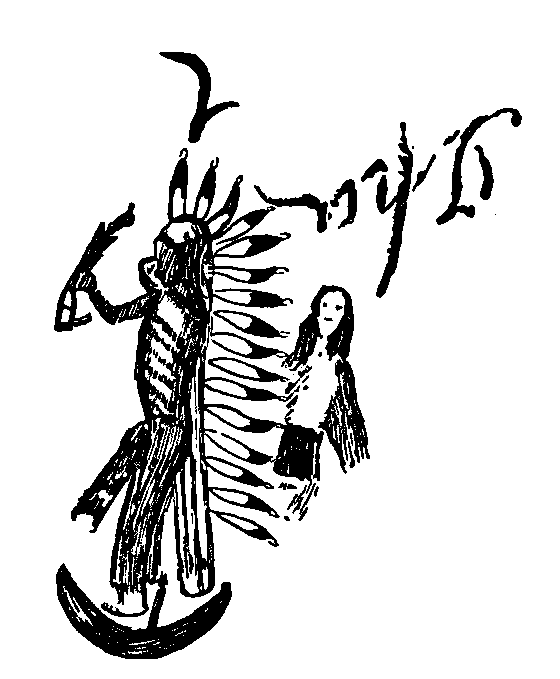
Fig. 217—T'águñótal P'a Sän—Pueblo dance.
Gákiñat'o P'a. The moon is distinguished as before by the ten strokes below the crescent. In this moon T'enétaide, "Bird-chief," alias P'ató, was sick, and they made "medicine" for his recovery, indicated by the picture of the sacred pipe; in this moon also Anko cut wood for the government, noted in the figure of a man with an ax beside a tree. The two strokes within the crescent may refer to the date either of one of the events noted or to the day on which the picture was drawn.
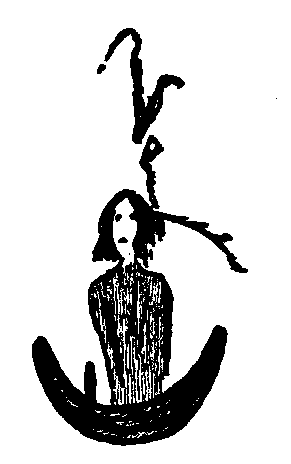
Fig. 218—T'aguñótal P'a—P'odalä´ñte killed.
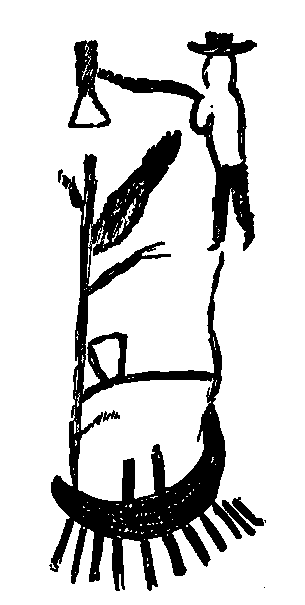
Fig. 219—Gákiñat'o P'a—Made medicine; Cut wood.
Ä`gâ´nti (November, 1892). The name of this moon is indicated as before by the picture of a feather above the crescent; the crescent itself is filled in with black between the horns to note the fact of the total lunar eclipse of November 4, 1892, as recorded by the Nautical Almanac.
Tépgañ P'a. The name of the moon is indicated as in the first instance. No event is recorded. The two strokes may mark the date of the drawing.
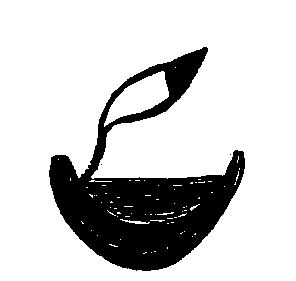
Fig. 220—Ä`gâ´nti—Lunar eclipse.
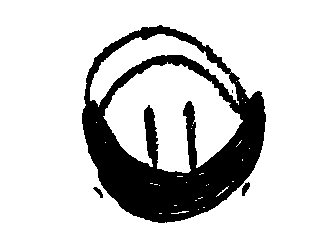
Fig. 221—Tepgañ P'a.
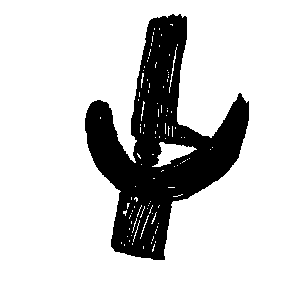
Fig. 222—Gañhíña P'a—Annuity issue.
Gañhíña P'a. There is nothing to indicate the name of the month. The annuity issue of clothing, etc, about the beginning of the year 1892, is recorded as before by means of conventional representations of a boot and a blanket.
Ka`gúăt P'a Sän. The moon is distinguished as before, and the issue of wire for fencing, which occurs usually in early spring and soon after the annuity issue, is indicated as before by a reel of wire upon the tree.
Ka`gúăt P'a. The moon is distinguished in the regular way. In this month he removed from the winter camp near the agency to his home camp near the mountains; the tipi picture records the fact. In the same moon came a late frost which killed the springing vegetation; the cross notes the fact, being a pictorial representation of the gesture sign for "cut off," "stopped," or "ended."
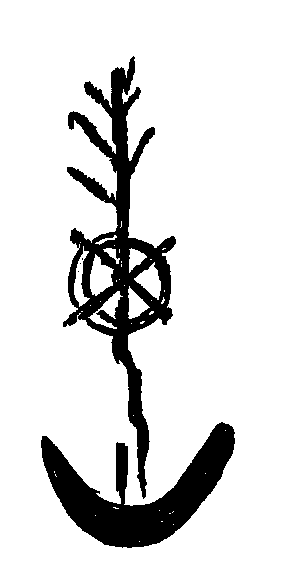
Fig. 223—K'agúăt P'a Sän—Wire issue.
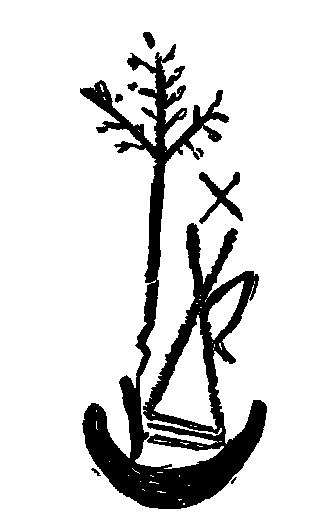
Fig. 224—Ka`gúăt P'a—Move camp.
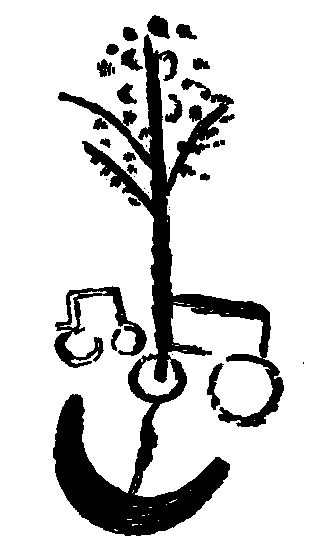
Fig. 225—Áideñ P'a—Immigrants arrive.
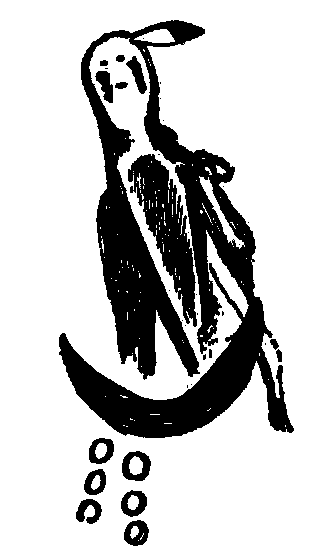
Fig. 226—Pai Ä`gâ´nti—Íatäkía dies; Grass payment.
Aíden P'a (April, 1892). The moon is distinguished as before by the figure of a tree in full foliage. The picture of the wagons records the appearance of emigrants in the Cheyenne country, which was formally opened for settlement on April 19, 1892.
Pai Ä`gâ´nti. There is nothing to distinguish the moon. A Ute captive named Íatäkía, "Ute-man," died, and the fact is noted in the picture of a man with his hand pointing downward; in accordance with the tribal custom, Anko for a long time refused to pronounce the name of the dead man. In this moon also began a grass payment, indicated by means of circles for dollars.
Pai Tépgañ P'a. There is nothing to distinguish the moon. He notes the great measles epidemic of the spring of 1892 (see summer 1892), and the finishing of the grass payment, by pictures respectively of a human figure with red blotches and of circles for dollars. Two strokes may indicate the date of the drawing.
Pai Gañhíña P'a (July, 1892). There is nothing to distinguish the month. The picture of a man and horse records the occurrence of the Fourth of July races.
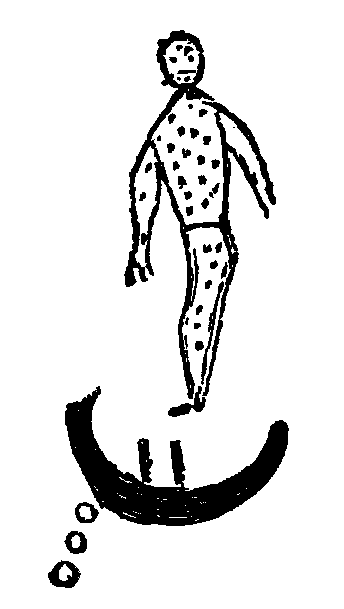
Fig. 227—Pai Tépgañ P'a—Measles; Grass payment.
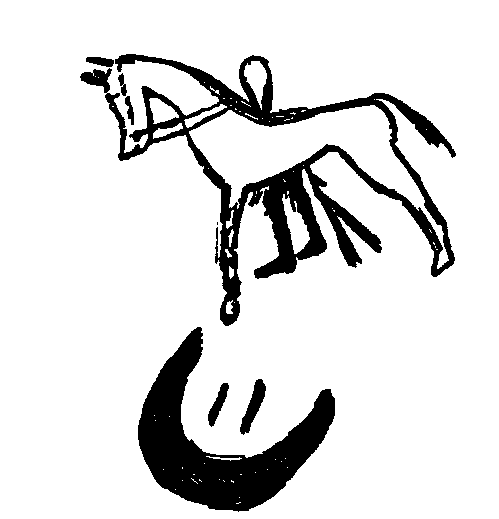
Fig. 228—Pai Gañhíña P'a—Fourth of July races.
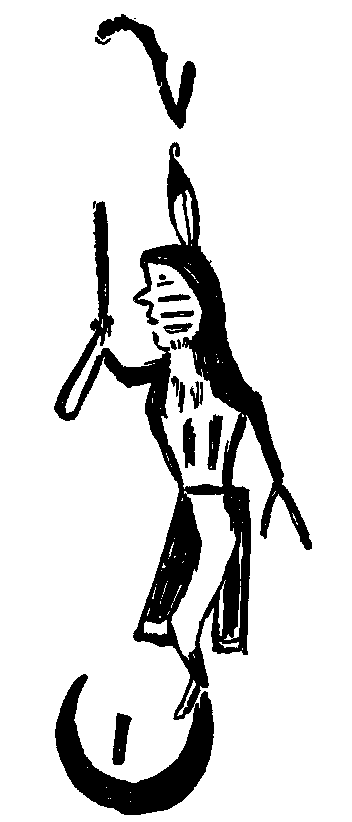
Fig. 229—T'águñótal P'a Sän—Cheyenne dance.
T'águñótal P'a Sän. The moon is distinguished by the figure of a deer antler above the principal picture, which is intended to record the visit of a large party of Cheyenne and Arapaho in full dress, for dancing purposes; they arrived on July 29,1892, and remained about two weeks.