ARCHAIC MAN, FIRST SETTLER IN ILLINOIS (8000 to 2500 B.C.)[6]
Reading edition
ARCHAIC MAN, FIRST SETTLER IN ILLINOIS (8000 to 2500 B.C.)[6]
We have reason to believe that the Big Game Hunters wandered over Illinois and the adjoining states during the last advance of the glaciers. Around 12,000 B.C. the climate in the Midwest became milder, the glaciers “retreated,” and the mighty torrents—the Mississippi, the Ohio and the Illinois that had torn irresistibly down their valleys—shrank into smaller, less turbulent rivers that occupied but a fraction of their former beds. The great shaggy mammoths, musk oxen, the ground sloths and the giant beavers moved westward toward the mountains or to the north.
Some of the Big Game Hunters with their families may have followed the retreating glacier and the herds; others stayed behind in country to which they had grown attached. With the great herds gone, the human families remaining in Illinois had to hunt the game animals that now frequented the area—deer, elk (wapiti), bear and smaller mammals. The large hunting party was no longer practicable. The game roamed over the country singly or by twos or threes and had to be stalked by one or two hunters. Families were compelled to live widely separated one from another in order to secure ample food throughout the year. Thus developed a new way of life which we call the Archaic phase or culture.
The hunter, as time passed, learned the secret habits of the deer, bear and raccoon and the more sluggish fishes. His wife and daughters learned the haunts and ways of the smaller animals, the rodents, turtles and lizards, discovered where edible greens, wild tubers, nuts and fruits grew and where mussels and snails abounded in creeks and rivers. With increasing knowledge Archaic man made better and fuller use of his changed and changing surroundings, food became more plentifully available, life easier and less hazardous though still very difficult from our standpoint.
13
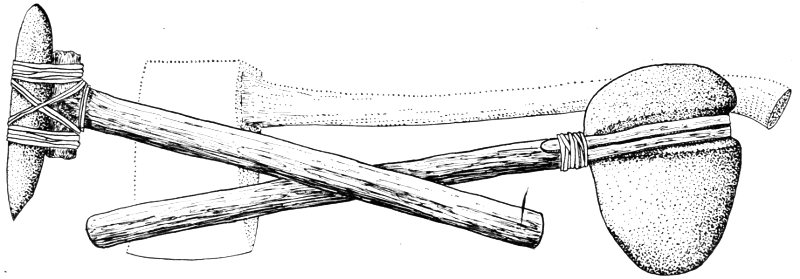
Fig. 4. Hafted primitive stone adze and grooved ax, with modern steel-bitted ax in the background. (B.B.)
With new needs and some leisure from the labor of providing food, Archaic man invented specialized devices, new methods of making tools and weapons, the more skillful among them shaping the objects carefully into symmetrical forms pleasing to the eye of others and strangely satisfying to the maker.[7] He pecked a hollow in both sides of his cobblestone hammer so he could grip it securely and use it more skillfully. He pecked and ground diorite and granite into adzes, hatchets (celts), and axes with a groove for hafting. These were a decided improvement over flaked choppers. He ground and polished banded and highly-colored shale (“slate”) into prismatic and cylindrical spearthrower weights and bored them with a tube, sand and water. His own person he decked out with necklaces and oval pendants (made by boring a hole in smooth flat waterworn pebbles) and with bone ornaments cut to shape, ground, engraved and polished. These he and his wife wore as had their forefathers but not the skin robes of glacial times.
As life grew easier, the family or local group increased in size. Sons brought their wives to the family dwelling place and built windbreaks near those of their parents. With food abundant the little settlement became a small cluster of households or a hamlet consisting possibly of sixty to seventy persons.
14
If Archaic Man Was Like Present-Day Archaic Tribes[8]
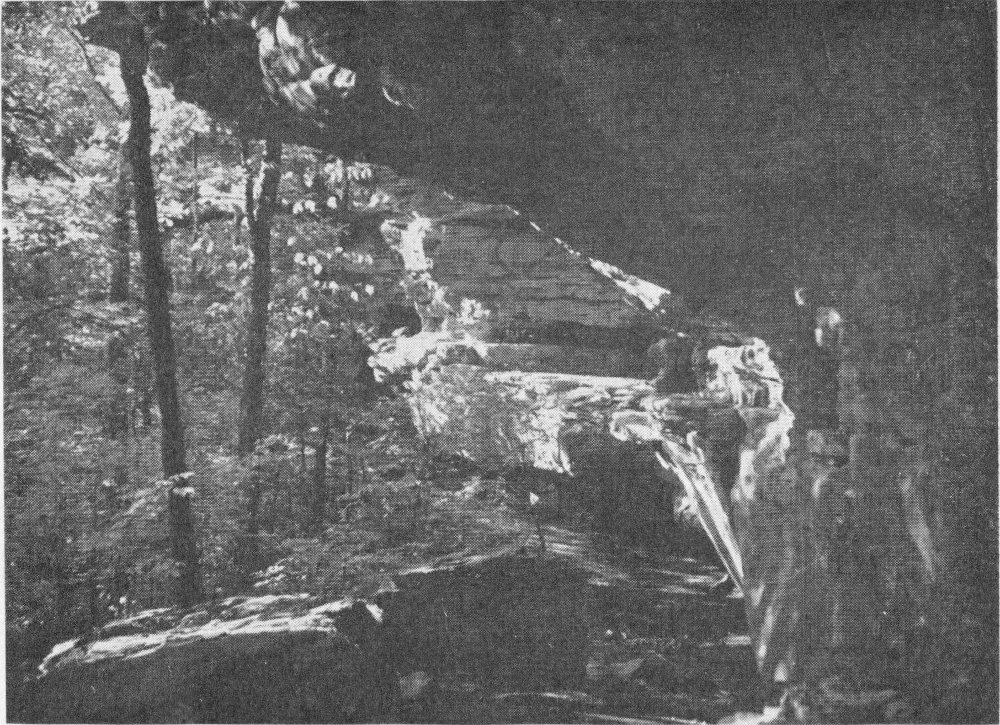
Fig. 5. Rock shelter near Cobden. Such shelters were used by Archaic and succeeding peoples. (Photograph by Irvin Peithmann)
If Archaic man in Illinois lived as do present-day Archaic peoples, the family or local group, though they restricted themselves during most of the year to their hunting grounds which they guarded jealously from trespassers, did not camp continuously in one spot. At appropriate seasons of the year they rotated from one hamlet site to another to take advantage of the food resources of that locality. In winter perhaps they moved to a rock shelter, like that of Modoc in Randolph County, Illinois, near the wooded valleys of streams emptying into the river where deer and elk sought protection from the rigors of winter; in spring to upland lakes for duck and other waterfowl; and in autumn to wooded 15 parklands to harvest acorns, hickory nuts, and berries. The spot chosen for each hamlet location was generally one that had been so used at that same season from time out of mind by the family and its forebears.
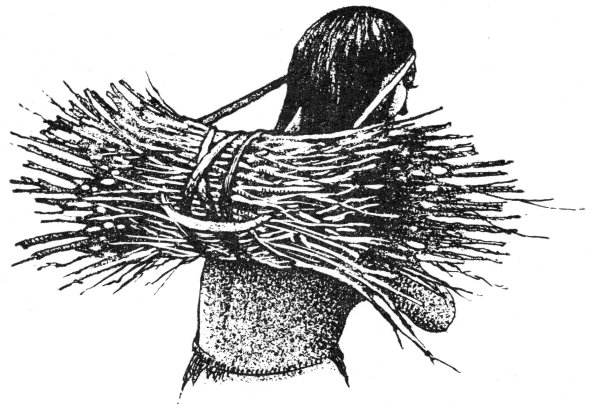
Fig. 6. Primitive woman carrying a load with the aid of a tumpline. (J.C.)
It is probable, as among most primitive peoples, that men did only work thought suitable to men, and women that appropriate for women. Men made the weapons and tools they used, did the hunting and fishing, and the fighting (when quarrels developed into feuds or wars between local groups of the same tribe). The rest of the labor fell to the women—caring for the children, collecting edible plants, clams and small animals, preparing the food, and carrying burdens. All work was done by hand; loads were carried on the back. It is possible that boats, perhaps of dugout type, were used as among present-day Archaic peoples living on waterways. There was no other specialization and each “household” provided for the needs of all its members to the best of its ability. No food was grown and no domestic animal except the dog was known.
Once or twice a year when food was easily and bountifully available, local groups from nearby hunting territories met together for religious rites. These local groups spoke the same dialect, had the same way of life, and considered themselves a unit or tribe. They had no political form of government but were kept in order through habits formed by early training and by extension of the kinship system to the whole tribe. Thus the tribal elders were considered fathers and mothers, and to them were due obedience and respect, just as children they had been taught to regard their own blood fathers, uncles, and other older relatives. The elders knew the tribal customs; and to be accepted as a tribal member, boys must respect, learn and conform to these customs.
The object of these annual gatherings was to teach the young the tribal customs and to perform solemn ceremonies, the purpose of which was to insure the security and well-being of the tribe, a continuing abundance of the favorite foods, and to express gratitude and thanksgiving to unseen Spirits who watched over the game animals (and possibly the edible plants) for the blessings received during the past year. These gatherings and cooperative undertakings served, on the one hand, as a welcome change from the usual daily grind and afforded opportunities for the young to get acquainted and choose mates and, on the other, to unify the language and customs of the constituent local groups, to enhance the influence of the tribal elders and keep fresh in the minds of all the history of the tribe, the importance of its activities, and its sacred tradition, all essential to the way of life of dynamic Archaic peoples of recent times.
16
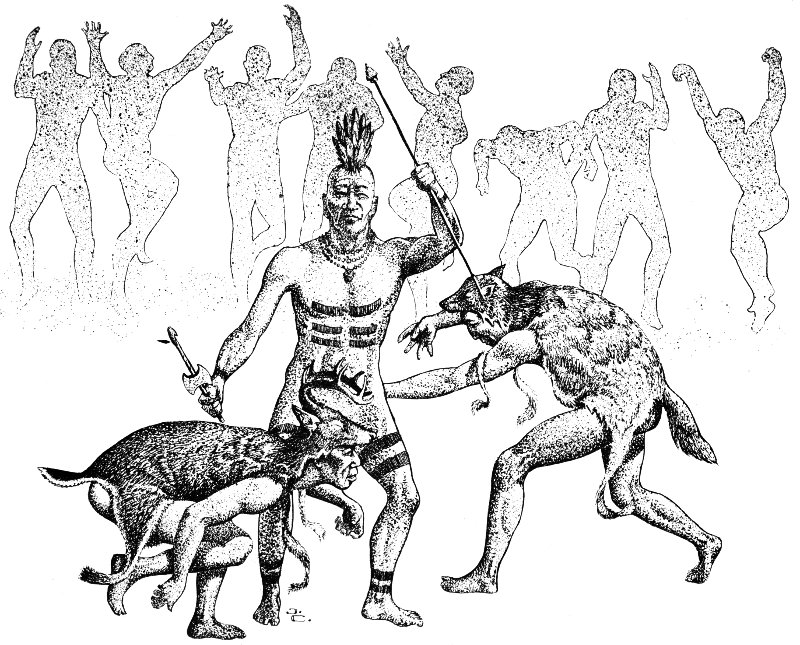
Fig. 7. Fertility rites were probably performed by Archaic peoples to ensure the abundance of game animals for the next year. (J.C.)
17
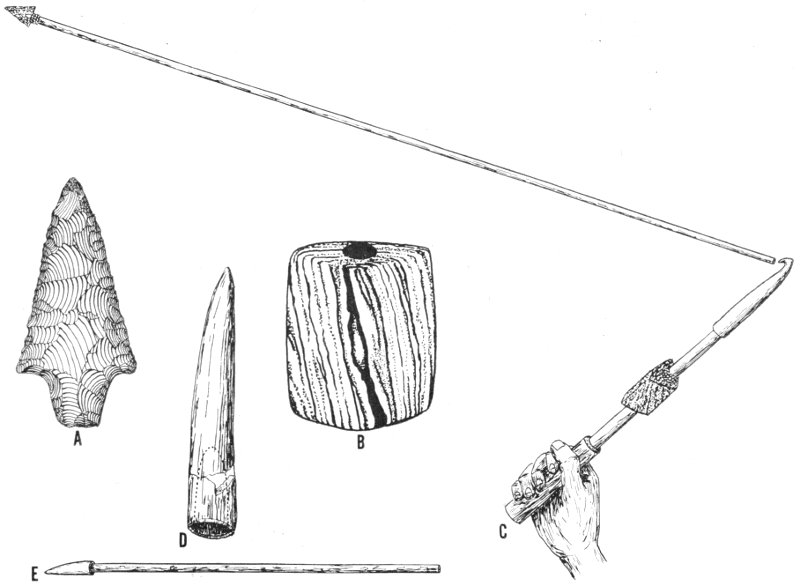
Fig. 8. Archaic weapons: A, Hidden Valley type spearhead; B, prismatic atlatl weight of polished red shale; C, throwing a spear with an atlatl; D, socketed antler spearhead; E, short thrusting spear or javelin. A, B, and D are from Modoc Shelter in Randolph County, Illinois.
In the later (Medial) Archaic period at Modoc, the dead were buried in the floor of the rock shelter. Burial probably indicates a belief in life after death. Care in preparing the body for burial, in the funeral rites and burying, and in the customary mourning thereafter was highly important so the dead man could go promptly to the spirit world in peace and not remain in the neighborhood to disturb his kinsmen. Immediately after the burial, it is probable that the little settlement removed to a distant location as is customary with peoples in this stage of culture.
The rites for important dead in the Terminal period probably began with the conventional mourning of relatives, with painting the body with red ochre and grease and adorning it with the dead man’s jewelry, followed at the appropriate time by the conveyance of the body to the grave side, where the corpse was deposited in a pit together with personal insigne and weapons. The grooved stone axe, large spearheads, 18 daggers, bannerstones, spearthrower with weight and more rarely copper articles were placed alongside or on the corpse. In some instances large stones were laid upon the grave probably for one or more of the following reasons: (a) to mark the grave of an important tribesman; (b) to keep the body from being disturbed by animals; and (c) to hold the dead man’s ghost until he departed for the spirit world.
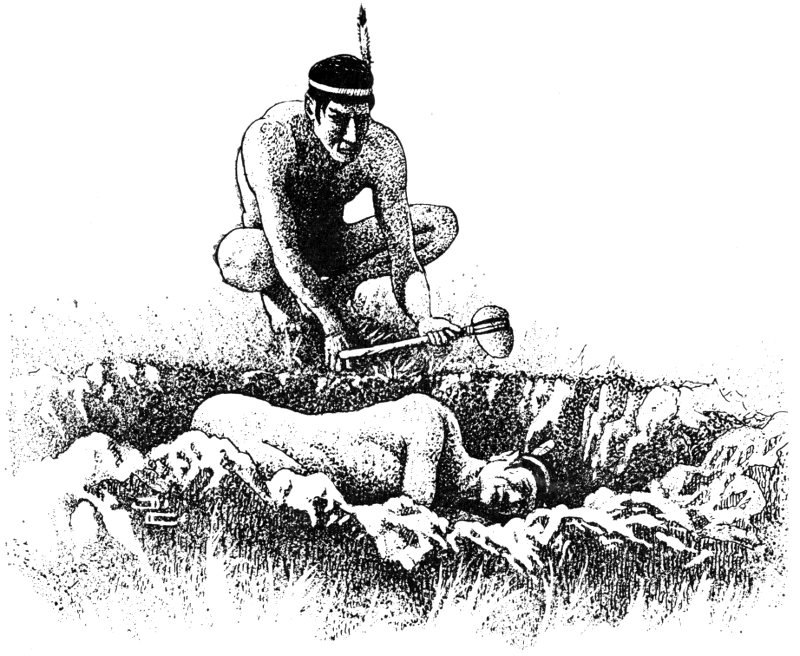
Fig. 9. Grooved stone axes are frequently found in Archaic graves but were not buried with the dead after this period. (J.C.)
It is very probable that, on occasions of social and religious import, Modoc man and other Archaic tribes in Illinois bedecked themselves in their best paint and jewelry. Possibly the colorful and intriguing bannerstones, which were undoubtedly developed from the spearthrower weight, were carried or worn by the local group headmen who had won that right because they were skillful hunters, courageous fighters, or learned in the tribal customs and beliefs and thus recognized by the tribe as leaders for the time being.
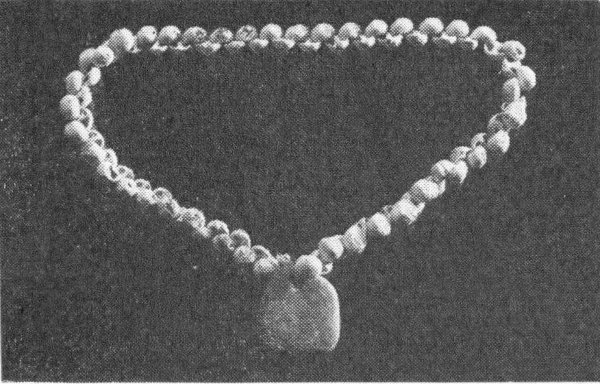
Fig. 10. Anculosa shell necklace with flat pendant of water-worn stone from the Archaic period. Anculosa necklaces were worn by many Illinois peoples probably up to the European contact period.
19