IV THE REBIRTH OF SCIENCE (FROM ABOUT 1500 TO ABOUT 1700)
Reading edition
§ 1. The Anatomical Awakening.
During the Middle Ages beliefs about physiology were always based on Galen. They were frequently confused and often the result of a misunderstanding of his work. In the fifteenth century, however, took place the so-called Renaissance or Revival of Learning. Greek works which had been trickling in since the thirteenth century began to be recovered more rapidly, and to be more accurately studied. The first step towards any improvement on the views of Galen was naturally a proper understanding of what he had really said. For that there was needed a better knowledge of Greek than had been possessed by the Middle Ages. In the fifteenth century Greek scholarship made great advances and there was enthusiasm for classical learning. Accurate translations of the Greek works of Galen were made. The printing press was invented about the middle of the fifteenth century. Towards its end printed copies of the improved translations began to appear. So it came about that the Revival of Learning produced a revival of the ancient scientific knowledge.
This scientific revival led to a new interest in Anatomy. During the Middle Ages the occasional dissections at the Universities were merely supposed to illustrate Avicenna and Galen (Fig. 28 and p. 72). Dissection became much more widely practised in the fifteenth century, but it was nearly the middle of the sixteenth century before any real and open discussion of Galen’s views took place in the Universities.
There were, moreover, other influences at work. Along with the revival of learning there was also a renaissance of art. Some of the great Renaissance artists—Michelangelo, Raphael and Dürer among them—began to study the human form very closely. They soon found that to represent it accurately some knowledge of Anatomy, and especially of the bones and muscles, was needed. The artists, therefore, began also to dissect. Among these great artists were some who took more than a purely artistic interest in the structure and workings of the body. Of these the most important for us was Leonardo da Vinci (1452-1518). He was a man of enormously powerful and inquiring mind, and his achievements in science are at least as remarkable as his works of art. He had determined to write a text-book of anatomy and physiology. Though he did not publish it, many of his beautifully illustrated note-books on these subjects have survived.
Leonardo was the first to question the views of Galen. He made careful first-hand investigations on the bodies of men and animals, and performed many physiological experiments. Though a man of the most lofty genius, centuries ahead of his time, yet his outlook is, in many respects, typical of his age. His interest in anatomical investigation is therefore not surprising, for such inquiries were then astir. It happened that he was particularly interested in the heart and blood-vessels. He reached the correct conclusion that, contrary to Galen, the branches of the air-tubes in the lungs do not come into relation with the heart, but, after branching and gradually diminishing in size, they finally end blindly. He inflated the lungs with air and found that, whatever the force used, air could not be driven from the air-tubes into the heart. He therefore inferred quite correctly that Galen’s arteria venalis (our ‘pulmonary vein’) did not convey air to the heart, as the followers of Galen believed.
Leonardo then turned to examine the structure and form of the heart itself. He prepared more accurate drawings of it than had been made by any before him, making sections and dissections and examining its valves (Fig. 30). Ultimately he succeeded in grasping the nature and action of the valves at the root of the great arteries as they arise from the heart, and he verified his view by remarkable experiments. He proved that the valves allowed the blood to pass in only one direction, and prevented its regurgitation. Yet Leonardo gives no complete or clear description of the action of the heart. He could not emancipate himself from the old idea of the passage of the blood from the right ventricle through the septum into the left ventricle (Fig. 21), though he sometimes seems doubtful about it.
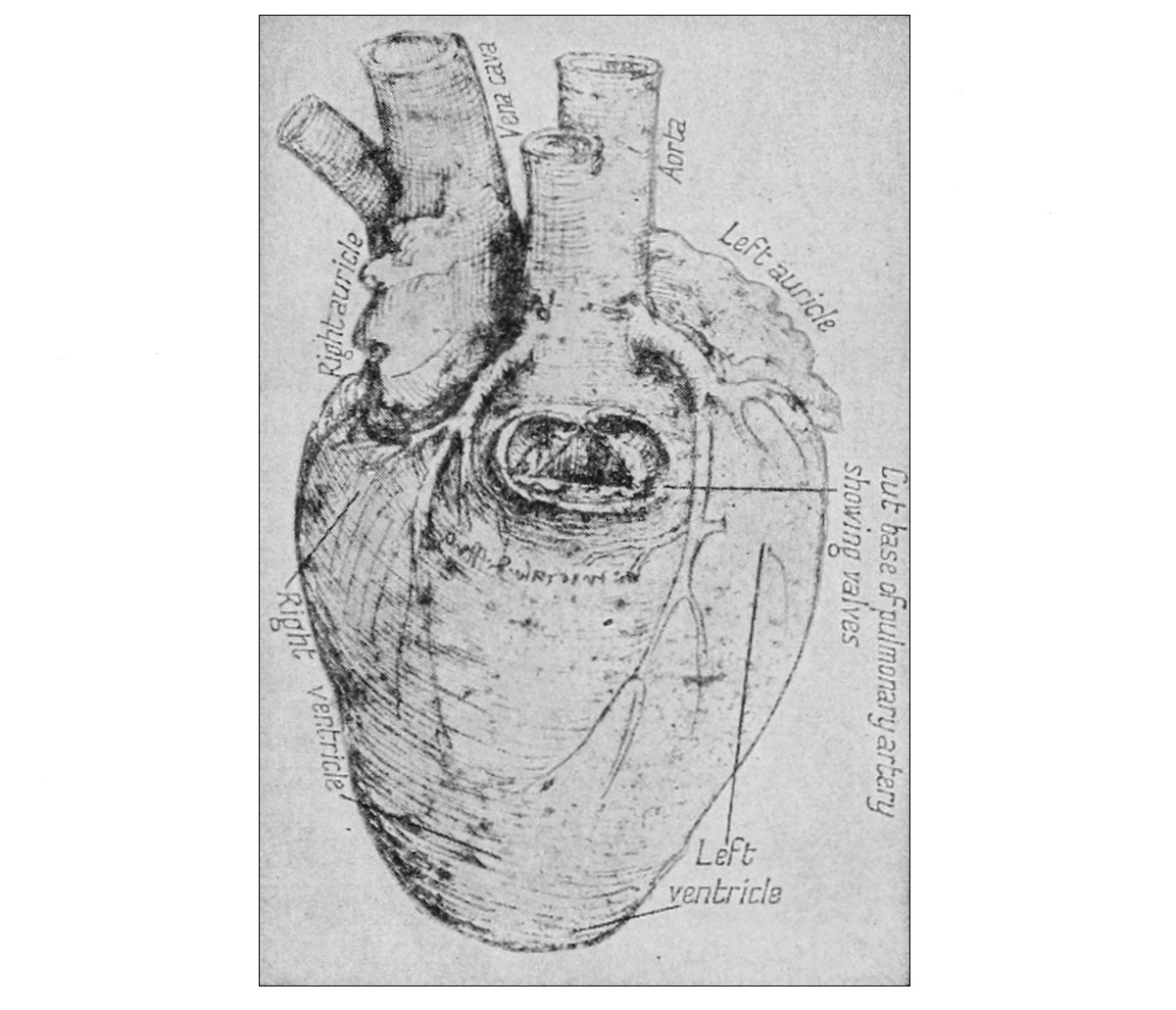
Fig. 30. DRAWING OF DISSECTION OF THE HEART by Leonardo da Vinci. The modern names of some of the more important parts have been added.
It must be remembered that Leonardo did not publish his researches. It is only recently that his note-books have become fully accessible. But although Leonardo’s work remained in manuscript, it must not be assumed that his views were wholly without effect on his contemporaries. At any rate, soon after his time the questions that he had raised concerning the heart and blood-vessels were attracting others and were generally regarded as forming an important problem needing solution.
The task of writing an anatomical text-book based on direct observation, to which Leonardo did but put his hand, was achieved by one who was only four years old at the time when the great artist died. The central place in the unfolding drama is occupied by Andreas Vesalius of Brussels (1514-64). This extraordinary man studied first at the University of Louvain and afterwards at Paris. Anatomical instruction at these Universities had not improved much, if at all, on that of the Middle Ages. Vesalius soon tired of hearing long passages of Galen read out by the professor. He therefore resolved to go to northern Italy, where newer methods were being practised. Padua was the place of his choice. He immediately made his mark there, and was himself appointed professor when only twenty-four years of age. He established a scientific tradition at Padua which that University has retained to this day.
No sooner was Vesalius settled at Padua than he applied himself with unparalleled diligence to lecturing and research. Students crowded to hear him (Fig. 31). To aid them he issued, in 1538, a short guide to anatomy and physiology. An examination of this shows that his physiological views were still those of Galen and Aristotle. After its issue Vesalius found that Galen and Aristotle were by no means always to be trusted. The realization of this led him constantly to doubt any statement by them. His scepticism was sometimes excessive, but it led him to put every statement made by his predecessors to the test of experience. This gives his later work an epoch-making value.
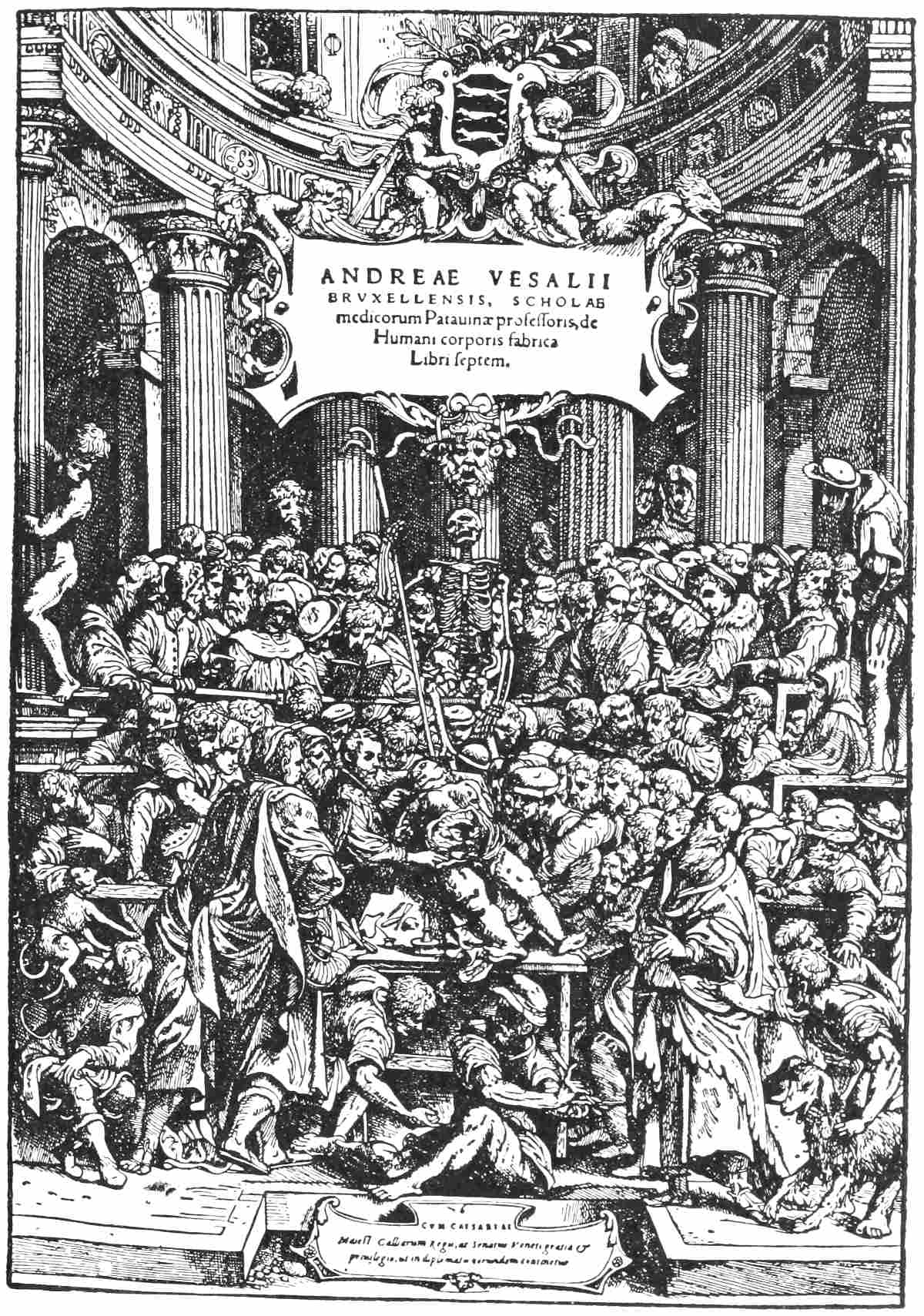
Fig. 31. TITLE-PAGE of the work On the Fabric of the Human Body, by Vesalius, published in 1543.
It shows a dissection scene at Padua. In the center stands Vesalius dissecting a female body. At the head of the table stands an articulated skeleton. At its foot are dissecting instruments. Eager students throng around. In the foreground attendants are squabbling. On one side an attendant holds a monkey, one on the other a dog, for Vesalius had often to resort to animal in lieu of human anatomy. Shut off by a bar are members of the lay public. Gallants, grey-bearded scholars, monks, and an enthusiastic bookworm may be discerned among them. Other observers crowd in from every vantage point, even from the windows in the roof. The naked man to the left has been used by Vesalius to demonstrate the surface markings of the underlying organs. The whole scene is busy and vigorous in the extreme. It should be contrasted with the academic calm of Fig. 28 drawn fifty years earlier.
During the next four years Vesalius had ampler opportunities to dissect than he had yet encountered. He devoted a fiery energy to the preparation of his great work. The Fabric (that is ‘workings’, compare German ‘Fabrik’) of the Human Body was printed in 1543, a magnificent and beautifully illustrated volume. It is a landmark in the History of Science, and a wonderfully full record of a prodigious number of accurately recorded discoveries and investigations made by a single observer.
The masterpiece of Vesalius is not only the foundation of modern Medicine as a science, but the first great positive achievement of Science itself in modern times. As such it ranks with another work that appeared in the same year, the treatise of Nicholas Copernicus, On the Revolutions of the Celestial Spheres. The work of Copernicus removed the Earth from the center of the Universe; that of Vesalius revealed the real structure of man’s body. Between the two they destroyed for ever the medieval theories on the subjects of which they treat. But the work of Copernicus is one of close and subtle reasoning, still retaining many medieval elements, and is hardly a great exposition of what we now call the ‘Experimental Method’. The work of Vesalius far more nearly resembles a modern scientific monograph than does the treatise of Copernicus.
The achievement of Vesalius was very well received by the scientific world. Nevertheless, soon after its publication, Vesalius resigned his professorship to take up the position of a court physician to the Emperor Charles V, the great monarch of the age. He was then only twenty-nine years old, but his scientific career was closed.
The edition of the Fabric was soon exhausted, and the demand for more copies was met by imitations of the work by other hands. At last, in 1555, Vesalius was induced to issue a second edition. This contains certain changes in point of view that are important for the subsequent development of physiology. Vesalius now no longer merely hints his doubts as to the character of Galen’s physiology; he openly asserts that he is unable to verify its fundamental bases.
We may take a single instance of this new outspokenness. In his description of the septum of the heart, he had written in the first edition:
‘The septum of the ventricles of the heart is very dense. It abounds with pits on both sides. Of these pits none, so far as the senses can perceive, penetrate from the right to the left ventricle. We are thus forced to wonder at the art of the Creator, by which the blood passes from right to left ventricle through pores which elude the sight.’ (Compare Fig. 21, p. 59.)
This passage is altered to something quite different in the second edition, where he writes:
‘Although sometimes these pits are conspicuous, yet none, so far as the senses can perceive, passes from the right to the left ventricle. I have not come across even the most hidden channels by which the septum of the ventricles is pierced. Yet such channels are described by teachers of Anatomy, who have absolutely decided that the blood is taken from the right to the left ventricle. I, however, am in great doubt as to the action of the heart in this part.’
He further sets forth his whole policy with reference to Galen’s view in the following interesting passage:
‘In considering the structure of the heart and the use of its parts, I bring my words for the most part into agreement with the teachings of Galen; not because I think these on every point in harmony with the truth, but because, in referring at times to new uses and purposes for the parts, I still distrust myself. Not long ago I would not have dared to diverge a hair’s breadth from Galen’s opinion. But the septum is as thick, dense and compact as the rest of the heart. I do not, therefore, see how even the smallest particle can be transferred from the right to the left ventricle through it. When these and other facts are considered, many doubtful matters arise concerning the blood-vessels.’
The work terminates with a little chapter On the dissection of living animals. We note that this, while dealing skilfully with the methods of physiological experiment, does not exhibit any very marked advance on the views of Galen.
Among the experiments on living animals that Vesalius enumerates are excision of the spleen, the loss of which he showed was consistent with life; and the cutting of the nerves that supply the organ of voice, with resultant loss of that faculty. He demonstrated that longitudinal section of a muscle interferes little with its function, but cross section produces disability in proportion to the injury. Such experiments had been performed by Galen, who had also reached the same conclusion as Vesalius, that it is through the spinal cord that the brain acts on the various muscles of the limbs and trunk. Vesalius repeated Galen’s experiments on section of the spinal cord (p. 58). The most striking of his experiments were those on respiration. Here he showed that, even though the chest-wall be pierced, the animal may be kept alive if the lungs are continuously aerated by means of a bellows, and that a flagging heart may be revived by similar means.
The work of Vesalius at once placed the knowledge of the human body in a new position. It cannot be said that he completed the task of describing the naked-eye structure of the human body. Yet he went so far towards this that no dramatic improvement has since been made upon his methods. It is a fair statement that the whole of modern Descriptive Anatomy may be treated as a comment and correction and amplification of Vesalius. His work moreover stimulated a host of investigators.
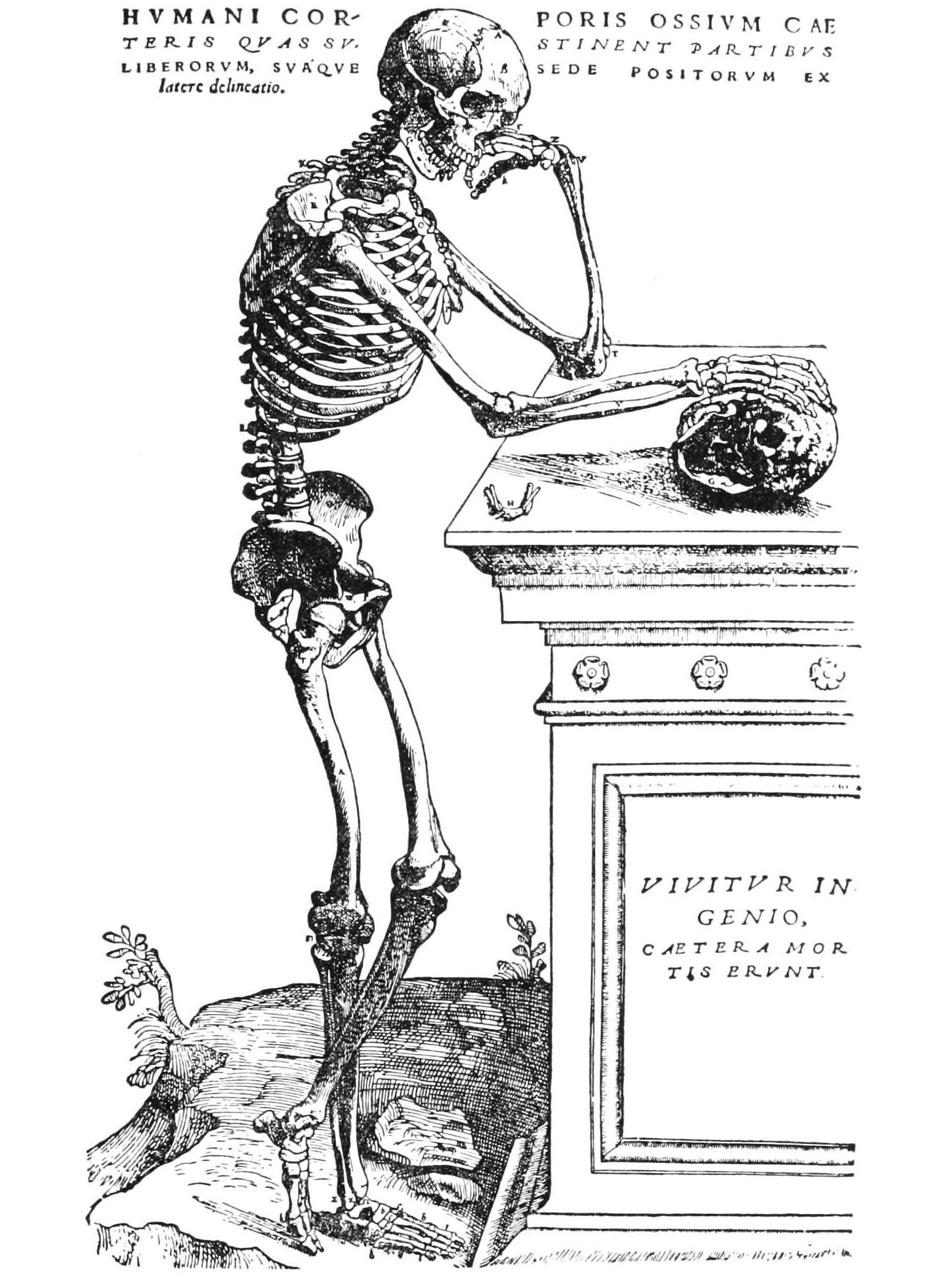
Fig. 32. SKELETON from the anatomical work of Vesalius, 1543.
It is beautifully and dramatically posed, and the drawing is remarkably accurate. The figure leans against a tomb, contemplating a skull. In the front left-hand corner of the top of the tomb is a part of the bony structure which supports the organ of voice (H).
The inscription on the tomb may be translated ‘Man’s spirit lives. The rest is Death’s portion’.
The inscription at the top may be translated: ‘A delineation from the side of the bones of the human body, freed from the other structures which they support and placed in their correct positions.’
§ 2. The Anatomical Reaction on Surgery.
The immediate effect of the new knowledge of Anatomy was an improvement in Surgery. The Wars of Religion of the sixteenth and seventeenth centuries were fierce and prolonged, and the army surgeons of the time had much experience of the treatment of wounds. The most prominent of the military practitioners was the Frenchman, Ambroise Paré (1517-90). He perceived the importance of anatomical knowledge and adapted his discoveries to the needs of Surgery. Paré did much to elevate the surgeon’s profession from a despised handicraft to a position equal to that of other branches of the healing art.
Apart from the introduction of anatomical discipline into Surgery, Paré’s four contributions to the surgical art were, firstly, his discovery that gunshot wounds are not ‘poisonous’ as had theretofore been thought, and that therefore they do not require the application of boiling oil, but are best healed by soothing applications; secondly, the cognate doctrine that bleeding after amputations should be arrested, not by the terrible method of indiscriminate use of the red-hot cautery, but by simple ligature; thirdly, his advocacy of the method of turning the child in its mother’s womb before delivery in certain abnormal cases; and fourthly, his ingenious devising of artificial limbs (Fig. 33). None of these four was without precedent. Nevertheless, the eminence, skill, and wide experience of Paré were the main factor in the spread of these practices. But the greatest of all Paré’s contributions to surgery was the service of his own personality, the example of his steadfast efforts to increase his knowledge of human anatomy and his skill in the art, and his constant emphasis on the surgeon’s duty to exert his utmost efforts to avoid or relieve the patient’s suffering.
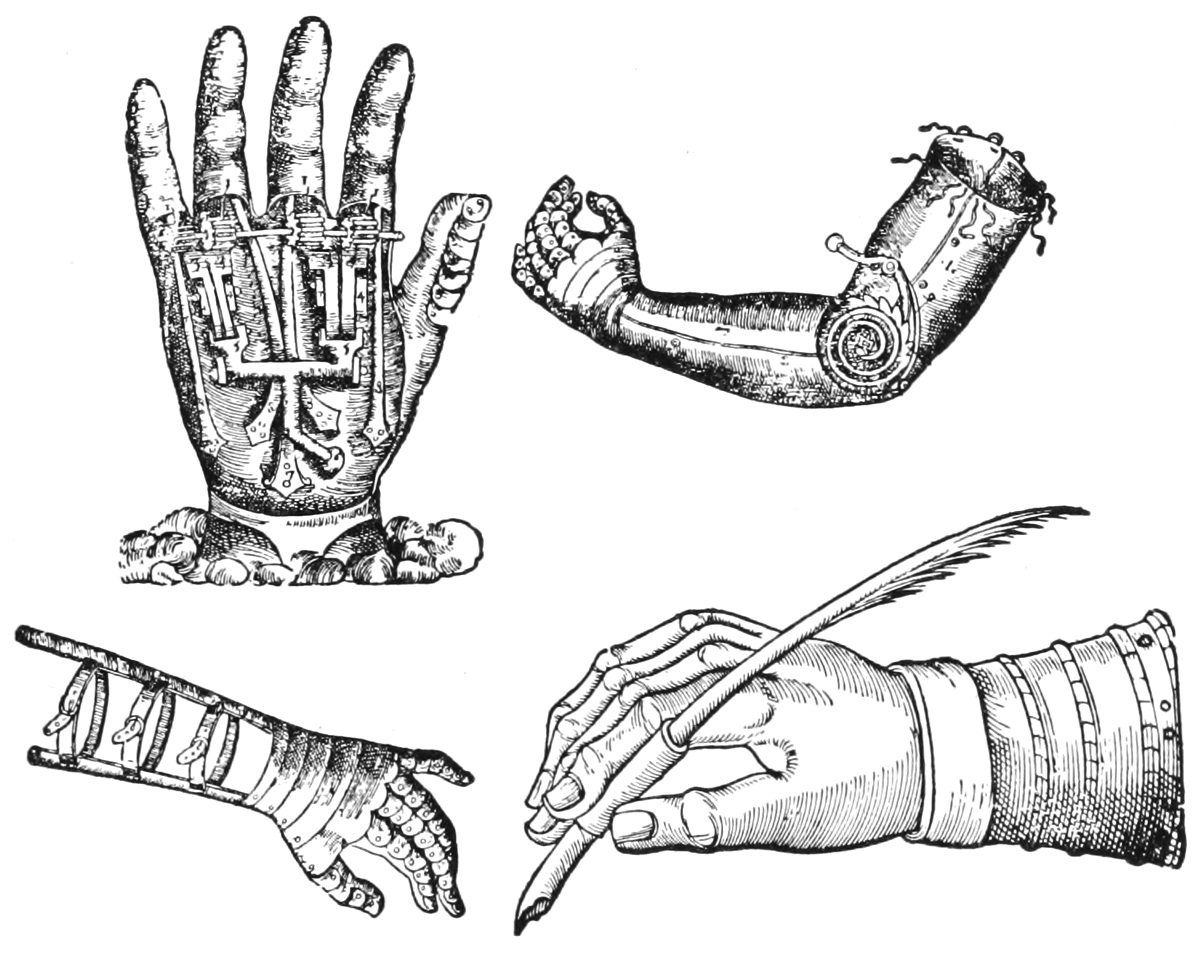
Fig. 33. ARTIFICIAL ARMS AND HANDS, designed and figured by Ambroise Paré, and used by him for wounded soldiers from about 1560 onwards.
In a famous passage Paré describes how he, a ‘freshwater soldier’, on his first campaign, watched the other surgeons following the old rule of treating all gunshot wounds with boiling oil. At first he formed his practice on theirs. The theory was that gunshot wounds contained a poison, which the boiling oil was believed to drive out. Paré tells of his agitation when one evening, his supplies having run out, men had to be treated without the boiling oil. Next morning he was astonished to find that every man whose wounds had been treated only with a salve had rested fairly comfortably, while all who had undergone the customary treatment were, as we may well believe, in great pain. ‘Then I resolved within myself never so cruelly to burn poor wounded men.’ Another saying of the shrewd old surgeon is the famous adage ‘I dressed him and God cured him.’
Paré’s works were frequently reprinted and translated into various European languages, including English. They exercised the widest influence on surgical craft in the sixteenth and seventeenth centuries. Like Vesalius, he is an example and type of a large class. In every country surgeons arose who made an effort to utilize the new anatomical knowledge.
§ 3. The Renaissance of Internal Medicine.
Internal Medicine lagged behind Surgery at this period. The anatomical reforms of Vesalius were unaccompanied by any commensurate advance in physiological knowledge, and without a scientific Physiology there can be no science of Internal Medicine. The practice of the physicians thus remained in effect that of the Middle Ages. The ruling idea was still that of the ‘four humors’ corresponding to the four ‘temperaments’ (Fig. 13, p. 34, and compare Fig. 34, p. 97).
There are, however, three respects in which we see an improvement of the physician’s art during the sixteenth and first half of the seventeenth century.
Firstly, there was some improvement in the medical texts that were habitually read. More reliable translations were now available. Notably the great Hippocratic works became more widely disseminated. They formed a substitute for the old texts translated or mistranslated from the Arabic.
Secondly, the extension of geographical knowledge and the formation of settlements and colonies brought new drugs upon the market. These were often a mixed blessing, for some of the drugs were useless and others dangerous. Nevertheless, to this process Medicine owes several important contributions, among them Ipecacuanha, Cinchona (p. 326), and, by no means least, Tobacco (Fig. 35). Apart from the amenities introduced by Tobacco, it was for long of great value as a narcotic drug. Moreover, there was a corresponding advance in Botany. The movement was cursed with the ‘practical’ spirit, and only those plants thought to have an application as drugs were exactly figured and described. Nevertheless, the beautifully illustrated herbals of the sixteenth and seventeenth centuries exercised, by the care and accuracy of their execution, an exemplary influence on the development of Biological Science in general and of Medical Science in particular.
Thirdly, there was some advance in the knowledge of the natural history of infectious disease. A rational theory of the nature of infection was placed before the public as early as 1546 by the Veronese physician, Girolamo Fracastoro (1483-1553). He regarded infection as due to the passage of minute bodies from the infector to the infected. These hypothetical minute bodies had the power of self-multiplication. The conception bore a superficial resemblance to the modern germ theory of disease. An important contribution to the conception of epidemics was also made by the French physician Guillaume de Baillou (1538-1616), who reintroduced the old Hippocratic idea of ‘Epidemic Constitution’, i.e. that particular seasons and particular years are of their nature subject to particular diseases. The idea was extended and developed by the English physician Thomas Sydenham (1624-89), and it still has its value.
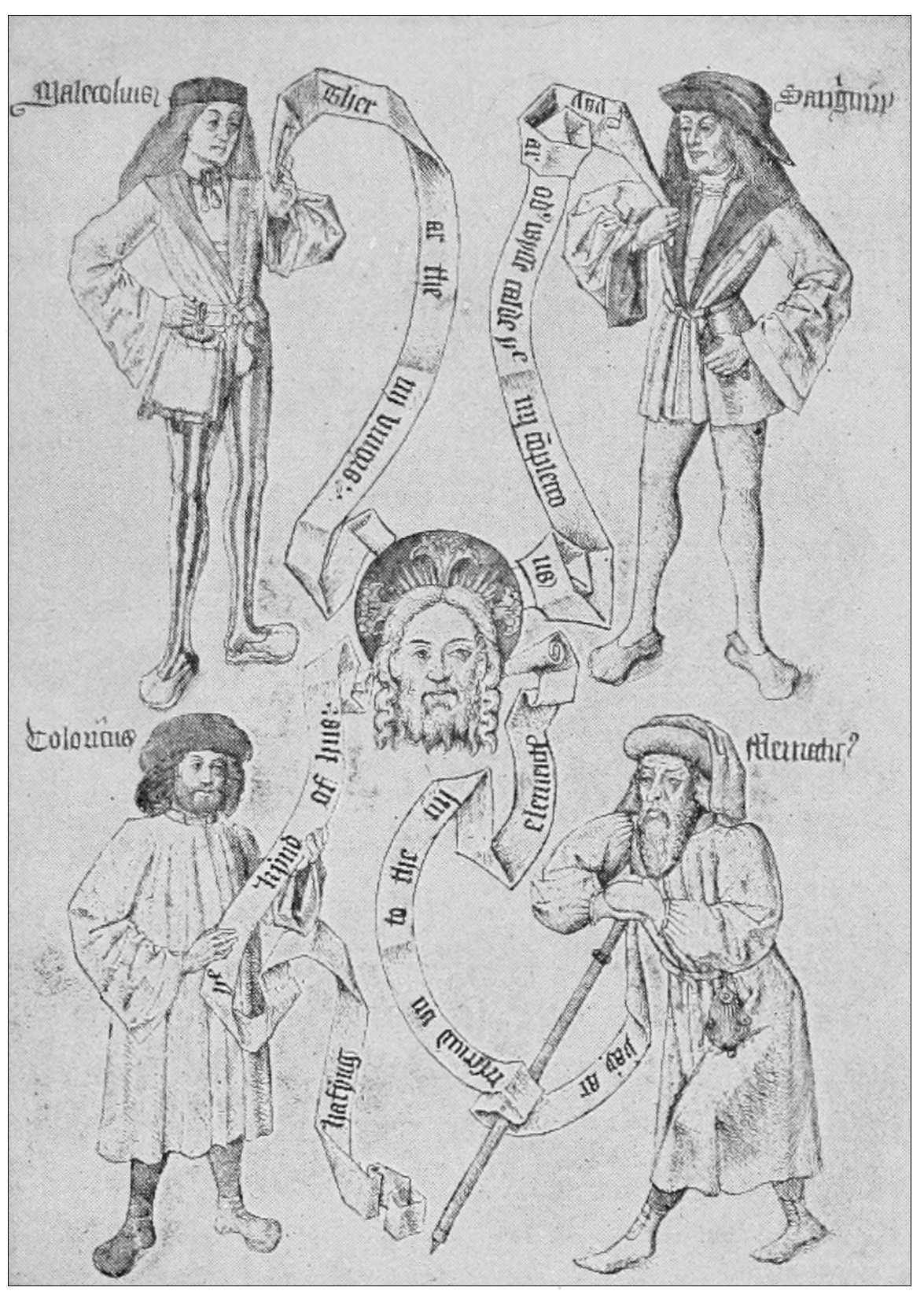
Fig. 34. FIGURE ILLUSTRATING THE ‘FOUR TEMPERAMENTS’, from the Guild Book of the Barber-Surgeons of York, now in the British Museum. The figure was prepared about 1500. Above, to the left, is the Melancholy man, and to the right the Sanguine. Below to the left is the Choleric man, and to the right the Phlegmatic. On the scroll work is written in English ‘Ther ar the iiij umors, thath ar oderwysse calde the iiij complecconis thath ar resceuid un to the iiij elementis, Hafyng the kynd of humors’, which may be rendered ‘There are the 4 humors, that are otherwise called the 4 complexions, that are received unto the 4 elements, having the nature of humors’. For the theory compare Fig. 13, p. 34.
In connection with their epidemiological work these three men, Fracastoro, de Baillou, and Sydenham, made significant additions to the knowledge of particular infectious conditions. Thus, during the sixteenth and seventeenth centuries there arose an exact body of teaching concerning acute infectious diseases which was the necessary prelude to the introduction of more effective preventive measures at a later date. To one infectious disease we may refer more particularly.
During the Middle Ages there had smouldered in various districts an obscure disease, sometimes more or less dimly distinguished under various specific names, but most frequently confused with Leprosy. Towards the end of the fifteenth century this disease, which was still imperfectly distinguished in men’s minds from Leprosy, broke out in epidemic and virulent form all over Europe. It caused great destruction of life and developed everywhere as a problem of national importance. Various titles were given it, such as ‘pox,’ ‘the French disease’, ‘the Spanish disorder’. Only tardily was it recognized that the disease was usually of venereal origin. Not till 1530, on the suggestion of Fracastoro, did it receive its modern cognomen Syphilis. From the time of its recognition, Syphilis has been pursued by a portentous mass of literature, the mere sifting and verification of which is a formidable task. Alarm, misunderstanding, religious feeling, false modesty, wilful misrepresentation, and change in type of the disease itself have all contributed their quota of obscurantism and fable to a naturally difficult subject (Figs. 35 and 36). Fracastoro did something to bring order out of the confusion. To him also we owe the first good scientific descriptions of several other destructive diseases, among which Typhus fever, now known to be conveyed by lice (p. 258), takes a prominent place.
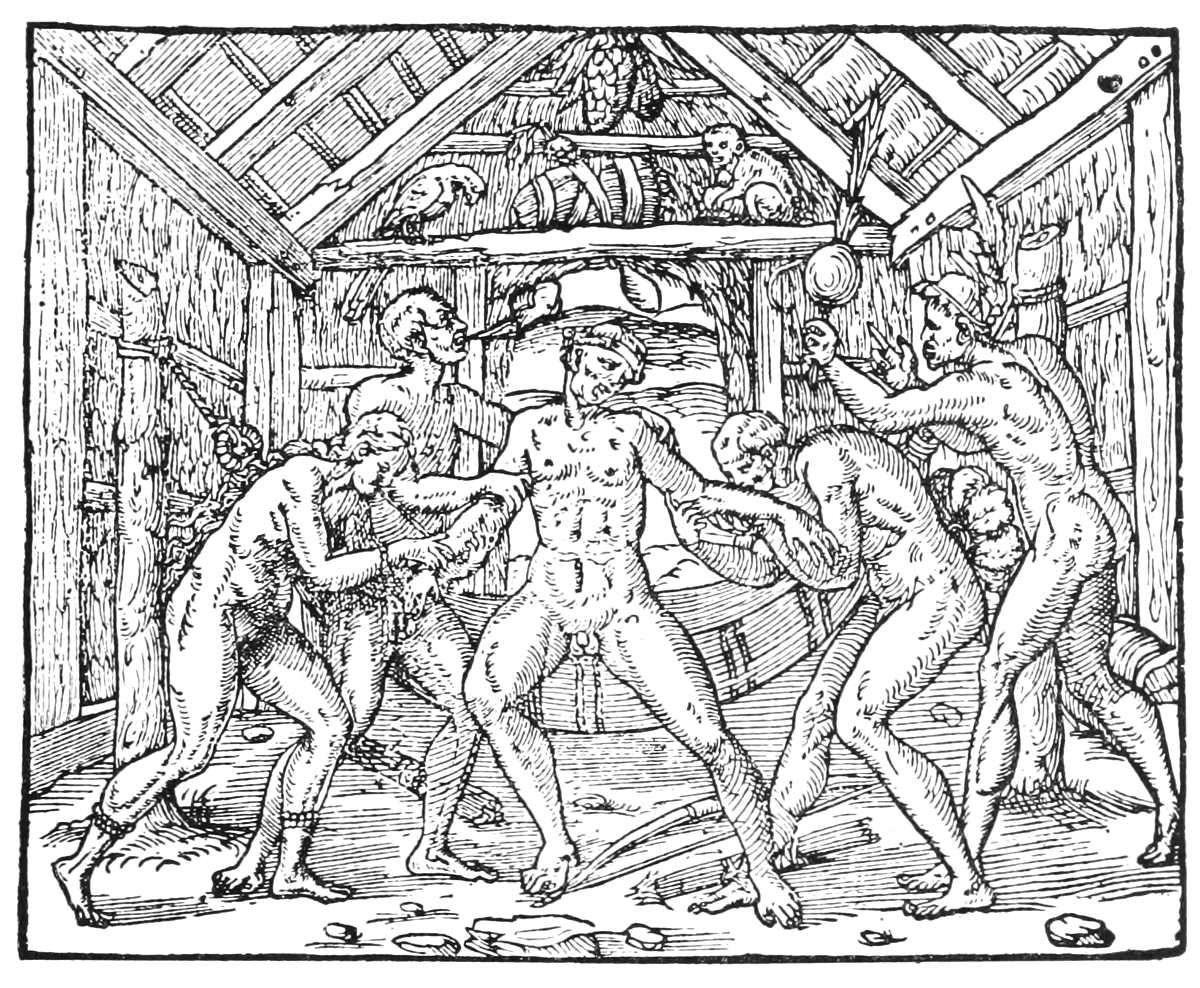
Fig. 35. THE EARLIEST PICTURE showing the use of Tobacco. From a work on Brazil, printed in Paris in 1558. In the center of a native hut stands an Indian suffering from Syphilis. Behind him, on the left, a man smokes a huge cigar over him as a curative measure. Right and left his arms are held by two figures who seek to suck the poison out of him. Another offers him a curative plant. Behind him is a ‘hammock’—the word is of American-Indian origin and means ‘tobacco-bed’. Above his head are a monkey, a parrot, and a bale of tobacco.
De Baillou (1538-1616) first described Whooping Cough, and was the first to use the word Rheumatism in the modern sense. He was moreover the first, since Hippocrates, to distinguish between Rheumatism and Gout. De Baillou’s works deeply influenced Sydenham, who held very similar epidemiological views, and uses a somewhat similar vocabulary (p. 100).
We have seen how the knowledge of Anatomy forwarded Surgery, while, with the lag in Physiology, Internal Medicine remained in a backward state. It is well to recall however that a knowledge of Anatomy and Physiology will not, of themselves, make a man a scientific physician. The object which presents itself to a physician is neither a living anatomy nor a physiological model. It is a sick and suffering patient. The physician’s first task is to examine exactly the phenomena of sickness and suffering, and in doing this the first demand on his knowledge will be the history and fate of others who have endured like sickness and suffering. When he has ranged these instances in his mind he may turn, for explanation and relief, to the resources suggested by other sciences, Anatomy and Physiology among them. But all the Anatomy and Physiology in the world will not aid the practitioner who is unacquainted with the natural history of disease. This is the truth that was firmly seized by Thomas Sydenham.
The Natural History of Disease was a subject which Sydenham pursued with lifelong devotion. Before his time the phenomena of disease had been classified, subdivided, discussed, and treated with all the subtlety and skill of scholastic thought. Men had now and again shaken themselves free from the shackles of the medieval system, and had here and there corrected the views of Galen or amplified the limited achievements of their predecessors. Yet none before Sydenham had set himself to consider all the actual cases of disease that lay before him as a subject of scientific description and analysis. That was the great achievement of the ‘English Hippocrates’. We should not find it easy to point to any important discovery to associate with his name. But he did more than discover. He initiated a new mode of approach. He was the founder of modern Clinical Medicine.
In 1666 Thomas Sydenham published his classic work, The Method of Treating Fevers, dedicated to his friend Robert Boyle, ‘the Father of Chemistry’ (pp. 124-6). The book opens with the almost Hippocratic phrase ‘A disease, in my opinion, how prejudicial soever its cause may be to the body, is no more than a vigorous effort of Nature to throw off the morbific matter, and thus recover the patient’. We have here the healing power of Nature of Hippocrates (p. 21), which had been obscured and overlaid in the twenty centuries which lay between the two great physicians. The works of Sydenham may reasonably be regarded as the first great commentary on the Hippocratic theme. Sydenham set well on its way the conception of infectious conditions as specific entities, a conception which has since been illuminated by the germ theory of disease (p. 224 ff.).
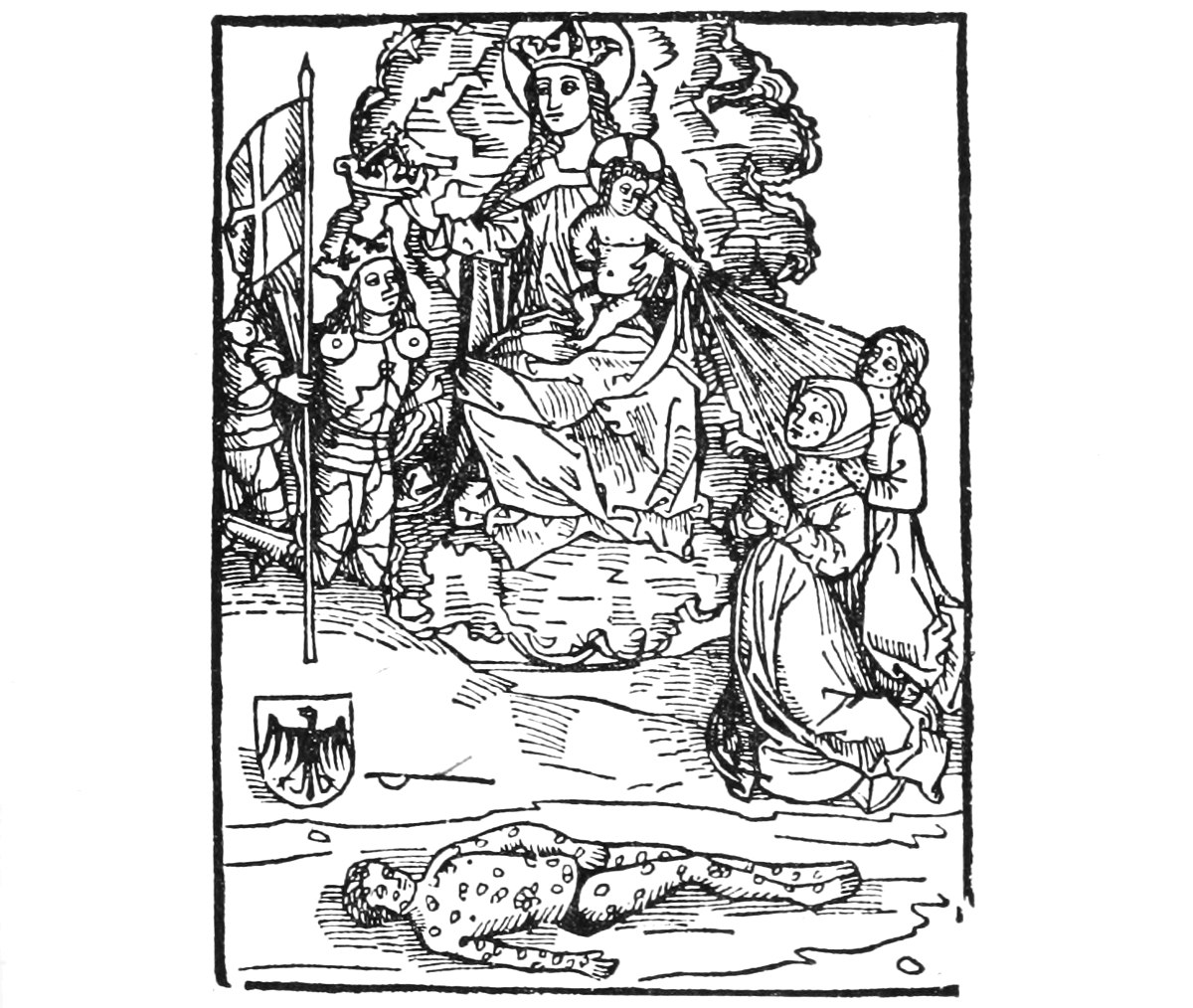
Fig. 36. Allegorical picture illustrating the venereal plague Syphilis.
From a work printed in Germany in 1496. The Virgin sits enthroned on clouds, crowning a crusader, who kneels at her right hand. The Holy Child on her knee sends forth the plague of Syphilis as a scourge on mankind. Two women, spotted with the rash of the disease, kneel in supplication before her on her left. In the foreground of the picture lies a corpse dead of the disease, the speckled ravages of which may be seen upon it.
§ 4. The First Physical Synthesis.
Manifestations of the Human Spirit are not accustomed to confine themselves exactly within the convenient limits of the centuries. Nevertheless, it happens that in the History of Science the year 1600 does, in fact, correspond to something of the character of a real change in the current attitude to Nature. That year really ushers in the era of physical experiment. The last of the great transitional thinkers who mark the waning of Renaissance philosophy was Giordano Bruno, the martyr of science.
Giordano Bruno (1548-1600), who was no practical scientist, had eagerly incorporated into his often fantastic philosophy the ill-worked-out conclusions of Copernicus (p. 88). Nominally adopting the Copernican theory, he modified it fundamentally. Copernicus, having placed the Sun at the center of the World, and made the Earth and other planets circle round it, had still left the stars at a fixed and definite distance, as had the ancient astronomers. The limitation of the sphere of the fixed stars was obnoxious to Giordano, and he removed the boundaries of the Universe to an infinite distance, in accordance with the principles of his philosophy. The change may seem unimportant save for astronomy, but, in fact, it came to influence every department of scientific thought, for the endlessness of Nature is implicit in the modern scientific attitude.
Giordano was burned at the stake at Rome, after seven years’ imprisonment, in 1600. In the same year the experimental era was ushered in with the work of William Gilbert (1544-1603), On the Magnet, in which he not only demonstrates experimentally the properties of magnets but also shows that the Earth itself is a magnet. In the same year, too, Tycho Brahe (1546-1601) handed over the torch to Johannes Kepler. Tycho was the last of the older astronomers who worked on the Aristotelian view of circular and uniform movements of heavenly bodies. Kepler was the real founder of the modern astronomical system. The period from 1600 onward lies with new men, Galileo (1564-1642) and Kepler (1571-1630) among astronomers and physicists, Harvey (1578-1657) among biologists, Descartes (1596-1650) among philosophers.
The seventeenth century opened with an extraordinary wealth of scientific discovery. As we glance at the mass of fundamental work produced during that period, we perceive the major departments of Science, as we know them to-day, becoming clearly differentiated. The acceptance of Observation and Experiment as the only method of eliciting the Laws of Nature reaches an ever-widening circle. Even to enumerate the names of the seventeenth-century pioneers would be a formidable task. The sciences penetrated to the Universities and influenced the curricula. The number of scientific men became so large and so influential that separate organizations were formed by them in the interests of their studies. It is the age of the foundation of the ‘Academies’, of which the English Royal Society is a type.
From the multitude of workers on these subjects we can but select a few names. In the first half of the century Galileo and Kepler are the main exponents of natural law. Descartes takes his place here as the first since antiquity who sought to explain the phenomenal universe on a unitary basis. In the second half of the period comes the mighty figure of Newton, whose researches ushered in that phase in our story in which we live to-day.
The early training of Galileo Galilei had been scholastic and Aristotelian. By 1590, however, he had begun to doubt, and was making experiments on the rate of acceleration of falling bodies. His conclusions were demonstrated in 1591 from the leaning tower of Pisa. By that famous experiment he showed, in the most public manner, the error of the Aristotelian view that the rate of fall was a function not of the weight of the object but of the period of fall. Revolutionary also was Galileo’s work of 1604. In that year a new star appeared in the constellation Serpentarius. He demonstrated that this star was situated beyond the planets and among the remote heavenly bodies. Now this remote region was regarded in the Aristotelian scheme as absolutely changeless. Although new stars had been previously noticed, they had been considered to belong to the lower and less perfect regions nearer to earth. To the same lower region, according to the then current theory, belonged such temporary and rapidly changing bodies as meteors and comets. But Galileo had attacked the incorruptible and unchangeable heavens.
In 1609 Galileo made accessible two instruments that were to have a deep influence on the subsequent development of Science, the Telescope and Microscope. It is with the former instrument that his name is most frequently associated. His first discoveries made by means of the Telescope were issued in 1610. That year was crowded with important observations especially on the inner planets and notably on Venus. It had been rightly claimed in criticizing the Copernican hypothesis that, if the planets resemble the Earth in revolving round the Sun, only such parts of them should be luminous as are exposed to the Sun’s rays. In other words, they should exhibit phases like the Moon. Such phases in Venus were now actually observed by Galileo. In the following year he described sunspots and traced them round the Sun’s disk.
We need not follow the further astronomical observations of Galileo, nor need we discuss the contest with the older school on which he embarked. It is sufficient to remind ourselves that the appearance of a new star, the behavior of the rings of Saturn, the observations of the phases of Venus and of the Sun’s spots, struck a blow at the Aristotelian astronomy comparable to that delivered against the Aristotelian physics by the falling weights from the leaning tower of Pisa. Aristotelian astronomy demanded heavens eternally changeless. Here were changes and new appearances in the heavens, clearly visible to all who would see.
During these years too, Galileo was laying firm the foundations of the science of Mechanics. Out of his mechanical researches came a new way of looking at the objects of Nature which has profoundly influenced the entire subsequent course of science. That way is best expressed in Galileo’s own words, which place him among the philosophers whose thought influences all those who deal with scientific themes.
‘As soon as I form a conception of a material or corporeal substance, I simultaneously feel the necessity of conceiving that it has boundaries and is of some shape or other; that relatively to others it is great or small; that it is in this or that place, in this or that time; that it is in motion or at rest; that it touches, or does not touch, another body; that it is unique, rare, or common; nor can I, by any act of imagination, disjoin it from these qualities. But I do not find myself absolutely compelled to apprehend it as necessarily accompanied by such conditions as that it must be white or red, bitter or sweet, sonorous or silent, smelling sweetly or disagreeably; and if the senses had not pointed out these qualities language and imagination alone could never have arrived at them. Therefore I think that these tastes, smells, colors, &c., with regard to the object in which they appear to reside, are nothing more than mere names. They exist only in the sensitive body, for when the living creature is removed all these qualities are carried off and annihilated, although we have imposed particular names upon them, and would fain persuade ourselves that they truly and in fact exist. I do not believe that there exists anything in external bodies for exciting tastes, smells and sounds, &c., except size, shape, quantity, and motion. If ears, tongues, and noses were removed, I am of opinion that shape, quantity, and motion would remain, but there would be an end of smells, tastes, and sounds, which abstractedly from the living creature I take to be mere words.’
This passage is a veritable Charter of Science. From Galileo’s day to ours, men of science have occupied
themselves in measuring size, shape, quantity, and motion, the ‘primary qualities’, and expressing their knowledge in that measured form. They have relegated colors, smells, tastes, sounds, and other sense-impressions to the position of ‘secondary qualities’, and have tried to express them, when they express them at all, in terms of the primary qualities. We need not enter on the philosophical discussion as to how far the primary qualities are in truth more real than the secondary, but it is a fact that, since the time of Galileo, Science has come to be regarded more and more widely as an exact process. Science is Measurement. It is a conception that has affected the medical no less than the other sciences, and it is a conception that Medicine, for good or ill, owes to Galileo.
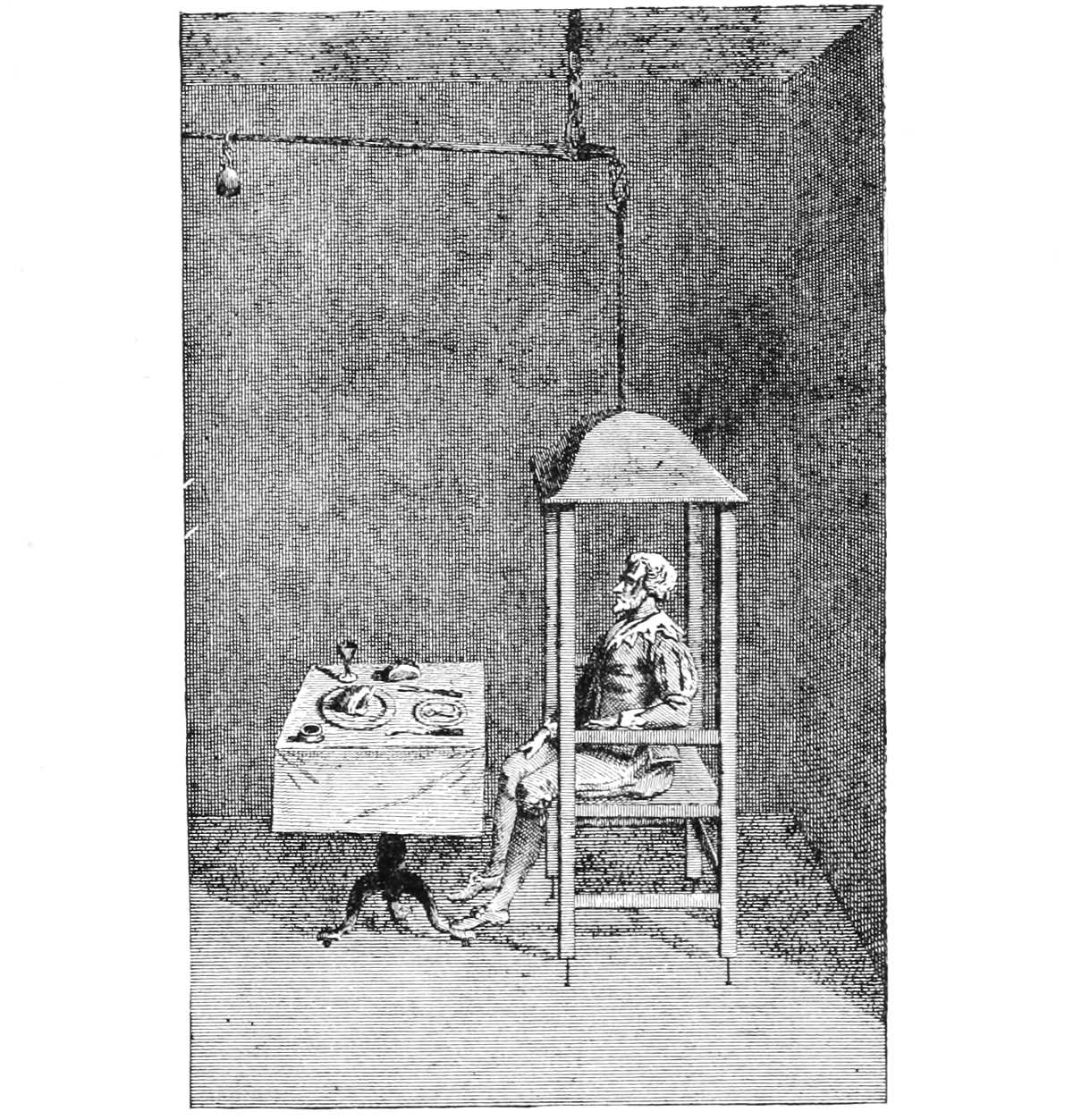
Fig. 37. SANCTORIUS IN HIS BALANCE. Sanctorius was able to eat and even to sleep in his balance, counterpoised by a weight working on the principle of the steelyard. He was thus able to test his weight under various conditions, and notably to estimate the amount of the ‘insensible’ perspiration. His were the first experiments on ‘Metabolism’ (see p. 108).
§ 5. The Revival of Physiology.
The first to apply Galilean principles of measurement to biological matters was Sanctorius (1561-1636), a professor at Padua. He described a thermometer for use in taking the temperature of the human body (Figs. 39 and 40), and an apparatus for comparing the rate of pulse beats (Fig. 41). Both these he modified from devices suggested by Galileo (Fig. 38). It is an indication of the transitional character of the Science of the time that he describes these instruments in a commentary on a medieval translation of the Canon of Avicenna (p. 67). He also sought to compare the weight of the body at different times and in different circumstances. In the process of doing this, he demonstrated that the body loses weight by mere exposure, a process which he ascribed to ‘insensible perspiration’ (Fig. 37). By these experiments he laid the foundation of the modern study of ‘Metabolism’ (p. 220).
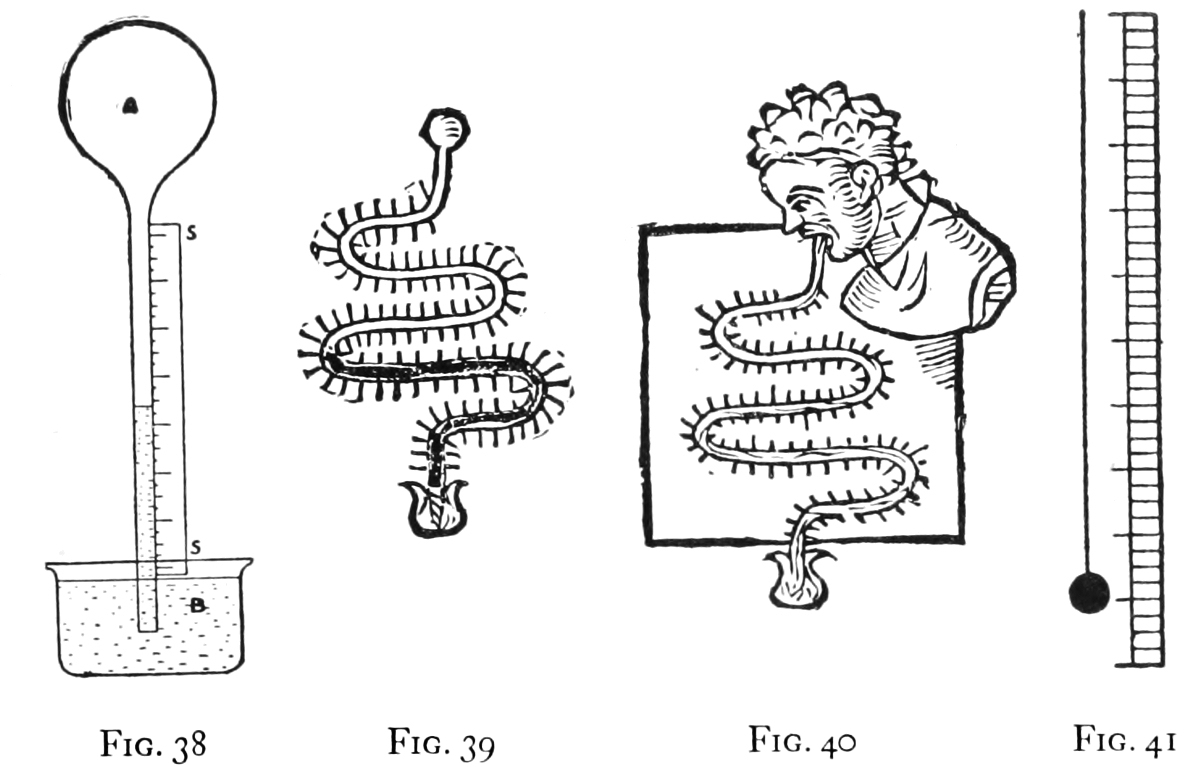
Fig. 38. The principle of Galileo’s thermometer. A tube ending in a bulb A is inverted over a mercury bath B. If the temperature fall the air in A will contract and mercury be drawn up into the tube. If the temperature rise the air in A will expand and mercury be driven out of the tube. The height of the mercury can be read on the scale SS. The reading will not be accurate because the instrument is, in fact, also a barometer, since the mercury in B is exposed to the atmospheric pressure, which will therefore affect the rise in the tube.
Fig. 39. The application of the same system by Sanctorius who used a curved tube.
Fig. 40 is not, as might be thought, a man trying to swallow a centipede, but the adaptation of the instrument of Sanctorius as a clinical thermometer.
Fig. 41. Galileo’s simple and effective ‘pulsimeter’. It consists only of a weight suspended on a thread. This thread is held in the hand and the weight made to oscillate as a pendulum. As the thread is shortened the oscillations increase in frequency. The process is continued until the pendulum oscillates to time with the pulse. The length of the free thread is then read off on the accompanying scale. It was used by Sanctorius.
While Sanctorius was engaged in this pioneer work at Padua, the movement that Vesalius had inaugurated there was making further conquests in the purely biological line. Vesalius had been succeeded at Padua by a series of anatomists of great eminence. Perhaps the most prominent among these was Jerome Fabricius (1537-1619), usually called ‘of Aquapendente’, after the small Tuscan village where he was born. This Fabricius of Aquapendente taught at Padua for over fifty years, from 1565 till his death at eighty-two in 1619. He made many contributions to the advancement of anatomy, most of which had physiological bearings. Thus, he was the effective founder of modern embryology and the author of the first illustrated work on that subject, in which he describes the formation of the chick in the egg. He was the first to give accurate figures of the structure of the eye. He developed the mechanics of muscular motion. He added to his qualities as an observer the power of attracting younger men.
In spite of all his powers, however, Fabricius never shook himself free from ancient views, and especially he was steeped in the theories of Aristotle and Galen. This backward-looking habit prevented his work from being as important as it might otherwise have been. In connection with the circulation, for instance, he made a striking discovery, but wholly failed to draw out its most important lesson.
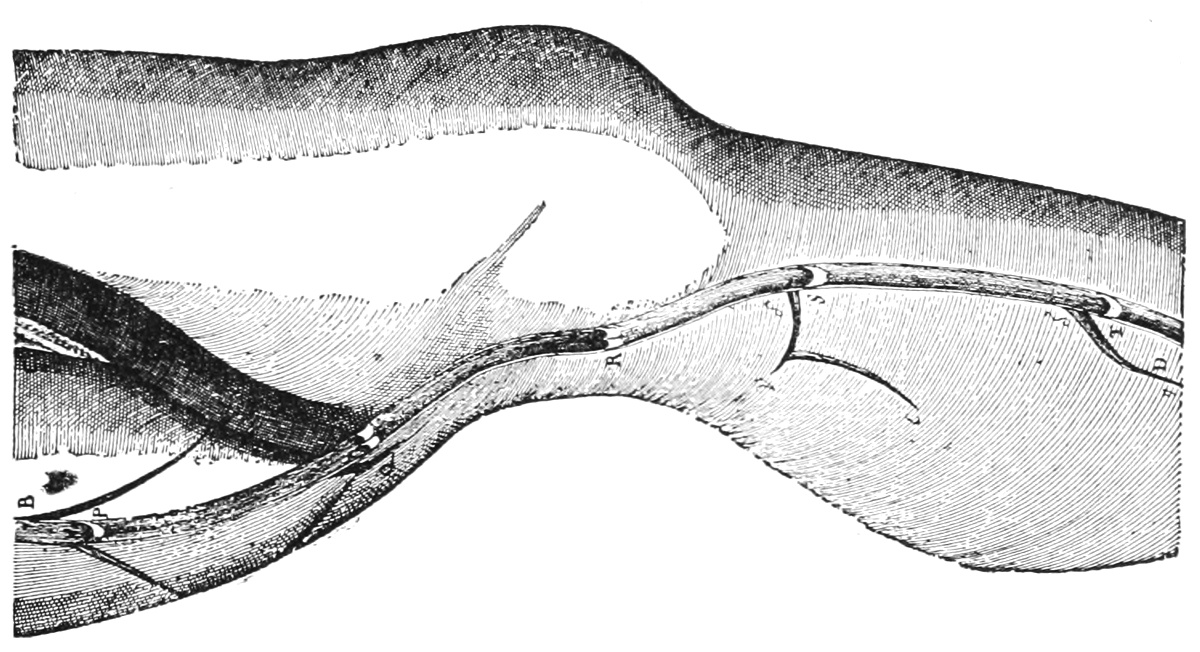
Fig. 42. DISSECTION OF A VEIN in the thigh and leg from a work On the Valves of the Veins, published by Fabricius in 1603 at Padua. These valves prevent the passage of the blood in any direction except toward the heart. They may be seen at the points P, Q, R, S, and T.
In 1600 he published his book, On the Valves of the Veins. In it he says that these structures are so placed that their mouths are always directed toward the heart (Fig. 42), yet he never gets an inkling that the effect of these valves must be to prevent blood flowing into the veins except toward the heart. He is too set on the old Galenic physiology to permit such a revolutionary thought. The real importance of Fabricius is, therefore, not so much as an investigator but rather as a teacher, a capacity in which he shone above all other physiologists for generations to come. He would deserve our remembrance if only as the master of the discoverer of the circulation of the blood, William Harvey.
The Englishman, William Harvey (1578-1657), after education at Cambridge, went to Padua in 1599, when Fabricius was at the height of his powers. Returning to England in 1602, he set up in practice in London. During the years which followed, he was dissecting and experimenting very industriously, and by 1615 had reached a clear conception of the circulation of the blood (Fig. 43), though he did not publish his discovery till some thirteen years later.
To discuss the actual steps by which Harvey made his discovery would be beyond our scope. He had, however, been well trained in experimenting on living animals by Fabricius, and had read widely in anatomical literature. He was of a contemplative turn of mind and his quiet and cautious temper, united with his enthusiasm and skill as an experimenter, provided a superb mental equipment for a life of scientific investigation.
Harvey, early in his work, reached two fundamental conceptions concerning the vascular system. He perceived that the valves in the veins would permit the blood to pass only towards the heart (Fig. 43), while those in the great arteries arising from the heart would permit the blood to pass only away from the heart. In connection with the movement of the blood, Harvey’s crucial point is that it must be continuous, and always in one direction. This really clinches the matter, for consider the capacity of the heart. Let us suppose that either ventricle holds but 2 ounces of blood. The pulse beats 72 times a minute and 72 × 60 times an hour. In the course of one hour, therefore, the left ventricle will throw into the aorta, or the right ventricle into the pulmonary artery, no less than 72 × 60 × 2 = 8,640 ounces = 38 stones 8 lb. In other words, in one hour the ventricle will throw into the great artery more than three times the body weight of a heavy man. Where can all this blood come from? Whither can it all go? It cannot come from the ingested food and drink, for no one could consume so much in one hour! It cannot reach and remain in the tissues, for they would soon all burst and ooze with blood! The solution of the puzzle, Harvey came to see, is that it is the same blood that is always being pumped into the arteries, and the same blood that is always coming back through the veins. In other words the blood circulates, a fact which Harvey proceeded to demonstrate with convincing thoroughness (Fig. 43).
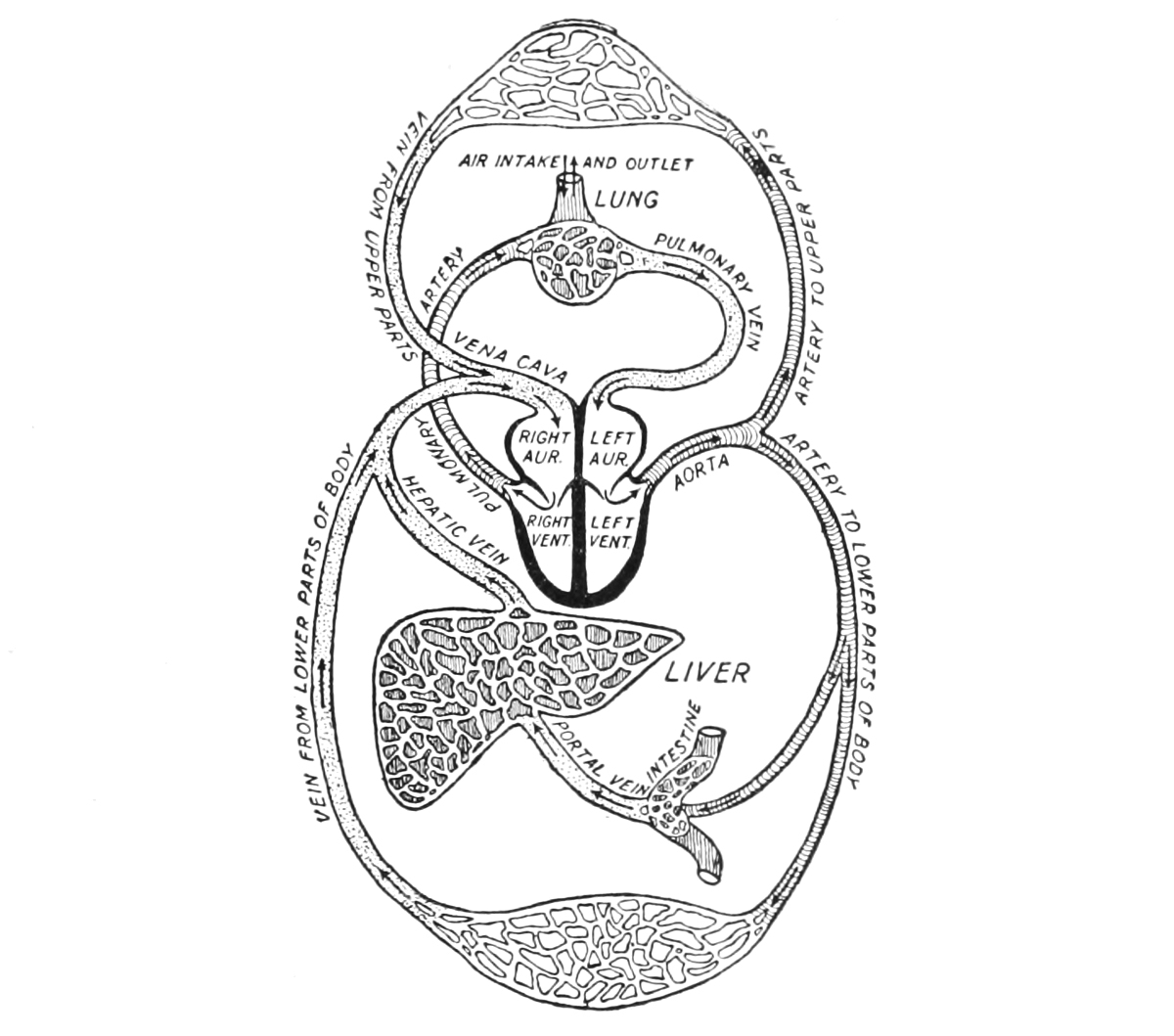
Fig. 43. DIAGRAM TO ILLUSTRATE THE NATURE OF THE CIRCULATION OF THE BLOOD. Leaving the left ventricle, when the walls of that cavity contract, the blood is forced through the valves into the great artery known as the aorta. From the aorta it passes into smaller and ever smaller arteries, finally reaching the systemic capillaries or the portal capillaries. After travelling through one or other capillary network it enters a vein. Thence it passes into larger and ever larger veins, until it ultimately enters the great vein known as the vena cava that opens into the right auricle. It has now completed the Greater Circulation. As the right auricle contracts the blood passes through the valves between the right auricle and right ventricle into the right ventricle. From there it enters the Lesser Circulation, passing into the great pulmonary artery, which conducts it to the lung. In the lung the pulmonary artery breaks up into branches and finally into capillaries. Through these the blood travels until it reaches a tributary of the pulmonary vein and finally the pulmonary vein itself. The pulmonary vein empties its blood into the left auricle. From the left auricle the blood passes at last into the left ventricle from which it started, having traversed both the Greater and the Lesser Circulations.
To understand the change which Harvey wrought in the conception of the workings of the body, this description and diagram should be compared with the description and diagram on pages 56-59.
We may note that, though Harvey demonstrated the existence of the circulation, he was never able to follow it throughout, for he did not see the capillary vessels by which the blood is conveyed from the terminal branches of the arteries to the smallest tributaries of the veins. These were first demonstrated by Malpighi (p. 116).
The knowledge of the circulation of the blood has been the basis of the whole of modern Physiology and with it of the whole of modern rational Medicine. The attitude of Galen and Aristotle towards the heart and the great vessels passed into the shadow. The blood, it was seen, is a carrier always going round and round on the same beat. What it carries, and why, how and where it takes up its loads, and how, where, and why it parts with them, these are questions the answering of which has been the main task of Physiology in the centuries that have followed. As each of the questions has obtained a more and more rational answer, so clinical Medicine has always made a step forward, and has come to approach more nearly to a true science. Thus it is that the work of Harvey lies at the back of almost every important medical advance.
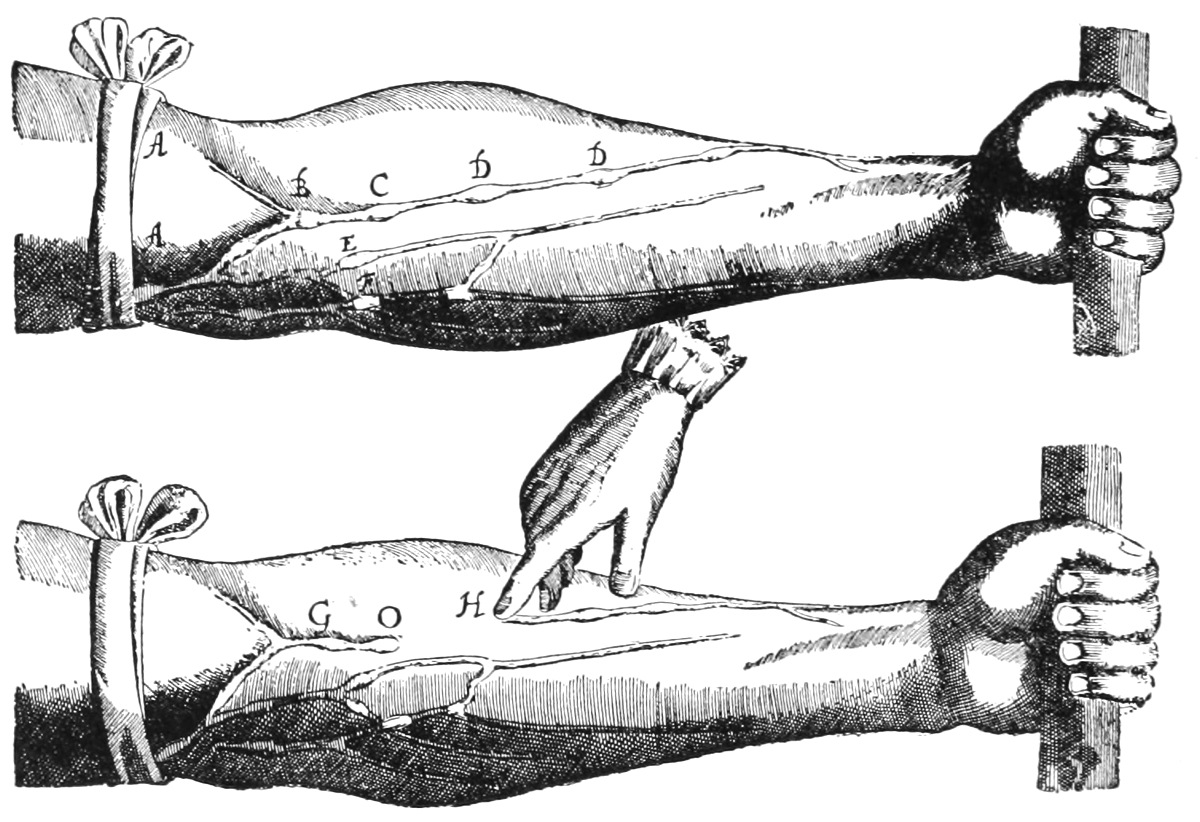
Fig. 44. THE VALVES in the superficial veins as seen in the bandaged arms of living men, from William Harvey’s great work on the Circulation of the Blood, printed in 1628. The bandage is seen on the upper arm in each case, and the valves are indicated, as in life, by nodes or swellings in the veins. If a finger is pressed along the vein from one valve to another as from node O to node H in a direction away from the heart, the vein from O to H will be emptied of blood. It will remain empty, since the valve at O does not permit the passage of blood away from the heart, but only towards it. This observation was Harvey’s starting point for his great discovery.
§ 6. Microscopic Analysis of the Animal Body.
The compound microscope was first made into an effective instrument by Galileo. It was, as it were, a by-product of his invention of the telescope. With that instrument he had seen enough to convince himself that the movement of the Sun round the Earth was but an appearance. At the very time that Harvey was giving his first course of lectures securely in London, Galileo’s teaching was attracting the unwelcome attention of the Inquisition in Rome.
Galileo’s microscopes, however, were far less satisfactory than his telescopes. For optical reasons which we need not discuss, these early compound microscopes failed to give a clear picture. With any high degree of magnification, the image was always blurred and distorted. More than three centuries were to pass before a better compound system was introduced. But about 1650 a way was found of constructing and mounting simple lenses of very high power. Many of the most important microscopical discoveries of the second half of the seventeenth century were, therefore, made with a simple lens. This was notably the case with much of the work of the great investigators Malpighi and Leeuwenhoek (Fig. 49 A).
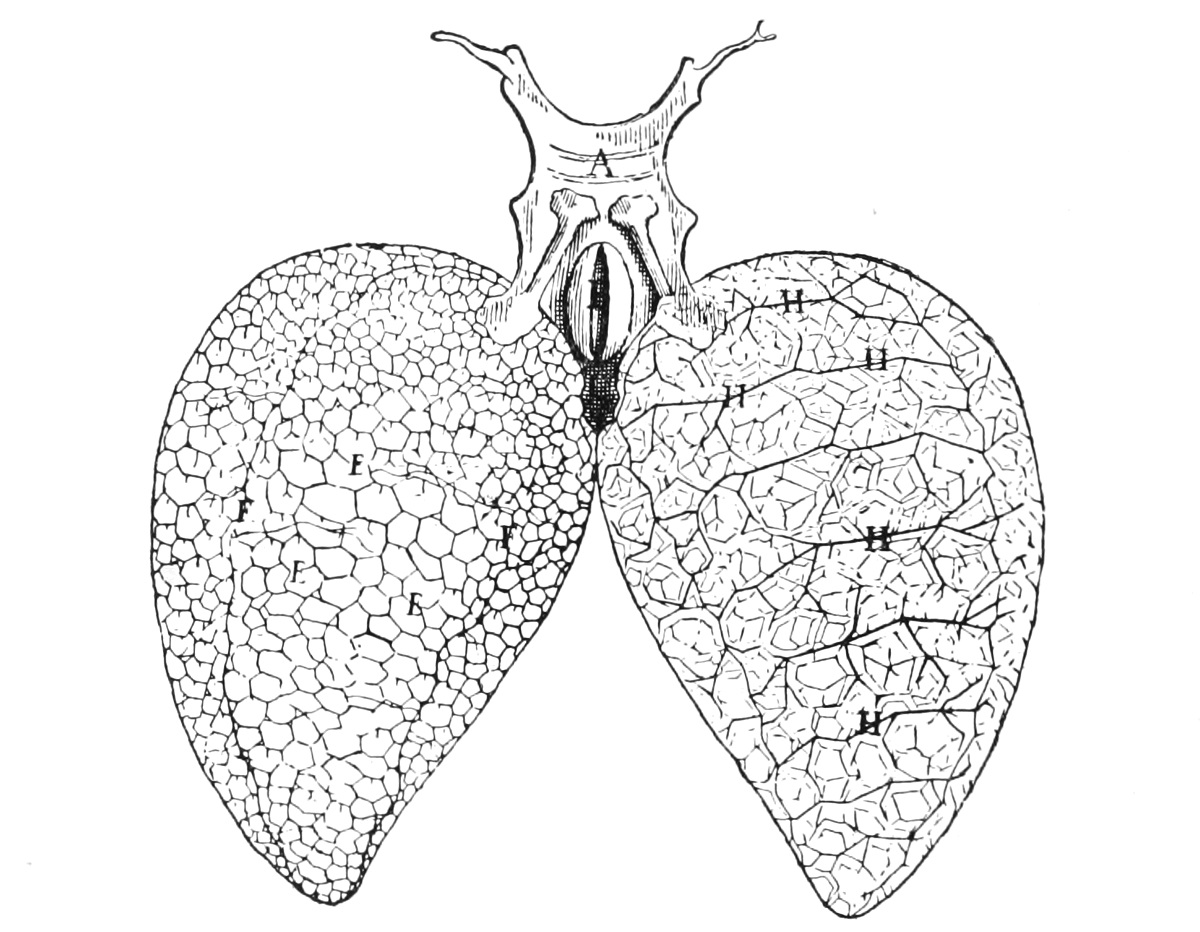
Fig. 45. LUNGS OF FROG, showing the capillary vessels from a figure by Malpighi in the rare first edition of his work On the Lungs, published at Bologna in 1661. A is the part of the larynx, B is the opening of the larynx into the trachea or air-tube leading to the lung. The letters EEE represent the outer surface of the lung and exhibit the network of capillary vessels. On the other side the sack-like lung has been laid open, and is viewed from the inside. The letters HHH are placed upon veins on the inner surface of the lung. These arise from capillaries which are indicated between the veins.
Marcello Malpighi (1628-94) was born in the year in which Harvey’s work was published. He became a professor at Bologna, having early developed great skill in minute investigation. His first work, which appeared in 1661, supplied the element missing in the investigations of Harvey, for he describes the actual passage of blood from the arteries to the veins through the ‘capillary’ blood-vessels (Fig. 45). Harvey, who did not use a microscope, knew nothing of the capillaries. The object which yielded up the secret was the lung of the frog. This organ in the frog happens to be almost transparent, is very simple in structure, and is furnished on its surface with particularly conspicuous capillary vessels. Malpighi could hardly have selected an object better suited for this particular research. This important discovery of his drew the attention of scientific men in England. The Royal Society soon entered into correspondence with him, and during the remainder of his life undertook the publication of his researches.
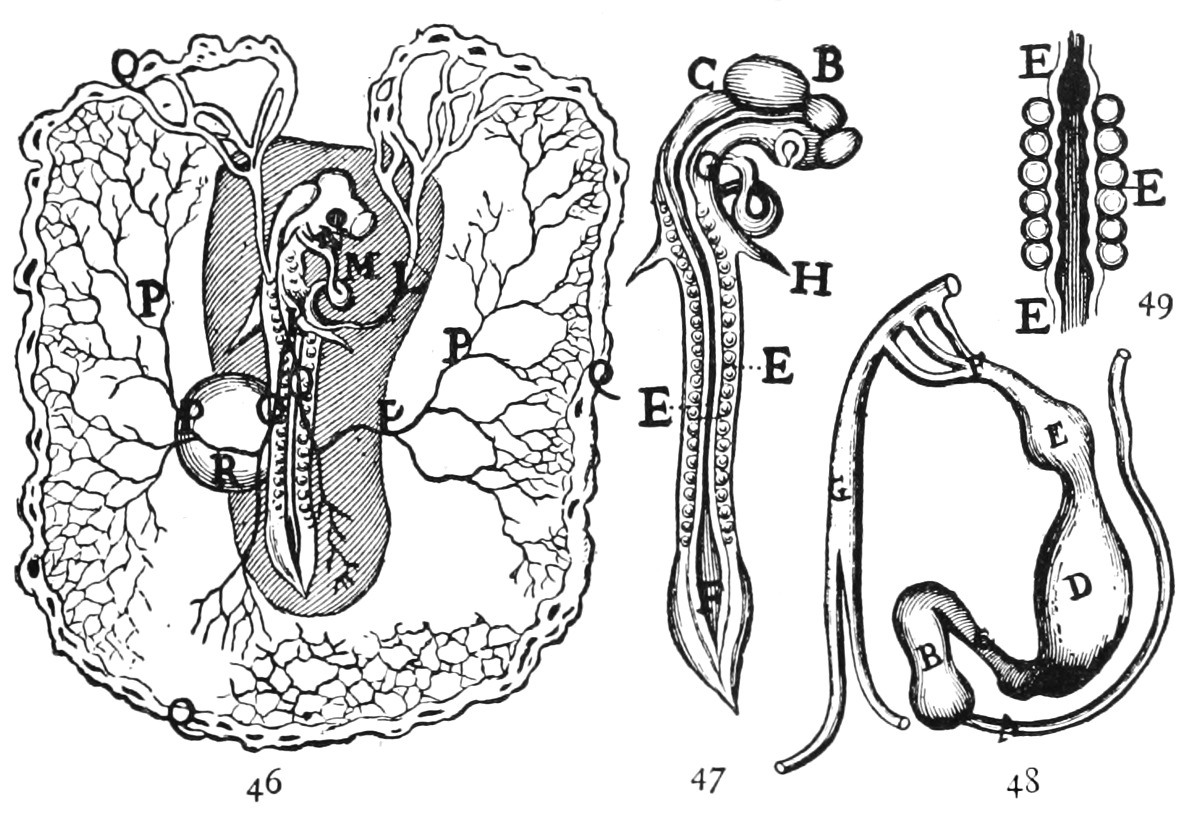
In 1673 Malpighi published in London his work On the Formation of the Chick in the Egg. Thirteen years later, in 1686, he published extensions and corrections of this work. Our figures are taken from the later work.
Fig. 46 is the whole embryonic area, at about the end of the second day of incubation. The embryo itself is seen with its large head containing the three ‘cerebral vesicles’ (which are the rudiments of the brain), the large eye, the protuberant coiled heart (NM), from which vessels pass to the ‘vascular area’. The segmented vertebral column is well seen, as well as the vessels forming a network as they meander over the vascular area.
Fig. 47 exhibits the embryo more enlarged and in greater detail.
Fig. 48 is an enlarged figure of the heart; the part D will ultimately form the ventricle, B the auricle, and A the vena cava. At F the aorta sends forth three branches which unite again. The nature of these branches was not understood in Malpighi’s time. They have been explained in modern times by embryologists working under the inspiration of evolutionary theory as having once furnished the blood-supply to the gills of a fish-like ancestor.
Fig. 49 is a part of the segmented vertebral column still more enlarged.
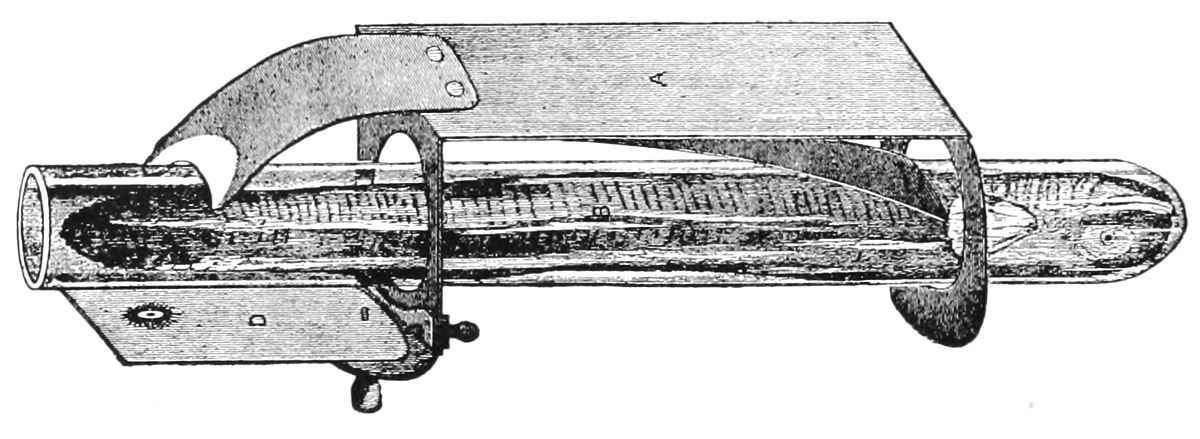
Fig. 49a. ONE OF LEEUWENHOEK’S MICROSCOPES. To understand the figure turn the book at right angles to the line of print. The object to be examined—here the tail of a small eel—is placed in water in the test-tube B. This test-tube is held firmly by two springs in the frame A. The microscope itself is simply a flat metal plate D, into which is let a very minute lens, the setting of which is shown above the letter D (when the head of the eel is downwards). The lens is focused by means of a fine screw which moves the whole plate.
The contributions of Malpighi to biological knowledge were very numerous and important. The study of early development, embryology as it is now called, was greatly extended by him. The later stages of embryological development had been investigated by Fabricius (p. 110) and some additions to the subject had been made by Harvey. Malpighi, applying his microscope to the earlier germ of the animal body, described in detail the development of the organs, notably of the heart and the nervous system (Figs. 46-49). He also demonstrated the minute structure of the skin, spleen and liver, in all of which there are anatomical structures that still bear his name. He investigated microscopically the structure and physiology of insects and plants, and his figures of the cell-walls of the latter are good and clear.
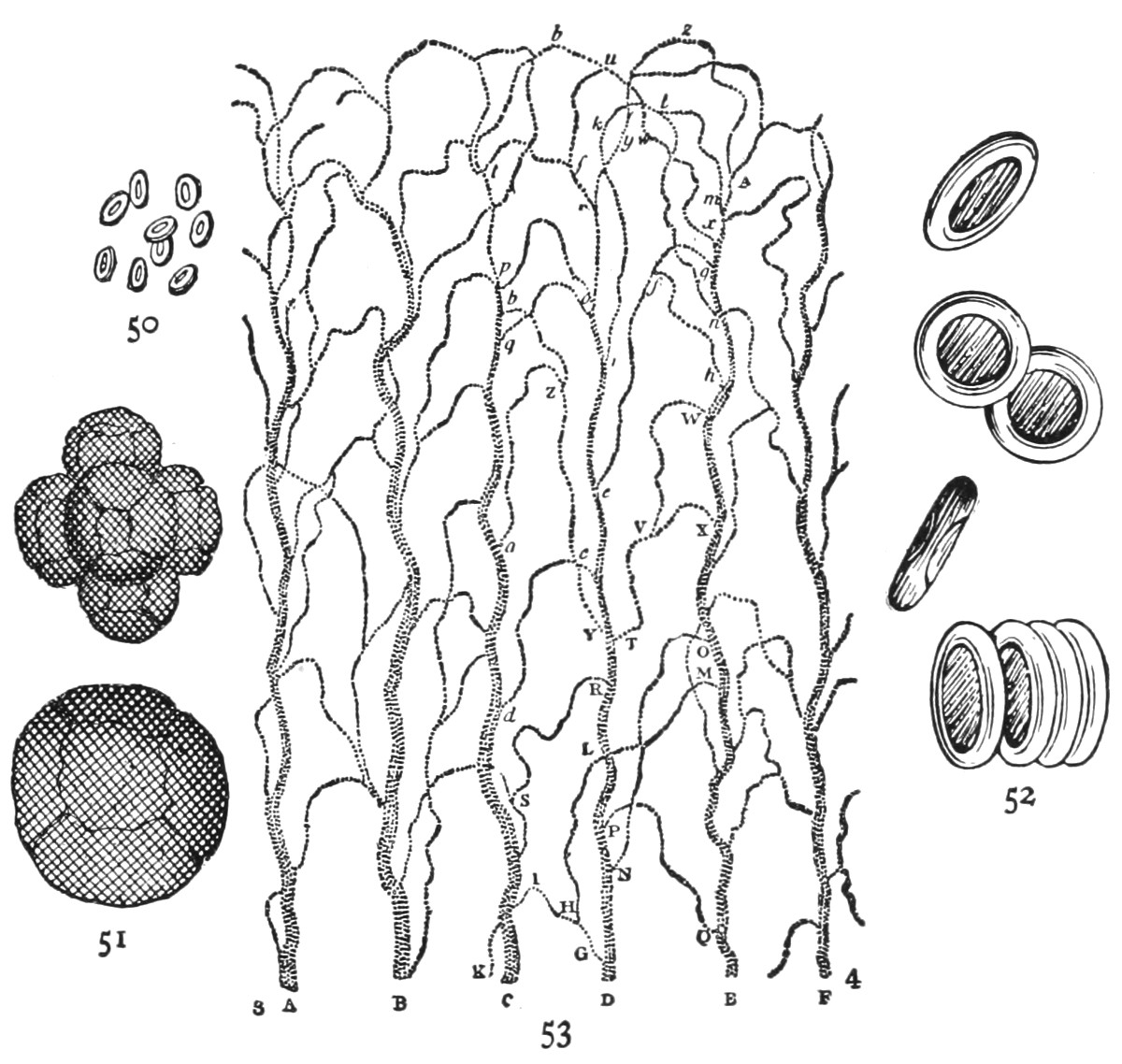
Figs. 50-53 illustrate the blood corpuscles and circulation after Leeuwenhoek.
Fig. 50. Oval blood corpuscles of salmon showing nuclei.
Fig. 51. Human red blood corpuscles.
Fig. 52. Drawing of human red blood corpuscles for comparison with Leeuwenhoek’s figures.
Fig. 53. Capillary network in web of frog’s foot. A, C and E are arterioles, B, D and F are venules.
A most remarkable contemporary microscopist was the Dutchman, Anthony van Leeuwenhoek (1632-1723). Without medical or scientific training, desultory and secretive in his mode of working, he was withal an observer of genius and a very shrewd investigator. During his long and industrious life he made a series of disconnected discoveries which for originality and importance have been surpassed by no other microscopic observer. He improved and extended the knowledge of the capillary circulation of which Malpighi was the discoverer (Fig. 53), he gave figures of the blood corpuscles (Figs. 50-1), of spermatozoa and of fibres of muscles (Figs. 55-56a), and advanced the knowledge of embryology. He always worked with a simple microscope, using lenses of exceedingly short focal length (Fig. 49A). It is astounding that, with such an instrument, he saw and figured bacteria as early as 1683 (Fig. 54).
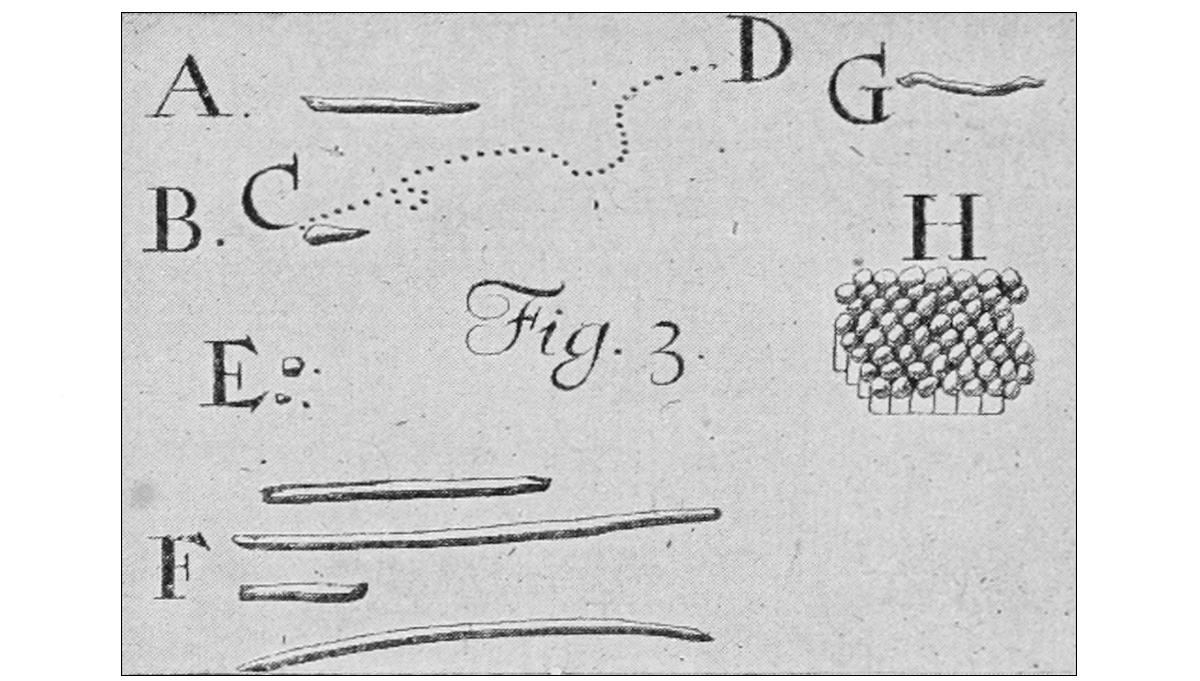
Fig. 54. THE FIRST REPRESENTATION OF BACTERIA. They were figured by Leeuwenhoek in the Philosophical Transactions of the Royal Society of London in 1683.
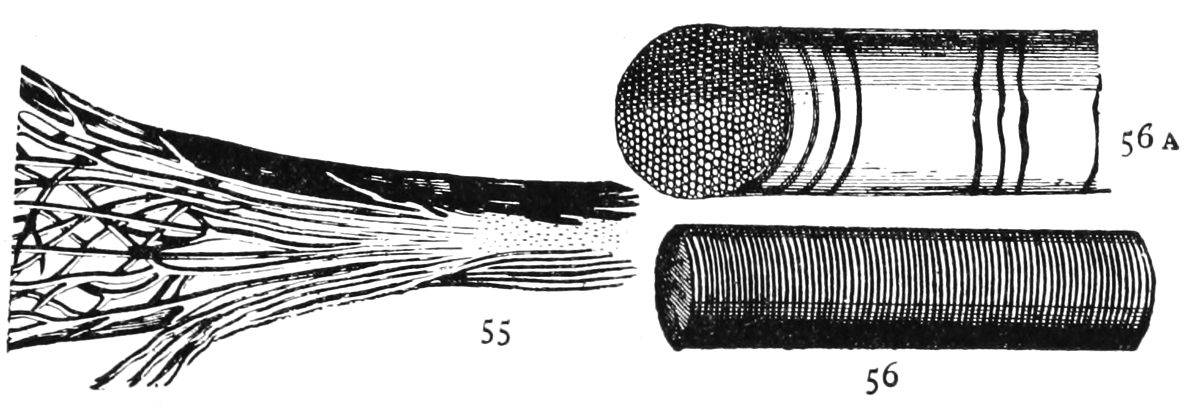
Figs. 55-56A. Drawings of the structure of muscle made about 1682 by Leeuwenhoek.
Fig. 55 shows a muscle teased up into bundles of fibres, magnified.
Fig. 56 is a more magnified view of a bundle of fibres. The cut fibres are shown at the end.
Fig. 56A is a very highly magnified view of a single fibre showing very clearly the striations that are very characteristic of voluntary muscle.
The short life of a second Dutch microscopist of the seventeenth century, Jan Jacobz Swammerdam (1637-80), was abbreviated yet further, as regards scientific achievement, by his insanity. In his brief working period he produced his Bible of Nature which, alone of the scientific writings of his age, is still consulted by modern naturalists for the unique beauty and accuracy of its figures. He extended the knowledge of embryology and he made a series of physiological experiments which involved the very modern physiological device known as the ‘nerve-muscle preparation’. He is thus the founder of an important department of Physiology. Swammerdam showed that, during contraction, a muscle does not increase in bulk, and that therefore the nerve brings nothing to it in the way of the hypothetical ‘nervous fluid’ in which many then believed (Fig. 63). He applied the same reasoning to the heart (Figs. 57-60). Swammerdam was perhaps the first to see the blood corpuscles. Like several of his contemporaries and followers, he made injection preparations of much beauty and delicacy. His great work was not published till after his death. The copper plates that he had prepared for it were found and purchased by Boerhaave (p. 140), who produced them at his own expense.
These microscopists and several others in the seventeenth century did much to explore the minute structure of the animal body. Their revelations showed at once an unexpected complexity of all the parts, and an unexpected resemblance of some of those parts which appear diverse to the naked eye. Thus, the structure of the body came to be subjected to a process that we may call ‘microscopic analysis’. For long after the time of these classical microscopists no effective improvements were made in the microscope, and the progress of microscopic analysis lay almost dormant. With the improvements in the microscope of the nineteenth century, the method was taken up again with triumphant results.
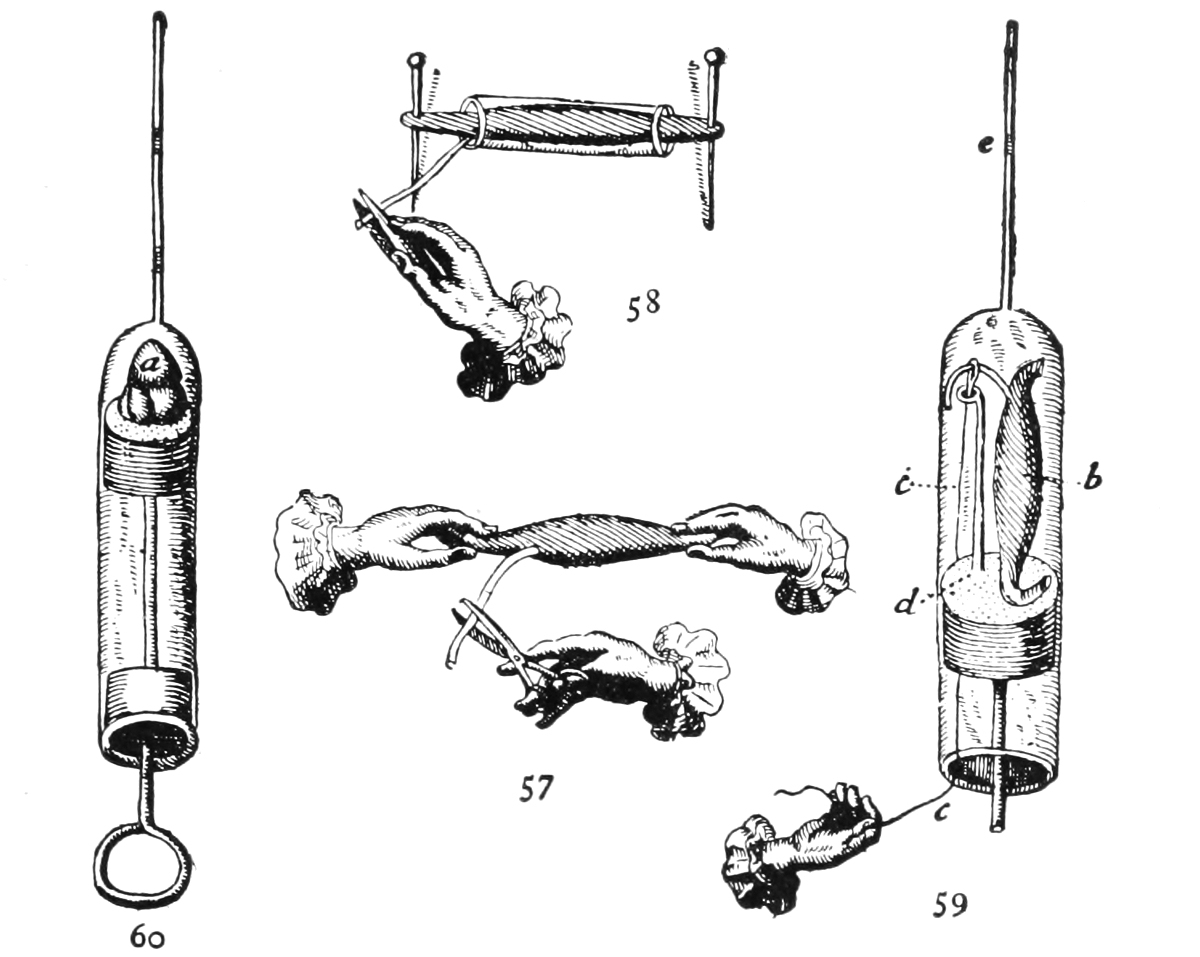
Figs. 57-60. Experiments by Swammerdam to illustrate the nature of muscular contraction.
Fig. 57 is the simplest form of what physiologists call a ‘nerve-muscle preparation’. It is merely a living muscle dissected away from the body, but with its nerve still attached. In the experiment the two tendons of the muscle are held by the two hands. An assistant pinches the nerve with forceps. The muscle thereon contracts and draws the two hands together.
Fig. 58 shows the muscle passed through a glass tube. Its two tendons are fastened by two pins. When the nerve is pinched the pins are drawn towards each other, and the muscle, in contracting, fills the middle of the tube.
Fig. 59 shows the nerve-muscle preparation enclosed within a tube. This tube has a narrow neck in which, at e, is a drop of water. The other end of the tube is closed by a cork. The nerve may be squeezed by pulling the thread c c, which passes through the cork and drags the nerve into a narrow wire loop.
Fig. 60 is a similar experiment with the heart, which contracts and expands spontaneously and needs no irritation.
The experiments 59 and 60 show that during ‘contraction’ no new substance passes into the muscle, since it does not then increase in size. This gives the death-blow to the conception of a ‘nervous fluid’ passing into the muscle to cause contraction by distending it.
§ 7. From Alchemy to Chemistry.
During the sixteenth and the first part of the seventeenth century the basic science of Mechanics had been placed on a firm footing by Galileo. Astronomy, with Galileo and Kepler, had made the great break with the past. Anatomy and Physiology had put on their modern dress. Chemical knowledge, however, remained peculiarly backward. Many advances, it is true, had been made in technical processes, but investigations designed to throw light on theory were mostly prosecuted by the band of dupes and charlatans who, since the Middle Ages, had been seeking the Philosopher’s Stone. The old theory of the four elements, earth, air, fire, and water (p. 34), formed an ill basis for experiment. Some philosophers, it is true, had put forward crude atomic theories, but they had little experimental evidence to adduce. Nevertheless even the alchemists had made some advance and had, for instance, perfected a system of weighing.
The great defect of the ancient view of matter was that it contained no definite conception of the nature of a pure substance. Metals, for instance, were regarded, like other substances, as a mixture in certain proportions of the four elements of Aristotle (p. 34). Thus, the transmutation of one metal or one substance into another by distillation did not seem an absurdity, or even a task of special theoretical difficulty.
The main agent in changing the chemical outlook was Robert Boyle (1627-91). He was a member of a small association of scientific men, the Invisible College, which met first in London, then in Oxford, and finally in 1663 was incorporated by Royal Charter as the Royal Society. These men were satisfied that the only way to learn anything effective about Nature was by observation and experiment. From their discussions all purely speculative views were excluded. They agreed to meet together solely to compare experiences, to demonstrate experiments, and to draw immediate deductions. None of them was more active in these matters than Boyle.
The actual chemical and physical discoveries of Boyle were very numerous, but his great achievement, the real service he rendered to learning in general and to medicine in particular, was his introduction of a new spirit into Chemistry. Under him that study was no longer prosecuted for purely practical ends; it was set free from the mystic factor in Alchemy and it was loosed from the chains which bound it to Medicine, to the disadvantage of both. Chemistry thus became an independent science, the principles of which were to be ascertained by experiment, and its truths pursued for their own sake.
Boyle demonstrated that the air is a material substance and has weight. By means of his air-pump, he proved clearly that this substance is necessary for the support of respiration (Fig. 63). The law of the compressibility of gases is still known by his name. Most important of all Boyle’s contributions to chemical theory was his adumbration of the conception of a chemical element in our modern sense, and his view, which he borrowed from another philosopher, of the atomic structure of matter.
Under the inspiration of Boyle and his colleagues, chemical works of the second half of the seventeenth century exhibit in general a positive, cautious, experimental spirit, and show a great contrast to the mystical and obscure writings of the first half of the century, which have much affinity with Alchemy. A fine exponent of this new spirit was John Mayow (1645-79), who was prevented by an early death from fulfilling all his promise. He was the first to recognize clearly that there is a substance or principle in air which is concerned at once with combustion, respiration, and the conversion of venous into arterial blood. In this sense he was the discoverer of Oxygen (Figs. 74 and 75).
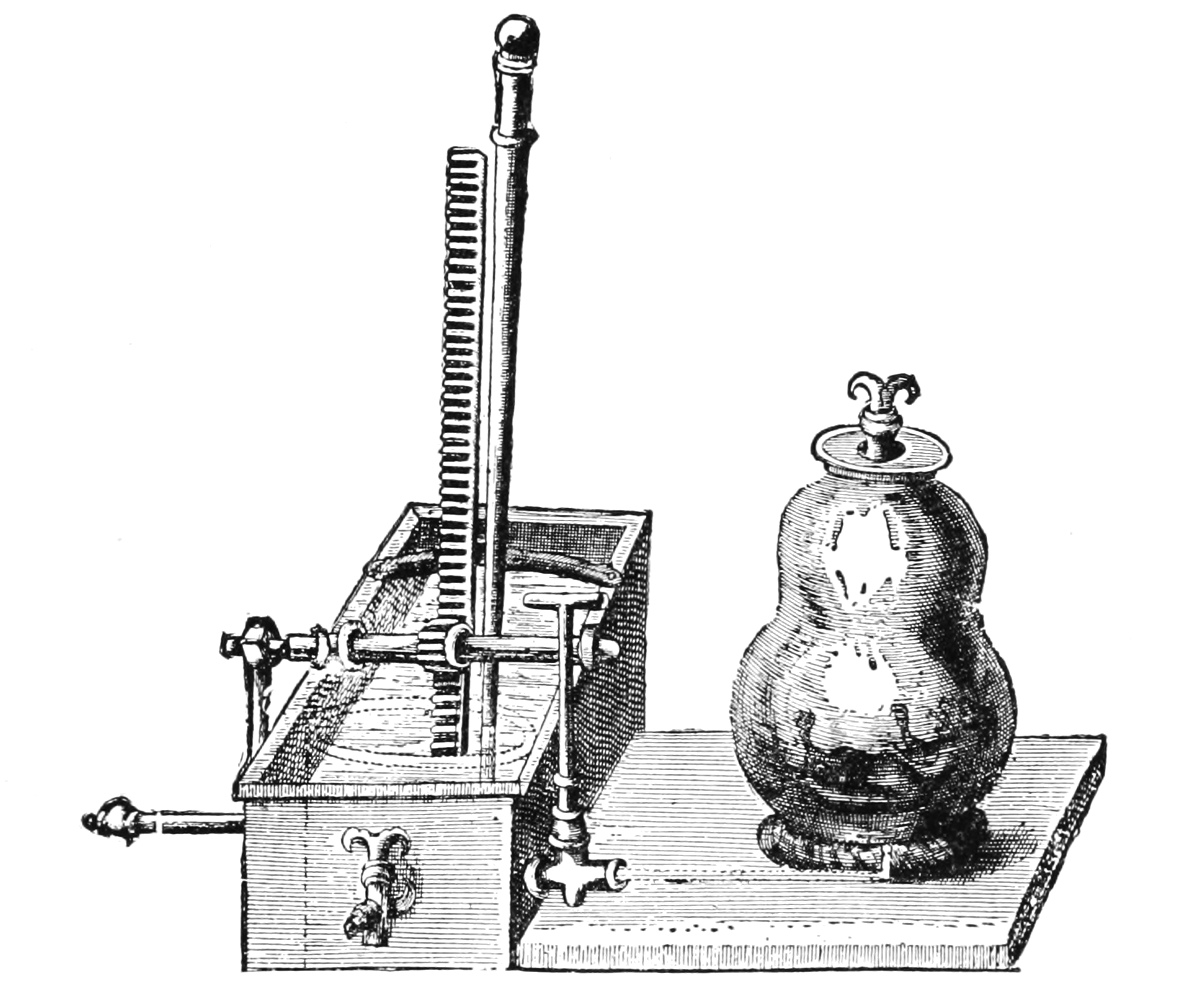
Fig. 61. ONE OF ROBERT BOYLE’S AIR-PUMPS. A cat has been placed in the receiver. It shows signs of asphyxia as soon as the air is exhausted by the pump.
§ 8. The Medical Theorists.
The great advances in the physical and biological sciences, instituted during the sixteenth and seventeenth century, left the old medical theories derelict. We have already traced the wrecking of the Galenic physiology. With its destruction, the old ideas concerning the three types of spirit, natural, vital, and animal, went by the board. The doctrine of the circulation of the blood (p. 113) and the investigations of the new Chemistry accorded ill with the old humoral pathology, which ascribed all disease to excess or defect of one of the four humors, blood, phlegm, bile, and melancholy (p. 34). Numerous fresh theories arose, of which the more important can be classed under the three headings Iatrophysics, Iatrochemistry, and Vitalism.
(a) Iatrophysics.
The physical discoveries of Galileo and the demonstrations of Sanctorius (p. 108) and of Harvey (p. 111) gave a great impetus to the attempt to explain the workings of the animal body on purely mechanical grounds. The writers who took this point of view are known as the Iatrophysicists. One of the earliest and most impressive exponents of physiological theory along these lines was the French philosopher René Descartes (1596-1650). His work on the subject appeared posthumously in 1662. It is important as the first modern book entirely devoted to the subject of Physiology.
Descartes had not himself any extensive practical knowledge of the subject with which he was dealing. On theoretical grounds he set forth a very complicated apparatus which he believes to be a model of animal structure. Subsequent investigation failed to confirm his findings, and his work soon passed into oblivion. For a time, however, it attracted much attention and many followers. A strong point in his theory is the great stress laid upon the nervous system, and its power of co-ordinating the different bodily activities. Thus stated, his view may seem not far from the modern standpoint, though in fact he was grotesquely wrong in detail. An important part of his theory is the complete separation of Man from all the other animals. Man, according to him, differs from all other animals by his possession of a soul, which is situated in a structure in the brain known to physiologists as the ‘pineal body’! Animals, he held, have no soul, and all their actions and movements, even those which seem to express pain or fear, are purely automatic. It is the modern theory of ‘behaviorism’ with man excluded! (Figs. 62 and 63.)
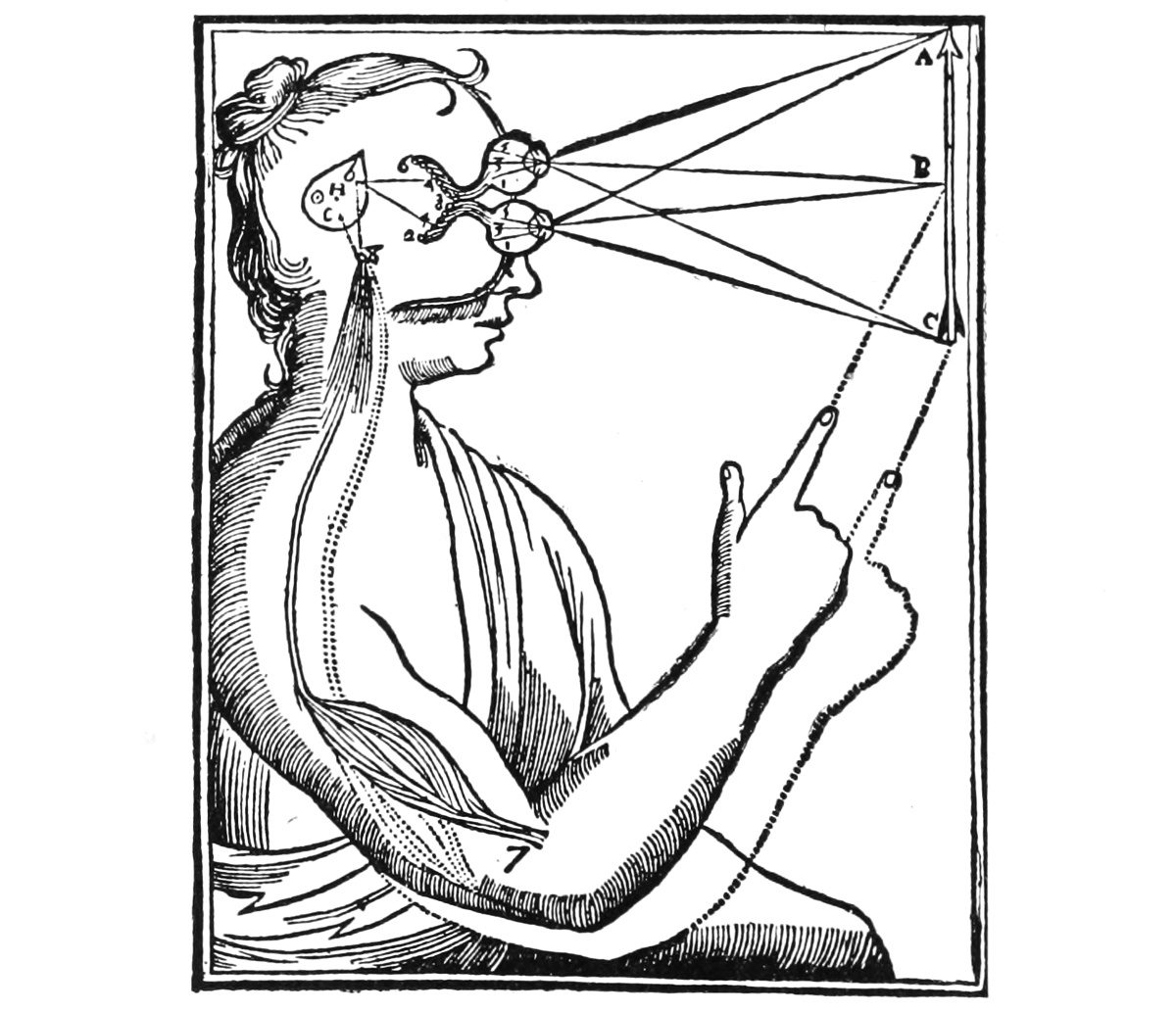
Fig. 62. DESCARTES’ conception of the relation of a sensory impression and a motor impulse. The image of the object ABC passes to the eye and is formed on the retina. Owing to the optical properties of the eye, it is there inverted. The image is inverted yet again within the brain, where it passes to the pineal gland H at the point b. The position and character of the image formed on the retina determines the nature and distribution of its effect on the pineal body. According to the nature and distribution of that effect is the result on the nerve, and through it, by the passage of nervous fluid, on the muscles. The movement in the nerve is initiated at the point c. The relation between b and c is an insoluble mystery in which is wrapped up the very nature of the soul. (From the posthumous work of Descartes on Physiology.)
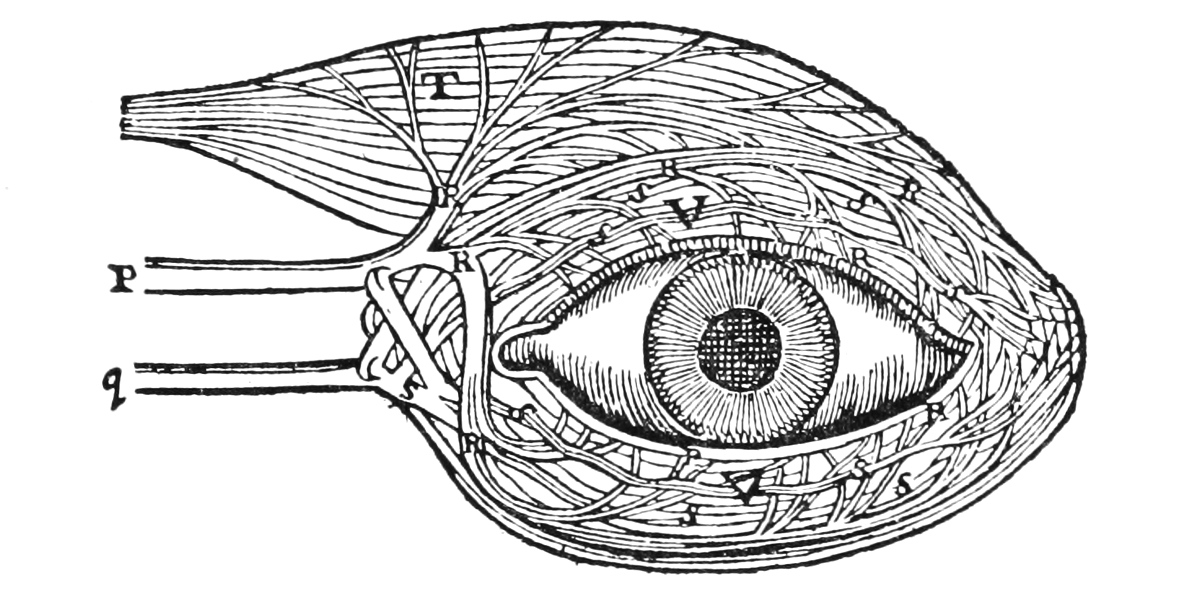
Fig. 63. DIAGRAM OF DESCARTES to illustrate his theory of nervous action. P R and q s are nerves which supply the muscles of the eye T and V V. Descartes held that these nerves were hollow and provided with valves, which can be seen at the point at which the P R and q s first branch. These valves were partly controlled by little fibrils (which can be seen in the main stems of P R and q s and in certain of their branches). These valves control the movement of the fluid within the hollow spaces of the nerves. Additional complication is lent to the scheme by the fact that P R and q s intercommunicate at certain points. The view of Descartes, and all such theories of nervous fluid, were destroyed by the experiment of Swammerdam (Figs. 57-60), which, however, long remained unpublished.
More lasting was the achievement of Giovanni Alfonso Borelli (1608-79), an eminent mathematician who was professor at several Italian universities and the friend of Galileo and Malpighi. Stirred, like Descartes, by the success of Galileo in giving a mathematical expression to mechanical events, Borelli attempted to do the same with the animal body. In this undertaking he was, in fact, very successful. That department of Physiology which treats of muscular movement on mechanical principles was effectively founded and largely developed by him. Here his mathematical and physical training was specially useful. He endeavored, with some success, to extend mechanical principles to such movements as the flight of birds and the swimming of fish. When he came to an analysis of some of the other activities of the body, such as the action of the heart, or the movements of the intestines, he was less successful, and he naturally failed altogether in his attempt to introduce mechanical ideas in explanation of what we now know to be chemical processes, such as digestion in the stomach.
Undeterred by Borelli’s failure, other writers sought to find mechanical explanations of physical processes. As is usual in such cases, the amount of theory was inversely proportional to the amount of knowledge. The views of some of the later ‘Iatrophysicists’ became very fantastic. Belated representatives of the school are the writers of the great French Encyclopédie (1751-72), and notably its main author, the man of letters, Denis Diderot (1713-84).
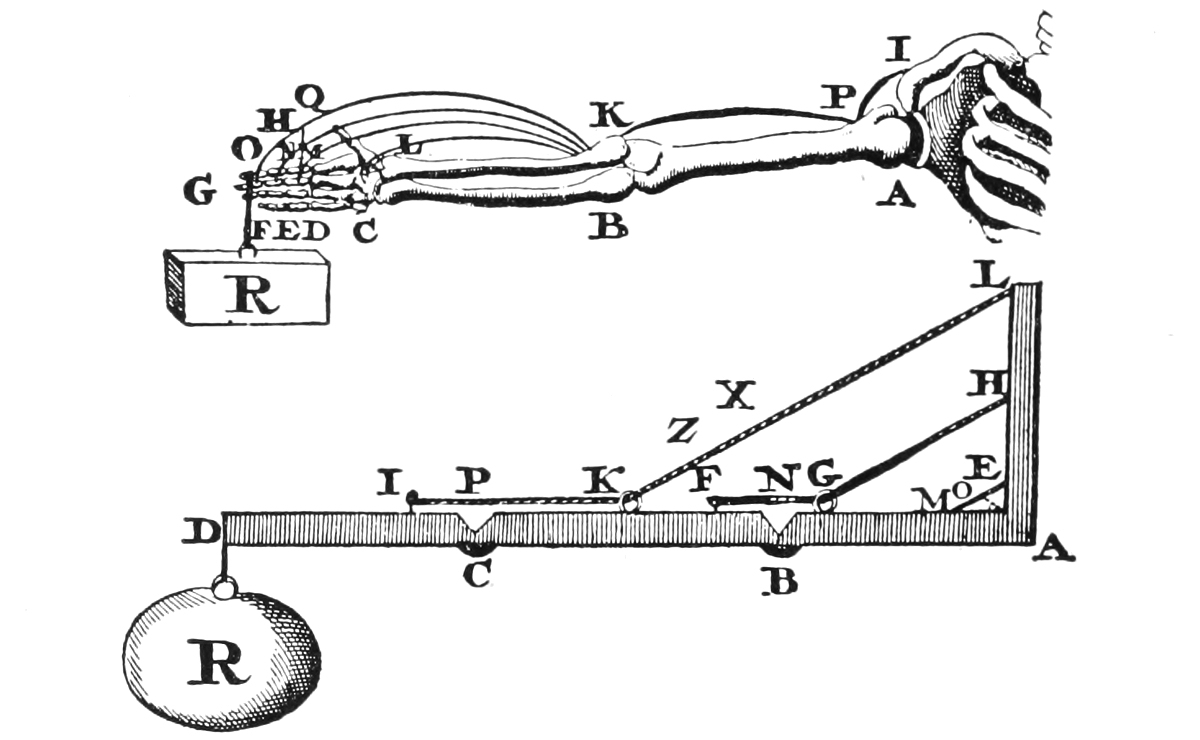
Fig. 64. DIAGRAMS FROM BORELLI, showing one of his attempts to analyse the movements of the muscles, in this case of the arm, according to the principles of the science of Mechanics as expounded by Galileo. The figure should be considered in conjunction with Fig. 65 opposite.
(b) Iatrochemistry.
Just as there were some who sought to explain all animal activity on a mechanical basis so others resorted to chemical interpretation. These may be termed Iatrochemists. The most prominent was Franciscus Sylvius (1614-72), professor of Medicine at Leyden. That university had become, in the second half of the seventeenth century, the most progressive scientific center north of the Alps. It was the seat of the first University laboratory, built at the instigation of Sylvius.
Sylvius devoted much attention to the study of salts. He recognized that they were the result of the union of acids and bases, and he attained to the idea of chemical affinity—an important advance. He looked at the phenomena of life also from the chemical point of view. Well abreast of the anatomical knowledge of his day, and accepting the broader lines of mechanistic advance in Biology, such as the circulation of the blood and the mechanics of muscular motion, Sylvius sought to interpret other activities in chemical terms. His position and abilities as a teacher gave his views wide currency and he and his pupils occupy a large part of the field of medical theory until well into the eighteenth century.
Under the influence of this school, almost all forms of vital activity were expressed in terms of ‘acid and alkali’ and of ‘fermentation’. The latter process was assumed to be of a chemical order, and no clear distinction was made between changes that are brought about by ‘unorganized’ ferments, such as gastric juice or rennet, and changes that are brought about by the action of micro-organisms, such as alcoholic fermentation or leavening by yeast. Nevertheless, the school of Sylvius and its immediate successors added considerably to our knowledge of physiological processes, notably by their examination of the body fluids, especially the digestive fluids such as the saliva, and the secretions of the stomach and of the pancreas.
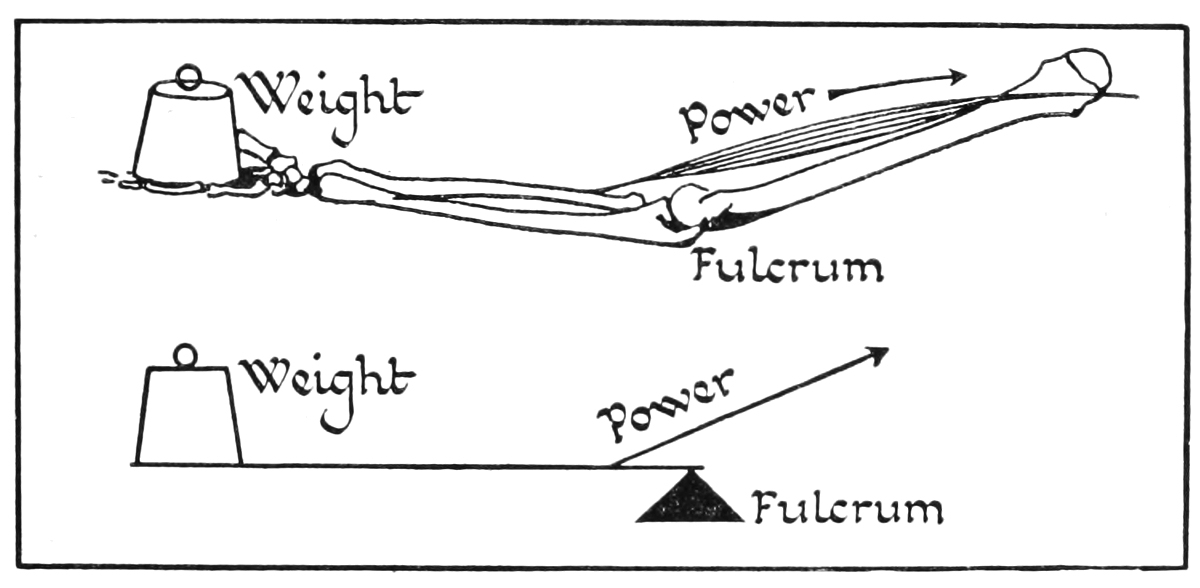
Fig. 65. DIAGRAM OF MUSCULAR ACTION involved in lifting a weight in the hand. It illustrates how muscular movement may sometimes be resolved into terms of the lever. In practice, however, it is usually necessary to involve a whole system of levers, pulleys, resistances, &c., as Borelli clearly perceived. (Compare Fig. 64.)
(c) Vitalism.
Yet another school of medical theorists arose under the leadership of the German chemist and physician, George Ernest Stahl (1660-1734). Stahl is best remembered as the author of the famous theory of phlogiston, a hypothetical substance with which bodies were supposed to part during the process of burning (p. 151). He is important in the history of science for his success in grouping chemical phenomena and therefore in systematizing the study of the subject. For our purpose, however, Stahl stands as the protagonist of that view of the nature of the organism which now goes under the term Vitalism. Though expressed by him in obscure and mystical language, it is, in effect, a return to the Aristotelian position and a denial of the view of Descartes. To Descartes the animal body was a machine. To Stahl the word machine expressed exactly what the animal body was not. The phenomena characteristic of the living body are, he considered, not governed by physical and chemical laws, but by laws of a wholly different kind. These laws are the laws of the sensitive soul. The sensitive soul of Stahl is, in its ultimate analysis, not dissimilar to the psyche of Aristotle (p. 32). Stahl held that the immediate instruments, the natural slaves of this sensitive soul, were chemical processes and his Physiology develops along lines of which Aristotle could know nothing. This does not, however, alter the fact of his hypothesis being an essentially vitalistic one of Aristotelian origin.
The language and the theories of the Iatrophysicists, the Iatrochemists, and the Vitalists of the seventeenth and eighteenth centuries have long been discarded by men of science in the form in which they were originally propounded. Nevertheless, they represent three attitudes to the activities of living things which have present and current meaning. Each seems to present some aspect of truth. Whether some physiological thinker will combine all three aspects into one coherent whole, it is for the future to decide. Yet it is certain that all three lines of approach remain of value, and the stimulus provided by each of the three inspires investigation at the present day. In this sense we enter on the period of modern Medicine in the seventeenth century. In this sense the foundations of modern rational Medicine may be said to have been laid by Borelli, Sylvius and Stahl, with Galileo, Boyle and Harvey standing behind them.