I ANCIENT GREECE (TO ABOUT 300 B.C.)
Reading edition
§ 1. Origins of Greek Medicine.
Scientific Medicine began with the Greeks. The Greeks not only started scientific Medicine upon its course, but also provided the substantial basic elements of our anatomy, physiology and pathology, and above all, perhaps, our conception of the bodily ‘constitution’, ‘habit’ or ‘temperament’. It is from the Greeks that we derive almost all our medical nomenclature. When to this we add that our medical traditions are inherited through a direct and continuous chain from the Greek practitioners, it becomes evident that the debt that Medicine owes to this marvellous people is great indeed.
Now this debt has become associated with two or three great figures. The names Hippocrates, Aristotle, Galen, are familiar to all. Yet it is not always recognized that these men were but the representatives of a widely extended and long-lasting system. Greek Medicine was, in fact, like modern Medicine, the result of centuries of carefully recorded, collated and progressive research. Greek Medicine first assumed a scientific aspect with the Ionian and Italo-Greek philosophers at the very beginning of the sixth century B.C. It continued to make important advances until the death of Galen at the very end of the second century of the Christian era. Thus the life-span of progressive and scientific Medicine among the Greeks was no less than eight hundred years. With the most tolerant use of the words ‘scientific’ and ‘progressive’, we can hardly place the beginnings of modern Medicine in Europe before the end of the fifteenth century. Thus our own system has only been developing its characteristic features for some four and a half centuries, which is but little more than half the course that Greek science ran.
It is evident, therefore, that we may have much to learn from the Greeks, not indeed in matters of actual fact or observation—for nearly all that is directly useful in their writings has been absorbed long ago into our medical literature—but in spirit and method. From a study of the character and course of Greek medical science we can gain hints of the snares and pitfalls and catastrophes into which the Art of Medicine may at times be led. Further, by study of the practice of Medicine under conditions so different from ours, we learn something of what is truly permanent in the Art of Healing. Lastly, by tracing the growth of the Science of Medicine, as it arose among the Greeks and as it died in the hands of their less worthy descendants, we may take alike example and warning. We may learn to distinguish the healthy and vigorous growth of a science from the stunted and deformed products that are often acclaimed, even in our own times, as Wisdom’s final word to Man.
It has been said that, ‘save the blind forces of Nature, nothing lives or moves which is not Greek in origin’. The saying needs modification, for there is a thing which still lives and moves that is not Greek in origin, a blind force which is not a blind force of Nature. It is the force of Superstition, of that age-old belief that Nature will give us something for nothing, which is expressed by the word ‘Magic’. The Greeks were no more free from that contemptible fallacy than are the men of our own days. But the greatest of the Greeks stood wholly above such folly, and we can watch the Greek mind gradually lifting itself from that primeval mental attitude which is older than any known culture, older perhaps than any known race, the attitude of Nature-Worship, or ‘Animism’. To give an idea of how the ‘sweet reasonableness’ of the Greek mind gradually dissipated the animistic fog, a few words must be said about the history of the Greeks. Without that amount of history it would seem a miracle that Man ever became reasonable at all.
The Medicine we call Greek might be described as the system which prevailed in ancient times in that half of the Mediterranean area which lies east and south of the Italian Peninsula.
Up to about 1000 B.C. most of the coast-lands of this Mediterranean area were inhabited by that very remarkable people, the Minoans. These have left some extraordinary remains, the full significance of which has not yet been revealed. The general development of the Minoan civilization has, however, been clearly outlined by modern archaeological investigation. This has resulted in an entirely new interpretation of the story which Homer tells in the Iliad. The siege of Troy represents an attack by the invading Greeks on one of the last Minoan strongholds. About 1000 B.C. the whole Eastern Mediterranean basin was being overrun by the Greek tribes coming in from the north. These Greeks were no pure race, but a mixed multitude of invaders who came along several lines of advance. As always happens in such invasions, the conquered were not exterminated, but mingled with the invaders. Thus the Greeks, as they advanced, absorbed much of the culture and outlook of the civilization that they submerged.
In considering the history of Rational Medicine we are concerned chiefly with two main invading streams of Greek tribes: that of the Dorians, who passed towards Crete and towards the Island of Cos and the opposite peninsula of Cnidus, and that of the Ionians, who colonized most of the remaining part of western Asia Minor. These two peoples were, between them, responsible for the main intellectual output of the Greeks of those early days. The medical system which they initiated first took shape in western Asia Minor, and thence became diffused over the whole of the Greek world. The Greek system of Medicine which thus arose in Asia Minor had various roots, as indeed the Medicine of a mixed people, living under very complex social conditions, was bound to have.
Firstly, there was the submerged civilization of the conquered Minoan folk. It is probable that the cult of the serpent—so constantly associated with Aesculapius and still used as a medical emblem—was of Minoan origin, for the serpent was a symbol much used in the Minoan religion (Fig. 2). It is probable too that some of the hygienic ideas of the Greeks were derived from the same source, for the Minoans had an excellent system of drainage. We can, however, say little on this head because the interpretation of the Minoan records is still hidden from us.
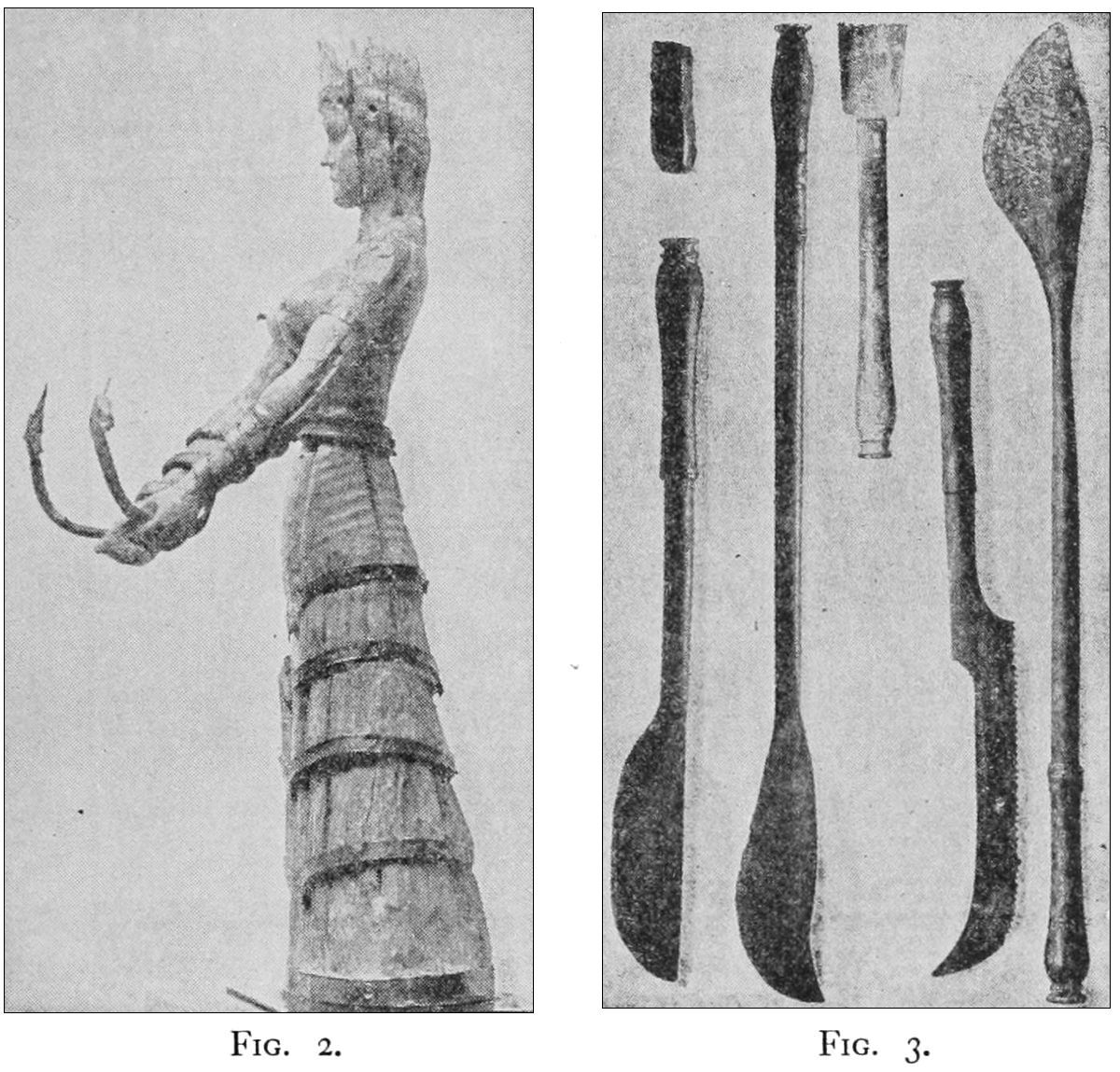
Fig. 2. IVORY AND GOLD MINOAN STATUETTE of a votaress in a state of ecstasy. In either hand she holds a serpent, illustrating the importance attached to this animal in the Minoan cult. From the Museum of Fine Arts, Boston, U.S.A.
Fig. 3. SURGICAL INSTRUMENTS recovered from Babylonian sites. There are here represented three knives, a saw and a trephine. These instruments, which illustrate the state of surgery in the ancient Mesopotamian civilization, are in the possession of Professor Meyer-Steineg of Jena, by whose permission they are here reproduced.
Secondly, we have to remember that the shores of Asia Minor lie on the outskirts of the great civilization which had grown up in the valley of the Tigris and the Euphrates. The Greeks drew from that source much of their more superstitious beliefs, as well as some, at least, of their scientific method. On the one hand, the demoniac theories that bulk so largely in later Greek medicine doubtless came from Assyria and Babylonia. The Medicine of the New Testament, for instance, with its casting out of devils, is of Mesopotamian origin. But, on the other hand, the Mesopotamian peoples had for long ages laid up a great treasury of observation, notably of astronomical data which were often applied to astrological ends. There was also some knowledge of anatomy derived from the entrails of animals used in divination (Fig. 4). Working on the basis of these records, the Greeks were able to erect a scientific method which appears as a prominent feature in their intellectual life in later centuries. Moreover, there was in Mesopotamia a standardization of both medical and surgical procedure which the nimble-witted Greeks were quick to adopt (Fig. 3). On its lower and less intelligent side, however, the Mesopotamian material was made to minister to Greek superstition and especially to astrological belief.
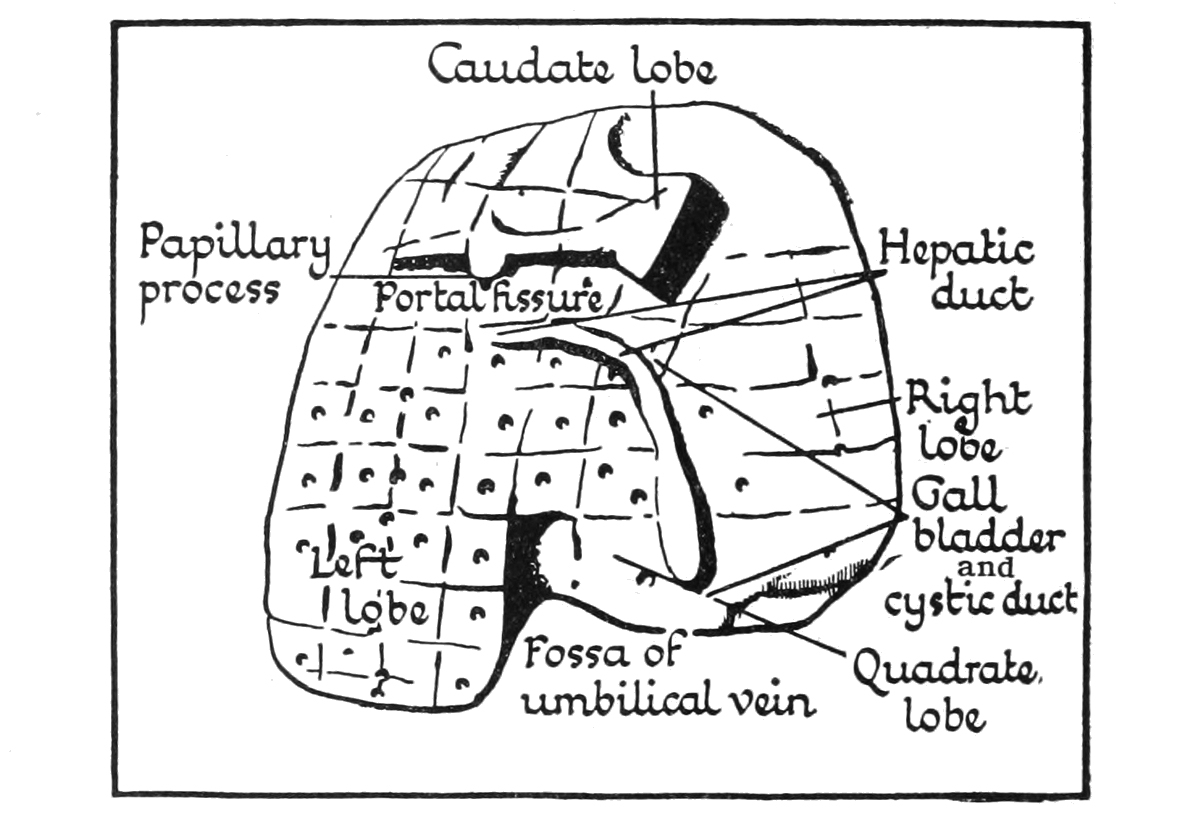
Fig. 4. CLAY MODEL OF SHEEP’S LIVER used for instruction in divination in a Babylonian temple school. The object is now in the British Museum. It is covered with cuneiform writing, the nature and contents of which fix its date as about 2000 B.C. The writing is here omitted for the sake of simplicity.
Various parts of the liver have their Babylonian technical terms and can be identified with parts recognized by modern anatomists. Some of these modern terms are written on our drawing.
To each hole in the original model an inscription containing a forecast is assigned. The diviner made his forecast by comparing an actual liver with this clay model at each point corresponding to a hole. His forecast was elaborated according to the state of the liver at all these points.
Thirdly, to the Egyptian civilization the Greek debt was also considerable. Many drugs were derived from Egypt and others were suggested by Egyptian practice. The basis of Greek medical ethics, too, can be traced to Egypt. Some of the practical devices of Greek Medicine, such as the forms of the surgical instruments, were of Egyptian origin. Nor can we neglect the statement made by the Greeks themselves, that mathematical knowledge—the test and index of all scientific growth—came to them first from Egypt. Lastly, we note that the Egyptians deified a physician, Imhotep (Fig. 5), in exactly the way that the Greeks deified their physician Aesculapius (Fig. 6). Both Imhotep and Aesculapius were, in fact, historic personages, and their evolution into gods presents many interesting parallels.
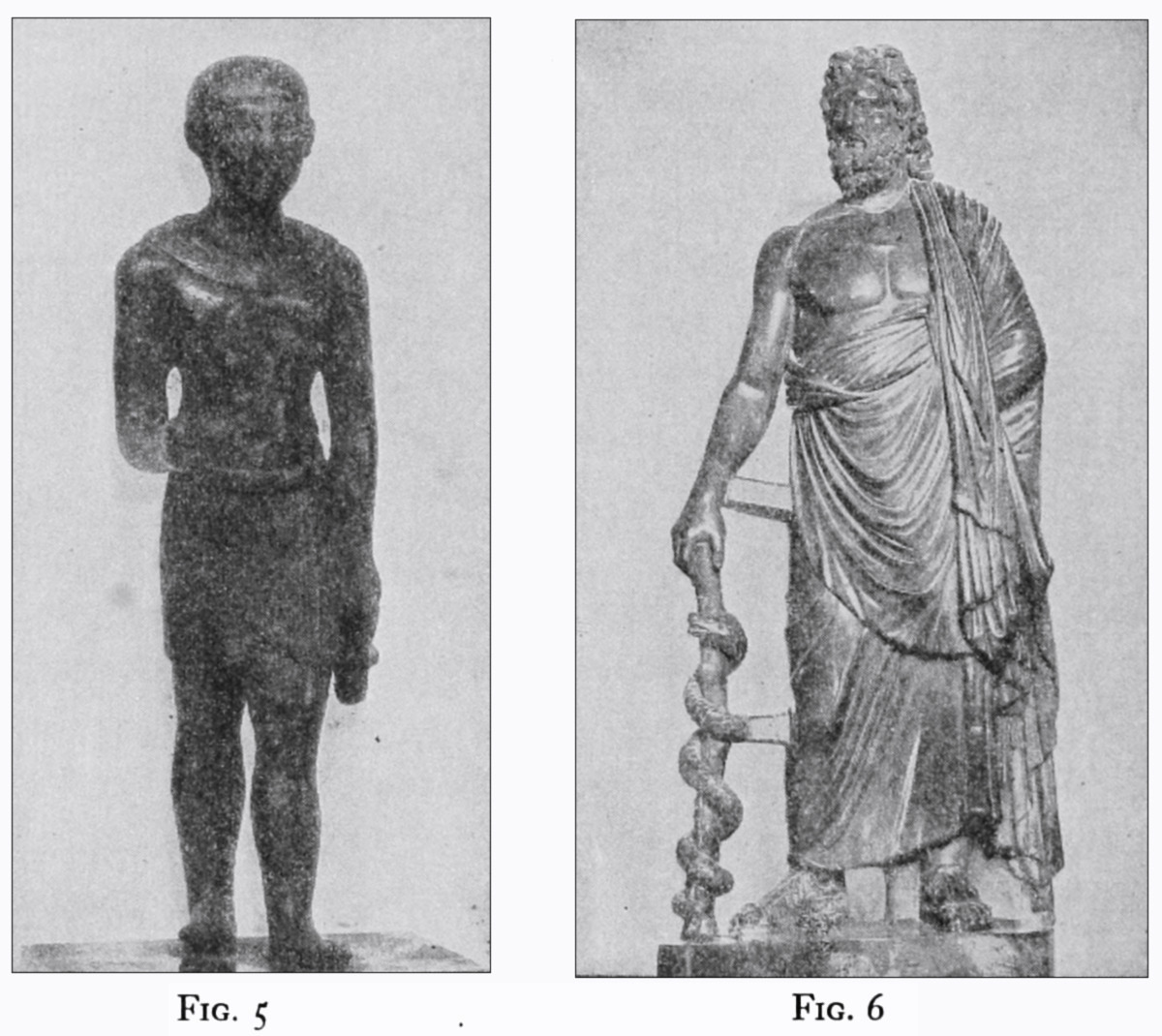
Fig. 5. IMHOTEP, originally a physician, subsequently deified as an Egyptian god of Medicine. From a statuette in the British Museum.
Fig. 6. AESCULAPIUS, originally a physician, subsequently deified as a Greek god of Medicine. He holds a staff, around which a serpent twines. From a statue in the Capitoline Museum at Rome.
The Greeks of western Asia Minor, thus drawing material from many sources, came to develop, towards the end of the seventh century B.C., a philosophical system from which the whole of their Science may be said to be a natural growth. Factors in this development were the medical schools of Cos, where Hippocrates was born, and of the opposite peninsula, Cnidus. These schools were in active operation by the sixth century B.C. By the middle of the fifth century they were important elements in the growing complexity of Greek life. Much of the so-called Hippocratic Collection, which contains the earliest Greek medical writings that have survived, must have been put together somewhere in the fourth century B.C., though its final recension is certainly later (Fig. 7). In that final recension Persian and Indian elements were also included, though to what degree is still very uncertain.
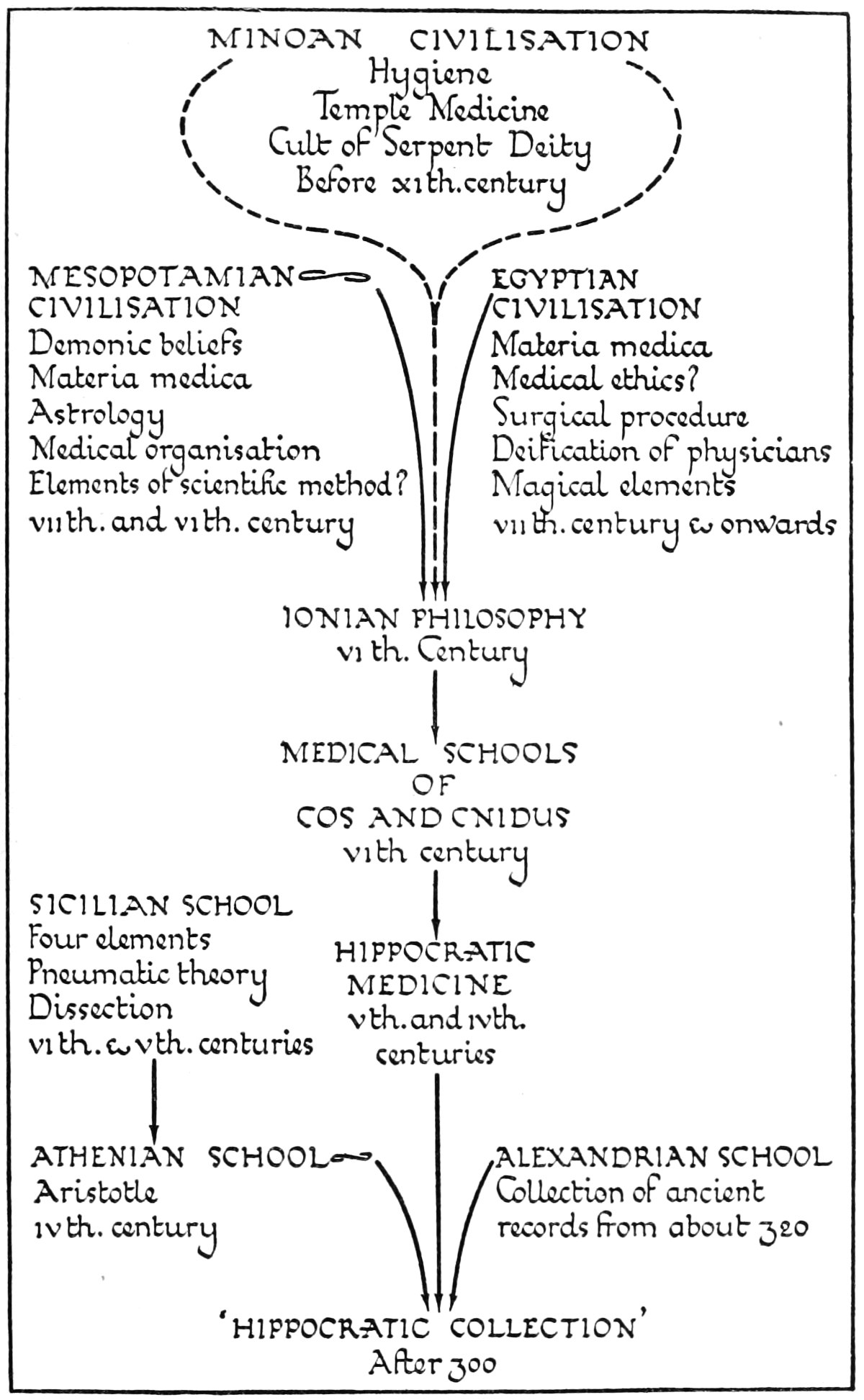
Fig. 7.
SCHEME ILLUSTRATING SOME OF THE SOURCES OF HIPPOCRATIC MEDICINE
But the picture of the development of Greek Medicine is not yet complete. Although we inherit the scientific spirit from the Greeks, and although they set a standard for all time of the purest and most disinterested type of medical practice, they are also in part responsible for some of the basest forms of medical jugglery that have afflicted and still afflict mankind. The medicine of the physicians was only one of their medical systems. There was a far lower form which gradually passed into the hands of the priests. The temple jugglery of Greece is ancestor, both by imitation and by direct tradition, of much medieval and modern medical miracle-mongering.
Furthermore, in ancient as in modern times, all medical men were not equally pure in aim or scientific in method. The practice of some Greek physicians was more than flavored with magic. In justice, also, it must be said that not all priests were mere charlatans, and that there are traces of scientific method in the treatment of patients in the temples. There was, indeed, a relation between the practice of some of the physicians among the Greeks and that of some of their priestly magicians. We shall not attempt to determine the actual extent and nature of this relationship. For our purpose it is enough that the two systems were quite distinct in their most typical developments.
The temple system of Greek Medicine was associated from an early date with a deity, Asklepios, or, to give him his better-known Latin name, Aesculapius. Numerous representations of him have come down to us, and in them we see him gradually molded to a particular type. He becomes at last an aged man of noble, benevolent and dreamy aspect, holding in his hand a staff around which a serpent twines (Fig. 6). The cult of the god Aesculapius was carried on at numerous sites. The best known, both from literature and excavation, is Epidaurus. The conditions there are typical of those in other Aesculapian centers.
Epidaurus is about thirty miles from Athens. It lies between two considerable ranges of hills, and the country bears still, in its customs and place-names, some remnants of the ancient cult. One tradition tells that a certain maiden, Koronis, being with child by Apollo, brought forth the infant Aesculapius on the mountain above Epidaurus. There is still a village named Koroni hard by. She fled to conceal her shame and left the child on the mountain, where it was tended by a goat and watched over by a dog. The infant performed various miracles which we need not pursue, though the temple arose on the site where he is said to have wrought them. One of his miracles, however, has a wider interest and is worth recounting. A certain Hippolytus, falsely accused of impure relations with his stepmother, was slain by the gods in answer to the curses of his father, Theseus. Raised from the dead by the wonder-working Aesculapius, he reappears in legend at the Arician grove in Italy. ‘There’, says a Greek chronicler of the second century A.D., ‘he became a king and devoted a precinct to Artemis, where, down to my time, the prize for the victor in single combat was the priesthood of the goddess. The contest was open to no freeman, but only to runaway slaves.’
The son slain by his father and then rising from the dead; the runaway slave seeking sanctuary with Artemis in her grove, allowed his liberty and elevated to the priesthood there; the priesthood held only so long as the priest can guard it in mortal combat against the next runaway slave; this succession of slave kings and priestly murders has touched the imagination of the poets and artists in ancient and in modern times. The sacred grove of Artemis stood by the side of the lake of Nemi:
The still glassy lake that sleeps Beneath Aricia’s trees— Those trees in whose dim shadow The ghastly priest doth reign, The priest who slew the slayer And shall himself be slain.
It is a picture utterly out of accord with the general trend of classical mythology. Long ago scholars saw therein a remnant of a submerged faith, that ancient ‘Nature worship’ which survived among the Greeks, and survives with us. From this incident is named the great classical work of Anthropology, The Golden Bough. By this story and by all that it implies, by all that learning has drawn out of it and associated with it, the history of Medicine comes into contact with the brooding spirit of savage man. Into that dark realm we shall not enter in this volume.
History is the tale of the spirit of Man unfolding itself. This process is always slow, often imperceptible, sometimes retrograde, yet over long periods of time it is sure. Where no evolution of the spirit can be traced true history cannot be written, wherefore no man can write a history of human folly. Irrational man, driven by disease and fear of death, exhibits the same follies in all ages. The medical follies and superstitions of our own days are as in those when Aesculapius claimed men’s allegiance. His garments and his names are changed, his temples are transformed, his priests assume other titles, but his face is the same, and he works the same wonders with about the same frequency. It is of Rational Medicine that we have henceforth to speak.
§ 2. The Hippocratic Physician.
We turn to the other side of the picture. Nothing could be in greater contrast to the orgies of the savage, the dark ways of the magician, or the charlatanry of the priests, than the serene spirit of wisdom which pervades the best Greek Medicine. The finest presentation of that system is to be found in a group of about a hundred works that have been associated together since antiquity under the name of Hippocrates. It is known as the Hippocratic Collection.
It will naturally be asked, ‘Which of these works is by the man whose name they bear?’ To that question, alas, no definite answer can be given. There is no single work which we can state with certainty to be the composition of the Father of Medicine. The books of which the Collection is composed are the work of a number of authors, belonging to different schools, holding various and often contradictory views, living in widely separated parts of the Greek world and writing at dates divided from each other, in the most extreme cases, by perhaps five or six centuries. Of the finest books of this collection we can but say that they contain nothing inconsistent with a Hippocratic origin, that their ethical standpoint is in accord with the Hippocratic ideal, and that they are the work of physicians of great intellectual power and experience.
If we ask what is known about Hippocrates himself, and if we seek information rather than entertainment, our answer will be almost as meager. Hippocrates is no mythical figure, for he is mentioned with high respect by his younger contemporary, Plato. He was the son of a physician, and was born at Cos about 460 B.C. The most active period of his life thus began about 420 B.C. His death is placed between 377 and 359—the latter would make him 101, an appropriate age for a great physician. He led a wandering life, and is heard of at Cos, Thasos, Athens, in Thrace and elsewhere, and lastly in Thessaly, where his grave was long shown. Among his pupils were his two sons, and his son-in-law. Of the work of the latter we have a fragment preserved both by Aristotle and in the Hippocratic Collection itself.
That is all that is known about the Father of Medicine. We have not even his portrait. Yet we have something far better; we have an idealized representation of what the Greek would wish his physician to be. It is a noble bust to which the name of Hippocrates was early attached. Many copies exist (see Frontispiece). The calm, righteous and dignified presence which it portrays has stamped itself on the consciousness and conscience of those who follow the Art of Healing. To that gracious figure the medical man will continue to pay homage.
If critical examination has dealt thus hardly with the Hippocratic writings and with Hippocrates himself, what has been left which we may surely derive from the Greek medical system? The answer is that Medicine has from the Greeks two great things: the picture of a man and the institution of a method.
The man is Hippocrates himself. His figure, gaining in dignity what it loses in clearness, stands for all time as that of the ideal physician, for the ideal is there and is clearly set forth in these great writings, whether we discern the details of his earthly features or no. Calm and effective, humane and observant, prompt and cautious, at once learned and willing to learn, eager alike to get and give knowledge, unmoved save by the fear lest his knowledge may fail to benefit others—both the sick and their servants the physicians,—incorruptible and pure in mind and body, the figure of the greatest of physicians has gained, not lost, by time. In all ages he has been held by medical men in a reverence comparable only to that which has been felt towards the founders of the great religions by their followers. The figure of the Hippocratic physician has been of incalculable spiritual value to the medical profession in the twenty-three centuries that have passed since his death.
So much for the man. We turn now to the method.
The method of Hippocratic medicine is that known to-day as the experimental or better experiential. It was employed among the Greeks for centuries after the death of Hippocrates. Then came a time when a social and philosophical upheaval prevented its further prosecution. For the thousand years that followed the break-up of the Roman Empire the medical practice of Europe was at best a corrupted imitation and misunderstanding of the Hippocratic teaching; at worst it descended to a low level of Animism and Magic. Then there was a rally. Slowly—very slowly at first—the foundations of Modern Science were laboriously laid. Among the first elements in this scientific Renaissance was the recovery of the Hippocratic works.
In the centuries that followed this Renaissance the very words of the Hippocratic Collection were taught in the medical schools in a spirit that was anything but that of Hippocrates. Gradually, however, a better understanding crept into men’s minds. The spirit of those writings and their methods and observations came now rightly to be exalted above the works themselves. The works themselves were wisely dropped from the medical curriculum. They are no longer used in any medical school. But if we turn again to contemplate the Hippocratic treatises, we may recognize in them the modern process of careful record of data and cautious inference from them—that collation of experience from various sources obtained by various methods with which we are now so familiar. We may even see in full force the actual process of case-taking, bed side instruction and clinical lecture. These methods are practised much in the way in which we know them, and are set forth with a conciseness and beauty of language and a loftiness of ethical tone which have not since been surpassed. To such a collection medical men must always return. No part of it is more impressive than the so-called Hippocratic Oath.
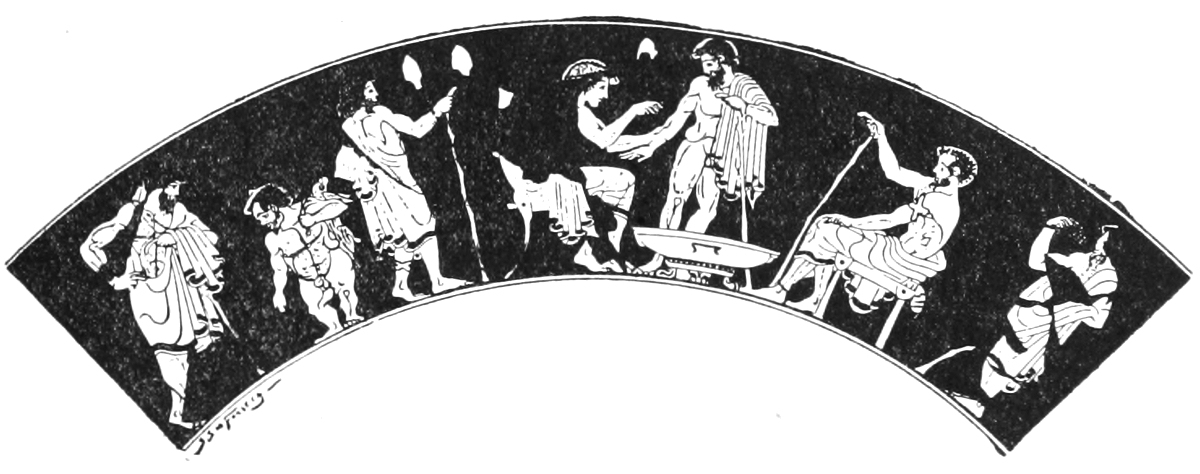
Fig. 8. A GREEK CLINIC OF ABOUT 400 B.C., when Hippocrates was in his prime. From a vase painting.
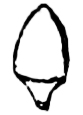
The physician sits in the center. He holds a lancet in his right hand, seizes the patient’s right arm with his left and is bleeding him from a vein at the bend of the elbow. The blood falls into a large basin on the floor. Above the physician’s head are suspended three cupping vessels, shaped thus:
To the right sits a patient awaiting his turn to interview the physician. His left arm is bandaged. Behind this patient stands a figure smelling a flower as a preventive against infection. Behind the physician stands a man wounded in the left leg, which is bandaged. Back to back to this last figure is a dwarf with a disproportionately large head. His body exhibits deformities typical of the developmental disease now known as Achondroplasia. In addition to his other deformities, we note that his muscular body is hairy, and that the bridge of his nose is sunken. On his back he carries a hare which is almost as tall as himself. Talking to the dwarf is a man leaning on a long staff, who has the remains of a bandage round his chest.
The Hippocratic Oath, in its present form, is of very much later date than Hippocrates. Yet parts of it may be even earlier than he, and some suggestion of the Oath is, perhaps, to be seen in the contents of Egyptian papyri of the second millennium B.C. It need hardly be said that the late date of the Oath by no means removes the interest of this grand ethical monument. No passage better reflects the spirit of the Hippocratic physicians. The oath is clearly designed for a youth entering on his apprenticeship to such a one.
‘I swear by Apollo the healer, invoking all the gods and goddesses to be my witnesses, that I will fulfil this Oath and this written Covenant to the best of my ability and judgement.
‘I will look upon him who shall have taught me this Art even as one of my own parents. I will share my substance with him, and I will supply his necessities, if he be in need. I will regard his offspring even as my own brethren, and I will teach them this Art, if they would learn it, without fee or covenant. I will impart this Art by precept, by lecture and by every mode of teaching, not only to my own sons but to the sons of him who has taught me, and to disciples bound by covenant and oath, according to the Law of Medicine.
‘The regimen I adopt shall be for the benefit of the patients according to my ability and judgement, and not for their hurt or for any wrong. I will give no deadly drug to any, though it be asked of me, nor will I counsel such, and especially I will not aid a woman to procure abortion. Whatsoever house I enter, there will I go for the benefit of the sick, refraining from all wrongdoing or corruption, and especially from any act of seduction, of male or female, of bond or free. Whatsoever things I see or hear concerning the life of men, in my attendance on the sick or even apart therefrom, which ought not to be noised abroad, I will keep silence thereon, counting such things to be as sacred secrets. Pure and holy will I keep my Life and my Art.
‘If I fulfil this Oath and confound it not, be it mine to enjoy Life and Art alike, with good repute among all men at all times. If I transgress and violate my oath, may the reverse be my lot.’
§ 3. Hippocratic Practice.
Among the most remarkable features of the Hippocratic Collection is the feeling of contact with the patient which most of its works convey. This is naturally a special characteristic of the surgical works. One treatise, which bears the title On wounds of the head, has always drawn attention as bespeaking especial ingenuity and experience. The description of trephining is of peculiar interest, because the practice was known in prehistoric times and is still employed by savage and semi-civilized peoples. The process recommended for cases of fracture of the skull and injury to the underlying structures resembles, in many details, the modern surgical procedure.
‘When it is necessary to trephine a patient, make up your mind and judge as follows. If you have had charge of the case from the first, do not trephine the bone down to the membrane at once, for it is not desirable that the membrane be long exposed, lest it end by becoming rotten and fungous. There is also another danger, to wit that you wound the membrane with the saw during the operation, if you try to remove the bone by trephining immediately down to the membrane. Therefore, when the bone is almost sawn through and is already loose, cease trephining and allow the bone to come away of itself. While trephining, often remove the instrument and dip it in cold water. If you do not do this, the trephine, becoming heated by the circular motion and heating and drying the bone, may burn it and cause an unduly large piece of the bone round the sawing to come away.’
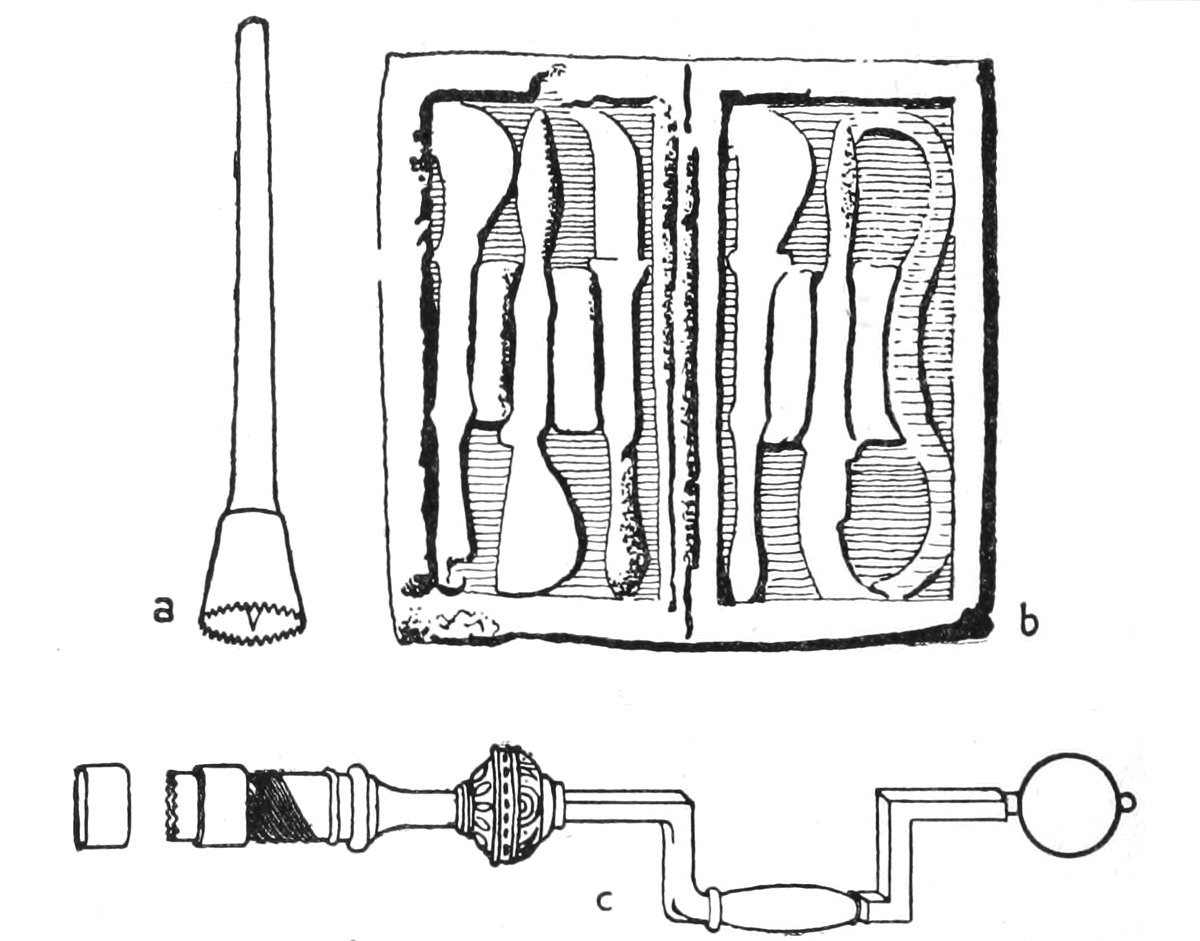
Fig. 9. INSTRUMENTS USED BY GREEK SURGEONS.
a Simplest form of trephine. It has central pin and serrated edge. The point is held against the skull and the staff twirled between the hands. (Cf. Fig. 112.) It could also be rotated by a crosspiece and thong, as in Fig. 22. b Case of scalpels from a bas-relief in the temple of Aesculapius on the Acropolis at Athens. c Trephining instrument of type still in use. The carpenter’s ‘center bit’ was known in antiquity, and was probably adapted to the trephine. a and c represent sixteenth-century instruments of ancient type. No ancient trephines of Greek origin are known, though a specimen has come down to us from Mesopotamia, see Fig. 3.
So much for a normal case which comes to the physician’s hands directly after the accident. But in less fortunate cases he is not called in so early, and the wound suppurates before he can bring his Art to bear upon it. In such a case he is advised:
‘Saw the bone immediately to the membrane with a serrated trephine (Fig. 9, a and c), frequently removing the trephine and testing with the probe all round along the track, for the bone is sawn through much more quickly if it is already suppurating and penetrated by the pus. The bone, however, often happens to be thin in places. Therefore be on your guard not to apply the trephine at random, but fix it in the bone where it appears thickest, frequently making an examination and trying to raise the bone by moving it. And after removing it, continue such treatment as may appear advantageous to the wound, according to circumstances.’
Among the works of the Hippocratic Collection is a lecture note-book known by the title Concerning the things in the Surgery. It is written in very abbreviated style and consists of mere headings. Nevertheless, our attention is arrested by its startling modernness, when we read such a category as this:
‘Operative requisites in the surgery: the patient; the operator; assistants; instruments; the light, where and how placed; the patient’s person and apparatus. The operator, whether seated or standing, should be placed conveniently to the part being operated upon and to the light. Each of the two kinds of light, ordinary or artificial, may be used in two ways, direct or oblique.’
Or again, such details as:
‘The nails [of the operator] neither to exceed nor come short of the finger-tips. Practise using the finger-ends. Practise all operations with each hand and with both together, your object being to attain ability, speed, painlessness, elegance and readiness. Let those who look after the patient present the part for operation as you want it, and hold fast the rest of the body so as to be all steady, keeping silence and obeying their superior.’
Are we not here reminded of an up-to-date operator and operating theater?
In the Hippocratic Collection the physician attends cases of every type, and does not refuse to do his best for a case because the use of an instrument is demanded. He is thus no ‘specialist’. But the mass of his practice lay with cases to which instrumental treatment was inapplicable. In cases in which surgical intervention was not justified the Hippocratic physician adopted for the most part what is called an ‘expectant’ line of treatment. Realizing that, in general, the tendency of the body is to recover, he contented himself with ‘waiting on Nature’. This does not by any means imply that he was helpless, for much could be done by nursing, regimen and diet to aid the patient in that conflict which he alone must fight out. For the conduct of that great battle wise and useful directions are recorded. But believing in the healing power of Nature—the famous phrase is used in the Hippocratic writings—the physician was none too eager to administer drugs. In the state of knowledge of the day this reluctance was well-judged. Nevertheless the Hippocratic drugs, though neither numerous nor complex, were some of them very efficient, and their judicious if reluctant use at the right juncture saved many a life.
The Aphorisms is the most famous book with which the name of Hippocrates is associated, and is as likely as any of the Collection to be by Hippocrates himself. It consists of a series of very brief generalizations. Many of these have been confirmed by the clinical experience of later ages. Some have passed into medical commonplaces, others have become popular proverbs. The style of the work suggests an aged physician reflecting on the experience of a lifetime. Among modern medical writings its closest analogue is perhaps the Commentaries of the great English physician, William Heberden the elder (1710-1801), which was commenced by him after the age of seventy, occupied the last twenty years of his life, contained a summary of the whole of his vast experience, and was published by his son after his death. If the Aphorisms is similarly a work of the old age of Hippocrates it may be dated about 380 B.C. A few extracts give a good idea of the nature of the book.
‘Life is short and Art is long; the Crisis is fleeting, Experiment risky, Decision difficult. Not only must the physician be ready to do his duty, but the patient, the attendants, the external circumstances must conduce to the cure.’
‘Old persons bear fasting most readily, next adults, and young people yet less; least of all children, and of these least again those who are particularly lively.’
‘If in any illness sleep does harm, it is a symptom of deadly import.’
‘When sleep puts an end to delirium, it is a good sign.’
‘Weariness without cause indicates disease.’
‘If there be a painful affection in any part of the body, and yet no suffering, there is mental disorder.’
‘To eat heartily after a long illness without putting on flesh is a bad portent.’
‘Food or drink slightly inferior in itself, but more pleasant, should be preferred to that better itself, but less pleasant.’
‘The old have fewer illnesses than the young, but if any become chronic with them they generally carry it with them to the grave.’
‘Those naturally very fat are more liable to sudden death than the thin.’
‘The dry seasons are more healthy than the rainy, and attended by less mortality.’
‘Cold sweats in conjunction with an acute fever indicate death, but with a milder fever only prolonged sickness.’
‘Convulsions supervening on a wound are deadly.’ (Tetanus, cp. p. 267.)
‘Those attacked by tetanus either die within four days, or if they get through these they recover’ (compare pp. 257 and 267).
‘Phthisis comes on mostly from eighteen to thirty-five years of age.’
‘It is fatal for a woman in pregnancy to be attacked by one of the acute diseases.’
‘In cases of jaundice, hardening of the liver is a bad sign.’
‘We should observe the appearance of the eyes in sleep. If any of the white show through the eyelids when closing, this is a bad sign and very dangerous, unless it be due to diarrhoea or taking a purgative.’
‘An attack of delirium with laughter is less dangerous than with despondency.’
‘Apoplexy is commonest between the ages of forty and sixty.’
‘If you give the same nutriment to a patient in a fever and to a person in health, the patient’s disease is aggravated by what adds strength to the healthy man.’
The chief clinical achievement of the Hippocratic Collection lies in the descriptions of actual cases. These descriptions are not only without parallel during nearly 2,000 years, but they are models of what succinct clinical records should be. They are clear and short, they give all the leading features and yet they show no attempt to prejudge the importance of any particular feature. The records of these cases illustrate the Greek genius for seizing the essential. The writer does not betray the least wish to exalt his own skill. He seeks merely to put the data before the reader for his guidance under like circumstances. It is a reflex of the spirit of honesty in which these men worked that in the great majority of the cases they record death ensued. Two of these remarkable descriptions may be given:
‘The woman with quinsy, who lodged with Aristion; her complaint began in the tongue; voice inarticulate; tongue red and parched. First day, shivered, then became heated. Third day, rigor, acute fever; reddish and hard swelling on both sides of neck and chest; extremities cold and livid; respiration elevated; drink returned by the nose; she could not swallow; alvine and urinary discharges suppressed. Fourth day, all symptoms exacerbated. Fifth day, died.’
This was a case of Diphtheria. The quinsy, the paralysis of the palate leading to return of the food through the nose, and the difficulty with speech and swallowing are typical results of this affection which was here complicated by a spread of the septic processes into the neck and chest, a not uncommon event in the disease. The rapid onset of the conditions is rather unusual, but may be explained if we regard the case as a mild and unnoticed diphtheria, subsequently complicated by paralysis and by secondary septic infection, for which reason she came under observation.
‘In Thasos, the wife of Delearces, who lodged on the plain, through sorrow was seized with an acute and shivering fever. From first to last she always wrapped herself up in her bedclothes; kept silent, fumbled, picked, bored, and gathered hairs [from the clothes]; tears and again laughter; no sleep; bowels irritable but passed nothing; when urged drank a little; urine thin and scanty; to the touch the fever was slight; coldness of the extremities. Ninth day, talked much incoherently, and again sank into silence. Fourteenth day, breathing rare, large and spaced, and again hurried. Seventeenth day, after stimulation of the bowels she passed even drinks, nor could retain anything; totally insensible; skin parched and tense. Twentieth day, much talk, and again became composed, then voiceless; respiration hurried. Twenty-first day, died. Her respiration throughout was rare and large; she was totally insensible; always wrapped up in her bedclothes; throughout either much talk, or complete silence.’
We have here a description of low muttering delirium, a common end of continued fevers, as, for instance, Typhoid. It resembles the condition known to physicians as the ‘typhoid state’. Incidentally the case contains a reference to a type of breathing common among the dying. The respiration becomes deep and slow, as it sinks gradually into quietude and becomes rarer and rarer until it seems to cease altogether, and then it slowly becomes more rapid and so on alternately. This type of breathing is known to physicians as ‘Cheyne-Stokes’ respiration, in commemoration of two distinguished Irish physicians of the last century who brought it to the attention of medical men. In our own time it has been partially explained on a physiological basis.
We may note that there is another and even better pen-picture of Cheyne-Stokes respiration in the Hippocratic Collection. We read of one ‘Philescos who lived by the wall and who took to his bed on the first day of acute fever.’ About the middle of the sixth day he died, and the physician notes that ‘the respiration throughout was like that of a person recollecting himself and was large and rare’. Cheyne-Stokes breathing is admirably described as ‘that of a person recollecting himself’.
Immense and, as some may think, overwhelming importance is laid by the Hippocratic writings upon the art of ‘Prognosis’, that is of predicting the course which the disease will take. The work to which the title Prognostics is attached represents a very lofty standard of practice. We quote from it a description of the signs of death to which the name of Hippocratic facies has become attached. It is imitated by Shakespeare in his description of the death of Falstaff in Henry V (Act II, Scene 3).
‘You should observe thus in acute diseases; first the countenance of the patient, if it be like those of persons in health, and especially if it be like itself, for this is best of all. But the opposite are the worst, such as these: a sharp nose, hollow eyes, collapsed temples; the ears cold, contracted, and their lobes turned out; the skin about the forehead rough, stretched and parched; the colour of the face greenish, dusky, livid or leaden.
‘If the countenance be such at the beginning of the disease, and if this cannot be accounted for by the symptoms, inquiry must be made whether the patient has been sleepless, whether his bowels have been very loose, or whether he has wanted food. If any of these be confessed, the danger is to be reckoned so far the less, and it will become obvious in a day and night whether or no the appearance come of these. But if no such cause exist and if the symptoms do not subside in this time, be it known for certain that the end is at hand.’
These glimpses will give some idea of Rational Medicine in the making. In the fourth century B.C. Medicine emerges as a definite part of the scientific consciousness. Rational Medicine is now in being.
§ 4. Aristotle.
During the fourth century B.C. there lived and worked one whose thought has stamped itself on the whole subsequent course of the biological and medical sciences, and indeed of all Science.
Aristotle (384-322 B.C.) was a provincial Greek and son of a Macedonian physician. At seventeen he became a pupil of Plato at Athens. After Plato’s death in 347 Aristotle crossed the Aegean to reside in Asia Minor. The main part of his biological observations was made during his stay there. In 342 B.C., at the request of King Philip of Macedon, Aristotle became tutor to Philip’s son, Alexander the Great. He remained in Macedon for seven years. About 336, when Alexander departed for the invasion of Asia, Aristotle returned to Athens, where he taught for the rest of his life. He died in 322 B.C., a few months after his pupil Alexander.
Aristotle was the great codifier of ancient Science. On him all subsequent biological development, including that of modern times, is surely based. In his wonderful biological works, which are still read by naturalists, he discusses many problems current to this very day. He laid the basis of the doctrine of Organic Evolution in his teaching concerning the Scala Naturae ‘Ladder of Nature’ (Fig. 10). He developed coherent theories of Generation and Heredity. He founded Comparative Anatomy and he dissected many animals. He did not, however, anatomize the human body.
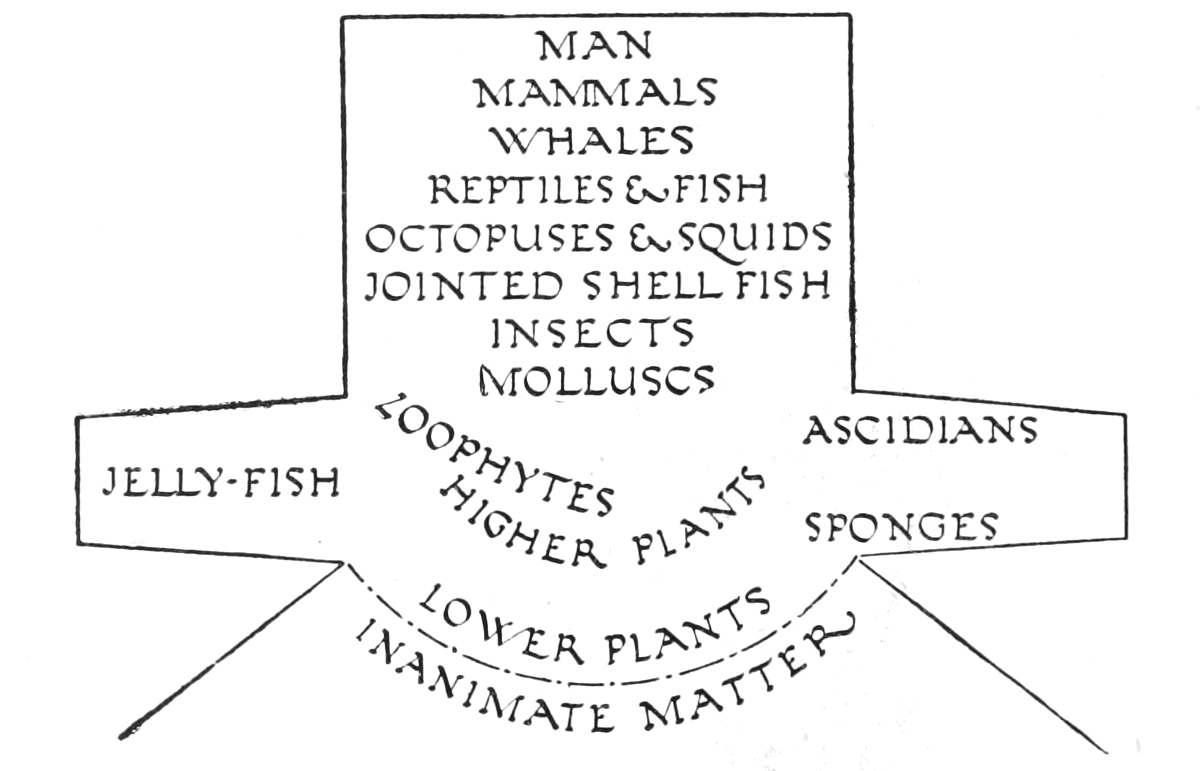
Fig. 10.
The
Ladder of Nature
according to Aristotle.
Aristotle gave good descriptions of some organs, regarded from the standpoint of Comparative Anatomy. These descriptions he sometimes illustrated by drawings,
the first anatomical figures of which we have a record. In some cases these drawings can be restored with confidence. Thus, he gave an account of the uterus, the nomenclature of which has been retained in more or less modified form to our own time (Fig. 11). Among the best anatomical descriptions given by Aristotle is that of the ruminant stomach. Perhaps his most extraordinary anatomical feat is his account of the development of the dogfish Mustelus laevis, which he showed was attached to its mother’s womb in a way very similar to the embryo of a mammal (Fig. 12). This raised the admiration of the greatest modern morphologist, Johannes Müller (1807-58, pp. 211-13), and would in itself be sufficient to establish the claim of Aristotle to a place in the front rank of observing naturalists. Aristotle gave fairly accurate descriptions of the branches of the great veins and of the superficial vessels of the arm of mammals. He realized that the arteries are usually accompanied by veins. He described the generative and digestive organs of cephalopod Molluscs, and many other parts of many other animals.
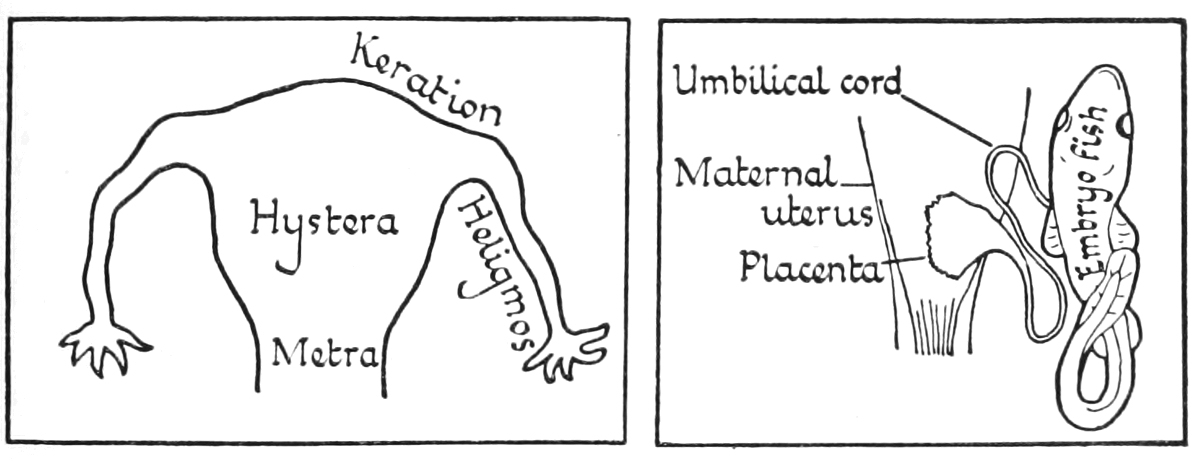
Fig. 11. The womb with the names of its parts as given by Aristotle. These names remain, in various forms, in modern anatomy.
Fig. 12. Embryo dogfish, Mustelus laevis, after Johannes Müller. The little creature is shown attached to the wall of its mother’s womb, somewhat after the manner of a mammal.
Something should be said of the errors of Aristotle. Though an excellent Naturalist, he was in general much weaker in Physiology. Thus, he made no proper distinction between arteries and veins. He failed to trace any adequate relations between the sense organs, the nerves, and the brain. His refusal to attach great importance to the brain is remarkable. Primacy he placed with the heart, which he regarded also as the seat of the intelligence. This was contrary not only to the medical opinion of his day, but also to the popular view, voiced, for instance, by Aristophanes in his play The Clouds, written about 400 B.C., where we read of a man who had concussion of the brain. Moreover, Aristotle’s teacher Plato placed the seat of thought and feeling in the brain. From all we know of Aristotle, it seems probable that he did not take up this attitude without evidence. It seems likely that he had experimented on the brain and found it devoid of sensation. Hence his view, opposed to current belief, that it is not associated with thought. Aristotle regarded the brain simply as an agent for cooling the heart, and preventing it from being over-heated. This cooling process, he considered, was effected by the secretion of phlegm (pituita), an idea still preserved in our anatomical term the pituitary body.
The views of Aristotle have had a vast influence in determining the direction of medical thought. For more than two thousand years Aristotelian philosophy, in more or less corrupted form, constituted the main intellectual food of mankind. Without some knowledge of the biological verdicts of Aristotle, it is impossible to understand the course taken by Rational Medicine. The influence of Aristotle is specially evident in certain basic biological conceptions.
The problem of the nature of Generation is one in which Aristotle never ceased to take an interest. Among the methods by which he sought to solve it was embryological investigation. His most important embryological researches were made upon the chick. His choice was most fortunate, and the chick has remained, to this day, the classical subject of embryological research. Aristotle asserts that the first signs of life in the hen’s egg are noticeable on the third day, the heart being visible as a palpitating blood-spot. As it develops, two meandering blood-vessels extend to the surrounding tunics. A little later, he observes, the body becomes distinguishable, at first very small and white, the head being clearly distinguished and the eyes very large (Figs. 46-7, p. 117). To follow the main features of the later stages was a comparatively easy task.
Aristotle was greatly impressed by these phenomena. He lays stress on the early appearance of the heart in the embryo. Corresponding to the general gradational view that he had formed of Nature, he held that the most primitive and fundamentally important organs make their appearance before the others. Among the organs all give place to the heart, which he considered the first to live and the last to die. In the heart, as we have seen, he placed the seat of the intelligence.
Thus, not only in his account of the ‘Ladder of Nature’, but also in his theories of individual development, Aristotle exhibits some approach to evolutionary doctrine. This is somewhat obscured, however, by his peculiar view of the nature of procreation. On this topic his general conclusion is that the material substance of the embryo is contributed by the female, but that this is mere passive formable material, almost as though it were the soil in which the embryo grows. The male, by giving the principle of life, the soul (psyche), contributes the essential generative agency. But this soul is not material, and it is not, therefore, theoretically necessary for anything material to pass from male to female. The material which does in fact pass with the semen of the male is, as the older philosophers would have said, an accident, not an essential. The essential contribution of the male is not matter but form and principle.
The female then only provides the material, the male the soul, the form, the principle, that which makes life. Aristotle was thus prepared to accept instances of fertilization without material contact, i.e., in effect, parthenogenesis or ‘virgin birth’. In the centuries that came after him such instances were not infrequently adduced, and this doctrine was given a special turn by Christian theologians. Belief in the ‘accidental’ character of the material contribution of the male was common among men of science till the nineteenth century. The general attitude as to the nature of fertilization set forth, for instance, by William Harvey (1578-1657, pp. 111-14) in his book, On the Generation of Animals, published in London in A.D. 1651, is practically identical with the views of Aristotle published in Athens about 350 B.C., just 2,000 years earlier. It is of great interest to note that very recent embryological research goes some way to confirm this view of Aristotle. Without any intervention of the male sexual element, it is possible so to stimulate the egg mechanically as to produce a perfect animal which is thus fatherless from the first. The male element is indeed unnecessary and, in fact, transmits only hereditary characters.
We must say something concerning Aristotle’s conceptions of the nature of Life itself. He was before all things a ‘vitalist’. For him the distinction between living and not-living substance is to be sought not in material constitution, but in the presence or absence of something that he calls psyche, which we may translate ‘Soul’. His teaching on this topic had the profoundest influence on subsequent anatomical and physiological thought.
Aristotle’s theory as to the relation of this Soul to material things is a difficult and complicated subject. Its adequate discussion would take us beyond our theme. He holds, however, that the Soul is related to the idea of form. In living things the soul is that which gives form. It is the pervasion by the soul that leads to the determinate development of the body and its parts. This activity of the Soul, under the Aristotelian term Entelechy (which we may perhaps translate ‘the indwelling perfectability’ or ‘purposiveness’, see Preface), has an important place in modern biological theory, which has, indeed, swung definitely in the direction of the Aristotelian position.
Aristotle defines Life, existing in Matter, as ‘the power of self-nourishment and of independent growth and decay’. Of the Soul, the principle of Life, he distinguishes three orders or types, the lowest vegetative, or nutritive and reproductive, next the animal or sensitive, and highest the rational or intellectual soul. The last, he at first held, was peculiar to man, but later he modified this view.
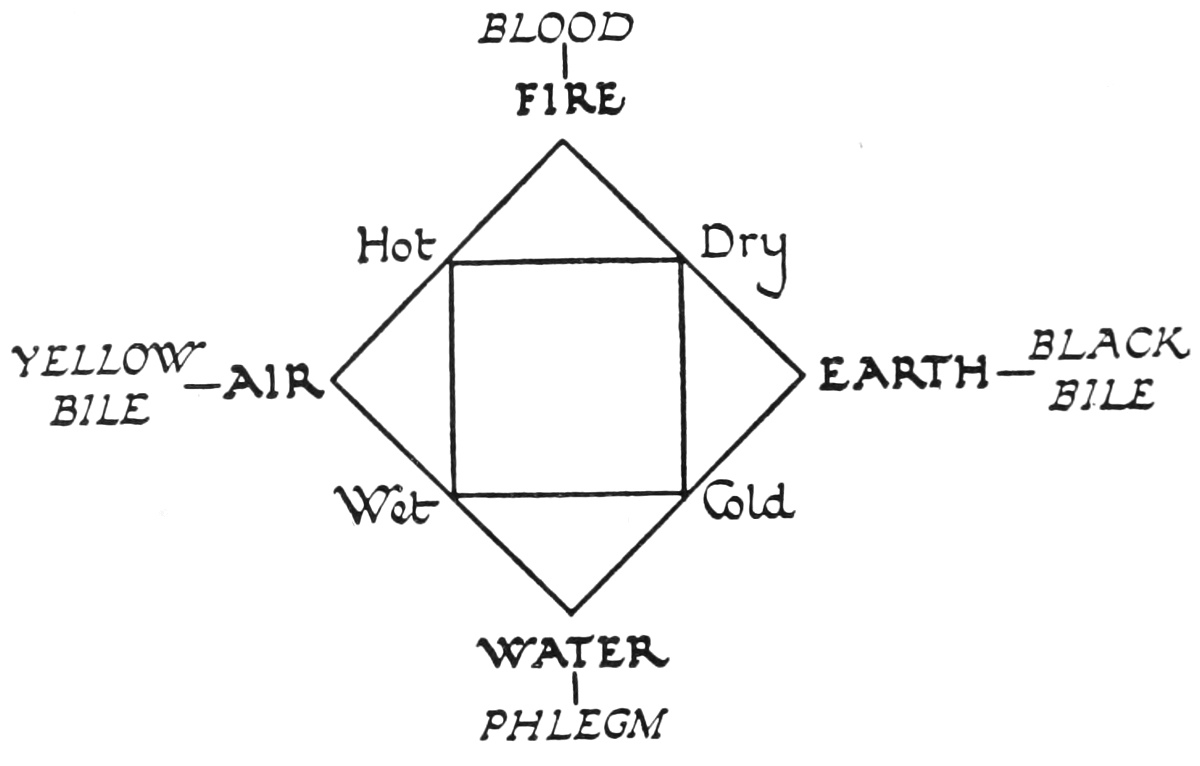
Fig. 13.
The four
Elements
in association with the four
Humors
and the four
Qualities
.
The history of the reception of Aristotle’s science by later ages is very strange to modern eyes. Of all Aristotle’s scientific teachings, men clung most firmly for many centuries not to his finely thought-out biological conceptions, but to a doctrine of the constitution of matter of which the modern student hears nothing. Aristotle, following more ancient writers, held that there were four primary and opposite fundamental Qualities, the hot and the cold, the wet and the dry. These met in binary combination to constitute the four Essences or Existences which entered in varying proportions into the constitution of all Matter. The four Essences, or, to give them their usual name, Elements, were earth, air, fire, and water. Thus, water was wet and cold, fire hot and dry, and so forth. With this theory later writers combined the somewhat similar Hippocratic doctrine which held that the body was composed of the four ‘Humors’ or liquids: blood, phlegm, black bile (melancholy), and yellow bile (choler). Some of the Hippocratic physicians had associated excess of the Humors with various types of bodily constitution. Their followers made much of the ‘temperaments’ resulting therefrom, and according to the prevailing humor they distinguished the sanguine, phlegmatic, melancholy or choleric temperament (Fig. 34, p. 97).
These conceptions, now departed altogether from our scientific discipline, still persist embedded in our language. Poetry still uses such ideas as the ‘raging of the elements’ and ‘elemental forces’. We may yet speak of a ‘fiery nature’ or an ‘aerial spirit’. We know what is meant by a sanguine or a phlegmatic temperament, and a melancholy or choleric disposition, and such words conjure up real pictures in our minds (Fig. 34). Until it began to be undermined by Robert Boyle (1627-91) and others in the seventeenth century, the doctrine of the four elements persisted in its entirety, while ideas and terms derived from the old humoral pathology can, in fact, be traced in the medicine of the twentieth century.
The biological activity of the school of Aristotle was continued after his death by his pupil Theophrastus (372-287 B.C.). Especially the writings on plants of Theophrastus are instinct with a thoroughly scientific spirit, and are rightly regarded as the basic documents of the science of Botany. Nevertheless, his works had little effect or influence on his contemporaries and successors. With Theophrastus the purely biological school of Aristotle may be said to come to an end. The biological sciences ceased, for many centuries, to be studied for their own sake and became mere handmaidens of Medicine. Neither mistress nor servant was the better for the change.