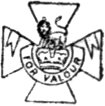
SERGEANT FREDERICK HOBSON, 20TH BATTALION
Reading edition
The men of the 20th Canadian Battalion lay down in their trenches before Hill 70 on the night of the 14th August, 1917, in a soft drizzle of rain. They were to take part in the attack on the hill early next morning and the artillerymen behind had already trained their guns on the enemy trenches, ready to let loose the bellow of destruction when the word was passed.
Hill 70 lies near the La Bassée-Lens road, in the vicinity of Loos, the village of Cité St. Auguste on its right, Bois Hugo and Chalk Pit on its left. Its sides and crest are scarred with trenches and bruised by much shelling. The Allies have taken it from the Germans and have been pushed out of it by the Germans more than once. On the 14th August, 1917, it was in German hands.
Precisely at 4.25 o'clock on the morning of the 15th, just as a red streak smeared the horizon, the word for which the Canadians had been waiting was given and the artillery barrage fell like a hammer stroke on the German front line. For six minutes it pounded the trenches into pulp, then lifted to a hundred yards farther on, tore a line of devastation there for another six minutes, lifted again in another hundred yards' stride and so continued its work of destruction at similar intervals.
As the curtain of our shells rose from the German front line the men of the 20th Battalion, with other units, leaped from their jumping-off trenches and waded across No Man's Land. They found the Germans—all who remained of the front line garrison—shaken, bruised, more or less subdued. Where they surrendered they were taken prisoners; where they resisted they were killed. In Cowley trench only one enemy machine-gun was working and soon it was out-flanked and captured. In Commotion trench an emplacement was in action. It was smothered.
Sergeant Frederick Hobson and some men of "A" company went forward up the enemy trench known as Nabob Alley. They bombed their way along, beating back the Germans, who retreated slowly and grudgingly; and, having conquered about seventy yards of the trench, they established a post at that point. The objectives of the battalion elsewhere were also gained and the position was consolidated. The attack was a success.
All this happened on the 15th of August. But to take a position is one thing: to hold it is another. For three days the Germans kept probing various parts of the line, hoping to find a spot which would yield. At 1.40 a.m. on the 18th, their artillery opened a heavy bombardment on the whole Canadian Corps front and for half an hour shells were rained on every part of the line. The general bombardment slackened for a short time, during which the village of St. Pierre received an avalanche of gas-shells; and at twelve minutes past four o'clock every gun the enemy could muster opened again on the front.
The concentration of artillery was nerve-racking. It was almost demoralizing. Up in the advance posts the majority of the Lewis gun positions were obliterated, men and guns being buried in the vast upheavals. Twenty minutes after the shelling began the headquarters of the 20th Battalion was hit by a heavy shell and vanished. Every wire leading to the posts was cut, every light extinguished. And in the darkness and confusion came word from the battalion stationed on the right of the 20th to the effect that the Germans were out in No Man's Land, coming to attack.
Sergeant Hobson in his trench saw the grey figures swarming across the open ground. The Lewis guns had all been wiped out except one—and as this one was being brought into action a German shell landed beside it. When the smoke cleared, only one man of the crew remained alive, and he and the gun were buried in the debris. Hobson was no gunner, but he knew the importance of the position. He raced forward, seized an entrenching tool and hauled the dazed survivor out of the mud.
"Guess that was a close call," said the survivor, Private A. G. Fuller.
"Guess so: let's get the gun out," replied Hobson.
They began to dig. Across the open ground came the Germans, firing at the two men as they advanced. A bullet hit Hobson, but he took no notice of his wound. Together he and Fuller got the gun into position and opened up on the Germans, who were now pouring down the trench. They were holding the enemy well when the gun jammed.
Hobson picked up his rifle.
"I'll keep them back," he said to Fuller, "if you fix the gun!"
He ran towards the advancing enemy, a lonely, wounded, desperate man against many and with bayonet and clubbed rifle barred their passage. No man knows how many Germans were killed by Sergeant Hobson in that fierce encounter; dead and wounded were heaped in front of him when a shout from Fuller intimated that the gun was again ready for action.
And just at that moment a German pushed his rifle forward and fired point blank at the Canadian Horatius.
As Hobson fell Gunner Fuller pressed the trigger of his Lewis gun and threw a stream of death into the German mob. A few minutes later reinforcements from "B" company took the enemy in the flank and chased them back across No Man's Land; and the machine-guns of "B" company cleaned them up as they ran.
They found Sergeant Frederick Hobson where he had fallen, still grasping his deadly rifle. His enemies were sprawled around him, silent witnesses to his prowess. His heroism had saved the situation—and he had fought his last fight.