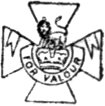
LIEUTENANT ROBERT SHANKLAND, 43RD BATTALION
Reading edition
The attack made by the 3rd and 4th Canadian Divisions on October 26th formed an essential preliminary to the capture of the whole Passchendaele Ridge and town. It was necessary to establish a good jumping-off line for the attack on the village itself, and this was accomplished, though our men went through some very stiff fighting indeed before the position was won. The troops of the 9th Brigade had as their objectives Bellevue Spur and the high ground about it, and after the fighting a captured German officer remarked that the Spur was considered to be the key of Passchendaele town, and that its capture by the Canadians was a notable feat of arms, considering the efforts made by the German Higher Command to ensure its successful defence. One does not know if the officer was merely endeavouring to alleviate the mild rigours of his captivity, but in any case the fighting was most difficult and critical, and too much praise cannot be given to the scattered parties of men who hung on to isolated positions in shell-holes and ditches along the crest of the hill, under the most intense shell-fire, and held back the enemy until reinforcements arrived and consolidated the line.
The 43rd Battalion held the centre of the 3rd Divisional front, on the left of the Gravenstafel-Bellevue Road, with the 58th Battalion on the right and the 4th Canadian Mounted Rifles on the left. At 5.40 a.m. the troops went forward in the steady rain, advancing splendidly over the muddy, wet ground, and by half-past six men of the 43rd were seen against the sky-line going over the crest of Bellevue Spur. The German artillery fire had been immediate and heavy, and formidable pill-boxes on the top and flanks of the hill maintained steady fire upon our troops, causing many gaps in the waves of infantry stumbling and slipping upon the muddy slopes. "D" Company, led by Captain Galt and Lieutenant Shankland, made good progress up the hill, until checked by the heavy fire of a machine-gun in a strong emplacement to the right front. Collecting a few men, Captain Galt attempted its capture, while Lieutenant Shankland continued the advance with the remainder of the company. He gained the crest of the hill, and here close fighting won our men more ground. The pill-boxes were captured, but a trench some fifty yards beyond them checked the advance, and the weary survivors of the attack dug themselves in as well as possible.
In the meantime the battle was going badly enough. On the right the troops of the 58th Battalion, held up by determined resistance and the concentrated fire of many machine-guns at Snipe Hall, had been unable to make good their objective, and were drifting back in twos and threes to the comparative shelter of the jumping-off line. But a few parties of men held out with Shankland's company on the crest, and maintained a rough and disjointed line of shell-holes, of which there were many, across the hill top. Upon this line the Germans poured a relentless stream of lead. At no time previously had our men experienced such shelling. The mud and water dispersed by the bursting shells clogged the weapons of the Canadians, and, in spite of instant attention, in many cases rendered them temporarily useless. The going was terribly hard, but Lieutenant Shankland held his battered line for four hours along the crest of the Spur, keeping his men together and in good spirits, recruiting those soldiers of other companies who had gained the hill but were left without officers, and maintaining against heavy counter-attack the Canadian position that had cost so much to win. But here a new danger asserted itself. On his left Shankland had established rough connection with the 8th Brigade, but now these troops were forced to withdraw, while on the right his flank was completely exposed, and German troops were advancing from the direction of Snipe Hall, enfilading his line, and threatening to cut him off altogether. After a careful survey of the whole position, he handed over the command to the Machine-gun Officer, who, though wounded, had refused to leave the line while his guns were in action, and making the best of his way back to Headquarters, handed in a very valuable report, giving a clear summary of a critical situation, and enabling steps to be taken that previous lack of information had rendered unwise. While the men of the 52nd and 58th Battalions drove back the enemy on the flanks, the Lieutenant got back through the mud and shell-fire to his own company on the hill top. The Germans had attempted to rush this precarious position, and had been beaten back by our machine-gun fire with heavy losses. They had continued to lose, for the 52nd Battalion, advancing in splendid style, drove many of them back across the fire of Shankland's company of the 43rd upon the crest of the Spur. Finally, the flanks were firmly established, and our troops consolidated the new line, with the object of our attack accomplished, though they had not penetrated as far into enemy country as they had hoped.