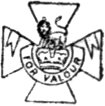
CORPORAL COLIN BARRON, 3RD BATTALION
Reading edition
The two preliminary assaults on the high ground before Passchendaele had secured the Canadians an excellent jumping-off position for the attack on the village itself. The capture of Crest Farm on October 30th by the 4th Division gave our men almost direct observation into the town, and the consequent concentrated fire of our riflemen and machine-gunners rendered the position of the German garrison most uncomfortable.
The 6th of November was the date chosen to justify the costly operations of October 26th and 30th, and at 6 a.m. the Canadians resumed the offensive, the 2nd Division troops on the right going forward to the capture of Passchendaele town, while on the left the 1st Division occupied the hills to the north.
The 1st Division had difficult country to manage. Not only were there many pill-boxes to occupy, but ways and means of progress were terribly limited and clearly defined by the areas of swampy and impassable ground that lay before our advance. In view of the fact that we had so recently driven the Germans from the ground we were to cover, it was too much to hope that they were unaware of our limited attacking fronts, and the subsequent machine-gun barrages that swept our lines of progress proved the contrary.
The 3rd Battalion attacked on the extreme left of the Canadian Corps front, with the intention of reaching the Goudberg Spur. But between our line and the Spur there lay a very formidable strong point indeed, the pill-box at Vine Cottage. Now the pill-box itself was a standing testimonial to the thoroughness of German defensive works, but, in addition to its 18-inch walls of reinforced concrete and its appropriate armament, no less than six machine-guns had been placed in positions commanding every approach to this chef d'œuvre. Our fellows had attempted the reduction of this minor fortress a week before Corporal Barron and his section of the 3rd Battalion took the matter in hand, and had gained no appreciable results beyond a somewhat depressing casualty list and a raised estimation of German defensive ingenuity. However, its capture was imperative, and a special plan of attack was arranged.
At zero hour, Lieutenant Lord's platoon jumped off towards the south-east, intending to capture Vine Cottage and swing round northwards to the final objective. Advancing through the rain, our men got near the strong point and were met at once by heavy fire. Vine Cottage itself, though hardly justifying its name, was a pleasant building enough in its Belgian way, and it was not until the observer had approached it nearly that he could define German handiwork behind the crumbling bricks.
The enemy, with simple cunning, had raised a concrete building within the broken walls, with such successful camouflage that our scouting aeroplanes had not reported it as a pill-box for some time, while the easy unconcern with which the building received a direct hit by an 18-pounder shell had caused our gunners anxiety to a degree. As the Canadians drew near they extended and attacked the position from three sides. Their advance was slow over the sodden ground. It was impossible to win close enough to the building or gun positions to throw bombs with good effect. Time and again our fellows charged, but from every point machine-gun fire drove them back, and finally they were forced to take whatever cover they could find, while a fresh scheme of attack was planned. The going was very heavy, and the mud and constant rain made the condition of the wounded terrible beyond description. Our men started to attack once more, and as they rose to their feet a diversion occurred to the front.
Corporal Barron, a Lewis gunner, had worked round the flank with his weapon, and was knocking out the German crews one after the other with his well-directed fire. Completely exposed, he directed his gun undisturbed by the point-blank shooting of the enemy, until he had silenced two of the opposing batteries. Then, without waiting for his comrades, he charged the remaining position with the bayonet, getting in among the gunners and killing four of them before the rest of his platoon could arrive. The slackening of the heavy fire gave the Canadians a chance to get well forward, and in a moment they were about the position. The guns Barron had been unable to reach kept up a heavy fire until our fellows were on top of them, when most of the crews surrendered, while others attempted to escape to the rear. But the Canadians had lost too many of their comrades to feel merciful, and they were infuriated at the general morale of men who would maintain murderous shooting until imminent danger pressed, and then calmly sue for mercy. They took few prisoners.
Corporal Barron, however, had not finished his good work. Turning the enemy's guns about, he opened fire upon the retreating Germans, catching the groups upon the hillside, and shooting them down with such good effect that hardly a man escaped.
That was a job well done and the remaining men of the platoon moved northwards to the consolidation of Goudberg Spur with the capture of six machine-guns and a strong pill-box to their credit, and the satisfying knowledge that the German losses were double the number of their own.