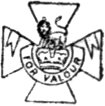
COMPANY SERGEANT-MAJOR ROBERT HANNA, 29TH BATTALION
Reading edition
When the first big attack was made by the Canadian troops on Hill 70 on the 15th August, 1917, the 29th (Vancouver) Battalion moved forward to the support of the 5th Brigade, remaining in the area for three days while the battle raged in the forward lines.
The first stage of the attack ended on the 18th; and that night, under severe shelling, the 29th Battalion took over Commotion trench from the junction of Caliper and Conductor trenches to the junction of Nabob Alley and Commotion trench. On the morning of the 21st August the second stage of the offensive was resumed. It was then the battalion took an active part in the struggle.
The opening of the second phase was timed for 4.35 a.m. At 1 a.m. the companies began to move into the assembly positions. At 3.15 a.m. the scouts reported that the tapes had been laid, the companies were getting into position uneventfully and none of the enemy was to be seen.
But about 4.10 a.m. the German artillery began to plump shells along the front of the parapet, increasing the intensity of the barrage towards 4.30, when a sudden deluge of "fish-tails" descended on the trenches. Accompanying this bombardment was a curious kind of bomb, square in shape, which exploded with a great flame and sent out a dense, suffocating smoke. One of those dropped in the trench occupied by "D" company, wounding practically every man in a platoon.
While attempts were being made to clear the débris, Sergeant Croll, who was stationed near the corner of Nun's Alley and Commotion trench, heard the word passed along: "Heine has broken through the 25th and is coming down the trench."
Croll collected five unwounded men and kept the advancing Germans at bay by bombing them till reinforcements arrived from the 28th Battalion and drove the enemy out.
Major Grimmett, who was in command of "A" company in support, hearing the bombing and concluding that something had gone wrong with "D" company, sent forward a platoon under Captain Abbott. Our opening barrage by this time had begun and was moving forward. Abbott's platoon took up the fight, carried it into Nun's Alley and established a block there.
The other companies—"B," "C" and the remainder of "D"—had gone forward behind the barrage. One platoon of "D" company, which attempted an overland attack on Nun's Alley, was wiped out almost to a man by machine-gun fire. "C" company, attacking in the centre, was badly mauled. The left platoon was swept away by German machine-gun fire before it reached its objective. The right platoon had almost reached its objective—Cinnebar trench—when it ran into a strong enemy machine-gun post surrounded by barbed wire. Lieutenant Carter, who had already been wounded, was killed in an attempt to drive the Germans out of this stronghold.
Lieutenant Sutherland, on the extreme right, got into Cinnebar trench and gave the order for rapid fire on a party of Germans who were advancing overland. In the act of picking up a rifle he was mortally hit by a sniper's bullet. Sergeant Stevens, who then took command, was lifting Sutherland's rifle when he too was shot through the head. A corporal took the sergeant's place. A moment later he also was killed. The remainder of the men fought on desperately till a platoon of the 28th Battalion came to their aid.
In the meantime "B" company, to which Sergeant-Major Hanna belonged, had reached the objective in Cinnebar trench. Believing that all was well with "C" company, Lieutenant Gordon, the commander, was about to send off the pre-arranged signal when it was discovered that the signal cartridges were wet. Before a substitute could be found word was brought that "C" company, on the left, was being badly smashed, all the officers having been killed. Lieutenant McKinnon was sent along with a bombing party to aid "C" company. He was killed just as he joined the fight.
Gordon then went along to the relief of the company on his left, after ordering Lieutenant Montgomery to get a party of snipers outside the trench so that they could take toll of the enemy. Gordon was badly wounded in the arm. Lieutenant Montgomery was soon afterwards killed by a German sniper. The leadership fell upon Sergeant-Major Hanna.
Hanna saw that the crux of the position was a German post protected by a heavy wire and armed with a machine gun. He collected a party of his men and led them against the post amid a hail of rifle and machine-gun fire. Rushing through the wire he bayoneted three of the Germans, brained a fourth, and overthrew the machine gun. The redoubt was captured.
The Germans arrived in force and counter-attacked. Hanna, who was now short of bombs, built a block. Again and again the enemy tried to rush his position; but he and his handful of men held it until they were relieved later that day. Next day the battalion frontage was taken over by another Canadian unit and the 29th went back to a well-earned rest.