Volume 1 / Part 2 — FOREWORD (continued 2)
Reading edition
When the first specimen of American made procain was sent to the American Medical Association Chemical Laboratory it was necessary to work out adequate standards. The standards were formulated on the basis of the novocain monograph in the German Pharmacopeia, 1910, Ed. 5, p. 363, Remedia “Hoechst,” p. 242, and New and Nonofficial Remedies, 1918, p. 32, and the work carried out in this laboratory.
The following description has been adopted for New and Nonofficial Remedies, 1919, and all specimens of procain were subjected to these tests:
Procain occurs in small colorless and odorless crystals, or a crystalline powder which if placed on the tongue produces a transient sense of numbness.
It melts at 153–155 C.212
One gm. of procain is soluble in 0.7 c.c. of water and in 20 c.c. of alcohol U. S. P. (95 per cent.) at 20 C. From the aqueous solution, which is neutral, alkali hydroxids and carbonates precipitate the free base in the form of a colorless oil, which soon congeals to a crystalline mass, but solutions of sodium bicarbonate are miscible with solutions of procain without producing precipitations or turbidity.
Dissolve 1 gm. of procain in water. Separate portions of the solution yield a white precipitate with potassium mercuric iodid solution, a white precipitate with mercuric chlorid test solution, a brown precipitate with iodin test solution and a yellow precipitate with picric acid test solution. Acidify a portion with dilute nitric acid. A white curdy precipitate is thrown down on the addition of silver nitrate test solution.
Dissolve about 0.1 gm. of procain in 5 c.c. of water, add 2 drops of dilute hydrochloric acid and 2 drops of sodium nitrite solution (10 per cent.) and mix with a solution of 0.2 gm. of betanaphthol in 10 c.c. of sodium hydroxid solution (10 per cent.). A scarlet red precipitate is thrown down.
To a solution of about 0.1 gm. of procain in 5 c.c. of water add 3 drops of dilute sulphuric acid and mix with 5 drops of potassium permanganate test solution. The violet color of the latter disappears immediately (distinction from cocain).
Dissolve about 0.1 gm. procain in 1 c.c. sulphuric acid U. S. P. The solution is colorless (organic impurities).
Dissolve 0.1 gm. of the salt in 10 c.c. of water and saturate with hydrogen sulphid. No coloration or precipitation occurs (salts of the heavy metals).
Incinerate about 0.5 gm. of procain accurately weighed. Not more than 0.1 per cent. of residue remains.
To obtain specimens representing the market supply, orders for the three brands of procain were placed with pharmaceutical firms in New York, Baltimore and San Francisco. The Baltimore and San Francisco firms supplied specimens of procain-novocain brand and procain-Rector brand but reported that the Abbott brand was not procurable. The New York correspondent was able to supply procain-Rector only. As the entire output of the Abbott Laboratories was stated to go to the government, specimens of this product were obtained through the surgeon-general of the army from the general purchasing office, Medical Dept., U. S. Army. The following specimens were obtained and examined:
1. Procain-Abbott, 6 specimens: The first specimen bore no serial number but the five later specimens were designated respectively, No. 89999, No. 89998, No. 89997, No. 89996, and No. 810995, representing batches from which shipments are to be made on contracts placed by the general purchasing office, Medical Department, U. S. Army, with the Abbott Laboratories of Chicago.
2. Procain-novocain brand, 4 specimens: These were designated respectively, A56, A57, A63, and A67. The first two specimens were labeled “Manufactured by the Farbwerke-Hoechst Co. at the H. A. Metz Laboratories.” The third specimen (not in original container) was labeled “H. A. Metz Laboratories” and the fourth was marked “Manufactured by the H. A. Metz Laboratories.”
3. Procain-Rector, 3 specimens: Each bore the statement “Manufactured by the Rector Chemical Company” but had no “lot number.”
From this examination it appears that all the specimens of procain received complied satisfactorily with all tests of identity and purity with the following exceptions: (1) One specimen of procain-Abbott had a melting point slightly below the permitted range; however, the last five specimens had the required melting point. (2) Five specimens of procain-Abbott and the last three specimens of procain-Rector were not entirely colorless, but had a yellow or light brown tinge.
The toxicity experiments, which were carried out by Dr. R. A. Hatcher of the Cornell Pharmacologic Laboratory, were reported as being satisfactory.
When the Council on Pharmacy and Chemistry referred the matter of the discolored specimens of procain to the Rector Chemical Company for explanation, the firm wrote that for a short time for some unexplainable reason its procain had been slightly yellowish in color, but that every batch had been carefully tested and found to answer all chemical requirements. The firm stated that the product which it had sent out for some time past had been white and yielded a colorless solution.
To a like inquiry from the Council the Abbott Laboratories replied that the five samples which were found discolored were products manufactured by the Rector Chemical Company and represented goods which it had purchased to assist in filling delayed orders, because the firm had found itself unable to keep pace with the demand on account of delay in securing needed apparatus. The firm submitted protocols to show that the procain made by it, by Rector and by Metz were of equal toxicity.
In the accompanying table the results of the examination are given. For comparison the findings for the specimens examined previously are included.
BrandDate ReceivedColorMelting Point, C.Ash %
Procain (Abbott), from Committee on Synthetic Drugs12/21/17White154–155None
Procain (Abbott), submitted to Council P. and C 1/29/18White153.5–154.5None
Procain (Abbott), Gen. Pur. Off. U. S. Army 8/31/18White152.5–153.5None
Procain (Abbott), Gen. Pur. Off. U. S. Army, No. 89999 9/30/18Slight brownish tint153.5–154.5None
Procain (Abbott), Gen. Pur. Off. U. S. Army, No. 89998 9/30/18Slight brownish tint153–154.50.005
Procain (Abbott), Gen. Pur. Off. U. S. Army, No. 8999710/ 8/18Slight brownish tint153–154None
Procain (Abbott), Gen. Pur. Off. U. S. Army, No. 8999611/ 4/18Slight brownish tint153.5–154.5None
Procain (Abbott), Gen. Pur. Off. U. S. Army, No. 81099511/ 4/18Slight brownish tint153.5–154.5None
Procain (Farbwerke Hoechst Co.), submitted to Council10/24/17White153–154None
Procain (Farbwerke Hoechst Co.), submitted to Council12/10/17White153–154.5None
Procain (Farbwerke Hoechst Co.), submitted to Council, market spec. “A56” 8/ 9/18White153.5–154.5None
Procain (Farbwerke Hoechst Co.), submitted to Council, market spec. “A57” 9/ 9/18White153.5–154.5None
Procain (H. A. Metz Lab.), market spec. “A63” 8/23/18White153–154None
Procain (H. A. Metz Lab.), market spec. “A67” 9/23/18White153–1540.018
Procain (Rector), from Com. on Synthetic Drugs12/18/17White153–154.5None
Procain (Rector), market spec. 8/20/18Slight brownish tint153–155None
Procain (Rector), market spec. 8/23/18Slight brownish tint153–155None
Procain (Rector), market spec. 8/23/18Slight brownish tint153–154.5None
So far as the evidence goes, there was nothing to indicate that the yellowish or brownish colored specimens of procain were seriously impure. On the contrary, the compliance with the chemical and toxicologic tests indicated that the color was due to an insignificant trace of some colored substance produced in the manufacturing process. In view of this, the Council considered the use of the discolored product to be justified in the present emergency, although it urged that the future supply of procain should be free from color and also comply to the tests of purity. It made this request in the interest of the medical and dental professions, which use the drug, and also in a desire that in the manufacture of synthetic drugs, the United States should occupy a high place.—(From The Journal A. M. A., Jan. 11, 1919, with additions.)
DETERIORATION OF SODIUM HYPOCHLORITE SOLUTIONS (“Chlorinated Soda” Solutions)
The following note on two hypochlorite solutions is published as a slight addition to the inconclusive available information concerning the rate of deterioration of solutions containing sodium hypochlorite:
Hyclorite.—This is a solution of chlorinated soda, 100 gm. of which is said to contain sodium hypochlorite 4.05 gm., sodium chlorid 3.20 gm., calcium hydroxid 0.25 gm., inert ingredients 0.92 gm. It is declared to contain, when placed on the market, not less than 3.85 per cent. of available chlorin, and to deteriorate at the rate of about 12 per cent. per year. In order that the available chlorin content at the time of use may be judged, the date of bottling is stamped on each package. The solution is prepared by decomposing chlorinated lime suspended in water with sodium carbonate and adding to the solution obtained a freshly prepared solution of electrolyzed sodium chlorid. The composition and keeping qualities of hyclorite were reported on by this laboratory (Ann. Rep. Chem. Lab., A. M. A. 9:123, 1916). Hyclorite is fully described in New and Nonofficial Remedies, 1918, p. 153.
To further check the keeping qualities of hyclorite, a specimen received from the manufacturer in June, 1918, and said to have been bottled in April, 1918, was examined in September, 1918. It was found to contain 3.6 per cent, “available chlorin” (equivalent to 3.79 gm. sodium hypochlorite in 100 gm.). This indicated a loss of 6.2 per cent. during five months (equivalent to 14.9 per cent. per year) on the assumption that it contained the amount of “available chlorin” declared on the label.
Concentrated Solution Sodium Hypochlorite-Mulford.—This is described as a 5 per cent, aqueous solution of sodium hypochlorite containing free chlorin equivalent to from 0.2 to 1 per cent. sodium hypochlorite. It is prepared by treating a solution of sodium carbonate and sodium bicarbonate with chlorinated lime. The solution is filtered and standardized by determining the “available chlorin” and adjusting it to contain the equivalent of 5 per cent. of sodium hypochlorite.
It is proposed for use in the irrigation treatment of infected wounds after dilution with nine times its volume of water and the addition of a determined amount (stated on the label of each bottle) of boric acid to render it neutral to phenolphthalein. The manufacturer has found that development of a red color (due to formation of permanganate from the manganese contained in the chlorinated lime) is indicative of deterioration, and therefore warns against any solution which has become pink.
A specimen of concentrated solution of sodium hypochlorite-Mulford was sent the Council on Pharmacy and Chemistry in June, 1917, with a view of having the product admitted to New and Nonofficial Remedies. At that time it was found to contain 4.18 per cent. “available chlorin” (equivalent to 4.4 gm. sodium hypochlorite in 100 gm.). Another specimen received at the same time and kept unopened in a dark place, was examined in September, 1918, and was found to contain 2.88 per cent. available chlorin (equivalent to 3 gm. sodium hypochlorite per 100 gm.). On the assumption that the second specimen contained, at the time of its receipt, the amount of “available chlorin” found in the first, this second specimen lost 31 per cent. of its “available chlorin” during fifteen months.
At the time the specimens were received from the Mulford Company, the firm reported experiments which were under way to determine the keeping qualities of the solution. These experiments indicated marked deterioration of the specimens, which had become red from permanganate formation, and also that one specimen, which had not become red, had lost 5 per cent. of its available chlorin in one month. The Mulford Company explained that when sufficient data had been accumulated, a decision would be made either as to placing a time limit on the solution or making a claim as to the rate of deterioration. When the extreme deterioration found by this laboratory was reported to the Mulford Company, the firm replied that this was a much greater loss than the average deterioration found in its chemical laboratory, namely, an average of 10 or 12 per cent. per year. It advised that because of the instability of concentrated solution of sodium hypochlorite, its manufacture had been discontinued.—(From Reports A. M. A. Chemical Laboratory, 1918, p. 81.)
SYPHILODOL
The shortage of arsphenamin (salvarsan) has made the sale of substitutes a profitable business. In many of these substitutes the earmarks of dishonesty have been obvious, so that detection of their falsity was relatively simple. In the case of “Syphilodol” marketed by the French Medicinal Company, Inc., New York, the deception has been practiced more skilfully. In the circular announcing their preparations, we read:
“It seems fitting at this time, when the American physicians are doing so much for France, that there should be a reciprocation in some way.
“Attempting to enhance somewhat this mutual interchange, we are presenting some of those scientific products, which have been so successfully used in France, ——”
“The effect of SYPHILODOL is very similar to salvarsan and neosalvarsan, but it has the advantage of being more lasting in its results and more pleasing in the manner of its preparations, in that it is put up in the form of tablets, and, also, in hermetically closed glass syringes or ampules, so that it may be administered either by the mouth, intravenously or intramuscularly, at the discretion of the physician. Patients averse to the use of the hypodermic needle may be treated expeditiously by the use of the tablet form of the medicine.”
In addition to Syphilodol, the French Medicinal Co. also sells “Vichi Fruti,” a combination of salts, “Urodol,” an “alkaline salt of the famous European Springs which is noted for breaking up and dissolving uric acid rapidly” and “Syloiodol,” “French Preventive,” which is described as “a solution of iodol incorporated into bougie.”
“Syphilodol,” we are told, is “a synthetic chemical product of silver, arsenic and antimony, scientifically prepared after the formula of the late Dr. Alfred Fournier of Paris.” (Italics ours—Ed.). It is also claimed that “Prof. Metchnikoff and other noted French scientists have made exhaustive tests of syphilodol and found it superior to the other products, in the treatment of syphilis.” In the advertisements, Fournier and Metchnikoff are the only names given of alleged endorsers; both of these men are dead and cannot protest. True, Fournier did considerable work on a legitimate synthetic of antimony, silver and arsenic having a general chemical constitution similar to arsphenamin, but so far as we are aware, there has been no publication by these men on “Syphilodol.” It would seem that the valuable work and high reputation of Fournier and Metchnikoff are being capitalized by the French Medicinal Company in their endeavor to foist a nostrum on the medical profession of this country.
“Syphilodol” comes in two forms—ampules and tablets. An order for two 0.4 ampules brought an elaborate case, much like those used to hold the popular style safety razors. The ampule itself was a “classy” affair evidently made by a glass expert; the hypodermic needle was enclosed in a novel sealed glass device. The price of each ampule is $3. No such fancy garnishments came with the tablets, although they are listed at $4.50 for twenty-five—18 cents a tablet! In the “Syphilodol” advertising it is emphasized that both the tablets and ampules are to be administered. For example:
“Syphilodol is dispensed in the form of tablets and also hermetically closed glass syringes or ampules so that it may be used either by the mouth, intravenously or intramuscularly at the discretion of the physician. An advantage of the tablets is that they can and should be given during the interim between the injections.”
LABORATORY REPORT ON SYPHILODOL
Several samples of “Syphilodol” were sent to the American Medical Association Chemical Laboratory by readers of The Journal. An original bottle of tablets was ordered direct from the French Medicinal Company. The bottle contained 25 yellow tablets, having an average weight of 0.276 gm. (41⁄4 grains). After being powdered, “Syphilodol” was found to be only partially soluble in water (the excipient is soluble) and to be neutral in reaction. These findings contradict the claims on the circular accompanying the bottle to the effect that “Syphilodol is a yellow powder, soluble in water, and has an acid reaction.” Qualitative tests indicated the presence of mercury, sucrose (cane sugar), iodid, calcium, sulphate, fatty material, a trace of silver, a trace of arsenic and a very minute trace of antimony; a red dye was also present. Both qualitative and quantitative data showed that the mercury was present in the form of mercurous iodid (yellow iodid of mercury—hydrargyri iodidum flavum). Quantitative estimations yielded the following:
Silver (Ag+)0.001 per cent.
Mercury (Hg+) 11.1 per cent.
Iodid (I-) 7.8 per cent.
Sucrose (cane sugar) 72.0 per cent.
Ash (calcium sulphate) 2.5 per cent.
Ether-soluble material (fatty material—petrolatum) 3.5 per cent.
Thus each tablet of “Syphilodol” contains approximately, 3⁄4 grain of mercurous iodid. An ampule of “Syphilodol,” labeled 0.4 gram, contained approximately 1.5 c.c. of a liquid which after evaporation on a water-bath left a residue weighing 0.8 mg., or 1⁄80 grain. A second ampule held about 2 c.c. of liquid, which contained a trace of arsenic (less than 0.00001 gm., or 1⁄6000 grain); a very small amount of mercury was indicated but not definitely established. The liquid had the physical characteristics of water.
Accompanying “Syphilodol” advertising sent to physicians is a circular letter inviting the doctor to become a member in the “United States Bacteriological and Research Institute.” The “institute” seems to be a means of suggesting that the physician have bacteriologic, pathologic and serologic examinations made on behalf of his patients. In view of the fact that it is to the commercial interest of the French Medicinal Company to have as many users of “Syphilodol” as possible, it would be interesting to know what proportion of the Wassermann tests are reported negative.
Shorn of its mystery, Syphilodol the “synthetic chemical product of silver, arsenic and antimony” is essentially mercurous iodid—yellow iodid of mercury.
Details of Analysis
SYPHILODOL TABLETS
In France there has been on the market for some time a synthetic compound of silver, arsenic and antimony having the general structure of arsphenamin. Structurally, the formula as given by Bonard, Danyss and Tournier is (C12H12N2As2) 2AgBrSbO (H2SO4)2— dioxy═ diamino arsenobensolstibicosilver sulphate. As the advertising matter for “Syphilodol” referred to the synthetic compound of silver, antimony and arsenic, and also to its use in syphilis by Fournier, the above compound was first suspected. However, the general characteristics of syphilodol tablets, such as partial solubility in water, but not soluble in sodium hydroxid, sodium bicarbonate or acids, threw doubt on the hypothesis. When a small amount of the powdered tablets was treated with water, a yellow residue could be filtered off; the filtrate was pink, opalescent, which on standing gave a clear pink solution, and a small yellow precipitate. The residue, when allowed to remain in sulphuric acid solution (20 per cent.) over night became red; on boiling, the red precipitate with sulphuric acid, the precipitate volatilized and could be condensed in a watch glass. Adding a pinch of manganese dioxid to the hot sulphuric acid mixture caused an evolution of iodin fumes. A small amount of powdered syphilodol tablets was placed in the sunlight; they turned from yellow to black. All these reactions are typical of mercurous iodid—yellow iodid of mercury.
MERCURY, SILVER, ARSENIC, ANTIMONY
I. Mercury.—Two methods were used to determine the mercury: (a) 1.4535 gm. of powdered syphilodol was treated with 10 c.c. of a 50 per cent. sodium sulphid solution. The solution was then transferred with washings (about 20 c.c.) to a cathode cup, previously weighed with its contained mercury. The mercury compound was electrolyzed by a current of about 8 volts and 3 amperes, using a rotating anode. The solution (and some sulphur suspension) was removed by siphon, pouring in water until the amperage of the current was close to zero (U. S. P., IX, p. 587). The increased weight in mercury was 0.1612 gm.
II. To serve as a check on the foregoing method, mercury was also determined in the following method, which also allowed systematic tests for silver, antimony and arsenic. (b) 1.1023 gm. of the sample was placed in an Erlenmeyer flask, 50 c.c. of water, 50 c.c. of sodium hydroxid solution (10 per cent.) and 20 c.c. of formaldehyd solution, U. S. P., added. The solution was boiled for ten minutes and maintained at temperature of steam bath for two hours. (This reduces the mercury salt to mercury and any silver salt to silver; antimony would probably be likewise reduced.) The precipitated mercury was transferred by water, and concentrated nitric acid added. (The nitric acid solution is boiled to oxidize all mercurous nitrate to mercuric nitrate.) A small white precipitate was obtained at this point which seemed to be insoluble in aqua regia (calcium sulphate). The filtrate from this precipitate, which was washed well, was tested with one or two drops of dilute hydrochloric acid and a faint precipitate formed; this was filtered off through extra fine filter paper and washed repeatedly. The paper and precipitate was heated with potassium cyanid solution over night, filtered and the filtrate electrolyzed in a platinum dish. The increase in weight of the dish was 0.00018 gm., or 0.001 per cent. Into the platinum dish some nitric acid was poured, then diluted, and a drop of hydrochloric acid added. A turbidity was produced which cleared on the addition of excess of ammonium hydroxid solution (silver). The filtrate from the nitric acid treatment was electrolyzed, this time in a platinum dish, and the liquid carefully removed, washed carefully with redistilled alcohol and ether. The mercury, which could be seen easily by the naked eye, weighed 0.1200 gm., equivalent to 10.89 per cent. of mercury.
III. Arsenic and Antimony.—About 3 gm. of the powdered specimen was digested with sulphuric acid in a Kjeldahl flask. One-half portion (which was evaporated almost to dryness and treated with 5 c.c. of concentrated hydrochloric acid) was submitted to treatment with hydrogen sulphid, diluted, and saturated with hydrogen sulphid. The precipitate was treated in the usual manner of the group separation with warm ammonium sulphid solution. The filtrate from this treatment was acidulated with hydrochloric acid, the precipitate removed, and treated with concentrated hydrochloric acid. The substance insoluble in hydrochloric acid was treated with more concentrated hydrochloric acid and a crystal of potassium chlorate. The solution was tested after the Gutzeit method of the Pharmacopeia IX, for arsenic. A very small amount was indicated. The hydrogen sulphid test was not indicative. The solution which might contain the antimony was tested with hydrogen sulphid. In one case only was a slight orange coloration produced. No antimony was deposited on platinum foil in the presence of granulated zinc. These tests were run in triplicate.
Iodid.—Iodid was determined by the Carius method (a) 0.7412 gm. yielded 0.1112 gm. silver iodid, equivalent to 8.09 per cent.; (b) 0.5319 gm. yielded 0.0751 gm., equivalent to 7.80 per cent. The iodid and mercury were in proportions comparable to mercurous iodid.
Ash.—(a) 0.9159 gm. when ignited to constant weight yielded 0.0232 gm., equivalent to 2.52 per cent. ash; (b) 1.3008 gm. treated with water and the residue filtered on a Gooch filter and ignited. The ash of the residue was 2.51 per cent. (the mercurous iodid volatilized). The ash was calcium sulphate.
Sucrose.—1.3008 gm. of the sample was treated with water and filtered by suction through a Gooch crucible. The filtrate and washing were carefully transferred to 500 c.c. volumetric flask, and allowed to stand one week; 50 c.c. portions were used to determine sugar according to the Daufresne-O’Sullivan method. The weights of cupric oxid averaged 210 mg., or 72 per cent.
Ether Soluble Material.—1.6998 gm. of the powdered specimen was extracted with ether and the ether extract evaporated to dryness. The residue weighed 0.0600 gm., equivalent to 3.53 per cent.
SYPHILODOL AMPULES
Water.—The liquid from one ampule was distilled over very carefully. The freezing point of the liquid was +0.1 C., and it was neutral to methyl orange and phenolphthalein.
Arsenic.—The contents of one ampule was placed in a small florence flask, 20 c.c. of concentrated sulphuric acid added and heated to 70 C.; 0.5 gm. of potassium permanganate was added in small amounts. The procedure was then carried on as described by Engelhardt and Winters in J. Am. Pharm. Assn., 1915, p. 1469. To the mixture from 5 to 10 c.c. of hydrogen peroxid solution were added drop by drop until the color had disappeared. The liquid was diluted with 20 c.c. of water, boiled fifteen minutes, diluted again and boiled fifteen minutes, then cooled and made up to exactly 100 c.c. A blank was also run alongside. Five c.c. of this solution was then tested quantitatively for arsenic according to the U. S. P. IX method, using all precautions. Comparisons of stains showed less than 0.00001 gm. of arsenic (As).—(From The Journal A. M. A., May 18, 1918.)
CERELENE
Cerelene, a paraffin preparation for the treatment of burns, was submitted to the Council by the Holliday Laboratories, with the statement that it was composed of 84 per cent. paraffin, 15 per cent. myricyl palmitate, and 1 per cent. purified elemi gum to which is added oil of eucalyptus 2 per cent. and betanaphthol 0.25 per cent. It was explained:
“Myricyl Palmitate is a purified form of Beeswax, free from all impurities, acids, etc., which is solely manufactured by this Company....”
It was also stated that on “special order” Cerelene has been made containing oil of eucalyptus and resorcin, oil of eucalyptus and picric acid, and picric acid alone. The following report on the preparation was presented to the Council by the referee to whom Cerelene had been assigned:
Cerelene is another compound wax for the treatment of burns. According to the work of Sollmann (J. A. M. A. 68:1799, 1917) it is highly improbable that compound mixtures have any advantage over simple paraffin of low melting point. Cerelene must therefore be considered as an unessential modification of paraffin, and as in conflict with Rule 10, unless definite evidence of superiority be submitted. Cerelene mixtures containing medicinal ingredients also appear unscientific since the evidence that the ingredients do not leave the wax has not been successfully contradicted. Finally, the claims made for Cerelene are rather extreme, and would need some revision before they could be accepted.
The A. M. A. Chemical Laboratory reports:
The physical properties of Cerelene are as follows:
Melting point by U. S. P. method50.0 C.
Ductility limit30.5 C.
Plasticity limit26.4 C.
Not strong at38.0 C.
Adheres moderately well; detaches with “pulling.” On heating, readily loses eucalyptol, and a small amount of resinous substance forms in the bottom of the beaker. If Cerelene be heated to 145 C. and cooled, the resulting product no longer has the properties of the original Cerelene.
After two years’ delay on the part of the manufacturer, the Council authorized publication declaring Cerelene inadmissible for New and Nonofficial Remedies because its superiority over single paraffins had not been demonstrated and the unwarranted claims had not been abandoned.—(Abstracted from The Journal A. M. A., Feb. 15, 1919.)
DR. DE SANCTIS’ RHEUMATIC AND GOUT PILLS
Dr. DeSanctis’ Rheumatic and Gout Pills are sold by Edward Cleaver, 13 Clerkenwell Road, London, England. The American agents are E. Fougera and Co., Inc., New York. The package is a round pill box and contains twelve pills and a circular, which directs that one pill be taken every eight hours until relieved. In the package there is also a circular advertising Dr. DeSanctis’ Gout and Rheumatic Paint, with directions for its use. On the cover of a box, which contained six of the retail packages, is the statement that these pills have been in general use for nearly 100 years, and that their sale has been built up without advertising.
DeSanctis’ pills are round, uncoated, and have a light brown color. There was some variation in the color of different lots, one lot in particular being gray rather than brown. A little arrowroot starch was found in each box, this evidently having been used as a dusting powder. The pills were very hard, rather brittle, but quite difficult to powder. The pills were not readily disintegrated by water or diluted acids, even when warmed, but when warmed with a dilute sodium hydroxid solution they readily disintegrated.
Ten pills weighed 3.213 gm., an average of 0.3213 gm., or 5 grains. The arrowroot starch used as a dusting powder was removed as completely as possible by rolling the pills in a cloth. Several dozen pills were then powdered and the powder thus obtained used for the analysis.
A microscopic examination of the powder showed powdered colchicum seed in abundance and also traces of arrowroot starch, no doubt from that used as the dusting powder.
Since colchicum seed was so abundant, the powder was assayed by the U. S. Pharmacopeial method for colchicum seed (U. S. P. IX, p. 120), slightly modified so that less of the powdered pills than directed there could be used. In one assay 3.75 gm. gave 0.0204 gm. of colchicin or 0.54 per cent. In a duplicate, 5 gm. gave 0.0234 gm. of colchicin or 0.47 per cent.; average 0.5 per cent.
The alkaloid obtained had the characteristic appearance and odor of colchicin when separated from the seed under these conditions. The solution in water and acid was yellow; the aqueous solution was intensely bitter, and the yellow color intensified with acids. The dry residue became intensely yellow with concentrated sulphuric acid; with nitric acid it became violet turning to yellow, and with concentrated sulphuric acid and potassium nitrate it gave a yellowish green color, turning to violet and finally to a wine color. All these reactions are typical of colchicin.
From 1 gm. of the powdered pills there was obtained 0.0425 gm. of ash, or 4.25 per cent.
When the powdered pills were extracted with chloroform in a Soxhlet apparatus, a very uniform quantity of extract was obtained. From 5 gm. there was obtained, in one case, 0.581 gm.; in another, 0.5755 gm., and in a third, 0.588 gm., the average being 0.5815 gm. or 11.63 per cent.
On still further extracting with alcohol, a small amount of extractive was obtained, the amount depending on the length of time the extraction was continued.
On extracting with hot water the residue left after exhaustion with chloroform and with alcohol, a further extract was obtained. In one case, it amounted to 0.4763 gm. or 9.53 per cent., and in another case it amounted to 0.470 gm., or 9.40 per cent.; average 9.47 per cent.
In attempting to dry the pills or the above-mentioned chloroformic extract at 100 C., a crystalline sublimate was obtained which had the odor of benzoic acid. The crystals were acid, their neutral solution gave a flesh-colored precipitate with ferric chlorid, and they melted at 120–121 C. This crystalline substance appeared to be benzoic acid.
The quantity of benzoic acid in this extract was determined by heating it to about 140 C. A current of air was drawn through the flask and the sublimed benzoic acid collected in a cooled tube. The benzoic acid was washed out of the tube with neutral alcohol, and the solution was titrated with tenth normal potassium hydroxid. In one case, 11.25 c.c. of tenth-normal alkali was used, indicating 0.1373 gm, of benzoic acid; in another, 12.27 c.c., indicating 0.1498 gm. of benzoic acid; average 0.1436 gm., or 2.87 per cent. In a third case the temperature reached 250 C., and there was some decomposition of the fat in the flask and some colored material distilled over. For this sublimate 15.54 c.c. of tenth-normal alkali were required.
After evaporating the alcohol and acidulating the solutions obtained in the previous experiments, the benzoic acid was extracted with chloroform. In the first case, 0.1383 gm. was obtained; in the second, 0.1541 gm.; average 0.1462 gm., or 2.92 per cent. of benzoic acid.
When the original chloroformic extract was heated until all of the benzoic acid had been driven off, the residue had the appearance of a semisolid fat. It compared quite closely in color, odor, etc., with the fatty material obtained by extracting colchicum seed with chloroform, although the odor was more suggestive of oleic or stearic acid. It was distinctly acid, which is also true of the fatty material obtained from a sample of colchicum seed.
The extract obtained with hot water was light yellow; gummy, at first, but dried to a glass-like brittle mass. It had a slight burned-sugar odor and taste, and was neutral in reaction. It was strongly dextrogyrate and at once reduced Fehling’s solution as well as alkaline silver nitrate solution. On boiling with potassium hydroxid solution, it turned deep red. It also gave the Molisch carbohydrate reaction, and the ozazone test in seventeen minutes as described in Mulliken (Identification of Pure Organic Compounds, Ed. 1, 1905, p. 26). These are all characteristic reactions of lactose or milk sugar.
From this examination we conclude that DeSanctis’ pills contain powdered colchicum seed, benzoic acid, and sugar of milk. There is also present fatty material which resembles the fat of colchicum seed, but may be, in part, added fatty acid. The percentage of colchicin found (0.50) is about that of a good quality of colchicum seed, the U. S. Pharmacopeial standard being not less than 0.45 per cent. Since the pills contain material other than colchicum seed, this assay would indicate a colchicum seed of high alkaloidal content, or the possible reinforcement of the pills with colchicum extract or colchicin.
The amount of benzoic acid, 2.92 per cent., or about 1⁄7 grain per pill, is insignificant from a therapeutic standpoint, since an average dose is 0.5 gm., or 8 grains. Fatty acids, and the fatty matter from colchicum seed are inert, at least in the quantities found here. The only office which fatty acids might perform, would be to give the pills an enteric quality, preventing their absorption until they reach the intestine. The sugar of milk, about 10 per cent., or 1⁄2 grain per pill, no doubt is simply an excipient.
DeSanctis’ pills are therefore essentially 5 grain doses of powdered colchicum seed, of which the average dose is 0.2 gm., or 3 grains (U. S. P. IX, p. 120).
The Journal in presenting the facts contained in the above report made the following comments:
“Here then, we have sold for self-medication an extremely poisonous drug, with no warning of the risk the public runs in using it. While the directions call for “one pill every eight hours until relieved,” it is notorious that the public takes the attitude toward “patent medicines” that, if a little is good, more is better, and the average user of remedies for self-treatment is likely, unless there is some warning, to use his own discretion as to the amount taken.
“The individual dose is above that of the average recommended in the United States Pharmacopeia. Colchicum or its alkaloids—or for that matter, any drug as toxic as colchicum—have no place in preparations of the home-remedy type. In the case of all “patent medicines,” public interest demands that the full quantitative formula of the therapeutically active ingredients should be given on the label, for when the public prescribes for itself, it has a right to know what it is taking. Unfortunately, public interest clashes with vested interests and, as usual, vested interests get the better of it. In the case of such dangerous preparations as DeSanctis’ pills, if their sale is to be permitted at all, not only should the names and quantities of all therapeutically active ingredients in the mixture be given, but the law should require that the word Poison be plainly printed on the label.”—(Abstracted from The Journal A. M. A., July 19, 1919.)
IODEX AND LIQUID IODEX
The A. M. A. Chemical Laboratory examined Iodex in 1915.213 The claims made, at that time, by the exploiters, Menley & James, were shown to be contrary to facts in that Iodex contained only traces of free iodin while they claimed “5 per cent. Therapeutically Free Iodin.” Even the total quantity of iodin was shown to be only about one half of the 5 per cent. claimed to be present as free iodin.
An examination of the advertising matter sent out by Menley & James in 1919 showed that substantially the same claims were being made as in 1915. This at once suggested the inquiry: Since the claims are the same as previously made, have the manufacturers altered the composition to conform to the claims? The answer is found in the results of the analysis of two samples purchased in the open market early in 1919.
This analysis shows conclusively that Iodex is essentially the same as in 1915, that is, that it contains no free iodin and only about three fifths of the total amount of iodin claimed.
It would seem that Iodex (Ung. Iodi., M. & J.) is in obvious conflict with Section 7 of the Food and Drugs Act. While it is sold under a name recognized by the U. S. Pharmacopeia, namely, Ung. Iodi., it does not conform to the standards of the U. S. Pharmacopeia for that product. Iodin ointment U. S. P. is made with 4 per cent. of free iodin, 4 per cent. of potassium iodid, 12 per cent. of glycerin, and a benzoinated lard base. It should then contain approximately 7 per cent. of total iodin. It has been shown by Warren214 that about 75 per cent. of the iodin in the U. S. P. ointment remains in the free state even after months of standing. Ung. Iodi., U. S. P., then, should contain about 3 per cent. of free iodin. Iodex contains no free iodin, or but traces, and no potassium iodid. Furthermore, the Iodex label declares the presence of 5 per cent. of “therapeutically free” iodin. As a matter of fact, the amount of iodin is variable, the highest amount found being 3.5 per cent. and samples containing as low as 2.63 per cent. have been examined.
It would seem further that Iodex is misbranded under the Sherley amendment in that it is said that it “may be used externally with advantage in all cases where the action of iodin is desired.” Since it contains no iodin as such this cannot possibly be true. It is also stated in a circular accompanying the trade package that “Thirty minutes after inunction iodin can be found in the urine.” This statement has also been shown to be untrue.—(Annual Reports A. M. A. Chem. Lab., 1915, p. 89.)
Details of Analysis
Iodex.—This is a rather soft ointment, almost black but with a decided greenish cast in thin layers. It is soluble in chloroform but is only partly saponified and dissolved by alcoholic potassium hydroxid. Iodex has a distinct odor like oleic acid.
Free Iodin.—When examined by the method previously used215 only minute traces of free iodin were found.
Total Iodin.—The methods employed were as follows: 1. Iodex was saponified by boiling for from two to three hours with alcoholic potassium hydroxid. The alcohol was then evaporated and the iodin determined by the method described in the U. S. Pharmacopeia for thymol iodid.
2. The same as Method 1, except that after ignition of the saponified mixture the halogen was determined by weighing as silver iodid.
3. The Carius method.
It should be noted that Methods 2 and 3 determine chlorin and bromin should any be present with the iodin.
When 5 gm. of Sample 1 was assayed by Method 1, it required 73.56 c.c. of tenth-normal sodium thiosulphate, equivalent to 3.11 per cent. of iodin. In a duplicate, 2.7565 gm. of Iodex required 38 c.c. of tenth-normal sodium thiosulphate, equivalent to 2.92 per cent. of iodin; average of the two, 3.02 per cent. of iodin.
A weight of 2.5800 gm. of Sample 1, assayed by Method 2, gave 0.1582 gm. of silver halid, equivalent to 0.0855 gm. of iodin, or 3.31 per cent.
A weight of 0.588 gm. of Sample 2, assayed by the Carius method, gave 0.0388 gm. of silver halid, indicating 0.02096 gm. of iodin, or 3.52 per cent. In a duplicate, 0.5342 gm. gave 0.0338 gm. of silver halid, indicating 0.01826 gm. of iodin, or 3.42 per cent.; average, 3.49 per cent. of iodin.
Liquid Iodex.—This is sold by Menley & James, Ltd., the firm selling Iodex Ointment. According to a circular in a trade package “the valuable properties of Free Iodine are available in Liquid ‘Iodex’ in a state of greatly enhanced activity; but the irritating, corrosive and hardening drawbacks of ordinary solutions of the drug are absent.” The label on a bottle reads as follows: “Liquid ‘Iodex’ (Liq. Iodi. M. & J.). A nonirritant preparation of iodine (21⁄2%) ... This product contains Free Iodine....”
The sample of Liquid Iodex purchased on the open market was found to be a reddish liquid with an odor like oleic acid. It dissolved completely in chloroform.
Free Iodin.—A weight of 6.2936 gm. was dissolved in chloroform and the solution shaken with 25 c.c. of a solution of potassium iodid. The iodin which passed into the potassium iodid solution was titrated with tenth-normal sodium thiosulphate, 0.81 c.c. being required. This indicates 0.01022 gm. of iodin, or 0.16 per cent.
Total Iodin.—Total iodin was determined by Method 1 as given above under Iodex. A weight of 4.466 gm. required 32.93 c.c. of tenth-normal sodium thiosulphate, equivalent to 0.06964 gm. of iodin, or 1.55 per cent. In a duplicate, 5 gm. of material required 33.3 c.c. of tenth-normal sodium thiosulphate, equivalent to 0.7043 gm. of iodin, or 1.41 per cent.; average, 1.48 per cent. of iodin.
Liquid Iodex, then, contains but little (0.16 per cent.) free iodin and only about three fifths of the total iodin claimed.
I. G. O.
I. G. O. is an iodin ointment. It is said to be made by Dr. H. S. Lambdin, Peru, Kansas. In a circular distributed by the manufacturer, it is stated that “I. G. O. is a saturated solution of Iodine Gas in petrolatum at 130 degrees with oil of eucalyptus. The heat of the body liberates the iodine and it is absorbed as free iodine.”
A sample of I. G. O., received from a physician, was examined. It was found to be a black ointment, green in thin layers, with a slight odor like crude petroleum. By the methods used for the examination of Iodex, I. G. O. was found to contain 0.59 per cent. of free iodin.—(From Reports A. M. A. Chemical Laboratory, 1919, p. 104.)
IODIN IN LIQUID PETROLATUM
A. H. Clark, Ph.G., Sc.B.
Of all the things used in medicine nothing seems to have attracted the attention of all classes of users as has iodin. Perhaps more romantic schemes for the cure of all the ills which afflict mankind have centered in iodin therapy than in any other one drug. Iodin is being used in every conceivable way from crystals to colloid; in vapor; combined as iodid, iodate and the like; organic, inorganic, simple and complex; internal, external and by injection, and yet there seems to be no end to the ingenious schemes for its exploitation.
One of these schemes, and one so simple that it seems at first sight to be hardly worth serious consideration, is that of a solution of iodin in liquid petrolatum. Solutions of this kind have frequently been offered to physicians and the laity. The thing of particular interest is the claim made as to the percentage of free iodin. Five per cent. is frequently claimed. Examination of some of these products in the chemical laboratory of the A. M. A.216 revealed the fact that they did not contain the claimed amount of free iodin. These questions at once arose: Was the low free iodin content due to intentional fraud, the result of carelessness, or of ignorance? Was it impossible to prepare a solution containing 5 per cent., or did the iodin slowly combine with the oil and disappear?
Several years ago the A. M. A. Chemical Laboratory217 conducted some experiments on the solubility of iodin in liquid petrolatum, which indicated that a saturated solution would contain about 1.4 per cent. These experiments did not show conclusively that no iodin was absorbed by the petrolatum during the process of solution. For this reason, further experiments were conducted with the view of determining both the solubility in and the extent to which iodin is absorbed (disappears as free iodin), if at all, by liquid petrolatums of various kinds. Theoretically such hydrocarbons should not absorb iodin. The results of these experiments are here given.
A sample of iodin was prepared by sublimation from a mixture with potassium iodid. This sample when dried over sulphuric acid assayed 99.98 per cent. of iodin. Portions of this sample were used in all of the subsequent experiments. To prepare solutions of definite concentrations, in all cases expressed as percentage by weight, an accurately weighed quantity of iodin was placed in a glass-stoppered bottle and an accurately weighed quantity of liquid petrolatum added. The mixture was subjected to treatment as indicated in the various experiments and from the weights of iodin and petrolatum used the percentage of iodin was calculated.
The method of assay employed was as follows: A weighed quantity of the iodin solution was transferred to a bottle or flask by means of several small amounts of chloroform, about 50 c.c. in all. To this was added about 25 c.c. of potassium iodid solution. The mixture was then titrated with tenth-normal sodium thiosulphate until on thorough shaking no iodin passed into the aqueous layer.
To 2.1248 gm. of iodin was added 199.3 gm. of liquid petrolatum. The mixture was shaken frequently each day and after forty days there seemed to be still a few particles of iodin undissolved. The supernatant solution was assayed, however, and found to contain 1.038 per cent. of iodin. The iodin added was 1.055 per cent. Six months later 1.025 per cent. of iodin was found.
To 5.1832 gm. of iodin was added 199.5 gm. of liquid petrolatum. The mixture was heated to 100 C. for four hours with frequent shaking. The iodin was in perfect solution. The per cent. of iodin would then be 4.95. Upon cooling, iodin in abundance crystallized out. After standing a few hours, with frequent shaking, the iodin in solution was determined. This was found to be 1.425 per cent.
These two experiments indicate: First, that the previous findings of the A. M. A. Chemical Laboratory are correct in that only about 1.4 per cent. of free iodin is retained in solution in liquid petrolatum at room temperature. Second, that the quantity of iodin absorbed by liquid petrolatum at room temperature, in seven months at least, is practically none. Third, that iodin dissolves rather slowly in liquid petrolatum at room temperature.
In the experiments, the results of which are tabulated below, the iodin and liquid petrolatum were heated at 100 C. for about four hours, shaking frequently to hasten solution. After cooling, the specimens were assayed and were again assayed at intervals as indicated in the table.
Kind of Liquid Petrolatum UsedDate of Manufacture and First Assay WeightPer Cent. Iodin UsedPer Cent. Iodin FoundPer Cent. Iodin Nov. 17, 1918Per Cent. Iodin† Nov. 19, 1919

IodinPetrolatum
Stanolind10/17/182.089 188.4 1.096 1.085 1.0681.067
Squibb10/14/181.9569186.781.03061.02321.0131.009
Unknown, bulk*10/28/181.9497158.2 1.225 1.133 1.0751.095
Parke, Davis & Co10/24/182.0869167.431.241 1.24881.1911.180
* Considerable dark sediment formed in this sample during the heating process.
† It should be pointed out here that while every sample showed some absorption, the amount, with the exception of the unknown bulk, is so small that it might even be accounted for on the basis of “experimental error.” Every ordinary precaution was taken to insure accuracy, but since about 15 gm. of the solution was used for each determination, it is seen that an error of 0.3 c.c. in the titration would indicate a greater absorption of iodin than that noted.
Conclusions: These experiments show: A solution of iodin in liquid petrolatum is saturated when it contains about 1.4 per cent. of iodin. The amount of iodin absorbed (disappearing as free iodin) by liquid petrolatum, when in contact at room temperature for as long as seven months, or in contact at 100 C. for four hours, or both, is relatively insignificant. Also all the absorption seems to take place during the heating and in the first month of contact.—(From Reports A. M. A. Chemical Laboratory, 1919, p. 21.)
AMERICAN-MADE SYNTHETIC DRUGS—II
Examination of Procain (Novocain), Barbital (Veronal), Phenetidyl-Acetphenetidin (Holocain), Cinchophen or Phenylcinchoninic Acid (Atophan), Manufactured Under Federal Trade Commission Licenses[I][J]
Paul Nicholas Leech, Ph.D.; William Rabak, Ph.G., Sc.B., and A. H. Clark, Ph.G., Sc.B.
Before European hostilities, the United States was so dependent on Germany for synthetic drugs that the dependence was considered a necessity; this was strikingly manifested by the precipitous rise in prices immediately after the embargo was declared against Germany. Since then the shortage of German-made synthetics has caused two important results: 1. The physician can do without most of the German drugs, because the prewar demand had been stimulated artificially. 2. Those few synthetics, which were in great need, are being rapidly replaced by the American-made drugs.218 In connection with the second result, the Chemical Laboratory of the American Medical Association has endeavored to contribute its services.
In September, 1917, it was announced219 that the A. M. A. Chemical Laboratory would make studies of American-made synthetics. Just prior to this announcement, the National Research Council established a committee on synthetic drugs220 “to facilitate the manufacture of synthetic drugs in this country and thus to relieve shortage and reduce the exorbitant prices which have resulted from the war.”221 Also during this time Congress was considering the “trading with enemy” act, first known as the Adamson bill—the purpose of which was to confer authority on the President to license American firms to use U. S. patents owned by German subjects. The act became law, September 28; the Federal Trade Commission was designated by the President to carry out the provisions of the law as it referred to enemy-owned patents. As a result of a conference, Oct. 30, 1917,222 with various agencies, the Federal Trade Commission decided to consider licenses for manufacturers of synthetic drugs, after recommendations had been made by the Committee on Synthetic Drugs of the National Research Council; this committee in turn invoked the aid of the A. M. A. Chemical Laboratory in testing the manufacturer’s products. The essence of the laboratory’s work up to July 1, 1919, is reported in this paper.
THE NAMING OF LICENSED DRUGS
“Partly in order to help insure to licensees a market for their products after the war, in larger part inspired by the idea of encouraging the establishment of a permanent American industry in these important articles, the [Federal Trade] Commission wisely decided that American houses should be put on the same footing as competing foreign houses for after-the-war competition, by imposing on all licensees the obligation to use new official names for the articles, names which after the war will be open to all competitors, domestic and foreign.”223
The new American names are: Arsphenamin224 (contracted from the scientific name arsenphenolamin) for salvarsan, arsenobenzol, diarsanol, arsaminol. Barbital (contracted from the scientific name diethyl-barbituric acid) for veronal. Barbital-sodium (the sodium salt of barbital) for “veronal-sodium” and “medinal.” Cinchophen for atophan or phenylcinchoninic acid (the U. S. P. IX name). Procain for novocain hydrochlorid (from “pro” and “(co)caine”). Procain nitrate for novocain nitrate.
EXAMINATION OF SYNTHETIC DRUGS
In testing chemically the products which had been submitted to the Federal Trade Commission, the aims were that the product should conform to a high degree of purity; at the same time the candidate for license should not be inflicted with undue hardships in making the product, such as an unnecessarily high degree of purity. It was insisted that the purity of the drugs should be equal to, if not greater than, that of the respective former German-made products, in order to uphold the name and reputation of the American manufacturers in the after-the-war competition. Consequently, in the chemical work the American product was always examined parallel with the German-made product, authentic samples of the latter of which the laboratory had in its possession. Whenever possible, the tests described in books of standards were carried out.
BARBITAL (VERONAL)
Barbital was introduced into medicine under the proprietary name “veronal,” and was manufactured in Germany by Friedr. Bayer & Co., Leverkusen, and E. Merck & Co., Darmstadt, Germany. Barbital is described in New and Nonofficial Remedies, 1919,225 as diethylbarbituric acid (diethylmalonyl urea) having the formula:
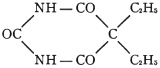
It is official in the British Pharmacopeia under the name “barbitone,” and in the German Pharmacopeia as “acidum diethylbarbituricum.” Barbital “may be prepared by the interaction of esters of diethylmalonic acid with urea in the presence of metallic alcoholates.... It is also obtained by condensation of diethylcyanacetic ester with urea by means of sodium alcoholate.” Barbital is used in medicine chiefly as a hypnotic.
The different brands of barbital which were submitted to the laboratory were subjected to the tests given in the books referred to above.226 The products were:
1. Barbital (Abbott) Sample A, to Federal Trade Commission.
2. Barbital (Abbott) Sample B, to Federal Trade Commission.
3. Barbital (Abbott) Sample C, to Red Cross.
4. Barbital (Antoine Chiris), to Federal Trade Commission.
5. Barbital (V. Halter), to Federal Trade Commission.
6. Barbital (Rector Chemical Company) to Federal Trade Commission.
7. Diethylbarbituric acid (Merck), to Council.
8. “Veronal,” manufactured by Farb. vorm Fried. Bayer & Co., Germany.
All responded satisfactorily to the tests. In Table 1 are given the respective melting points and percentages of ash found. (The melting point of a mixture of the sample with the original “veronal” was always taken.)
TABLE 1.—MELTING POINT
AshAsh
1188.5–189.00.015188.0–188.50.01
2188.5–189.00.016188.0–188.50.01
3188.0–188.50.017188.0–188.50.01
4188.0–188.50.048188.0–188.50.02
Barbital does not seem to form an insoluble salt with chlorplatinic acid; nor an ether-insoluble hydrochlorid or oxalate; nor an insoluble barium salt. It does not respond to many urea tests, and is not affected by urease as would be expected in light of the extensive investigations made on this enzyme by Van Slyke and Cullen.
As barbital is also sold in the form of tablets or mixtures, a reliable method for its quantitative determination in the presence of other substances is needed. Some experiments in this direction were made, but the press of other work did not permit their continuation. When time permits, this work will be resumed.
At the time of writing this article, licenses for manufacture had been granted by the Federal Trade Commission to the Abbott Laboratories, to Antoine Chiris Company, and to the Rector Chemical Company.
BARBITAL SODIUM (MEDINAL OR VERONAL-SODIUM)
Barbital sodium, formerly sold under the proprietary names “veronal-sodium” and “medinal,” is, as the former name suggests, the sodium salt of diethylbarbituric acid. Its therapeutic advantages are stated to be that more rapid results are obtained because of its increased solubility over barbital alone.227 Barbital sodium should yield, according to theory, 11.19 per cent. of sodium and 89.31 per cent. of diethylbarbituric acid. A number of years ago, when “veronal-sodium” and “medinal” were being introduced, Puckner and Hilpert228 found that these products yielded results corresponding closely to the theoretical amounts of sodium and diethylbarbituric acid. A recent examination of veronal-sodium, Merck, made for the Council on Pharmacy and Chemistry, showed it to be of the same composition as that previously reported.
Only one firm’s product has been submitted to the laboratory through the Committee on Synthetic Drugs, but because of the unsatisfactory results, it was not recommended for license, nor, as far as we are aware, has the firm investigated its anomalies
.
229
The amount of moisture in this specimen was 0.04 per cent. It yielded 10.94 and 10.97 per cent, of sodium. Puckner and Hilpert found 11.02 per cent. of sodium in “medinal,” and 11.01 per cent. of sodium in “veronal-sodium.” The theoretical amount, according to the formula given for medinal by the proprietors
(C
2
H
5
)
2
CCONNaCONHCO └─────────┘
is 11.19 per cent. When an aqueous solution of barbital sodium was acidified, and the diethylbarbituric acid extracted with ether, it was found that the amount of freed acid extracted varied directly with the length of time after acidification.
It is possible that in preparing the sodium salt of diethylbarbituric acid, the ring opens up, forming a compound not so easily affected by dilute mineral acids.
TABLE 2.—EXTRACTION OF A SAMPLE OF BARBITAL-SODIUM
Length of TimeDiethylbarbituric Acid per Cent.
a.Immediately75.5
a1.3⁄4 hour82.0
b.Immediately82.0
c.11⁄2 hours80.5
d.4 hours82.82
e.4 hours83.56
f.4 hours83.41
g.451⁄2 hours84.89
h.451⁄2 hours84.73
Theory.......89.31
Veronal-Sodium(Puckner and Hilpert)89.01 (average)
Medinal(Puckner and Hilpert)88.95 (average)
PHENETIDYL-ACETPHENETIDIN HYDROCHLORID230 (HOLOCAIN HYDROCHLORID)
Phenetidyl-acetphenetidin hydrochlorid was introduced in the United States under the name of “holocain hydrochloride” by Farbwerke, vorm Meister Lucius and Bruening, Hoechst a. M. Germany; the product apparently had not been patented in this country, although it was protected in Germany under patents No. 78868 and 80568. New and Nonofficial Remedies, 1918, describes “holocain hydrochlorid” as ethenyl-paradiethoxy-diphenyl-amidin hydrochlorid CH3:(NC6H4OC2H5)(NHC6H4OC2H5)HCl. It is used as a local anesthetic for the eye.
The standards, such as had been described, were meager and unsatisfactory. Hence when the first specimen of American-made phenetidyl-acetphenetidin was sent to the A. M. A. Chemical Laboratory through the agency of the Federal Trade Commission and the Committee on Synthetic Drugs, it was necessary for the laboratory to work out adequate standards.231 As a result of the chemical work, a rather comprehensive monograph was drawn up, which was published in the 1918 Laboratory Reports. A summary of the products examined, with some of the chemical data, is given in Table 3. It will be seen that one specimen had a deficiency of about 2 per cent. of free base.
TABLE 3.—DATA ON PHENETIDYL-ACETPHENETIDIN HYDROCHLORID
ManufacturerAppearanceMoistureMelting PointPhosphorus CompoundsPhenetidin*Indol ReactionAshPer Cent. Base by WeightPer Cent. Base by TitrationMelting Point of BasePer Cent. Platinum in Platinum Salt +
John T. Milliken Co.White crystalline powder5.13191.5 to 192AbsentNegativePositive0.0089.1689.16116 to 11719.02
Synthetic Products Co.White crystalline powder2.90192 to 192.5AbsentNegativePositive0.1387.4987.26116 to 11719.3
H. A. Metz Laboratories, Inc.White crystalline powder4.99192 to 192.5AbsentNegativePositive0.0089.1488.5511719.34
Farbwerke-Hoechst Co. (German specimen)Slightly pink crystal5.09190 to 191AbsentNegativePositive0.1689.6589.64116 to 11719.00
* The phenetidin test is not very sensitive.
The melting point of the free base is given by a number of writers at 121 C. Although Kennert232 stated it to be 117 C. and not 121 C., his findings seemingly went unheeded. It will be noted that our work shows the melting point to be in accord with that announced by Kennert.
The Federal Trade Commission has not issued any licenses for the manufacture of “holocain hydrochlorid.” The John T. Milliken Company has withdrawn its application. The H. A. Metz Laboratories (Successor to Farbwerke Hoechst Company, New York) are making the product in this country.
CINCHOPHEN (PHENYLCINCHONINIC ACID, U. S. P.; ATOPHAN)
Cinchophen (phenylcinchoninic acid) was introduced in the United States as a medicine under the proprietary name “atophan,” by Schering and Glatz, New York City, who before the war were the American agents for the German manufacturers “Chemische Fabric auf Actien von E. Schering, Berlin.” Phenylcinchoninic acid (2 phenyl-quinolin-4 carboxylic acid) was first described by Doebner and Gieseke233 in 1887, who prepared it by warming together pyro-racemic acid, benzaldehyd and anilin in alcoholic solution; it has the structural formula:
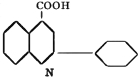
The chief use of phenylcinchoninic acid is as an antiuric acid agent, especially indicated in gout.
In 1913, the German house of Schering was made the assignee of patent 1045759 granted by the United States government234 for the manufacture of phenylcinchoninic acid: at about the same time the product was admitted to the U. S. Pharmacopeia IX, under very loosely constructed standards.
Some time after the beginning of the European war the proprietary “atophan” became scarce in America. In 1917, however, Schering and Glatz, New York, placed American-made atophan on the market and submitted it to the Council on Pharmacy and Chemistry. Later, other firms began to manufacture the product and also submitted specimens. During the time it was investigating these products, the Federal Trade Commission decided that a license was needed to manufacture phenylcinchoninic acid under the patent just referred to, so that altogether the laboratory had a number of specimens to examine.
In making the examinations for the Council, the laboratory was practically confined, by virtue of the Food and Drugs Law, to limit its requirements of purity to those of the Pharmacopeia. Practically, the only tests were melting point, ash and solubility. According to the U. S. Pharmacopeia the melting point is “about 210.” In New and Nonofficial Remedies, 1918, it was explained that atophan “complies with the standards for phenylcinchoninic acid, U. S. P., but melts between 208 and 212 C.” The U. S. Pharmacopeia requires that no weighable ash remains on incinerating about 0.5 gm. of phenylcinchoninic acid. Considerable variations, especially in melting points, were found, as can be seen from Table 4.
TABLE 4.—MELTING POINTS AND ASH
Product No.ManufacturerMelting Point, C.Ash, %
1Abbott Laboratories, Chicago208.5–210.50.05
2Abbott Laboratories, Chicago212 –2130.05
1Calco Chem. Co., Bound Brook209 –210.50.07
1Morgenstern, New York204.5–207.52.8
2Morgenstern, New York208.5–211.5None
1Schering and Glatz, New York206 –208None
2Schering and Glatz, New York209 –211None
3Schering and Glatz, New York208.5–2100.17
4aSchering and Glatz, New York (1)208.5–2100.2
4bSchering and Glatz, New York (2)208.5–209.50.3
4cSchering and Glatz, New York (3)208.5–2100.025
1Wm. H. Sweet and Co., Columbus204 –208None
2Wm. H. Sweet and Co., Columbus209.5–211.50.04
1German specimen from Schering and Glatz210 –212None
By referring to this table on melting points and ash content it will be noted that the production of a better grade of products resulted after the respective firms had submitted samples to the A. M. A. Chemical Laboratory for criticism, and from a chemical standpoint, the last products examined were found to be as satisfactory as the German-made “atophan.”
Solubility of Cinchophen (Phenylcinchoninic Acid).—As methods of determining impurities, or estimating the degree of purity of phenylcinchoninic acid were not described in the U. S. Pharmacopeia, it was decided to try extraction methods.235 This in turn led to the question of solubilities. The U. S. Pharmacopeia gives the solubility of phenylcinchoninic acid only in general terms; hence it was deemed advisable to determine its solubilities and describe them in more definite terms. The sample of phenylcinchoninic acid employed to determine the solubility was obtained by repeated recrystallization from alcohol of a commercial specimen. Solubilities were determined in water; 95.0 per cent. alcohol; 48.5 per cent. alcohol;236 chloroform and ethyl acetate.237 Complete saturation of the solvent was attained according to the U. S. P. IX method (p. 599). The bath was maintained at a temperature of 25 C., with a range of ± 0.2 degrees. The solution was analyzed by the method of Seidell.238 The data obtained for the solubility of phenylcinchoninic acid are given in Table 5.
TABLE 5.—SOLUBILITY OF CINCOPHEN
SolventGm. per Hun- dred Gm. of Sat. SolutionSolubility, Parts by Weight
Distilled water0.01601 in 6,216.0
95 per cent. ethyl alcohol0.83431 in 119.0
Dilute ethyl alcohol0.08751 in 1,142.6
Chloroform0.10751 in 929.7
Ethyl acetate1.41511 in 70.6
The Abbott Laboratories, Chicago, have been licensed by the Federal Trade Commission to manufacture cinchophen. Other firms, however, have decided to manufacture it without the formality of obtaining a license, evidently considering the German-obtained patent not to be valid.239
PROCAIN (NOVOCAIN)
Procain was introduced in medicine under the proprietary name “novocain,” and before the war was obtainable in this country only through the Farbwerke Hoechst Company, the American representative of the German establishment, Farbwerke vorm Meister Lucius Bruening, Hoechst a. M. Chemically it is the mono-hydrochlorid of para-amino-benzoyl-diethyl-amino-ethanol, having the structural formula:
NH2—COO-CH2-CH2—N(C2H5)2.HCl

It is prepared according to U. S. patent No. 812554 (issued to Alfred Einhorn, Munich, Germany) by treating para-nitro-benzoylchlorid with ethylene chlorhydrin and diethylamin with subsequent reduction of the nitro groups, the resulting product being purified by recrystallization.
Procain is employed largely in infiltration anesthesia. It is less toxic than cocain, but its anesthetic action is not sustained. This drawback is overcome by the simultaneous injection of epinephrin, and for this reason procain is often compounded with epinephrin in tablets, thus obviating the necessity of separate solutions.
When the first specimens of the American-made product were submitted through the channels of the Federal Trade Commission, it was necessary to compile a monograph.240 This was prepared from descriptions in the available literature, mostly from tests described in New and Nonofficial Remedies, 1918, and the German Pharmacopeia V.
The submitted products were found satisfactory chemically. The toxicity determinations made by Dr. R. A. Hatcher, with the assistance of Dr. Carey Eggleston241 indicated that none of the specimens are to be considered dangerous when used in ordinary dosage for normal individuals. Therefore the Federal Trade Commission, on recommendation of the Committee on Synthetic Drugs of the National Research Council (aided by the A. M. A. Chemical Laboratory), issued licenses for the manufacture of procain to the Farbwerke-Hoechst Company (which license was later transferred to the H. A. Metz Laboratories), to the Abbott Laboratories, to the Calco Chemical Company and to the Rector Chemical Company.
Subsequently the products of the licensed firms were submitted to the Council on Pharmacy and Chemistry, which in turn invoked the aid of the A. M. A. Chemical Laboratory and the Cornell University Pharmacologic Laboratory. Later the Council asked the laboratory to examine the market supply. Altogether, therefore, a number of products were examined which were found to respond satisfactorily to the tests outlined (Table 6).
TABLE 6
BrandDate ReceivedColorMelting Point, C.*Ash, %
Procain (Abbott), from Committee
on Synthetic Drugs12/21/17White154–155None
Procain (Abbott), submitted to
Council P. and C.1/29/18White153.5–154.5None
Procain (Abbott), Gen. Pur. Off.
U. S. Army8/31/18White152.5–153.5None
Procain (Abbott), Gen. Pur. Off.
U. S. Army, No. 899999/30/18Slight brownish tint153–154.5None
Procain (Abbott), Gen. Pur. Off.
U. S. Army, No. 899989/30/18Slight brownish tint153–154.50.005
Procain (Abbott), Gen. Pur. Off.
U. S. Army, No. 8999710/ 8/18Slight brownish tint153–154None
Procain (Abbott), Gen. Pur. Off.
U. S. Army, No. 8999611/ 4/18Slight brownish tint153.5–154.5None
Procain (Abbott), Gen. Pur. Off.
U. S. Army, No. 81099511/ 4/18Slight brownish tint153.5–154.5None
Procain (Calco), from Committee
on Synthetic Drugs2/ 7/18White153.5–154.5None
Procain (Farbwerke-Hoechst Co.),
submitted to Council10/24/18White153–154None
Procain (Farbwerke-Hoechst Co.),
submitted to Council12/10/17White153–154.5None
Procain (Farbwerke-Hoechst Co.),
submitted to Council, market spec. “A 56”8/ 9/18White153.5–154.5None
Procain (Farbwerke-Hoechst Co.),
submitted to Council, market spec. “A 57”9/ 9/18White153.5–154.5None
Procain (H. A. Metz Lab.),
market spec. “A 63”8/23/18White153–154None
Procain (H. A. Metz Lab.),
market spec. “A 57”9/23/18White153–154None
Procain (Rector), from
Committee on Synthetic Drugs12/18/17White153–154.5None
Procain (Rector), from
Committee on Synthetic Drugs5/ 2/18White152.5–153None
Procain (Rector), market spec8/20/18Slight brownish tint153–155None
Procain (Rector), market spec8/23/18Slight brownish tint153–155None
Procain (Rector), market spec8/23/18Slight brownish tint153–154.5None
* U. S. Patent 812,554—the novocain patent—declares that the salt melts at 156 C. Evidently based on this, both the German Pharmacopeia and past editions of New and Nonofficial Remedies give this melting point. Two specimens of German-made novocain obtained from our files, stated to be manufactured by Farbwerke-Hoechst vorm. Meister, Lucius and Bruening, Hoechst a. M., were found to melt, respectively, between 154 and 155 C. and between 153.5 and 154.5 C. when the melting point was determined according to the direction of the U. S. Pharmacopeia, ninth revision. The various specimens examined at that time melted between 153 and 155 C., and it was decided to permit this range.
An examination of some American-made procain-suprarenin tablets was also made. The procain was determined by liberation of the alkaloid with ammonia water, extraction with chloroform, evaporation of the chloroform, dissolving the alkaloid in one hundredth normal sulphuric acid solution and titrating excess acid with one hundredth normal sodium hydroxid solution. The epinephrin was determined according to the method employed by Seidell,242 with slight modifications. The tablets contained the claimed amounts of ingredients.
THE SYNTHETIC DRUG SITUATION
Before the war, the American physician was literally bombarded with new and wonderful (?) coal-tar synthetics, most of which were originated in Germany. In fact, it seemed that if a by-product in the manufacture of dyes could not be used for a dye per se, then a place might be found for it in the ever increasing lists of medicaments. By clever advertising and propaganda among physicians, an artificial stimulation for coal-tar drugs was created which evidently yielded lucrative financial returns. As a result of the war, it is interesting to observe that of all the synthetic drugs imported into this country from Germany and on which the American patents were controlled by the Germans (up to the time of our entrance into the war), the demand was really sufficient enough to warrant the commercial manufacture of only four of them by American firms. Of course, a larger number of nonpatented drugs, also imported from Germany, are now being made in sufficient quantities in this country; many of the drugs in this class were never patented or are the ones which have survived after the patent had expired, such as acetanilid, acetphenetidin, and acetylsalicylic acid.
In view of the agitation to found an institute for cooperative research as an aid to the American drug industry under the auspices of the American Chemical Society, it will be well for the medical profession to be on its guard against too enthusiastic propaganda on the part of those engaged in the laudable enterprise of promoting American chemical industry. Unless it is, it may be inflicted in the future, as in the past, with a large number of drugs that are either useless, harmful or unessential modifications of well-known pharmaceuticals. It will be well also for the chemists—those engaged in this enterprise—to be sure that the product is of therapeutic value before asking its use as a medicine. The American medical profession has learned that relatively few of the many German synthetics were really valuable or decided improvements over established drugs. If American chemists desire to retain their prestige with the medical profession, they should earnestly endeavor to see that the advantages derived from the war and from such an institute as proposed are not abused in the worthy desire to popularize chemistry both educationally and commercially. They should realize that physicians are in no receptive mood for a flood of synthetics, even though “American-made.”
On the other hand, the constructive possibilities of chemistry in the service of medicine should serve as a stimulus for American research. Notwithstanding all the pharmaceutical shrubbery which Germany sent to us, still it did contain some synthetics that were worth while. As therapeutics has been benefited by these organic chemicals, it is logical to reason by analogy that there remain other synthetics to be discovered which will occupy places of equal distinction in the modern materia medica. For example, vaccines are of undoubted merit in the field of immunology, but their action is, in the end, chemical; as soon as chemical technic is refined by medicochemical research, it is quite possible that a definite chemical agent (synthetic) will supersede the indefinite bacterial vaccine. Obviously the American chemist has the opportunity of showing his resourcefulness in aiding the public health of America and the world. In this connection, a cooperative institute devoted to purely scientific drug research, and governed in such a manner as to inspire confidence in its humanitarianism and unbiased judgment, should serve a most commendable purpose. The hopes of American men of science are for a monumental research institution—cooperative with all the allied professions—and, as the Chicago Chemical Bulletin stated, “Stripped of all professional or commercial pettishness and not dominated by any one group of scientists.”243
CONCLUSIONS
As for the results of the work so far, they can be summed up in two sentences.
1. American chemists are producing synthetic drugs formerly controlled by Germany, and thus have declared their independence of German chemicals.
2. Judging from the evidence at hand, we can feel assured that the quality of American synthetics will be second to none.—(From The Journal A. M. A., Sept. 6, 1919.)