Part 6 — TURNING OVER A NEW LEAF
Reading edition
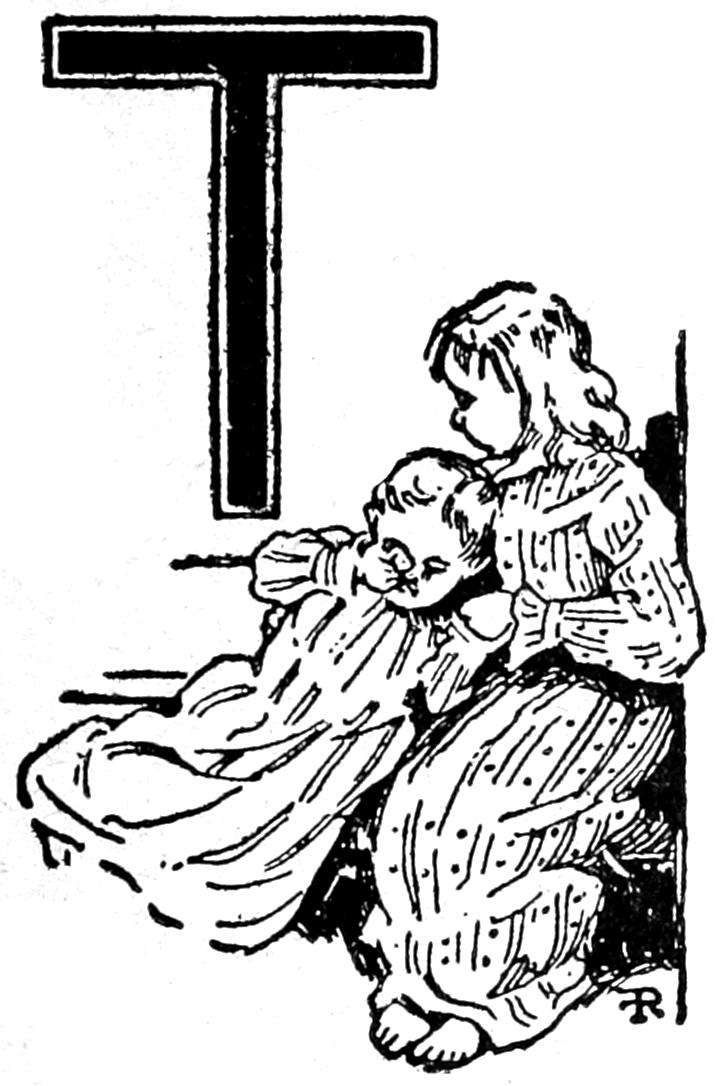
Tis a shame!” said Mrs. Fogg, as she hurried away after the funeral of Mrs. Grant, escaping from the poor, desolate room, where two children, hardly more than babes, were sleeping, unconscious that they were motherless. “’Tis a shame that nobody’ll take them.”
“Yes—a bitter shame!” replied a neighbor, who was also getting off as fast as she could, so as to shift the responsibility onto some other shoulders.
“There’s Mrs. Grove. She might take them as well as not. But they’ll go to the poorhouse, for all she cares.”
“Well, somebody’ll have to answer for it,” said Mrs. Fogg. “As for me, I’ve got young ones enough of my own.”
“We left Mrs. Cole in the room. She has only one child, and her husband is well to do. I can’t believe she’ll have the heart to turn away from them.”
“She’s got the heart for anything. But we’ll see.”
Mrs. Cole did turn away from the sleeping babes, sighing very loud, that others might hear and give her credit for a sympathy and concern she did not feel.
At last all were gone—all but a man named John Wheaton, and a poor woman, not able to take care of herself.
“What’s to become of these children?” questioned Mr. Wheaton.
“Don’t know. Poorhouse, I s’pose,” answered the woman.
“Poorhouse?”
“Yes, nobody wants them, and there’s no other place for them.”
“Mamma! mamma!” cried a plaintive voice, and a flaxen-haired child, not more than two year old, rose up in the bed and looked piteously about the room. “I want my mamma!”
A great, choking sob came into the man’s throat. Then the other child awoke:—
“Don’t cry, sissy—mamma’s gone away.” At this, the little one began crying bitterly.
“I can’t stand this nohow!” exclaimed the man; and going to the bed, he gathered the two children into his arms, hushing and comforting them with soothing words....
“What on earth have you got there?” exclaimed Mrs. Wheaton as her husband came striding into the room where she sat mending one of his well-worn garments.
“Two babies!” he answered, in a voice so unusual that Mrs. Wheaton dropped her work on the floor and rose up in amazement.
“What?”
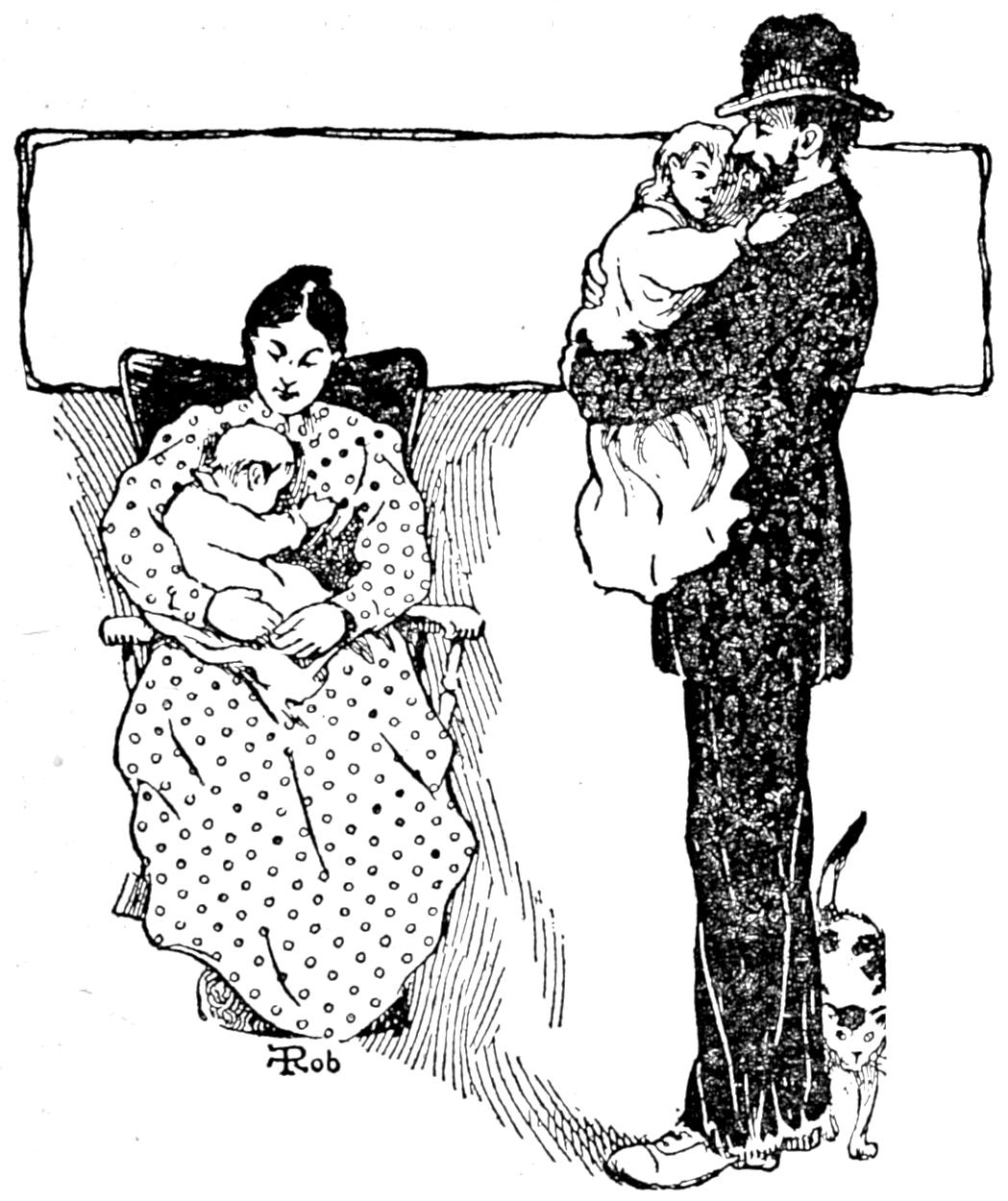
“Mrs. Grant’s two babies. I’ve been over to the funeral, and I tell you, Jane, it wasn’t in me to see those two little things carted off to the almshouse. There wasn’t a woman to look after them, no, not one. Every soul sneaked off but Polly Jones, and she’s of no account you know. Just look at their dear little faces!” And John Wheaton held them up in his arms, and let their tender, tearful, half-frightened, half-wondering eyes plead their own cause with his wife, and they did not plead in vain.
Surprised as she was, and with an instant’s protest in her heart, Mrs. Wheaton could not, in the presence of these motherless little ones, utter a word of remonstrance.
She took the youngest one from the arms of her husband and spoke to it tenderly. The child sobbed two or three times, and then laid its head against her bosom.
There was an ocean of mother-love in the heart of this woman, who had never been a mother, the instant her breast felt the pressure of the baby’s head, and the arm that drew it closer with an involuntary impulse, was moved by this new love.
Not many words passed between the husband and wife—at least, not then—though thought was very busy with both of them.
Mrs. Wheaton’s manner toward the children was kind even to tenderness; and this manner won their confidence and drew from them such little expressions of satisfaction as touched her heart and filled it with loving interest.
After nightfall when supper was over and the children asleep, Mr. and Mrs. Wheaton sat down together, each showing a little reserve and embarrassment. Mrs. Wheaton was the first to speak.
“What were you thinking about, John?” she said, almost sharply. “I can’t have these children.”
John Wheaton did not lift his eyes or reply, but there was a certain dogged and resolute air about him that his wife noticed as unusual.
“Somebody else must take them,” she continued.
“The county?” replied her husband, testily.
“Yes. There’s room for them at the almshouse, and no where else that I know of, unless they stay here.
“Unless they stay here,” she repeated. Mrs. Wheaton’s voice rose a little. “It’s easy enough to say that, but who is to care for them?”
“It’s a great undertaking, I know,” answered the husband, meekly, yet with a new quality in his voice that did not escape the quick ear of his wife, “and the burden must fall on you.”
“I wouldn’t mind that so much, but—”
She kept back the sentence that was on her tongue.
“But what?” asked her husband.
“John,” said Mrs. Wheaton, drawing herself up in a resolute manner, and looking steadily in her husband’s face, “as things are going on—”
“Things shall go on differently,” interrupted Wheaton. “I’ve thought it all over.”
“How differently, John?”
“Oh! in every way I’ll turn over a new leaf.”
John Wheaton saw a light flash into his wife’s face.
“First and foremost, I’m not going to lose any more days. Last month I had six days docked from my wages.”
“Why, John!”
“It’s true—more’s the shame for me. That was eighteen dollars, you see, not counting the money I fooled away with idle company—enough to pay for all these babies would eat and wear, twice over.”
“Oh, John!” There was something eager and hopeful in his wife’s face as she leaned toward him.
“I’m in downright earnest, Jane,” he answered. “If you’ll take the babies, I’ll do my part. I’ll turn over a new leaf. There shall be no more lost days; no more foolish wasting of money; no more spending of evenings at McBride’s.”
“Oh, John!” In her surprise and delight she could only repeat the exclamation. As she did so, she rose, and putting her hands on his shoulders, bend and kissed him on the forehead.
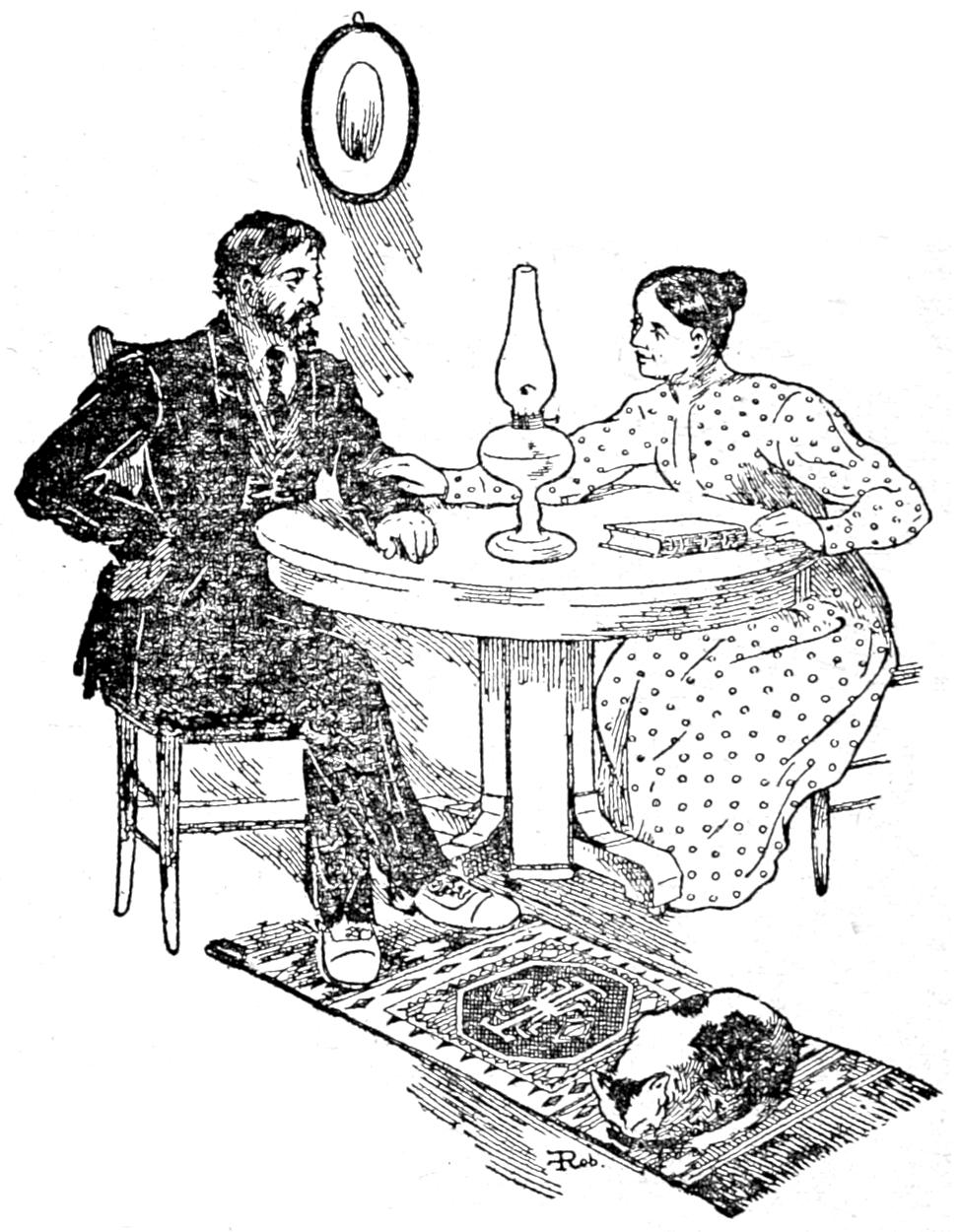
“OH, JOHN”
“You’ll take the babies?” said he.
“Yes, and twenty more, if you keep to this, and stay so,” answered Jane, laughing through her tears.
“All right, then, it’s a bargain,” and John Wheaton caught his wife’s hand and shook it by way of confirmation.
From that time Mr. Wheaton turned over a new leaf. Neighbors expressed surprise when it was known that John and Jane Wheaton had adopted the two orphan children. Fellow workmen taunted John, calling him a soft-hearted fool, for “taking other men’s brats.”
One said to him, “Are four mouths easier to fill than two?” Another, “You’ll be sick of this before the year’s out.” Another, “I’ll see you sold out by the constable in less than six months.”
But John had little to say in reply, only maintaining an air of quiet good humor and showing more interest in his work.
For three weeks John Wheaton had not lost a day—something very unusual; and not one evening during that time had he spent at McBride’s saloon.
His poor little house, which had come to have a neglected look, was putting on a new appearance. The gate that for months had hobbled on one hinge, now swung smoothly, and the mended latch held it shut. Rank weeds no longer filled the dooryard. The broken steps were mended, and clean panes of glass filled many places in the sash where had been unsightly rags and sheets of paper.
Within, pleasant changes were also apparent. Various new but inexpensive pieces of furniture were to be found. Old things were mended, polished up, and wonderfully improved. With all of this, marvellous to relate, Wheaton’s earnings had not only been equal to the increased expenditures, but there was an actual surplus of ten dollars in hand.
“I never would have believed it,” said John, as he and his wife sat one evening talking over their improved condition, after the babies—loved now almost as if their own—were asleep.
“It’s just as old Brown used to say, ‘Waste takes more than want.’ I declare I’ve got heart in me again. I thought we should have to let the place go; that I’d never be able to pay off the mortgage. But here we are, ten dollars ahead in less than a month; and going on at this rate, we’ll have the home clear in about eighteen months.
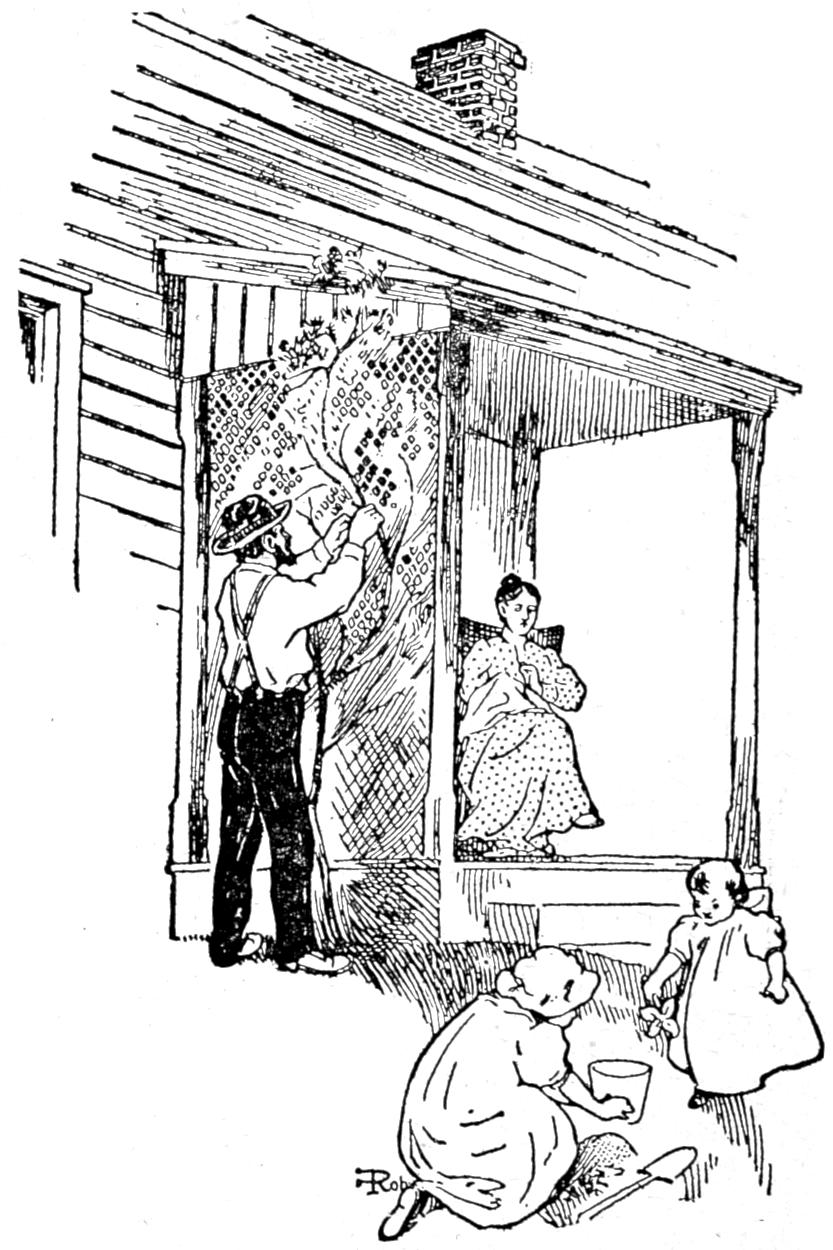
Beautifying the Home
“By the way, Jane, have you noticed how that pretty running rose, that we have trained over the doorway,—the one that used to look so forlorn and neglected,—is already beginning to push out its young leaves and buds? It’s beautiful, isn’t it? Oh, I’m so glad we shall be able to keep the old home!”
Next day a fellow workman said to John Wheaton, half in banter, “Didn’t I see the constable down your way yesterday?”
“I shouldn’t wonder,” replied Wheaton, with more gravity of manner than his questioner had expected.
“I thought I saw him looking around after things, and counting his fees on his fingers.”
“Likely as not,” replied Mr. Wheaton. “I know of a good many rents not paid up last quarter. Money gone to McBride’s instead of the landlord—eh?”
The man winced a little.
“How are the babies?” he asked.
“First rate,” Mr. Wheaton answered, with a smile so real that his fellow workman could not continue his banter.
Time went on, and to the surprise of all, John Wheaton’s circumstances kept improving. The babies had brought a blessing to his home. In less than eighteen months, he had paid off the mortgage that for years had rested on his little home; and not only this, he had improved it in various ways, even to putting up a small addition, so as to give them a neat breakfast room.
The children grew finely,—there were three of them now,—for their hearts and home had opened to another orphan baby. The three little ones were carefully trained by Mrs. Wheaton, and had become the light and joy of the household.
Five years have passed away. John Wheaton is a master workman and employs ten men. He has enlarged his house, and made it one of the neatest in the village.
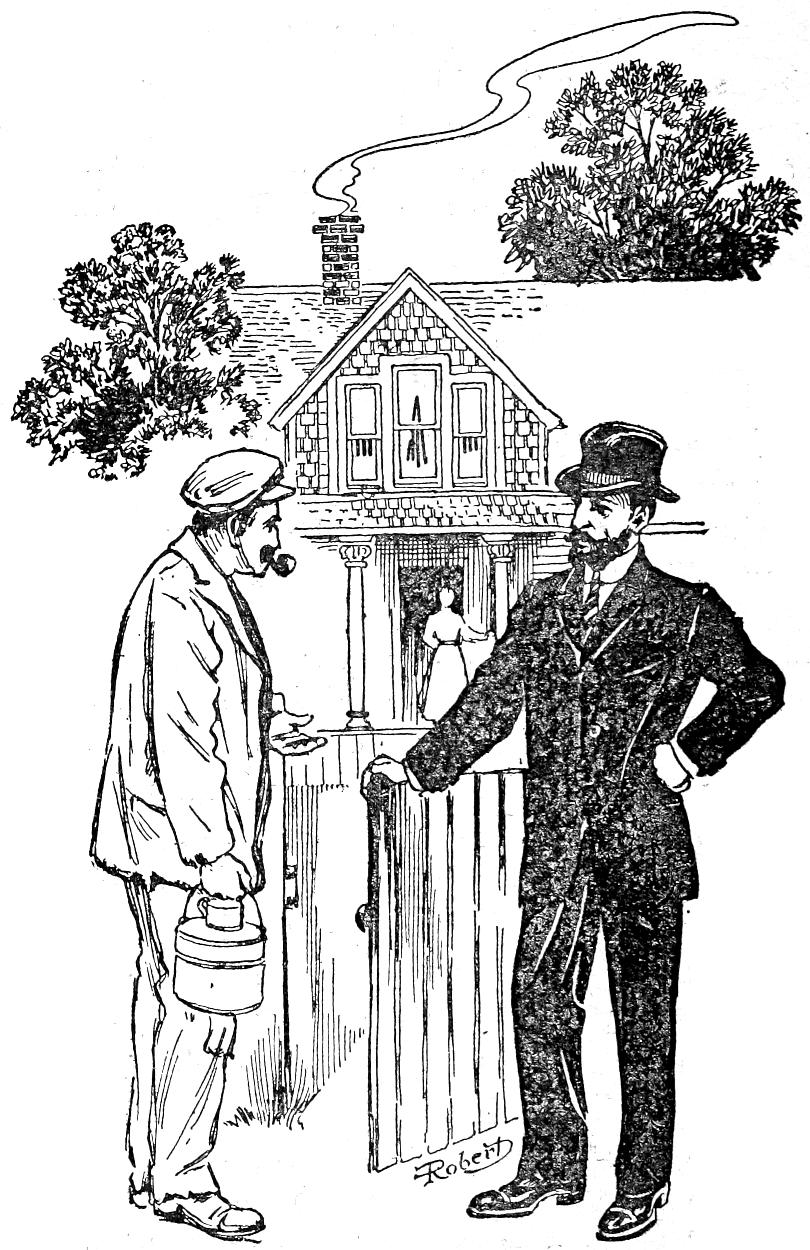
“I guess we’ll have to take a baby or two.”
Among his men is the very one who bantered him the most about the children and prophesied that he would soon be sold out by the constable. Poor man! it was not long before the constable had him in charge. He had wasted his money at McBride’s, instead of paying it to the landlord.
Walking home one evening after his work was done, John Wheaton and his journeyman took the same way. They were silent until they came near the former’s pretty dwelling, when the journeyman said, half in jest, yet with undisguised bitterness, “I guess we’ll have to take a baby or two.”
“Why?”
“For good luck,” the other one replied.
“Oh!”
“You’ve had nothing but good luck ever since you took Mrs. Grant’s orphan children.”
“Only such good luck as any one may have, if he will,” answered Wheaton.
“I can’t see it,” returned the other somewhat bitterly. “Your wages were no better than mine. I had one child, and you saddled yourself with two, and not long afterward added a third. And how is it to-day? You have a nice house, and your wife and children are well dressed, while I have never been able to make ends meet, and my boy looks like a ragamuffin half the time.”
“Do you see that house over there—the largest and handsomest in the place?” asked Wheaton.
“Yes.”
“Who owns it?”
“Jimmy McBride.”
“How much did you pay toward the building of it?”
“Me?” in surprise.
“Yes, you. How much did you pay toward the building of it?”
“Why, nothing. Why should I help pay for his house?”
“Sure enough! Why should your hard earnings go to build and furnish an elegant house for a man who would rather sell liquor, and so ruin his neighbors, body and soul, than support himself in a useful calling, as you and I are trying to do?”
“I can’t see what you’re driving at,” replied his companion.
“How much do you spend at McBride’s saloon every week?”
The man stood still with a blank look on his face.
“A dollar a week?” asked Mr. Wheaton.
“Yes.”
“Say a dollar and a half?”
“Well, say as much.”
“Do you know what that amounts to in a year?”
“Never counted it up.”
“Seventy-eight dollars.”
“No!”
“Yes, to a dollar. So, in five years, at this rate, you have contributed nearly four hundred dollars toward McBride’s handsome house, without getting anything but harm in return, and haven’t a shingle over your head that you can call your own.
“Now it’s my advice, in a friendly way, that you stop helping McBride and begin to help yourself. He’s comfortable enough, and can do without your dollar and a half a week. Take a baby, for good luck, as you call it, if you will. You’ll find one over at the poorhouse; it won’t cost you half as much as helping McBride, and I don’t think he needs your aid any longer. But here we are at home, and I see my wife and children waiting for me. Come in, won’t you?”
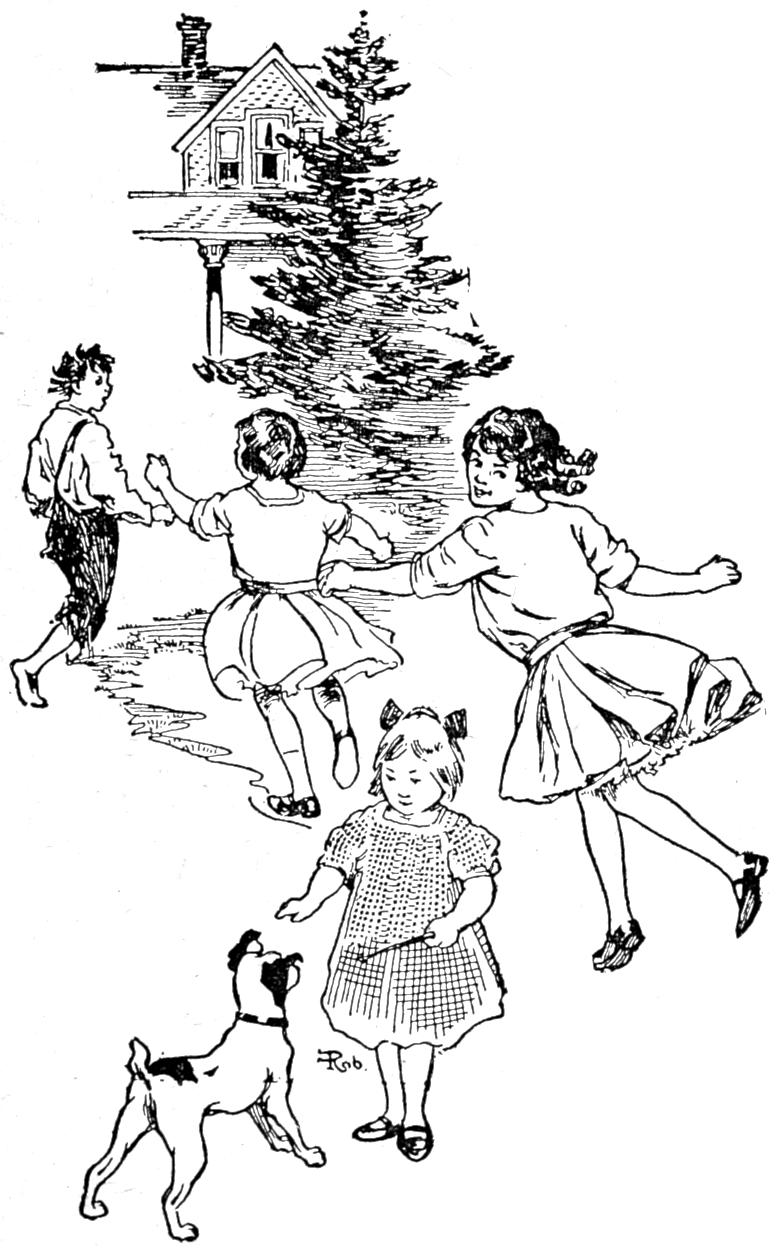
“No, thank you. I’ll go home and talk to Ellen about taking a baby for good luck.”
And he tried to smile, as he called back, after a few steps:—
“If you see anything of my Jack about your place, just send him home, won’t you?”
Jack was there, dirty, and meanly dressed, and in striking contrast with John Wheaton’s three adopted children, who, with the only mother they knew, gave the happy man a joyful welcome.
“I have turned over a new leaf,” said the journeyman when he came to work the next morning.
“Indeed! I am glad to hear it,” returned Mr. Wheaton.
“Ellen and I talked it over last night. I am done helping saloon keepers build handsome houses. I’m glad you put it to me in that way. I never looked at it so before. But it’s just the hard truth. What fools we are!”
“Going to take a baby?” questioned Mr. Wheaton, smiling.
“Well, we haven’t just settled that; but Ellen heard yesterday of a poor little thing that would have to go to the county house unless some one agrees to take it, and I shouldn’t wonder now if she opened her heart,—for she’s a motherly body.”
“Where is it?” asked Mr. Wheaton.
“Down at the Woodbury mills.”
“Look here, Frank. Take my advice, and put this baby between you and McBride’s saloon.”
Only a little while did the man hesitate. Then he exclaimed:—
“I’ll do it!”
“Do it at once, then,” said Mr. Wheaton. “Put on your coat and go over to the mills and get the baby. It will be an angel in your house, that will help and bless you in every hour of temptation. Go at once. God has opened for you this way of safety, and if you walk therein, all will be well.”
He did walk therein, and all was well. Mr. Wheaton’s prophesy was fulfilled. In less than two years, the journeyman had his own roof over his head, and it covered a happy home.