Part 6 — “DON’T LET HIM HAVE IT”
Reading edition
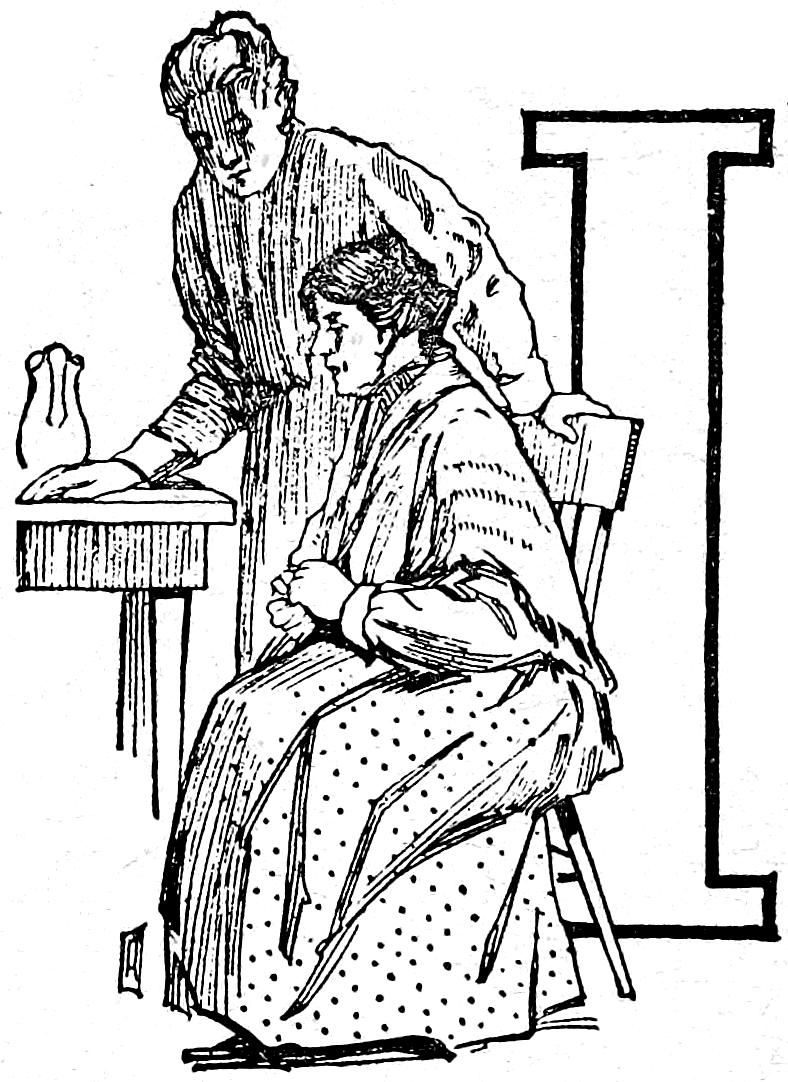
If they wouldn’t let him have it!” exclaimed Mrs. Leslie, weeping; “Oh! if they wouldn’t sell him the liquor, there’d not be any trouble. He’s one of the best of men when he does not drink. He does not bring liquor into the house; and he tries very hard, I know, to keep sober, but he cannot pass Jenk’s tavern.”
Mrs. Leslie was talking with a sympathizing neighbor, who responded by saying, “It’s a downright shame!”
While this conversation was going on, a little girl, of about six years, sat listening attentively. After a little while she went quietly from the room, and took her way down the road unobserved by the mother.
There was a purpose, great and noble, in her mind; she had started on a mission. “Oh, if they wouldn’t sell him liquor!” Those earnest words of her mother filled her thoughts. If Mr. Jenks wouldn’t sell her father drink, there would be no more trouble. How simple the remedy!
She would go to Mr. Jenks and ask him not to let her father have any more liquor, and all would be well again. Artless, innocent child!
The tavern kept by Jenks—the laziest man in Milanville, stood nearly a quarter of a mile from the tenement occupied by the Leslies. Toward this place, under a hot sun, Lizzie made her way, her mind so filled with its purpose, that she was unconscious of heat or fatigue.
Not long before, a traveler had alighted at the tavern door. After giving directions to have his horse fed, he entered the barroom, where Jenks stood behind the counter.
“Have something to drink?” inquired the landlord.
“I’ll take a glass of water, if you please.”
Jenks could not hide the indifference at once felt toward the stranger. Very deliberately he set a pitcher and glass upon the counter, and then turned partly away. The stranger poured out a full tumbler of water, and drank it with an air of satisfaction.
“Good water, that of yours, landlord,” said he.
“Is it?” was returned somewhat uncourteously.
“I call it good water, don’t you?”
“Never drink water by itself.” As Jenks said this, he winked to one of his customers, who was lounging on the bar. “In fact, it’s so long since I drank any water that I forget how it tastes. Don’t you, Leslie?”
The man to whom this was addressed was not so far lost to shame as Jenks. He blushed and looked confused as he replied:—
“It might be better for some of us if we had not lost our relish for water.”
“A true word spoken, my friend!” said the stranger, turning to the man, whose swollen visage, and patched, threadbare garments, too plainly told the story of his life.
“Water, pure water, bright water! is my motto. Its attendants are health, thrift, and happiness. It takes not away the child’s bread, nor the toiling wife’s garments.”
There were two or three customers at the bar besides Leslie, to whom this was addressed; and all of them, in spite of the landlord’s angry and sneering countenance, treated the stranger with attention and respect. Seeing this, Jenks could not restrain himself; so, advancing to the gentleman’s side, and laying his hand rudely on his shoulder, he said in a peremptory manner:—
“See here, my friend, if you are about to deliver a temperance lecture, you can adjourn to the town hall or the Methodist chapel.”
The stranger moved aside a pace or two, and then said, mildly, “there must be something wrong here, if a man may not speak in praise of water without giving offense.”
“I said you could adjourn your lecture.” The landlord’s face was now a fiery red, and he spoke with insolence and passion.
“Oh, well, as you are president of the meeting, I suppose we must let you exercise an arbitrary power of judgment,” said the stranger; “I didn’t think any one had so strong a dislike of water as to consider its praise an insult.”
At this moment a child stepped into the barroom. She glanced neither to the right nor the left, but walked up to the landlord, lifted her sweet young face, and said in tones that thrilled every heart but his, “Please, Mr. Jenks, don’t sell papa any more liquor!”
“Off home with you, this instant!” exclaimed Jenks. As he spoke, he advanced toward the child with his uplifted hand in a threatening attitude.
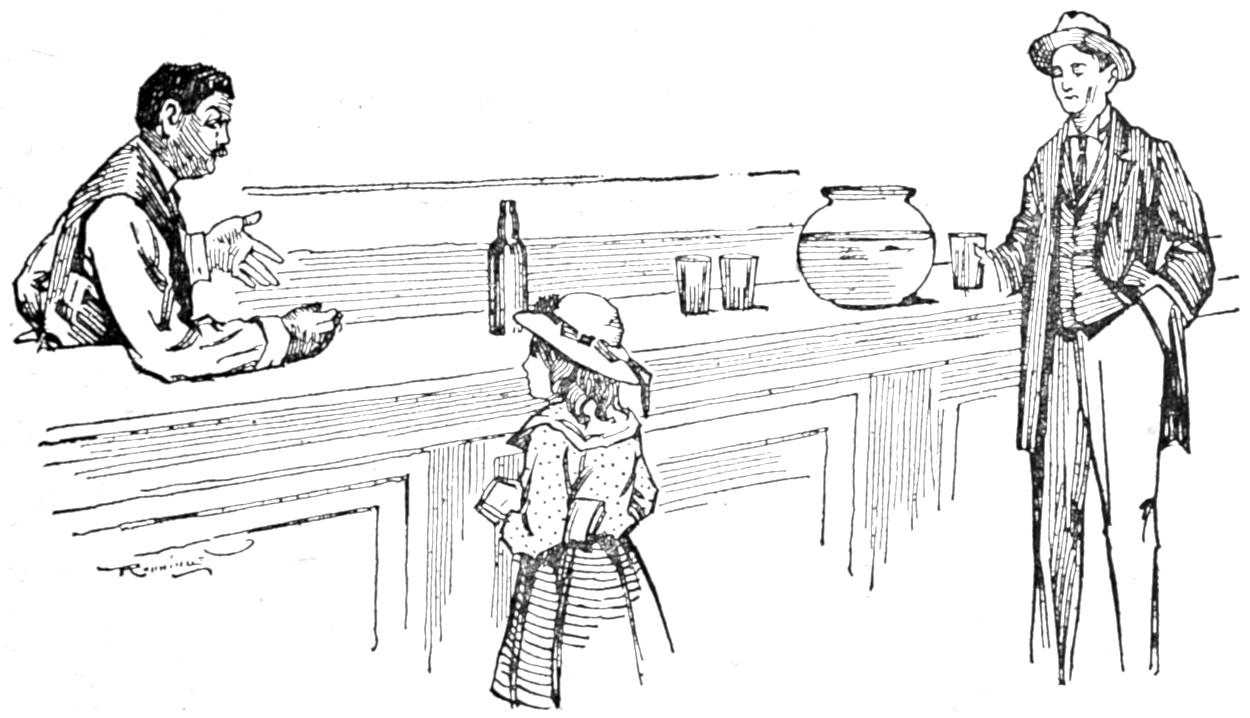
“Please, Mr. Jenks, don’t sell papa any more liquor.”
“Please don’t, Mr. Jenks,” persisted the child, not moving or taking her eyes from the landlord’s countenance. “Mother says if you would not sell him liquor, there’d be no trouble. He’s kind and good to us all when he does not drink.”
“Off, I say!” shouted Jenks, now maddened beyond self-control, and his hand was about to descend upon the little one, when the stranger caught her in his arms, exclaiming as he did so, with deep emotion:—
“God bless the child! No! no, precious one,” he added, “Don’t fear him. Plead for your father. Plead for your home. Your petition must prevail. The merciful Lord cannot say nay to the little ones, whose angels do always behold the face of their Father in Heaven. God bless the child!” added the stranger, in a choking voice. “Oh, that the father, for whom she has come on this touching errand, were present now! If there was anything of manhood yet left in him, this would awaken it from its palsied sleep.”
“Papa! O papa!” the child exclaimed, stretching forth her hand. In the next moment she was clinging to the breast of her father, who, with his arms clasped tightly around her, stood weeping and mingling his tears with those of his child.
An oppressive stillness reigned in the room! Jenks stood subdued and bewildered, his state of mental confusion scarcely enabling him to comprehend the full import of the scene, and the stranger looked on wonderingly, yet deeply affected.
Quietly, and with moist eyes, the two or three customers, who had been lounging at the bar, went stealthily out; and the landlord, the stranger, and the father and the child, were left the only inmates of the room.
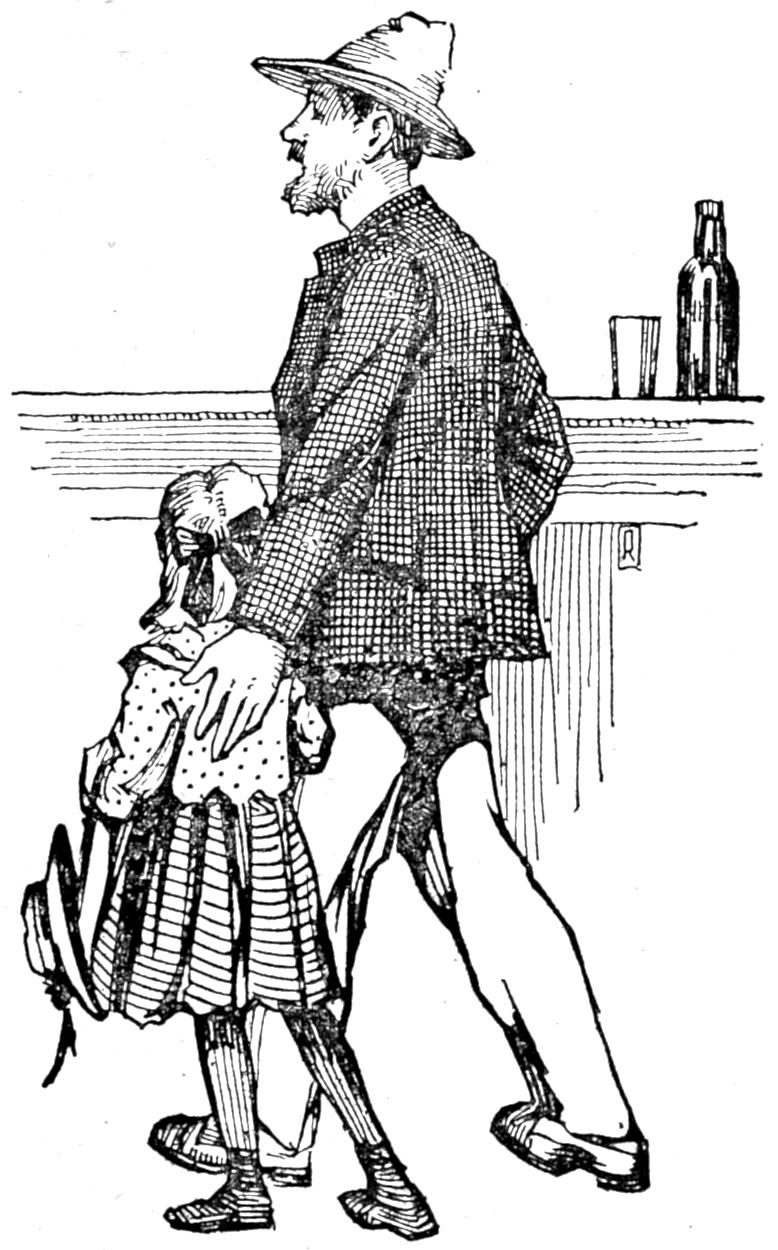
“Come, Lizzie, dear! this is no place for us,” said Leslie, breaking the dead silence. “We’ll go home.” And the unhappy father took his child by the hand, and led her toward the door.
But the little one held back. “Wait, papa, wait,” she said: “he hasn’t promised, yet. Oh, I wish he would promise!”
“Promise her, in heaven’s name!” exclaimed the stranger.
“If I do promise, I keep it!” returned the landlord, in a threatening tone.
“Then, in the name of mercy, do promise,” begged Leslie, in a despairing voice; “promise, and I’m safe!”
“Be it so! May I be cursed, if ever I sell you a drop of drink at this bar, while I am landlord!” Jenks spoke with an angry emphasis.
“God be thanked!” murmured the poor drunkard, as he led his child away. “God be thanked! There is hope for me yet.”
Hardly had Mrs. Leslie missed her child ere she entered, leading her father by the hand. “O mother!” she exclaimed, with a joy-lit countenance and a voice of exultation, “Mr. Jenks has promised!”
“Promised what?” Hope sprang up in the mother’s heart; her face flushed, then grew pale.
“That he would never sell me another glass of liquor,” replied the husband.
A pair of thin, white hands were clasped together; an ashen face was turned upward; tearful eyes looked their thankfulness in Heaven.
“There is hope yet,” said Leslie.
“Hope, hope! And, O Edward, you have said the word. I know you will be a man once more now! Surely, God sent our child on that errand of love! Innocence has triumphed over vice and cruelty. Our child came to the strong, evil, passionate man, and in her weakness and innocence, prevailed over him. God made her fearless and eloquent.”
A year afterward, a stranger came that way, and stopped at the same old tavern. As before, Jenks was behind his well-filled bar, and drinking customers came and went in numbers.
Jenks did not recognize the stranger until he called for water, and drank a full tumbler of the pure liquid with a hearty zest. Then he knew him, but feigned to be ignorant of his identity.
The stranger made no reference to the scene he had witnessed twelve months before, but lingered in the barroom most of the day, closely observing every one who came there to drink. Leslie was not among the number.
“What has become of the man and the little girl that I saw here at my last visit to Milanville?” the stranger questioned.
“Gone to the devil, for all I care,” was the landlord’s rude answer as he hastily left the barroom.
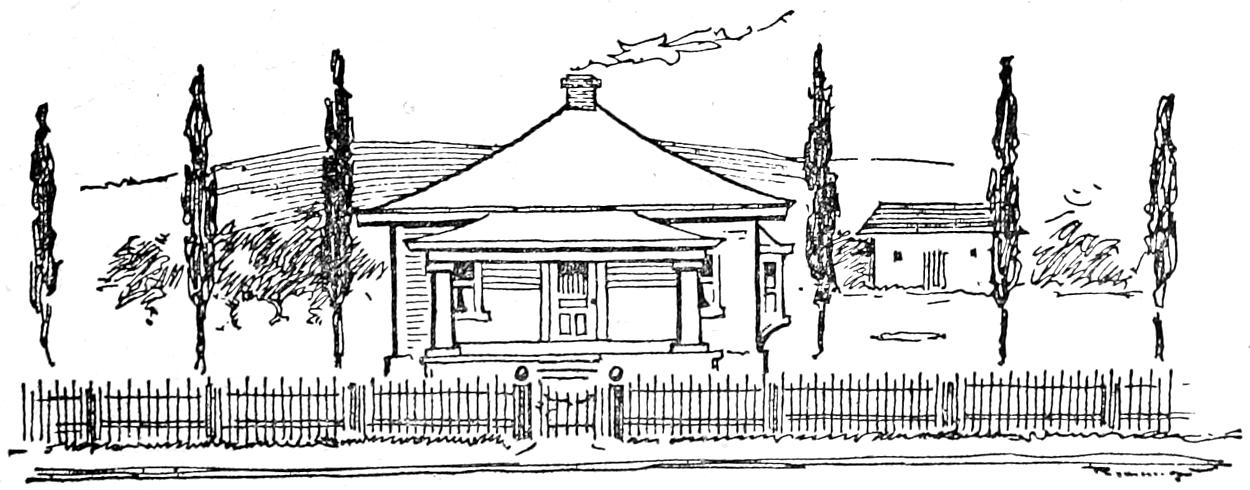
“Do you see that little white cottage away off there, just at the edge of the wood?” replied one of the customers. “A row of tall poplars stand in front. The young man you ask for lives there. And what is more, if he keeps on the way he has begun, the cottage will be his own in another year.”
“Ah! I see; well, did the young man Leslie ever again try to get a drink here, since the landlord promised never to let him have another?”
“Twice to my knowledge.”
“And he refused him?”
“Yes; if you remember, Jenks said, in his anger, ‘May I be cursed if I sell him another drop.’ That saved Leslie. Jenks is superstitious in some things. Once he drove Leslie from the barroom, threatening, at the same time, to horsewhip him if he ever set foot inside his house again.”
“Ah! sometimes God makes even the wrath of man to praise Him,” replied the stranger reverently.