Part 6 — THE SERPENT IN THE HOME
Reading edition
In all the town there was no brighter or more attractive girl than Miss Martin. Her elder sister had married one of the doctors of the place, and she came on a visit to her, and as was right and fitting, they enjoyed themselves by visiting places of interest together.
One day, while visiting a neighboring city, they stepped into a fashionable restaurant to rest and take refreshments. As it was a hot day, the sandwich was followed, at Dr. Black’s suggestion, by a glass of wine.
Chemists tell us of the affinity of certain substances.
Dr. and Mrs. Black drank their glass of wine without any apparent effect. But it was different with Miss Martin. She had never drunk a whole glass of wine in all her life, and something in her system, I know not what or how, answered to its subtle qualities, and she felt its exhilarating effect. A pleasing, indescribable sensation came over her. Before, she was worn out and exhausted; now she felt light, vigorous, and happy. It is to constitutions of this kind, that stimulants are an unspeakable temptation.
Favoring circumstances, I grieve to say, were not wanting. Mrs. Black’s callers were numerous, and wine and cake were regularly presented. They were asked to dinner and supper parties to get acquainted in the neighborhood, and at most of these parties wine was served, and just because other people took it, Miss Martin did so too.
She thought the place delightful and the people exceedingly pleasant; and if, in a forenoon, she felt exhausted and nervous after an evening’s party, a glass of wine put her all right.
No wonder that, when she returned to her home, life seemed dull, flat, and heavy. She used to awake in the morning with a bright, cheery feeling, and begin to lay out her plan of work for the day. But things of an ordinary kind had no interest for her now. She became restless, her appetite failed, and she grew pale and thin.
Her mother, anxious and alarmed, called in the doctor, whose verdict was, “A little out of sorts—trying season of the year—liver dull—a little stimulant will set all to rights.” Her father, good, confiding man, at once ordered in a dozen bottles of port wine, which was to be administered to the patient twice a day.
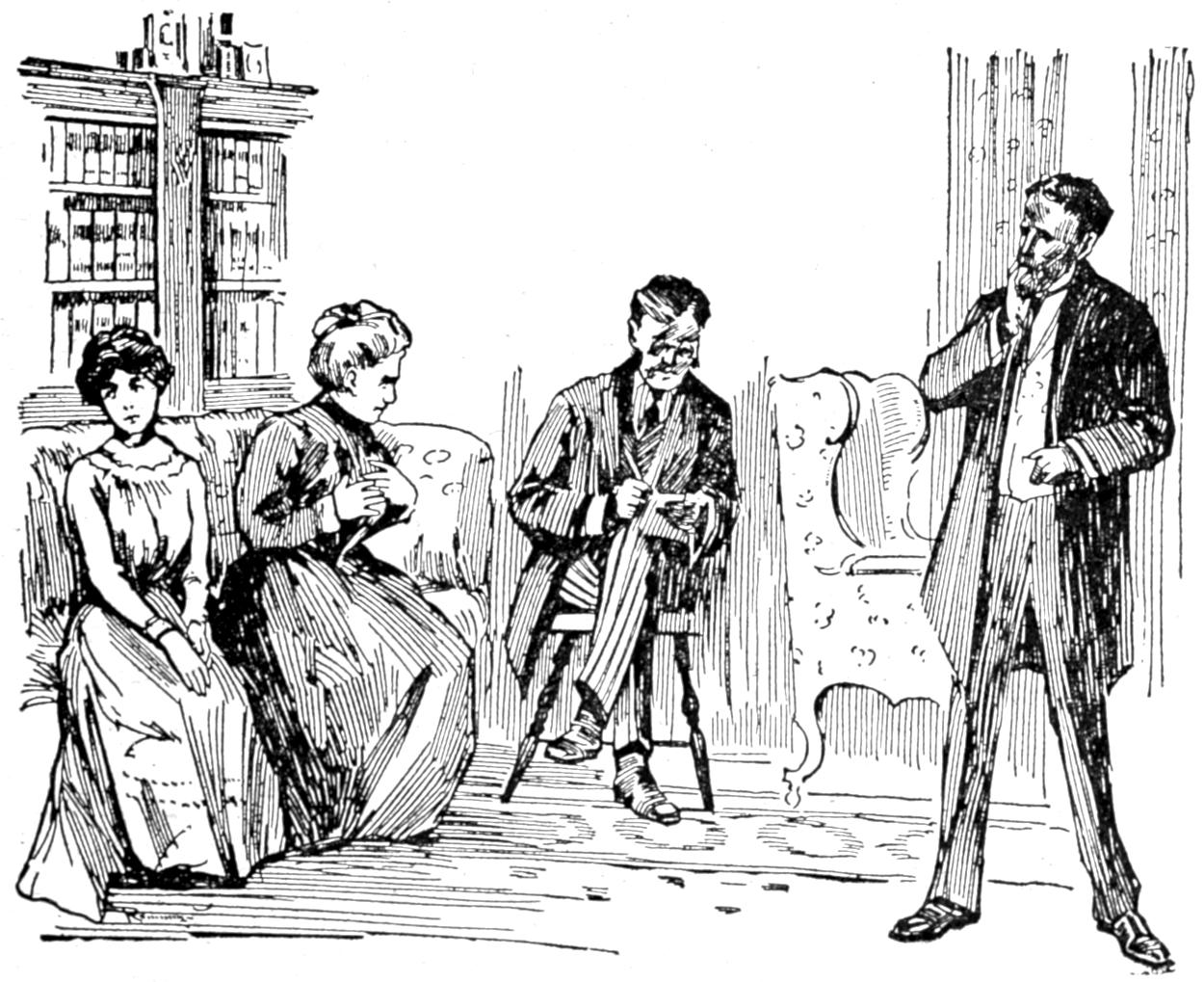
The Doctor’s Prescription
And so the flame was fanned and cherished, which in due time,—but I must not anticipate.
As I have said, Miss Martin was a very prepossessing girl, admired by many; so in a little while, when on a second visit to her sister, no one was surprised when it was announced that she was to be married to one who stood high in the opinion of all, and who was, indeed, a young man of great worth and excellence.
It happened that winter that a Young Men’s Mutual Improvement Society, a Scientific Association, and a Total Abstinence Society were organized in the town.
Now, into the first two of these, Dr. Black and Mr. Bennet, his intended brother-in-law, entered readily, and were quite willing to attend meetings, give readings, and deliver lectures; but as for a temperance society,—really, they saw no need.
“It seems almost an insult to introduce such a society among respectable people. No doubt there are many who should not drink because they cannot stop in time, and in such cases drink is a great curse; but with us, it is different.” And when Mr. Bennet saw Miss Martin sipping her glass of wine, he thought as of everything else about her, how graceful it seemed, and how well the action became her. It was but a few months after their marriage that the poor illusion was dispelled.
One day some friends of Mr. Bennet’s had come to make them a visit, and a few neighbors had been asked to meet them at dinner.
The little entertainment was a great success. Finally Mrs. Bennet left her guests in the dining room, over their wine; she had intended to be gone but a moment; but when seated by herself, with the excitement over, a feeling of excessive fatigue and languor came upon her. As on other occasions, she at once thought of a glass of wine. This was just the very time it was needed! So without further consideration, she drank one glass after another, till before she knew it, she was sleeping the sleep of a drunkard in her own elegant drawing room.
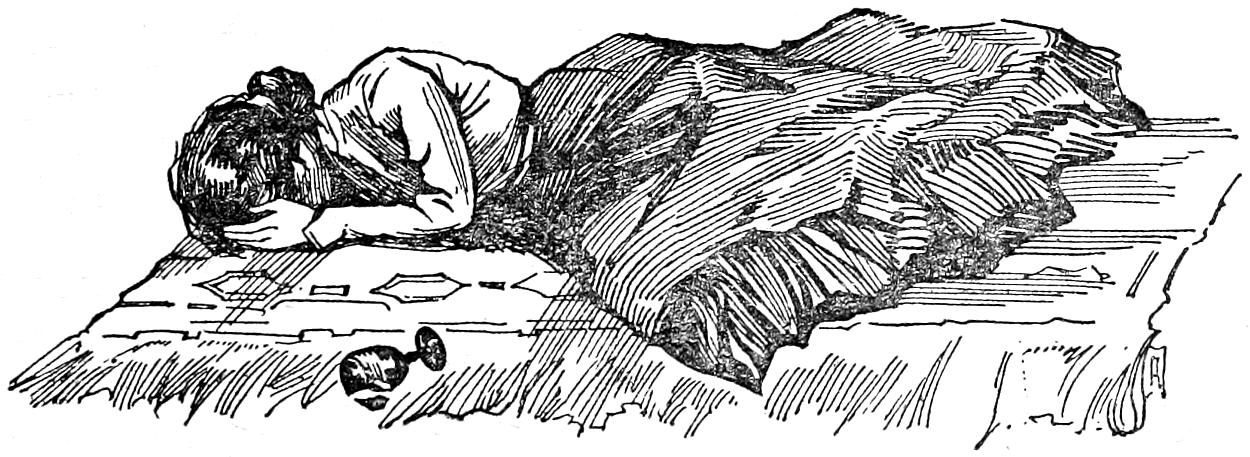
By-and-by the door was thrown open, and Mr. Bennet, in his usual cheery voice, said, “Here we are, Mary, all ready for your nice cup of coffee.”
But, alas! there was no answering greeting, nothing but an inarticulate sound from the prostrate form on the rug. The company took in the situation but too well, and all retired as gracefully as possible, “sorry to see Mrs. Bennet so poorly,” etc.
Mr. Bennet was bewildered. Of all the possibilities in life, this was the last that could have occurred to him; and there he sat, with that terrible, mysterious smile upon his face, which you may have seen on the face of a strong man when shame and agony were gnawing at his heart.
It would be tedious to record Mrs. Bennet’s resolutions of amendment made and broken, to be again renewed with the same result. Her husband’s patience was often abused, but still he was always so ready to forgive.
But the most long-suffering patience may be worn out at last, and it seemed to Mr. Bennet that the only chance was to send his wife—once his pride, as well as his joy—to one of those asylums for the drunkard, called “refuges.” The arrangements were made, and the day on which she was to go appointed.
I shall never forget that afternoon. The poor husband was utterly prostrated by grief and shame by an outbreak of his wife the day before, and, as an old friend, he requested me to accompany her, for he could not trust himself, and feared his resolution would give way at the parting scene.
She, poor creature, not only acquiesced in the plan, but earnestly besought her husband on her knees to help her to get free from the wretched slavery in which she lived. It is easy for people outside to speak, but I do think that the wretched slave to strong drink is to be pitied.
Poor Mrs. Bennet had been for some months in this establishment, when her husband, hoping against hope, removed to the city of which I have spoken, with a view of giving her new scenes and new surroundings in her future life, and brought her home. How he congratulated himself; how his love and long-slumbering reverence revived, as week after week passed, and still she stood the trial!
Some time after this I was invited to the marriage of their only daughter. She was one of whom any mother might have been proud, and on whom her father doted.
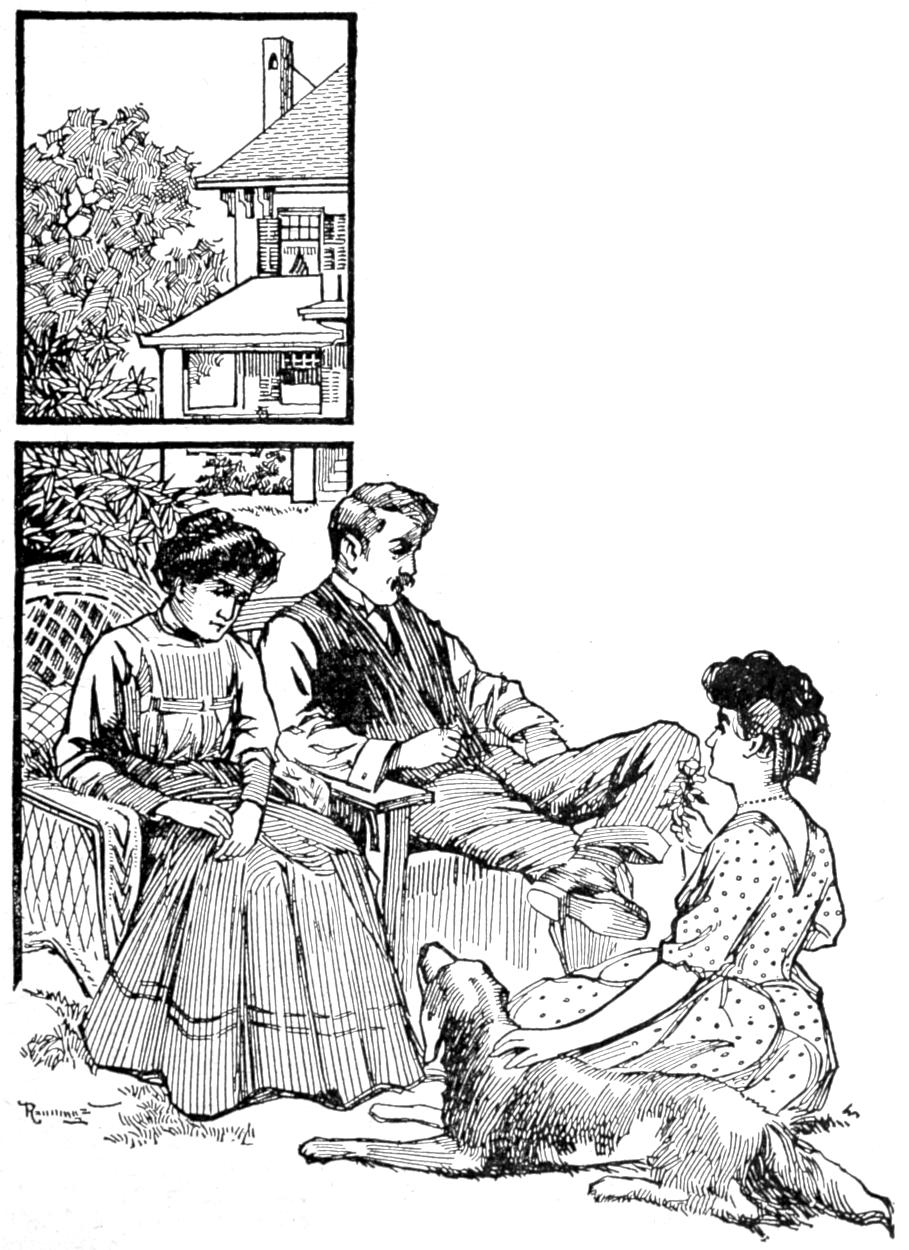
“At evening time it shall be light.”
I had been greatly gratified at hearing of my friend’s continued reformation. When I arrived that summer evening, I found the three sitting together on the lawn under a spreading tree, enjoying the sweetest hour of all the day. The outward scene seemed a fitting symbol of the inward peace, and I caught myself whispering, “At evening time it shall be light.”
Looking back on the past, it seemed as if we had awakened from a fearful nightmare, and were being reassured by the calm and peace of returning morning.
Next day, as the wedding guests were strolling through the grounds after the marriage, till lunch was announced, and everything seemed the embodiment of calmness and comfort, he would have been thought a hard-hearted prophet of evil who would have predicted the events of the following hours.
I stepped aside and went into the house to see if I could be of any assistance in the finishing of the arrangements. On looking into the dining room, what was my amazement to find the table furnished with a profusion of wines and brandies!
Thinking there must have been some strange mistake, I hurried out and sought Mr. Bennet, to whom I told what I had seen, suggesting that his orders must surely have been misunderstood.
For a moment, a look of surprise came into his face. “Not at all,” said he; “you do not suppose I could let such an occasion as this pass without giving it all the honors?”
“Honors!”
I thought some people had strange ideas about honors. I implored him to alter his arrangements even yet. “Thanks,” said he, “for your kind interest; but pray don’t trouble yourself, you will see that all will go off well.” And then, in a lower tone, “Mary has promised me.”
With a sorrowful heart, I turned away. The party had not been long in the dining room, when I saw Mrs. Bennet, who had hitherto been acting the part of hostess with all the ease and grace, which in her early days had charmed so many, become suddenly pale, and seemed to be putting a strong restraint upon herself. I felt deeply grieved when I saw those around her carelessly sipping their wine, ignorant of the fierce war they were kindling within her.
At last she could restrain herself no longer; it seemed as if a thunderbolt had fallen among us, when suddenly she rose, and seizing a bottle, darted to the door.
Mr. Bennet’s face turned ashy pale, and when he attempted to rise, his knees smote against each other, like the monarch of old when the handwriting on the wall announced his doom. When I got outside the door, the poor woman looked round on me with a half-triumphant, half-scared expression, and the brandy bottle was lying empty beside her.
I helped her to the bed, and the doctor was sent for; but no human power could save her. As we watched her tossing to and fro, wildly appealing for protection from the fiery serpents which she averred were swarming around her, I wondered if her husband did not ask himself if he had fulfilled that vow made long ago, of loving, cherishing, and protecting her, when he exposed her to that which was indeed the supremest danger possible,—the very smell of what, to her, was deadly poison.
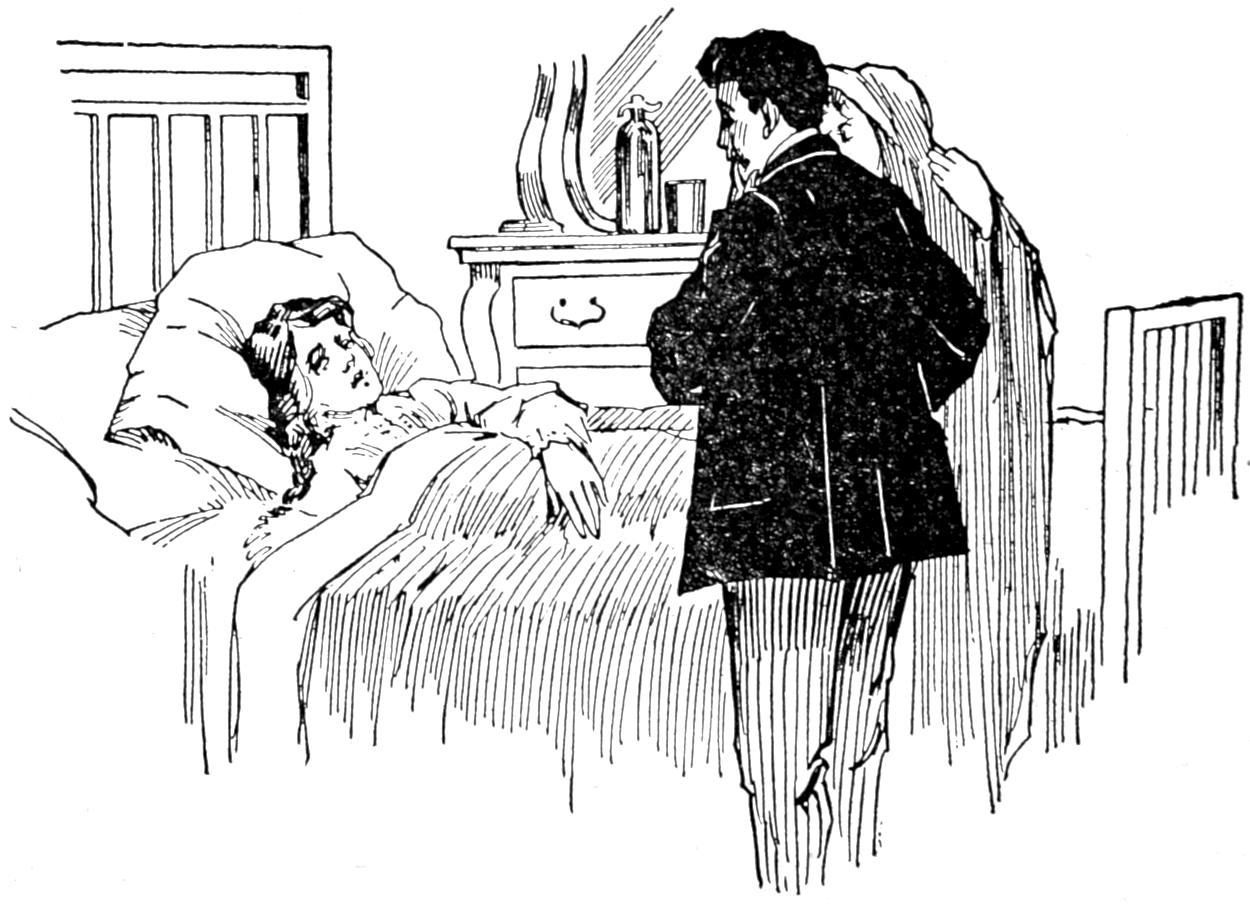
“They shall thirst no more”
At length the storm subsided; she lay wan and worn on her pillow. Leaning over her, I heard in a low whisper the words, “they shall thirst no more.” The pathos was inexpressible. These were her last words. No doubt there is pardon for the penitent drunkard as well as for the penitent thief, even at the eleventh hour; but turning away from that deathbed, I could but say, “Let me die the death of the righteous, and let my last end be like his.”
I have spoken of some of the outward incidents of Mrs. Bennet’s history, but who shall imagine her inner life? I am sure that the most exquisite tortures ever invented, fell very far short of those endured by this poor woman.
When bidding good-by to the silent and mournful mansion, where all had but the other day seemed so bright and happy, I felt with new emphasis the force of the wise man’s words, “Look not thou upon the wine when it is red, when it giveth his color in the cup, when it moveth itself aright. At last it biteth like a serpent, and stingeth like an adder.”
Let us turn to the stern lesson woven all through the warp and woof of the foregoing story,—of a young life ruined and a home broken up as the result of the social wineglass. Social custom and “treating” are responsible for more drunkards’ graves than many are willing to acknowledge.
But who will speak for the brewer and distiller who institute open “missionary” campaigns to teach the children to drink that they may fill the breaks in the ranks caused by the passing of the old inebriates? God says to such:—
“Woe unto him that giveth his neighbor drink, that putteth the bottle to him, and maketh him drunken also.”