Part 6 — TOM’S TEMPERANCE LECTURE
Reading edition
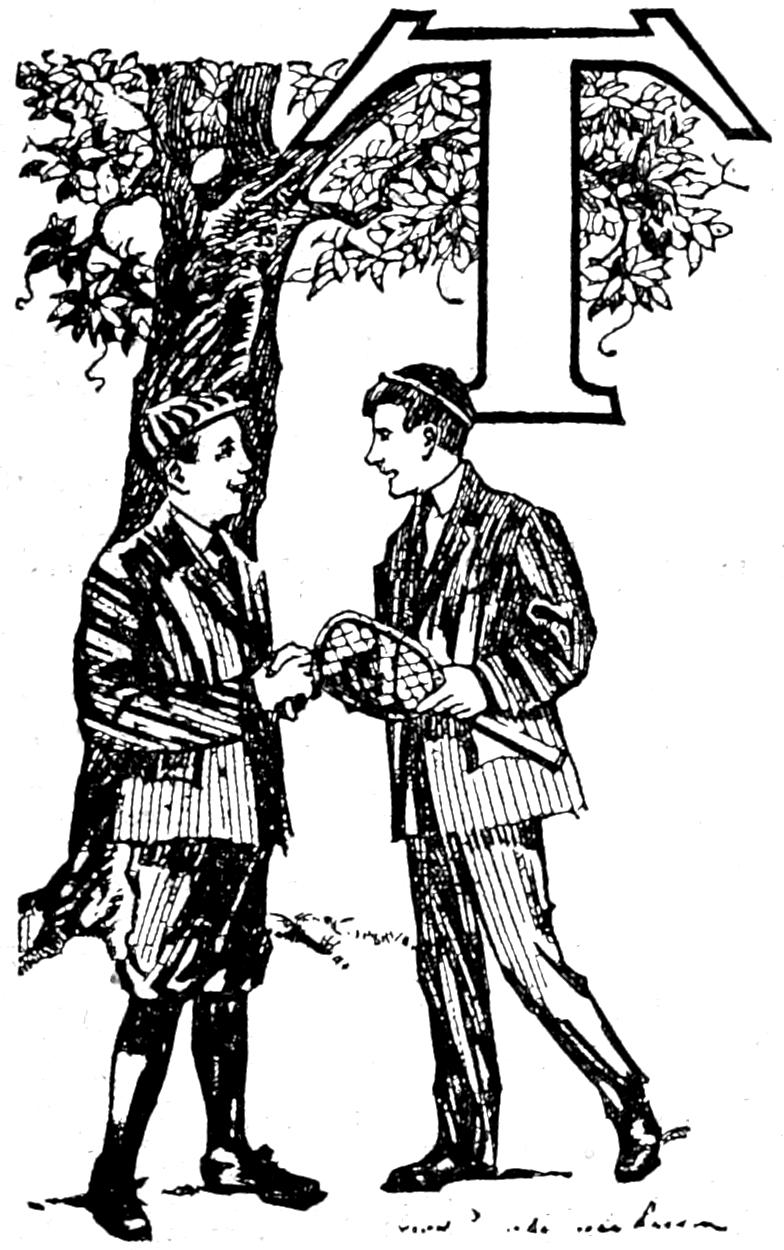
Twas a bright autumn morning. The fall term of St. Rudolph’s school had begun on Wednesday. Out on the playground, Tom Hadden,—a boy who had arrived only the night before,—was standing by himself, and looking about with the curious but sober eyes of a boy who felt as if he were in a new world, and who was as yet extremely doubtful as to his chances for happiness in that world.
“Hello, Tom Hadden; is that you?” some one called suddenly.
Tom’s gloomy face brightened, and he turned eagerly toward a group of boys near him, who were talking and laughing in the manner so expressive at once of good comradeship and much self-importance,—a common characteristic of the older students at the beginning of a new school year.
Tom knew several of those boys; he had met them during the summer vacations, and their greetings now were so hearty that in a few minutes he forgot that he was that forlorn creature, a strange boy in a large school; and he gladly accepted an invitation to join his new friends after school hours, in a tramp over the hills to a village a short distance from St. Rudolph’s.
In high spirits they set out; the hills were crossed, and they soon reached the village.
“Now for Cruger’s,” shouted several of the boys as they led the way to a saloon and boisterously pushed open the door.
Tom held back. He did not like the appearance of the place.
“What are we going in here for?” he asked.
“For a spread, of course,” one of the boys explained. “They cook great dinners here; come on.”
Tom was quite ready for a “spread,” and willingly followed the boys into a little back room where the saloon proprietor assured them they would be undisturbed. Their dinner was soon served, and thoroughly enjoyed by the hungry boys; then a dessert of fruit, cake, and pie was ordered, and when the last crumb of the last cake had disappeared, and the waiter had removed the dishes from the table, Frank Jones, their acknowledged leader, said gayly:—
“Now, fellows, before we go, we’ll have a loving cup.”
“A loving cup? what’s that?” Tom asked of the boy nearest him.
“You needn’t be afraid of it, it won’t hurt you; it’s only beer,” the boy answered.
“Beer? I don’t want any,” and Tom pushed back his chair.
“Sit still; you can’t go yet,” said Frank Jones, and at that moment the waiter returned with the black bottles of beer.
Amid shouts of laughter the corks were drawn, and then one of the boys started the song:—
“And here’s a hand, my trusty friend, A gie’s a hand o’ thine, And we’ll take a right guid willie-wought,—”
“No, no,” protested Tom Hadden earnestly, “this is wrong. I will not drink. Let me go.”
The boys stopped singing. “So you are a kill-sport, are you?” one of them said scornfully.
“No, no,” Tom cried, “but I can’t drink. Let me go.”
The beer was foaming in their glasses, but the boys left it untouched, while they stared at Tom.
“You are a fool, Tom,” one of them said. “What harm can a glass of beer do you?”
“Come, Tom,” coaxed another, “don’t make a row about nothing; be a man and drink your beer.”
“I won’t,” Tom said sharply. “Let me go.”
“We aren’t quite ready to let you go yet,” Frank Jones said angrily. “You are a pretty fellow to kill sport in this way; and now if you won’t drink, you shall give us a temperance lecture. If it is wrong to drink beer, you shall tell us why. Come, boys, pay attention. You will now listen to an address on temperance from the eloquent orator, Thomas Hadden.”
“Hear! Hear!” shouted the boys derisively, and one of them called: “Stand him up on the table.”
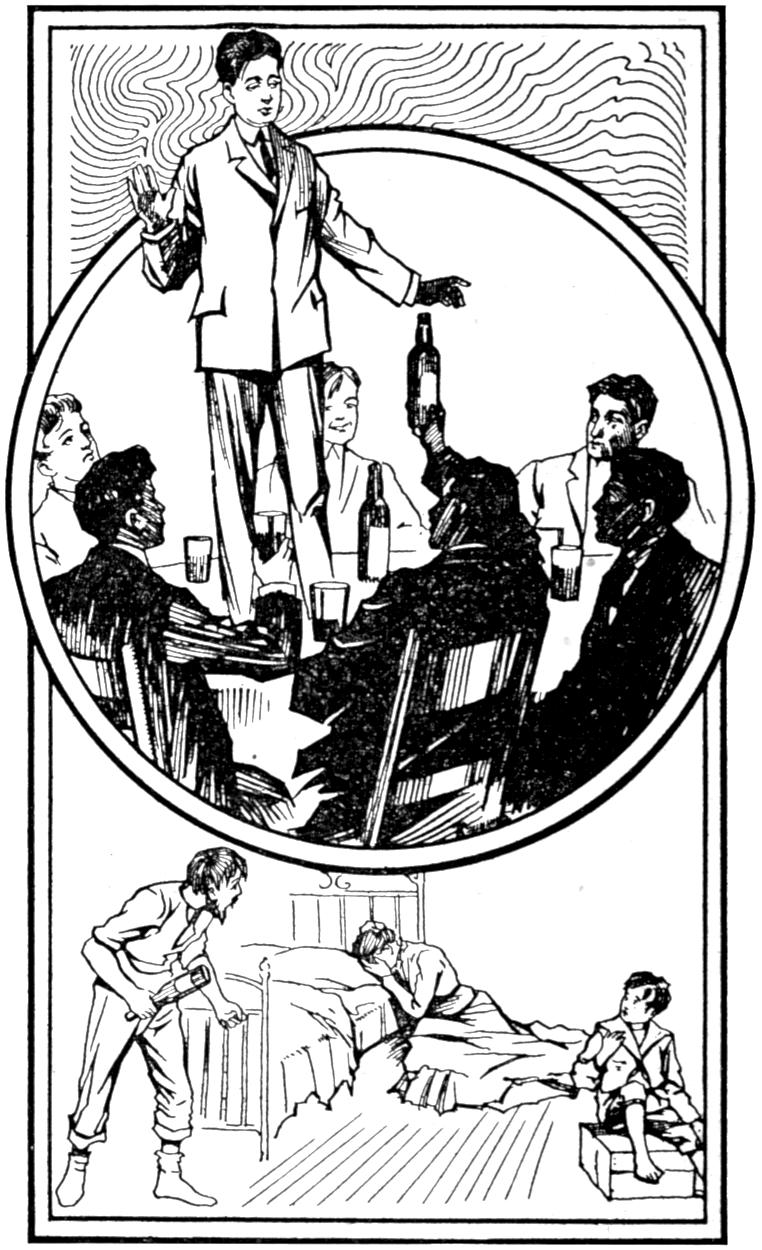
“I will tell you a story that belongs to my own life”
“Up with you,” cried two of the strongest boys, as they seized Tom, and, unable to resist, he was forced to mount the table. With crimson face and something suspiciously like tears in his eyes, he faced his tormentors.
“I can’t, boys,” he faltered. “I can’t talk to you.”
“More shame to you, then, for spoiling our fun,” growled one of the boys. “Come, you needn’t think we’ll let you off. If you won’t drink beer, you shall give us some good reason for not drinking it. That’s only fair. Come, be quick about it.”
Tom Hadden waited a moment. Once or twice he swallowed hard, and his breath came in quick gasps. Suddenly he threw back his head and straightened himself.
“Boys,” he said, in a clear voice, “I will tell you a story—a story that belongs to my own life.”
“All right,” said Frank Jones recklessly, but something in Tom’s face made the other boys watch him in silence.
“Boys,” Tom went on, in a tender, pathetic voice, “I knew a little boy once who had a beautiful home. He had a kind father and mother, and he loved them both so much that he could never tell which he loved the best.
“That little boy’s father had always been a good man; but once, when he wasn’t well, the doctor ordered him to drink beer, and he began to drink it, and—” Tom’s voice was thrilling in its emphasis now—“he soon began to drink stronger things; and there came a time when that little boy’s home was so changed from the lovely place it once was, that it seemed as if a fiend must live there.
“That little boy heard his father rave and curse like a madman,—and he was mad, for drink had made him so. That boy saw his mother struck down by his drunken father’s hand.”
There was a dead silence in that little room. The beer had ceased to foam, but not a boy had tasted it or noticed it.
“Boys,” Tom’s thrilling voice went on, “that little boy is a large boy now, and he is almost alone in the world, for his father and mother are both dead, and now he has no home.”
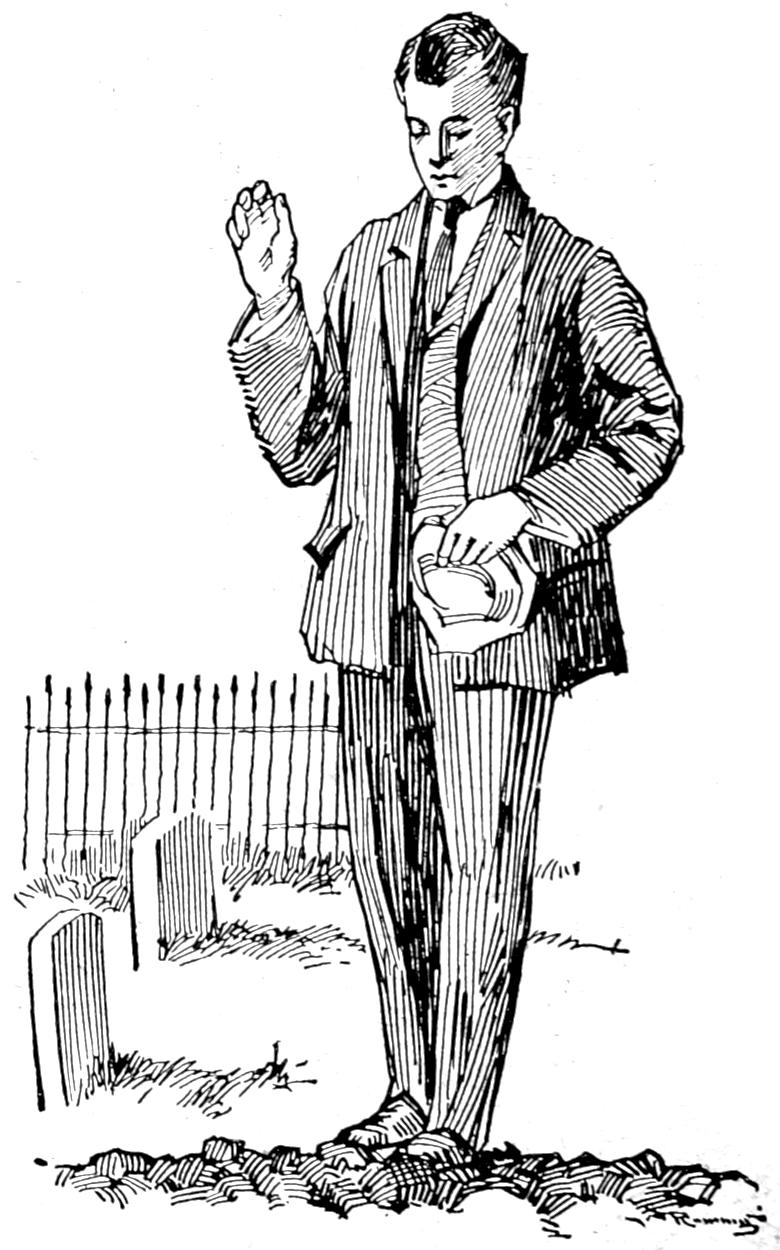
Tom Hadden’s Vow
No boy who heard it ever forgot the pathos of Tom’s tone as he continued:—
“Do you wonder, boys, that standing by his mother’s grave, that boy looked up to heaven, and solemnly vowed never while he lived, to touch or taste the drink that made a madman of his father, ruined his home, and broke his mother’s heart?”
“You will let me go now,” he said, as he jumped down from his high place, and started for the door. With a rush, the boys gathered around him.
“Tom,” said Frank Jones, “you are a hero. Why, I think you are braver than a soldier. I am proud of you, and I would do just like you if I were in your place.” The boy stopped; a new thought had come to him. He looked around on his companions.
“Boys,” he said earnestly, “It seems to me that what I would do if I were in Tom’s place, I would better do now in my own place.”
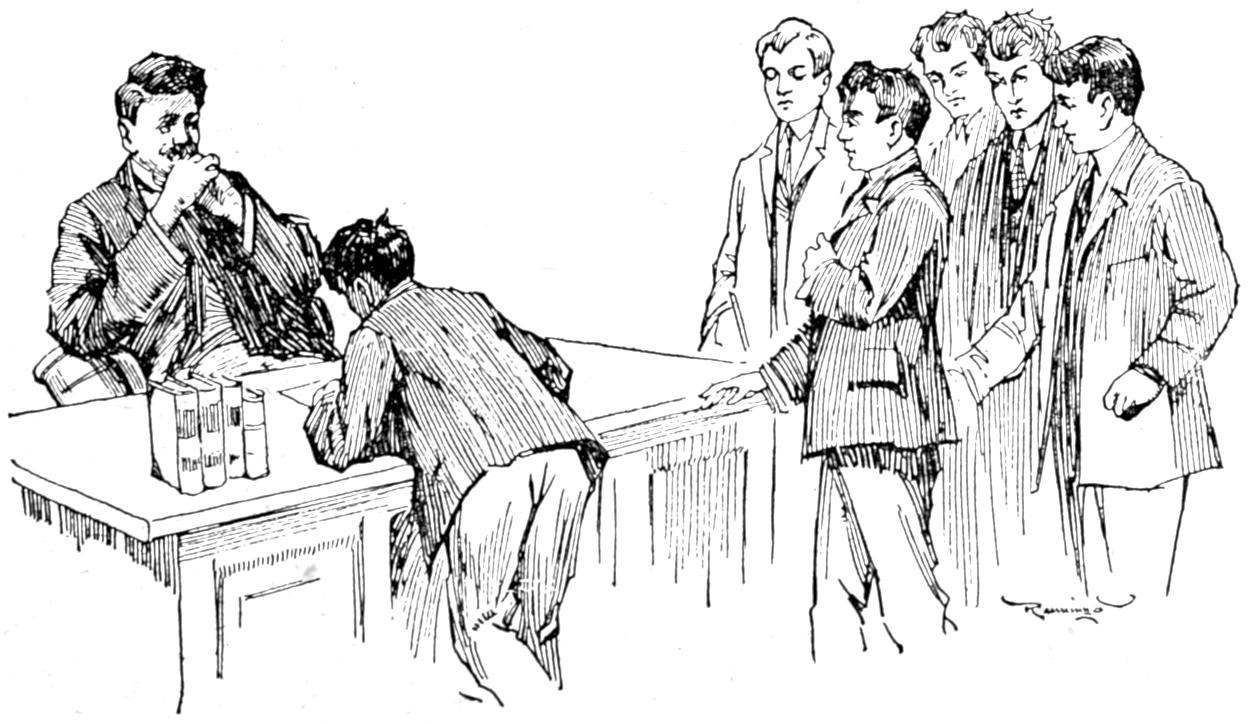
Perhaps the head master of St. Rudolph’s was never in his long life more happily surprised than he was that evening, when six of his oldest and most influential boys called on him and asked to sign the temperance pledge.
Years have passed since that evening, and those boys have kept their pledge.
“He played in a quiet and subdued manner as if afraid”