Part 6 — NAT RAYMOND’S VICTORY AND WHAT CAME OF IT
Reading edition
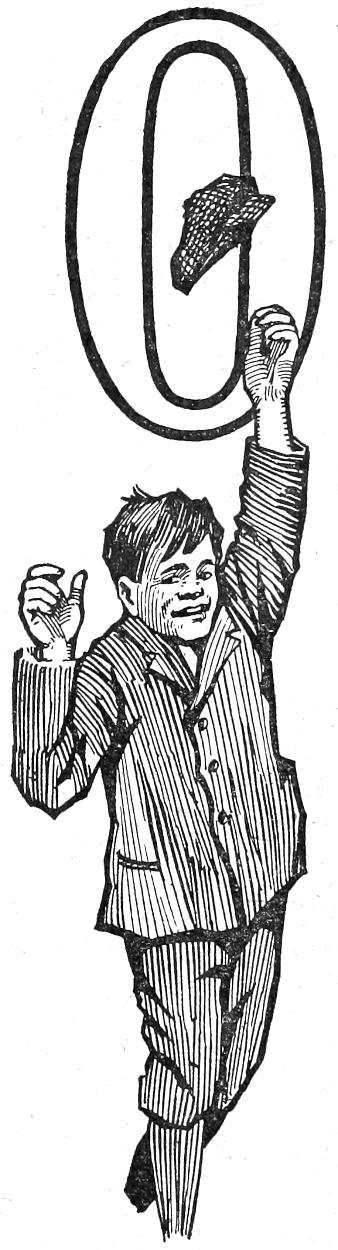
Oh, but I’ll have the jolliest time, though! I’m going out to Uncle Nathan’s, Christmas!” and Nat Raymond threw his cap high in the air. “Uncle Nathan’s just splendid; I was named after him, wasn’t I mother?”
Nat was too excited and delighted to wait for his mother to reply, and he continued:—
“I’m going to be a sailor, too, some day, mother, just like Uncle Nathan. I shall ask him to tell me all about the time when his ship got frozen in, up among the funny Esquimaux. And besides, I want him to tell me about those great big, furry dogs that used to draw him over the snow.
“Uncle Nathan’s a great man,—don’t you think so, mother? and of course he’s just the best man!”
Nat paused at last, not so much because he really cared for his mother to answer him, but the fact was, he was quite out of breath.
“Yes, dear, your uncle is a kind-hearted man, but I am so sorry to say, he has one bad habit. I’ve tried to reason with him again and again, but he seems to think he has the best of the argument. No, Nat, I shall not tell you what the habit is,—you will find out soon enough after you get there, I’m afraid. But I’m going to trust my boy to the promptings of his own conscience; for I am sure he will be brave enough to do what he knows to be right. Only, Nat, my boy, whenever you are tempted to do wrong, never forget to lift up your heart to God for help and for courage to do the right. And don’t forget that even a boy may sometimes be able to do great good by his example.”
Nat was somewhat mystified, but soon forgot all about his mother’s conversation, in the excitement of preparing for the journey.
At last Christmas came; and Nat found himself aboard the flying train. His uncle was at the train to meet him, and what a welcome he received! Everyone seemed glad to see him, and to be anxious to give him a pleasant visit. Uncle Nathan lived near the sea, and oh, how Nat loved the sea! It seemed that he would never tire watching the great white-caps toss and foam and chase each other to the pebbly beach.
When supper was ready, Nat’s place was beside his uncle. Now Nat was a strict temperance boy; he wore the blue-ribbon badge very proudly, for he had signed the pledge. So when several bottles of wine were brought in and placed on the table, he looked inquiringly into his uncle’s face.
“Oh, it’s all right, my lad; it can’t hurt you a bit. You see, you need it, after the long, cold ride, to warm you up!”
“But don’t you see my blue ribbon, Uncle Nathan? I’ve signed the pledge, and I can’t drink wine.”
“Oh! but I think it’s quite ridiculous for a little shaver like you to sign the pledge, like some old toper!” and Uncle Nathan leaned back in his chair and laughed.
Poor Nat’s face grew very red. He did not like to be called a “little shaver”—because he was twelve years old. And besides he did hate to have Uncle Nathan laugh at him. He wondered if it would do any harm just once to taste of a small glass of wine with his uncle.
Then quick as a flash he remembered his mother’s words. Ah, so this must be the bad habit to which she had referred.
“Come,” insisted Uncle Nathan, moving the sparkling liquid a little nearer his plate. “Come, Nat, be a man! you ought to be able to drink a little wine without getting drunk!”
Now Nat’s one ambition was to be a man. Maybe Uncle Nathan was right after all.
“Even a boy may sometimes do great good by his example;” these were his mother’s words. How plainly he remembered them! Nat’s resolution was quickly formed. He wavered no longer.
“I’ve signed the pledge, Uncle Nathan, and if I can’t be a man without breaking my word, why, I suppose I’ll have to be a boy, then, as long as I live!”
Nat had a pretty hard fight before he could bring himself to oppose Uncle Nathan in this manner, but the voice of conscience was growing louder every moment, and with a silent prayer to Heaven for help to do right, Nat continued:—
“I tell you this, Uncle Nathan, if everybody would sign the pledge and keep it, there would be no drunkards any more, and there would be fewer prisons and poor-houses, and ever so much less misery in the world; that’s what my father says.”
The longer Nat thought about it, and the more he said, the stronger grew his conviction that he was doing right.
Uncle Nathan only smiled and gently patted Nat’s shoulders. “Good boy; good boy,” he smiled, “but we will see how you hold out.”
One evening they were all going on a sleigh ride to the country to listen to a speech from a very noted gentleman. The evening was a bitter cold one, and the crisp snow sparkled like diamonds as the bright moonlight fell upon it.
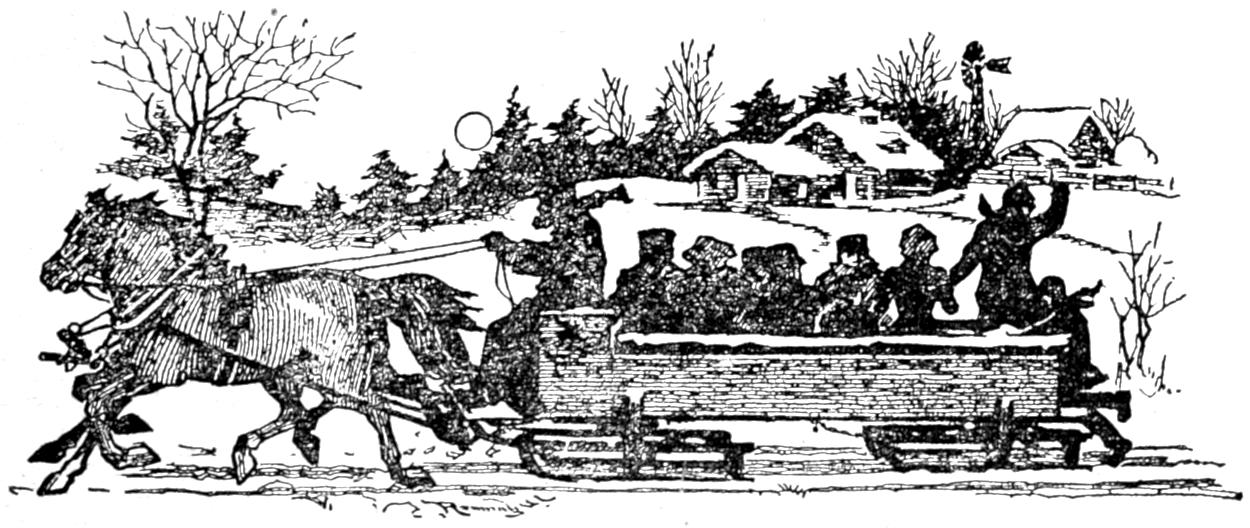
Sleigh Ride to the Temperance Lecture
“Come, my lad,” said Uncle Nathan, just as they were ready to start, “it’s a stinging evening. Here’s a little glass of sweetened toddy for you, just to keep you warm. I’ve had a nice glass, and I feel better and warmer already.”
“I’m good and warm now, Uncle Nathan, and I don’t need it. Besides, that stuff doesn’t keep people warm,—it makes them cold. My father says he saw a man who froze to death just because he’d taken too much of that kind of stuff. When I have to die, Uncle Nathan, I don’t mean to die that way.”
Uncle Nathan smiled a little, called Nat a stubborn lad, and they all drove away.
Oh! how Nat did hope that the great gentleman whom they were going to hear, would say a few words—just a few at least—in favor of temperance; for Nat felt as if he needed a little help. He was tired of standing alone, as he thought. But if we are doing right, we are never alone. God is on our side, and His holy angels are with us.
Much to Nat’s delight, the speaker gave most of the evening to explaining the evils of intemperance. He told of the misery and wretchedness caused by the liquor traffic. He spoke of the bright, promising young men of the nation, who were being led away from purity and right, and held in the hateful bondage of the cup. He spoke feelingly of the thousands of widows and tens of thousands of poor orphans all over our fair land, whose husbands and fathers had been murdered by the demon—drink.
At the close of his lecture, the speaker presented the Pledge. And what was Nat’s delight, when he saw his Uncle Nathan walk to the desk and sign his name,—and hark! Nat could hardly believe his ears! What was Uncle Nathan saying? What did he mean? Was it actually true?
“I have been much interested in the lecture this evening,” began Uncle Nathan, “and am glad to place my name on the Pledge. I only wish it had been there long ago. As I have said, the lecture of the evening has been good; but friends, the greatest temperance lecture I ever listened to, has been given to me and acted out every day for the past week, by my young nephew, Nat Raymond. He is here to-night, and I wish to tell him that his influence, more than anything else in the world, has led me to take this stand.”
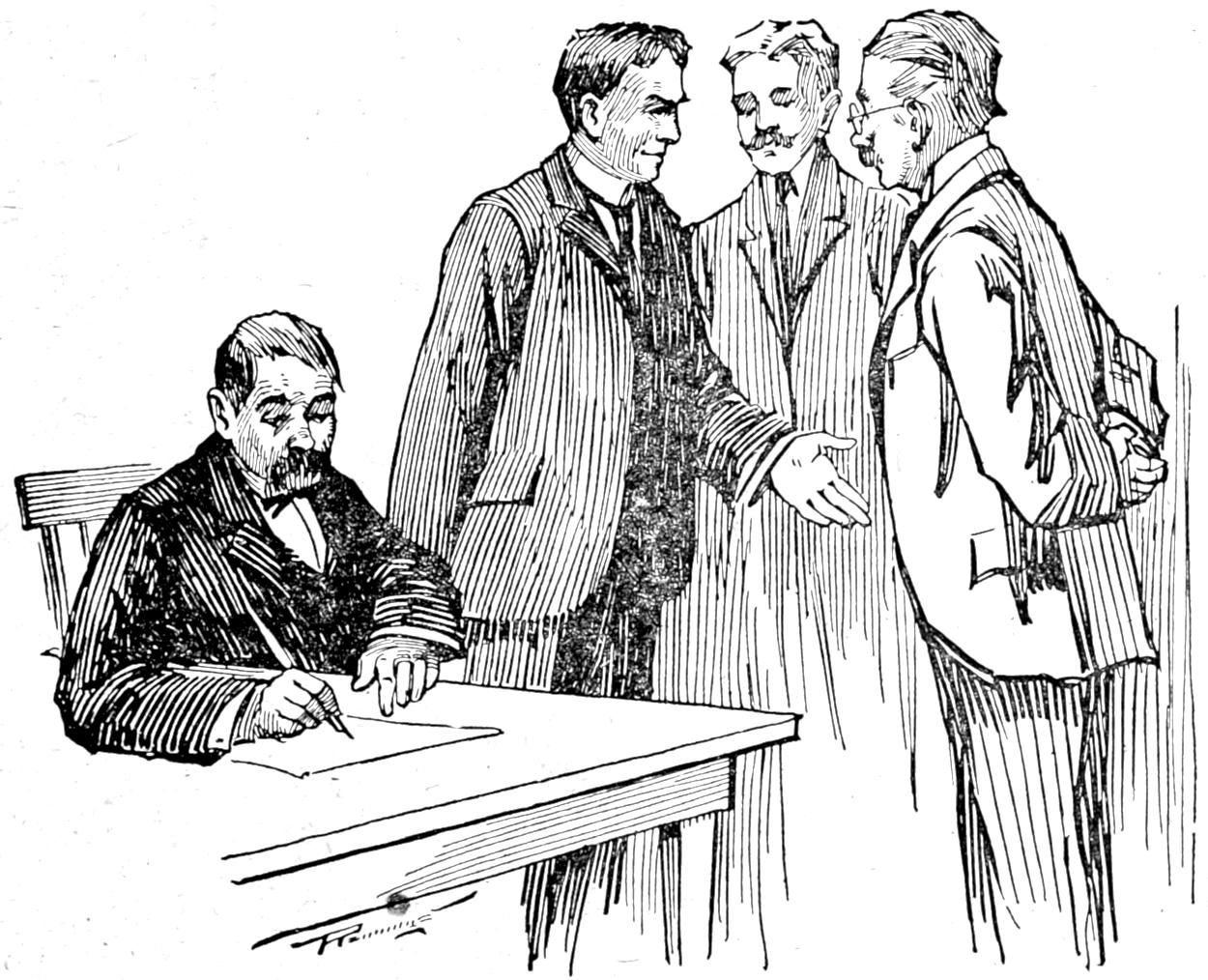
Uncle Nathan Signs the Pledge
“Hurrah for Nat Raymond!” broke out a dozen sturdy voices. And before he fairly understood what was going on, Nat found himself quite a hero.
At last, when his visit at Uncle Nathan’s was over, and Nat was again at home, he told the story over and over to his happy parents.
“I never would have had the courage to refuse to take the wine with Uncle Nathan, mother,” he declared, “if I had not remembered what you whispered in my ear the last thing before I left you: ‘Don’t forget, my son, that even a boy may be able to do great good by his example.’”
“We can trace four-fifths of the crimes committed to the influence of rum.”—Judge Allison.
“No business more thoroughly demoralizing, more destructive of public morals, public order, and public decency.”—Judge John Martin.
“Seventy-five percent of the crimes of New York City are due directly or indirectly to strong drink.”—I. Kenny Ford, New York Police Court.
“Seventy-five percent of accidents to life and limb due directly to drink.”—Dr. Cyrus Edson.
“The undoubted cause of four-fifths of all the crime, pauperism, and domestic misery of the State.”—Governor Dix, of New York.
“The chief source and immediate cause of more hurt to society and to individuals than any other agency.”—Hon. H. W. Blair.
“The original cause of most of the enormities committed by criminals.”—Sir Matthew Hale.