INDEX AND DICTIONARY (continued 8)
Reading edition
Lalemant, Gabriel (1610-1649). Jesuit missionary; laboured with Brébeuf at the mission of St. Ignace, among the Hurons, where he was killed by the Iroquois in 1649. A Parisian by birth, and his family belonged to the class of gens de robe. Index: L Sufferings and death of, 5, 62; mentioned, 16. Bib.: Ragueneau, Relations des Hurons, 1649; Parkman, Jesuits in North America.
Lalemant, Jérôme (1593-1673). Superior of Jesuit missions in Canada, 1645-1650, and 1659-1665. A missionary to the Hurons until 1645, when called to Quebec to assume the office of superior. Sailed for France in 1650, and returned in 1659 to resume the office of superior. Appointed grand vicar, and his name suggested for bishop of Quebec. Index: L His opinion of Laval, 35; his exaggerated account of the earthquake, 42-45. Bib.: Journal des Jesuites; Parkman, Jesuits in North America; Douglas, Old France in the New World.
La Loutre, Louis Joseph de. Sent to Canada by the Society of Foreign Missions at Paris, 1737. Missionary to the Micmac Indians, 1740. Vicar-general of Acadia under the bishop of Quebec. A determined enemy of British supremacy in Acadia. After the fall of Fort Beauséjour, escaped and fled to Quebec. The following year embarked for France, but on the voyage was taken prisoner by a British vessel and kept in confinement for eight years. Returned to France when peace concluded in 1663. Died in obscurity. Bib.: Parkman, Montcalm and Wolfe; Richard, Acadia; Selections from the Public Documents of Nova Scotia, ed. by Akins. See also Acadians, Expulsion of the.
Lambert, Captain. Bk Commander of Iphigénie, and subsequently of Java, 123; his death, 123.
Lamberville, John de (1633-1714). Jesuit missionary to the Onondagas; forced to leave his mission in 1687, because of Denonville's expedition against the Iroquois. Remained at Cataraqui as chaplain for a time, and at Denonville's request returned to the Onondagas to arrange a treaty of peace. Succeeded in this mission, and resumed his ministry at Cataraqui. In 1688 carried to Montreal, suffering from a severe attack of scurvy. The following year returned to France, as procurator of the mission. Died in Paris. Index: F Jesuit father, missionary to the Iroquois, 144, 188, 208. L Describes the death of Garakontié, 73, 74; his position imperilled, by action of governor and intendant, 215. Bib.: Campbell, Pioneer Priests of North America; Parkman, Frontenac and Jesuits in North America.
Le Milletière, Dubois de. WM Perishes with his men on fireship, 98.
La Minerve. Montreal newspaper, established 1826. Index: P Morin's seditious articles in, 101; denounces every one opposed to Papineau, 122-123. BL Praises policy of La Fontaine-Baldwin government, 142; discusses debate in Imperial Parliament on colonial government, 232; La Fontaine's speech in reply to Papineau, printed in, 292. C Praises Cartier, 88.
Lamontagne. Ch Interpreter, 144.
La Montagne. A settlement near Montreal. Index: L Settlement of Christian Indians at, 9, 74.
Lamotte. WM Chief of the Follis-Avoines, 41.
La Motte, Pierre de St. Paul, Sieur de. Came to Canada with the Carignan Regiment, 1665. Built Fort Ste. Anne, at the northern extremity of Lake Champlain, 1666. Two years later took the place of Zacharie Dupuis as commandant at Montreal. Returned to France, 1670. Index: L Foundation stone of the parish church of Montreal laid on his behalf by Philippe de Carion, 88.
La Motte Cadillac, Antoine de. Son of Jean de La Motte, Sieur de Cadillac, de Launay et de Montet. Served for a time in the army, and about 1683 came to Canada in search of fortune or adventure. Married Marie-Thérèse Guyon at Quebec in 1687; stationed for several years at Port Royal; returned to Quebec, and sent by Frontenac in 1694 to command the post at Michilimackinac. In 1701 built a post at Detroit, went to Quebec in 1709, sailed for France, and in 1713 sent out to Louisiana as governor. Index: F Post commander at Michilimackinac, 340. Bib.: Cadillac Papers (Michigan Hist. Papers, 1903); Sulte, Les Tonty (R. S. C., 1893); Roy, Le Baron de Lahontan (R. S. C., 1894); Verreau, Quelques Notes sur Antoine de Lamothe de Cadillac; Parkman, Old Régime and Frontenac.
La Mouche. L Nephew of Huron chief, deserts to the Iroquois at Long Sault, 71.
Lampman, Archibald (1861-1899). Educated at Trinity University, Toronto, graduating in 1882; appointed to a clerkship in the post-office department at Ottawa the following year, and remained there up to the time of his death. Put the best of himself into his poems, in which he interpreted with rare discernment and charm the spirit of the woods and fields of his native country. Bib.: Works: Among the Millet; Lyrics of Earth; Poems, ed. by Duncan Campbell Scott, with biog. sketch. For biog., see Morgan, Can. Men; MacMurchy, Canadian Literature.
Lancaster, Joseph (1778-1838). Founded the Lancasterian system of education. In 1798 began teaching poor children on the Madras system; and gradually introduced improvements. In 1818 came to America, and at one time conducted a school in Montreal. Published several books on his system of education. Index: W Founder of Madras system of national schools, 86. See also Madras schools. Bib.: Dict. Nat. Biog.
Landry, Pierre Armand (1846- ). Born in Dorchester, New Brunswick. Educated at St. Joseph's College, Memramcook; studied law and called to the bar of New Brunswick, 1870. Member of the Assembly, 1878-1883; elected to the House of Commons, 1883; appointed judge of the County Court, 1890; puisne judge of the Supreme Court of New Brunswick, 1893. Index: Md His motion of regret that sentence of death passed upon Riel not commuted, 280-281. Bib.: Morgan, Can. Men.
Lands, Public. Mc Evils of methods of granting, 74; list of grants in first thirty-five years, 74. Bk Grants made near Niagara to previously disloyal persons, 64. W Dissatisfaction over management of, in New Brunswick, and movement to bring under provincial control, 18-30, 38, 48. T Improper sales of, 51-52. S Land boards attempt to check speculation, 102; discontinued, 104; grants of, dealt with by Executive Council after discontinuance of boards, 101-103, 104; grants of, made to officers of the government, 215.
Langelier, François Charles Stanislas (1838- ). Born at Ste. Rosalie, Quebec. Educated at Laval University; studied law and called to the bar, 1861. Joined the staff of Laval, and became dean of the law faculty, and member of the council. Entered public life in 1871; returned for Montmagny, 1873, and for Portneuf, 1878, in Legislature; sat for Megantic, 1884; and for Quebec Centre, 1887, in Dominion House. Held the offices of commissioner of crown lands, and provincial treasurer, in the Quebec government, 1878-1879. Index: C One of the founders of Le Parti National and its organ Le National, 30. Bib.: Morgan, Can. Men.
Langevin, Sir Hector Louis (1826-1906). Born at Quebec. Entered Parliament in 1867, as member for Dorchester; subsequently represented, successively, Charlévoix, and Three Rivers. Appointed secretary of state, 1867; minister of public works, 1869; postmaster-general, 1878; and again minister of public works, 1879; resigned 1891. Index: Md Secretary of state in first Dominion Cabinet, 134; his organizing ability and great local influence, 140; announces death of Sir John A. Macdonald, 325-326. T Delegate to Charlottetown Conference, 74-75; to Quebec Conference, 76; member of first Dominion ministry, 129. Bib.: Dent, Can. Por. and Last Forty Years; Taylor, Brit. Am.; Rose, Cyc. Can. Biog.
Langhorn, John. S Second Church of England clergyman to arrive in Upper Canada, 158.
Langlade. See Mouet de Moras de Langlade.
Langlois, Françoise. Ch Wife of Pierre Desportes, 146.
Langlois, Marguerite. Ch Wife of Abraham Martin, 146.
Langlois, Noël. Ch Settler from Normandy, 252.
Langoissieux, Pierre. Ch Récollet, assumes monastic habit, 149; returns to France, 209.
Languedoc. WM Battalion of regular troops, 29, 105, 118, 192.
La Noüe. See Robutel.
Lanjuère, de. L Life of Olier by, 135.
Lansdowne, Henry Charles Keith Petty-Fitzmaurice, fifth Marquis of. Born in 1845. Educated at Eton and Balliol College, Oxford; succeeded to marquisate, 1866. After holding minor offices in the government, became under-secretary for war in 1872, and in 1880 under-secretary for India. In 1883 appointed governor-general of Canada; and at the end of his term, 1888, went to India as viceroy. On his return, became secretary for war in 1895, and in 1900 foreign secretary. Since the death of the Duke of Devonshire, has been the leader of the Conservatives in the House of Lords. Bib.: Who's Who.
Lapause, De. WM Sent to erect defences at fords of Montmorency, 112; accompanies Lévis to the West, 147; in battle of Ste. Foy, 257, 261.
La Peltrie, Marie Madeleine de (née de Chauvigny). Daughter of the Seigneur de Vaubougon, in Normandy; married early in life, and while still young was left a widow with a large fortune. Filled with religious zeal, devoted herself and her fortune to the founding of the Ursuline convent in Canada. In 1639 sailed for Quebec, and with her companions began there the important work of ministering to the sick and educating Indian girls. With tireless energy, carried on the work for thirty-two years, dying in November, 1671, a few months before her lifelong friend and co-worker, Marie de l'Incarnation (q.v.). Index: F Arrival of, at Quebec, 28; accompanies Maisonneuve to Montreal, 33. L Her piety, 92; Ursuline convent established by, 125; death of, 153; appearance and character, 153, 154. Bib.: Douglas, Old France in the New World; Parkman, Jesuits in North America and Old Régime.
La Pérouse, Jean François de Galaup, Comte de (1741-1788). French admiral. D Explores North-West Coast in 1788, 25. Bib.: Voyage autour du Monde; Marcel, Vie de La Pérouse.
La Perrière. WM Commanded to evacuate Johnstone's redoubt, 140.
La Place, Jacques de. Ch Jesuit missionary at Miscou, 234.
La Potherie. See Bacqueville.
Laprairie. On south shore of St. Lawrence, above Montreal. Index: F Attack on, by war party under John Schuyler, 281; serious encounter at, between Canadian forces and party under Peter Schuyler, 312.
La Rabeyre, De. L French officer, put to death by Iroquois, 227.
La Ralde, Raymond de. Ch Accompanies De Caën to Quebec, 138; returns to France, 141; appointed admiral of Company's fleet, 154.
La Riborde, Gabriel de. Récollet missionary; arrived from France in 1670, and sent to Cataraqui as chaplain to the garrison. Was in the West with La Salle and Hennepin, in 1679-1680. Index: L With Tonti and Membré at Fort Crèvecœur, 149; murdered by the Illinois, 150. Bib.: Parkman, La Salle.
La Rochebeaucour, De. WM Second aide-de-camp to Montcalm, 2; forms cavalry corps, 87; commands Bougainville's cavalry, 222; brings provisions into Quebec, 232.
La Rochefoucauld-Liancourt, François Alexandre Frédéric, Duc de (1747-1827). Chiefly remembered because of his valuable and entertaining Travels, "full of keen, fair-minded observation regarding every variety of detail of life in America as this exiled French nobleman found it, told in a readable style, not without an occasional touch of humour." Exiled from France in 1768; returned, for several years, and went into retirement until after Waterloo. Made a peer of France at the Restoration. Index: Dr Not allowed to visit Lower Canada, 290. S Visitor to Upper Canada, 56; his observations, 71, 73, 74; describes opening of Legislature, 92, 93; high opinion of Simcoe's secretary, 178; describes Colonel Smith's house, 179; on scarcity of servants, 182; entertained by Simcoe at Navy Hall, 187, 230; on Simcoe's household, 187; Simcoe objects to some of his remarks, 188; on Simcoe's military talent, 225. Bib.: Works: Voyage dans les États-Unis d'Amerique fait en 1795-97; État des Pauvres en Angleterre; Le Bonheur du Peuple.
La Rochelle. French seaport, on the Atlantic, long a stronghold of the Huguenots. Index: Ch Merchants of, contraband traders, 140.
La Rouette. Ch Pilot, accompanies Champlain in his expedition against the Iroquois, 52.
La Salle, Jean Baptiste de (1651-1719). Abbé; canon of Rheims. Index: L Founder (1684) of the order of Christian Brothers, 125.
La Salle, René-Robert Cavelier, Sieur de (1643-1687). Sailed for Canada in the spring of 1666; granted by the Sulpicians the seigniory of Lachine, from which, in 1669, he set out with Dollier de Casson and Galinée upon the first of those explorations towards the west and south for which he was to become famous. Meeting Jolliet at the western end of Lake Ontario, Dollier de Casson and Galinée decided to make their way to the upper lakes, while La Salle turned south and explored the Ohio. His later explorations have been the subject of long controversy—the point in dispute being whether he explored the Mississippi before or after Marquette and Jolliet. In any event, he first descended the river to its mouth, 1681-1682. Upon his return, sailed for France, and in 1684 set out with four ships to establish a colony at the mouth of the Mississippi. This unfortunate expedition culminated in the murder of La Salle by his own men. Index: F Sent to invite Indians to conference, 79; first commandant of Fort Frontenac (Cataraqui), 86; reports Perrot's defiant proceedings to Frontenac, 92; his views on sale of liquor to Indians, 123; obtains grant of Fort Frontenac from the king, 156; obtains exclusive right of trading in Mississippi region, 158; difficulties encountered by, 159, 161; relations with Frontenac, 162; discoveries disparaged by La Barre and also by the king, 176; financial affairs, 178; his forts and other property seized by La Barre, restored to him, 179; king takes him under his special protection, 180. L Sells liquor to Indians, 116; obtains letters of nobility, and concession at Fort Frontenac (Cataraqui), 145; birth and character, 147; explorations, 148-153; goes to France, 151; misfortunes and death of, 152; reports sermon of Abbé Fénelon, 160. WM Discovers mouth of Mississippi, 19. Bib.: Memoir, in French, Hist. Coll. of Louisiana, 2d Ser., vol. 2; letters and other documents, in Margry, Découvertes; Shea, Voyages up and down Mississippi; Parkman, La Salle; Winsor, Nar. and Crit. Hist.; Falconer, Discovery of Mississippi; Griffin, Discovery of Mississippi; Sparks, La Salle in Lib. of Am. Biog.; Gravier, Découvertes; Harrisse, Notes pour Servir; Joutel, Journal Historique; Chesnel, Histoire de Cavelier de la Salle; Guénin, Cavelier de la Salle; Sulte, La Morte de la Salle; Girouard, Lake St. Louis and Cavelier de la Salle.
La Sarre Regiment. WM One battalion of, sent to Canada, 12, 29; in battle of the Plains, 192; in battle of Ste. Foy, 259, 261.
Lascelles' Regiment. WM In centre under Murray, 189; in battle of Ste. Foy, 259.
La Taille. Ch Accompanies Champlain to Quebec, 41.
La Terrière, Pierre de Sales. Came to Canada from France, 1766; appointed agent at Quebec for the St. Maurice forges, 1771; his place of business in front of the lower town market, facing the church of Notre Dame; in 1775 appointed inspector of works, and removed to the forges, on the banks of the St. Maurice, a few miles above Three Rivers. Left an interesting account of the works, in his Mémoires de Laterrière. Implicated in the American invasion of 1776, and arrested. Index: Hd Inspector of St. Maurice forges, 48; arrest of, 277; dislike of Haldimand, 277; suspected of supplying Americans with petards and cannon-balls from St. Maurice forges, 277-278; his defence of Du Calvet, 284-287; his description of Haldimand, 293. Bib.: Christie, History of Lower Canada.
La Terrière de Sales. Represented Saguenay in Assembly, 1844-1854; appointed to Legislative Council, 1856. Index: E Votes against secularization of Clergy Reserves, 164.
La Tesserie, De. L Member of the Sovereign Council, 158.
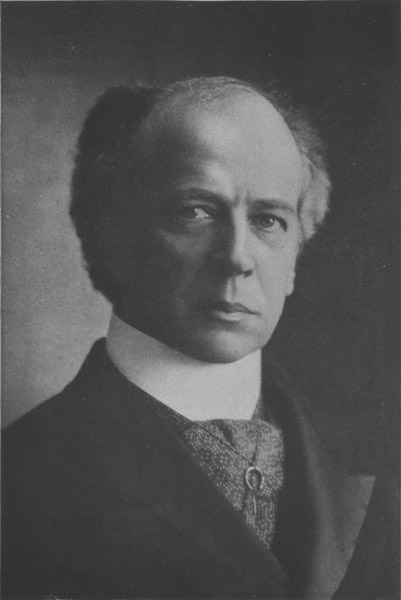
Sir Wilfrid Laurier
Latour, Abbé Bertrand de. L On the humility of Laval, 33; on the evils flowing from the sale of liquor to the Indians, 36; on mental characteristics of Canadian children, 100; on the virtues of Laval, 187. Bib.: Mémoire sur la Vie de Laval.
La Tour, Charles Amador de. Son of Claude de la Tour. Came to Acadia in 1610 with his father. Driven out of Port Royal by the English; built a post near Cape Sable, on what is now known as Port Latour. In 1632, when Acadia was restored to France, Razilly came out with Charnisay to strengthen the colony. Razilly died in 1636, and a bitter conflict followed between Charnisay and La Tour, both of whom claimed to represent the king in Acadia. Charnisay had rebuilt Port Royal, and La Tour occupied a fort at the mouth of the St. John. The outcome of the quarrel was an order for the arrest of La Tour. Charnisay attacked La Tour's fort, but was driven off. When he blockaded the harbour, La Tour escaped to Boston, returned with English ships, and drove Charnisay to the shelter of Port Royal. The latter's opportunity came, however, later. He attacked the fort during La Tour's absence. La Tour's wife made a gallant defence, and Charnisay succeeded in the end only by resorting to treachery. He carried Madame La Tour to Port Royal, where she died in 1645. Some years later, after the death of Charnisay, La Tour brought this curious drama to a conclusion by marrying the widow of his rival. He had already obtained restitution from the king, who made him governor of Acadia; and some years later showed his powers of persuasion by obtaining a generous grant of land from Cromwell, who had, in 1654, taken possession of the colony. Died about 1666. Bib.: Parkman, Old Régime; Hannay, History of Acadia; Kirke, The First English Conquest of Canada.
La Tour, Claude de. A Huguenot gentleman; came to Port Royal in 1610 with Poutrincourt; in 1614 had a trading-post on the Penobscot. Sailed for France in 1627, and on his return the following year, with supplies for the defence of Acadia, captured by Kirke and carried to England. There married one of the queen's French maids of honour, and was persuaded to throw in his lot with the English. Promised to win over his son Charles (q.v.), but the latter scornfully refused to change his allegiance. Afterwards built a fort at the mouth of the St. John, for the French, to whom he had once more transferred his services. Index: Ch Captured by Kirke, 177. Bib.: Parkman, Old Régime; Hannay, History of Acadia; Kirke, The First English Conquest of Canada.
Lattaignant, Gabriel de. Ch Assists in forming Company of New France, 168; made a director, 170.
L'Auberivière, François Louis de Pourroy de. Roman Catholic bishop of Quebec, 1739-1740, succeeding Dosquet. Died at Quebec, 1740. Index: L bishop of Quebec, 12.
Laurier, Sir Wilfrid (1841- ). Born at St. Lin, Quebec. Studied law at McGill University, and called to the bar, 1864. Entered public life in 1871 as member for Drummond and Arthabaska in the Quebec Assembly; three years later returned to the House of Commons for the same constituency. Entered the Mackenzie Cabinet, 1877, as minister of inland revenue. In 1887 leader of the opposition; and in 1896, upon the defeat of the Tupper government, called upon to form an administration, himself taking the office of president of the Council. Received the honour of G. C. M. G. in 1897, and the same year called to the Imperial Privy Council. Index: Mc Justifies Upper Canada Rebellion, 30, 31. Md His administration repeals Franchise Act of 1885, 260; succeeds Blake as leader of Liberal party, 1887, 261, 263; lukewarm towards policy of commercial union, 296; his reply to Macdonald's appeal to the electorate, 1891, 311; finally disposes of unrestricted reciprocity, 317; his speech in Parliament on death of Macdonald, 326-329. C On the Quebec radicals, 27-28; one of the founders of Le Parti National and its organ Le National, 30; on Cartier, 116-117. Bib.: Discours sur le libéralisme politique; Barthe, Discours de Laurier, depuis 1871 à 1890. For biog., see Willison, Sir Wilfrid Laurier and the Liberal Party; Fréchette, Wilfrid Laurier; Moreau, Sir Wilfrid Laurier; David, Laurier et son Temps; Morgan, Can. Men; Dent, Can. Por.
Lausaunne. Hd The resort of savants, 3.
Lauzon, Jean de. Born, 1582. Governor of New France, 1651-1656; had already been associated with the interests of the colony by reason of his position as president of the Company of New France, and had used his office to acquire the island of Montreal and Point Lévis opposite Quebec. His administration as governor made odious not only by a long series of public mistakes, but by his too obvious intention of using the office to enrich himself and his sons. Returned to France in 1656; and mentioned in contemporary narratives as late as 1660. Index: Ch Intendant of Company of New France, 170; objects to return of Récollets, 225. F Governor, 38; returns to France, 42. Bib.: Douglas, Old France in the New World; Parkman, Old Régime.
Lauzon-Charny, Charles de. Son of Jean de Lauzon, and administrator of New France after the departure of his father in 1656. During his father's governorship, had been invested with the high-sounding but empty title of Grand Maître des Eaux et Forêts de la Nouvelle France. Returned to France in 1656; entered the church; and returned in 1659 with Laval, who made him a member of the Ecclesiastical Council. Index: L Director of Seminary, 55; grand vicar, accompanies Laval to France, 134. Bib.: Douglas, Old France in the New World.
Laval, Anne Charlotte. L Only sister of Bishop Laval, 19.
Laval, Charles François Guy (Fanchon). L Nephew of Laval, educated by him at Quebec, 140.
Laval-Montmorency, François de (1623-1708). L Appointed apostolic vicar with title of bishop of Petræa in partibus, 7; opposes liquor traffic, 10; founds Seminary at Quebec, 10; created bishop of Quebec, 12; not fully appreciated in his lifetime, 15; his noble birth, 17; his devotion to St. François Xavier and St. François d'Assisi, 18; a scholar at College of La Flèche, 19; inherits patrimony of Montigny, and called for a time Abbé de Montigny, 19; yields patrimony to his younger brother, Jean-Louis, 19, 21; admitted to congregation of the Holy Virgin, 20; receives tonsure at nine years of age and made canon of Evreux at fifteen, 20; leaves La Flèche at nineteen and goes to the College of Clermont at Paris, 21; death of his two elder brothers, 21; his mother desires him to marry, 21; appointed archdeacon of cathedral of Evreux, 22; his zealous performance of his duties, 23; goes to Rome in expectation of an appointment as one of three bishops for Asia, 23; resigns his archdeaconry, 23; becomes inmate of Hermitage of de Bérnières at Caen, 24, 25; recommended by Jesuits as vicar apostolic for Canada, 26; consecrated as such by papal nuncio, 26; arrives at Quebec, June 16, 1659, 26; his authority questioned, 27; demands written recognition of his authority, 28; suspends the Abbé de Queylus, 28; manner and personal appearance, 28, 29; attention to the sick, 33; his different places of residence in Quebec, 33; friction with Governor D'Argenson, 34; his efforts to prevent sale of brandy to the Indians, 36-39; sails for France, obtains recall of D'Avaugour, and military reinforcements for colony, 39; his influence in the creation of the Sovereign Council, 40; returns to Canada, 41; founds Seminary, 47, 48; his regulations therefor approved by the king, 50; obtains authority to collect tithes, 50; receives flattering letters from the king and Colbert, with gift of money, 52; resides at Seminary, 55; opposed to permanent livings for clergy, 55; his personal income transferred to the Seminary, 56; imposes on himself many privations, 56; affiliates Seminary with Foreign Missions of Paris, 57; acquires seigniory of Beaupré and exchanges it for Île Jésus, 58; baptizes Iroquois chief, 65; visits various settlements of Christian Indians, 74; bears testimony to the high character of De Tracy, 81; describes church at Quebec in letter to Pope, 84; approves of works of piety instituted by Jesuits, 86; encourages devotion to the Holy Family, 86; his visits to Montreal, 87; his wise views, 98; watches over instruction of youth, 99; establishes boarding school at St. Joachim, 100; encourages Brotherhood of Ste. Anne, 101; builds first sanctuary of Ste. Anne at Beaupré, 101; makes pilgrimage to Beaupré, 101; his instructions to missionaries, 105-107; receives Récollets with benevolence, 111; his zeal for primary education, 124; appointed bishop, 129, 136; his letter to the Propaganda, 131; has manager appointed for his abbey of Lestrées, 138; rents it to Berthelot, 138; exchanges Island of Orleans for Île Jésus, 138; visits his family in France, 139; family troubles, 139; renews connection of Seminary with Foreign Missions of Paris, 140; returns to Canada, 141, 169; sails for France in connection with liquor traffic question, 173; erects parish of Notre Dame de Montreal, 175; joins it to Seminary of St. Sulpice, 175; his interest in chapel of Bonsecours, 178; bows to king's decision on tithes question, 181; returns to Canada, 184; resists attempt to connect his diocese with archbishopric of Paris, 184; bestows all his property on the Seminary of Quebec, 185; letter to the king, 187; visits parishes and missions, 189, 190; illness, 190; letter to king as to need for reinforcements, 192; establishes chapter of diocese, 197; sails for France, 198; resigns as bishop in favour of Saint-Vallier, 200; returns to Canada, 202, 220; physical suffering, 205; letter to Saint-Vallier, 206; disagreement with Saint-Vallier on the subject of the Seminary, 208; his return to Canada delayed, 211; returns, 219, 220; receives his successor, 221; his conduct during siege of Quebec, 231; his grief over the policy adopted in regard to the Seminary, 235; his escape from burning building, 240; his labours in extreme age, 244; his admiration of the Charron brothers, 247; his habits and practices described by Brother Houssart, 251-256; by De la Colombière, 256, 257; his death, 263; miraculous cures attributed to, 264; burial in cathedral and subsequent transfer of remains to Seminary, 265, 266. F Arrival of, as vicar apostolic and bishop of Petræa in partibus, 43; sends De Queylus back to France, 43; disagrees with Governor D'Argenson, 45; also with D'Avaugour, 46; sails for France, 1662, 46; procures recall of D'Avaugour and appointment of Mézy, 48; returns to Quebec, September, 1663, 48; establishes Quebec Seminary, 48; and Lesser Seminary, 49; quarrels with Mézy, 50; sails for France to settle question of bishopric, May, 1672, 70; made bishop of Quebec, and returns to Canada, 1675, 71; establishes Ecclesiastical Court, 111; curtails honours paid to governor in church, 112; king's instructions on the subject, 113; Frontenac's estimate of bishop's revenue, 114; objects to trading permits issued by governor, as involving selling of liquor to Indians, 116; gains the king over to his views, 116; sends grand-vicar to France to uphold his policy, 118; goes to France to press his views, 1678, 125; effect of his elevation to rank of bishop, 164; not favourable to permanent curacies, 165, 190; rejects offer of Récollets to serve the parishes without any fixed provision for their support, 165; determines to resign, 190; goes to France, 1684, 191; chooses Saint-Vallier as his successor, 191; describes Canada as "the country of miracles," 301. Bib.: Têtu, Esquisse Biographique de Laval; Esquisse de la Vie, etc., de Laval; Parkman, Old Régime; Gosselin, François de Montmorency-Laval; Colby, Canadian Types of the Old Régime; Le Vénérable François de Montmorency-Laval; Douglas, Old France in the New World; Dent, Can. Por.
Laval, Guy de. L Ancestor of Bishop Laval, 17.
Laval, Henri de. L His letter to his brother the bishop, 139; second letter, 141.
Laval, Hugues de. L Father of Bishop Laval, 17.
Laval, Jean-Louis. L Brother of Bishop Laval, 19; bad conduct of, 139.
Laval University. Founded, 1668, as the Quebec Seminary, and granted a royal charter in 1852, at the instance of Lord Elgin, then governor-general. Index: L Its origin traced to Quebec Seminary, 99. See also Quebec Seminary. Bib.: Hamel, Sketch of Laval University in Canada: An Ency., vol. 4; Roy, L'Université Laval et les Fêtes du Cinquantenaire.
Lavalette. Ch A Basque, fishes on Acadian coast as early as 1565, 59.
La Vallée, de. Ch Godfather of young Hurons, 233.
La Valtrie, Séraphin Marganne, Sieur de (1643-1693). A native of St. Benoit de Paris. Obtained a lieutenancy in the Lignières Regiment; took service under De Tracy, 1664, and came to Canada the following year. Granted the seigniory of Lavaltrie in 1672; sent to the western posts as commandant, and replaced by La Durantaye, 1683; accompanied Denonville on his expedition against the Iroquois, 1687. Killed, 1693. Index: F Seignior, commands militia; in 1687 in attack on Iroquois, 209; killed by Iroquois in 1693, 323. Bib.: Parkman, Frontenac.
Laverdière, Charles Honoré (1826-1873). Educated at Laval University. Studied for the church and ordained priest. Joined the faculty of Laval, and became university librarian. Ch On question of Champlain's tomb, 261-262. Bib.: Edited the Works and Voyages of Champlain; and completed Ferland's Cours d'Histoire du Canada; author of Histoire du Canada; Samuel de Champlain; edited, with Abbé Casgrain, the Journal des Jesuites, 1645-1668.
La Vérendrye, Pierre Gaultier de Varennes, Sieur de (1685-1749). Son of René Gaultier, Sieur de Varennes, governor of Three Rivers. Served in the New England campaign of 1704, and the following year in Newfoundland. In 1707 with the army in Flanders, and wounded at Malplaquet in 1709. Returning to Canada, engaged in the fur trade, for some years on the St. Maurice, and 1727-1728 on Lake Nipigon. There conceived the idea of exploring the unknown country beyond Lake Superior, to discover the Western Sea, a project to which he devoted the remainder of his life. Left Montreal for the West in 1731; built forts on Rainy Lake and Lake of the Woods, and in the succeeding years penetrated to Lake Winnipeg, Red River, and the Assiniboine. In 1738 made a journey to the Mandan villages on the Missouri; and the following year one of his sons penetrated to the Saskatchewan. In 1742, unable to go himself, sent two of his sons far to the south-west. They hoped, as he had always hoped, to reach at last the Western Sea, but were baffled by hostile tribes and the barrier of the Rocky Mountains. In 1743 returned finally to Montreal, broken in health and heavily in debt. Six years later died there. His sons begged to be allowed to continue his western explorations, but hostile influences made this impossible. WM Discoverer of the Rocky Mountains, 19. L Carries explorations as far as the Rocky Mountains, 11. MS Leads the way inland from Lake Superior, 3; his search for Western Sea, 40; his reply to charge of making money in fur trade, 281. Bib.: Prud'homme, Pierre Gaultier de Varennes, Sieur de La Vérendrye (R. S. C., 1905); Laut, Pathfinders of the West; Parkman, Half Century of Conflict; Bryce, Hudson's Bay Company; Burpee, Search for the Western Sea. See also his journals in Canadian Archives Report, 1889; Richard's Summary (Can. Arch., 1904); and Margry, Découvertes et Établissements des Français. His Journals are now being edited for the Champlain Society, Toronto.
La Vigne, Captain de. Ch Sails for France with Champlain, 141.
Laviolette. Hd Three Rivers founded by, in 1634, 43-44.
Law. Dr Confusion and abuse in administration of, 51-55.
Law, Captain John. S First sergeant at arms of the Upper Canada Assembly, 85; a retired officer of the Queen's Rangers, 85.
Law, John. R Headmaster of Gore district Grammar School, Upper Canada, 4; Egerton Ryerson studies under, 5.
Lawrence, Charles. Entered the army as ensign, 1727; captain, 1742; and major, 1747. Accompanied Warburton's Infantry to Nova Scotia, and engaged in the French wars at Cobequid, 1749-1750; brigadier-general under Amherst at the siege of Louisbourg, 1758. Nine years earlier had been appointed a member of the Council of Nova Scotia; administered the government on the retirement of Governor Hopson, 1753; lieutenant-governor, 1754; and governor, 1756. The first Assembly met under his governorship, 1758. Responsible for the expulsion of the Acadians. Died at Halifax, Oct. 19, 1760. Bib.: Dict. Nat. Biog.; Akins, History of Halifax; Parkman, Montcalm and Wolfe; Hannay, History of Acadia; Richard, Acadia. See also Acadians, Expulsion of the.
Lawrence, Joseph W. T Supports Tilley in 1850, 10.
Laws, Captain. Dr Sent with seventy men to attack Arnold in rear, 129; completes discomfiture of enemy, 131. Hd Effects arrest of Du Calvet, 285.
Le Baillif. Ch Under clerk at Tadoussac, 133; placed in charge of storehouse by Kirke, 195; a bad character, 202-204.
Le Baillif, George. Ch Récollet missionary, 87; goes to France, as delegate from colony, 136.
Lebel, J. G. E Commissioner under Seigniorial Tenure law, 187.
Le Ber, Jeanne, daughter of Jacques Le Ber, of Montreal. Index: L Birth, baptism, and virtues of, 91; mortifications practised by, 92.
Le Ber, Pierre. L House of charity established by, 245.
Le Ber de Senneville, Jacques (1633-1706). One of the principal merchants of Montreal; married in 1658 Jeanne, sister of Charles Le Moyne. In 1673 engaged with Aubert de la Chesnaye in the fur trade at Cataraqui, and aroused the hostility of Governor Perrot of Montreal, who was also interested in the fur trade. In 1675 sold out his rights at Cataraqui to La Salle; and four years later acquired the seigniory of Senneville. Mentioned in 1691 as in a fur-trading partnership with Frontenac. Index: F Imprisoned by Perrot, 92; La Barre's dealings with, 175. Bib.: Parkman, Frontenac.
Le Borgne de Belle Isle, Emmanuel. Ch Takes Fort St. Pierre, 236.
Le Brun de Duplessis, Jean-Baptiste. Born at Corbie, in Picardy, about 1730. Came to Canada about 1755 and joined the Béarn Regiment; practised as a notary in Quebec for many years. Died there some time after 1796. See R. S. C., Trans., 1900, I, 129-130. Index: Dr Carleton's account of, 68.
Le Canadien. Newspaper, published at Quebec. Index: BL On the political situation in 1842, 116. C First French newspaper in Quebec, 95; suppressed by Governor Craig, 95. P Established in 1806 by Bédard, Panet, and other French-Canadian leaders, 28; suppressed by Sir James Craig, 29.
Le Caron, Joseph. Ch Récollet missionary, 85; goes to country of the Hurons, 88; with Champlain visits the Tionnontates or Petuneux, 106; meets Father d'Olbeau at Three Rivers, 107; sails for France, 111; becomes commissary of the Récollets, in Canada, 112; performs first marriage ceremony in Canada, 113; proceeds to Huron country, 149; returns to France, 208; death of, 226. L Missionary labours of, 3. Bib.: Parkman, Pioneers of France.
Le Chausseur. F Secretary to Frontenac, 139.
Le Clercq, Chrestien. Récollet missionary in Canada, and historian of his order. Index: F On great need for Récollet order in Canada, 72; on Schenectady massacre, 247; on "flag" incident in siege of Quebec, 296. Ch Quoted, 112, 114; praises virtue of early Canadian settlers, 258. Bib.: Établissement de la Foy dans la Nouvelle France, trans. by Shea, under the title First Establishment of the Faith; Nouvelle Relation de la Gaspesie, trans. for the Champlain Society by Ganong, under the title New Relation of Gaspesia. Both these translations give in the introductions biographical details of the author as far as known.
Lecompte-Dupré, J. B. Dr Colonel of Quebec militia, 246.
Le Diable. WM Name given to floating battery, 87, 104.
Le Du. S French priest, deported, 190.
Lee. W Receiver-general, New Brunswick, 69.
Le Faucheur. Ch One of the men landed by Kirke on St. Pierre Island, 174.
Le Foulon. Now known as Wolfe's Cove. Index: WM Guard of 100 men at, 160; Wolfe carefully examines from the river, 168; learns that it is poorly guarded, 171; effects landing at, 181.
Le Gardeur de Repentigny, Jean Baptiste (1632-1709). Son of Pierre Le Gardeur (q.v.). His father brought him to Canada at the age of four years. Resided in Montreal, 1642-1643; and in 1656 married Marguerite, daughter of Jean Nicolet, the explorer. In 1663 elected mayor of Quebec, but promptly resigned under official pressure, the policy of the government being opposed to anything approaching popular government. Raised a company of volunteers at Quebec in 1665, and accompanied the regulars to Three Rivers, which they were just in time to save from an Iroquois attack. In 1687 accompanied Denonville on his expedition against the Iroquois. Index: F Goes to France on behalf of Montreal colonists, 36. Ch Acts as godfather to young Hurons, 233. Bib.: Parkman, Frontenac.
Le Gardeur de Repentigny, Pierre. Arrived at Quebec from Normandy with his wife and family, 1636. Obtained a grant of land from the Company of New France, and engaged in the fur trade. In 1644 went to France to secure concessions for the Company of Habitants, which he had been instrumental in organizing. In 1647 granted the seigniories of Cournoyer and Repentigny, but did not live long to enjoy them, as he died the following year on his way to France. Bib.: Parkman, Frontenac.
Le Gardeur de Tilly, Charles (1611-1695). Brother of Pierre Le Gardeur de Repentigny; a native of Normandy; came to Canada in 1636; and in 1648 made governor of Three Rivers. Married the same year Geneviève Juchereau. In 1660 granted the fief of St. Michel by the Company of New France; and transferred it to the Seminary in 1668. In 1673 acted for the governor, Frontenac, during his absence at Cataraqui, but afterwards fell into his bad graces. Index: L Member of Sovereign Council, 158, 166; temporarily banished from Quebec, 167. F Member of Sovereign Council, 106. Bib.: Parkman, Frontenac.
Legendre, Lucas. Ch Purchases supplies for De Monts's second expedition to Quebec, 56.
Legislative Assembly. Mc Composition of, under Constitutional Act, 53; Goldwin Smith on, 54; irritation between, and Executive Council, 54, 55; Lord Durham on, 56, 58, 59, 60; true principle of government, 61, 63. S First of Upper Canada, list of members and their counties, 80; opening of, at Niagara, 82.
Legislative Council. Mc Created by Constitutional Act, 52; Lord Durham criticizes and suggests revision, 57; attitude of Lower Canada Reformers to, 69; rejects three hundred and twenty-five bills in eight years, 73; Sir John Colborne on, 268; collision with Assembly, 276; should be elective, 277; Glenelg insists that it shall be non-elective, 324. Sy Its constitution, 77, 175; its activity under Constitutional Act, 80; in Lower Canada English-speaking element dominant in, 81; demand that it should be made elective, 84; Sydenham's description of, 220; enlarged by Sir George Arthur with good results, 220; members opposed to union record their dissent, 231; S Suspicious of later Loyalist emigration, 57. Dr Appointed under Quebec Act, first meeting of, 90; how composed, 269; its power of veto, 277; its sympathies with governor and against people, 277. Hd Its welcome to Haldimand, 117-118; composition of, 175; statement made regarding power of, 188; sees Haldimand depart, 309; changes in membership of, at change of governor, 314.
Legislative Union. Md Strongly favoured by Macdonald; opposed by Maritime Provinces and Lower Canada, 107-109, 245.
L'Huillier, Raoul. Ch Director of Company of New France, 170.
Leisler, Jacob. F Seizes government of New York, 266.
Le Jeune, Paul. Superior of Jesuits in Canada. Came to Canada in 1632, and went on a mission to the Algonquians the following year; succeeded by Vimont as superior, 1639; appointed to the governor's Council, 1640; returned to France the same year; proposed for bishop of Quebec. Index: L Bishopric of Quebec offered to, 25. F Preaches funeral sermon on Champlain, 27. Ch Celebrates mass in house of Mme. Hébert, 148; his letter on education of Indian children, 230, 231; describes first service in church, 239; preaches funeral sermon over Champlain, 261; advises Mme. Champlain, 264. Bib.: Relations, 1632-1640; Parkman, Jesuits in North America; Douglas, Old France in the New World.
Lelièvre, S. E Commissioner under Seigniorial Tenure law, 186.
Lemaire. L Servant in the Seminary, Laval's account of, 250.
Lemaistre, Simon. Ch Director of Company of New France, 170.
Lemaître. L Sulpician, comes out in St. André, 31; his attentions to those suffering from the plague, 32; dies a martyr, 91.
Le Marchant, Sir John Gaspard (1803-1874). H Becomes governor of Nova Scotia, 1852, 143; his connection with the Foreign Enlistment Act, 149-152. Bib.: Dict. Nat. Biog.; Campbell, History of Nova Scotia.
Lemoyne, Mme. Jacques. L Land bought from, for church at Montreal, 88.
Le Moyne, Paul, Sieur de Maricourt (1663-1704). Son of Charles Le Moyne, Sieur de Longueuil. Born in Montreal. Accompanied De Troyes and Iberville on the expedition against the Hudson Bay forts, Moose Factory, Rupert, and Albany, in 1686; and left in charge of the captured posts when the leaders returned to Quebec. Again served with Iberville on the bay in 1689, in the capture of the Hampshire. The following year brought a party of voyageurs to help in the defence of Quebec against Admiral Phipps. Once more with his brother Iberville on Hudson Bay, in 1694, and took part in the capture of Fort Nelson. Inherited much of his father's remarkable influence over the Iroquois, and negotiated an important treaty with them about the beginning of the eighteenth century. Index: F Accompanies expedition to Hudson Bay, 206; arrives at Quebec, during siege by Phipps, 292; with his brother, Iberville, in Hudson Bay, 343. L Takes part in expedition to Hudson Bay, 204. Bib.: Bryce, Hudson's Bay Company; Laut, Conquest of the Great North-West. See also Iberville.
Lemoyne, Simon. Ch Jesuit, professor in College of Rouen, 207.
Le Moyne de Ste. Hélène, Jacques (1659-1690). Son of Charles Le Moyne, and brother of Iberville, Bienville, and other members of this noted family. Trained, like Iberville, for the navy; returned to Canada, and in 1686 accompanied De Troyes on the Hudson Bay expedition. Took part in the raid on Schenectady in 1690; and mortally wounded during the siege of Quebec by Phipps. Index: F Accompanies expedition to Hudson Bay, 208; commands in war party against Schenectady, 235; mortally wounded in skirmish on Beauport flats, 299. L Takes part in expedition to Hudson Bay, 204; killed in siege of Quebec, 231. Bib.: See Iberville.
Le Moyne de Serigny, Joseph (1668-1734). Son of Charles Le Moyne, and brother of Iberville, Bienville, and St. Hélène. Accompanied Iberville to Hudson Bay, 1690, and left in command of Fort Albany after its capture. Again in the bay with Iberville in 1694 and in 1697. Given command of Fort Nelson the latter year. Joined Iberville in Louisiana in 1700, and associated with him in the development of the colony. Reached high rank in the navy, and was governor of Rochefort at the time of his death. Index: F Goes to France on affairs of Hudson Bay, 345. Bib.: See Iberville.
Le Moyne. See Bienville; Iberville; Longueuil.
Le National. Newspaper published at Montreal. Index: C Founded as organ of Le Parti National, in 1872, 30.
Leonard, Samuel. T English schoolmaster, 5.
Leopard and Chesapeake. Bk Affair of, 82-86.
Leroux, Laurent (1758-1855). Western fur trader. Index: MS Builds post on Great Slave Lake, 18; sends Sutherland and the "English Chief" to northern tribes, 18; with Mackenzie at Chipewyan, 33; Mackenzie's return, 48; post on Great Slave Lake, 49; sent to Beaver Indians, 49. Bib.: Morice, Dict. Hist. des Canadiens de l'Ouest; Burpee, Search for the Western Sea.
Le Roy, Marguerite. Ch Mother of Champlain, 1.
Le Sage, Captain. WM Repulses landing of English, 107.
Lesage, Marguerite. Ch Wife of Nicolas Rivert, 146.
Lescarbot, Marc. Born at Vervins, near Laon, France, about 1570. Studied law and called to the bar in 1599. The previous year delivered two Latin orations before the papal legate sent by Clement VIII to arrange the terms of the treaty of Vervins. Through Poutrincourt (q.v.), who had been one of his clients, induced to sail for Port Royal, 1606; and spent twelve months in the New World, returning to France in 1607. While at Port Royal, took an active part in the work of building, gardening, etc., spent much of his time hunting and fishing; and in the evening read and composed many of the poems afterwards included in his Muses de la Nouvelle France. On his return, set to work to prepare his account of Acadia. Spent the years 1612 to 1614 in Switzerland; married in 1619. Beyond this year, nothing is known of his life. Index: Ch Arrival of, at Port Royal, 35; useful in the colony, 37; returns to France, 37. Bib.: Histoire de la Nouvelle France, Paris, 1609; 2nd ed., 1611; reprinted 1612; 3rd ed., 1618; reprint of 1612 issue, 1866. In 1907 the Champlain Society, Toronto, published a new edition, with an English translation and notes by W. L. Grant, and an introduction by H. P. Biggar. See also Demarsy, Notes sur Marc Lescarbot; Parkman, Pioneers of France; Hannay, History of Acadia.
Le Sire. Ch Clerk in De Caën's company, 138.
Leslie, Alexander (1740?-1794). British general. Index: Dr In command at Charleston, S. C., 197; embarks his force with large number of refugees, 204; joins Carleton at New York, 205.
Leslie, James. BL Victim of election frauds in 1841—elected for Verchères, 1842, 116; president of Executive Council, 1848, 284; a radical, 284; given seat in Legislative Council, 285; at farewell banquet to La Fontaine, 354. Bib.: Dent, Last Forty Years.
Lesseps, Ferdinand de (1805-1894). Eminent French engineer. Index: Ch Undertakes Panama Canal, 6. Bib.: Chambers, Biog. Dict.
Leslie, James (1802-1885). Born in Dundee, Scotland. Came to Canada, 1820, settling first at Kingston, and afterwards at Toronto. A member of the first city council of Toronto. Arrested and imprisoned in connection with the Rebellion of 1837. Purchased the Examiner, 1844, and conducted it for ten years. One of the founders of the Clear Grit party. Index: E Proprietor of the Toronto Examiner, and a leader of the Clear Grits, 110-111. Mc President of Canadian Alliance Society, 258; delivers rejoinder to governor, 300; refuses to sign "declaration of independence," 331. B Leader of the Clear Grits, 39. Bib.: Dent, Upper Canadian Rebellion and Last Forty Years.
Lestrées, Abbey of. L Bestowed by king on diocese of Quebec, 136.
Le Sueur, Jean de St. Sauveur. Ch Comes to Quebec, 252; Godfather to young Hurons, 223.
Le Tardif, Olivier. Born in Normandy, 1601. Came to Canada, 1620, and employed as an interpreter at Quebec. Married Louise Couillard, 1637. Index: Ch Interpreter, 144; remains in Quebec during English occupation, 208.
Letellier de St. Just, Luc (1820-1881). Born at Rivière Ouelle, Quebec. Called to the Senate for the division of Grandville, 1867; a member of the ministry, 1873; and in 1876 appointed lieutenant-governor of Quebec; dismissed from office, 1879. Index: Md Appointed lieutenant-governor of Quebec, 247; quarrels with and dismisses the provincial ministry, 247-248; Macdonald brings the matter before Parliament, 248-249; his dismissal on the advice of the Dominion Cabinet, 249-250; his death, 250; political reasons for his dismissal, 251. Bib.: Dent, Can. Por.; Willison, Sir Wilfrid Laurier and the Liberal Party; Pope, Memoirs of Sir John A. Macdonald.
Le Testu, Captain. Ch Member of court to try Duval for conspiracy, 43.
Le Valois, Father. L Recommends Saint-Vallier to succeed Laval, 199.
Lévis, Gaston-François, Chevalier de (1720-1787). Entered French army in 1735; named second in command to Montcalm, 1756; sailed for Canada the same year. On the death of Montcalm at Quebec, succeeded to the command of the French forces, and won the battle of Ste. Foy, 1760. After the capitulation, returned to France, and served under Condé against Prince Ferdinand. Created a marshal, 1783, and the following year a duke and peer of France. Index: WM Second in command to Montcalm, 2; his birth and descent, 8; military service 9, 10; character, 11; at battle of Carillon, 55, 60; confidence of Montcalm in, 85; persuades Montcalm to extend line of defence to Montmorency River, 105; his great activity, 110, 118, 126; his bravery, 137; praises courage of troops, both regulars and Canadians, 143; congratulated by Vaudreuil on victory at Montmorency, 144; sent to defend western frontiers, 147; his absence from principal scene of conflict has disastrous results, 147; sends encouraging news from Montreal, 157; his presence and counsel much desired by Montcalm, 165; his absence on eve of battle greatly felt by Montcalm, 195; Montcalm bequeaths his papers to, 219; arrives at Jacques Cartier and takes command, 227; disapproves of retreat, 227; marches army back in hope of relieving Quebec, 229; his regret for death of Montcalm, 233; hears of capitulation of Quebec, 234; decides to march on Quebec in the spring, 241; his efforts to supply needs of his army, 242; occupies Ste. Foy, 256-266; takes possession of General Hospital, 265; arrival of British fleet compels him to retire, 267; surrender at Montreal, 268; his high military qualities, 268. L French general, burning of his flags by, 12. Hd Defeats Murray, 34; his final struggle, 36-37; surrenders, 38; account of having burned French flags, 39; not forgotten, 122. Bib.: Parkman, Montcalm and Wolfe; Doughty, Siege of Quebec; Wood, The Fight for Canada; Bradley, Fight with France; Collection des Manuscrits du Maréchal de Lévis, ed. by Casgrain.
Lévis, Heights of. Opposite Quebec. Index: WM Skirmishing on, 102.
Lewis, John. T Confederation candidate, elected in Albert County, New Brunswick, 89, 107.
Lewis, Meriwether (1774-1809), and Clark, William (1770-1838). American explorers. Sent by the United States Government, in 1803, to find an overland route to the Pacific by way of the Missouri. They ascended the Missouri in 1804, to the Mandan villages; wintered there; continued their journey in 1805, crossed the Rocky Mountains, and descended the Columbia River to its mouth. They spent the winter there, and retraced their steps in 1806 to the Missouri and St. Louis. Their party consisted of fourteen soldiers, nine young men from Kentucky, two boatmen, an interpreter, a hunter, and a negro servant of Captain Clark. Index: D At Clatsop, 44; on the Columbia, 59; their overland expedition, 60, 64, 66; mouth of the Columbia the objective, 66; objects of the enterprise, 66; personnel of the expedition, 67; route followed by, 67; information collected, 67; winter at Fort Clatsop, 67. Bib.: History of the Expedition to the Pacific Ocean, Philadelphia, 1814; new ed., New York, 1843. In addition to other reprints, three recent editions are: the Chicago edition of 1902, with introd. by Dr. J.K. Hosmer; the edition of 1893, in 4 vols., with copious notes and other critical equipment by Dr. Elliott Coues; and the even more elaborate edition prepared by Dr. R.G. Thwaites, New York, 1905, 8 vols. For biog. of Lewis and Clark, see Jefferson's Life of Lewis in Old South Leaflets, no. 44, and in the Hosmer edition; Cyc. Am. Biog.
Lexington. Hd Skirmish at, 103.
Liard River. A tributary of the Mackenzie; rises in the Yukon district, south-west of Frances Lake, about lat. 61°, long. 131°. Its length is about 550 miles. Explored by McLeod in 1834, and by Campbell in 1840. The Upper Liard is known only by Indian report. Fort Simpson, of the Hudson's Bay Company, is at the mouth of the main river; and Fort Liard at the confluence of Black River and the Liard, not far from the point where British Columbia, the Yukon, and the North-West Territories meet. Index: D Operations of Hudson's Bay Company on, 123.
Libel. Mc Mackenzie's bill on, 163.
Liberal. Newspaper published at Toronto. Index: B Radical journal, founded after Liberal victory of 1874, 235.
Liberal Party. B Growth of, 209; overthrows Sir John A. Macdonald's government, and Ontario coalition government, 209-210. See Reform Party.
Libraries. The first public library in Canada was the Quebec library, founded in 1779 largely through the efforts of Haldimand. After many vicissitudes, the library was absorbed by the Literary and Historical Society of Quebec. The first college library was that of the Seminary at Quebec, 1668; Montreal College library was opened in 1767; and King's College library in 1790. Legislative libraries were established in each of the provinces at an early date. In 1841 the libraries of Upper and Lower Canada were combined, and from this year dates the establishment of the library of Parliament. The first circulating library in Upper Canada was founded at Niagara in 1800. Similar libraries existed in Montreal as early as 1824, and at Kingston in 1836; the Red River library was founded at Fort Garry in 1847. Index: Hd First in Canada established by Haldimand, 190; merged in 1869 into Literary and Historical Society of Quebec, 190; objects and cost of, 191; appreciation of, 191. R Public school libraries established by Dr. Ryerson, for use by the community, 185-187. MS One established by Roderick Mackenzie at Fort Chipewyan, 26. BL W. L. Mackenzie maintains a circulating library, 13. E Provided for in Upper Canada after 1841, 88. S For Upper Canada, Simcoe recommends government to establish, 46; plan not adopted, 175. See also Books. Bib.: Bain, Public Libraries of Canada in Canada: An Ency., vol. 5.
Licorne. WM Frigate in which Montcalm embarked at Brest, 12.
Lieutenant-governor. Mc Office of, Durham's view of power of, 56, 57; surroundings of, in 1838, 61; position in both Upper and Lower Canada, 62.
Lieutenants. S Intended to be analogous to lords-lieutenant in England, appointed by Governor Simcoe for the principal counties in Upper Canada, 197; measure not approved by secretary of state, 197; appointments not continued by later governors, 198.
Ligneris. WM Force gathered by, and Aubry, dispersed, 146.
Lincoln, Abraham (1809-1865). Fourteenth president of the United States. Index: B Believed by George Brown to be favourable to renewal of Reciprocity Treaty, 192. Bib.: For biog. sketch, and bibliog. of lives, see Cyc. Am. Biog.; Larned, Lit. Am. Hist.
Lincoln, Benjamin (1733-1810). American general. Index: S United States commissioner, entertained by Simcoe at Navy Hall, 184, 229. Bib.: Cyc. Am. Biog.
Lindsay, W. B. Sy Made clerk of Legislative Assembly, 334.
Lindsay, William. T Elected for the county of Carleton, New Brunswick, 89, 107.
Linschot. Ch His definition of the territory of New France, 211.
Lippincott, Captain. Dr Hangs Joshua Huddy, 198.
Liquor Question. B Agitated by Brown and the Globe, 75; the Canada Company and cheap whiskey, 75; the movement in and out of Parliament, 75-76. See also Brandy question; Stills; Cas reservé.
Lisgar, John Young, Baron (1807-1876). Born at Bombay. Entered Parliament in 1831; became lord of treasury in 1841, and secretary of the treasury, 1844-1846; chief secretary for Ireland, 1852-1855; and lord high commissioner of the Ionian Islands, 1855-1859. In 1861 sent to New South Wales as governor-general. Seven years later came to Canada as administrator; and the following year appointed governor-general. Succeeded by Lord Dufferin in 1872. Index: C His arrival in Canada, 89; expresses views of Little Englanders—advises Canada to declare her independence, 89. Bib.: Dict. Nat. Biog.; Dent, Can. Por.
Literary and Historical Society of Quebec. P Founded by Lord Dalhousie, 41. Bib.: See list of publications, from 1829, in Lit. Am. Hist.; also Wurtële, List of Lectures, Papers, etc., 1829-1891.
Little Belt. Bk British corvette, fired on by United States frigate President, 173.
Littlehales, Edward B. S Accompanies Simcoe as major of brigade, 47; clerk of Council, 79; aide-de-camp to governor, 177; describes the site of the present city of London, 200, 201.
Livingstone. Dr Of Montreal, his disaffection, 79; commands rebel Canadians at Quebec, 132.
Livingstone, Philip (1716-1778). Dr President of Continental (American) Congress, 201. Bib.: Cyc. Am. Biog.
Livius, Peter (1727?-1795). Resided at Portsmouth, New Hampshire. A member of the Council under the royal government; quarrelled with the governor and went to England to lay his complaints before the crown. Complaints dismissed, but appointed chief-justice of New Hampshire. At once transferred to Quebec as chief-justice; held office from 1777 to 1786; retired and went to England, where he died. Index: Dr Appointed chief-justice, 184; his character and abilities, 185; disagrees with Carleton, 188; carries dispute to Privy Council, 188. Bib.: Morgan, Cel. Can.
Logan, Sir William Edmond (1798-1875). Born at Montreal, of United Empire Loyalist descent. Educated at the University of Edinburgh. After some years spent in business in England, and incidentally in studying the geological formation of the coal-fields of Wales, returned to Canada, and in 1842 appointed the first director of the Geological Survey. In 1863 issued an elaborate summary of the work accomplished by the Survey up to that time. Retired in 1870. Bib.: Geology of Canada. For biog., see Morgan, Cel. Can.; Harrington, Life of Sir William E. Logan.
London. City of Ontario; founded by Peter McGregor, in 1826. Index: S Site of present city, selected by Simcoe as best place for capital of Upper Canada, 200, 205.
London Conference. See Westminster Conference.
Long Point. Lake Erie, north shore. Index: S Chosen by Simcoe as arsenal for Lake Erie, 204.
Longueuil, Charles Colmer Grant, Baron de. Sy Owner of "Alwington," 294.
Longueuil, Charles Le Moyne, Sieur de (1625?-1685). Son of an innkeeper of Dieppe. Came to Canada in 1641. In 1657 granted the seigniory of Longueuil. In De Tracy's expedition against the Iroquois, in 1666, commanded the Montreal militia, and was with Frontenac at Cataraqui in 1673. La Barre sent him to the Iroquois, 1682, to persuade them to meet him in council at Montreal. When, two years later, La Barre led an abortive expedition against the Iroquois, he was again compelled to depend upon Le Moyne's influence with the Iroquois to patch up a peace. Index: F Sent to invite Onondagas to a conference, 183, 184. Bib.: Parkman, Frontenac.
Longueuil, Charles Le Moyne, Baron de (1656-1729). Son of Charles Le Moyne, Sieur de Longueuil (q.v.) Wounded, in 1687, in the Iroquois raid on Lachine. Governor of Montreal. Administered the colony in 1725, before the arrival of Beauharnois. Index: F Commands militia in attack on Iroquois, 1687, 209. E Barony conferred on, in 1700, 181.
Longueuil, Charles Le Moyne, Baron de (1687-1755). Son of preceding. Administered the colony in 1752, after the departure of La Jonquière. Index: Dr In command of militia, in 1777, 187.
Loquin. Ch Company's clerk at Quebec, 139.
Longworth, John (1814-1885). Born at Charlottetown. Called to the bar of Prince Edward Island, 1838. Elected to the Assembly, 1846. Occupied offices in several successive administrations. Drafted the "No Terms Resolution" of the Assembly in connection with Confederation. Appointed prothonotary of the Supreme Court of Prince Edward Island, 1883. Bib.: Campbell, History of Prince Edward Island.
Loranger, Thomas Jean Jacques (1823-1885). Born in Ste Anne d'Yamachiche, Quebec. Educated at Nicolet College; called to the bar, 1844. Sat in the Assembly, 1854-1863; held office in the Macdonald-Cartier ministry, 1857-1858. Appointed a judge of the Superior Court, 1863; retired, 1879. Subsequently engaged in the consolidation of the statutes of Quebec. Created by the pope a commander of the Order of Pius IX. Index: C Conservative leader in Quebec, his character, 25. Bib.: Dent, Last Forty Years.
Lorette. L Settlement of Christian Indians at, 74. WM British abandon their position at, 249.
Lorimer, Dr. Hd Consulted by Haldimand as to sanitary measures, 66, 70.
Lorin, Henri. F Author of Le Comte de Frontenac, referred to, 109, 126, 128, 142, 165, 174, 216, 231, 250.
Lormel, Captain de. Ch Brings out settlers, 252.
Lorne. See Argyll.
Lotbinière. See Joly de Lotbinière; Chartier de Lotbinière.
Louche, de. WM Takes direction of fireships, 98.
Loudon, James (1841- ). Born in Toronto. Educated at Upper Canada College and Toronto University, graduating 1862. Appointed to the staff of the university; professor of mathematics, 1875; and president of the university, 1892, succeeding Sir Daniel Wilson. One of the original fellows of the Royal Society of Canada. Retired from presidency of university, 1906. Index: BL Quoted on Baldwin's University Bill, 293. Bib.: Morgan, Can. Men; The University of Toronto and its Colleges, 1827-1906.
Loudon, John Campbell, fourth Earl of (1705-1782). General. Index: WM Made commander-in-chief of British forces in America, 33. Hd Commands Royal Americans, 11; his opinion of Pennsylvanians, 11. Bib.: Dict. Nat. Biog.; Parkman, Montcalm and Wolfe; Bradley, Fight with France.
Louis XIII, King of France (1601-1643). Succeeded his father, Henry IV, in 1610. Index: F Close relations of Frontenac family with, 62. Ch Demands restitution of Acadia, 212; plot against, 215. L Dedicated France to the Virgin Mary, 87. Bib.: Larousse, Dictionnaire Universel.
Louis XIV, King of France (1638-1715). Succeeded his father, Louis XIII, in 1643. Index: F His war with Holland, 148; absolutism of his rule 151-153; desires to have permanent curacies (curés fixes) established in Canada, 164; private life of, 166; pronounces La Salle's discoveries useless, 176; later takes him under his special protection, 180. L Recommends creation of bishopric for New France and appointment of Laval thereto, 131; stipulates that archbishop of Rouen shall be metropolitan, 133; yields the point, 134; bestows abbey of Lestrées on new diocese, 136; his decision on liquor question, 174; grants 8000 francs annually to Canadian clergy, 182; later reduces amount, 183; his disagreement with Pope Innocent XI, 201. Bib.: Voltaire, Siècle de Louis XIV; Saint-Simon, Mémoires.
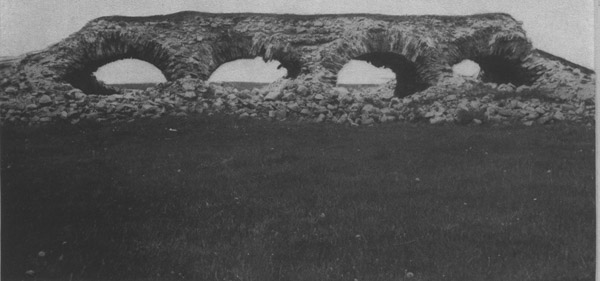
Remains of the King's Bastion, Louisbourg
Louis XVI, King of France (1754-1793). Succeeded to the throne in 1774. Index: S Public mourning ordered in Upper Canada for death of, 193. Bib.: Larousse, Dictionnaire Universel.
Louisbourg. A seaport on the south-east coast of Cape Breton. Formerly the chief stronghold of France in America. The fortress, named after Louis XIV, was begun in 1790; twenty-five years were spent in fortifying it; and the cost was estimated at thirty million livres. Captured by the British under Pepperell and Warren in 1745; ceded back to France by the treaty of Aix-la-Chapelle; and again captured by the British under Amherst and Boscawen, in 1758. Index: WM Guards Gulf of St. Lawrence, 17; composition of garrison, 30; capture of, 71; expedition against Quebec, sails to, 85. Ch Commonly known as Port aux Anglais, 236. See also Cape Breton; Boscawen; Wolfe; Amherst. Bib.: Parkman, Half-Century of Conflict and Montcalm and Wolfe; Lettre d'un Habitant, ed. by Wrong; Archibald, First Siege of Louisbourg (R. S. C., 1887); Bourinot, Cape Breton and its Memorials; Wood, Logs of the Conquest of Canada.
Louisbourg Grenadiers. WM On British right, at Quebec, 189; re-embark after fall of Quebec, 236.
Louise, Princess. Daughter of Queen Victoria; born 1848. Index: E Comes to Canada with her husband, the Marquis of Lorne, 122.
Louisiana. Hd Secretly transferred to Spain by France, 64; Spanish rule unpopular, 77; revolution in, 79; counter-revolution, 81; contemplated invasion of, 81. L Colony sent to, 152. Bk Cession of by France to Spain, 38; re-ceded to France, 38; purchased by United States, 42; acquisition of, changes attitude of United States towards Great Britain, 43. Bib.: Le Page du Pratz, Histoire de la Louisiane. For further material, see Lit. Am. Hist.
Lount, Samuel (1791-1838). Mc Member for Simcoe, 316; election corruption, 317; given command of rebels, 360; arrives at Montgomery's tavern, 362; his account of the flag of truce, 369; his first engagement, 373; his second engagement, 379; leaves country, 380; executed, 435; his fidelity, 435; petitions for commutation, 435; effect of his execution, 436; monument to, 436. BL Hanged for his share in the Rebellion of 1837, 44-45. Bib.: Dent, Upper Canadian Rebellion; Kingsford, History of Canada.
L'Ouverture, Toussaint. Bk Establishes independent republic in St. Domingo, 39, 40; death of, 40.
Louvigny, Louis de la Porte, Sieur de (1652-1730). Accompanied Denonville on his expedition against the Iroquois, 1687; sent by Frontenac to relieve La Durantaye in 1690; in command at Three Rivers in 1701; two years later commanded an expedition to Detroit; major of Quebec, 1706; sent to Michilimackinac in 1713; four years later at Detroit, and led an expedition against the Fox Indians; at Quebec in 1724 as lieutenant du roi. Index: F Sent with reinforcements to Michilimackinac, 241. Bib.: Cadillac Papers (Michigan Hist. Coll., vol. 33); Parkman, Frontenac.
Lovett, John. Bk Secretary to General Van Rensselaer, letters of, 263-265, 286.
Low, Albert Peter (1861- ). Born in Montreal. Educated at McGill University, graduating in 1882 with honours. Appointed to Geological Survey 1881, and promoted to geologist, 1891. Spent many years in exploring the Labrador peninsula, and is the chief authority on its geography and geology. Appointed director of the Survey, and deputy minister of mines, 1907. Bib.: Morgan, Can. Men; Canadian Who's Who.
Lowell. S White settler among Grand River Indians, murdered by Isaac Brant, 191.
Lower Canada. Mc Crisis approaching in, 287; Imperial commissioners' report, 323; against responsible government, 325; events leading to Rebellion, 327; asks other provinces for support, 329; crisis arrives, August, 1837, 344; arrest of editors, 344; condition of, in 1837, 347; rebellion in, 358. BL Population of, at time of conquest, 1; its character, 1; British immigration, 8; racial conflict, 8; political situation after 1815, 9, 16-21; reorganization of its judicial system, 184-185. Bk Population of, 45. Sy Desire of majority to have the province wholly French, 68; Pitt's expectations regarding, 68; governors of, ally themselves with English-speaking element, 69; rupture between the two races inevitable, 86, 87; Rebellion, 87. Bib.: Kingsford, History of Canada; Christie, History of Lower Canada; Garneau, History of Canada; McMullen, History of Canada; Bibaud, Histoire du Canada sous la Domination Anglaise; Political and Historical Account of Lower Canada, by a Canadian, London, 1830.
Lowther, Catherine. WM Wolfe's attachment to, 70, 72; Wolfe entrusts her portrait to Captain Jervis, 175. Bib.: Doughty, Siege of Quebec; Willson, Life and Letters of James Wolfe; Wood, The Fight for Canada.
Loyal American Regiment. Dr Commanded by Beverley Robinson, 202. W Commanded by Beverley Robinson, 3; Lemuel Wilmot a captain in, 3.
Loyalist. Newspaper published at St. John, New Brunswick. W Attacks Wilmot and Fisher, 74-75; libel case arising out of, 75.
Loyalist Corps. Hd Formed, 253. Dr Practice of purchase of commissions prevented in, 217; six disbanded and settled in Nova Scotia, 218.
Loyalists, United Empire. Name applied to the inhabitants of the Thirteen Colonies who remained loyal to Great Britain, and rather than submit to the new republic, migrated to Canada, New Brunswick, Nova Scotia, and Prince Edward Island. No adequate provision having been made for them by the mother country, in the treaty of Paris (1783), the Loyalists were compelled in most cases to abandon all their worldly possessions, and start life anew in the pioneer settlements of the north. May 18, 1783, one great section of the refugees landed at the mouth of the St. John River, and built a town, first named Parrtown, later St. John. Other settlements were made, about the same time, at various points on the coasts of Nova Scotia, as well as on St. John's Island (Prince Edward Island). The bulk of the migration to what was then Quebec (now Ontario and Quebec) took place in 1784, the eastern Loyalists going north by way of Lake Champlain and the Richelieu, and settling in the Eastern Townships; those of the West crossing the boundary at Niagara and other points, and spreading throughout the backbone of the future province of Upper Canada. Index: B Land grants to their children fall into hands of speculators, 53. S Settlement of Upper Canada by, 1; Carleton's interest in, 51; their sufferings, 52, 54; claims for losses paid to, 55; settlements of, during and after war, 56; pretenders among, 57; those from England not generally good settlers, 58; assisted by government, 60; their hardships, 61; their mode of life, 62-69; names of those who had joined British side before treaty of 1783, registered, 70; clauses of treaty of Paris respecting, not carried out by United States, 118; consequently further emigration of to Canada, 119. Sy Constitutional Act an attempt to placate, 68. Bk Rations issued to, from Fort Niagara, 58; Brock (1804) observes and reports on comfortable condition of many of them, 65. Dr Emigration of, 64; commended to Carleton's special care, 194; their pitiable condition, 196; twenty regiments of, in Carleton's command, 202; their consternation on learning of proposed terms of peace, 206; left unprotected by treaty of peace, 213; large number of, embark for Nova Scotia, 214; Carleton continues occupation of New York till all have left the country, 215, 216; their emigration to different British provinces, 218; widows of, apply for pensions, 218, 219; effect of their settlement in Canada, 221, 244, 248; increase of their numbers in western Canada, 224; two distinct waves of emigration, 236; settlements of at Niagara, and Sorel, 236, 237; claim representative institutions, 237; those in Kingston district petition for church establishments, 238; their destitute condition, 238; their political weight underestimated by Dorchester, 248; the Seigniorial Tenure system unsuited to, 256; Dorchester's suggestion for conferring distinction on, 260. E Extravagant land grants to, 144; Durham on, 144-145; settled along Niagara River, 194. MS In the wilderness, 11. R Methodist preachers in Upper Canada of Loyalist stock, 38; included many of the influential families, 62; Ryerson's history of, 270, 274, 279. H Emigrate to the loyal western colonies, 13, 17. BL Come to Maritime Provinces and Canada, 4-5; their numbers and character, 5; in Lower Canada, 17; support Common School Bill, 105; Md Dread possibility of revolution, 20. T Severe treatment of, 3; they settle in Nova Scotia and New Brunswick, 3-4, 35. Hd Come to Canada, 125; houses built for, 138, 182; military service of, 136, 137; at Niagara, 152; employed on fortifications of Quebec, 183; in Vermont negotiations, 200, 202, 206; at Cataraqui, 236, 265; Washington's severity towards, 249, 250; arrangements for their reception in Canada, 250, 254; not less patriotic than the opposite party, 251; brutal treatment of, 252; compared with Jacobites, 253; Haldimand's care of, 254; lands allotted to, 255; surveys made for, 263; flock into Nova Scotia and New Brunswick, 263; their advent viewed with alarm by French Canadians, 264; fed and clothed by government for three years, 265; not fully appreciative of assistance given, 266; difficulty of dealing with, 267-271, 348; some impostors among, 268, 306. Mc Hardships suffered by, on account of naturalization laws, 140-141; bills for their relief, 142-143. Bib.: Sabine, Loyalists of the American Revolution; Ryerson, Loyalists of America; Campbell, Travels in North America; Canniff, The Settlement of Upper Canada; Casselman, United Empire Loyalists of the County of Dundas, Ontario; Haight, Country Life in Canada Fifty Years Ago; Bourinot, Builders of Nova Scotia; Frousac, Rise of the Loyalists; Loyalists of New York in the American Revolution in Columbia University Studies; Curwen, Journal and Letters; Myers, The Tories or Loyalists in America; Eardley-Wilmot, Loyalists' Centennial Souvenir; St. John, The Centennial of the Settlement of Upper Canada by the United Empire Loyalists; Denison, United Empire Loyalists; (R. S. C., 1904); Van Tyne, Loyalists in the American Revolution; Shortt and Doughty, Constitutional Documents of Canada.
Ludovica. Ch Name proposed by Champlain for Quebec; 124.
Lumagne. Ch Merchant, compensation awarded to, for goods seized, 221.
Lumber Trade. Bk Canadian, great increase of, 125.
Lundy's Lane, Battle of (1814). British troops, including Canadian militia, numbered 1600 at the beginning of the battle, later increased to 2800, under the command of Sir Gordon Drummond; United States troops about 4000, under General Jacob Brown. The engagement opened in the evening, and continued late into the night; the Americans finally withdrew from the field. Bib.: Lucas, Canadian War of 1812. See also War of 1812.
Lusignan, Paul Louis Dazemard de. Commanded Fort St. Frédéric (Crown Point) in 1749, when the Swedish naturalist, Peter Kalm, visited the place; and remained there for several years. Served under Montcalm at the siege of Quebec. Index: WM Relieves Montcalm, 120.
Luth, De. L Royal engineer, directs erection of fortifications, 214.
Lymburner, Adam (1746-1836). Born in Kilmarnock, Scotland. Came to Canada about 1776, and settled at Quebec, where he succeeded to the business of his brother John, who had been lost at sea in 1775. For many years a member of the Executive Council, and took an active part in public affairs. Died in London at the age of ninety. Index: Dr Proceeds to England with petition for political changes, 243; arrives in England, 251; opposes division of province, 257. S Recommends system of representation adapted to strengthen English-speaking minority, 2; heard at bar of House of Commons, 6. Bk Sent to England to oppose division of Canada into two provinces, 49. Bib.: Lucas, History of Canada; Bradley, Making of Canada; Shortt and Doughty, Constitutional Documents of Canada.
Lynch, John Joseph (1816-1888). Born near Clones, Ireland. Studied in Dublin, and entered the Lazarist order. Came to America in 1847; laboured as a missionary in Texas, 1847-1848; became president of the Lazarist College of St. Mary, Missouri, 1848; coadjutor to the bishop of Toronto, 1859; and bishop, 1860. In 1870, consecrated archbishop of Toronto and metropolitan of Ontario. His jubilee celebrated in 1884. Index: R His policy as to separate schools, 235-236; proposed as member of Council of Public Instruction of Upper Canada, 236. Bib.: Dent, Can. Por.; Cyc. Am. Biog.
Lyndhurst, John Singleton Copley, Baron (1772-1863). British statesman. Index: Md Denounces Rebellion Losses Bill, 241. Bib.: Dict. Nat. Biog.
Lyonne, De. Ch Jesuit, founder of missions at Nipisiguit and Chedabucto, 235.
Lyons, Richard Bickerton Pemell, Earl (1817-1887). British diplomatist. Index: B British ambassador at Washington—suggested that he confer with Canadian agent on reciprocity, 192. Bib.: Dict. Nat. Biog.
Lyons. S Teaches school at Hay Bay, 167.
Lytton, Edward George Earle Lytton Bulwer, Baron (1803-1873). Novelist and statesman. Index: E Colonial secretary,—his views on the duties of colonial governors, 4. D His series of despatches, 1858, on government of British Columbia, 231-235. T On the Confederation question, 63. Bib.: Dict. Nat. Biog.; Escott, Edward Bulwer, First Baron Lytton of Knebworth.
Lyveden, Robert Vernon, Baron (1800-1873). British statesman. Index: B Dwells upon defencelessness of Canada, 184. Bib.: Dict. Nat. Biog.
Mabane, Adam (1734-1792). Born in Scotland. Studied medicine at Edinburgh University; came to Canada, and practised his profession in Quebec. In 1764 appointed a judge, and presided over the first civil court held in Quebec. Member of the provincial Council; and in 1766 surgeon of the garrison of Quebec. Index: Dr Member of Council, protests against position taken by Carleton, 34; dismissed from Council, 39; appointed judge, 183. Hd Head of military hospital, 178; intimate friend of Haldimand, 300, 304; made judge and member of Legislative Council, 305; not in favour under Dorchester régime, 314, 315; his headstrong temper, 332; his letter to Haldimand, 340; receives bequest from Haldimand, 342. Bib.: Bradley, Making of Canada; Shortt and Doughty, Constitutional Documents of Canada.
M'Afee, Samuel. Mc Aids Mackenzie's escape, 400.
Macallum, A. R In charge of union school at Hamilton, 195.
McBride, Richard (1870- ). Born in New Westminster, British Columbia. Educated at the public and high schools, New Westminster. Elected to the British Columbia Assembly, 1898; minister of mines in Dunsmuir administration; premier of British Columbia, 1903. Bib.: Canadian Who's Who.
McCarthy, Charles Justin. R Martyr of early Canadian Methodism, 41.
McCarthy, D'Alton (1836-1898). Born in Dublin, Ireland. Came to Canada with his parents, 1847. In 1858 called to the bar; in 1871 a bencher of the Law society; and in 1872 made a Q. C. In 1876 elected to Parliament for Cardwell, as a Conservative, but in 1889 severed his connection with the party on the question of the Jesuits' Estates Act. In 1896 member of Parliament for North Simcoe. Index: Md Opposes commercial union, 295. Bib.: Morgan, Can. Men; Hopkins, D'Alton McCarthy in Men of the Day.
Macartney, Captain. WM Rescues French soldiers from floating ice, 251.
Macaulay, Sir James Buchan (1793-1859). Born at Niagara, Ontario. Served in the Glengarry Fencibles during the War of 1812. In 1822 called to the bar and rose rapidly in his profession. A strong opponent of William Lyon Mackenzie, and in 1826 appeared as counsel against him. In 1829 became judge of the King's Bench; chief justice of the Court of Common Pleas, 1849-1856; and subsequently of the Court of Error and Appeal. Chairman of the commission to revise and consolidate the statutes of Canada and Upper Canada. Knighted, 1859. Index: Mc Defends destroyers of Colonial Advocate, 115; offers compensation, 117; Mackenzie's opinion of, 118; violates secrecy of private letters, 121; taunts Mackenzie, 123; Mackenzie retaliates, 124; writes venomous pamphlet, 125; Mackenzie's reply, 126. Bib.: Read, Lives of the Judges; Dent, Upper Canadian Rebellion.
Macauley, John. BL Inspector-general, retires and succeeded by Hincks, 119.
McClelan, Abner Reid (1831- ). Born in Hopewell, New Brunswick. Educated at Mount Allison Academy. Engaged in mercantile life. Represented Albert County in the Assembly, 1854-1867; chief commissioner of public works, 1866-1867; appointed to the Senate, 1867; lieutenant-governor of New Brunswick, 1896-1902. Index: T Elected as Confederation candidate in Albert, New Brunswick, 89; chief commissioner of public works in Mitchell government, 105; elected for Albert, 107. Bib.: Morgan, Can. Men; Canadian Who's Who.
McCulloch, Dr. BL Defeats La Fontaine in Terrebonne; affiliated with Draper, 82.
McCulloch, J. R. Sy Political economist, 13.
McCully, Jonathan (1809-1877). Born in Halifax, Nova Scotia. In 1837 called to the bar, and practised in Halifax, 1849. In 1860 appointed solicitor-general; from 1847 to 1867 member of the Legislative Council; and served as chairman of the Board of Railways; delegate to the Charlottetown and Quebec Conferences, 1864; appointed to the Dominion Senate, 1867; and in 1870 judge of the Supreme Court of Nova Scotia. Index: H Leader of Liberal party in Nova Scotia, 1864, 177; delegate to Charlottetown Conference, 177; edits Morning Chronicle, 186; firm advocate of Confederation, 186. Bib.: Campbell, History of Nova Scotia; Saunders, Three Premiers of Nova Scotia.
Macdonald, Andrew Archibald (1829- ). Born in Brudenell, Prince Edward Island. Engaged in business as a general merchant. Sat in Prince Edward Island Assembly, 1853-1860; represented Kings South in Legislative Council, 1863-1873; member of Executive Council, 1867-1871 and 1872-1873; lieutenant-governor of Prince Edward Island, 1884-1889. Called to the Senate, 1891. Index: T Delegate to Quebec Conference, 77. Bib.: Morgan, Can. Men; Canadian Who's Who.
Macdonald, Archibald. MS His account of the voyage of the third party of Red River settlers in 1813, 162-163; in charge at Red River, 173; colonists demand that he hand over field pieces, 173-174. Bib.: Bryce, The Romantic Settlement of Lord Selkirk's Colonists.
Macdonald, Donald Alexander (1816-1896). Born in St. Raphael's, Quebec. Engaged in business as railway contractor. Represented Glengarry in the Assembly of Canada, 1857-1867, and after Confederation in the House of Commons, 1867-1875. Postmaster-general in the Mackenzie administration, 1873-1878; lieutenant-governor of Ontario, 1875-1880. After his retirement lived at Montreal. Bib.: Read, Lieutenant-Governors of Upper Canada.
MacDonald, Hugh. Born in Antigonish, Nova Scotia, 1827. Studied law and called to the bar, 1855; made a Q. C., 1872. In 1859 elected member for Inverness to the provincial Legislature. Member of a delegation, including Joseph Howe, that visited England in 1861 to represent the views of those opposing the Confederation of the British North American provinces. In 1867-1873 a member of the Dominion Parliament, and in 1873 president of the Privy Council. On Nov. 5, 1873, appointed judge of the Supreme Court of Nova Scotia; retired 1893. Index: H Delegate of Anti-Confederation party, goes to England with Howe and Annand to oppose Confederation, 192; expenses paid by subscription, 219. Bib.: Campbell, History of Nova Scotia; Saunders, Three Premiers of Nova Scotia.
Macdonald, Hugh. Md Father of Sir John A. Macdonald, native of Sutherlandshire, removes to Glasgow, and in 1820 emigrates to Canada, 1; settles at Kingston, 2; moves to Hay Bay, thence to Stone Mills, on Bay of Quinte, 2; unsuccessful in business, he returns to Kingston, 1836, and secures position in Commercial Bank, 2; his death, 1841, 2; his character, 2.
Macdonald, Hugh John (1850- ). Born in Kingston, Ontario; second son of Sir John A. Macdonald. Educated at Queen's and Toronto Universities; called to the bar, 1872; and practised for some years with his father and James Patton. In 1882 removed to Winnipeg, and entered into partnership with J. S. Tupper. In 1890-1891 represented Winnipeg in the House of Commons; in 1896 minister of the interior in the Tupper administration; in 1897 leader of the Conservatives in Manitoba; and from Jan. 8 to Oct. 29, 1900, premier of the province. Index: Md Second son of Sir John A. Macdonald—represents Winnipeg in Dominion Parliament, 10; premier of Manitoba, 10. Bib.: Morgan, Can. Men; Canadian Who's Who.
Macdonald, John Alexander. Md Eldest son of Sir John A. Macdonald—accidentally killed when quite young, 10.
Macdonald, Sir John Alexander (1815-1891). H Attends Charlottetown Conference, 1864, and proposes union of all the provinces, 178; premier of first Dominion Cabinet, 198; Tupper writes him as to Howe's political plans, 207; Tilley and Tupper urge him to visit Nova Scotia, 209; visits Halifax with Sir Georges Cartier, Peter Mitchell, and William Macdougall, 210; Acadian Recorder suggests violence, 210; Howe denounces the suggestion, 210-212; arrives in Halifax, and guest of Sir Hastings Doyle, 213; meets Howe, 213; appears before committee of Legislature, 213-214; urges Howe to put an end to the agitation for repeal of the union, 215-218; persuades Howe to enter Dominion Cabinet, 225; his public letters, 257; contrasted with Howe, 287; correspondence with Howe on Pacific Railway policy, 299-300. R His University Bill, 1847—its terms, 155-157; withdrawn, 156; referred to, 161; amends Separate School Bill, 231; supports Ryerson's stand as to separate schools, 233. D And the Pacific Scandal, 321. C His alliance with Cartier, 31, 33; his first appearance in Parliament as an uncompromising Tory, 31; opposed to La Fontaine, 32; votes against settlement of Seigniorial Tenure, 32; opposes Indemnity Bill, 32; and the Pacific Scandal, 53; his resignation, 53; at Quebec Conference—favours legislative union of provinces, 57; defends proposed constitution, 59-60; forms first Dominion administration, 67; resists demand for disallowance of New Brunswick Act abolishing separate schools, 74; sympathizes with Roman Catholic minority, 76; presents Militia Bill, 1862, 87; helps Cartier to establish political union, 100; freedom from racial or religious prejudice, 100; his qualities, 101-102; strained relations with Cartier, 102-103; Cartier's knowledge of service to, 111; receives knighthood, 124, 129; explains Wolseley's quarrel with Cartier, 130. E Becomes receiver-general in Sherwood ministry, 43; his statesmanlike qualities, 43-44; re-elected, 1848, 50; his political sagacity, 110; rivalry with George Brown, 114; on provincial representation, 118; on the dissolution of Parliament in 1853, 127; on the Representation Bill, 132, 133; Liberal-Conservative party owed its birth to his inspiration, 137; persuades Sir Allan MacNab to agree to coalition government, 139, 141; attorney-general in MacNab-Morin ministry, 140; his views on Clergy Reserves, 163; takes charge of bill for secularization of the Clergy Reserves, 168; Hincks enters his ministry, 223; one of the builders of the British Empire—honours conferred upon him, 225; monuments erected to his memory, 226. B Relations with George Brown, x; leads his party, 42; frames bill for settlement of Clergy Reserves, 60; reveals political sagacity, 69; on the character of the union, 82; bitter relations with George Brown, 87-91; offers seat in Cabinet to John Sandfield Macdonald, 100; the "Double Shuffle," 107-108; moves want of confidence in Sandfield Macdonald government, 1863, 146; Brown's motion for constitutional changes, 1864, takes him by surprise, 150; his account of negotiations between George Brown and government as to Confederation, 151, 154-156; his connection with, 152,. 154-155; announces agreement, 153, 160; favours nominative Senate, 164; describes new constitution, in Confederation debate, 170-171; announces in Parliament decision of government to carry Confederation at once and send mission to England, 182; explains intentions of government, 183; on defence of Canada, 183, 184-185; goes to England, 186; relations with George Brown, 189-192; asked to form government, 1865, 189; interview with Brown, 189-191; his proposal that Belleau be premier accepted by Brown, 191; virtual leader of government, 191; charged with using Brown as a stepping-stone to his own political ambition, 199; benefits by Brown's entry into ministry, 199, 200; Holton describes his path as "studded all along by the gravestones of his slaughtered colleagues," 201; on friendly terms with Holton, 202; his essential conservatism, 202; relations with Macdougall and Howland, 202, 209; with Joseph Howe, 203-206, 210; his ideal of a legislative union, 207; anomalous position of his Liberal colleagues, 209-210; his government overthrown, 210, 235. BL Co-operates in founding United Empire Association, 228; elected in 1844, 252; enters ministry as receiver-general, 276; re-elected, 279; offers Baldwin chief-justiceship of Common Pleas, 357; Hincks in his Cabinet, 359. Md Assigned foremost place among Canadian statesmen, i; national recognition of his services after his death by creation of peerage for his widow, i; memorial tablet in St. Paul's Cathedral, and statues in Canadian cities, i; his personal popularity, i-ii; his personality made Confederation possible, ii; Canada's debt to him, iii-iv; his birth and ancestry, 1; brought to Canada in 1820, 1; boyhood days at Kingston and on the Bay of Quinté, 2; his debt to his mother, her strong personality, 2; educated at Kingston Grammar School, 3; Mowat's tribute, 3; studies law, 4-5; called to the bar, 1836, 5; begins practice at age of twenty-one, 5; Oliver Mowat and Alexander Campbell students in his office, 6; called out as a volunteer in Rebellion of 1837, 7; defends Schoultz and Ashley, 8-9; his first visit to England, 1842, 9; takes Alexander Campbell into partnership, 9; elected alderman for Kingston, 10; marries his cousin, Miss Isabella Clark, Sept. 1, 1843, 10; their children, 10; enters public life, 1854, as member for Kingston, 11-12; his firm belief from the beginning that Canada's prosperity depended on permanent connection with the mother country, 12; impelling motives of his long public career, 13; unsettled problems in 1844, 13-14; Confederation movement, 14; difficulties of his position, 15-16; his election address, 23; takes little part in discussions during his first session, 25; Draper recommends him for position of commissioner of crown lands, 26; had no sympathy with political creed of Family Compact, 27; becomes receiver-general, 27; his views on university endowment, 28-29; Alexander Campbell's letter to, 31; opposes Rebellion Losses Bill, 36; refuses to join the annexation movement, 40; strong supporter of British American League, 40; acts as moderating force in conflict over Rebellion Losses Bill, 42, 43; his character contrasted with George Brown's, 53, 54; conceives idea of Liberal-Conservative party, 62, 63; appointed attorney-general for Upper Canada, 63; introduces bill for secularization of Clergy Reserves, 65; Pope's pen-portrait of his appearance and character, 73; supports measure proposing to make Legislative Council elective, 75; has no desire and makes no effort to hasten Sir Allan MacNab's resignation, though circumstances force him into leadership, 76-77; resigns from the MacNab-Taché ministry, 78; reasons for resignation, 79, 80; forms an administration with Taché, May 24, 1856, 80; his quarrel with George Brown, 80-81; challenged by Colonel Rankin, 81-82; his views on the separate school system, 82; on the resignation of Taché, forms an administration with Cartier, 83; becomes premier of the province of Canada on Nov. 26, 1857, 83; dissolves House and appeals to people on questions of separate schools and representation by population, 84; makes proposition to Sandfield Macdonald, which is rejected, 84, 85; forms administration with Cartier as premier, 86; the "Double Shuffle," 86, 87; becomes less opposed to representation by population, 89; forms administration with Sir E. P. Taché, which lasts only a few weeks, 90; buries the hatchet and forms coalition with Brown to work for Confederation, 93, 100-102; anticipates results of Confederation, 103; attends Charlottetown and Quebec Conferences, 104-114; though strongly in favour of legislative union, modifies his views after discussion at Quebec Conference, and accepts scheme of a federal union, 107-108, 245; introduces in Parliament the resolutions adopted at Quebec Conference, 118, 119; one of commissioners to British government in regard to Confederation, 120; upon death of Taché, is called upon to form a ministry, but Brown refusing to act with him, or with Cartier, they sit together under the nominal presidency of Sir Narcisse Belleau, 122, 123; his answer to Lord Monck on delay in Confederation, 124; his wariness and skill in presenting Confederation resolutions, 126, 127; made a K. C. B. in recognition of his services in Confederation negotiations, 128, 267, 344; first prime minister of Dominion of Canada, 131; his second marriage, 131; granted a special audience by the queen, 132; returns to Canada, 132; difficulties in formation of first Dominion Cabinet, 133; list of members, 134-135; his party adopts name of Liberal-Conservative, 138; seeks able colleagues, 139, 140; results of first Dominion election, 141; sends Tupper to oppose Howe and his movement for repeal, 143; visits Halifax for purpose of winning Howe over to Confederation, 144; Howe persuaded to enter Dominion Cabinet, 145; acts passed by first Dominion Parliament, 151; on verge of ministerial crisis over Intercolonial Railway, 153, 154; his desire to annex North-West Territories, 156; difficulties in accomplishing it, 157-163; introduces bill for establishment and government of province of Manitoba, 161; taken seriously ill, 161; returns to Ottawa, 163; goes to Washington as member of commission, 163, 165, 169; his reluctance to become a member of the commission, 171-173; objects to any permanent sale of the fisheries, 174-175; his connection with, and reasons for withdrawal of Fenian Raid claims, 175-178; on decision in San Juan boundary dispute, 179-181; on the fisheries question, 182-184; signs Washington Treaty, 185; moves ratification of certain clauses of Washington Treaty, 186-190; general election of 1872, 193 et seq.; the "Pacific Scandal," 200 et seq.; his defence, 208, 209; sends in his resignation, 210; leads opposition, 211; his resolution in favour of a national policy, 217, 225; puts the new policy before the country, 220-223; urges preferential trade with mother country, 227; again in power, 1878, 228; inaugurates the national policy and reverts to transcontinental railway scheme, 234; crosses continent on Canadian Pacific Railway, 238; firm in his conviction that Riel should be hanged, 243, 244, 280; brings Letellier difficulty before Parliament, 248-250; Ontario boundary dispute, 254-258; introduces Franchise Act of 1885, 258-260; country's devotion to, 262, 263; qualities which maintained loyalty and devotion of his followers, 263-265; Confederation honours cause a break in his friendship with Cartier, 267, 268; introduces bill to adjust representation in House of Commons, 273; election of 1882, 273-276; resolutions on home rule in Ireland, 277; contrasted with Blake, 277-279; election of 1887, 279-283; adoption of jubilee address to queen, 283; compromises with Canadian Pacific Railway over their monopoly of transportation, 285; takes a constitutional stand on Jesuits' Estates Act, 289; commercial union policy, 291 et seq.; contemplates a general election, 300-302; takes steps to renew commercial intercourse with United States, 303; his last appeal to electors of Dominion, 304-311; makes the most of contents of Farrer pamphlet, 313-314; throws himself with energy into election campaign of 1891, 314; for fourth time his government is sustained, 315; receives a chill while attending demonstration at Napanee, 319; attends opening of the session, 320; suffers a slight stroke of paralysis, 320; his last appearance in the House, 320; suffers a final stroke on May 29, 1891, 321; and dies on June 6, 1891, 321; funeral, 321, 322; tribute from Queen Victoria, 322; memorial service in Westminster Abbey, and tablet to his memory in St. Paul's Cathedral, 322-323; a summing up of his work and influence, 333-353; a practical politician, 333-336; his political methods, 335-338; his personal magnetism, 339; anecdotes of, 340-341; not an orator, but an effective debater, 341-342; proposed preferential trade in 1879, 342; in favour of Imperial federation, 343; letter to, from Cecil Rhodes, 349; kept in touch with Imperial affairs, 344; Imperial honours bestowed on, 344-345; a self-made man, 345; tributes to his statesmanship, 346; his sympathy with French-Canadians, 347-348; a peacemaker, 348; Lord Dufferin on, 348-349; a poor man, 349-350; sum raised for, in 1870, 351; statues to, in many Canadian cities, 351; his greatness and shortcomings, 351-353. T At Charlottetown Conference, 74, 75; at Quebec Conference, 76, 78; at Westminster Conference, 121; presented to the Queen, 124; forms first Dominion ministry, 127-128, 129; forms second ministry, 136; his national policy, 137. Bib.: Pope, Memoirs of Sir John Alexander Macdonald; Macpherson, Life of Macdonald; Collins, Life and Times of Macdonald; Adam, Life and Career of Macdonald; Hopkins, Life of Macdonald; Biggar, Anecdotal Life of Macdonald; Dent, Can. Por. and Last Forty Years; Taylor, Brit. Am.; Cyc. Am. Biog.
Macdonald, John Sandfield (1812-1872). Born in St. Raphaels, Glengarry. In 1840 called to the bar, and practised in Cornwall. In 1841 elected to the Parliament of the recently united provinces of Upper and Lower Canada; and in 1849 solicitor-general in the La Fontaine-Baldwin government. In 1852-1854 Speaker; and attorney-general in the brief Brown-Dorion ministry; premier in 1862, and resigned, 1864. Formed the first government of the Province of Ontario, 1867; defeated in the House and resigned, 1871. Index: E Returned in elections of 1848, 50; his discourtesy to Lord Elgin, 127-131; Hincks succeeds in humiliating him, 135-136. B Offered seat in Cabinet by John A. Macdonald, 100; enters George Brown's ministry, 102; called on to form government, 1861, 142; an enthusiastic advocate of the "double majority," 142; in Confederation debate, 182-183; asks Brown to go on mission to Washington to discuss reciprocity, 192, 196. Md Upholds principle of "double majority," but later throws it overboard, 79; separate schools established by his administration, 1862-1863, 82; refuses John A. Macdonald's offer of a seat in the Cabinet, 1858, 84, 85; leads the moderate "Reformers," 84-89; forms ministry with Sicotte, 1862, 88-89; government defeated same year on vote of want of confidence, 89; refuses to resign, and reconstructs government by joining forces with Brown, Dorion, and the Rouges, 89; resigns, March, 1864, 90; objects to passing of resolutions adopted at Quebec Conference without submitting them to the people, 119; becomes leader of provincial government in Ontario at Confederation, 141; his character, 141-142. T Resigns in 1864, 68. Bib.: Dent, Can. Por. and Last Forty Years; Taylor, Brit. Am.
Macdonell, Alexander. Represented Lord Selkirk's interests as governor of the Red River Settlement. Had been for some years in the employment of the Hudson's Bay Company. Left the Red River Settlement, 1821, when it was discovered that he had been lining his own pockets at the expense of Selkirk and the settlers. Popularly known as Gouverneur Sauterelle, or the Grasshopper Governor. Bib.: Bryce, Manitoba and The Romantic Settlement of Lord Selkirk's Colonists; Ross, Red River Settlement.
Macdonell, Alexander. MS Sheriff of the home district, Upper Canada, 133; Selkirk puts him in charge of the Baldoon Settlement, near Lake St. Clair, Upper Canada, 133.
Macdonell, Alexander. MS Sent by North West Company, with Duncan Cameron, to Red River, to break up the Red River Settlement, 172-173; leads attack on the colonists, 175. Bib.: Bryce, The Romantic Settlement of Lord Selkirk's Colonists.
Macdonell, Alexander (1769-1840). Born at Glen Urquhart, Scotland. Raised a Roman Catholic regiment of which he was appointed chaplain and saw service in Ireland; after the regiment had been disbanded, succeeded in bringing the men to Canada in 1803-1804, and obtained for them an extensive tract of land on the St. Lawrence, in what is now Glengarry County. When the War of 1812 was threatened, assisted in raising the Glengarry Fencibles and accompanied them into action. In 1826 consecrated bishop of Kingston. In 1839 returned to England to promote a scheme of emigration from the Highlands, and died at Dumfries the following year. Index: Bk Recommended as chaplain of Glengarry corps, 97. Bib.: Morgan, Cel. Can.; Macdonell, Sketches Illustrating the Early Settlement and History of Glengarry in Canada.
Macdonell, George (1770-1870). Member of the well-known Glengarry family of that name. Served for several years in the King's Regiment; instrumental in organizing the Glengarry Fencibles in 1811, of which he was given command. Served with distinction in the War of 1812, particularly in the capture of Ogdensburg and the battle of Chateauguay. Index: Bk Becomes colonel of Glengarry Fencibles, 180. Bib.: Lucas, Canadian War of 1812; Macdonell, Sketches Illustrating the Early Settlement and History of Glengarry in Canada. See also War of 1812.
Macdonell, John. S Speaker of first Assembly of Upper Canada, 80, 85.
Macdonell, Lieutenant-Colonel John. Born in Glengarry; son of Lieutenant-Colonel Alexander Macdonell, of the 1st Glengarry militia. Present at the capture of Detroit and mentioned in despatches. In 1812 aide-de-camp to Sir Isaac Brock, and took an important part in the battle of Queenston Heights, where he was killed. At the time of his appointment to General Brock's staff was acting attorney-general of Upper Canada. Index: Bk Proposes to raise corps from among Scottish settlers in Glengarry, 97; his report on American fort at Detroit, 190; Brock makes him his aide-de-camp, 230; carries summons for surrender of Detroit, 251, 255; death of, at Queenston Heights, 306. Bib.: Lucas, Canadian War of 1812; Edgar, Ten Years of Upper Canada; Macdonell, Sketches Illustrating the Early Settlement and History of Glengarry in Canada. See also War of 1812.
Macdonell, Miles (1767-1828). Governor of Assiniboia. Born in Scotland. Came to America with his father, Colonel John Macdonell, in 1773; and entered the army. In 1794 lieutenant in the Royal Canadian Volunteers, and captain in 1796. Appointed by Lord Selkirk governor of his projected colony on Red River, and arrived there with a party of colonists in 1812. Opposition on the part of the North West Company culminated in an attack, June 11, 1815, by the Company's agents, on the colonists, and Macdonell, to avoid bloodshed, surrendered. A threatened trial at Montreal fell through, and returned to Red River Settlement, where for nearly twelve years was one of its leading pioneers. Index: MS Quoted on Selkirk's Red River scheme, 100; a United Empire Loyalist, settled in Glengarry, Upper Canada, 150; sent for by Selkirk to take charge of the Red River Colony, 150; sails for Scotland, 150; at Stornoway in the Hebrides, 151; at York Factory, 153-155; at the Red River, 157; winters at Pembina, 158; returns to the Forks, 158-159; difficulties in feeding the colonists, 161; beginning of troubles with the North West Company, 161-164; goes to meet new settlers, 163; summoned to Montreal to answer charges, 164; his proclamation, 169; and its effect, 170-171; sends John Spencer to seize North West Company's provisions at Souris River, 171-172; is arrested and taken to Montreal, 174. Bib.: Bryce, Hudson's Bay Company and The Romantic Settlement of Lord Selkirk's Colonists; Ross, Red River Settlement; Laut, Conquest of the Great North-West.