INDEX AND DICTIONARY (continued 6)
Reading edition
General Election, 1841. Sy Rioting in connection with, 290, 291; result of, 291.
Genest, Edmond Charles (1765-1834). Dr Minister of France to the United States, 272; his intrigues in Canada, 273, 274. Bib.: Cyc. Am. Biog.
Genevay, Jean François Louis. Hd French secretary to Haldimand, 305; receives bequest from Haldimand, 342; his tomb, 346.
Geological Survey. First suggested by Dr. Rae, in 1832. W. E. (afterwards Sir) Logan was appointed provincial geologist, 1842, and, the government having decided to carry out a geological survey of the province, he took charge of the work the following year. The establishment of the survey was largely the result of petitions presented by the Natural History Society of Montreal, and the Quebec Literary and Historical Society. The first report was for the year 1843. Twenty years later, the reports 1843-1863 were summarized in a volume of 983 pages, Geology of Canada. The periods 1863-1866 and 1866-1869 were each covered in a single report. Thereafter, annual volumes were published. Two general indexes have been issued, one for the reports 1863-1884, and the second for 1885-1906.
George IV (1762-1830). King of England, son of George III and the Princess Charlotte of Mecklenburg-Strelitz. In 1795 married the Princess Caroline of Brunswick. In 1811 regent, and in 1820 succeeded George III. Index: W Grants charter to King's College, Fredericton, 49. Bib.: Dict. Nat. Biog.
George, Sir Rupert D. H Provincial secretary of Nova Scotia, 57; dismissed from office, 111; challenges Joseph Howe to a duel, 244. Bib.: Campbell, History of Nova Scotia.
Georgian Bay. An arm of Lake Huron. Discovered by Joseph Le Caron, a Franciscan, 1615. Champlain reached the shores of the bay the same year. Index: Ch Champlain crosses, 88.
Germain, Charles. Appointed missionary to the Abnaki Indians on the St. John River, 1845. Authorized agent of the government at Quebec for the purpose of destroying British supremacy in Acadia. Assisted De Ramezay in his plans for the attack on Mines, 1747. Removed to Miramichi, 1757. After the fall of Quebec, took up the cause of the British. Received a pension of £50 a year from the government at Halifax, 1761. Retired to Quebec, taking with him a number of Indian families. Died, 1779. Bib.: Selections from the Public Documents of Nova Scotia, ed. by Akins.
Germain, Lord George. See Sackville.
German and Swiss Colonists. Hd In America, scheme to enroll, 9.
German Troops. Hd Commanded by Riedesel, 114; not adapted to work required of them, 126, 136; reorganization of, 141; Haldimand not satisfied with, 141; some settle near Cataraqui, 265; leave Canada, 293, 296.
Germans and Dutch. Dr Large admixture of, among United Empire Loyalists, 240.
Gerris, Sarah. F Captured at Fort Loyal, exchanged for one of Phipps's prisoners, 303.
Gerry, Elbridge (1744-1814). American statesman. Index: Bk Governor of Massachusetts, 172. Bib.: Cyc. Am. Biog.
Gerrymander. See Redistribution Bill.
Gibault, Père. Hd Absolves French of the west from their allegiance to Britain, 167.
Gibbs, Thomas Nicholson (1821-1883). Born in Terrebonne, Quebec. Engaged in business pursuits at Oshawa. Defeated for election to the Assembly for South Ontario, 1854, but successful, 1865. Elected to represent South Ontario in the House of Commons, 1867, the defeated candidate being George Brown. Secretary of state and minister of inland revenue in the government of Sir John A. Macdonald, 1873. Appointed to the senate, 1880.
Gibson, David. Mc Organizes shooting matches, 342; rebels meet at his house, 360; opposes advance on Toronto, 362; his house burned, 375; objects to Mackenzie's plans, 376; escapes, 380. Bib.: Dent, Upper Canadian Rebellion.
Gibson, John Morrison (1842- ). Educated at the University of Toronto; studied law and called to the bar of Ontario, 1867. Elected to the Ontario Assembly for Hamilton, 1879; provincial secretary, 1889; commissioner of crown lands, 1896; attorney-general, 1889-1905; lieutenant-governor of Ontario, 1908. Bib.: Morgan, Can. Men; Canadian Who's Who.
Giffard, Robert. First seignior in New France. Mentioned at Quebec in 1627; returned to France, 1629; established at his Beauport seigneury, 1634; a member of the Council, 1646; syndic of Quebec, 1648; gave his St. Gabriel property to the Jesuits, 1667. Index: Ch Landed with his family by Kirke on St. Pierre Island, 174; comes to Canada with forty colonists, 250; receives grant of land near Beauport, 251. Bib.: Douglas, Old France in the New World.
Gilbert, Thomas. W Member for Queens, New Brunswick, an advocate of old-time Toryism, 96. T Proposes to convert King's College into agricultural school, 20, 21; his bill defeated, 91.
Gillam, Benjamin. Son of following. Commanded a trading expedition from Boston to Hudson Bay in 1683, and built a fort some miles up the Nelson River. Pierre Radisson captured the fort, and carried Gillam a prisoner to Quebec, where he was promptly released by the governor. Sailed for Boston, and arrested on behalf of the Hudson's Bay Company for poaching in their territory. Seems to have turned pirate a year or two later; captured at Boston, carried to England with Captain Kidd, who had been arrested at the same time, and hanged with his fellow pirate. Bib.: Laut, Conquest of the Great North-West.
Gillam, Zachariah. A New England skipper, sent out in 1668 by Prince Rupert and his associates, to Hudson Bay, in command of the Nonsuch, on a voyage of exploration and trade. Medard Chouart (q.v.) sailed with him, while Pierre Radisson (q.v.) followed, in 1669, in the Waveno. Gillam's journal of the voyage is quoted in Joseph Robson's Hudson's Bay. Made several subsequent voyages to the bay, on behalf of the Hudson's Bay Company. In 1684 his ship crushed in the ice at the mouth of Nelson River, and he and several of the crew perished. Bib.: Robson, Account of Six Years' Residence in Hudson's Bay; Laut, Conquest of the Great North-West; Burpee, Search for the Western Sea; Bryce, Hudson's Bay Company.
Gillmor, A. H. T Provincial secretary in Smith ministry, New Brunswick, 91; a strong Liberal, 91.
Gilmore, George. Hd School teacher at St. Johns, 235.
Ginseng. Hd Gathered by Jesuits, for shipment to China, 148; brought $5 a pound, 148; Indians engaged in trade, 148.
Gipps, Sir George (1791-1847). Born at Ringwould, England. Educated at King's School, Canterbury, and at the Military Academy, Woolwich. Entered the army, 1809; served throughout the Peninsular War; employed in the West Indies, 1824-1829; appointed private secretary to the first lord of the Admiralty, 1834; sent to Canada as commissioner, together with Lord Gosford and Sir Charles Grey, to attempt to allay prevailing discontent, 1835; knighted, 1835; governor of New South Wales, 1836-1846. Index: P Royal commissioner sent to Canada with Lord Gosford and Sir Charles Grey, in 1835, 111. Bib.: Morgan, Cel. Can.; Dict. Nat. Biog.; Lang, New South Wales.
Girouard, Désiré (1836- ). Born at St. Timothée, Quebec. Educated at Montreal College; studied law and called to the bar of Lower Canada. For some years sat in the House of Commons. Appointed judge of Supreme Court of Canada, 1895. Index: F On loss of life in massacre of Lachine, 224; at La Chesnaye and other places, 226. Bib.: Lake St. Louis and Cavelier de la Salle. For biog., see Morgan, Can. Men; Cyc. Am. Biog.; Canadian Who's Who.
Girouard, John Joseph (1795-1855). Born in Quebec. Studied law, and called to the bar of Lower Canada, 1816. Elected to the Assembly, 1830; a strong supporter of Papineau; took an active part in the Rebellion of 1837-1838; imprisoned at Montreal for six months. Resumed the practice of law. Offered a portfolio on the La Fontaine-Baldwin administration, but refused to accept office; took no further part in public life. Index: BL Associated with La Fontaine in constitutional agitation in Lower Canada, 49; commissionership of crown lands promised to, 124; declines appointment, 134; referred to as a rebel in Transcript, 141; attacked by Tory press, 150. Bib.: Cyc. Am. Biog.; Christie, History of Lower Canada.
Gisborne, Frederick Newton (1824-1892). Came to Canada from England in 1845. Joined the staff of the British North American Electric Telegraph Association, 1847, and became general manager. In 1852, laid the first submarine cable in America, joining New Brunswick and Prince Edward Island; and in 1856, laid another to Newfoundland. Conceived the idea of connecting Europe and America by a submarine cable, and succeeded in enlisting the interest of Cyrus W. Field. The cable finally completed, 1858. Appointed superintendent of the Dominion government telegraph and signal service, 1879. Bib.: Cyc. Am. Biog.
Giscome Portage. Leading from the Parsnip River to the Fraser, in northern British Columbia. Named by an independent trader, Peter Dunlevy, after his cook, about the year 1873. Both Mackenzie and Simon Fraser crossed from the Parsnip to the Fraser, the former in 1793, and the latter in 1806, but neither went by way of Giscome Portage, which was not discovered until some years later. Bib.: Burpee, Search for the Western Sea.
Givins, James. Bk Appointed aide-de-camp, 247.
Gladstone, William Ewart (1809-1898). British statesman. Index: Sy Elected to Parliament for Newark, 22; defeated at Manchester, 48. E His opinion of Lord Elgin, 7, 78; sympathy for Confederate States, 202. B Defends free trade policy, 31; not in favour of Intercolonial Railway, 143; on committee to discuss Confederation and defences of Canada, 186. BL His speech on Rebellion Losses Bill, 326-327, 328; his interview with Hincks, 328. Md Opposes Rebellion Losses Bill, 41; withdraws claim against United States on account of Fenian Raids, 176-177. T Insists on sinking fund for Intercolonial scheme, 57. Bib.: Works: The State in its Relations with the Church; Gleanings from Past Years. For biog., see Morley, The Life of William Ewart Gladstone; Dict. Nat. Biog.
Gladwin, Henry. Joined the army, 1753; took part in the expedition under Braddock; promoted to rank of major, 1759; in command at Detroit during siege by Pontiac; served throughout the American Revolutionary War; major-general, 1782. Died in England, 1791. Index: Dr Defence of Detroit by, in Pontiac's War, 5. Bib.: Parkman, Conspiracy of Pontiac; Moor, The Gladwin Manuscripts; Cyc. Am. Biog.
Glandelet, Abbé Charles. L Accompanies Laval to Canada, 141; theologist of chapter of Quebec, 197. F Preaches against theatre, 336.
Glassion, de. Dr Superior of Jesuits, sends petition to the king, through Carleton, 35.
Glegg, Captain J. B. Aide-de-camp to General Brock. Index: Bk Carries summons for surrender of Detroit, 251, 255; carries despatches to Quebec, announcing victory, 259. Bib.: Richardson, War of 1812, ed. by Casselman; Lucas, Canadian War of 1812.
Glen, John Sanders. F Magistrate of Schenectady, life spared, 247.
Glenelg, Charles Grant, Baron (1778-1866). Born in Kidderpore, India. Educated at Magdalen College, Cambridge, England, and called to the bar at Lincoln's Inn, 1807. Member of the British House of Commons, 1811-1835. Appointed lord of the treasury, 1813; chief secretary for Ireland and a member of the Privy Council, 1819; vice-president of the Board of Trade and treasurer of the navy, 1823; president of the Board of Control, 1830-1834, and colonial secretary, 1835. Created Baron Glenelg, 1835. Resigned the secretaryship, 1839, and made land tax commissioner. Died in Cannes. Index: W His incompetence and procrastination, 42; on casual and territorial revenues of New Brunswick, 61-62. Sy President of Board of Trade, 16; resigns, 16; unequal to duties of colonial office, 57. BL Appointment of Head as governor, 36; Head's letter to, 41. H Instructs Sir Colin Campbell to grant a measure of responsible government to Nova Scotia, 44-45; Joseph Howe's letter to, on ocean steamship service, 232. Mc Opposes responsible government, 20; on colonial self-government, 73; refers report of the Committee on Grievances to the king, 263; his reply to report, 280; on Executive Councils, 302; schooled by Head, 304; Head disobeys his orders, 307; on non-elective Legislative Council, 324. Bib.: Dict. Nat. Biog.
Glengarry. A county in Ontario, on the St. Lawrence. Named after the famous glen in Inverness, Scotland. Many Scottish Highlanders left their native country after the battle of Culloden in 1746, and emigrated to America. They were all intensely loyal, and when the Revolution broke out many moved north into Canada, settling on the Niagara frontier, the bay of Quinté, and the banks of the St. Lawrence. From the latter settlement sprang the present Glengarry County. In 1804-1805 Bishop McDonell obtained several grants of land in the district for the Highlanders of the disbanded Scottish Glengarry Regiment, and for twenty-five years promoted the interests of the colonists. He raised, in 1812, the Glengarry Fencibles Regiment, which rendered valuable service during the war. Bib.: Macdonell, Sketches Illustrating the Early Settlement and History of Glengarry in Canada.
Glengarry Fencibles. Bk Canadian Highland corps, 180.
Glenie, James. W Member for Sunbury, in New Brunswick Assembly, 1792-1809, 13; a pioneer reformer, 13.
Globe. Newspaper published at Toronto; established, 1844. Index: B Advocates responsible government, ix; its establishment, 9, 10; on elections in Upper Canada in 1844, 25; criticism of Draper, 27; on Toryism, 32; supports Elgin's attitude towards the Rebellion Losses Bill, 36; attacks the Clear Grits, 40, 41; upholds British system of responsible government, as superior to the American system, 42; gives credit to French-Canadians for supporting Reform cause, 43; attitude towards Roman Catholic questions, 44-46, 48; advocates secularization of Clergy Reserves, 55; on free schools, 62; first issued as a daily, Oct. 1, 1853; its earlier history, absorbs North American and Examiner, 1855, 74; its policy, 75; on the Quebec Rouges, 78-79; contains appeal on behalf of fugitive slaves, 112; and the "no popery" agitation, 121, 123; advocates uniform legislation for Upper and Lower Canada, 130; assails Separate School Bill, 145; Brown's pride in, 150, 247; effect of Brown's position in Macdonald ministry, 209; contains R. B. Sullivan's address on North-West Territories, 211; Brown's article on North-West, 1852, 213; letters of "Huron" on North-West, 215-216; advocates union of North-West with Canada, 217, 218; attacks Canada First party, 236, 237, 238, 239, 241; Peter Brown writes for, 243; edited by Gordon Brown, 244, 245; reveals George Brown's views, 248, 249; its support of Wilson, 250; attacks Mr. Justice Wilson, 250, 252, 253; the office of publication, 255; shooting of George Brown, 255-258. E Hostile at first to Clear Grits, 111; edited by George Brown, 111. BL Established by George Brown, Mar. 5, 1844, 223-224; its fighting policy, 224; attacks Metcalfe, 225; denounces the Grits, 342; outcry against Roman Catholicism, 343. Mc Justifies the Rebellion of 1837, 13; on Mackenzie's expulsions, 254; on Mackenzie's retirement from public life, 498; Mackenzie's obituary, 511; on Mackenzie's personality, 523. Md Founded by George Brown with his father, 52; on the Redistribution Bill, 275; on the elections of 1887, 282-283; supports commercial union, 295. Bib.: Wallis, Historical Sketch of Canadian Journalism in Canada: An Ency., vol. 5; Buckingham, George Brown and the Globe in Canada: An Ency., vol. 5; Mackenzie, Hon. George Brown.
Godard, Charles. S Agent for government of Upper Canada, 178.
Goddard, John. T Elected for St. John, New Brunswick, 25.
Gode, Nicolas. L Land bought from, for church at Montreal, 88.
Godefroy, Jean-Paul. Ch Interpreter, 144.
Godefroy, Thomas. Ch Interpreter, 144.
Goderich, Viscount. See Ripon.
Goderich. Town in Ontario, situated at mouth of River Maitland, Huron County, Ontario. Founded by John Galt and Wm. Dunlop about 1827. Bib.: Lizars, Days of the Canada Company.
Gomara, Lopez de. Ch Suggests a canal through Isthmus of Panama, 14.
Gondoin, Nicolas. Ch Jesuit missionary at Miscou, 234.
Gordon, Brigadier-General. Dr Murder of, 152.
Gordon, Arthur Hamilton. See Stanmore.
Gordon, Robert. T Member for Gloucester in New Brunswick Assembly, votes against Liberals, 18.
Gore, Sir Charles S. Born in Scotland, 1793; the third son of the second Earl of Arran. Entered the army, 1808; served throughout the Peninsular War; ordered to Canada, 1814; returned to Europe and present at the battle of Waterloo, 1815. Again came to Canada; in command of the troops in Lower Canada during the Rebellion of 1837-1838; subsequently knighted and advanced to the rank of lieutenant-general. Index: C At St. Denis, 7. P In command of troops in Rebellion of 1837 in Lower Canada, 128-129; marches on St. Denis, 130; second expedition against St. Denis, 134. Bib.: Morgan, Cel. Can.; Christie, History of Lower Canada.
Gore, Sir Francis (1769-1852). Served in the army; lieutenant-governor of Bermuda, 1804; lieutenant-governor of Upper Canada, 1806-1817. Index: Bk Lieutenant-governor of Upper Canada, 8, 78; his civil and military service, 78; arms supplied to, 97; arrives at Quebec from the west, 132; Brock's high opinion of, 143; goes to England on leave, 159. E Postpones secularization of Clergy Reserves by proroguing Legislature, 146. Bib.: Read, Lieutenant-Governors of Upper Canada; Kingsford, History of Canada.
Gore District. In Upper Canada; named after Governor Gore. Index: Sy Resolutions in favour of responsible government adopted at meeting of inhabitants, 125, 126.
Gorham, John. A native of Massachusetts. Stationed at Annapolis in command of a body of provincial troops, 1845; sent to Boston to procure aid against a threatened attack; induced to proceed to the siege of Louisbourg under Pepperrell; appointed colonel. Returned to Annapolis and placed in command of the Boston troops sent to Mines with Colonel Noble. Afterwards commanded a body of Rangers raised in New England for service in Acadia. A member of the Council of Nova Scotia. Returned to Massachusetts, 1752. Bib.: Selections from the Public Documents of Nova Scotia, ed. by Akins; Marshall, Life of Pepperell.
Gosford, Archibald Acheson, second Earl of (1775?-1849). Governor-general of Canada, 1835-1838. Index: P His mission of conciliation to French-Canadians, 110; hostility of Papineau, 110; replaces Aylmer in 1835, 111; his character, 111-112; entertains Papineau, 112-113; his appeal for reconciliation, in opening Parliament, 113; his secret instructions published in Toronto, 113; their terms, 114; session of 1836, 115-116; dismisses Parliament, 116; eve of the Rebellion, 116-117; appoints Bédard judge, 117; proclaims martial law in the district of Montreal, 137; returns to England, 138; on the official class in Lower Canada, 158. BL His attempts to placate popular leaders in Lower Canada, 45; compared to Bagot, 151. C His amnesty proclamation, 9. W Conversation with William IV, 22. Bib.: Morgan, Cel. Can.; Cyc. Am. Biog.
Gosselin, Abbé Auguste (1843- ). Born at St. Charles de Bellechasse, Quebec. Educated at Quebec Seminary and at Laval University. Ordained priest, 1866; subsequently chancellor of the Quebec Diocese, and vicar of the Basilica. Retired from the ministry to devote himself to literary work, 1893. Index: L On Laval's absolution, 35; on mandement creating Seminary, 49; on policy of Laval, 169; on great extent of parishes in Laval's time, 195. F His opinion of Talon, 54; on administration of La Barre, 172; on Laval's choice of de Saint-Vallier, 191; on Frontenac's attitude towards religion, 359. Bib.: Works: Vie de Laval; Henri de Bernières; Le Docteur Labrie; Québec en 1730; Mgr. de Saint-Vallier et son Temps; D'Iberville; Jean Bourdon. For biog., see Morgan, Can. Men; Canadian Who's Who.
Gouin, Sir Lomer (1861- ). Born in Grondines, Quebec. Educated at Sorel College and Laval University, Montreal; studied law and called to the bar of Quebec, 1884. Elected to the Assembly for the St. James division of Montreal, 1897; minister of public works in the Parent administration, 1900; premier, 1905; knighted, 1908. Bib.: Canadian Who's Who.
Gourlay, Robert Fleming (1778-1863). Born in the parish of Ceres, Fifeshire, Scotland. Attended St. Andrews University. Took part in an inquiry into the condition of the poor in Great Britain, and carried on an aggressive agitation for a reform of the poor laws. Came to Canada, 1817, and settled at Kingston. Becoming convinced of the need of radical changes in the land system of Upper Canada, attacked the administration with so much energy that he was finally, after a grossly unfair trial, expelled from the province. Returning to Scotland, devoted himself to the preparation of his work on Upper Canada; lost most of his property as the result of lawsuits; and imprisoned for a personal attack on Lord Brougham in the lobby of the House of Commons. On his release, visited the United States about 1836, and instrumental in dissuading Ohio sympathizers from joining the movement under William Lyon Mackenzie. In 1842 his case brought before the Legislature of Upper Canada, and the House decided that his arrest had been "illegal, unconstitutional and without possibility of excuse and palliation, and the sentence declared null and void." Did not, however, return to Canada until 1856, when he was granted a pension of fifty pounds; this he refused because he considered that his vindication had not been complete. Contested Oxford County in 1860, but defeated; returned to Edinburgh, where he died. Index: Mc Comes to Canada, 1817, 89; arouses public feeling, 89; tried for libel at Kingston and again at Brockville, and acquitted at both places, 89; tried under Alien Act, and ordered to leave province, 90; refuses and is committed to jail, 90; habeas corpus proceedings fail, 90; treatment in prison, 91; Chief-Justice Powell orders him to leave province, 92; banished, 93. BL Exaggerated language of his petition, 12. E Collects information on best means of developing resources of Upper Canada, 147. R His statistics of education in Upper Canada, 55; his imprisonment and banishment, 63, 67. Bib.: Statistical Account of Upper Canada. For biog., see Dent, Can. Por. and Last Forty Years; Rattray, The Scot in British North America; Cyc. Am. Biog.
Governors. Sy Their powers and functions, and relations to the home government on the one side and the colonial Legislatures on the other, 74-76.
Gowan, Ogle R. (1796-1876). Born in Ireland. Edited for some years the Antidote, published in Dublin. Came to Canada, 1829, and settled in the county of Leeds. At once took a leading place in the politics of Canada. First elected to the Legislative Assembly of Upper Canada, 1834, and continued as representative, with brief intervals, until 1861. Served in the militia during the troubles of 1837-1838; commanded the right wing at the battle of the "Windmill" and severely wounded. For twenty years grandmaster of the Orange Order. Index: BL His interview with Metcalfe, and his letter, 187; challenges Hincks, 218; loses his seat in Assembly, 279. E Insults Lord Elgin at Brockville, 79. Bib.: Responsible or Parliamentary Government. For biog., see Cyc. Am. Biog.; Morgan, Cel. Can.; Dent, Last Forty Years.
Goyer, Olivier. F Récollet, preaches funeral sermon on Frontenac, 361.
Goyogouins. See Cayugas.
Graham, Sir James. Sy His views on corn duties and Irish Church, 40.
Grammar Schools. S Simcoe's desire to establish, 169. See Education.
Grand Jury. Dr Presentment of, 14; protested against by Murray, 15.
Grand Portage. Near western end of Lake Superior, about twenty miles south of Fort William. As in the case of so many other historic Canadian places, it is impossible to say who was the first white man to stand upon this famous centre of the fur trade. Radisson came this way in 1662; Du Lhut in 1678; Noyon in 1688; La Noüe in 1717; but there is no evidence that any of the four were actually at Grand Portage. It is first mentioned in a memoir by Pachot, 1722; and the earliest authenticated visit to the spot is that of La Vérendrye, 1731. From that time it grew steadily in importance until finally abandoned, 1801, in favour of Fort William. The name was applied both to the trading-post on the shore of Lake Superior, and to the portage thence to the Pigeon River. Index: MS Described, 13; the portage, 13; as it is to-day, 13; in Mackenzie's day, 14; Mackenzie at, 54. Bib.: Mackenzie, History of Fur Trade in his Voyages; Henry-Thompson Journals, ed. by Coues; Henry, Travels and Adventures; Carver, Travels; Masson, Bourgeois de la Compagnie du Nord-Ouest; Bryce, Hudson's Bay Company; Burpee, Search for the Western Sea.
Grand Pré. A village on the shores of the Basin of Minas. Stands upon or near the site of the old village of the same name, one of the principal settlements of the Acadians. The scene of many conflicts between the French and English; and of the final expulsion of the Acadians. See Acadians. Bib.: Parkman, Half Century of Conflict and Montcalm and Wolfe.
Grand Trunk Railway. C Entrusts Cartier with its legal business, 22; Carrier's deep interest in its development, 48; line extended from Quebec to Rivière du Loup, 49, 114. BL Construction of, up to 1848, 301. B Owners of said by Dorion to be the real authors of Confederation, 176; Taché-Macdonald government condemned for subsidizing, 176. E Early history of, 99, 100, 101, 115-116; Hincks's connection with, 100, 115. H Hincks makes arrangements in England for construction of, 143; terms and conditions not altogether satisfactory, 143. Md Early history, 45; financial difficulties, 90. Bib.: Brown, History of Grand Trunk Railway; Lanning, Historical Sketch of the Grand Trunk Railway in Canada: An Ency., vol. 2.
Grant, Alexander (1734-1813). Administered the government of Upper Canada as senior member of the Executive Council, on death of General Hunter, 1805. Index: Bk Administers government of Upper Canada, 69. S Member of Legislative Council, 49, 79; member of the Executive Council, 80. Bib.: Read, Lieutenant-Governors of Upper Canada.
Grant, Cuthbert. One of the leading traders of the North West Company in the West, in the early days. With Peter Pond on the Athabaska, and sent by him, 1786, to establish a post near mouth of Slave River; at Fort Chipewyan, 1789; at Fort Qu'Appelle, 1793; with David Thompson on the Assiniboine, 1797. Died, 1798 or 1799. Index: MS Partner of the North West Company, 58; in charge of the Centre (Red River and Assiniboine) country, 58. Bib.: Henry-Thompson Journals, ed. by Coues; Bryce, Hudson's Bay Company.
Grant, Cuthbert. Son of foregoing. Scottish half-breed, in western fur trade. Educated at Montreal, and entered service of North West Company. Led the half-breeds in the Seven Oaks affair. Some years later settled near White Horse Plains, on the Assiniboine, and appointed Warden of the Plains by the Council of Assiniboia. Became himself a member of the Council. Index: MS Leader of the half-breeds at Red River—serves notice on the colonists to leave the district, 174; brings a party of bois-brûlés down from Qu'Appelle to drive out the settlers, 180; and the Seven Oaks affair, 180-182. Bib.: Bryce, Manitoba and Hudson's Bay Company; Laut, Conquest of the Great North-West.
Grant, George Monro (1835-1902). Born at Albion Mines, Nova Scotia. Educated at University of Glasgow. Entered Presbyterian ministry in Nova Scotia. Accompanied Sandford Fleming overland to British Columbia, 1872. Principal of Queen's University, 1877, and built it up to the first rank among Canadian universities. Index: Md Principal of Queen's University—on ignorance in Maritime Provinces as to the West, 155; opposes commercial union, 295; on character of Sir John A. Macdonald as man and statesman, 329-330; one of Macdonald's strongest and most ardent supporters, 340; but would not support him when he felt he was in the wrong, 341. Bib.: Works: Ocean to Ocean; Advantages of Imperial Federation; Our National Objects and Aims; Religions of the World in Relation to Christianity; Picturesque Canada. For biog., see Morgan, Can. Men; Rose, Cyc. Can. Biog.; Dent, Can. Por.; Grant and Hamilton, Principal Grant.
Grant, Sir William (1752-1832). Commanded volunteers at siege of Quebec, 1775; attorney-general of Canada, 1776; chief-justice of Chester, 1798; solicitor-general, 1799-1801; master of the Rolls, 1801-1817. Index: Dr Removed from judgeship, returns to England and becomes Master of the Rolls, 184. Bib.: Dict. Nat. Biog.
Gravé, Jeanne. Ch Daughter of Dupont-Gravé, 47.
Gravé, Robert. Ch Son of Dupont-Gravé, accompanies Champlain on voyage of discovery, 34.
Graves, Samuel (1713-1787). British admiral. Index: S Godfather of Simcoe, 15; commands naval force at Boston, 19. Dr Refuses to send transports to Quebec, 92. Bib.: Dict. Nat. Biog.
Gray, John Hamilton (1814-1889). Born in Bermuda. Entered political life in New Brunswick in 1850, and became a leading member of the provincial government. Took part in the negotiations leading up to Confederation, and sat in the first Dominion Parliament as member for the city of St. John. In 1872 appointed to the Supreme Court of British Columbia. Index: T Elected for St. John County, 1850, 10; his character and appearance, 13; deserts the Liberals, 13; joins the government, 18, 23; his course condemned, 24; member for St. John County, 30; becomes attorney-general, 41; delegate to Charlottetown Conference, 73; and to Quebec Conference, 77; Confederation candidate in St. John County, 85, 109; becomes Speaker of Assembly, 114; elected to House of Commons, 1867, 131. Bib.: Hannay, History of New Brunswick.
Gray, John Hamilton (1811-1887). Born in Prince Edward Island. Entered the army, 1831, and served for twenty-one years, retiring 1852. Returning to Prince Edward Island, elected to the provincial Legislature, and became premier in 1863. The following year presided at the Charlottetown Conference, and also attended the Quebec Conference. Made a C. M. G., 1871. Index: T Chairman of Charlottetown Conference, 76; premier of Prince Edward Island, 77; delegate from Prince Edward Island to Quebec Conference, 77. Bib.: Campbell, History of Prince Edward Island.
Gray, Robert (1755-1806). American captain and explorer. Index: D Voyage to North-West Coast in 1787, 23; at Nootka, 1788-1789, 24; second voyage—enters mouth of Columbia River, May 11, 1792, 24; names the river, 24. Bib.: Bancroft, History of the North-West Coast; Laut, Vikings of the Pacific.
Great Bear Lake. In Northern Canada. Area 11,821 square miles. Discovered by men of the North West Company, and a post established on or near the lake about 1800. Fort Franklin built on south-west shore, 1825, where Franklin wintered with Richardson and Back. Fort Confidence built by Dease and Simpson, 1873, at eastern end of Dease Bay, on the lake. Index: MS Area of, 39. Bib.: Franklin, Second Expedition; Simpson, Narrative of Discoveries; Bell, Great Bear Lake (Geol. Survey, 1899); Burpee, Search for the Western Sea.
Great Lakes. WM The domain of France, 18. See also under names of the individual lakes. Bib.: Curwood, The Great Lakes; Channing, Story of the Great Lakes.
Great Mohawk (Grand Agnié). F Christian Mohawk leader, 246.
Great Portage. Hd Trade route to the interior, 163. See Grand Portage.
Great Slave Lake. In Northern Canada. Area 10,719 square miles. Discovered by Samuel Hearne (q.v.), in 1771. A post built there, 1786, by Leroux and Grant, of the North West Company. Three years later Alexander Mackenzie passed through the lake on his way to the mouth of the Mackenzie River. Visited later by many other explorers and fur traders, this being on the route to the far North and North-West. Index: MS Discovered by Samuel Hearne, 3, 31; Leroux builds post on, 18; Mackenzie on, 35, 36, 48, 49; forts on, 54-55. Bib.: Hearne, Journey to Coppermine; Mackenzie, Voyages; Burpee, Search for the Western Sea.
Great Western Railway. Charter granted 1834, and renewed 1845. Absorbed by the Grand Trunk in 1882. Ran from Hamilton to the international boundary opposite Detroit. Index: E Construction stimulated by provincial guarantee, 1849, 99. Bib.: Trout, History of Canadian Railways in Canada: An Ency., vol. 2.
Greeley, Horace (1811-1872). American journalist. Index: Mc Editor of New York Tribune, 472; Mackenzie's friend, 473; his influence with Mackenzie, 474. Bib.: Cyc. Am. Biog.
Green, Benjamin (1713-1772). Accompanied the expedition against Louisbourg as secretary, 1745; remained there as government secretary until 1749; removed to Halifax, and appointed a member of the Council of Nova Scotia. Treasurer of the province for many years. Administrator of the government, 1776. Bib.: Selections from the Public Documents of Nova Scotia, ed. by Akins.
Greene, Nathanael (1742-1786). Dr American general, watches Leslie's army in South Carolina, 197; destitute condition of his force, 204. Bib.: Cyc. Am. Biog.
Greenway, Thomas (1838-1909). Born in Cornwall, England. Came to Canada with his parents, 1844. Educated at the public schools of Huron County, Ontario. Engaged in business for ten years at Centralia. Defeated on two occasions for election to the House of Commons, but elected, 1875; did not offer for re-election. Removed to Manitoba, 1878, and engaged in farming. Elected to the Assembly, 1879; leader of the Liberal opposition, 1887; premier, 1888; his government defeated, 1899. Elected to the House of Commons, 1904. Appointed a member of the Dominion Railway Commission, 1898. Bib.: Begg, History of the North-West; Morgan, Can. Men.
Gregory, John. Born in England. Came to Montreal, and engaged in the fur trade. Associated with A. N. McLeod, Alexander Mackenzie, Peter Pangman, and others, in opposition to the North West Company. Index: MS In opposition to North West Company, 10, 11; his share as partner of North West Company, 58. Bib.: Bryce, Hudson's Bay Company.
Gregory, William. The first chief-justice of the province of Quebec. His commission bears date August 24, 1764; succeeded by William Hey, September 25, 1766.
Grenville, George Leveson-Gower, second Earl (1815-1891). Entered Parliament, 1836; secretary for foreign affairs, 1851-1852, 1870-1874, 1880-1885; colonial secretary, 1868-1870 and 1886. Index: Md Colonial secretary, his part in the transfer of North-West Territories to Canada, 157. Bib.: Dict. Nat. Biog.
Grenville, William Wyndham, Baron (1759-1834). Entered Parliament, 1782; paymaster-general, 1783; Speaker of the House of Commons, 1789; created Baron Grenville, 1790; secretary for foreign affairs, 1791; first lord of the treasury, 1806. Index: Dr Succeeds Sydney in colonial office, 248; sends out draft bill for better government of the province, 248. S Sends draft of Constitutional Act to Lord Dorchester, 2. Bib.: Dict. Nat. Biog.
Grenville, Thomas (1755-1846). Dr Accompanies Oswald to Paris to discuss terms of peace, 192. Bib.: Dict. Nat. Biog.
Grey, Charles, second Earl (1764-1845). Distinguished British statesman, noted particularly for his connection with the first Reform Bill. Sy Becomes prime minister, 25; resigns, 45. Mc W.L. Mackenzie's opinion of, 221; favours amnesty for Mackenzie, 478; Mackenzie's letter to, 479. Bib.: Dict. Nat. Biog.; Grey, Life of Lord Grey.
Grey, Henry George, third Earl (1802-1894). Secretary for the colonies, 1830-1833; secretary for war, 1835-1841; succeeded to the earldom, 1845; again secretary for the colonies, 1846-1852. Index: E Colonial secretary, 13; on Metcalfe's mistaken policy, 36; Elgin's letters to, 54-55; persuades Elgin to retain governor-generalship, 77; and the Clergy Reserves, 164-165. BL Colonial secretary—his attitude towards Canada, 267-272; Baldwin's reference to, 268-269; sanctions representative government, but with a reservation, 273; his instructions to Elgin, 274; Elgin's letter to, 285. Md Friendly attitude towards responsible government, 33; his despatch to Sir John Harvey on responsible government, 33; text of the despatch, 47-50. W His despatch on money grants, 1847, 96; on colonial administration, 113; disallows Hemp Bounties Bill, 118. Bib.: Dict. Nat. Biog.
Grey, Albert Henry George Grey, fourth Earl (1851- ). Born Howick, England. Educated at Harrow School and Trinity College, Cambridge. Member of British House of Commons, 1880-1886; administrator of Rhodesia, 1896-1897; director of British South Africa Company, 1898-1904. Succeeded Lord Minto as governor-general of Canada, 1904. Bib.: Hubert Hervey: a Memoir. For biog., see Who's Who.
Grey, Sir Charles Edward (1785-1865). Educated at Oxford University; called to the bar, 1811; commissioner in bankruptcy, 1817; judge of the Supreme Court of Madras, 1820; knighted, 1820; sent to Canada as one of three commissioners to investigate causes of prevailing discontent, 1835; elected to the House of Commons, 1838; governor of the Barbados, 1841-1846; governor of Jamaica, 1847-1853. Index: P Royal Commissioner, sent to Canada with Lord Gosford and Sir George Gipps in 1835, 111. Bib.: Morgan, Cel. Can.; Dict. Nat. Biog.
Greywell Hill. Dr Hampshire residence of Lord Dorchester, 307.
Grisler, Charles. S Shot for desertion, 73.
Griffon. F Vessel built by La Salle and lost in Lake Michigan, 159.
Grignan, de. F Son-in-law of Mme. de Sévigné, a candidate for governorship of Canada, 65.
Grondines. WM French vessels retreat to, 152.
Groseilliers. See Chouart.
Guelph. A city of Western Ontario, situated on the Speed River, in the county of Wellington. Founded by John Galt (q.v.), 1827. Bib.: Lizars, Days of the Canada Company.
Guernsey. Bk Island of, birthplace of Brock, 1-6.
Guerrière. Bk British ship taken by the Constitution, 284.
Guers, Jean-Baptiste. Ch Accompanies Champlain to Quebec, 1620, 121.
Gugy, Conrad (1730-1786). Born at the Hague; son of a Swiss officer in the Dutch service. Educated for the engineers; disposed of his commission and settled in Quebec. Subsequently secretary to Sir Frederick Haldimand and a member of the Legislative and Executive Councils. Index: Hd Swiss, Haldimand's secretary, 62; his tomb, 345. Bib.: Morgan, Cel. Can.
Gugy, Conrad Augustus. Educated at Cornwall under John Strachan. Served for a time in the army; afterwards studied law and called to the bar of Lower Canada. Elected a member of the Assembly. Led the troops at the assault of St. Eustache. Subsequently adjutant-general and commissioner of police. Index: P Defends the government in the Assembly, 1835, 101-102; on French-Canadian grievances, 103; a major in the militia, 103; serves with Colborne at St. Eustache in 1837, 103; advocates native-born ministry, 196. Bib.: Morgan, Cel. Can.; Christie, History of Lower Canada.
Guienne Regiment. WM Soldier of saves Captain Ochterlony, mortally wounded, from being scalped, 142; Wolfe wishes to reward him, but reward declined by Vaudreuil, 145; ordered to Heights of Abraham, 160; unwise withdrawal of, from Plains of Abraham, 184; in battle of Ste. Foy, 257. Bib.: Parkman, Montcalm and Wolfe; Wood, The Fight for Canada; Bradley, Fight with France.
Guilbault. Ch Merchant, assists in taking Fort St. Pierre, 236.
Guilford, Frederick North, second Earl of (1732-1792). Entered Parliament, 1754; chancellor of the exchequer 1767; premier, 1770; resigned in 1783. Index: Dr On Quebec Act, 66; defeat of his government, 191. Hd His difficulty with settlers at Vincennes, 92; burnt in effigy, 97; Haldimand's letters to, 259, 265; his idea of a military settlement in the Eastern Townships, 264. Bib.: Dict. Nat. Biog.
Guines, Modiste. Ch Récollet, 115.
Guise, Captain. D His voyage to North-West Coast for sea-otter, 22.
Gunn, Donald (1797-1878). Born in Falkirk, Scotland. Entered the service of the Hudson's Bay Company, 1813. Left the service, 1823, but continued to reside in the Red River Settlement. Appointed one of the judges of the Court of Petty Sessions, and for a time president of the Court. Appointed a member of the Legislative Council of Manitoba, 1870. Bib.: Begg, History of the North-West.
Gurnett, George. Mc Brought to the bar, 152; editor of the Courier, 165; style of, 165.
Guyard, Marie. See Marie de l'Incarnation.
Guyon, Jean. Ch Mason, accompanies Robert Giffard to Canada, 252.
Guyon, Jean. L Canadian priest, accompanies Laval to France, 199; death of, 219.
Gwillim, Elizabeth Posthuma. S Married to Simcoe, 40; descent and characteristics, 40.
Habeas Corpus Act. Hd Not in operation in Haldimand's time, 275; demanded by Du Calvet, 291. Bib.: Shortt and Doughty, Constitutional Documents relating to Canada; Dict. Eng. Hist.
Habitants. The peasants of Quebec. Index: Dr More independent than peasantry of France, 12; raised to dignity of jurymen, 40; their objection to juries, 68. WM Superior to peasantry of France, 23. C Home life and hospitality, 118-119. Bib.: Greenough, Canadian Folk-Life; Fréchette, Christmas in French Canada; Morgan and Burpee, Canadian Life in Town and Country; Fiske, New France and New England; Lambert, Travels in Canada.
Habitation de Québec. The first building in Quebec. Erected by Champlain, 1608. Stood about where the church of Notre Dame des Victoires stands to-day. An illustration of the Habitation is in Champlain's Voyages. See also Chateau St. Louis. Index: Ch Constructed by Champlain, 41; description of, 44. Bib.: Champlain, Voyages; Douglas, Old France in the New World.
Hagarty, Sir John Hawkins (1816-1900). Born in Dublin. Educated at Trinity College there. Came to Canada, 1834. Studied law, and called to the bar of Upper Canada, 1840. Appointed puisne judge of the Court of Common Pleas, 1856; transferred to the Court of Queen's Bench, 1862; appointed chief-justice of the Court of Common Pleas, 1868; chief-justice of the Court of Queen's Bench, 1878; chief-justice of Ontario, 1884. Served as administrator of the province, 1882. Retired from the bench, 1897. Bib.: Dent, Can. Por.; Morgan, Can. Men.
Hagerman, Christopher Alexander (1792-1847). Born in Adolphustown, Ontario. Educated at Kingston; studied law and called to the bar of Upper Canada, 1815. Served during the War of 1812-1814 with the militia, being for a time aide-de-camp to the governor-general. Collector of customs at Kingston, and member of the Executive Council, 1815. Elected a member of the Assembly, 1819. Appointed temporarily judge of the King's Bench, 1828; solicitor-general, 1829. Removed from office by the colonial secretary on the representations of William Lyon Mackenzie; subsequently restored. Appointed attorney-general, 1837; puisne judge of the Court of Queen's Bench, 1840. Index: Mc Solicitor-general, accuses Mackenzie of libel, 208; dismissed from office, 232; goes to England, 233; restored to office, 234; threatens House with vengeance of troops, 298. Sy Attorney-general, opposes union of provinces, 207, 208; made judge, 252. BL Brands Mackenzie as "a reptile unworthy of the notice of any gentleman," 15; removed from office of solicitor-general, 15; restored, 16; succeeded in 1840 by Draper, 77. Bib.: Kingsford, History of Canada; Dent, Upper Canadian Rebellion and Last Forty Years; Read, Lives of the Judges.
Halard, Jacques. Ch Brings out stores for De Caën, 136.
Haldemans of Pennsylvania. Hd Cousins of Sir Frederick Haldimand, 87, 343.
Haldimand, Antoine François. Hd Nephew of Sir Frederick Haldimand, settled in England, 72, 88, 105; goes bail for his uncle, 311; very successful in business. 311; his intimate relations with his uncle, 312, 332, 338, 341, 342.
Haldimand, Barthélemi. Hd Uncle of Sir Frederick Haldimand, 2; a philanthropic fighting Calvinist, 2.
Haldimand, Bertrand. Hd Nephew of Sir Frederick Haldimand, 311, 340.
Haldimand, François-Lois. Hd Father of Sir Frederick Haldimand, 2.
Haldimand, François-Louis. Hd Brother of Sir Frederick Haldimand, 2, 312, 343.
Haldimand, Sir Frederick (1718-1791). Hd Descent and birth, 1-3; antagonism to French nation, 3; joins Prussian army, 3; previous military service, 5; present at battle of Mollwitz, 6; his admiration for the king of Prussia, 6; recommended to command of second battalion, Royal American regiment, 9; stationed at Philadelphia, 11; sent to Albany and afterwards to southern colonies to recruit, 13; but slightly acquainted with the English language, 15; popular in the military profession, 15; resemblance to George Washington, 15; exchanges to fourth battalion of Royal Americans, 17; joins expedition against Canada, 17; wounded at Ticonderoga (Carillon), 21; in correspondence with General Gage, 22, 23; in command at Fort Edward, 22; marches to Oswego, 25; repulses attack of French under La Corne de St. Luc, 26; yields precedence at Niagara to Sir W. Johnson, 27; returns to Oswego, 27; builds block-houses, 32; makes vegetable gardens for benefit of his troops, 33; joins in attack on Fort de Lévis, 36; ordered to take possession of one of the gates of Montreal, 38; demands the French flags, 39; remains two years at Montreal under Gage, 40; succeeds Burton at Three Rivers, 42; promoted to rank of colonel in British army, 42; becomes British subject, 42; divides government of Three Rivers into four districts, 43; his proclamations, 45; his relations with Murray, 49; with his nephew, 50; his land purchases, 50, 51; on Burton's return to Montreal, 53; again at Three Rivers, 53; suppresses irregular trading with Indians, 54; difficulties of his position, 60; obtains leave of absence and visits England, 61; transferred to Florida, 63; unpleasant relations with Governor Johnstone, 65, 73; improves conditions for the troops, 66-69; lays out gardens, 71; tries to promote agriculture among Indian tribes, 72; surveys Mobile River and Bay, 77, 78; transferred to St. Augustine, 78; his farm of Mon Plaisir, 78; sent back to Pensacola, 80; his position pecuniarily burdensome, 82, 87; made major and placed in command at New York, 83; his attitude in relation to colonial trouble, 84, 85; visits relatives in Pennsylvania, 87; relations with Governor Tryon, 89; his views on employment of troops in Indian and civil disturbances, 89, 90, 92; foresees civil war, 98; summoned by Gage to Boston, 102; his property in New York stolen or destroyed, 103; recalled to England, 105; his reception there, 106; made inspector-general of forces in West Indies, and raised to rank of general in America and lieutenant-general in the army, 107; receives £3000 to cover past outlays, 107; appointed governor of Canada, in succession to Carleton, 113; visits Yverdun, 113, 116; his reception at Quebec, and at Montreal, 117, 119; receives news of a treaty between France, Spain, and the revolted colonies, 124; fortifies post on Carleton Island, 124; his distrust of French-Canadians, 127, 128; issues letters of marque, 130; improves mail service with England, 131; his report to Lord George Germaine, 132-143; his policy with the Indians, 147, 259; opens letter addressed by Guy Johnson to Germaine, 155; reprimanded, 156; his efforts to keep peace between rival officers, 157-159; prohibited trading by officials, 162; on the value of Indian allies, 164; negotiates with Washington for Henry Hamilton's release from prison, 169; his later opinion of Indians in battle, 170; disapproves the savagery of Butler's Indians, 170; suspends Allsopp, member of Council, for sedition, 175; surrounded by spies, 175; disagreements with Council, 176-178; prohibits exportation of grain, 177; befriends Ursuline nuns, 179; his rules of conduct, 179; sends back two priests from France, 181; strengthens fortifications of Quebec, 183; causes canals to be made at Coteau du Lac and Cascades, 185; visit to Montreal and benefactions to its institutions, 186; greatly mortified by despatch hinting that, in case of extreme danger, Carleton might be sent to take command, 188; desires to resign his post, 189; concerned at sympathy of leading French-Canadians with the French in the war, 190; takes census, 190; founds library at Quebec, 190; exercises a certain censorship of press, 191; his proclamations, 192; consents to remain in Canada till conclusion of peace, 194; his cautious attitude in connection with the Vermont question, 200, 208, 211, 212; breaks off negotiations, 217; his instructions regarding vaccination, 230; exercises fatherly care over his officers, 236; his opinion of Canadian horses, 245; his resemblance in character to Washington, 250; receives Baron Steuben at Sorel, 259; declines to surrender western forts, 260; assists the North West Company, 261; his advice to home government respecting western posts, 262; opposed to idea of military settlement in eastern townships, 264; efforts on behalf of Loyalists, 265; the founder of Ontario, 271; his unpopularity, 273; has to grapple with treasonable intrigues, 273-282; admissions in his favour by French-Canadian authorities, 291, 292; the kindness of his disposition, 293-296; godfather to two of Baron Riedesel's children, 296, 299; his physical ailments, 299; his garden at Quebec, 299; his regard for the Riedesels, 299-304; his departure from Canada, 309; arrested at suit of Du Calvet, 310; bailed by his nephew, 311; receives Order of the Bath, 313, 322; promoted to be general in America, 313; his papers in the Archives in Ottawa, 319; Dr. Brymner's opinion of, 320; his diary, 321; the king's high regard for him, 321, 322; the queen's, 322, 336; characteristics, 323-329; his opinion of Lord Amherst, 326; on friendly terms with Lord Sydney, 326; his hospitality to Canadians, 327; meets Sir Guy Carleton, in London, 330; his opinions of various persons, 332, 333; notes from his diary, 333-340; poor opinion of the French, 335; goes to Switzerland, 336; returns to London, 337; his death, 340; his will, 340-343; memorial tablet to, in Westminster Abbey, 346; his devotion to British interests, 347. Bk His able administration of the government of Canada, 37; first canals made under his orders, 48. Dr His valuable papers, 7; news received of his appointment as governor, 183; his unwillingness to accept post, 183; arrival of, 189; exchange of prisoners made by, 207. E Constructs St. Lawrence canals, 97. Bib.: Kingsford, History of Canada; Lucas, History of Canada; Bradley, The Making of Canada; Dict. Nat. Biog.; Haldimand Papers (Canadian Archives).
Haldimand, Frederick. Hd Nephew of Sir Frederick Haldimand, 17; serves in his uncle's battalion, 49; runs into debt, 50; drowned, 61, 294; Haldimand's affection for, 62.
Haldimand, Henry. Hd Nephew of Sir Frederick Haldimand, 311; his death, 312.
Haldimand, Honnête Gaspard. Hd Grandfather of Sir Frederick Haldimand, 2, 17, 72, 311.
Haldimand, Jean Abraham. Hd Younger brother of Sir Frederick Haldimand, 2, 17, 72, 88, 311.
Haldimand, Jean-Lois. Hd Uncle of Sir Frederick Haldimand, 2, 4.
Haldimand, Justine. Hd Sister of Sir Frederick Haldimand, 3; death of, 338.
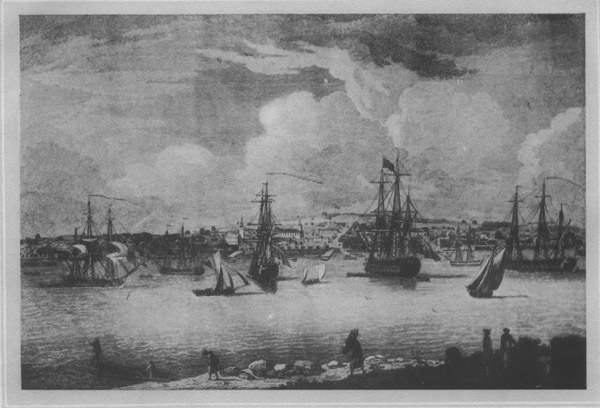
Halifax and Harbour from Dartmouth about 1760 Drawn on the spot by Richard Short
Haldimand, Louis. Hd Nephew of Sir Frederick Haldimand, 88; his arrival and reception in Boston, 109; promoted, 110, 294; his debts, 312.
Haldimand, Pierre. Hd Nephew of Sir Frederick Haldimand, joins him in Florida, 72; placed in charge of seigniory of Pabos, 73, 111; appointed ranger of the woods, 294; death of, 294.
Haldimand, William. Hd Grand-nephew of Sir Frederick Haldimand; and director of Bank of England, 343.
Haldimand Papers. Hd In Canadian Archives, 319, 320.
Haliburton, Thomas Chandler (1796-1865). Born at Windsor, Nova Scotia. Educated at the Grammar School and at King's College there. Called to the bar and practised for a time at Annapolis. Represented the county of Annapolis in the Nova Scotia Legislature, and in 1829 appointed district judge of the Court of Common Pleas. In 1841 transferred to the Supreme Court. Resigned in 1856, and removed to England, where three years later, entered Parliament as member for Launceston. Died at his home, Gordon House, on the Thames. Index: H Contributes to Nova Scotian, 9; his History of Nova Scotia published by Joseph Howe, a financial failure, 10; friendship for Howe, 10; sails for England with Howe, 267; Howe's poetical toast to, 267-268. Md Advocates Confederation, 96. Bib.: Works: An Historical and Statistical Account of Nova Scotia; The Clockmaker, or The Sayings and Doings of Samuel Slick of Slickville; Bubbles of Canada; Reply to the Report of the Earl of Durham; Letter-bag of the Great Western, or Life in a Steamer; Attaché, or Sam Slick in England; Old Judge, or Life in a Colony; English in America; Traits of American Humour; Wise Saws and Modern Instances; Americans at Home; Nature and Human Nature; Address on the Present Condition, Resources, and Prospects of British North America; Season Ticket. Brief biographies are found in Dict. Nat. Biog.; Morgan, Bib. Can.; Allibone, Dict. Eng. Lit.; Calnek and Savery, History of the County of Annapolis; Chasles, Études sur Littérature des Anglo-Americains; Crofton, Haliburton: a Centenary Chaplet. See also last-mentioned volume for a bibliography of the various editions of his works and a list of articles, in books and magazines, on the man and his works; also A. H. O'Brien's exhaustive bibliography, in R. S. C., Trans., 1909.
Halifax. A seaport, and the capital of Nova Scotia; founded in 1749 and named after the Earl of Halifax, then president of the Board of Trade. The first settlers were brought out from England in that year by Governor Cornwallis, in thirteen transports; following year made the capital of the province (then including New Brunswick), instead of Annapolis; in 1842 incorporated as a city; became, with its fortifications, observatory stations, harbour mines, etc., one of the fortresses of the Empire and the chief British naval station in North America; garrisoned by Imperial troops until 1905, when they were withdrawn and replaced by a Canadian garrison. Index: H Birthplace of Joseph Howe, 1; the North-West Arm, 1; Melville Island, 5; newspapers (see Chronicle; Acadian; Nova Scotian); municipal government in, in 1835, 20; Howe's trial for libelling magistrates of the city, 21, 29; represented by Howe and Annand, 1836, 29; bill for incorporation of, 69; Howe re-elected for, 73; James MacNab elected for, 106; railway communication with Windsor, 118. Bib.: MacMechan, Halifax in Books, a collection of pen-pictures of Halifax and its people by many writers from Edmund Burke to Rudyard Kipling, and including Marsden, Narrative; Tom Moore, Letters; McGregor, Maritime Colonies of British America; Moorsom, Letters from Nova Scotia; Sleigh, Pine Forests; Mrs. Williams, Neutral French; Marryat, Frank Mildmay; Dickens, American Notes; Johnston, Notes on North America; Cozzens, Acadia; Sladen, On the Cars and Off; Haliburton, Nova Scotia; Thomas B. Akins, History of Halifax (Nova Scotia Hist. Soc. Trans., vol. 8); Mackay, Sketch of City of Halifax, in Canada: An Ency., vol. 5; Regan, Sketches and Traditions of the North-West Arm; Selections from the Public Documents of Nova Scotia, ed. by Akins.
Halifax Award. The treaty of Washington having provided for a commission, to settle the compensation due Canada by the United States for the use of her fisheries, in 1877 the United States appointed E.H. Kellogg, Canada appointed Sir Alexander Galt, and these two agreed upon M. Delfosse, Belgian minister to Washington, as a third. The commission met at Halifax, and after long and careful deliberation, decided that Canada should be paid $5,500,000, the American commissioner protesting. The award was paid, after some delay. See Washington, Treaty of. Bib.: Record of the Proceedings of the Halifax Fisheries Commission, 1877.
Hall, Major George D. Sy Appointed military secretary and aide-de-camp, 152.
Halliburton, Sir Brenton (1773-1860). H Chief-justice, of Nova Scotia, presides at trial of Joseph Howe for libel, 24; contest for his office, 168; his son challenges Howe, because of supposed insulting references to the father, 236. Bib.: Hill, Memoir of Sir Brenton Halliburton; Campbell, History of Nova Scotia.
Halliburton, John Croke (1806-1884). Eldest son of Sir Brenton Halliburton, chief-justice of Nova Scotia. Called to the bar, 1829; appointed deputy-clerk of the Legislative Council, 1830, and clerk, 1838. In early life challenged Joseph Howe to a duel, but neither of the duellists injured. Index: H Challenges Joseph Howe, 236; the duel, 236-244.
Haly, Sir William O'Grady (1811-1878). Entered the army, 1828. Served with distinction in the Crimea and in India. Created K.C.B., 1855. Appointed commander-in-chief of the forces in British North America, 1873. Acted as administrator of the government of Canada during the absence of Lord Dufferin, 1875. Attained the rank of general, 1877. Died in Halifax.
Hamilton. City of Ontario, on Burlington Bay, west end of Lake Ontario. Laid out and settled, 1813, by George Hamilton, from whom it takes its name. Index: BL Early municipal government of, 298, 300. Bib.: Lovell, Gazetteer.
Hamilton, Alexander (1757-1804). American statesman. Index: Dr Anxious to keep on good terms with Britain, 286; Talleyrand's opinion of, 287. Bib.: Hamilton, Life of Alexander Hamilton. For further biog., and bibliog. of works by and of him, see Cyc. Am. Biog. and Lit. Am. Hist.
Hamilton, John (1801-1882). Born in Queenston, Ontario. Removed to Kingston, 1840. Throughout his life largely interested in inland navigation, and the first to introduce iron vessels on Canadian waters. Sat in the Legislative Council of Upper Canada, 1831-1841; in the Legislative Council of Canada, 1841-1867; and in the Senate from 1867 until his death. On the completion of his fiftieth year of continuous service in the Upper Chamber, presented with an address of congratulation by his fellow-senators.
Hamilton, Henry. Lieutenant-governor of Detroit during Revolutionary War; captured at Vincennes, 1779, and imprisoned. Retired from the army, 1783; lieutenant-governor of Quebec, 1784-1785; governor of Bermuda, 1790-1794. Died in Antigua, 1796. Index: Hd Governor of Detroit, occupies Vincennes on Wabash, 167; captured and imprisoned by Americans, 168; made lieutenant-governor of Quebec, 314. Died, 1796. Bib.: Cyc. Am. Biog.; Shortt and Doughty, Constitutional Documents of Canada.
Hamilton, Paul (1762-1816). Bk United States secretary of the navy, 173. Bib.: Cyc. Am. Biog.
Hamilton, Pierce Stevens (1826-1893). Studied law, and called to the bar, 1851. Entered journalism, and edited Acadian Recorder, 1853-1861. Appointed chief commissioner of mines for Nova Scotia. An early advocate of Confederation. Index: B Advocates Confederation, 129. T His views on union of the colonies, 65-66. Bib.: Works: Union of the Colonies of British North America; Feast of Ste. Anne and other Poems.
Hamilton, Robert. S Member of Legislative Council, 79; accused by Simcoe of "republicanism," 97; visits England and takes legal advice respecting land matters in Upper Canada, 103; his house at Queenston, 179; entertains Prince Edward, 184; appointed lieutenant of county of Lincoln, 198.
Hammond, George (1763-1853). S British minister at Philadelphia, consulted by Simcoe on the situation, 134, 144. Bib.: Dict. Nat. Biog.
Hampton, Sir John Somerset Pakington, first Baron (1799-1880). Sat for Droitwich in British Parliament, 1837-1874; secretary for war and colonies, 1852; first lord of Admiralty, 1858 and 1866; secretary for war, 1867-1868. Index: E Opposes the secularization of Clergy Reserves, 165, 166, 167. B And the Clergy Reserves, 59. Bib.: Dict. Nat. Biog.
Hancock. Bk Private of 41st, first man killed in War of 1812, 236.
Hancock's House. S Skirmish at, 24.
Handy, Henry S. Mc Commander of "patriot" army, 427; quarrels with "General" Sutherland, 427; occupies Sugar Island, 428; put to flight, 428; forms new plot to revolutionize Canada, 437; its extent, 438; failure of, 439. Bib.: Dent, Upper Canadian Rebellion.
Hanington, Daniel (1804-1889). Sat for over half a century in one or other of the branches of the New Brunswick Legislature. Elected to Assembly, 1834, for Westmoreland, which he represented up to 1862. A member of the Executive Council under Sir Edmund Head; Speaker of the Assembly for several years; appointed to the Legislative Council, 1867, and president of that body, 1883-1886. Bib.: Morgan, Can. Men; Hannay, History of New Brunswick.
Hanington, Daniel Lionel (1835-1909). Born at Shediac, New Brunswick. Called to the bar, 1861; in 1870 entered the New Brunswick Assembly, representing Westmoreland until 1874; and reëlected, 1878; member of the Executive Council, 1878; premier of the province, 1882; resigned, 1883. In 1892 appointed a puisne judge of the Supreme Court of New Brunswick. Index: T Elected Speaker of New Brunswick Assembly, 30. Bib.: Hannay, History of New Brunswick.
Hanks, Captain. Bk Surrenders Michilimackinac, 211; killed at Detroit, 255.
Hanna, James. D Voyage of 1785, 22; on enormous profits of sea-otter trade, 22.
Hanna, Michael (1821-1882). Born in Ireland. Came to Canada, 1839, and completed his studies at St. Mary's College. Ordained to the priesthood, 1845. Held various charges in Nova Scotia. Subsequently became vicar-general of the diocese of Halifax and archbishop, 1877. Died in Halifax.
Harding, James A. T Returned for St. John, 25, 30, 43.
Hardy, Arthur Sturgis (1837-1899). Born at Mount Pleasant, Ontario. Studied law, and called to the bar of Upper Canada, 1865; practised his profession at Brantford; Q. C., 1876. Elected to the Ontario Legislature, 1873; provincial secretary, 1877; commissioner of crown lands, 1889; premier, 1896. Bib.: Morgan, Can. Men; Biggar, Sir Oliver Mowat.
Hargrave, James. Chief factor of the Hudson's Bay Company. Index: MS In charge of York Factory, 226; correspondence with Rev. Wm. Cochrane, 227; made chief trader, 1833, and chief factor, 1844, 227; Simpson's letters to, 261-262. Bib.: Bryce, Hudson's Bay Company.
Harlay, de. L Archbishop of Rouen, desires ecclesiastical jurisdiction over Canada, 133; called to the see of Paris, 134; desires to bring diocese of Quebec under his jurisdiction, 184.
Harmon, Daniel Williams. Born in Vermont. Entered service of North West Company, 1800, at Montreal, and left immediately for the western fur country. Returned to the east in 1819, bringing with him his Journals, covering this period, which were edited by Daniel Haskel, of Burlington, Vt., and published at that place in 1820; reprinted in New York, with a brief introduction, 1903. Returned to the West, and remained there several years, finally settling with his native wife and family on the shores of Lake Champlain. One of his daughters conducted a private school in Ottawa for many years. Index: D Stuart's lieutenant in New Caledonia, 98. Bib.: Journal of Voyages and Travels in the Interior of North America. For biog., see Bryce, Hudson's Bay Company; Laut, Conquest of the Great North-West; Burpee, Search for the Western Sea.
Haro, Gonzalez Lopez de. D Finds Russian establishments, 38. Bib.: Bancroft, North-West Coast.
Harrison, Robert Alexander (1833-1878). Studied law, and appointed to crown law department of Upper Canada, 1854. Retired, 1859, and practised in Toronto. Member for Toronto in first Dominion Parliament, 1867-1872. Chief-justice of the Court of Queen's Bench, Ontario, 1875-1878. One of the arbitrators in Ontario boundary dispute, 1878. Author of many legal works; and edited Poker, a humorous paper, 1859-1860. Index: B His connection with the contempt of court suit against George Brown, 249-254. Md Chief-justice, serves on Ontario Boundary Commission, 255. Bib.: Dent, Can. Por.; Read, Lives of the Judges.
Harrison, Samuel Bealey. Sy Provincial secretary for Upper Canada, 283; his resolutions on responsible government, 310, 311. BL Provincial secretary for Upper Canada, 1841, 76; a moderate Liberal, 78; Baldwin's confidence in, 78; retains office under La Fontaine-Baldwin administration, 134; Constitutional Society of Orillia recommends his dismissal, 167; member for Kingston—opposes transfer of capital to Montreal, and resigns as provincial secretary, 182; Gowan predicts his dismissal from office, 187. Mc Moves resolution for responsible government, which carries, 408. Bib.: Dent, Last Forty Years.
Harrison, T. T. J. Mc His account of the Haldimand election, 487.
Harrison, William Henry (1773-1841). Ninth president of the United States. Index: Bk United States general, his Tippecanoe exploit, 174-176. Bib.: Cyc. Am. Biog.
Harvey, Sir John (1778-1852). Entered the British army, and saw active service in Holland, France, at the Cape of Good Hope, Ceylon, India, and Egypt. In 1812 deputy adjutant-general of the army in Canada, and defeated the American generals Chandler and Winder at Stoney Creek. Took part in the battles of Lundy's Lane, Fort Erie, and Chrystler's Farm. In 1815 aide-de-camp to the Duke of Wellington, and fought at Waterloo. In 1837-1841 governor of New Brunswick; governor and commander-in-chief of Newfoundland, 1841-1846; and governor of Nova Scotia, 1846-1852. Buried at Halifax. Index: Md Governor of Nova Scotia, Grey's despatch on responsible government, 33; text of the despatch, 47-50. BL Earl Grey's despatch to, on responsible government in Nova Scotia, 269-272. H Appointed lieutenant-governor of Nova Scotia, 103; his broad views on responsible government, 112-113; his correspondence with Earl Grey as to proposed Intercolonial Railway, 124; his death, 143. W Succeeds Sir Archibald Campbell as lieutenant-governor, 47; assents to Civil List Bill, 47; on tenure of public office, 57, 113; his connection with the Aroostook War, 135. Bib.: Morgan, Cel. Can.; Lucas, Canadian War of 1812; Hannay, History of New Brunswick; Campbell, History of Nova Scotia; Saunders, Three Premiers of Nova Scotia.
Hatheway, George L. T Chief commissioner of the Board of Works, New Brunswick, 86; deserts the government and runs as opposition candidate in York, 86; deserts Anti-Confederates, in 1866, 108.
Haultain, Frederick William Gordon (1857- ). Born in Woolwich, England. Educated at Montreal High School, Peterborough Collegiate Institute, and the University of Toronto. Called to the bar of Ontario, 1882; removed to the North-West Territories and settled at Fort McLeod, 1884. Elected to the North-West Council, 1887, and to the first Territorial Assembly, 1888. Member of the Advisory Council, 1888; Territorial premier, 1897; held office until the formation of the provinces of Alberta and Saskatchewan, 1905. Bib.: Begg, History of the North-West; Morgan, Can. Men; Canadian Who's Who.
Haviland, T. H. (1822-1895). Born at Charlottetown, Prince Edward Island. Studied law and called to the bar of Prince Edward Island, 1846; elected to the Assembly for Georgetown the same year; member of the Legislative Council, 1870; colonial secretary in the provincial government, 1859-1862, 1866-1867, 1870-1872; solicitor-general, 1865; Speaker of the Assembly, 1863-1864; provincial secretary, 1873-1876; called to the Senate, 1873; lieutenant-governor of Prince Edward Island, 1879. Index: T Delegate from Prince Edward Island to Quebec Conference, 77. Bib.: Dent, Can. Por.
Hawke. B His evidence on land grants in Upper Canada, 53-54.
Hay, Charles. Hd Imprisoned on charge of treason, 279.
Hay, Jehu. Hd Lieutenant-governor of Detroit, 158.
Hay, Robert. Mc Generosity of, 505.
Hayes Route. The main route of the fur traders, from Hudson Bay to Lake Winnipeg and the interior. It was adopted at a very early date, the more obvious route by way of Nelson River having proved impracticable. The Hayes route runs up Hayes River to Oxford Lake, and thence by a series of small lakes and rivers over the height of land and down the Echimamish River to Little Playgreen Lake, and Lake Winnipeg. York Factory stands at the Hudson Bay end of the route, and Norway House at the entrance to Lake Winnipeg.
Hazen, John Douglas (1860- ). Born in Oromocto, New Brunswick. Educated at the University of New Brunswick; studied law and called to the bar of New Brunswick, 1883. Alderman of Fredericton and mayor for two years. Elected to the House of Commons for St. John City and County, 1891; but defeated, 1896. Elected to the New Brunswick Assembly for Sunbury, 1899; chosen leader of the opposition in the Assembly; premier and attorney-general, 1908. Bib.: Morgan, Can. Men; Canadian Who's Who.
Hazen, Moses. Dr Brings news of Arnold's attack on St. Johns, 34. Hd A rebel spy, 130; mentioned by Haldimand in despatch, 132-133.
Hazen, Robert Leonard (1806-1874). Born in St. John, New Brunswick. Studied law and called to the bar, 1832; sat for St. John in New Brunswick Assembly, 1837-1848; in Legislative Council, 1848-1867; member of Executive Council without portfolio, 1844-1854, and again, 1856-1857; called to the Senate, 1867; judge of Vice-Admiralty Court of New Brunswick, 1846-1874. Index: W On responsible government, 63-64; appointed to Executive Council, New Brunswick, 72; resigns, 76; referred to in Wilmot's speech, 104, 105, 106, 108, 109, 110. T Member of Gray-Wilmot ministry, 41. Bib.: Parl. Comp., 1873; Hannay, History of New Brunswick.
Hazen's Rangers. WM In battle of the Plains, 257.
Head, Sir Edmund Walker (1805-1868). Fellow of Merton College, Oxford, 1830-1837; lieutenant-governor of New Brunswick, 1847; governor-general of Canada, 1854-1861. Afterwards appointed a civil service commissioner and elected governor of the Hudson's Bay Company. Index: Md Calls upon Taché to form ministry, 80; suggests Bytown (Ottawa) as capital, 85. E Succeeds Elgin as governor-general, Dec. 19, 1854, 203; Elgin's opinion of, 208; visits Elgin, 239. B Sends for George Brown to form ministry—relations with, 101-105, 108. R Requests report on separate school question from Ryerson, 234. W On reducing number of judges in New Brunswick, 129, 130; and Wilmot, 131. T Judicial appointments, 31; and Confederation question, 63. Bib.: Morgan, Cel. Can.; Dent, Can. Por. and Last Forty Years; Dict. Nat. Biog.; Pope, Memoirs of Sir John A. Macdonald; Mackenzie, Hon. George Brown.
Head, Sir Francis Bond (1793-1875). Served in Royal Engineers at Waterloo; travelled in South America, 1825-1826; appointed lieutenant-governor of Upper Canada, 1835-1837; made privy councillor, 1867. Index: Mc Governor of Upper Canada, states his position on responsible government, 22; Durham says he purposely invited rebellion, 23; his instructions on taking office, 263; makes public a confidential despatch, 280; arrives in Canada, 291; his appointment, 291; states his position, 293; appoints three executive councillors, 294; Council resigns, 294; his views of responsibility, 295; censured by committee of the House, 296; House adopts the report, 297; refuses supplies, 297; he replies to address of deputation, 298; deputation's reply, 300; appoints four new councillors, 300; schooled by Lord Glenelg, 301; joins Family Compact, 302; dissolves the House, 303; refuses assent to money bills, 303; interferes in elections, 304; insults Glenelg, 304; denounces Robert Baldwin, 305; quarrels with imperial commission of inquiry, 305; refuses to obey Lord Glenelg, 307; W. J. Rattray on, 307; his success in the elections, 308; unscrupulous influence in, 309; Lord Durham on, 309; some of his addresses, 313; charged with undue influence in, 313; sustained by partisan House, 314; refuses offer of troops, 353; invites revolt, 354, 355; prepares to escape, 364; sends flag of truce, 368; offers reward for Mackenzie's apprehension, 380; orders burning of property, 381; seeks Mackenzie's extradition, 415. Sy Recall of, 109. BL Comes as governor, 16, 32; his appointment, 35; his character, 36; his arrival in Toronto, 37; relations with the Reformers, 37; appoints Baldwin, Rolph, and Dunn to the Council, 38; their resignation, 41; quarrels with Reform party, 41-42; dissolves Assembly and throws his influence on Tory side in the elections, 41-42; wins the election, 42; his Tory Parliament, 62; attitude towards colonial self-government, 64; Draper a member of his Council, 77; compared to Bagot, 151. R His instructions, 112; his conciliatory promises not fulfilled, 113; end of his administration, 114; advances funds to Upper Canada Academy, 142-143. E An unfortunate choice as governor, 1; and the Upper Canada Rebellion, 22. Bib.: Works: Narrative; The Emigrant; Journeys in the Pampas and Andes; Life of Bruce, the Traveller; Life of Burgoyne. For biog., see Morgan, Cel. Can.; Dict. Nat. Biog.; Read, Lieutenant-Governors of Upper Canada and Rebellion of 1837; Dent, Can. Por. and Upper Canadian Rebellion; Lizars, Humours of '37; Fitz Gibbon, A Veteran of 1812; Robinson, Sir John Beverley Robinson; Ryerson, Story of my Life; Egerton and Grant, Canadian Constitutional Development; Durham, Report; Lord Glenelg's Despatches to Sir F.B. Head, London, 1839.
Hearne, Samuel (1745-1792). Came to Fort Prince of Wales on the Hudson's Bay Company's ship Prince Rupert. Under instructions from the Company, and after two abortive attempts, set forth in December, 1770, on his memorable journey to the mouth of the Coppermine River, which he reached in July of the following year. Returning by way of Great Slave Lake, arrived at Fort Prince of Wales in June, 1772. Two years later sent to the Saskatchewan, where he built Cumberland House. On his return in 1775, appointed governor of Fort Prince of Wales, and still in charge when the fort was captured by La Perouse in 1782. Brief accounts of his journey published after his return from the Coppermine, and some of his statements severely criticized by Alexander Dalrymple. The complete account of the expedition did not appear until three years after his death. Index: MS Sent inland by Hudson's Bay Company, 3; discovers Coppermine River and Great Slave Lake, 3, 31; builds Cumberland House, 4; magnitude of his explorations, 31; his guide Matonabee, 32. D His expedition to Coppermine River made on behalf of Hudson's Bay Company, 51; his discoveries known to Alexander Mackenzie, 53. Bib.: Works: Journey from Prince of Wales Fort in Hudson's Bay to the Northern Ocean, etc., 1769-1772 (Lond., 1795). New ed., edited by J. B. Tyrrell, Champlain Soc., 1910; French trans. by M. Lallemant in 2 vols. (Paris, 1799). Also, abridged in Mavor's collection of Voyages, xxiv, 1-66. Brief accounts of Hearne and his explorations will be found in Bryce, Hudson's Bay Company; Willson, Great Company; Laut, Pathfinders of the West and Conquest of the Great North-West; Burpee, Search for the Western Sea.
Heath, General William (1737-1814). Dr Commissioner on American side for exchange of prisoners, 208. Bib.: Cyc. Am. Biog.
Heathfield, George Augustus Eliott, first Baron (1717-1790). Defender of Gibraltar. Index: Hd His marriage, 316. Bib.: Dict. Nat. Biog.
Heavysege, Charles (1816-1876). Born in Liverpool, England. Came to Canada, 1853. Settled in Montreal, and engaged in his trade of cabinet-making. Afterwards connected with the staff of the Witness. Author of a number of dramas, the most remarkable of which was Saul. Bib.: For his works, see James, Bibliography of Canadian Poetry. For biog., see Burpee, Charles Heavysege (R. S. C., 1901); Rose, Cyc. Can. Biog.; MacMurchy, Canadian Literature.
Hébert, Anne. Eldest daughter of Louis Hébert, Quebec; married to Stephen Jonquest in the autumn of 1617, Father Le Caron officiating. This was the first marriage in New France. Index: Ch Her marriage, 113; her death, 117.
Hébert, Guillaume. Ch Son of Louis, 146.
Hébert, Louis. Came from Paris to Acadia, 1604; mentioned there in 1610, and again in 1613-1614. Returned to France, and in 1617 came to Quebec, becoming the first permanent settler in New France. Died 1627. Index: F First regular settler at Quebec, 16. Ch Consents to accompany Champlain to Canada, 111, 112; a valuable member of the colony, 112; signs complaint of the inhabitants, 136; his family, 146; previous life, 147; death of, 148; a native of Paris, 250; receives fief of Sault au Matelot, 251. Bib.: Colby, Canadian Types of the Old Régime; Douglas, Old France in the New World.
Hébert, Guillemette. Ch Wife of Guillaume Couillard, 146.
Hébert, Madame. Ch Mass celebrated in her house on restoration of Quebec, 225.
Heceta, Bruno. Commanded Spanish expedition to North-West Coast, 1775. Index: D Discovers mouth of Columbia, 14, 15. Bib.: Bancroft, History of the North-West Coast.
Helmcken, John Sebastian. Born in England, 1832. Studied medicine and admitted a member of the Royal College of Surgeons, London, 1848. Appointed surgeon at Vancouver Island by Hudson's Bay Company; first magistrate appointed in the colony. As magistrate stationed at Fort Rupert, where the miners were very unruly. In 1856 elected for Esquimalt district to the first Legislature of the colony; took a very active part in its deliberations; and became Speaker. Member of Executive Council, 1864-1871. Opposed Confederation in 1870. Sent to Ottawa the same year as one of the delegates to negotiate terms of union. Index: D Speaker of first Legislature of Vancouver Island, 210. Bib.: Morgan, Can. Men; Begg, History of British Columbia.
Henderson, Captain. Dr With crews of two war vessels assists in defence of Quebec, 112.
Henderson. WM Private of grenadiers, helps to carry Wolfe off the field, 200.
Hennepin, Louis. Born in Ath, Belgium, about 1640. Entered order of Récollets. Sailed for Quebec, 1675. Stationed at Fort Frontenac, 1676. Accompanied La Salle to the West, 1678. From Fort Crèvecœur (Peoria, Ill.), in 1680, descended the Illinois and explored the upper waters of the Mississippi. Captured by the Sioux and carried to their country. After eight months, rescued by Du Lhut (q.v.), passed the winter at Michilimackinac, and returned to Quebec, 1682. Apparently satisfied with his adventures in the wilderness, returned to Europe, and settled in Holland, where devoted himself to the preparation of a series of narratives of his explorations, real and imaginary. Died there about 1706. Bib.: Works: Description de la Louisiane, etc.; Nouvelle Découverte, etc.; Nouveau Voyage, etc. For biog., and bibliog. details of Hennepin's works, see Thwaites's edition of the New Discovery, 1903. See also Parkman, La Salle.
Henri. Ch Servant of Madame Hébert, murdered by Montagnais Indian, 164.
Henrietta of France, Queen of England. Ch Dowry of, 216.
Henry IV, King of France (1553-1610). Succeeded Henry III in 1589. Index: F Assassination of, 11. Ch Assassinated, 64. Bib.: Chambers, Biog. Dict.
Henry, Alexander, the Elder (1739-1824). One of the pioneer fur traders in north-western America. Born in New Jersey. Entered the fur trade as a young man, 1760, or perhaps earlier. His Travels and Adventures open in that year and describe his experiences in the West for the following sixteen years. Sailed for Europe in 1776, where he made the acquaintance of Sir Joseph Banks, president of the Royal Society, and had an opportunity of describing his adventures to Marie Antoinette. Afterwards settled in Montreal as a merchant. Index: MS Leaves Montreal for western fur country, 3. Bib.: Travels and Adventures in Canada and the Indian Territories, New York, 1809; new ed., with biog. and other notes, by James Bain, Toronto, 1901. See also Burpee, Search for the Western Sea.
Henry, Alexander, the Younger. Nephew of preceding. Entered service of North West Company about 1792. His Journal, the original manuscript of which is in the Library of Parliament at Ottawa, and which was published in 1897, with introduction and elaborate notes by Elliott Coues, contains an account of his western travels and experiences, 1799 to 1814. Drowned near Fort George, at the mouth of the Columbia, May 22, 1814. Bib.: Works: New Light on the Early History of the Greater North-West; The Manuscript Journals of Alexander Henry and David Thompson, ed. by Elliott Coues, New York, 1897. See also Burpee, Search for the Western Sea; Bryce, Hudson's Bay Company.
Henry, John. Bk His mission to the New England states, 120; use made of his letters, 120; referred to in message of Madison to Congress, 186, 187; sells his letters to United States government, 187. Bib.: Cyc. Am. Biog.
Henry, Patrick (1736-1799). American statesman. Index: Dr His rhetorical exaggerations, 197. Bib.: Cyc. Am. Biog.
Henry, William Alexander (1816-1888). H Solicitor-general, Nova Scotia—becomes provincial secretary, 1856, 157; resigns from government, 164; delegate to Charlottetown Conference, 177. T Delegate from Nova Scotia to Charlottetown Conference, 73; and to Quebec Conference, 76. Bib.: Campbell, History of Nova Scotia.
Herald. Newspaper published at Montreal. Established 1808. Index: BL On debate on responsible government in Legislature, 1841, 94-95.
Herald. Newspaper published at Toronto. Index: BL Account of scene in Parliament, 1842, 126-127.
Herbin. WM Commands the Montreal militia with Prud'homme, 105.
Heriot, George (1766-1844). Born in Island of Jersey. Came to Canada, and appointed a clerk in the ordnance department at Quebec, 1799; deputy postmaster-general of British North America, 1800; and afterwards postmaster-general. Served in the War of 1812; second in command under De Salaberry at Chateauguay; major-general, 1841. Bib.: Works: History of Canada; Travels through the Canadas. For biog., see Cyc. Am. Biog.
Hermione. Bk British war vessel, mutiny of crew, 11.
Hermitage at Caën. L Laval passes three years at, 25.
Hersault, Mme. See Camaret, Marie.
Hertel, François. F Commands Three Rivers war party, 235; his old age, 235; leader in massacre of Salmon Falls, 251; joins De Portneuf in attack on Fort Loyal, 251. Bib.: Parkman, Frontenac.
Hertel, Jacques. Ch Interpreter, 144; arrives from France in 1613, 144.
Hertel de Rouville. Dr Appointed judge, 183.
Hervey, William (1732-1815). British soldier. Spent the eight years 1755-1763 in North America. Bib.: Journals of the Hon. William Hervey in North America and Europe from 1765 to 1814, with Order Books at Montreal, 1760-1763.
Hessians. Hd Established near Cataraqui, 265. Dr Applications from, for land grants, 218.
Hey, William. An English lawyer; succeeded William Gregory as chief-justice of Quebec, 1766. Went to England, 1773, in connection with the Quebec Act, and did not return to Canada until 1775. Left Canada finally the same year, having been elected to the British House of Commons for Sandwich, in 1774. Vacated his seat in 1776, and appointed a commissioner of customs. Died, 1797. Index: Dr Chief-justice, not favourable to Walker, 37, 39; called as witness in connection with the Quebec Act, 63; evidence of, before House of Commons, 68; makes strong appeal to British at Montreal, 88. Bib.: Morgan, Cel. Can.; Lucas, History of Canada; Bradley, Making of Canada; Egerton and Grant, Canadian Constitutional Development; Shortt and Doughty, Constitutional Documents of Canada.
Hickson, Sir Joseph (1830-1897). Born at Otterburn, England. After some years' practical experience on various English railways, came to Canada, 1862, as chief accountant of the Grand Trunk. Subsequently promoted to the office of secretary of the company; general manager, 1874. Between that year and 1890, when he retired, succeeded in bringing the Grand Trunk to the first rank among the railways of the continent.
Higginson, Captain. Private secretary to Sir Charles Metcalfe. Index: BL His interview with La Fontaine—discusses constitutional government, 172-173, 174, 175, 176.
Highlanders. WM In battle of Ste. Foy, 259, 260.
Hill, G. S. W Member for Charlotte, in New Brunswick Assembly, nominates Wilmot for speakership, 66.
Hill, P. C. H Member of first Nova Scotia government after Confederation, 198.
Hincks, Sir Francis (1807-1885). E Appointed inspector-general by Sir Charles Bagot, 31; on Metcalfe, 38; returned in elections of 1848, 50; becomes inspector-general in La Fontaine-Baldwin ministry, 53; Ryerson's letter to, 90; his capacity for discreet, practical statesmanship, 93; his influence on railway construction, 99, 100; controversy with Howe, 101; his character and influence, 107; forms ministry, 107-108; makes concessions to leaders of Clear Grits, 112; inspector-general in Hincks-Morin ministry, 113; Brown's attitude to, 114; and the Grand Trunk, 115; and the Clergy Reserves, 119; attacked by Garneau, 123; bitterly attacked by Brown, 125; reorganizes government, 125-126; his government defeated, 127; relations with John Sandfield Macdonald, 128; on the appeal to the country in 1854, 133; result of the elections, 133-134; elected in two constituencies, 134; and the speakership in 1854, 135-136; resignation of ministry, 136; leader of the Liberals, 138; supports MacNab-Morin Liberal-Conservative government, 140, 141; visits London, 1852, 156; his views on Clergy Reserves, 163, 165, 166, 196; appointed governor of Barbados, 220; becomes governor of British Guiana, 220, 222; made Commander of the Bath, 222; his retirement from Imperial service, 1869, 222; receives knighthood, 222; returns to Canada, and becomes finance minister in Sir John Macdonald's ministry, 223; his final retirement from public life, 223; his character and his closing years, 223-224; writes his Reminiscences, 224; his death at Montreal, 1885, 224. Sy Publisher of Examiner, advocate of responsible government, 107; supports union of provinces as leading thereto, 212; his attitude on Clergy Reserves question, 247; supports useful legislation introduced by Sydenham, 296; finds Lower Canada Conservatives much more liberal than the "Liberals," 297; disapproves Baldwin's action, 298; a man of more political wisdom than Baldwin, 299; supports Local Government Bill, 323; partially adopts, as finance minister of the Dominion, Sydenham's idea of bank of issue, 330; Sydenham's high opinion of his financial abilities, 333; made inspector-general by Sir Charles Bagot, 333. B On Metcalfe's policy, 18-49; opposed by George Brown—Brown's letters to, 48-49, 54-55; protests against attitude of Derby government in England on Clergy Reserves, 59; his action in legislature, 59; and the University of Toronto Bill, 63; Brown acknowledges his services for responsible government, 67; warns George Brown that the logical conclusion of his course in Parliament was dissolution of the union, 70; his ministry defeated in June, 1854, 77; his retirement—supports MacNab-Morin government, 77; his argument against representation by population, 84; and the fight for responsible government, 261; his brief and troubled reign, 262. BL Associated with Baldwin, 32; born in Cork, Dec. 14, 1807—came to Canada, 1830, 32; early years, 32; his marriage, 34; manager of the Bank of the People, 34; friendship for Baldwin, 34; commercial interests, 34-35; on Head's appointment, 36; secretary of Constitutional Reform Society, 42; took no part in Rebellion of 1837, 44; establishes the Examiner, 58; supports Durham, 58; meets La Fontaine and Morin in Lower Canada, 63; and enters into correspondence with them, 63; elected for Oxford, 69; his address to the electors, 69; his attitude in the Legislature of 1841, 85; explains reasons for supporting Cavillier for speakership—challenges government to a vote, 87; presses government for a statement of policy on question of responsible government, 91; supports Neilson's motion against Union Act, 96; his speech, 96-97; supports government's policy as to public works, 98-99; defends Municipal Government Bill, 102-103; charged with desertion of his party, 102; repudiates charge, 103; explains his position in the Examiner, 104; votes for Municipal Bill, 105; Bagot makes him inspector-general, 118-119; address to his constituents, 119-120; his appointment criticized, 120, 121, 130; moves postponement of debate, 131-132; remains in office in La Fontaine-Baldwin government, 133, 134; Constitutional Society of Orillia recommends his dismissal, 167; on La Fontaine, 170; takes charge of fiscal and commercial legislation in the Assembly, 178-179; contemporary account of him, 178-180; Gowan predicts his dismissal, 187; burnt in effigy at Toronto, 187; his measure for protection of agriculture against competition of United States, 189; supports Baldwin, 214; severs his connection with Examiner, 1842—returns to newspaper work—edits Times, Montreal—establishes Pilot, 217-218; challenged to duel, 218; his letters to London Morning Chronicle, 218, 219, 220; exposes Wakefield's fallacies, 219-220; referred to by George Brown, 224; on Metcalfe, 230; in political controversy, 1844, 238; beaten in Oxford, 253; remains out of Parliament until 1848, 253; protests against election of his opponent, 253; on "double majority," 259; Draper's plan discussed, 261, 262; on Elgin, 275-276; elected for Oxford during his absence in Ireland, 279; inspector-general, 1848, 284; charged with commercial and economic measures in the Legislature, 301; his transportation policy, 301-302; advocates reciprocity, 302; Customs Act, 302; defends Rebellion Losses Bill, 317-318; requests Elgin to assent to Tariff Bill, 321; his house attacked by mob, 324; his letter to the Times, 327-330; strengthens Canada's credit in London market, 331; his letters to Daily Mail, 332; reconstructs the Reform government, 335; on the Reform party, 336; his letters and views on the Clergy Reserves, 347-348; his later career in Canada, Barbados, and Guiana, 358-359; his death, Aug. 18, 1885, 359; his Reminiscences, 359. H Confers with New Brunswick and Nova Scotia representatives on Intercolonial Railway, 142; goes to England to consult Imperial government, 142; quarrels with Sir John Packington, 143; arranges for construction of Grand Trunk Railway, 143; represents British North America at railway celebration, Boston, 1851, 250. R Forms opposition party with Baldwin, La Fontaine, and others, 122; his University Bill, 159-161; his opinion of the Roman Catholic School Bill, 222; and separate schools, 224. C Urges Cartier to enter Cabinet, 22. Mc On Welland canal, 265; befriends Mackenzie, 481; publishes Examiner, 483; his Reminiscences, 483; his estimate of Mackenzie, 484; becomes prime minister, 487. Md Forms ministry with Morin, 1851, 47; finance minister—succeeds Rose, 136; his political attitude, 136; defeated in election, 1872, 197; serves on Ontario Boundary Commission, 255. T Goes to England on Intercolonial mission, 26, 54; becomes minister of finance, 1869, 130; resigns, 133. Bib.: Works: Canada and its Financial Resources; Political History of Canada; Reminiscences of his Public Life. For biog., see Davin, The Irishman in Canada; Dent, Can. Por. and Last Forty Years; Taylor, Brit. Am.; Rose, Cyc. Can. Biog.; Dict. Nat. Biog.; Pope, Memoirs of Sir John A. Macdonald.
Hind, Henry Youle. Born in Nottingham, England, 1823. Travelled in Mexico, 1846. Came to Canada, 1847, and appointed lecturer in chemistry and natural philosophy at the Toronto Normal School, Toronto. Five years later became professor of chemistry and geology in Trinity College. Geologist to the Red River exploring expedition, 1857; and had charge of the expedition of 1858 to explore the country between Red River and the Saskatchewan. In 1860 carried out an exploration of a portion of Labrador peninsula. In 1854 resigned his chair at Trinity, and undertook a preliminary geological survey of New Brunswick; and in subsequent years carried out similar work for the government of Nova Scotia. In 1876 engaged by the Newfoundland government to report on northern cod banks, but abandoned this work to assist the Canadian government in preparing their case for the Halifax Fisheries Commission. Index: R On staff of Toronto Normal School, 174. Bib.: Works: Narrative of the Canadian Red River Exploring Expedition of 1857, and the Assiniboine and Saskatchewan Expedition of 1858; Sketch of the Overland Route to British Columbia; Explorations in the Interior of the Labrador Peninsula; Eighty Years' Progress of British North America (by Hind and others). For biog., see Morgan, Cel. Can. and Can. Men; Rose, Cyc. Can. Biog.
Hochelaga. An Iroquoian town situated, in 1535, on Montreal Island. The site is now covered by the city of Montreal. Cartier visited the town in the year mentioned, and describes it as encircled by a triple row of palisades, with galleries for the defenders. Within stood some fifty large oblong lodges, each housing several families. In 1603, when Champlain visited the place, nothing remained of the town, and Indians of a different stock occupied the island. Bib.: Cartier, Bref récit, etc.; Parkman, Pioneers of France; Fiske, New France and New England.
Hocquart, Gilles. Intendant of New France. Son of Jean-Hyacinthe Hocquart, chevalier, and seigneur d'Essenlis et de Muscourt. Held for a time the office of commissary of marine, and in 1729 obtained from the king a commission as commissary-general of New France. Arrived at Quebec in 1729; and in 1731 succeeded Dupuy as intendant. After nearly twenty years of service in New France, during which he devoted his energies unselfishly to the welfare of the colony, returned to France in 1748, and for some years filled the office of intendant at Brest. Appointed a councillor of state, 1753. Index: WM Receives Montcalm at Brest, 2. Bib.: Roy, Intendants de la Nouvelle France (R. S. C., 1903); Parkman, Half Century of Conflict.
Hodgins, John George (1821- ). Born in Dublin. Came to Canada, 1833. Educated at Upper Canada Academy, Victoria College, and Toronto University. Appointed to department of education of Upper Canada, 1844; secretary of provincial board of education; 1846; deputy superintendent of education, 1855; deputy minister of education, 1876-1889; librarian and historiographer of the education department since 1889. Index: R Graduate of Victoria College, 144; Ryerson's right-hand man, 179, 202; his estimate of children attending school in 1845, 189; objections noted to School Act of 1870-1871, 205; his history of separate schools in Upper Canada, 234; on Ryerson's last days, 295-296. Bib.: Works: Documentary History of Education in Upper Canada; Legislation and History of Separate Schools in Upper Canada. For biog., see Morgan, Can. Men; Canadian Who's Who.
Hodgson, Sir Robert (1798-1880). Born in Charlottetown, Prince Edward Island. Educated at Windsor, Nova Scotia, and called to the bar of Nova Scotia and of Prince Edward Island, 1819. Appointed judge of Probate and attorney-general for Prince Edward Island, 1828; president of the Legislative Council, 1840. Appointed chief-justice, 1852, and judge of the Court of Vice-Admiralty, 1853; resigned both offices to accept the lieutenant-governorship of Prince Edward Island, 1874. Held office until 1879. Died in Charlottetown. Bib.: Campbell, History of Prince Edward Island.
Holdernesse, Robert D'Arcy, fourth Earl of (1718-1778). WM Wolfe's letter to, 166. Bib.: Dict. Nat. Biog.
Holland. S Surveyor-general, Upper Canada, 178.
Holland. Hd Revolution in places William of Orange at head of affairs, 7. Bk British expedition to, under Duke of York, 13-22.
Holland House. Dr Occupied by Montgomery, 123.
Holmes, B. E. One of leaders of the Liberal party in Lower Canada, 50. Index: BL At farewell banquet to La Fontaine, 1851, 354.
Holmes, Charles (1711-1761). Third in command under Sir Charles Saunders (q.v.) before Quebec, 1759; commander-in-chief in West Indies, 1760-1761. Index: WM In command of second British fleet, 75; commands ships above Quebec, 152; movements of his fleet up and down the river, 160, 163, 171. Bib.: Dict. Nat. Biog.; Woods, Logs of the Conquest of Canada and The Fight for Canada; Parkman, Montcalm and Wolfe.
Holton, Luther Hamilton (1817-1880). Entered public life, 1854, as one of the members for Montreal; elected to Legislative Council, 1862; resigned, 1863, and returned to the Assembly as member for Chateauguay, which he represented to the time of his death; accepted portfolio of commissioner of public works in the short-lived Brown-Dorion government, 1858; minister of finance in the Macdonald-Dorion administration, 1863-1864. Index: E Signs Annexation Manifesto, 81; associated with Parti Rouge, 108; adopts less radical views, 134. B Enters George Brown's ministry, 102; Brown's letter to, on Confederation, 131; on English views of Canadian politics, 143; opposed to coalition, 160; opposes Confederation scheme, 185; George Brown takes up question of reciprocity with, 192; Brown urges that he be sent to Washington on reciprocity mission, 192; opposed to Brown entering coalition ministry, 199, 200-203; George Brown writes of his determination to leave public life, 245-246. C Countenances annexation movement in 1849, 44-45. Bib.: Dent, Can. Por. and Last Forty Years; Mackenzie, Hon. George Brown; Pope, Memoirs of Sir John A. Macdonald; Willison, Sir Wilfrid Laurier and the Liberal Party; Confederation Debates.
Holy Family. L Devotion to, encouraged by Laval, 86; commended by Leo XIII, 86.
Holy Scapulary. L Chapel dedicated to, in church at Quebec, 84.
Home Rule in Ireland. Md Resolutions on, in Canadian Parliament, 1882, 277.
Hope, Henry. Lieutenant-governor of Quebec, 1785-1789. Index: Dr Lieutenant-governor and administrator, receives Carleton on his arrival at Quebec, 222; death of, 249. Bib.: Shortt and Doughty, Constitutional Documents of Canada.
Hopkins, Caleb. B A leader of the Clear Grits, 39. E One of the leaders of the Clear Grits, 110.
Hopson, Peregrine Thomas. Early entered the army and advanced rapidly. Commander-in-chief of Louisbourg, when the place was restored to the French, 1649. Came to Halifax and appointed a member of the Council. Governor of Nova Scotia, 1752; went to England, 1753. Raised to the rank of major general, 1757. Commanded an expedition against the French West India Islands, 1758; died before Guadaloupe, 1759. Bib.: Campbell, History of Nova Scotia; Selections from the Public Documents of Nova Scotia, ed. by Akins.
Hornwork. WM A strong defence on left bank of St. Charles River, 207; panic among troops crowding into, 207.
Hospital Nuns. WM Take refuge in the General Hospital, 115.
Hosta, Captain d'. F Killed at Laprairie, 312.
Hôtel-Dieu Nuns. WM Take refuge in General Hospital, and render assistance there, 153; return to their convent, 237.
Hoüel, Louis, Sieur du Petit-Pré. Ch Consulted by Champlain as to obtaining missionaries for Canada, 83; assisted in forming Company of New France, 168; made director, 170.
House of Assembly. Hd British government prepared to grant, 174; Haldimand not favourable to, as matters stood, 195. Dr Of Lower Canada, agitation for, by English residents, 55, 60; opposition to by seigniors, 55; indifference of habitants, 55; Carleton's views on, 56; not provided for in Quebec Act, 64; meeting of, 269. W In New Brunswick, early character of, 6.
Houssart. L Devoted servant of Bishop Laval, 251; details furnished by, 251-253.
How, Edward. Member of the Council of Nova Scotia, 1744. Took part in the affair at Mines under Colonel Noble, 1747; severely wounded and taken prisoner, but afterwards exchanged. Confidential agent of the government in dealing with the Indians. Treacherously murdered by Indians, it is said, at the instigation of Le Loutre. Bib.: Selections from the Public Documents of Nova Scotia, ed. by Akins.
Howard, Joseph. Dr Accused in connection with Walker affair, 36; tried and acquitted, 38.
Howard, Lady Maria. Dr Carleton marries, 75; characteristics of, 77.
Howe, George Augustus, third Viscount (1724-1758). Came to Halifax, 1757, in command of 60th Regiment. Transferred to command of 55th same year, and promoted brigadier-general. Accompanied Abercromby to Lake George, 1758, and fell July 8, while leading his men in a skirmish at Fort Ticonderoga. See Abercromby; Ticonderoga. Index: Hd Killed at Ticonderoga, 18, 21. Bib.: Smith, Our Struggle for the Fourteenth Colony; Parkman, Montcalm and Wolfe; Bradley, Fight for North America; Cyc. Am. Biog.; Dict. Nat. Biog.
Howe, John. H Father of Joseph Howe; a United Empire Loyalist, 1; his son's tribute to his memory, 1-2, 4; his marriages, 2; becomes king's printer and postmaster-general, 3; educates his son, 3; his character, 4; religious views, 279.
Howe, Joseph (1804-1873). H Born at Halifax, 1804, 1; his father, John Howe, a United Empire Loyalist, 1, 2; his Southampton speech, 1851, 1, 2; his character, 3; his education, 3; a voracious reader, 3; tributes to his father, 2, 4; learns trade of printer, 4; early poems, 5; establishes the Acadian, 6; buys Nova Scotian, 6; extends its influence, 7; his Rambles, 8; his marriage, 8; The Club, 9; friendship for Haliburton, 10; political writings, 10,11; develops Liberal principles, 19, 20; attacks Halifax magistrates in his paper, 20; sued for libel, 1835, 21; pleads his own case, 22-25; his address to jury, 25-28; wins case, 28; elected to represent Halifax in Legislature, 1836, 29; his principles of government, 29-31; physical and mental characteristics, 31-33; his moral courage, 33; in Legislature, 1837, 36-44; debate on the resolutions, 41; moves address to crown, praying for responsible government, 45; his speech in Legislature, 1838, 47; advocates constitutional reform, but opposed to rebellion, 50, 51; his patriotic action in Maine boundary dispute, 52, 53; letters to Lord John Russell, 54, 55; his political principles, 59; moves want of confidence in Executive Council, 62; moves address to queen praying for recall of Sir Colin Campbell, 66; meets Poulett Thompson, 68; invited to a seat in the Council, 69; defends his action in accepting office, 72-73; re-elected for Halifax, 73; becomes Speaker of the House, 74; appointed collector of customs at Halifax, 74; resigns speakership, 75; question of ministerial responsibility, 75-76; his quarrel with the Baptists, 77-78; advocates compulsory education, 79-80; and a central, undenominational college, 82; the election of 1843, 84-85; resigns from the Cabinet, 86-87; attacks Lord Falkland through the newspapers, 90; assumes editorial management of the Nova Scotian and Morning Chronicle, 90; his first editorial, 91; described by Annand, 92; he lampoons Falkland in verse, 93; political tour of the province, 94; his speech at Cornwallis, 95-96; complimentary addresses, 96-97; speeches in the Legislature, 1845, 97-98; attacks Falkland in Legislature, 100-101; justifies his action in letter to his constituents, 101-102; again offered seat in the Council, 103; declines the offer, 104; moves his family from Halifax to Musquodoboit, 104-105; wins the election of 1847, 106-107; his character, 109; becomes provincial secretary in Uniacke government, 111; secures responsible government for Nova Scotia, 113; his reply to the manifesto of the British American League, 114-115; advocates railway from Halifax to Windsor, in 1835, 117; 120-121; favourable to government ownership of railways, 120, 123; sails for England to explain Intercolonial Railway project to the government, 125; his letters on the subject to Earl Grey, 125-126; his Southampton speech, 1851, 127-128; obtains Imperial guarantee of railway, 130-132; secures co-operation of New Brunswick and Canada, 134-138; predicts transcontinental railway, 135; given public dinners at Toronto and Montreal, 138; elected for Cumberland County, 1851, 139-141; brings down railway measures, 141; Intercolonial scheme blocked, 141-143; reverts to his original policy of building railways in Nova Scotia as a government work, 143; raises a provincial loan in England, 144; railway measures passed by Legislature, 145; becomes chief commissioner of railways, 146; visits United States to secure recruits for British army, 151-155; defeated by Tupper in Cumberland, 1855, 156; returned by acclamation for Hants County, 1856, 157-158; his open letter to Gladstone, 159; attacks Irish Roman Catholics, 160-162; results in defeat of government, 163-167; Liberals returned to power in 1859, 168; and Howe becomes premier, 169; appointed fishery commissioner for carrying out provisions of Reciprocity Treaty of 1854, 170; defeated, with his party, in election of 1863, 171; opposes Confederation, 173; an Imperial federationist, 174; declines to take part in Charlottetown Conference, 1864, 177; offered editorship of New York Albion, 182-183; his articles against Confederation, 186, 189; outlines grounds of his opposition, 190-191; continues the fight in London, 192; correspondence with W.J. Stairs, 192-197; works up Anti-Confederation sentiment in Nova Scotia, 199; his Bridgetown meeting, 200-202; sweeps the province in both Dominion and Provincial elections, 202; fight for repeal of the union, 203; meets Tupper in London, 205; hesitates as to further agitation for repeal, 207-210; rebukes Acadian Recorder for suggesting violence to Sir John Macdonald, 210-212; meets Macdonald at Halifax, 213; correspondence with Macdonald, 215-216; interview with Annand, 217-218; refuses overtures of repealers, 219-223; conference at Portland with A.W. McLellan, and Sir John Rose, 223-224; enters Dominion Cabinet, 1868, 225; re-elected in Hants, 226; visits Winnipeg, 1869, 227; correspondence in relation to Red River Rebellion, 227; his character as a statesman contrasted with that of Sir John Macdonald, 228-229; becomes lieutenant-governor of Nova Scotia, 1873, 229; visits England and the continent, 1838, 231; advocates ocean steamship service, 232-235; challenged by Dr. Almon, 236; and by John C. Haliburton, 236; justifies acceptance of the challenge in letter to his sister, 237-241; the duel, 241-242; letters to his wife and to the people of Nova Scotia, 242-244; Sir Rupert D. George's challenge, 244; his practical interest in the Micmacs, 245; opposes prohibition, 248-250; his speech at Boston, 1851, 250; his tribute to Edward Everett in 1857, 251; his Detroit speech of 1865 on trade relations, 252-254; acts as member of Prince Edward Island Land Grants Commission, 254-255; as a man of letters, 257-270; his poems, 260-268; oration at Shakespeare tercentenary, 264; his friendship for Haliburton, 267; his social qualities, 271; secret of his popularity, 272-274; his influence upon public men and public life, 277-278; his religious views, 279-280; his family, 282; as governor of Nova Scotia, 283-284; his death, 284; funeral, 285-286; estimate of his public work, 287-290; opposed to Pacific Railway policy in 1872, 299-300. E A consistent advocate of British connection, 22; on parliamentary government, 51, 90; the father of responsible government in the Maritime Provinces, 92; a constitutional agitator, 92; accuses Hincks of breach of faith in Intercolonial Railway scheme, 101; on Imperial honours and offices for distinguished colonials, 221; becomes lieutenant-governor of Nova Scotia, 221; a constructive statesman, 236. B In Dominion government—relations with Sir John Macdonald, 203. Sy Advocates responsible government, 107, 257; approves of Sydenham's propositions, 261; editor of Nova Scotian, 110. T Goes to England in Intercolonial matter, 55; second mission to England, 57; advocates Confederation, 62, 63; discusses tariff with Tilley, 70, 71; quoted for and against Confederation, 117. Bib.: Works: Speeches and Public Letters of Joseph Howe, ed. by Chisholm; Poems and Essays. For biog., see Fenety, Life and Times of Joseph Howe; Bourinot, Builders of Nova Scotia; Saunders, Three Premiers of Nova Scotia; Dent, Can. Por.; Taylor, Brit. Am.; Rose, Cyc. Can. Biog.