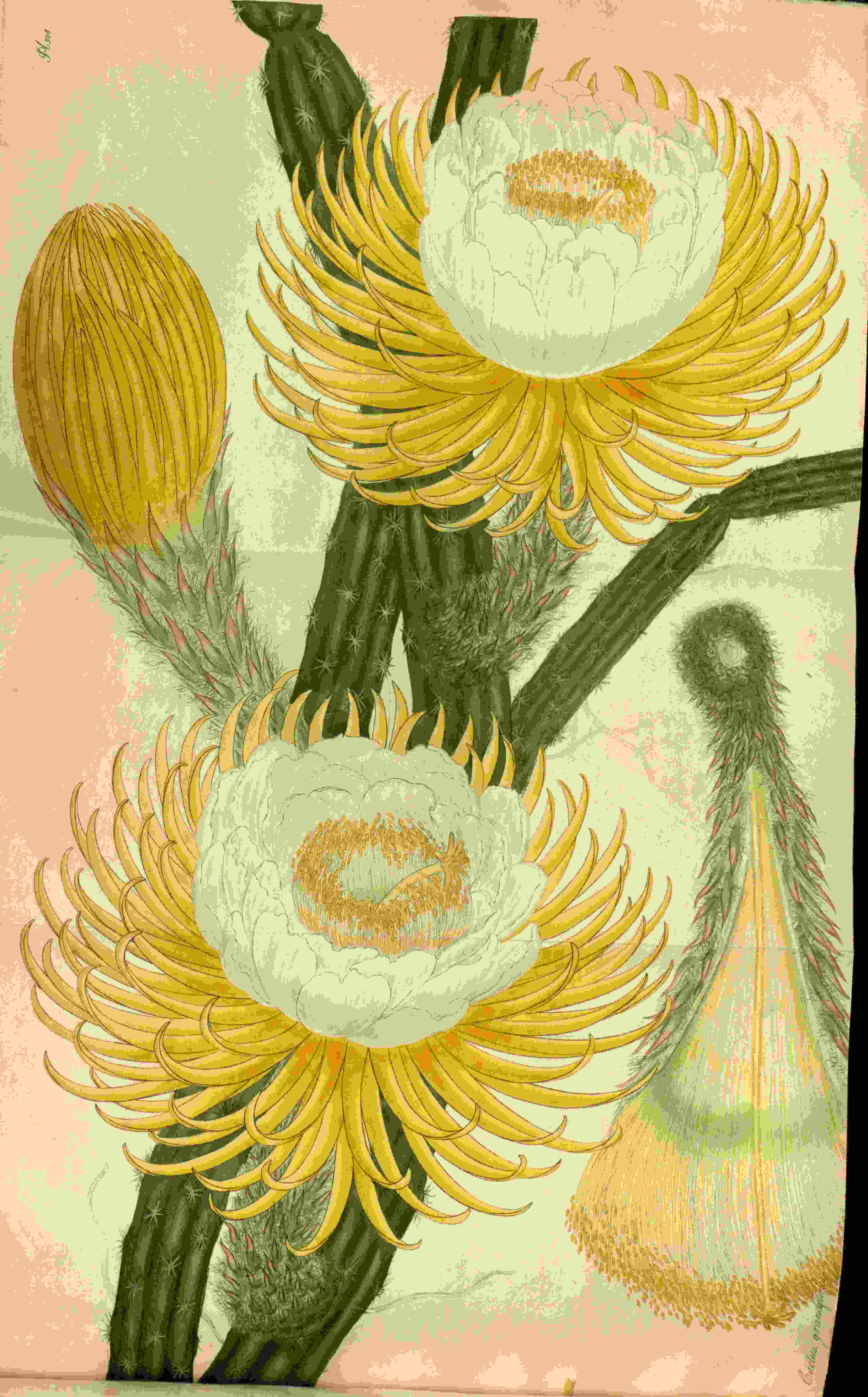
Volume 8 — PLATE DVIII.
Reading edition
CACTUS GRANDIFLORUS.
Large-lowered Cereus.
CLASS XII. ORDER I.
ICOSANDRIA MONOGYNIA. About 20 Chives. One Pointal.
ESSENTIAL GENERIC CHARACTER.
Calyx monophyllus, superus, imbricatus. Corolla multiplex. Bacca monolocularis, polysperma.
Empalement one-leafed, above, tiled. Blossom of many folds. Berry of one loculament, many-seeded.
SPECIFIC CHARACTER.
Cactus scandens vel repens, ramosus, articulatus, cum radiculis lateralibus: ramis sex-vel octagonis, aculeos stellatos ferentibus. Calyx radiatus, flavus: corollis albis. Flores magni, vesperè expansi, odorem fragrantissimum exhalantes.
Miller’s Icones, tab. 90.
Cereus with a climbing or creeping stem, branching, jointed, with small side-roots: branches six-or eight-angled, bearing starry prickles. Empalement rayed and yellow. Blossom white. Flowers large, expanding in the evening, and breathing a most fragrant odour.
REFERENCE TO THE PLATE.
1. A flower divested of the petals, and spread open.
This elegant hot-house plant has been figured by several authors, and is well known by the appellation of the Night-blowing Cereus, and yet but few of Flora’s lovely train, warmed by the mid-day sun’s refulgent beams, in splendour can compare with this nocturnal beauty, whose brilliant flowers expand about sun-set. But, alas! too soon condemned to fade, they close up early on the following morn. Sometimes they have been found unclosed almost within an hour of noon: a circumstance that very rarely happens, as it generally displays its graceful blossoms to Cynthia’s silver beams, perfuming the still cool air of midnight with its aromatic fragrance.
Our figure was taken from a plant in the collection of the Dowager Lady de Clifford at Dudley Grove, Paddington.