Volume 8 — PLATE CCCCXCVIII.
Reading edition
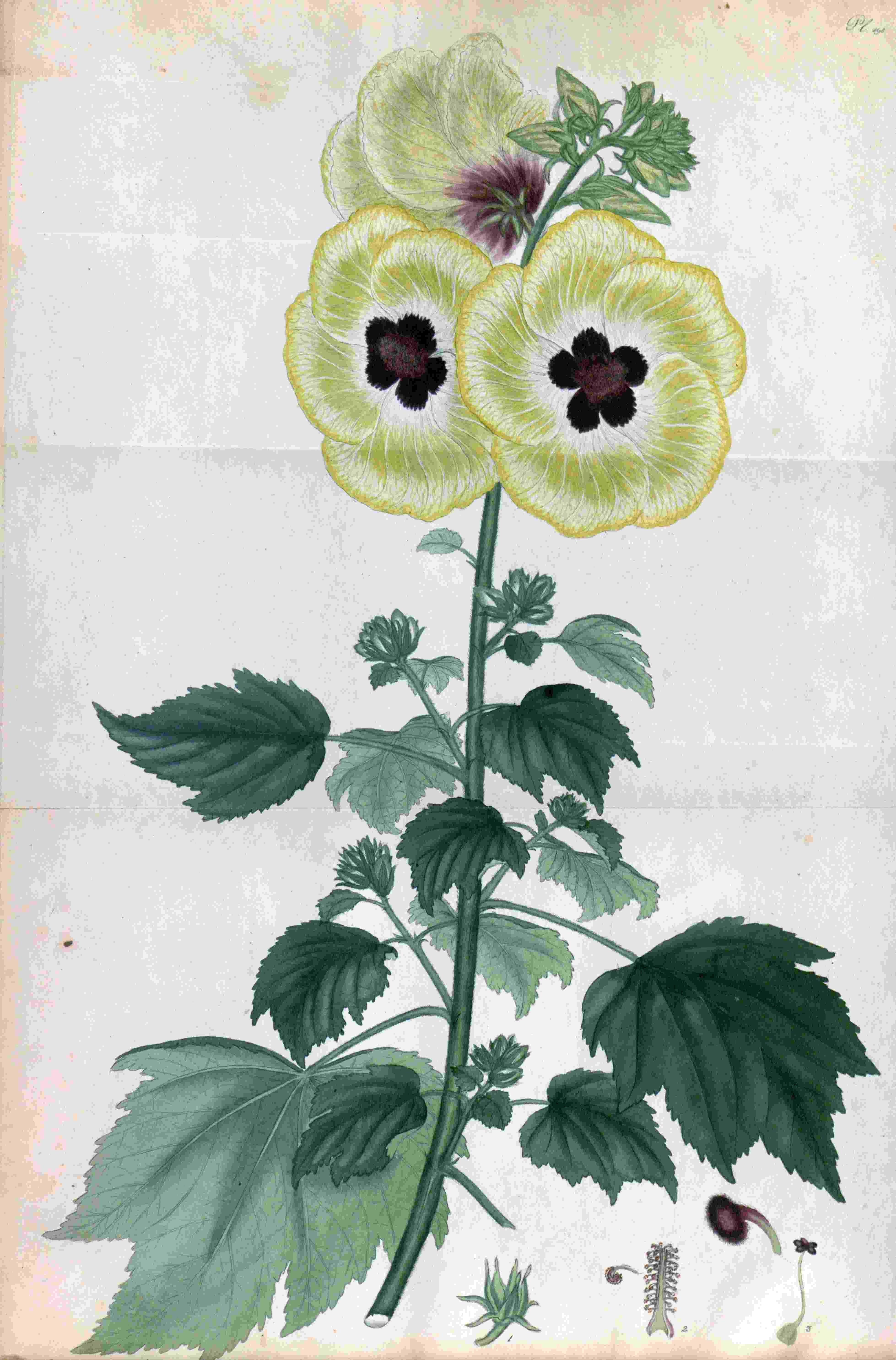
HIBISCUS PRURIENS.
Stinging Hibiscus.
CLASS XVI. ORDER VI.
MONADELPHIA POLYANDRIA. Threads united. Many Chives.
ESSENTIAL GENERIC CHARACTER.
Calyx duplex, exterior polyphyllus. Stigmata 5. Capsula 5-locularis, polysperma.
Empalement double; outer one many-leaved. 5 summits. Capsule 5-celled, many-seeded.
SPECIFIC CHARACTER.
Hibiscus foliis sub-cordatis, lobatis, dentatis: floribus terminalibus, magnis, colore sulphureo, ad basin petalorum maculâ atropurpureâ notatis. Caulis et petioli setis parvis laxis obsiti sunt, quæ manibus adhærentes irritant et pungunt.
Hibiscus with nearly heart-shaped leaves, lobed and toothed: flowers terminal, large, and of a sulphur colour, with a dark purple spot at the base of the petals. The stem and petioles are beset with small loose bristles, which sticking to the hand irritate and sting.
REFERENCE TO THE PLATE.
1. The empalement. 2. The chives cut open, one tip magnified. 3. Seed-bud and pointal, summits magnified.
This non-descript species of Hibiscus is a native of the East Indies. It approaches in general appearance nearest to the H. canabinus. The stems and footstalks of our plant are beset with short bristly hairs, so loosely attached that they easily come off, and, sticking about the hands, create an unpleasant sensation somewhat resembling the stinging of a nettle. The fine dark eye of the flower is a great relief to the surrounding sulphur colour, to the light delicacy of whose appearance it is so very difficult to do justice; for, in this showy family, elegant inflorescence is their principal recommendation.
Our figure represents a fine plant raised in the hot-stove of A. B. Lambert, esq.