Comment About Continued Neutrality from the Balkan and Russian Capitals
Reading edition
AN elaborate argument that Italy is about to co-operate with the Allies at the Dardanelles in order to influence Greece and the Balkan States generally to intervene against the Germanic Powers appeared in The Frankfurter Zeitung near the close of June. A dispatch from Bucharest on July 12 announced that Austria had made concessions to Rumania in the hope of averting intervention by that Power, accompanying the offer with an ultimatum setting a month for Rumania's reply. The German Social-Democratic paper Vorwaerts published on July 17 a statement that Rumania had definitely refused to permit German arms and ammunition to traverse her territory to Turkey. This shows a distinct turning away from the German propaganda in that kingdom, which on May 26 spoke through the editorial columns of Moldova, a daily of Bucharest, as follows:
We must tread in the path opened to us by the late King Carol and the great Rumanian statesmen. We must always be attached to the Central European Powers, from which we shall secure the fulfillment of our aspirations, on that day when we shall move against Russia.
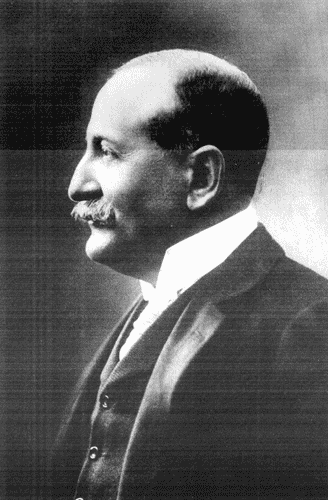
TAKE JONESCO A Former Cabinet Minister, and Leader of Pro-Ally Party in Rumania (Photo from Central News.)
From Lupte, a Nationalist daily of Bucharest, a definite declaration of the kingdom's policy was demanded on June 4:
The smaller a nation is the more dangerous to her existence are diplomatic intrigues. Mr. Bratiano's Government has for the past eight months been coquetting with Petrograd as well as with Berlin and Vienna. With which side are we in this war? The two belligerent groups are asking this and the same question is asked of Bulgaria and Greece. We must have a sound national policy, for in this most modern war there is no profit in the old Machiavellian tactics.
That a crisis is approaching in Balkan affairs is clearly indicated in an editorial warning headed "Beware, ye Balkan Peoples!" appearing on May 29 in Dnevnik, an independent Bulgarian daily of Sofia. It says:
The lust of Europe for territorial aggrandizement becomes every day more pronounced. From a struggle for self-defense this has become a war of conquest. Germany has appropriated Belgium, Russia fights for the Bosporus and Constantinople, Italy has almost taken Albania—with the approval of Austria, as we have discovered. The westernmost edge of the Balkan Peninsula has fallen; tomorrow the easternmost extremity will fall, together with Constantinople. Will the European Powers then spare us?... What the United States of America did for the preservation of their independence against foreign conquest we Balkan peoples must do unless we would see our doom sealed.
"The Dangers of a Neutral Policy" is the theme of Mir, the organ of the Bulgarian Nationalist Party of Sofia, which on May 29 said: "If Bulgaria remains neutral to the end of the war, she runs the risk of being condemned to live forever within the narrow limits she has today, hemmed in on every side. The duty of the Balkan States is to act in a war which will solve all pending political and national problems."
Serbia's jealousy of Italy, despite that nation's late adhesion to the Allies, was voiced on May 25 by Politika, a Nationalist daily of Belgrade, which accuses Italy of trying to profit at Serbia's expense. The Entente Powers must pay for Italian aid, this paper says; and Italy may be "satisfied with Savoy, Corsica, Malta, Tunis, Algiers, Asia Minor, or Egypt."
Balkan Newspapers
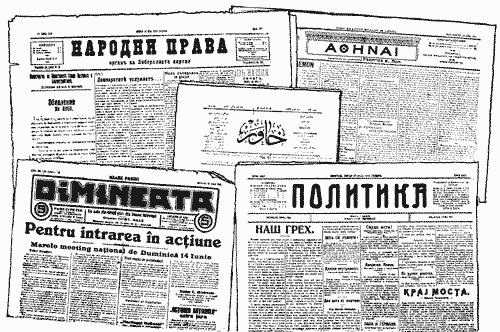
In the left upper corner, the Bulgarian daily Narodai Prava (National Rights) of Sofia, semi-official organ of the Bulgarian Government of Dr. B. Radoslavoff; upper right, the Athenian daily Athinæ (Athens), representing the extreme anti-Venizelists; at lower right, the daily Politika (Politics), an independent paper of Belgrade, Serbia; lower left, the Bucharest (Rumania) daily Dimineata (Morning), an Interventionist paper, and, at center, the Constantinople Khavar (Star), a Pro-Islamist daily.
The Ottoman Empire being under martial law, comment by the Turkish papers regarding military and political events is restricted by the Government. But Enver Pasha, the all-powerful young Turk leader, and his colleague for the Interior, Talaat Bey, early in May gave an interview printed in the Vienna Neue Freie Presse. Enver Pasha predicts the collapse of the Allied campaign on the Gallipoli Peninsula, where the French and British hold a small corner against overwhelming odds. "The bringing thither of provisions is extremely difficult," he says, and "even the drinking water for the troops must be brought from the ships." Both he and Talaat Bey report the morale of the Turkish troops to be excellent, "as many of the older officers have been replaced by energetic young men."
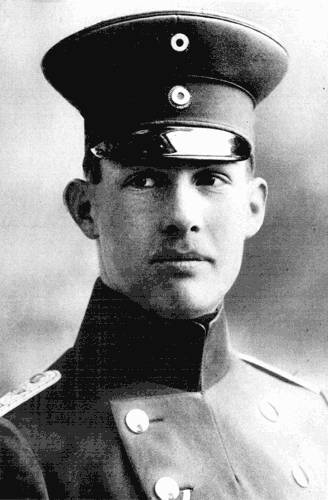
H.R.H. PRINCE GEORGE Duke of Sparta and Crown Prince of Greece (Photo from P.S. Rogers.)
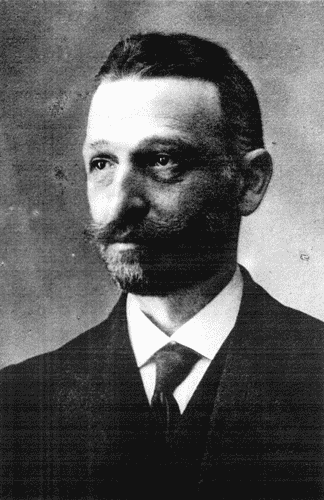
DEMETRIOS GOUNARIS Leader of the Neutralist Party, who Succeeded Venizelos as Premier of Greece
Greece is in suspense. The Kairoi, an independent daily of Athens, said on June 22 that, while Greece does not forget her debt to the three protective powers, France, England, and Russia, she must nevertheless weigh the promise of Germany to give full protection to Greek interests in the event of her continued neutrality. "Just how Germany keeps her promises," this paper says, is "shown by Cavalla, the Macedonian city allotted to Greece after the second Balkan war at the express instance of the Kaiser;" and it notes that the Entente Powers are now eager to cede this territory to Bulgaria. The Embros, an independent daily of Athens, prophesied on June 22:
We can afford to follow events with growing solicitude and remain neutral as long as we may. Whether or not we maintain this neutrality to the end our action can change neither the fortunes of Greece nor the position of other Powers. It is to be presumed that the power driving this giant conflict to the conclusion has more remote motives and that to all appearance, the war will end without any of the participants suffering a crushing defeat.
While Russian aspirations are generally considered to be in harmony with those of the Balkan kingdoms, the following extracts from Russian papers representing varying shades of Muscovite opinion show now an unfavorable or critical attitude. Thus the foremost organ of the Panslavist Party, the Russian weekly Slavianski Izvestija, April No. 8, disapproved the Bulgarian plea to give Thrace and Adrianople through Russian influence. Of the Macedonian question this paper said:
Bulgarians expect that Russia will get for them Macedonia Thrace, and Dobrudja, to reward their honest labors. Alas, they must learn that not every day, but every hour, Macedonia is receding from their grasp. For Russia the Macedonian question hardly exists. If Macedonia finds it hard to be under heroic and benevolent Serbia, what would become of her on the day when she should fall into the hands of Bulgaria? And should we Russians, in order to assure Macedonia such a future, grieve now our dear ally Serbia?
The semi-official Novoye Vremya of Petrograd commented on May 27, on the statement of the Bulgarian Premier Radoslavoff published in Vienna, that Bulgaria cannot engage to intervene without a formal treaty, a policy, it believes, that says but one thing, namely: "You Russians tricked us Bulgarians once; you shall not trick us again." This attitude of Bulgaria shows, the Novoye Vremya thinks, "how thick-headed and insensate its people are." The Birjevaja Viedomosti, a standpat Russian daily of Petrograd, on May 23 warned Serbia that, whereas the war began in her behalf and on her account rivers of blood are flowing, her complaints of the allotment of Dalmatia to Italy should not "assert principles which have nothing to do with actualities." The same newspaper says of the whole Balkan situation:
The German policy of von Buelow, having failed in Rome, is courting failure in Bucharest. In fact, all the German promises to Rumania seem to go no further than sharpening the Rumanian appetite for Russian Bessarabia, while holding out as a last bait the cession of a small parcel of Bukowina—supposing the Hungarians never consent to yielding Transylvania to Rumania.
On the other hand, Germany promises Bulgaria the Turkish province of Thrace and Serbian and Greek Macedonia; but these compensations have as much value as the cessions of Corsica and Nice and Tunis in the early days of the war.
But Germany cannot give to Bulgaria Serbian Macedonia so long as the Austrian armies are not masters of the whole of Serbia; she cannot give her Thrace because Turkey objects to such cession, and Turkey is her ally; and, finally, she cannot urge Greece too closely to cede Cavalla to Bulgaria, because such a pressure may bring a contrary result, i.e. make Greece to declare herself openly an ally of the Entente. Therefore both Bulgaria and Rumania must perforce side with the great European Alliance. Had Italy remained neutral matters would be different, but as it is now Bulgars and Rumanians, and the Balkan peoples in general, have to fight with us, unless they want the diplomacy of the Entente to disappoint utterly the ever-growing appetite of these small nationalities....
It will be noted that all the opinions quoted concerning the Balkans relate to the division of territory as the price of neutrality or intervention.