Volume 7 — GOTTFRIED AUGUST BÜRGER
Reading edition
(1747-1794)

The ballad of 'Lenore,' upon which Bürger's fame chiefly rests, was published in 1773. It constituted one of the articles in that declaration of independence which the young poets of the time were formulating, and it was more than a mere coincidence that in the same year Herder wrote his essay on 'Ossian' and the 'Songs of Ancient Peoples,' and Goethe unfurled the banner of a new time in 'Götz von Berlichingen.' The artificial and sentimental trivialities of the pigtail age were superseded almost at a stroke, and the petty formalism under which the literature of Germany was languishing fell about the powdered wigs of its professional representatives. The new impulse came from England. As in France, Rousseau, preaching the gospel of a return to nature, found his texts in English writers, so in Germany the poets who inaugurated the classic age derived their chief inspiration from the wholesome heart of England. It was Shakespeare that inspired Goethe's 'Götz'; Ossian and the old English and Scotch folk-songs were Herder's theme; and Percy's 'Reliques' stimulated and saved the genius of Bürger. This was the movement which, for lack of a better term, has been called the naturalistic. Literature once more took possession of the whole range of human life and experience, descending from her artificial throne to live with peasant and people. These ardent innovators spurned all ancient rules and conventions, and in the first ecstasy of their new-found freedom and unchastened strength it is no wonder that they went too far. Goethe and Schiller learned betimes the salutary lesson of artistic restraint. Bürger never learned it.
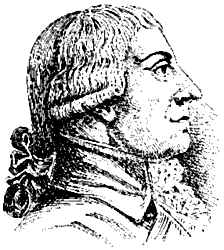
Gottfried A. Bürger
Bürger was wholly a child of his time. At the age of twenty-six he wrote 'Lenore,' and his genius never again attained that height. Much may be accomplished in the first outburst of youthful energy; but without the self-control which experience should teach, and without the moral character which is the condition of great achievement, genius rots ere it is ripe; and this was the case with Bürger. We are reminded of Burns. Goethe in his seventy-eighth year said to Eckermann:—"What songs Bürger and Voss have written! Who would say that they are less valuable or less redolent of their native soil than the exquisite songs of Burns?" Like Burns, Bürger was of humble origin; like Burns, he gave passion and impulse the reins and drove to his own destruction; like Burns, he left behind him a body of truly national and popular poetry which is still alive in the mouths of the people.
Bürger was born in the last hour of the year 1747 at Molmerswende. His father was a country clergyman, and he himself was sent to Halle at the age of seventeen to study theology. His wild life there led to his removal to Göttingen, where he took up the study of law. He became a member and afterwards the leader of the famous "Göttinger Dichterbund," and was carried away and for a time rescued from his evil courses by his enthusiasm for Shakespeare and Percy's 'Reliques.' He contributed to the newly established Musenalmanach, and from 1779 until his death in 1794 he was its editor. In 1787 the university conferred an honorary degree upon him, and he was soon afterward made a professor without salary, lecturing on Kantian philosophy and æsthetics. Three times he was married; his days were full of financial struggles and self-wrought misery; there is little in his private life that is creditable to record: a dissolute youth was followed by a misguided manhood, and he died in his forty-seventh year.
It fell to the lot of the young Goethe, then an unknown reviewer, to write for the Frankfurter Gelehrte Anzeigen in November, 1772, a notice of some of Bürger's early poems. "The 'Minnelied' of Mr. Bürger," he says, "is worthy of a better age; and if he has more such happy moments, these efforts of his will be among the most potent influences to render our sentimental poetasters, with their gold-paper Amors and Graces and their elysium of benevolence and philanthropy, utterly forgotten." With such clear vision could Goethe see at the age of twenty-three. But he soon saw also the danger that lay in unbridled freedom. For the best that was in Bürger Goethe retained his admiration to the last, but before he was thirty he felt that their ways had parted. Among the 'Maxims and Reflections' we find this note:—"It is sad to see how an extraordinary man may struggle with his time, with his circumstances, often even with himself, and never prosper. Sad example, Bürger!"
Doubtless German literature owes less to Bürger than English owes to Burns, but it owes much. Bürger revived the ballad form in which so much of the finest German poetry has since been cast. With his lyric gifts and his dramatic power, he infused a life into these splendid poems that has made them a part of the folk-lore of his native land. 'Lenardo und Blandine,' his own favorite, 'Des Pfarrers Tochter von Taubenhain' (The Pastor's Daughter of Taubenhain), 'Das Lied vom braven Mann' (The Song of the Brave Man), 'Die Weiber von Weinsberg' (The Women of Weinsberg), 'Der Kaiser und der Abt' (The Emperor and the Abbot), 'Der Wilde Jäger' (The Wild Huntsman), all belong, like 'Lenore,' to the literary inheritance of the German people. Bürger attempted a translation of the Iliad in iambic blank verse, and a prose translation of 'Macbeth.' To him belongs also the credit of having restored to German literature the long-disused sonnet. His sonnets are among the best in the language, and elicited warm praise from Schiller as "models of their kind." Schiller had written a severe criticism of Bürger's poems, which had inflamed party strife and embittered the last years of Bürger himself; but even Schiller admits that Bürger is as much superior to all his rivals as he is inferior to the ideal he should have striven to attain.
The debt which Bürger owed to English letters was amply repaid. In 'Lenore' he showed Percy's 'Reliques' the compliment of quoting from the ballad of 'Sweet William,' which had supplied him with his theme, the lines:—"Is there any room at your head, Willie, or any room at your feet?" The first literary work of Walter Scott was the translation which he made in 1775 of 'Lenore,' under the title of 'William and Helen'; this was quickly followed by a translation of 'The Wild Huntsman.' Scott's romantic mind received in Bürger's ballads and in Goethe's 'Götz,' which he translated four years later, just the nourishment it craved. It is a curious coincidence that another great romantic writer, Alexandre Dumas, should also have begun his literary career with a translation of 'Lenore.' Bürger was not, however, a man of one poem. He filled two goodly volumes, but the oft-quoted words of his friend Schlegel contain the essential truth:—"'Lenore' will always be Bürger's jewel, the precious ring with which, like the Doge of Venice espousing the sea, he married himself to the folk-song forever."
WILLIAM AND HELEN
Walter Scott's Translation of 'Lenore'
From heavy dreams fair Helen rose, And eyed the dawning red:— "Alas, my love, thou tarriest long! O art thou false or dead?" With gallant Frederick's princely power He sought the bold crusade; But not a word from Judah's wars Told Helen how he sped. With Paynim and with Saracen At length a truce was made, And every knight returned to dry The tears his love had shed. Our gallant host was homeward bound With many a song of joy; Green waved the laurel in each plume, The badge of victory. And old and young, and sire and son, To meet them crowd the way, With shouts, and mirth, and melody, The debt of love to pay. Full many a maid her true-love met, And sobbed in his embrace, And fluttering joy in tears and smiles Arrayed full many a face. Nor joy nor smile for Helen sad; She sought the host in vain; For none could tell her William's fate, If faithless or if slain. The martial band is past and gone; She rends her raven hair, And in distraction's bitter mood She weeps with wild despair. "O rise, my child," her mother said, "Nor sorrow thus in vain: A perjured lover's fleeting heart No tears recall again." "O mother, what is gone, is gone, What's lost forever lorn; Death, death alone can comfort me; O had I ne'er been born! "O break, my heart, O break at once! Drink my life-blood, Despair! No joy remains on earth for me, For me in heaven no share." "O enter not in judgment, Lord!" The pious mother prays; Impute not guilt to thy frail child! She knows not what she says. "O say thy paternoster, child! O turn to God and grace! His will, that turned thy bliss to bale, Can change thy bale to bliss." "O mother, mother, what is bliss? O mother, what is bale? My William's love was heaven on earth; Without it earth is hell. "Why should I pray to ruthless Heaven, Since my loved William's slain? I only prayed for William's sake, And all my prayers were vain." "O take the sacrament, my child, And check these tears that flow; By resignation's humble prayer, O hallowed be thy woe!" "No sacrament can quench this fire, Or slake this scorching pain; No sacrament can bid the dead Arise and live again. "O break, my heart, O break at once! Be thou my god, Despair! Heaven's heaviest blow has fallen on me. And vain each fruitless prayer." "O enter not in judgment, Lord, With thy frail child of clay! She knows not what her tongue has spoke; Impute it not, I pray! "Forbear, my child, this desperate woe, And turn to God and grace; Well can devotion's heavenly glow Convert thy bale to bliss." "O mother, mother, what is bliss? O mother, what is bale? Without my William what were heaven, Or with him what were hell?" Wild she arraigns the eternal doom, Upbraids each sacred Power, Till, spent, she sought her silent room, All in the lonely tower. She beat her breast, she wrung her hands Till sun and day were o'er, And through the glimmering lattice shone The twinkling of the star. Then, crash! the heavy drawbridge fell That o'er the moat was hung; And, clatter, clatter, on its boards The hoof of courser rung. The clank of echoing steel was heard As off the rider bounded; And slowly on the winding stair A heavy footstep sounded. And hark! and hark! a knock—Tap! tap A rustling stifled noise; Door-latch and tinkling staples ring; At length a whispering voice: "Awake, awake, arise, my love! How, Helen, dost thou fare? Wak'st thou, or sleep'st? laugh'st thou, or weep'st? Hast thought on me, my fair?" "My love! my love! so late at night! I waked, I wept for thee. Much have I borne since dawn of morn; Where, William, couldst thou be?" "We saddle late—from Hungary I rode since darkness fell; And to its bourne we both return Before the matin bell." "O rest this night within my arms, And warm thee in their fold! Chill howls through hawthorn bush the wind;— My love is deadly cold." "Let the wind howl through hawthorn bush! This night we must away; The steed is wight, the spur is bright; I cannot stay till day. "Busk, busk, and boune! Thou mount'st behind Upon my black barb steed: O'er stock and stile, a hundred mile, We haste to bridal bed." "To-night—to-night a hundred miles! O dearest William, stay! The bell strikes twelve—dark, dismal hour! O wait, my love, till day!" "Look here, look here—the moon shines clear— Full fast I ween we ride; Mount and away! for ere the day We reach our bridal bed. "The black barb snorts, the bridle rings, Haste, busk, and boune, and seat thee! The feast is made, the chamber spread, The bridal guests await thee." Strong love prevailed: she busks, she bounes, She mounts the barb behind, And round her darling William's waist Her lily arms she twined. And, hurry! hurry! off they rode, And fast as fast might be; Spurned from the courser's thundering heels The flashing pebbles flee. And on the right, and on the left, Ere they could snatch a view, Fast, fast each mountain, mead, and plain, And cot and castle flew. "Sit fast—dost fear?—The moon shines clear!— Fleet goes my barb—keep hold! Fear'st thou?"—"O no!" she faintly said; "But why so stern and cold? "What yonder rings, what yonder sings? Why shrieks the owlet gray?"— "'Tis death-bells' clang, 'tis funeral song, The body to the clay. "With song and clang, at morrow's dawn, Ye may inter the dead; To-night I ride, with my young bride, To deck our bridal bed. "Come with thy choir, thou coffined guest, To swell our nuptial song! Come, priest, to bless our marriage feast! Come all, come all along!" Ceased clang and song; down sunk the bier; The shrouded corpse arose: And hurry! hurry! all the train The thundering steed pursues. And forward, forward, on they go; High snorts the straining steed; Thick pants the rider's laboring breath As headlong on they speed. "O William, why this savage haste? And where thy bridal bed?" "'Tis distant far,—low, damp, and chill, And narrow,—trustless maid!" "No room for me?"—"Enough for both; Speed, speed, my barb, thy course!" O'er thundering bridge, through boiling surge, He drove the furious horse. Tramp! tramp! along the land they rode, Splash! splash! along the sea; The scourge is wight, the spur is bright, The flashing pebbles flee. Fled past on right and left how fast Each forest, grove, and bower! On right and left fled past how fast Each city, town, and tower! "Dost fear? dost fear? The moon shines clear, Dost fear to ride with me? Hurrah! hurrah! the dead can ride!"— "O William, let them be!— "See there, see there! What yonder swings And creaks 'mid whistling rain?" "Gibbet and steel, th' accursed wheel, A murderer in his chain. "Hollo! thou felon, follow here: To bridal bed we ride; And thou shalt prance a fetter dance Before me and my bride." And hurry! hurry! clash, clash, clash! The wasted form descends; And fleet as wind through hazel bush The wild career attends. Tramp! tramp! along the land they rode, Splash! splash! along the sea; The scourge is red, the spur drops blood, The flashing pebbles flee. How fled what moonshine faintly showed! How fled what darkness hid! How fled the earth beneath their feet, The heaven above their head! "Dost fear? dost fear? the moon shines clear And well the dead can ride; Dost, faithful Helen, fear for them?"— "O leave in peace the dead!" "Barb! barb! methinks I hear the cock; The sand will soon be run; Barb! barb! I smell the morning air; The race is well-nigh done." Tramp! tramp! along the land they rode, Splash! splash! along the sea; The scourge is red, the spur drops blood, The flashing pebbles flee. "Hurrah! hurrah! well ride the dead; The bride, the bride is come; And soon we reach the bridal bed, For, Helen, here's my home." Reluctant on its rusty hinge Revolved an iron door, And by the pale moon's setting beam Were seen a church and tower. With many a shriek and cry whiz round The birds of midnight, scared; And rustling like autumnal leaves Unhallowed ghosts were heard. O'er many a tomb and tombstone pale He spurred the fiery horse, Till sudden at an open grave He checked the wondrous course. The falling gauntlet quits the rein, Down drops the casque of steel, The cuirass leaves his shrinking side, The spur his gory heel. The eyes desert the naked skull, The mold'ring flesh the bone, Till Helen's lily arms entwine A ghastly skeleton. The furious barb snorts fire and foam, And with a fearful bound, Dissolves at once in empty air, And leaves her on the ground. Half seen by fits, by fits half heard, Pale spectres flit along, Wheel round the maid in dismal dance, And howl the funeral song:— "E'en when the heart's with anguish cleft, Revere the doom of heaven. Her soul is from her body reft; Her spirit be forgiven!"
THE WIVES OF WEINSBERG
Which way to Weinsberg? neighbor, say! 'Tis sure a famous city: It must have cradled, in its day, Full many a maid of noble clay. And matrons wise and witty; And if ever marriage should happen to me, A Weinsberg dame my wife shall be. King Conrad once, historians say, Fell out with this good city; So down he came, one luckless day,— Horse, foot, dragoons,—in stern array,— And cannon,—more's the pity! Around the walls the artillery roared, And bursting bombs their fury poured. But naught the little town could scare; Then, red with indignation, He bade the herald straight repair Up to the gates, and thunder there The following proclamation:— "Rascals! when I your town do take, No living thing shall save its neck!" Now, when the herald's trumpet sent These tidings through the city, To every house a death knell went; Such murder-cries the hot air rent Might move the stones to pity. Then bread grew dear, but good advice Could not be had for any price. Then, "Woe is me!" "O misery!" What shrieks of lamentation! And "Kyrie Eleison!" cried The pastors, and the flock replied, "Lord! save us from starvation!" "Oh, woe is me, poor Corydon— My neck,—my neck! I'm gone,—I'm gone!" Yet oft, when counsel, deed, and prayer Had all proved unavailing, When hope hung trembling on a hair, How oft has woman's wit been there!— A refuge never failing; For woman's wit and Papal fraud, Of olden time, were famed abroad. A youthful dame, praised be her name!— Last night had seen her plighted,— Whether in waking hour or dream, Conceived a rare and novel scheme, Which all the town delighted; Which you, if you think otherwise, Have leave to laugh at and despise. At midnight hour, when culverin And gun and bomb were sleeping, Before the camp with mournful mien, The loveliest embassy were seen, All kneeling low and weeping. So sweetly, plaintively they prayed, But no reply save this was made:— "The women have free leave to go, Each with her choicest treasure; But let the knaves their husbands know That unto them the King will show The weight of his displeasure." With these sad terms the lovely train Stole weeping from the camp again. But when the morning gilt the sky. What happened? Give attention:— The city gates wide open fly, And all the wives come trudging by, Each bearing—need I mention?— Her own dear husband on her back, All snugly seated in a sack! Full many a sprig of court, the joke Not relishing, protested, And urged the King; but Conrad spoke:— "A monarch's word must not be broke!" And here the matter rested. "Bravo!" he cried, "Ha, ha! Bravo! Our lady guessed it would be so." He pardoned all, and gave a ball That night at royal quarters. The fiddles squeaked, the trumpets blew, And up and down the dancers flew, Court sprigs with city daughters. The mayor's wife—O rarest sight!— Danced with the shoemaker that night! Ah, where is Weinsberg, sir, I pray? 'Tis sure a famous city: It must have cradled in its day Full many a maid of noble clay, And matrons wise and witty; And if ever marriage should happen to me, A Weinsberg dame my wife shall be.
Translated by C. T. Brooks: Reprinted from 'Representative German Poems' by the courtesy of Mrs. Charles T. Brooks.