VOLUME II SLICE IV Aram, Eugene to Arcueil (continued 12)
Reading edition
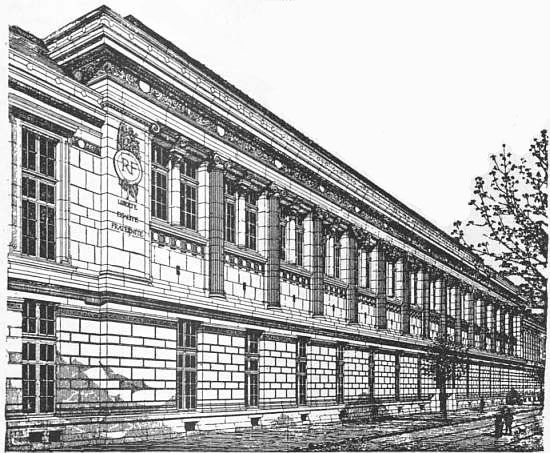
Fig. 110.—École de Médecine, Paris. (Ginain.)
The great military success of Germany in 1870, and the founding of the German empire, gave, as is usual in such crises, a decided impetus to public architecture, of which the central and most important visible sign is the German Houses of Parliament Germany. (Plate IX., fig. 117), by Paul Wallot (b. 1841), whose design was selected in a competition. There is something essentially German in the quality of this national building; classic architecture minus its refinement. The detail is coarse; the finish of the end pavilions of the principal front absolutely unmeaning— mere architectural rodomontade; the central cupola of glass and iron, on a square plan, probably the ugliest central feature on any great building in Europe; and yet there is undeniable power about the whole thing; it is the characteristic product of a conquering nation not reticent in its triumph. The new cathedral at Berlin, by Julius Raschdorff (b. 1823), is the other most important German work of the period (fig. 111); a building very striking and unusual in plan, but absolutely commonplace in its architectural detail; school classic of the most ordinary type, without even any of those elements of originality which are to be found in the Houses of Parliament. A curious feature in the plan (fig. 112) is that the building, alone of any cathedral we can recall, has its principal general entrance at the side, the end entrance being reserved for a special imperial cortège on special occasions, the cathedral also serving the second purpose of an imperial mausoleum. Theatre building has been carried on very largely in Germany, and among its productions the Lessing theatre at Berlin (fig. 113) (Hermann von der Hude and Julius Hennicke, d. 1892) is a favourable example of German classic at its best, besides being, like most modern German theatres, very well planned (fig. 114). Hamburg has had its new municipal buildings (Grotjan), a florid Renaissance building with a central tower, showing in its general effect and grouping a good deal of Gothic feeling Mention may also be made of the Imperial law courts (Reichsgerichtsgebaude) at Leipzig, designed by Ludwig Hoffmann (b. 1852) and finished in 1895, a building with no more charm about it, externally, than the Berlin Parliament Houses, but with some good interior effects. The new post offices in Germany have been an important undertaking, and are, at all events, buildings of more mark than those in England. There has also been a great deal of new development in street architecture, which shows an immense variety, and a constantly evident determination to do something striking, but we find in it neither the dignity of Parisian street architecture nor the refinement of modern London work; there is an element of the bombastic about it.
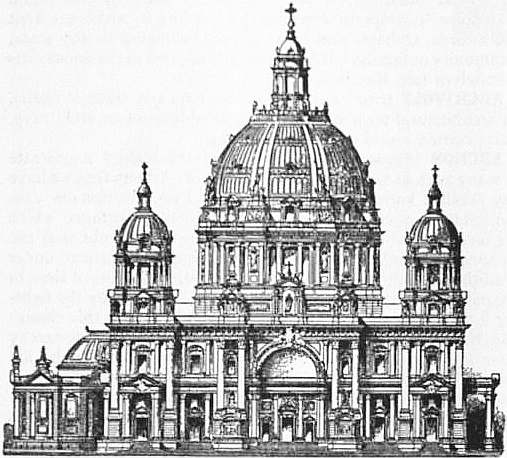
Fig. 111.—Cathedral at Berlin. (Raschdorff.)
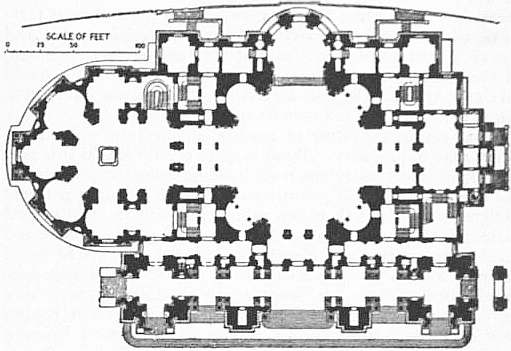
Fig. 112.—Plan of Cathedral at Berlin.
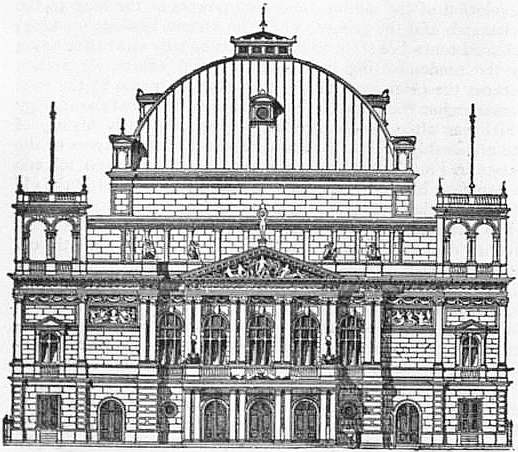
Fig. 113—Lessing Theatre, Berlin. (Von der Hude and Hennicke.)
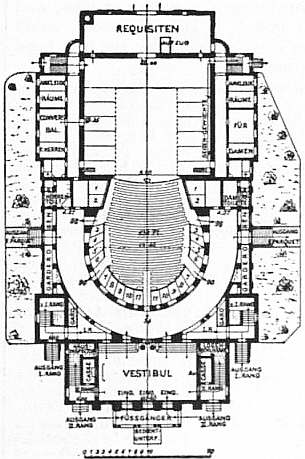
Fig. 114.—Plan of Lessing Theatre, Berlin.
No modern building on the European continent is more remarkable than the Brussels law courts (Plate XI., fig. 121) from the designs of Joseph Poelaert (1816-1879), an original genius in architecture, who had the good fortune to be appreciated and given a free hand by his government. The design is based on classic architecture, but with a treatment so completely Other countries. individual as to remove it almost entirely from the category of imitative or revival architecture; somewhat fantastic it may be, but as an original architectural creation it stands almost alone among modern public buildings. In Vienna the scholastic classic style has been retained with much more purity and refinement than in the German capital, and the Parliament Houses (Plate IX., fig. 116), by Theophil Hansen (1813-1891), if they show no originality of detail, have the merit of original and very effective grouping. Budapest, on the other hand, which has almost sprung into existence since 1875 as the rival of the Austrian capital, has erected a great Parliament building of florid character (Plate IX., fig. 115), in a style in which the Gothic element is prevalent, though the central feature is a dome. The plan (see fig. 92) is obviously based on that of the Westminster building, the exterior design, however, has the merit of clearly indicating the position of the two Chambers as part of the architectural design, the want of which is the one serious defect of Barry’s noble structure. In Italy modern architecture is at a very low ebb; the one great work of this period was the building of the façade to the Duomo at Florence, from the design of de Fabris, who did not live to see its completion. As the completion in modern times of a building of world-wide fame, it is a work of considerable interest, and, on the whole, not unworthy of its position; that it should harmonize quite satisfactorily with the ancient structure was hardly to be expected. It was probably the completion of this façade which led the city of Milan to start a great architectural competition, in the early ’eighties, for the erection of a new façade to its celebrated cathedral, not because the façade had never been completed, but because it had been spoiled and patched with bad 18th-century work. The ambition was a legitimate one, and the competition, open to all the world, excited the greatest interest; but the young Italian architect, Brentano, to whom the first premium was awarded, died shortly afterwards, and other causes, partly financial, led to the postponement of the scheme, though it is understood that there is still an intention of carrying out Brentano’s design under the direction of the official architectural department of the city.
In summing up the present position of modern architecture, it may be said that architecture is now a more cosmopolitan art than it has been at any previous period. The separate development of a national style has become Conclusion. in the present day almost an impossibility. Increased means of communication have brought all civilized nations into close touch with each other’s tastes and ideas, with the natural consequence that the treatment of a special class of building in any one country will not differ very materially from its treatment in another; though there are nuances of local taste in detail, in manner of execution, in the materials used. And the civilized countries have almost with one consent returned, in the main, to the adoption of a school of architecture based on classic types. The taste for medievalism is dying out even in Great Britain, which has been its chief stronghold.
What course the future of modern architecture will take it is not easy to prophesy. What is quite certain is that it is now an individual art, each important building being the production, not of an unconsciously pursued national style, but of a personal designer. As far as there is a ruling consensus in architectural taste, this will tend to become, like dress and manners, more and more cosmopolitan; and it seems probable that it will be based more or less on the types left us by Classic and Renaissance architecture. There are, however, two influences which may have a definite effect on the architecture of the near future. One of these is the possible greater rapprochement between architecture and engineering, of which there are already some signs to be seen; architects will learn more of the kind of structural problems which are now almost the exclusive province of the engineer, and there will be a demand that engineering works shall be treated, as they well may be, with some of the refinement and expression of architecture. The other influence lies in the closer connexion, which is already taking place, between architecture and the allied arts, so that an important building will be regarded and treated as a field for the application of decorative sculpture and painting of the highest class, and as being incomplete without these. It is in this closer union of architecture with the other arts that there lies the best hope for the architecture of the future.
Plate XV.
Copyright 1903 by Detroit Photographic Co. Fig. 131.—“FLAT-IRON” BUILDING, NEW YORK. (For method of construction, see Steel Construction, and Plate II., Fig. 4, of that article.) Copyright 1899 by Detroit Photographic Co. Fig. 132.—A NEWPORT, R.I., “COTTAGE”: “THE BREAKERS.” Fig. 133.—THE METROPOLITAN CLUB, NEW YORK. Copyright 1905 by Detroit Publishing Co. Fig. 134.—THE UNIVERSITY CLUB, NEW YORK.
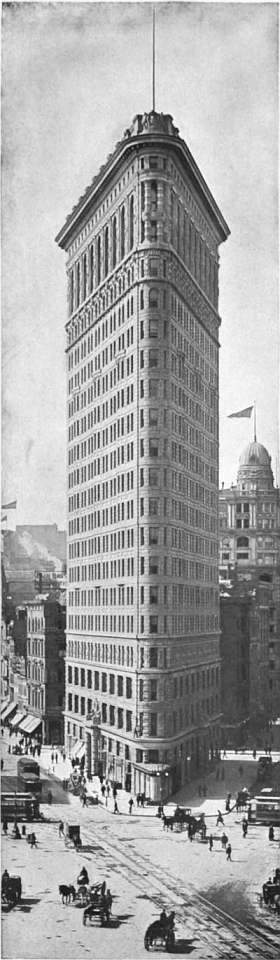
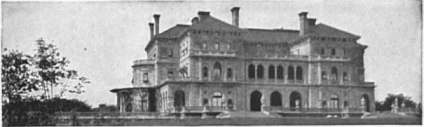
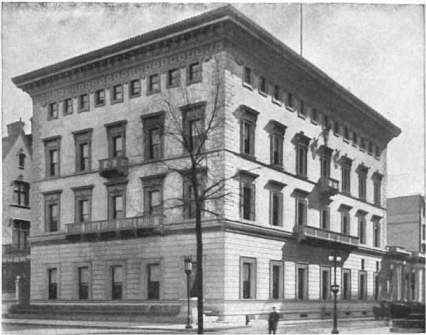
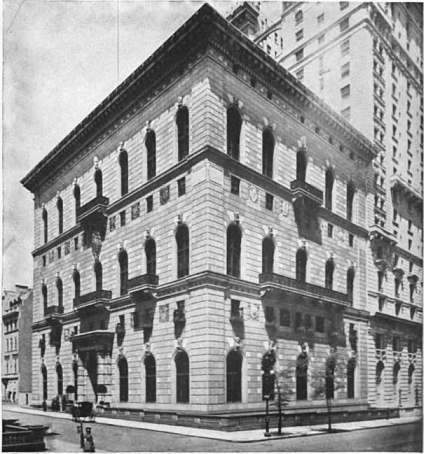
Plate XVI.
Photo, Detroit Publishing Co. Photo, Geo. P. Hall & Son.
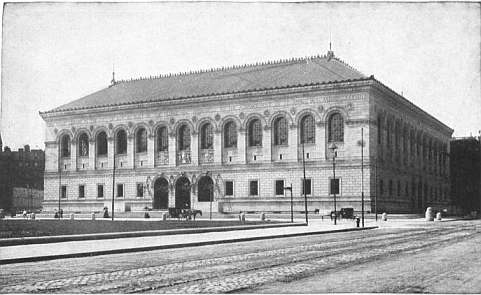
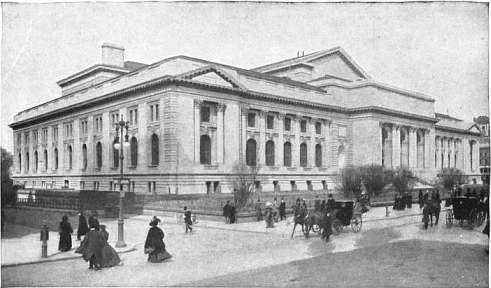
Fig. 135.—PUBLIC LIBRARY, BOSTON. (McKIM, MEAD & WHITE.) Fig. 136.—PUBLIC LIBRARY, NEW YORK. (CARRÈRE & HASTINGS.)
Photo, Elmer Chickering. Copyright 1906 by Detroit Publishing Co.
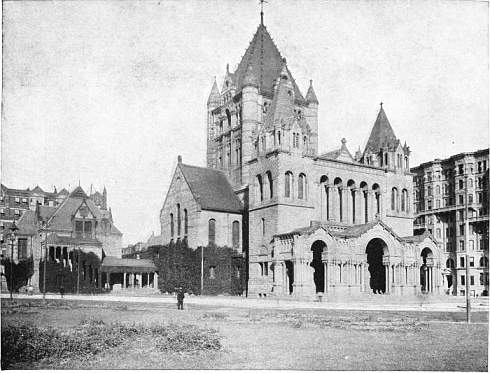
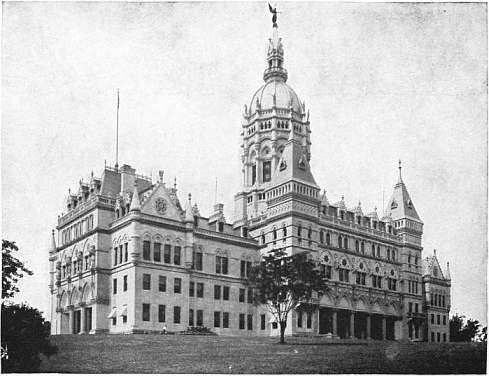
Fig. 137.—TRINITY CHURCH, BOSTON. (H.H. RICHARDSON.) Fig. 138.—STATE CAPITOL, HARTFORD, CONNECTICUT.
Authorities.—The literature of architecture as a modern art is limited, the most important publications of recent times being mainly devoted to the study and illustration of ancient architecture. The following, however, may be named:—James Fergusson, History of Modern Architecture (2nd ed., London, 1873); T.G. Jackson, Modern Gothic Architecture (London, 1873); J.T. Micklethwaite, Modern Parish Churches (London, 1874); E.R. Robson, School Architecture (London, 1874); J.J. Stevenson, House Architecture (London, 1880); E.E. Viollet-le-Duc, How to Build a House (London, 1874); Lectures on Architecture (London, 1881); H.C. Burdett, Hospitals and Asylums of the World (London, 1892-1893); Professor Oswald Kuhn, Krankenhauser (Stuttgart, 1897); E.O. Sachs, Modern Opera-Houses and Theatres (London, 1897-1899); E. Wyndham Tarn, The Mechanics of Architecture (London, 1893); R. Norman Shaw, R.A., T.G. Jackson, R.A., and others, Architecture, a Profession or an Art (London, 1892); W.H. White, The Architect and his Artists (London, 1892); Architecture and Public Buildings in Paris and London (London, 1884); H.H. Statham, Architecture for General Readers (London, 1895); Modern Architecture (London, 1898); Herrmann Muthesius, Die englische Baukunst der Gegenwart (Berlin and Leipzig, 1900); Der Architekten Verein zu Berlin, Berlin und Seine Bauten (Berlin, 1896). The real literature of modern architecture, however, is to be found mainly in the articles and illustrations in the best periodical architectural publications of various countries. Among these Italy has none worth mention, and France, with all her architectural enthusiasm, has had no first-class architectural periodical since the extinction, about 1890, of the Revue générale de l’architecture, conducted for more than fifty years by the late César Daly, and in its day the first periodical of its class in the world. Among the best periodical publications are: The Architectural Record (quarterly), (New York); The Architectural Review (monthly), (Boston); the Allgemeine Bauzeitung (quarterly), (Vienna); the Berlin Architekturwelt (monthly), (Berlin); The Builder (weekly), (London); La Construction moderne (weekly), (Paris).
(H. H. S.)
1 For the various chronological systems proposed see Egypt: Chronology.
2 Except, possibly, the earliest of those at Sparta (q.v.).—ED.
3 Article “Architecture,” Ency. Brit., 9th ed.
4 Wilkins made two designs for the whole building; one leaving the quadrangle entirely open on the fourth side, towards the street the other showing a low open colonnaded screen connecting the ends of the two wings. He never for a moment contemplated closing in the quadrangle by buildings on the fourth side.
5 A remarkable instance of this is shown by the railway viaduct at Passy, a large and monumental piece of work in itself, which is built along the centre of the roadway of Napoleon’s bridge. It was’ at first proposed to have a steel railway viaduct parallel with the old bridge, but it was found that the latter, both in respect of solidity and spacious dimensions, would fully bear the erection of the railway viaduct along its centre.
6 The western half of the present front; the design was duplicated afterwards, on the extension of the building, but Bodley originated it.
ARCHITRAVE (from Lat. arcus, an arch, and trabs, trabem, a beam), an architectural term for the chief beam which carries the superstructure and rests immediately on the columns. In the ordinary entablature it is the lowest of the three divisions, the other two being the frieze and the cornice (see Order). The term is also applied to the moulded frame of a doorway.
ARCHIVE (Lat. archivum, a transliteration of Gr. ἀρχεῖον, an official building), a term (generally used in the plural “archives”), properly denoting the building in which are kept the records, charters and other papers belonging to any state, community or family, but now generally applied to the documents themselves (see Record).
ARCHIVOLT (from Lat. arcus, an arch, and volta, a vault), an architectural term applied to the mouldings of an architrave, when carried round an arched opening.
ARCHON (ἄρχων, ruler), the title of the highest magistrate in many ancient Greek states. It is only in Athens that we have any detailed knowledge of the office, and even in this one case the evidence presents problems of the first importance which are incapable of decisive solution. There is no doubt that the archons represented the ancient kings, whose absolutism, under conditions which we can only infer, yielded in process of time to the power of the noble families, supported no doubt by the fighting force of the state. As to the process by which this change was effected there are two accounts. Traditionally, the monarchy after the death of Codrus (? 1068 B.C.) gave place to the life archon whose tenure of office was limited afterwards to ten years and then to one year. Aristotle’s Constitution of Athens (q.v.) speaks of five stages: (1) the institution of the polemarch who took over the military duties of the king; (2) the institution of the archon to relieve the king of his civil duties; (3) the tenure of office was reduced to ten years (? 752 B.C.); (4) the office was taken from the “royal” clan and thrown open to all Eupatridae (? 712 B.C.); (5) office was made annual, and to the existing three offices were added the six thesmothetae whose duty it was to record judicial decisions. The value of this latter account is, of course, debatable, but it is at least compatible with the general trend of development from hereditary absolutism, civil, military and religious, in the person of the “king,” to a constitutional oligarchy. The change was clearly effected by the devolution of the military and civil powers of the king to the polemarch and the archon, while the archon basileus (or king) retained control of state religion. It is equally clear that owing to the predominating importance of civil affairs, the archon became the chief state official and gave his name to the year (hence archon eponymus). It should be noticed that the analogy which has often been suggested between the early history of the archonship at Athens, and such cases as the mayors of the palace in French history, or the tycoon (shogun) and mikado in Japanese history, is misleading. In these cases it is the old royal house that retains the royal title and the semblance of power, while the real authority passes into new hands. In Athens, the new civil office is vested in the old royal family, while the old title along with its religious functions is transferred. The early history of the thesmothetae is not clear, but this much is certain that there is no adequate reason for supposing, as many historians do, that in early times, they, with the three chief archons, constituted a collective or collegiate magistracy. It is true Thucydides (i. 126) states that, in the time of the Cylonian conspiracy (? 632 B.C.), “the nine archons were (i.e. collectively) the principal officials,” but at the same time the responsibility for the action then taken attached to the Alcmaeonidae alone, because one of their number, Megacles, was at that time the archon (i.e. responsibility was personal, not collective). Again, the Constitution of Athens says that down to Solon’s time the archons had no official residence, but that afterwards they used the Thesmotheteion. It is a reasonable inference from this statement that the thesmothetae had previously sat together apart from the superior archons and that it was only after Solon that collegiate responsibility began.
Evolution of the Office.—The history of the democratization of the archonship is beset with equal difficulty. In the early days, the importance of the office (confined as it was to the highest class) must have been immense; there was no audit, no written law, no executive council. The popular assembly was ill-organized and probably summoned by the archons themselves. The only control came from the Areopagus which elected them and would generally be favourably disposed, and from the fact that the military and civil powers were not vested in the same hands. Although the institution of the popular courts by Solon had within it the germ of democratic supremacy, it is clear that the immediate result was small; thus, in the next decade anarchia was continuous and Damasias held the archonship for more than two years in defiance of the new constitution; the prolonged dissension in this matter shows that the office of archon still retained its supreme importance. Gradually, however, the archonship lost its power, especially in judicial matters, until it retained merely the right of holding the preliminary investigation and the formal direction of the popular courts. Its administrative powers, save those wielded by the polemarch (see below and cf. Strategus), dwindled away into matters of routine. We know that Peisistratus ruled by controlling the archonship, which was always held by members of his family, and the archonship of Isagoras was clearly an important party victory; we know further the names of three important men who held the office between Cleisthenes’ reform and the Persian War (Hipparchus, Themistocles (q.v.), Aristides) from which we infer that the office was still the prize of party competition. On the other hand, after 487 B.C. the list of archons contains no name of importance. Presumably this is due to the growing importance of the Strategus and to the institution of sortition (see below), which, whether as cause or effect, is presumably by the 5th century indicative of diminished importance. There can, on these assumptions, be no doubt that, from the early years of the 5th century B.C., the archonship was of practically no importance. Furthermore we find that (probably after the Persian War) the office is thrown open to the second class, and finally in 457 B.C. we meet an archon, Mnesitheides, of the third, or Zeugite, class. Plutarch (Aristides, 22) says that after the great struggle of the Persian War Aristides threw open the office to all the citizens. But in fact the members of the fourth class were not formally admitted even in the 4th century (though by a fiction they were allowed to pose for the time as Zeugites). Furthermore it is not till 457 that even a Zeugite archon is known, according to the Constitution of Athens (c. 26), which dates the change as five years after the death of Ephialtes and does not connect it with Aristides.
Sortition.—The next question constitutes perhaps the most important problem in Greek political development. At what date was election by lot, or sortition, introduced for the archonship? From the Constitution of Athens (c. 22) we gather that from the fall of the Tyranny to 487 B.C. the archons were αἱρετοί, not κληρωτοί (i.e. chosen by vote, not by lot), and that in 487, limited sortition was introduced, whereby fifty candidates were elected by each tribe, and from these the archons and their “secretary” were chosen by lot. But against this must be set the statement by the same authority that this double method was part of the Solonian reform. The solution of the dilemma is a matter of inference. Three indications favour the former view: (1) the “anarchia” which occurred so often between Solon and Peisistratus shows that the office was at that time a question of party (i.e. elective); (2) the statement that Solon invented sortition for the office is put as the basis of a comparison (ὄθεν, σημεῖον) and, therefore, may fairly be regarded as a hypothesis; (3) there is no indication that the change made in 487 B.C. was a return to an obsolete method, and on the same argument it is odd that Solon’s alleged system should not have been revived at the end of the Tyranny. On the other hand Herodotus (vi. 109) states that, in 490, before the battle of Marathon, the polemarch was chosen by lot. If this be true, it follows that the office of polemarch must have lost its military importance, which was not the case, inasmuch as the polemarch at Marathon gave the casting vote in favour of immediate battle. Whether, therefore, Solon or Aristides was the first to introduce sortition, it is perfectly clear that the lot was not used between the Tyranny and 487 B.C. and that after 487 the lot was always used (see J.E. Sandys, Constitution of Athens c. 8 note 1, c. 22 § 5, note); in fact, at a date not known the mixed system of Aristides gave place to double sortition, in which the first nomination also was by lot. To enter here into the theory of the lot is impossible. It should, however, be observed that in the somewhat material atmosphere of constitutional Athens the religious significance of the lot had vanished; no important office in the 5th and 4th centuries was entrusted to its decision. The real effect of sortition was to equalize the chances of rich and poor without civil strife. Now it is perfectly clear that it could not have been this object which impelled Solon to introduce sortition; for in his time the archonship was not open to the lower classes, and, therefore, election was more democratic than sortition, whereas later the case was reversed. It should further be mentioned that, before the discovery of the Aristotelian Constitution in 1891, Grote, C.F. Hermann, Busolt and others had maintained that the lot was not used in Athens before the time of Cleisthenes; and in spite of the treatise, it must be admitted that there is no satisfactory evidence, historical or inferential, that their theory was unsound.
Qualifications and Functions.—It remains to give a brief analysis of the qualifications and functions of the archons after the year 487 B.C. After election (in the time of Aristotle in the month Anthesterion; in the 3rd century in Munychion) a short time had to elapse before entering on office to allow of the dokimasia (examination of fitness). In this the whole life of the nominee was investigated, and each had to prove that he was physically without flaw. Failure to pass the scrutiny involved a certain loss of civic rights (e.g. that of addressing the people). The successful candidate had to take an oath to the people (that he would not take bribes, &c.) and to go through certain preliminary rites. Any citizen could bring an impeachment (eisangelia) against the archons. Any delinquency involved a trial before the Heliaea. Finally an examination took place at the end of the year of office, when each archon had to answer for his actions with person and possessions; till then he could not leave the country, be adopted into another family, dispose of his property, nor receive any “crown of honour.” A similar investigation took place with regard to the assessors (paredri) whom the three senior archons chose to assist them. The archons at the end of their year of office (some say on entering upon office) became members of the Areopagus, which was, therefore, a body composed of ex-archons of tried probity and wisdom. The archons as a body retained some duties such as the appointment of jurymen, the sortition of the athlothetae, &c. (but see Gilbert’s Antiquities, Eng. trans., p. 251, n. 1). On entering upon office the archon (archon eponymus) made proclamation by his herald that he would not interfere with private property. His official residence was the Prytaneum where he presided over all questions of family, e.g. the protection of parents against children and vice versa, protection of widows, wardship of heiresses and orphans, divorce; in religious matters he superintended the Dionysia, the Thargelia, the processions in honour of Zeus the Saviour and Asclepius. The archon basileus superintended the holy places, the mysteries, the Lampadephoria (Torch race), &c., questions of national religion and certain cases of bloodguiltiness. His official residence was the Stoa Basileios, and his wife, as officially representing the wife of Dionysus, was called Basilinna. The polemarch, who was at any rate titular commander down to about 487 B.C. (see above; and Herod, vi. 109, ἑνδέκατος ψηφιδοφόρος), became in the 5th century a sort of consul who watched over the rights of resident aliens (metoeci) in their family and legal affairs. He offered sacrifices to Artemis Agrotera and Enyalios, superintended epitaphia and arranged for the annual honours paid to the tyrannicides. His official residence was the Epilyceum (formerly called the Polemarcheion).
Bibliography.-G. Gilbert, Constitutional Antiquities (Eng. trans., 1895); Eduard Meyer’s Geschichte des Alterthums, ii. sect. 228; A.H.J. Greenidge, Handbook of Greek Constitutional Hist. (1895); J.W. Headlam, Election by Lot in Athens (Camb., 1891); and authorities quoted under Greece: History, ancient, and Athens: History.
(J. M. M.)
ARCHPRIEST (Lat. archipresbyter, Gr. ἀρχιπρεσβύτερος), in the Christian Church, originally the title of the chief of the priests in a diocese. The office appears as early as the 4th century as that of the priest who presided over the presbyters of the diocese and assisted the bishop in matters of public worship, much as the archdeacon helped him in administrative affairs. Where, as in Germany, the dioceses were of vast extent, these were divided into several archpresbyterates. Out of these developed the rural deaneries, the office of archpriest being ultimately merged in that of rural dean, with which it became synonymous. It thus became strictly subordinate to the jurisdiction of the archdeacon. In Rome itself, as the office of archdeacon grew into that of cardinal-camerlengo, so that of archpriest of St Peter’s developed into that of the cardinal-vicar. In England from 1598 until the appointment of a vicar-apostolic in 1623 the Roman Catholic clergy were placed by the pope under an “archpriest” as superior of the English mission. In the Lutheran Church in Germany the title archpriest (Erzpriester) was in some cases long retained as the equivalent of that of superintendent, sometimes also still called dean (Dechant), his functions being much the same as those of the rural dean.
ARCHYTAS (c. 428-347 B.C.), of Tarentum, Greek philosopher and scientist of the Pythagorean school, famous as the intimate friend of Plato, was the son of Mnesagoras or Histiaeus. Equally distinguished in natural science, philosophy and the administration of civic affairs, he takes a high place among the versatile savants of the ancient Greek world. He was a man of high character and benevolent disposition, a fine flute-player, and a generous master to his slaves, for whose children he invented the rattle. He took a prominent part in state affairs, and, contrary to precedent, was seven times elected commander of the army. Under his leadership, Tarentum fought with unvarying success against the Messapii, Lucania and even Syracuse. After a life of high intellectual achievement and uninterrupted public service, he was drowned (according to a tradition suggested by Horace, Odes, i. 28) on a voyage across the Adriatic, and was buried, as we are told, at Matinum in Apulia. He is described as the eighth leader of the Pythagorean school, and was a pupil (not the teacher, as some have maintained) of Philolaus. In mathematics, he was the first to draw up a methodical treatment of mechanics with the aid of geometry; he first distinguished harmonic progression from arithmetical and geometrical progressions. As a geometer he is classed by Eudemus, the greatest ancient authority, among those who “have enriched the science with original theorems, and given it a really sound arrangement.” He evolved an ingenious solution of the duplication of the cube, which shows considerable knowledge of the generation of cylinders and cones. The theory of proportion, and the study of acoustics and music were considerably advanced by his investigations. He was said to be the inventor of a kind of flying-machine, a wooden pigeon balanced by a weight suspended from a pulley, and set in motion by compressed air escaping from a valve.1 Fragments of his ethical and metaphysical writings are quoted by Stobaeus, Simplicius and others. To portions of these Aristotle has been supposed to have been indebted for his doctrine of the categories and some of his chief ethical theories. It is, however, certain that these fragments are mainly forgeries, attributable to the eclecticism of the 1st or 2nd century A.D., of which the chief characteristic was a desire to father later doctrines on the old masters. Such fragments as seem to be authentic are of small philosophical value. It is important to notice that Archytas must have been famous as a philosopher, inasmuch as Aristotle wrote a special treatise (not extant) On the Philosophy of Archytas. Some positive idea of his speculations may be derived from two of his observations: the one in which he notices that the parts of animals and plants are in general rounded in form, and the other dealing with the sense of hearing, which, in virtue of its limited receptivity, he compares with vessels, which when filled can hold no more. Two important principles are illustrated by these thoughts, (1) that there is no absolute distinction between the organic and the inorganic, and (2) that the argument from final causes is no explanation of phenomena. Archytas may be quoted as an example of Plato’s perfect ruler, the philosopher-king, who combines practical sagacity with high character and philosophic insight.
See G. Hartenstein, De Arch. Tar. frag. (Leipzig, 1833); O.F. Gruppe, Über d. Frag. d. Arch. (1840); F. Beckmann, De Pythag. reliq. (Berlin, 1844, 1850); Egger, De Arch. Tar. vit., op. phil.; Ed. Zeller, Phil. d. Griech.; Theodor Gomperz, Greek Thinkers, ii. 259 (Eng. trans. G.G. Berry, Lond., 1905); G.J. Allman, Greek Geometry from Thales to Euclid (1889); Florian Cajori, History of Mathematics (New York, 1894); M. Cantor, Gesch. d. gr. Math. (1894 foll.). The mathematical fragments are collected by Fr. Blass, Mélanges Graux (Paris, 1884). For Pythagorean mathematics see further Pythagoras.
1 If this be the proper translation of Aulus Gellius, Noctes Atticae, x. 12., 9, “... simulacrum columbae e ligno ... factum; ita erat scilicet libramentis suspensum et aura spiritus inclusa atque occulta concitum.” (See Aeronautics.)
ARCIS-SUR-AUBE, a town of eastern France, capital of an arrondissement in the department of Aube, on the left bank of the Aube, 23 m. N. of Troyes on the Eastern railway to Châlons-sur-Marne. Pop. (1906) 2803. Fires in 1719, 1727 and 1814 destroyed the ancient buildings, and it is now a town built in modern style with wide and regular streets. A château of the 18th century occupies the site of an older one in which Diana of Poitiers, mistress of Henry II., resided. The only other building of interest is the church, which dates from the 15th century. In front of it there is a statue of Danton, a native of the town. Arcis-sur-Aube has a tribunal of first instance. Its industries include important hosiery manufactures, and it carries on trade in grain and coal. The town communicates with Paris by means of the Aube, which becomes navigable at this point.
A battle was fought here on the 20th and 21st of March 1814 between Napoleon and the Austro-Russian army under Schwarzenberg (see Napoleonic Campaigns).
ARCOLA, a village of northern Italy, 16 m. E.S.E. of Verona, on the Alpone stream, near its confluence with the Adige below Verona. The village gives its name to the three days’ battle of Arcola (15th, 16th and 17th of November 1796), in which the French, under General Napoleon Bonaparte, defeated the Austrians commanded by Allvintzy (see French Revolutionary Wars).
ARCOS DE LA FRONTERA, a town of southern Spain, in the province of Cadiz; on the right bank of the river Guadalete, which flows past Santa Maria into the Bay of Cadiz. Pop. (1900) 13,926. The town occupies a ridge of sandstone, washed on three sides by the river, and commanding fine views of the lofty peak of San Cristobál, on the east, and the fertile Guadalete valley, celebrated in ancient Spanish ballads for its horses. At the highest point of the ridge is a Gothic church with a fine gateway, and a modern tower overlooking the town. The fame of its ten bells dates from the wars between Spaniards and Moors in which “Arcos of the Frontier” received its name. After its capture by Alphonso the Wise of Castile (1252-1284), the town was a Christian stronghold on the borders of Moorish territory. Another church contains several Moorish banners, taken in 1483 at the battle of Záhara, a neighbouring village. The ruined citadel, the theatre, and the palace of the dukes of Arcos are the only other noteworthy buildings. Roman remains have been found in the vicinity, and the ridge of Arcos is honeycombed with rock-hewn chambers, said to be ancient cave-dwellings.
See Galeria de Arcobricenses illustres (Arcos, 1892), and Riqueza y cultura de Arcos de la Frontera (Arcos, 1898); both by M. Mancheño y Olivares.
ARCOSOLIUM (from Lat. arcus, arch, and solium, a sarcophagus), an architectural term applied to an arched recess used as a burial place in a catacomb (q.v.).
ARCOT, the name of a city and two districts of British India in the presidency of Madras. Arcot city is the principal town in the district of North Arcot. It occupies a very prominent place in the history of the British conquest of India, but it has now lost its manufactures and trade and preserves only a few mosques and tombs as traces of its former grandeur. It is a station on the line of railway from Madras to Beypur, but has ceased to be a military cantonment. The most famous episode in its history is the capture and defence of Arcot by Clive. In the middle of the 18th century, during the war between the rival claimants to the throne of the Carnatic, Mahommed Ali and Chanda Sahib, the English supported the claims of the former and the French those of the latter. In order to divert the attention of Chanda Sahib and his French auxiliaries from the siege of Trichinopoly, Clive suggested an attack upon Arcot and offered to command the expedition. His offer was accepted; but the only force which could be spared to him was 200 Europeans and 300 native troops to attack a fort garrisoned by 1100 men. The place, however, was abandoned without a struggle and Clive took possession of the fortress. The expedition produced the desired effect; Chanda Sahib was obliged to detach a large force of 10,000 men to recapture the city, and the pressure on the English garrison at Trichinopoly was removed. Arcot was afterwards captured by the French; but in 1760 was retaken by Colonel Coote after the battle of Wandiwash. It was also taken by Hyder Ali when that invader ravaged the Carnatic in 1780, and held by him for some time. The town of Arcot, together with the whole of the territory of the Carnatic, passed into the hands of the British in 1801, upon the formal resignation of the government by the nawab, Azim-ud-daula, who received a liberal pension.
The district of North Arcot is bounded on the N. by the districts of Cuddapah and Nellore; on the E. by the district of Chingleput; on the S. by the districts of South Arcot and Salem; and on the W. by the Mysore territory. The area of North Arcot is 7386 sq. m., and the population in 1901 was 2,207,712, showing an increase of 4% in the decade. The aspect of the country, in the eastern and southern parts, is flat and uninteresting; but the western parts, where it runs along the foot of the Eastern Ghats, as well as all the country northwards from Trivellam to Tripali and the Karkambadi Pass, are mountainous, with an agreeable diversity of scenery. The elevated platform in the west of the district is comparatively cool, being 2000 ft. above the level of the sea, with a mean maximum of the thermometer in the hottest weather of 88°. The hills are composed principally of granite and syenite, and have little vegetation. Patches of stunted jungle here and there diversify their rugged and barren aspect; but they abound in minerals, especially copper and iron ores. The narrow valleys between the hills are very fertile, having a rich soil and an abundant water-supply even in the driest seasons. The principal river in the district is the Palar, which rises in Mysore, and flows through North Arcot from west to east past the towns of Vellore and Arcot, into the neighbouring district of Chingleput, eventually falling into the sea at Sadras. Although a considerable stream in the rainy season, and often impassable, the bed is dry or nearly so during the rest of the year. Other smaller rivers of the district are the Paini, which passes near Chittore and falls into the Palar, the Sonamukhi and the Chayaur. These streams are all dry during the hot season, but in the rains they flow freely and replenish the numerous tanks and irrigation channels. The administrative headquarters are at Chittore, but the largest towns are Vellore (the military station), Tirupati (a great religious centre), and Wallajapet and Kalahasti (the two chief places of trade).
The district of South Arcot is bounded on the N. by the districts of North Arcot and Chingleput; on the E. by the French territory of Pondicherry and the Bay of Bengal; on the S. by the British districts of Tanjore and Trichinopoly; and on the W. by the British district of Salem. It contains an area of 5217 sq. m.; and its population in 1901 was 2,349,894, showing an increase of 9% in the decade. The aspect of the district resembles that of other parts of the Coromandel coast. It is low and sandy near the sea, and for the most part level till near the western border, where ranges of hills form the boundary between this and the neighbouring district of Salem. These ranges are in some parts about 5000 ft. high, with solitary hills scattered about the district. In the western tracts, dense patches of jungle furnish covert to tigers, leopards, bears and monkeys. The principal river is the Coleroon which forms the southern boundary of the district, separating it from Trichinopoly. This river is abundantly supplied with water during the greater part of the year, and two irrigating channels distribute its waters through the district. The other rivers are the Vellar, Pennar, and Gadalum, all of which are used for irrigation purposes. Numerous small irrigation channels lead off from them, by means of which a considerable area of waste land has been brought under cultivation. Under the East India Company, a commercial resident was stationed at Cuddalore, and the Company’s weavers were encouraged by many privileges. The manufacture and export of native cloth have now been almost entirely superseded by the introduction of European piece goods. The chief seaport of the district of South Arcot is Cuddalore, close to the site of Fort St David. The principal crops in both districts are rice, millet, other food grains, oil-seeds and indigo.
ARCTIC (Gr. ῎Αρκτος, the Bear, the northern constellation of Ursa Major), the epithet applied to the region round the North Pole, covering the area (both ocean and lands) where the characteristic polar conditions of climate, &c., obtain. The Arctic Circle is drawn at 66° 30′ N. (see Polar Regions).
ARCTINUS, of Miletus, one of the earliest poets of Greece and contributors to the epic cycle. He flourished probably about 744 B.C. (Ol. 7). His poems are lost, but an idea of them can be gained from the Chrestomathy written by Proclus the Neo-Platonist of the 5th century or by a grammarian of the same name in the time of the Antonines. The Aethiopis Αἰθιοπίς, in five books, was so called from the Aethiopian Memnon, who became the ally of the Trojans after the death of Hector. As the opening shows, it took up the narrative from the close of the Iliad. It begins with the famous deeds and death of the Amazon Penthesileia, and concludes with the death and burial of Achilles and the dispute between Ajax and Odysseus for his arms. The title thus only applied to part of the poem. The Sack of Troy (Ίλίου Πέρσις) gives the stories of the wooden horse, Sinon, and Laocoon, the capture of the city, and the departure of the Greeks under the wrath of Athene at the outrage of Ajax on Cassandra. The Little Iliad (Ίγιἀς μικρά) of Lesches formed the transition between the Aethiopis and the Sack of Troy.
Kinkel, Epicorum Graecorum Fragmenta (1877); Welcker, Der epische Cyclus; Müller, History of the Literature of Ancient Greece; Lang, Homer and the Epic (1893); Monro, Journal of Hellenic Studies (1883); T.W. Allen in Classical Quarterly, April 1908, pp. 82 foll.
ARCTURUS, the brightest star in the northern hemisphere, situated in the constellation Boötes (q.v.) in an almost direct line with the tail (ζ and η) of the constellation Ursa Major (Great Bear); hence its derivation from the Gr. ἄρκτος, bear, and οὖρος, guard. Arcturus has been supposed to be referred to in various passages of the Hebrew Bible; the Vulgate reads Arcturus for stars mentioned in Job ix. 9, xxxvii. 9, xxxviii. 31, as well as Amos v. 8. Other versions, as also modern authorities, have preferred, e.g., Orion, the Pleiades, the Scorpion, the Great Bear (of. Amos in the “International Critical Comment” series, and G. Schiaparelli, Astronomy in the O.T., Eng. trans., Oxford, 1905, ch. iv.). According to one of the Greek legends about Arcas, son of Lycaon, king of Arcadia, he was killed by his father and his flesh was served up in a banquet to Zeus, who was indignant at the crime and restored him to life. Subsequently Arcas, when hunting, chanced to pursue his mother Callisto, who had been transformed into a bear, as far as the temple of Lycaean Zeus; to prevent the crime of matricide Zeus transported them both to the heavens (Ovid, Metam. ii. 410), where Callisto became the constellation Ursa Major, and Areas the star Arcturus (see Lycaon and Callisto).
ARCUEIL, a town of northern France, in the department of Seine, on the Bièvre, 2½ m. N.E. of Sceaux on the railway from Paris to Limours. Pop. (1906) 8660. The town has an interesting church dating from the 13th to the 15th century. It takes its name from a Roman aqueduct, the Arcus Juliani (Arculi), some traces of which still remain. In 1613-1624 a bridge-aqueduct over 1300 ft. long was constructed to convey water from the spring of Rungis some 4 m. south of Arcueil, across the Bièvre to the Luxembourg palace in Paris. In 1868-1872 another aqueduct, still longer, was superimposed above that of the 17th century, forming part of the system conveying water from the river Vanne to Paris. The two together reach a height of about 135 ft. Bleaching, and the manufacture of bottle capsules, patent leather and other articles are carried on at Arcueil; and there are important stone quarries.