Chapter VII · FROM BITLIS TO MUSH—MUSH
Reading edition
At twenty minutes past eight o’clock on the morning of the 25th of November we set out for the neighbouring town of Mush. It is the capital of a sanjak, or larger administrative division, belonging to the vilayet of Bitlis. It is situated on the further side of the wall of mountains which divide the watersheds of the Tigris and the Euphrates, and at a distance by road from the provincial capital of rather over fifty miles. You retrace your steps towards the valley of Bor and the telegraph wires, in order to cross by an easy and almost imperceptible ascent to the volcanic plateau on the western side of Lake Van. The lavas from Nimrud, and perhaps from lesser volcanic fissures near the base of the Kerkür Dagh, have levelled the inequalities of the ground in this direction, and have risen, as it were, to the rim of the basin in which the tributaries of the Tigris have their source. Indeed, as you diverge from the valley on a northerly course through a side valley or opening in the hills, you skirt the margin of a shallow stream, an affluent of the Bitlis Chai, which has its origin on the very lip of the volcanic plateau. We made our way up the current babbling over the rocks, through a bleak but comparatively open scene. On our right was an ancient khan in a ruinous condition, of lesser dimensions than the one on the road from Van to Bitlis which we had already passed. In its neighbourhood the track bifurcates, one branch maintaining a northerly direction, and the other inclining a little eastwards in the direction of Tadvan. Sipan now came in view on our right front, seen from the summit to the middle slopes above the outline of the plateau. A little later, we stood upon the actual floor of this table surface, at an elevation of 800 feet above the higher quarters of the town of Bitlis.
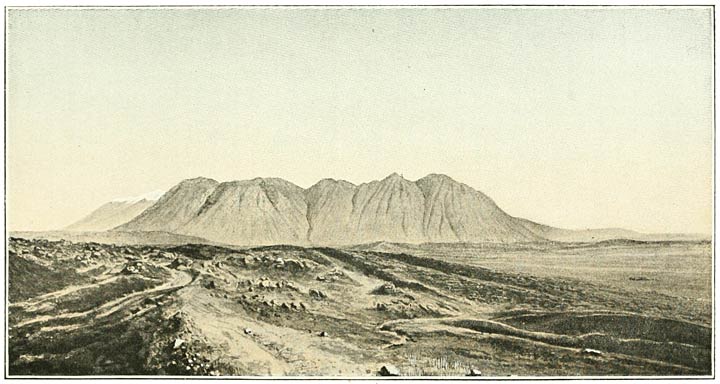
Fig. 150. Kerkür Dagh from the South; Nimrud Crater in the background.
It was ten o’clock. I called a halt, and took a photograph of the Kerkür Dagh, which rose in front of us, hiding Nimrud (Fig. 150). You just obtain a peep of the crater of the giant volcano on the west of that bold elevation. We could not discover traces of a crater on Kerkür, which appeared to compose an isolated mass. The level ground upon which we stood extended in both directions, towards the west and towards the east; but the configuration of this high land was such as to conceal completely the waters of Lake Van. We now commenced a more westerly course, and in another hour had passed the Kerkür Dagh and were in full face of Nimrud (Fig. 151). The heights of the Kerkür are seen on the extreme right of my illustration, descending by bold bastions to the steppe. After a second halt we arrived upon the edge of the plateau, where it overhangs the great plain of Mush. We had been walking or trotting along for a space of nearly an hour, excluding stoppages, from the point at which my first photograph was taken.
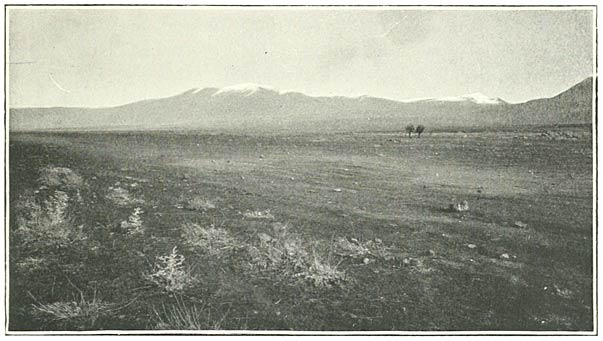
Fig. 151. Nimrud Crater from the Volcanic Plateau.
The prospect from this position was at once far-reaching and instructive. On our right hand, a few miles off, rose the caldron of Nimrud from the table surface upon which we stood. Behind us there was nothing but the undulating steppe. Our barometers were now sensible of a slight decline in elevation—a decline of about 350 feet. We were placed at a level of 5500 feet; abruptly before our eyes the ground fell away to the head of the plain, 1000 feet below. The appearance of the plain of Mush recalled our view from the slopes of Aghri Dagh over the district of Alashkert. Both depressions are in fact the beds of former lakes, to which the mountains descend in bold promontories. On that occasion we were overlooking the breadth of an even area; to-day we were commanding the length. And what a curious commencement of the plain that feeds the Euphrates, this colossal dam, 1000 feet in height and several miles across! The boundaries of the depression are, on the north, the train of Nimrud, which extends for a short distance towards the west. Further on, the line is continued by a range of lofty hills, which, as we looked, extended across the horizon, their summits topped with snow. The Kurdish chain contributes the southern and continuous barrier. Our course was indicated by a distant headland of that southern border, bearing about west-north-west.
The descent to the plain occupied nearly an hour, and it was one o’clock before we were again on level ground. The first steps of the declivity led us past a little village, and along a torrent which contributes its waters to the Euphrates. The name of Morkh is applied both to the hamlet and to the stream. Looking backward, we observed a little conical crater on the flank of Nimrud, resembling a boil, and facing the Kerkür. Eruptive volcanic stones were strewn upon our path. Lower down we threaded our way through some low bush of oak. When we reached the head of the plain, a hill mass of no great height, and evidently of volcanic origin, rose between us and the descending train of Nimrud. We could see the trees of the Kurdish village of Norshen, beneath the mountains of the southern border, and scarcely more than half-a-mile away.
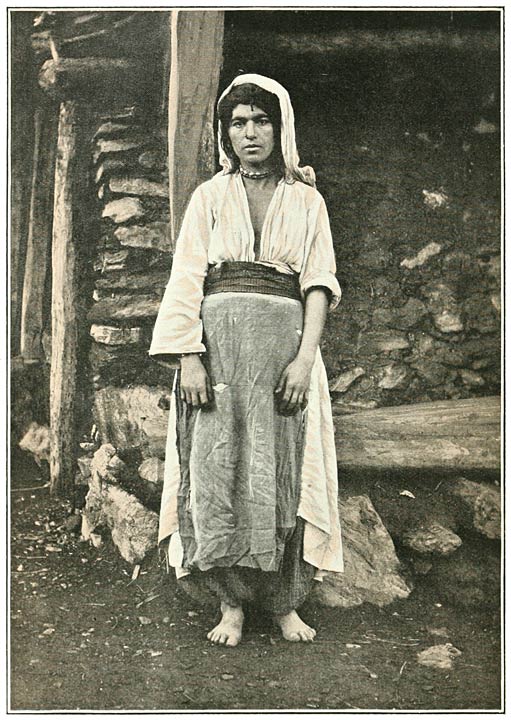
Fig. 152. Young Kurd Woman at Gotni, Mush Plain.
Proceeding at four o’clock, we arrived in half-an-hour at the promontory which had been our point of course. We were obliged to cross the neck of this rocky cape, in order to avoid a marsh. Nor was the surface of the plain less boggy to which we descended—such is the neglect or inability on the part of the natives to profit by the natural advantages so lavishly bestowed. We were obliged to hug the headlands of the southern barrier for some considerable time. When at last we struck into the open plain on a more north-westerly course, the village which was our goal proved to be completely destitute both of barley and of hay. We were therefore escorted by a peasant to a neighbouring settlement, in the recesses of the spurs. It consisted of some thirty miserable tenements, of which ten belonged to Armenian families and twenty to Kurds. No grain was possessed by this village, but, after much wrangling, a little barley was produced. This sufficed to feed the horses, and we decided to spend the night there; the name of the place was Zirket.
But which of these underground hovels was the least repugnant as a lodging for the night? The first I entered displayed the flicker of a fire of dried manure, and was almost filled by the dim forms of cattle. But I could hear a human cough and the wheezing of sick people; and, as I advanced, I stumbled upon a prostrate figure. It was muffled in a ragged shawl, and I could not see the features; when I touched it on the bare feet it did not move. No better fortune attended a visit to a neighbouring hut; it was more lofty, but it was tenanted by a huddled group of women, one of whom was unable to move from the ground. Returning to my first choice, I ordered the cattle to be ejected, and the sleeper to be taken to an adjacent stable. We slept beside our horses and were attacked in force during the night by a formidable army of minute enemies.
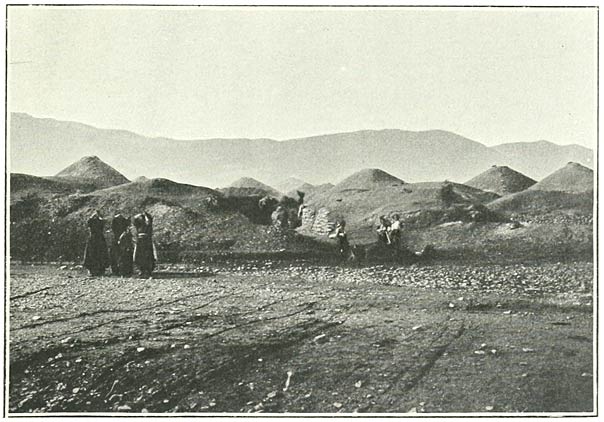
Fig. 153. Armenian Village of Khaskeui. Mush Plain.
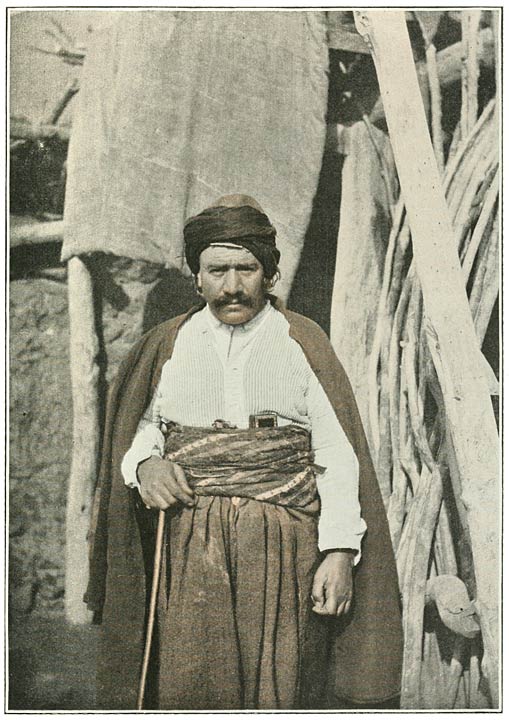
Fig. 154. Well-to-do inhabitant of Khaskeui, Mush Plain.
But this recess was no sooner passed than it was succeeded by another inlet of this coast of hills, backed by snow-clad heights. Scarcely less spacious and not less fair than the valley of the Arakh, that of the Garni Chai is enclosed by two protecting promontories, opening towards the expanse of plain. At the head of the western arm, a rocky spur projects into the bay at an angle from the promontory. Increasing in height as it proceeds, it takes the appearance of a rounded hill, rising isolated from the floor of the valley. Screened by the headlands from the winds, yet in full possession of the plain, it is indeed an enviable site. The hill is encircled by tiers of houses—horizontal lines of flat mud roofs—which lead up the eye, like steps, to the vaulted summit. In former times a castle rose from that proud eminence—probably a work of the Armenian Middle Ages. It has been razed to the ground, and the simple houses usurp the space once embellished by the city’s crown. We were soon within the precincts of the town of Mush.
It was evident that our arrival had been expected. Groups of people were collected in the street up which we passed, and were occupying posts of vantage along the route. I have little doubt that their interest in us was due to the attitude of the authorities towards our visit, rather than to curiosity on the part of such semi-animate individuals to see a European enter their town. The presence of the chief of the police, attired in a new greatcoat, from the brass buttons of which flashed the device of the crescent, was alone sufficient to attract a crowd. He stood in front of his office, facing the main street, and saluted us gravely as we wound up the steep ascent over an irregular pavement towards the central bazar. In the foreground of the picture before our eyes rose a massive minaret with a spacious gallery; and we admired the rambling design, composed of the admixture of yellow and brown blocks of stone, which varied the surface of the circular column of masonry. It belongs to the mosque of Aladdin Bey. The humble houses straggle down the side valleys, from which the stalk-like trunks of poplars rise. Looking backwards, the eye rests upon the green of tobacco fields in the main valley; and we noticed that the large leaves had already been gathered, leaving the stems of the plant almost bare. The gaunt sticks were preparing to wither under the first severe frost. Little foliage remained upon the trees in the gardens, and the poplars were already stripped of leaves.
The dwellings are constructed of rubble-stone, faced with mud. Some are whitewashed; but in the case of the greater number lapses of the mud coating reveal the rudeness of the structure behind. The flagstones in the bazar were swimming in filth of every description as we picked our way through the accumulation of heterogeneous objects—bullock carts, piles of straw, the skins of slaughtered animals with the entrails gathered up within the skin. The bazar of Mush is a mere aggregate of miserable open booths, clustering about the base of the minaret. The richest merchant—an Armenian—owned a stall which was not much larger than that of a costermonger. In this booth we observed the figure of a general in blazing uniform, squatted on the boards and gossiping with the shopman. It was none other than the Commandant of the troops. The place was crammed with sightseers, clad in red and blue cottons; their loose shirts, open to the waist, revealed the breasts of the men and the bosoms of the women, in whom bad diet, unwholesome tenements, and ceaseless toil had destroyed the graces natural to their sex. It was painful to see such a collection of miserable human beings; and the lank features and dishevelled locks of the old women haunted us for many a day. From the bazar we were escorted to the government house, in order to be received by the Mutesarrif or chief civil official of the sanjak of Mush.
A wooden staircase, reeking with filth and scattered with the debris of the tumble-down edifice, gave access to the first floor. A vagrant, nondescript crowd thronged the stairs and landing, from which a thick curtain, drawn aside, allowed us to pass into an inner apartment. Seated on the divan before us were several figures, to one of which—a fat old man with a fez and a shabby European coat—we were introduced as being the Mutesarrif. His coarse features, abnormally large ears, and the heavy lobes of the wrinkled under-lids of his dull eyes, prepossessed us against him at first sight. His stomach had become distended with continual sitting, and the scanty hair upon his head was quite white. A smart young man, wearing a fez, was seated upon his left hand, and a mollah with a white turban and dark robes upon his right. The first was his secretary; and the second—a thin-featured, little man, who never moved a muscle during the whole interview—was no less a dignitary than the Mufti of Mush. On either side of this central group were serried the other notables, members of the Mejlis.
Even the Mutesarrif himself appeared afraid to utter a word. No topic of conversation would unloose their tongues. Why had we come? What untowardness would result from our visit?—that was the question buried in those gloomy souls. I elicited the interesting fact that not one of them had ever heard of the code of Napoleon. When I mildly remarked that it was said to be the civil law of Turkey, the Mutesarrif broke in with the observation that he now remembered to have been told that there was such a code.
Bystanders eyed us curiously as we issued from this visit, and I quite expected to be escorted to the jail. We were agreeably surprised to be conducted to the best house in the place—standing by itself in a sunny situation overlooking the valley on the east. I expressed a desire to go to the bath. The answer was that in a couple of hours it would be at our disposal. When we arrived, there was not a single soul within the building except a couple of attendants. Incense had been burnt in the really spacious and comfortable chambers, which were newly swept and fragrant and clean. We were ministered to by an Armenian boy of unusual comeliness—the curves about his sash made it difficult to distinguish him from a girl. When we stepped forth into the night we were awaited by a muffled policeman, who took us home and joined in the circle of our visitors until we retired to rest.
The chief commissary of police with the new coat and the brass buttons—office and uniform modelled on a Russian pattern—had a busy time during our stay. Happily he was by nature an agreeable man; but he was fresh from Constantinople. His poor brain had been crammed with all those irksome regulations which have been spread over the Russian Empire and a great part of Europe, presumably from a Prussian source. An Englishman, it is true, should perhaps endure them with complacency; for does he not owe his wealth and his colonies to the prevalence of this cancer among his neighbours, and to his own complete freedom from the disease? Passports were examined at Mush for the first time since our arrival in Turkey—a country in which the traditionally liberal treatment of travellers is gradually giving place to measures of exclusion. My letters of introduction were read with mingled feelings—disappointment that they rendered necessary very special and delicate treatment, and relief that they clearly placed the responsibility for our visit upon officials in a high place.
We were rarely left alone—not even in our own apartment; for we slept and ate in the principal room of the residence allotted us, from which it was impossible to exclude the master of the house and his companions; and the presence of a single visitor was always accompanied by the entrance of the commissary or his adjutant. One of the two was never absent from our side. The anxiety of such a novel charge sat heavily upon both of them; both looked quite worn out by the time we were ready to depart.
Early on the morning following our arrival we were quite ready to sally forth; but the lesser official was already astir, and besought us to postpone our walk until he should have apprised his chief. The commissary was not long in coming, his toilette half completed; and no sooner had he saluted us than his sleepy eyes fell on the camera case, and he enquired what it might contain. A camera! had we received an iradeh from the Sultan to take photographs of what we saw? All photography was forbidden unless such a permit were forthcoming. So we abandoned the camera with good grace.
Well, whither shall we direct our steps? Let it be to the Rushdiyeh—the Turkish official school. We are informed that the building is under repair. It is actually in a ruinous condition, and no such institution really exists. Then to the remains of the old castle.—There is no such thing as an old castle.—Well, to the site upon which it stood. The climb through the town is really quite worth while. The view from the summit of the hill is extremely pleasing—the bold walls of the valley expanding to the level plain, the mountainous background soaring upwards and white with snow, and in the folds of this expanse the little hill of Mush—a mere button upon which you stand. The neck which connects this eminence with the arm of the main valley is dotted over with the headstones of deserted graveyards, seeming from a distance like bleaching bones. You look down into the glen between the two elevations through which trickles the Garni Chai. In its lap lies a white edifice which is indicated as the barrack, and towards its head you admire the form of a second minaret, resembling its companion in the bazar. The summit of the hill is flat; and, although the houses rise up to the margin, the platform itself is still bare. The debris of the old castle are strewn upon the grass, but not one stone remains upon another. Most have been taken away as building material.
Let us proceed to the school of the Armenian Catholics.—Yes, certainly, if such be our desire.—We wind down the town towards the valley on the east, and arrive before the enclosure of a newly-erected church. That is the Catholic Church;—but where is the school? It is situated just opposite;—oh! but it is closed.—Certainly, the school is closed.—The church at least is open; let us pass in.—Certainly, and we enter the building. The first to enter is the commissary, followed by four policemen in military dress. The bleak walls of the brand-new edifice echo the clank of their boots. A single figure is present—the black-robed figure of a priest; and it crouches on the high altar, visibly trembling, such as we may imagine some male Hypatia of olden times. While I greet the priest from the doorway, a soldier walks across, and dares the wretched creature to address a word to us. On our part there is nothing to be done but to keep our tempers.
A very interesting church!—Now let us visit the remaining churches. That building close by is the principal church of the Gregorian Armenians; it is withal a very poor place. The door is open; we have been expected; not a soul is present. Pursuing our way, we meet an Armenian priest—a young, broad-shouldered, open-faced man. He seems inclined to speak, so we ask him how many churches there may be in Mush. He answers, seven; but the commissary had said four. A soldier addresses him in Kurdish; the poor fellow turns pale, and remarks that he was mistaken in saying seven; there cannot be more than four. I turn to the commissary and ask him to take us to the teacher in the school of the United Armenians—a philanthropic institution with some schools in the provinces and headquarters in the capital. The reply comes that he is absent from town. The school is enjoying a holiday. There can be no doubt that they have all received orders to close their schools; but it is not probable that many schools remain in such a place. The Protestants have closed theirs.
Such are a few of our experiences during our short sojourn at Mush. We were not merely shadowed by the police, but prevented from enjoying any of the profit and pleasure which a traveller seeks in return for all his trouble and expense. To protest to the Mutesarrif would have been worse than useless; and the policy of the British Foreign Office is so weak in these countries that we lose the advantages of our Consular system. When I called upon the chief official to take farewell, I congratulated him upon the possession of such an energetic commissary, and begged that he would recommend him in the despatch which no doubt he was preparing for a suitable reward. His efforts had, indeed, been completely successful; we had scarcely communicated with a single soul in Mush. I thanked him for the politeness with which our seclusion had been effected; and the old man rose, and accompanied me to the door.... What iniquities had they been committing and were desirous of screening? Terror, the most abject terror, was in the air. We drank it in from the very atmosphere about us—a consuming passion, like that of jealousy—a haunting, exhausting spectre, which sits like a blight upon life. Such a settled state of terror is one of the most awful of human phenomena. The air holds ghosts, all joy is dead; the sun is black, the mouth parched, the mind rent and in tatters.
Mush is the most mis-governed town in the Ottoman Empire. Ever since the inauguration of closer relations between Europe and these countries, the testimony of the few Europeans who have realised and noted such facts bears out this judgment almost to the letter. It is less easy to assign any definite cause. The disease has become chronic; and its symptoms are so familiar that the inhabitants have grown callous to their condition. It is only Damadeans, and such imported members of the community, that such deeply-rooted evils impress.
The Mussulman majority are probably almost all of Kurdish origin; and since the enrolment of the Hamidiyeh irregular cavalry they openly profess the name of Kurd. The slopes of the hills around Mush are covered with vineyards and gardens; and in each garden there is a small, two-storeyed house, resembling from a distance a scattering of bathing-machines. The Mussulmans retire to these gardens during summer, and superintend their cultivation. The whole winter through they sit idle in Mush. There they consume a great quantity of tobacco; and all this tobacco is contraband. It is their custom to buy their wives, the best-looking and best-born women sometimes fetching not less than a hundred pounds. All are obstinate in their belief that it was the Prussians who enabled the Russians to conquer Turkey in the last war. Their hope is that this assistance will not be forthcoming in the future, and they are therefore confident of success in the conflict which they foresee. And they pit their Hamidiyeh against the Cossacks.