Chapter VII · (continued 2)
Reading edition
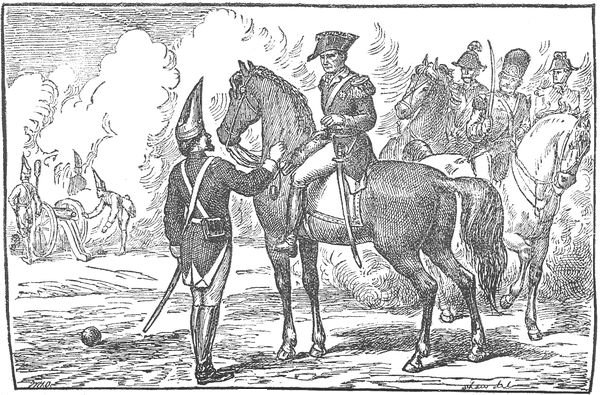
The Faithful Attendant.
Tobacco smoking, however, can boast of many patrons besides warriors, physicians and statesmen, some of the finest writers of the last three centuries have indulged in the weed. The following extract from the "Australasian" entitled, "Tobacco Smoking" refers to many literary smokers.
"Burke felt himself precluded from 'drawing an indictment against a whole community.' The critical moralist pauses before the formidable array of the entire social world, civilized and savage. The Cockney, leaving behind him the regalias and meerschaums of the Strand, finds the wax-tipped clay-pipe in the parlors of Yorkshire: finds dhudeen and cutty in the wilds of Galway and on the rugged shores of Skye and Mull. The Frenchman he finds enveloped in clouds of Virginia, and the Swede, Dane, and Norwegian, of every grade or class, makes the pipe his travelling companion and his domestic solace. The Magyar, the Pole and the Russian rival the Englishman in gusto, perhaps excel him in refinement; the Dutch boor smokes finer Tobacco than many English gentlemen can command, and more of it than many of our hardened votaries could endure; but all must yield, or rather, all must accumulate, ere our conceptions can approach to the German. America and the British colonies round off the picture, adding Cherokees, Redmen and Mongolians ad libitum. The Jew whether in Hounds ditch, Paris Hamburgh, or Constantinople, ever inhales the choicest growths, and the Mussulman's 'keyf' is proverbial. India and Persia dispute with us the palm of refinement and intensity, but the philosopher of Australia is embarrassed when he asks himself to whom shall I award that of zealous devotion?
"Dr. Adam Clarke, who could never reconcile himself to the practice, deemed it due to his piety to find a useful purpose in the creation of tobacco by all-seeing Wisdom, and as that discovered by the instincts of all the nations of the planet, and practiced by mankind for three centuries, is wrong, the benevolent Wesleyan of Heydon, applied himself diligently and generously to correct the world, and to vindicate its Author. 'In some rare cases of internal injury tobacco may be used but not in the customary way.' Be it known, then, that the Creator has not created it in vain. Dr. Clarke must have been a very good-natured man. He tortured his brains to find a hope of pardon for Judas Iscariot, and held that the creature (Nachash) who tempted Eve was not a serpent but a monkey cursed by the forfeiture of patella and podex; therefore doomed to crawl! But I fear, if the present form of using tobacco be not the true one, we must despair of ever finding it, and people will go on smoking and 'hearing reason' as long as the world goes round. Robert Hall received a pamphlet denouncing the pipe. He read it, and returned it. 'I cannot, sir, confute your arguments, and I cannot give up smoking,' was his comment. It is loosely asserted that smoking is more prevalent among scholars, intellectualists, and men who live by their brains, than among artisans and subduers of the soil. This is an error. Tobacco is less a fosterer of thought than a solace of mental vacuity. The thinker smokes in the intervals of work, impatient of ennui as well as of lassitude, and the ploughman, the digger, the blacksmith or the teamster, lights his cutty for the same reason. No true worker, be he digger, or divine, blends real work with either smoking or drinking. Whenever you see a fellow drink or smoke during work, spot him for a gone coon; he will come to grief, and that right soon. Sleep stimulates thought, and sometimes a pipe will bring sleep, but trust it not of itself for either thought or strength. It combats ennui, lassitude, and intolerable vacuity, soothing the nerves and diverting attention from self. Sam Johnson came very near the mark: 'I wonder why a thing that costs so little trouble, yet has just sufficient semblance of doing something to break utter idleness, should go out of fashion. To be sure, it is a horrible thing blowing smoke out; but every man needs something to quiet him—as, beating with his feet.'
"Life is really too short for moralists and medici who have read Don Quixote, to attack a verdict arrived at and acted upon by the combined nations of the entire world, during the experience of three centuries, and apparently deepened by their advancing civilization. Give us rules and modifications, give us guides and correctives, give us warnings against excess, precipitancy, and neglect of other enjoyments, or of important duties, if you will. The urbane æstheticism that regulates pleasure also limits it; and true refinement ever modifies the indulgence it pervades. But it is emulating Mrs. Partington and her mop to attempt to preach down a world. When they do agree, their unanimity is irresistible. Prohibition may give zest to enjoyment, and provocation to curiosity, but can never overcome the instincts of nature or cravings of nervous irritability, and he who rises in rebellion against her absolute decree will respect the limits and study the laws of a recognized and regulated enjoyment.
"Let, then, the moralist point out what social duties may be imperilled; let the physician apprise us of the disorders to be guarded against; and let the lover of elegance see that no neglect or slight awaits her. Of abstract arguments we have seen the futility, of moral and medical crusades even the most patient are weary, and we gladly turn to something real, in the suffrages of a by-gone great man of acknowledged fame—Ben Jonson. Ben Jonson loved the 'durne weed,' and describes its every accident with the gusto of a connoisseur. Hobbes smoked, after his early dinner, pipes innumerable. Milton never went to bed without a pipe and a glass of water, which I cannot help associating with his:
'Adam waked, So custom'd, for his sleep was æry light, of pure digestion bred And temperate vapors bland!'
"Sir Isaac Newton was smoking in his garden at Woolsthorpe when the apple fell. Addison had a pipe in his mouth at all hours, at 'Buttons.' Fielding both smoked and chewed. About 1740 it became unfashionable, and was banished from St. James' to the country squires and parsons. Squire Western, in Tom Jones, arriving in town, sends off Parson Supple to Basingstoke, where he had left his Tobacco-box! The snuff-box was substituted. Lord Mark Kerr, a brave officer who affected the petit maitre (à la Pelham, in Lord Lytton's second novel), invented the invisible hinges, and it was this 'going out of fashion' that Jonson alluded to in 1774.
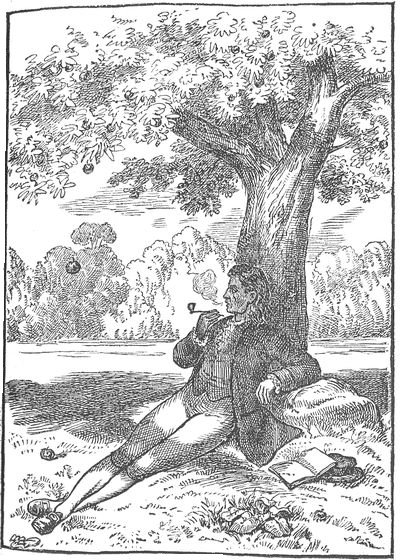
Newton and his Pipe.
"We next find Tobacco rearing its head under the auspices of Paley and Parr. Paley had one of the most orderly minds ever given to man. A vein of shrewd and humorous sarcasm, together with an under-current of quiet selfishness, made him a very pleasant companion. 'I cannot afford to keep a conscience any more than a carriage,' was worthy of Erasmus, perhaps of Robelais. 'Our delight was,' said an old Jonsonian to the writer, 'to get old Paley, on a cold winter's night, to put up his legs, wrap them well up, stir the fire, and fill him a long Dutch pipe; he would talk away, sir, like a being of a higher sphere. He declined any punch, but drank it up as fast as we replenished his glass. He would smoke any given quantity of Tobacco, and drink any given quantity of punch.'
"Parr smoked ostentatiously and vainly, as he did everything. He used only the finest Tobacco, half-filling his pipe with salt. He wrote and read, and smoked and wrote, rising early, and talking fustian. He was a sort of miniature Brummagem Johnson. Except his preface to Bellendenus, you might burn all he has written. His 'Life of Fox' is beneath contempt. His letters are simply laughable, especially his characters of contemporaries. He, however, was an amiable and good-natured man, and had sufficient humanity to regard dissent as an impediment to his recognition of intellectual or moral worth. Parr was an arrogant old coxcomb, who abused the respectful kindness he received, and took his pipe into drawing-rooms. I pass over the Duke of Bridgewater, because he was early crossed in love by a most beautiful girl, could not bear the sight of a flower even growing, and passed life in a pot-house with a pipe, listening to Brindley, whose intellect and dialect must have been alike incomprehensible to him.
"The cigar appeared about 1812; it received the countenance of the Regent, who had hitherto confined himself to macobau snuff, scented with lavender and the tonquin bean. Porson smoked many bundles of cheroots, which nabobs began to import. After 1815 the continental visits were resumed, and the practice of smoking began steadily to increase. The German china bowl with globular receiver of the essential oil, the absorbent meerschaum, the red Turkish bell-shaped clay, the elaborate hookah,—a really elegant ornament, and perhaps the most healthful and rational form of smoking,—pipes of all shapes, began to fill the shops of London. Coleridge, when cured of opium, took to snuff. Byron wrote dashingly about 'sublime Tobacco,' but I do not think he carried the practice to excess. Shelley never smoked, nor Wordsworth, nor Keats. Campbell loved a pipe. John Gibson Lockhart was seldom without a cigar. Sir Walter Scott smoked in his carriage, and regularly after dinner, loving both pipes and cigars. Professor Wilson smoked steadily, as did Charles Lamb. Carlyle, now somewhat past seventy, has been a sturdy smoker for years. Goethe did not smoke, neither did Shakespeare. I cannot recall a single allusion to Tobacco in all his plays; even Sir Toby Belch does not add the pipe to his burnt sack. But Shakespeare hated every form of debauchery. The penitence of Cassio is more prominent than was his fun. 'What! drunk? and talk fustian and speak parrot, and discourse with one's shadow?' Shakespeare held drunkenness in disgust. Even Falstaff is more an intellectual man than a sot. What actor could play Falstaff after riding forty miles and being well thrashed? Yet, when Falstaff sustains the evening at the Boar's Head, he has ridden to Gadshill and back, forty-four miles! No palsied sot, he. Hamlet's disgust at his countrymen is well known. 'Grim death, how foul and loathsome is thine image!' is the comment on the drunken Kit Sly. In short, when you look at the smooth, happy, half-feminine face of Shakespeare, you see one to whom all forms of debauchery were ungenial. A courtier certainly, and a lover of money. The king had written against Tobacco, and Will Shakespeare set his watch to the time. Raleigh and Coliban Jonson might smoke at the Mermaid—Will kept his head clear and his doublet sweet.
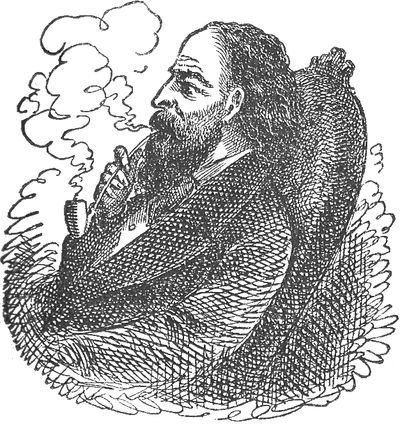
Tennyson, Smoking.
"Alfred Tennyson is a persistent smoker of some forty years. Dickens, Jerrold and Thackeray all puffed. Lord Lytton loves a long pipe at night and cigars by day. Lord Houghton smokes moderately. The late J. M. Kemble, author of 'The Seasons in England,' was a tremendous smoker. Moore cared not for it; indeed, I think that Irish gentlemen smoke much less than English. Wellington shunned it; so did Peel. D'Israeli loved the long pipe in his youth, but in middle age pronounced it 'the tomb of love.' While I am writing, it is not too much to aver that 99 persons out of 100, taken at random, under forty years of age, smoke habitually every day of their lives. How many in Melbourne injure wealth and brain, I leave to more skilled and morose critics. But my mind misgives me. Paralysis is becoming very frequent.
"I have seen stone pipes from Gambia, shaped like the letter U consisting each of one solid flint, hollowed through, also hookahs made by sailors with cocoanut shells. All, however, now agree that it is impossible to have either comfortable, cool, or safe smoking, unless through a substance like clay, porous and absorbent, especially as portable pipes are the mode. Those of black charcoal are not handsome; indeed, I always feel like a mute at a funeral while smoking one, but they are delightfully cool, absorbing more essential oil of nicotine, and more quickly than any meerschaum. I caution the smoker to have an old glove on; as these pipes 'sweat,' the oil comes through, and nothing is more pertinacious than oil of tobacco when it sinks into your pores, or floats about hair or clothes. My own taste inclines to the German receiver, long cherry tube and amber, and to my own garden, for all street smoking is unæsthetic, and the traveller by coach, boat, or rail has the tastes of others to consult. Surely it is not urbane to throw on another the burden of saying that he likes not the smell or the inhaling of burning tobacco. Better postpone your solace to more fitting time and place—the close of day and your own veranda. Indoor smoking is detestable. Life has few direr disenchanters than the morning smells of obsolete tobacco, relics though they be of hesternal beatitude. Give me, in robe or jacket, a hookah, or German arrangement, Chinese recumbency in matted and moistened veranda, and the odors of fresh growing beds of flowers wafted by the southern breeze. Nor be wanting the fragrant perfume of coffee. 'Meat without salt,' says Hafiz, 'is even as tobacco without coffee.' The tannin of the coffee corrects the nicotine. And it may not be amiss to learn that a plate of watercress, salt, and a large glass of cold water should be at hand to the smoker by day; the watercress corrects any excess, and is at hand in a garden. Smoke not before breakfast, nor till an hour has elapsed after a good meal. Smoke not with or before wine, you destroy the wine-palate. If you love tea, postpone pipe till after it; no man can enjoy fine tea who has smoked. In short, smoke not till the day is done, with all its tasks and duties.
"I have seen men of pretension and position treat carpets most contumeliously, trampling on the pride of Plato with a recklessness that would bring a blush to the cheek of Diogenes himself. Can they forget the absorbent powers of carpet tissues, and the horrors of next morning to non-smokers, perhaps to ladies? Surely this is unæsthetic and illiberal: it is in an old man most pitiable, in a young one intolerable, in a scholar inexcusable, from an uncleanness that seems willful. Let the young philosopher avoid such practice, and give a wide berth to those who follow them. Take the following rules, tyro, meo periculo:—
1. Never smoke when the pores are open: they absorb, and you are unfit for decent society. Be it your study ever to escape the noses of strangers. First impressions are sometimes permanent, and you may lose a useful acquaintance.
2. Learn to smoke slowly. Cultivate 'calm and intermittent puffs.'—Walter Scott.
3. On the first symptom of expectoration lay down the pipe, or throw away the cigar; long-continued expectoration is destructive to yourself and revolting to every spectator.
4. Let an interval elapse between the filling of succeeding pipes.
5. Clean your tube regularly, and your amber mouthpiece with a feather dipped in spirits of lavender. Never suffer the conduit to remain discolored or stuffed.
6. A German receiver can be washed out like a teacup, and the oil collected is of value, but a meerschaum should never be wetted. A small sponge at the end of a wire dipped in sweet oil should be used carefully and persistently round and round, coaxing out any hard concretions, till the inside be smooth in its dark polished grain, of a rich mahogany tint. The outside, also, well polished with sweet oil and stale milk, then enveloped in chamois leather. The rich dark coloring is the pledge of your safety—better there than darkening your own brains.
"The pale gold c'noster and Turkey have now given way to the splendid varieties of America, and my knowledge halts behind the age. The black sticks resembling lollipops are said to be compounds of rum, bullocks' blood and tobacco lees. A taste for them, when once contracted, is abiding. Fine volatile tobacco, with aromatic delicacy, requires a long tube; used in a short pipe of modern fashion, they parch and shrivel the tongue. In short, what is true of all other pleasures is also true of tobacco-smoking. Fruition is sometimes too rapid for enjoyment, as the dram-drinker is less wise than the calm imbiber of the fragrant vintage of the Garonne. With Burke's common sense I began, and with it I end. Depurate vice of all her offensiveness, and you prune her of half her evil. Let not your love of indulgence be so inordinate as to purchase short pleasure by impairing health, neglecting duty, or, while promoting your own self-complacency, allow yourself to become permanently revolting to society, by offending more senses as well as more principles than one.'"
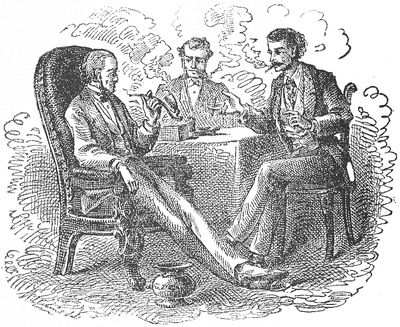
Modern Smokers.
Mantegazza, one of the most brilliant of all writers on tobacco, in alluding to the enchantment of the "weed," says:—
"If a winged inhabitant of some remote world felt the impulse to traverse space, and, with an astronomical map, to fly round our planetary system, he would at once recognize the earth by the odor of tobacco which it exhales, forasmuch as all known nations smoke the nicotian herb. And thousands and thousands of men, if compelled to limit themselves to a single nervous aliment, would relinquish wine and coffee, opium and brandy, and cling fondly to the precious narcotic leaf. Before Columbus, tobacco was not smoked except in America; and now, after a lapse of a few centuries in the furthest part of China and in Japan, in the island of Oceanica as in Lapland and Siberia, rises from the hut of the savage and from the palace of the prince, along with the smoke of the fireplace, where man bakes his bread and warms his heart, another odorous smoke, which man inhales and breathes forth again to soothe his pain and to vanquish fatigue and anxiety.
"In the early times of the introduction of tobacco, smokers in many countries were condemned to infamous and cruel punishments; had their noses and their lips cut off, and with blackened faces and mounted on an ass, exposed to the coarse jests of the vilest vagabonds and the insults of the multitude. But now the hangman smokes, and the criminal condemned to death smokes before being hanged. The king in his gilt coach smokes; and the assassin smokes who lies in wait to throw down before the feet of the horses the murderous bomb. The human family spends every year two thousand six hundred and seventy millions of francs (about a hundred millions in English money) on tobacco, which is not food, which is not drink, and without which it contrived to live for a long succession of ages.
"In the discomfitures and disasters which befell the Army of Lavalle, in the civil wars of the Argentine Republic, the poor fugitives had to suffer the most horrible privations, which can be imagined. By degrees the tobacco came to an end, and the Argentines smoked dry leaves. One man, more fortunate than his comrades, continued to use with much economy the most precious of all his stores—tobacco. A fellow soldier begged to be allowed to put the economist's pipe in his own mouth, and thus to inhale at second-hand the adored smoke, paying two dollars for the privilege. What is more striking still, when, in 1843, the convicts in the prison of Epinal, France, who had for some time been deprived of tobacco, rose in revolt, their cry was 'tobacco or death!' When Col. Seybourg was marching in the interior of Surinam against negro rebels, and the soldiers had to bear the most awful hardships, they smoked paper, they chewed leaves and leather, and found the lack of tobacco the greatest of all their trials and torments."
Elsewhere, inquiring what nervous aliments harmonize the one with the other, he says:—
"The only, the true, the legitimate companion of coffee is the nicotian plant; and wisely and well the Turkish epicures declare that for coffee—the drink of Heaven—tobacco is the salt. The smoke of a puro, of a manilla, or of real Turkish tobacco, which passes amorously through the voluptuous tip of amber, blends magnificently with the austere aroma of the coffee, and the inebriated palate is agitated between a caress and a rebuke."
From a Southern paper we extract these whimsical lines. "On the Great Fall in the Price of Tobacco in 1801," by Hugh Montgomery, Lynchburgh, Va.,
"Lately a planter chanced to pop His head into a barber's shop— Begged to be shaved; it soon was done, When Strap (inclined oft-times to fun,) Doubling the price he'd asked before, Instead of two pence made it four. The planter said, 'You sure must grant, Your charge is most exhorbitant.' 'Not so,' quoth Strap, 'I'm right and you are wrong, For since tobacco fell, your face is twice as long.'"
Another quaint whim in the form of an advertisement for a lost meerschaum is from an Australian paper:
"To Honest men and others,—Driving from Hale Town to Bridgetown, on Sunday, last, the advertiser lost a cigar holder with the face of a pretty girl on it. The intrinsic value of the missing article is small, but as the owner has been for the last few months converting the young lady from a blonde into a brunette, he would be glad to get it back again. If it was picked up by a gentleman, on reading this notice, he will, of course, send it to the address below. If it was picked up by a poor man, who could get a few shillings by selling it, on his bringing it to the address below, he shall be paid the full amount of its intrinsic value. If it was picked up by a thief, let him deliver it, and he shall be paid a like amount, and thus for once can do an honest action, without being a penny the worse for it."
A humorous writer thus discourses on man, who he denominates as "common clays":
"Yet we are all common clays! There are long clays and short clays, coarse clays and refined clays, and the latter are pretty scarce, that's a fact. To follow out the simile, life is the tobacco with which we are loaded, and when the vital spark is applied we live; when that tobacco is exhausted we die, the essence of our life ascending from the lukewarm clay when the last fibre burns out, as a curl of smoke from the ashes in the bowl of the pipe, and mingling with the perfumed breeze of heaven, or the hot breath of—well, never mind; we hope not. Then the clay is cold, and glows no more from the fire within; the pipe is broken, and ceases to comfort and console. We say, 'A friend has left us,' or 'Poor old Joe; his pipe is out.' We have all a certain supply of life, or, if we would pursue the comparison, a share of tobacco. Some young men smoke too rapidly, even voraciously, and thus exhaust their share before their proper time,—then we say they have 'lived too fast,' or 'pulled at their pipes too hard.' Others, on the contrary, make their limited supply go a long way, and when they are taking their last puffs of life's perfumed plant their energy is unimpaired; they can run a race, walk a mile with any one, and show few wrinkles upon their brow.
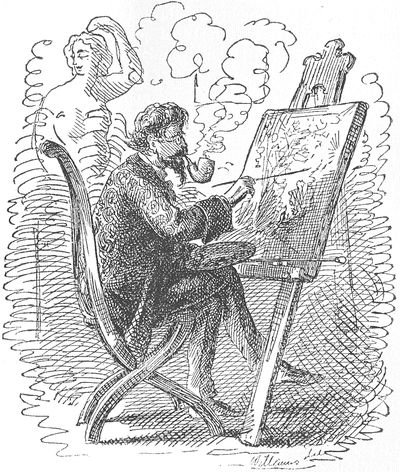
The Artist.
"A delicate person is like a pipe with a crack in the bowl, for it takes continued and careful pulling to keep his light in; and to take life is like willfully dashing a lighted pipe from the mouth into fragments, and scattering the sparks to the four winds of heaven. An artist is a good coloring pipe; an attractive orator is a pipe that draws well; a communist is a foul pipe; a well-educated woman whose conversation is attractive is a pipe with a nice mouthpiece; a girl of the period is a fancy pipe, the ornament of which is liable to chip; a female orator on woman's rights is invariably a plain pipe; an old toper is a well-seasoned pipe; an escaped thief is a cutty pipe, and the policeman in pursuit is a shilling pipe, for is he not a Bob?"
From these ingenious "conceits" we turn to a few thoughts on the present condition and history of the plant.
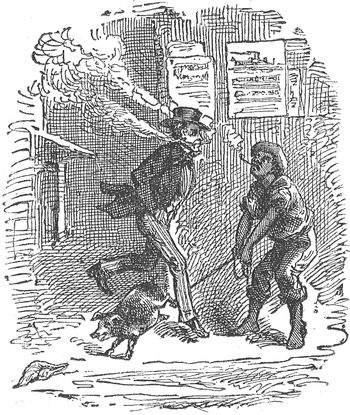
The Yankee Smoker.
The calumet or pipe of peace, decorated with all the splendor of savage taste, is smoked by the red man to ratify good feeling or confirm some treaty of peace. The energetic Yankee bent upon the accomplishment of his ends, puffs vigorously at his cigar and with scarcely a passing notice, strides over obstacles that lie in his path of whatever nature they may be. The dancing Spaniard with his eternal castanets whispers but a word to his dark-eyed senorita as he hands her another perfumed cigarette. The lounging Italian hissing intrigues under the shadow of an ancient portico, smokes on as he stalks over the proud place where the blood of Cæsar dyed the stones of the Capitol, or where the knife of Virginius flashed in the summer sun. The Turk comes forth from the Mosque only to smoke. The priest of Nicaragua with solemn mien strides up the aisle and lights the altar candles with the fire struck from his cigar. The hardy Laplander invites the stranger to his hut and offers him his pipe while he inquires, if he comes from the land of tobacco. The indigent Jakut exchanges his most valuable furs and skins for a few ounces of the "Circassian weed." Its charms are recognized by the gondolier of Venice and the Muleteer of Spain. The Switzer lights his pipe amid Alpine heights. The tourist climbing Ætna, or Vesuvius' rugged side, puffs on though they perchance have long since ceased to smoke. Tobacco, soothed the hardships of Cromwell's soldiers and gave novelty to the court life of the daughters of Louis XIV, delighted the courtiers of Queen Elizabeth and bidding defiance to the ire of her successors, the Stuarts, has never ceased to hold sway over court and camp, as well as over the masses of the people.
In nothing cultivated has there been so remarkable a development. Originally limited to the natives of America, it attracted the attention of Europeans who by cultivation increased the size and quality of the plant. But not alone has the plant improved in form and quality, the rude implements once used by the Indians have given away (even among themselves) to those of improved form and modern style. These facts are without a doubt among the most curious that commerce presents. That a plant primarily used only by savages, should succeed in spite of the greatest opposition in becoming one of the greatest luxuries of the civilized world, is a fact without parallel. It can almost be said, so universally is it used, that its claims are recognized by all. Though hated by kings and popes it was highly esteemed by their subjects. Their delight in the new found novelty was unbounded and doubtless they could sing in praise as Byron did in later times of:
"Sublime tobacco which from East to West Cheers the tar's labor and the Turkman's rest."[Back to Contents]