Part Seven O’Henry The Quail Baby
Reading edition

It was upon the Hill Trail that Brother and I came to know O’Henry, the Quail Baby. You would have liked our Hill Trail. It ran from the old logging chute, just at the top of the hill above the cabin, straight through woods of pine and fir until it ended at Bright Creek, two miles distant, a turbulent 125little stream full of rapids and miniature waterfalls, where the lady salmon fought their way up through the fresh water to deposit their eggs. The Hill Trail was bordered by ferns and salal bushes, with delicate, overhanging red huckleberry bushes and rows of young alders who whispered to each other all day like children in church. On either side of the brown 126ribbon that was the trail a carpet of grass and green moss stretched back into the deep woods, and tapestries of twin-flower vines and wild blackberry bushes hung from stump and fallen tree. The sunlight slanted down through the tall pines and touched the trail with tapering fingers of light as if it loved it. Even in the hottest summer there was always a little breeze that stirred the alders into sleepy gossip and set the pine trees humming gently to themselves. There was the scent of pine-needles, of fallen leaves, of wet moss.
We loved the Hill Trail best on the drowsy days of summer, when the shadows of the trees were long and cool, and the gentle splash of the tiny waterfall deep in the woods came like distant music. It was on such a day that we lay in the cool, deep moss near the Fairy Ring and stared through interlacing 127branches at the blue patchwork sky. We heard the tap-tap of a woodpecker not far away, the drowsy hum of a bee, and the shrill twittering of a flock of juncoes who were flying overhead. Then from afar came a call that we knew and loved, the deep woods call of the quail, with its three clear notes which said, as we imagined, “Oh, Hen-ry! Oh, Hen-ry!”
The Chinook Indians say that long ago a lady quail was unfaithful to her mate, but afterward repented. Her husband never forgave her, however, and would not come back to her, so now she goes through the forest calling plaintively to him, “Oh, Hen-ry!”
As we listened, the quail call came nearer, then a faint, almost imperceptible scurry of leaves that told us that a bevy of the little brown birds was close at hand. Indeed, closer at hand than we thought, for at that instant a 128mother quail tripped out from the underbrush and at sight of us stopped short with an imperative danger note, sounded, as we suspected, in warning to the children who were following her. We had not moved, but the mother heart was filled with terror. There was a whir of wings, and she rose in the air for a short distance, then fell, crashing heavily into a clump of fern.
“She’s hurt,” said Brother in a low tone, and quietly yet quickly we rose to our feet, our one thought to aid the little brown lady in her distress. But as we came near her—so near that my outstretched hand almost touched her—she fluttered away out through the clearing and down the trail, one wing dragging piteously.
Of course you must know it was only a trick. Brother and I should have known it, for we had heard of it many 129times. But such was the excellent acting of the brown mother bird, with her trailing wing, her helpless fluttering, and pitiful little cries, that we never questioned her sincerity. Half a dozen times we almost touched her, and each time she eluded us and fluttered a few feet ahead. Then suddenly with triumphant whir of strong wings she rose in a graceful arc and disappeared in the thickness of the forest shadows.
We stood and laughed—a little ruefully, for we prided ourselves upon our woodcraft. Then I touched Brother’s arm as a thought came to me.
“Her children are back by the Fairy Ring,” I told him. “Let us hide there and see if she will return to them.”
So down the trail we sped, across the little clearing, and stooped behind a thick screen of salal bushes. Nor had we long to wait, for presently there was a soft flutter of wings, a scuttle 130of leaves, and out from the underbrush, at almost the very spot where we had first seen her, came the mother quail uttering a soft, piping call which meant “Danger is past; all’s well!”
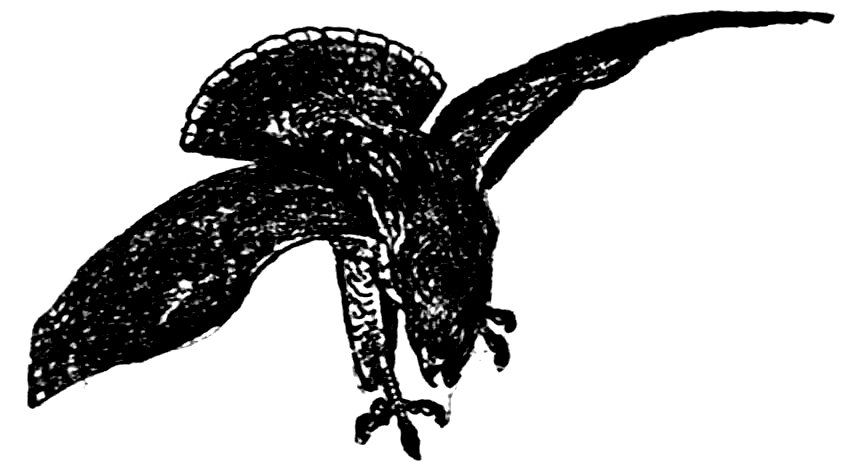
As if by magic, a dozen tiny brown bodies scurried out from under leaves, baby birds the size of bantam chicks. They eddied around and behind her like little leaves in the wind, and she spoke to them in soft, maternal notes, telling them perhaps of the two fierce humans from whom she had saved them by exposing herself to capture.
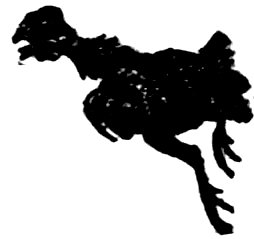
But quails can not count, it seems. For when the little brown mother tripped daintily away into the deep greenery of the fern brake with her brood at her heels, we heard a tiny, piping cry so small as to be only a dot of sound. Following it, we came upon the place where Mrs. Quail’s children had hidden themselves, and there we 131found a baby quail whose tiny legs had been caught in a twin-flower vine, and who was trying to wrench himself free with all his little might. It was but the work of an instant to release the little dark brown puffball, and as I held him in my hands he peeped shrilly and mournfully.
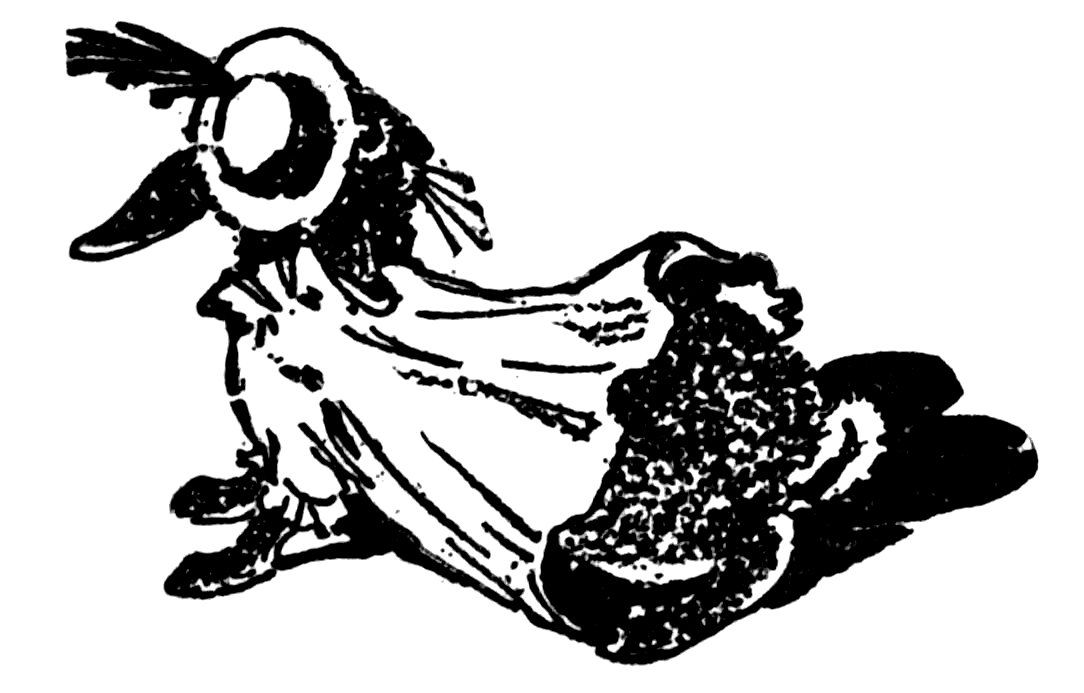
We could not bear the thought of leaving him there in the woods on the chance that his mother would hear him and come to him. Perhaps our doubt of her was unjust, but at any rate I carried him down the Hill Trail, through the orchard, and to the little log cabin. Cupped warmly in my hands, he went to sleep, and when he woke up, he forgot that he had been frightened, for he was a very tiny quail, and his life had been so brief that he had not had time to learn the great fear which all too soon becomes a part of every woods creature’s life.
132
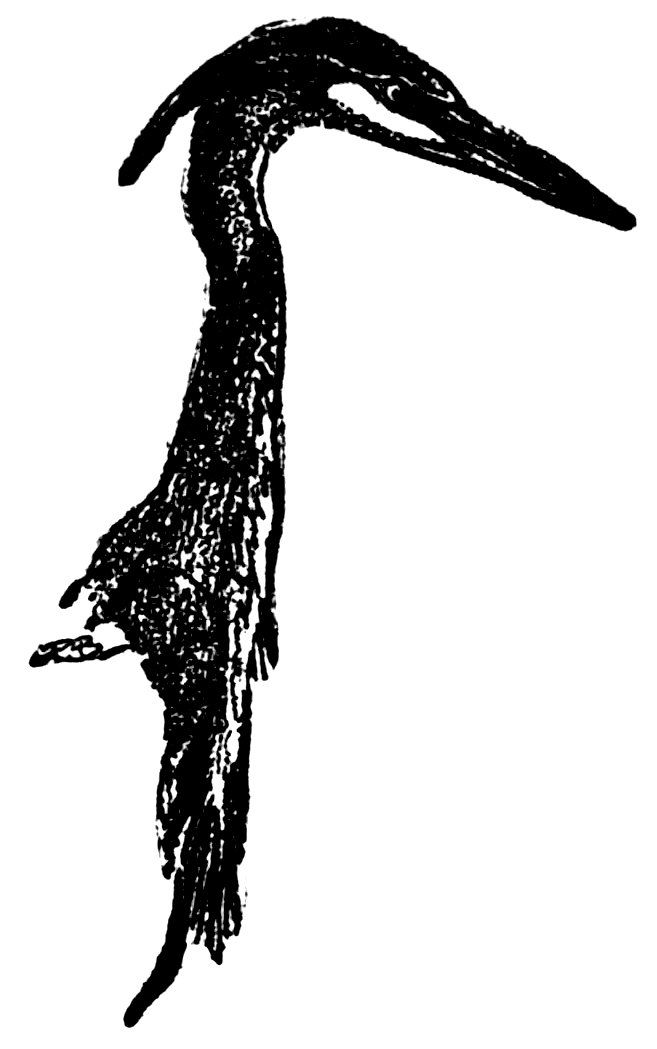
That night we put him in a little box with warm flannel covers over him, which we hoped would take the place of his mother’s feathers, and the next morning we thought to give him into the keeping of some philanthropic hen to rear with her own children.
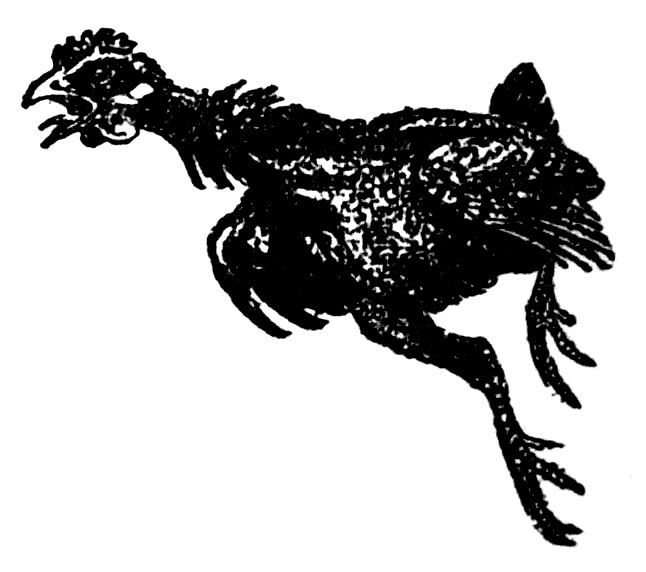
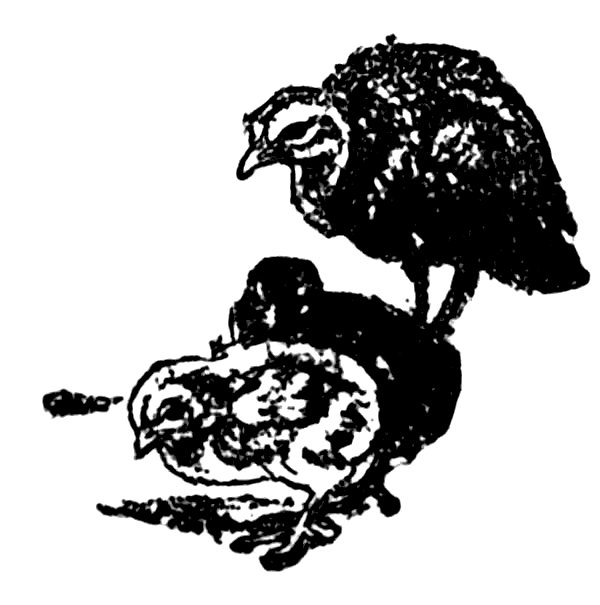
O’Henry, the Quail Baby, did not know that he was not a chicken; but the hens knew the difference, and there was not one lady among them, I am sorry to say, who would stretch her maternal spirit to include him in her family. We tried him on Sironda, the black Minorca hen, who had obligingly hatched out and mothered everything, from Barred Plymouth Rock chicks to white Pekin ducklings, and who had even reared a family of lanky young turkeys. But although Sironda was fussily attentive to her own brood of three-day-old chicks, she clucked sharply when we shoved O’Henry in 133under her spreading wings, and tried to scalp him with a vigorous peck.
Nor would Liberty, the bantam hen, accept him as a foster child. She squawked as if he were some vicious animal, and only prompt attention on our part saved him from a terrible death.
So we brought up O’Henry by hand and built for him a wire pen where he could spend his days. We dared not let him loose in the poultry yard, for it seemed that every hen, matron and maiden lady alike, resented the presence of the little woods stranger and would have rejoiced in scalping him.
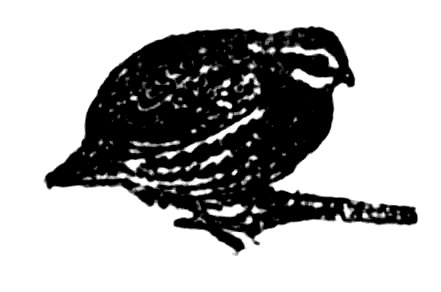
Brother and I lightened O’Henry’s captivity as much as we could. We taught him to come to us when we whistled his family call, and we would carry him about on our shoulders, balancing there like a tight-rope performer. We took him with us when 134we rowed in our little boat on the bay, and he would perch on the bow, keeping himself upright with fluttering wings and tail, cocking his tiny head on one side when the sea-gulls flew over, and uttering at times a faint and thoughtful note.
However, it was really due to Clarence, the gray gander, that O’Henry’s life became a happy one at the cove. Clarence was full of years and dignity, and a born philanthropist. If he had been a man, he would have endowed orphanages and given newsboy dinners. As it was, he had a passion for fathering the young things of the poultry yard, much to the dismay of the various mothers.
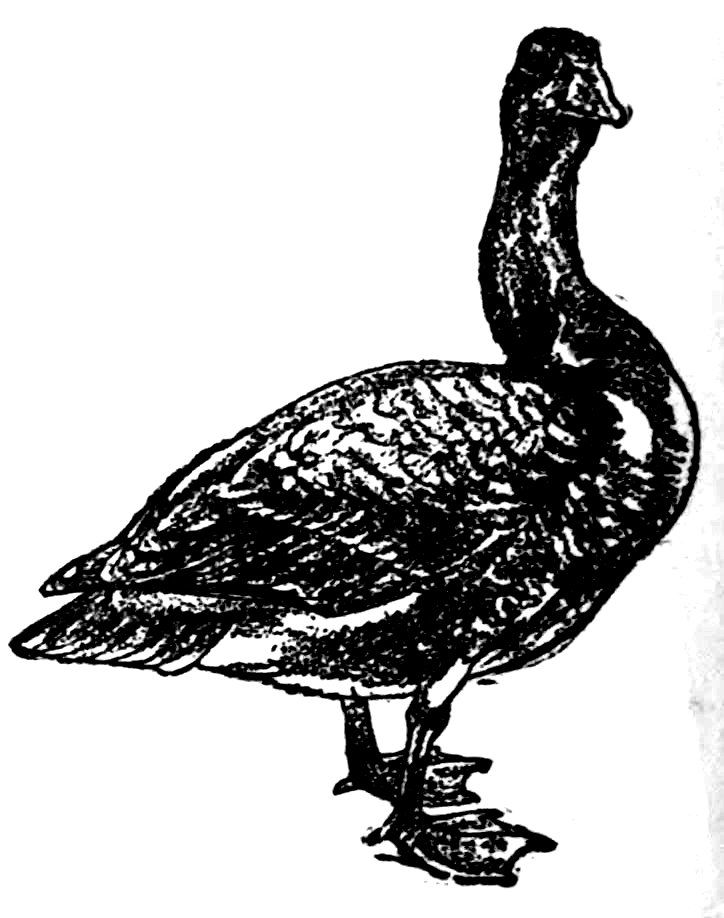
There was never a queerer sight than Clarence, the huge gander, going the rounds of the hen-coops of a morning, making coaxing noises to lure the young chicks out from under their 135mothers’ wings. The mother hens were imprisoned to prevent their scratching in the garden, and Clarence would shovel at the ground with his broad flat bill and pretend to drop a worm or bug in front of the coop, with the result that half of the lady hen’s brood would be at his heels ready to follow where he led. His charges were always well fed, for Clarence was an excellent provider, but the wear and tear on the feelings of the mothers must have been terrific.
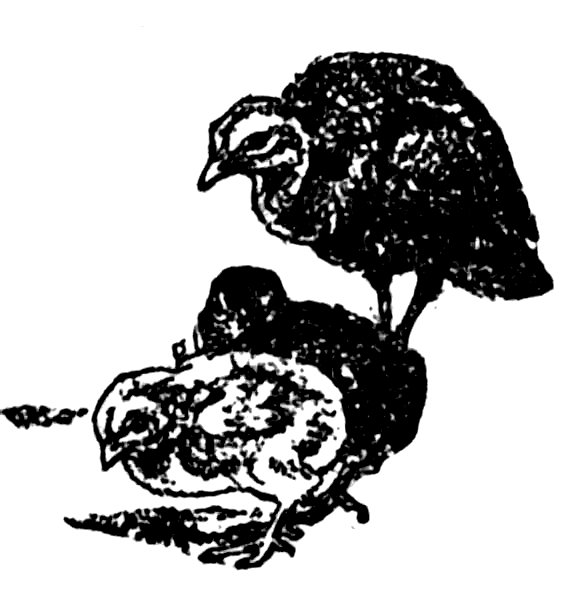
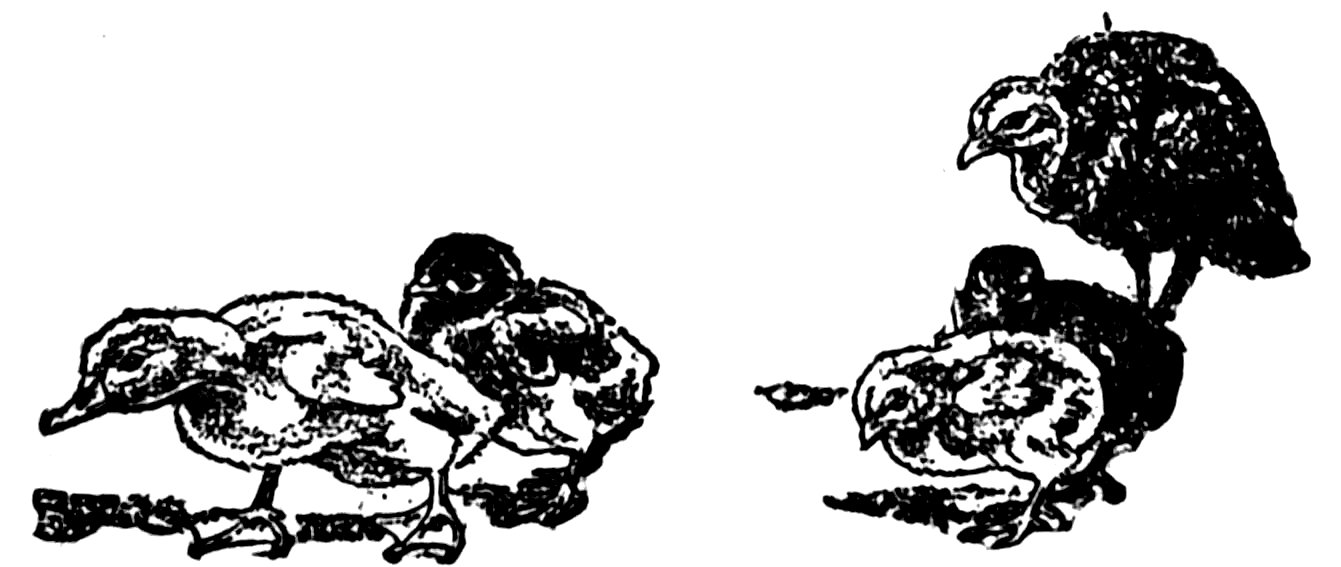
It was inevitable that sooner or later the gray gander should discover O’Henry and make him one of his family. We found Clarence in the yard one morning, a dozen odd-sized chickens at his webbed heels. There were two Minorca chicks that belonged to Sironda, half a dozen white Leghorn children, a tiny cockerel with budding wings and tail who was 136Liberty’s son, and a lanky young Plymouth Rock rooster, all run to legs.
We were minded to see what Clarence would think of our pet, and we let O’Henry out of his pen. The gray gander waddled over toward the tiny brown bird, his feathered tail wiggling from side to side, and made some hospitable noises in his throat. Then he pulled up a tuft of grass and dropped it before the Quail Baby by way of getting acquainted. The chicks set upon it noisily, while O’Henry watched them, his little head upraised, his tiny black eyes fixed on Clarence’s friendly bulk.
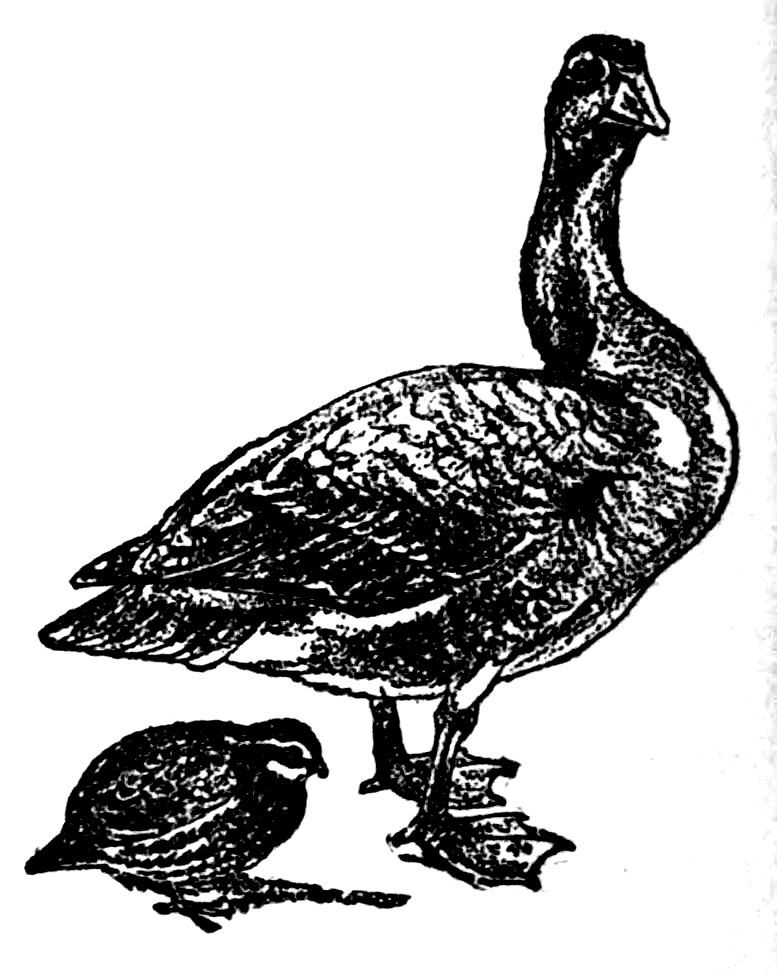
We had no idea of letting him go gipsying with Clarence, for he had become a well-loved playmate, and we could not be sure of his safety when away from us. Brother stooped to pick him up, but with a long-drawn hiss Clarence was upon him in a fury 137of flapping wings and snapping bill. He did not suffer his charges to be molested while in his care; that was clear.
So we allowed O’Henry to go jaunting with Clarence and his feathered crew. Daily the gray gander would come into the yard with his motley family in tow, and having gathered up O’Henry, they would be off through the meadow, up into the orchard, not to return until the setting of the sun. They would come straggling back in sleepy Indian file, the gray gander at the head of the line, the chicks cheeping fretfully and glad to nestle under the feathers of their distracted mothers. We would watch for O’Henry and whistle the call he knew. He would come to us with his quick, darting run and we would take him into the house for the night. His crop was always crammed disgracefully, and his eyes were heavy with sleep.
138
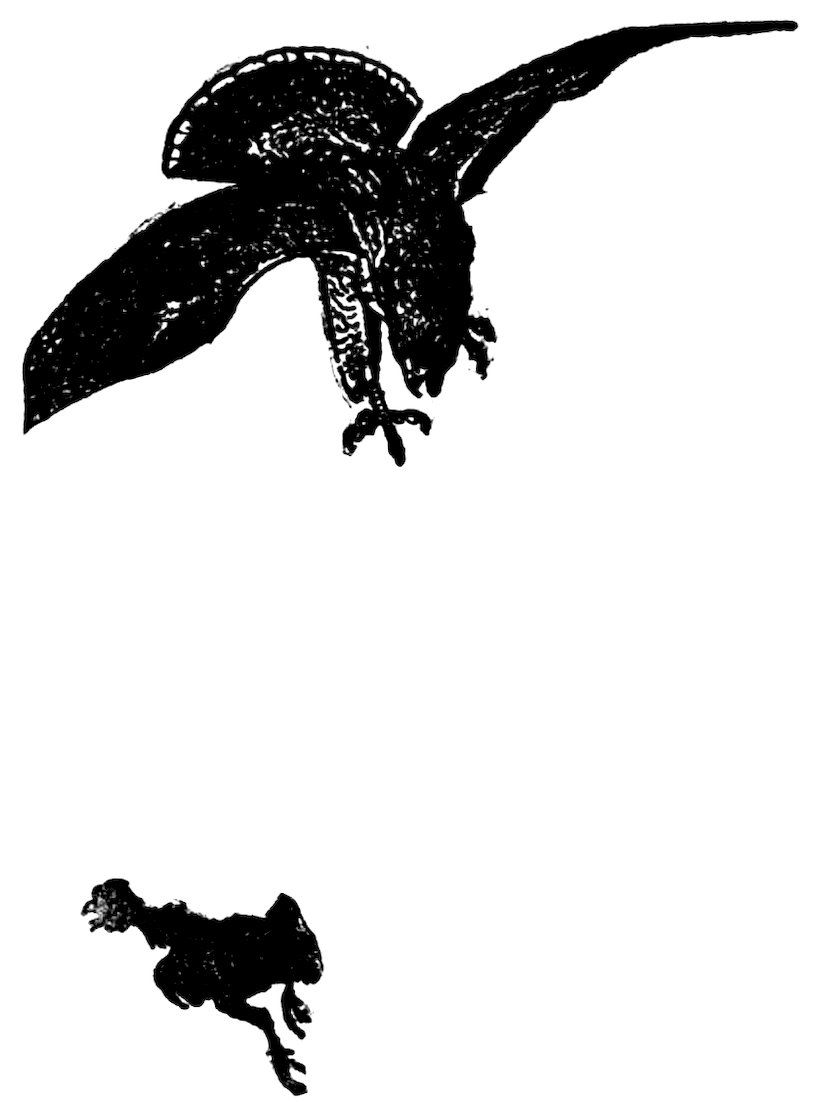
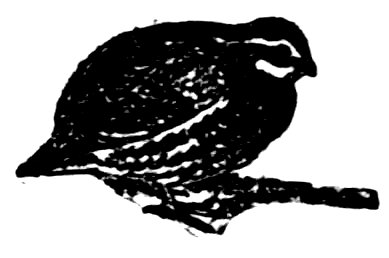
Sometimes O’Henry heard the call of the wild, and we wondered when he would obey it. He had grown from a baby bird to a beautiful brown gentleman quail, with white stripes running from his throat down over his breast like a vest. He had a tiny topknot that lifted in moments of excitement, and a clear “Bobwhite” whistle that Brother and I imitated, much to his annoyance.
We would hide from him behind the rose-bush and whistle. He would come running, his head stretched out in front of him, and on seeing us would hunch his head in between his shoulders and blink at us reproachfully.
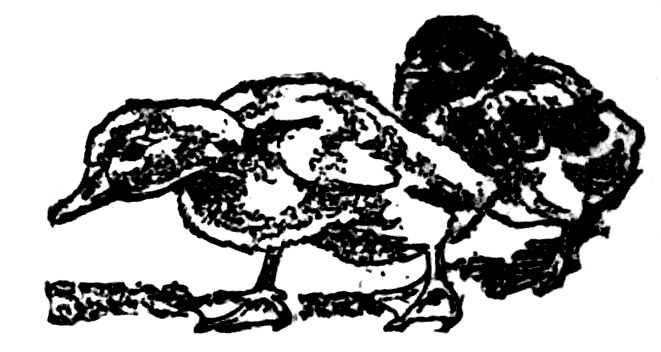
When summer passed and autumn came to the cove, O’Henry was the only one of Clarence’s family who still remained with the gray gander. The chicks and ducklings had gradually grown to adulthood and forgotten the kindly gander who had fathered them. 139But O’Henry still joined Clarence in his daily excursions to the orchard or the meadow.
Then one day, late in the fall, O’Henry went back to the woods. We grieved for him, because we loved him and because he had chosen the hardest time of the year in which to return to wild life he knew only by instinct. We went along the Hill Trail whistling “Oh, Hen-ry!” But if he heard the call he disregarded it. He never came to us.
Clarence was inconsolable. Day after day he would waddle into the back-yard where O’Henry’s empty pen still stood, walk around it, peer through the wire mesh, and make seductive noises of invitation. Brother and I tried to explain to him that our baby quail had grown up and had gone back to his kindred of the woods, but Clarence only hissed at us 140and regarded us balefully. I think he suspected us of having made away with his little comrade.
One day the snow came, early for the Sound country, and Brother and I, climbing the trail to the top of the hill, saw the familiar three-line imprints of the quail track. We thought of O’Henry, our lost friend; we hoped he was warm and that his crop was full of food.
Then one morning we heard the familiar “quit quit” of the quail very near at hand. The sound came from an empty hen-house, and when we approached it silently and peered through a crack, what should we see there but a bevy of twenty quail—and O’Henry in their midst! He had not forgotten us after all! He had brought his friends and relatives back to the place of his childhood, where he was sure of a welcome for them.
141Our hands filled with cracked wheat and mixed grain, we came to the door of the shed, softly whistling, “Oh, Hen-ry!” He came, as in former days, running to us with his head stuck out in front of him, and with a soft whir of wings was upon my shoulder, pecking contentedly at the wheat I offered him, and wiping his bill on my cheek.
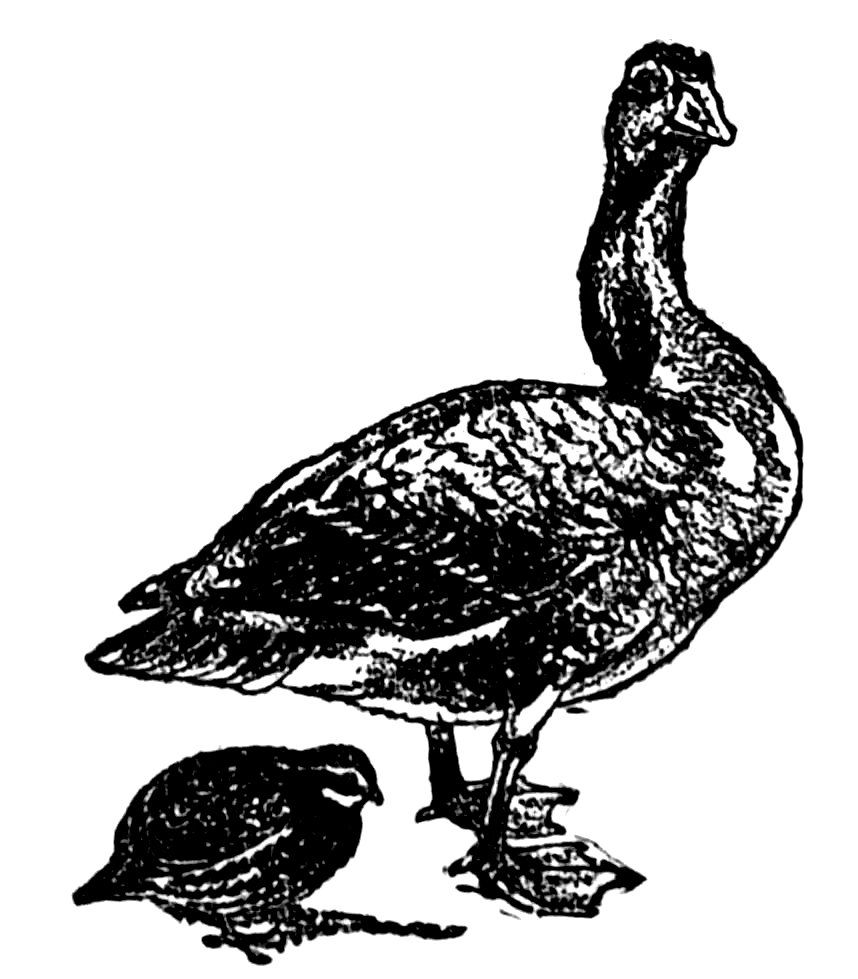
All through the weeks of snow and cold we fed O’Henry’s clan, and they learned that we were not to be feared. They surrounded us like chickens whenever we came into the shed, for O’Henry’s trust in us had inspired their confidence. Not only did they become accustomed to us, but to Clarence as well. For the lonely gray gander caught sight of O’Henry one morning, and waddled over to him, wiggling his excuse of a tail, shoveling the ground with his flat, yellow bill, and expressing his delight in 142husky quacks. The other quail at first took alarm, and there was much whirring of wings and scurrying of tiny feet. But the gray gander soon proved to them that his intentions were of the best. He merely wished to provide for them. So all those weeks when we fed our “boarders,” as we called them, Clarence stayed in the shed with the quail family, grubbing busily at the bare ground, finding little, but making up for the scarcity of food in kindly endeavor.
When the snow melted, O’Henry’s tribe went back to the woods—and with them went Clarence. One day we saw O’Henry and his brown cousins scurrying up the hill, darting under ferns and bushes, calling to each other happily—and in their wake was Clarence, the fatherly gander, flattered into thinking that he was leading the way.
It was a quaint sight, and we did not 143try to bring him back because we thought he would return at sunset. But he did not. He disappeared into the woods with the quail family, and we never saw him again. Long afterward, hunters told us of seeing a gray gander with a flock of quail—and they had forborne to shoot.
So we lost two friends at once, but we tried to believe that they were happy together. How Clarence accustomed himself to the ways of the wild, I do not know. But I do believe that somewhere the gray gander still lives with O’Henry, and I can think of no better protector for the quail baby and his family.
144
Part Eight
The Tale of Timothy
145
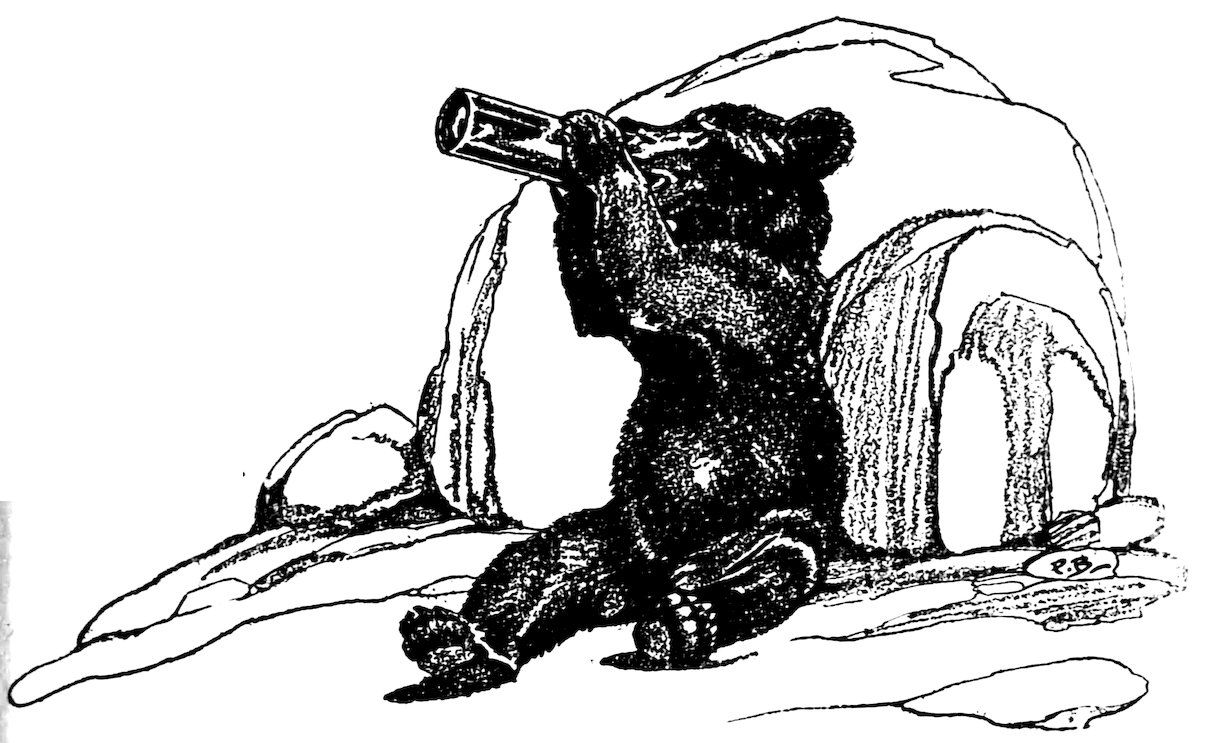
Timothy clung to the bottle habit.