Part One The Story of Skygak AN OLD-MAN SEA-GULL
Reading edition
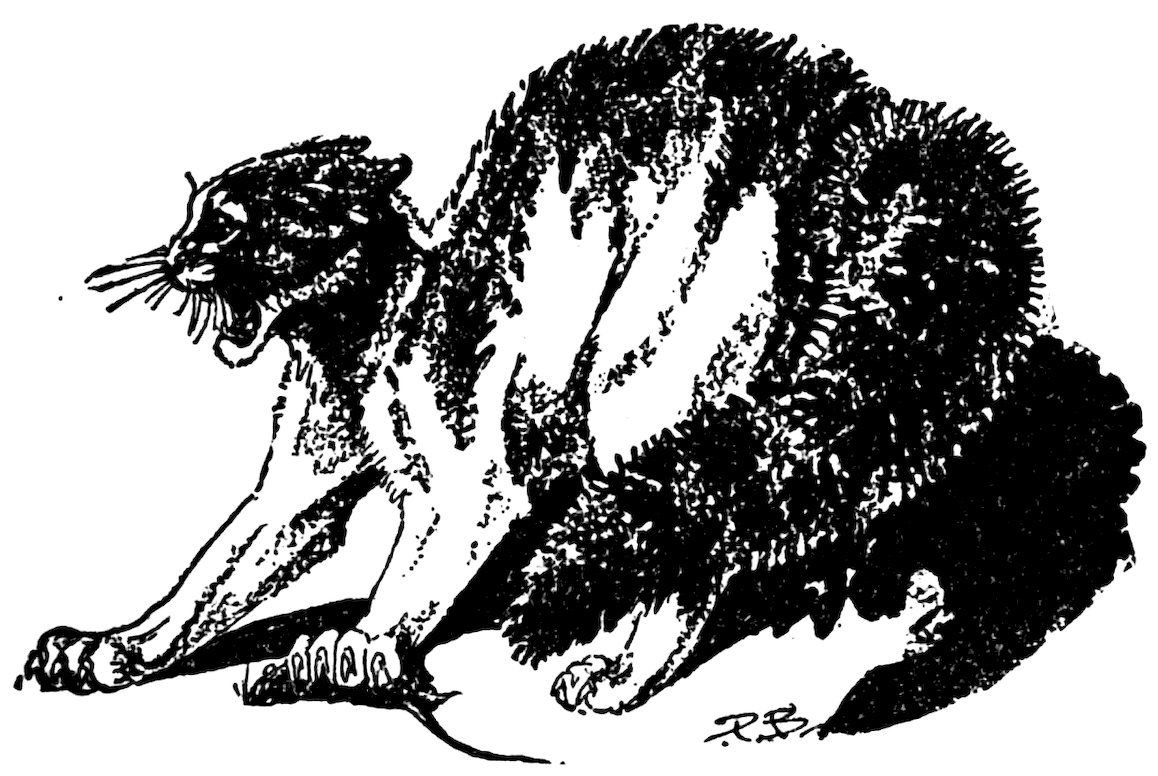
Skygak discovered that catching mice was Three-Spot’s chief vocation, and he made her life a burden.

Skygak was an old-man sea-gull. He had circled and screamed over the waters of Puget Sound for many a season, and it is doubtful if there is anything in aërial lore that he did not know. He was an expert at fishing, and could swoop down on an unsuspecting smelt from a dizzy height and have the shiny 13fish down his gullet without so much as touching his webbed feet to the water’s surface. He could snatch up a sidling red crab before it could seek the shelter of a rock, and drop it neatly and accurately on a stone, to dart down upon the mangled remains before the juicy meal could be purloined by any of his kindred.
He knew when storms were coming, 14and sometimes, when the skies were clearest and the sun warmest, he would spiral up to a great height and scream in long, quavering cadences that grew louder as the rain and wind approached. Then the Siwash clam-diggers on the beach would gather up their bags and shovels and bid their women see to brushwood, for they knew the cry of the sea-gull when the Storm-God rides. They respected the gray gull’s warning.
We were children on the shores of Puget Sound, Brother and I. From our little log cabin, with its porch roof slanting low like an old-fashioned pokebonnet, we would watch the sea-gulls circle in the sky or bob lazily on the blue waters of the bay like so many feathered corks.
We knew Skygak among the other gulls, for one wing was white, the other gray. So when we saw him, we named 15him by a queer, fanciful name that seemed to fit a bird of air and water. And because the boat landing in front of the cabin furnished a resting place for webbed feet on sunshiny days, Skygak made it his headquarters, and we came to look for him and to be fond of him.
When we sailed in the tiny twelve-foot boat with its home-made leg-o’-mutton sail or paddled in the dugout canoe made for us by a Siwash Indian chief, we looked for Skygak in every flock of sea-gulls that passed us, and it was our superstition, made on the spur of the moment, as children’s fancies are, that if he flew over us we would have good luck, and that a wish made on the instant would come true.
But we never dreamed that Skygak of the air lanes would one day be an intimate friend of ours, for we had been told by sailor and Indian alike—and 16who knows more of seafaring birds than they?—that sea-gulls could not be tamed. The Siwash chief who had given us our dugout canoe knew the habits of the winged scavengers and loved them. Perhaps the primitive heart of him, held in leash by the white man’s civilization, was tuned to the wild, untamed heart of the gulls, for they flocked around his beach shanty unafraid, and ate the scraps of clams he flung to them; but he had never touched one of the gray brethren.
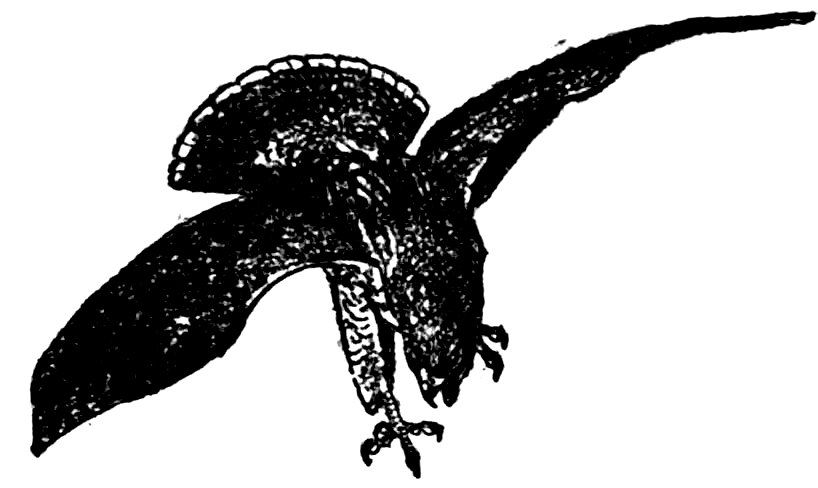
And so it happened, on a day of mists and clouds, that Skygak came into our lives as something more than a gray-and-white winged bird whose passage above our boat would make a wish come true.
It was a day typical of autumn in the Sound country. Gray rain pattered ceaselessly into gray waters that 17stretched away to meet a leaden horizon, and low-hanging clouds swirled restlessly with every gust of wind. But the smell of wet pines was in the air; the grass was green and glistening with iridescent beads. It was a day when the out-of-doors called the hardy one to don overshoes, raincoat, and sou’wester hat and fare forth to breathe the wet fragrance of woods and field, to feel the soft rain on uplifted face, and to listen for the storm cry of the gulls circling against the sky.
Brother and I, clad against the rain, stood in wonder at the shore end of the float. For there on the far end was Skygak, a miserable, dripping figure hunched dejectedly on the wet planking. His once sleek wings hung limply at his sides, his feathers were draggled and unkempt, his head was hanging miserably as if the light but steady drizzle were torment to him.
18
Above him soared and circled his kindred of the sky, wondering, no doubt, what was wrong, for now and again one of them would turn in a half-circle, spinning on the tip of one great wing, and scream sharply, as if in invitation to Skygak to join the airy tribe. And the old-man sea-gull would turn one eye up to the birds above him and give vent to a plaintive, longing cry. His draggled wings would flap in the rain as if sheer force of will must bear him upward, then relax hopelessly as if the effort made him more miserable.
We watched and speculated, Brother and I, for never had we seen a gull in such a plight. We saw that he was denied the water, too, for he would stalk, with the wobbly, swinging motion of a web-foot tribe, to the edge of the float, crane his neck as if about to launch himself upon the rain-beaten 19waves, and then retreat to the middle of the wharf once more. A gull who could neither fly nor swim! What had happened?
We took the problem to the Siwash chief a mile up the beach, mending a fish-net in his warm and smoky shanty. He listened impassively, yet with interest. And he returned with us to the float to diagnose the gull’s ailment.
When he saw Skygak, he grunted briefly but sympathetically. The bird had been caught in the swell behind a large boat—a battle-ship, probably—when it was discharging oil, he told us. It was not an uncommon thing, he said. The gull’s feathers were soaked with the heavy oil, and until it had evaporated, or until new feathers should grow, Skygak would be helpless both in the air and in the sea, and since he could not provide food for himself he would starve to death.
20So spoke the Siwash chief, but his philosophy was not ours. We told each other that Skygak should not die, and we called to the wet, miserable gull that we would take care of him, but he did not even raise his head.
What should we feed him? We had neither clams nor fish, and we were afraid to go too near him, lest he mistake our friendly intentions and take to the water in self-defense, to be weighted down by his oil-soaked feathers.
With the permission of our always sympathetic mother we salvaged cookies from the jar behind the kitchen stove. We took cold griddle cakes, too, and scraps of meat and bread. And with these dainties we set about the task of winning the gray gull’s confidence and of saving him from the misfortune which had overtaken him.
Carefully and very quietly we went 21down the float, as near as we could approach without Skygak’s taking alarm. When he showed signs of restlessness, we advanced no further, but put a chunk of meat upon the planks and withdrew to watch and wait.
The gull, at first indifferent to everything but his unexplainable plight, gradually felt hunger’s urge, and his long neck craned toward our offering of food. Slowly he waddled toward it, a grotesque gray bundle of draggled feathers, and with one vigorous gulp the meat disappeared.
Then we tossed him a chunk of bread softened with water, and this time Skygak did not hesitate. The first morsel had aroused an appetite which for the time being supplanted misery. He stalked forward and swallowed the food, turning on us the broadside of one black eye, as if asking for more.
22Nor did we refuse him. We tossed him, piece by piece, the food we had brought with us, and returned to the pantry for more. Always we placed the bread or meat a little nearer the shore and the cabin, and Skygak followed the morsels anxiously, greedily, satisfying a hunger which must have been of long and painful duration.
Early dusk was upon us when we finally succeeded in tolling the gray gull through the front yard into the chicken run, and into an unused brooder house which offered a shelter against the rainy night.
The lamps were lighted in the little log cabin when we completed our self-appointed task of making Skygak comfortable, and our only regret was that we could not give our friend a blanket. We feared he would not understand.
That was the beginning of a threesided 23friendship. The first few days of Skygak’s convalescence were spent in huddled misery, and he moved only when Brother or I came into the brooder house with food and water. Then the rain ceased, Indian summer came smilingly upon the Sound country, and when the sun shone warmly, Skygak decided that life was not all a haze of gloom, and he set about vigorously to restore himself to a normal condition. Hour after hour he pulled and massaged his feathers until some of the heavy oil was loosened. The sunshine helped to dry his draggled plumage, new feathers commenced to grow, and little by little Skygak became his old cocky self.
His affection for Brother and me was as apparent as was his dislike for all other members of the human race. The grown-ups he would not trust, and passers-by annoyed and alarmed him. 24But he would follow us about wherever we went, stalking along behind us with grotesque dignity, and when invited, would fly up on my shoulder or on Brother’s to receive bits of food from our fingers and to snap playfully at us with his great, powerful bill when we pretended to box with him.
The liberty of the ranch was his, but his favorite spot was a corner of the front porch where he would sit for hours in solemn contemplation of the bay in front. People who went by on the trail looked in wonder at the gray gull apparently very much at home in a little log cabin.
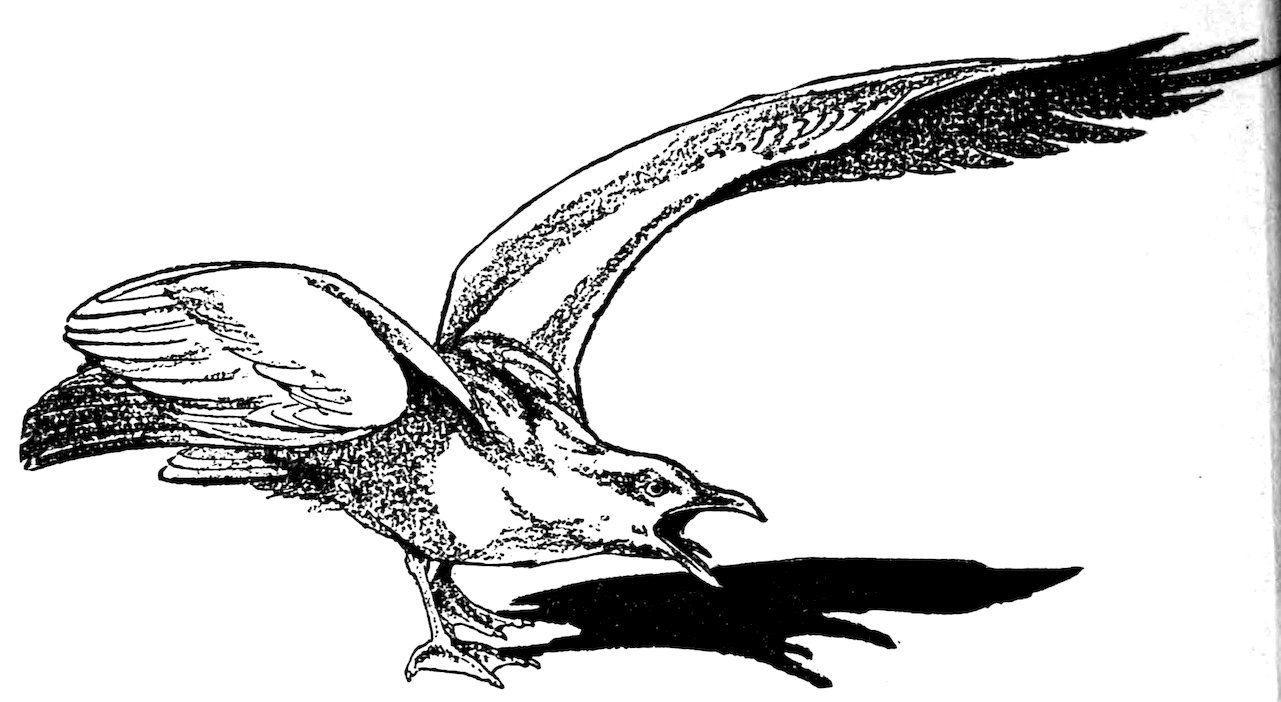
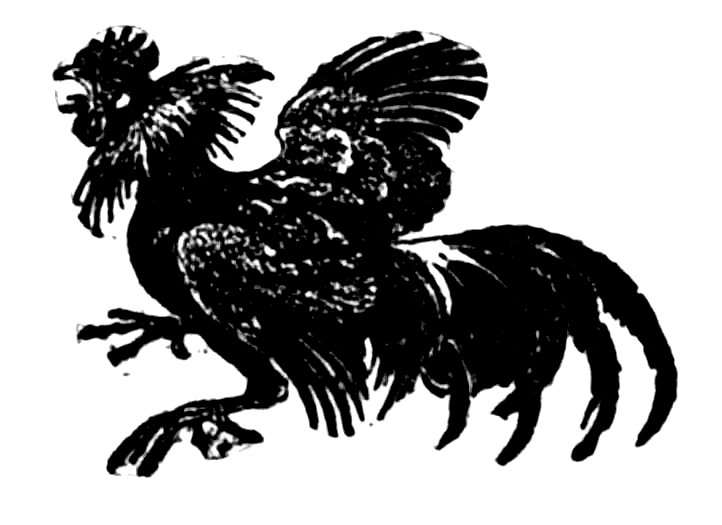
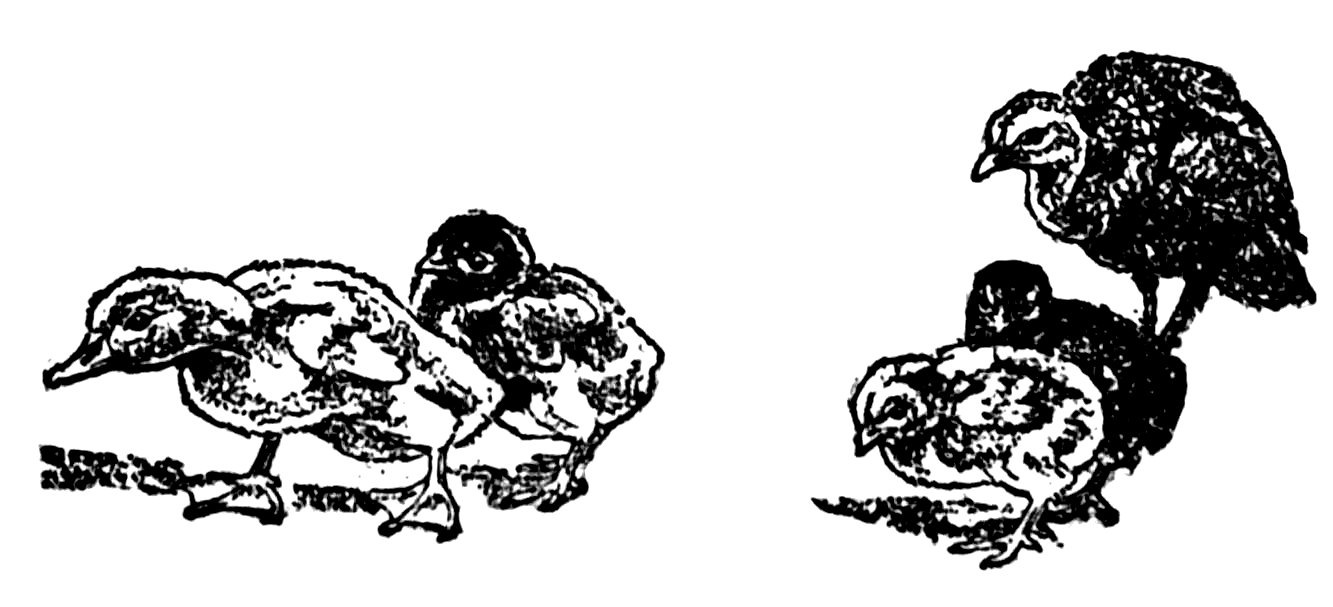
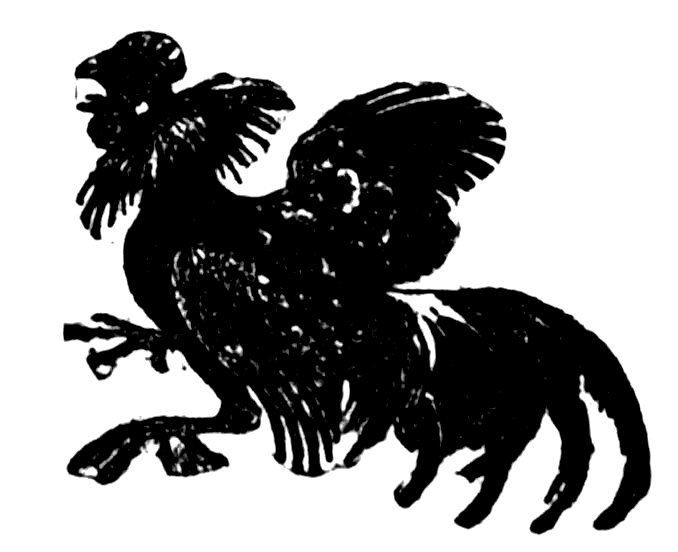
Soon he learned to eat with the chickens, and when the bran mash was spread for them in a long, wooden trough, Skygak would be there before the bucket was emptied. Then, as the hens came flocking around, the gull would spread his magnificent wings, 25open his huge beak to its widest extent, and scream shrilly and fiercely, laying about him with his yellow beak like a warrior swinging a deadly sword. The startled poultry, unused to this changeling of the sea and sky, would scurry away with distressed and frightened cackles, and Skygak would eat his fill at the trough, pausing occasionally to administer punishment to any daring cockerel who ventured too near. Many a bunch of feathers have I seen hanging from his bill, like a scalplock hung from the belt of an Indian brave, mute witness to a battle of brief but bloody duration.
Our animals soon learned that this wandering guest was to be respected. Tinker, the rat terrier, learned to his cost that Skygak was not a hen to be chased from the front porch, if he chose to stay there.
Between our cat, Three-Spot, and 26the gull, a bitter feud developed, which had for its beginning such a small thing as a mouse. One had been killed in a trap, and Brother tendered it to Skygak as an experiment. The delicacy was new, but wholly acceptable, and with one ecstatic snap of his beak Skygak swallowed it, and afterward, as Brother averred, fairly licked his chops. Three-Spot sulked and gloomed because of the slight, but her cup of woe was not full.
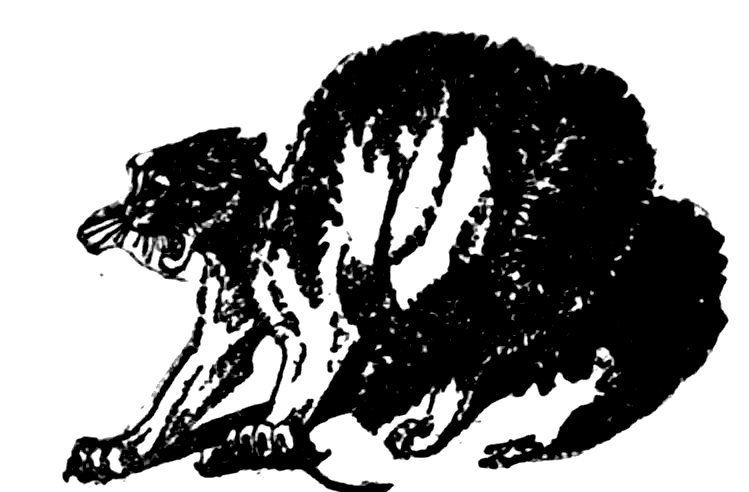
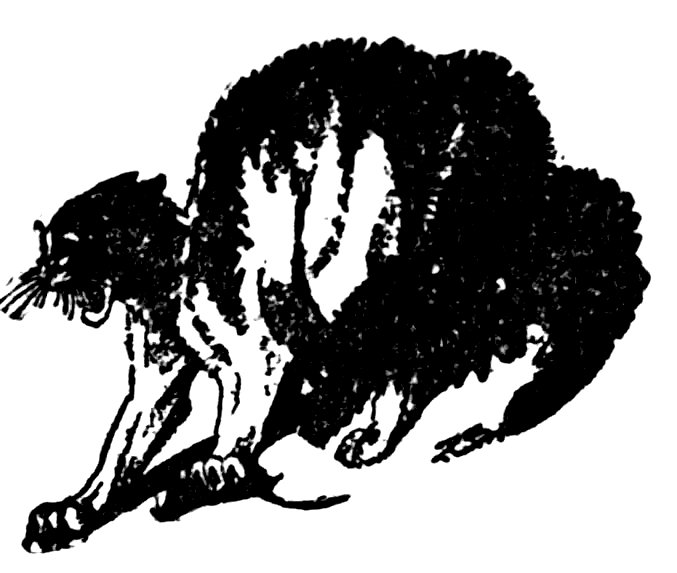
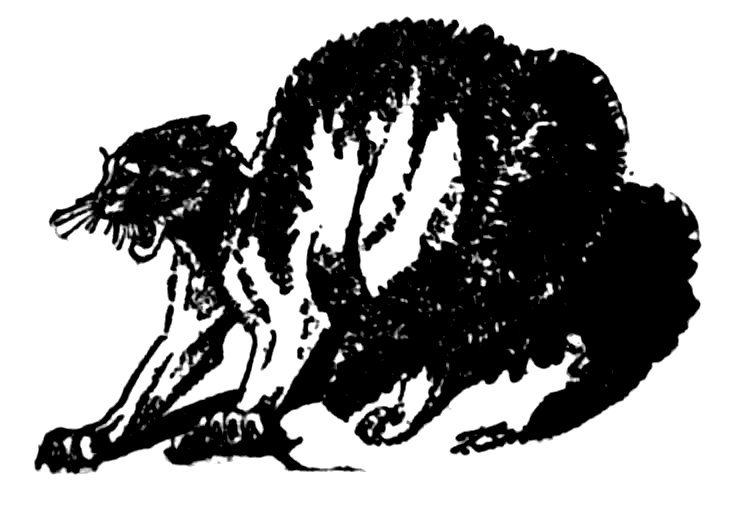
For in some mysterious manner, Skygak discovered that catching mice was Three-Spot’s chief vocation, and he made her life a burden. One morning we heard an outraged yowl from the cat and an answering scream from Skygak. On the back porch we found the two, Three-Spot crouched over a dead mouse, eyes gleaming dangerously, tail switching from side to side, and every hair erect. The bird was 27advancing cautiously, but relentlessly, wings outspread, beak wide open, screaming and snapping at every step. Three-Spot did not lack courage, but her experience had not included juggernaut gulls, and when the terrifying yellow beak was hard upon her, she fled, spitting venomously, and Skygak, like a disreputable robber chief, swallowed her hard-earned prize in one mouthful.
From that time, when he was not following Brother and me, or dozing on the front porch, or bullying the hens, he was trailing Three-Spot about, a relentless gray shadow, and if the luckless cat succeeded in keeping for herself one mouse that she caught, it was when Skygak was asleep in the brooder house.
Slowly but surely the old-man sea-gull recovered from his affliction. Some of the oil-soaked feathers 28dropped out, and new ones took their place, and he risked short flights from time to time, cautiously at first, as if not sure of his powers, and then with increasing confidence. He ventured out into the water with perfect ease, and we knew it would be but a short time before he had completely regained his health.
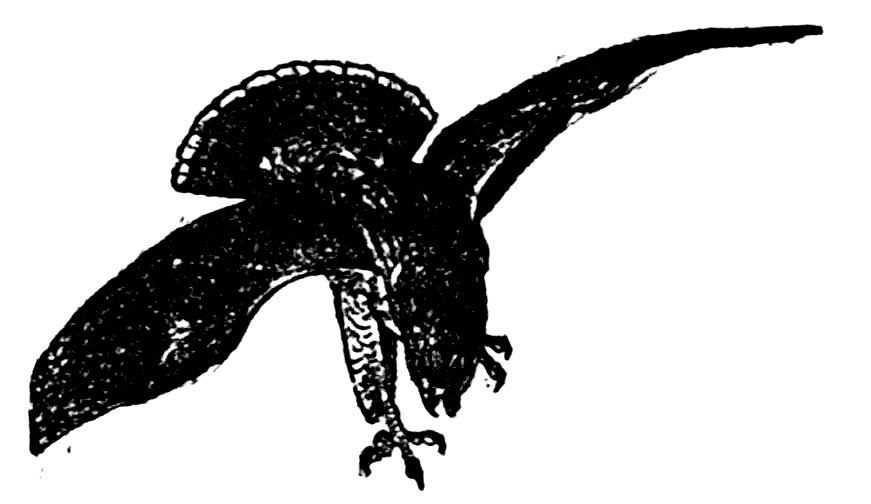
When first he flew we were afraid we had lost him, but he returned at night-time, hungry and eager to be taken up on my shoulder. After that, when he flew, it was to come back to us as naturally as if we, and not the sea-gulls, were his kindred.
But there came a day when a feeling of restlessness was in the air. Brother and I, attuned to the moods of the woods and of out-of-door things, felt it keenly, and we were not surprised when we saw overhead the V formation of the wild geese flying southward.
29Then the sea-gulls commenced to scream in short, sharp cadences, and a flock of the gray-and-white birds flew overhead, rising higher and higher as is the habit of the gray ones when the migrating call comes.
Skygak heard the call—that we could not doubt—for he was restless and would stretch himself on tiptoe, flapping his wings, turning his head up to the sky where a gray cloud of birds were flying. Then he would scream—short, broken cries as if torn by indecision. He loved us, we knew, but he was of the air lanes; the gray gulls were his kindred. Sooner or later he must go with them.
His flights grew longer, and once we did not see him for three days. Even when he was with us, he was ill at ease. The wild heart of him was longing for the untrammeled freedom of the winds and the sea, and gaunt cliffs untouched 30by foot of man. He forgot to box with us; he no longer bullied the poultry yard; he even neglected to watch for Three-Spot’s trophies of the hunt.
And then he went away. A week passed, and we mourned him bitterly. It was not so much his going—we knew we must expect that—but we had wanted to tell him good-by when he left, to wave our hands to him and wish him Godspeed, to watch him until he was only a speck in the sky. The Siwash chief said Skygak would never come back—but he did, once more.
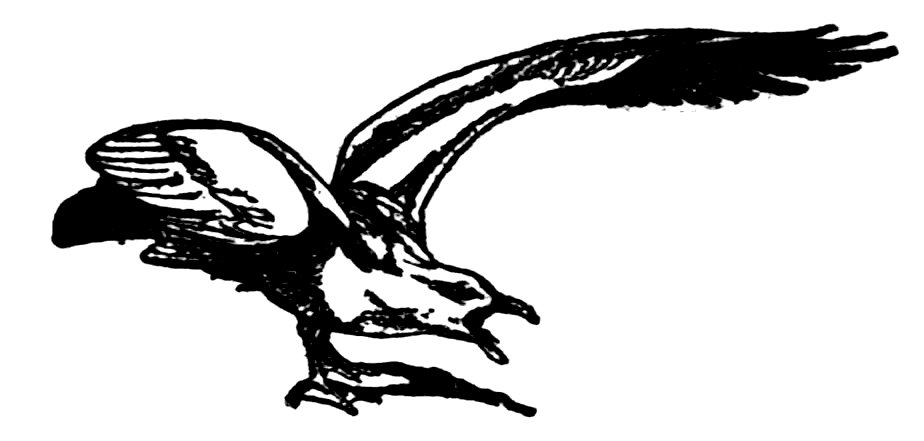
It was on a day of crystal clearness, when the clouds were like tiny white boats in the sky. We stood in the yard, hand in hand, watching the wild geese pass overhead and the flocks of sea-gulls flying high above them. From the west came a gray cloud of the seabirds, with one gull flying far in the lead. And as we watched, the leader 31left the flock of winging gulls and, like a falling star, swooped down upon us, spiraling lower and lower. We held our breath as we watched, for somehow, we knew, we knew—
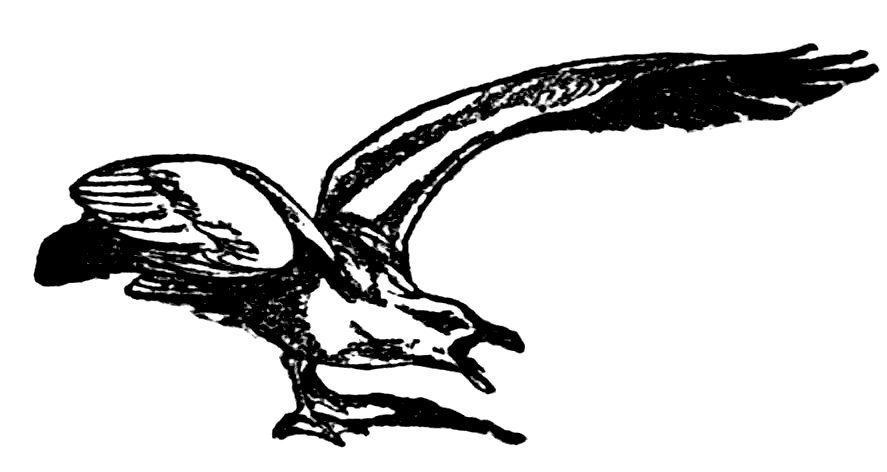
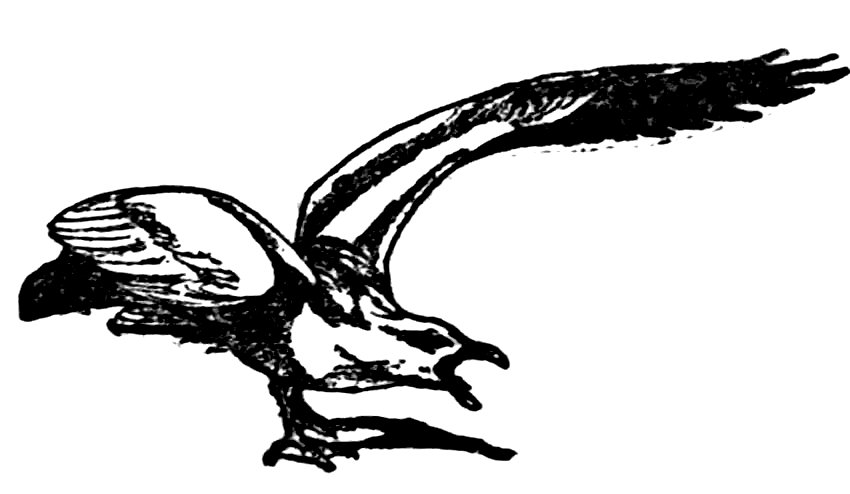
A flash of one white wing showed clearly. I tried to speak, but no words came. Closer and closer came the bird, Skygak, our old-man sea-gull, and when he was no higher than the roof of the house, he circled slowly above our heads. Then he screamed twice—long, plaintive cries that we knew meant farewell.
We were crying, but we waved our hands to him and called, “Good-by, good-by!” And slowly he rose once more, the white of one white wing melting into gray. Higher and higher he winged, to take his place at the head of the flock.... He was just a speck against the sky, and still we called our farewells to him in words choked with 32tears—the specks vanished into cloudy distance—Skygak had gone forever.
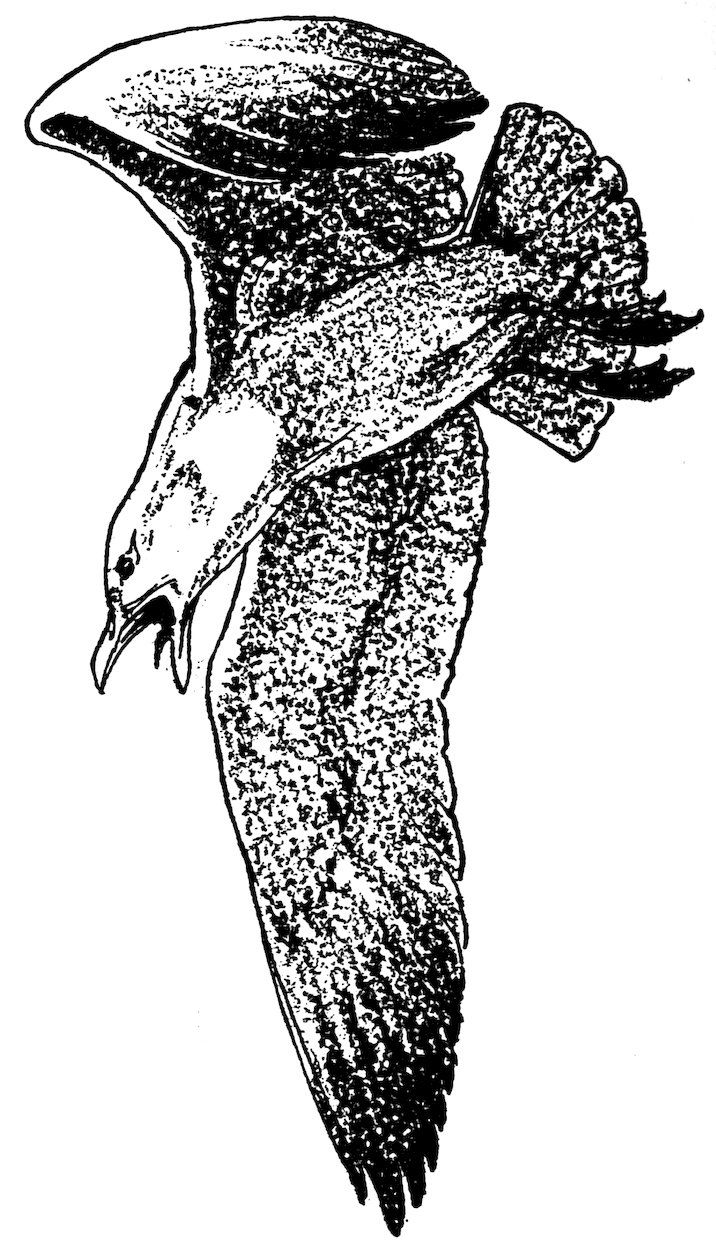
He circled slowly above our heads
But it was not without a thought of us. We shall always believe that he halted the winged caravan to tell us good-by—and the Siwash chief believes it, too.
33
Introducing
U-Chu-Ka
THE JUMPER
34